



Abstract
Physical literacy embraces a wholistic approach to movement, integrating physical, social, emotional, and spiritual wellness. Supporting physical literacy development in early childhood, ages 3 to 5, is essential for fostering well-being. An Indigenous and non-Indigenous team of community leaders and scholars embarked on a journey with Knowledge Holders, Indigenous families, and early childhood educators to co-create, expand, and sustain a culturally rooted physical literacy initiative that promoted wholistic wellness. This paper presents a methodological reflection on the evolution of Nature’s Way–Our Way as implemented in eight Indigenous and three non-Indigenous early learning centers in Saskatchewan, Canada. Through fieldnotes, observations, and reflections, we examine our journey of community collaboration, guided by the Lakota concept of mitakuye oyasin (all my relations). By centering relationality and co-creation, we highlight how Indigenous-led research can evolve within a community context, offering insights into the transformative nature of research that prioritizes relationships, reciprocity, and lived experience.
Keywords
Background
Physical literacy (PL) is defined as “the motivation, confidence, physical competence, knowledge and understanding to value and take responsibility for engagement in physical activities for life” (International Physical Literacy Association, n.d., para. 3). As a wholistic construct, PL encourages the development of physical, psychological, social, and creative competencies through engagement in movement in various physical and social contexts (Agans et al., 2024; Houser & Kriellaars, 2023). PL is a determinant of health and well-being, supporting various aspects of a child’s physical, psychological, and social well-being through movement experiences (J. Cairney et al., 2019; Melby et al., 2022).
In the early years, PL development should involve opportunities to concurrently develop competence and confidence while supporting different forms of connection and problem-solving through the exploration of new movements and environments, including outdoor settings (J. Cairney et al., 2016). Outdoor play, which includes risky and adventurous play, allows children to test their boundaries and learn their capabilities as they navigate various environments and have fun (Brussoni et al., 2015). Types of risky play may include play at height, speed, near dangerous elements, with potentially dangerous tools, and rough and tumble play (Sandseter & Kennair, 2011; Tremblay et al., 2015). In addition, children should have opportunities to connect with nature and interact with materials from natural environments, providing fun and engaging experiences in various cultural and social contexts (Bergeron et al., 2019). These opportunities are important for children’s health, development, learning, social behavior, self-esteem, independence, conflict resolution, risk detection, and risk competence (Brussoni et al., 2015; Sandseter & Kennair, 2011; Tremblay et al., 2015).
In Canada, there is a rise in non-communicable chronic diseases such as early onset obesity and type two diabetes among children, with Indigenous peoples being disproportionally represented (Public Health Agency of Canada, 2022). These increases are largely attributed to modifiable lifestyle related behaviors such as physical inactivity (Public Health Agency of Canada, 2022). Canada is experiencing a physical inactivity epidemic (A. K. James et al., 2017), where children are not physically active enough to receive the health benefits (Barnes et al., 2018). In 2024, only 39 percent of children and youth ages 5 to 17 years in Canada met the physical activity component of the 24-Hour Movement Guidelines for Children and Youth (ParticipACTION, 2024). The declining physical activity levels of Canadian children raise the question: What can be done to increase their activity levels?
The Developmental Origins of Health and Disease (DOHaD) theory offers a foundational framework for understanding how early-life environments, particularly within the first 2000 days of life, shape long-term health outcomes. Grounded in epigenetics, DOHaD highlights the interplay between environmental factors—such as nutrition, stress, and toxins—and genetics in determining health trajectories (Barker, 2007; Barker et al., 1993; Chandra, 2024; Charles, 2013; Feng et al., 2015; Leguizamon, 2022; Liberda et al., 2021). The early environment, including physical activity opportunities and nutrition, is crucial for developing physical literacy, which encompasses the skills, knowledge, and attitudes necessary for active living (Feng et al., 2015). Socioeconomic status influences access to resources that promote physical literacy, suggesting that interventions should address these disparities to foster healthier lifestyles in children (Charles, 2013). This research builds upon DOHaD by incorporating an Indigenous lens to create a more wholistic and culturally relevant framework, addressing the unique interconnections between environment, culture, and wellness.
The Indigenous DOHaD framework expands upon traditional DOHaD by emphasizing intergenerational environmental factors, such as strong community bonds, cultural practices, trauma-free homes, and access to clean air, water, and adequate nutrition. These relational dimensions—rooted in family, land, and culture—are central to shaping children’s overall wellness. By integrating etuaptmumk (Two-Eyed Seeing) (Marshall et al., 2015), this work bridges Indigenous and western knowledge systems, weaving together complementary perspectives to promote wholistic wellness through culturally resonant practices.
This combined framework has informed the development of Nature’s Way-Our Way (NWOW), a culturally representative initiative that evolved from the Healthy Start-Départ Santé project (Ward et al., 2018). The original Healthy Start initiative aimed to improve physical activity, motor skills, and healthy eating among young children. However, feedback from Indigenous early childhood educators revealed a critical gap: the absence of practices grounded in Indigenous Ways of Knowing and Being. In response, NWOW was co-developed to blend PL, a multi-environment lifestyle approach to wellness, with cultural relevance through diverse movement experiences, such as outdoor and land-based play.
NWOW employs an implementation science approach that emphasizes participant engagement through multiple strategies to adopt and integrate evidence-based health interventions, change practice, and behavioral patterns within specific settings such as early learning and child care centers (ELCCs) and the family environment (Bauer et al., 2015). To address the lack of culturally representative PL focused activities, our diverse interdisciplinary team developed and implemented NWOW, a culturally representative PL initiative for early years children, their families, communities and educators (Froehlich Chow et al., 2025; Riley et al., 2023a, 2023b). These activities were piloted with two urban ELCCs serving both Indigenous and non-Indigenous children (Froehlich Chow et al., 2025).
From January 2023 to January 2024, we then collaborated with 11 ELCCs to implement and evaluate this initiative, guided by Indigenous ways of knowing, being, and doing, and the Lakota concept of mitakuye oyasin (all my relations). This methods-focused reflection highlights our approach to knowledge co-creation with Indigenous communities through relational research. Our interdisciplinary team—including Knowledge Holders, Indigenous early childhood educators, families with lived experience as caregivers, scholars from health, education, and psychology, professionals from various organizations, and environmental design experts—has worked collectively to advance this initiative through relationship-building and perseverance. We present a narrative-driven methodological exploration centered on relationality, community engagement, and transformation.
Cultural safety
Indigenous children and adults in Canada face significant health disparities rooted in systemic racism and colonialism (Kim, 2019). Despite being the youngest demographic, they experience a high burden of chronic diseases like type 2 diabetes—17.2% among First Nations on-reserve, 12.7% off-reserve, 4.7% of Inuit, and 10% of Métis—well above national averages (Cheran et al., 2023). In 2017, life expectancy for Indigenous peoples remained lower than the Canadian average: 80 for men and 84 for women (Native Women’s Association of Canada, 2017).
Colonial practices such as residential schools, language bans, and the Indian Act have disrupted Indigenous identities and cultural continuity, contributing to ongoing struggles with self-determination and well-being (Josewski et al., 2023; Tuck & Yang, 2012). Some individuals internalize this harm, experiencing shame or fear when reconnecting with their culture (Jinkerson-Brass, 2022; Pilarinos et al., 2023).
Cultural safety, which considers the broader social and historical context of health, offers a pathway to reduce harm and rebuild trust in research (R. D. James et al., 2018; Wilson & Neville, 2009). Historically, research has excluded Indigenous voices, leading to distrust and limited impact (Brockie et al., 2022). Recognizing colonialism as a key determinant of health (Curtis et al., 2019), we have embedded cultural safety throughout the NWOW initiative.
Mitakuye oyasin (all my relations)
In our pursuit of creating cultural safety within the NWOW initiative, we embraced the core tenets of Indigenous worldviews and ways of knowing. The principle of interconnectedness, encapsulated by the Lakota phrase mitakuye oyasin, is central to our approach. Roy Spotted War Bonnet, a Sicangu Lakota Elder, explained,
Mitakuye oyasin means all the relation or all my relations. We believe in the traditional way of all my relations, meaning that Mother Nature itself, the trees and the herbs and the birds and the people are your relations. So that’s why we say that—all my relations. (Modaff, 2019, p. 346)
This principle teaches us to view the universe as connected, with every element having a purpose and deserving respect. Ione Quigley, another Sicangu Lakota Elder, further explained,
We treat equally, as in a circle. We look at the concept of mitakuye oyasin, all my relatives, and that everything in a circle is related. And when you’re related and connected, you’re not higher, you don’t look at something or someone as being higher, or the other way, lower. You see everything as being equal in life. I need the plants. I need the air. I need the water. I even need you. That is how we look at things, is that life is the concept mitakuye oyasin—we’re all connected and related. (Modaff, 2019, p. 346)
Mitakuye oyasin emphasizes harmony and respect, with oral traditions and storytelling passing down wisdom while maintaining cultural authenticity (White Hat, 2012). Lakota spirituality and traditions emphasize balance in relationships, not only among people but also with the land, water, and sky (White Hat, 2012). By recognizing all elements of life as part of a reciprocal relationship, we engage in meaningful interactions that foster well-being within individuals and communities.
Mitakuye oyasin extends beyond human relationships to encompass all beings, forming an intricate web of interconnectedness. This perspective is foundational in Lakota kinship structures, which emphasize relational bonds through biological and ceremonial relationships (Powers & Powers, 2001). Lakota kinship terminology reflects respect and responsibility within the community, addressing relatives based on age, gender, and social roles (Powers & Powers, 2001). The hunka (adoption) ceremony symbolically joins individuals and families as relatives, affirming that kinship is built through shared duties, mutual care, and spiritual bonds (Powers & Powers, 2001). The concept of tiospaye (extended family) serves as the foundation of Lakota social organization, ensuring communal support extends beyond the immediate family to nurture children, elders, and others in need (Powers & Powers, 2001). Within the NWOW initiative, this understanding of interconnectedness shaped how relationships were fostered, emphasizing reciprocity, respect, and cultural traditions. By embracing Lakota kinship principles, the initiative honors the sacred relationships among all participants, reinforcing the importance of collective well-being and unity in every aspect of the work.
Indigenous peoples and their families are strongly connected to the communities where they live, their ancestors, and descendants (Kaminski, 2013). The principle of interconnectedness, and the concept of mitakuye oyasin, teaches us how to relate to others and ourselves by taking the time to listen and engage with others wholistically and meaningfully; this may better support overall health and well-being (Kaminski, 2013). Mitakuye oyasin further emphasizes our connection not only to other people, but also to Mother Nature, the land, plants, and animals.
At the heart of the NWOW initiative lies the principle of mitakuye oyasin, guiding every aspect of our approach. From the outset, we recognized that this Lakota teaching of interconnectedness extended beyond individual relationships to encompass all beings—humans, animals, plants, the land, the water, and the sky. With this understanding, we entered each partnering ELCC with the intention of honoring the sacred and reciprocal relationships between all participants and the environments in which they live and thrive. This worldview shaped not only how we collaborated with educators, children, and families, but also how we designed and adapted the activities to resonate with the cultural protocols and traditions of each community. Every interaction, from the co-creation of activities to the responsiveness to community needs, was guided by the principle of fostering and strengthening these connections.
Our work with the NWOW initiative has taught us how to appreciate and relate to the uniqueness of each ELCC and guided us in sharing and co-developing the initiative. One goal of our journey is to foster bonds with children, families, educators, and community through sharing Indigenous activities. Another goal is to foster opportunities for land-based movement with natural elements like the air, ground, sky, trees, and water. We put the principle of interconnectedness into practice by sitting with educators at various moments throughout the journey and listening to the knowledge they share about their experiences with movement. The educators who have shared their time, knowledge, and experience with us in their use of the activities in the ELCCs are vital in our journey. The educators know the children, families, and community best, and provide guidance on this journey to nurture interconnectedness between all beings, including people, community, animals, and Mother Nature. Without the educators, the NWOW initiative would be unsuccessful in making important connections with the children, parents, community members, and Mother Nature.
Embarking on a culturally safe journey resulted in an open and honest relationship with the educators. As a result, educators have felt comfortable sharing with the team when the program delivery did not go as planned. There were various events that came up for the ELCCs requiring them to postpone or delay rolling out the initiative; even in these scenarios, partnering ELCCs collaborated with the team as best as they could to develop a plan of action moving forward. This process has been marked by non-linearity and unpredictability, which is common in Indigenous research methodologies (Kurtz, 2013). This process was and continues to be challenging, yet refreshing and dynamic, as we aim to maintain our research plan we set out at the onset of the project, while simultaneously respecting the rich and diverse ELCCs, communities, and cultural protocols and traditions in this process of practicing cultural safety in research.
As we reflect on the successes and challenges of the NWOW initiative, it is through the lens of mitakuye oyasin that we assess the impact of the project. The successes, such as the trust built with educators, the meaningful adaptations of the activities, and the engagement of families through culturally relevant practices, are rooted in the respect and reciprocity central to mitakuye oyasin. Likewise, the challenges, including staff turnover, logistical delays, and the complexities of navigating diverse cultural protocols, reaffirmed the importance of practicing patience, humility, and flexibility in all our relationships. These challenges were not setbacks but opportunities to deepen our understanding of interconnectedness and to embody the teachings of mitakuye oyasin in our actions. By centering this principle in our ongoing work, we continue to strengthen the bonds between all participants in the initiative, demonstrating the transformative potential of Indigenous ways of knowing in community-based research.
Honoring our relations: a collaborative research journey
At the heart of our circle stood Indigenous leaders, such as Elders Kathy Wahpepah (Ho-Chunk/Kickapoo) and Tim Eashappie Sr. (Nakoda), who guided us with ceremonial protocols and cultural wisdom, ensuring activities respected each community’s unique teachings. Community liaisons like Erica Stevenson (Muskoday First Nation) served as vital bridges, carrying the needs and perspectives of their people, while non-Indigenous researchers supported the process with humility and a commitment to cultural safety.
The co-creation process embodied Two-Eyed Seeing, blending ways of knowing as we developed the activity cards. Educators from each ELCC carefully reviewed every element, making adaptations that honored local traditions, incorporating culturally appropriate materials, or incorporating language prompts. We implemented OCAP® principles not as rules, but as natural extensions of our relationships: activity cards, materials, and adaptations remained with communities like seeds kept for future planting, and educators guided dissemination as stewards of their knowledge.
Nature’s Way-Our Way: our intended journey through the co-creation and sharing of an Indigenous PL-enriched early years initiative
Our team co-created the community-based initiative, NWOW, in partnership with rural and urban Indigenous leaders and community members, including Knowledge Holders, children, their families, and educators. The NWOW initiative currently features 23 PL-enriched activities from Nakoda, Plains Cree, Saulteaux, Métis and Ho-Chunk communities, with additional activities under development with other Indigenous and non-Indigenous communities, such as Nigeria and Moldova. Our goal is to create a set of 40 to 50 culturally rooted PL activities designed by and for community members from the diverse First Nations and Métis communities.
Phase 1a: child care setting activities
Educators from each ELCC were invited to a workshop to learn about the NWOW project using the NWOW activities. In this workshop we began by listening to the educators’ experiences with movement. We wanted to understand these experiences so that we could respect past experiences before introducing the initiative. As they reflected on their experiences of movement, we explained the concept of PL and suggested that in their best physical activity experiences, they were most likely experiencing all aspects of PL. We then asked them if this made sense in their personal relationship with movement and in the movement opportunities they provided to the children in their care. The educators’ workshop focused on educator self-efficacy to engage in and model physical activities while also developing PL among children. Following the workshop, educators received the NWOW activities and necessary equipment and subsequently delivered the culturally safe PL activities to the children over 12 weeks.
Phase 1b: family setting activities
During the same 12-week period, families, including children, and community Knowledge Holders were invited to attend family gatherings. Attendees had the opportunity to participate in activities and construct the equipment necessary for participating in the traditional Indigenous activities at home. Approximately 15 to 20 people, including family members and children, attended the family gathering session.
Phase 2: expanding the Nature’s Way-Our Way initiative
Following the 12-week implementation, educators and Knowledge Holders were invited to share five traditional activities that were representative of their unique Indigenous ancestors. The educators were asked to share and explore these five activities over another 12-week period while also continuing to use the original set of NWOW activities. At the end of the 12 weeks, educators provided feedback about their experiences with teaching the five new activities in the ELCCs. Based on this feedback, adaptions were made to the activities. An Indigenous artist was asked to create illustrations for the new activities, and a graphic design artist digitized these illustrations. These new activities were shared with all participating Indigenous and non-Indigenous ELCCs, families, and communities.
Our implementation science approach
Our implementation of the cultural activity cards was deeply rooted in mitakuye oyasin. This perspective transformed our approach from a technical exercise into a sacred responsibility to honor the web of relationships that make meaningful change possible. Successful implementation depended not just on evidence-based practices, but on nurturing relationships between people, knowledge systems, and the natural world.
The community engagement process became an act of building kinship rather than simple consultation. Knowledge Holders ensured the activities respected spiritual relationships, such as the Friendship Dance, which taught physical skills and helped children understand their relationship to tradition and community health. Educators became knowledge carriers who adapted activities to their local contexts while maintaining cultural integrity.
We adapted conventional implementation frameworks to align with Indigenous ways of knowing. The Exploration, Preparation, Implementation, Sustainment (EPIS) framework (Moullin et al., 2019) mirrored teachings about the sacred four directions: beginning with relationship-building (Exploration), providing workshops to educators (Preparation), following seasonal cycles and respecting summer as a time for ceremony (Implementation), and ensuring sustainment through ongoing relationship-building. This approach honored our relations with time and spirit, making the process culturally congruent.
Cultural relevance meant more than surface-level adaptations. Each activity card carried intergenerational teachings. Tatanka, Tatanka Cross the River developed balance while connecting children to ancestral wisdom about their relatives’ navigational skills. Our evaluations explored how ELCCs transformed as relational ecosystems, capturing improvements in how children interacted with each other and their environment.
The true measures of success emerged organically: children requesting traditional activities in play, families continuing activities at home, and educators taking initiative in weaving activities into everyday play. NWOW team members have observed children teaching the games to their younger siblings without prompting. Through this relational approach, implementation science became more than methodology—it became a way to restore health by honoring all our relations.
Activity kits
The NWOW initiative includes 23 culturally grounded, land-based activities—such as Tatanka, Tatanka Cross the River, Hoop and Stick, and Friendship Dance—designed with cultural safety and Indigenous teachings at their core. These activities emphasize participation, storytelling, and connection to land, animals, and community, embodying mitakuye oyasin by fostering PL through intergenerational, cooperative play. Designed for accessibility, the activities use simple, adaptable materials like tape, towels, or recycled items. Each includes a story that teaches cultural significance, promoting not only physical skills but also social-emotional growth and cultural appreciation. To support implementation, ELCCs receive full activity kits with materials and printed resources, while families receive take-home versions with instructional letters. These explain cultural context and encourage continued engagement at home, ensuring PL development remains joyful and culturally meaningful.
Ethical considerations
Our research methodology evolved significantly throughout our journey, guided by the sacred principle of mitakuye oyasin, which reminds us of our interconnected responsibilities to children, families, educators, and the natural world. The ethical foundation, approved by the University of Saskatchewan Research Ethics Board, was not merely procedural but a living commitment to these relationships. Initially, we employed comprehensive consent processes, including written parental permissions and child verbal assent. However, we soon recognized how institutional timelines often conflicted with the natural rhythms of community life.
The detailed consent procedures, requiring multiple interactions with families, revealed a fundamental tension: by the time approvals were secured, many children had transitioned to new phases of their lives, either moving classrooms or aging out of programs. This was especially true in communities where mobility reflects both challenges and cultural patterns of movement. These moments reminded us that paperwork cannot dictate the sacred timing of human relationships.
Through consultation with Knowledge Holders and community partners, we collectively reimagined our approach. We shifted to center educator-reported outcomes, honoring their daily relationships with children as sacred sources of knowledge. Educators, as aunties and uncles to these children, became our guides in documenting growth through journals, interviews, and observations. This change reflected our commitment to mitakuye oyasin, valuing the wisdom of those who walk beside children daily over standardized measures that might capture data but miss the story. Educators’ insights revealed nuances about children’s confidence, movement, and cultural connections that checkboxes could never measure. When a child first danced the Butterfly Dance with pride or spoke a Cree word while dancing, these moments were recorded not as data points but as sacred affirmations of growth, witnessed by those who know them best.
Assessing our experiences and opportunities
This work integrated an implementation science approach with Mi’kmaq Elder Albert Marshall’s Two-Eyed Seeing model, which blends Indigenous and western Ways of Knowing to inform culturally grounded practice (Marshall et al., 2015). Implementation science emphasizes participant engagement and the use of diverse strategies to integrate evidence-based health interventions in settings like child care centers and family environments (Bauer et al., 2015; Bauer & Kirchner, 2020). Although we followed a structured process to deliver a culturally rooted, interdisciplinary PL initiative, community-based research is often non-linear and adaptive. As we worked to support early years wellness, we encountered diverse contexts and challenges that required ongoing reflection and adjustment.
Data were collected through 80 fieldnote entries by three researchers during site visits. These notes, guided by the principle of mitakuye oyasin, captured children’s engagement, educator reflections, and contextual factors influencing PL development. Each entry was labeled for clarity and consistency. We analyzed the data using Braun and Clarke’s (2013) Reflexive Thematic Analysis, incorporating mitakuye oyasin to honor relational dimensions. Themes were developed inductively, peer-reviewed for rigor, and validated with a community liaison to ensure cultural relevance and alignment with relational principles. The following themes and findings are the result of our analysis.
Building and maintaining good relationships
Throughout the NWOW initiative, the principle of mitakuye oyasin guided our efforts to build and maintain strong relationships with educators, children, and community members. From our initial meetings to the educator workshops and subsequent visits, we nurtured deep bonds that facilitated open and honest feedback. This feedback was crucial in refining the NWOW activities to better align with the cultural origins and preferences of each ELCC. For example, educators suggested labeling activities with information about their cultural origins, such as Nakoda, Plains Cree, or Saulteaux, and noted that children were particularly receptive to the stories accompanying the activities, especially when animated with gestures and puppets.
An impactful example of this partnership process occurred when comparing our first visit to an ELCC with our third visit. Initially, one educator was hesitant to provide input, but by the third visit, they were at ease and shared a plethora of feedback and ideas. This progression highlighted the importance of building trust and comfort over time.
Our journey taught us that humility, patience, and understanding are key to fostering positive and respectful relationships. When educators offered suggestions and critiques, we tailored the activities to align with their cultural teachings and protocols. For instance, the Butterfly Dance activity, seen in Figure 1, required adaptations based on cultural appropriateness, such as using scarves instead of ribbons or holding strings instead of tying them around wrists. This process underscored the cultural diversity and unique needs of each ELCC.
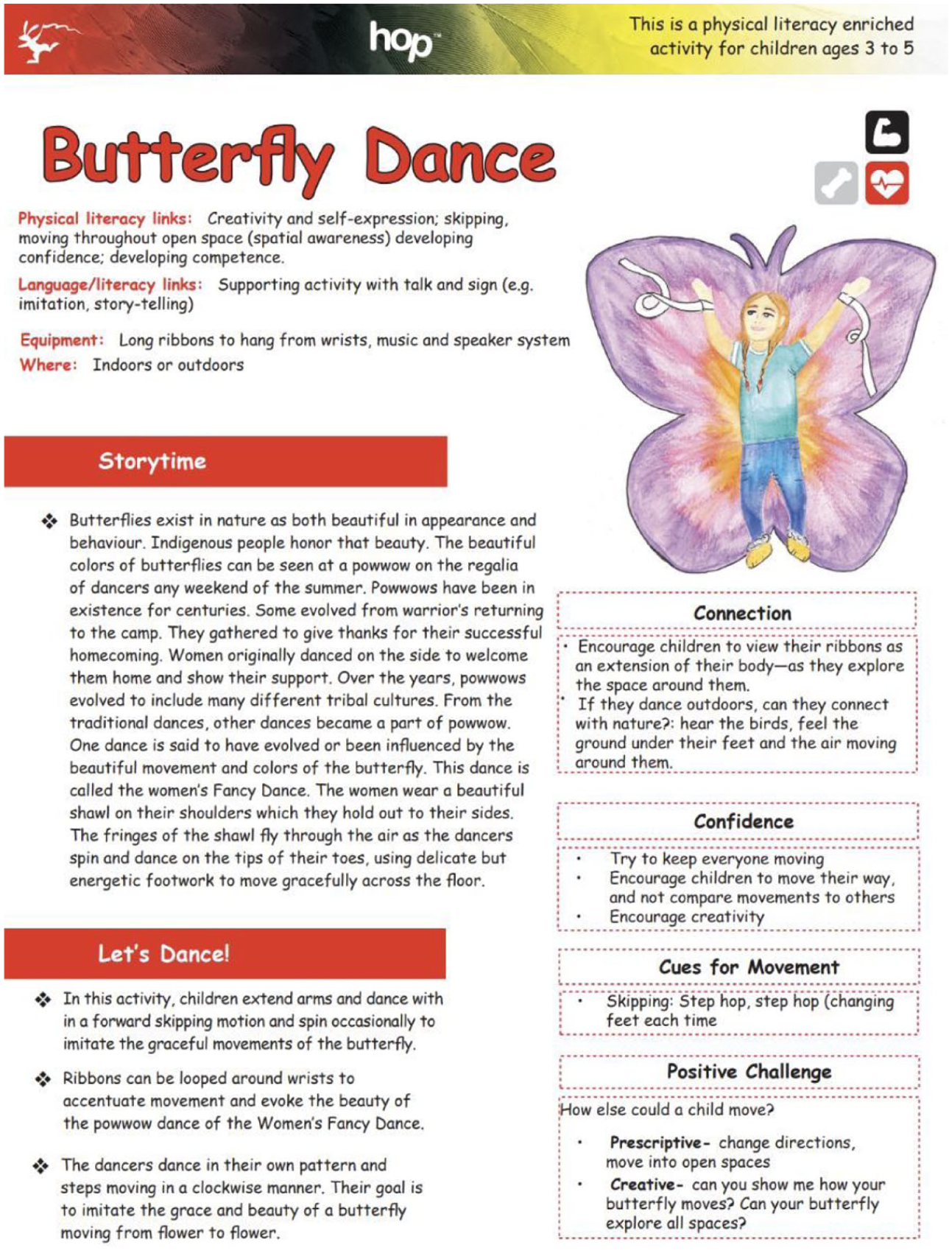
Nature’s Way-Our Way Butterfly Dance activity. For the full Nature’s Way-Our Way activities see: www.foragingapathtogether.ca.
In the process of co-creation, communities came up with innovative solutions to ongoing problems, such as seeking parental consent. One ELCC suggested joining children during drop-offs to introduce our team to caregivers, while another recommended visiting closer to the end of the day to meet caregivers during pick-ups.
Maintaining and nurturing relationships was equally important, especially in rural communities that received fewer visits due to logistical challenges. Demonstrating compassion and support, such as preparing care packages for educators affected by loss, further solidified our bonds within these communities.
We learned that knowing when to step back and give ELCCs space to reassess their needs and capacity to engage is essential. Three communities paused their partnership due to unforeseen circumstances, such as illness, staff turnover, and personal commitments. When ELCCs decided to withdraw or pause their partnership, we departed with the promise to return when they felt ready to re-engage. One community has since re-initiated the partnership, and we continued forward with a workshop session, opening with a smudge and prayer from a community Elder.
Mitakuye oyasin is emphasized through the interconnectedness, respect, and reciprocity inherent in the relationships formed throughout the initiative. By incorporating community feedback, adapting activities to align with cultural practices, and demonstrating humility, patience, and understanding, the project has honored the spirit of mutual respect and learning that mitakuye oyasin embodies. In addition, the team’s willingness to step back when needed and re-engage at a later time underscores a commitment to maintaining balance and respecting the needs of the communities. This approach ensures that the initiative remains grounded in reciprocity and wholistic partnership, fostering sustainable and meaningful connections.
Community as an integral whole
Partnership with Indigenous communities requires recognizing the context of the community as a whole. It is protocol among many Indigenous cultures for the community to come together for a funeral and mourning period when death occurs. This means the entire community closes to mourn and gather for a wake. Some communities involved in this initiative experienced significant loss during our journey together, leading to the cancelation of scheduled visits. We gave the community space to mourn before discussing rescheduling our visit. This was challenging for rural communities we visited less frequently due to travel distance. These closures meant that NWOW initiative activities could not be implemented during those periods. However, as relationships and respect were at the heart of our project, we followed the community’s lead, making space for protocols and supporting those grieving the loss of a loved one. Community wellness was our priority, and this meant being flexible and dynamic, allowing space for the community to move forward when ready. Although we began with a project plan, our community partners ultimately determined the timeline and any necessary adaptations.
Maintaining relationships was further challenged when some ELCCs followed school-system schedules, necessitating closure for the summer months. This halted NWOW activities and weakened relationships due to an extended period without contact. To address this, we coordinated the distribution of children’s activity kits just before the summer closure, including a letter detailing our intentions to maintain good relations and reconnect at the end of summer.
Mitakuye oyasin is demonstrated through our prioritization of the interconnectedness and well-being of the communities involved. Acknowledging the cultural protocols surrounding death and mourning, the team respected the community’s collective need for closure and healing by postponing visits and allowing space for the grieving process. This approach underscored the importance of placing community wellness above project timelines, embodying the spirit of reciprocity and respect central to mitakuye oyasin. Moreover, the team’s efforts to maintain relationships during extended periods of closure, such as the summer months, through thoughtful gestures like distributing activity kits and letters, illustrate a commitment to nurturing bonds even when faced with logistical challenges. These actions highlight the team’s dedication to fostering meaningful, adaptable, and dynamic partnerships rooted in respect for the unique needs and contexts of each community.
Collaboration with people
Community-engaged research involves collaborating and communicating with multiple individuals who have diverse lived experiences and realities, including illness, loss, appointments, absences, staff movement, and other priorities. These individuals are crucial in supporting the sharing of the NWOW initiative in the partnering ELCCs. When concerns arose, such as loss or illness, we rescheduled and put the initiative on hold until it could be re-engaged. This challenge extended our timeline, but nurturing community relationships remained our primary concern. Practicing patience, understanding, and compromise at every step was essential, as strong relationships are the roots of our project.
Staff turnover has been a significant challenge in our journey. In smaller communities, one educator often oversees an entire group of children. Building relationships with these educators was crucial, but frequent turnover meant starting from the beginning with new staff members. For example, in one ELCC, we delivered initial workshops to new educators on three different occasions over a year. Staff turnover also affected ELCC Directors, leading to miscommunication about the NWOW initiative and loss of activity kit materials. This challenge required restarting the initiative rollout in several ELCCs. In one community, the entire ELCC experienced staff turnover, and the new group faced concerns about getting the ELCC operational, leading us to step away until they felt ready.
Mitakuye oyasin is illustrated by our prioritization of respect, adaptability, and relational accountability in navigating the complexities of community-engaged research. Recognizing the diverse lived experiences and realities of individuals in each ELCC, including illness, loss, staff turnover, and other priorities, the project embodies the interconnectedness central to this concept. The willingness to reschedule visits, pause initiatives, and step back when necessary demonstrates a commitment to nurturing relationships in a way that respects the well-being and capacity of the communities. Moreover, rebuilding relationships with new educators following staff turnover highlights the importance of continually fostering trust and connection, ensuring these relationships remain at the heart of the project. This approach aligns with mitakuye oyasin, emphasizing the interconnected and reciprocal nature of the partnerships that sustain and guide the initiative.
Assessment in communities
We faced several challenges related to the measurement, assessment, and exploration of children’s PL. Obtaining parental consent was difficult, and by the time consent was secured, many children had either aged out of the project or were no longer attending the ELCC. This required us to repeatedly re-engage with new children and educators. In addition, the lack of movement training and experience among educators made it challenging to utilize preexisting assessment tools, such as the Preschool Physical Literacy Assessment Tool (Pre-PLAy) (K. Cairney et al., 2018).
Due to child enrollment and turnover, many children were no longer enrolled at the ELCC to compare baseline to post-intervention. As a result, we shifted our focus from Pre-PLAy assessments to outdoor behavior mapping (Cox et al., 2018) and educator interviews. However, mapping presented its own challenges, such as distance between the team and community, staff shortages, and the loss of life in the community. A significant challenge was that several ELCCs did not allow children to play outside in the winter due to safety concerns. The mapping tools available did not support indoor play, so we took observational notes of children playing indoors. Educators’ discomfort with outdoor play during the winter may be due to a lack of understanding of risky and adventurous play and its benefits. Enhancing educator understanding of risky play could improve opportunities for outdoor play in the future.
Mitakuye oyasin guided us through these challenges, highlighting the dynamic and relational nature of the process. The team’s flexibility in adapting its exploration measures, such as shifting focus from Pre-PLAy assessments to environmental mapping and educator interviews, showcased respect for the unique realities and priorities of each community. By addressing educators’ concerns about outdoor play during the winter and recognizing the need for enhanced understanding of risky play, the initiative demonstrated a commitment to fostering positive relationships that uphold the well-being and cultural contexts of the community. These actions illustrated the reciprocal exchange of knowledge, patience, and adaptability required to nurture meaningful and respectful partnerships, embodying the principles of mitakuye oyasin.
Historical and ongoing colonization
The Director of one of the ELCCs raised concerns about how Indigenous communities perceive research due to Canada’s colonial history. Research is often seen as a harmful practice conducted by outsiders, leading to reluctance in providing consent (Oster & Lightning, 2022). To address this, educators suggested holding family days where our team could explain the project to caregivers, share a meal, and try out activities with families and children. This approach fostered relationship-building and engaged the entire community. In one ELCC, the turnout was strong, and we obtained consent forms from everyone in attendance.
Throughout our journey, we deepened our understanding of the negative impacts of colonization, including the loss of culture and language among Indigenous peoples. Some ELCCs expressed concern over the eventual passing of Knowledge Holders and language speakers, which would hinder cultural transmission. In addition, some Indigenous educators acknowledged that they were only beginning their journey of reconnecting with their culture, feeling helpless in providing input on cultural teachings and protocols. This challenge underscores the importance of involving Knowledge Holders, as their input is invaluable.
Mitakuye oyasin emphasizes fostering trust, respect, and interconnectedness within the community, particularly in the context of historical and ongoing impacts of colonization. By addressing concerns about research and responding with relational approaches like holding family days, sharing meals, and engaging directly with caregivers and children, the project has actively worked to rebuild trust and strengthen relationships. This approach highlights the reciprocity and collective responsibility inherent in mitakuye oyasin, fostering meaningful connections that include families and the broader community. Recognizing the loss of Knowledge Holders and language speakers underscores the interconnectedness of cultural transmission and the critical need to honor and preserve these relationships. The involvement of Knowledge Holders and the acknowledgment of educators’ journeys of cultural reconnection further reflect the project’s commitment to supporting and sustaining these essential bonds in a respectful and wholistic way.
Opportunities for enhancement and revitalization
Throughout our journey, we noted that many ELCCs had indoor and outdoor play spaces that were not conducive to supporting culturally rooted and land-based opportunities for PL development. Every ELCC needed natural and loose parts for children to engage in land-based play. One ELCC struggled with this due to its location in a neighborhood characterized by vandalism, property damage, and theft, resulting in a barren outdoor play space. Educators indicated that this outdoor play space, seen in Figure 2, was not engaging for the children, leading to boredom and disinterest. Limited indoor play space further compounded the issue, as the ELCC did not have access to the school’s gymnasium. One educator stated that the children did not know how to play. We saw this as an opportunity for collaboration with educators and ELCCs to revitalize these play spaces, fostering children’s confidence, competence, motivation, and passion for movement.
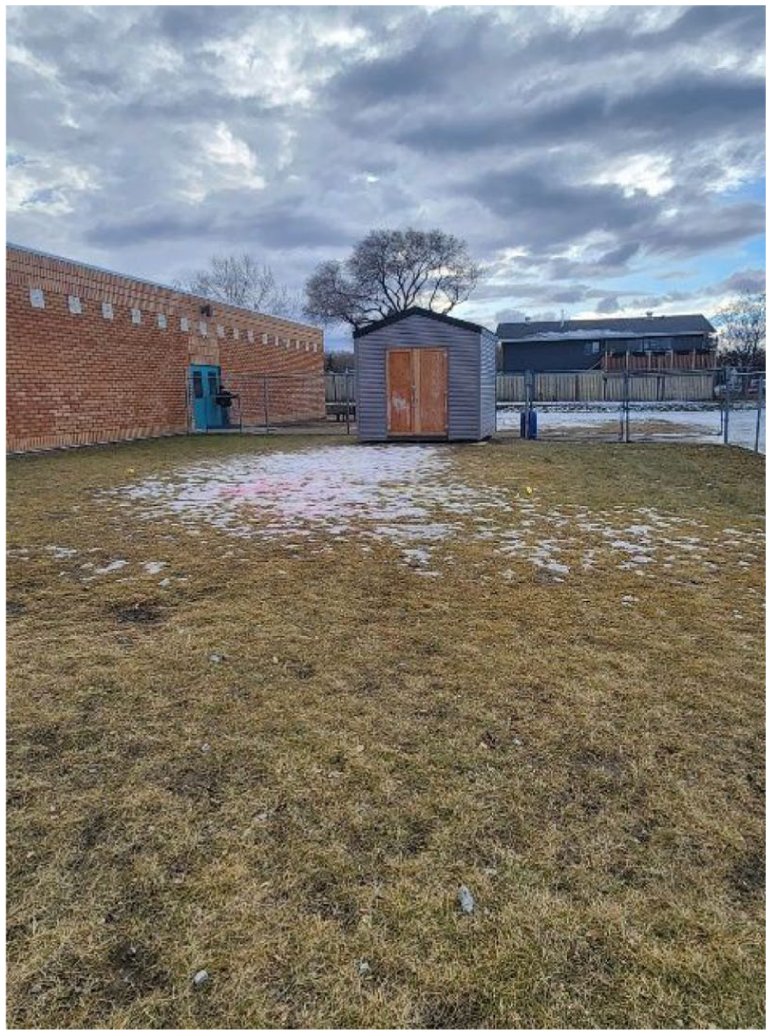
Outdoor play space photographed by Amanda Gannon during an early learning child care center visit.
Although our interdisciplinary, community-led team has over a decade of experience creating and assessing impacts of culturally rooted PL-enriched early learning settings, our current data collection tools, specifically Pre-PLAy and behavior mapping, have not effectively assessed changes in children’s wellness in a culturally meaningful and sustainable way. Therefore, guided by our Indigenous partners, we are developing new tools and novel methodological approaches. Currently, we are co-creating a culturally rooted environmental revitalization initiative and assessment tools that will significantly impact cultural identity, connection to the land, and overall wellness.
We are also embracing the opportunity to greatly improve our NWOW initiative activities. Rich and honest feedback from the educators has highlighted various ways to enhance our current and future activities. For example, one ELCC teaches their children a “word of the day” in Salteaux, their First Nations language. Including non-English languages or words from diverse First Nations and Métis communities in Saskatchewan in our activities would help teach their language and provide opportunities for movement. This presents an opportunity for us to work with the community to include action words and commands in their language on the activities. For example, if a Cree activity requires participants to jump, the activity could include the action phrase kwash ko tei (jump). These language links can be tailored to each community and their unique languages and dialects. We can also address feedback, such as identifying the cultural origin of each activity and making the related stories more exciting to 3- to 5-year-olds. Through ongoing conversations with educators and their experiences in trying these activities out in the ELCCs, we will learn about more ways to enhance the activity kits.
Returning to mitakuye oyasin: a non-prescriptive approach
This paper has described our experiences with the development of a culturally safe research initiative, rooted in Indigenous ways of knowing, being and doing. Without this collaboration in the spirit of reciprocity and reconciliation between our NWOW team and community partners, we would not have established the strong roots for our initiative to grow and thrive. While the NWOW initiative was originally intended to serve as an adaptation to the Healthy Start program (Froehlich Chow et al., 2025; Ward et al., 2018), incorporating culturally representative physical activities to promote PL through traditional activities, our journey has taught us much more. We have moved away from adapting Healthy Start activities to creating new ones guided by our Indigenous community partners. We are preparing for the development of culturally and community meaningful wellness and PL exploration tools, blazing a new, unexplored trail. This evolution of our journey is different and exciting from what we anticipated when we first ventured into the communities.
As we navigate this journey with each ELCC, we have learned that unique and tailored approaches are needed to fully consider and embrace the varying realities and contexts among diverse communities. We have become aware of the differing contextual factors that exist, not only between urban and rural communities but among rural communities themselves. The concept of mitakuye oyasin emphasizes the importance and necessity of spending time with our community relations, such as Knowledge Holders, educators, and caregivers, listening to their goals and the dreams, supporting them to achieve their wellness goals, and building relationships in a good way. While many Indigenous intergenerational teachings have been disrupted, our team Elder reminds us that these teachings are not lost; they are truths that cannot be lost, only hidden. Therefore, we see this project as a way to restore our cultural teachings to their full strength and power.
Mitakuye oyasin serves not only as the foundation of this initiative but also as a guiding force that continues to shape our understanding of interconnectedness, reciprocity, and shared responsibility. This concept has taught us the importance of nurturing relationships with humility, respect, and care. Relationships extend beyond individuals to include communities, the land, and all living beings. The success of the NWOW initiative lies not solely in its tangible outcomes but in the relationships fostered, the trust built, and the collective journey undertaken. As we look ahead, we carry these teachings forward, striving to honor the sacred interconnectedness of mitakuye oyasin in every step of this shared journey. Through mitakuye oyasin, we reaffirm our commitment to walking alongside our partners in a good way, guided by respect, collaboration, and the hope for a stronger, more inclusive place for our future generations.
Footnotes
Acknowledgements
Writing from Treaty 6 Territory, the traditional Indigenous territory of the Cree, Saulteaux Dakota, Lakota, Dene, and Métis, the authors pay their deepest respects to the many First Nations and Métis peoples whose footsteps have marked these lands for generations. They give thanks to the Elders and Knowledge Holders, those with them today, and those who are no longer with them, for their stewardship and teachings. And may they all continue to walk together toward Truth and Reconciliation. They also acknowledge the early learning centers they have worked with in the past and in the present.
Authors’ note

Funding
The authors disclosed receipt of the following financial support for the research, authorship, and publication of this article: Government of Canada—Canadian Institutes of Health Research (Sick Kids Foundation).
Declaration of conflicting interests
The authors declared no potential conflicts of interest with respect to the research, authorship, and publication of this article.
Glossary
Etuaptmumk Two-Eyed Seeing
Hunka adoption
kwash ko tei jump
mitakuye oyasin all my relations
tiospaye extended family