



Abstract
For Indigenous children with speech, language and communication needs, providing speech-language therapy within their worldview is of vital importance. This scoping review identified speech-language therapy research undertaken internationally in the past 20 years using Indigenous methodologies. This is part of a research project conducted by tribal researchers from Te Aitanga-a-Māhaki Trust, the mandated tribal organization located in the Eastern region of New Zealand’s North Island. The review critically appraised 31 articles and theses using the CONSoliDated critERia (CONSIDER) for strengthening reporting of health research involving Indigenous peoples, to evaluate the quality of research practices in studies involving Indigenous peoples. The review revealed small pockets of speech-language therapy research for children from Indigenous communities around the English-speaking world, but insufficient research to form a robust evidence base to meet the rights of any group of Indigenous peoples, as expressed in the United Nations Declaration on the Rights of Indigenous Peoples.
Keywords
Introduction
Indigenous peoples across the world share considerable commonalities in how they view their world, having deep connections to land, water and culture (Hatala et al., 2020; Palmer, 2021). Unfortunately, Indigenous peoples also share similar experiences of colonization and its detrimental effects. As stated in Articles 13 and 14 of the United Nations Declaration on the Rights of Indigenous Peoples (UNDRIP) (United Nations General Assembly, 2007, p. 5), Indigenous peoples have the right to “revitalize, use, develop and transmit to future generations their histories, languages, oral traditions, philosophies, writing systems and literatures” and “establish and control their educational systems and institutions providing education in their own languages, in a manner appropriate to their cultural methods of teaching and learning.” This clearly shows the importance of Indigenous languages, pedagogies and communication practices for the intergenerational transmission of Indigenous knowledge. Furthermore, the application, use, control and protection of Indigenous knowledges are significant as the rise of big-data and open-data grows exponentially. For Indigenous peoples globally, “data sovereignty is integral to a wider discussion about autonomy and self-determination. Indigenous data sovereignty recognizes that Indigenous peoples have inherent rights to their own data” (Royal Society Te Apārangi, 2023, p. 4). This is also reflected in Article 31 of the UNDRIP as Indigenous peoples having “the right to maintain, control, protect and develop their intellectual property over such cultural heritage, traditional knowledge, and traditional expression” (United Nations General Assembly, 2007, p. 9). Indigenous data are a cultural, strategic and economic resource (Kukutai et al., 2020); therefore, Indigenous research focusing on Indigenous children with speech, language and communication needs (SLCN) using Indigenous methodologies requires Indigenous leadership, management and governance, so that the provision of speech-language therapy (SLT) for Indigenous children can reliably reflect the worldview of their Indigenous people. Huria et al. (2019), in their paper Consolidated criteria for strengthening reporting of health research involving Indigenous peoples: The CONSIDER statement, which will be used in this review, “provides a checklist for the reporting of health research involving Indigenous peoples to strengthen research praxis and advance Indigenous health outcomes” (p. 2). There are clear correlations between the CONSIDER statement and the principles of Indigenous data sovereignty.
To use the Aotearoa New Zealand, hereafter Aotearoa, context as an example, colonization still has social, political and economic influence, enforced and perpetuated by the dominant culture, which it favors (Moewaka Barnes & McCreanor, 2019). The resulting inequities are evident in many sectors of society, including the provision of SLT for Māori (Brewer & Andrews, 2016; Faithfull et al., 2020; McLellan et al., 2014). Outcome One of the Pae Tū: Hauora Māori Strategy states that “Māori have the right to self-determine and manage their own health and wellbeing aspirations according to their kawa [protocol] and tikanga [correct procedure or custom]” (Ministry of Health, 2023, p. 14). Māori-medium education is a collective of Māori education, with varying levels of Te reo Māori (the Māori language) immersion, comprising kōhanga reo (Māori language nests), puna reo (Māori medium early learning centers), kura kaupapa Māori (Māori-language immersion schools) and rūmaki reo (Māori language units within English-medium schools). As evidenced by the higher levels of Māori student achievement in Māori-medium education (Ministry of Education, 2018), SLT approaches that are led by Indigenous groups are more likely to be of benefit.
Māori face ongoing inequity in service provision, as the SLT workforce in Aotearoa does not have the capacity or capability to provide an evidence-based kaupapa Māori (Māori way) SLT service in te reo Māori (Brewer et al., 2015; Faithfull et al., 2020; Meechan & Brewer, 2022). There is a dearth of research that focuses on SLT for Māori, across the lifespan and across conditions (Meechan & Brewer, 2022), including those requiring speech, language and communication support as a primary service and those requiring speech, language and communication support secondary to a medical condition. In the field of child speech, language and communication development, there is insufficient research to support SLT practice when working with tamariki Māori (Māori children) in Māori-medium education across the typical service pathway, from initial engagement, assessment and analysis, intervention planning and implementation, to case review and closure.
The use of standardized assessments is common in SLT practice but fraught with challenges in a Māori context. Standardized assessments are normed on a specific population and therefore can only be assumed to provide accurate information about people from that population. Because standardized speech and language assessments are not normed on a Māori population, they are not appropriate, nor often relevant, for tamariki Māori (Faithfull et al., 2020). In addition, there are no Te reo Māori SLT assessments with robust evidence to support their reliability and validity. It remains to be seen whether standardized SLT assessments are appropriate for tamariki Māori at all. The individual nature of standardized assessment is not in alignment with a Māori worldview of collective responsibility and a strength-based approach (Tamati et al., 2021). Furthermore, the deficit-based nature of standardized SLT assessment contradicts the philosophy and guidelines outlined in Te Korowai, the Charter Undertaking “by Te Kōhanga Reo National Trust Board as the management of Te Kōhanga Reo [the language nest]” (Te Kōhanga Reo National Trust, 1995, p. 1) and Te Aho Matua, the legislative framework and philosophical foundation for teaching and learning in kura kaupapa Māori (Ministry of Education, 2008). SLT services for Māori need to understand linguistic nuances and language difference (McLellan et al., 2014), and how these change across the different iwi (tribal) dialects. These local differences cannot be addressed using standardized SLT assessments without adaptation. It is incumbent on individual speech-language therapists to possess this cultural and linguistic knowledge or to be guided by people with this knowledge.
Meechan and Brewer’s (2022) scoping review sought to find all Māori SLT literature in Aotearoa published in the past 20 years. Of the 21 included studies, 10 focused on developmental communication or swallowing. Subsequently, only six theses and four articles provided guidance for clinical practice for Māori children requiring speech, language and communication support. Thus, Māori cannot receive an equitable SLT service because there is insufficient research to support evidence-based practice in this space (Meechan & Brewer, 2022).
While Aotearoa has limited Māori SLT research, determining the scope of literature by Indigenous researchers outside of Aotearoa focusing on the SLCN of their Indigenous children is challenging. The purpose of this scoping review is to document Indigenous research that focuses on SLCN of their children. This has the potential to facilitate cross-cultural Indigenous collaboration and make space to build a network of Indigenous speech-language therapists to share experiences and Indigenous knowledge.
The specific aim of this scoping review was to document all SLT research works, using Indigenous methodologies, for Indigenous children with SLCN, which has been undertaken internationally in the past 20 years and to identify gaps in the literature. All review authors are Māori. This scoping review is part of a larger research project by Te Aitanga-a-Māhaki Trust tribal researchers, based in the East Coast region of Aotearoa North Island, seeking to support the SLCN of tamariki Māori.
Methodology
The protocol for this scoping review was preregistered (Kohere-Smiler et al., 2022). Due to a natural disaster affecting key members of the research team during the literature searching phase, an extra researcher was brought into the team and the protocol was adapted slightly to account for the reduced availability of some team members.
This review extends the work of Meechan and Brewer (2022) which documented all Māori SLT research works undertaken in Aotearoa. It is guided by kaupapa Māori theory. Kaupapa Māori theory is an Indigenous theoretical framework which argues that to understand and respond to Indigenous issues, there must be an Indigenous framework which is driven from Indigenous knowledge and experiences and not designed from the imported building blocks of colonizing forces (Pihama, 2011). The term Indigenous used in this review refers to groups of people of, or relating to, the earliest known inhabitants of a land, with particular focus on peoples that, through the process of colonization, are now a minority group on their ancestral land.
Indigenous SLT research was defined based on the CONSIDER statement (Huria et al., 2019). The CONSIDER statement provides guidelines for reporting equitable research practices involving Indigenous peoples. The guidelines not only focus on Indigenous participation in research but also on research that is Indigenous-led and developed from Indigenous interests. The scope of the CONSIDER statement is: All forms of original health research, regardless of methodologies, that includes a substantial Indigenous component including research: conducted on Indigenous lands; in which Indigenous identity is a criterion for participation; that seeks Indigenous knowledge; in which identity or membership of an Indigenous community is used as a variable for data analysis in which interpretation of data refers directly to Indigenous Peoples; or research that is likely to affect the health of Indigenous Peoples. (Huria et al., 2019, p. 2)
The CONSIDER statement has been adapted to fit this review by including all original research undertaken in the field of SLT, regardless of methodologies, that includes a substantial Indigenous component including research: conducted on Indigenous lands; in which Indigenous identity is a criterion for participation; that seeks Indigenous knowledge; in which identity or membership of an Indigenous community is used as a variable for data analysis in which interpretation of data refers directly to Indigenous peoples; or research specifically informing professional practice with Indigenous peoples.
Eligible literature included all quantitative, qualitative and mixed-method studies published in peer-reviewed journals. Unpublished honors’, master’s and PhD theses were also included, while all other gray literature was excluded. Literature was limited to publications produced in English between the period of 2003 and 2023. Literature published prior to 2003 was considered no longer clinically relevant.
Items were excluded if they did not meet the CONSIDER statement as adapted for this review. Specific exclusion criteria were as follows:
Literature that does not have a substantial Indigenous component. That is, not conducted on Indigenous lands, not seeking Indigenous knowledge, in which identity or membership of an Indigenous community was not used as a variable for data analysis, where interpretation of data did not refer directly to Indigenous peoples,
Literature that does not have a focus on SLT. For example, language development of typically developing children, and
Literature is not original research.
Literature that does not focus on children or young people, ages 0 to 21 years.
Literature where no full text is available. For example, conference abstracts.
Literature published or released before 2003.
Literature not written in English.
Literature search strategies were developed using medical subject headings and key words related to SLT for Indigenous children. Searches were made using the University of Auckland library online database portal. The following databases were searched in July 2023: Scopus; PubMed; Medline; CINAHL Plus; PsycINFO; ERIC; and Google Scholar.
Specific search terms (Table 1) were created in coordination with a University of Auckland subject librarian with expertise in scoping review searching. Search terms required alteration when searching Scopus and PubMed because these databases did not allow some search terms written in Indigenous languages. Experts in kaupapa Māori research and SLT were also contacted to locate any articles or theses.
Literature search terms.
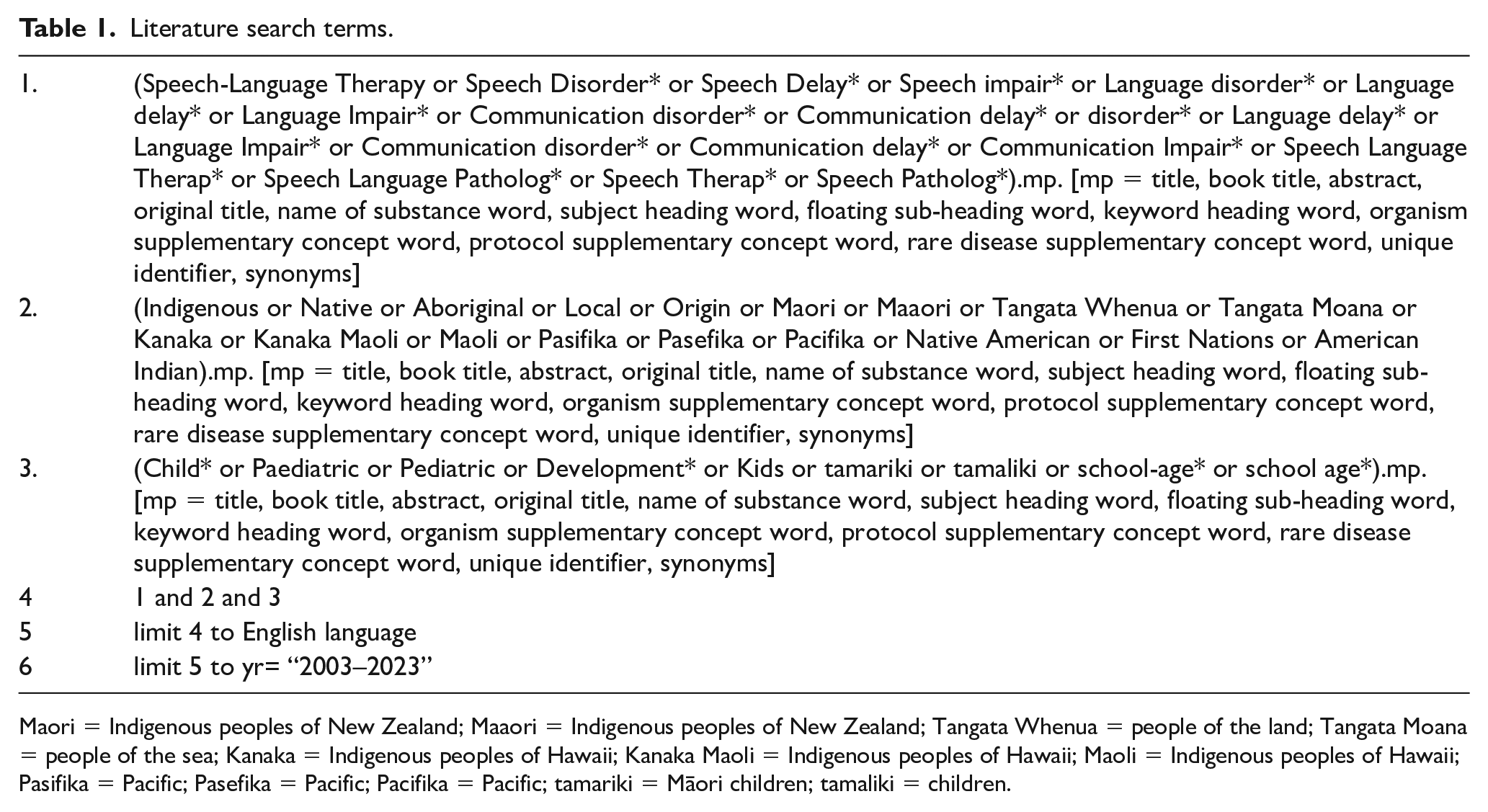
Maori = Indigenous peoples of New Zealand; Maaori = Indigenous peoples of New Zealand; Tangata Whenua = people of the land; Tangata Moana = people of the sea; Kanaka = Indigenous peoples of Hawaii; Kanaka Maoli = Indigenous peoples of Hawaii; Maoli = Indigenous peoples of Hawaii; Pasifika = Pacific; Pasefika = Pacific; Pacifika = Pacific; tamariki = Māori children; tamaliki = children.
Literature search results were managed through RefWorks, a citation management software (www.refworks.com). All identified studies from each database were exported and filed into separate RefWorks folders. One author independently screened the titles and abstracts against the inclusion criteria. Studies identified as eligible based on title and abstract were filed into a separate RefWorks folder for full text read. A full text read of all the articles deemed eligible was carried out by one author. For validation and robustness, five independent reviewers read an equal share of all articles which passed the abstract and title screen, so that each article was read in full by a total of two reviewers. Reviewers graded each study as either included or excluded, based on the inclusion criteria, and then compared results. Disagreements between reviewers were resolved by discussion between all six reviewers, and a consensus was achieved. None of the reviewers were blind to the journal titles, study authors or affiliated institutions. One author then extracted data from the articles using a standardized form developed for this review. The form included general information about the study, for example, country of research, area of SLT, methodology, study design, recruitment, participant characteristics, sample size, Indigenous population and study conclusions.
A critical appraisal is not usually included in a scoping review. However, it was appropriate to include one in this review for several reasons. Because this scoping review is part of a larger kaupapa Māori research project, guided by kaupapa Māori theory, the inclusion of a critical appraisal is significant in the effort to “strengthen research praxis and advance Indigenous” (Huria et al., 2019, p. 1) child speech, language and communication outcomes. In addition, it has been recognized that standard evidence-based practice has limitations for Indigenous peoples (Luke et al., 2022). Therefore, it is important to evaluate the included studies from an Indigenous perspective. The CONSIDER statement was published in 2019, and this scoping review reviewed Indigenous research from the past 20 years (2003–2023); therefore, it may not be helpful to include all CONSIDER statement items. Consequently, the Evaluation Criteria used by Meechan and Brewer (2022) were adapted to include aspects of the CONSIDER statement that the authors considered most important for Indigenous child SLT. This adaptation formed the criteria for critical appraisal, as listed in Table 2.
Adapted CONSIDER statement (Huria et al., 2019) items used as the criteria for critical appraisal.
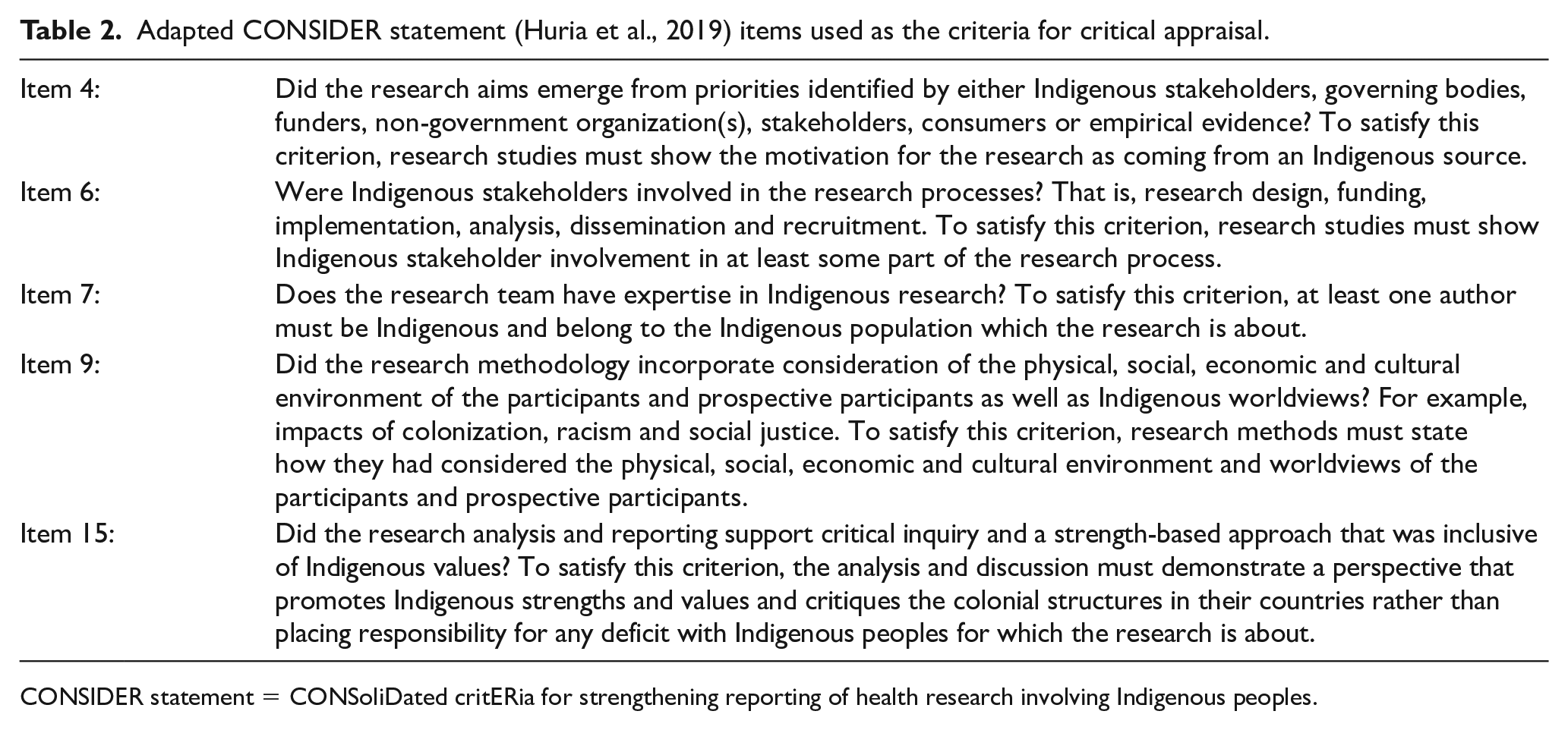
CONSIDER statement = CONSoliDated critERia for strengthening reporting of health research involving Indigenous peoples.
Results
The initial search of online databases resulted in a total of 4,770 articles (Figure 1). There were 1,254 duplicates, which were removed, and six articles added from additional sources, resulting in a total of 3,522 articles to be screened by title and abstract. Of these, 3,381 articles were excluded as the title and abstract did not meet inclusion criteria, leaving 141 articles graded as full text read. Upon reading the full texts, 110 studies were excluded as they did not meet one or more of the inclusion criteria. Reasons for exclusion are detailed in the Preferred Reporting Items for Systematic reviews and Meta-Analyses (PRISMA) diagram (Figure 1). In total, 27 articles and 4 theses were included in the scoping review.
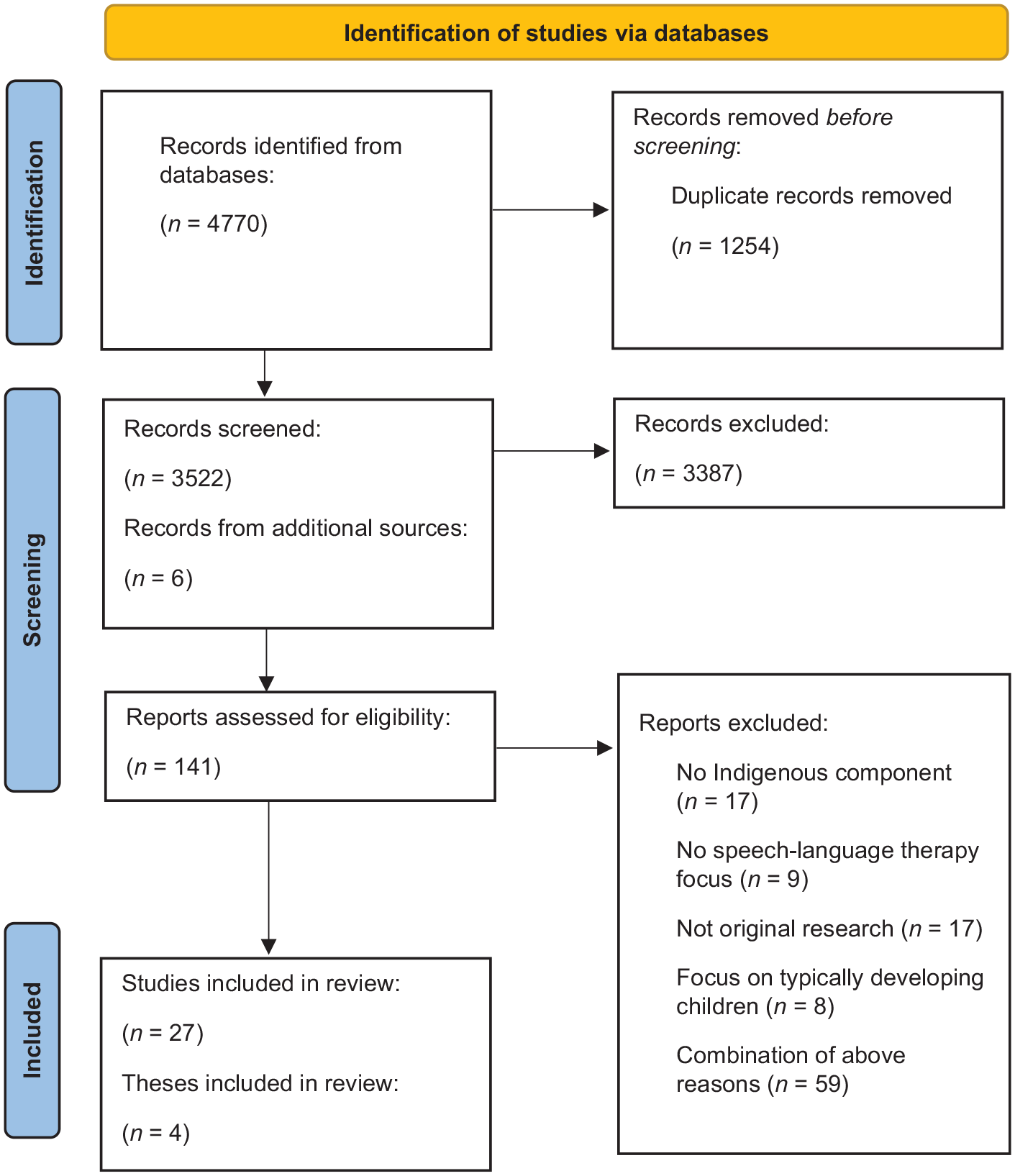
Preferred reporting items for systematic reviews and meta-analyses (PRISMA) diagram.
Figure 2 summarizes the limited evidence base identified by this scoping review in the field of SLT pertaining to the SLCN of Indigenous children. There has been a consistent output of research in the last decade; however, this is typically only one article per year. While the output of research may be low, there is an encouraging sign that the number of named Indigenous authors involved in the research has increased in the past decade, with all included articles between 2019 and 2023 having a named Indigenous author attached to the research. Over half of the included articles (n = 17) had a named Indigenous author involved in the research. However, only nine of the included articles reported using Indigenous methodologies.
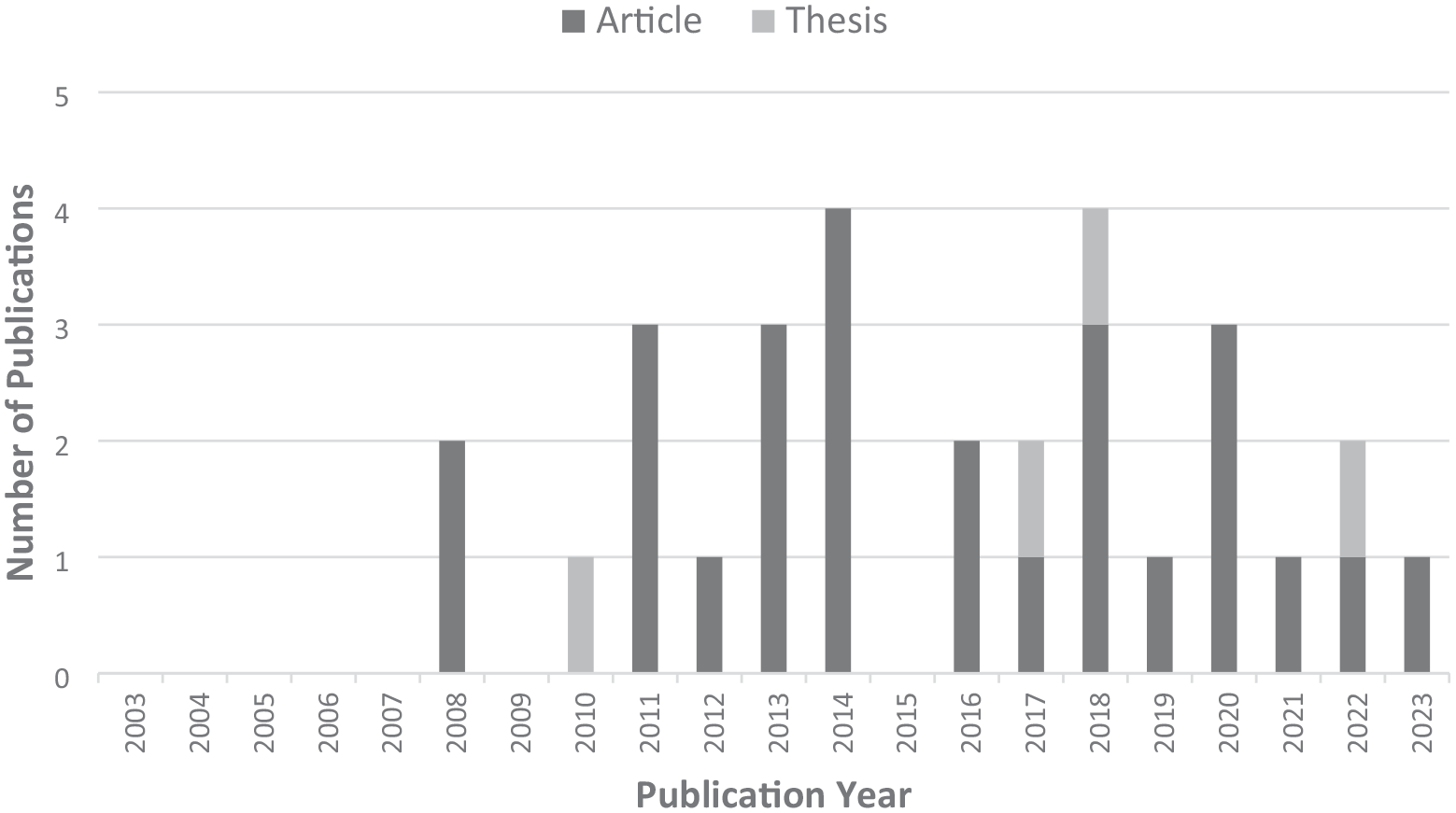
Number of included articles and theses published over search period 2003 to 2023; no studies identified prior to 2008.
This scoping review sought to document all SLT research works for Indigenous children in the last 20 years. Using broad but widely accepted terms in the SLT field, for example, Speech, Language and Literacy, the included articles were categorized into the focus area best describing the research focus of the publication. Over one-third (n = 12) of the 31 articles focused on Indigenous children’s language development. Four articles focused on oral language and literacy. Few studies focused on speech—only two articles meeting the inclusion criteria investigated Indigenous children’s speech and one examined Augmentative Alternative Communication for Indigenous children. Other studies covered telehealth (n = 1), relationships (n = 6) and hearing (n = 5). Relationships studies investigated the need for relationship-building or whakawhanaungatanga (a process of establishing and maintaining relationships) in service delivery.
The review further examined the SLT areas within each study that related to clinicians’ key areas of work, including assessment and treatment. Over half of all included publications (n = 16) focused on assessment of Indigenous children’s communication, speech or language. Only four of the 31 included articles focused on intervention. These areas were further examined and broken down into two categories, clinical and non-clinical. Articles categorized as clinical were deemed to have knowledge applicable to a clinical setting, whereas articles categorized as non-clinical aligned closer to work that could support clinical work but was not directly applicable to working clinically with Indigenous children. As shown in Figure 3, 14 out of 16 articles which researched assessment had clinical applications with children from Indigenous populations. For example, within assessment studies, Stagg Peterson et al. (2021) reported on the development of a dynamic assessment based on an existing clinical tool that was modified with input from local Indigenous educators. In contrast, Gould’s (2008a) non-clinical study focused on the effects of SLT assessment policies on the educational experiences of Indigenous students and found that existing policies medicalized Indigenous language systems and increased power imbalances between Indigenous Aboriginal people and the Australian dominant education system.
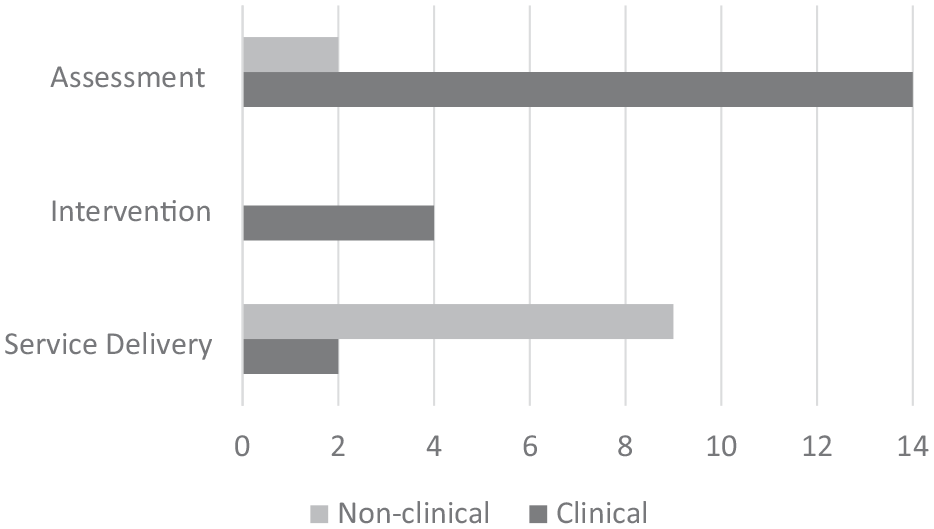
Number of studies with clinical versus non-clinical focus and area of speech-language therapy (SLT): intervention, assessment and service delivery.
Table 3 lists the included articles and theses identified in this scoping review and evaluates them against the adapted CONSIDER statement criteria in Table 2. This highlights several key findings. First, of all 31 included publications, only nine achieved a Y (Yes) for all six criteria. Four of those studies were conducted in Aotearoa and focused on whakawhanaungatanga in service delivery, three were from Canada and focused on assessment, one was an article from the USA with a focus on intervention and another article was from South Africa with a focus on assessment. Of concern, six of the included articles achieved an N (No) in all six of the CONSIDER statement criteria. This means that, despite meeting the inclusion criteria for the scoping review, these six studies did not use Indigenous methodologies; the motivation for the research did not come from an Indigenous source; they did not show Indigenous stakeholder involvement in the research process; there was no named Indigenous author; the research methods did not show that they had considered the physical, social, economic or cultural environment and worldviews of the participants and prospective participants, and the analysis and discussion did not promote Indigenous strengths and values or critique the colonial structures in their countries. Figure 4 summarizes the inclusion of Indigenous authors and methodologies across the 31 included studies.
Evaluation of included studies critically appraised against the adapted CONSIDER statement criteria.
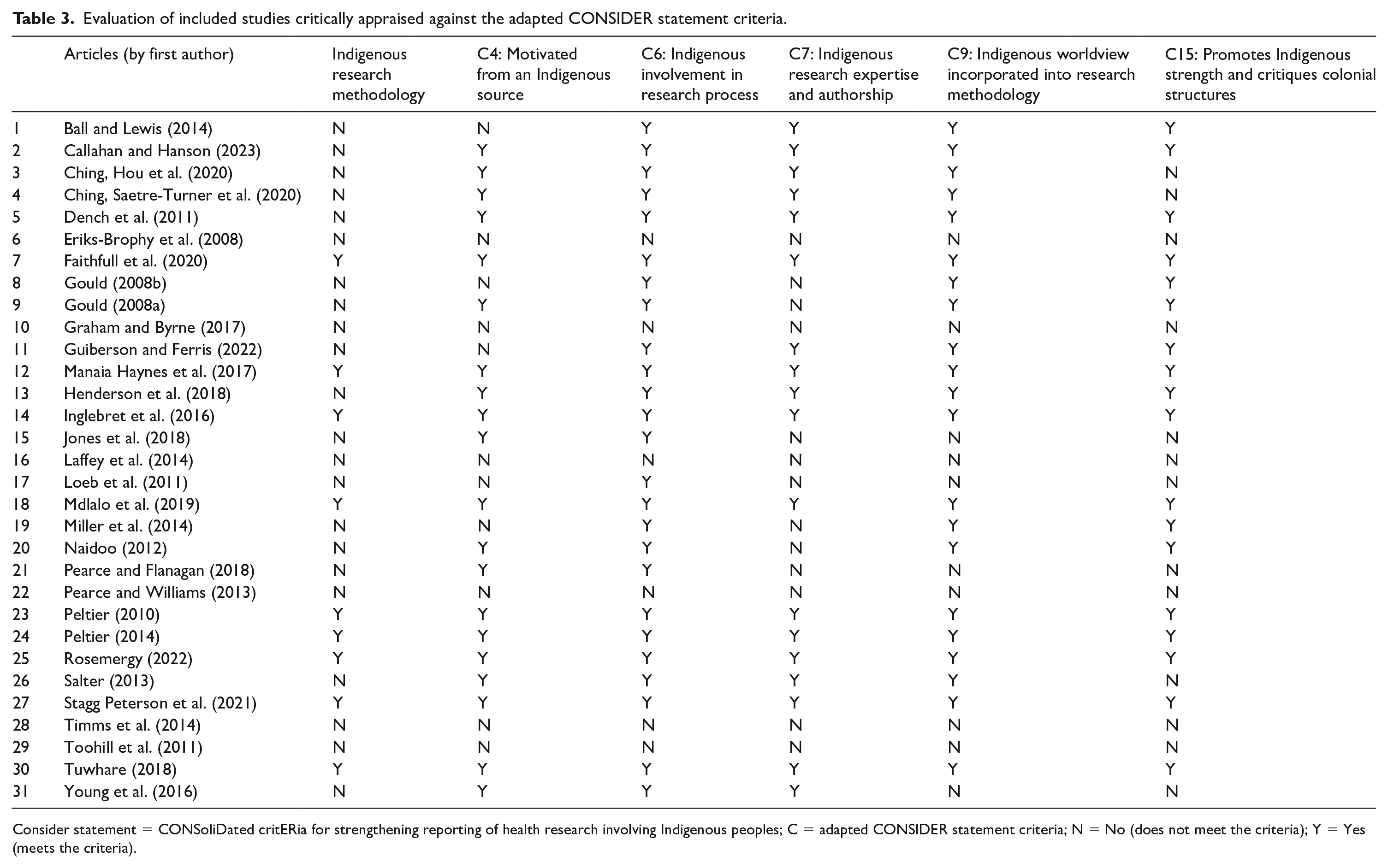
Consider statement = CONSoliDated critERia for strengthening reporting of health research involving Indigenous peoples; C = adapted CONSIDER statement criteria; N = No (does not meet the criteria); Y = Yes (meets the criteria).
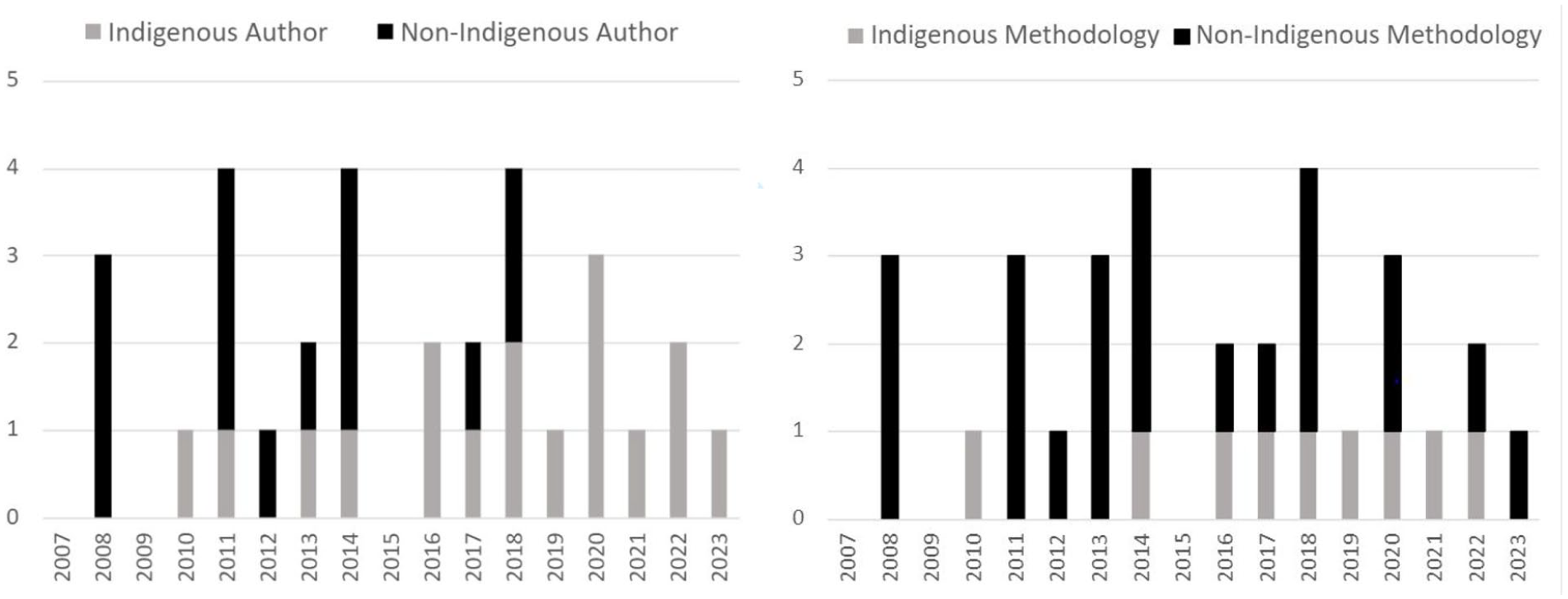
Number of included studies with Indigenous author(s) or Indigenous methodologies.
Table 4 summarizes the included studies from each country, showing how many met all six CONSIDER statement criteria and how many fit within each general topic and SLT focus area. Although only small numbers of studies were included, Aotearoa, South Africa and Canada had the highest percentages of studies meeting the CONSIDER statement criteria. Australian authors published the greatest proportion of studies included in the scoping review, with a strong focus on hearing and language, but none of these met all CONSIDER statement criteria and none investigated SLT interventions. All four intervention studies were conducted in the USA, and just one of these met all CONSIDER statement criteria (Inglebret et al., 2016). The four service delivery–focused studies from Aotearoa all met the CONSIDER statement criteria and used qualitative methodologies to explore the experiences of Māori speech-language therapists, how kaiako (educators) and whānau (families) engaged with SLT services, and how non-Māori speech-language therapists without competency in Te reo Māori can support tamariki Māori in Te reo Māori-immersion education settings.
Number of articles or theses from each country, general topic and area of SLT focus.
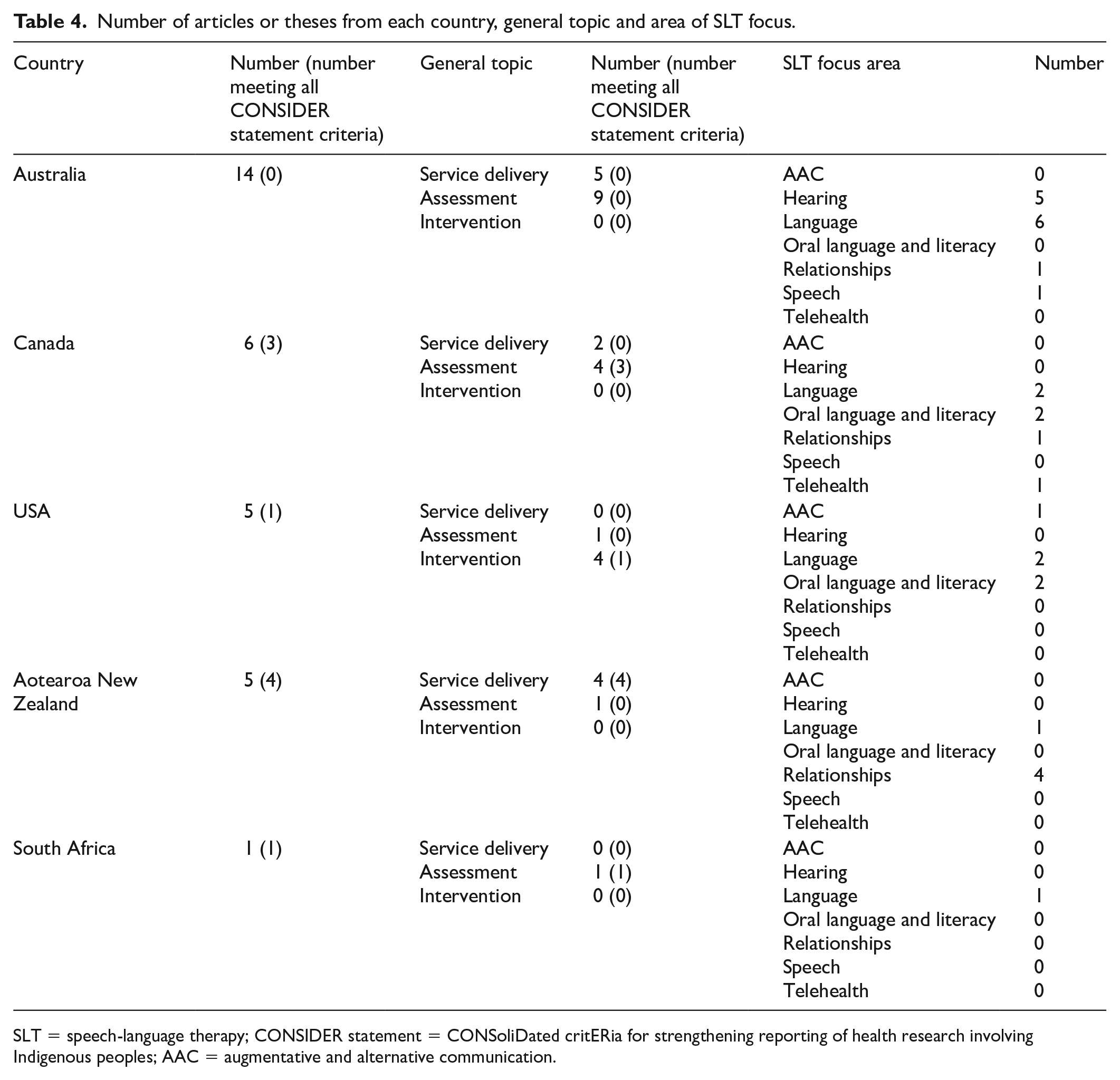
SLT = speech-language therapy; CONSIDER statement = CONSoliDated critERia for strengthening reporting of health research involving Indigenous peoples; AAC = augmentative and alternative communication.
Discussion
The overarching purpose of this scoping review, to document Indigenous SLT publications globally, was to answer two questions: First, which SLT research focuses on the interests of Indigenous communities? If the topic of the research is derived from the Indigenous communities that the research is about, one would expect there to be a significant Indigenous component to the research, in its authorship, design, methodology and participants. This recognizes and embeds Indigenous data sovereignty and has an ultimate focus on transforming speech, language and communication outcomes for the children of those populations. Second, which Indigenous communities have had success in providing speech, language and communication support, that is derived from their Indigenous knowledge systems, for their children? This would assume that research reporting these phenomena would be Indigenous led, acknowledging and elevating the Indigenous voice and Indigenous knowledge systems as valid and legitimate pedagogical methodologies in supporting Indigenous children with SLCN.
The adapted CONSIDER statement (Huria et al., 2019) criteria offers a pathway to critically appraise research based on Indigenous paradigms regarding what should be culturally safe Indigenous research practices. In addition, the criteria help us to identify the extent of Indigenous data sovereignty and how Indigenous self-determination is reflected through the research. Our finding that only nine publications globally returned a Yes against all the CONSIDER statement criteria highlights the inequities in speech-language and communication support and resources for Indigenous populations worldwide.
The nine papers meeting all six CONSIDER statement criteria are considered in more detail here as they provide insights into future directions for SLT research. Starting in Canada, Peltier’s (2010) thesis titled Valuing Children’s Storytelling from an Anishinaabe Orality Perspective, explored differences in the priorities of Indigenous peoples compared to Western ideologies. The thesis highlights the discrepancies between Indigenous and Western theories of success in terms of speech, language and communication skills. In her 2014 paper, Assessing Anishinaabe Children’s Narratives: An Ethnographic Exploration of Elders’ Perspectives, Peltier explored Anishinaabe (a group of culturally related First Nations inhabiting the Great Lakes region, Canada and USA) elder’s attitudes toward and evaluation of children’s narratives. As well as creating a research paradigm for future researchers, this work informs narrative elicitation and assessment processes used by speech-language therapists and teachers working with Indigenous children. Importantly, it was undertaken by an Anishinaabe researcher, grounded in an Anishinaabe community.
Continuing the work of Peltier (2010, 2014), Stagg Peterson et al. (2021) investigated dynamic assessment and small-group play-based contexts supporting First Nation children’s standard English language development. They identified children who might need additional supports by redesigning assessment tasks, so they were culturally informed and took a dynamic assessment approach, in collaboration with an early childhood teacher from the children’s First Nation community and described the Standard English language abilities of the children based on English language norms. The research recognizes that the assessment measures that were used and implemented needed modification to include dynamic assessment practices and vocabulary support via the input of local Indigenous educators to potentially provide a framework for culturally sensitive speech and language services for young First Nation children.
These three Canadian studies showed that co-design and co-creation between speech-language therapists and Indigenous communities foster better outcomes for Indigenous children. While this research rated well against the CONSIDER statement (Huria et al., 2019), the focus was still on the English speech and language skills of Indigenous children. Recognizing that if a speech or language difficulty is identified, it will present in all languages that the child possesses, it prompts the question of how the modified assessment provides evidence to assist in planning and intervention for the children’s Indigenous language.
Inglebret et al.’s (2016) study conducted in the USA applied a differentiated instructional (DI) approach, demonstrating how it facilitates incorporating tribal perspectives into elements of the school curriculum. This study investigated the DI approach based on the principles of valuing diversity and recognizing that all students have the capacity to learn. Components of DI derived from the curriculum design project involving collaboration with tribal and non-tribal educators, tribal elders and other professionals are described, and a case study of an Indigenous ninth-grade student with profound, bilateral hearing loss and a cochlear implant is presented. The student, who was a member of the Skokomish Nation, provided a rich narrative reflection about DI and its relationship to his traditional cultural education. Inglebret et al. (2016, p. 53) described DI as a culturally congruent practice and concluded that speech-language therapists “can play an active role working with teachers to use culturally based DI.”
Only one study meeting the criteria (Mdlalo et al., 2019) was conducted outside of North America or Australasia. In the culturally and linguistically diverse nation of South Africa, Mdlalo et al. (2019) critiqued culturally biased assessment instruments and practices for children who speak English as an additional language. This research emphasized the importance of understanding the cultural and linguistic background of the child and how it influences their response to the assessment.
Employing kaupapa Māori research, three theses and one published article came from Aotearoa. Recognizing the low numbers of Māori speech-language therapists with competency in Te reo Māori, Manaia Haynes et al. (2017) investigated how non-Māori speech-language therapists with no Te reo Māori can work with children in Māori-medium education. Faithfull et al. (2020) explored the SLT experiences of whānau and teachers in kaupapa Māori education. Kaupapa Māori education is a collective of Māori-immersion education that prioritizes Māori knowledge and philosophy delivered outside the state English-medium schooling system—including, but not limited to, kōhanga reo and kura kaupapa Māori (Ministry of Education, 2024), including therapy outcomes and interactions between the speech-language therapists and whānau. This work builds awareness of whānau experiences to inform SLT practice and stimulate critical thinking and self-reflection. In the work of Tuwhare (2018), we learn from Māori speech-language therapists about how they foster therapeutic relationships and whakawhanaungatanga when working with tamariki Māori and their whānau. Also learning from Māori speech-language therapists, Rosemergy (2022) asked what they believe is important in their own practice of tikanga when working with tamariki and whānau Māori (Māori families) for communication needs. Rosemergy (2022) observed that SLT was developed within European cultures and remains Eurocentric but that the field is moving toward culturally safe practice through different frameworks and new research.
Irrespective of their quality against the critical appraisal criteria, the scale and coverage in any one area of practice of the papers identified by this scoping review do not provide speech-language therapists with robust evidence to inform their practice with Indigenous children. In addition, these studies can be broken down further as relating to a specific Indigenous population. It is not appropriate to take SLT services that are proven to be effective for one Indigenous population and implement them across diverse Indigenous groups. This application of evidence does not consider individual and collective identity of Indigenous peoples and their belonging to, and connections with, ancestral languages, lands, knowledge systems, customs and worldviews. For example, although Australia has produced the most publications identified by this scoping review (n = 14), a 2021 report noted 123 distinct Indigenous languages in Australia (Australian Institute of Aboriginal and Torres Strait Islander Studies, 2021). Thus, the findings of these 14 studies cannot be generalized to all Aboriginal and Torres Strait Islander Peoples, as they focus on specific Indigenous groups with distinct languages. Similarly, the work of Peltier (2010, 2014) with Anishinaabe children cannot be applied directly to Inuit (Indigenous peoples of northern Canada, parts of Greenland and Alaska, USA) children; Métis (Aboriginal Peoples of Canada descending from mixed European and Indigenous ancestry) children; or any other Indigenous Canadian children. When placed in context in this way, the dearth of research about SLT for Indigenous children is even more evident.
Strengths and limitations
A strength of this scoping review is that it was undertaken by a multidisciplinary Indigenous research team. In addition, the use of the CONSIDER statement criteria to critically appraise the articles from an Indigenous perspective is also a strength. However, the application of this was limited by the lack of detailed information that was provided in many of the publications, for example, some research may have included Indigenous researchers but, due to publication conventions, this was not stated anywhere. This review is unlikely to have captured all SLT research works, using Indigenous methodologies, for Indigenous children with SLCN, as some relevant studies may not be published in journals accessed by our search strategy. Our literature search resulted in the inclusion of only one thesis from outside Aotearoa: Peltier’s (2010) study, but there are likely other relevant theses that were not found. Similarly, since Indigenous knowledge and research are not always published in academic journals, high-quality Indigenous SLT research may have been missed. Finally, we only included literature published in the English language. This is problematic for Indigenous research, which would ideally be conducted and published in Indigenous languages.
Conclusion
This scoping review has revealed small pockets of SLT research for children from Indigenous communities around the English-speaking world. Disappointingly, only nine studies met all six criteria adapted from the CONSIDER statement which provides guidelines for reporting equitable research practices involving Indigenous peoples. Thus, the scoping review did not reveal a significant body of research led by Indigenous research teams, using Indigenous methodologies. This means that SLT as a worldwide profession does not have an evidence base through which to meet the rights of any group of Indigenous peoples, as expressed in the UNDRIP (United Nations General Assembly, 2007). There is an urgent need for quality research to inform those who help Indigenous children with their speech, language and communication development. Because “Indigenous peoples have the right to self-determination” (United Nations General Assembly, 2007, p. 4), this research must be led by Indigenous research teams, embedded within Indigenous communities.
Footnotes
Acknowledgements
The authors acknowledge the contribution and support of Raewyn Malone during team wānanga (deliberations) to review and discuss the literature articles included in this scoping review.
Authors’ note
Declaration of conflicting interests
The authors declared no potential conflicts of interest with respect to the research, authorship and publication of this article.
Funding
The authors disclosed receipt of the following financial support for the research, authorship and publication of this article: This work was funded by Cure Kids, A Better Start National Science Challenge, and Teaching and Learning Research Initiative.

Glossary
Anishinaabe a group of culturally related First Nations inhabiting the Great Lakes region, Canada and USA
Inuit Indigenous peoples of northern Can-ada, parts of Greenland and Alaska, USA
kaiako educators
Kanaka; Kanaka Maoli Indigenous peoples of Hawaii
kaupapa Māori Māori way
kawa protocol
kōhanga reo Māori language nests
kura kaupapa Māori Māori-immersion schools
Maoli Indigenous peoples of Hawaii
Māori; Maori; Maaori Indigenous peoples of New Zealand
Métis Aboriginal peoples of Canada des-cending from mixed European and Indigenous ancestry
Pacifika; Pasefika; Pasifika Pacific
puna reo Māori-medium early learning centers
rūmaki Māori language units within English- medium schools
tamaliki children
tamariki children
tamariki Māori Māori children
tangata moana people of the sea
tangata whenua people of the land
Te Aho Matua the legislative framework and philosophical base for the teaching and learning of children in kura kaupapa Māori
Te Kohanga Reo the language nest
Te Korowai Charter Undertaking by Te Kōhanga Reo National Trust Board as the management of Te Kōhanga Reo
Te reo Māori the Māori language
tikanga correct procedure or custom
whakawhanaungatanga a process of establishing and main-taining relationships
whānau families
whānau Māori Māori families