




Abstract
The aim of this study was to develop research-based pre-teacher education pedagogies in the context of Indigenous teacher education, focusing on Sámi (Indigenous people of Sápmi— Scandinavia and Kola Peninsula, Russia) communities and investigating the reflections of preservice teachers on their participation in research-based pre-teacher education as part of a Sámi teacher education development project in Norway. Utilizing the storytelling method, preservice teachers collected language data from Sámi children in kindergartens and schools. The study sought to understand the experiences of five participative preservice teachers during the data collection process, as recorded in their diaries. This study proposes a method to indigenize research courses within Indigenous teacher education programmes at tertiary education levels. Research in higher education practices within Indigenous institutions contributes to the advancement of Indigenous higher education and provides critical insights into diverse methods, goals, and contexts of conducting research in higher education settings.
Keywords
Introduction
This article presents a collaborative participatory research project focused on language research among young children (5–8 years) in the Sámi (Indigenous people of Sápmi— Scandinavia and Kola Peninusula, Russia) teacher education study programme. It aims to indigenize teacher education in the context of Sámi education, serving as an emancipatory tool in Sámi kindergartens and schools. This initiative is part of the broader Epistemic Modality in Expressions of Ethics and Morals in Child Language research project, supported by the Research Council of Norway.
Indigenization in this context involves integrating a variety of cultural practices and Indigenous knowledge into higher education curricula (Ragoonaden & Mueller, 2017). This approach respectfully acknowledges and preserves Indigenous wisdom as a vital part of Indigenous education, countering the loss of this knowledge caused by colonialism, globalization, and modernity (May & Aikman, 2003). The Sámi University of Applied Sciences (SUAS) (Figure 1) has been at the forefront of these developments, offering programmes in Sámi language, social sciences, teacher training, and more, primarily conducted in Sámi language. With the inception of SUAS in 1989, it has been dedicated to addressing the specific needs of the Sámi community, evolving into a comprehensive institution with a wide range of study programmes (Sámi allaskuvla, 2021).
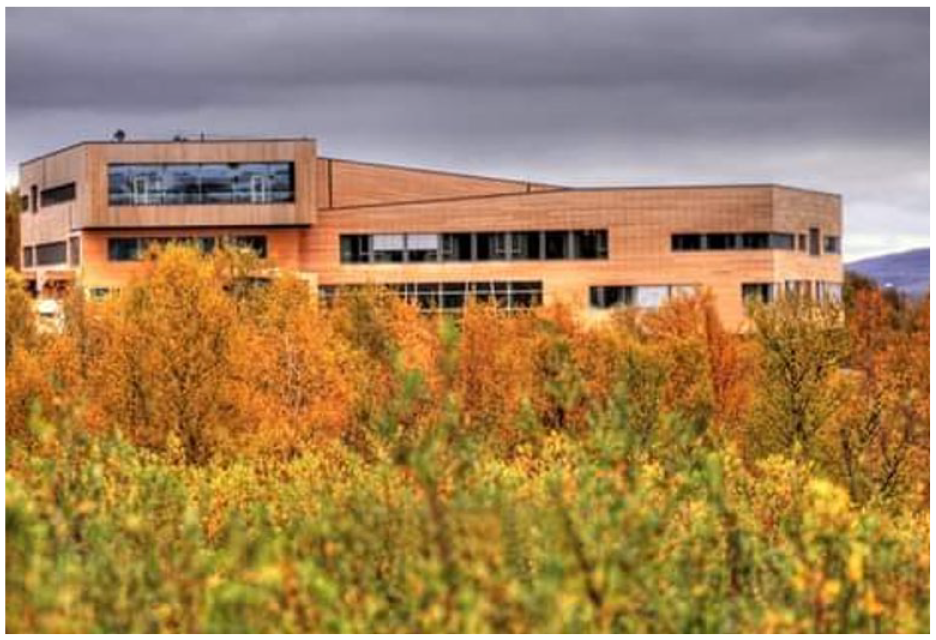
Diehtosiida Campus, Kautokeino, Norway (photo by Sámi University of Applied Sciences).
Concurrently, this project aligns with the Norwegian government’s efforts to elevate the quality of education through enhanced teacher education programmes. This is manifested in the introduction of new 5-year integrated master’s degree programmes for primary and lower secondary teacher education since 2016, reflecting national and Sámi-specific educational reforms (Advisory Panel for Teacher Education, APT, 2020). The master’s programmes discussed in this article stem from the Norwegian teacher training reforms initiated in 2016, incorporating both national and Sámi-specific guidelines for teacher education (Kunnskapsdepartementet, 2016a, 2016b).
In the context of this research, research project created a collaboration with the Sámi preservice teacher education programmes’ students for grades 1–7 and 5–10 to gather research data. Emphasizing research-based activities, the aim was to equip preservice teachers with the skills and knowledge necessary for conducting research in kindergartens and schools, thus contributing to the development of Sámi education within an institutional Indigenous framework. This effort is directed toward moulding Sámi preservice teachers into research-oriented educators, a cornerstone of contemporary teacher education (Somby & Olsen, 2022).
The data collection by student teachers was an integral part of their coursework in Sámi language and pedagogy subjects, aimed at acquainting them with research processes and preparing them for future master’s thesis work. Of the eight students in the class, five consented to participate in this project. This small number reflects the intimate scale of SUAS, which hosts less than 200 students and about 40 preservice teacher students across two 5-year study programmes.
This article will discuss the storytelling methods with children employed by preservice teachers and their perceptions of the project. It aims to explore how integrating culturally responsive research-based activities into teacher education can indigenize teacher training, fostering practical pedagogies in kindergartens and schools. The research questions have been refined to align with the theoretical underpinnings of Indigenous research-based teacher education pedagogies, specifically focusing on the innovative aspects of developing Indigenous Sámi school education through a lens of professional competency. The research presented in this article consists of important innovative aspect of developing Indigenous teacher education.
Research with preservice teachers
Integrating reflective practice and Indigenous pedagogies in preservice teacher education
Reflective practice is central to the evolution of teacher education, including in Indigenous contexts like Sámi education. Reflective approaches in preservice teacher education enable candidates to intertwine theoretical knowledge with practical experiences, fostering critical examination of their actions and learning (Avalos, 2010; Körkkö et al., 2016; Ottesen, 2007). This is crucial as the teaching profession undergoes changes that necessitate the development of reflective thinking, supported through educational innovations (Dinkelman, 2003). Indigenous education faces unique challenges, including overcoming centuries of cultural colonialism and developing models that effective incorporate Indigenous knowledge and pedagogies into education (Smith, 1999).
In this context, our study explores how preservice teachers, as novice educators and school developers, navigate research-based activities within their teacher education. These activities are not just about acquiring content knowledge but also about learning new pedagogical approaches that honour Indigenous Sámi childrearing practices and integrate them into teaching. This aligns with the broader aim of reforming teacher education to be more culturally responsive, supporting Indigenous learners’ rights and cultural premises (McCarty & Lee, 2014).
Moreover, effective teacher education, especially in Indigenous settings, requires a multifaceted approach (Zidny et al., 2020). This includes openness to diversity, self-awareness, a commitment to social justice, and experiential learning that respects and incorporates Indigenous experiences and knowledge systems (Riley, 2014). Our collaborative approach in preservice teacher education seeks to address these needs, preparing teachers to effectively contribute to multicultural and Indigenous education environments.
Research with small children
The focus on conducting research with young children aged 5–8 years is crucial, given the individual differences in language ability at these ages and the unique challenges and ethical considerations of research in this demographic (Alderson, 2005; Pons et al., 2003). While this article emphasizes the experiences and reflections of preservice teachers, their engagement in data gathering with small children directly informs their understanding of and competencies in Indigenous pedagogies and research methodologies. This involvement provides practical insights into the specificities of conducting research with children, enhancing the preservice teachers’ skills in culturally responsive teaching and reflective practice.
The connection between preservice teachers’ learning experiences and the broader aims of this study is made explicit through the integration of Indigenous knowledge and practices in their training. This approach not only prepares them for future educational challenges but also aligns with our study’s goal to develop innovative theoretical frameworks for Indigenous teacher education that are responsive to both the educators’ professional development and the unique needs of Indigenous communities.
Methodology: participatory cooperative study in an Indigenous context
This article explores a participatory cooperative study forged through collaboration among researchers, teacher educators, and preservice teachers at the SUAS. This approach is rooted in decolonial research principles, aiming to benefit participants by supporting their learning and institutional development. In an Indigenous context, such as at SUAS, this methodology underscores Indigenous consciousness and employs Indigenous methods of knowing and learning (Wooltorton et al., 2020), thereby addressing the long-standing impacts of dehumanization and racism against Indigenous peoples through education (Smith, 1999).
Setting the scene
Our collaboration necessitated detailed coordination and shared practices, including agreements on collaboration, consent procedures, and the execution of participatory research activities like meetings, supervision, discussions, and engagements with kindergartens and schools. These activities were designed to foster community capacity building and empowerment, crucial for enhancing the well-being of Indigenous communities (Chino & DeBruyn, 2006).
The research focused on two main goals. Initially, it aimed to assess the stage of language acquisition among Sámi children, aligning with the broader educational goals of language development. This phase’s findings, reported separately (Johansen Ijäs, 2021), underscore the importance of supporting minority Indigenous languages to improve educational provisions at all levels. Subsequently, the study innovated traditional storytelling as both an educational practice and a method for data gathering, directly related to this article’ focus.
This approach was chosen for its alignment with Indigenous methodologies, emphasizing respect for and incorporation of Indigenous knowledge systems in research (Smith, 1999). The participatory method allowed for a co-creative process where preservice teachers, informed by theoretical and practical training, applied storytelling to engage with children, facilitating a culturally appropriate avenue for language and ethical judgement exploration.
Data gathering
Data gathering process was designed as a two-way development task, tailored to the Indigenous education context. This task involved two main objectives: first, to design an innovative method for collecting material that resonates with Indigenous pedagogical practices; and second, to utilize traditional storytelling as a means to facilitate child language development and ethical discourse.
Preservice teachers, after establishing a rapport with the children, engaged them in storytelling sessions. These sessions aimed to provoke discussions around ethical judgements, with the preservice teachers documenting their observations and reflections in diaries. This method not only empowered the storytelling process but also allowed for the collection of rich, qualitative data reflective of the preservice teachers’ experiences and the children’s responses.
Data analysis
The analysis was conducted on diaries from five master’s students in preservice teacher education, providing approximately 10 pages of text in total. The diaries, initially written in the preservice teachers’ first languages, were meticulously translated to English, ensuring the fidelity of their reflections and the nuances of Indigenous perspectives were preserved. These texts were a reflection on their experiences collecting language data from children to structured questions posed by the preservice teachers.
Despite the relatively small size of the data set, it offers valuable insights into the preservice teachers’ perceptions of working with young children in a research context. This information is crucial for understanding the support and resources needed to facilitate preservice teachers’ engagement with indigenization and research-oriented teaching in Indigenous languages.
A thematic analysis was employed to explore the preservice teachers’ reflections, utilizing Atlas.ti to identify emerging themes. The analysis revealed three primary categories: excitement, data gathering experiences, and perceptions of children as participants. These categories illuminate the preservice teachers’ emotional states, their practical engagement in the research process, and their observations on the involvement of children in research.
Ethical considerations
Ethical considerations were paramount throughout the research process, ensuring a respectful and secure environment for all participants. Preparatory visits by preservice teachers were essential for establishing familiarity and trust with the children, contributing to a safe and comfortable setting for the research. Comprehensive consent procedures were developed in collaboration with guardians, securing informed consent from kindergarten and school leaders, as well as teachers and parents. The entire process was underpinned by an ethical review from the Norwegian Centre for Research Data, affirming commitment to the highest standards of ethical research practice in engagements with young children.
Results: insights from preservice teachers’ storytelling experiences
This section elucidates the preservice teachers’ perceptions and experiences derived from employing a storytelling method for data gathering with small children, emphasizing the innovative aspects of this approach within Indigenous Sámi education.
Excitement and preparation before the study
Preservice teachers underwent thorough preparation, including the development of stories and a methodology emphasizing discussive interviews post-storytelling, aligned with consultative mentoring practices recognized for their effectiveness in teacher preparation (Walkington, 2005). Despite this preparation, preservice teachers expressed a mix of excitement and apprehension, highlighting an area for enhancement in their training, particularly in engaging young children in meaningful discussions. For anonymity their comments are coded: PTE1, PTE2, and so forth.
To engage with the children effectively, I realized the importance of not just preparing the material but also preparing mentally for the unpredictable dynamics of children’s interactions. The initial nervousness transformed into a valuable learning experience, underscoring the complexity of research with young children and the necessity of adaptability in teaching methods. (PTE1)
This sentiment underscores the need for comprehensive preparation in teacher education, addressing the dual aspects of content delivery and emotional readiness for interactions with children (Fullan & Hargreaves, 1991).
Connecting experiences with theoretical frameworks
The preservice teachers’ experiences reflect the theoretical underpinnings of Indigenous pedagogies and the emphasis on reflective practice within teacher education. Their narratives reveal an ongoing process of learning to navigate the complexities of Indigenous Sámi education settings, engaging with children at a level that respects their cognitive and moral development stages. This learning process is not only about acquiring a methodological skill set but also about embracing the cultural and ethical dimensions of working within Indigenous communities (Christensen & James, 2017; Savery, 2015). When the preservice teachers shared their experiences, ideas based on the study design also provided insights into the wisdom of organizing this kind of research with small children. The research group received critical observations based on student views on how the study design functioned when conducting the research with small children (Einarsdóttir, 2007); how complicated it was to conduct this kind of action with small children; and that the children were able to discuss at various levels—some more than others. The preservice teachers also learned a great deal during the preparation for data gathering about the cognitive and moral development of small children. They soon realized that, sometimes, it was hard to make the children talk: I went to kindergarten yesterday to get to know the kids. I had an opportunity to meet those kids who would attend the study. I realised already by then that the kids were quite quiet. (PTE2)
Like researchers in general, the preservice teachers indicated that discussing with small children in research settings is complicated (Blaisdell et al., 2019). The study served as an important opportunity for preservice teachers to develop their communication and research competencies in settings involving small children. Preservice teacher education plays a crucial role in preparing preservice teachers for self-efficacy and identity (Pendergast et al., 2011): Preparation is important. It was beneficial to make connections with the children because we had no prior knowledge about them in an institutional setting to conduct research-based activities and gauge how the children react. (PTE3)
Having diverse experiences in educational settings is beneficial. During such competency building activities, a foundation for teachers’ profession can be established (De Janasz & Sullivan, 2004). Despite the preparation, it appeared that the preservice teachers struggled with the unknown situation. The planning of the study are important factors (Drew et al., 2007). One student expressed fear and had many concerns about how the work would proceed. Another student pondered what would happen if the children did not start talking: Before going there, I was quite afraid, and I had many thoughts about how I could succeed. What happens if the children do not collaborate with me at all? This was one of my concerns. I thought it should proceed as it happens. It is just how it is, and I was prepared to accept it as it came. Fortunately, it seemed to have gone well. (PTE4)
The preservice teachers were nervous about going to schools and kindergartens and meeting the children, despite having prepared well and received supervision for their preparations. They reported having time to think about different solutions, which helped them interact with the children. For preservice teacher education to be effective, the programme should include multiple practice opportunities so that the preservice teachers can confront their own perceptions and strategies, become aware of them, and receive dialogical supervision to become reflective practitioners in their profession (Barnyak & Paquette, 2010).
It is crucial to prepare preservice teachers thoroughly before they begin conducting research. Experiences gained during their studies provide them with the skills and competencies they will need in their careers. There are many benefits to these situations, such as those required for their master’s theses. These experiences helped them improve their communication with children and, ultimately, helped the preservice teachers become school developers later on when they started working as teachers after graduation.
The alignment of preservice teachers’ experiences with theoretical frameworks, particularly in the context of Indigenous pedagogies and reflective practice, underscores the invaluable role of immersive, hands-on learning in educator preparation. These narratives and observations highlight the intricate dance between theory and practice, demonstrating how theoretical knowledge is both applied and expanded upon through direct engagement with diverse educational settings (Aronson & Laughter, 2016). Ultimately, this synergy not only enhances preservice teachers’ methodological skills and cultural competencies but also fosters a deeper, more nuanced understanding of their future roles as educators in a complex and evolving educational landscape.
Preservice teachers’ thoughts on how to conduct the study with small children
This sub-chapter delves into the reflections and insights of preservice teachers on the methodologies and challenges of conducting research with small children. It captures their detailed experiences, strategies of engagement, ethical considerations, and the learning curve encountered in kindergarten and school settings. Through examples, it illustrates how preservice teachers navigated the complexities of interacting with children, the importance of preparation, and the adaptations required to ensure meaningful, respectful, and effective research practices. This exploration sheds light on the critical aspect of research with young participants, offering valuable lessons on the integration of theory and practice in educational research (Avraamidou, 2013).
Preservice teachers detailed their experiences of data gathering in kindergarten and school: Initially, I presented myself to the kids, explaining that I was a student, the nature of my study, and how would I be recording our conversation. I began with storytelling, using a voice recorder to capture the session. The children were attentive, focusing on the stories and the pictures brought. (PTE5)
The preservice teachers devised their interview methods carefully. One student expressed concern about influencing the children’s responses too much, prompting reflection on improving their approach in such situations: Reflecting on this, I became concerned that I might overly influence the children’s responses. I questioned how I could better navigate this situation. Despite asking all my prepared questions, and the children responding quickly, I found myself needing to think additional topics on the fly. This experience taught me the importance of better preparation. (PTE6)
These accounts indicate significant learning by the preservice teachers about conducting research with children. Each interaction was unique, highlighting the importance of firsthand research experience and understanding children’s perspectives (Ritala-Koskinen, 2001): Upon reviewing the data gathering process, I worried about influencing children’s responses. After quickly receiving answers to my initial questions, I had to decide what else to discuss. This underscored the need for more open-ended questions and the importance of preparing for children’s reactions to my feedback. The presence of a recording device made the situation somewhat unnatural for everyone. (PTE7)
These experiences are crucial for preservice teachers, teaching them how to effectively question children and respond during interviews. Such reflections are invaluable for developing the skills necessary for future research endeavours and fostering independence in planning and conducting research (Aktas, 2015). The realization that research data from children can be limited was also a key takeaway: The project was unique. Despite not being completely satisfied with the outcome, due to the possibility of gathering more data through different approaches, the experience was positive overall. (PTE8)
Data gathering with children varies greatly; sometimes, abundant data are provided, and sometimes very little. Reflecting on a perceived lack of data led preservice teachers to consider how to improve data collection and build confidence with children: Despite spending time with the children beforehand, I felt I lacked confidence. Knowing the children better could have facilitated the data gathering process. (PTE9)
Gaining familiarity with the children and the setting is crucial. While not always possible, having someone familiar to the children conduct the interviews, or visiting the institutions beforehand, can enhance the research process. Careful planning is essential to create a natural environment for the children, utilizing techniques like storytelling.
The project offered preservice teachers valuable experience in conducting research with small children, enhancing their skills and confidence in complex, multilingual settings. The collaboration with researchers and the hands-on experience were particularly beneficial: This project was special, leaving me very happy after the storytelling session. (PTE10)
This sub-chapter has illuminated the nuanced perspectives of preservice teachers on conducting research with small children, emphasizing the imperative for thoughtful preparation, sensitivity to the children’s cognitive and emotional stages, and the ethical considerations inherent in such research. The reflections shared here underscore the challenges and rewards of engaging young participants in educational studies. Through their experiences, preservice teachers not only honed their methodological skills but also deepened their understanding of child-centred research practices (Diaz-Maggioli, 2004). This journey highlights the importance of adapting research methodologies to suit the unique needs and dynamics of working with children, thereby contributing to the broader field of educational research with invaluable insights into the delicate balance of facilitating meaningful participation while safeguarding the well-being of young learners.
Discussion
The present study reveals that the preservice teachers felt uncertain in their ability to effectively employ storytelling technique. There is pronounced need to reinforce the method of storytelling method across kindergartens, primary schools, and vocational education. This reinforcement would ensure that by the time students reach teacher education, they have a robust foundation in traditional heritage and storytelling skills. Storytelling, an integral part of cultural heritage and a cornerstone of Indigenous education, must be emphasized not only in educational institutions but also at home (Keskitalo & Gaup, 2021). A deeper understanding and confidence in storytelling among preservice teachers are crucial for engaging diverse student groups in Sámi schools, enabling them to act as proactive contributors to educational development.
Our study also highlights the positive experiences of preservice teachers working in participatory methods, closely collaborating with researchers and experts within the teacher education programme. Their contributions were vital in navigating the complex landscape of multilingual and multicultural Indigenous education. This aligns with findings from Rahko-Ravantti (2016) which pointed out the challenges related to the scarcity of resources, culturally responsive learning materials, and support for Sámi language education. Meanwhile, Norway has been pioneering in integrating Sámi education, with the establishment of a national Sámi school and curriculum since 1997 and Sámi teacher education since 2010, progressing to master’s level education from 2017 onwards.
This research, carried out through traditional storytelling in supervised collaborative efforts with research team, underscores the importance of comprehensive competency in multicultural environments. As Garmon (2005) suggested, becoming a critical professional in such settings requires extensive competence that can only be developed through dedicated efforts in situational learning, multicultural and intercultural competency enhancement, and reflective practices among preservice teachers. Awareness and understanding of Sámi and Indigenous education principles are paramount. Thus, building competency building in delivering education based on the principles of Sámi pedagogy is essential (Keskitalo et al., 2013), providing preservice teachers with opportunities to engage in such meaningful educational practices (Garmon, 2005).
The research that have been conducted introduces several contributions to the field of Indigenous education, particularly in the context of Sámi communities and educational systems. Research provides new perspectives on blending Indigenous knowledge systems with western educational practices, showcasing how such integrations can enhance learning outcomes for Indigenous students. Highlighting the benefits of collaboration between student teachers and senior researchers in Indigenous context offers empirical support for models of research that are inclusive of Indigenous methodologies and perspectives. This kind of action is likely to contribute to the ongoing efforts to decolonize education by providing insights into how Indigenous and non-Indigenous educational systems can coexist and benefit from each other’s strengths. By cantering Indigenous student voices, experiences, and epistemologies, this work contributes to a greater understanding and appreciation of the diversity and richness of Indigenous educational practices and philosophies. By offering case study as an example of successful educational initiatives within the Sámi communities provides practical insights and best practices that can be applied or adapted in other Indigenous educational contexts.
Conclusion
The article outlines a participatory research project involving preservice teachers and young children within the Sámi educational context. Notably, the study leveraged a collaborative approach, with Sámi education and language experts forming a research group that included preservice teachers. Together, they developed a Sámi storytelling method to explore young small children’s expressions in the Sámi language. While the focus of the article in on the reflections of preservice teachers post-data collection, its goal is to shed light on their experiences with this innovative approach and the significance they attributed to the project.
The research emerged as a collaborative learning platform, underscoring the necessity of broad cooperation for high-quality learning outcomes (Burns et al., 2015). The mutual learning experience between researchers and preservice teachers was profound, with the latter group gaining significant insights from conducting and preparing for interviews with young children. Besides honing the traditional storytelling technique, the project emphasized its application as a data collection method through child-centric discussions.
Challenges encountered by preservice teachers in researching with young children were paralleled by numerous benefits, including the opportunity to engage with children in a research context, preparedness for such engagements, and navigating the accompanying challenges. Despite their thorough preparation, preservice teachers faced feelings of uncertainty and insecurity when entering schools to work with children. Nonetheless, this process, encompassing school visits for storytelling and the associated preparatory and reflective experiences, enriched the preservice teachers with a wealth of thoughts, feelings, and competencies.
Understanding the values, conceptual grasp, readiness, and pedagogical method application by student teachers during their training is crucial for preparing them for their future roles (Shulman & Shulman, 2009). This research advocates for the inclusion of novice researchers in projects to foster the next generation of researchers and disseminate hands-on research knowledge. The involvement of educational programmes in research projects, especially those that innovate in data collection methods for interviewing young children, is vital, particularly within Indigenous education contexts (Helander et al., 2022). Indigenous education faces unique challenges, including imbalanced power dynamics, historical complexities, and children’s informal communication styles, necessitating the development of culturally sensitive research methods.
This case exemplifies how preservice teachers can be empowered to become effective school developers. It showcases the potential for research and innovation in the Indigenous research field to enhance our understanding of working with young children. We encourage further studies and innovative approaches involving preservice teachers and children, particularly those from Indigenous and minority language backgrounds, to explore the use of traditional storytelling as a research methodology with young children. Further research is essential to expand our knowledge and application of these methods.
The collaboration between experienced professionals and emerging scholars holds particular significance in Indigenous contexts, connecting theoretical frameworks in education with the real-life experiences of Indigenous communities. This approach enables student teachers to gain a profound understanding and appreciation of research and teaching from an Indigenous perspective. Engaging in this manner is an intentional effort to reduce the prevalence of western ideologies in these areas. This method enriches the educational journey of student teachers and is crucial in the broader effort to decolonize education. It achieves this by acknowledging and incorporating Indigenous knowledge systems and methodologies, thus contributing to a more inclusive and equitable educational environment.
This research enriches the theoretical discourse on the indigenization of higher education, especially within teacher education programmes. It advocates for a comprehensive reevaluation and transformation of curricula, pedagogies, and research methodologies to resonate with Indigenous knowledge systems, values, and the needs of the community. This shift challenges and expands upon prevailing theories related to curriculum development and instructional strategies. Conducted in this context, the study highlights the significance of embedding Indigenous methodologies that prioritize relationality, respect, and reciprocity throughout the research process. By doing so, it questions dominant educational research paradigms and suggests alternative frameworks that more accurately reflect Indigenous ways of knowing and learning. Grounding reflective practice within Indigenous contexts and methodologies significantly contributes to the professional growth of preservice teachers, advocating for its integration into teacher education curricula. The research also theoretically examines how teacher education programmes can aid language revitalization, proposing a model that merges language learning with preservation efforts within educational frameworks. Moreover, it underlines the crucial role of community engagement in Indigenous teacher education, providing theoretical insights on structuring such involvement and its influence on educational results. This enriches the dialogue on community-based education and its importance in Indigenous settings. Ultimately, this study offers a substantial contribution to understanding Indigenous epistemologies and pedagogies, demonstrating their effective incorporation into teacher education programmes. This bears implications for learning and teaching theories aiming to embrace a broad spectrum of cultural and epistemological perspectives.
Footnotes
Author’s note
Declaration of conflicting interests
The author declared no potential conflicts of interest with respect to the research, authorship and publication of this article.
Funding
The author disclosed receipt of the following financial support for the research, authorship and publication of this article: Norges Forskningsråd (287517).

Glossary
Sámi Indigenous people of Sápmi—Scandinavia and Kola Peninsula, Russia