




Abstract
Indigenous research frameworks are key to enhancing cultural safety for participants, while facilitating capacity building for Indigenous researchers. Indigenous frameworks can address and balance out the potential harms of western research methods. This methodology article describes the experiences of an Indigenous research team in Western Australia (WA) and the developed research framework titled Moorditj Moort Boodja (Solid Family and Country) for the Next Generation Aboriginal Youth Well-being Project in WA. This project engaged 830 young Indigenous participants between 10 and 24 years of age from WA. This project collected key health data from youth and caregivers and resulted in the development and implementation of the On the Ground Community Relational Framework for research engagement. This article adds to the knowledge on cultural safety for Indigenous participants and researchers undertaking Indigenous focused research.
Introduction
This methodology article provides a research framework developed by an Indigenous research team with direct kinship ancestry to the region of the data collection completed in Western Australia (WA). The term Noongar is defined as the Australian Aboriginal people and language spoken by the Noongar people originating from the South West region of Western Australia. The Noongar nation is one of the largest Aboriginal nations in Australia and the country of the Noongar people includes Perth and the South West region of WA, with a population of approximately 30,000 people (Hobbs & Williams, 2018). In this context, all five researchers were Noongar people and are considered insider researchers. Data collection occurred from 2018 until 2020 in WA. The title of the developed research framework includes the Noongar words Moorditj Moort Boodja and their English translation means strong family and country. These words were chosen as they symbolise the fundamental strengths and essence of Noongar culture, which is strong family and the importance of the land. The results include the development of the On the Ground Community Relational Framework for Aboriginal research engagement as identified in Figure 1. This framework was successful in the engagement of 830 Aboriginal adolescents, and 364 parents and carers in WA. Results also included the mentoring and capacity building of Indigenous youth peer recruiters. Based on the success of the recruitment strategies applied in WA, the project successfully expanded to the Northern Territory and New South Wales with the overall results of 1,311 adolescents and 595 parents and carers (N = 1,906 total participants). In WA, the study was conducted in Perth, and multiple rural sites in the South West region of WA.
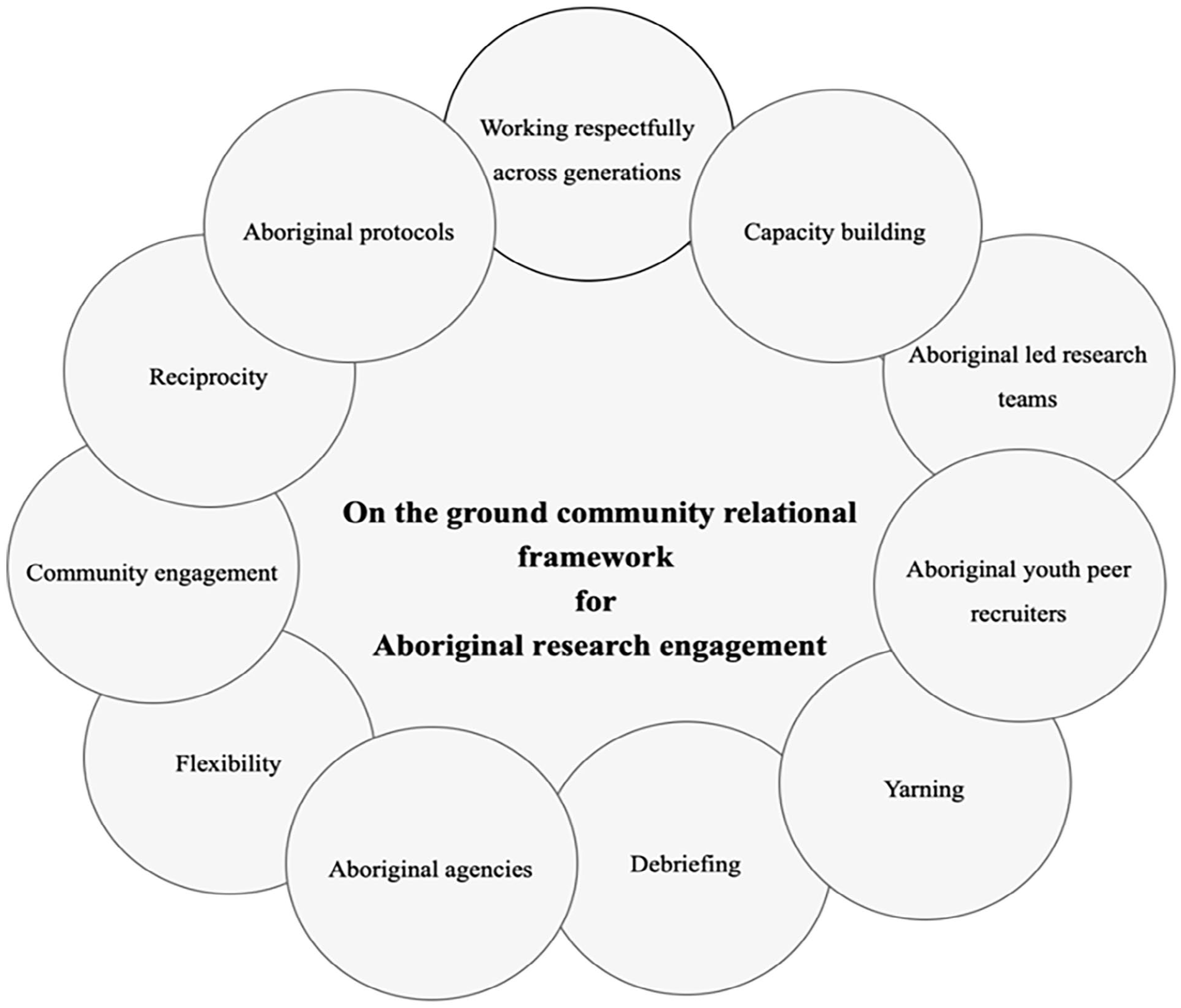
On the Ground Community Relational Framework for Aboriginal research engagement.
The Next Generation Aboriginal Youth Well-being Study commenced recruitment in WA in 2018 and concluded in early 2020. For the purposes of this research, adolescents and young adults are identified as ages 10 to 24 years in keeping with the Next Generation Aboriginal Youth Well-being research protocol (Gubhaju et al., 2019). Aboriginal youth in this phase of life are considered to have health and social challenges, and limited information is known about the needs of this population (Azzopardi et al., 2013). The study focused on the health and wellbeing of young people including physical and mental health, disability, identification of protective factors contributing to health. The study also explored social and environmental conditions including socio-demographic, community, school, and family factors that supported youth health.
The major aims of the study were (1) to establish a cohort of Aboriginal adolescents and young people to quantify patterns of physical and mental health risk and protective behaviours; to identify any major physical and mental health conditions and disability; and (2) to describe the social and environmental context in which Aboriginal adolescents are growing up including community, school, family, and individual-level factors.
The majority of Indigenous Australian adolescents reside in urban and regional areas (Azzopardi et al., 2013). However, limited research has been undertaken in urban settings on adolescent health within Australia (Azzopardi et al., 2013). Furthermore, data collection on the health needs of adolescents in Australia has been described as poorly co-ordinated and contributing to gaps in knowledge for this population (Patton & Temmerman, 2016). Adolescence is a period during which several important biological and social changes occur. It therefore represents a key window of opportunity to implement good habits, patterns, and strengthen Aboriginal cultural health which holds potential to promote positive life trajectories (Azzopardi et al., 2020; Sawyer et al., 2012). A third of the Australian Aboriginal population are aged between 10 and 24 years of age and half of the Aboriginal population are under 25 years of age (Australian Institute of Health and Welfare, 2018). Implementing effective interventions will change life trajectories early for this generation, rather than the current pattern of waiting until poor health and wellbeing outcomes appear later in life. Youth aged 10 and 24 comprise 31.7% of the total Indigenous population and addressing the health needs of this age group has been identified as an important strategy for improving global health, as youth are critical to the future and there is limited research addressing Indigenous youth health (Australian Bureau of Statistics, 2021; Azzopardi et al., 2018). Given concerns on the burden of chronic disease in the Australian adult Aboriginal population and the slow progress in health equity and improvements in life outcomes targets identified in Close the Gap Report, it is of critical importance to gather information that will support knowledge relating to early health trajectories for Aboriginal children and adolescents (Lowitja Institute, 2022).
The role of Indigenous research methodology in project recruitment
It is well known that Western approaches to research have a long problematic history with Indigenous communities (Drawson et al., 2017). Typically, engagement in research in Aboriginal communities is lower due to a historical distrust of research (Kovach, 2010), and what is effectively seen as strangers entering a community to talk about social problems or health issues. The wide-ranging impact of historical trauma in Indigenous communities has led to mistrust and suspicion of strangers who come to interact with Indigenous communities (Heris et al., 2022). The ability of researchers to engage in the community often plays a pivotal role in project outcomes. Wilson (2020) identifies Indigenous research methodology as being about relational accountability and states “as a researcher you are answering to all your relations when you are doing research” (p. 177). Indigenous research methodology underpinned the on the ground relational work completed in Aboriginal communities in WA, and the Aboriginal research team had sound connections to the Aboriginal community. These connections are often more critical than is recognised and as Wilson (2020) points out, research in an Indigenous paradigm demands the question: What is my role as a researcher, and what are my obligations? Wilson (2020) states, “Indigenous people need to do Indigenous research because we have the lifelong learning and relationship that goes into it. You are not just gaining information from people; you are sharing your information” (p. 179). This requires the researcher to be genuine and authentic in community-based research where relational ties, reciprocity and respect are essential elements to research activities such as recruitment and engagement.
A recent Australian review found limited evidence on capacity building strategies for Indigenous health researchers that are critical in the continued success and sustainability of Aboriginal led research (Ewen et al., 2019). The capacity building of Indigenous health researchers remains a critical component of improving the health research agenda in Australia (Ewen et al., 2019). Furthermore, capacity building of Indigenous research is integral to robust research that informs the development of policies and services for the improvement of Aboriginal health determinants and frontline service delivery (Ewen et al., 2019). Importantly, capacity building of Indigenous health researchers has been found to heighten the success of research outcomes, and the results of this study support this finding.
Jamieson et al. (2012) noted the importance of capacity building and preparing for Indigenous leadership in research. Increasingly, Aboriginal research is coming into an exciting new era, where Aboriginal people lead research at every level, and have the capacity to build research teams inclusive of young Aboriginal peer recruiters, and Aboriginal organisations and members of the Aboriginal community. In some respects, this is still quite a new narrative that is emerging, and it should not be underestimated given how powerful and effective this approach is in engaging with the Aboriginal community. Jamieson et al. (2012) describe some of the key principles for conducting health research among Aboriginal populations including, Aboriginal leadership, capacity building, flexibility, respecting communities’ past experiences of research, and supporting community ownership. Liebenberg et al., (2017) identify that flexibility, adaptability, and connection to the community through pre-existing relationships supports building trust and engagement in the research process.
Methods
The project employed a strategy of community consultation across age cohorts including dialogue with youth, adults, and elders prior to engaging in the research. This consultation was considered a critical first step in commencing the research in community and was foundational in providing direction to the project. Important partnerships included the only two Aboriginal Community Controlled Health Organisations in the South West region of WA, Derbarl Yerrigan Health Service and the South West Aboriginal Medical Service. The Next Generation Aboriginal Youth Well-being Cohort Study applied a mixed methods approach, including a first phase qualitative study among Aboriginal young people, parents, carers, and health care providers (Gubhaju et al., 2019). In the second-phase adolescents and young people aged 10 to 24 years of age were recruited and completed a comprehensive survey on health and wellbeing along with a clinical assessment for risk of cardio-metabolic disease. The clinical assessment and survey components of the Next Generation Aboriginal Youth Well-being Study were designed to gain baseline data for the improvement of health policies and programmes for Aboriginal youth in Australia. The findings of these results will importantly quantify how cultural health inclusive of health and social challenges impact on health outcomes. Therefore, identifying strengths and gaps across the youth age spectrum of 10 to 24 years (Gubhaju et al., 2019). Full details of the study have been previously reported (Gubhaju et al., 2019).
Sites and venues of recruitment in Western Australia
The sites for data collection included Perth and country towns in the South West region of WA. Venues for recruitment were chosen in consultation with the community and preferred recruitment sites included local Aboriginal community centres, sporting recreational centres, Aboriginal Medical Services; football clinics, weekend sporting carnivals and the community also welcomed the research team into their homes.
Recruitment focused on visiting large and smaller country towns including Pinjarra, Mandurah, Albany, Tambellup, Katanning, Narrogin, Bunbury, Collie, Merredin, Northam, York, and considerable recruiting was undertaken across different regions of metropolitan Perth. For example, Albany, a larger town was a research site that served as a home base for the research team who drove 400 km to the community and recruitment took place over 2 days in that community and due to Albany’s proximity to the smaller town of Tambellup, we also recruited 1 day in that site. Given the distance of most communities from Perth, the research site visits generally required at least one overnight and up to three nights. Most of the visits to country towns took place over 3 to 4 days to provide time for any required consultation with the local community and family leaders prior to engagement with youth.
Applying the On the Ground Community Relational Framework for research engagement
This article offers a critical framework for decolonising research in community engagement through the application of Indigenous research methodologies (Ryder et al., 2019; Smith, 2013; Wilson, 2001, 2020). It is important to note that on the ground research engages with the whole community, not just research participants. In this project, we consulted with youth, adults, and elders about how this project would unfold in the community establishing an intergenerational consultation process. Community engagement takes time and our framework evolved through doing community-based research with participants in a respectful and meaningful way. It was important for the research team to make the space to connect with participants, and be welcoming to children, youth, families, and elders. While in the community, the research team members were visible, accessible, and available to respond to any questions or enquiries about the research. It was through spending time on country that the on the ground community relational framework for Aboriginal research engagement, identified in Figure 1, was developed. A relational approach is central to the framework, and the research team believed that each activity we engaged with contributed to a high level of research engagement in the community.
Results
The results include the development of the On the Ground Community Relational Framework for Aboriginal research engagement as identified in Figure 1 and the strategies that were considered relevant to the success of the work. It also identifies the number of participants.
Number of participants
Aboriginal adolescents aged from 10 to 24 years of age and their parents, carers from Central Australia, Western Australia and New South Wales were eligible to participate in the study. Overall, there were 1,311 youth participants and 595 parent and carer participants, and in WA specifically, there were 830 youth participants and 364 parents and carers. Among participants from WA, there were 41% males and 59% females.
Culturally secure strategies for recruitment and engagement
The following section outlines the key elements in the development of the on the ground community relational framework for Aboriginal research engagement identified in Figure 1 that underpinned the following strategies applied in the recruitment and research process in the Next Generation project. The approach to our research was respectfully named by the team as Moorditj Moort Boodja.
Adherence to Aboriginal protocols
The importance of understanding and adherence to Aboriginal protocols is a fundamental principle in working with the community. When conducting research in the Aboriginal community, engagement and connection must be done within the framework of Aboriginal protocols. Engagement with a community requires at times long introductions with the identification of families, often including grandparents, parents and extended family members (Martin & Mirraboopa, 2003). As such, Aboriginal researchers step into relationship accountability with our community through identification of kinship and community ties. Relationships can then be identified through the extended family networks, regardless of whether or not it is the first time of meeting. Knowledge of extended family networks means the process of family introductions happens at far more than a superficial level. This powerful Indigenous protocol lays the foundation for the Aboriginal community to have immediate rapport, trust, and enhanced cultural safety in the research process. It is recognised that there are many storytellers in the Aboriginal community, and out of respect, it was essential that time constraints were not applied in order that Aboriginal participants may share their stories.
Travelling to Aboriginal community centres and towns
Prior to travelling to country towns, contact was made with the local Aboriginal community, to ensure the research team visited on days that suited the community and was informed of the community’s venue of choice. In some cases, the research team also visited homes of Aboriginal families, particularly, large families where transportation was a problem. The research team received numerous requests and visited homes of families where grandparents were raising grandchildren and were keen to participate in the project. One of the reasons for the success of this project was providing access to the research in the community. Visits to family homes occurred after school, on weekends and in the early evening, and families were often generous to offer their homes for other Aboriginal families to access the study.
Working respectfully across generations by inclusion of parents, carers, and adolescents
The project was unique in its design, as it included the participation of both parent carer, adolescents and young adults aged 10-24 years old. The consent of parents, carers was mandatory for young participants aged between 10 and 15 years, along with the signed consent of the adolescent. Team members did not work with any adolescents 10 to 15 years old without signed consent of the parent, or carer. The inclusion of a parent or carer enhanced the cultural security of the project and parents, carers were provided feedback on the clinic results of their child. Parent, carer involvement also occurred in some family networks with participants 16 to 24 years old. The involvement of family networks was advantageous for the overall project and the community as people felt included in the process. Parents, carers were at times instrumental in encouraging adolescents to participate in the baseline clinic health checks. However, for the most part, adolescents were comfortable with participating and completing clinic checks themselves. In the survey component, parents, carers were given the opportunity to sit with their child during the survey or were happy for members of the team to sit and support their child through the survey process. This occurred more often on occasions where the parent, carer had multiple children and were happy for the research team to support their child or children.
Working respectfully across generations was practised in this research and included examples such as aunties guiding and requesting an Aboriginal team member to sit with their young adult nieces with the aunty giving respect for privacy to their young nieces. In turn, the nieces were comfortable with this guidance and suggestion from their aunty and were supported by a team member.
Reciprocity, relationships, and capacity building
Relationships and reciprocity remains an important cornerstone of Indigenous culture and play a key role in Indigenous research (Cairns et al., 2021). Research identifies the importance of capacity building within Aboriginal research (Jamieson et al., 2012). Capacity building in this project was significant and involved skill development of the on the ground research team, particularly peer recruiters who played a key role in research engagement. The peer recruiters were provided opportunities as such for capacity building and knowledge development, and this occurred at a pace that was comfortable with all peer recruiters. A further component of capacity building was the high level of engagement involved in working in collaboration with Aboriginal agencies. For example, a local Aboriginal agency received over 30 referrals from the community for agency support on a recruitment day at the agency. Furthermore, there was mentoring and training of local Indigenous researchers in both research and clinical skills from senior Indigenous researchers leading the overall study. Other capacity building activities included team attendance at national conferences and the opportunity for peer recruiters to present at conferences.
Aboriginal led research teams
Aboriginal leadership was prominent in the Next Generation project from the overall research leads to the Aboriginal teams conducting the research in the community. The ages of the local WA research team varied from mature age members to young peer recruiters. The overall lead of this project is a national and internationally recognised leader and Noongar health and research expert with significant experience in research mentoring and building capacity within the Aboriginal community. The expertise and leadership of Professor Eades was also instrumental to the success of this project. Under this leadership, most of the research team members were Aboriginal, and the research team in WA was led by an experienced Noongar researcher, who also trained and mentored the team. All members of the team had extensive networks within the community both community and professional.
Aboriginal youth peer recruiters
Key to strong engagement with Aboriginal youth was the inclusion of the Aboriginal youth peer recruiters as research team members. The team included two female Aboriginal youth peer recruiters aged 20 years and one male peer recruiter. It was evident that youth were drawn to engaging with the peer recruiters and it was critical for the experienced research team leader to know when to step back, allow the peer recruiters to lead and let this process unfold and to know when to step in and provide guidance. The inclusion of peer recruiters further enhanced the level of cultural security for adolescents. Throughout the research process the team received positive feedback from the Aboriginal community on the age composition of the research team, and particularly, the inclusion of youth peer recruiters. Furthermore, the peer recruiters served as role models to the community, as the youngest participants in this research project were 10 years of age. This also ensured two-way learning between the older and younger members of the research team. Youth peer recruiters developed considerable skills, and confidence in research, public speaking, and leadership throughout the project. At the conclusion of the project, the two youth peer recruiters went on to successfully enrol and complete university level postgraduate studies in Indigenous health promotions, and now hold dedicated health promotions positions and continue to mentor Aboriginal youth in WA.
Yarning and the promotion of the project
Yarning among Australian Aboriginal people is a communication style that promotes safe sharing and listening without judgement. The communication style in yarning addresses any potential power imbalances, and each person has the option to share at a pace that is comfortable with themselves and others. Yarning in Aboriginal communities is recognised as a legitimate form of research and generally begins with the brief identification of parents and grandparents (Bessarab & Ng’andu, 2010). Social yarning in this project played a key role in establishing good rapport and was critical to the ways in which the project was promoted in the community. The team was often introduced to the community as well by family connections. Participants were generally comfortable using Aboriginal styles of communication, including Noongar words, Aboriginal English, and vernacular. The team observed that social yarning occurred often through the data collection and adolescents were also happy to yarn and share experiences. Not surprisingly, word of mouth promotion from Aboriginal families and their own networks became the most effective and best promotion of the project. On one occasion, the team were recruiting at a country town, and a family arrived and shared they had found out about the recruitment day from their relatives in another country town, approximately 100 km apart.
Working in collaboration with local Aboriginal agencies
The research team worked in strong collaboration with local Aboriginal agencies in the metropolitan area and country towns, and more than one visit was requested from several of the agencies for recruitment. The collaboration with Aboriginal agencies was also key to the overall success of the project and agencies were generous in not only providing a venue, but provided in kind support in promoting recruiting days, including promoting the project, and in some cases provided transport for families and youth to participate. Other positive feedback included a local Aboriginal agency received over 30 referrals from the community for agency support on a recruitment day at the agency. Furthermore, the Aboriginal community and agencies took considerable pride and ownership in the level of participation from their communities, and advised they were all keen to see the final results of the project. For example, one country town advised their regional newspaper of the overall total participation of adolescents which was published in the local newspaper (Zadvirna, 2020).
Flexibility and being responsive to community feedback
The research team were flexible with the amount of time taken for adults and youth to complete the survey and clinic process. Aboriginal research participants varied in terms of their availability for time on recruitment days and while many were keen to complete the process in a reasonable timeframe, others were keen to sit and yarn at length about the survey questions. It was also important to be able to cater to the needs of both adults and youth in terms of the pace at which adults in particular, were comfortable to complete surveys. Some of the older adult participants required more assistance with navigating the tablet and requested assistance through the process. Other adults were happy to complete the survey on their own. Often feedback was given by adults to research team members, who found the questions in the survey to be interesting.
It was important to be receptive and responsive to feedback from Aboriginal adolescents and families. In the initial stages of recruitment for adolescents and parents, carers, there was community feedback from all age cohorts identifying that the surveys were far too long. Feedback was immediately provided back to the research management team, resulting in the reduction of the number of questions in the surveys. The community feedback and subsequent revision to the length of the survey demonstrated that the community felt comfortable in providing immediate feedback to the team and that the feedback was heard. This change made a significant and positive difference with participation from all age cohorts with the remainder of the study.
Community engagement: providing food and art tables
Recruitment days normally commenced at 9 am and finished around 5 pm and were well attended at Aboriginal centres with approximately 40 to 80 people attending throughout the day. In hosting community events, it is important to provide light meals for the community. Providing food and activities such as an art table was important in each community. At each venue, the research team brought art supplies and a table was set up, where any member of the community was welcomed to engage in creating art. This was well received, particularly by younger children. Art plays a key role in Aboriginal culture and young children were generally happy to sit at the arts table while their family members were involved with the research team. Notably, Aboriginal people experience a disproportionate level of chronic health conditions including a high prevalence of type 2 diabetes (McNamara et al., 2011). In addition, at each event, elders attended, and many participants were kinship carers raising their grandchildren. Many of the grandparents shared their health concerns, including some of their chronic health conditions.
Debriefing with research team members
As part of our research protocol, debriefing was included at the conclusion of each day of data collection. This consisted of a daily meeting where all team members had the opportunity to share any highlights or concerns from the day. This also provided time to talk about events of the day and offer any feedback to consider in planning for the next day in the community. Debriefing was also imperative when working with young peer recruiters for their own social and emotional well-being.
Challenges and limitations
Technology
While technology is increasingly being used in the research process to increase efficiency, and participant privacy, it posed some challenges, particularly in country areas. Across all the research sites, it became evident that younger participants in the 10 to 15 age cohort had a preference for completing their surveys via paper surveys, and older members of the community were generally uncomfortable with navigating tablets. The preference from adolescents aged 10 to 15 for paper-based surveys over tablets is important to consider, particularly when dealing with the challenges of literacy. In addition, during data collection across all sites of engagement, the team encountered problems with technology, as all surveys were designed to be completed onto REDCap which is a secure web-based tool that features an interface for building surveys for data collection and management and requires internet access. The surveys operated via access to Wi-Fi and at times, access was inconsistent causing surveys to freeze, and participants having to wait until the Wi-Fi began working again. One of the strategies to overcome this problem was the inclusion of paper copies of the surveys for adolescents 10 to 24 years as an alternative option, recognising that the majority of research participants were adolescence. The parent, carer surveys were only accessible via tablets due to resource constraints. It was not uncommon for parents, carers, particularly older participants to express discomfort with using the tablet to complete their survey. However, parent, carers were happy for the team to assist them on the tablet. The youth peer recruiters were quick to learn new skills and were an invaluable support to other members of the research team and the community in navigating the use of technology in the study.
Literacy, comprehension, and mitigating shame
At times, team members found participants including adolescents, and some adults had challenges with the comprehension of the survey questions. The team debriefed on the best strategies to support participants without drawing attention or causing embarrassment. Several strategies were found to be useful, first in having enough tablets and then strategically placing them far apart from each other to provide some degree of privacy. If a participant appeared to need support with the survey, a team member would ask the participant, and if the adolescent was under 16, would also ask the parent, carer for permission to sit with the adolescent through the survey. Therefore, highlighting the importance of research teams including local Aboriginal people with existing relations with the community and being able to establish good rapport and trust within the community.
Parents and carers were comfortable with this strategy, as often they had more than one child with them. It was also observed that rarely did adolescents display any feelings of shame with literacy challenges and this may have been due to feeling safe in a familiar environment, such as Aboriginal community centres, with their families around them and working with a majority Aboriginal team. The team observed that challenges with literacy and comprehension does cause fatigue to some participants, and it is recommended future survey designs are mindful of the length of questionnaires and the overuse of survey items such as checklists.
From an Indigenous Australian perspective, the concept of shame is a powerful emotion that may prevent Indigenous children and adults from engaging in unfamiliar settings. The majority of non-Aboriginal people misunderstand the concept of shame within Aboriginal communities (Morgan et al., 1997). Understanding shame is critical to mitigate for effective and safe engagement with Aboriginal adolescents and families (Morgan et al., 1997). The potential for shame was minimized by several important strategies. First, the team was majority Aboriginal and included both older and younger Aboriginal team members; the team included both male and female team members; recruited in Aboriginal community centres, and at the homes of families. On the minor occasions, when the team observed adolescents experiencing shame, the team would apply no pressure and generally what occurred is a relative or friend would support them in their completion of their survey. Participants were ensured from the beginning they were under no pressure to take part in the survey and were welcome to stop the survey at any time.
Adequate resources and time
Farnbach et al. (2015) cite the importance of Aboriginal research projects being adequately funded and resourced. In, the early stages of the project, the research team commenced with two mature age researchers and without youth peer recruiters. Community recruiting days were well attended from the beginning, and the first event was attended by over 60 Aboriginal people. With additional resources, the team were able to improve and streamline the process and provide two clinical assessment sessions at the same time, and the young peer recruiters excelled in co-ordinating the clinical assessments. From the point of being adequately resourced, the team were then confident in booking recruiting days at events such as the larger Aboriginal sporting carnivals.
Multiple consent forms and paperwork
As the project included the participation of parents, carers and adolescents, the initial consent forms and paperwork was cumbersome, and was challenging to ensure all consent forms were read and signed prior to commencing the survey and clinical assessments. Aboriginal families tend to be larger, and it was not uncommon for one parent, carer to have up to five or more children under the age of 16, requiring consent forms signed for each child. Initially, this created too many forms for the parents, carers who had to provide consent for multiple children. Subsequently, in consultation with the ethics officer, the original consent form was adapted for a parent, carer to give consent for multiple children on the one consent form. This streamlining was critical to reducing the amount of time in the registration process for the parent, carer and paperwork for the participant and the research team.
Discussion
Aboriginal adolescents are under-represented in Australian research, despite compromising 31.7% of the Aboriginal population in comparison to 20.4% of mainstream population (Azzopardi et al., 2013). The call for better engagement of Indigenous adolescents is well established, and meaningful research and engagement of youth will improve the relevance and applicability of research findings (Liebenberg et al., 2017). In the past, community-based health research has had limited success and offers few benefits for the community (Farnbach et al., 2015). Genuine collaboration with the community and involvement of Aboriginal youth peer recruiters was found to have a profound impact on the engagement and participation numbers of the Aboriginal community in this research. Notably, this research found, similar to previous studies that community knowledge and leadership of Aboriginal researchers is critical to the engagement of hard-to-reach populations, particularly Aboriginal adolescents (Weetra et al., 2019). Most of the recruitment for this project occurred through community relationships and networks of both Aboriginal researchers and Aboriginal agencies.
Most of the Next Generation research team were local Aboriginal insider researchers and were at times engaged in sensitive conversations with research participants. Furthermore, it was evident that some adolescents and older participants struggled with literacy or were not comfortable with the technology and a paper version of the survey was available and offered as required. This strategy enhanced the safety of the research project for participants not comfortable with technology as part of research engagement. The lead researcher held debriefing sessions with the team at the conclusion of each session of data collecting. Debriefing sessions were important for all members of the research team. At the end of each session, it was important for team members to check in with each other and ask the critical questions “how are you travelling?” and “what went well and what areas could be improved during data collection?” Feedback from these debriefing sessions indicated that all members of the team felt heard and valued for their input. It was also through debriefing that each member was encouraged to identify roles that worked to their strengths and capacity.
While we build the agency and expertise of Aboriginal researchers, consideration of support strategies such as debriefing helps to address the potential for vicarious trauma and is an important part of duty of care for all members of the team (Eades et al., 2021).
While best practice in Indigenous research has been well articulated in terms of decolonising Western research, there remain gaps that need further exploring, including caring for Aboriginal insider researchers in the prevention of vicarious trauma, and understanding best ways to facilitate capacity building of Aboriginal team members and community. In a similar fashion that yarning (Bessarab & Ng’andu, 2010) has been established as a legitimate way of being culturally secure, more is needed to understand how capacity building is an ongoing part of Aboriginal research for Aboriginal insider researchers.
Conclusion
The on the ground community relational framework for Aboriginal research engagement was developed to support Moorditj Moort Boodja—culturally safe approaches to community-based research with Aboriginal participants. The application of this research framework will benefit both Aboriginal participants and Aboriginal researchers in terms of capacity building for researchers and enhancing cultural secure research engagement for Aboriginal communities. The framework includes the importance of mitigating the potential for vicarious trauma for Indigenous researchers, particularly young researchers.
The inclusion of youth peer recruiters provided a platform for the next generation of young Indigenous researchers to meaningfully contribute to the sustainability of culturally safe research within the Aboriginal community. The framework was developed through spending time in community and on country, was grounded in reciprocity and community capacity building, and offers a significant contribution to decolonising research in Aboriginal communities in Australia. Other key aspects of our framework included Aboriginal protocols, working respectfully across generations, Aboriginal led research teams, Aboriginal youth peer recruiters, yarning, debriefing, involvement with Aboriginal agencies, flexibility, and community engagement. The inclusion of youth peer recruiters who were trained, mentored, and supported by senior Aboriginal researchers was identified as a critical factor and enabler in the high level of youth engagement and participation in this research. A key learning emerging from this project was that culturally secure research is grounded in community, reciprocity, and relational accountability.
This unique research project privileged the voices and agency of the Aboriginal community in all aspects of the research project. This article presents a framework for undertaking research with Aboriginal youth and families in the community. In summary, engagement and recruitment in the Next Generation Aboriginal Youth Well-being Cohort Study was considered to be highly successful with the participation of 595 parents and carers, 1,311 adolescents, for an overall total of 1,906 Aboriginal participants. The development and employment of the on the ground community relational framework for research evolved as the research unfolded in community. Our framework was underpinned by Indigenous protocols, and ways of knowing, doing, and being that reflect the nuances and strengths of Indigenous culture in community-based research.
Footnotes
Acknowledgements
The authors acknowledge the Aboriginal communities who participated in the Next Generation Youth project and welcomed the team into their communities. The authors acknowledge the “Next Generation” research team which include the following: Ricky Mentha, Roxanne Highfold, Jodi Lennox, Danielle Woods, Bronwyn Silver, Elizabeth Hillmann, Bobby Porykali, Anne Staude, Robyn Williams, Darlene Davis, Justin Trounson, Francine Eades, Dennis Grey, Edward Wilkes and Liz Stack. The authors acknowledge the advice provided for the survey tool from the following people: Ray Lovett, Naomi Priest, Christina Heris, Melanie Anderson and Patricia Cullen. The authors acknowledge the support from our community partners: Central Australian Aboriginal Congress, Derbarl Yerrigan Health Service, South West Aboriginal Medical Service and Mingaletta Aboriginal and Torres Strait Island Corporation.
Authors’ note
Declaration of conflicting interests
The authors declared no potential conflicts of interest with respect to the research, authorship, and/or publication of this article.
Funding
The authors disclosed receipt of the following financial support for the research, authorship, and/or publication of this article: This research was funded by the National Health and Medical Research Council of Australia

Glossary
Moorditj Moort Boodja solid family country; name of a research framework
Noongar the Australian Aboriginal people and language spoken by the Noongar people originating from the South West region of Western Australia