




Abstract
Aboriginal and Torres Strait Islander men’s groups are recognised for improving the wellbeing of Aboriginal and Torres Strait Islander men. However, there is currently no published evidence of the synthesis of these groups. This review examined the characteristics, aims, activities and impacts of these groups. PsycINFO, MEDLINE and HealthInfoNet were utilised to identify the published and grey literature from the year 2000 onwards, from which we selected 19 articles. Groups were described as safe spaces that utilise a holistic and strengths-based approach. This translated to their aims, which were to improve the social and emotional wellbeing of men and their communities. Activities included periodic meetings, programme and service delivery, and health promotion and education. Impacts included self-development, increased optimism and support for men’s broader communities. These groups appear to operate in ways that are consistent with the social and emotional wellbeing framework and provide a form of social and cultural support for men.
Aboriginal and Torres Strait Islander peoples make up many distinct cultural groups in Australia, each with their own beliefs, languages and practices. These groups have maintained their respective connections to the lands and waters of Australia for an estimated 60,000 years (Broome, 2019; Clarkson et al., 2017). These relationships were significantly disrupted by the settler colonisation of Australia and the associated structural violence and inequalities that aimed to eliminate Indigenous peoples and cultures (Veracini, 2011; Wolfe, 2006), which has led to enduring health and social disparities between Aboriginal and Torres Strait Islander peoples and the rest of the Australian population (Czyzewski, 2011; Sherwood, 2013). Aboriginal and Torres Strait Islander men have been particularly impacted, experiencing some of the poorest health and wellbeing outcomes in Australia (Prehn & Ezzy, 2020). Despite this, there is currently a limited literature focused on efforts to improve the social and emotional wellbeing (SEWB) of Aboriginal and Torres Strait Islander men (Prehn & Ezzy, 2020).
Social and emotional wellbeing is characterised by Aboriginal and Torres Strait Islander communities and health researchers as holistic, based on the right to self-determination, recognising the strengths of Indigenous peoples and encompassing the wellbeing of the individual and the whole community (Gee et al., 2014). Gee et al. (2014) outline that these include the interconnected SEWB domains of Country, spirituality, culture, family and kinship, mind and emotions, and body. This is a promising health paradigm, which has been utilised to inform health policy (Coe, 2021) and therapeutic practices (Gupta et al., 2020).
As these interconnected domains and determinants of wellbeing maintain individual and communities’ SEWB, disruptions to these domains, for example, loss of culture caused by settler colonisation, is associated with diminished wellbeing (Haswell-Elkins et al., 2009). This understanding of wellbeing is relevant to Aboriginal and Torres Strait Islander men, many of whom have been impacted by these types of historical, social and political factors. The complex ways in which these factors can interact and impact the wellbeing of Aboriginal and Torres Strait Islander communities have been outlined by Adams (2006), Adams et al. (2019) and Prehn and Ezzy (2020). For example, in the Our Healing Men Our Healing Evaluation Report (The Healing Foundation, 2015), men reported experiencing uncertainty about their traditional roles and feeling disengaged from their cultures and communities. They described how this has led to disempowerment, low self-esteem, alcohol and other drug use, family violence, economic disadvantage, increased interactions with the justice system, and self-harm and suicide.
Importantly, dominant psychological models of care utilised in Australia sideline and erase Aboriginal and Torres Strait Islander paradigms of health and wellbeing. This includes ‘the right to practice cultural values, beliefs and norms including those that facilitate a connection to Country’ (Parter et al., 2019, p. 6). The Australian Psychological Society’s apology for the harms caused by research and practice conducted with Aboriginal and Torres Strait Islander peoples highlights that research and practice have ignored the important ways in which Aboriginal and Torres Strait Islander men attempt to improve their wellbeing (Carey et al., 2017). These include holistic, decolonised and strengths-based approaches, such as men’s groups.
Men’s groups are one potentially effective model that may improve the health and wellbeing of Aboriginal and Torres Strait Islander men. Anecdotally, many Aboriginal and Torres Strait Islander men’s groups are active in communities across Australia and offer care to this population. Despite their widespread utility, little has been written about the types of activities and impacts associated with men’s groups, and more research is needed with Aboriginal and Torres Strait Islander men (Prehn & Ezzy, 2020). Further research is required to understand how these groups aim to improve the health and wellbeing of men and their communities. Therefore, the aims of this scoping review were to (1) identify the characteristics of men’s groups that focus on improving the SEWB of Aboriginal and Torres Strait Islander men, and (2) assess the quality of research conducted with Aboriginal and Torres Strait Islander men’s groups using the Aboriginal and Torres Strait Islander Quality Appraisal Tool (QAT). Specifically, we aimed to address the following research questions: What are the characteristics, activities, targets and outcomes of men’s groups that focus on improving the SEWB of Aboriginal and Torres Strait Islander men? What is the quality of research conducted with Aboriginal and Torres Strait Islander men’s groups?
Method
This review was underpinned by a decolonising methodological approach, which recognises the importance of utilising a more critical understanding of the assumptions, motivation and values that inform research practices with Indigenous peoples (Smith, 2021). We aimed to privilege Aboriginal voices with respect to examining the literature and in forming a team that included a majority of Aboriginal research, therefore grounding the ethos of the review in Aboriginal self-determination (Rigney, 1999). The research team included three Aboriginal researchers and two non-Indigenous health researchers.
A scoping review method was selected (Arksey & O’Malley, 2005; Peters et al., 2020). We followed the Preferred Reporting Items for Systematic Reviews and Meta-Analyses Extension for Scoping Reviews (PRISMA-ScR) (Pollock et al., 2021) and Peters et al. (2020) methodology guidelines for scoping reviews. An unpublished protocol was developed prior to commencing the review and can be accessed by contacting the authors.
Search strategy
To be included in this review, articles needed to focus on Aboriginal and Torres Strait Islander men, explicitly mention the phrase men’s group, be written in English and published from the year 2000 onwards. An initial preliminary search conducted earlier returned no relevant articles before the year 2000. Articles were excluded if they did not solely focus on men. An initial search utilised MEDLINE Ovid, APA PsycINFO Ovid and ProQuest Dissertations and Theses Global to identify key words contained within the titles and abstracts of potentially relevant articles. This preliminary search revealed there were no relevant articles in ProQuest Dissertations and Theses Global and identified the following key words, which were used as the search terms in this review: ‘Indigenous’, ‘Aboriginal’, ‘Indigenous Australia’, ‘First Nations’, ‘Torres Strait’, ‘men’, ‘male’, ‘father’, ‘warrior’, ‘group’ ‘circle’, ‘community’, ‘communities’, ‘shed’, ‘Austral*’, ‘wellbeing’, ‘mental’, ‘depress*’, ‘anxi*’.
The final search strategy was conducted on August 27, 2020, utilising all potential keywords within MEDLINE Ovid and PsycINFO Ovid. A search for peer-reviewed and grey literature was also conducted in HealthInfoNet using the same search terms outlined above. After the relevant studies were identified, the reference lists of relevant articles were searched for potentially additional articles (Appendix 1).
Source of evidence screening and selection
The citations obtained from the search were uploaded into Covidence. All duplicates were removed. Two authors, S.F. and L.J. independently screened titles and abstracts, and approved articles against the a priori inclusion criteria. Articles meeting the inclusion criteria were then screened in the full-text phase by S.F. and L.J. who independently assessed the eligibility of articles. Any discrepancies during the screening process were ameliorated through discussion.
Data extraction
A data extraction table was created to extract relevant information from the included articles (Appendix 2). This was initially trialled and refined after discussion between the authors.
Critical appraisal
We only assessed the quality of articles that had been peer-reviewed and were not perspective pieces or commentaries. These studies were assessed using the Aboriginal and Torres Strait Islander QAT (Harfield et al., 2020), which assesses the quality of research from the perspective of Indigenous peoples. This tool encompasses domains such as community engagement and consultation, Indigenous research paradigms, capacity strengthening and two-way learning. No articles were excluded from this review based on this quality appraisal. S.F. used the Aboriginal and Torres Strait Islander QAT’s Companion Document to guide their responses, which requires a ‘yes’, ‘partial’, ‘unclear’ or ‘no’ response. Following the approach of Porykali et al. (2021), we reported the critical appraisal results using a traffic light table using the colours green, blue, orange and red. Specifically, the more ‘yes’ responses a study received meant that it was considered more culturally appropriate and of higher research quality. S.F. assessed the quality of all articles and L.J. assessed the quality of 25% of the articles. There was complete agreement between the researchers.
Analysis and presentation of results
The results are presented in terms of the groups’ characteristics, aims, activities and impacts (Supplementary Material 1).
Results
Literature search and selection
As shown in Figure 1, after screening 4,251 articles at the title and abstract stage, 67 articles were deemed eligible and progressed to full-text screening. Following full-text screening, 52 articles were excluded, and 14 articles met the eligibility criteria. Five additional relevant articles were identified through scanning the reference lists of those articles obtained from database and register searches. Therefore, 19 articles were included in the review.
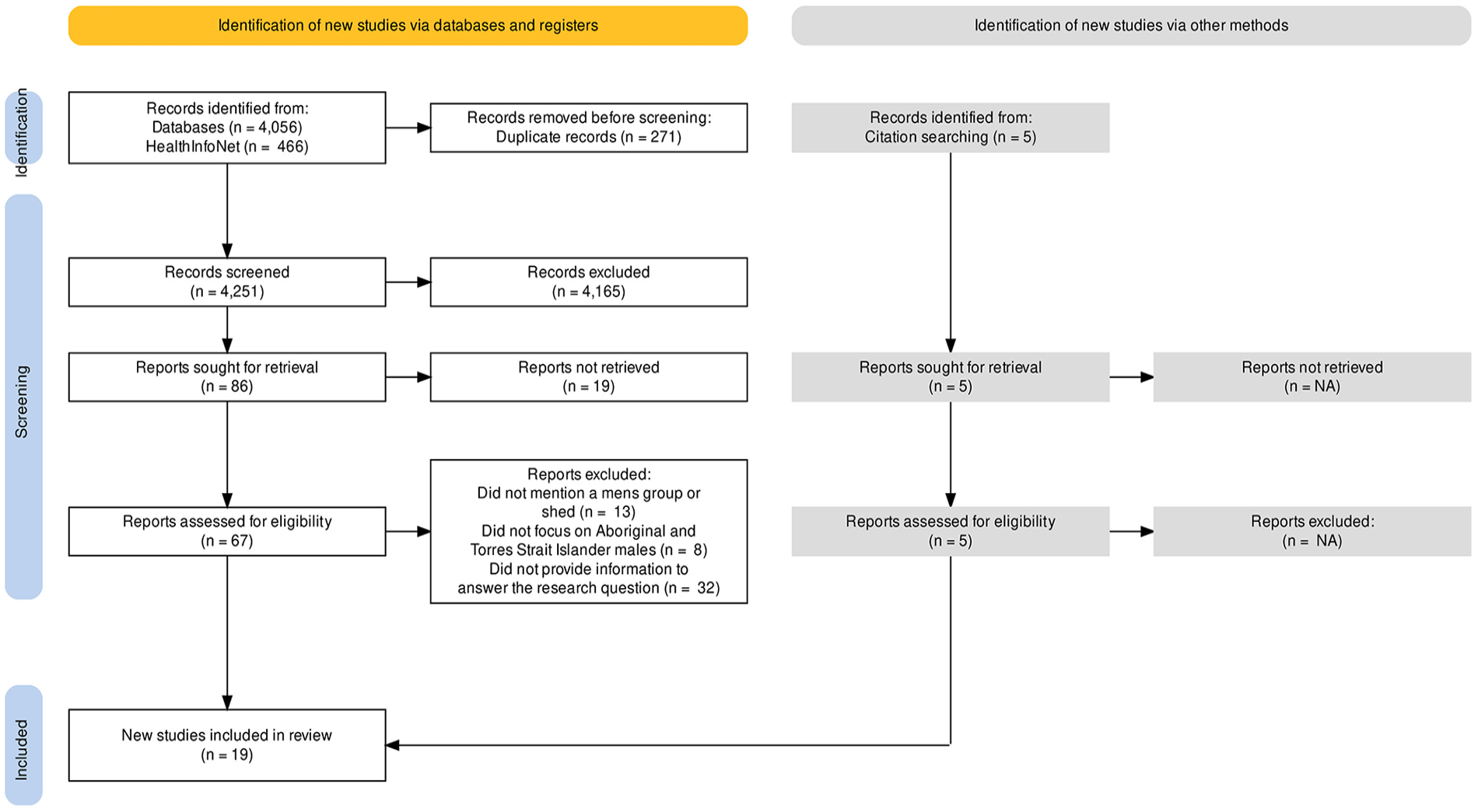
PRISMA flow diagram.
Description of included literature
As seen in Table 1, all articles were published within the past 19 years. Fourteen articles were published in peer-reviewed journals, three articles were unpublished and grey literature, and two articles were book chapters. Eight articles were classified as original research, which reported full data from conducted empirical research. A further eight articles were classified as perspective pieces that presented a perspective or commentary on the health and wellbeing of Aboriginal and Torres Strait Islander men and three articles were classified as evaluation reports, which provided a comprehensive overview of the implementation of men’s groups. The unpublished and grey literature were all evaluation reports produced by McCalman, Tsey, Wenitong, Patterson et al. (2005), McCalman, Tsey, Wenitong, Ahkee et al. (2006) and Newel (2013).
Characteristics of included articles.
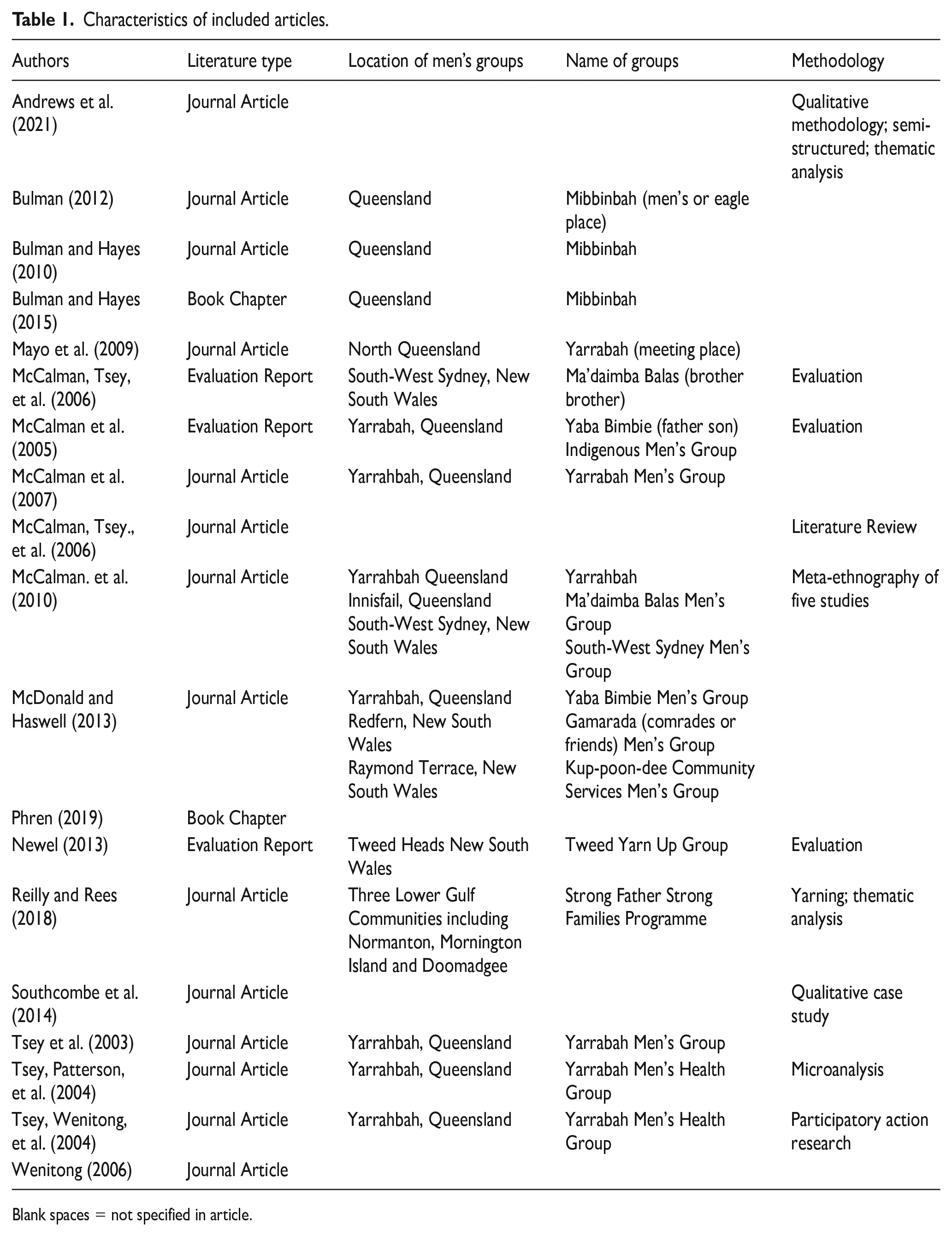
Blank spaces = not specified in article.
Eighteen articles focused solely on men’s groups and one article focused on men’s groups and men’s sheds. Twelve articles referred to a single men’s group or shed, while seven articles referred to men’s groups or sheds more broadly. Of those articles focusing on a single group, the most often referred to were the Yaba Bimbie (father son) men’s group, Mibbinbah (men’s or eagle place) men’s group and Ma’daimba Balas (brother brother) men’s group. These were based in Queensland and New South Wales. The location of the men’s groups mentioned in the article can been found in Figure 2.
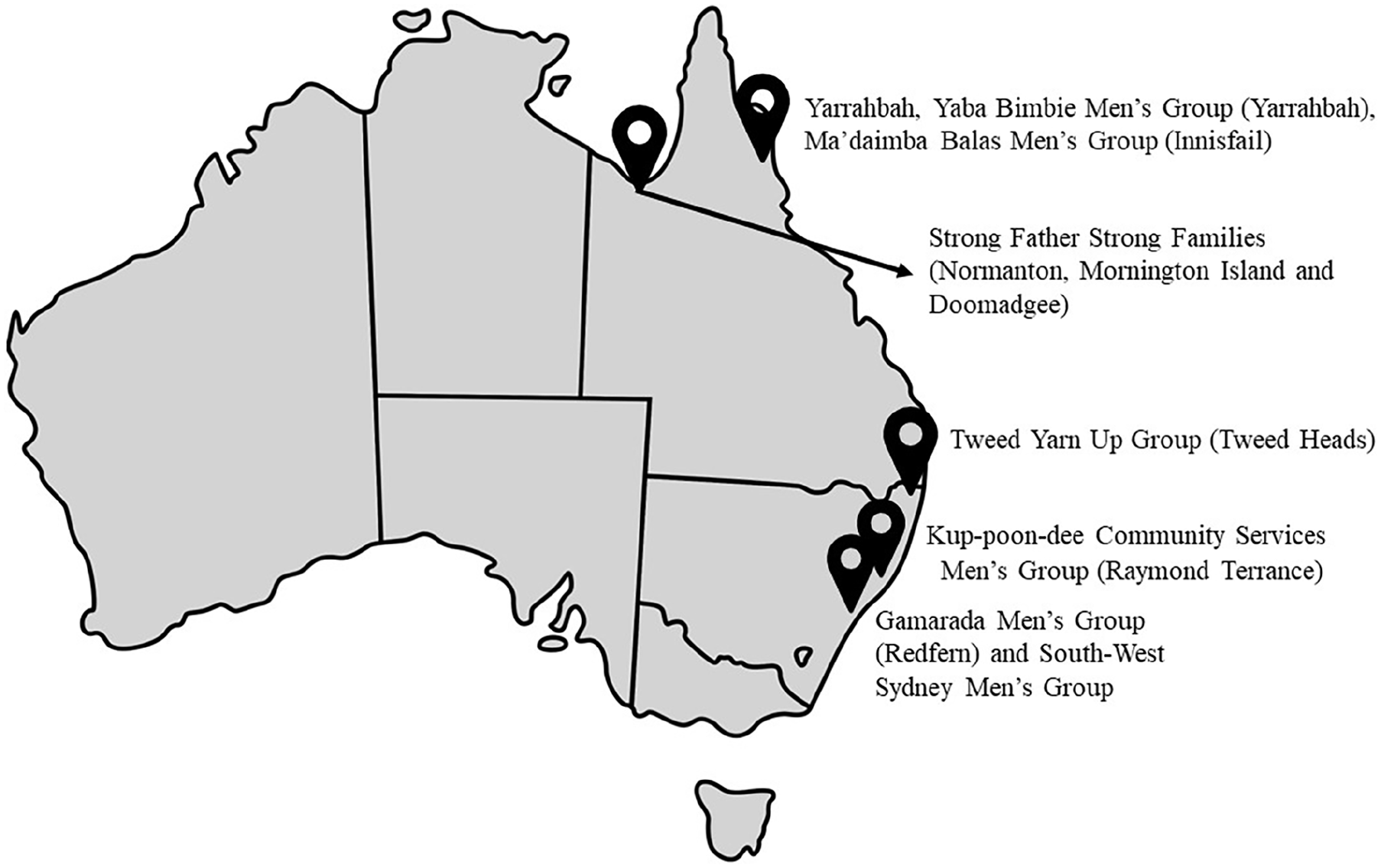
Mapped location of men’s groups (Adapted from Australia map, states simple, Lokal_Profil, 2007, Wikimedia Commons, https://en.wikipedia.org/wiki/File:Australia_states_blank.svg).
Characteristics of men’s groups
Table 2 provides a summary of the characteristics of men’s groups. Seven articles characterised Aboriginal and Torres Strait Islander men’s groups as safe spaces for men to attend. Within these articles, groups were described as providing cultural safety, a sense of belonging and openness, a place where men could form relationships and share experiences, and a place where men could gather to discuss health, family and social issues. Men’s groups were also described as safe places by avoiding practices that promote shame, lateral violence and judgement from others.
Summary of Aboriginal and Torres Strait Islander men’s groups characteristics and aims.
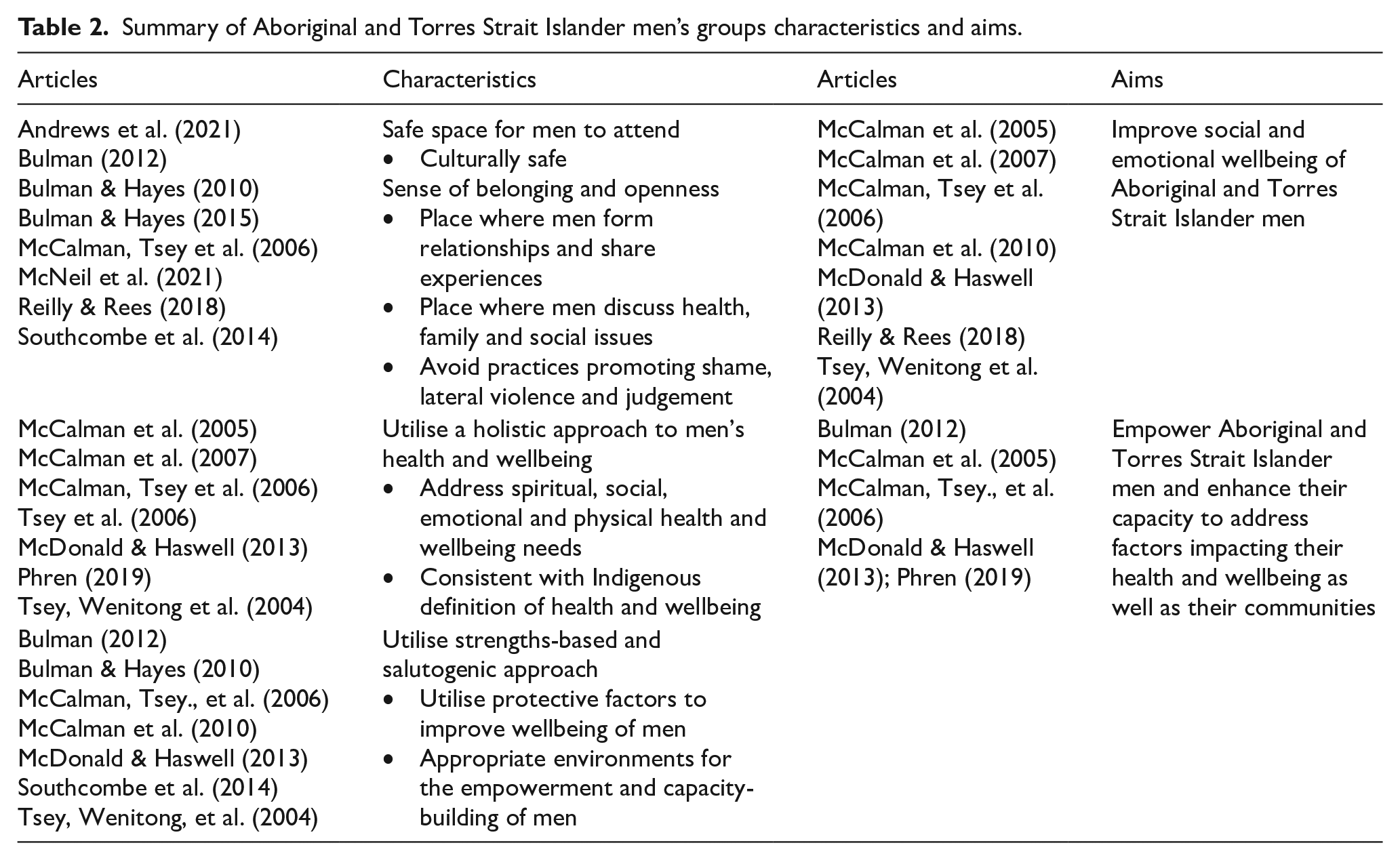
As shown in Table 2, six articles characterised men’s groups as utilising a holistic approach to men’s health and wellbeing. The groups were often described as addressing Aboriginal and Torres Strait Islander men’s spiritual, social, emotional and physical health and wellbeing needs. Some articles also described the holistic approaches utilised by these groups as being consistent with an Indigenous definition of health and wellbeing.
Seven articles described men’s groups as utilising a strengths-based and salutogenic approach. This included the groups utilising protective factors to improve the wellbeing of Aboriginal and Torres Strait Islander men and being appropriate environments for the empowerment and capacity-building of men (Table 2).
Aims of men’s groups
Table 2 also provides a summary of the aims of men’s groups. The aims of many of the men’s groups were connected to their characteristics, as described above. Seven articles described the aims of these groups as being to improve the health and social and emotional wellbeing of Aboriginal and Torres Strait Islander men and their communities. Five articles described the aims of men’s groups as empowering Aboriginal and Torres Strait Islander men and enhancing their capacity to address factors impacting their, as well as their communities’, health and wellbeing (Table 2).
Activities of men’s groups
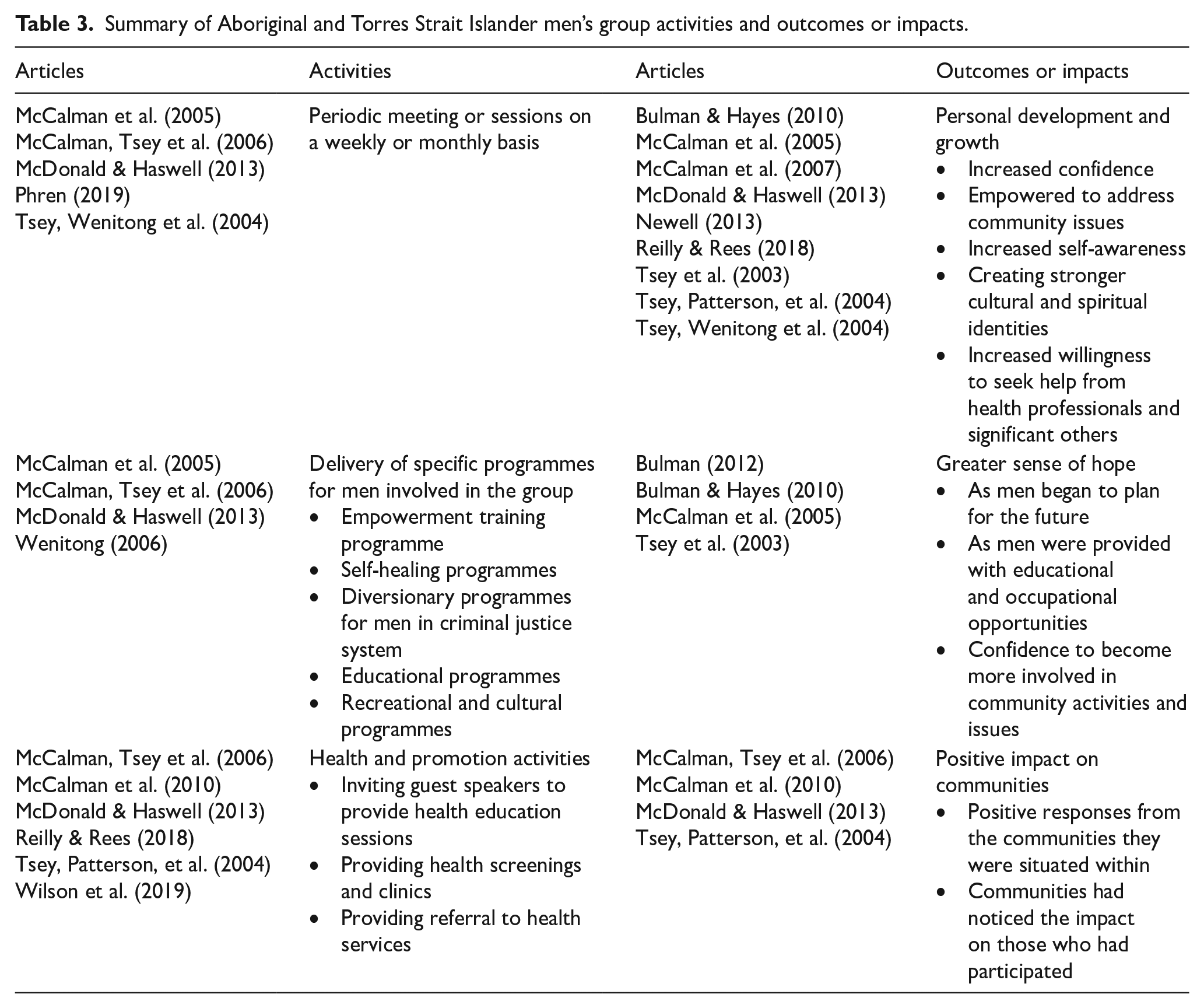
Table 3 provides a summary of the activities of men’s groups. The activities undertaken by Aboriginal and Torres Strait Islander men’s groups were varied and differed considerably based on the specific aims of the group or shed. Five articles described that they had periodic meetings or sessions on a weekly or monthly basis. Six articles described that the men’s groups had delivered specific programmes for men involved in the group. These included the delivery of an explicit empowerment training programme – the Family Wellbeing Program, self-healing programmes, diversionary programmes for men in the criminal justice system, educational programmes, and recreational and cultural programmes. Seven articles noted that the groups had organised health education and promotion activities. These included inviting guest speakers and providing health education sessions, providing health screenings and clinics, and providing referrals to health services.
Summary of Aboriginal and Torres Strait Islander men’s group activities and outcomes or impacts.
Outcomes and impacts
Table 3 also provides a summary of the outcomes and impacts of men’s groups. Nine articles reported that the men’s groups led to the personal development and growth of the participating men. This included increasing levels of confidence and members being empowered to address community issues, increasing levels of self-awareness, creating stronger cultural and spiritual identities, and increasing willingness to seek help from healthcare professionals and from significant others.
Four articles described that men’s groups led to a greater sense of hope among those who had participated (Table 3). These groups were described by Bulman (2012) as creating a sense of hope among members as they began to plan for the future. McCalman, Tsey, Wennitong, Patterson et al. (2005) described how providing members with educational and occupational opportunities helped foster a sense of hope and empowered them in being able to change the issues they were facing. Tsey et al. (2003) described the groups providing members with a greater confidence to become more involved in community activities and issues.
As shown in Table 3, four articles described that the men’s groups had not only positively impacted men who had participated in the groups, but also had positive impacts on their communities. The literature also described that these groups had received a positive response from the communities in which they were situated and that communities had noticed the impact on those who had participated in the men’s group.
Quality appraisal
As shown in Table 4, most of the empirical studies included in the review were culturally responsive according to the Aboriginal and Torres Strait Islander QAT. Specifically, 75% of the studies outlined research that was in response to a need determined by community, were led by an Aboriginal researcher and had translated findings into sustainable changes in policy or practice. Half of the studies in the review (1) included descriptions of community engagement and consultation, (2) noted that Aboriginal and Torres Strait Islander peoples and communities had control over the collection and management of research materials, (3) clearly adopted a strength-based approach, (4) outlined how the research benefitted participants and communities and (5) demonstrated capacity strengthening. In all, 37.5% of studies included descriptions of Aboriginal and Torres Strait Islander governance and outlined how local community protocols were respected and followed, 62.5% of the studies outlined how those involved in the research had opportunities to learn from each other and 12.5% specifically noted that the research was guided by an Indigenous Research Paradigm. None of the studies clearly outlined how the researchers’ negotiated agreements regarding rights of access to, or ownership of, Aboriginal and Torres Strait Islander peoples’ intellectual and cultural property.
Summary of Aboriginal and Torres Strait Islander quality appraisal tool results of studies.
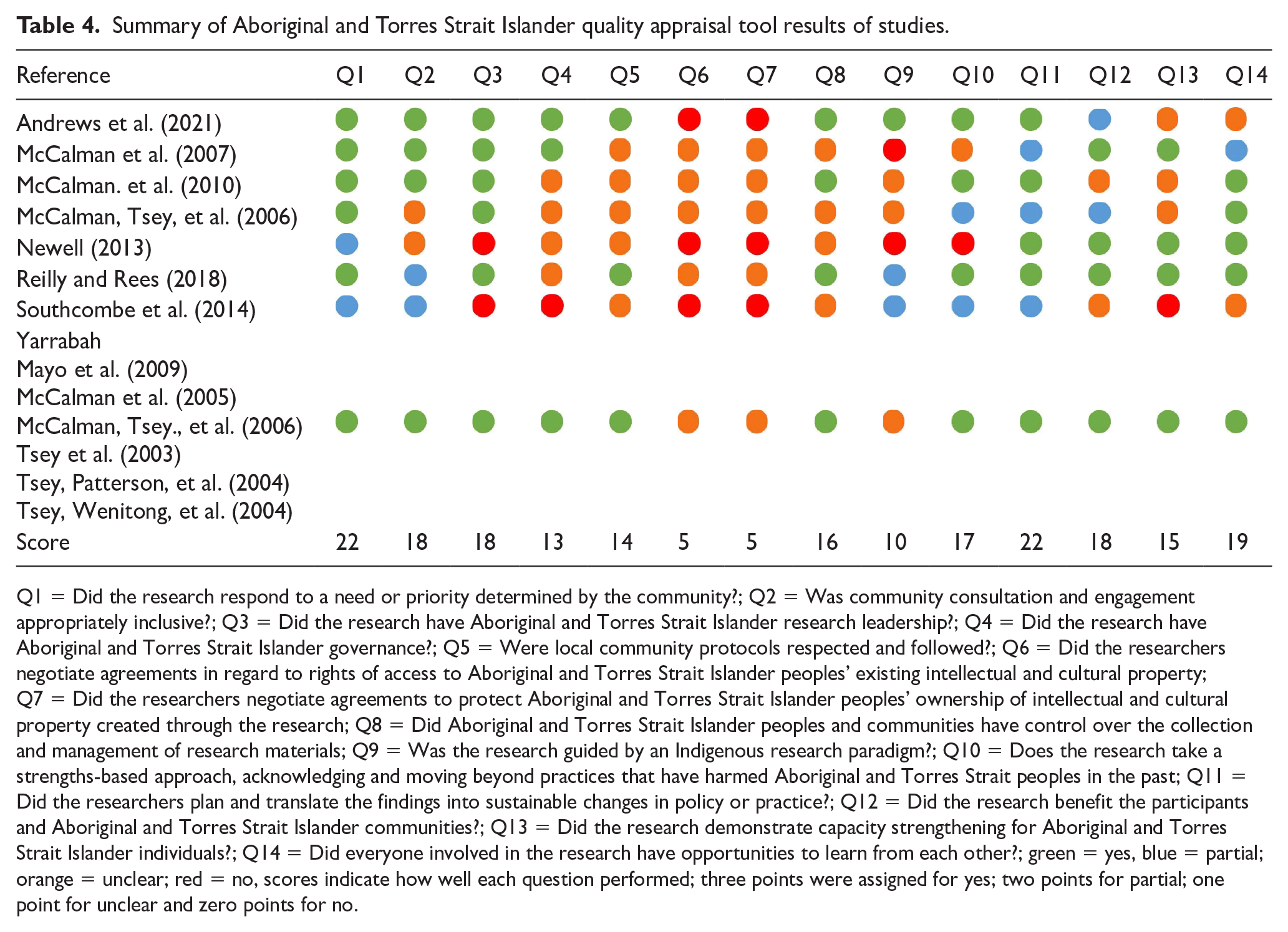
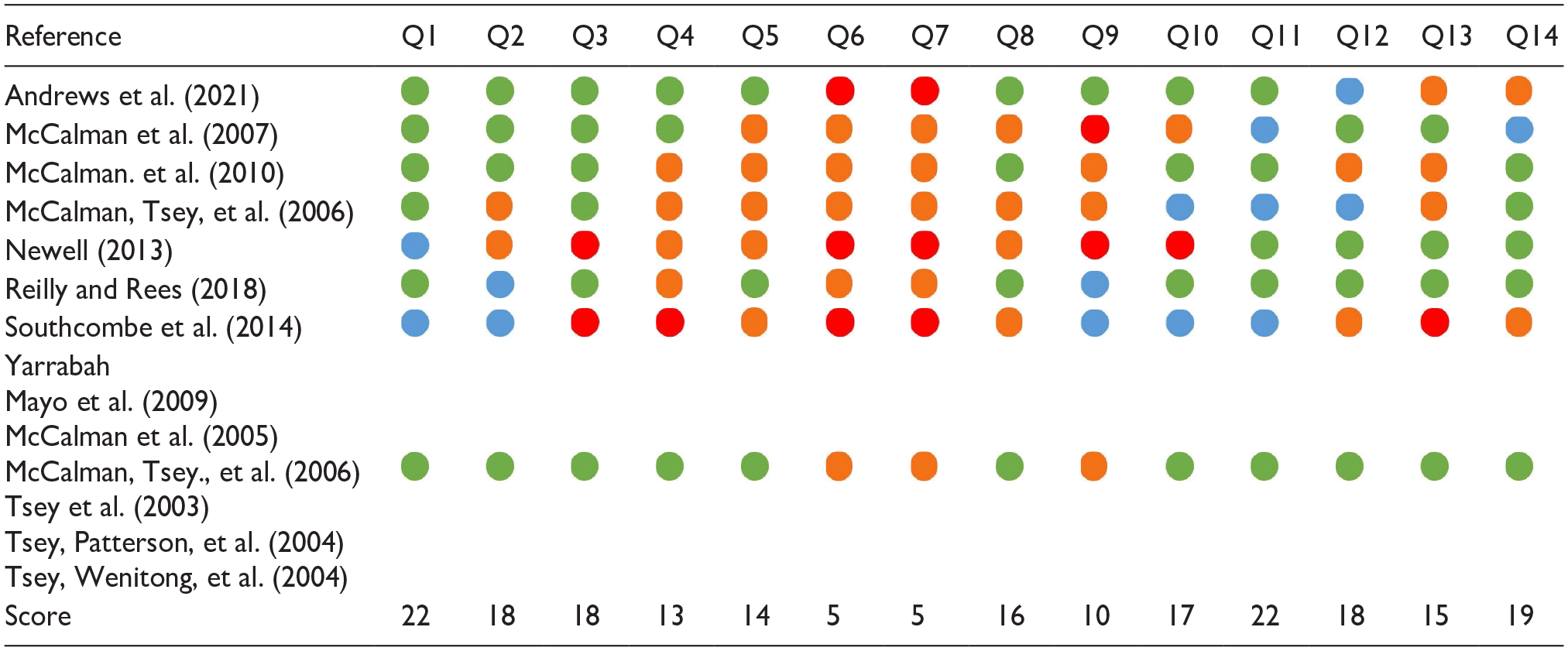
Q1 = Did the research respond to a need or priority determined by the community?; Q2 = Was community consultation and engagement appropriately inclusive?; Q3 = Did the research have Aboriginal and Torres Strait Islander research leadership?; Q4 = Did the research have Aboriginal and Torres Strait Islander governance?; Q5 = Were local community protocols respected and followed?; Q6 = Did the researchers negotiate agreements in regard to rights of access to Aboriginal and Torres Strait Islander peoples’ existing intellectual and cultural property; Q7 = Did the researchers negotiate agreements to protect Aboriginal and Torres Strait Islander peoples’ ownership of intellectual and cultural property created through the research; Q8 = Did Aboriginal and Torres Strait Islander peoples and communities have control over the collection and management of research materials; Q9 = Was the research guided by an Indigenous research paradigm?; Q10 = Does the research take a strengths-based approach, acknowledging and moving beyond practices that have harmed Aboriginal and Torres Strait peoples in the past; Q11 = Did the researchers plan and translate the findings into sustainable changes in policy or practice?; Q12 = Did the research benefit the participants and Aboriginal and Torres Strait Islander communities?; Q13 = Did the research demonstrate capacity strengthening for Aboriginal and Torres Strait Islander individuals?; Q14 = Did everyone involved in the research have opportunities to learn from each other?; green = yes, blue = partial; orange = unclear; red = no, scores indicate how well each question performed; three points were assigned for yes; two points for partial; one point for unclear and zero points for no.
Discussion
The aim of this scoping review was to identify the characteristics, activities, targets and outcomes of men’s groups that focus on improving the SEWB of Aboriginal and Torres Strait Islander men. We found that the current literature regarding men’s groups comprises a small number of original research articles and perspective pieces focused on a small number of men’s groups in Queensland and New South Wales. These groups were characterised as being a safe space for men to gather and utilising a holistic and strengths-based approach to working with men and their communities. Their aims included improving SEWB by empowering and building the capacity of men. Activities undertaken by men’s groups included periodic meetings, involvement in service and programme delivery and health promotion and education. The outcomes of these groups included personal development, promoting a sense of optimism and hope and providing support to the broader Aboriginal and Torres Strait Islander community.
We identified that men’s groups have varied and diverse characteristics, aims, activities and impacts. However, importantly, this diversity was largely responsive and shaped by the SEWB needs of the men and their communities. This is consistent with an SEWB model which recognises that the wellbeing needs of Aboriginal and Torres Strait Islander peoples are shaped by the cultural diversity and unique histories of the communities in which they are situated (Gee et al., 2014). Our findings support the notion that Aboriginal and Torres Strait Islander men’s groups can be conceived as cultural practices that are decolonising, responsive ways of improving the SEWB of Aboriginal and Torres Strait Islander men. Although the characteristics, aims, activities and impacts of these groups are heterogeneous, they are collectively underscored by a holistic and community-based approach to improving the SEWB of this population. This is consistent with research conducted with Aboriginal and Torres Strait Islander men, which suggests that holistic and community-based approaches are more acceptable and appropriate for this population (McCabe et al., 2016). Therefore, men’s health organisations should consider the importance of men’s groups in improving the health and wellbeing of Aboriginal and Torres Strait Islander men.
Given the potential positive impacts of Indigenous men’s groups, policies that provide consistent and sustainable funding for these groups should be encouraged. This could be government support or support from non-for-profit organisations aiming to improve the health and wellbeing of Indigenous men. Policies focused on this population should utilise holistic and strengths-based approaches, reflecting the practices of these groups. Integrating elements of the SEWB framework could be effective in prevention and intervention programmes offered by healthcare providers. There is also an opportunity for policies to facilitate greater awareness of the role of men’s groups and the potential benefits they provide to communities.
Health and community service providers working with Indigenous men should incorporate SEWB frameworks into their practice. In addition, these frameworks and the characteristics, activities and targets found in this review could be considered when creating men’s groups, with the important consideration that these groups are largely responsive and shaped by the SEWB needs of the men and their communities. Organisations aiming to improve health outcomes for Indigenous communities may also wish to consider collaborating with Indigenous men’s groups. This could involve these groups developing programmes, undertaking participatory action research, or provide referral pathways for clients needing additional support. Increasing the accessibility of these groups may also increase their reach and impact on communities by offering groups at various times, locations or virtually. This review also highlighted a need for further Indigenous-led research in this area, given the benefits of men’s groups for Aboriginal and Torres Strait Islander men’s SEWB.
This review has several limitations that need to be considered. First, the search terms utilised in this study may have precluded the inclusion of articles related to gendered-based interventions for men that do not describe themselves as a men’s group. Other services may include crisis lines for Aboriginal and Torres Strait Islander men, parenting programmes for men or reproductive health services. Second, there are other social categories that intersect with gender and Indigeneity that have not been included within the search terms of this review, such as those related to sexuality and gender diversity. Third, our search may have been unable to identify community reports which may sit outside of conventional literature databases and therefore there may be reports known to Aboriginal and Torres Strait Islander communities not included in this review. Finally, the QAT utilised in this article was published after the included articles and therefore these articles were conducted prior to being able to follow the recommendations outlined in the QAT.
Despite the prevalence of Aboriginal and Torres Strait Islander men’s groups within Australia, there is a paucity of research investigating their impacts on the health and wellbeing of Aboriginal and Torres Strait Islander men and their communities. More research is needed to further our understanding of the importance of gendered health interventions for Aboriginal and Torres Strait Islander peoples.
Conclusion
Aboriginal and Torres Strait Islander men’s groups are an important type of social and cultural support system being utilised in many communities across Australia. These groups are important for facilitating help-seeking and accessing services, which might otherwise be underutilised. As such, they can be considered as a cultural and health resource for Aboriginal and Torres Strait Islander men in their own right, in addition to being a potential pathway for men to access other health and community services.
Supplemental Material
sj-docx-1-aln-10.1177_11771801241235285 – Supplemental material for Aboriginal and Torres Strait Islander men’s groups and social and emotional wellbeing: a scoping review
Supplemental material, sj-docx-1-aln-10.1177_11771801241235285 for Aboriginal and Torres Strait Islander men’s groups and social and emotional wellbeing: a scoping review by Samual Fisher (Wakka Wakka), Kylie King, Doris Paton (Gunai, Monaro Ngarigo), Graham Gee and Laura Jobson in AlterNative: An International Journal of Indigenous Peoples
Footnotes
Appendix 1
Appendix 2
Scoping review data extraction table.
Acknowledgements
The authors acknowledge the traditional owners of the land on which this research was conducted, the Wurrndjeri-Woiwurrung and Boon-wurrung people of the Kulin Nations on which Monash University is located. They also acknowledge the efforts of the community members and researchers who have worked to generate and share the literature contained in this review and who have worked effortlessly to improve the wellbeing of Aboriginal and Torres Strait Islander men and boys.
Authors’ note
Declaration of conflicting interests
The authors declared no potential conflicts of interest with respect to the research, authorship and publication of this article.
Funding
The authors received no financial support for the research, authorship and publication of this article.
Supplemental Material
Supplemental material for this article is available online.

Glossary
gamarada comrades or friends
ma’daimba balas brother brother
mibbinbah eagle or men’s place
yaba bimbie father son
yarrabah meeting place
References
Supplementary Material
Please find the following supplemental material available below.
For Open Access articles published under a Creative Commons License, all supplemental material carries the same license as the article it is associated with.
For non-Open Access articles published, all supplemental material carries a non-exclusive license, and permission requests for re-use of supplemental material or any part of supplemental material shall be sent directly to the copyright owner as specified in the copyright notice associated with the article.


