




Abstract
Background:
Bibliometrics has been used for assessing and predicting trends in macro-health science and medical systems, especially in the field of cancer. Bibliometric and scientometric studies in the field of programmed cell death 1/programmed cell death 1 ligand 1 (PD-1/PD-L1) may guide further research in this field.
Objective:
To perform bibliometric analysis of articles on PD-1 and PD-L1 published in the academic literature during 1975 to 2017.
Method:
The bibliometric analysis was performed using the Thomson Reuters Web of Science database.
Results:
A total of 23 813 articles were retrieved, 73.52% of which were original articles. The United States was the leading country by total publication number (n = 10 897, 10.91%), followed by China (10.54%), and produced the most literature on PD-1/PD-L1 (164.65 articles). Among the institutions identified, Harvard University (USA) contributed the most articles on PD-1/PD-L1.
Conclusions:
All authors and institutions in the top 10 contributor’s lists were from the developed countries. Researchers from the developing and least-developed countries should be encouraged to perform novel studies on PD-1 and PD-L1.
Introduction
Programmed cell death 1 (PD-1), a type I transmembrane protein, was first reported in the early 1990s.1,2 Since its discovery, numerous studies have determined that engagement of PD-1 through its ligand, PD-1 ligand 1 (PD-L1), negatively regulates T cell–mediated immune responses. 2 PD-L1 is commonly expressed on many types of hematopoietic (T, B, macrophages, dendritic) and nonhematopoietic cells (epithelial, stromal, endothelial). 3 In earlier studies, the monoclonal antibodies blocking immune checkpoints, such as cytotoxic T-lymphocyte–associated protein 4 (CTLA-4) and PD-L1/PD-1 demonstrated promising anti-tumor activity and durable clinical responses in a subset of patients. Based on these encouraging results, many different PD-1/PD-L1 inhibitors have entered clinical development.4,5 The PD-1/PD-L1 axis is of vital importance for restraining the anti-tumor T cell response. The impressive clinical success of PD-1/PD-L1 blockade is a good example of the translation of basic immunology into patient care.
To build on this achievement and develop efficacious combination therapies, better mechanistic understanding of the efficacy of PD-1 pathway blockade is required. Further study is required to understand the mechanisms of response and resistance and to develop biomarkers for predicting response and immune-related adverse effects. In addition, further investigations are needed to develop effective combinations with PD-1 pathway inhibitors. 3
Studies in the field of CTLA-4, PD-1, and PD-L1 have been increasing globally. 2 In the present study, we reviewed all current evidence of studies on different cancers related to PD-1/PD-L1, and performed bibliometric and scientometric quantitative summarization. Bibliometrics, which uses statistical and mathematical instruments to measure researchers’ contributions to the literature, 6 is a new scientific field that enables the statistical analysis of academic literature and describes publication patterns in a certain field. 7 Through statistical analysis of the literature, bibliometrics describes, evaluates, and forecasts the status and development of trends in science and technology. Bibliometrics is widely used in clinical research, as it provides reference data that can be used to understand the dynamics of technology, determine the novelty of projects, publicize research results, and determine which scientific topics to study. To date, bibliometrics has been used for evaluating and forecasting trends in macro-health science and medical systems in cancer, Alzheimer disease and diabetes, and in micro-fields such as tumor biomarkers. 8 Deeper understanding of the anti-tumor immune response generated by basic science studies will continue to drive the field forward, with favorable results for patients. 3 The aim of the present study was to perform bibliometric and scientometric analysis of articles on PD-1/PD-L1 that had been published in the academic literature during 1975 to 2017. Such analyses are not currently available, and our study may encourage researchers to perform further studies in this field.
Method
We collected all data of our study from the databases provided by Web of Science (WoS, (Thomson Reuters, New York, USA). Keywords “programmed cell death 1 receptor,” “programmed cell death ligand 1,” “CD274,” “B7 H1,” “PD-1,” and “PD-L1” were used to retrieve data from databases. We could reach back to 1975 in WoS databases and all documents published between 1975 and 2017 were included into the present study. All items produced in 2018 were excluded. The “UK” was used as a uniting title for all items published from England, Wales, Scotland, and North Ireland. Articles from Federal Republic of Germany, East Germany, and West Germany were collected under “Germany” heading.
The analysis tools of WoS were used to analyze the time, country, authors, research institution, language, document type, publications, correlations, citations, meetings, and research direction. SPSS program package (Version 22.0, SPSS Inc, Chicago, IL, USA; licensed for Hitit University, Çorum, Turkey) was used for statistical analyses. We created info-maps by using GunMapp 2 free online source. 9 Info-graphics revealing bibliometric networks were generated in VOSViewer software. 10 Current population data of the countries based on the latest United Nations Population Division estimates were obtained from Worldometers. 11
Results
Features of published items
A total of 23 813 published documents between 1975 and 2017 were found in our database search and 38.43% of which was open access. The majority of documents were original articles (n = 17 507, 73.52%) followed by meeting abstracts and meeting reports (24.02% and 18.72%, respectively) (Table 1). English was the primary language of the literature (n = 23 464, 98.53%).
Document types, and the first 10 research areas, journal name, and institutions in published literature.
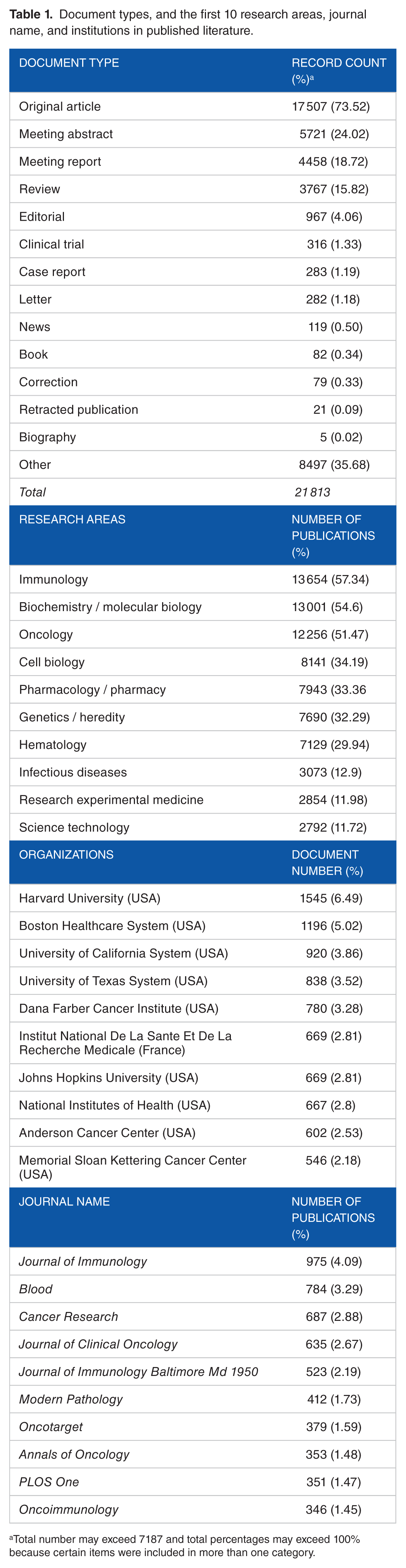
Total number may exceed 7187 and total percentages may exceed 100% because certain items were included in more than one category.
Global productivity
The United States dominated the literature on PD-1 and PD-L1 with 10 897 items (45.76%) followed by China, Germany, and Japan (10.54, 8.67%, and 8.47%, respectively) (Figure 1). Articles on PD-1 and PD-L1 were produced throughout the world, except from some countries in Africa (Figure 2). We measured a productivity score for each country by using a correction formula (publication number / population × 1 000 000) previously reported in recent bibliometric reports. 12 The United States ranked first in the productivity with a score of 164.65 followed by Switzerland, Sweden, Austria, and Denmark (s = 67.6, 37.03, 35.49, and 34.01, respectively) (Figure 3).

Top 10 countries by publication number in PD-1 and PD-L1 literature.
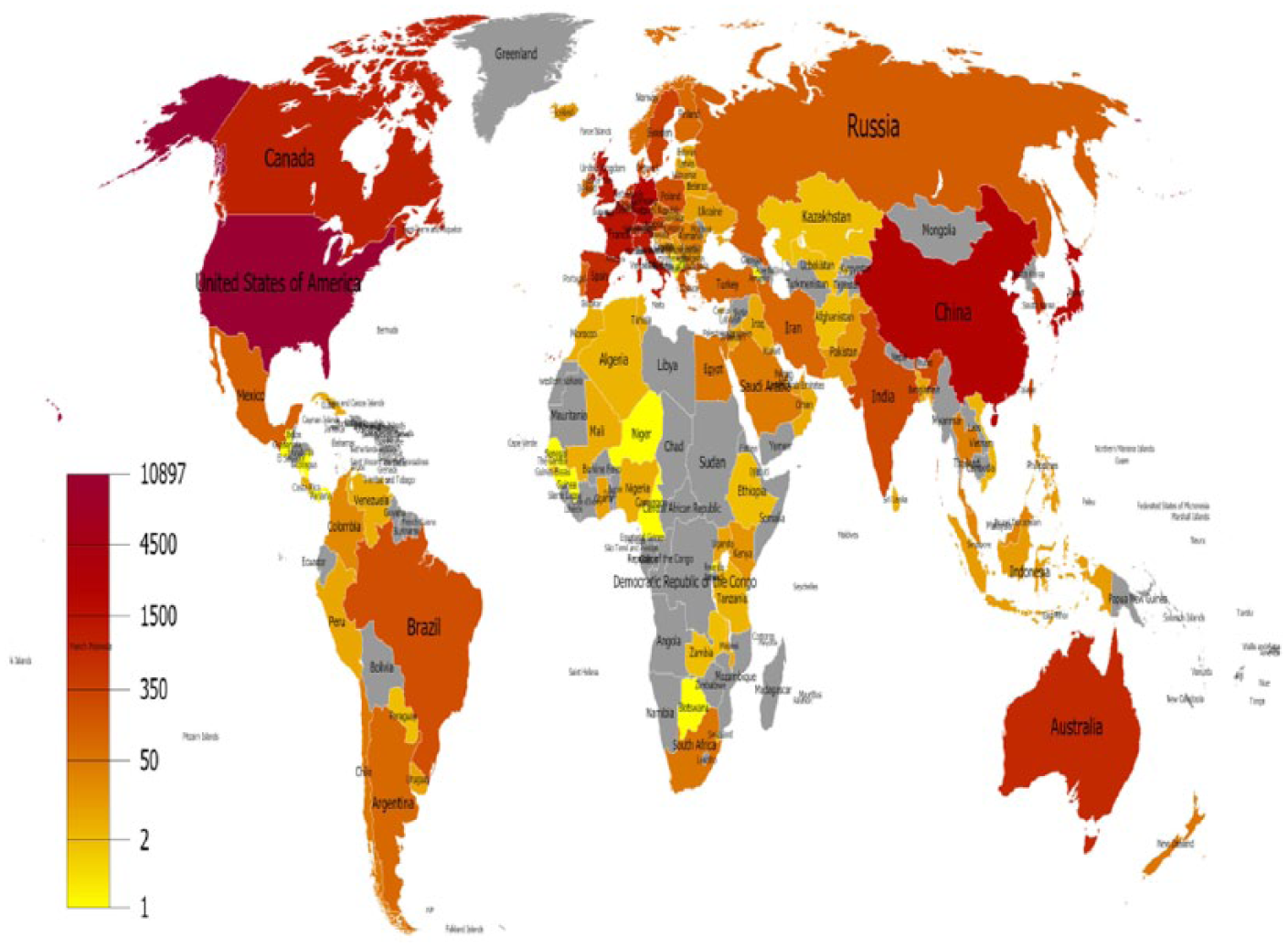
Total publication density of world countries in PD-1 and PD-L1 literature.

Top 10 countries in productivity of PD-1 and PD-L1 literature.
Research areas, top authors, journals, meetings, and institutions
Immunology and biochemistry were the most studied research areas (57.34% and 54.6%, respectively, Table 1). Freeman GJ from Harvard Medical School (USA) was noted as the most productive author in this field with 227 articles (0.95%) (Table 2). All researchers in top 10 authors list were from the developed countries except China. Harvard University (USA) was the most contributor institution with 1541 documents (6.49%). All institutions were from developed countries and 9 of which were from the USA (Table 1). Journal of Immunology was the leading journal in this field with 975 items (4.09%) followed by Blood and Cancer Research (3.29% and 2.88%, respectively; Table 1).
Top 10 authors producing publications in PD-1 and PD-L1 literature by record count.

Percentage of total documents published in the literature.
Evolution of publications, correlations, and citations
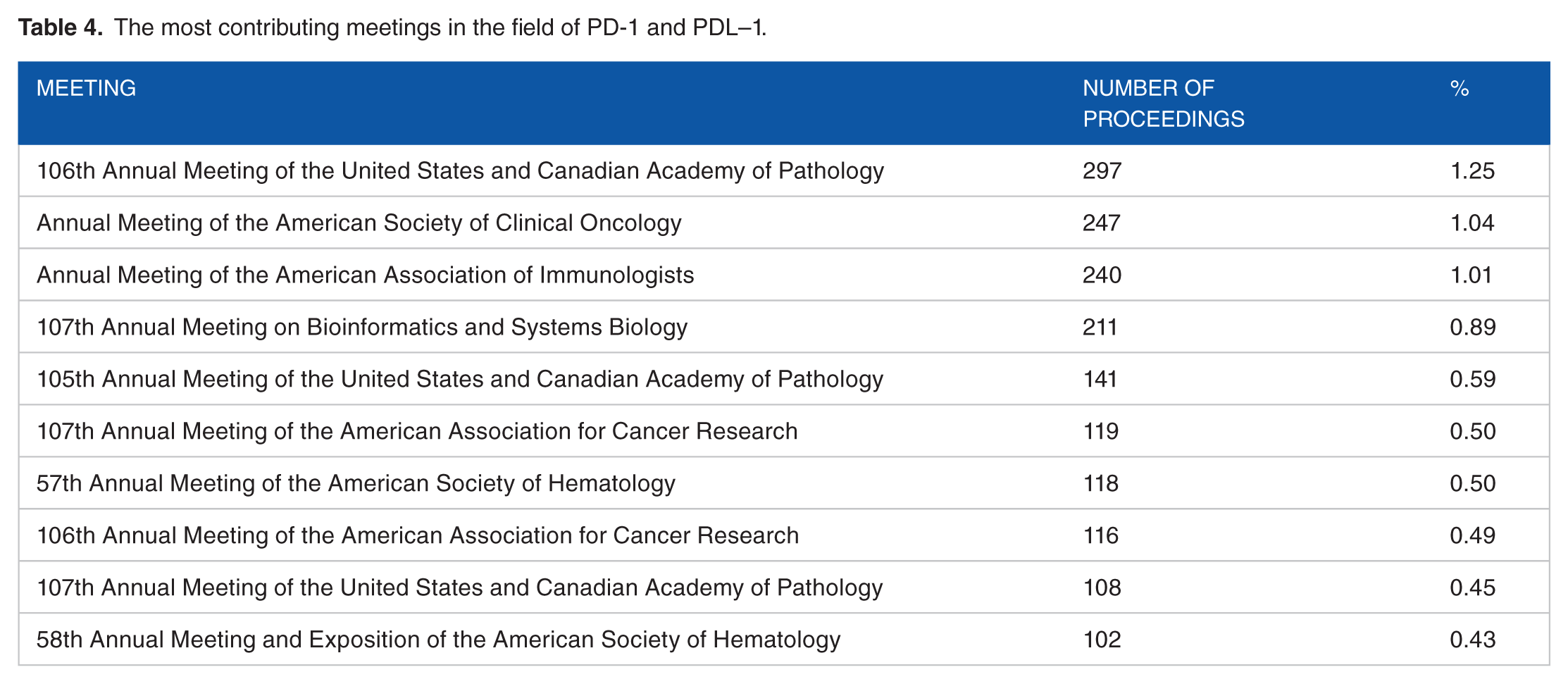
H-index the literature on PD-1 and PDL-1 was calculated to be 238. Total number of citations of the literature was 31 8046 and average citations per item were 51.44 times. The most cited document was a review titled “Safety, Activity, and Immune Correlates of Anti-PD-1 Antibody in Cancer” by Topalian, SL. et al 13 published in 2012 in New England Journal of Medicine. This article was cited 5339 times and average citations were 667.38 times per year (Table 3). The most contributing meeting in the field of PD-1 and PDL-1 was 106th Annual Meeting of The United States and Canadian Academy of Pathology with 297 proceedings (1.25%) (Table 4).
The 10 most cited articles in the literature on PD-1 and PDL–1.

The most contributing meetings in the field of PD-1 and PDL–1.
Bibliometric networks analyses
The most used keywords (with total link strength) in the literature were PD-1 (1861), PD-L1 (1393), immunotherapy (1028), melanoma (607), nivolumab (679), CTLA-4 (610), Pembrolizumab (499), Ipilimumab (269), cancer (261), lung cancer (251), T cells (248), PD-L2 (181), Checkpoint inhibitors (179), B7 H1 (171), prognosis (170), NSCL (169), anti-PD-1 (169), targeted therapy (153), vaccine (150), and biomarker (144) (Figure 4). Global bibliometric network revealed a tight connection between countries and 6 centers centered the United States, the United Kingdom, Germany, China, France, and Italy (Figure 5).
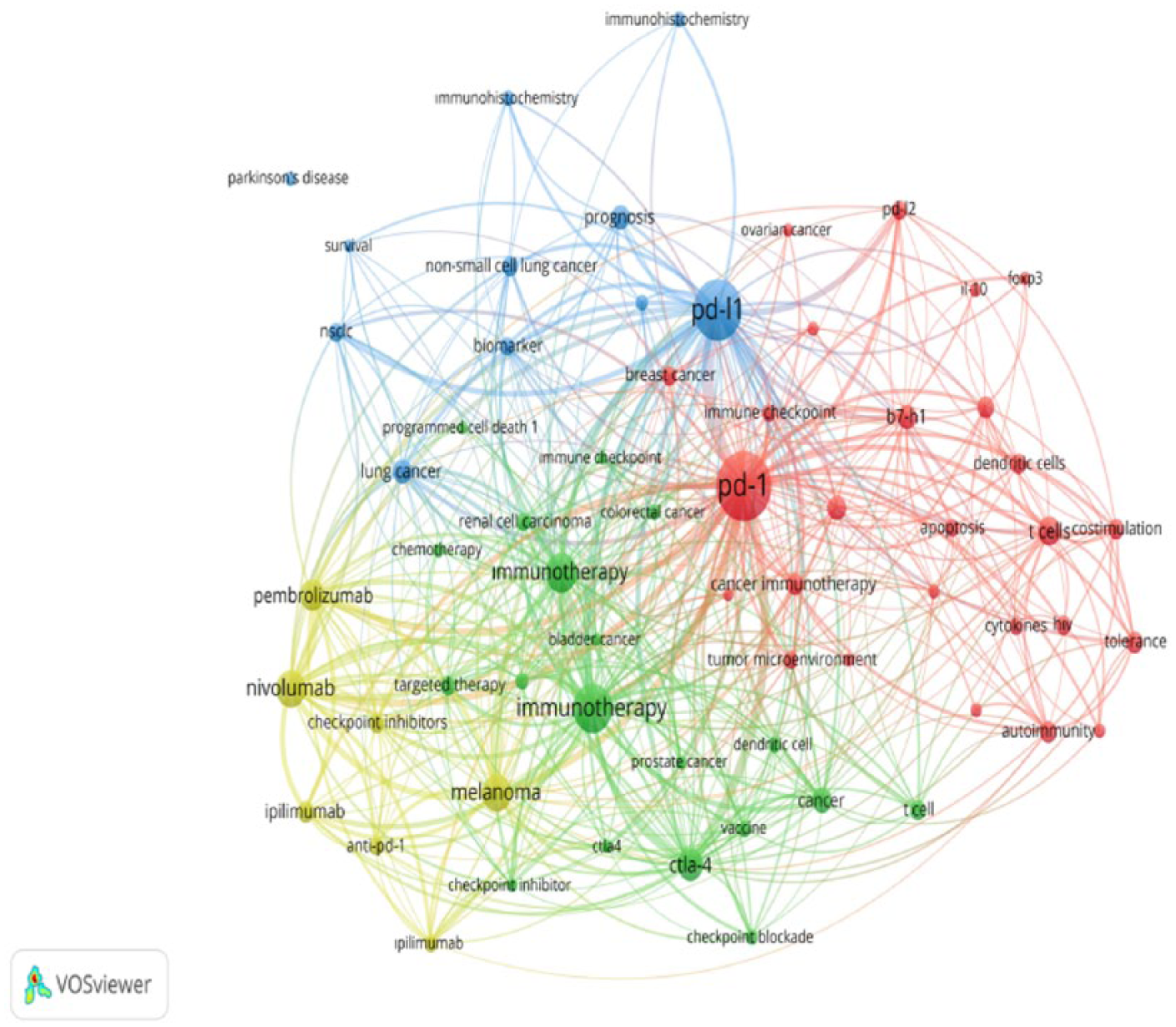
Keyword network of PD-1 and PD-L1 literature.
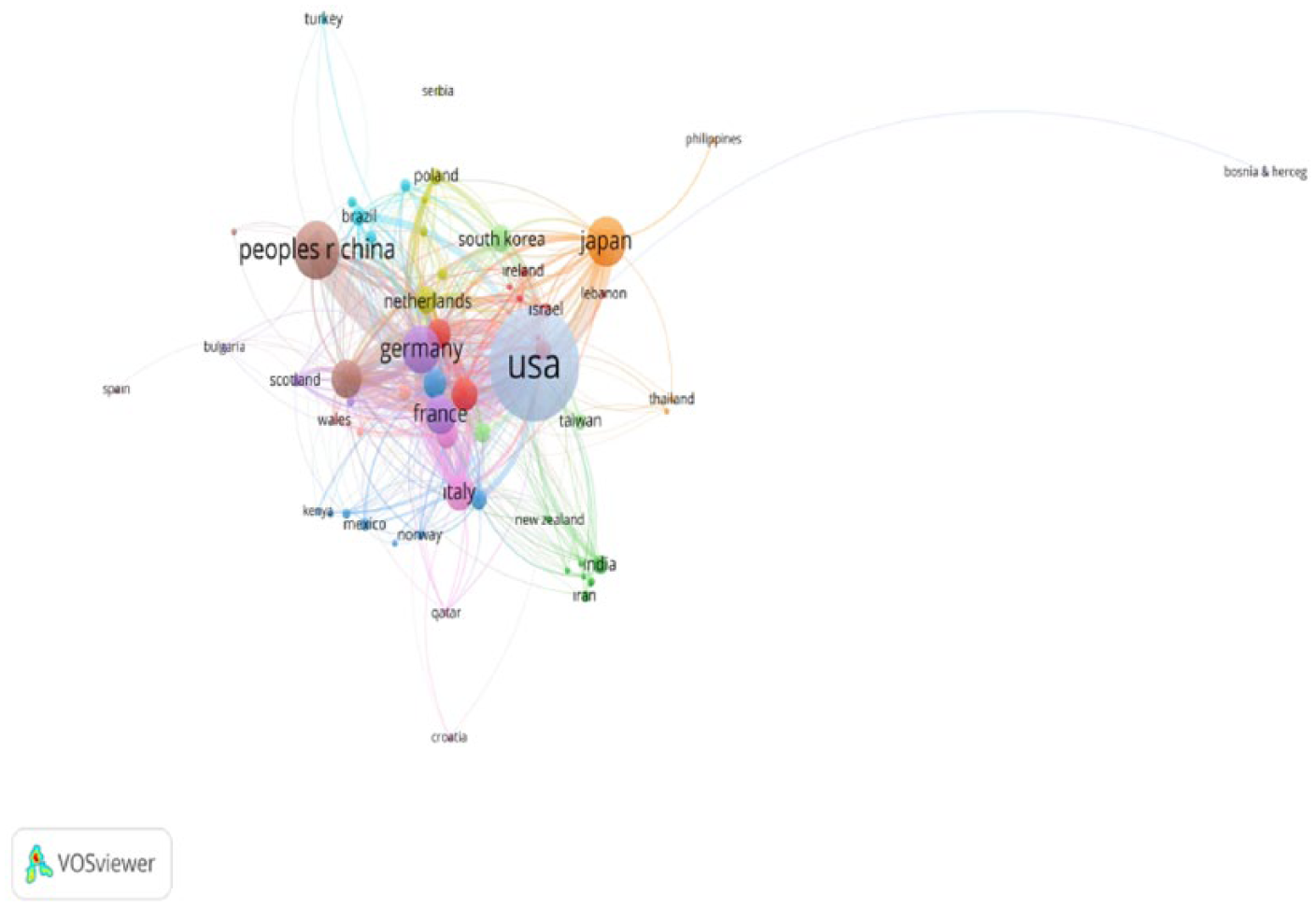
Scientometric network of the countries cooperating in publishing articles on PD-1 and PD-L1.
Correlations
We performed correlation analyses between demographic features and publication features of the countries (Spearman’s rank correlation coefficient). We found low correlation between total publication number and population of the countries (r = 0.4, p = .03). No correlation was noted between population and publication productivity of the countries. We detected a moderated correlation between gross domestic product (GDP) and publication number (r = 0.69, p < .001). We measured high correlations between total publication number and GDP per capita, between productivity and GDP, and between productivity and GDP per capita (Table 5).
Correlations between total number of publications or productivity, economic and demographic indices of the countries.

GDP, gross domestic product.
Statistically significant (0.00 < r < 0.25: little if any correlation; 0.26 < r < 0.49: low correlation; 0.50 < r < 0.69: moderate correlation; 0.70 < r < 0.89: high correlation; 0.90 < r < 1.00: very high correlation).
Discussion
In the last two decades, numerous studies on immune checkpoint blockade in tumor immunotherapy have been published.2,3 An effective means, such as bibliometrics, is needed to summarize and analyze these research advances 8 and to obtain a perspective of the research status of immune checkpoint blockade in tumor immunotherapy worldwide. 2 One of the most important advancements in tumor immunotherapy, immune checkpoint blockade is based on our understanding of the interactions between T cells and tumor cells. Tumor cells can escape immunosurveillance by upregulating co-inhibitory signals and suppressing T cell activity.2,3
CTLA-4 is the first immune checkpoint receptor to be clinically targeted, and is expressed only on T cells, where it primarily determines the amplitude of the early stages of T cell activation. Another immune checkpoint receptor, PD-1, can induce anti-tumor immune responses by the patient’s own immune system. PD-1 is highly expressed on tumor-infiltrating lymphocytes in many human cancers, and PD-1 ligands are frequently upregulated on the tumor cell surface in many different tumors. PD-L1 is the major PD-1 ligand expressed on solid tumor cells. In contrast to CTLA-4, the main role of PD-1 is limiting autoimmunity and T cell activity in the peripheral tissues during an inflammatory response to infection. 14
Over time, it has been understood that CTLA-4 and PD-1/PD-L1 blockade may be an effective cancer immunotherapy such as for melanoma, non–small cell lung carcinoma and renal clear cell carcinoma, but many tumors remain highly resistant to immunotherapy.2,5,15 However, immune checkpoint inhibitors targeting the PD-1/PD-L1 axis have been approved for treating several malignancies, ranging from classic Hodgkin lymphoma to head and neck squamous cell carcinoma. 2
Phase III randomized trials in other solid cancers, which might provide more clinical evidence, are underway. 16 However, the combination of monoclonal antibodies against CTLA-4 and PD-1 also results in increased toxicities in a significant proportion of patients. Therefore, the development of less toxic anti–PD-1–based combination therapies is an important field of research, and recent clinical trials are researching different combinations. 5 In addition, many cancer patients do not respond successfully to PD-1/PD-L1 checkpoint blockades. 16
In the new era of delicate medicine, a predictive biomarker to select patients who would actually benefit from checkpoint blockades is crucial for preventing autoimmune adverse effects and the high cost of such agents. 16
In light of these developments, pathologists should be able to accommodate the rapid expansion of immunotherapies, new novel targets and therapeutic strategies, and must become multidisciplinary. That change is fundamental to carefully selecting patients who, based on their clinical and tumor features, would be the best candidates for immunotherapeutic approaches and who should undergo immunohistochemistry testing for multiple targets. 15
Current debates on the investigation of PD-L1 in patients highlight the need for detailed, meticulous methods for determining PD-L1 levels. A peptide-based approach can determine all levels of PD-L1 with high sensitivity and specificity. 17
De Velasco et al 18 conducted a systematic review and meta-analysis to investigate the safety profiles of ipilimumab, nivolumab, pembrolizumab, and atezolizumab and to identify the incidence and relative risk of 5 immune-related adverse events of interest. Their meta-analysis draws attention to a shift in toxicity patterns oncologists will face in the coming years. 18 Nishijima et al 19 also conducted a systematic review and meta-analysis of randomized controlled trials to compare summary toxicity endpoints and clinically relevant immune-related adverse events between PD-1/PD-L1 inhibitors and chemotherapy. The authors reported that patients with advanced cancer better tolerate PD-1/PD-L1 inhibitors than standard-of-care chemotherapy. 19 These reports suggest that trial- and patient-level meta-analyses reach comparable results. 18 In their bibliometrics study, Zhao et al 20 determined that immune checkpoint blockade has developed rapidly, with increasing influence, in the last two decades in China but a relatively large gap remains as compared with the United States. The authors used bibliometrics to analyze the research status of immune checkpoint blockade, a popular tumor immunotherapy method represented by antibodies targeting CTLA-4 and PD-1/PD-L1, in tumor immunotherapy in China during the past two decades. However, the present study involves bibliometric analysis of articles on PD-1 and PD-L1 published in the academic literature during 1975 to 2017. To our knowledge, bibliometric studies on the quantity and quality of articles published in this field have not been previously reported.
The potential reasons for the rapid development of tumor immunotherapy research in different countries may include the following: first, revenue from the medical industry can maintain a steady growth rate, and the pharmaceutical industry can also undergo strong development. Second, the steady increase in government investment in drug development can contribute to the rapid growth of research on immune checkpoint blockade for tumor immunotherapy. 20
The present study has some limitations. First, all articles retrieved were from the WoS database; articles from other databases were not included. Second, the immune checkpoint blockade drugs we searched were focused on PD-1/PD-L1, while there was a lack of drugs targeting other immune checkpoint molecules.
Conclusion
We used bibliometrics to provide a comprehensive overview of the research status of immune checkpoint blockade in tumor immunotherapy worldwide during the past four decades. We analyzed PD-1/PD-L1 in the literature using the WoS database. We used statistical and mathematical tools to measure researchers’ contributions to the literature on PD-1 and PD-L1. The primary language was English. The United States dominated the literature and ranked first in productivity. The most productive author was Freeman GJ from Harvard Medical School, USA. The United States, the United Kingdom, Germany, China, France, and Italy were closely connected by a global bibliometric network. The countries with the most contributions were all in the developed classification in United Nations (UN) rankings. 21 All institutions, except Institut National de la Santé et de la Recherche Médicale in France, are in the United States. We found no authors from the developing and least-developed countries in the list of top 10 authors. Therefore, we suggest that researchers from such countries be encouraged and funded to perform novel studies on PD-1 and PD-L1. Future efforts will include adding fiducial knowledge for easier scanning.
Footnotes
Funding:
The author(s) received no financial support for the research, authorship, and/or publication of this article
Declaration of conflicting interests:
The author(s) declared no potential conflicts of interest with respect to the research, authorship, and/or publication of this article.
Author Contributions
YB has devised the initial architecture of the query service and implemented it together with EŞ. The data model was developed by EŞ. YB and EŞ supported development of article. The manuscript was drafted by YB and EŞ with critical revisions provided by YB and EŞ. YB and EŞ reviewed the manuscript.
Compliance with ethical standards
No research involving human participants and/or animals was performed for this study.
