



Abstract
Purpose
To identify audience and faculty preferences to optimize digital education sessions in ophthalmology.
Methods
We distributed an online survey to ophthalmology trainees and specialists worldwide. The survey investigated respondents’ preferences on various findings of hypothetical digital educational sessions. Data were analyzed using descriptive statistics, Fisher's exact probability and ANOVA tests.
Results
The survey was completed by 655 respondents, from 53 different countries. According to most respondents, the optimal duration and timeframe for a valuable digital education session would be 30–60 min, without a break (52%), in the evening time-slot (6-8 p.m.) (45%) of a weekday (Monday-Thursday) (46%), regardless of age (p-value = 0.84, 0.39, 0.89, respectively) and job position (p-value = 0.31, 0.29, 0.08, respectively). The availability of webinars and recorded surgical videos/clinical cases, associated with live discussion, represented the most important opportunity of digital educational channels for 46% and 42% of respondents, respectively.
Conclusion
Appropriate planning of timing and structure of digital educational ophthalmology sessions may optimize their effectiveness. Using multiple e-learning formats may be helpful to ensure the continuity of learning activities, also in view of a long-term replacement of traditional in-person education.
Keywords
Introduction
In ophthalmology, as well as in all medical specialties, continuous learning is crucial not only during residency and fellowship training (graduate medical education), but also during specialist practice (continuing medical education, CME), in order to improve physician competence, stay up-to-date on the best clinical and surgical practices and provide high quality of care. 1 Continuing professional development has become more difficult over the last year as the entire world has been facing the COVID-19 pandemic and, consequently, significant limitations have been imposed upon traditional medical education, such as restrictions of clinical and surgical activities, cancellation of traditional face-to-face lectures, meetings and conferences, and application of social distancing measures.2,3 A recent survey-based study, evaluating the impact of the COVID-19 pandemic on ophthalmology training, highlighted that the prompt introduction of web-based educational tools could significantly and effectively contribute to the continuity of training in the long term. 4 In all medical specialties, including ophthalmology, there has been a forced and dramatic switch towards the digitalization of educational activities, including didactic teaching, clinical and surgical training, professional courses, scientific meetings and conferences.3,5 However, the urgent nature of this switch did not allow time to plan the optimal design of digital educational sessions in advance. 3 In line with this need, the European School for Advanced Studies in Ophthalmology (ESASO) has been using a digital educational platform, named “e-Learning Ocular Surgery” (e-LOS), that provides educational content in a variety of online formats.
In the light of this background, we created a survey addressed to ophthalmology trainees (residents and fellows) and specialists, with the intention to point out audience and faculty preferences to optimize digital education sessions in ophthalmology.
Materials and methods
Quantilope's platform was used to create an anonymous web-based survey, that was distributed worldwide to ophthalmology trainees and specialists over a 3-week period, from October 24, 2020 to November 15, 2020. Five of the authors, with different academic degrees, reviewed the literature and developed the survey, which conformed to the Declaration of Helsinki. The author group reviewed the first draft to assess the clarity of the questions. After minor changes based on author group's comments, the survey was validated by all authors. The survey was available online through a link that was distributed via email and/or professional networks by the members of author group to ophthalmology trainees and specialists.
The survey was divided into 4 sections. The initial questions investigated the demographic and professional findings of the respondents, including country of training/practice. The following 2 sections consisted of closed-ended questions aimed to investigate the attitudes of the participants towards digital educational sessions/platforms and their preferences regarding the ideal characteristics of a hypothetical digital educational session. Finally, the survey included 2 open-ended questions about the main strengths and the main weaknesses of digital events previously attended. All the participants consented to the use of the anonymized data collected in the survey for scientific and/or statistical purposes.
Statistical analysis
Statistical analysis was carried out by IBM SPSS Statistics, version 24.0 (IBM Corp., Armonk, NY, United States). We used descriptive statistics to describe the results summarizing categorical variables by percentages. Moreover, associations between non-continuous variables were analyzed through univariate analysis using Fisher's exact probability and ANOVA. P value < 0.05 was considered statistically significant.
Results
The survey was received by 988 ophthalmology trainees or specialists and completed by a total of 655 respondents, from 53 different countries (response rate: 66.3%) (Figure 1). The baseline findings of the respondents are summarized in Table 1.
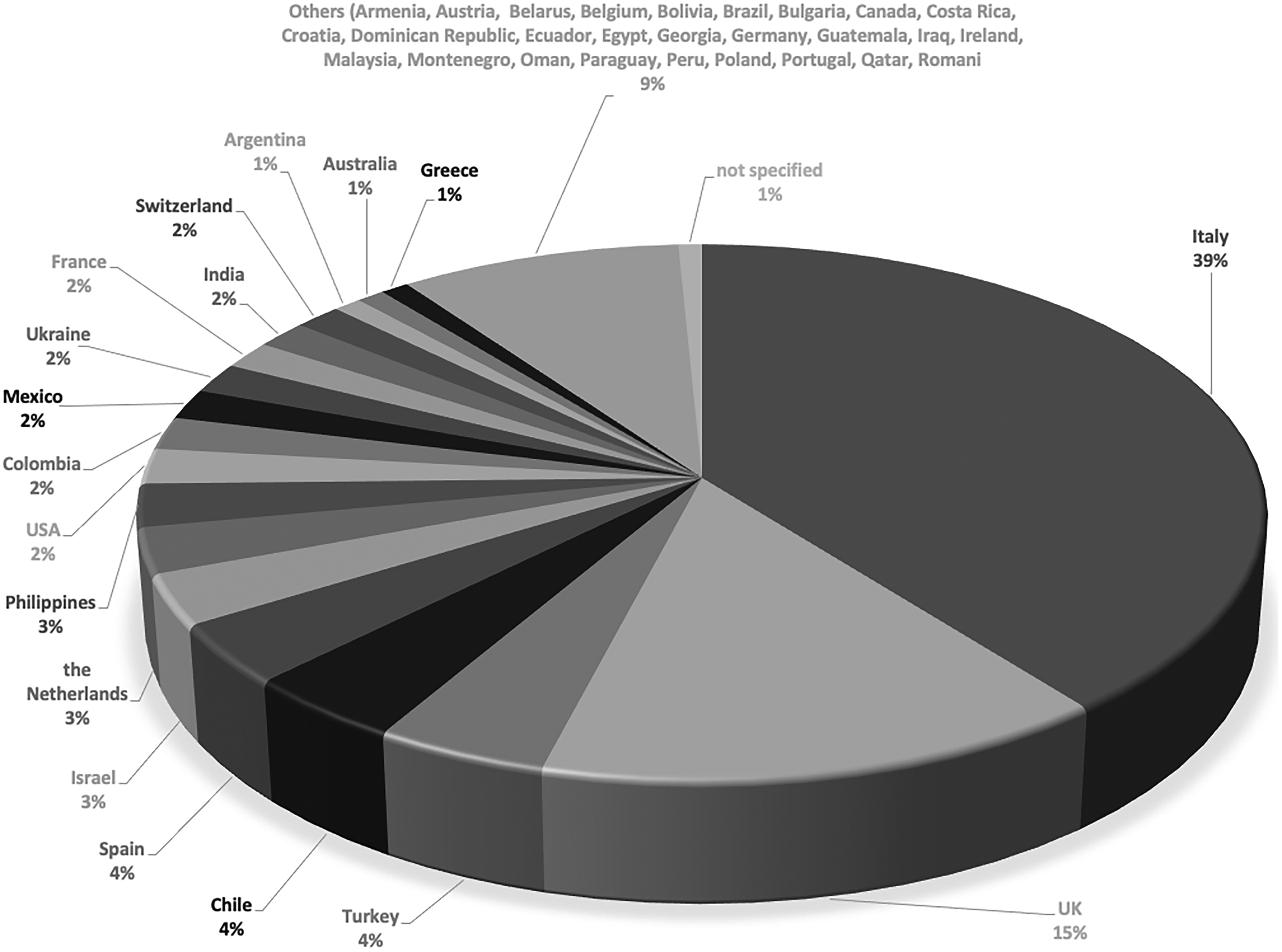
Countries of practice of the respondents.
Baseline characteristics of respondents.
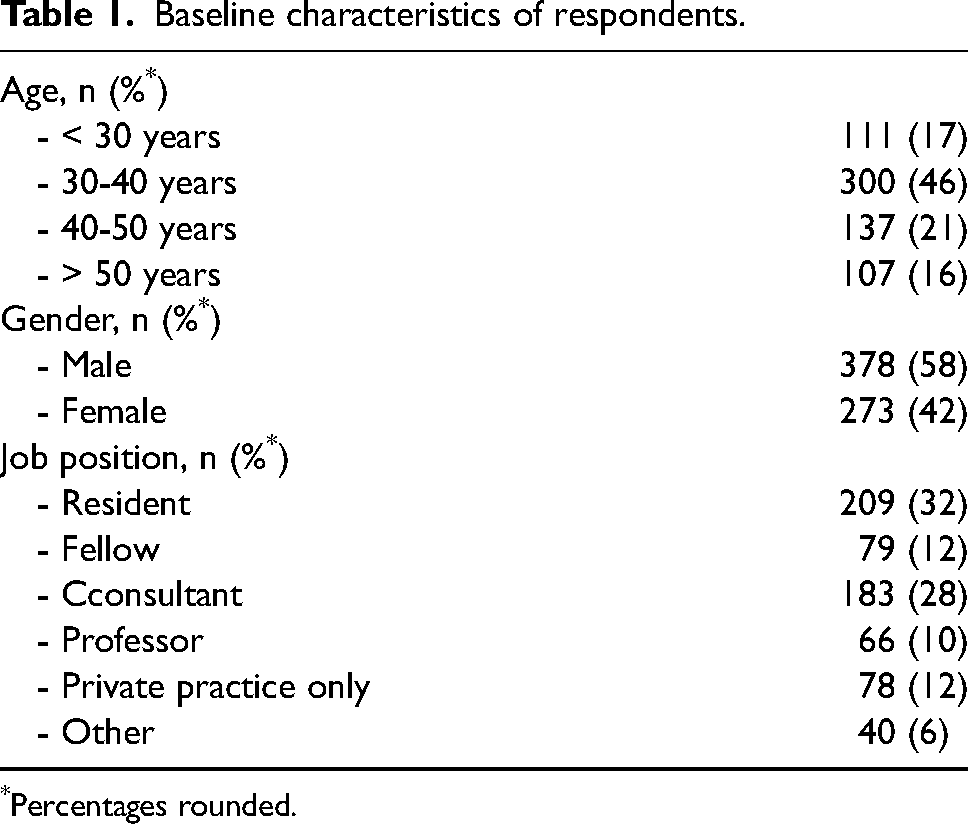
Percentages rounded.
Responses to the questions investigating the attitude of respondents towards digital educational tools are shown in Table 2. Although before the first lockdown, digital education reportedly accounted for a minor proportion (up to 25%) of professional education (72%), the survey confirmed a substantial change as the vast majority of respondents declared that digital educational sessions have effectively replaced face-to-face teaching for more than 50% (72%), regardless of age and job position (p value of 0.72 and 0.80, respectively). However, the majority of respondents declared that, in case of hybrid events, they would prefer to attend in-person (48%). In this regard, informal networking was considered important for professional education, mainly as opportunity to meet experts (45%) and to share personal experience (45%).
Use of digital education: responses to different questions.
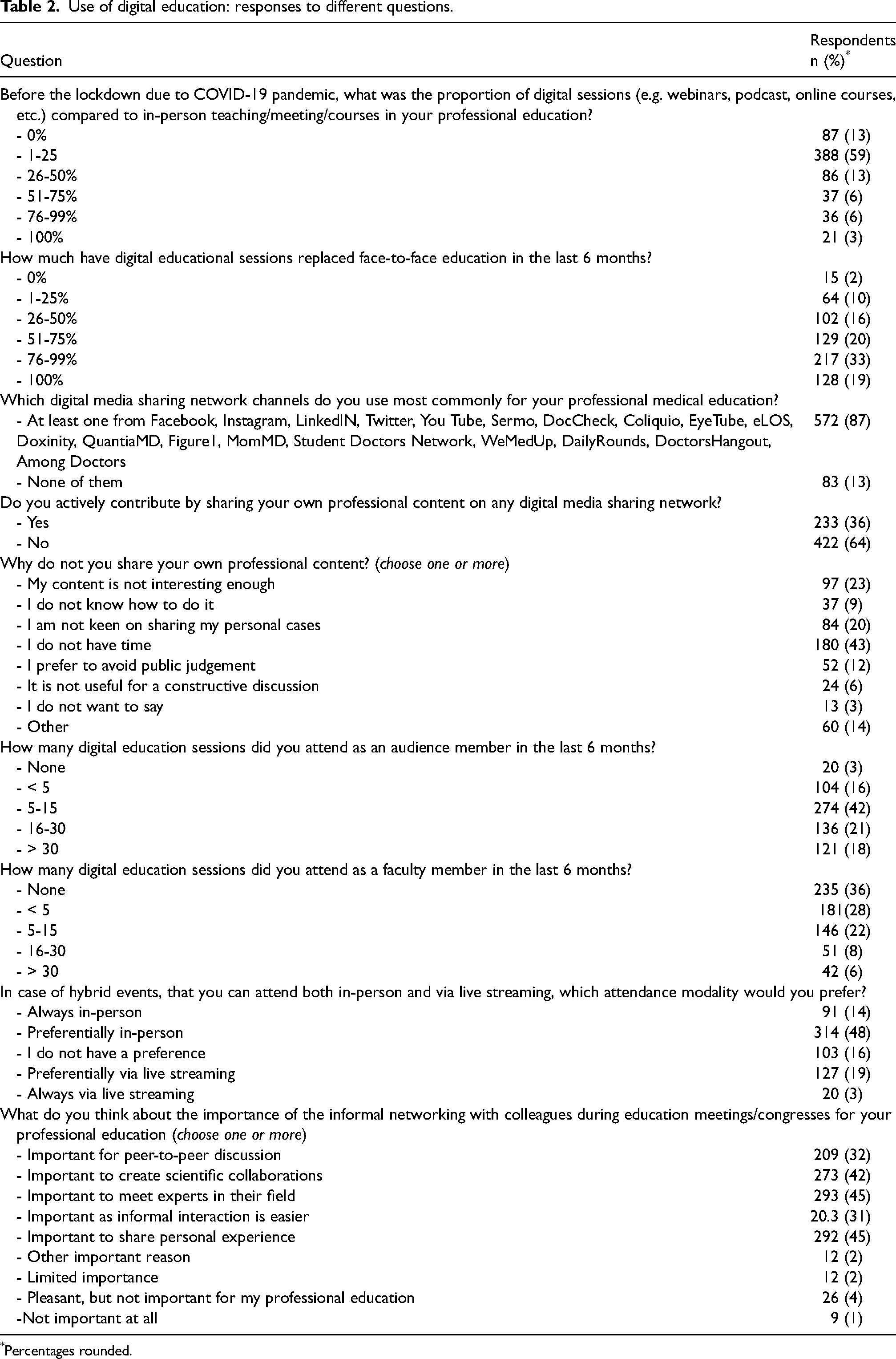
Percentages rounded.
Table 3 summarizes the responses investigating the preferences for specific findings of a hypothetical valuable digital educational session. Most respondents identified the evening time slot (6-8 p.m.) of a weekday (Monday to Thursday) as the best timeframe for a digital educational session (45% and 46%, respectively), regardless of age (p value = 0.39 and 0.89, respectively) and job position (p value = 0.29 and 0.08, respectively) of the respondents. Moreover, a time span of 30 to 60 min resulted to be the most commonly preferred option with regard to the duration of a session without break (52%), with no difference based on age range or job position (p value = 0.84 and 0.31, respectively) of the respondents.
Respondents’ preferences regarding digital educational sessions’ findings.
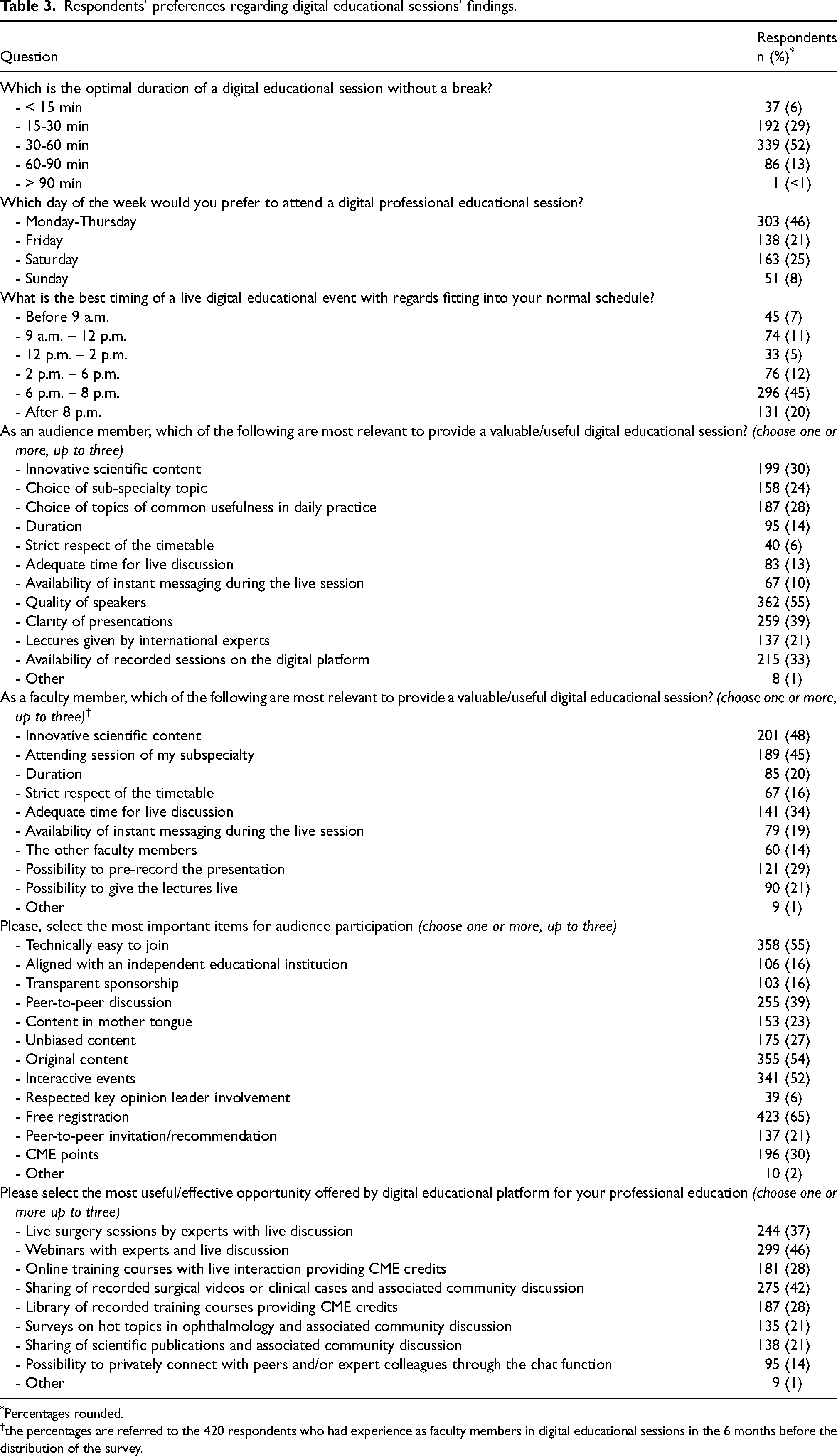
Percentages rounded.
the percentages are referred to the 420 respondents who had experience as faculty members in digital educational sessions in the 6 months before the distribution of the survey.
The factors chosen as the most important to provide a valuable digital educational session were the quality of speakers (55%) and the clarity of presentations (39%) as audience member, and the innovative scientific content (48%) and the possibility to attend sessions of a specific subspecialty (45%) as faculty member, regardless of age and job position (p value > 0.05 for all) of the respondents. Overall, free registration, technical ease to join, original content and interaction were considered the most important items to improve audience participation (65%, 55%, 54% and 52%, respectively). In this regard, some differences were found depending on job position, such as the preference for content in mother tongue amongst private practitioners (36%, p value = 0.048), possibility to collect CME points for consultants (39%, p value = 0.016) and the involvement of key opinion leaders for professors (18%, p value = 0.001). Regardless of age and job position (p value > 0.05) of the respondents, webinars with experts and the sharing of recorded surgical videos or clinical cases, both associated with live discussion, were chosen as the most important opportunity offered by the digital educational channels (46% and 42%, respectively).
Finally, a total of 411 answers to the open-ended questions were collected. Quality/clarity of speakers/presentations (21%) and interesting/innovative topics (17%) were more commonly reported as the main strength of digital educational events, whereas difficulty in interaction or limited time for discussion (23%) were more frequently mentioned as the main weaknesses, followed by excessive duration (19%) and technical issues that could occur (13%).
Discussion
E-learning is likely to represent a significant part of ophthalmology education in the future. 5 Most of the studies aimed to assess the use of e-learning in ophthalmology were limited to modules for medical students.5–14 Furthermore, no previous study has focused on the optimal planning of digital educational sessions, although this is crucial to optimize audience acceptance and, potentially, teaching effectiveness. For instance, it has been emphasized that the adaptation of ophthalmology conferences to a virtual setting needs to consider some key findings, such as timing, duration, format and discussion tools. 15 The need of some guidance regarding the structure of online teaching, such as the length of classes and the break between them, has also been recently claimed. 16 In view of this, we conducted a survey-based study aiming to identify structural features, potentially beneficial for the planning of digital ophthalmology educational sessions, based on users’ preferences.
According to the respondents, webinars and recorded surgical videos or clinical cases, both associated with live discussion, were the most effective opportunities offered by the digital educational channels for professional learning. In this regard, ophthalmology webinars have been described as a promising and effective teaching tool to improve knowledge acquisition and stimulate active participation of the learners. 6 Indeed, unlike other online educational formats (e.g. podcasts, vodcasts, webcasts, etc.), webinars offer the significant advantages of preserving the real-time interaction learner-to-learner and learner-to-teacher and allowing the integration of techniques promoting the active participation of the learners and interaction (active learning).6,8,17,18 Recently, Romano et al. 8 proposed a model of “active e-learning” consisting of an entirely online course combining webinars with multiple techniques of active learning (such as pause procedures, case-based discussion, open discussion, commitment activities) and reported that this format preserved audience engagement, participants’ satisfaction and interaction, and was perceived as effective by an audience of ophthalmology trainees and specialists.
In the current survey, the interaction resulted to be one of the most important item to improve audience participation in digital educational sessions and, in agreement with this, the inadequacy of interaction and limited time for discussion were considered the main weaknesses of digital events previously attended. Moreover, it is known that inadequate interaction can reduce the acceptance of e-learning methods. 16 In this survey, the evening slot (from 6 to 8 p.m.) of a weekday (Monday-Thursday) was chosen as the best timeframe for digital education session. This is of interest, as identifying the best timeframe for the live broadcast, can enhance live attendance and, consequently, the possibility of live interaction.
Another critical aspect to optimize the effectiveness of any e-learning module/course/event is the duration of each session without breaks. Indeed, the excessive length of a lecture can compromise the efficient assimilation of new information and thus compromise the learning process. 19 It has been suggested that the optimal duration of a lecture might be about 30 min as students level of attention during lectures usually reaches a peak after the first 15 min and then progressively decreases. 20 Moreover, a recent survey-based study, addressed to medical and nursing students, showed that digital classes of more than 40 min were significantly associated with the onset of loss of concentration, eye strain, neck and back pain. 16 In this regard, 15–30 min and 30–60 min were the options more frequently preferred in our survey as optimal duration of a digital educational session without a break. Moreover, the incorporation of active learning tools every 10–15 min may improve the retention of knowledge and maintain high levels of attention. 17
As audience members, quality of speakers and the clarity of presentations were chosen as being of greatest importance for a valuable digital educational session. It is known that the appropriate design of teaching materials may impact both transfer of knowledge and learner engagement positively. 18 For instance, the incorporation of verbal and pictorial elements in teaching material results in increased transfer and retention of knowledge. However, the content presented in visual and verbal information needs to not exceed learners’ cognitive processing limits, potentially leading to a cognitive overload.18,21,22 Various strategies can avoid cognitive overload, such as planning a small interval between different segments of the presentation or signaling the most important information on a slide. 20
Recently, Chatziralli et al. 5 highlighted that professional networking is unavoidably restricted by the current online adaptation of educational activities. In line with previous findings, our survey showed that in-person informal networking is considered a useful professional opportunity to meet experts and to share personal experience. In this regard, it may be argued that different to a single e-learning module/event, a digital educational platform, characterized by a community made up by members of different professional grades and experiences, may allow the creation of a wide network, beyond the temporal and spatial limits of any specific face-to-face event.
In conclusion, in response to the emergence and spread of the COVID-19 pandemic, the prompt adaption of traditional teaching to e-learning methods ensured the continuity of professional education in ophthalmology and in the other medical specialties. In the view of a necessary long-term use of e-learning tools, the improvement of timing and design of digital educational sessions may result in the optimization of their acceptance and effectiveness. Moreover, digital educational platforms, may be useful tools to ensure effective teaching activities and to enable professional network building.
Footnotes
Acknowledgements
Researchers participating in the e-LOS Study Group: Aniruddha Agarwal (Post Graduate Institute of Medical Education and Research (PGIMER), Chandigarh, India)
Francesco Aiello (Ophthalmology Unit, Department of Experimental Medicine, University of Rome “Tor Vergata”, Rome, Italy)
Aseef Amed (Department of Ophthalmology, George Washington University, Washington, D.C., USA)
Francesca Amoroso (Department of Ophthalmology, Centre Hospitalier Intercommunal de Creteil, Creteil, France)
Martina Angi (Ocular Oncology Service, Melanoma and Sarcoma Unit, Department of Surgery, Fondazione IRCCS Istituto Nazionale dei Tumori, Milano, Italy)
Adrian Au (Retinal Disorders and Ophthalmic Genetics Division, Stein Eye Institute, University of California Los Angeles, Los Angeles, California, USA)
Ernesto Bali (Ophthalmology Department Chirec, Groupe Hospitalier CHIREC, Brussels, Belgium)
Aman Chandra (Department of Ophthalmology, Southend University Hospital NHS Foundation Trust, Prittlewell Chase, Essex, United Kingdom)
Gilda Cennamo (Department of Public Health, University of Naples Federico II, Naples, Italy)
Michela Cennamo (Eye Clinic, Department of Neuroscience, Psychology, Pharmacology and Child Health (NEUROFARBA), University of Florence, Florence, Italy)
Marco Coassin (Ophthalmology Complex Operative Unit, University Campus Bio-Medico, Rome, Italy), Antonio Di Zazzo(Ophthalmology Complex Operative Unit, University Campus Bio-Medico, Rome, Italy)
Giulia Coco (Department of Corneal and External Eye Diseases, St Paul's Eye Unit, Royal Liverpool University Hospital, Liverpool, United Kingdom; Department of Clinical Science and Translational Medicine, University of Rome Tor Vergata, Rome, Italy)
Francesco Maria D’Alterio (Newcastle Eye Centre, Royal Victoria Infirmary, Newcastle upon Tyne, United Kingdom)
Claudia Del Turco (U.O. Oculistica 2, Turin Eye Hospital, ASL Città di Torino, Turin, Italy, Ophthalmology Unit, Humanitas Gradenigo Hospital, Turin, Italy), Carlo La Spina(U.O. Oculistica 2, Turin Eye Hospital, ASL Città di Torino, Turin, Italy, Ophthalmology Unit, Humanitas Gradenigo Hospital, Turin, Italy)
Roberto Dell’Omo (Department of Medicine and Health Sciences V. Tiberio, University of Molise, Campobasso, Italy), Pasquale Napolitano(Department of Medicine and Health Sciences V. Tiberio, University of Molise, Campobasso, Italy)
Tito Fiore (Department of Biomedical and Surgical Sciences, Section of Ophthalmology, S. Maria della Misericordia Hospital, University of Perugia, Perugia, Italy)
Andrea Govetto (Fatebenefratelli-Oftalmico Hospital, ASST-Fatebenefratelli-Sacco, Milano), Nataliia Malachkova (Ophthalmology Department, Vinnitsya National Memorial Medical University, Ukraine)
Rodolfo Mastropasqua (Department of Surgery, Medicine and Dentistry, University of Modena and Reggio Emilia, Modena, Italy)
Francesco Matarazzo (Moorfields Eye Hospital, NHS Foundation Trust, London, United Kingdom)
Gerard McGowan (Tennent Institute of Ophthalmology, Glasgow, United Kingdom); Michele Reibaldi(Department of Surgical Sciences, Eye Clinic Section, University of Turin, Turin, Italy)
Robert Rejdak (Department of General Ophthalmology, Medical University of Lublin, Lublin, Poland)
Catherine Dianne Reyes-Delfino (Manila Doctors Hospital, Manila, Philippines)
Carlos Rocha-de-Lossada (Department of Ophthalmology, Hospital Universitario Virgen de las Nieves, Granada, Spain; Department of Ophthalmology (Qvision), Vithas Virgen del Mar Hospital, Almería, Spain)
Davide Romano (Eye Clinic, Department of Neurological and Vision Sciences, University of Brescia, Brescia, Italy)
Francesca Romano (Ophthalmogy unit, Ospedale Cristo Re, Rome, Italy)
Luca Rombetto (Pediatric Department, Unit of Pediatric Ophthalmology, ASST Grande Ospedale Metropolitano Niguarda, Milan, Italy)
Tommaso Rossi (Ophthalmology, IRCCS Policlinico San Martino, Genoa, Italy)
Vincenzo Scorcia (Department of Ophthalmology, University Magna Græcia of Catanzaro, Catanzaro, Italy)
David Steel (Sunderland Eye Infirmary, Sunderland, United Kingdom, Bioscience Institute, Newcastle University, Newcastle Upon Tyne, United Kingdom)
Mario Toro (Department of General Ophthalmology, Medical University of Lublin, Poland)
Xavier Valldeperas (Ophthalmology Department, Fundació Institut d’Investigació en Ciències de la Salut Germans Trias i Pujol (IGTP), Badalona – Barcelona, Spain)
Jose L Vallejo-Garcia (IRCCS Humanitas Research Hospital, Milan, Italy)
Demetrios Vavvas (Department of Ophthalmology Retina Service, Harvard Medical School, Boston, MA, USA)
Agostino S Vaiano (Struttura Complessa di Oculistica, Azienda Ospedaliera Santa Croce e Carle di Cuneo, Cuneo, Italy)
Dinah Zur (Ophthalmology Division, Tel Aviv Medical Center, affiliated to Sackler Faculty of Medicine, Tel Aviv University, Tel Aviv, Israel)
Supported by HOYA Surgical Optics GmbH that contributed to the creation of the survey.
Declaration of Conflicting Interests
The author(s) declared the following potential conflicts of interest with respect to the research, authorship, and/or publication of this article: Xxxxxxx.Mario R Romano is the scientific director of e-LOS. The following Authors are members of ESASO faculty: Martina Angi, Ernesto Bali, Aman Chandra, Sibel Demirel, Nataliia Malachkova, Rodolfo Mastropasqua, Gerard McGowan, Michele Reibaldi, Robert Rejdak, Mario R Romano, Tommaso Rossi, David Steel, Mario Toro, Xavier Valldeperas, Jose L Vallejo-Garcia.
Funding
The author(s) received no financial support for the research, authorship, and/or publication of this article.
