



Abstract
As young citizens in an uncertain, complex and continuously changing world, adolescents have to navigate various societal challenges. This study explores whether civic engagement in adolescence relates to their macrosocial worries (negative expectations about the future of Europe and perceptions of global environmental threats). To deepen our understanding of individual differences in adolescents’ civic engagement, we use the concept of citizenship orientations and include civic knowledge in our analysis. ICCS data from 2,582 eighth-grade students (Mage = 14.1) in the Netherlands were used. Multilevel latent class analysis identified five citizenship orientations based on civic participation, sociopolitical interest and political trust: unengaged trustful (45%), occasionally engaged (29%), frequently engaged (16%), unengaged untrustful (5%) and active (5%). Our results show that citizenship orientations are differently related to macrosocial worries, and this association is moderated by civic knowledge. Both appear to be relevant to understanding individual differences in adolescents’ civic engagement.
Introduction
Today’s young citizens grow up in a world facing significant societal and environmental challenges. Recent studies consistently show that adolescents are worried about the world’s future (e.g., Hickman et al., 2021). Among these concerns, climate change in particular keeps young people concerned and triggers eco-anxiety and ecological grief (Ojala et al., 2021). The number of adolescents who perceive climate change, water shortages and pollution as serious threats to the future of the world has increased in the last decade (Schulz et al., 2023). The International Civic and Citizenship Education Study (ICCS) shows that in 2022, 68% of the 14-year-old participants consider climate change to a large extent as a threat to the world’s future (Schulz et al., 2023). Also, about 50% expect that terrorism is likely or very likely to become a greater threat in Europe (Damiani et al., 2024). Large groups of adolescents express their worries about the world’s future by participating in civic activities, such as demonstrations like ‘School Strike for Climate’ and organizations like ‘Youth for Climate’. In these activities, adolescents also express their discontent with how threats are currently addressed, pointing to a lack of governmental efforts and insufficient collective action.
Previous research shows an association between adolescents’ worries about the future and civic engagement, for example, among young activists (e.g., Boehnke & Wong, 2011). In interviews, young activists described worry as a constructive force: a necessary emotion that motivates pro-environmental behaviour (Ojala, 2007). However, worries about the future of the world may also be related to pessimism, helplessness and passivity (Threadgold, 2012). While the focus of most research on perceptions of global threats is on adolescents’ well-being or pro-environmental behaviour (e.g., Ojala et al., 2021; Stevenson & Peterson, 2016), the various manifestations of adolescents’ civic engagement and worries about other global or European threats (e.g., terrorism and intolerance) remain underexposed.
In this article, we aim to deepen our understanding of individual factors that may drive young people to take—or not take—an active part in society. We therefore explore the nature of adolescents’ civic engagement and examine how civic engagement is related to worries about the world’s future. We also investigate whether this association is moderated by their civic knowledge. Broadly speaking, civic engagement refers to individuals’ contributions to community and society (Amnå, 2012; Sherrod & Lauckhardt, 2009; Wray-Lake et al., 2019), reflected in their attitudes, values and behaviours. Civic engagement is considered to be a key element of a robust democratic society, as knowledgeable and engaged citizens contribute to a resilient democracy. More research on different patterns of civic engagement among adolescents is needed, since individuals develop a more nuanced understanding of social and political systems during adolescence and become more aware of local and global challenges (Flanagan, 2003).
Citizenship Orientations
To understand the relation between individual factors and civic engagement, it should be taken into account that civic engagement is a multidimensional concept (Amnå, 2012). The conceptualization of civic engagement as being multidimensional implies moving beyond a dichotomous perception of engagement and sheds light on the heterogeneity of ways in which young people can be (un)engaged (Amnå & Ekman, 2014). By investigating latent forms or patterns of (un)engagement, the concept of citizenship orientations is used (cf. Tzankova et al., 2021, 2022). Citizenship orientations reflect patterns of different indicators of engagement and dispositions towards society and may therefore better capture differences in adolescents’ civic engagement. In this study, citizenship orientations reflect patterns of civic participation, sociopolitical interest and political trust. We build upon analyses by Amnå and Ekman (2014) and Tzankova et al. (2021), whose research supports the notion of heterogeneity in civic engagement among adolescents.
Civic participation refers to ‘the manifestations of individuals’ actions in their communities’ (Schulz et al., 2022, p. 31). Traditionally, civic participation—especially voting—has been considered to be an important aspect of civic engagement. Although adolescents cannot always take part in such formal, ‘adult’ ways of civic participation, they do participate in social life and their lives are embedded in the wider societal, economic, cultural and political context. For example, participating in community organizations gives adolescents the opportunity to experience expressions of rights and obligations within those groups (Flanagan, 2003).
Adolescents’ interest in political and social issues also reflects their disposition towards engagement (Schulz et al., 2022). This interest is considered to be a basic characteristic of one’s orientation towards politics (Amnå & Ekman, 2014). Civic participation and sociopolitical interest are related: A lack of interest can be a barrier to participation, whereas being more interested can stimulate civic participation. Adolescents’ interest is found to be positively related to their civic knowledge and civic participation, for example, on digital media (Schulz et al., 2023). However, high interest can also coincide with less participation (Hooghe & Dejaeghere, 2007), for example, when citizens are interested in politics, stay informed and conclude that their participation is not required at the moment. Patterns of civic participation and sociopolitical interest have been previously investigated by Amnå and Ekman (2014). They distinguish four different orientations: active citizens, scoring high on both participation and interest, standby citizens, scoring average on participation and high on interest, unengaged citizens, scoring low on both participation and interest, and disillusioned citizens, who score the lowest on both participation and interest. Particularly, the group of standby citizens underlines the notion that patterns of sociopolitical interest and civic participation differ among individuals, and a seemingly passive attitude can mask political involvement (Dahl et al., 2018), showing the importance of going beyond a dichotomous approach.
Adolescents’ political trust is an important part of their attitudes towards civic issues and institutions (Schulz et al., 2022). Building on the work of Amnå and Ekman (2014), Tzankova et al. (2021, 2022) showed that profiles based on participation and interest can be further differentiated between being trustful and untrustful towards institutions and electoral processes. Interestingly, a considerable group showed low participation and interest but were trustful at the same time. These results show that focusing on citizenship orientations—patterns of participation, interest and trust—enables to investigate the plurality of adolescents’ (un)engagement. Whereas lack of trust may reflect alienation or withdrawal for some, less trust can also be an indicator of criticism, while one is still interested or participating (Dahl et al., 2018; Hooghe & Dejaeghere, 2007).
In conclusion, we assume that civic participation, sociopolitical interest and political trust together shape one’s citizenship orientation.
Macrosocial Worries and Citizenship Orientations
Macrosocial worries can be defined as worries about threatening events on macrolevel life domains (Boehnke et al., 1998). Whereas microworries refer to the self and the in-group, the object of macrosocial worries is external to the self and includes perceived threats to society or the world. In contrast to microworries, macrosocial worries are not related to trait anxiety (Boehnke & Wong, 2011; Boehnke et al., 1998).
Most recent research on macrosocial worries among adolescents focuses on worries about global environmental threats. It is argued that worry could evoke feelings of responsibility and may activate adolescents’ pro-environmental behaviour (Ojala, 2007). For example, perceiving climate change as a high risk relates to participating in environmental activities at school or being a member of an environmental group or organization (Kessler, 2021).
So far, the relation between macrosocial worries and adolescents’ civic engagement has received scant attention. A recent study among adults showed a positive relation between climate stress and civic engagement (Anneser et al., 2024). Higher levels of macrosocial worries have been related to political activism among adolescents (Boehnke & Wong, 2011) and those who were more worried about civil unrest in Europe were more likely to vote in the next EU election (Strohmeier et al., 2017). These findings suggest that macrosocial worries may stimulate civic participation, but adolescents who worried about future environmental issues and global relations were also more cynical about the political process and becoming politically involved themselves (Threadgold, 2012).
Although adolescents’ worries about the future seem to be an important factor related to their civic engagement, this relation is yet unclear. Investigating citizenship orientations may increase our understanding of macrosocial worries as a possible important factor in explaining differences in adolescents’ civic engagement.
Civic Knowledge
Besides affective factors that are likely to be associated with adolescents’ citizenship orientations, cognitive aspects–especially civic knowledge–are also expected to play a role. According to the conceptualization in the data used for our analysis, civic knowledge includes knowledge about civic institutions and systems, civic principles, civic participation and civic roles and identities (Schulz et al., 2023). More civic knowledge has been found to be related to more expected electoral participation, more intended future participation in environment protection activities, and adolescents with higher levels of civic knowledge also tend to be more critical of the political system (Schulz et al., 2023). When it comes to climate change, civic knowledge is related to a higher perceived threat (Kessler, 2021; Schulz et al., 2023). Including civic knowledge may therefore improve the understanding of the association between macrosocial worries and citizenship orientations.
More specifically, this relation may differ depending on adolescents’ level of civic knowledge. It could be one of the factors that contribute to transforming macrosocial worries into constructive actions (Ojala, 2007), providing a sense of control in coping with these concerns (Anneser et al., 2024). Adolescents with more knowledge about democratic processes might have a better understanding of how they themselves can contribute effectively to societal change. They may feel more confident in addressing macrosocial issues or participating in civic activities. Conversely, adolescents who are unengaged or even disillusioned with political processes might consider their inaction a result of their knowledge of the invariability of political processes. Therefore, it is also possible that more civic knowledge and macrosocial worries are related to less engagement, reflecting pessimism or hopelessness. In sum, examining the role of civic knowledge in interaction with macrosocial worries increases understanding of differences in adolescents’ civic engagement.
This Study
This study aims to gain insight into the association between adolescents’ civic engagement, macrosocial worries and civic knowledge. The study was conducted in the Netherlands, where citizenship education has become an increasingly important theme in educational policies (De Groot et al., 2022). To enhance understanding of civic engagement, citizenship orientations will be explored. The study aims to answer the following research questions: (a) Which citizenship orientations can be distinguished among Dutch adolescents, based on sociopolitical interest, civic participation and political trust? (b) In what way are adolescents’ macrosocial worries related to these different citizenship orientations? (c) To what extent is the relationship between macrosocial worries and citizenship orientations moderated by civic knowledge?
Although we cannot specify beforehand which citizenship orientations will be found (first research question), based on previous research on patterns of social–political interest and civic participation, in combination with political trust (Tzankova et al., 2021, 2022), we expect to distinguish several citizenship orientations among Dutch adolescents. With regard to the second and third research questions, we expect that the level of macrosocial worries will be related to differences between citizenship orientations, and we expect that macrosocial worries and civic knowledge interact in predicting citizenship orientations. Because earlier theoretical and empirical work in relation to civic engagement offers different lines of reasoning, we refrain from specifying hypotheses about the association between different citizenship orientations and macrosocial worries.
Methods
Registration
The study protocol was preregistered with Open Science Framework prior to data analysing on 21 November 2021 (
Participants and Procedure
The Dutch dataset of ICCS 2022 was used (Schulz et al., 2023). ICCS is a cross-sectional, international study on lower-secondary school students’ civic knowledge, attitudes and behaviours, and citizenship education in schools. Additional data from a supplementary ICCS questionnaire (conducted in European countries) were used to measure aspects related to the European regional context (Damiani et al., 2024).
The target population of ICCS were students enrolled in the eighth grade, which is the second grade of secondary school in the Netherlands. ICCS follows a two-stage stratified sampling procedure. First, 150 schools in the Netherlands were randomly selected, stratified to equally represent the different educational tracks in the Dutch education system. When a school was willing to participate, one class was randomly selected to participate. All students in this class were asked to participate. This sampling design results in a representative sample of classes of eighth-grade students across different school tracks in the Netherlands. Participants were 2,609 students from 124 schools. The mean age of the participants was 14.1 years. To the question ‘what is your gender?’, 51.1% responded boy and 47.1% girl. Given the very small percentage of students answering ‘other’ (1.8%), these answers were recoded as missing.
The data were collected between March and July 2022. Before participating, students and their parents were informed about the study. Students were excluded from participation when they or their parents objected to participation. Participants did not receive any payment. More information about the study design can be found in the international (Schulz et al., 2023; Damiani et al., 2024) or national ICCS reports (Daas et al., 2025).
Measures
Three indicators were used for the dependent variable, citizenship orientations: sociopolitical interest, civic participation and political trust. The independent variables were perceptions of global environmental threats, negative expectations regarding the future of Europe and civic knowledge. Socioeconomic status, immigration background and gender were included as control variables (see Supplementary Material).
Latent Dependent Variable Indicators
Sociopolitical interest was measured by asking adolescents how interested they are in social and political issues, ranging from 1 (very interested) to 4 (not interested at all). Items were reverse coded, so a higher score indicates more sociopolitical interest.
Civic participation was measured by nine items, averaged into one variable ‘Civic participation’ (Cronbach’s α = 0.66 1 ). The nine items were derived from two scales, reflecting both online and offline activities.
Involvement (past or present) in organizations and groups outside of school was measured by five items on a 3-point scale. Participants were asked, ‘Have you ever been involved in activities of any of the following organizations, clubs or groups?’. An example item is ‘A voluntary group doing something to help the local community’. Participants answered whether they have done this within the last 12 months, more than a year ago or never. The items were dichotomized to 1 (no) and 2 (yes).
Involvement using digital technologies was measured by four items on a 4-point scale. Participants were asked, ‘How often are you involved in each of the following activities related to internet and social media?’. An example item is ‘Commenting on an online post about a political or social issue’. Answer options ranged from ‘never or hardly ever’ to ‘daily or almost daily’. The four items were dichotomized to 1 (never/hardly ever) and 2 (yes).
Political trust was measured by four items on a 4-point scale, asking participants to rate how much they trust various institutions, ranging from 1 (completely) to 4 (not at all). Items include ‘the national government’, ‘the local government of your town or city’, ‘political parties’ and ‘parliament’. The mean score was used in the analyses (Cronbach’s α = 0.86).
Independent Variables
Two scales were used as indicators of macrosocial worries:
Perceptions of global environmental threats. Participants were asked to rate four items on a 4-point scale on the extent they perceive each issue as a threat to the future of the world. The threats were ‘pollution’, ‘climate change’, ‘loss of biodiversity’ and ‘water shortages’. Answer options ranged from 1 (to a large extent) to 4 (not at all). The mean score was used in the analyses (Cronbach’s α = 0.77).
Negative expectations for European future. Participants were asked to rate on a 4-point scale the likelihood of seven negative scenarios for Europe in 10 years, ranging from 1 (very likely) to 4 (very unlikely). Example items are ‘There will be a rise in racism’ and ‘There will be a rise in poverty and unemployment in Europe’. The mean score was used in the analyses (Cronbach’s α = 0.71).
Civic knowledge was measured by a knowledge test, containing both multiple-choice and open-ended questions about democracy and society. The 121 paper-based test items were presented in 11 booklets with a selection of items, to reduce text length. To address possible bias because of this matrix-sampling design, item response theory (IRT) was used by IEA, resulting in five plausible value estimates that indicate students’ civic knowledge. A similar scale as in previous ICCS cycles was used. In ICCS 2009, the civic knowledge scale had been standardized to a mean of 500 and a standard deviation of 100. Higher scores reflect more civic knowledge. For more information about the civic knowledge test, the scoring procedures and IRT-analysis, see Schulz et al. (2022).
Control Variables
Gender, immigration background and socioeconomic status were included as control variables. Gender and immigration background were both dichotomized (girl or boy; yes or no). Socioeconomic status is a nationally standardized composite score based on parental occupations, parental education levels and home literacy (Schulz et al., 2023).
Analyses
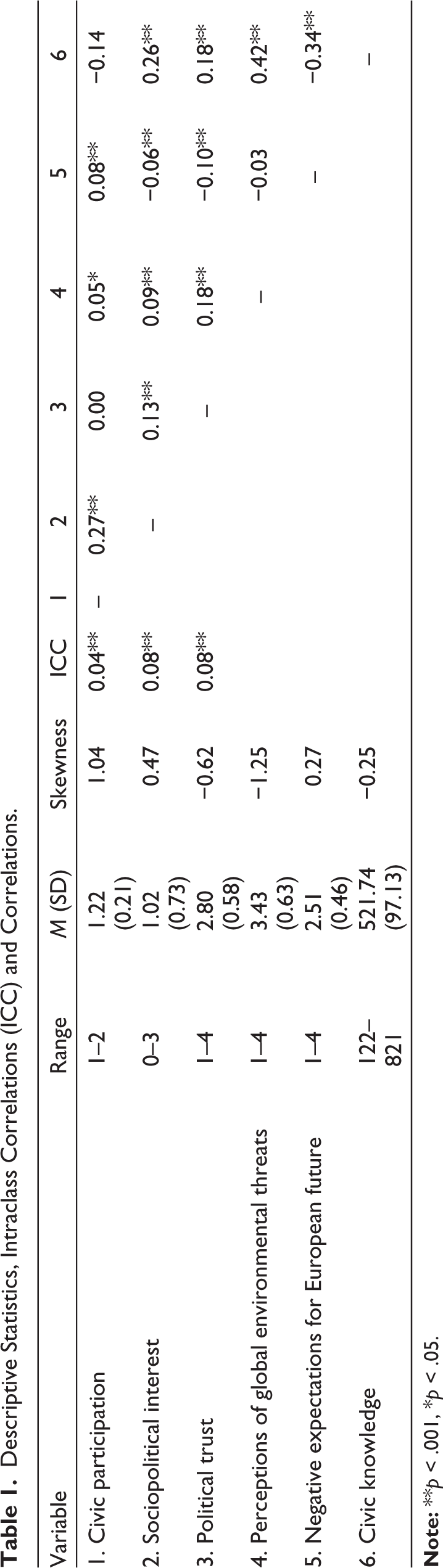
Before conducting the analyses, items measuring political trust and macrosocial worries were recoded to ease interpretation. After recoding, a higher score reflected more political trust or more macrosocial worries. Next, intraclass correlation coefficients (ICCs) were calculated to check for the variation between different school classes. The ICCs for all outcome variables are significant (see Table 1). Therefore, multilevel analyses were conducted. Civic participation and political trust were standardized, and sociopolitical interest was treated as categorical on an ordinal level.
Descriptive Statistics, Intraclass Correlations (ICC) and Correlations.
Main Analyses
In order to answer our research question about citizenship orientations, a person-centred approach is required. This approach uses participants’ scores to identify different individual patterns, whereas a variable-centred approach focuses on relations between variables. Latent class analysis (LCA) is an example of a person-centred approach, and was chosen since it enables including categorical variables. We conducted multilevel latent class analysis (MLCA) as described by Henry and Muthén (2010) and Mäkikangas et al. (2018). By using this method, we accounted for the nested structure of the data by allowing latent class intercepts to vary across schools (Henry & Muthén, 2010).
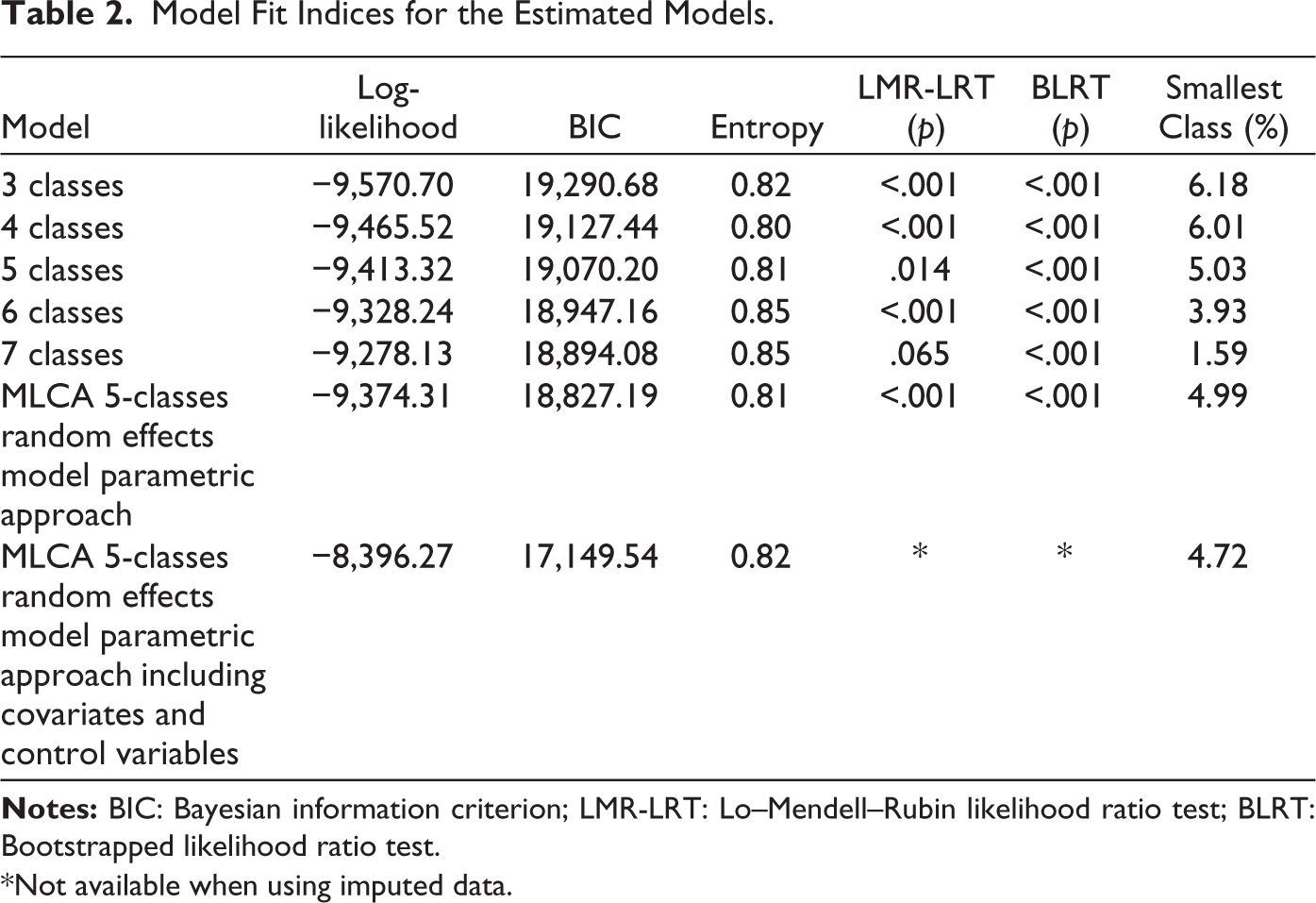
First, a traditional (single-level) LCA was conducted based on social–political interest, civic participation and political trust. We estimated models with 3–7 classes. The final model was chosen based on statistical and theoretical considerations. To decide upon the best fitting class solution, we considered model fit criteria (log-likelihood, BIC), entropy, class sizes, Lo–Mendell–Rubin adjusted LRT test (LMR-LRT) and the bootstrapped likelihood ratio test (BLRT). We also evaluated theoretical meaningfulness and prioritized parsimony.
We extended the best-fitting single-level model to an MLCA using a parametric approach. To ensure that the level-1 latent classes would remain unchanged, the starting values were set according to the final chosen single-level LCA model (Mäkikangas et al., 2018). Finally, the indicators of macrosocial worries and the interaction variable of civic knowledge and macrosocial worries were added as independent variables. Following the recommendations for using plausible values in large-scale assessment data (Yamashita et al., 2021), civic knowledge scores were included as imputed values. All models were estimated in Mplus Version 8.8 (Muthén & Muthén, 1998–2017), using full information maximum likelihood (FIML) estimation with standard errors that are robust to nonnormality (MLR estimator).
Results
The descriptive statistics and correlations between the latent class indicator variables (civic participation, sociopolitical interest and political trust) and covariates are presented in Table 1. On average, the level of interest in social and political issues among participants is quite low (M = 1.02, 1 = ‘not very interested’), whereas the average level of political trust is rather high (M = 2.8, 3 = ‘quite a lot’). Participants report on average low levels of civic participation (M = 1.22, on average 22% ‘yes’).
Participants with missing values on all indicator variables (political trust, sociopolitical interest and participation) were excluded from the analyses, as FIML cannot be used for participants who do not have valid scores on any of the variables. Therefore, 27 participants were excluded (N = 2,582) in the first step (identifying citizenship orientations). In the second step (including macrosocial worries, civic knowledge and control variables), five imputed datasets, each containing a different plausible value for civic knowledge, were used. The average sample size was 2,348, meaning that on average 234 participants were excluded (N = 2,348) due to missingness on the dependent, independent and control variables. Additional t-tests showed that the participants with missing values scored higher on political trust and sociopolitical interest than participants without missing values but no significant difference was found for participation. Despite these small differences, the distribution across latent classes remained consistent.
(Multilevel) Latent Class Analyses
The model-fit statistics for the estimated solutions for three to seven latent classes of a single-level LCA were compared to evaluate fit and interpretability (see Table 2). Expanding the model to more class solutions did improve model fit statistics. However, solutions with more than five latent classes contained very small classes. The five-class model was therefore chosen as the final model and was extended to a multilevel LCA. The model fit indices showed satisfactory model fit, the BIC decreased with the addition of the random effects, and the entropy was highly similar to the fixed effects model. The entropy of 0.82 indicates a sufficiently accurate assignment of individuals to latent classes.
Model Fit Indices for the Estimated Models.
*Not available when using imputed data.
In Figure 1, the model-estimated mean scores (EM) for political trust and civic participation and the average scores for sociopolitical interest for the five latent classes are visualized. The largest group contains almost half of the participants and is characterized by the highest level of political trust (EM = 0.21), a below-average level of participation (EM = −0.76) and a relatively low level of sociopolitical interest (weighted average = −0.12). This group is labelled as unengaged trustful. The second largest group shows an average level of political trust (EM = 0.06), an average level of participation (EM = 0.22), and an average level of sociopolitical interest (weighted average = 0.14). This group is labelled as occasionally engaged. The third group scores average on political trust (EM = −0.01), above average on civic participation (EM = 1.24) and above average on sociopolitical interest (weighted average = 0.29). This group is labelled as frequently engaged.
Finally, two small groups are identified, both consisting of five percent of the sample. One group is characterized by low scores on all three indicators: very low political trust (EM = −2.01), lowest score on civic participation (EM = −0.79) and the lowest level on sociopolitical interest (weighted average = −0.63). This group is labelled as unengaged untrustful. This class is similar to the unengaged trustful group in civic participation, but is clearly distinguished by the lowest levels of trust and interest. The other small group, labelled as active, shows very high participation (EM = 2.56), the highest interest in social and political issues (weighted average = 0.42) and slightly below-average score on political trust (EM = −0.14). This class is similar to the frequently engaged group in interest and political trust, but stands out because of the high level of participation.
As visualized in Figure 1, the groups differ most in participation, with the exception of the unengaged trustful and unengaged untrustful groups. However, additional ANOVAs (see Supplementary Material) reveal that the differences in political trust and interest in social–political issues are significant for most groups, except for the differences in interest and political trust between frequently engaged and active, and the difference in trust for occasionally engaged, frequently engaged and active adolescents.
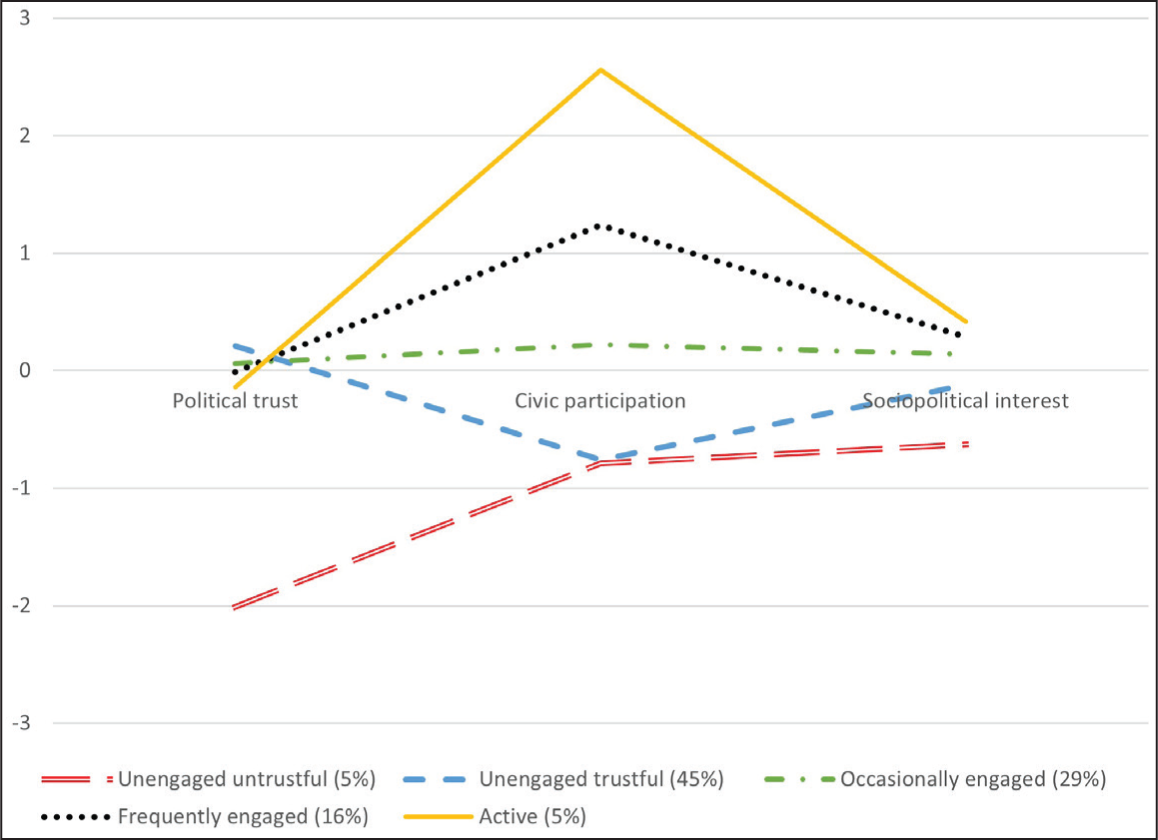
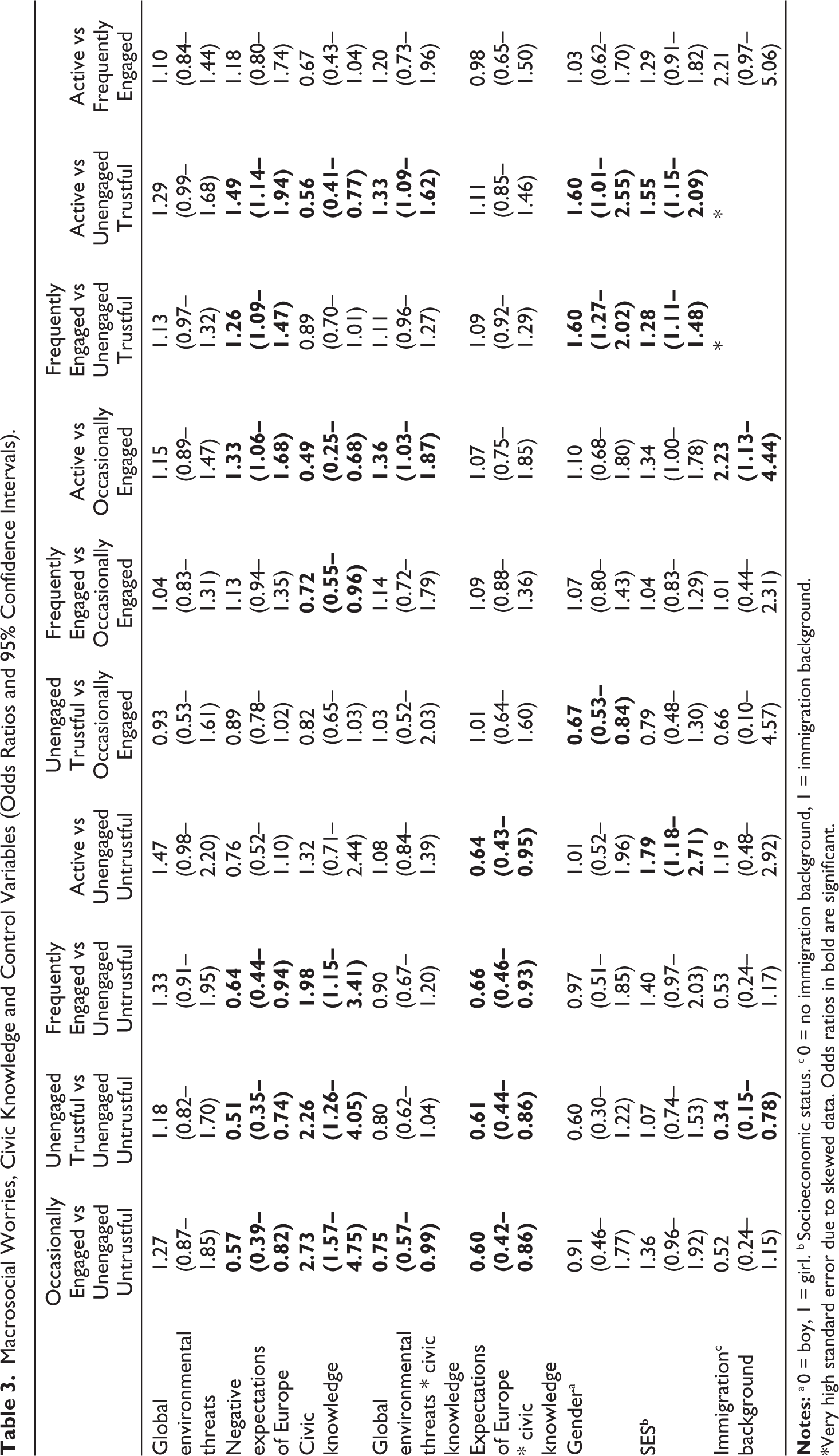
After estimating the citizenship orientations, we examined whether macrosocial worries and civic knowledge are significantly related to the most likely latent class membership. Gender, socioeconomic status and immigration background were included as control variables. Table 3 presents the multinomial logistic regression results, in terms of odds ratios. Figure 2 visualizes the odds ratios, with the unengaged trustful group as the reference category.
Macrosocial Worries, Civic Knowledge and Control Variables (Odds Ratios and 95% Confidence Intervals).
*Very high standard error due to skewed data. Odds ratios in bold are significant.
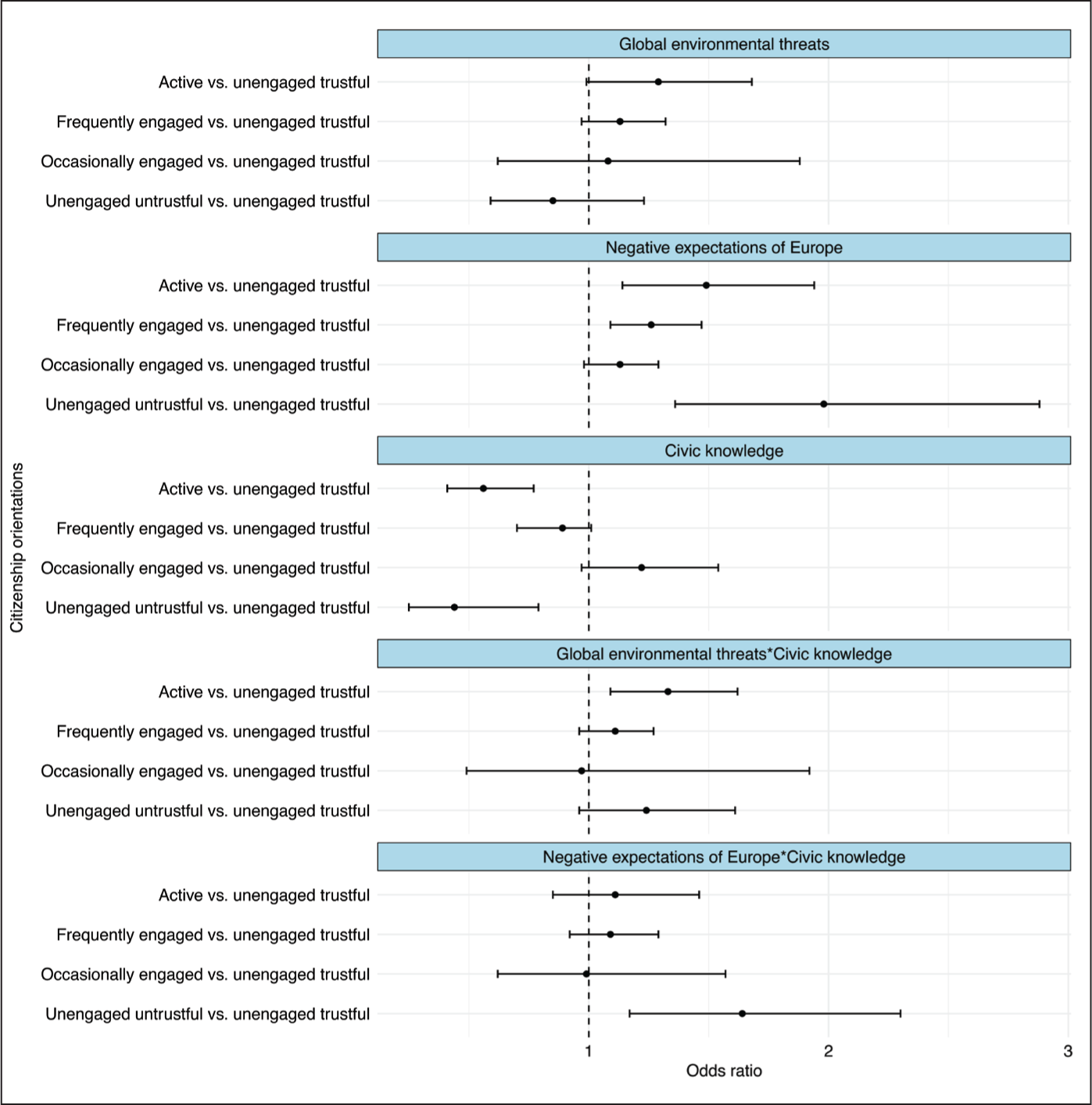
Adolescents who are more pessimistic about the future of Europe (i.e., perceived negative scenarios as more likely) are more likely to be in the unengaged untrustful class, compared with the occasionally engaged, unengaged trustful and frequently engaged. Adolescents who are more pessimistic about the future of Europe are also more likely active compared to occasionally engaged and unengaged trustful, and more likely to be frequently engaged compared to unengaged trustful. Perception of global environmental issues as threats to the world’s future is not related to latent class membership.
Civic knowledge was included as a moderating variable. When interpreting the interaction effect, the main effect of civic knowledge should also be considered. It shows that adolescents with more civic knowledge appear to be more likely occasionally engaged, unengaged trustful and frequently engaged, compared with unengaged untrustful. Adolescents with more civic knowledge are also more likely occasionally engaged compared to frequently engaged and active, and more likely unengaged trustful compared to active. The odds ratios of the interaction effect of civic knowledge and perception of global environmental threats show that the chance of being active in comparison to occasionally engaged and unengaged trustful, when one has a higher perception of global environmental threats, further increases when a student has more civic knowledge. Thus, civic knowledge moderates the association between perception of global environmental threats and class membership for these groups. However, the chance of being occasionally engaged instead of unengaged untrustful when adolescents have a higher perception of global environmental threats, decreases when they have more civic knowledge–it then becomes more likely that they are unengaged untrustful instead of occasionally engaged.
The odds ratio of the interaction effect of civic knowledge and negative expectations of the future of Europe shows that while for adolescents with negative expectations there is already less chance of being in another class than the unengaged untrustful, this chance decreases even further when the student has more civic knowledge. In other words, adolescents who have more negative expectations of the future of Europe and have more civic knowledge are also relatively more likely to be unengaged untrustful in comparison to all other orientations.
The effects of the control variables show that girls are more likely to be frequently engaged or active in comparison to unengaged trustful, and less likely to be unengaged trustful than occasionally engaged. Adolescents with a higher SES background are more likely to be active, in comparison to the unengaged untrustful and the unengaged trustful. They are also more likely to be frequently engaged versus unengaged trustful. Finally, adolescents with an immigration background are less likely to be unengaged trustful compared to unengaged untrustful, and more likely to be active compared to occasionally engaged.
Discussion
The aim of the present study was to increase understanding of individual differences in civic engagement in adolescence. We argued that the multidimensionality of adolescents’ civic engagement can be best investigated through citizenship orientations. Therefore, the first research question focused on which citizenship orientations can be distinguished among Dutch adolescents, based on sociopolitical interest, civic participation and political trust. Five citizenship orientations were identified: unengaged trustful, unengaged untrustful, occasionally engaged, frequently engaged and active. The groups differ most in civic participation. We also found variation in interest and sociopolitical trust, although differences are smaller.
The most common pattern was that of adolescents reporting to participate in few civic activities and having little interest in sociopolitical issues, but being trustful towards political institutions: unengaged trustful. These adolescents had relatively high trust in politics. This pattern is in line with previous research (Tzankova et al., 2021) and may imply that a substantial part of adolescents appear not to consider engaging in social or political activities important. At the same time, political institutions are seen as trustworthy. Another, small group–unengaged untrustful–showed similar low levels of participation, but stood out because of the very low scores on trust and on interest.
The three other citizenship orientations reflected different patterns of engagement. Two more common patterns were occasionally engaged and frequently engaged. These adolescents had average scores on sociopolitical interest and political trust, showing that they had quite a lot of political trust and were not very interested. In the occasionally engaged group, adolescents had average scores on participation, whereas adolescents in the frequently engaged group scored above this average. The small active group stood out because of the very high score on participation. These adolescents participated most in various activities and are interested in social–political issues but had a below-average level of trust.
In summary, regarding the first research question, the different citizenship orientations found in this study support the idea that there are distinctive forms of engagement among young people and show that a person-centred approach helps to understand the complexity and distinctiveness of engagement. Understanding individual differences provides avenues to further investigate what may stimulate or withhold young people from being engaged. Studies using a person-centred approach, including the present study, show how adolescents who seem similar on one indicator of engagement can be further differentiated when looking at patterns of engagement. In our study, this is most clearly illustrated by the distinction between two groups of adolescents who both had the lowest scores on participation, unengaged trustful and unengaged untrustful, but differed in level of trust and interest–reflecting different citizenship orientations.
In answering our first research question, the different citizenship orientations give insight into civic engagement among Dutch adolescents. Despite some variation, the majority of adolescents have substantial trust in politics, whereas they do not regularly participate in civic activities. This finding aligns with previous research conducted in other European countries (Amnå & Ekman, 2014; Tzankova et al., 2021). Political inactivity is often interpreted as worrisome, as engaged citizens are considered important for a resilient democracy. However, inactivity does not necessarily reflect alienation (Amnå & Ekman, 2014; Gamson, 1968), which is also confirmed by these findings. For many adolescents, a lack of participation may imply that actively participating in civic and political life is not relevant in their everyday lives (Tzankova et al., 2021).
Including gender, socioeconomic status and immigration background as control variables showed that citizenship orientations are also related to sociodemographic variables. Boys were more likely than girls to be in the unengaged trustful group in comparison to the occasionally engaged, frequently engaged and active groups. Adolescents with a higher SES were more likely to be frequently engaged or active in comparison to unengaged trustful. Moreover, they were more likely to be active instead of unengaged untrustful. Adolescents with an immigration background were more likely to be unengaged untrustful instead of unengaged trustful, and more likely to be active instead of occasionally engaged.
The second and third research questions focus on how macrosocial worries and civic knowledge are related to different citizenship orientations. We argued that exploring the role of macrosocial worries and civic knowledge could increase our understanding of adolescents’ civic engagement. Macrosocial worries were measured by perceptions of global environmental threats and negative expectations of the future of Europe, representing worries about a broad spectrum of societal issues (e.g., racism and religious intolerance). Overall, differences were found in the relation between citizenship orientations and adolescents’ negative expectations of the future of Europe and civic knowledge. Moreover, perceptions of global environmental threats were related to citizenship orientations, in interaction with civic knowledge.
The association between differences in citizenship orientations and macrosocial worries was most clearly found for negative expectations about the future of Europe: adolescents with more worries were relatively more likely to be in the unengaged untrustful, active or frequently engaged groups. This suggests that macrosocial worries are indeed related to differences in engagement among adolescents. Perception of global environmental threats, however, was not related to citizenship orientations, except in interaction with civic knowledge. The different findings for the two indicators of macrosocial worries suggest that the topics of concern matter when it comes to civic engagement. Previous studies often mainly focus on the perception of environmental threats (e.g., Kessler, 2021; Ojala, 2015). Our study shows the importance of taking a broader perspective on adolescents’ macrosocial worries in relation to civic engagement. At the same time, it should be noted that the measures used for perceptions of global environmental threats and negative expectations of the future of Europe somewhat differ, as the first reflects perceptions of threat and the second the perceived likelihood, which also has a cognitive component (Scioli et al., 1997). Future research that includes measures capturing the affective aspects on both dimensions more explicitly is needed to gain more insight into these different findings.
Our study further showed that perceptions of global environmental threats were more strongly related to being a member of the active group when adolescents had more civic knowledge, in comparison to the occasionally engaged and unengaged trustful groups. For these adolescents, their worries about global environmental problems may be motivational for taking an active part in society (Boehnke & Wong, 2011; Ojala, 2007). Possessing more civic knowledge strengthens the association between macrosocial worries and being part of the active group. This implies that civic knowledge is one of the factors that can contribute to transforming macrosocial concerns about environmental problems into civic action for this group (cf. Ojala, 2007). However, this does not apply to all adolescents. Adolescents in the unengaged untrustful group were more likely to be more pessimistic about the future of Europe, in comparison to most groups, and this effect was strengthened by civic knowledge. In other words, worries about the future of Europe, together with more civic knowledge, are related to a combination of a lack of trust, disinterest and nonparticipation. This may suggest that these knowledgeable adolescents have the opinion that the macrosocial issues they are worried about are not sufficiently acknowledged or addressed in politics. Moreover, it may imply that these adolescents lack a sense of agency or efficacy, which play an important role in civic participation (e.g., Solhaug, 2006). Together, the findings show that adolescents’ civic knowledge and macrosocial worries can be related to both active engagement as well as being unengaged untrustful. It seems plausible that other mechanisms—such as feelings of agency or self-efficacy—may also play a role in this, which future research could help clarify. Our study emphasizes the importance of acknowledging adolescents’ macrosocial worries with regard to their civic engagement, thus exploring ways to address and critically engage with these concerns. The finding that civic knowledge plays a role in this once again underlines the relevance of the contribution that schools might provide.
Limitations
There are some limitations of this study that should be recognized when interpreting these findings. First, this study used data collected in the Netherlands. Citizenship orientations and perceptions of threats are probably influenced by the national context. Although there are similar patterns found in previous European studies, more research is needed before results can be generalized. Moreover, the study specifically focused on eighth-grade students. Longitudinal research shows that civic engagement can change over time, and different developmental trajectories were found (Eckstein et al., 2012; Geboers et al., 2015; Zaff et al., 2011). The citizenship orientations identified in this study, as well as the distribution across the different orientations, should therefore be understood in the context of 14-year-old adolescents.
Third, the psychometric properties of the indicators used could be further improved. The scale for civic participation showed a Cronbach’s α below our initial threshold of 0.70, and sociopolitical interest could be measured only by using one item. Finally, adolescents were asked to report their expectations and perceptions of threats. Although this gives valuable information about macrosocial worries, it did not enable us to distinguish between adolescents who perceive these issues as unthreatening because they deny the problem and those who feel it is unthreatening because they believe the problem can be handled: hope based on denial versus constructive hope (Ojala, 2015). Including measures of coping mechanisms can provide more insight into different ways of handling macrosocial worries and how this is related to civic engagement.
Conclusion
This study aimed to gain more insight into different patterns of adolescents’ civic engagement. It contributes to our understanding of civic engagement in adolescence by using a person-centred approach in distinguishing citizenship orientations. Moreover, we explored the role of macrosocial worries in adolescents’ civic engagement, moderated by civic knowledge. As hypothesized, citizenship orientations were related to perceptions of both societal and specific environmental threats as well as to civic knowledge. Both adolescents’ worries about society and environment should thus be taken into account when understanding or stimulating their civic engagement. The finding that civic knowledge and macrosocial worries interact in relation to citizenship orientations implies that civic knowledge plays a role in whether adolescents who are worried about the future take action, and thereby cope with their worries. However, this relation does not seem to apply to the unengaged untrustful group: here, civic knowledge appears to be rather related to pessimism. The combination of low scores on all three indicators suggests that these adolescents are uninvolved in various ways. Adolescents who are more pessimistic about the future of Europe are more likely to be in this group, even more so when possessing more civic knowledge. Although being a relatively small group, this paints a concerning picture of seemingly disillusioned adolescents. They resemble the group that was described by Threadgold (2012) as expressing feelings of powerlessness and cynicism about the political process. This group deserves more attention in future research to gain more understanding of the needs of these adolescents.
In conclusion, we want to emphasize the importance of considering individual differences for the practice of citizenship education. In many countries, encouraging adolescents to be active members of society is an important educational goal to contribute to a robust democracy. To help achieve that goal, adolescents’ actual concerns about the future should be explicitly addressed—an aspect that is currently not, or only scarcely, considered in the literature on citizenship education.
Supplemental Material
Supplemental material for this article available online.
Footnotes
Acknowledgements
The authors thank Terrence Jorgensen for his helpful advice on the statistical analyses.
Author Contributions
EK: Conceptualization, methodology, investigation, formal analysis, project administration, writing–original draft. GtD: Conceptualization, methodology, supervision, writing–review and editing. RD: Conceptualization, methodology, investigation, supervision, project administration, writing–review and editing. ABD: Conceptualization, methodology, supervision, funding acquisition, writing–review and editing. All authors read and approved the final manuscript.
Consent to Participate
Informed consent for participation in this study was obtained using a passive consent process, whereby students and their parents were informed of the study details and provided the opportunity to opt out.
Data Availability Statement
The data analysed in this study are available in the IEA repository (
Declaration of Conflicting Interests
The authors declared no potential conflicts of interest with respect to the research, authorship and/or publication of this article.
Ethics Statement
The research director of the Research Institute of Child Development and Education of the University of Amsterdam has approved the implementation of the research.
Funding
The authors disclosed receipt of the following financial support for the research, authorship and/or publication of this article: This work was supported by the Dutch Nationaal Regieorgaan Onderwijsonderzoek (NRO) under 40.5.19340.001.
Note
References
Supplementary Material
Please find the following supplemental material available below.
For Open Access articles published under a Creative Commons License, all supplemental material carries the same license as the article it is associated with.
For non-Open Access articles published, all supplemental material carries a non-exclusive license, and permission requests for re-use of supplemental material or any part of supplemental material shall be sent directly to the copyright owner as specified in the copyright notice associated with the article.
