



Abstract
The high proportion of young people not in employment, education or training (NEET) remains an issue despite the overall relatively low rate of unemployment in Indonesia. The situation is exacerbated by the significantly higher NEET rate among young women than young men, with this disparity being the highest compared to other nations of the Association of Southeast Asian Nations. This article explores the gendered characteristics of NEETs based on statistics and qualitative data, comparing the experiences of young women and men with NEET status in two large provinces in Indonesia: West Java and Central Java. It highlights both structural and institutional factors and individual agency in contributing to how young people fall in the NEET category. This study also highlights the adversity young women face as they are excluded from employment and formal education due to the entrenched traditional gender norms and persistent patriarchal values. Addressing the issue requires combining the perspectives on school-to-work transition and cultural aspects.
Introduction
The discourse on youth disengaging from employment and formal education has become a pivotal concern globally. The Sustainable Development Goals Target 8.6 stipulates the commitment to lowering the proportion of young people (aged 15–24 years) who are not in employment, education, or training (NEET) by 2020. However, meeting such a target remains challenging. According to the International Labour Organization (ILO, 2023), almost one in four (23.5%) of the world’s youth in 2022 fell into the NEET category. This figure recovered slightly compared to the NEET rate during the COVID-19 outbreak in 2020, at roughly 23.3%, but was significantly higher than the baseline established in 2015 (22.2%). In the Indonesian context, the percentage of NEETs has been persistently high at over 20% over the last five years (2018–2022), regardless of minor fluctuations. Recent data from the Indonesian National Labour Force Survey showed that youth NEETs in 2022 reached around 23.22%, an increase of 0.82% from 2021 at about 22.4% (BPS-Statistics Indonesia, 2022b).
This high NEET rate has numerous implications. Even though NEET status might be temporary (Gjersøe & Leseth, 2021), the potential for it to be long term is greater (Maguire, 2018, p. 661). People categorized as NEET often feel isolated and depressed because of their lack of skills and inability to join the labour market (Papadakis et al., 2017; Scott et al., 2013). Moreover, NEETs are less likely to secure employment, and even if they do, they tend to secure jobs at lower positions in the following years (Ralston et al., 2016; Samoilenko & Carter, 2015). Such a disadvantaged career life also increases the risk of social exclusion (Bäckman & Nilsson, 2016), and not only does NEET status affect the individual, but it also has far-reaching implications for wider economies and societies. For instance, in Europe, the economic loss resulting from NEETs amounted to approximately 1.21% of the gross domestic product in 2011 (Eurofound, 2012, p. 80).
To date, the discussion of NEETs commonly centres on the difficulties experienced by young people during the school-to-work transition (André & Crosby, 2022; Park et al., 2020). This period is conceptually called the youth transition, in which young people move from childhood to adulthood, and encompasses several significant changes and milestones. These changes and milestones include moving from education to work, from being financially dependent on parents to being more independent, from sharing a house with parents to independent living and having greater public recognition as a member of society (Chan, 2023). The assumption is that all young people can participate in the labour force as long as they can compete in the labour market with their skills for the available opportunities. In reality, they often face barriers resulting in unemployment or economic dependence (Danner et al., 2021, p. 842). In addition, globalization and labour market restructuring have increased the complexities of navigating the available education and employment opportunities (Naafs & Skelton, 2018). In consequence, the NEET rate remains high despite numerous interventions (Chauke, 2022; Maguire & Keep, 2021).
We argue that most young people are likely to be employed in seasonal vacancies, resulting in precarious and vulnerable conditions in their lives. Against this backdrop, many of them are unable to engage in the labour market or educational opportunities for various reasons, and thus, we categorize them as being NEET. In this case, there were more young women than young men in the NEET category. BPS-Statistics Indonesia (2022b, p. 219) reported that the percentage of young women with NEET status was double that of young men in 2022 (37.04% and 16.78%, respectively).
However, only a few studies have explored the gendered nature of NEETs. Most prior studies focused on examining the driving factors and the impact of NEETs in a gender-neutral manner (Febryanna, 2022; Naraswati & Jatmiko, 2021; Pattinasarany, 2019). For example, a study in West Sumatra, where a matrilineal system is practised, found no significant gender-based differences in the prevalence of NEETs (Anggraini et al., 2020); however, the study did not examine the underlying cause.
We contend that this NEET issue is closely related to the fact that Indonesia has achieved tremendous progress in improving women’s participation in education. Data released in 2023 by BPS-Statistics Indonesia (2023) shows that women had slightly overtaken men in schooling participation at all age cohorts: age 7–12 (99.21% of women and 99.11% of men); age 13–15 (96.99% of women and 95.24% of men); age 16–18 (75.01% of women and 71.90% of men); and age 19–23 (31.20% of women and 26.79% of men). In contrast, women’s participation in the labour market is much lower than their participation in education. Only 53.41% of working-age Indonesian women were participating in the labour market as of August 2022 (BPS-Statistics Indonesia, 2024). This figure indicates that women have greater difficulties in transitioning from education to the world of work, although their schooling participation is higher than that of men.
Departing from these premises, this study aims to examine the NEETs in Indonesia by combining two perspectives in youth studies: the school-to-work transition and cultural perspectives. Specifically, the cultural perspective refers to the influence of traditional gender roles and patriarchal values on the probability of youth falling into the NEET category. This article starts by exploring the characteristics of NEET youth in the country by utilizing the latest government statistics, and to complement these secondary data, qualitative data were collected through interviews.
Literature Review
According to the ILO (2013, p. 38), the category of NEETs refers to young people aged 15–24 not participating in education, employment, or training. However, this term was first formally mentioned in 1999 in the UK to refer to young people aged 16–18 with unemployed status (Eurofound, 2012; Social Exclusion Unit, 1999). Later, the term was used in various countries to define much wider age groups, that is, typically 15–24 years old but up to 34 years old in specific countries like Japan (House of Lords, 2014; Kagawa et al., 2022). In other words, while there is no international standard definition for NEETs, the ILO has recognized this age parameter.
Conceptually, the NEET category includes those who are not investing for their future either by studying or training to enhance their human capital or by gaining practical experience through employment (Assaad & Levison, 2013, p. 13). Similarly, Furlong (2006) explains that NEETs include young people in vulnerable positions besides being unemployed, such as young mothers and people with disabilities. In other words, NEETs are not marginalized by the traditional label of being inactive. This also means that the declining unemployment rate or increasing employment level is not necessarily accompanied by reduced vulnerability among young people. It is worth noting that not all young people experience the same level of vulnerability regarding their NEET status. Individuals raised by unemployed parents tend to fall under the NEET category, but this does not apply equally to young men and women nor universally to all ethnic groups (Zuccotti & O’Reilly, 2019); such intersectionality frequently results in the persistence of inequality among the young population (Rodriguez-Modroño, 2019).
Nonetheless, several scholars have proposed criticisms of the NEET concept, which encompasses a vast and heterogeneous group of young people (McPherson, 2021; Yates & Payne, 2006). NEET is also associated with the risk of social exclusion, but not all conditions of NEET are the most pressing in one’s life (Yates & Payne, 2006). As a result, when young people are unprepared owing to illness, pregnancy, or caring for their parents, enforcing relevant policies to reduce the size of the NEET cohort may be inappropriate (Yates & Payne, 2006). This is reflected in a study highlighting that not all NEETs are equally socially excluded, as they were commonly only transitory (Kleif, 2021). It means that NEET status can be a recurring phenomenon, as securing employment is not a straightforward process but rather a cycle of obtaining, maintaining and then losing jobs (Gjersøe & Leseth, 2021). Moreover, categorizing young people as NEETs frequently results in the stigmatization of them as being lazy, reliant on welfare, and exhibiting other forms of personal pathology (McPherson, 2021).
Indeed, it is essential to disaggregate the discrete categories of the NEET rate to thereby target policies effectively (Furlong, 2006; ILO, 2015). It is because NEETs include both those who are unemployed and actively seeking work (economically active) and those who are economically inactive for various reasons, such as being occupied with domestic responsibilities, sick or disabled (Maguire, 2018). Additionally Furlong (2006, p. 554) notes that NEETs include young people who are long-term unemployed, temporarily unemployed, temporarily sick or permanently disabled; engaging in unpaid caring responsibilities for children or older adults; improving their skills independently; and taking a break from work or education. Thus, NEETs cover both the group of people with little control over their situation and those with choices.
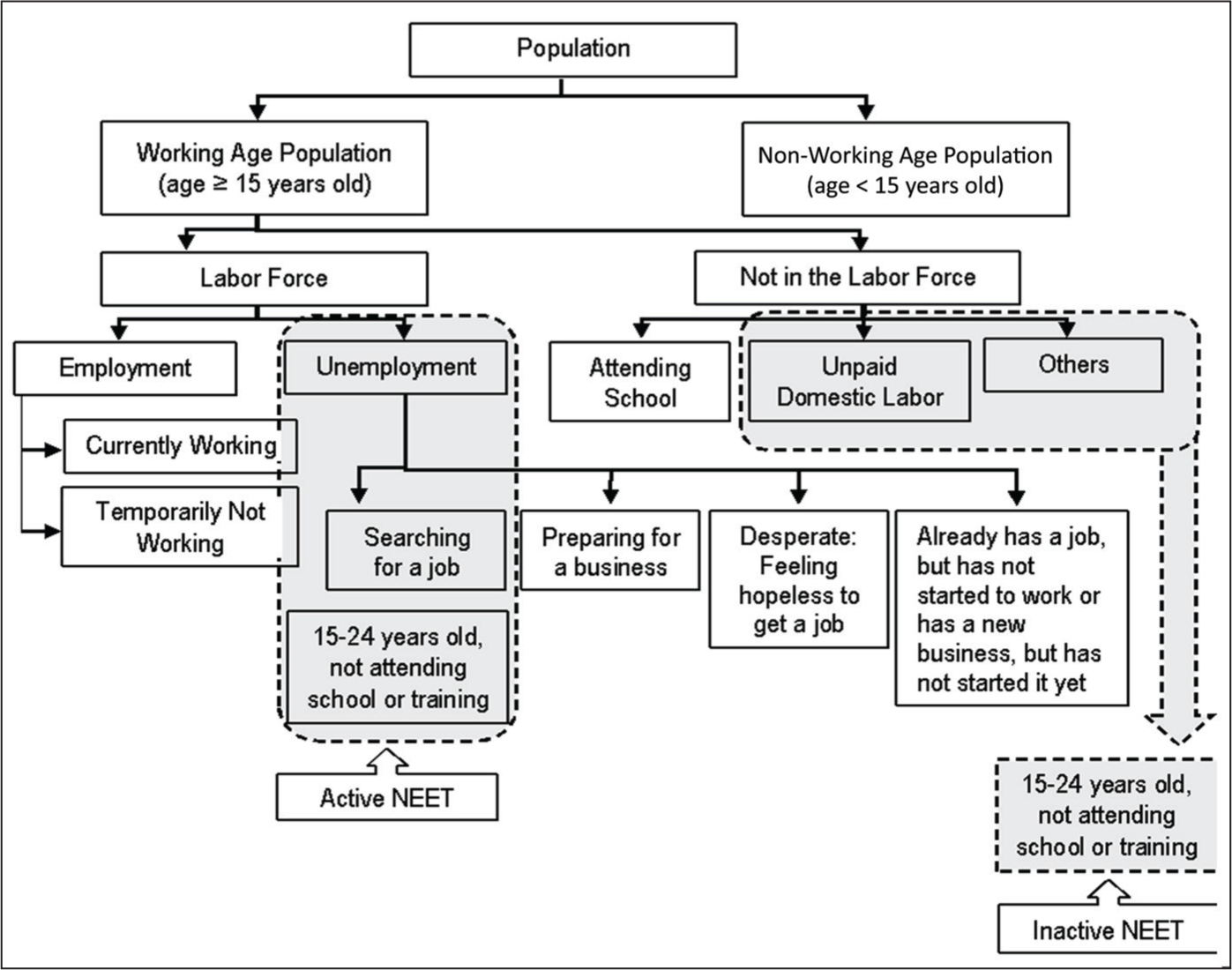
In the Indonesian context, the NEET indicator can be understood by examining the standard labour force concept used in the Indonesian National Labour Force Survey, as illustrated in Figure 1. This concept is adopted from the ILO as cited in the Surveys of Economically Active Population, Employment, Unemployment and Underemployment: An ILO Manual on Concepts and Methods (BPS-Statistics Indonesia, 2014). Economically active NEETs refer to young people aged 15–24 in the labour force who are unemployed but not participating in training, meaning that not all unemployed youth can be classified as NEET. Unemployed people in the Indonesian National Labour Force Survey cover those searching for a job, preparing for a business, desperate to find a job and those who already have a job but have not started to work or have a new business but have not started it yet. Meanwhile, young, economically inactive NEETs are those aged 15–24 in the non-labour force who commonly engage in domestic labour or other unpaid activities and do not participate in education or training. In other words, inactivity differs from unemployment in that they do not actively seek jobs or prepare to open a business. This suggests that domestic labour, child-rearing, or caring for family members is not classified as work. Work or employment in the labour survey means an activity of work intending to earn income or help earn income or profit for at least one hour a week (BPS-Statistics Indonesia, 2022a).
Some contend that NEET status represents difficult transitions for young people as they fail to move from education to employment. A recent study highlights the challenges that NEET young people face when seeking work opportunities (Matli & Ngoepe, 2022). The study concludes that a lack of digital skills and inequality in information access among young people influence their NEET status. Pattinasarany (2019) found that young people’s active engagement in social activities and regular access to the internet have a lower possibility of disengagement from school or work. These findings correspond to McPherson (2021), stating that individual deficiencies lead to NEET status.
Meanwhile, in Greece, there was a low level of trust on the part of NEETs towards public institutions (Drakaki et al., 2022). This aligns with a study in Belgium, which shows how NEET youth feel reluctant to seek the state’s assistance as they face discrimination against their class and ethnicity (André & Crosby, 2022) and their economic hardship and ethnicity are associated with NEET status. Similarly, Naraswati and Jatmiko (2021) and Febryanna (2022) explain that gender, age, educational background and residential area are the determinants of NEETs in Indonesia. However, their analysis does not consider the gender dimension at play behind the NEET category.
Several members of the Organization for Economic Co-operation and Development (OECD) are more advanced in their research regarding the gender dimension of the NEET rate. A study involving adolescents at risk of becoming NEETs in the UK found that employment hardship is not seen as a negative situation but rather a challenge to overcome (Carmichael-Murphy et al., 2022). They were not reluctant to seek assistance, support, or advice from others to improve their employability. This perspective may help evaluate the intervention in the existing measures to address the growing number of NEETs, particularly after the COVID-19 pandemic.
By contrast, a mixed-methods study involving young women NEETs who were economically inactive in the UK and France reveals that they were vulnerable to poverty and poor living conditions (Danner et al., 2021, p. 850). Furthermore, policy direction often ignores this marginalized group, which necessitates organizations other than active labour market policies to deal with the issue. Similarly, Lüküslü & Çelik (2022) conducted mixed-methods research focusing on the gendered characteristics of NEETs in Turkey. They were concerned about the conservative policies supporting early marriage that may result in more young women withdrawing from education and employment. The study points out how the gender-neutral characterization of NEETs masks the social exclusion of women in Turkey.
In summary, several studies have discussed NEETs from the perspective of young people’s transition to adulthood and the cultural dimension of society. Young people’s transition commonly focuses on the completion of a course of study and the commencement of employment (Woodman & Bennett, 2015), while the conceptual lens of culture refers to the influence of traditional gender roles and patriarchal values in society. This study intends to provide empirical evidence in the Indonesian context by analysing the reasons behind young women’s exclusion from education and the labour market concerning young adult transitions and traditional gendered roles in the country.
Methods
This study was conducted in two stages. First, a statistical analysis was employed to explore the characteristics of NEETs in Indonesia. The secondary data used in this study were from the National Labour Force Survey 2022, released by Statistics Indonesia or Badan Pusat Statistik (BPS). The scope of the analysis was NEET young people aged 15–24 years old, representing all provinces in Indonesia. The research focuses primarily on this particular age group to compare with NEET data at the international level, as provided by the ILO. In the second stage, a qualitative method was employed to uncover the experiences of young women and young men with NEET status. The phenomenological approach was used, as it is suitable to explain the meaning of people’s life experiences regarding a concept or phenomenon, including their self-concept or view of life (Creswell & Creswell, 2018).
The qualitative data for the article were collected through face-to-face, in-depth interviews. Considering that more than half of the young population, or around 54.79%, reside on Java Island (BPS-Statistics Indonesia, 2022d, p. 13), this research was conducted in West Java and Central Java. These two provinces were selected based on their comparably high young population; however, they exhibited contrasting NEET rates in 2022 (27.85% in West Java and 20.44% in Central Java). Moreover, both provinces had different poverty rates. The percentage of people living in poverty in West Java was around 8.06%, while Central Java was above the national rate (9.54%) at about 10.93% (BPS-Statistics Indonesia, 2022c). Over two months, a total of 15 NEETs were interviewed, comprising 11 young women and four young men of different ages, educational attainment, marital status and family background. We selected the informants purposively using social networks and a snowballing strategy with informant candidates limited to those aged 15–24. However, we found more young women than young men, and only young married women but no young married men. As we will show later, this tendency is in line with the statistical data we analysed that Indonesia’s NEET cohort includes more women.
The reason for selecting only two provinces for our qualitative stage was to focus on our findings from statistical analysis. It was also due to practical reasons, such as limitations of resources and time. Although our informant number was also limited and the area we covered was likewise limited, we are convinced that the narratives we draw from them illustrate a broader picture of this issue in the country.
The interviews were conducted using several instruments, including recording devices, notebooks and interview guidance. However, the questions were designed to be flexible, with follow-up questions to explore more of the informants’ experience. The questions also covered the demographics (age, gender, education, marital status, parental jobs, housing status), daily activities, the underlying cause of NEET status, dream education, dream job, employment experience, parental or spousal expectations and source of financial support. The interviews were conducted at the informants’ homes, which also helped to capture their economic circumstances.
After reaching a certain level of data saturation, the recorded interviews were transcribed, and the informants’ names were changed to pseudonyms to maintain anonymity. It is worth noting that all informants participated voluntarily in this study and had given written consent. Also, no informants were less than 17 years old, so neither parental nor spousal permission needed to be obtained. Next, the data were analysed using a thematic analysis, identified based on the findings rather than theory-driven categories. The analysis examined two major issues regarding the causes of disengagement from education and employment. Most importantly, this article highlights the differences between young women NEETs’ and young men NEETs’ reasons for this.
NEET in Indonesia: Who Are They?
Young people have a strategic position in the development of Indonesia. Based on an analysis of the National Labour Force Survey 2022 data, there were around 44,090,353 young people aged 15–24 in the country at that time. Compared to all working-age populations above 15 (the available data are limited to age 98), the proportion of young people amounts to about 21.05%. In other words, one in five potential workforce members in Indonesia are young.
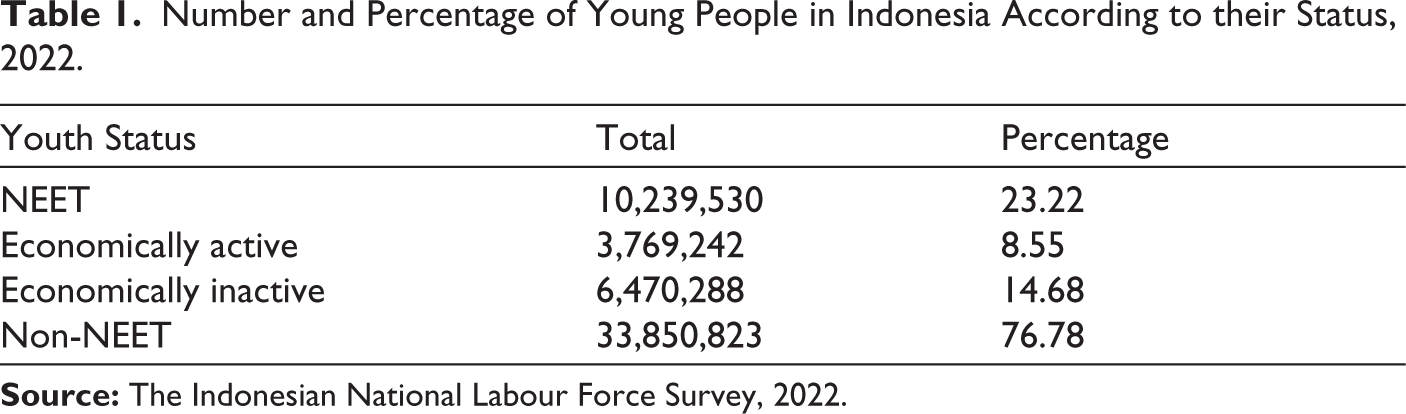
Nevertheless, the proportion of NEET youth is significantly high. As seen in Table 1, the rate of NEET youth stood at approximately 23.22% in 2022, corresponding to more than 10 million people. At the same time, roughly 76.78% or 33,850,823 young people belonged to the non-NEET category. In detail, NEET young people can be classified based on their status (ILO, 2022; Maguire, 2018). The findings suggest that economic inactivity is the most noticeable issue among the NEET cohort. The percentage of NEET youth who were economically inactive was around 14.68% in 2022, far higher than the active ones at about 8.55%. The young people’s inactivity issue in Indonesia resembles the general condition in the Asia-Pacific region (ILO, 2022, p. 5). It means most young people with NEET status were not actively seeking employment opportunities nor in the labour force, and mainly did unpaid housework or other activities.
Number and Percentage of Young People in Indonesia According to their Status, 2022.
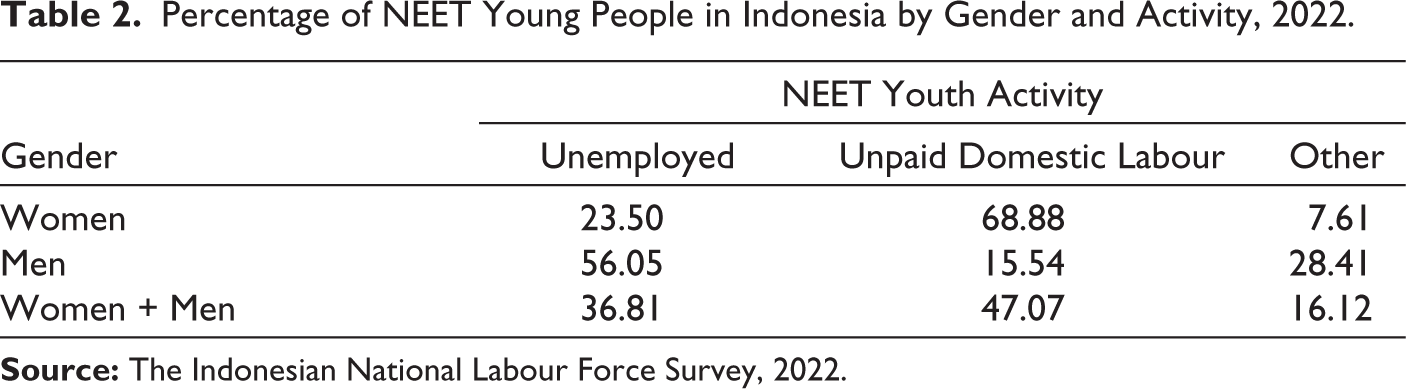
Regarding the activities of NEET young people, there seems to be a stark difference between young men and young women. As presented in Table 2, most young women NEETs in Indonesia can be classified as economically inactive NEETs as they spend most of their time daily doing unpaid domestic labour (68.88%). Meanwhile, more than half of young male NEETs (56.05%) were actively seeking jobs (unemployed) or fell into the economically active NEET category. These figures indicate how the division of roles based on gender still applies in the country. Put differently, men engage in public areas as household heads or breadwinners for their families, whereas women do domestic chores, including discharging caring responsibilities. Similarly, in the UK, young mothers fear potential stigmatization as irresponsible mothers should they choose employment over caring for their children (Maguire, 2018, p. 671).
Percentage of NEET Young People in Indonesia by Gender and Activity, 2022.
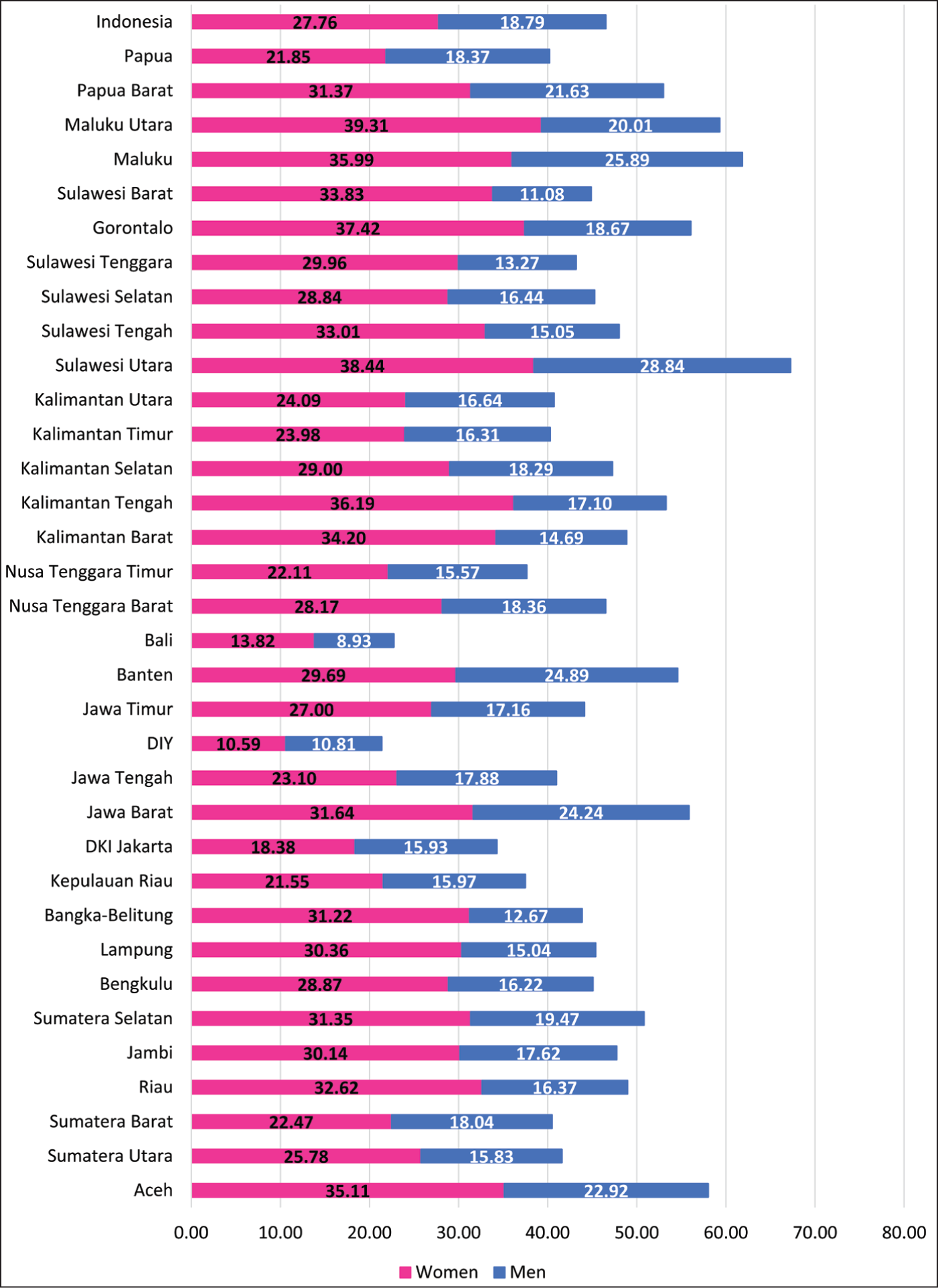
Indeed, young women have a greater tendency to fall into the NEET category. Over a quarter of young women in Indonesia (27.76%) in 2022 were NEETs, and young men accounted for around 18.79%. The gendered NEET situation is consistent in all provinces in Indonesia, as illustrated in Figure 2. It aligns with prior studies indicating a higher propensity for young women in Indonesia to fall into the NEET category (Naraswati & Jatmiko, 2021; Pattinasarany, 2019; Sari et al., 2022). This is comparable to most countries in the Association of Southeast Asian Nations. For instance, the ILO (2021) reported that the percentage of young women NEETs in the Philippines accounted for about 20.77%, 6.45 percentage points higher than that of young men (14.32%). In the same year, approximately 16.29% of young women in Vietnam had NEET status, slightly higher than young men at roughly 13.66%. The gendered NEET proportions in Indonesia are also similar to OECD countries (except Luxembourg and Spain) (Maguire, 2018, p. 661), with the most significant gender gaps among NEET young people.
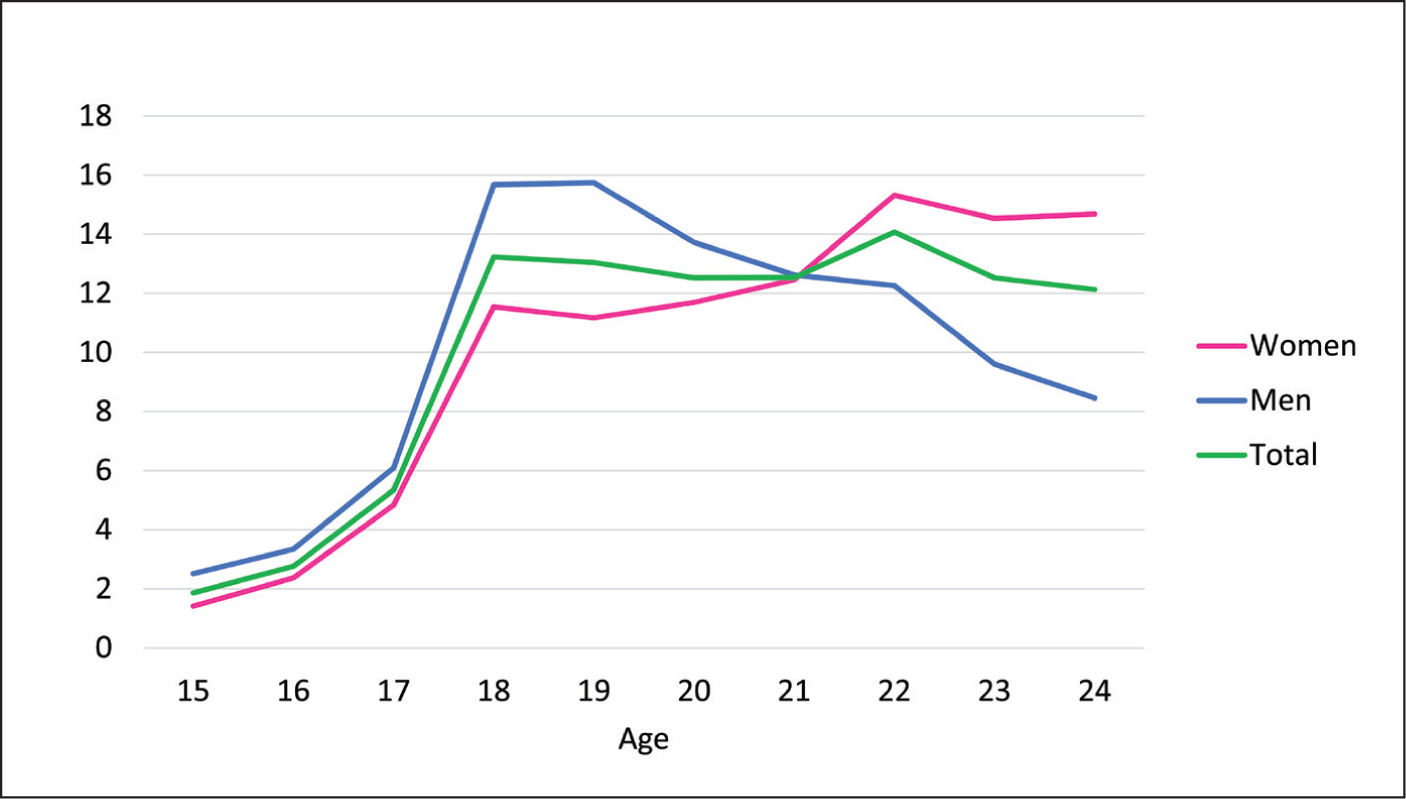
Interestingly, a different pattern is observed when the proportion of NEET young people is disaggregated by gender and age. As illustrated in Figure 3, the NEET rate among young women increases as they become older. The escalation continues to rise significantly once young women turn 18 and increases gradually to reach a peak at 22. These ages typically align with the age range at which young women complete their studies at high school and university levels. The age range is also the beginning of the reproductive age when they commonly start a family (World Bank, 2019, p. 14). In contrast, the proportion of NEETs among young men continuously decreased as they got older, after peaking at its highest point at the age of 19. The data imply that after graduating from high school, young male NEETs are more likely to seek employment rather than further their education. The Labour Force Participation Rate for high school graduates is higher for men than women (BPS-Statistics Indonesia, 2022a, pp. 39–40).
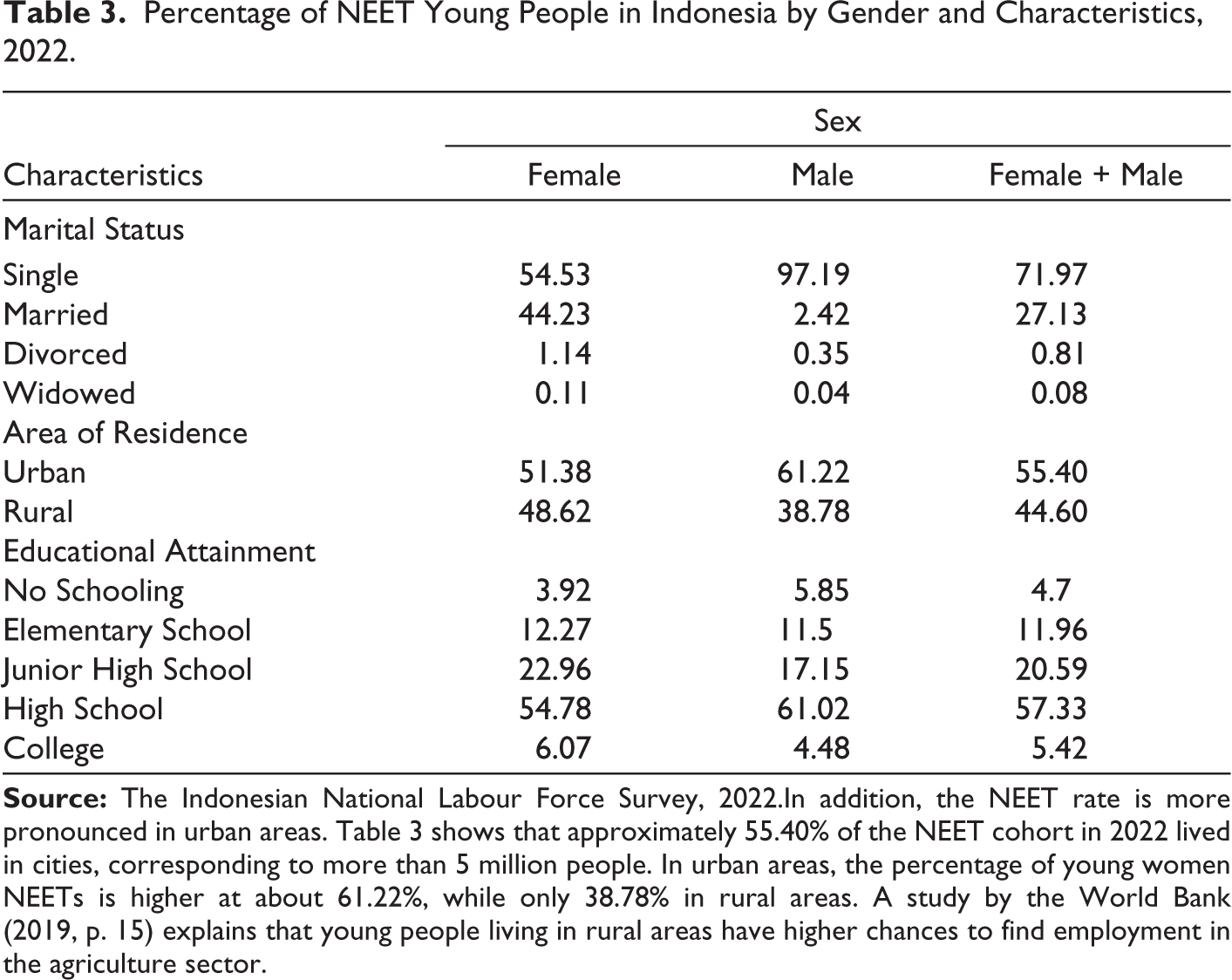
It is also worth noting that there is an association between marital status and a high rate of NEET for young women. As shown in Table 3, young married women in the NEET category accounted for around 44.23% in 2022, over 18 times more than young men NEETs at merely 2.42%. In comparison, the proportion of NEETs among young single men (97.19%) was higher than that of young single women (55.45%). These results indicate that young women transition towards inactivity as opposed to unemployment, underlining typical gendered roles of young women to be primary caregivers and domestic workers. Meanwhile, young married men are expected to find jobs to provide for their families. Such situations also suggest inadequate care infrastructure and other measures to assist the re-entry of young women into the labour market (ILO, 2022, p. 13). The ILO also reported that such asymmetric gender practices lead to higher NEET rates among married young women across Asia-Pacific regions, particularly in South Asian countries such as Afghanistan, India and Pakistan.
Further disaggregation of the data reveals that higher educational attainment does not automatically reduce the number of NEETs. Table 3 shows that although the NEET rate among college graduates is lower for both young men and women (5.42%), the highest education level attained by most young NEETs (57.33%) is high school. The World Bank (2019, p. 18) contends that this is due to academic programmes that are often too general or lack any vocational provision. Therefore, there is a gap between the quality and relevance of education and job market demands. The lower NEET rates among young people with educational levels below high school are explained by the fact that they may be in the process of furthering their education and thus do not qualify as NEETs. Also, young people with education levels below junior high school may accept any employment opportunities, and they may participate in any economic activities they can secure, even if they are marginal (Assaad & Levison, 2013, p. 2). This is evidenced by the fact that most informal sector workers comprise elementary or junior high school graduates (BPS-Statistics Indonesia, 2022a, p. 96).
Percentage of NEET Young People in Indonesia by Gender and Characteristics, 2022.
Experiences of Young Men and Young Women NEETs in Indonesia
This section illustrates the gender dynamics in the NEET youth population in Indonesia by analysing the participants’ responses to two key questions: ‘Why are you not studying or training?’ and ‘Why are you not in the labour market?’
Why Are You Not Studying or Training?
A similar theme common to both genders is a lack of financial capacity. Among young men, a lack of motivation to study or participate in training is also prevalent. Women participants presented more than one answer, mostly indicating the complications related to their family circumstances.
Regarding limited financial assistance, at least two young men and five young women mentioned that it became an obstacle to furthering their education. All of them were high school graduates and unable to pursue higher education or participate in specific training to enhance their skills due to financial reasons. This finding supports the results of previous secondary data analysis, which show that the majority of the NEET cohort were high school graduates. To illustrate, Ria (19 years old) had a passion for studying chemistry, and her accomplishments in numerous competitions led her to win a scholarship from a university in a neighbouring city. Unfortunately, she had to give up this opportunity since the scholarship only covered the tuition fee. Her parents could not support her with the other expenses needed for her education. Similarly, after graduating from vocational high school, Fendi (20 years old) intended to participate in Japanese language training to realize his dream of working abroad. However, he was discouraged when he discovered the high cost and sought employment opportunities instead.
The analysis shows that the NEET cohort often came from households with moderate to lower income levels. Indeed, one participant in the study, Ines (18 years old), reported that her parents were unemployed and that her family depended on financial support from her employed siblings residing in another city. Moreover, none of the participants’ parents had a higher education degree or had attended college. The low level of education in one generation increases the probability of the subsequent generation falling into the NEET category. It aligns with a previous study examining that most of the NEET cohort come from socio-economically disadvantaged families who could not afford to send their children to tertiary-level education (Rennisson et al., p. 25, as cited in Alfieri et al., 2015, p. 313).
In addition, such findings support the notion that youth transition in Indonesia differs from that in advanced economies. A large proportion of young people in advanced economic countries engage in employment to afford their education without substantial financial assistance from their parents (Isbah et al., 2023, p. 115). In comparison, young people in Indonesia who attend further education typically rely on financial support from parents to cover the costs of their tuition and daily expenses (Parker & Nilan, 2013, pp. 99–100). This is due to the prevailing belief that students should refrain from entering the labour market while studying, as it may divert their attention from their academic pursuits. As a result, despite the necessity for young people to reside in urban areas where universities are predominantly situated, their experiences of individualization are limited since they remain largely dependent on their families. Most families also endeavour to oversee their children’s educational achievements, and the offsprings maintain compliance due to a sense of obligation to optimize the value of the financial investment made for their education.
Notwithstanding, when prompted further, several participants mentioned that they had prior employment experiences dating back to their time as students. For instance, Fendi (20 years old) had been trading ornamental birds since he was a junior high school student. He used to sell birds at the local market. Occasionally, customers also visited his residence to purchase birds. Consequently, Fendi never requested pocket money or transportation funds from his parents. However, his business was compelled to cease operations due to the COVID-19 pandemic. He explained that this resulted from excessively high feed prices and decreased demand.
Similarly, since high school, Ria (19 years old) had produced false eyelashes. She expressed her joy at being able to contribute financially to her family. Nonetheless, she stopped working shortly after graduating due to reduced demand. These participants’ stories seem to contradict the explanation regarding different transitions between young people in Indonesia and Western countries. Regardless, we argue that such situations portray the difficulty of finding part-time jobs or casual work in Indonesia, unlike in the Western world. As can be seen from those stories, informants who were able to secure employment opportunities when they were still students are those who can establish their own businesses or are commonly referred to as being self-employed.
Regarding motivation, there is a gap between young men and women. Almost all female participants demonstrated a willingness to enhance their education but could not do so for various reasons. In contrast, half of the young men reported that they were too lazy to study or engage in training activities. For instance, Hadi (18 years old) was not interested in attending high school and spent most of his day doing nothing or simply hanging out with his friends. His mother once persuaded him to at least engage in a meaningful activity and arranged a job interview for him in a restaurant. However, he did not attend the interview because it was not his dream job. This aligns with a past study noting that some young people may remain inactive after completing schooling since they could rely on the financial support of other family members (Assaad & Levison, 2013, p. 2).
Another participant preferred to look for a job. Memet (19 years old), a high school graduate, stated that studying was too difficult for him. His unpleasant experience of studying independently due to school closures following the COVID-19 pandemic led to his decision not to apply to college after graduation despite the financial assistance provided by his family.
We never had an online class. The teachers only gave out handouts for the students to read independently. It was nothing like attending school before the pandemic when the teachers taught the students directly. They expected us to study by ourselves. It was hard for me, especially to understand Math, Chemistry, and all the formulas. I tried, but I tell you, it was not easy. (Memet, 19)
Additionally, Memet elaborated that he preferred to have as much employment experience as possible. Furthermore, he expressed indifference towards the type of jobs or locations where he could work so long as he could secure financial resources to establish his own business in the long run. In this sense, young male NEETs seemed oblivious to the vulnerability of working with limited skills and qualifications. Indeed, scholars have warned that NEET young people are likely to be employed in seasonal vacancies, resulting in precarious and vulnerable conditions in their life course (Drakaki et al., 2022, p. 122). Memet’s situation exemplifies this notion, as he explained that he had numerous experiences working as a non-agricultural casual worker. He was trapped in a very precarious employment pattern, moving from a short-term job to another, often with a significant period of joblessness.
Among young women NEETs, apart from financial constraints, family circumstances affected their exclusion from education. Traditional gender roles associate young women with unpaid domestic labour or caring responsibilities. Also, the expectations of parents or spouses can discourage young women’s involvement in studying or training programmes. For example, Ninit (21 years old) shared that her experience studying culinary arts in vocational high school inspired her to be a professional chef. However, her parents opposed her intention of going to college because the campus is located outside the province. In addition, she did not want to burden her parents, realizing that she would need funding for tuition fees and practicums, but most importantly, she was responsible for doing household chores in her family.
Basically, I do all the work at home: cooking, doing the laundry, washing the dishes, cleaning the house, and mopping the floor. In fact, I clean my grandmother’s house next door as well. However, I sometimes feel sad that my family does not recognize what I do. It is as if my work is invisible, and they only think I am idle, although I have done all the house chores. Can you imagine how it feels to be me? (Ninit, 21)
Ninit’s story illustrates the multiple barriers that young women may face in pursuing education, unlike their male counterparts. Her story is similar to the results of a study conducted in England, where young women may experience more than one issue related to their caring responsibilities (for children or parents), mental health problems and the absence of support networks (parents, partner, etc.), thereby preventing them from participating in full-time education (Maguire, 2018, pp. 665–666). This finding also highlights the difference between young women NEETs in Indonesia and Turkey, where education is considered a long and painful experience (Lüküslü & Çelik, 2022, p. 208). Consequently, women NEETs in Turkey drop out of school to marry early. In Indonesia, women demonstrated a strong inclination towards enhancing education, but the structural challenges and prevailing cultural norms obstruct their pursuit of education.
Furthermore, young women with NEET status may also experience numerous challenges related to their family circumstances during their life course. To illustrate, Sinta (22 years old), a mother of two, did not continue her education because her parents dictated her life path. When Sinta was an elementary student, her father decided where she should study for junior high school. After graduating, Sinta’s father expected her to work instead of furthering her education in high school to help provide income for their family. This was because her father had become older, and his business had also slowed down. When Sinta’s father was ill and needed to be hospitalized, their parents demanded that she stop working and take care of her father. When she got married, she was too busy with unpaid domestic labour, including child-rearing and caring for her ill mother. Indeed, Sinta’s husband prevented her from engaging in too many activities outside their house.
I cannot afford to have the desire to continue my study or participate in training. You know, I gave birth not long after getting married. So, surely, I need to care for my sons. Besides, I had to do the house chores. Also, my mom is getting older and has trouble walking. (Sinta, 22)
The story of Sinta demonstrates a typical picture of women NEETs who have a situation of parents with a low educational level and low aspirations and expectations for their children’s education, a low-income household, intergenerational poverty and patriarchal treatment of the wife by the husband to make her stay at home.
Why Are You Not in the Labour Market?
Unemployment among NEETs of both genders was influenced by their selectiveness in securing jobs. Young men are more likely to seek employment with better offers, including more stable and higher salaries, while young women are more concerned about their family circumstances and also mentioned that being a woman poses more challenges for them in securing employment.
All male participants mentioned that they tend to be selective when looking for jobs. Mostly, they had high expectations regarding income, with regular work and job security. The finding is consistent with several scholars’ conclusions that young Indonesian men aspire to join the labour market in the formal sector, which provides steady income and other advantages like social prestige and a proper path for career advancement (Isbah et al., 2023; Naafs & Skelton, 2018). This aspiration is also prevalent among most female informants, but the reasons preventing them from entering the labour market are more complex and pertain to their family circumstances. For example, due to her mother’s prohibition, Ria (19 years old) refrained from taking a job in a garment factory in the neighbouring town. She was compelled to seek employment that could be completed from home so that her mother could feel at ease. This finding is similar to a study highlighting that young Indonesian women whose parents worked overseas experienced a left-behind effect (Somaiah et al., 2019). Consequently, they preferred to participate in the labour market nearby to care for their children as well, an opportunity they did not have during childhood.
Among male participants, Fendi (20 years old), who failed to realize his aspiration of working overseas, eventually sought employment opportunities in the country. However, although there were numerous vacancies with informal money lenders near his home, Fendi was reluctant to apply for the job. He further explained that the line of work was similar to being a debt collector, which society perceives negatively. Likewise, Memet (19 years old) quit his previous job as a casual salesperson because he received a low and irregular income. However, he ended up in other freelance employment.
‘I worked in sales before but quit because the salary was too low. Never mind the minimum wage, the company did not even pay us a fixed income. If I calculated my spending for transportation, food, and other expenses, I actually suffered losses’ (Memet, 19).
We contend that such responses from male participants are associated with the traditional construction of gender in Indonesian society, expecting men to join the labour market as breadwinners (Nilan, 2009), and this notion has been instilled from a young age. Those young male NEETs may have been anticipating their future roles as husbands with responsibilities to provide for their families. Since they were single, they believed they were obligated to contribute financially to their families. Therefore, the failure of NEETs to secure employment often leads to psychological problems like anxiety and depression (Papadakis et al., 2017, p. 22). Interestingly, most male participants said they did not engage in unpaid domestic labour, which they believed was women’s duty.
Indeed, the traditional construction of gender in the country requires young women to be primarily in charge of unpaid domestic labour and child-rearing. It is observed from at least five female participants’ responses that their roles in doing household chores, taking care of children or caring for an ill parent prevented them from joining the labour market. For example, Tantri (20 years old) shared her intention to enter the labour market but stated that she could not do so because she had to care for her son and do housework. Similarly, Ines (18 years old) could not work since she took care of her mother, who was partially paralyzed.
However, it is worth noting that young women NEETs most likely encounter multiple barriers concerning family circumstances. Apart from such traditional gender roles, parents or spouses often prohibit them from looking for paid jobs. Even if they are allowed to enter the labour market, too many conditions are usually imposed on them, reflecting how young women always try to balance their families and careers (Asriani et al., 2021, p. 21). In the case of Tantri, her husband told her to stay at home, and she could not argue with that, believing that is what makes her a good wife. Meanwhile, Ines became more selective in searching for employment opportunities after her parents said she could join the labour market as long as the workplace was nearby. That way, she could still care for her sick mother. Such situations imply the predominance of patriarchal ideology in controlling young women.
I do want to work, but my husband will not let me. My husband told me I should stay home when we were still dating. Then, after we married, I asked him whether he allowed me to work, and he said no. I guess I have no choice but to stay home and care for my son. (Tantri, 20)
There are also other factors limiting the participation of young women in the labour market. The first is related to the risk of sexual harassment in the workplace. Ninit (21 years old) disclosed such a reason based on her experience of giving up the idea of working on a cruise ship as an assistant cook. This finding is similar to a previous study in Turkey, noting that the risk of sexual harassment discourages women and forces them to prefer to be inactive (Lüküslü & Çelik, 2022, p. 212). The second is limited job vacancies for young women. Ines (18 years old), a vocational high school graduate majoring in light vehicle engineering, shared her story about her difficulty searching for employment opportunities because of her gender. Eventually, she applied for alternative jobs, even though they were not aligned with her field of study.
My high school often assists their students in getting a job on a yacht. It was interesting since they offer a high salary, but there is an unwritten requirement for the girls to sleep with the ship captain to get the job. I strongly declined the offer. It is not worth it. (Ninit, 21)
There are few job vacancies for women to be mechanics. Most companies think women do not have the skills. They prefer hiring men as they look stronger to do the job, like taking off wheels. (Ines, 18)
Nonetheless, it is also worth mentioning that some NEET young people from middle- to upper-income households stated that their NEET is situated within a process of study admission that made them withdraw from the labour market. Meanwhile, those coming from less-privileged families who mostly cannot afford to send their children to tertiary-level education, leading to their NEET status. To illustrate, after graduating from high school a few months before the interview, Dini (18 years old) was waiting for the result of her university admission. She mainly spent her days helping her mother do unpaid domestic work and actively participating in a local youth organization. Similarly, Nafisa (17 years old) explained that she planned to apply to private universities after her failed attempts to apply to public universities. These stories imply that a mixture of young women’s inclinations and the existence of support networks can facilitate their pursuit of higher education, reducing their tendency to fall into the NEET category.
Discussion
Several findings that can be highlighted from the analysis of the official statistics are as follows: (a) young women in Indonesia are more likely to fall into the NEET category; (b) as young women age, the risk of falling into the NEET category increases; (c) young women are more likely to transition to being inactive, whereas young men are more likely to transition to being unemployed. These three findings underscore the significance of gender in NEETs’ experience in Indonesia.
The analysis also shows how NEETs result from an intricate nexus between structural, institutional and individual (agency) factors. It aligns with Pemberton’s (2008, p. 244) explanation of how structural factors may involve gender, socio-economic conditions and parental background. Meanwhile, institutional factors are involved in managing school-to-work transition. To illustrate, Ria (19), despite her eagerness to pursue higher education, did not receive support from her family, financially or emotionally. Her parents anticipated her marriage more than her pursuit of studies. She ended up working from home, producing false eyelashes. Also, she mentioned that living in a remote area means employment prospects are rare. If she were to secure employment in a city, she may not be able to sustain an independent life due to parental prohibition and the meagre pay. Furthermore, even if she were to rely on commuting, the absence of available public transit would render this option unfeasible.
Nonetheless, we contend that the role of agency in influencing the NEET categorization must be interpreted cautiously. As Furlong (2006) explained, the often over-emphasis of an individual agency may misrepresent the primary contributors to NEET status. In reality, the choice young people make consciously is often a form of failure in achieving institutionalized school-to-work transition. Hadi (18 years old), who showed a lack of interest in education, did not voluntarily fall into the NEET category. When prompted further, Hadi mentioned that his reluctance to pursue further education was due to the lessons delivered in school not being relevant to the typical working environment. Therefore, the issue lies in how the government can provide education matching job positions. Similarly, Ria (19 years old) opted for casual employment to cope with her challenges and limitations, which included inaccessible higher education and limited amenities in rural areas.
Notably, the study emphasizes the multiple barriers involving family circumstances encountered by young women throughout their lives as determinants of the NEET status. These are more than just the practice of traditional gender roles imposed on young women. Young women’s extensive engagement in unpaid housework or caregiving responsibilities can constrain their participation in employment or education. Moreover, numerous scholars have mentioned that gender-based role division remains prevalent in Indonesia (Naafs, 2013; Nilan, 2009). However, our qualitative research revealed that this does not exclusively account for the lack of participation of young women in formal education and the labour market. In reality, some participants not only cited domestic responsibilities as the reason why they fell into the NEET category but also presented complex explanations for it. This result echoes Maguire’s (2018) explanation of how young women may encounter multiple factors that hinder their engagement in full-time education or employment.
In addition, family circumstances involve parental or spousal expectations that often lead to restrictions on young women’s aspirations. We conclude that it relates to the prevailing hegemony of masculinity or patriarchal ideology in Indonesia. As Nilan (2009, p. 328) explained, young men are associated with masculinity characterized by playfulness, mobility and bravado. In contrast, young women are more subject to restrictions and are often required to assist with household chores and provide support for their parents (Naafs, 2013, p. 242). In some instances where women join the labour market, society also expects this not to interfere with their duties as mothers or wives (Van Wichelen, 2010, p. 16, as cited in Naafs, 2013, p. 241). Such a situation is underpinned by a transition mechanism that is different from Western culture; instead of independence, the norm is a harmonious familial bond (Threadgold & Nilan, 2015, p. 157), and our participants’ experiences reflected those notions. For example, in the case of Sinta (22 years old), her parents and her husband took it in turn to limit her participation in education and the labour market. Even after starting her own family, Sinta remained obligated to care for her ageing mother after her father had passed away. Ines (18 years old) was compelled to seek employment near home because she had to attend to her ailing mother, unlike her two brothers, who were permitted to work in the capital city.
In short, the way young women in Indonesia legitimize their decision to withdraw from employment, education or training is closely related to the entrenched culture regarding family circumstances. Rather than criticize traditional gender roles and patriarchal ideology, they choose to disconnect from education and employment. In addition, there is a degree of failure in the management of the school-to-work transition. Moreover, while most female participants expressed a strong desire for education or employment, in reality, they marry early and eventually encounter obstacles when attempting to reintegrate into the labour market or formal education. This is reflected by approximately 29.78% of young women in Indonesia getting married before the age of 19 (BPS-Statistics Indonesia, 2022d, p. 333). In addition, around 35.91% of women were categorized as housewives in the same year (BPS-Statistics Indonesia, 2022a, p. 7), indicating a considerable number of NEETs among young women.
Conclusion
This study concludes that the NEET status in Indonesia is significantly influenced by gender and sociocultural factors. The quantitative analysis found that young women are disproportionately affected, with NEET rates nearly double that of young men. Young women are likely to fall into the NEET category along with the increase of their age. Most young women NEETs engage in unpaid domestic labour, making them being categorized as NEET statistically, while young men are categorized as NEETs because of their status of being unemployed.
The qualitative analysis found that the complex nexus between structural and individual factors and the failure to achieve institutionalized school-to-work transition contributed to the fall of young people into the NEET category. This study also highlights family circumstances in which young female NEETs disengage from education, training and the labour market. Family circumstances refer to the prevailing influence of deep-rooted patriarchal values and traditional gender norms, particularly in assigning women to unpaid domestic labour, child-rearing and caring responsibilities. Family circumstances also relate to how parents or spouses restrict young women’s mobility and opportunities in the public domain, preventing them from pursuing education or entering the labour market. These barriers can impact young women at various times throughout the course of their lives. As such, this study highlights a grounded empirical situation behind the higher proportion of young women in the NEET category compared to young men.
We advocate for the recognition of unpaid domestic labour as a form of work in the statistical concept and discourse of NEET. With this recognition, we will be able to build a more culturally rooted policy on school-to-work transition by considering the cultural dimension. At a societal norm, we advocate that women have the equal right to join the labour market or not. Similarly, men should have the right to decide whether to be the primary breadwinner or not.
Footnotes
Declaration of Conflicting Interests
The authors declared no potential conflicts of interest with respect to the research, authorship and/or publication of this article.
Funding
The authors disclosed receipt of the following financial support for the research, authorship and/or publication of this article: This study was funded by the Directorate of Research, Universitas Gadjah Mada under its grant ‘Rekognisi Tugas Akhir’ 2023.