



Abstract
This study contributes to the scant literature on the individual and structural determinants of being young ‘not in employment, education or training’ (NEET) in China. Drawing from six waves of the Chinese General Social Survey (2010–2021), it finds that (a) China’s NEET rate stands at 16% for the studied period, with significant internal regional variations. (b) The common wisdom that education reduces the incidence of becoming NEET is challenged. Analyses showed that only obtaining a third-level educational degree lowers the likelihood of becoming NEET. (c) The differentiated likelihoods of becoming NEET between women subgroups, for example, married vs unmarried women, rural vs urban women, are more stratified than between different genders or household registrations. (d) Provincial government expenditure on education has a gap-closing effect on the NEET likelihood disparities between different genders and household registrations, whereas larger provincial populations exacerbate gender gaps. Policy implications are discussed.
Introduction
Youth is the vital stage in which a person changes from childhood’s dependence to adulthood’s responsibility. However, the careers of younger generations worldwide have become less stable, showing diverse patterns of non-linearity and multi-directional mobility. Widening disparities between classes and regions and the social consequences of the COVID-19 pandemic have differentiated the modes and manners of young people’s youth transition from different social and geographical origins (Lundström, 2022). One of the most important aspects of the youth transition to adulthood is the relationship between school performance and entrance into the labour market, that is, school-to-work transition. The smooth transition of young people from study to work not only generates economic returns on prior investment of one’s human capital but also benefits society as a whole since its labour force is fully utilized (Juárez & Gayet, 2014).
The school-to-work agenda embraces many longstanding issues concerning schooling, employment and training. According to the International Labour Organization (ILOSTAT, 2021), approximately one-fifth of individuals aged between 15 and 24 in the world were not in employment, education or training (NEET). Such a figure becomes more worrisome from the perspective of global inequality if the fact that almost 90% of all young people live in Global South countries is taken into consideration. While the average NEET rate for OECD countries stands at 14.3%, India’s NEET rate is as high as 30.4 and Rwanda’s 30.8. Not to mention those countries with extreme poverty rates where the NEET data are unavailable. The North–South NEET rate disparity perpetuates the intergenerational cycle of global poverty and leads to higher levels of crime, violence, civil unrest, brain drain and the rise of political extremism in the Global South (Van Dijk et al., 2021).
Existing literature on NEET has mainly concentrated in the Global North; however, significantly less attention is paid to Global South countries, where the NEET population is significantly larger, and the rationale and underlying mechanisms leading to the NEET status are more complex. While the Global South countries in no way constitute a group of homogeneous economies with similar labour markets, they do share many characteristics that differ from the Global North, including significant shares of informal labour, self-employment, agrarian labour, unpaid family work, credit and income constraints, poor social security, labour market segmentation (e.g., public versus private, formal versus informal), and altogether a crucial urban–rural fragmentation interacting with those mentioned above (Nilsson, 2019). Changes in job markets with high unemployment and informal occupation rates, physical and mental health vulnerabilities, and new preferences regarding marriage types, all within a framework of poverty, manifest in the Global South, in which lesser certainties create different ways of experiencing the transition to adulthood than in the Global North.
Critically, despite significant scrutiny of the impact of individual and structural characteristics on educational and employment outcomes, there remains a dearth of knowledge pertaining to how their interplay could potentially influence youth opportunities. Intersectionality provides a framework for understanding disparities among individuals and groups. It rejects a singular focus on gender, race/ethnicity, or class, instead emphasizing how multiple sources of disadvantage intersect to shape power, domination and discrimination. Therefore, drawing from the intersectionality framework, this article aims to examine the micro- and macro-determinants of becoming young NEETs across different genders, household registrations and ethnic groups in China. Gender (Malo et al., 2023) and ethnic-racial (Zuccotti & O’Reilly, 2019) disparities in NEET rates have long been documented in the literature. Household registration, known as hukou, is a system in China that serves as a key administrative tool for the Chinese government (for comprehensive reviews of the hukou concept, see Chan 2009, 2019). Established in the 1950s, the hukou system classifies citizens as either rural or urban residents and ties individuals to their place of birth. Urban hukou holders generally have better access to quality education, formal employment opportunities, social welfare benefits and migration options compared to their rural counterparts. This disparity in access to resources may lead to higher NEET rates among rural youth who face limited educational and employment prospects, contributing to a significant socio-economic divide (Wu et al., 2023). Therefore, understanding the causes of NEET status as both agentically and structurally driven, this study assesses the following research questions:
To what extent do young Chinese individuals experience the incidence of becoming NEET? How do intersecting social categories—gender, ethnicity, hukou and marital status—shape differentiated patterns of disadvantage in the likelihood of becoming NEET? What are the overarching policy factors that have the potential to mitigate the disparity in the NEET rate among various genders, hukous and ethnic groups?
In the following sections, I first review and theorize five perspectives on how the school-to-work transition and the failure of such transition, that is, becoming NEETs, in the Global South are distinctive from the ones in the Global North, to set the stage for understanding the determinants of becoming young NEETs in China. I then describe the research context this study is based on, and the data used, before turning to the research findings. The article concludes with a summary of the main contributions of this study and its relationship to the extant NEET literature, highlighting how it draws what were previously more Western-centric epistemes to broader Global South geographies.
Theoretical Underpinning and Empirical Evidence
Southern School-to-Work Transition
The youth transition scholarship is currently engaged in a significant debate regarding its historical focus on Northern youth, while largely neglecting the experiences of the majority of young people in the Global South (Swartz et al., 2021). A recent bibliometric review of NEET studies on the Web of Science by Simões et al. (2022) indicated that out of the 325 studies examined, 81% are based in Northern countries. While theorizing through a straightforward North/South binary can sometimes risk overstating the similarities among countries within each category and exaggerating the differences between those on opposing sides of this divide, it remains a useful framework for analysing global youth inequalities and development patterns (Swartz et al., 2021). To understand the diversity of NEETs, it is essential to contextualize developmental trajectories within the significant cross-country variations while recognizing the limitations of applying Northern-centric youth transition models to Southern contexts (Naafs & Skelton, 2020).
To start with, a key macroeconomic feature of Southern labour markets is the size of the informal sector compared to Northern ones. Since the pioneering work of Hart (1973), the informal sector has been recognized for its significant impacts, including tax losses that diminish public revenues and reduce funding for essential services such as social protection. This informality not only leads to poorer working conditions but also creates unfair competition for legitimate businesses, weakening trade unions and collective bargaining efforts. In many Southern countries, a significant proportion of disadvantaged workers are employed informally, making it difficult for labour market policies to reach them. According to the International Labor Organization (ILO), informal employment accounts for 85.8% of total employment in Africa and 71.4% in Asia, compared to 18% in Europe and 9% in Northern America. Informal labour markets often create temporary, unstable and unprotected jobs for youth, leading to longer and tougher school-to-work transitions and higher NEET rates. An ILO report on youth school-to-work transitions across 20 countries indicates that young people in Southern regions are significantly more likely to be employed informally, which negatively impacts their wages, job satisfaction and levels of underemployment compared to their Northern counterparts (Shehu & Nilsson, 2014). Quintini and Martin (2014) also found that youth in Brazil, India and Indonesia, among other Southern states, experience longer transitions, leave education earlier and have higher rates of inactivity compared to those in Northern countries.
Second, it remains debatable whether the impact of education on reducing the youth NEET rate and abbreviating the duration of the school-to-work transition is consistent across the Global South and North. The Northern labour market is often described as placing a strong emphasis on meritocracy (Brown & Tannock, 2009), where higher education is generally viewed as a signal of greater human capital investment, potentially leading to shorter transition lengths and higher returns for youth. However, this is not universally applicable, as factors such as inequality in access to education and social stratification can still limit opportunities for some groups. In contrast, Southern economies tend to be less meritocratic, with nepotism potentially playing a role in the informal sector (Kragh, 2012), and job searches in these regions could rely more on social networks than on formal institutions (Cling et al., 2007; Lin & Bian, 1991). Therefore, high schooling levels do not always guarantee good jobs due to factors such as social capital inequality (Lin, 2000). For example, Lebanon, Jordan and some African countries have higher unemployment rates among highly educated individuals (Abdul-Khaliq et al., 2014). Similar patterns were detected in some African countries (Garcia & Fares, 2008). Even in emerging economies like China and Egypt, the extent to which economic growth and improved education have translated into better employment outcomes remains uncertain, partly due to persistent structural labour market restrictions (Freeman, 2010).
Third, from a life course perspective, the life trajectories of young people in Southern and Northern regions likely differ in important ways during youth transition. In Northern countries, life courses tend to be more standardized by mortality improvement and institutional demands, which leads adolescents to attend school for more extended periods and postpone work, marriage and parenthood to a later life stage (Mills & Blossfeld, 2006). However, the life course for Southern youth appears to be more varied and subject to external disruptions, such as economic shocks, natural hazards and ethno-political instability, which can alter the timing and course of life transitions (Buchholz et al., 2009). In many Southern countries with adverse economic conditions, young people may be compelled to drop out of schools early and enter the labour market at a younger age. This early entry into the labour market is often associated with poorer health outcomes, future scarring and un/underemployment (Schmillen & Umkehrer, 2017).
Furthermore, the cultural distinction between collectivism and individualism may shed light on the differing origins of NEET status between the South and North (Hofstede, 1984). In Northern countries, the shift towards fluid modernity (Bauman, 2000) and social individualization (Beck, 2002) have facilitated the emergence of ‘lifestyle/voluntary NEET’ (Furlong, 2007), individuals who intentionally take time off for personal interests such as hobbies or travel. This phenomenon reflects a renegotiation of traditional school-to-work transitions, prioritizing work--life balance, quality of life and autonomy. Conversely, the more collectivist cultures of Southern regions (İmamoğlu, 1998) emphasize cohesive in-groups and social conformity. Deviations from expected life events, such as gap years or remaining unmarried after 30, are often subject to social stigma (Gaetano, 2014). Consequently, lifestyle NEET status is less common in the South, where economic constraints and institutional barriers typically push marginalized youth into employment that may be mismatched with their qualifications. In contrast, Northern youth with greater access to resources are more likely to have the option to pursue voluntary NEET status or engage in global travel, reflecting differing economic opportunities and cultural attitudes towards nontraditional paths.
Lastly, given the significant gender dynamics in NEET status, it is crucial to examine how patriarchal values and global gender imbalances shape and direct geographically specific gendered youth transitions. For instance, childbearing and rearing tend to hinder women’s school-to-work transitions more than men’s. This ‘mommy track’ and related penalties increase young women’s NEET risk short- and long-term (Odoardi et al., 2022). Nevertheless, the impact of gender on NEET risk demonstrates notable geographic variation. In the North, feminist advances have improved women’s social inclusion, healthcare and overall equality, easing the NEET gender gap. The 2024 Global Gender Gap Report reveals that Europe and Northern America have gender parity scores of 75% and 74.8%, respectively, while regions like the Middle East and North Africa lag behind at only 61.7%, and South Asia follows with a score of 63.7%, primarily due to low female workforce participation and political representation. Conversely, Southern countries face more significant challenges, with generally less support for women’s rights (Mooi-Reci & Ganzeboom, 2015). Women’s agency in the South is highly restricted, with youth transitions frequently tied to traditional social roles. Even in contemporary China, the lingering influence of the outdated feudal saying ‘women without literacy are women with morality’ is still brought up constantly, denoting a social preference for less-educated women.
The NEETs Problem in Asia
In Asia, the high number of young individuals disengaged from the workforce and education system poses significant challenges to economic development and social cohesion. The NEET case in Asia, particularly in East and Southeast Asia, is distinctive from that of other Southern regions like Africa and Latin America in three notable ways. First, Asia is home to some of the most populous countries in the world, including China, India and Indonesia. The sheer size of the population intensifies competition for limited employment opportunities. This demographic pressure results in highly competitive job markets where even individuals with higher education degrees struggle to find suitable employment (Tran et al., 2023). The large youth population exacerbates this issue, as the number of job seekers entering the market each year often exceeds the number of available jobs. Shabbir et al. (2021) found that population growth is positively associated with the youth unemployment rate in South Asia. Leela Priya et al. (2021) also highlighted the significant link between population size and youth unemployment in China, India, Japan, South Korea and Thailand.
Second, Confucian cultural norms, prevalent in many East Asian societies, play a significant role in shaping the gendered NEET rate. These norms traditionally emphasize the importance of domestic responsibility, filial piety and defined gender roles, which restrict young women’s participation in the labour market and schooling. Gu (2019) found that Confucian patriarchy limits Taiwanese immigrant women’s empowerment in family and labour market participation. Yun (2010) also argued that the Confucian cultural norm distorted the supply and demand structure of South Korea’s labour markets and caused the demographic imbalance between the overworked elderly and the underworked youth.
Furthermore, the presence of large-scale sweatshop factories in East and Southeast Asia significantly impacts youth unemployment and school dropout rates. The prevalence of exploitative labour conditions in sweatshops—characterized by long hours, poor working conditions and minimal wages—also discourages young people from actively seeking employment (Rahma & Rakhmawati, 2019). Working in sweatshops often does not provide sufficient income for families to break out of poverty. This perpetuates a cycle of poverty culture (Lewis, 2017) where children from these families are compelled to leave school early to work, thereby limiting their future employment prospects and maintaining the cycle of low-skilled, low-wage labour.
The Chinese Context
Since the founding of the People’s Republic of China in 1949 to the current post-COVID-19 times, youth unemployment has been prominently featured in Chinese society. In 1949, only 33.21% of the Chinese population were in employment. Owing to the National Economic Rehabilitation (1950–1952) and the First Five-Year Plan (1952–1957), there had been a significant increase in labour market participants, especially in urban China. The 10 years of 1956–1966 are dubbed the Ten Years of Comprehensive Socialism Construction. Prior to the socialization of the economy, to a considerable extent, demand for labour still determined how many people were hired. But since the 1957 Great Leap Forward, traditional ways to enter the labour market were shut off, as socialization transformed the cooperative and private establishments and individuals into state-owned enterprises. Job seekers could not apply directly to such establishments for employment, nor could state enterprises hire directly the people they wanted. The state labour bureaus monopolized job assignments in urban China. Such institutional changes narrowed down job opportunities for urban youth and increased the youth unemployment rate.
Since the Reform and Opening-up in 1979, China initiated the transition from the administered system where labour was allocated and wages were set institutionally to one in which neoliberal market forces gradually became functional and operative. During this period, China experienced high economic growth and decreased unemployment rate. In the twenty-first century, key state policies, including the Targeted Poverty Alleviation Campaign initiated in 2015 and the Rural Revitalization Strategy proposed in 2017, significantly improved rural China’s economy and labour market, influencing millions of rural youth’s career trajectory. However, the youth unemployment rate started to rise since the start of the COVID-19 pandemic in late 2019. Unwavering governmental commitment to a zero-COVID policy has hit the economy and job market hard. The youth unemployment rate has repeatedly hit new highs in 2023, rising from 15.3% in March to a record 21.3% in July. Eventually, the Chinese government decided to suspend reporting youth unemployment data in August 2023 to maintain social stability. The shrinking post-COVID-19 labour market and struggle to find jobs has led to a cultural shift termed ‘lying flat’ or ‘tang ping’, similar to the hikikomori phenomenon in Japan (Furlong, 2008). It signifies a rejection of societal pressures to overwork and achieve traditional milestones, such as finding a job or starting a family. Instead, many young people are opting for a non-competitive lifestyle that prioritizes personal well-being over societal pressures to succeed.
China is not on the map of comprehensive NEET studies. Most Asian research on NEET has been centred on Japan (see Pilz et al., 2015; Toivonen, 2011), despite Japan enjoying the lowest NEET rate globally as of 2022 (Statista, 2024). Only one empirical study (i.e., Yang, 2020) on Chinese NEETs was found. Such a lack of research is surprising considering the aforementioned gravity of the youth unemployment crisis in China. As for 2021, there are 52.69 million young NEETs in China (estimated from this study, see below), compared with 10 million in the EU (Eurostat, 2020). Yang (2020) used data from the 2012 China Labor-Force Dynamics Survey (CLDS) and calculated the NEET rate in China to be 8%. Using multilevel logistic regression, the main finding includes that being female, married and migrant increases the risk of becoming NEET while education mitigates such risk. The ‘8 percent’ NEET rate finding was problematic; however, since the used dataset CLDS, as denoted in its title, focuses on the Chinese labour force population, using it to calculate the ‘out of the labour force’ population underestimates the actual NEET rate. Also, the data used were out of date. Some other studies are found of relevance to this study. Li et al. (2014) found that China’s massification of higher education sharply increased the youth unemployment rate, especially for non-coastal (especially central) regions. Similar findings were detected by Mok (2016), who postulated that the intensification of ‘positional competition’ actually reflects growing social inequality among young Chinese graduates. Liu’s (2012) research revealed that the male-female unemployment disparity is mainly attributed to gender discrimination rather than differential human capital endowment. Furthermore, using data from 2003 to 2022, An et al. (2022) uncovered that the delayed retirement policy has increased youth unemployment in China. While these studies are fruitful, there are still significant gaps in the understanding of the complex dynamics of NEETs in China. In this respect, this paper contributes to the scant literature on NEETs in China by using a comprehensive dataset spanning from 2010 to 2021. In so doing, it calls for greater scholarly attention to understand the barriers Chinese youth face in their school-to-work transition, both theoretically and empirically.
Methodology
Data
The data for this study come from the 2010/12/15/17/18/21 waves of the Chinese General Social Survey (CGSS). Initiated in 2003, CGSS is the earliest nationally representative continuous survey project in Mainland China. It uses a stratified multi-stage probability proportional to size sampling (PPS) technique and surveys among 28 provinces and four municipalities in Mainland China (excluding Hong Kong, Macao and Taiwan). Samples were drawn from households in all 32 provincial units in Mainland China. In a selected county, four county-level units (neighbourhood committees or village committees) were randomly selected. In a selected county-level unit, 25 households are sampled with the PPS method. Approximately 12,000 respondents in 400 community-level units were selected in each round. 1
For the definition of NEET, the age range of 17–35 years is used. According to the official document Medium- and Long-Term Youth Development Plan (2016–2025), it is explicitly stated that the age range for Chinese youth falls between 14 and 35 years, which is wider than the UN youth age definition (15–24). Using the wider age range has the advantage of including young people still in transition from school to work, which, as mentioned above, is often postponed in Southern countries. This larger timespan has also been used by the previous literature on the persistence of the NEET status (Malo et al., 2023; Simões et al., 2017). The final sample for the current study contains 15,247 young Chinese aged between 17 and 35. 2 The response rate for the urban sample is approximately 65%, while that for the rural sample is 85%.
Variable Construction
The main dependent variable is whether the person is a NEET or not. In CGSS, it asks: ‘Did you participate in paid work for at least one hour last week?’. The options are ‘I didn’t participate in paid work’, ‘on paid annual leave, study, temporary or seasonal cessation’, ‘on unpaid annual leave, study, temporary or seasonal cessation’ and, ‘yes’. But this question doesn’t include those who are still in school. Nevertheless, CGSS also asks: ‘What is your first job?’ Options include various occupations, ‘I never worked’, and ‘I am a student’. Combining these two questions, I generated the NEET variable. It is a dichotomized variable with 1 = NEET, 0 = non-NEET. Those who were employed are coded as non-NEET, as are students, those on paid or unpaid annual leave, and those on temporary or seasonal cessation, while those who are unemployed and other inactive categories were coded as NEET.
Since the current study aims to examine the individual and structural factors in the incident of becoming NEET, the independent variables consist of two sets of theoretically driven explanators. At the individual level, socio-demographic and socio-economic variables, including age, gender (1 = woman, 0 = man), ethnicity (1 = ethnic minority, 0 = Han Chinese), hukou (1 = rural, 0 = urban), education, self-rated class (questionnaire item used: ‘which of the following best describes your socio-economic status or class’, option: upper, mid-upper, mid, mid-lower, lower. Upper and mid-upper, and mid-lower and lower are grouped together, respectively, therefore constructing a new class variable with three categories ‘upper’ ‘middle’ and ‘lower’), China Communist Party (CCP) membership (1 = yes, 0 = no), marital status (1 = yes, 0 = no), have kids (1 = yes, 0 = no) and father’s years of education. All of the information is available from the CGSS data.
At the structural level, the following province-level variables have been gathered for the six specified years of the study:
Provincial Gini Coefficient: Existing literature (Maynou et al., 2022) has indicated that higher levels of economic inequality and social segregation may lead to higher NEET rates. Provincial Crime Rate: Kiss et al. (2022) have shown that crime rate may be significantly associated with regional NEET rate, especially in Global South countries where criminality may vary substantially across different regions. Provincial GDP Per Capita: GDP per capita has been revealed to be a good indicator of regional economic prosperity and a guarantee of appropriate remuneration levels for workers. It is expected that youth living in regions with higher GDP per capita are less likely to become NEET due to better educational resources and job availability. Provincial Government Expenditure on Education: As the human capital framework suggests, improved levels of education resulting from more education spending improve human capital and promote economic growth, which may lead to lower school dropout rates and youth unemployment rates. Thus, individuals in provinces with higher government expenditure on education are expected to be less likely to become NEET than those in low government education expenditure provinces. Provincial Unemployment Rate: Unemployment rate is one of the most widely used indicators of an area’s socio-economic balance and the tightness of the labour market. The above-mentioned five structural-level variables were obtained from the China Statistical Yearbook. Gender Role Ideology: Since NEET is strongly gendered, I suspect regional gender role ideology, that is, attitudes to how the roles of women and men are and should be shaped by sex are conservative or liberal, may influence the differentiated likelihood of becoming NEET for different genders. Therefore, I constructed this variable by adding up five questions on gender role attitude in CGSS (men should be career-oriented while women should be family-oriented; men are naturally more capable than women; marrying well is more important than doing well for women; when the economy is down, women should be laid off first; husbands and wives should share housework equally—reverse coded) for each province. Each item ranges from 1 to 5, and the province-level variable ranges from 5 to 25, denoting most liberal to most conservative. This variable can also be used as a proxy to measure collectivist–individualistic cultural tendencies since in regions with higher levels of individualization, women tend to be more detached from traditional gender norms. Finally, the province population size is also included.
Analytical Strategy
Young NEETs are unevenly distributed among different geographical settings and are affected by macroeconomic calendars. In CGSS, individuals are nested within province-survey year combinations. To account for the within-cluster associations, multilevel analyses were conducted. Individuals are nested within province years, and I control for time dependency through the inclusion of year dummies in the models. Multilevel statistical models appropriately allow for the estimation of contextual effects of province-level factors, if any, by accounting for the spatial clustering of individuals within provinces. Therefore, a two-level random-intercept logistic regression model is specified for 15,247 young Chinese nested in 32 Chinese provinces.
Results
Descriptive Statistics
Overall, the NEET rate in 2010–2021 stands at 16% among Chinese youth, which is approximately 2% higher than the average EU rate, but 8% lower than the Asia and the Pacific average (ILOSTAT, 2021). As shown in Figure 1, between 2010 and 2021, the NEET rate significantly increased, rising from 15% in 2010 to 22% in 2021. The rate also fluctuated over the years, reaching 11% in 2012, 24% in 2018 and 22% in 2021. Such an increase in the NEET rate is concerning given the substantial size of this demographic. It is possible that the economic slowdown in China since 2018 contributed to the rise in the NEET rate. Slower economic growth meant fewer new job opportunities, particularly for entry-level positions that young people typically fill. Also, China’s recent economic transition from a manufacturing-based economy to one more focused on services and high-tech industries may create a mismatch between the skills that young people possess and the demands of the new economy. Many youths, particularly those with education or training in traditional manufacturing sectors, found themselves inadequately prepared for the emerging job market.
NEETs Rate in China.
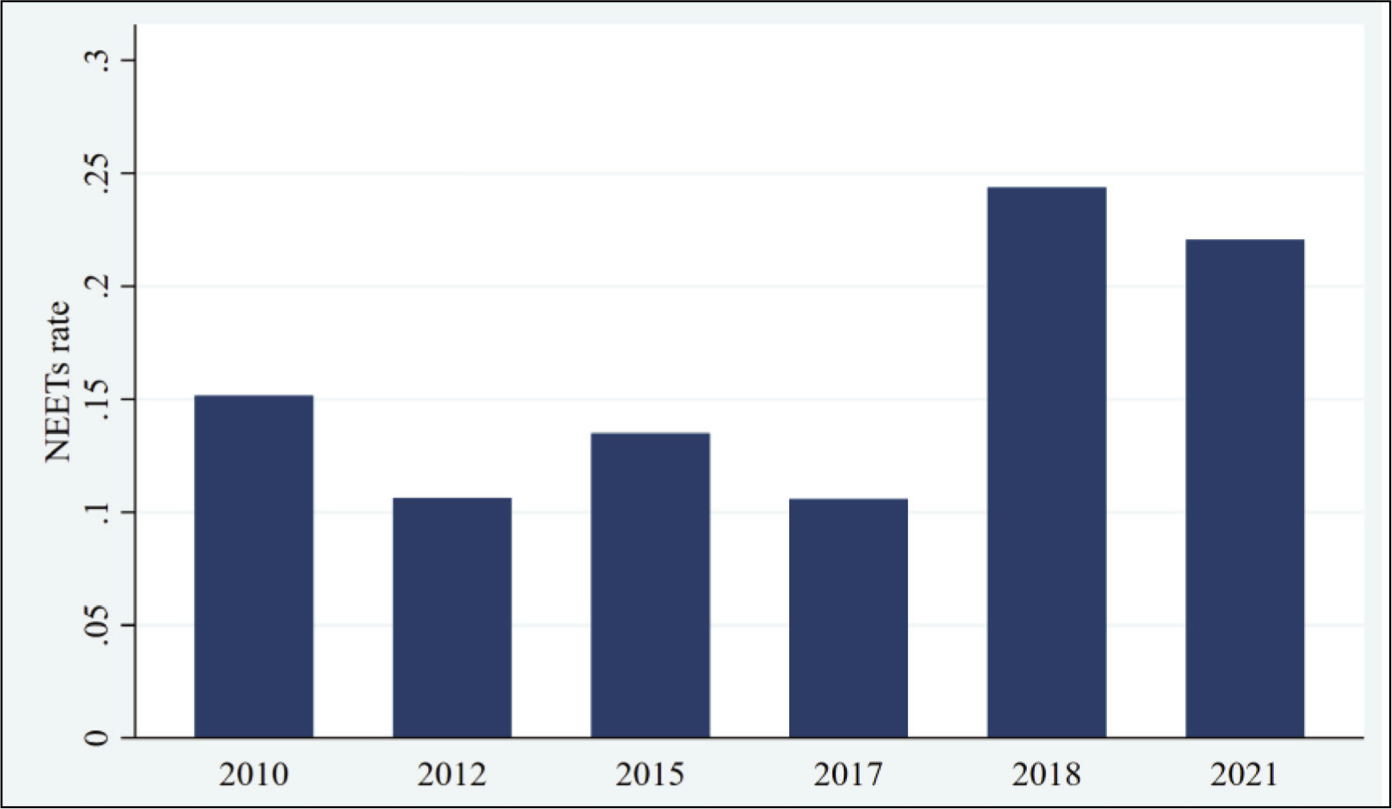
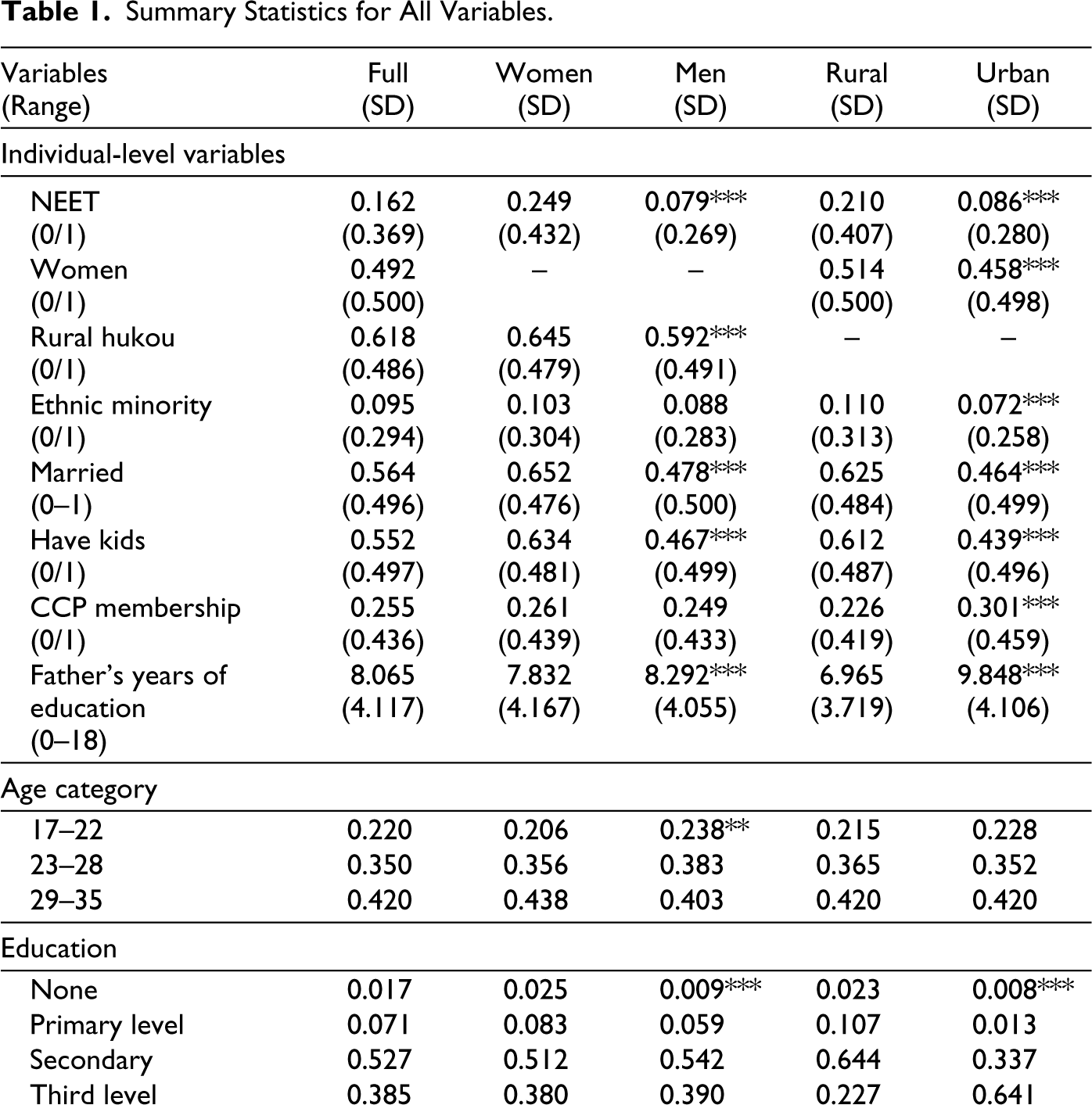
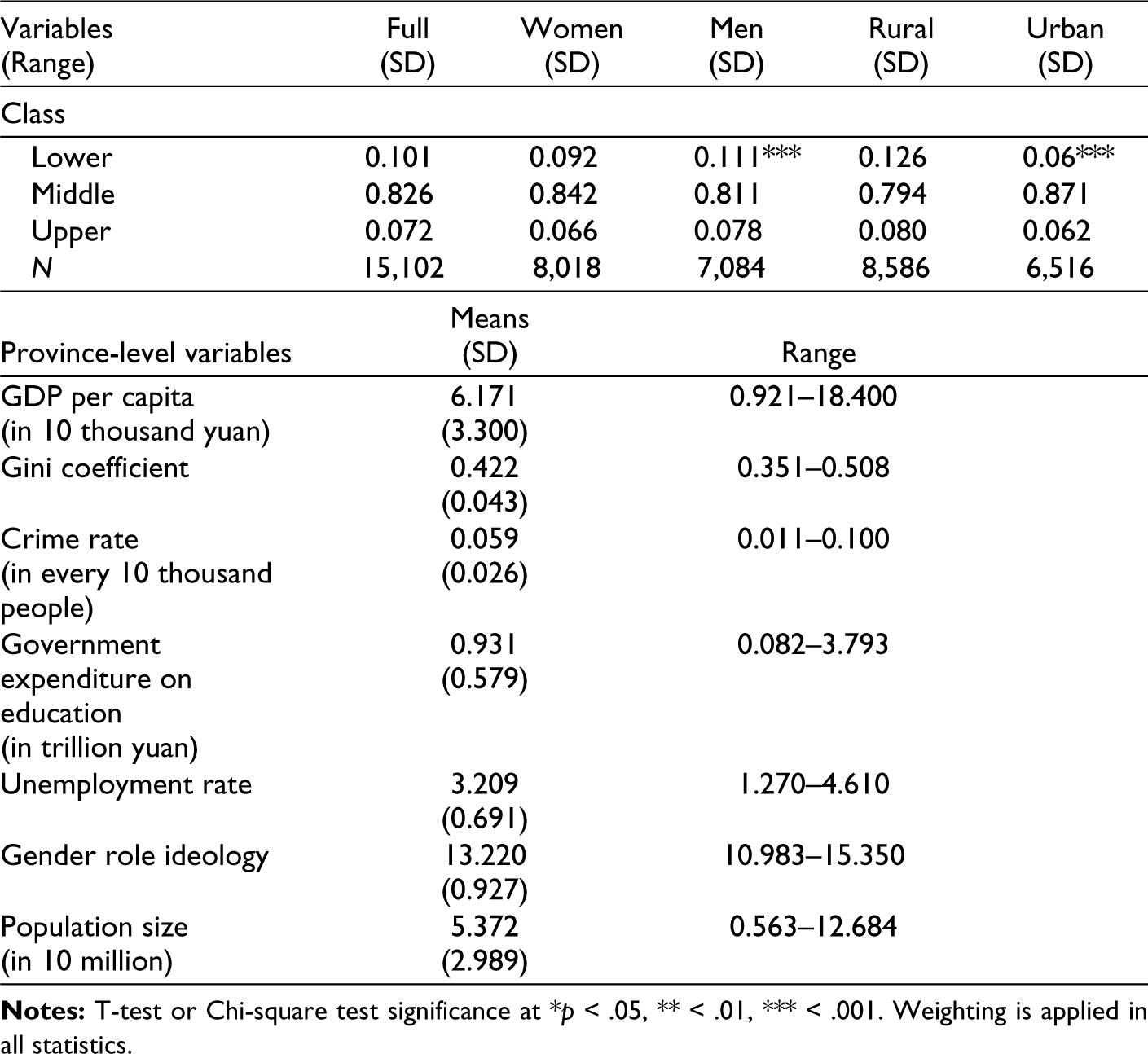
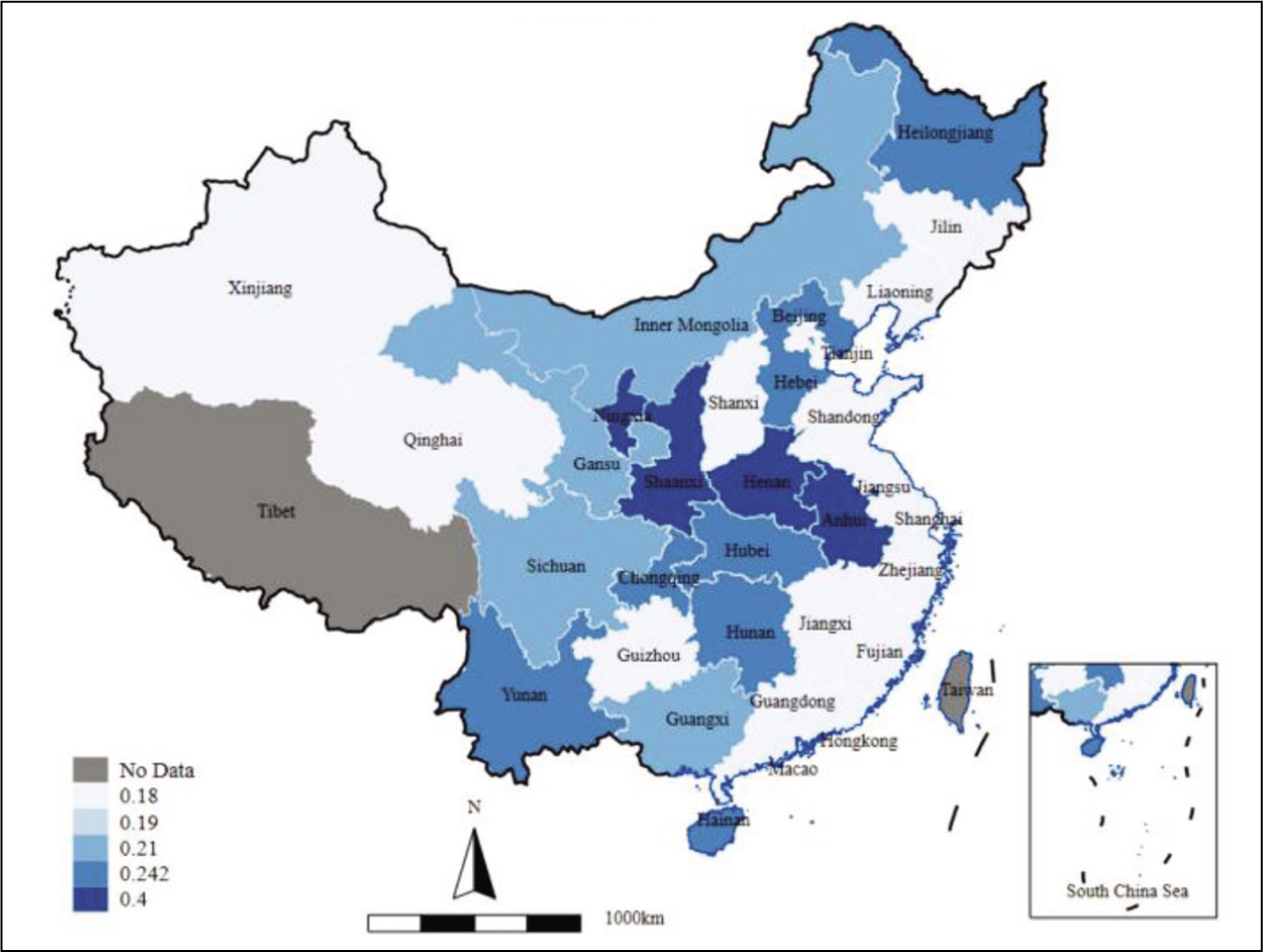
Table 1 presents the summary statistics for the full sample and women/men and rural/urban sub-sample. Substantial NEET differences between women and men and between rural and urban residents are witnessed. Approximately 25% of young women are NEETs compared with 8% of males and 21% of rural residents are NEETs compared with 9% of urban ones. Figure 2 shows how NEET is disproportionately distributed across China. Middle China (Henan, Anhui, Shaanxi, Gansu) suffers from the highest NEET rate, while east coastal and northwestern China enjoys relatively lower NEET rates. Anhui has the highest NEET rate (34%) compared to Shanghai, which has the lowest NEET rate (3%). Also, substantial differences in socio-economic characteristics are revealed between the two genders. Young women are, on average, less educated, less healthy, participate less in political activities, have less-educated fathers, are less likely to be in unions, are more likely to live in rural areas, married and have kids, but are more fluent in Mandarin Chinese than men. Similar dynamics are observed between rural and urban residents, with some additional disparities, including ethnic minority concentration and CCP membership.
Summary Statistics for All Variables.
NEET Rate by Province.
Determinants of Becoming NEETs Among Chinese Youth
Table 2 presents the results from the multilevel logistic regression analyses. The NEET status is used as the dependent variable, and a rich set of theoretically driven variables discussed above is controlled for. Average marginal effects are reported. Model 1 includes all the individual-level variables, Model 2 includes all the province-level variables and Model 3 is the full model containing variables from both levels. The estimation results in Model 1 show that gender, hukou, education, marital status, parenthood, CCP membership, union membership, age, class, Mandarin fluency and health successfully predict the likelihood of becoming NEET amongst Chinese youth. Women are 11.8% more likely to become NEET than men, and rural hukou holders are 2.3% more likely to become NEET than urban ones.
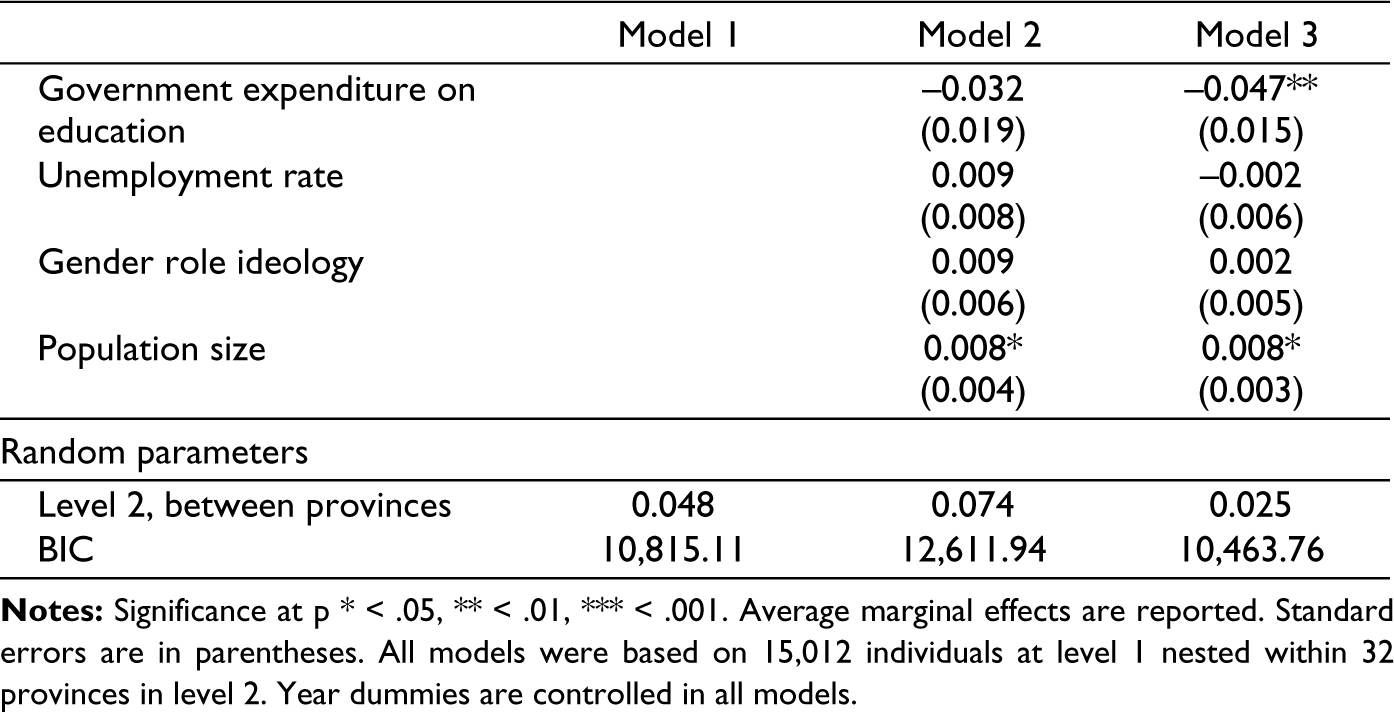
Multilevel Logistic Regression of the Incidence of Becoming NEET in China.
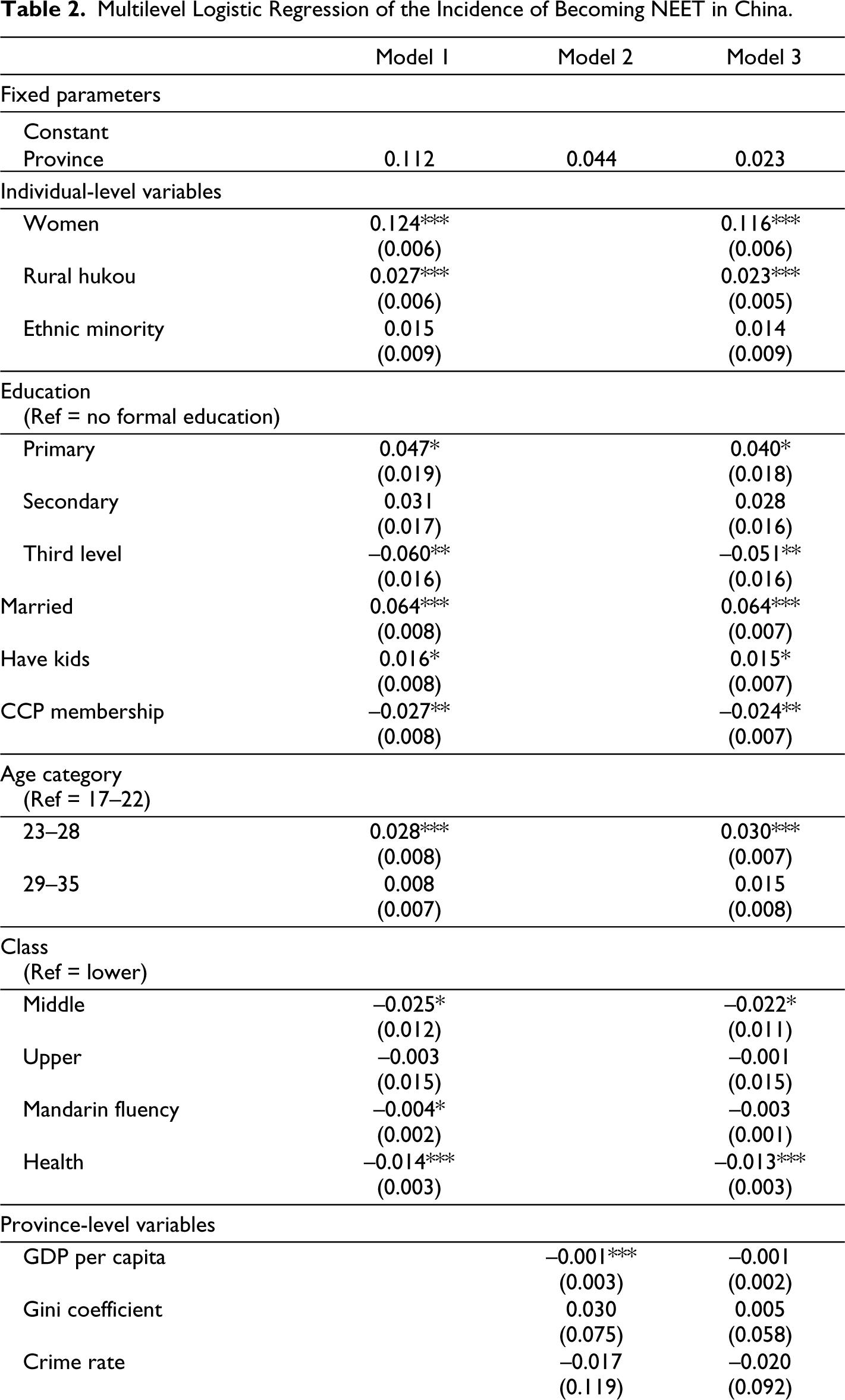
In terms of education, contradicting the common wisdom that education lowers the risk of becoming NEET, the relationship between education and the likelihood of becoming NEET is found to be non-monotonic. Compared with the reference ‘no formal education’ group, individuals who only received primary education are 4% more likely to become NEET. Receiving secondary-level education also does not guarantee a lower chance of becoming NEET. Only tertiary education significantly lowers the risk of becoming NEET for Chinese youth. This finding is in line with previous literature on Southern NEET (MacDonald & King, 2021), which also revealed investment in human capital may not guarantee labour market success in Middle Eastern and North African countries. One possible explanation is that youth lacking any formal education may come from the most deprived families and regions, particularly in less developed western provinces. For them, not only receiving education or gaining training is unaffordable, but so is being unemployed. They have to work for the most underpaid and precarious jobs to meet minimum living standards. Those who can at least afford primary and secondary education may come from less deprived families and urban or semi-urban regions. If the job offered falls short of their expectation, they can still rely on their parents’ savings and support for basic livelihood while queuing for good jobs, especially given the cultural emphasis on parental responsibility and intergenerational support in China.
In addition, a non-monotonic relationship is also found between age and NEET. Compared with the ‘young teens’ group aged between 17 and 22, the likelihood of being NEET is 3% higher for ‘prime’ youth aged between 23 and 28, while there was no significant difference for the ‘old-boys’ group aged between 29 and 35. This finding contradicts the conventional idea that the younger one is, the greater the risk of becoming NEET due to a lack of capital and skill accumulation. In China, youth in their early-mid-twenties often face significant challenges in securing stable employment. This group is caught in a transitional phase, where the rising competition for jobs and the mismatch between educational qualifications and labour market demands delay their entry into stable work. For class origins, youth from the middle-class background is significantly less likely to become NEET compared with those from the lower class. Youth from middle-class families typically have greater access to educational resources and job opportunities, benefiting from China’s emphasis on state-sponsored education reforms since the 1990s (such as the National Higher Education Expansion Plan). However, the NEET status likelihood for upper- and lower-class youth does not differ significantly. This is likely due to the small sample size for upper-class youth (6.6%) and the fact that they may be more likely to pursue non-conventional paths, such as entrepreneurship or travel, rather than traditional labour market roles.
Model 2 presents the association of province-level variables on individuals’ likelihood of becoming NEETs. Estimation results show that, while all macro factors revealed their expected directions, only province GDP per capita and population size significantly predict individuals’ likelihood of becoming NEET. Young people living in provinces with higher GDP per capita are less likely to become NEET than those in lower GDP per capita provinces. Every 1,000 yuan increase in provincial GDP per capita reduces the NEET likelihood of young individuals in the province by 0.1 percentage point. Moreover, those living in provinces with larger populations are more likely to become NEET than those living in less populated provinces. Every one million population increase in the provincial population size increases the incidence of becoming NEET for young individuals by 0.8 percentage points. Larger population provinces tend to have more crowded labour markets, making it harder for youth to secure stable employment. The high cost of living and competition for jobs further delay workforce entry. In contrast, less populated provinces, often rural and less economically developed, offer fewer opportunities but also face less competition, which may make it easier to find jobs, though typically lower-paying ones. This reflects the tension between China’s socialist ideals of equal opportunity and the market-driven pressures of capitalism, where densely populated urban areas are shaped by economic growth but also by the inequalities of the capitalist system.
Model 3 includes variables from both levels. Most estimation results mirror the ones from previous models with a few exceptions. When both individual and provincial-level variables are controlled for, Mandarin fluency and GDP per capita lose their significance. At the same time, government expenditure on education is found to have a positive impact in reducing individuals’ likelihood of becoming NEET. Comparing Models 2 and 3, individual-level variables seem to suppress the predictive validity of governmental education expenditure on NEET status. Estimation showed that every 1 billion yuan increase in provincial government expenditure on education lowers individuals’ likelihood of becoming NEET in the province by 0.463%. Moreover, the province population size is found to have a negative impact on reducing individuals’ NEET likelihood. Young people living in provinces with larger populations are more likely to become NEET than those in less populated provinces. Every one million people increase in the province’s total population increases individuals’ likelihood of becoming NEET by 0.8 percentage points. The finding is in line with the expectation. Youth in populous provinces face more fierce labour market competition, and the cost of living in populated places may be higher, making it more difficult for people to make ends meet without a steady income. These findings are of particular relevance to Southern countries where governmental education expenditures are often unevenly distributed and the population concentration rate often varies according to regional prosperity.
To assess the robustness of the above results, three different approaches are employed: (a) Given the rise in the NEET rate since 2018, I pooled data from the two most recent waves of the CGSS (2018 and 2021) to capture a current snapshot of shifts in NEET rates, ensuring that the observed patterns remain relevant to today’s context; (b) To address the methodological limitations of logistic regression (Mood, 2010), I re-estimated the main model using a probit model to assess whether the results were robust to different assumptions about the distribution of the error term; (c) Recognizing the fluidity in the definition of youth across various countries, I adopted the age range of 17–29 years, as employed by Eurofound, to examine the consistency of the key findings. As demonstrated in Table 3 of the Appendix, the results from these robustness tests align closely with those of Model 3 in Table 2, thus affirming the robustness of the primary conclusions to a substantial degree.
Interactions
Drawing from intersectionality theory (McBride et al., 2015), I further add the interactions of four key socio-demographic variables, namely gender, hukou, ethnicity and marital status, to examine the universal and differentiated effects of multiple forms of disadvantage among groups of Chinese youth. Empirically, following the literature (e.g., Zuccotti & O’Reilly, 2019), six two-way interaction terms are added to the model. Rather than presupposing fixed categories of disadvantage, this approach examines how inequalities emerge and vary across intersecting social categories, highlighting, for instance, whether the rural--urban disparity is more pronounced among women than in the overall population, as discussed in the literature (e.g., Ellena et al., 2021). Such an intersectional approach encourages the comparison of inequalities between categories and within categories. Important heterogeneous characteristics within groups are revealed in Figure 3. When other covariates are controlled for, married young women are 19.5% more likely to become NEET than unmarried ones (p < .001). This disparity is even more significant than between men and women (11.6%). It is possible that married women may be more likely to have caretaking responsibilities for children or elderly family members, which can make it more difficult to maintain employment. Additionally, married women may face discrimination from employers, assuming that they will be less committed to their jobs or less flexible with their schedules.
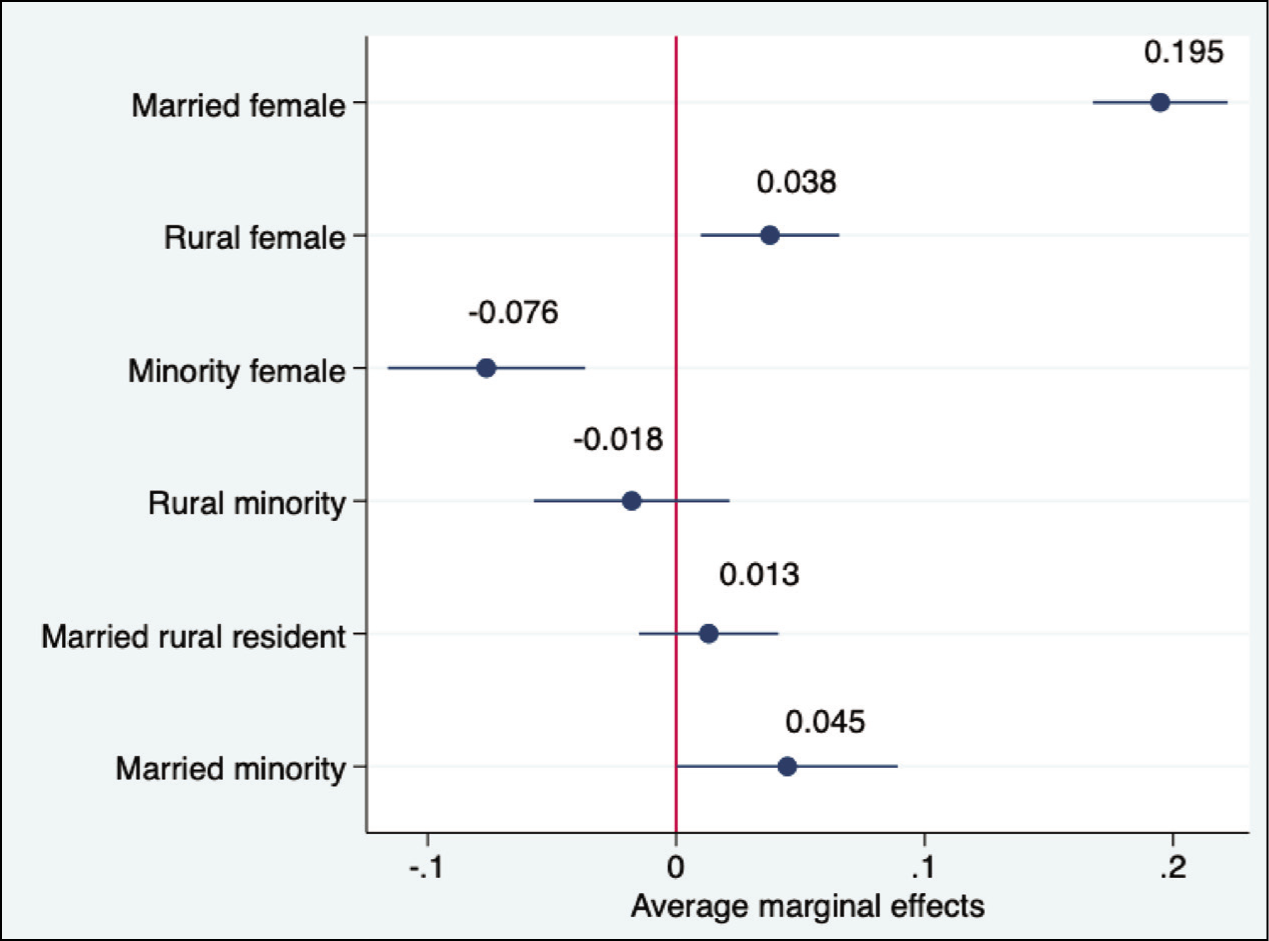
Also, rural women are 3.05% more likely to become NEET than urban women (p < .001). This is also more prominent than between urban and rural youth (2.3%). Urban areas tend to have more job opportunities and higher salaries, while rural areas often lack access to decent jobs and training programmes. The hukou system, which ties employment and social services to a person’s place of origin, makes it difficult for rural youth to find work in urban areas. And gender makes such urban–rural division more complex. Women in rural China may face stronger cultural and social barriers than urban women that limit their employment or education opportunities, such as traditional gender roles and expectations (Ye et al., 2016). This finding provides important insight for the government to implement employment, education and training assistance policies for certain socially disadvantaged young women, such as married women and rural women, to promote their employment, schooling and skills.
One unusual finding is that being an ethnic minority woman lowers one’s risk of being NEET (p < .01). This may be attributed to the small sample size of this subgroup (5.1%). Also, there seems to be no ethnic penalty and intersectional ethnic disadvantages associated with the NEET status among Chinese youth (Table 2, Model 3). This may reflect China’s ethnic affirmative action policy, which ensures a minimum proportion of representatives from ethnic minorities (ethnic quota) in many job sections.
Interesting patterns have emerged when cross-level interactions are introduced into the models. As is shown in Figure 4, in Model A1, the interaction between gender and government expenditure on education shows a significant negative impact on NEET (p < .01). With the increase of government expenditure on education, ceteris paribus, the positive impact of governmental education expenditure on lowering individual’s NEET risks attenuates for men while it becomes stronger for women. Such interaction results reveal that gender moderates the relationship of governmental education expenditure on the likelihood of becoming NEET, and a portion of the gendered disparity of NEET can be overcome with additional government expenditure on education. An increase in government expenditure on education provides women with greater access to education and training programmes, which helps improve women’s skills and qualifications, making them more attractive to employers and reducing discrimination against them. Education may also help to change societal attitudes about gender roles and expectations, making it more acceptable for women to enter the workforce. Similar dynamics between government expenditure on education and hukou (B1) and ethnicity (C1) are detected. With the increase in governmental education expenditure, the NEET likelihood gap between rural and urban hukou holders (p < .05) and between minority and Han (p > .05) becomes smaller. However, the gap-closing effect of governmental education expenditure is more pronounced for gender and hukou disparities but remains insignificant for ethnicity.
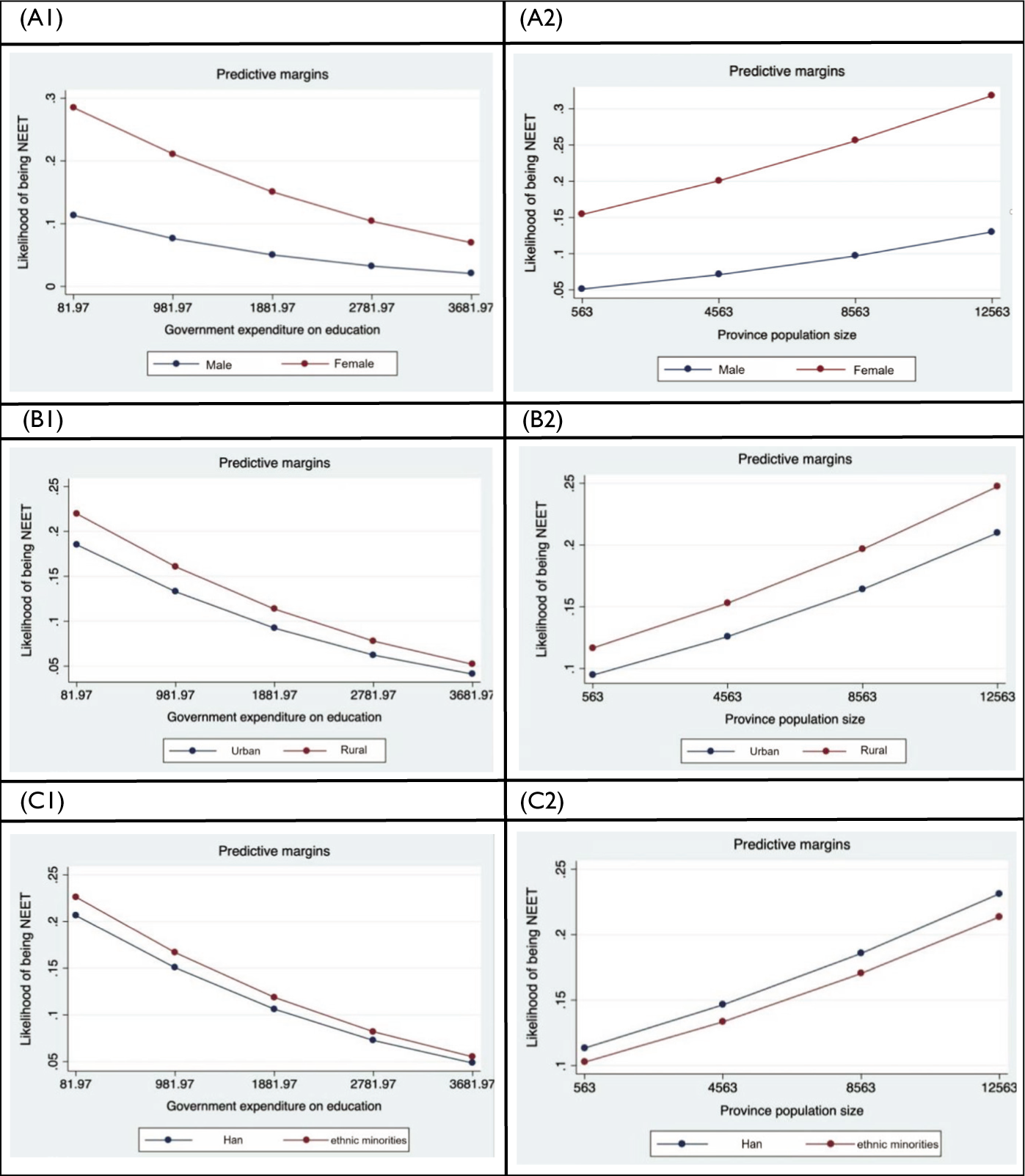
On the contrary, province population size is found to have a gap-widening role. As the population size of a province increases, the gender gap in NEET likelihood becomes significantly larger (p < .01). This may reflect the heightened demand for skilled labour in densely populated regions, a sector often dominated by men. Additionally, women may face discrimination and biases in the hiring process, further limiting their employment opportunities. While the plots also suggest a gap-closing effect for hukou and ethnicity, these effects are not statistically significant (p > .05).
Conclusion and Discussion
The smooth transition from school to work as the rite of passage to full adulthood and a project of self-realization is a vital part of youth transition. Prolonged transition length and failure to enter the labour market, therefore becoming NEET, has become a global problem that the UN Agenda 2030 for Sustainable Development aims explicitly to target (sub-point 6 of Goal 8, ‘Decent work and economic growth’). This study is in conversation with such global youth issues. Acknowledging the Northern-centric bias prevalent in the literature on youth transitions (Simões et al., 2022), the present study identifies five aspects in which the Southern school-to-work transition may diverge from the Northern case. These include the scale of the informal economy, the impact of education on employment opportunities, the varying degrees of life course standardization, the cultural inclination towards individualism or collectivism, and the distinct dynamics of gender roles. By highlighting the heterogeneity within the Global South and emphasizing the distinct characteristics of Eastern Asia and contemporary China, this study empirically investigates the determinants of NEET status among youth in China.
Descriptive statistics revealed that China’s NEET rate stands at approximately 16% for the studied period (2010–2021). Substantial internal regional variations were observed, with middle provinces exhibiting higher NEET rates, whereas the eastern coastal and northwestern provinces experience relatively lower NEET rates. Regression analyses revealed that gender, hukou status, education, marital status, having children, CCP membership, age, social class, Mandarin fluency and health all significantly impact the likelihood of becoming NEET. A notable finding diverging from the existing literature (e.g., Zuccotti & O’Reilly, 2019) is that having an ethnic minority background does not affect the probability of becoming a young NEET. It is possibly due to affirmative education policies such as preferential treatment in university admissions and state initiatives like the National Rural Revitalization, which support education and employment opportunities for ethnic minorities. Intersectional analyses revealed that the NEET rate gap between married and unmarried women is significantly larger than that between men and women. Additionally, rural women are more likely to become NEET than urban women, and this urban–rural disparity among women is more pronounced than the gap between urban and rural youth overall. The compounded effect of these intersectional identities—gender, marital status and hukous—reveals how multiple layers of disadvantage interact to further marginalize certain groups. Policies to reduce NEET rates should address intersecting social and economic factors with targeted support for gender equality, married women’s work–life balance and rural opportunities. Lastly, it finds that provincial education spending reduces individuals’ likelihood of becoming NEET, while larger provincial populations increase it. Gender moderates these effects: as education expenditure rises, NEET risk reduction weakens for men but strengthens for women, suggesting that increased education funding could reduce gender disparities in NEET rates. Conversely, larger populations widen the NEET gap between young men and women. This finding is concerning, as China and many other Global South countries are not only highly populous but also face significant population imbalances. The gap-widening effect of regional population size on NEET likelihoods between genders highlights a troubling labour market inequality that warrants further research and targeted policy analysis.
The findings of this study have to be seen in the light of some limitations. Firstly, due to the cross-sectional nature of the data used, any causal relationship interpretation should still be cautious. Secondly, as highlighted by Mood (2010), interpreting predicted probabilities in logistic regression can be problematic, as they also capture the extent of unobserved heterogeneity within the model. Thirdly, the measurement of the NEET variable in this study should be considered a limitation, as the CGSS dataset does not directly include a NEET variable. Consequently, the NEET variable was constructed based on available information from the CGSS. Additionally, due to data limitations, this study lacks an understanding of the dynamic process of individuals transitioning into and out of the NEET status, and the potential factors that may influence such fluidity and transitional patterns. These limitations should be considered when interpreting the findings.
Overall, the present study contributes to the literature from three perspectives. Firstly, this study contributes to NEET literature by exploring potential differences in NEET outcomes within the youth transition framework between the Global South and North. Given that most NEET research centres on Northern youth, it suggests a need for more academic attention to the largely overlooked young NEET population in the Global South. Secondly, it broadens the literature on Chinese NEET by empirically examining the determinants of the NEET status using a comprehensive and recent dataset. Taking advantage of multilevel modelling which allows the simultaneous inclusion of variables at different levels of analysis, this study finds that both micro- and macro-level factors, together with their interaction, significantly predict Chinese youth’s NEET status. Finally, the findings offer Chinese policymakers insights on reducing inequalities in NEET likelihood across different social groupings.
Footnotes
Declaration of Conflicting Interests
The author declared no potential conflicts of interest with respect to the research, authorship and/or publication of this article.
Funding
The author disclosed receipt of the following financial support for the research, authorship and/or publication of this article: The author received funding from Fujian Province Social Science Planning Project (FJ2024C163).
Appendix: Robustness Test
To test the robustness of the key results, in Table 3, I employed several different approaches: (a) Due to the increase of NEET rate from 2018 onwards, in Model 1, I used sample pooled from the most recent two waves of CGSS (2018 + 2021). (b) In Model 2, I re-estimated the main model using a probit model. (c) In Model 3, I used the age range 17–29 years old to define youth age (as is used by Eurofound) to check the stability of the key results. As is shown in Table 3, the results of the three sets of robustness tests were analogous to those obtained with Model 3 in Table 2, thereby validating the primary conclusions of this research as being robust to a significant degree.