




Abstract
Although broad labour market transformations have altered employment prospects for young people in the Global North, young people remain optimistic about their future employment opportunities. However, there is relatively little research on variations in young people’s perceptions. Using data from the Finnish Youth Barometer Survey, we address this gap by analysing young people’s perceived employment insecurity—that is, feelings of insecurity about future employment chances. We analyse first the determinants of employment insecurity and second the relationship between non-standard work contracts and employment insecurity in the employed group. The finding showed that economic downturns, immigrant background and unemployment status are associated with insecurity. Having a non-standard contract was associated with more insecurity. Young women feel more insecure than men. This is partly explained by the concentration of non-standard contracts among women. Our results show that there are differences in employment insecurity among young people and that young people react to economic downturns.
Introduction
Broad production and labour market transformations, such as the transition to post-Fordist economies, deregulation and technological developments, have altered job prospects for young people in the Global North (Green, 2019; Nedelkoska & Quintini, 2018). Young people work more often with non-standard employment contracts and are disproportionately affected by cyclical economic crises (Alatalo et al., 2017; Bessant et al., 2017; Choudhry et al., 2012; Pyöriä & Ojala, 2016).
In this context, it may sound surprising that young people in Europe remain optimistic about their futures in general and in working life specifically (Épiphane & Sulzer, 2008; Franceschelli & Keating, 2018; Lübke & Erlinghagen, 2014; Nikunen & Korvajärvi, 2020). They continue to imagine work as a relatively unquestionable part of their biographies (Ågren, 2021; Heggli et al., 2013; Honkatukia & Lähde, 2020; McDonald et al., 2011). Finnish young people ranked having an interesting job as one of their most important life goals by the age of 35 (Myllyniemi, 2016, p. 27), while half of them were confident of obtaining a ‘good job’ in the future (Galland, 2008).
The relative mismatch between objective conditions and subjective perceptions has been explained by individualization processes and epistemological fallacy (Furlong & Cartmel, 2007)—namely, the misperception of the power of individual agency in shaping individual life courses. This tendency has been further deepened by neoliberal policy practices and the associated mode of subjectivity that highlights faith in meritocracy, choice, self-reliance, an entrepreneurial mindset and optimism (Franceschelli & Keating, 2018; Nikunen & Korvajärvi, 2020; Scharff, 2016). Franceschelli and Keating (2018) suggest that optimism stems from young people’s meritocratic belief that hard work continues to pay off, although privileged and underprivileged youths employ this belief differently.
Subjective insecurity about working life is linked to, for example, lower life satisfaction and happiness in young people (Hellevik & Hellevik, 2021; Klug et al., 2019) and in the total working population (De Cuyper et al., 2019). However, we lack research on variations in young people’s perceptions. Existing qualitative research shows that there are intersecting gendered (McDonald et al., 2011), place-based (Allen & Hollingworth, 2013; Franceschelli & Keating, 2018) and classed differences (Franceschelli & Keating, 2018; Ikonen, 2020) in young people’s perceptions of their futures in working life.
Using data from the Finnish Youth Barometer (YB) from 2009, 2013, 2016 and 2019, this article analyses the determinants of young people’s perceptions of their futures in working life. The YB is an annual population-based survey of young people’s (15–29 years) attitudes and values in Finland. In our analysis, we used the concept of ‘employment insecurity’, which refers to subjective feelings of insecurity about future employment (Chung & van Oorschot, 2011). The first aim of the article is to analyse the determinants of subjective employment insecurity among young people, focusing on the variations observed in youth studies. To this end, we analyse how age, gender, educational level, main activity, foreign background and place of residence are associated with employment insecurity and extend this analysis to include economic cycles. Then, we explore one of the key labour market transformations, non-standard employment and focus on the respondents whose main activity was being employed. The second aim of the article is to analyse how a non-standard work contract is associated with subjective employment insecurity at the beginning of working life.
Employment Insecurity
Young people’s work-related insecurities are usually understood through the concept of precarious employment, which refers to the objective dimension of precarity—that is, to the rise of non-standard forms of work (fixed-term, zero-hour and platform work) and the erosion of working conditions, such as weak work community, limited access to benefits and low wages. These transformations are associated with post-Fordist labour market transformations and neoliberal deregulation (Kalleberg, 2011). In broader terms, youth studies understand precarity as a political process that increases economic and social inequalities, erodes societal safety nets and governs through insecurity (e.g. Bessant et al., 2017).
In this article, however, we use a more specific concept than precarity: subjective employment insecurity. Instead of objective employment relations, the term refers to individuals’ perceptions of the chances of achieving continuous and secure employment in the future 1 (Chung & Mau, 2014; Chung & van Oorschot, 2011). Related scholarship also uses the concept of employability which refers to individuals’ perceptions of available alternative job opportunities (De Cuyper et al., 2019, p. 175), focusing particularly on how employability mitigates the negative effects produced by fear of job loss or unemployment on job satisfaction, health and well-being (De Cuyper et al., 2019; Green, 2011). It can be argued that the concept of employment security highlights the subjective assessment of the general labour market situation and the concept of employability the subjective assessment of one’s personal skills and characteristics. In this article we highlight that both are future-oriented concepts, inviting people to assess their future chances in the labour market. We maintain that employment insecurity involves assessments of both one’s personal characteristics and skills and the general economic and labour market situation (Sutela et al., 2019, p. 217) and consider that employment insecurity refers to how young people perceive their general future possibilities in working life. Most studies on employment insecurity focus only on the working population or the workforce (Chung, 2019; Chung & van Oorschot, 2011; De Cuyper et al., 2019; see, however, Green, 2011), even when the study population is young people (Klug et al., 2019; Peiró et al., 2012). In this article, we focus on all young people (15–29 years) because our interest is to understand the expectations and insecurities related to personal work-futures as an element of growing up.
Previous Research on Young People’s Perceptions of Future Employment and the Finnish Context
In this section, to narrow down our hypothesis, we review the literature on young people’s perceptions of their futures in the labour market and the determinants of employment insecurity, combining it with an overview of the economic and labour market situation in Finland. Youth studies tend to be qualitative, while research on employment insecurity is quantitative, concentrating on cross-country variations. We use both to provide a comprehensive literature overview.
Although young people seem optimistic about future work in general, employment insecurity is strongly linked to economic cycles and labour market conditions. Economic crises and the economic and labour market conditions are persistent determinants of employment insecurity (Chung & van Oorschot, 2010). Young people are more sensitive to economic fluctuations compared to the general population (Lübke & Erlinghagen, 2014). The dataset used in this article covers the period following the global financial crisis (GFC, 2007–2008). The GFC hit Finland badly, with the Gross domestic product (GDP) dropping 8.5% in 2009. This was followed by slow economic growth, a second downturn in 2012–2014 (0.9% drop in GDP in 2013) and modest growth from 2015 to 2019. The year 2016 showed the largest GDP growth during the period (2.81%), while in 2019, GDP growth was modest at 1.27% (Suni & Vihriälä, 2016). Both the youth unemployment rate and the share of young people not in employment or education (NEET) rose significantly during the crisis (OECD, 2021, 2022).
Labour market policies are also related to employment insecurity. Increased funding for active labour market policies (ALMPs) is linked to lower levels of employment insecurity in young people which indicates that young people perceive having more work or training opportunities as a result. However, investments in ALMPs are also associated with higher employment insecurity for the general working population because such policies might raise concerns about the economy and the availability of jobs (Lübke & Erlinghagen, 2014).
Significant policy development in youth employment coincided with the middle points of the dataset. In 2013, the Finnish government reintroduced a youth policy programme, Youth Guarantee, to provide young people with new training and work opportunities in connection with ALMPs. 2 Youth Guarantee was launched with a large-scale publicity campaign and was allocated funding of 60 million euros annually for 2013–2015. As a result, compared to the situation before the Youth Guarantee, young people were offered stronger guidance and enhanced opportunities for training, internships and work placements (Tuusa et al., 2014). At the same time, the extant economic crisis, rising youth unemployment and NEET rates and the highly publicized Youth Guarantee programme generated intense public concern about youth marginalization and social exclusion in Finland, with young people being presented as vulnerable and at a high risk of marginalization (Lähteenmaa, 2021).
Deregulation and flexible work arrangements are usually considered key drivers of precarity, and having a fixed-term contract is a constant predictor of subjective employment insecurity (Kiersztyn, 2017; Klug et al., 2019). The gap in subjective employment insecurity between permanent and fixed-term workers is particularly large in Finland (Chung, 2019). At the same time, part-time work is not associated with increased subjective insecurity, usually because part-time work is often voluntary (Chung, 2019; Dixon et al., 2013).
Although youth unemployment has been relatively high, along with public investments in ALMPs for young people, the Finnish labour market is considered less precarious compared to that of other European countries (Puig-Barrachina et al., 2014; Pyöriä & Ojala, 2016). Measured with the composite indicator early job insecurity index which measures the structures of youth labour market, Finland is a middle-performing country (Karamessini et al., 2019, pp. 35–36). In terms of young people’s (15–29 years) non-standard employment, the share of fixed-term contracts has slightly decreased during the last 15 years (36% in 2005 vs. 33% in 2019), while the share of part-time contracts has increased (26% in 2005 vs. 30% in 2019). 3 Young people are overrepresented in both groups because in 2018, 18% of the total population had fixed-term contracts and 14% had part-time contracts (Sutela et al., 2019, pp. 52–56). Finnish young people particularly take up marginal part-time work (< 15 hours/week). However, the higher share of non-standard contracts among young people is not a straightforward indicator of young people’s marginal labour market position, as many of the young workers are full-time students whose contract type depends more on them being students than young people (Ojala et al., 2021). To the best of our knowledge, no previous studies have focused specifically on students’ subjective employment insecurity.
The results regarding gender differences in employment insecurity are mixed. In Finland, young women are generally more optimistic about the future (Myllyniemi, 2017, p. 36). At the same time, their relationship to future work life is complex, as their optimism partly relies on their individualized faith in their efforts rather than on favourable structural conditions. Therefore, their optimism can be easily undercut by feelings of not doing enough (Ikonen, 2020). Other studies have found that women are likely to experience employment insecurity due to, for example, the lack of human capital or differences in attitudes (Chung & van Oorschot, 2010). Such explanations are less relevant in Finland because women’s rate of participation in working life is high, and women have higher educational levels than men (48% of women vs. 33% of men had tertiary education in the age group of 30–34 years in 2020) (Official Statistics of Finland, n.d.). In Finland, the welfare state also provides strong support for combining work and family by providing services and benefits such as affordable public childcare.
However, women and men have different educational and labour market positions. In all age groups, women are overrepresented in both fixed-term and part-time contracts (Ojala et al., 2021). The same tendency is clear for young people: in 2019, 38% of young women and 29% of young men (15–29 years) had a fixed-term contract, and the share of part-time contracts was almost double among young women (40%) compared to young men (21%). 4 This disparity is partly caused by high gender segregation in the Finnish labour market. Women work in (public) social and health, education and hospitality sectors, and men work in construction, transportation and warehousing (Statistics Finland, 2021). Pyöriä and Ojala (2016, pp. 362–363) showed that a distinctive feature of the Finnish labour market is the concentration of fixed-term contracts among highly educated public sector employees. Consequently, women’s position in the labour market is ambivalent: they have higher educational qualifications while being insecure in terms of employment relationships and have high prospects of reemployment due to labour shortages in care and education.
Contemporary Finnish labour markets require a more skilled workforce than before. Thus, having only compulsory education (nine years) is linked with significantly lower employment levels (Sipilä et al., 2011). However, educational level is difficult to define because it changes over time, particularly in younger age groups. In 2019, 8.8% of the people aged 17–24 years had no post-compulsory education and were not studying. This number has decreased significantly over the past 20 years (Tilasto- ja indikaattoripankki Sotkanet, n.d.). Higher levels of education are associated with less employment insecurity (Klug et al., 2019), but the relationship between educational level and employment insecurity for youths is not straightforward. For example, young people from all backgrounds fear for their future work (Ikonen, 2020) but also share the individualized faith that their success depends on their personal hard work (Franceschelli & Keating, 2018).
Based on this review, for both aims of the article, we expect the years of economic downturn (2009 and 2013) to be associated with more insecurity and the years of economic upturn (2016 and 2019) with less insecurity. We expect women to be less likely to feel insecure due to their higher educational status. Furthermore, we expect youths without post-compulsory education to perceive higher levels of insecurity. For the second aim, as the analysis concerns only employed respondents, we expect fixed-term contracts (but not part-time contracts) to be associated with greater levels of insecurity.
Materials and Methods
Data
We analysed the data from the YB, an annual representative survey on young people’s values and attitudes. The YB repeats core questions, while its theme changes yearly. The survey has been conducted with approximately 2,000 young people (aged 15–29) since 1994. We used the data from 2009, 2013, 2016 and 2019, which contained the question concerning subjective insecurity about future employment (I am worried about my future work prospects/Olen huolissani siitä, onko minulla töitä tulevaisuudessa). The question was introduced in 2009 as a consequence of the GFC and its effects on youth unemployment. Except for regional information and gender in 2009, all responses in the YB are self-reported. In 2009, gender was derived from population registers (self-reported since 2012). Regional information is derived from the residency address data.
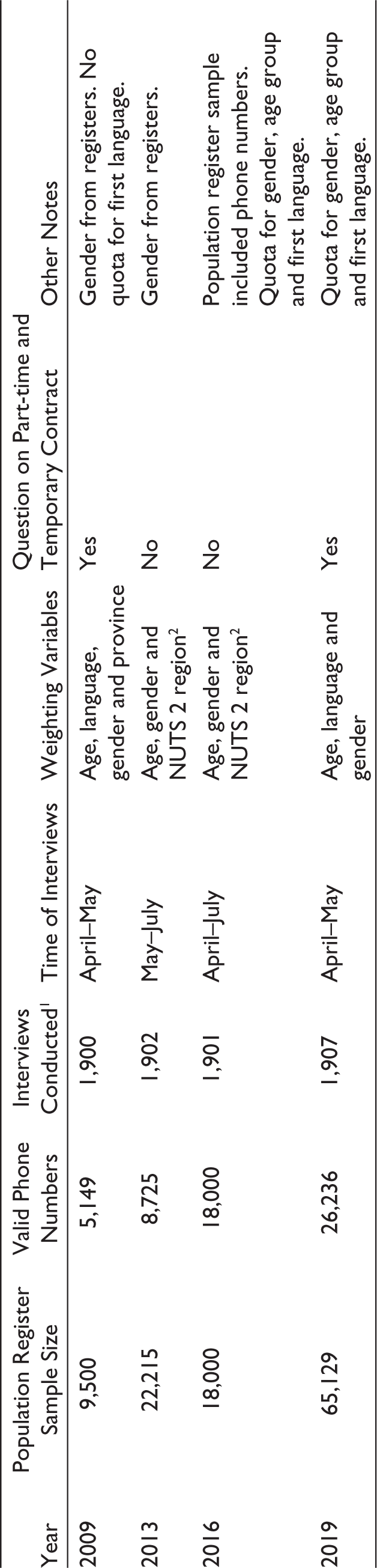
The YB is assembled based on telephone interviews conducted by a contracted service provider. The study population consists of people aged 15–29 years living in continental Finland. The respondents are selected at random from population registers, and their telephone numbers are then retrieved from the service provider’s number directory. Target quotas for the interviews are defined variably based on age, gender and place of residence (defined using the Nomenclature of Territorial Units for Statistics [NUTS] level 2 or level 3). The first language was added as a quota-defining variable in 2014. In recent years, given that fewer young people have registered phone numbers, data collection has become more difficult, requiring a larger sample and more calls (Table 1).
Information on Youth Barometer Execution by Year
2 NUTS = Nomenclature of Territorial Units for Statistics.
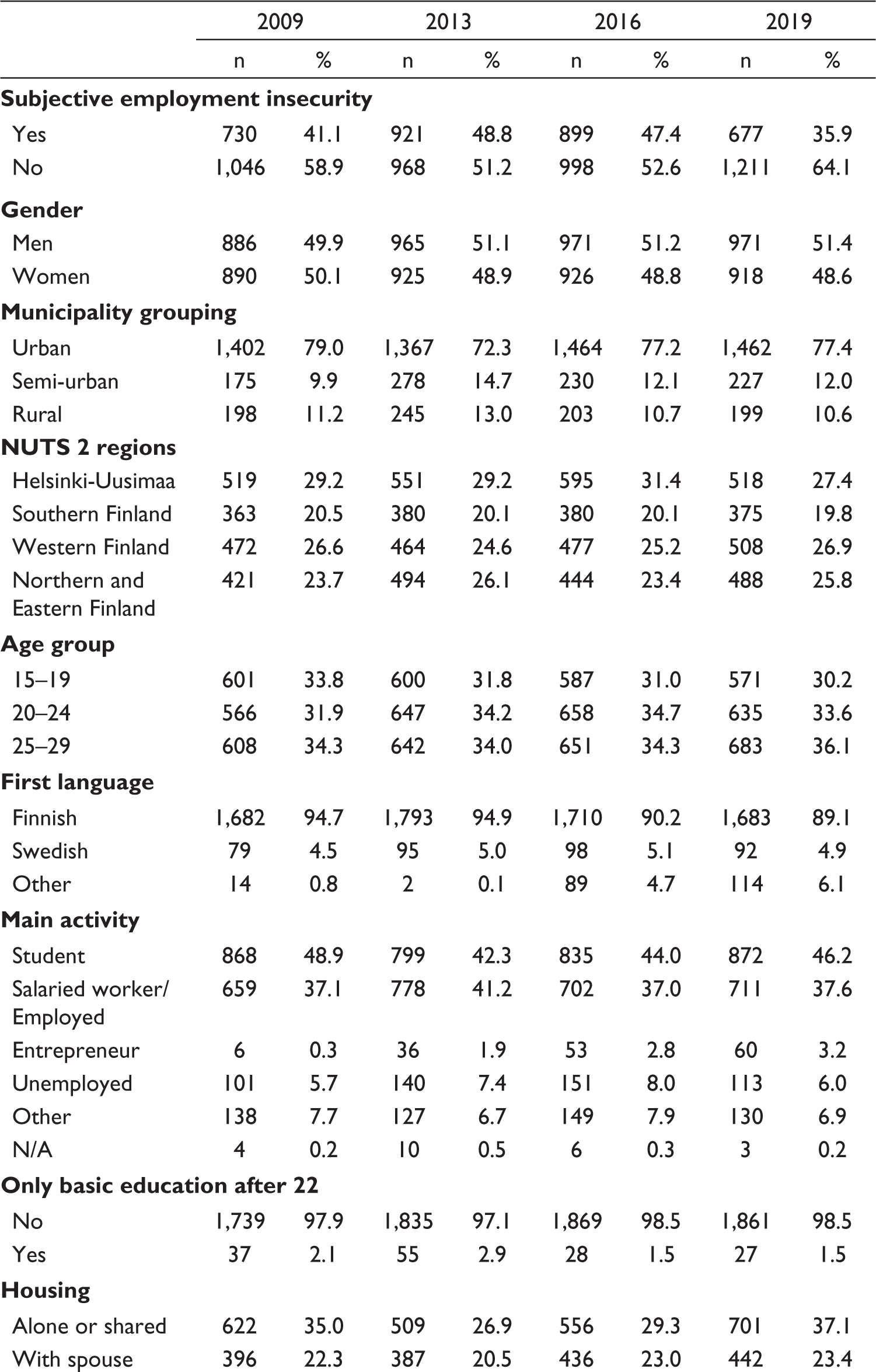
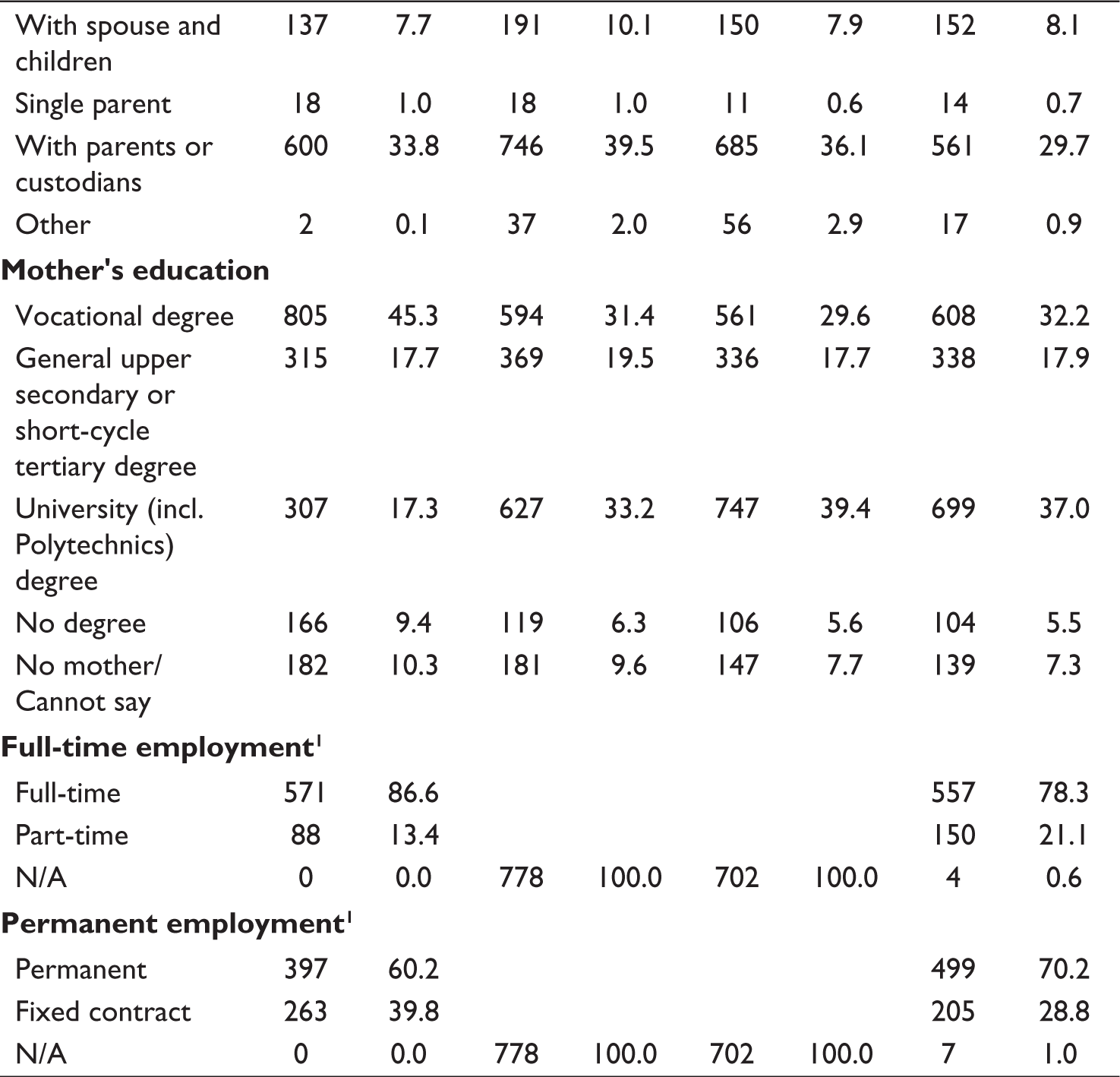
There were 7,611 responses available in the data. We removed a total of 33 pilot responses. In the YB, pilot interviews are conducted to adjust the length of the interviews and possibly the wording of some of the questions. The structure of the questionnaire is usually updated after the pilot interviews, meaning that the context of certain questions may change between the pilots and subsequent interviews. In addition to the pilots, we removed one response because the respondent was too old (over 29 years), seven responses because of missing or non-binary gender identification and 121 responses because the answer to the question on employment insecurity was missing. This resulted in a final sample of 7,449 responses which became 7,451 responses after applying weights. The YB samples were relatively similar across the years (Table 2). The main difference was that the share of foreign language speakers was relatively small in 2009 and 2013 because quotas for the first language were used only in 2016 and 2019. In 2009, the share of mothers with tertiary education was lower because the option for Polytechnic was only introduced in the subsequent year. The share of part-time contracts among the employed increased between 2009 and 2019 (13% vs. 21%), while the share of fixed-term contracts decreased (40% vs. 29%; Table 2). Our regression analysis took these compositional changes into account.
Demographics of the Respondents by Sample Year
Measures
Subjective employment insecurity
The response variable in our analysis was employment insecurity. The variable indicating employment insecurity was derived from the following statement: ‘I am worried about my future work prospects’ (‘Olen huolissani siitä, onko minulla töitä tulevaisuudessa’). The respondents had to assess the statement using the following five options: strongly agree, agree, disagree, strongly disagree and cannot say. For statistical modelling, the options ‘agree’ and ‘strongly agree’ were grouped together to signify that the respondents experienced employment insecurity. In total, 43% of the respondents reported experiencing employment insecurity.
Covariates
We used the data collection years (2009, 2013, 2016 and 2019) as a measure of the economic cycle. The first two time points (2009 and 2013) represented an economic downturn, while the latter two (2016 and 2019) represented an economic upturn. In 2009 and 2019, respondents who reported that their main activity was being employed were asked about their contract type. Based on the responses, we defined two variables, indicating employment status (permanent/fixed-term and full-time/part-time).
For gender, we use a binary definition (men/women). Since 2012, the YB has used a non-binary definition, allowing the respondents to indicate their gender with the choices of male, female, other and cannot say or refuse to answer. The latter two categories were however excluded from the analysis because they were not available for all years and because the number of respondents was small (7). Four of these seven respondents (57%) reported employment insecurity.
For educational level, we used the binary measure ‘only basic education after the age of 22’. In the YB questionnaire, respondents are asked about their highest completed education and their current studies. The options are defined in terms of the Finnish educational system (compulsory school, vocational school, high school, university of applied sciences, university and other). Our measure included respondents who were aged 22 years and over, did not have a post-compulsory degree and were not studying at the time of the survey. This construction excluded respondents who were likely to gain education later on. The decision to use this variable instead of reported educational level was based on the lack of harmonization between survey years in the respondent group and the fact that having only compulsory education is associated with significantly lower employment levels in Finland, rather than the type of completed post-compulsory education (Sipilä et al., 2011). The age limit of 22 years was based on evidence that after the age of 22, young people are less likely to continue their education (Korpela & Jauhiainen, 2022).
For the first aim about the determinants of employment insecurity in young people, we controlled for main activity (student, employed/salaried worker, entrepreneur, unemployed and other). The response choices were harmonized between the study years. The group other included respondents in military or non-military service, on parental leave, in preparatory courses or with different forms of pension. For the second aim regarding the relationship between contract type and employment insecurity, we only analysed the respondents who reported that their main activity was employed/salaried worker, excluding working students.
Control variables
In addition, we controlled for age, foreign background (using self-reported first language as a proxy for foreign background), housing situation (alone, shared, with a spouse, with a spouse and children, single parent, with own parents or custodians and other), mother’s education and place of residence. The two variables indicating residence were derived from the data. The municipality grouping (urban, semi-urban and rural) was based on the classification of Statistics Finland. The variable region was based on the NUTS 2 regions and was created using level 2 of the classification from 2021. Four regions were defined: the capital area of Helsinki-Uusimaa, Southern Finland, Western Finland and Northern and Eastern Finland. Both variables were created by linking postal codes to the Statistics Finland data.
Statistical Analysis
The demographics of the data are presented with cross-tabulation and percentages; P values were computed using the chi-squared test. Odds ratios (OR) and their 95% confidence intervals (CI) are presented. P values were not corrected for multiple comparisons. Analyses were performed with SPSS (v. 27.0.0).
Determinants of employment insecurity were modelled with logistic regression after binarizing the responses. We employed three models. The first two models analysed the determinants of employment insecurity in all young people. The first model only controlled for age, gender and self-reported first language. In the second model, municipality grouping, NUTS 2 region, household type, mother’s education, year of the survey and main occupation were added as further covariates. The third model concentrated on the role of non-standard contracts. For the third analysis, we investigated the association of having a part-time contract and having a fixed-term contract with employment insecurity among respondents whose main activity was being employed. The questions on part-time and fixed-term employment were asked only in 2009 and 2019, so the third analysis consisted only of respondents from 2009 and 2019. Respondents in the housing group ‘other’ were dropped (n = 5) due to separation in this last model, resulting in a sample size of 1,362.
Results
Respondents’ Characteristics
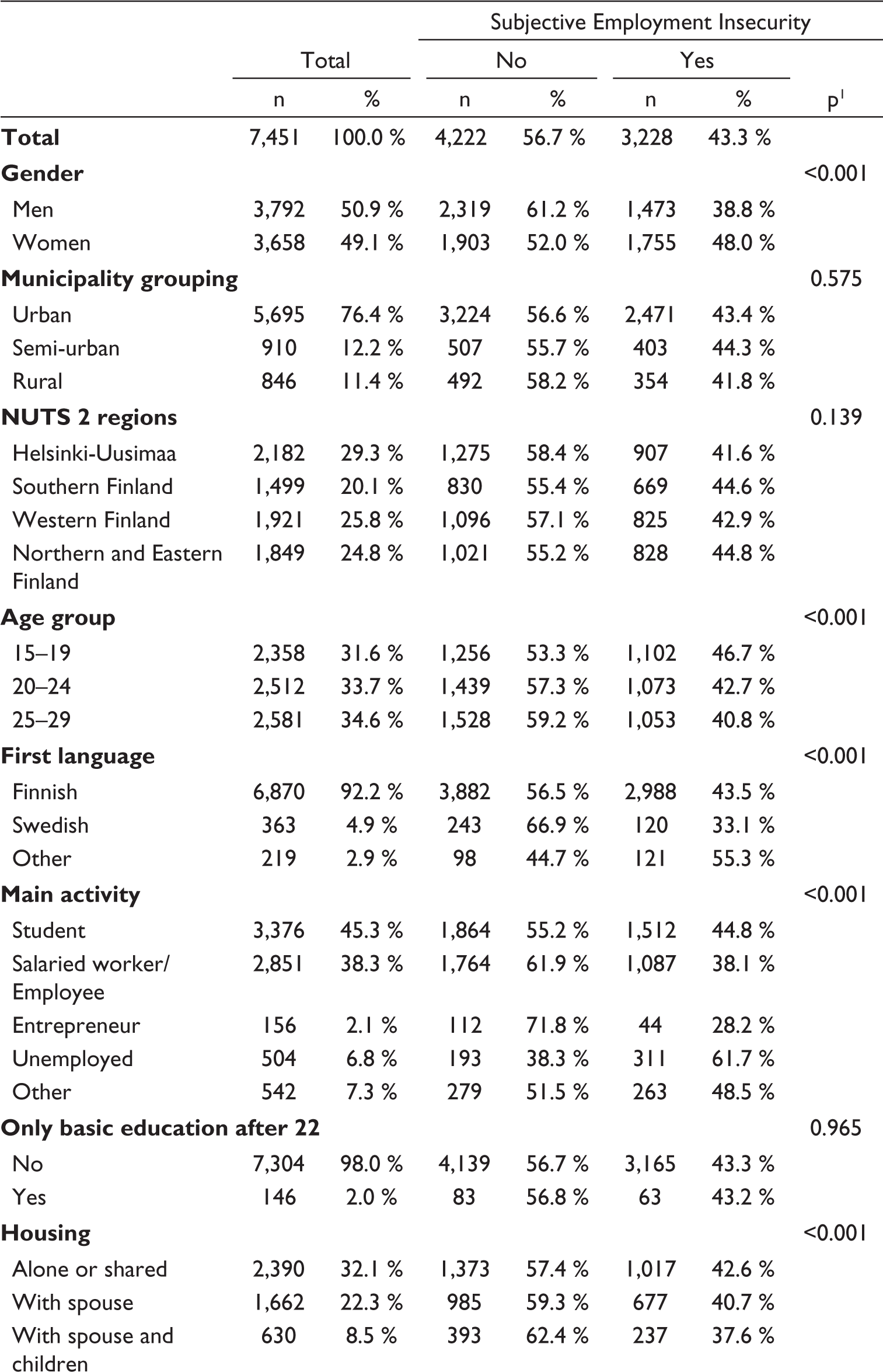
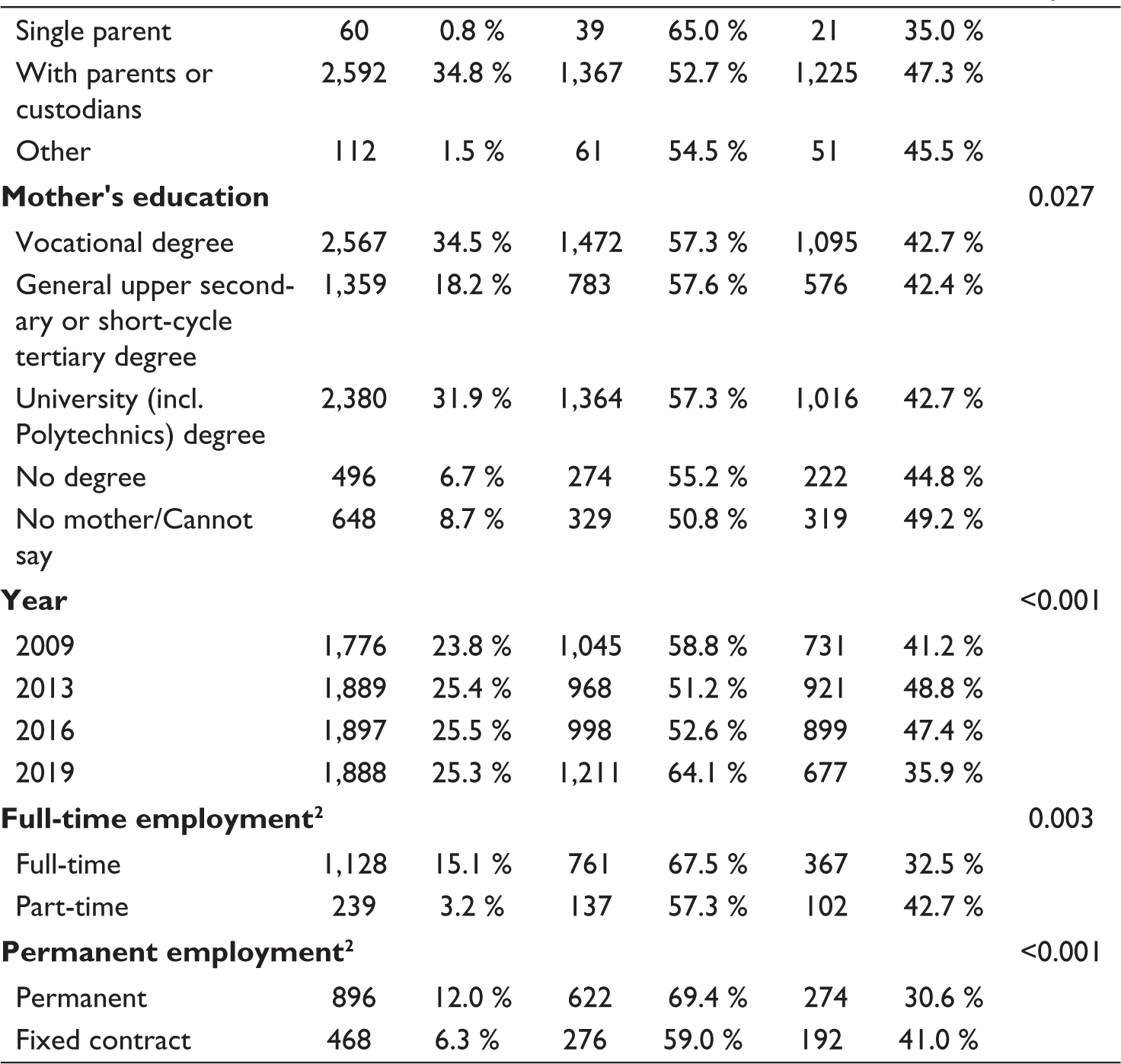
A little less than half of the respondents were women (49%), and they were evenly distributed across age groups (Table 3). The majority lived in the Helsinki metropolitan region and in Southern Finland (29% and 20%, respectively) and urban municipalities (76%). Most were Finnish speakers (92%), 5% were Swedish speakers and 3% reported that their first language was other than Finnish or Swedish. 2% had only nine years of education after the age of 22. Although there is no comparable figure in the official statistics, in 2019, 8.8% of the people aged 17–24 years were in a similar position (Tilasto- ja indikaattoripankki Sotkanet, n.d.). Women were likelier than men to have fixed-term (43% vs. 27%) and part-time (22% vs. 13%) contracts, and the differences were statistically significant (P < 0.001). Even though these figures cannot be compared to the official statistics because they were calculated based on the main activity, the overrepresentation of women in both groups is clear.
Nearly half (48%) of the women agreed or agreed strongly with the statement on subjective employment insecurity, whereas only 39% of the men agreed. Less employment insecurity was also reported by older and Swedish-speaking respondents. The lowest levels of employment insecurity were reported by entrepreneurs, of whom only 28% reported agreeing or agreeing strongly with the question. The proportionally highest levels of employment insecurity were among the unemployed (62%). Full-time and permanent employment also had a statistically significant (P < 0.05) association with employment insecurity which was approximately 10 percentage points more prevalent among respondents with part-time or fixed-term contracts (Table 3).
Demographics of the Respondents by Subjective Employment Insecurity
Regression Models
Model 1 indicated that men and older people reported experiencing less employment insecurity (exp(OR) 0.69, 95% CI 0.63–0.76 and exp(OR) 0.98, 95% CI 0.97–0.99, respectively) (Table 4). Compared to Finnish-speaking respondents, Swedish speakers reported lower employment insecurity, and speakers of other languages reported higher employment insecurity.
Regression Models for Employment Insecurity
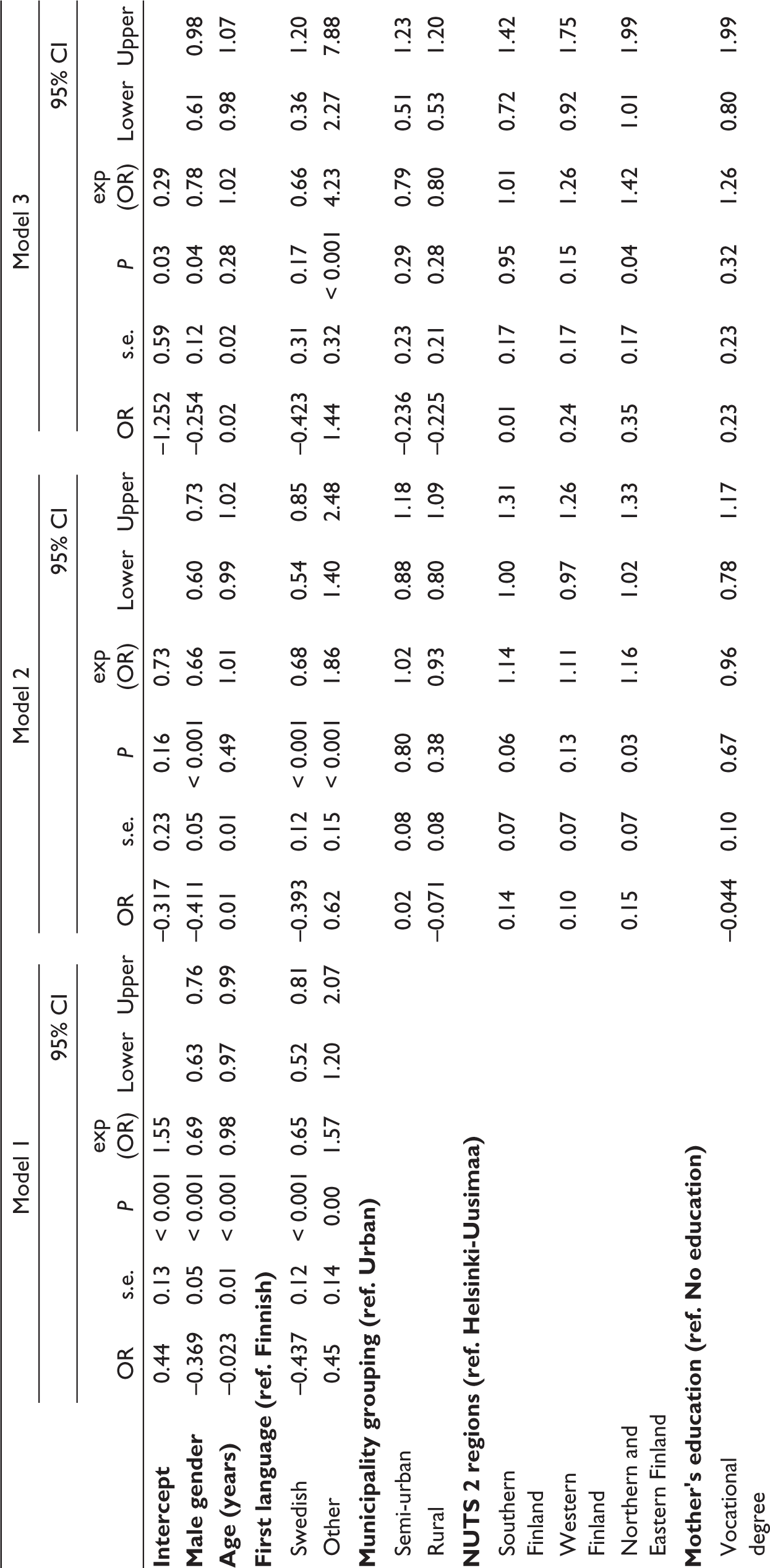
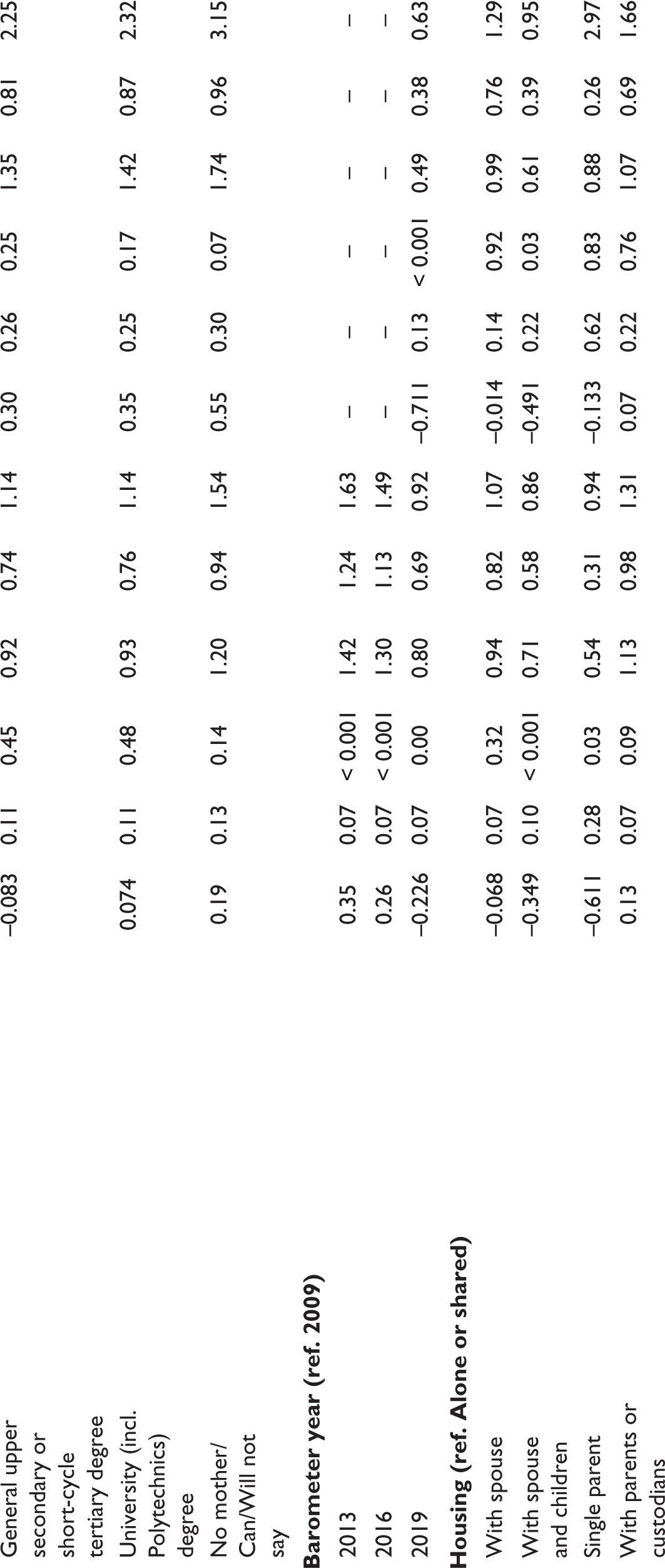
In Model 2, additional covariates were introduced (Table 4). The male gender remained associated with lower employment insecurity (exp(OR) 0.66, 95% CI 0.60–0.73), but adding the covariates attenuated the association between age and employment insecurity, making it statistically insignificant (P < 0.05). Urban municipalities did not differ in employment insecurity from the more rural municipalities, but the geographical NUTS2 regions indicated an association. More specifically, respondents from Northern and Eastern Finland reported higher employment insecurity (exp(OR) 1.16, 95% CI 1.02–1.33) than respondents from the Helsinki-Uusimaa region. The respondents’ mothers’ educational levels were not associated with employment insecurity.
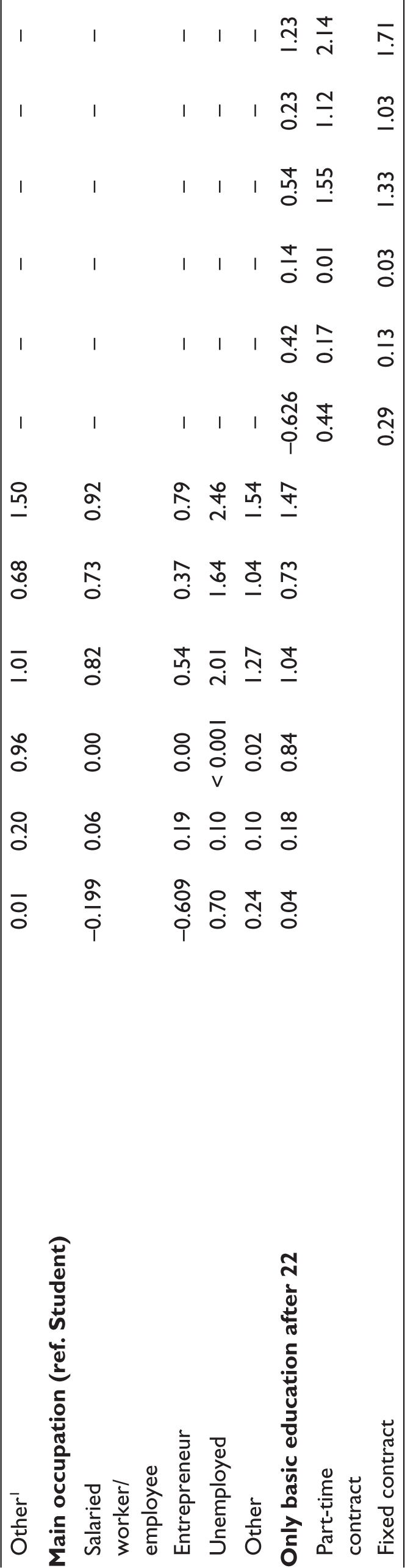
We observed significant yearly changes in employment insecurity. Compared to 2009, in 2013 and 2016, the respondents reported experiencing more employment insecurity. In 2019, employment insecurity was significantly lower. Living with children with or without a spouse was associated with lower insecurity compared to people living alone or in shared apartments (exp(OR) 0.71, 95% CI 0.58–0.86 and exp(OR) 0.54, 95% CI 0.31–0.94, respectively). Working as an employee or as an entrepreneur was associated with reduced insecurity, while being unemployed increased the odds of reporting employment insecurity. Having only basic education after 22 years of age was not associated with employment insecurity (P < 0.05).
Model 3 examined employees’ employment insecurity in 2009 and 2019 (Table 4). Most of the controlling variables (age, municipality type, region, mother’s education and housing) had similar associations as in Model 2. The male gender was also still associated with lower employment insecurity (exp(OR) 0.78, 95% CI 0.61–0.98). However, speaking a first language other than Finnish or Swedish had a stronger association with employment insecurity among the employed (exp(OR) 4.23, 95% CI 2.27–7.88) than in Models 1 and 2. Having only basic education after 22 years remained unassociated with employment insecurity among employees. Both having a part-time contract and a fixed-term contract were associated with significantly increased employment insecurity (exp(OR) 1.55, 95% CI 1.12–2.14 and exp(OR) 1.33, 95% CI 1.03–1.71, respectively).
Discussion
Younger age is shown to be associated with less subjective employment insecurity (Kiersztyn, 2017; Lübke & Erlinghagen, 2014). There is, however, little research on how perceptions of future work change during youth. Instead, studies usually include all age groups or concentrate only on the employed population (Klug et al., 2019; Peiró et al., 2012). Our results show that there are differences among young people and that older groups report less employment insecurity. However, age as such was associated not with employment insecurity but with a more stable life situation (particularly living with a spouse or children). This was further confirmed by the fact that those already in working life (employed or entrepreneurs) were likelier to be confident about their future employment. This result shows that general optimism and individualized faith in hard work which characterize young generations (Franceschelli & Keating, 2018; Ikonen, 2020), can exist side by side with worries about the future. Youth is a period when many aspects of life are open simultaneously (studying, considering whether to start a family, finding a spouse if one wishes to have one, deciding where to live). Worrying about future employment is one of the open questions that add to the potential feelings of uncertainty. Young people need support in maintaining faith in the future when things seem open and unsure.
Young people benefit differently from becoming employed. Speaking a language other than Finnish or Swedish as one’s first language (a proxy for a foreign background) was associated with higher employment insecurity, and the association was stronger rather than weaker among employees. This is likely to reflect to the existence of discrimination and racism in working life and possibly indicates that such experiences are more frequent in working life than during school or studies.
The results concerning educational level were contrary to our expectations, since having only basic education by the age of 22 was not associated with higher employment insecurity. The possible difficulties of getting employed in the high-skill labour market did not seem to play a role in these perceptions. In the data, the group with only basic education by the age of 22 was mostly employed or entrepreneurs, and the consideration about future employment might have been made against such personal experiences, indicating faith that work will continue to be available. Being unemployed presented the highest level of employment insecurity, which means that being outside the labour market (rather than lacking, e.g. a suitable education) is the key risk for subjective employment insecurity. An opposite association was found when we examined the relationship between gender and employment insecurity. Contrary to our hypothesis, young women were more insecure about their future in working life compared to young men, and this association remained intact after controlling for other variables.
This result seems to point to an ‘inverse’ epistemological fallacy, as women’s personal characteristics (women had higher educational levels in our data and in the general population) and structural support for combining work and family should support a more optimistic, not pessimistic outlook on working life. A possible explanation for women’s weaker subjective security may be the gender differences in the experience of individualization. Rather than believing in their own efforts, young women might feel that they are not doing enough (Ikonen, 2020), which in turn can prevent them from trusting their structurally more favourable position when they assess their job prospects.
We further analysed the relationship between non-standard work and employment insecurity (Model 3) among those who reported that their main activity was being employed, thus excluding working students, who may prefer part-time or fixed-term contracts. The analysis revealed a significant association between fixed-term contracts and employment insecurity, confirming previous results (Chung, 2019; Kiersztyn, 2017). Contrary to previous research and our hypothesis, part-time work was also associated with employment insecurity which indicates that part-time work is not entirely voluntary.
The analysis also shed more light on the gendered differences. Women remained more insecure after controlling for contract type. As non-standard contracts were concentrated on women, women’s higher insecurity was partly explained by this concentration in the employed group. Young women’s greater insecurity about their future employment is thus related to the structure of the Finnish labour market, in which non-standard contracts concentrate on women and highly educated public sector employees. Although public sector employment (particularly in care, social services and education) technically provides secure employment because it is easy to find work, and fixed-term contracts are often renewed (Pyöriä & Ojala, 2016), it does not seem to be enough to provide subjective security. Even if young women’s feelings of not doing enough played a part in their higher feelings of insecurity, the result is also likely to reflect young Finnish women’s awareness of how for them, working life offers less pay and more part-time and fixed-term contracts than it does for young men.
Our results partly confirm the association between the economic cycle and subjective employment insecurity, as we observed significant yearly changes in employment insecurity. The economic downturn after the GFC resulted in a high level of subjective employment insecurity in 2009. It continued to increase during the second downturn (2013). In 2016, a year of an economic upturn, young people reported slightly less insecurity compared to 2013 but still more than in 2009. In 2019, employment insecurity was significantly lower than in 2009, 2013 and 2016.
These slightly contradictory results can be interpreted in different ways. Young people react to economic fluctuations, as observed in earlier research (Lübke & Erlinghagen, 2014). The relatively high level of employment insecurity during the upturn of 2016 could be explained by the fact that the period after the GFC was considered a ‘lost decade’ in Finland. Despite the economic growth, GDP was expected to reach its pre-crisis level only in 2018 (Teivainen, 2018). Together with the high youth unemployment rate, the general pessimistic view of the Finnish economy might have affected young people’s evaluations in an economic upturn.
At the same time, our results allow to reflect the role of ALMPs and youth policy programmes (the Youth Guarantee 2013–2015). After three years of investments in youth activation, employment insecurity remained at a high level in 2016. Young people’s worries were relieved only during the economic upturn of 2019, which was, however, more modest than that of 2016. It could be that the heightened public anxiety about youth social exclusion, which accompanied the introduction of Youth Guarantee, overshadowed the potential for skills enhancement and new opportunities provided by Youth Guarantee, paradoxically increased young people’s worries about future employment. Some evidence of young people’s heightened worries can be found in the YB of 2018, when 60% of young people reported feelings of insecurity related to youth social exclusion (Myllyniemi & Kiilakoski, 2019, p. 74). Although these explanations are tentative, as the measure for investments in ALMPs (year) is the same as for the economic cycle, and other factors that could not be analysed here may have played a part, this is a finding that should be further explored.
Our study had certain limitations. Non-response has become more common in the YB (Table 1). This is not always a problem because there is evidence that non-response does not necessarily threaten the quality of survey estimates (Keeter et al., 2006). However, the quota sampling employed in the data collection may decrease the reliability of the estimates (Yeager et al., 2011) and bias the results in more marginal groups (Laaksonen, 2018, p. 55).
The self-reporting of the controlling variables could be a source of error because determining, for example, the status of the work contract or the main activity during the transition phases from school to post-compulsory and university studies may be difficult. We used a self-reported, single-item measure of employment insecurity, but single-item measures have proven suitable for similar broad constructs in related phenomena, such as perceived job satisfaction (Fisher et al., 2016). The question of employment insecurity in the YB was open without a fixed time span, whereas other studies usually use a question with a specific time span. However, there are no studies assessing the validity of different measures for employment insecurity, and different studies use varying measures. Comparing our results to other studies with different measures should bare this in mind. The strength of our study was its assessment of employment insecurity as a future-oriented concept in the total youth population which allowed us to foreground variations among young people.
Conclusion
Employment insecurity is a concept that captures the anticipation of future working life and implies expectations about income level, career mobility and unemployment. This article showed that although young people have faith in their future employment, insecurity is not evenly distributed. Both personal attributes and labour market characteristics are associated with insecurity which is concentrated among young women and foreign language speakers. We also found that although young people might not be able to grasp the consequences of broad labour market transformations, they are sensitive to economic crises.
Footnotes
Declaration of Conflicting Interests
The authors declared no potential conflicts of interest with respect to the research, authorship and/or publication of this article.
Funding
The authors disclosed receipt of the following financial support for the research, authorship, and/or publication of this article: Haikkola's work was supported by Academy of Finland's Academy Research Fellow grant (nro. 332674).