




Abstract
Although not adequately studied in the research on youth work, food is and has been an integral element of youth centres. This article examines what characterizes youth centres as foodscapes and explores which aspects of youth centres support the food-related learning of young people. We merge the traditions of youth work research, food education and learning. The data of the study consist of two rounds of focus group interviews (N = 14) conducted with young people aged 13 to 17. The data are qualitatively analysed using the five aspects meal model, which was developed to analyse foodscapes. The results of this study suggest that when youth centres, as foodscapes, are based on the active participation of young people and offer them opportunities to have an influence on the activities and work with peers, it is easier for young people to be inspired and learn.
Introduction
People use food not only as nourishment but also as a form of cultural and social expression in their everyday lives (Fjellström, 2009, pp. 56–57). Young people’s attitudes, eating habits and cultural expressions through food are affected by their socioeconomic conditions and class (Simon et al., 2018, pp. 694–696). Additionally, their eating and drinking habits are affected by peer groups and social norms in youth cultural spaces (Wills, 2005, pp. 104–106, 109). Since each person negotiates their relationship to food choices and meals differently, it is necessary to conduct studies on how young people learn to express their identity through food in their leisure time.
In this article, we discuss the complex relationship between young people and food outside traditional learning environments, such as schools. We focus on food-related activities at youth centres, where young people go voluntarily (Kauppinen, 2018, pp. 163, 172), are empowered as participants in the activities (Batsleer & Davies, 2010) and interact in a peer group without any curricular pressures. Our main aim is to explore youth centres as foodscapes in order to understand the food-related learning that occurs through the activities organized at these centres.
Learning Food-Related Knowledge and Skills
In Finland, home and school have traditionally played strong roles in the learning of knowledge and skills about food (Janhonen, 2016, pp. 114–115). Parents influence their children’s eating habits through their own food choices, schedules, family meals, discussions about food and information sharing (Palojoki, 2003, pp. 53–54). The importance of family meals and the time allocated for shared meals may vary between families (Quarmby & Dagkas, 2015, pp. 334–336), although the healthiness of food is rarely the main priority (Palojoki & Tuomi-Gröhn, 2001, p. 21).
In this article, we focus on youth work at youth centres and explore how young people learn food-related skills, including food preparation, in informal learning environments. At Finnish youth centres, young people can meet each other, participate in activities, have fun together and gain support and encouragement from adults. The activities offered by these centres are mainly based on wishes, needs and interests of young people, and social interaction plays an important role in them.
Although not adequately studied in the research on youth work, food is always present at Finnish youth centres. Young people may bring their own snacks, and there are kiosks and cafés where young people can buy snacks. Since youth centres aim to create opportunities for peer interaction, it is understandable that food and food-related practices are part of the social construction of youth centres. Food can mediate social interactions (Holm et al., 2012), and it is common to eat with others (Higgs, 2015, pp. 39–42). In recent years, Finnish youth centres have begun to offer young people the opportunity to regularly prepare food together, which means that they have become informal food learning environments (Kauppinen, 2018, p. 98).
Youth centres as foodscapes
In this article, we analyse youth centres as foodscapes, a perspective that has not yet been adopted in the research on youth work. Foodscapes are part of the food system, defined as the places and areas where food is handled and available (Townshend & Lake, 2009, p. 910). They encompass all human access to food and the psychological, social, cultural, economic and political effects of food at the micro and macro levels (Lake et al., 2010, p. 666). Foodscapes can be subdivided into physical environments of tastes, routines, social interaction, commercialism and discursive environments, which, according to Dolphijn (2004), are characterized by the interaction of different actors and things (Brembeck et al., 2013, p. 86). From a cultural perspective, they can take for example the form of dining events (Brembeck & Johansson, 2010, p. 810). Foodscapes are not permanent; they evolve constantly through interactions between humans and objects (Brembeck, 2009, p. 144–145; Wenzer, 2010, pp. 12–13).
The concept of a foodscape can be used to examine how food affects people, how food is influenced by decisions and actions and how people live with and through food (Mikkelsen, 2011, p. 210). Foodscapes can be examined at the macro level from a societal perspective (e.g. Townshend & Lake, 2009); at the meso level from a regional or local perspective (e.g. Burgoine, 2010); or at the micro level by looking at a specific place, food or meal (e.g. Trenouth & Tisenkopfs, 2015). In this study, the concept of the foodscape is examined mainly at the micro level, taking into account community-related perspectives. As a physical space at a youth centre, the foodscape consists of the kitchen, dining areas and nearby grocery store. Some centres also have a small plot of land to farm.
The concept of the foodscape has been used in various contexts, such as in studies of educational institutions (e.g. Doherty et al., 2011) and workplaces (e.g. Burgoine & Monsivais, 2013). However, the concept of an institutional foodscape cannot be applied to youth centres, which should respond to and be reshaped by the aspirations of young people. The preparation and sharing of meals play key roles at youth centres. A meal does not always consist of many different elements; it can take the form of a simple snack (cf. Douglas & Nicod, 1974, p. 747). The qualitative aspects of eating and having meals can be studied using the five aspects meal model (FAMM), which was originally designed for evaluating restaurant environments (Gustafsson, 2004) and has previously been used to evaluate, for example, public food services (Magnusson Sporre et al., 2016).
In this article, we explore a youth centre as a foodscape, using the FAMM as a tool for data analysis (see Analysis). The first element of the model is ‘room’ (i.e. the venue for the meal), including the shape of the space, the equipment in it, its connection to other spaces and how people use the space (Gustafsson, 2004, pp. 11–12). A room refers to not only a physical space but also the interaction between people and the space (Meiselman, 2008). The second element is ‘meeting’, or the interactions between the people who are eating, preparing and serving food. The third element is ‘management control system’, which relates both to business economics and regulations and to the resources and processes involved in preparing, processing and serving food. The fourth element is ‘product’, or food and drink and combinations thereof (Gustafsson, 2004, pp. 11–12; Gustafsson et al., 2006, pp. 86–89). The fifth element, ‘entirety’, is formed when all of the above are realized. It refers to the atmosphere or the overall material and immaterial experience of a meal (Gustafsson et al., 2006, pp. 86, 89–90).
Youth centres as learning environments
In Finland, youth work is seen as education that is independent and distinct from formal education, social work and youth care. The main providers of youth services are municipalities, but parishes and non-governmental organizations (NGO) also provide such services. Traditionally, youth centres have been considered the main arenas for municipal youth work, but the significance of cross-sectoral cooperation has increased lately (Forkby & Kiilakoski, 2014, pp. 7–8). Currently, there are 816 youth centres in Finland, and nearly every municipality has at least one youth centre (Local and Regional Government Finland, 2019). Youth workers have much professional autonomy to decide how youth centres are built and which activities they want to facilitate.
In this article, we conceptualize youth centres as learning environments. According to the Finnish Youth Barometer 2017, young people recognize that many important skills are learnt outside formal education (Myllyniemi & Kiilakoski, 2018, p. 55). Specifically, much is learned informally and unintentionally in young people’s leisure time outside schools and other learning institutions (Coffield, 2000, p. 1). Youth work scholars and practitioners have long recognized the developmental and learning aspects of youth work (Williamson, 2017, pp. 20–24). Some have conceptualized the learning that occurs in youth work as non-formal learning (e.g. Kiilakoski & Kivijärvi, 2015), while others have defined it as informal learning (e.g. Batsleer, 2008).
Given the importance of group activities in youth work, the social and communal dimensions of learning (Vermunt & Vermetten, 2004, pp. 360–361; Wenger, 2009, pp. 217–218) are elemental for analysing how young people learn through youth work. According to Jarvis (2009, p. 25), learning is influenced by a person’s physical and mental status, and it occurs in social situations. Other scholars have defined it as a context-based and interactive process (Lave, 2009, p. 207). In youth work, the key form of learning is considered to be peer learning (cf. Topping, 2005, pp. 640–641). Peer learning takes place through interactions in which one learns from an individual who is more proficient in a skill or has a different knowledge base (Fawcett & Garton, 2005, p. 160). Through discussions, young people can learn new things, strengthen the connections between new and old knowledge and develop their problem-solving skills (Mercer et al., 1999, p. 108; Ogden, 2000, pp. 214–215; Vygotsky, 1978, pp. 85–86). Indeed, young people can learn more by actively participating with others than by working alone (Fawcett & Garton, 2005, pp. 160–161).
Theories of peer learning emphasize the active role of young people in reaching a community goal and their ability to influence and understand the available resources (Emirbayer & Mische, 1998, pp. 963–964; Greeno, 2006, pp. 538–540). Young people develop their identities and learn to take responsibility within peer groups (Lave, 2009, pp. 65, 80–81; Wenger, 2009, pp. 210–211). Adults’ role is to support peer learning by guiding activities and creating a safe, community-based learning environment that enables young people to exchange ideas and meanings, reflect on their own and others’ skills and listen to and respect others (Ogden, 2000, pp. 222–224). Ensuring active participation and interaction is also central to learning (Fawcett & Garton, 2005, pp. 164–165; Rogoff et al., 2003, pp. 185–188).
Research Questions
Three different research traditions are important to this work. First, we draw insights from youth work research, especially studies on youth centres and other low-threshold activities for young people. Second, we draw upon studies on food education, especially those on the social dimensions of food. Third, we are informed by the research on learning, especially non- and informal learning. By merging these traditions, our article performs a novel analysis of youth centres as foodscapes that provide opportunities for informal learning.
This study examines youth centres as foodscapes from the perspective of young people taking part in a youth kitchen project. Our research questions are as follows:
What characterizes youth centres as foodscapes? Which aspects of youth centres support the food-related learning of young people?
Materials and Methods
The qualitative data were gathered in 2016 at four youth centres in the city of Helsinki that serve young people aged 13–17. The youth kitchen project (Nutakeittiö) was launched in 2015 to promote healthy eating, strengthen food preparation skills and promote sustainable consumption. The project was implemented in cooperation with a grocery store chain that donated surplus food to the youth centres. Using this surplus food or bought food from the store, young people designed meals based on raw ingredients, prepared food and ate with their peers. Hunger was the primary motivation for preparing food at the youth centre, but the young people were also interested in food preparation (Kauppinen, 2018, p. 132). The data were collected at all the youth centres that were actively involved in the project at the time of the study.
Data collection
Qualitative data were collected from seven focus groups involving young people. Two group discussion sessions were held with each focus group, leading to a total of 14 discussion sessions. As shown in Figure 1, the primary data of this study (the group discussions) were supplemented by secondary data obtained from discussions with the youth workers at each youth centre and observation of the activities (Marshall & Rossman, 2006, pp. 100–101). During the observation phase, photographs of the environment and the activities of young people were also taken to support the entries. The secondary data helped us to understand the youth centre as a foodscape both discursively and physically and to develop reliable interpretations of the kind of foodscape and food-related learning environment that young people considered youth centres to be.
Youth workers invited young people to participate in the study. It is possible that they may have recruited certain types of young people and thus inadvertently caused a biased selection of participants. To avoid this and involve even more participants, the first author asked the young people if there were others who could and would like to take part in the discussions. Participation was voluntary. All interested persons were allowed to participate. Only one participant was excluded due to a lack of permission from their parents.
The final sample included 20 young people who were active participants in the youth kitchen project. This sample is small compared with the number of young people visiting youth centres. However, the number is sufficient considering the amount of those who participated in the project during data collection. The group sizes and number of groups formed at different youth centres (see Fig. 1) were influenced by the young people’s schedules, the fact that only a few young people had committed to the activities at some youth centres and the young people’s desire to take part in discussions with their own friends. The seven girls in the sample were aged 13–15 years, and the 13 boys were aged 14–17. Twelve participants went to comprehensive school, seven were in upper secondary education and one was working. Eleven participants had immigrant backgrounds. All the participants lived with one or both of their parents and siblings, except one participant, who lived with a grandparent.
Data Collection Process
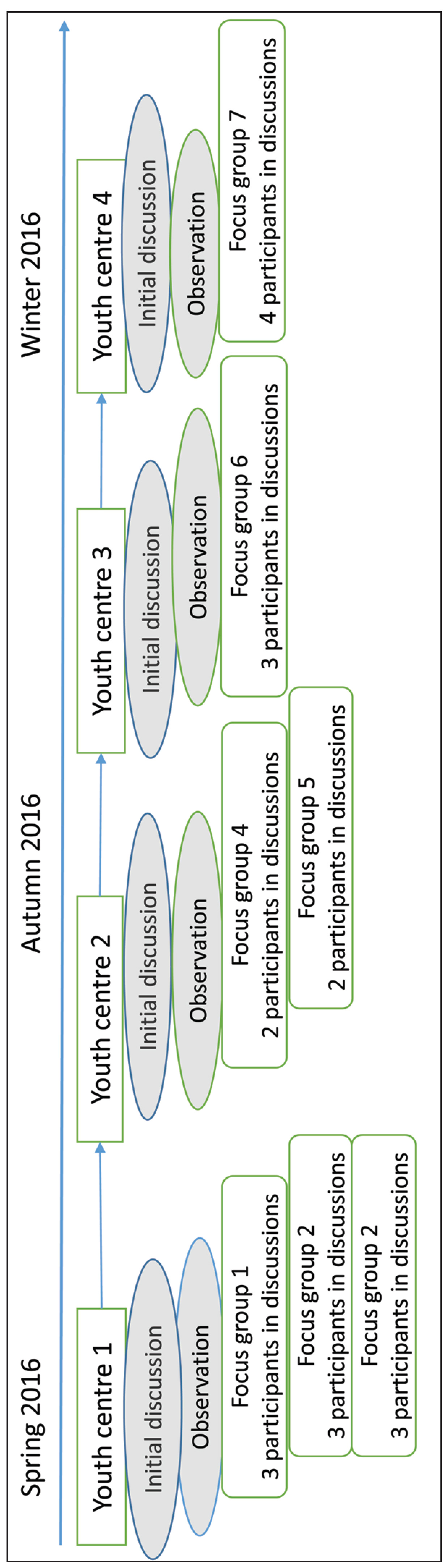
The cultural interview approach (Rubin & Rubin, 2005, pp. 10–18) was used to gather different perspectives and interpretations from the participants (Hennink, 2013, p. 13). The first author ensured that the discussion followed the themes of the study and provided prompts if necessary. Background information (i.e. age, gender, area of residence, educational institution and the people with whom the young person lived) was collected at the beginning of the first discussions. No more data on the socioeconomic backgrounds of the participants were collected. The first reason for this was methodological; the data consisted of the ideas shared by the young people in the focus group, not their individual responses. The second reason was practical; in Finnish youth work, the socioeconomic backgrounds of young people are considered irrelevant since the goal is to provide equal opportunities for everyone. It is essential that each young person is approached with the background he or she wants to share with the workers. However, societal inequalities are recognized and, according to the low-threshold principle, activities at youth centres are either free or significantly cheaper than commercial activities.
A discussion guide including a list of questions was designed for the focus groups to address the issues that are relevant to the research. The aim was to get the young people to engage in discussion voluntarily, and the questions were only used if the discussion did not proceed. The aim of the first group discussion was to collect data on foodscapes and learning. The young people talked about what they do when they prepare food and eat together at the youth centre. The questions guiding the discussion addressed, for example, where young people prepare food; how they experience the environment; how they plan what to prepare; how they prepare it and share tasks; where they seek and receive information; how they perceive activities; what is important, fun or difficult; and whether they learned something, and if so, what. The perspectives that emerged in the first discussion were summarized and presented to the group in the second discussion. This ensured that the young people were correctly understood and enabled the themes of the study to be discussed again more deeply. The second discussion raised new issues and reinforced the understanding of what was particularly important to young people.
Group discussions were recorded (6 hours and 19 minutes in total) and transcribed (113 pages). The secondary data—observations and initial discussions—were documented in the research journal (37 pages).
Analysis
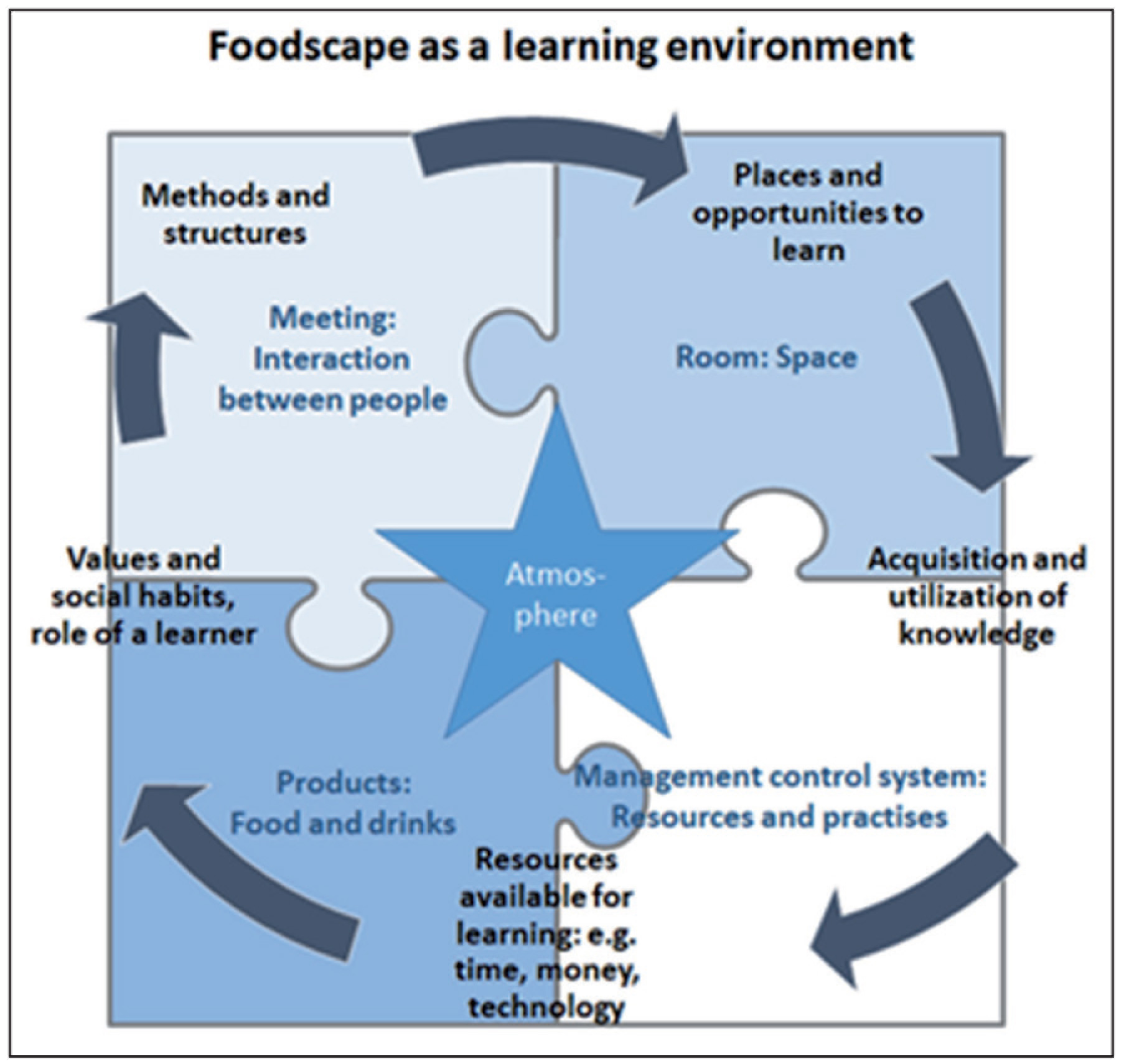
To analyse the data, we sought a sufficiently complex theoretical model that would help us to understand food-related phenomena at youth centres, which are low-threshold services. According to our understanding, foodscapes include a physical space, the relationships between people and the physical world, sounds, equipment, flavours and smells. Different theoretical models, including that of Sobal and Wansink (2007), were examined. Based on field notes taken during the observation phase and initial discussions, the nature of youth centres as foodscapes was constructed. FAMM was applied as an analytical model to help explain this theoretical notion. In the later stages of the research, this model was used to qualitatively analyse the data (Hsieh & Shannon, 2005). The model contains five elements related to the interactions between people and the foodscape: room (i.e. the space), meeting (i.e. the interactions between people), management control system (i.e. resources and practices), products (i.e. food and drinks) and entirety (i.e. the atmosphere of the meal) (Gustafsson, 2004, pp. 11–12; Gustafsson et al., 2006, pp. 86–90). These elements were used to categorize the data (see Fig. 2).
In addition, attention was paid to the aspects that support food-related learning in the foodscape. The data were analysed from four perspectives: knowledge acquisition and utilization, methods and structures that support learning, values and social habits, and resources that regulate learning (cf. Hannafin & Land, 1997). Active participation in activities, self-determination and interaction with peers contribute strongly to young people’s learning (cf. Batsleer, 2008, pp. 5, 12; Coffey & Farrugia, 2014). Youth centres reflect educational and social ideals regarding youth work, as they were designed by the youth work community to facilitate and enable certain activities and processes with young people (Kiilakoski & Kivijärvi, 2015, pp. 47–48). A youth centre network was developed in Finland as a result of the 1972 Youth Work Act, which provided grounds for municipal youth work. The development of a structure for youth centres was supervised by the Finnish Ministry of Education and informed by its official plans (Forkby & Kiilakoski, 2014, pp. 4, 7). Since the 1970s, the practice architectures of youth centres have followed similar paths, often including a kitchen or café, a room in which to watch television or play games, a larger area with sofas and (usually) a pool table and places for gathering. In other words, youth centres are spatial manifestations of the pedagogy of loose space (Kiilakoski & Kivijärvi, 2015, pp. 51–52), which emphasizes communality, being together and having fun. Fairly similar equipment and similarly organized spaces allow us to analyse the common qualities of youth centres as foodscapes. Of course, there are limits to this similarity. For example, youth centres in Finland have varying amounts of floor space and sophistication of kitchen resources.
The main themes from the discussions were deductively analysed based on the FAMM, and then subcategories were inductively thematized into learning-specific sections (e.g. acquisition and utilization of knowledge and interaction). Efforts were made to identify themes not covered by the FAMM. In the last stage of the analysis, the initial discussion and observation data were analysed. These materials were reviewed using the same logic and technique as those used for the group discussion data, and the findings were linked to themes and categories that emerged from the discussion material. It was ensured that all the phenomena that occurred during the group discussions, initial discussions and observations were included in the analysis. The analysis also determined whether there were differences in the data caused by young people’s backgrounds. Most of the background information did not influence the issues the participants raised or discussed during the sessions, but family background did affect the discussion of issues related to food preparation at home and family meals.
Our analysis and interpretations are partly affected by our professional histories. The first author has extensive professional experience in the youth work field as both a practitioner and researcher. The second author has been involved in the development of youth policy and research on youth work. The third author has studied food-related learning in informal and non-formal settings and developed food education in Finland.
Ethical aspects
Ethical issues of this study were considered at all stages, from data collection to analysis and reporting (Rossman & Rallis, 2010, p. 379). It was approved by the city of Helsinki. Before the discussions, participants were required to provide verbal assent to participate in the research. At the beginning of the discussions, the researcher explained the purpose of the study, assured participants that their responses would remain confidential and confirmed participants’ commitment to participate. This information was also given in written form, and the participants were asked to take it to their parents. According to the prevailing practice of the youth centres, consent was obtained from the parents of participants under the age of 15.
The goal was to respect young people and their views during analysis and reporting (Patton, 2002). The participants were asked to explain their understandings of certain concepts and situations in order to ensure that the researcher understood young peoples’ statements and language (cf. Risjord, 2014, pp. 44–46, 68–69). In addition, the group discussions were conducted in two parts. In the second part, the participants were given an opportunity to refine or correct how their statements were recorded and interpreted. When reporting the results, all information referring to individuals or their homes was erased. It is possible that, by omitting background information, some aspects of participants’ family background were overlooked. However, protecting the anonymity of young people took precedence.
The results of the analysis are reported according to the research questions. In the discussion section, we combine the results for the two research questions, summarizing our perspective on youth centres as foodscapes and food-related learning environments.
Results
Youth centres as foodscapes
According to our study, there are plenty of features of youth centres that define them as foodscapes. The results are categorized according to the five elements of the FAMM. The first element is room. There are many spaces and events that have a direct impact on what young people decide and how they make decisions with their peers. Much of the material setting of youth centres relates to food, as these centres include spaces such as kitchens, dining tables and meeting rooms. During the youth kitchen project, young people sought raw materials for food preparation at the grocery store. Then, at the youth centres, they decided what food to prepare, how to prepare it (including the seasoning and different stages of food preparation) and where to eat it.
The findings of this study regarding the element of meeting show that young people learn when they make choices, prepare food and eat together, or when they interact with their peers. Youth work activities, including food preparation, are based on young people’s ideas. To make choices, young people apply food-related knowledge and skills, most of which they learn at home and school but some of which they seek at youth centres. First, young people search the Internet for ideas and tips. If that fails, they turn to each other or ask for help from the youth worker. Sharing information, tips and ideas develops knowledge and improves skills (cf. Palojoki, 2003):
We search quite a lot on the web. And sometimes we watch the YouTube videos, like how to cut onions. (Girl 2, 14) Quite often we ask the youth worker or if some other young person knows. (Girl 1, 14)
Ideally, interaction while preparing food and eating together strengthens community and cohesion at youth centres. However, it can also cause controversy and lead to feelings of marginalization:
And usually, if there are keen chefs, the youth workers say, ‘you can cook now’, and then the others cannot go into the kitchen. (Boy 2, 14)
At youth centres, young people are an active part of the environment, and their perspectives and positions are the starting point of activities. Adults can support or not support them in these activities. This relates to the third element of the FAMM: the management control system. Preparing food and eating in different foodscapes brings out different behaviours in young people, as the resources (e.g. available equipment) and practices (e.g. the ways of guiding young people at youth centre) vary. Youth workers and physical foodscapes can either place restrictions or encourage desired behaviour, but since young people rarely feel that restrictions are motivating (Stok et al., 2015, p. 53), foodscapes at youth centres should be designed to enable the young to take the initiative.
The results of this study show that the ingredients available at youth centres vary greatly; sometimes there were lots of vegetables, sometimes there was meat and sometimes there was only flour and bread. Analysis of the product element reveals that this affected which food and drinks young people could prepare and consume. It created challenges during the planning and implementation of food preparation and, at times, limited young people’s ability to make healthy, sustainable choices. On the other hand, it enabled creativity and learning of new things:
We are creative and we act based on what has been done before. If we want to do something and we do not have a specific raw material, then we will think together and come up with the idea that now we are putting this on and hoping it will be good. It is an experience. Usually, we succeed. (Boy 1, 15)
The fifth element of FAMM, atmosphere, plays an important role in how young people are motivated, how they experience activities and food and how they engage in peer learning (Ogden, 2000, p. 224). A safe, positive atmosphere is reinforced by familiar adults and spaces, and ‘good vibe’ is seen as one of the key elements for learning in youth work (Siurala & Sinisalo-Juha, 2018, p. 146). At youth centres, when the same young people are involved in various activities, they get to know each other, which promotes confidence:
The youth centre always has a good atmosphere. There are friends there, and they are easy to be with. The youth workers are nice and always help. (Girl 1, 14)
Overall, applying the five categories of FAMM shows that youth centres deal with food at different levels, including the material, spatial, social, organizational and cultural.
Youth centres as a support for food-related learning
When comparing youth centres to formal learning environments, three key perspectives arise. First, the participants stated that friends, peers and interactions were most important. The fact that young people can prepare and eat food with their friends motivates them greatly. Young people had fun during such activities, and they felt that they were learning with their peers:
If we cannot do something, we will apply something else or ask for help from other young people. We don’t ask the youth workers. (Boy 1, 14) At the youth centre, I have learned a lot. When other young people do, I look at what they are doing and learn little by little how they do. And then I’ll test. (Girl 3, 14)
Together with their peers, young people learn to solve problems; as stated by classic youth work theorist Josephine Brew, youth work combines fellowship, recreation and education (in Müller, 2006). The element of peer learning, or ‘fellowship’, brings about food-related learning in activities connected to food.
Second, the relationship between young people and youth workers is different than the relationships they have at school or home. The participants seemed to appreciate that youth workers are neither teachers nor parents, and they felt that the youth workers were there to help and support them when they needed but were willing to let young people decide what to do and how to do it (cf. Lohmeyer, 2017, pp. 380–382):
Because we talk to them quite a lot. I talk to the youth workers much more here than at another youth centre. There are so few people here and I know these youth workers very well. It’s so easy to talk about food and other things, too. (Girl 2, 14) They are not like instructors, but they are with us and for us. They are not like teachers that command. (Girl 1, 13) We talk to them all the time. (Girl 2, 14)
Third, learning at youth centres helps young people to become active actors. Young people involved in food preparation know each other through other activities, and they are often committed to activities at the youth centre that involve their peers, such as planning and preparing food together:
After all, those dishes are always being planned by us. We can do what we want. We plan ahead for Saturdays throughout the week. (Boy 2, 16) We usually decide that if X says, ‘Y, you take care of this task and Z that task’, we just do it. That’s it, you don’t need anything more. (Boy 1, 16)
Young people not only learn about food at youth centres but also develop responsibility and an ability to take the initiative. Because food preparation and eating were often part of other activities with the same peers, it was easy for the participants to trust each other and express their opinions:
The division of tasks comes by itself. We know each other and our community is pretty good. (Boy 1, 17) It is nice. We prepare food together. At the same time, we interact with each other. We’re talking, telling our story. (Boy 1, 17) That’s part of it. (Boy 2, 17) We talk about everything that comes to mind. (Boy 1, 17)
Food preparation and eating together, as well as feedback from adults and peers, strengthens young people’s self-confidence and activeness in groups. According to the participants’ evaluations, their social skills improved and their self-awareness was strengthened:
I remember back in the early fall, I was really excited back then. I was excited about what we were doing and that. But now it’s not so tense anymore. Nowadays, I just do it. (Boy 3, 14) … The role has changed. It is not difficult or anything special to take responsibility. It has been fun. (Boy 2, 17) Now I dare to do new things. And I’ve learned social stuff, to be with friends and to consider others. We talk about more than just cooking. (Boy 1, 15)
In this study, the young people learned food-related knowledge and skills at youth centres either during or after activities through discussions with peers and adults during food preparation and while eating together. Sometimes, young people learn by using their skills outside the youth centre and recognizing what they have learned when they receive feedback from their family or friends:
Sometimes at home I prepare the same vegetarian food for my sister that I did at the youth centre. I must think about spices and quantities. When my sister says it’s good, only then do I realize that I can really do it. (Girl 2, 14)
Overall, the collected data emphasize the interactions, social relationships and active participation of young people in the informal learning environments of youth centres. In addition, the participants described the importance of available resources as well as knowledge acquisition and utilization.
Discussion
Food-related learning occurs in different foodscapes and various learning environments. In order to look at foodscapes from a learning perspective, it is necessary to understand which aspects are required in learning environments. Figure 2 summarizes the key elements of youth centres as both foodscapes and learning environments.
Youth Centres as Both Foodscapes and Learning Environments (Kauppinen, 2018)
When looking at foodscapes from a learning perspective, the key question is what kind of learning they can support. Not all foodscapes are built to support learning; the mere possibility of learning does not facilitate it, or cause the involved persons to learn the same things. Similarly, not all youth centres serve as adequate learning environments for food-related learning and practices. Ideally, learning at youth centres should be integrated with a foodscape and thus support the food-related learning of young people, as this study demonstrates.
Based on the analysis, all dimensions of foodscapes were clearly identified in our data: youth centres in Finland usually have a kitchen, there are controlled measures that enable young people to prepare food themselves, the necessary ingredients were provided by the youth kitchen product and peer interaction occurred while preparing and enjoying the meals. These elements can be used to analyse the functions of youth centres in general, even if they do not have projects focused on food preparation, provided that they have a youth café or kitchen, like most youth centres in Finland.
Places where young people spend their leisure time, such as youth centres, serve as foodscapes and, often, as informal learning environments. Thus, it is possible to utilize leisure-time activities for food-related learning. Every part of leisure-time foodscapes involves choices made by young people related to their actions and learning. To support food-related learning in youth work, it is important to look at youth centres or other leisure-time foodscapes in terms of those choices when planning activities.
Food preparation and eating at youth centres promote learning because young people can decide what they are doing and work with their peers. Interaction is central to peer learning (Ogden, 2000) and informal learning in youth work (Batsleer, 2008) because discussions or arguments among young people offer greater learning opportunities than working alone (Fawcett & Garton, 2005). Adults working with young people should give them an active role in food-related learning to allow them to learn from each other. Although food preparation and eating with others are one-time or short-term leisure activities, they support active involvement, commitment and shared responsibility. In other words, young people learn together, even when doing so is not the primary goal of activities (Topping, 2005).
The results of this study suggest that leisure-time foodscapes, such as youth centres, can promote young people’s active participation and ability to make an impact and strengthen their mutual social relationships through joint activities. This is achieved by allowing young people to set goals and decide what food to prepare, how to prepare it and with whom. When foodscapes offer opportunities for young people to have an influence and work with peers (cf. Emirbayer & Mische, 1998; Greeno, 2006), it is easier for them to be inspired and engaged, learn and utilize their skills and those of their peers. Young people also evaluate their own actions related to planning the meals and food preparation (Wenger, 2009, pp. 229–230). Food preparation and eating are not only preconditions for other activities but also opportunities to learn new skills, experience success and joy and meet peers. Surprisingly, however, food preparation and eating together at youth centres has not yet been studied in the research on youth work.
Some young people at youth centres do not have opportunities to learn food-related skills and knowledge because other activities or peers may lead young people to choose not to participate in food-related activities. At some youth centres, taking part in food preparation is required to obtain permission to eat, but this may impair learning by leading young people to perceive it as a non-leisure activity in which they have not chosen to participate. On the other hand, young people may become excited to engage in food-related activities when they have to try it once. Additionally, in some cases, the community at a youth centre shares common goals and has strong social cohesion, which may make it difficult for a newcomer to become a full member of the community. If this is a reason for non-participation, peer tutors should lower the threshold for newcomers to participate, and youth workers or peer tutors could support the newcomers in forming their own group.
Conclusions
In this article, we have, for the first time, merged the traditions of youth work research, food education and learning. Our novel analysis examines youth centres as foodscapes that provide opportunities for informal learning. This convergent approach enabled us to analyse the characteristics of youth centres as foodscapes. By doing so, we have noticed that the role of youth centres as foodscapes should be studied more. In addition, we have shown that leisure-time foodscapes, such as youth centres, can serve as learning environments. This conclusion should be taken into account when developing both food education and youth work.
Footnotes
Declaration of Conflicting Interests
The authors declared no potential conflicts of interest with respect to the research, authorship and/or publication of this article.
Funding
The authors received no financial support for the research, authorship and/or publication of this article.