




Abstract
Literature on youth and risk has traditionally been dominated by psycho-dynamic explanations of social action, studied within a set of adult discourses and searching for single causes for risk-taking in practices like the abuse of alcohol and drugs, unprotected sex and dangerous driving.
To overcome these limitations, we listened to young Italian people through a survey conducted on a sample of 1,175 secondary school students and aimed at collecting their viewpoints on and experiences of the relationship between risk and leisure.
With an awareness of a plurality of factors influencing risk-taking among the young, this study hypothesizes a contiguity between voluntary risk exposure and gender, age, sociocultural family status, and leisure activities.
Both statistical textual analysis methods and logistic regression models were applied to reach the results. The findings show different semantic dimensions of risk according to different social factors.
Introduction
The relationship between young people and risk has long attracted the interest of public opinion and researchers from different disciplines. One reason for this lies in the ideas that youth can be considered as a metaphor for the future of society (Coffey et al., 2017) and young people engaging in ‘risky’ practices jeopardize a common future (Bengtsson & Ravn, 2018). A large body of research has therefore tried to identify the causes of young people’s ‘risky’ actions from different perspectives. Behavioural economics has focused on decision-making as a rational evaluation of risks and opportunities (Booth & Nolen, 2012; Gruber, 2001). Developmental psychology has mainly considered self-control and resilience (Bengtsson & Ravn, 2018; Yates & Grey, 2012). The neurosciences have assessed impulse control and brain ‘dispositions’ towards risky behaviour (Casey et al., 2008; Steinberg, 2008). With few exceptions (Steinberg, 2007), these perspectives have searched for single causes for the risk-taking practices of ‘pre-social’ individuals (France, 2010), tending to the assumption that risk can be objectively defined, and that people make rational decisions about it (Graham et al., 2018). This framework still informs a large part of our thinking about youth risk-taking, prevention and intervention strategies, even though it has been the object of serious criticism (Mason et al., 2013). However, some scholars have moved away from this perspective towards a sociocultural framework (Lupton, 1999; Tulloch & Lupton, 2003) which considers risk-taking to be shaped by social and cultural norms and expectations. In particular, sociology elaborated many conceptual developments related to risk in the early 2000s (Crawshaw & Bunton, 2009; France, 2010; Green et al., 2000; Lawy, 2002; Lyng, 2005; Mitchell et al., 2001), although it has partially retreated from this focus over the last decade (Bengtsson & Ravn, 2018). Empirical studies have produced rich insights into young people’s engagement in alcohol consumption (MacLean et al, 2018; Zajdow & MacLean, 2014), drug use (Dahl & Sandberg, 2015; Ravn, 2012), speeding (Balkmar & Joelsson, 2012; Fynbo, 2014), and extreme sports (Delle Fave et al., 2003; Dimmock, 2009), but they rarely situate them within a broader discussion about risk-taking in young people’s lives. Moreover, this literature paid little attention to issues such as the positive contribution risk may make to a young person’s sense of self and identity (Arnett, 2000; Howlett et al., 2003), to the association of risk and pleasure (with some exceptions, for example, Lyng’s studies (1990) on edgework), and the influence on young people of the positive meaning of being a risk-taker in the adult world (Lupton & Tulloch, 2002). Much discussion on youth and risk-taking is conducted within a set of discourses which is both adult- and problem-centred. There has been little in the way of analysis of what young people mean or understand by the terms ‘risk’ and ‘risk-taking’ (Lawy, 2002; Wall & Olofsson, 2008). Moreover, studies on risk-taking have usually been either quantitative or qualitative: the former aims at providing information on vulnerability factors for risk-taking; the latter looks for social and cultural contexts, and how young people define risks (Graham et al., 2018). Few analyses have used both.
Given this to be the case, we went in search of how young people understand risk, using research tools that attempted to restrict the imposition of an adult vision of the concept of risk. To shift attention from abuse or excess to the relationship between pleasure and danger, we investigated not only general perceptions and experiences of risk but also those related to youth leisure, which operates both as the most enjoyable activities in young people’s lives and an arena for experimentation (Csikszentmihalyi & Larson, 1984). In particular, we dedicated a part of the survey to those practices that we have called dangerous games (Giordano et al., 2012), heterogeneous forms of fun—such as balconing, eyeballing, choking games or surfing suicide—common to which are: the search to overcome physical, legal or moral limits; performative dimensions exhibited among peers or spread by digital media; playful connotations; and possible tragic outcomes. As a result, we tried to build a risk-taking predisposition model which included attitudes, social relationships and behaviours, together with sociodemographic and socio-economic factors.
Theoretical Background
Youth, Risk-taking and Leisure in a Sociocultural Perspective
The relationship between youth and risk seen from a sociocultural perspective has been identified within three areas of interest: ‘the construction and influence of lay beliefs, the impact of social interaction and power relations, and the habituation of risk and risk-taking’ (France, 2010, p. 324).
Lay beliefs are actively shaped by social context, socio-economic circumstances, gender, age and ethnicity. A large body of research has revealed that habitual risk-taking is framed by the milieu in which one grows up (Zinn, 2019), be it the sexual risk-taking of middle/working class women (Higgins & Browne, 2008), the choice of high-risk occupations such as firefighting (Desmond, 2007), or the drinking culture of Danish carpenters (Fynbo & Jarvinen, 2011). Several studies have found a connection between the perception of risk and sociodemographic background (Boholm, 1998). For example, females report higher perceived vulnerability levels than males (Coffey et al., 2018). Among various American groups, whites are less concerned about a range of nominated risks than non-whites (Finucane et al., 2000). People with different worldviews have differing perceptions of risk (Douglas, 1992; Wildavsky & Dake, 1990): those with the greatest socio-economic advantage are less likely to see the world as dangerous than others (Finucane et al., 2000; Zinn, 2019). A survey of young Europeans between 14 and 22 years of age (Carbone, 2000) found that young people from France, Italy and Germany consider risk mainly as a positive challenge; Spaniards see it as both a danger and fun; the Greeks consider it as a means of personal growth; and the British link it to excitement.
In social relations, emulation, especially of peers, is fundamental in adopting or refusing risky behaviour (Steinberg, 2008). This may depend on the time young people spend with their peers and their identification with each other’s behaviour. Examples are: having friends who drive under the effect of psychotropic substances increases the likelihood of imitation (Beccaria, 2004); the presence of peers heightens sensitivity to the potential reward value of risky decisions (Silva et al., 2017); trusting friends or partners who adopt risky behaviour can reduce the perception of danger (Zinn, 2019); the regular use of helmets or safety belts by best friends is a good predictor of young people’s driving behaviour (Beccaria, 2004); a positive paternal model encourages safe driving (Jessor, 1984).
In discussing behaviour, research has shown that when a risky practice becomes a routine, the risk is underestimated; those who have already indulged in a pattern of risky behaviour are more likely to repeat it (Jack, 1989); and young risk-takers tend to adopt several risky behaviours. For instance, adolescents who regularly use marijuana are often heavy drinkers, cigarette smokers and reckless drivers, and expose themselves to risky sexual activities (Beccaria, 2004). Risk-taking is also a process of learning and routinizing: studies of extreme sports show that people feel more confident and activities are considered less risky with growing skills and routines (Bunn, 2015; Zinn, 2019).
In general terms, different lay beliefs, relationships and habituation are linked to different social dimensions, such as resources, social context, norms, values, and learned behaviour.
A Youth Risk-taking Model
To gain a better understanding of the complexity, volatility and variety of the meaning and practices of risk among young people, the research aimed to identify the main hermeneutical dimensions that characterize risk-related attitudes and behaviours of young people within the Italian context. In particular, a survey, conducted on a sample of 1,175 secondary school students, explored the perception and experience of risks among the youth of the city of Rome.
With an awareness of the plurality of individual, relational and environmental elements influencing youth risk-taking, we went in search of a contiguity between risk exposure and gender, age, sociocultural family status, and leisure activities. Based on previous research, we hypothesized that risky behaviour correlates with contextual variables, knowledge, perceptions and relationships. In particular, our hypothesis was that there existed a greater propensity to dangerous behaviour among boys aged over 16 with Italian citizenship and high family capital (Buzzi et al., 2007; Carbone, 2000; Zinn, 2019).
With regard to lifestyles and following Bandura’s social cognitive theory (Escobar-Chaves et al., 2005) with its concept of observational learning, we hypothesized the possible influence of screen time on voluntary risk exposure. Considering the media consumption of young Italians (ISTAT, 2019), we imagined an impact of the Internet as a space where videos of risky behaviour are shared.
Moreover, among various leisure activities, we hypothesized a positive association between the exposure to risks and going to parties or discos, because of the presence of the peer group and the possible use of alcohol and drugs during the parties (Beccaria et al., 2019; Lee & Vandell, 2015). Likewise, we anticipated that friends would be the main companions during free time and considered that unsupervised time with peers could promote youth deviance (Osgood et al., 2005) and drug and alcohol use (Lee & Vandell, 2015). We further hypothesized that risk-taking would be influenced by the perception of free time as fun—in the case of dangerous games and activities shared with peers—or empty time, in accordance with the empirical evidence that reveals a link between sensation-seeking and a low boredom threshold (Zuckerman, 1979).
In addition, we imagined that those who were already acquainted with dangerous games and saw risk as a challenge, transgression or fun would be more exposed to risk-taking because of an underestimation of the possible outcomes (Beccaria, 2004; Zinn, 2019).
In summary, the hypotheses are that the experience of risk can be fostered by:
individual variables such as (a) male gender and (b) being over 16; contextual variables such as high family capital; leisure activities such as (a) the use of the Internet and (b) going to parties and discos; the company of friends during leisure activities; a vision of free time as (a) time of fun, (b) non-accountable time or (c) empty time; and (a) the prior knowledge and experience of dangerous games and (b) the perception of risk as a challenge, fun, or transgression.
Data and Method
An empirical study was carried out to test the hypotheses. The data were collected between February and May 2016 from a sample of 1,250 students selected from 17 secondary schools in Rome.
A two-stage sample design was used: in the first stage, some secondary institutes were selected on the basis of the type (high school, technical and professional institutes) and their location in the urban context of the city of Rome, in order to represent central and peripheral schools with different catchment areas. In the second stage, for each of the selected institutes, some classes were randomly extracted, and all their students were interviewed. 1,225 students responded to the survey, 50 of whom were removed from the analysis due to invalid or several missing responses. Therefore, the analysed sample was 95.92 per cent of the selected one.
Data were collected through a self-administered questionnaire distributed to students in a computer classroom in the presence of two researchers. As the survey was carried out inside the schools, principals gave permission to conduct the research and parents signed their consent to allow minors to participate. Students of age independently signed their consent.
The questionnaire was designed in order to gather information for testing the hypothesis: the sociodemographic features of the young people and some characteristics of their family context (age, sex, citizenship, educational levels of parents), perception of free time, leisure activities, knowledge of dangerous games, experience and perception of risk.
The variables used in the analysis were the following:
Risky behaviour, the dependent variable of the model, surveyed through a direct question: ‘Have you ever run a risk knowing you are running it?’ (Response modes: yes/no). To explore the meanings of risk among adolescents and young adults, we also asked them to describe the risky behaviour experienced and the reasons for it. The open answers to this question were different among the respondents: some of them described their risky actions with a short sentence (i.e., ‘I ran away from home’; ‘I drove a scooter without a license’), while others used one or two words (‘to steal’; ‘marijuana’). Risk perception, one of the independent variables of the model, surveyed through a closed question with the following mutually exclusive preestablished responses: risk as fun, as a dare, as transgression, as danger. To deepen the understanding of risk among our respondents, the question was preceded by another open-ended question. Knowledge of dangerous games, surveyed through specific questions on the knowledge of some risky recreational activities such as balconing, eyeballing, binge drinking, choking game, planking, the cinnamon challenge, parkour, buildering, neknomination, suicide surfing (e.g., ‘Are you familiar with balconing?’ Response modes: yes/no). Leisure time activities and perceptions. The perception of free time was made clear by asking dichotomous questions focused on some leisure meanings used in literature: time to have fun, empty time, time to rest, non-accountable time (Mingo & Montecolle, 2014). The leisure activities considered in the survey were the following: sport, going to parties or discos, reading (books, magazines, comics), watching TV, surfing the Internet, playing videogames, outdoor cultural activities (cinema, theatre, concerts), relational activities (going out with friends), creative activities (playing, writing). In order to achieve a higher degree of differentiation and to discover the most important leisure time activity for each respondent, we asked each respondent only about his/her main leisure activity (‘What do you do most often in your free time?’). The effect of the peer group or of the family were surveyed through the question ‘Who do you most regularly spend your free time with?’ (Response modes: my family, my friends, my boyfriend/girlfriend, alone). Individual traits and family background: the contextual variables in the model include both the type of school attended by the respondents (Response modes: high school, technical, professional institutes), citizenship (Response modes: Italian/foreigner) and the cultural capital of the family, defined by considering both the educational level of the father and the mother (Response modes: low, medium, high).
Finally, there were individual variables in respondents’ demographics (age, gender). The variables used in this paper did not have any missing data. The questionnaires were anonymous, and they did not present sensitive data. Data storage safety was consistent with current legislation.
The methods used to process the data differed according to the type of data: numerical and textual. Textual data were processed using appropriate methods of statistical analysis (Lebart & Salem, 1994), with the aim of outlining the lexicon and the semantic extension of the terms ‘risk’ and risky behaviour. Thus, some relevant information about the language used by the respondents was extracted by automatic procedures, such as from a ‘bag of words’, based on the frequency of occurrence or the co-occurrences of words (or lemmas).
Numerical data were processed by applying, in addition to the usual mono and bivariate analysis techniques, logistic regression models (Hosmer & Lemeshow, 1989), aimed at testing the research hypotheses.
Results
Sample Characteristics
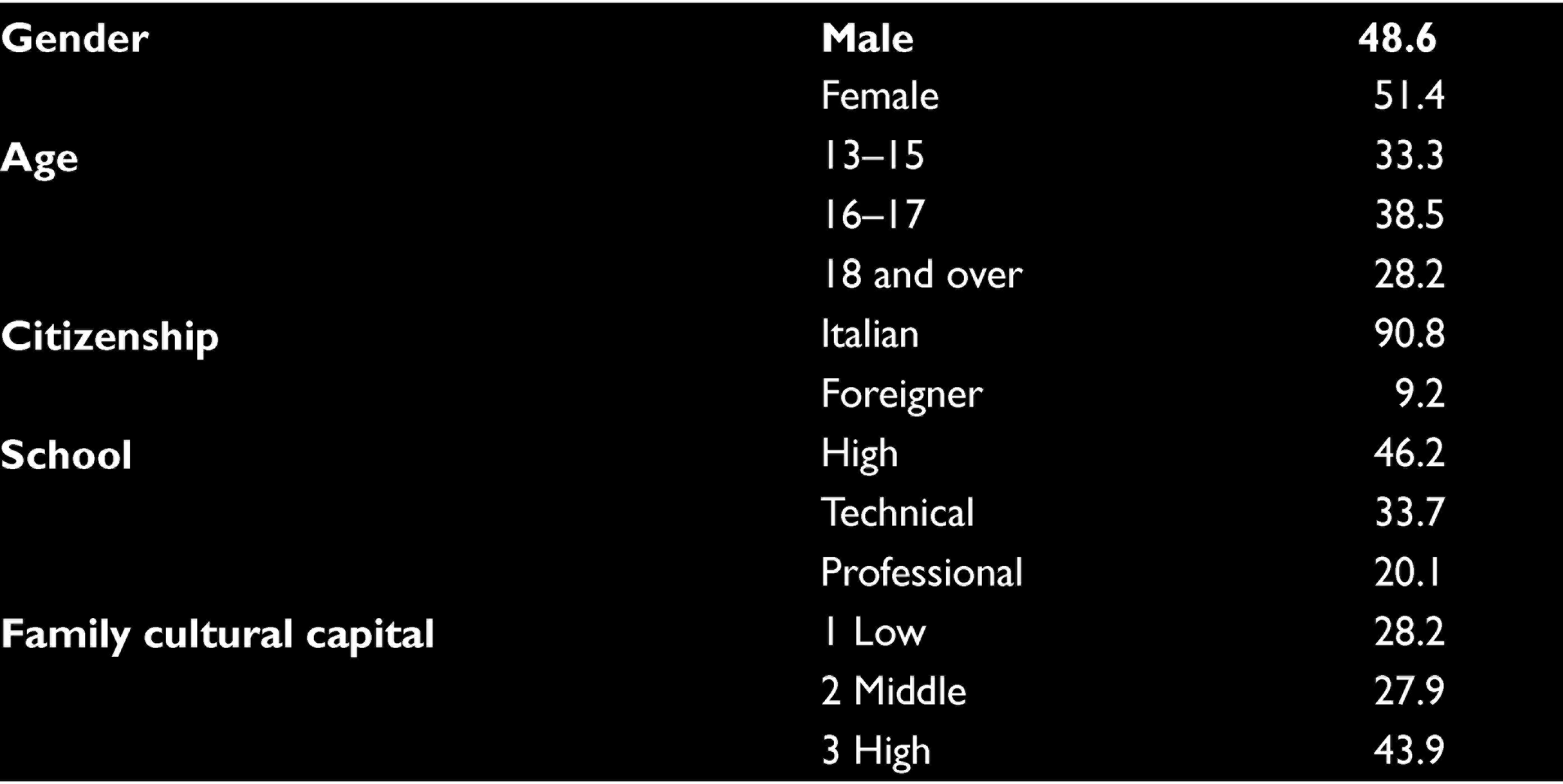
The sample, consistent with the distribution of students by type of school in the Italian population, was made up of 46.2 per cent secondary school students of different types (artistic, linguistic, scientific, classical, human sciences), followed by technical institutes (33.7%) and professionals (20.1%).
The students, mostly women (51.4%), were aged between 13 and 24 years: 71.8 per cent of them were minors; 90.8 per cent were Italian citizens and 9.1 per cent foreign (the majority being Romanians, Filipinos and Albanians) (Table 1).
Individual Traits and Family Background (n = 1175) (%)
Leisure Time: Perceptions and Activities
The prevalent perception of leisure among the respondents was an association with fun (94.1%) and, to a lesser extent, with rest (56.1%). Nevertheless, a large share (29.5%) of students connoted it as a time without conditions (a time when they are not accountable to anyone) and a small percentage (11.4%) attributed to it the negative value of empty time (Table 2).
Leisure Time: Perceptions and Activities (n = 1175) (%)
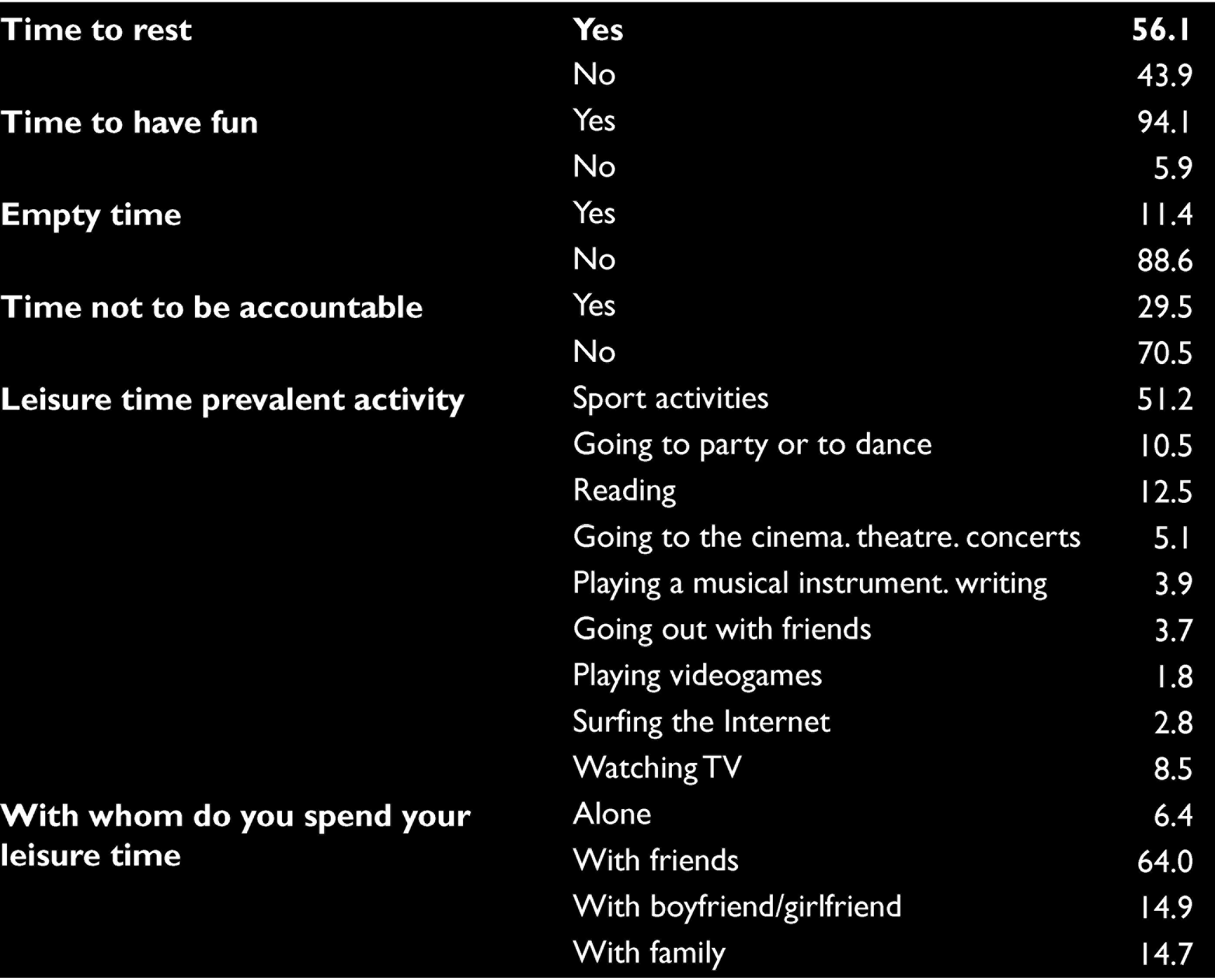
Among the activities pursued by young people, sports practice predominated for most of the respondents (51.2%), followed by reading (books, magazines, comics) (12.5%), and going to parties or discos (10.5%). Only 8.5 per cent of the respondents said they watched TV as a main activity; 5.1 per cent go to the cinema, theatre and concerts, 3.9 per cent dedicate themselves to performative activities (play an instrument or write) and 3.7 per cent go out with friends. Only 2.8 per cent indicated that the Internet, and 1.8 per cent videogames, were their predominant free-time activity. These results were not consistent with the literature, which attributes a predominant role to the use of the Internet, social media and social network sites in young people’s free time. This is probably due to the formulation of the question and the consequent interpretation made of it by the respondents. However, these findings seem to indicate that young people do not perceive these activities as leisure activities, but as an integral part of their everyday lives. In fact, we know that young people consider the Internet and social network sites as a routine in their day-to-day practices (Awan & Gauntlett, 2013) and an extension of their social worlds (Boyd, 2014).
Risk: Perceptions and Experiences
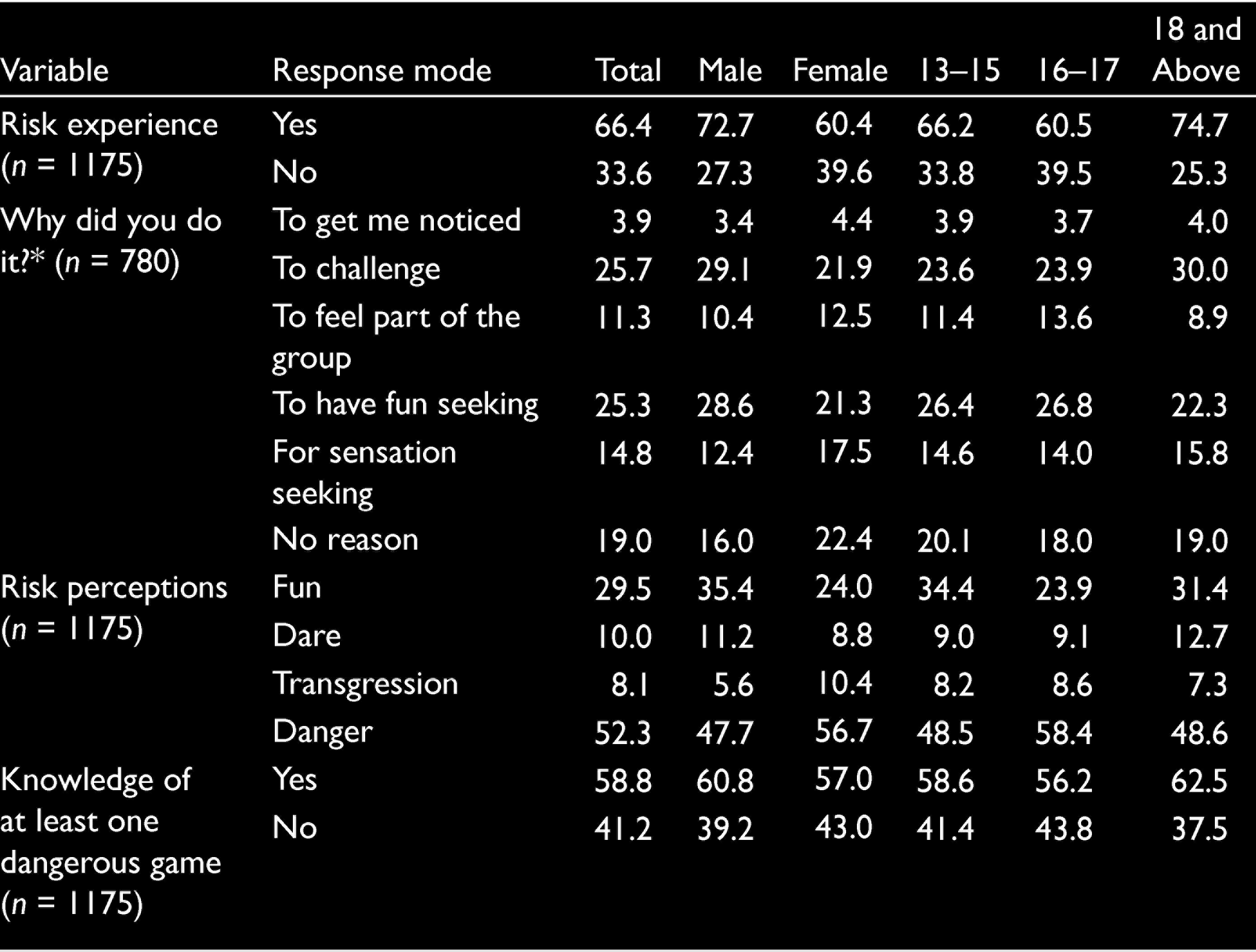
A large percentage of the respondents (66.4%) were involved in the conscious experience of risky situations, although the share is different among the categories of respondents: it is greater among males (72.7%) and young adults (74.7%). Furthermore, there are four different semantic categories offered in the questionnaire, to which the respondents explicitly associated the idea of risk: danger, fun, dare and transgression (Table 3).
Risk: Perception and Experience by Categories of Respondents (%)
*Detected only on those who indicated that they ran the risk.
Risk experience by sex ϰ2 (1, N = 1175) = 19.734, p < 0.001; risk experience by age: ϰ2 (2, N = 1175) = 17.358, p < 0.001; ‘why did you it?’ by sex: ϰ2 (5, N = 780) = 16.748, p < 0.05; ‘why did you it?’ by age: ϰ2 (10, N = 780) = 6.931, p > 0.05; risk perception by sex: ϰ2 (3, N = 1175) = 25.587, p < 0.001; risk perception by age: ϰ2 (6, N = 1175) = 17.142, p < 0.05; knowledge of almost one dangerous games by sex ϰ2 (1, N = 1175) = 1.765, p > 0.05; knowledge of almost one dangerous games by age: ϰ2 (2, N = 1175) = 3.183, p > 0.05.
The association of risk as danger is the most frequent (52.3%), followed by risk as fun (29.5%); less common is the perception of risk as a dare (10.0%) or as a transgressive action (8.1%). In this case there are also differences according to sex and age of the respondents: compared to the overall sample, among girls, the perception of risk as danger and transgression is more widespread (56.7% and 10.4%, respectively), while risk as fun is more diffuse among the youngest (34.4%).
Considering the reasons indicated by the respondents who have experienced risky situations, seeking a challenge is prevalent (25.7%), especially among males (29.1%) and young adults (30.0%), followed by fun-seeking (25.3%). Sensation-seeking (14.8%) is mostly cited by girls (17.5%) and by respondents over the age of 18 (15.8%). On the other hand, the percentage of young people motivated by a sense of belonging to a peer group is lower (11.3%); it is as though the urge to take risks was motivated more by individualistic needs and the necessity to affirm personal identity. Of the respondents, 19.0 per cent gave no motivation for risky behaviour, especially the girls (22.4%) (Table 3).
Even though young people’s concept of risk is broad and varied, it is associated with socially recognized dangers and/or behaviours disapproved by the community, as is evidenced by the analysis of the answers to the open-ended question on the free association of words to ‘risk’.
The Meanings of Risk
The extension of the concept of risk expressed by the respondents can be outlined with greater descriptive effect if we consider the different words evoked by this term used to describe their ‘risky’ experiences, and disregard pre-established semantic categories. 1 Approximately 300 words were freely expressed by the respondents (Figure 1).
If we focus only on the ‘full words’, the most meaningful words, as the word cloud (Figure 1) shows, the most used term is ‘danger’ (139); this clearly expresses the awareness of some respondents about risk. To a lesser extent, and partially in line with the answers given to the pre-categorized question, the following words are indicated: ‘challenge’ (20) ‘transgression’ (19), ‘courage’ (18) and ‘recklessness’ (15). Consistent with these meanings, among the most recurring terms are also ‘fear’, ‘death’ (46) and ‘adrenalin’ (39).
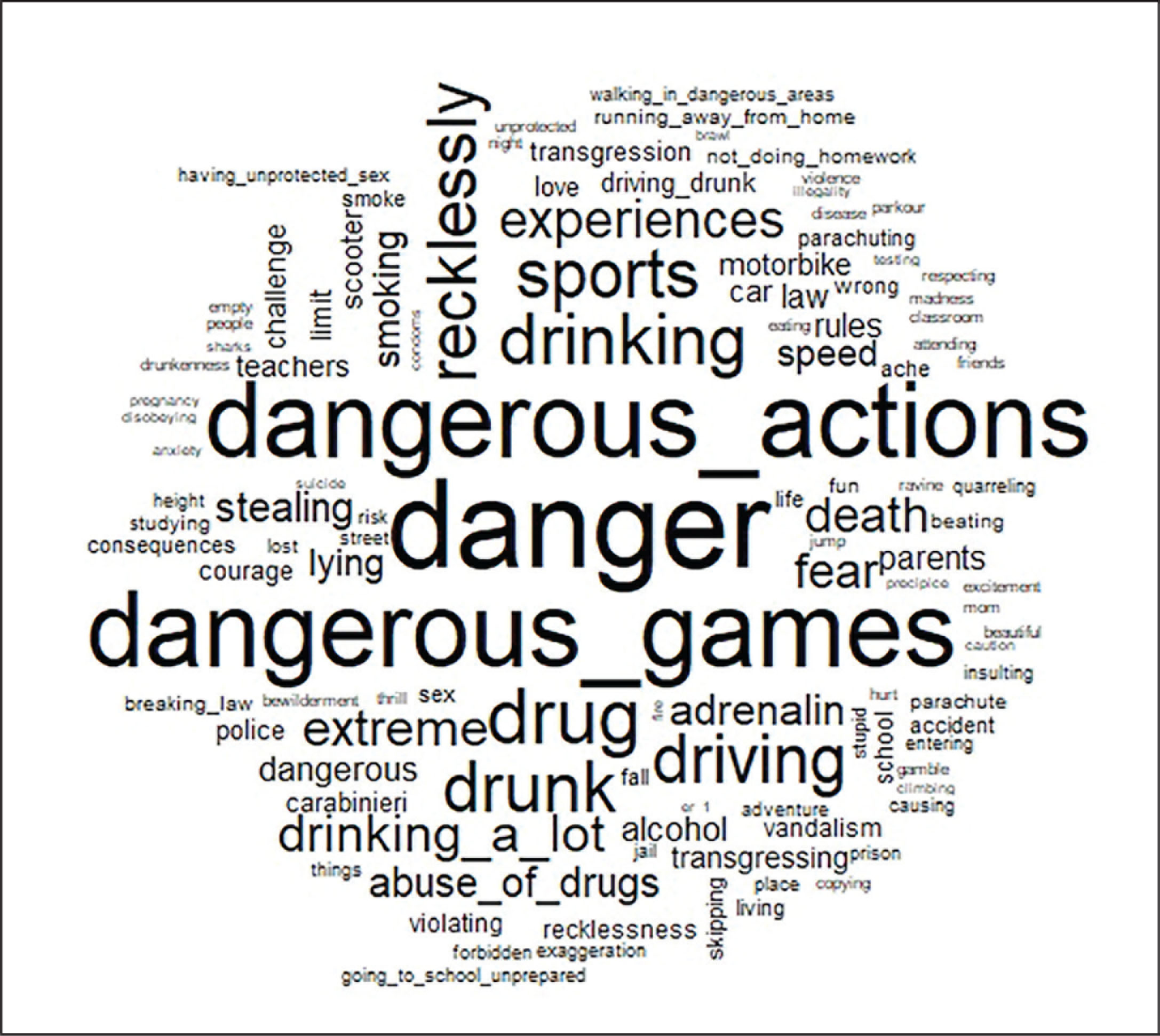
The text segments, repeated in the answers of the respondents, indicate which actions are considered the riskiest by young people: to ‘practise dangerous games’ (117) or ‘dangerous actions’ (117), ‘drinking a lot’ (49) and ‘abuse of drugs’ (36). Less frequently, they report some illegal behaviours (‘driving drunk’ [19], ‘breaking the law’ [10]), or some transgressive behaviour in both the family (‘running away from home’ [10]) and school contexts (‘not doing homework’ [10]; ‘going to school unprepared’ [9]), or their intimate sphere (‘having unprotected sex’ [8]).
The persons most cited by respondents are figures who oppose risky and transgressive behaviour: foremost being ‘parents’ (26) and ‘teachers’ (21), followed by the police (carabinieri and polizia [17]). The most cited places are ‘school’ (15), ‘classroom’ (7), ‘street’ (9), ‘prison’ (8) and ‘jail’ (7).
Consistently, the most used adjectives are ‘drunk’ (73), ‘reckless’ (69), ‘extreme’ (50), ‘dangerous’ (29) and ‘fun’ (11), suggesting ideas of dangerous fun and extreme sports. Furthermore, a number of negatively connoted adjectives which express disapproval and/or regret are indicated, such as ‘wrong’ (13), ‘lost’ (9), ‘forbidden’ (9) and ‘stupid’ (8), although there are also positive adjectives like ‘beautiful’ (6).
In considering some of the characteristics of the respondents, a more complex reading of words relating to risk can be accomplished through a Lexical Correspondences Analysis (LCA) (Lebart & Salem, 1994), applied to the aggregated lexical table, obtained by taking into account the frequencies with which the words/segments of text occur within each respondents’ category, based on gender, age and experience of risk. The input matrix has dimensions L90x11, where 90 are the simple and complex textual forms which are considered, (i.e., all full words/segments with a frequency threshold greater than 5, and 11 are the respondents’ categories (gender = 2 modalities; age = 3 modalities; risk experience = 2 modalities; risk perception = 4 modalities).
There are two most important semantic dimensions we extracted from LCA (which explain the 73.8% of variance): first, a different attitude towards risk among boys compared to girls; and second, between young people who have already had risky experiences and those who have not. These differences are represented by the first semantic dimension (the first factorial axis) that seems to polarize the risk as experience (positive semi-axis) primarily characterizing boys and the risk as perception (negative semi-axis) that typifies the girls.
However, the second semantic dimension (second factorial axis), which integrates the evidence of the first one, shows some differences based on age: minors (14–15) on the negative semi-axis and young adults (18+) on the positive semi-axis.
Therefore, the factorial plan (Figure 2) highlights different meanings of risk based on experience, gender and age of the respondents.
The youngest (13–15), who have not experienced risky behaviours, are characterized by the use of negatively connoted terms (wrong, exaggeration), the desire for adventure, or to test themselves (trying, adrenalin), even with extreme sports (parachute), or smoke (smoke), associated with other words related to the possible consequences (ache, fall, lost) (third quarter of factorial plane, Figure 2).
As age increases, the most characteristic sensations are those associated with the awareness of danger (danger, fear, recklessness) but also with the desire of a dare (courage, challenge). Other terms refer to risky situations, also on the road: use of drugs, alcohol, driving drunk, accident and speed (second quarter, Figure 2).
The experiences of risk expressed by those young people who claimed to have experienced risky behaviours are defined differently, according to age. For the older ones, illegality (abuse of drug, breaking law, reckless driving, jail) mainly characterizes their risky experiences, associated with those actors who oppose them (the Carabinieri, the police). They also reported other transgressive behaviours in the relational and intimate sphere (causing arguments, insulting, drinking a lot, having unprotected sex). It is interesting to note the presence of the adjective beautiful, which seems to give a positive connotation to these behaviours (first quarter, Figure 2).
For the youngest (13–15 years), the expressions used refer to ludic experiences (dangerous games) and transgressive experiences in the family context (run away from home) and at school (skipping school, go to school unprepared, copying in class, not doing homework). Consistently, the opposing actors they indicate are parents and teachers (fourth quarter, Figure 2).
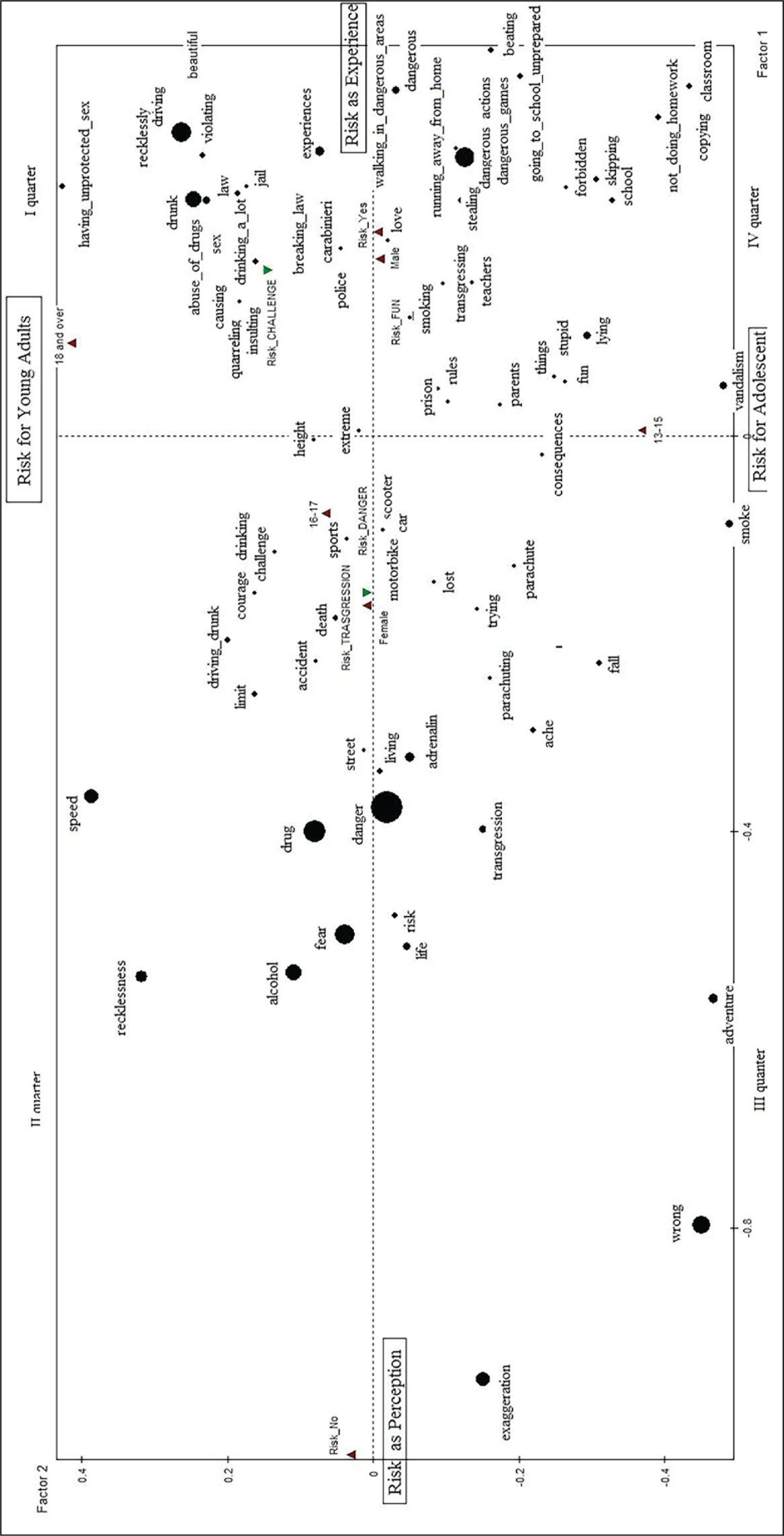
The semantic map of risk, as expressed by the respondents, therefore summarizes a varied range of situations, experiences, fears, sensations, contexts and companions, outlining at the same time some significant, different meanings related to the characteristics of the respondents. These results enrich and confirm those emerging from previous analysis. In this regard, it is interesting to note that the projection of the categories of young people who indicated, in the closed question, risk as danger or transgression are placed on the semi-plane of the respondents who did not have risky experiences, while those who defined the risk as fun and a dare are placed on the semi-plane of those who have experienced such risky behaviours. This result indicates a relationship between different perceptions and risky behaviours, detailed in the next paragraph.
Risk Experience Factors
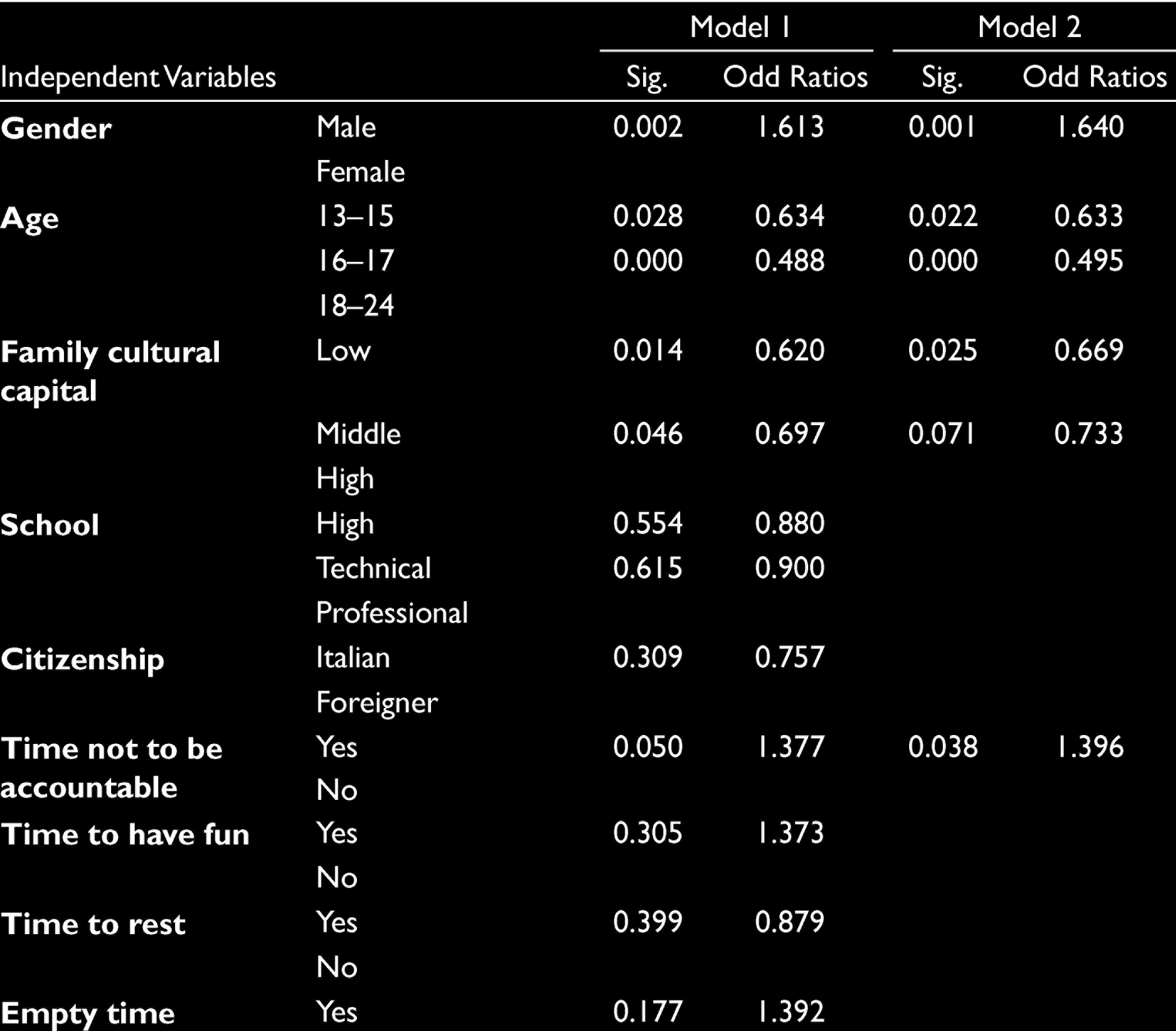
As the dependent variable Risk Experience is dichotomous, logistic regression models have been applied. In the first model all independent variables and their principal effects were considered, while in the second model, non-significant variables were eliminated (school, citizenship, some perceptions of leisure time: time to rest, to have fun, empty time). Table 4 reports the estimated parameters of the two models (odds ratios and significance) that identify those aspects that influence risk experience, assuming other conditions remaining unchanged. To that end, the less risky behaviours and attitudes were taken as reference categories, 2 to highlight the factors that increase the risk propensity.
Logistic Models: Factors Affecting the Risk Behaviour–Odds Ratios
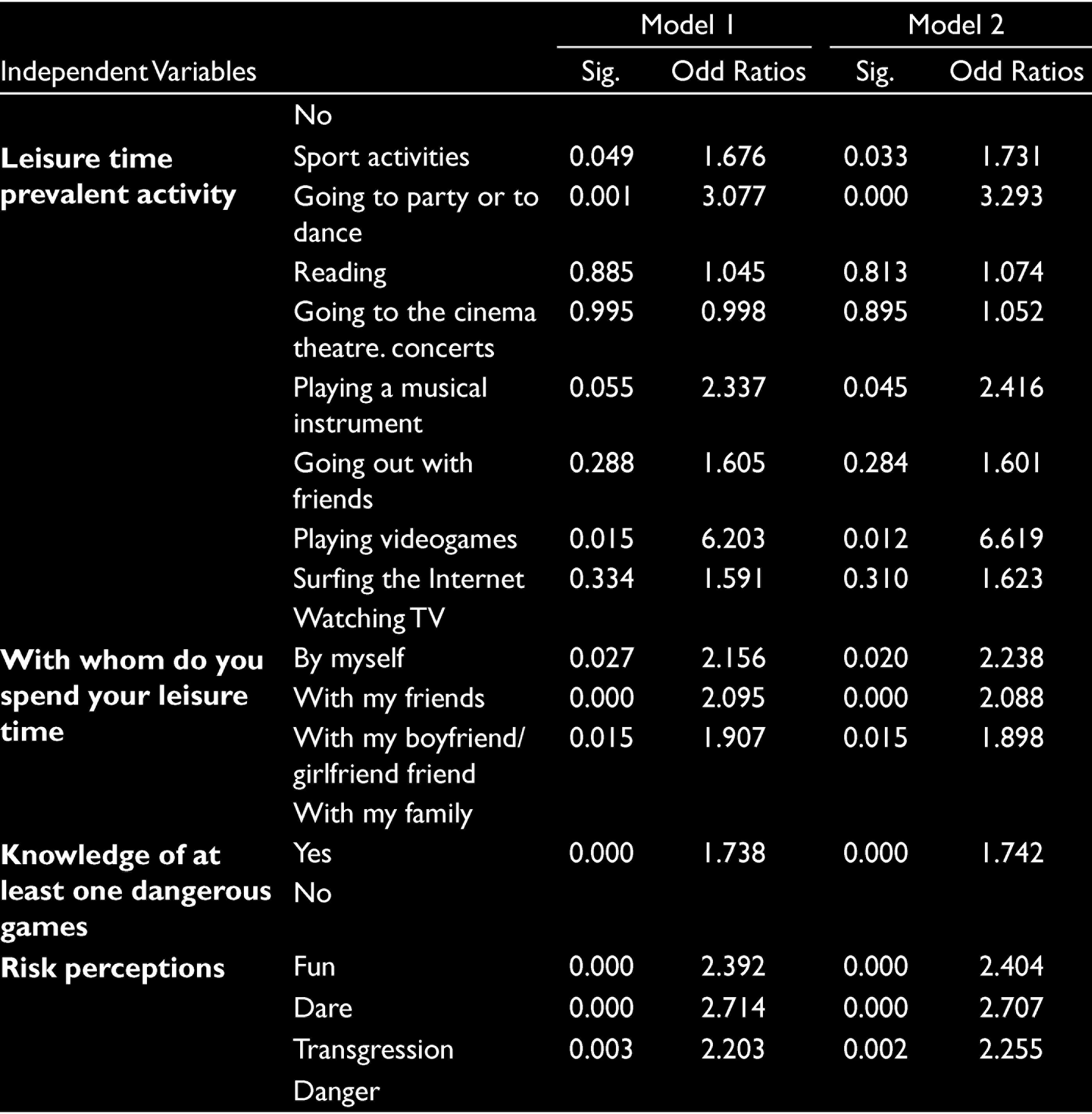
Note: Dependent variable: Risk experience; reference category: “No”.
Model 1: AIC = 1171.475; –2LL = 1115.475; ϰ2 = 158.143; df = 27. sig. = 0.000. Pearson ϰ2 = 930.169; df = 879; sig. = 0.113; classification accuracy = 69.7%.
Model 2: AIC = 1011.884; –2LL = 967.884; ϰ2 = 154.250; df = 21; sig. = 0.000. Pearson ϰ2 = 723.936; df = 679; sig. = 0.113; classification accuracy = 69.5%.
If we only consider the second model, which correctly classifies 69.5 per cent of respondents, our analysis of the odds ratios highlights which categories of each variable have a greater or lesser risk propensity and a significant effect on the dependent variable.
In particular:
Sociodemographic characteristics have significant effects on risky behaviours, as shown by odds ratios which increase with age and gender. Those aged 18–24 show an increased propensity for risk experience compared to young people aged 13–15 and 16–17, with lower propensities of 37 per cent and 50 per cent, respectively (OR = 0.633 and 0.495). The model also shows that boys have a greater propensity (about 70%) to engage in risky conduct than girls, while citizenship is not significant. These results confirm Hypotheses 1a and 1b; Risk experience results are fostered by contextual variables such as high family cultural capital. Compared to young people from a family with high cultural capital, those from families with low and medium cultural capital have lower propensities of 33.1 per cent and 26.7 per cent (OR= 0.669 and 0.733). These results confirm Hypothesis 2. With regard to prevalent free-time activities, compared to young people who watch TV, those who play videogames have a higher propensity to put into practice a risky behaviour by 6.62 times, those who mainly go to parties and discos by 3.29 times, those who carry out performing activities by 2.4 times, and those who play sports by 1.72 times. These results, which confirm Hypothesis 3b but not 3a, highlight the relevance of videogames in favouring the propensity to engage in risky behaviours. However, given the small number of respondents in the category, the relevance of this should be considered with caution and deserves further investigation.
3
With respect to the role of family and peers in the socialization of risky behaviour, the results show that, compared to those who spend their free time mainly with their family, young people who spend time with their friends (OR = 2.088) or with a boyfriend/girlfriend (OR = 1.898) have a higher propensity to engage in risky behaviour. However, those with the greatest propensity are young people who spend their leisure time alone (OR = 2.238). These results, while confirming Hypothesis 4, also point out the relevance of loneliness in engaging in risky behaviour. The perception of leisure time as non-accountable time produces another variable that has a significant effect on risky behaviour (OR = 1.396), while the other perceptions considered in the analysis are not significant. These results confirm Hypothesis 5b but not 5a and 5c and Another relevant result concerns the different perceptions of risk: compared to those who perceive risk as a danger, those who perceive it as a courageous challenge, as fun, or as a transgression have a greater propensity to engage in risky behaviour, of about 2.71, 2.26 and 2.40 times, respectively. Acquaintance with dangerous games affects significantly this propensity (OR = 1.742). These results confirm Hypotheses 6a and 6b.
Discussion and Conclusion
To overcome some of the limitations of literature on youth risk-taking (i.e., scant attention to the sensemaking of risk, to the positive contribution of risk on self and identity, to the association of risk and pleasure, to the positive meaning of being a risk-taker in the adult world, etc.), we built a risk-taking predisposition model which took into consideration attitudes, social relationships and behaviours, together with sociodemographic factors. Our aims were to shift attention from individualized, positivistic, regulatory, moral-/panic-infused understandings of risk to young people’s perceptions and their socially contextualized everyday practices.
A survey with closed and open-ended questions (to allow young respondents to freely express themselves) was conducted on a sample of 1,175 secondary school students living in Rome. The goal was to identify the main hermeneutical dimensions that characterize risk-related youth attitudes and behaviour.
The findings of a statistical textual analysis and a logistic regression show different understandings of risk according to gender, age, familial cultural capital, leisure activity and experience. The data analysis, carried out by applying textual statistical methods, reveals that the respondents perceive the concept of risk as fluid and elusive, mainly associated with danger, and to a lesser extent with fun and challenge. This outcome seems to reflect the modern risk paradox, which combines the necessity to prevent or reduce risks with the idea that some goals are achievable only by taking some risks (Zinn, 2019), and it is also partially consistent with the perception of risk as a positive challenge among young Italians, compared to their European peers (Carbone, 2000).
Even if in a minority, the ‘positive’ perceptions of risk deserve greater attention, given the possible impact on the dangerous behaviours young people consciously engage in while underestimating their danger. On this topic, the data highlight a contiguity between risky behaviours and risk perception as fun or as a dare, shown from both textual analysis and logistic regression results. This evidence is consistent with research showing that those who had already indulged in risky behaviour were more likely to repeat it (Jack, 1989) and underestimate the possible consequences (Bunn, 2015; Zinn, 2019). However, the ways in which perceptions of risk are graded in the experiences of the young are heterogeneous; the semantic map of risk expressed by young people shows a varied range of experiences, fears, sensations and contexts. This variety is possibly determined by the characteristics of the respondents: gender and age are key variables; family context and free-time habits also play a role. According to research hypotheses, logistic regression allows us to specify the relations between risky behaviours and multiple factors, confirming some of the hypotheses and highlighting other empirical evidence. The results show a greater propensity to risk among the respondents who are male young adults with high familial cultural capital, and among those who see risk as a dare, who spend free time playing videogames or going to parties and discos, alone or with friends. These findings confirm much of the previous empirical evidence, but also reveal some new and unexpected results. In particular, vis-à-vis gender, our outcomes are consistent with those studies which found differences in sensitivity to risks and perceived vulnerability among women compared to men (Coffey et al., 2018). In fact, female respondents revealed a lower risk inclination probably due to their greater concern about danger.
With respect to age, young adults (18+) show a higher propensity for risk experience compared to younger people, with a partial confirmation of evidence from previous research that saw in adolescents over 16 years a greater inclination to take risks (Zuckerman, 1979).
In discussing familial cultural capital, our findings are consistent with evidence showing that those with the greatest socio-economic advantage are less likely to see the world as dangerous than others (Finucane et al., 2000), because of power differentials and through sharing the vision of risk as a means to be successful in life (Buzzi et al., 2007).
As in previous research (Lee & Vandell, 2015), we found a higher propensity to engage in risky behaviour by those spending their time with friends, compared to those who spend their free time mainly in the family. However, we also found that those with the greatest propensity to engage in risky behaviour are young people who spend their leisure time alone. These results point out the relevance of loneliness in engaging in risky behaviour and highlight the role of individual character traits (Beccaria, 2004), as well as that of relationships: both the presence and absence of peers appear as a predisposing factor in the search for risk. Moreover, the view of free time as non-accountable time takes precedence over seeing free time as empty time (Mingo & Montecolle, 2014; Zuckerman, 1979), perhaps indicating that risk-taking is motivated by the need to affirm one’s own identity.
As to prevalent free-time activities, our outcomes reveal that the young people more exposed to risk are those who play videogames as their predominant leisure activity, go to parties and discos, dedicate themselves to the performing arts, or play sports. These results are in part expected, in part unexpected. The association between exposure to risk and sharing the activity with a peer group in a context where alcohol and drugs might be used, for example, parties and discos, is expected and consistent with previous research (Beccaria et al., 2019; Lee & Vandell, 2015). The association between videogames and risk is unexpected and absent in most of the literature, perhaps because of the small number of respondents who indicated videogames as their main free-time activity. Although there are numerous studies on the negative effects of video games (Möller & Krahé, 2009), these effects are not unanimously supported by empirical evidence (Johnson et al., 2013; Lemmens et al., 2011). We can therefore only speculate that the relationship between risk and videogames is linked to the gamer’s habit of confronting challenges posed by the game, and to a perception of risk as a positive challenge and/or fun, within the game experience. The same could well apply to sport. Those who regularly play sports are probably used to the challenge inherent in sport: the search to improve and overcome limits and the physical risks that sport entails.
We also found that Web use has no influence on the risk experience, distancing our findings from Bandura’s concept of observational learning (Escobar-Chaves et al., 2005). However, we cannot exclude the possibility that the Internet is more central in the daily lives of young people than was stated by respondents, and that it is not perceived as a specific activity but more as a routine (Awan & Gauntlett, 2013) and as an extension of their social worlds (Boyd, 2014). In any event, the results about both videogames and the Internet should be considered with caution and they both merit further investigation.
On the other hand, predictably, those who perceive risk as a dare, as fun or as a transgression have a greater propensity to engage in risky behaviour compared to those who perceive risk as a danger. The reason lies in the positive view of risk and in the reduced fear of dangerous or unexpected consequences (Zinn, 2019).
In general, we found that there is the propensity to risk-taking in those who are actively engaged in leisure activities: going to parties and discos, carrying out performing activities, playing sports, and playing videogames (though this last case should be verified). Thus, voluntary exposure to risk seems to be influenced by the (social and cultural) activism of the respondents. In fact, all the indicated activities include an active role and some relational dimension and a possible socialization into a culture of risk as a positive challenge (Buzzi et al., 2007; Lupton & Tulloch, 2002). At the same time, there is an association between risk-taking and loneliness. An explanation could lie in the choice by those young people who are more alone and less integrated in networks of relationships to expose themselves to risk with a self-harming or a sensation-seeking intent, perhaps as a consequence of their passivity and marginality. In both cases, the social and relational dimension is necessary to understand the complex nature of youth risk-taking: as a facilitator of exposure to risk as fun, a dare, transgression; as a way to escape loneliness, boredom, marginality, or perhaps to attract the attention of others.
Although some significant results are reported, this study is subject to several limitations which provide a basis for future research. The quantitative analysis allows us to grasp only some aspects of the relationship between young people and risk: the questionnaire is a rigid investigative tool, and open-ended questions can only partially compensate for this rigidity. Moreover, the question about the main free-time activity does not allow us to adequately grasp those activities involving use of the Internet and social media which are among the most important in the lives of today’s young people and that require further specific investigation.
Another constraint is the possible influence of the order of the questions: although the section on dangerous games came after the section on risk, given that it was a self-administered questionnaire, the influence of the theme of dangerous games on the general perception of risk cannot be excluded. Furthermore, the respondents were gathered from a restricted context, the city of Rome, as a non-representative sample of the total population of young Italians.
For this reason, it would be appropriate to continue studies on the topic by taking into account patterns of leisure time use as a combination of activities, and not simply considering the main one mentioned by respondents. Moreover, it would be interesting to examine further the relationship between risk and pleasure by using a larger sample and people from different countries, thereby giving more space, through qualitative research techniques, to an investigation of the reasons underlying voluntary risk-taking.
Footnotes
Declaration of Conflicting Interests
The authors declared no potential conflicts of interest with respect to the research, authorship and/or publication of this article.
Funding
The authors received 7500 euros of funding for the research from La Sapienza University. The funder had no role in study design, data collection and analysis, decision to publish, or preparation of the manuscript.