




Abstract
The asymmetric double cantilever beam (ADCB) test was used to measure the fracture energy of a honeycomb/carbon-epoxy sandwich panel under mode I loading. A data reduction scheme based on equivalent crack length theory was developed for this case. The experimental Resistance-curves were obtained using exclusively data ensuing from the load-displacement curves avoiding the usual and non-rigorous crack length monitoring during the test. Furthermore, a mode partitioning methodology lying on cohesive zone modelling was adopted, aiming to estimate the fracture energy under mode I loading from the total fracture energy under mixed-mode I+II ensuing from the ADCB test. Numerical simulations of the ADCB test considering cohesive zone modelling were performed for the sake of validation of the followed procedure.
Introduction
Sandwich composite panels are being increasingly used in structures requiring high specific stiffness and strength at minimum weight. Typical applications address automotive, marine, aeronautical, aerospace and wind industries, owing to economic benefits inherent to the structural weight reduction leading to lowering energy consumption and greenhouse effects.1–3 The employment of sandwich panels in these structures requires great responsibility, which makes crucial the analysis of damage development. In this context, fracture characterisation of the skin/core bonding system acquires special relevancy due to common debonding events, which can affect dramatically the performance of the sandwich panels. In fact, debonding introduces stress singularities that can lead to its propagation under low stress levels and disturbs the skin/core load transfer mechanism.
Several works have been dedicated to mode I dominant debonding fracture of sandwich panels considering different experimental setups.4–7 The most common test methods are based on the asymmetric double cantilever beam (ADCB) specimen, on the tilted sandwich debond (TSD) specimen and on the single cantilever beam (SCB) sandwich specimen. The ADCB test was used by Avilès et al. 4 for debond characterisation of sandwiches. They analysed two methods: in the first one, the ADCB specimen arms were assumed as fixed at the crack tip and, in the other one, displacements at the crack extremity were allowed considering an elastic foundation. It was verified that the former approach underestimates the specimen compliance, while in the elastic foundation based method the foundation effects from the core increases the specimen compliance relatively to the built-in case. The Authors proposed the employment of an effective crack length based approach in order to include the foundation effects in the beam analysis. Prasad et al. 8 studied debonding and crack kinking in sandwich ADCB specimens considering compliant cross-linked polyvinyl chloride (PVC) foams and a stiff thermoplastic polymethacrylimide (PMI) foam joined to aluminium facesheets. They verified that for compliant core materials, the relative amount of mode II strain energy release rate at longer crack lengths becomes significant due to the asymmetries in geometry and bi-material interface. The Authors concluded that the energy release rate for the kinked crack tip increases with the compliance of the core. In order to minimise the crack-kinking phenomenon, Li and Carlsson 5 adopted the TSD test specimen configuration, which consists of an ADCB specimen with a very stiff facesheet at the bottom and a crack at the upper facesheet/core interface. The objective of this test method is to have facesheet/core debonding instead of crack kinking into the core. Cantwell and Davies 7 proposed the SCB, in which the specimen is bonded to a linear guidance system allowing horizontal translation of the clamping grip when tensile loading is applied to the upper facesheet. They concluded that this test is valid for characterisation of the skin-core adhesion in composite sandwich structures. However, this test requires the bonding of the specimen to the special test fixture increasing the time and complexity of testing.
In the presented review, it has been realised that the ADCB test is the simplest to perform regarding fracture characterisation of sandwich materials debonding. One of the major difficulties related with the ADCB test concerns the existence of geometric asymmetry of the sandwich fracture specimen, which is responsible for mixed-mode I+II loading instead of the intended pure mode I loading. Therefore, during experimental campaigns addressing fracture characterisation of sandwich material debonding, it is crucial to determine the fracture toughness and associate it to the corresponding mode-mixity.
The objective of this work is to perform fracture characterisation under mode I loading of the adhesively bonded connection between the skin and honeycomb in a sandwich panel. In this context, ADCB tests were performed. A data reduction scheme based on equivalent crack concept was developed in order to obtain the Resistance-curve without measuring the in-situ crack length throughout the test. This task is imprecise and can lead to relevant errors on the toughness determination. The ADCB test induces a mixed-mode I+II loading with predominant mode I. A suitable partition mode strategy based on finite element analysis involving cohesive zone modelling was adopted, aiming to estimate the fracture energy under pure mode I loading. Numerical analyses were performed targeting to validate the employed methodologies.
Experimental work
Elastic properties of carbon-epoxy. 9

The core was constituted by NOMEX® Honeycomb (A1–5–64 supplied by I. MA.TEC) whose unit cell is illustrated in Figure 1. The elastic properties of the core were computed using the formulation developed by Malek and Gibson
10
considering the cell dimensions presented in Figure 1. This approach requires the knowledge of the density and elastic constants of the NOMEX®/phenolic material that constitutes the honeycomb, which are shown in Table 2.
11
Unit cell definition for the hexagonal NOMEX®/phenolic material. Geometrical parameters: l = h = 2.7329 mm, t = 0.0895 mm and θ = 30°. Density and elastic properties of the NOMEX®/phenolic material.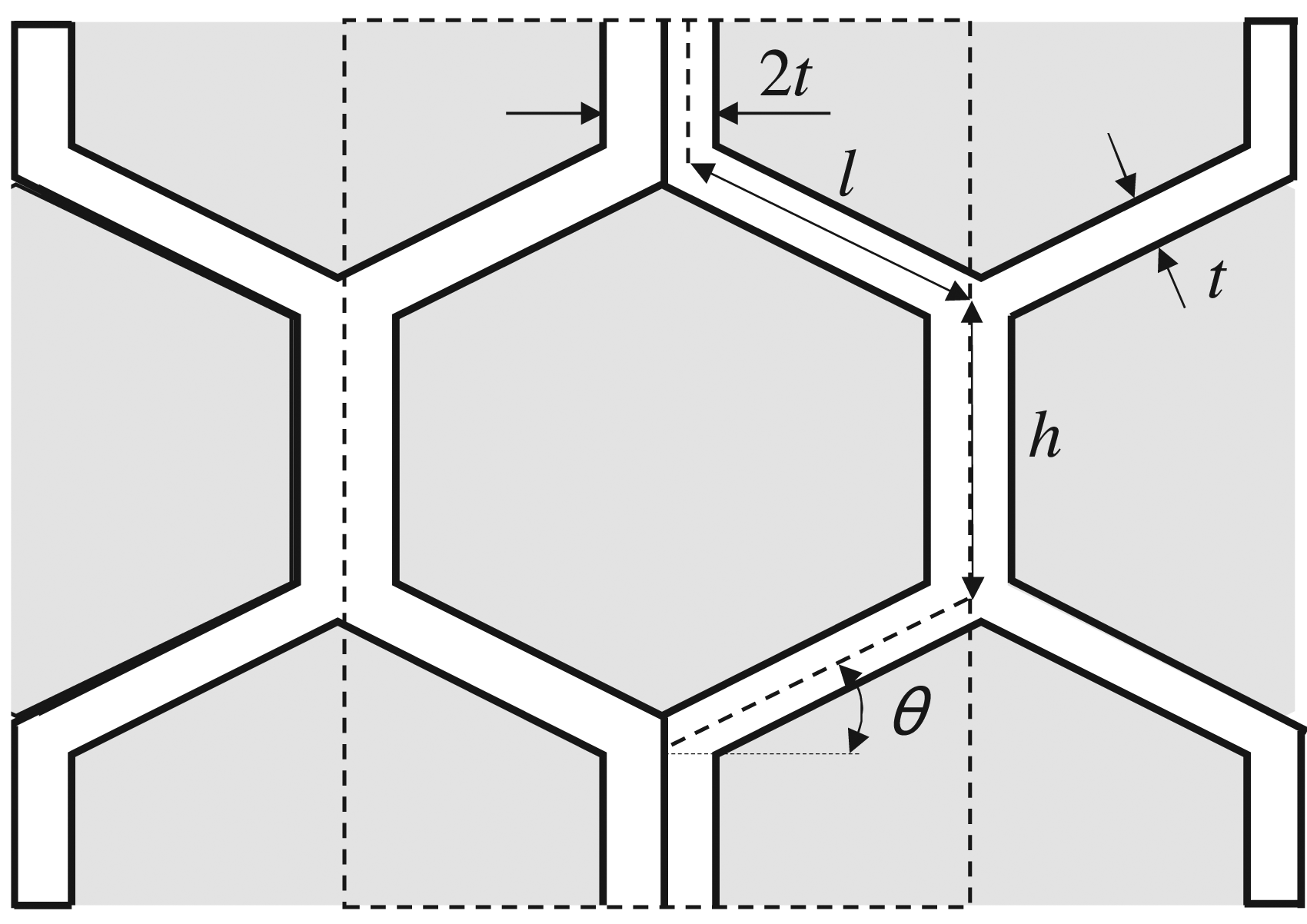

Elastic properties of the NOMEX® Honeycomb.

The adhesive used to bond the CFRP skins to the NOMEX® honeycomb core was the ARALDITE® 2015–1 from Huntsman (E = 1850 MPa and ν = 0.3), which is a structural epoxy adhesive with moderate ductility. The surfaces of the CFRP skins were sandpapered aiming to remove the glossy surface. Afterwards, both the CFRP skins and the NOMEX® honeycomb were cleaned and degreased with isopropyl alcohol intending to improve the adhesion between the two materials. To guarantee a bond line thickness of 0.3 mm calibrated steel spacers were placed at the plate edges. For the pre-crack, a thin TEFLON® film was used and placed at pre-defined region with the selected length. The system-assembly was placed under heavy steel plates in order to apply pressure (0.5 MPa), and cured during 48 h at room temperature. After removal from the press, the panels were left at room temperature for 1 week before machining to assure complete curing of the adhesive. Specimens with a nominal width (B) of 30 mm were cut from the sandwich panel using a diamond-coated disc and subsequently sandpapered to remove the irregular cutting edges. Finally, in the location of the pre-crack, metallic piano hinges were bonded to allow clamping of the specimens to the testing machine fixtures. The schematic representation of the ADCB honeycomb sandwich specimens is presented in Figure 2. Schematic representation of the ADCB test (dimensions in mm): L = 230, a0 = 50, hc = 10, hs = 1.5 and width B = 30.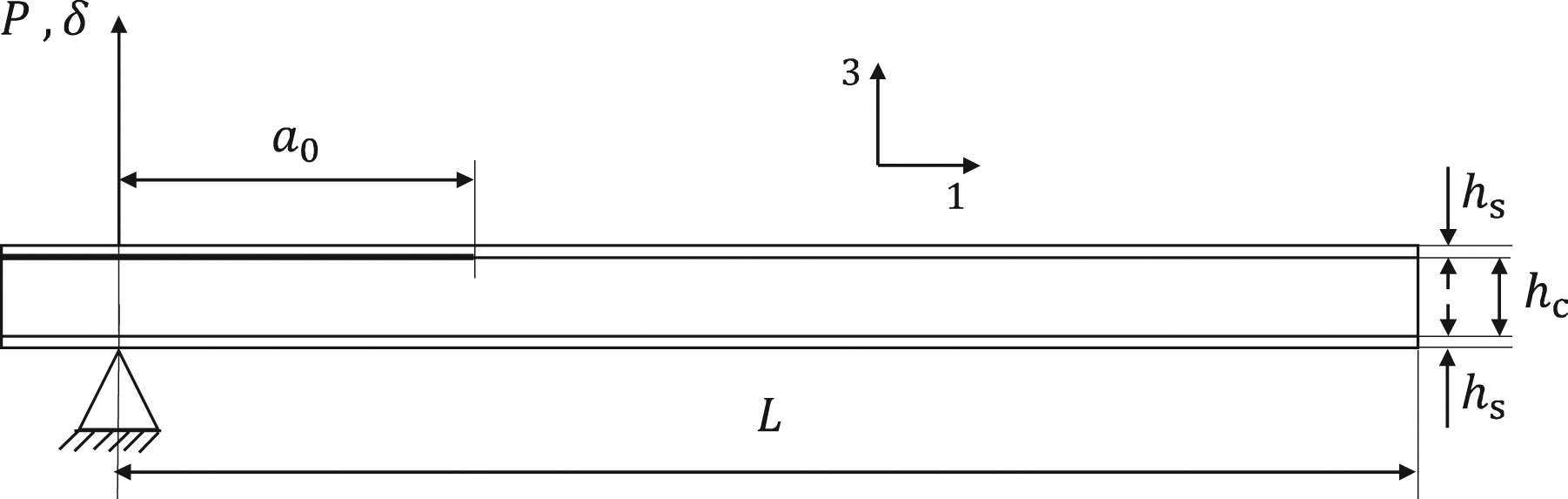
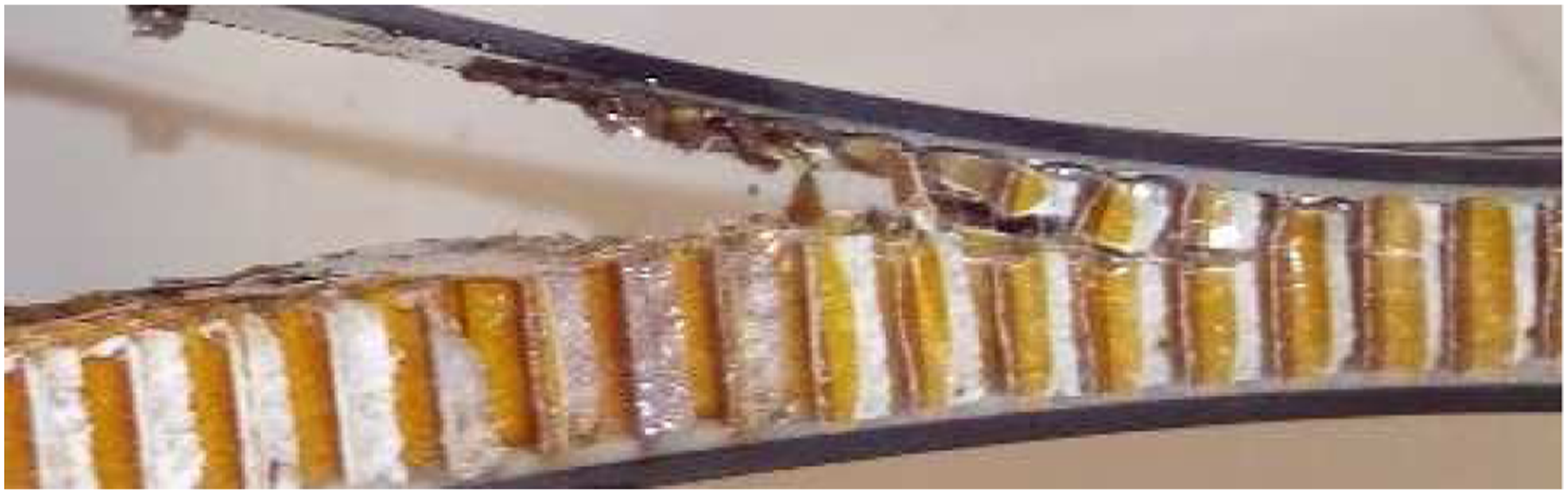
The ADCB tests (Figure 3) were performed under displacement control with a rate of 1 mm/min using a universal testing machine (INSTRON® 5900R) with a load cell of 1 kN. The load–displacement (P-δ) curves were registered for post-processing analysis. It was observed that crack growth occurred inside the core. Initially, and for a certain crack extent, propagation takes place close to the interface core/adhesive, after which crack kinking takes place leading to its migration to the interior of the honeycomb core. Since the main goal was to characterise the bonding between the skins and the core, only the initial part of the crack extension was considered for fracture energy evaluation. The ADCB test.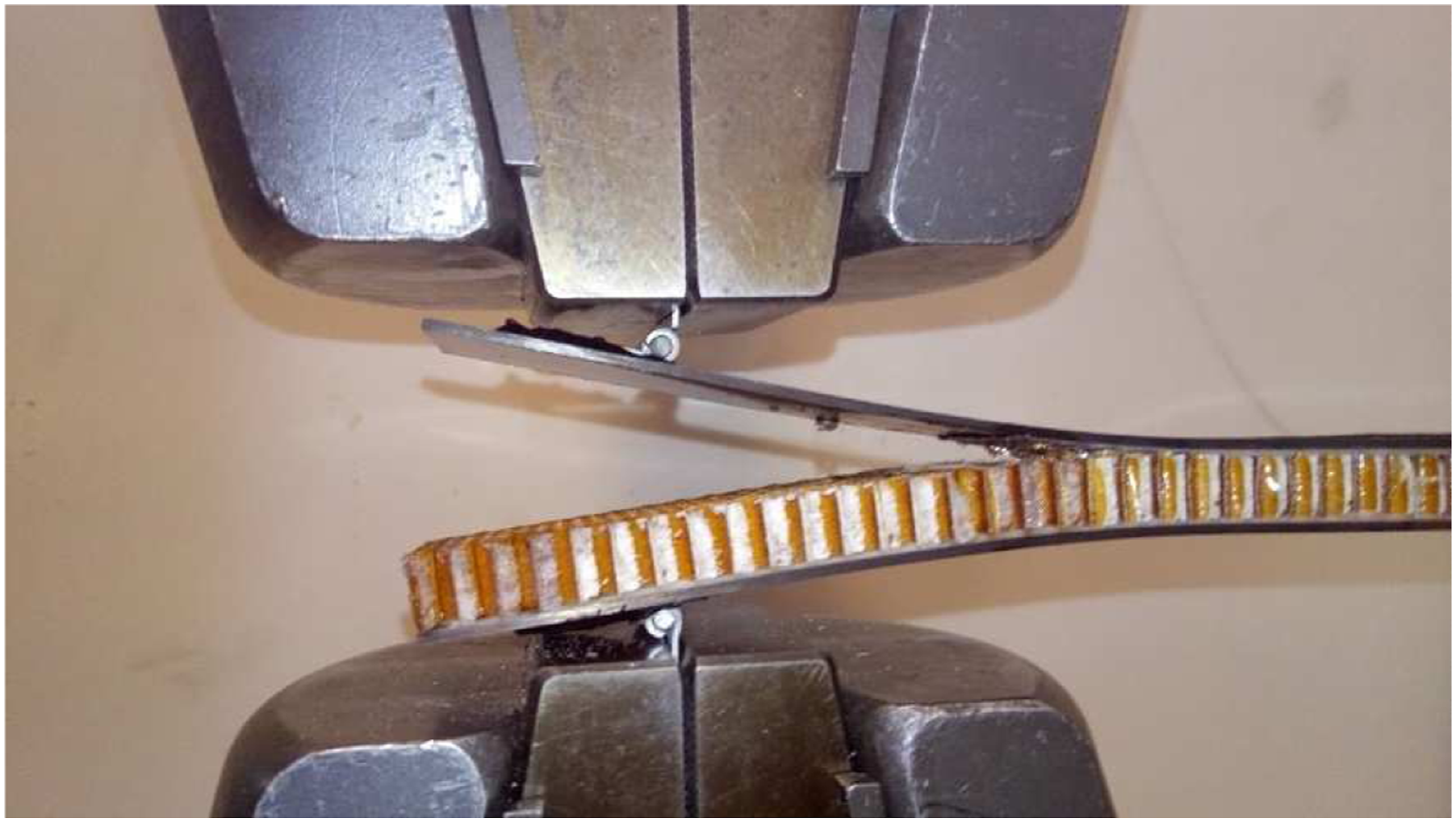
Data reduction scheme
A sandwich ADCB specimen is used to characterise fracture of the skin/core interface under predominant mode I loading conditions. In fact, the absence of geometrical and material symmetries induce mixed-mode I+II loading instead of a pure mode I. A data reduction scheme based on specimen compliance and equivalent crack concept (compliance based beam method – CBBM) was developed according to sandwich beam theory, which considers bending and shear effects. This approach is relevant owing to typical errors induced by inaccurate crack length measurement in the course of the test. In fact, Farshidi et al. 12 reported differences in the range of 3–4 mm on the synchronised measurements of the crack length taken from both sides of the specimen.
The strain energy of sandwich ADCB specimen accounting for bending and shear effects is given by Identification of geometrical parameters on the ADCB specimen. Regarding the lower specimen arm, the strain energy equation yields.




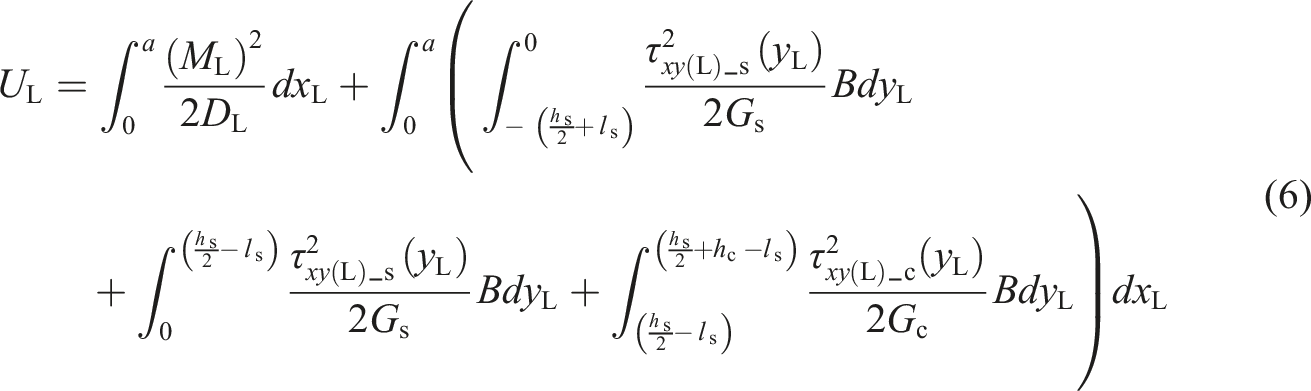
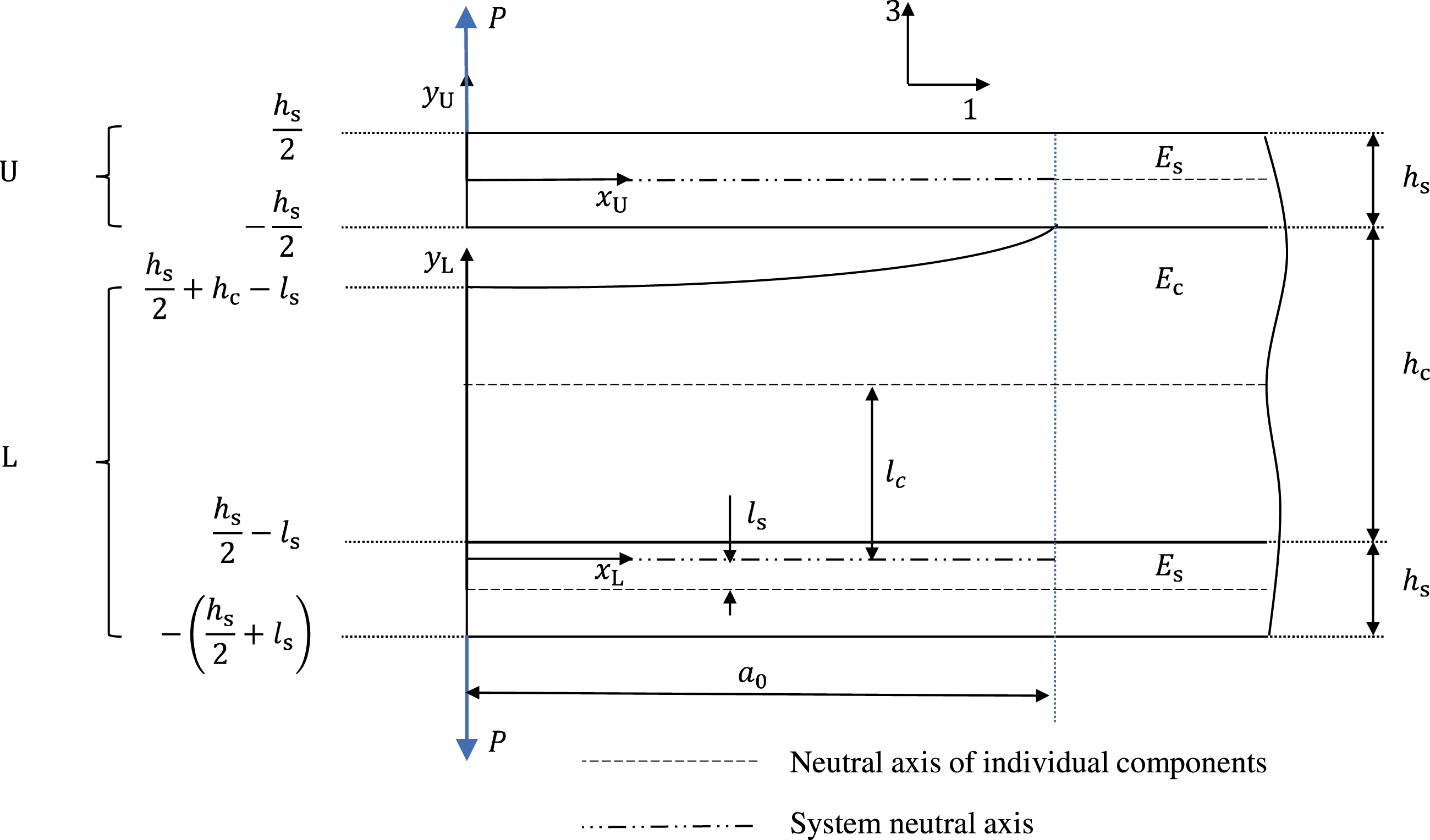
The bending stiffness DL of the lower skin and core is given by


The evolution of the shear stresses along the thickness is obtained using equation (4). After some algebraic manipulations, the expressions of the stress distributions along lower arm thickness are obtained. For 
and for 
and finally for 
Substituting Eqs. (10)–(12) in equation (6) and adding up with equation (2) gives rise to the total strain energy (Eq. 1). Applying the Castigliano theorem (δ = dU/dP) yields,

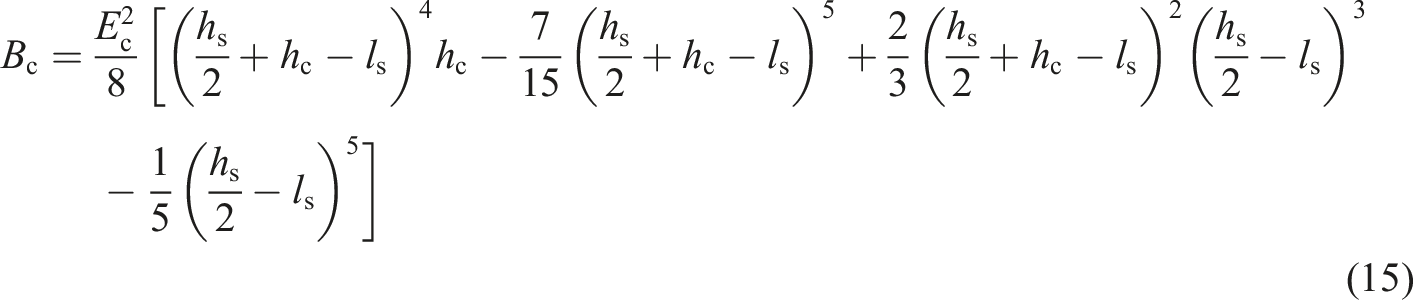
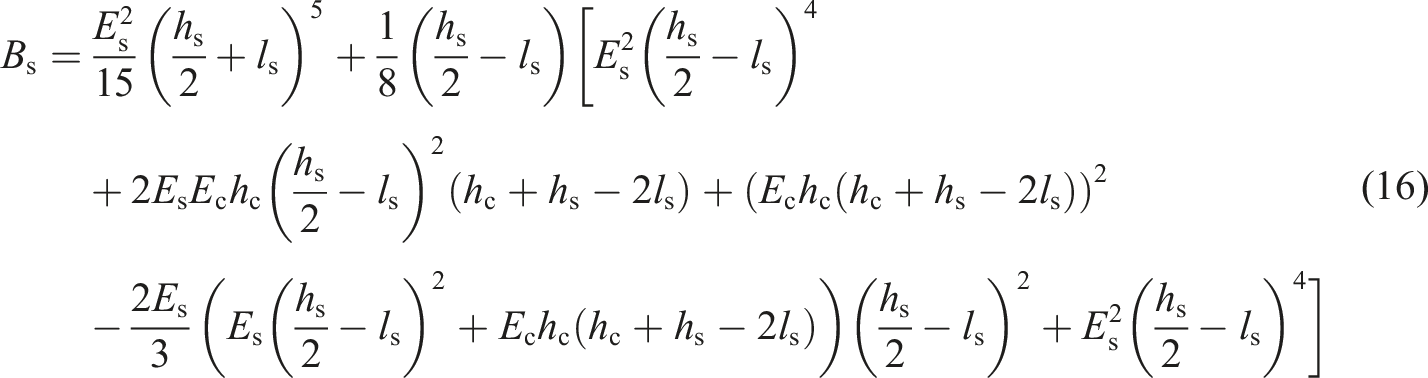
The displacement given by equation (13) allows to define the compliance of the sandwich DCB specimen, C=δ/P. This equation can be used to estimate an equivalent crack length (ae) as a function of current specimen compliance continuously registered in the course of the test. This strategy avoids the inaccurate procedure of crack length measuring during the test. The solution of the resulting cubic equation



Using the Irwin-Kies relation,

This procedure provides the entire Resistance-curve (R-curve), i.e. GT = f (ae), enabling the identification of the critical fracture energy in the plateau value that follows the initial rising trend of this curve. The presented methodology has the advantage of using an equivalent crack length obtained from the current specimen compliance instead of lying on the monitoring of the crack length during the test, which is imprecise and can originate erroneous estimations of the total fracture energy.
The presented formulation including shear effects can be considered a general approach regarding fracture characterisation of honeycomb sandwich panels. In the application envisaged in this work, it was verified that the R-curves ensuing from analyses, with and without shear effects, give rise to identical results.
Mode partition method
The value of fracture energy given by equation (22) does not correspond to pure mode I fracture. In fact, mixed-mode I+II loading arises in the ADCB test owing to geometry and material asymmetries. In order to estimate a value for pure mode I fracture energy (GIc), a mode partitioning procedure involving numerical simulation with cohesive zone analysis is employed.
The method consists of a numerical simulation of the ADCB specimen (Figure 5(a)) considering cohesive zone modelling (CZM) with the linear softening law (Figure 6) implemented in the ABAQUS® software by means of the user subroutine tool. The main purpose is to estimate the mixed-mode ratio resulting from the adopted specimen geometry and materials involved. The previously developed CZM [14] is based on quadratic stress criterion for damage onset simulation a) Numerical model for the ADCB tests; b) Detail of the mesh close to the crack tip. The linear softening cohesive law under mixed-mode I+II loading (subscript m): δom – damage onset relative displacement; δum – ultimate relative displacement; σum – local strength.



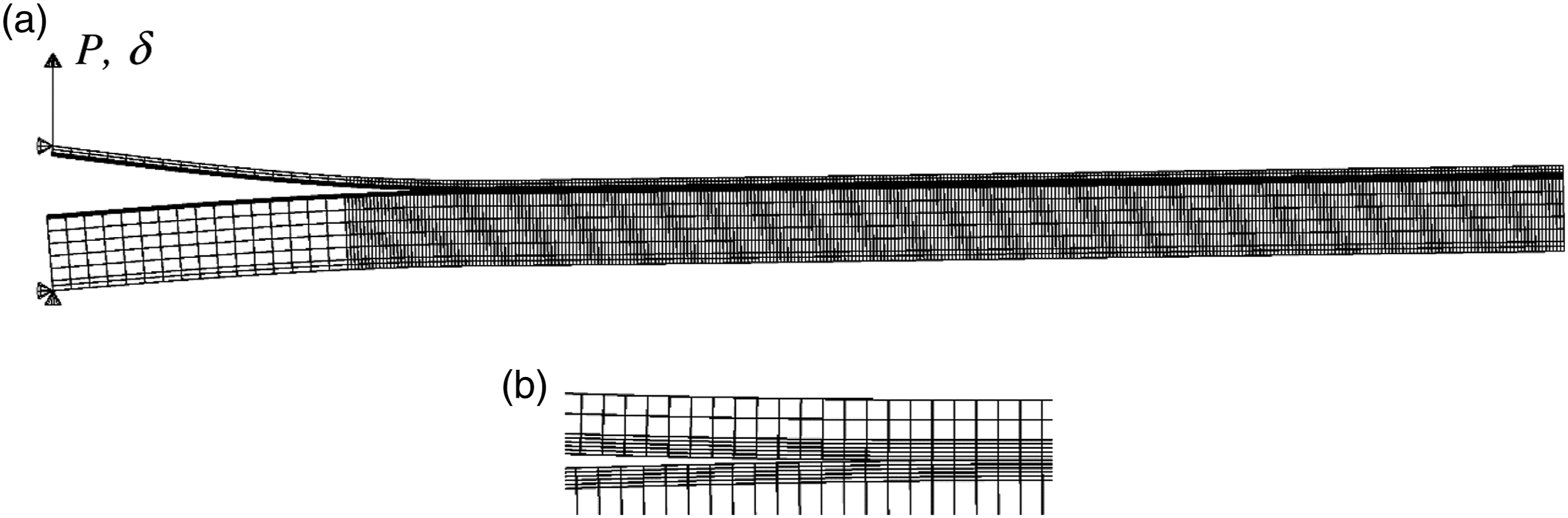
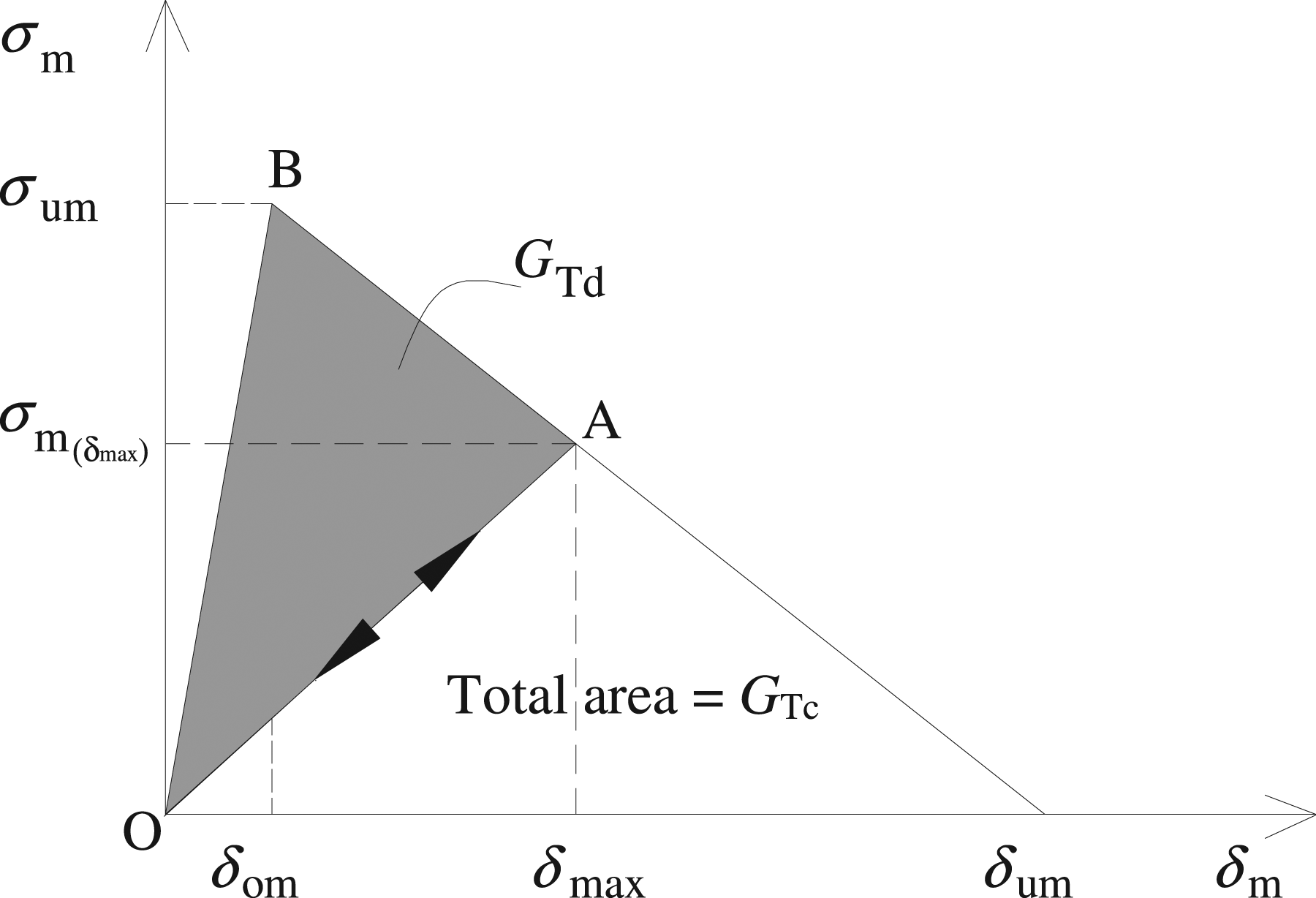
Two arbitrary values of fracture energies under pure modes (GIc = 0.5 N/mm and GIIc = 1.0 N/mm) were assumed and input in the numerical model. The elastic properties of the skin and of the core are presented in Tables 1 and 3. The used mesh is more refined close to the crack tip (Figure 5(b)). Plane strain analysis was performed considering 6764 8-node solid elements and 331 6-node compatible cohesive elements with null thickness.
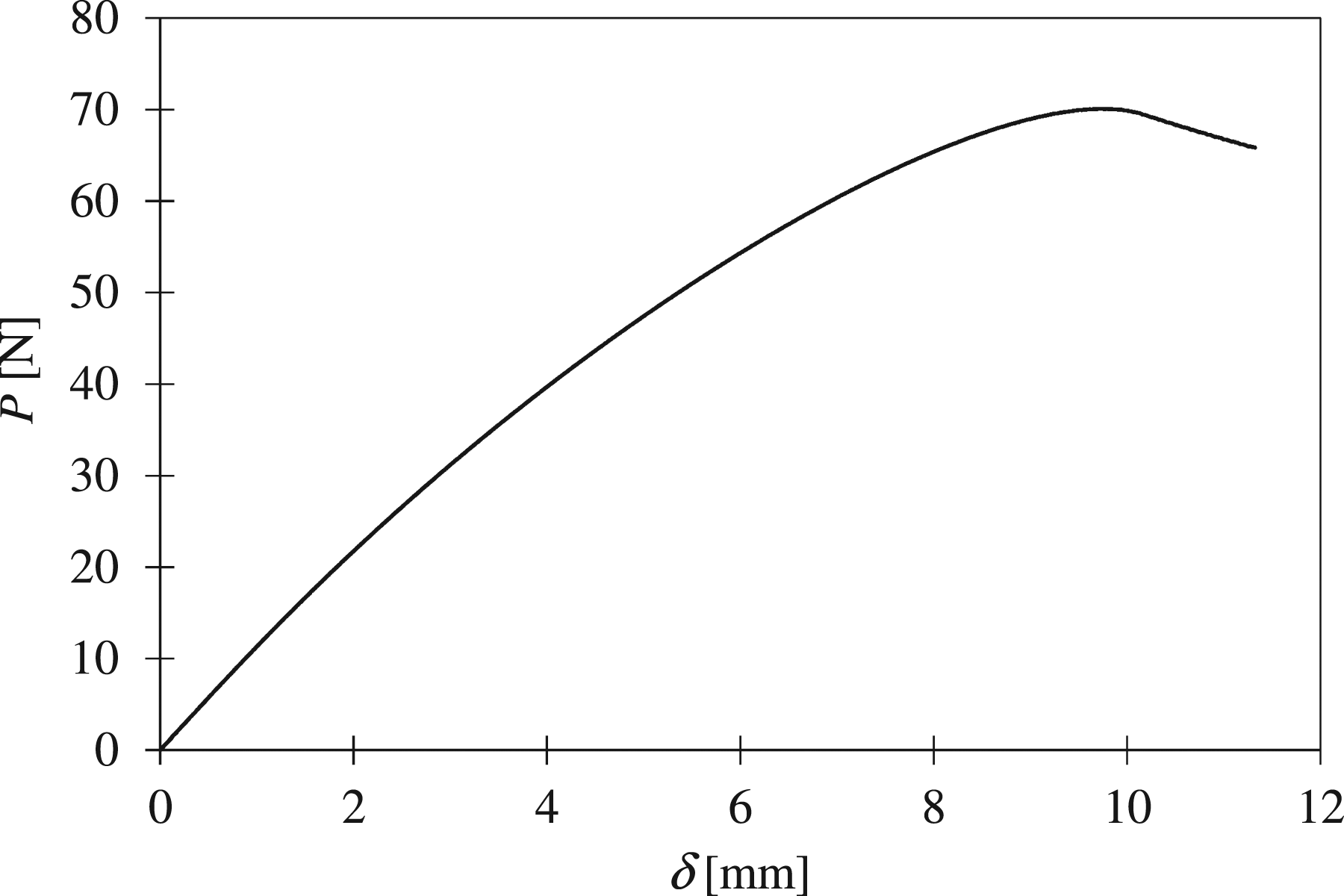
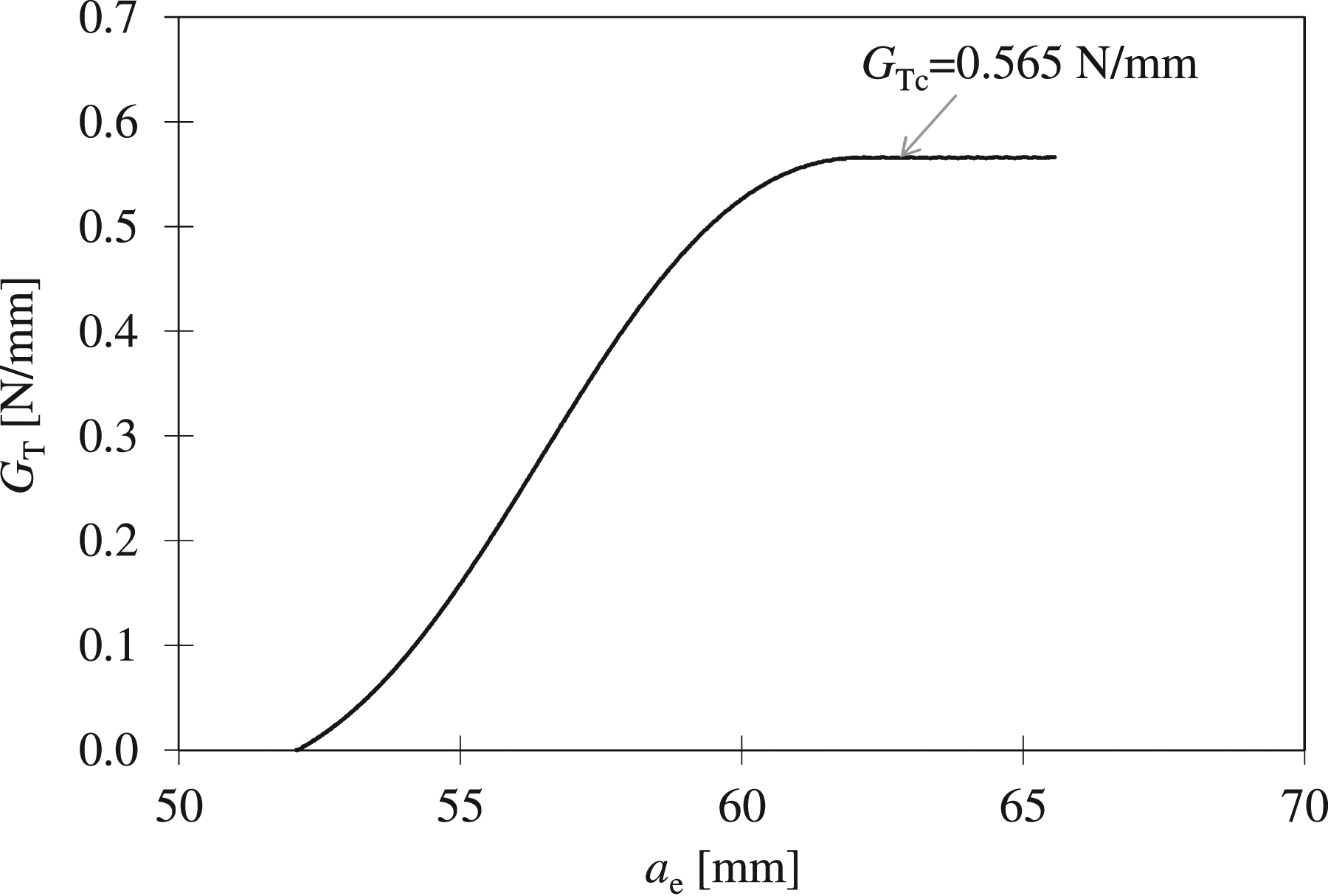
Figure 7 shows the numerical load-displacement (P-δ) curve. The R-curve portraying the evolution of the total strain energy release rate (GT) as a function of the equivalent crack length (ae) is obtained applying the CBBM presented in previous section. The fracture energy is obtained from the plateau value of the R-curve (Figure 8), which points to GTc = 0.565 N/mm. Numerical (P-δ) curve of the ADCB test. Numerical Restiance-curve of the ADCB test. The linear energetic criterion (Eq. (25)) can be rewritten as.
Varying incrementally GI (between 0 and GIc) enables to obtain the corresponding evolution of GII following the linear energetic criterion. This relationship provides the evolution of the mode ratio β = GII/GT as a function of GTc. From Figure 9 it can be observed that a bi-univocal relation exists between these two parameters, meaning that the mode ratio can be identified from the knowledge of GTc. It can be concluded that a mode ratio β = 0.23 is obtained. As discussed in,
15
the mode ratio obtained does not depend on the fracture criterion considered, which makes this partition method a valid and straightforward procedure. Evolution of the mode ratio (GII/GT) as a function of total fracture energy (GTc) in the ADCB test.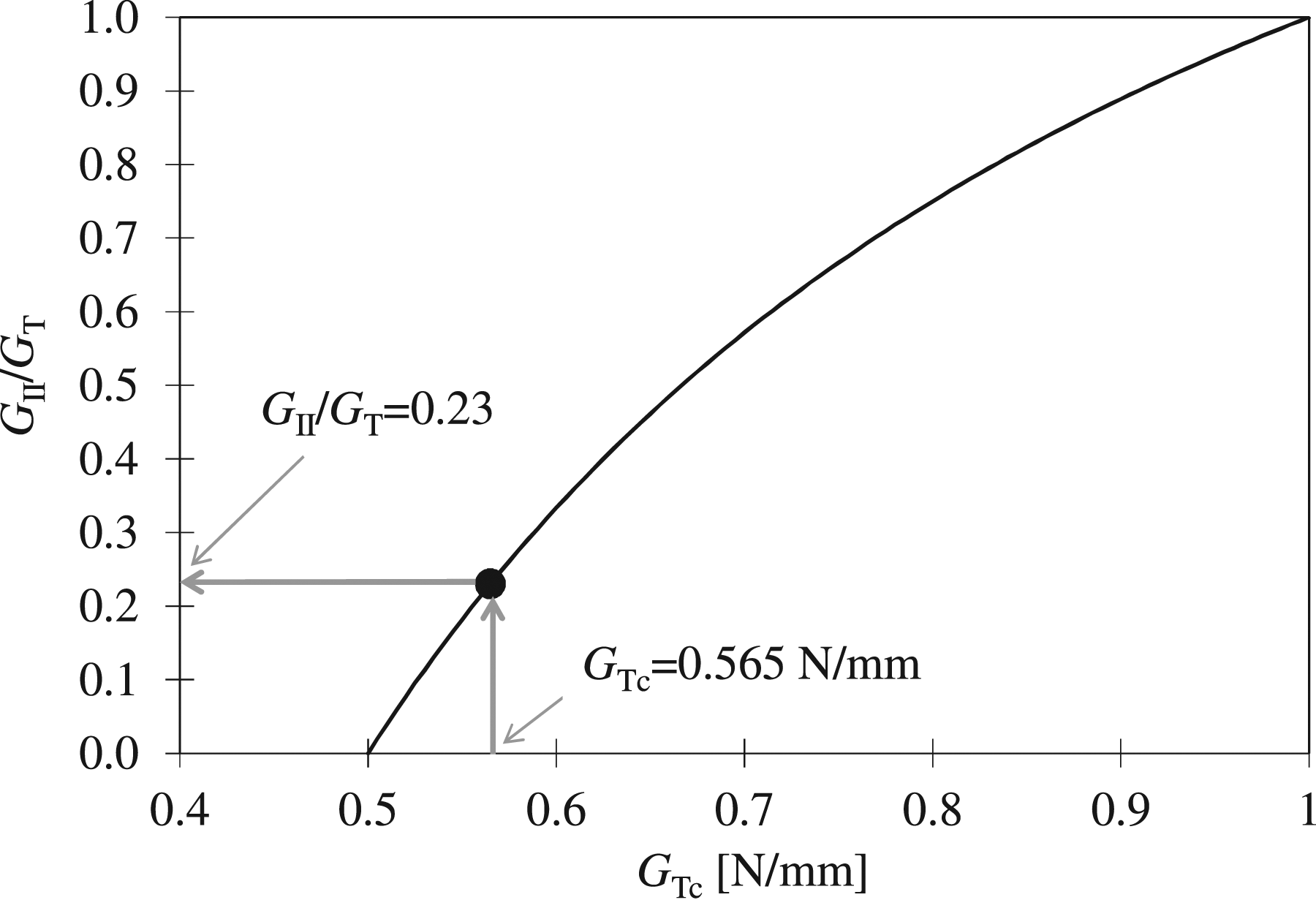
Results and discussion
The P-δ curves of the four valid tests are presented in Figure 10. Overall, consistent results have been obtained regarding the initial stiffness and peak load. The post-peak behaviour reveals an undulation trend representative of crack-kinking leading to its path migration from the adhesive layer towards the core during propagation (Figure 11). Load-displacement curves of the ADCB test. Crack path migration towards the core.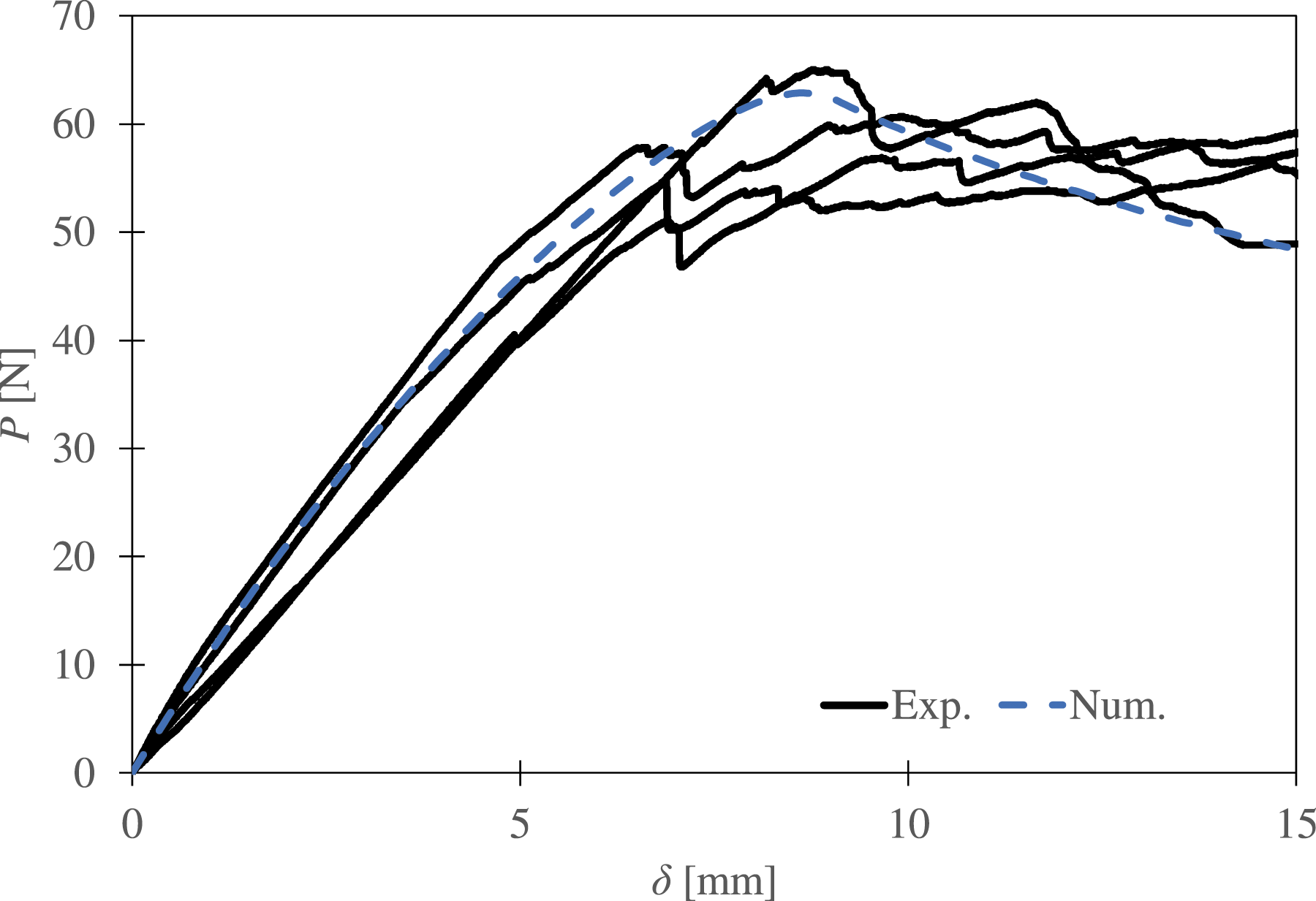
The corresponding R-curves have been obtained using the CBBM presented in section 3 and are plotted in Figure 12. These curves are characterised by an initial rising part mimicking fracture process zone development followed by a nearly plateau region representing self-similar crack growth inside the core. In three of the four tests, it was observed that fracture energy associated to initial crack starting advance is lower than at its propagation, which is explained by the crack path described above. Anyway, all the tested specimens reveal consistent fracture energy during crack propagation. This is visible in the equivalent crack length extent 60 mm ≤ ae ≤ 65 mm, where the plateau of the R-curves are in the range of GTc = 0.4–0.5 N/mm, leading to establish that GTc = 0.45 N/mm for this set of specimens. This value at propagation was assumed in the numerical analysis using CZM instead of the initiation one. One aspect that supports this statement lies on the fact that the natural crack growth in these sandwiches occurs typically inside the core close to the skin/core interface. The initial short crack growth inside the adhesive is dictated by the position of the pre-crack and it is not representative of the typical fracture at these components. R-curves of the ADCB test.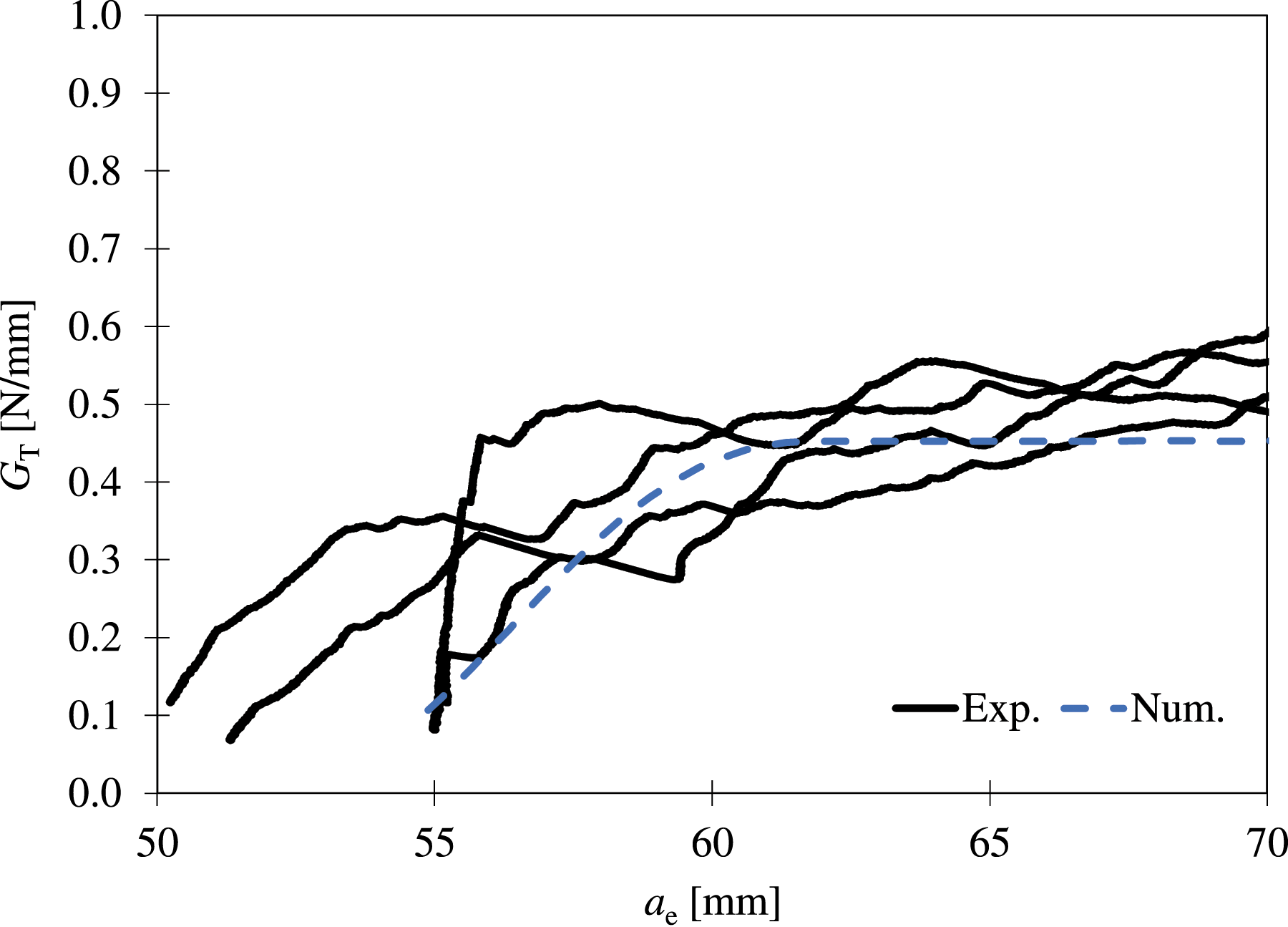
Considering that β = 0.23 (Figure 9) is obtained for this specimen geometry and sandwich constitutive materials, and that GIIc = 1.0 N/mm determined in another work,
16
it is possible to estimate GIc using equation (25) rewritten as,
The value of pure mode I fracture energy estimated following this procedure points to GIc = 0.39 N/mm for this set of specimens.
A numerical analysis using cohesive zone modelling was also performed in order to validate the followed procedure. Elastic material properties listed in Tables 1 and 3 were used. In addition, the pure mode fracture energies (GIc = 0.39 N/mm and GIIc = 1.0 N/mm) were input in the numerical model and the linear energetic criterion (Eq. (25)) was used. Since crack propagation mostly occurred in the core, the local strengths were assumed to be the ones reporting to the core material, which were taken from the manufacturer technical datasheet (
Conclusions
The main objective of this work is to determine the fracture energy of a honeycomb/carbon-epoxy sandwich panel under mode I loading using the asymmetric double cantilever beam (ADCB) test. Experimental fracture tests were conducted and the load-displacement curves were registered. A data reduction method lying on the equivalent crack length approach was developed targeting the determination of the Resistance-curves without measuring the real crack length in the course of the fracture tests. A mode partitioning strategy based on cohesive zone modelling was implemented, aiming to identify the mode-mixity intrinsic to this specimen geometry and materials. This procedure allows estimating the fracture energy under mode I loading from the ADCB test, which, in fact, is a mixed-mode I+II fracture test. In order to validate the developed methodology, a numerical analysis involving cohesive zone modelling was accomplished. The estimated fracture energies under mode I and mode II loading as well as the linear energetic criterion were used as input in the numerical model. The resulting numerical load-displacement and Resistance-curves were compared with the experimental ones. Generally, the numerical curves are representative of the observed experimental trends, which validate the proposed approach as a valid and simple strategy to determine the fracture energy in sandwich panels.
Footnotes
Acknowledgements
The authors acknowledge the “Fundo Europeu de Desenvolvimento Regional (FEDER)” for the financial support through the project “Soluções avançadas para materiais de impacto, reparação de aeroestruturas em compósito e sua monitorização” (MOSHO) NORTE-01–0247-FEDER-033796.
Declaration of conflicting interests
The author(s) declared no potential conflicts of interest with respect to the research, authorship, and/or publication of this article.
Funding
The author(s) disclosed receipt of the following financial support for the research, authorship, and/or publication of this article: This work was supported by the Fundo Europeu de Desenvolvimento Regional (FEDER) (NORTE-01-0247-FEDER-033796).
