




Abstract
Buckling and crushing behavior of foam-core hybrid composite sandwich columns under edgewise compressive load is dealt in this study. Composite laminates with different stacking sequence configurations made of glass and Dyneema-woven fabrics and AL 2024-T3 sheets were used in combination of polyvinyl chloride foam core to manufacture the specimens. Effects of face sheet thickness and stacking sequence configuration, slenderness ratio, boundary conditions, and sandwich reinforcement with through-thickness resin pins on the buckling and crushing behavior of the specimens were investigated. The results revealed that using the resin pins changes the unstable Euler buckling mode to a more stable progressive end-crushing and significantly increases the buckling load, specific buckling load, and energy absorption capability, which are highly favorable. Also, the results showed that in the specimens with fiber metal laminates, the major failure modes are face sheet-core debonding and face sheet delamination. However, based on the results, specimen with hybrid face sheets made from Dyneema fabrics and aluminum plates has the highest buckling load as well as the highest specific buckling load. Also, a specific fixture was designed to laterally clamp the sandwich column which causes a reduction in the probability of specimen end-crushing and significantly increases the buckling load.
Introduction
Composite materials and structures have attracted huge attention in the last few decades due to their high mechanical properties, light weight, low manufacturing cost, and high reliability [1–5]. Sandwich composite structures have many applications in aerospace, automotive, and building industries. Among all the main features of sandwich structures are high specific bending stiffness, high strength, and high buckling resistance. The face sheets of the sandwich panels can be made of metal, composite, and fiber metal laminates (FML). The core of the sandwich panels is supposed to be less stiff and less resistant compared to the face sheets. The low density closed-cell polyvinyl chloride (PVC) foam is a favorite choice as the core material compared to honeycomb, balsa, aluminum foam, and lattice core [6–9]. Luong et al. [10] have conducted an extensive literature survey on the PVC foam. Many researchers have investigated PVC foam-filled sandwich structures under several loading conditions such as flatwise [10], bending [11], and indentation [12] loading.
FMLs have been used in a wide variety of applications ranging from aerospace and automotive industries to biomedical industry, due to their high mechanical performance. In comparison to pristine metal sheets, FMLs provide more functionalities such as high specific bending strength, fatigue, impact and corrosion resistance, fire resistance, weight savings, acoustical absorption, vibration transmissibility, and damping characteristics [13,14]. Taghizadeh et al. [15] have investigated the quasi-static penetration process of cylindrical indenters with different nose shapes into multilayered composite and hybrid laminates made of glass and Dyneema fabrics and aluminum face sheets. Effects of indenter geometry, stacking sequence, and boundary conditions on the load carrying capacity, energy absorption capacity, and fracture modes were investigated in their work.
Taheri-Behrooz and Moghaddam [16] have investigated the linear and nonlinear behavior of composite materials. They also have studied the nonlinear buckling of glass/epoxy composite cylinders using experimental and numerical methods [17–18]. The buckling and post buckling of FMLs under axial compression has been investigated by many researchers [19–21].
Many researches have also been conducted on the mechanical behavior of composite sandwich columns under edgewise loading conditions. Face sheet-core debonding can lead to a significant reduction in the load carrying capacity of the sandwich structure, especially when the structure is subjected to an axial compressive load. Also, the face sheet/core interface introduces an additional potential delamination site in structure.
Vadakke and Carlsson [22] have studied the compression failure of PVC-foam core sandwich columns under compression edgewise loading condition. A designed fixture was used to laterally clamp the specimens’ ends. Effects of foam density, core thickness, and specimen length on the failure mechanism of the specimens were studied in their work. Their results revealed that in short specimens, up to a certain gage length, the specimens failed by compression failure of the face sheets that increased by increasing the foam density and decreasing the core thickness. Also, specimens with intermediate lengths and a thick low density foam failed in an anti-symmetric face wrinkling mode while long specimens failed by global buckling mode. They also analyzed the failure modes theoretically and predicted the failure loads with a good accuracy compared to the experimental results.
Wallace et al. [23] have investigated the pin reinforcement of delaminated sandwich beams under edgewise compression. Two types of pin reinforcement techniques namely “Z-pinning” and “C-pinning” techniques were studied, and the results have revealed significant improvement of buckling resistance of the reinforced beams.
Lei et al. [24] have investigated the crushing behavior of sandwich composite under edgewise loading. They studied the buckling and crushing behavior of foam-filled glass–fiber-reinforced sandwich composite column under edgewise compression by experimental, theoretical, and finite element analysis methods. In order to enhance the strength and stiffness of foam core, linear resin pins with a square pattern were used in foam core of their tested columns. Their results showed that by increasing the slenderness of the columns, the buckling load decreases significantly, especially for the columns with the same length. Also, they found that the first and second-order buckling mode play a dominant role in the crushing process of the columns. A good agreement was achieved between their numerical and experimental results.
Mamalis et al. [25] have experimentally investigated the crushing response of composite sandwich columns under edgewise compression. Three types of polymer foam core with two types of composite face sheets made of glass fiber and acrylic resin were used in fabrication of the tested sandwich columns. In their work, three types of collapse mode were recorded in their experiments; progressive end-crushing of sandwich column featured by excellent energy absorption capability, unstable overall column buckling mode with foam core shear failure (as the most probable mode), and unstable sandwich disintegration mode with facing delamination and buckling to the opposite direction. Based on their results, the main factor which determines the collapse mode of the sandwich column is the properties and strength of the foam core.
The crush energy absorption evaluation of constrained triggered composite sandwich columns under edgewise compression has been conducted by Joosten et al. [26]. They studied four different configurations of embedded ply-drop triggering mechanisms. Also, a composite pi-joint was developed and analyzed as a representative of an in-service energy absorption structure. Their results revealed that the specimens tested within the pi-joints obtained slightly lower specific energy absorption compared to the equivalent specimens tested in a rigid test fixture. Their results also indicated that triggered sandwich panels constrained within a representative composite pi-joint show sustained continuous crushing behavior which is highly favorable for energy absorbing applications.
Failure behaviors of debonded sandwich structure under edgewise compressive loading have been studied by Nieh et al. [27]. Debonded sandwich specimens with various debond lengths and face sheet thicknesses were investigated experimentally and numerically. Their results revealed that by increasing the debond length or decreasing the face sheet thickness, the buckling strength decreases. Also, a good agreement was found between the experimental and numerical results.
Tao et al. [28] have conducted an experimental and numerical study on the effect of inserting glass fiber-reinforced plastic (GFRP) stiffeners on the buckling behavior and failure modes of a foam core sandwich structure. Based on their results, by attaching the GFRP stiffeners to the face sheets, the failure mode of the structure changed from face sheet wrinkling to micro-buckling or global buckling. Furthermore, the buckling load of the stiffened specimens was higher than that of the unstiffened ones.
In the present work, foam-filled hybrid composite sandwich columns made of hybrid face sheets and PVC foam core subjected to quasi-static edgewise compression were experimentally investigated. To the best of our knowledge, buckling and crushing behavior of the hybrid composite sandwich columns with FML face sheets under the edgewise compression load was investigated in the present work for the first time. The main goals of the present work were to study the effects of stacking sequence, slenderness ratio, and foam core type on the peak load, failure mode, and energy absorption capability of the foam-filled hybrid composite sandwich columns under edgewise compression. In addition, the best configuration was achieved in terms of buckling peak load and specific energy absorption capacity.
Experimental
In this section, the whole experimental work including material preparation, manufacturing, and testing procedure of the tested foam-core hybrid composite sandwich columns is reported.
Material preparation
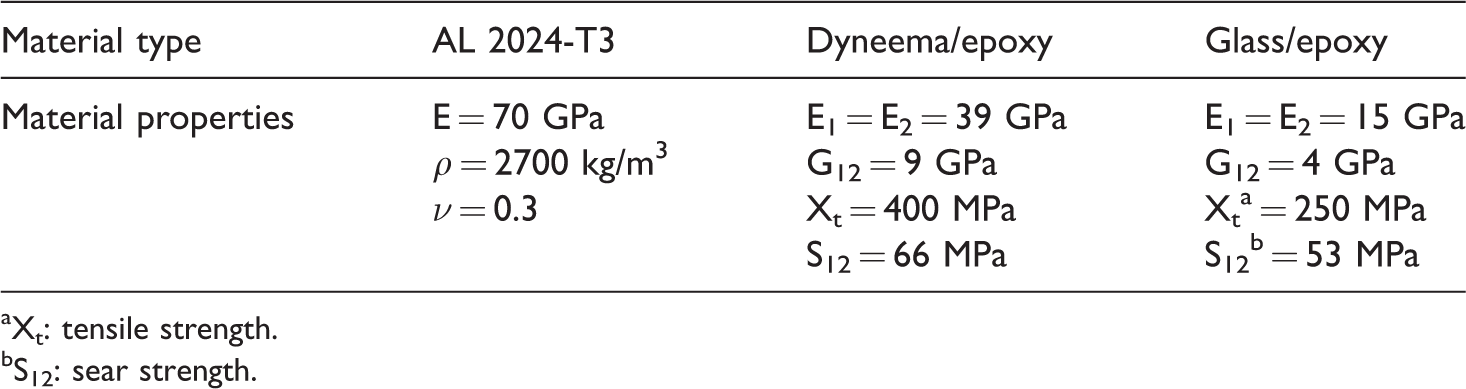
Composite and hybrid FML were manufactured to be used as face sheets of the sandwich columns. Aluminum alloy Al 2024-T3 was also used to manufacture the hybrid face sheets. The material properties of the used aluminum alloy are determined from tensile test based on ASTM E8 standard. The employed fabrics were woven E-glass and Dyneema fabrics. The used matrix was a mixture of ML-506 resin and HA-11 hardener with a mixing ratio of 100:11, respectively. The mechanical properties of the standard tensile specimens made of E-glass and Dyneema fabrics and the above-mentioned matrix were obtained by performing tensile tests according to ASTM D3039 standard test. Table 1 shows the mechanical properties of the hybrid composite ingredients.
Mechanical properties of hybrid composite ingredients.
aXt: tensile strength.
bS12: sear strength.
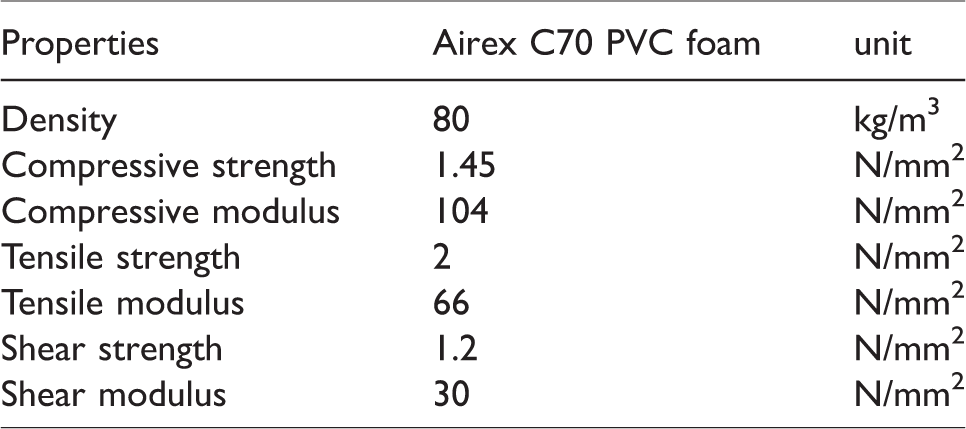
Closed-cell PVC foam was used as the sandwich core. Table 2 shows the mechanical properties of the employed PVC foam core.
Mechanical properties of PVC foam cores.
Manufacturing process
The composite and hybrid face sheets were manufactured using hand-layup technique consolidated by pressing for 24 h at room temperature. For the sake of standard manufacturing of the composite columns for edgewise compression tests, the ASTM C364/C364M-16 was used in order to take into account the standard geometrical dimensions of the composite columns. Figure 1 depicts the standard manufacturing criteria for edgewise compression of sandwich specimens. Table 3 lists the geometrical dimensions and stacking sequence configurations of all manufactured specimens. After the post curing of the face sheets, the polymer foam core of each specimen was bonded to the prepared face sheets by the same matrix and using the same pressing method. All the specimens were manufactured at the same conditions. Also, all the specimens except specimens S-12 and S-13 were tested at simply supported boundary conditions.
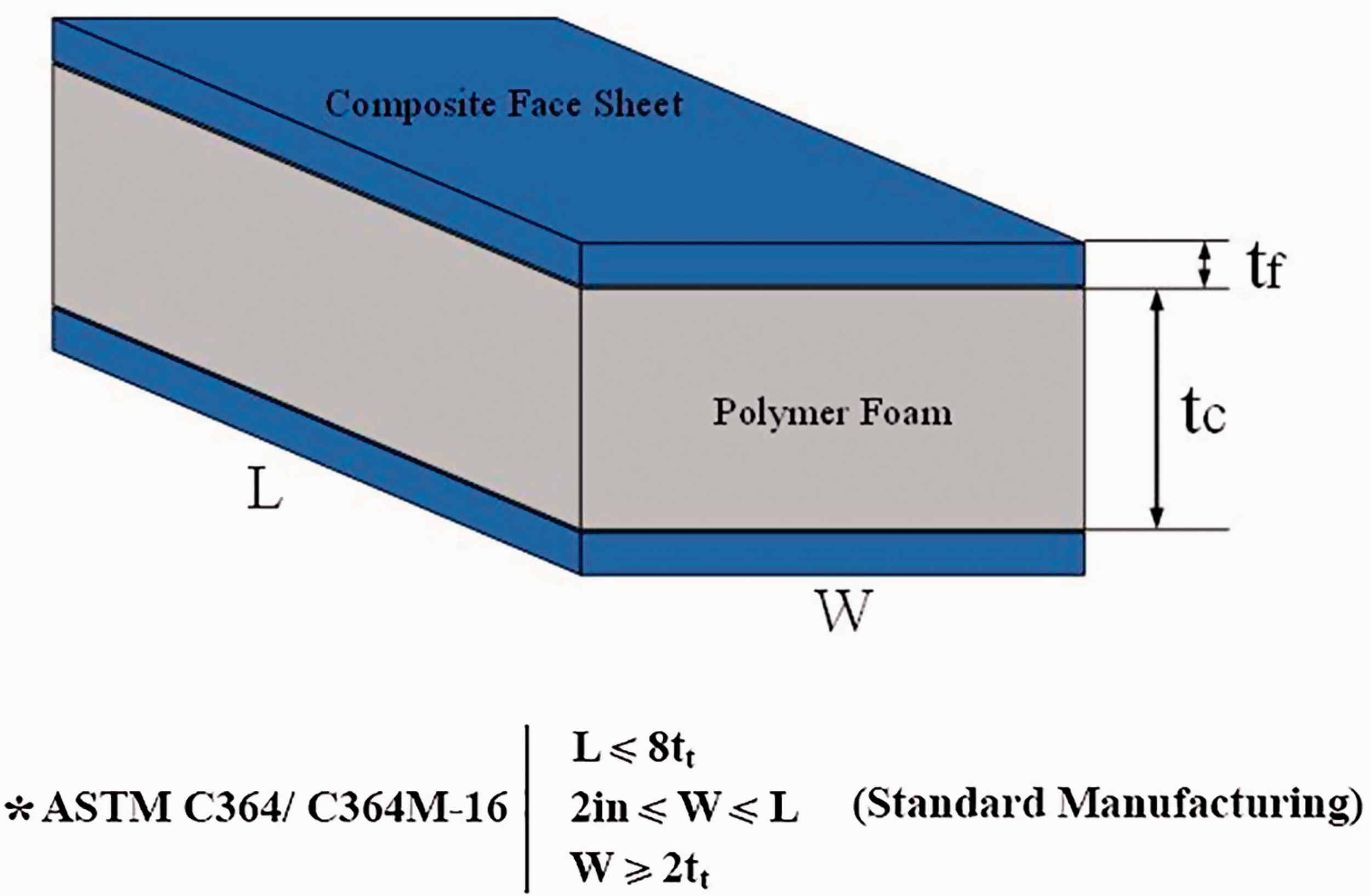
Standard criteria used to manufacture the sandwich columns.
Geometrical dimensions and stacking sequence configurations of all manufactured specimens.
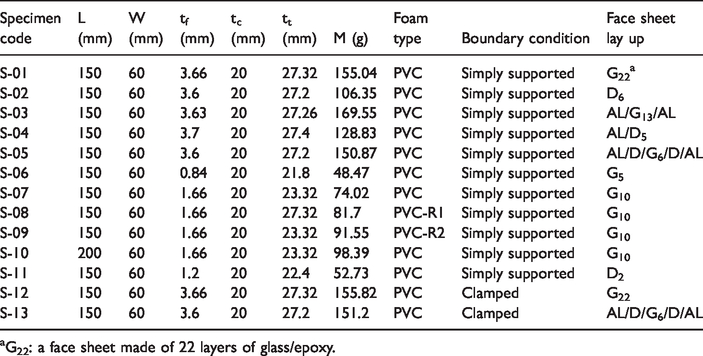
aG22: a face sheet made of 22 layers of glass/epoxy.
Specimens reinforced with resin pins
In order to investigate the effects of reinforcing the sandwich columns using some resin pins, two other types of specimens with 5 and 10 through-thickness resin pins were manufactured and tested. For this purpose, 5 and 10 circular holes with a diameter of 8 mm were made in the PVC foam core of the specimens in order to reinforce the bonding between the core and the face sheets. Figure 2 shows the prepared virgin and drilled foam cores, respectively, with 10 and 5 circular holes.
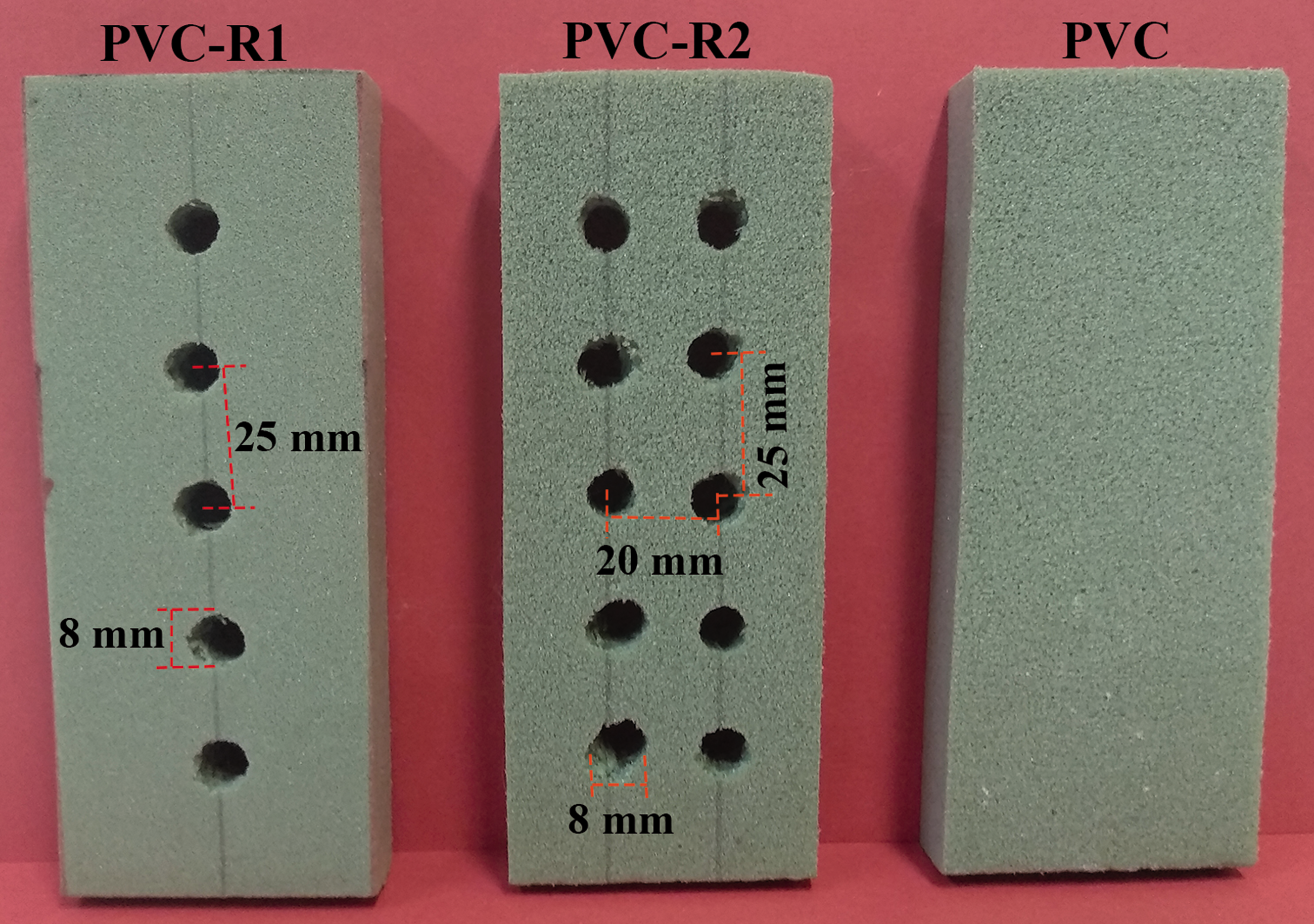
Using resin-pins to reinforce the bonding between the foam core and face sheets of the sandwich structures.
Edgewise compression test
This section reports the testing procedure of the manufactured sandwich columns under edgewise compressive loading condition. The effects of four different parameters namely the slenderness ratio, the stacking sequence, the foam core type, and the boundary condition on the mechanical behavior of the specimens were studied in the present work. In order to investigate the effect of boundary conditions, simply supported and laterally clamped boundary conditions were considered. In the simply supported one, the specimens were put between two flat platens without any other limitations, while in the laterally clamped condition, a special standard fixture (see Figure 3) was designed and manufactured to laterally support both ends of the specimens.
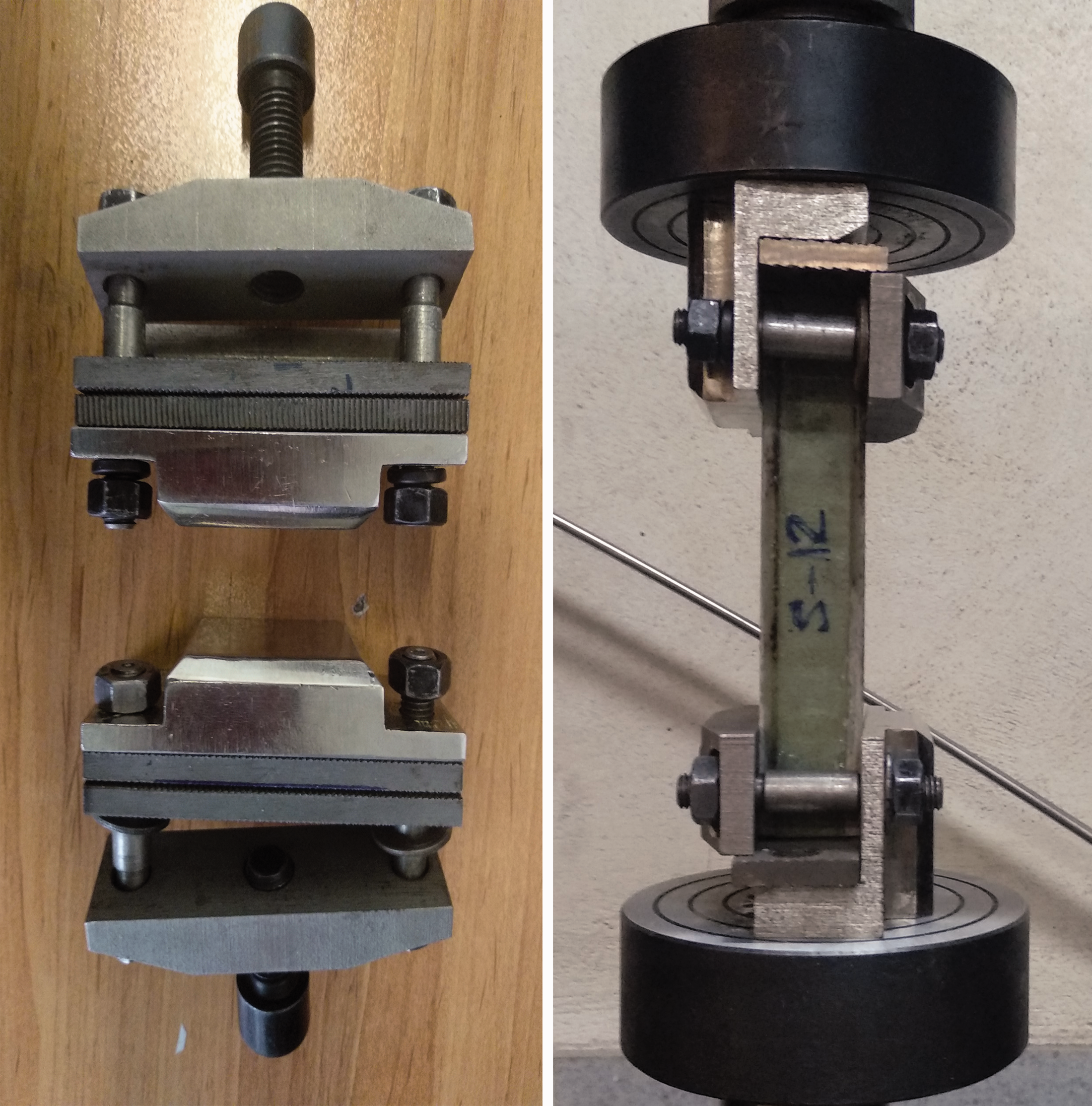
The standard manufactured fixture (left) and laterally clamped specimen S-12 under edgewise compression test (right).
An Instron universal tensile testing machine was used to carry out the compression tests with a displacement ratio of 2 mm/min. All tests were repeated for three times in order to illuminate the effects of manufacturing imperfections. Figure 4 shows the manufactured composite sandwich specimen S-02 with Dyneema composite face sheets and specimen S-05 with FML face sheets.
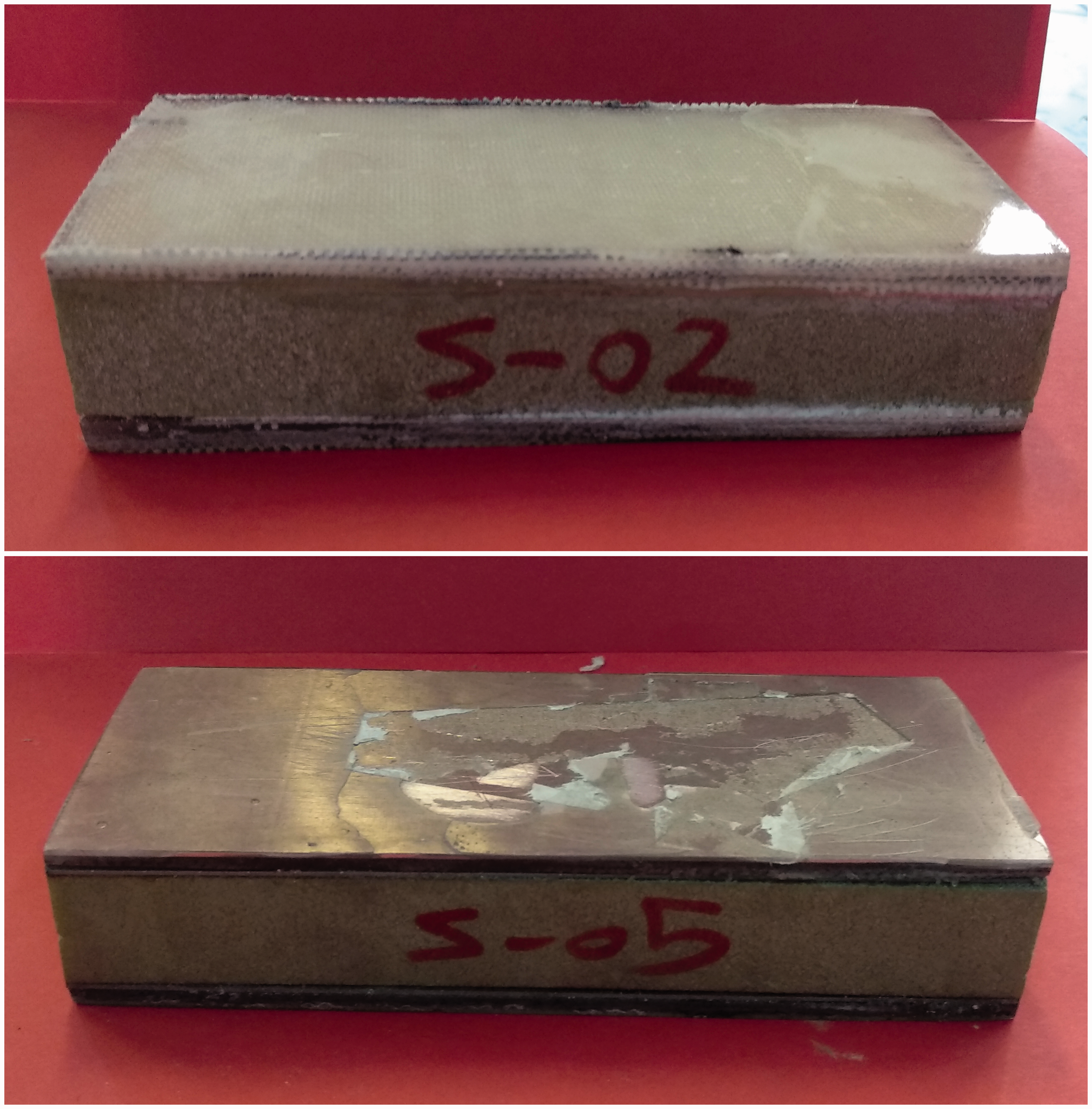
Specimen S-02 with Dyneema composite face sheets (top) and S-05 with FML face sheets (bottom).
In order to illustrate a typical mechanical behavior of a composite sandwich column under edgewise compressive loading condition, Figure 5 depicts the load–displacement diagram of the specimens S-02. In general, after starting the compression test, the load increases linearly up to a peak which is the buckling load of the specimen. Afterward, the specimen buckles in a specific buckling mode, which is the Euler buckling mode for the specimen S-02. Consequently, depending on the failure mode of the specimen, the compression load may decrease suddenly and significantly without any remarkable energy absorption capability or fluctuate up to a certain displacement which gives rise to a considerable energy absorption capability. The Euler buckling mode is highly undesirable because of the low energy absorption capability.
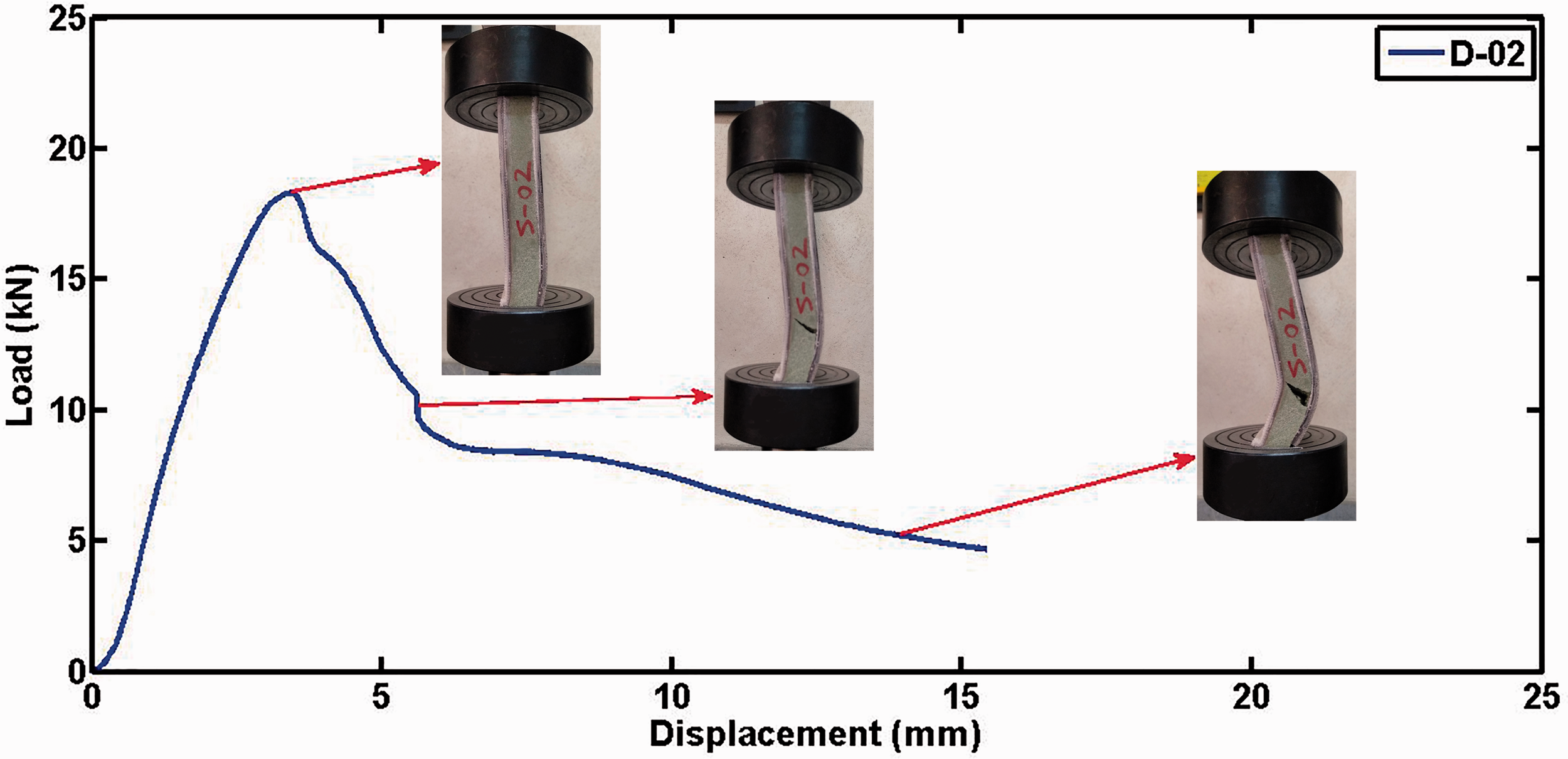
Load–displacement diagram of specimen S-02 with different stages of occurred Euler buckling failure mode.
Results and discussion
In this section, effects of different parameters including face sheet thickness, foam core type, slenderness ratio, boundary condition, and stacking sequence configuration on the buckling load, failure mode, and energy absorption capability of tested samples are presented. Furthermore, the bonding reinforcement between the face sheets foam core using resin pins and its effects on the buckling load, energy absorption, and failure mode of the sandwich column is reported in this section.
Effect of face sheet thickness
Face sheet thickness plays an important role in the mechanical behavior of sandwich structures. In order to investigate the effect of face sheet thickness in the present study, two different thicknesses of 1.2 and 3.6 mm of Dyneema composite face sheets (respectively, made of two and six layers of Dyneema fabric) and three different thicknesses of 0.84, 1.66, and 3.66 mm of glass composite face sheets (respectively, made of 5, 10, and 22 layers of glass fabric) were manufactured and tested. The load–displacement curves of the specimens are shown in Figure 6. Based on the figure, by increasing the face sheet thickness, the buckling load increases approximately linearly for both types of sandwich columns made from Dyneema/epoxy and glass/epoxy face sheets. As can be seen from the figure, the specimen S-02 which was made from Dyneema/epoxy face sheets with a thickness of 3.6 mm has significantly higher buckling load compared to the specimen S-01 which was made from glass/epoxy composite face sheets with an approximately equal thickness of 3.66 mm. In addition, it is worth mentioning that in specimens with thinner face sheets, the buckling phenomenon occurs more smoothly which shows a dominant contribution of the PVC foam core in carrying the compressive load compared to the face sheets. The energy–displacement diagrams of the specimens are depicted in Figure 7. As can be seen from the figure, by increasing the face sheet thickness, the amount of absorbed energy increases while the maximum compression displacement of the sample decreases which is due to the change in the failure mode of the specimen by changing the face sheet thickness.
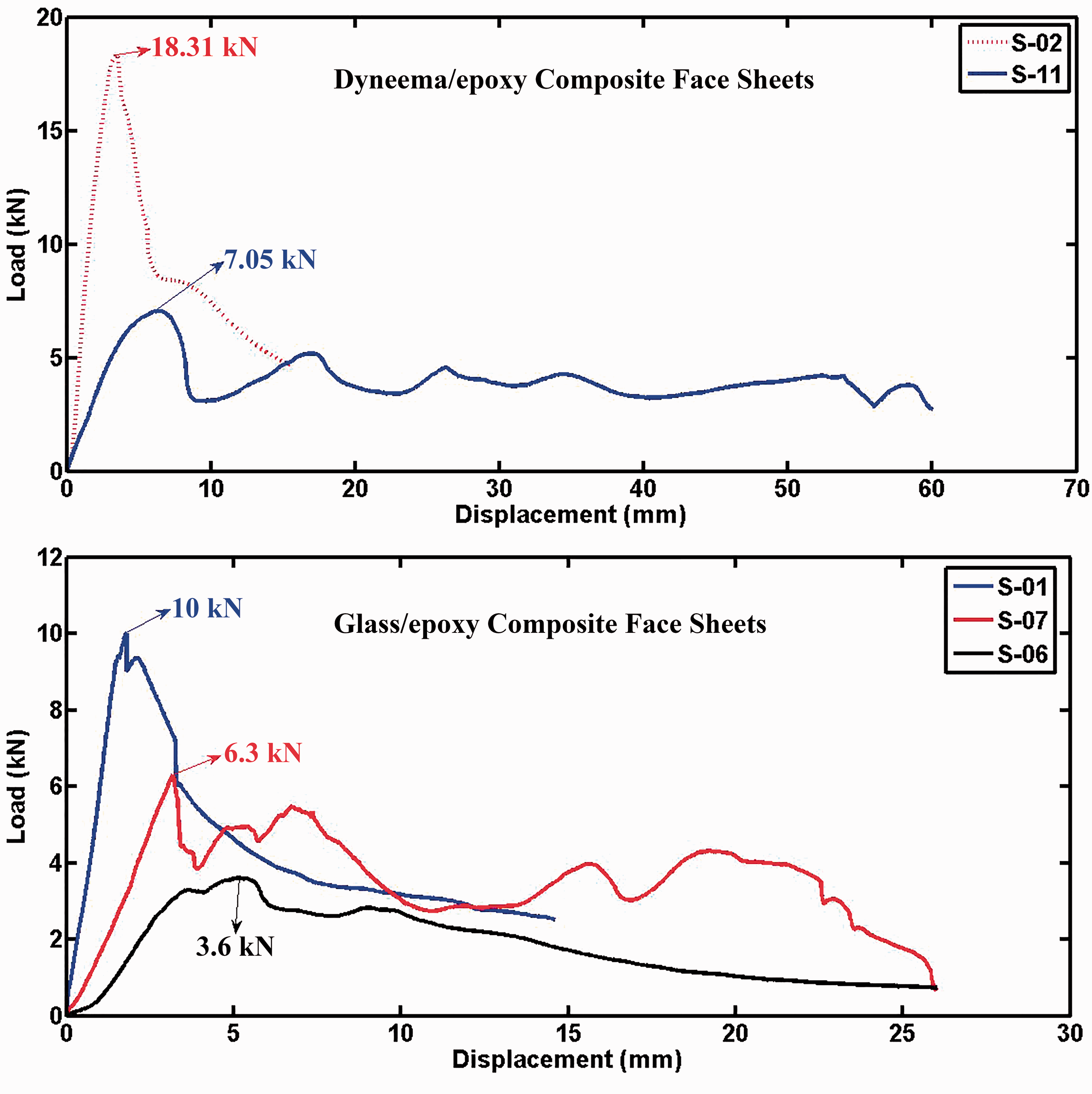
Load–displacement diagrams of sandwich columns made from different thicknesses of Dyneema/epoxy (top) and Glass/epoxy (bottom) composite face sheets.
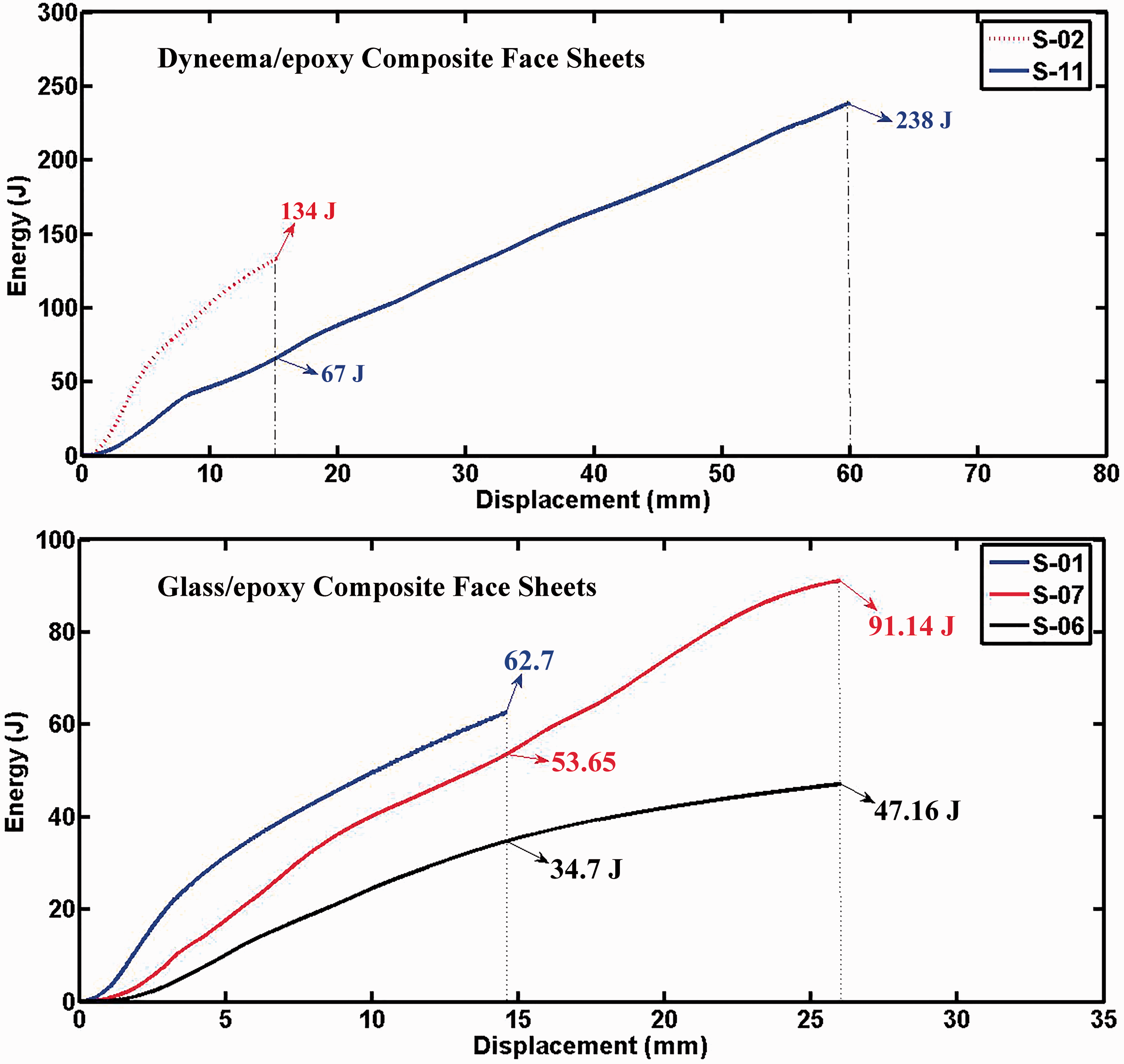
Energy–displacement diagrams of sandwich columns made from different thicknesses of Dyneema/epoxy (top) and Glass/epoxy (bottom) composite face sheets.
Damage mechanisms occurred in the specimen S-02 are shown in Figure 8. In this case, the damage mechanisms include foam densification, face sheet-core debonding, face sheet end-crushing, foam core fracture, and face sheet bending. Figure 9 shows the occurred damage mechanisms in the specimen S-11. In this case, because the composite face sheets are made of two layers of Dyneema/epoxy composite, the whole structure is less stiff which leads to more foam crushing as well as more crushing of the face sheets (as a folding shape deformation) in comparison with the specimen S-02.
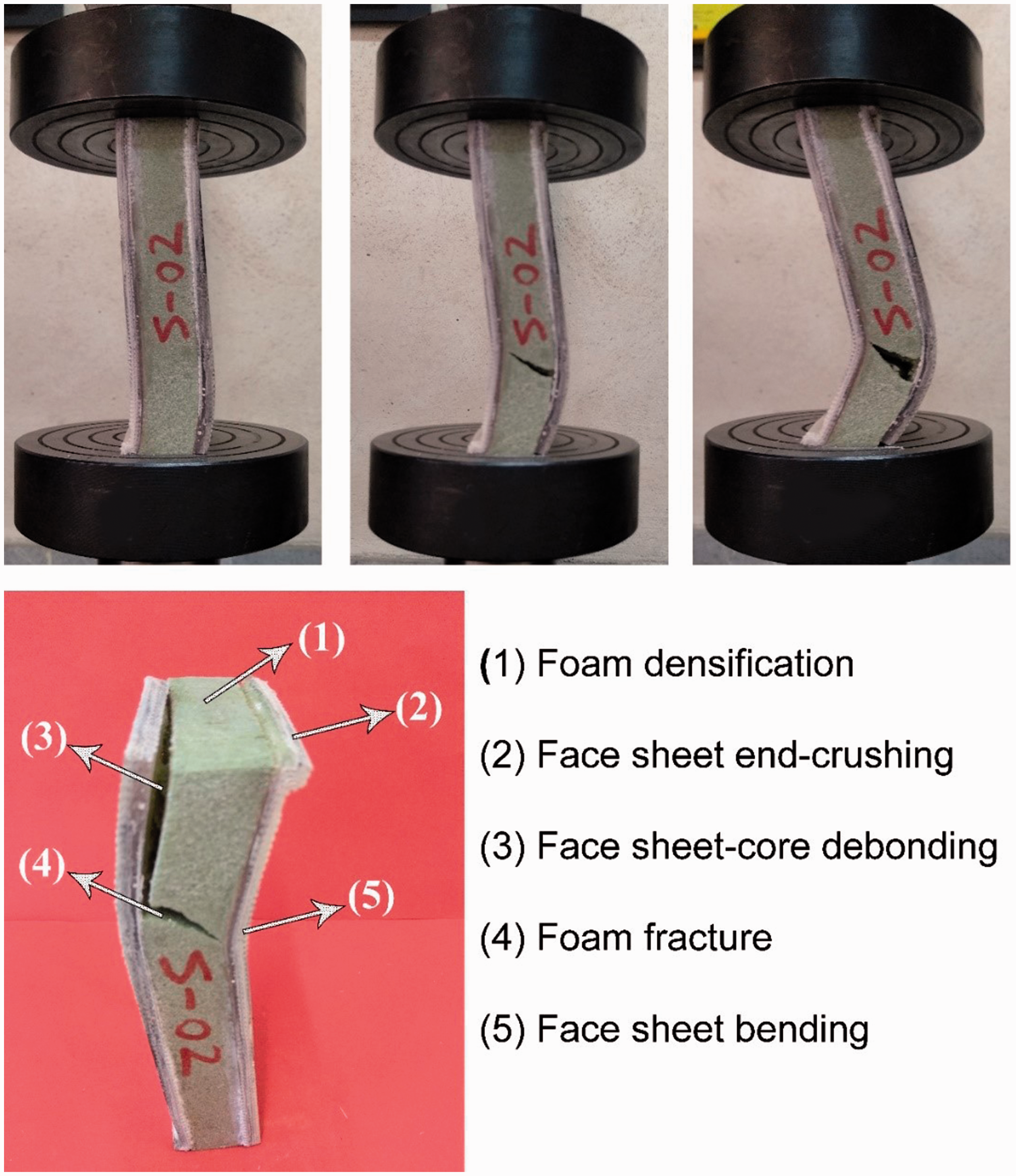
Damage mechanisms occurred in the specimen S-02 during the edgewise compression test.
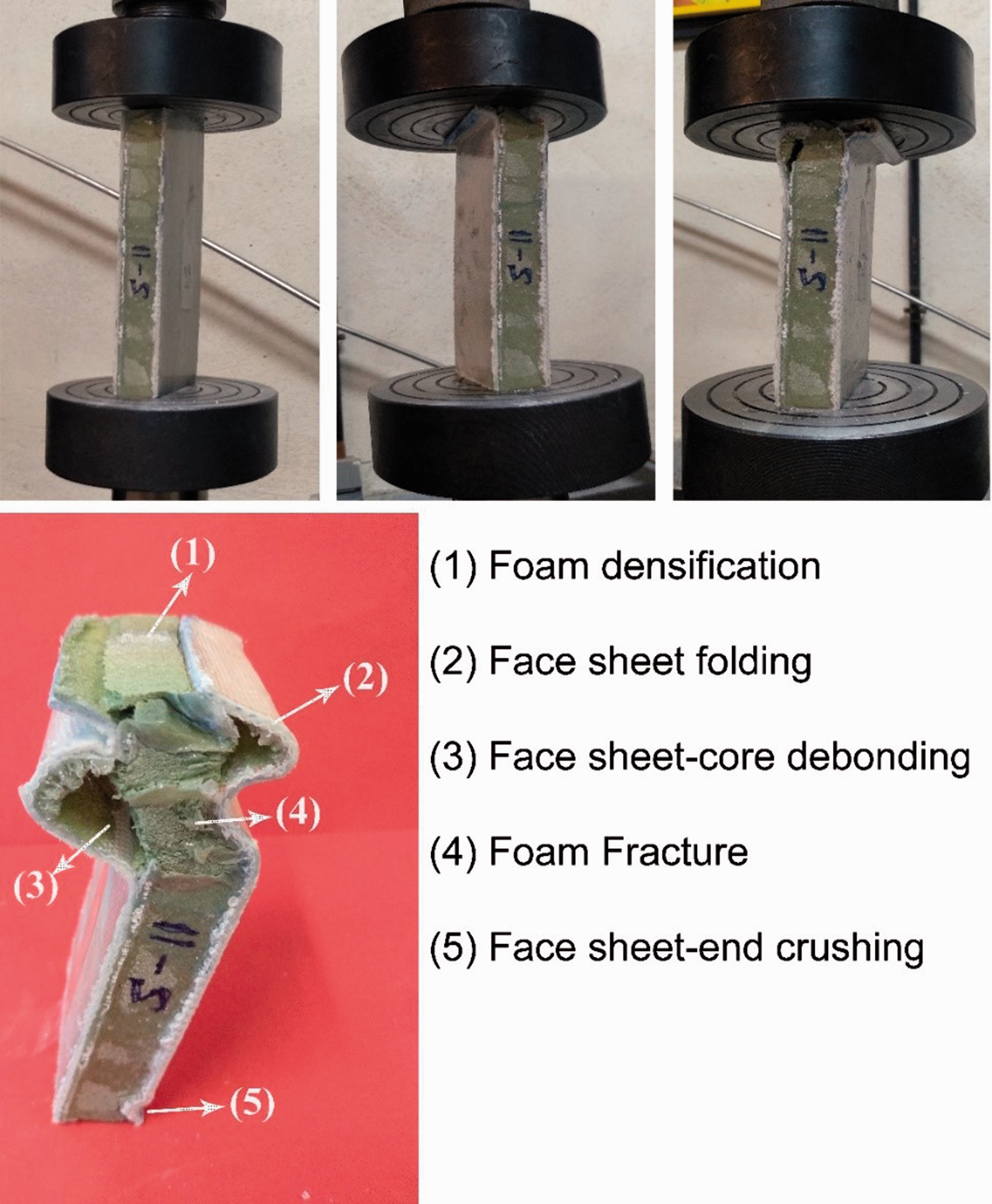
Damage mechanisms occurred in the specimen S-11 during the edgewise compression test.
Effect of slenderness ratio
Two groups of similar composite sandwich columns with the face sheet thickness of 1.66 mm made of glass/epoxy composites and different lengths of 150 and 200 mm were tested in order to investigate the effect of the slenderness ratio on the buckling and crushing behavior of the columns. The load–displacement diagrams of the specimens S-07 and S-10 are shown in Figure 10. As can be seen from the figure, in the specimens, the buckling load of the specimen S-07 is approximately 8% higher than that of the specimen S-10.
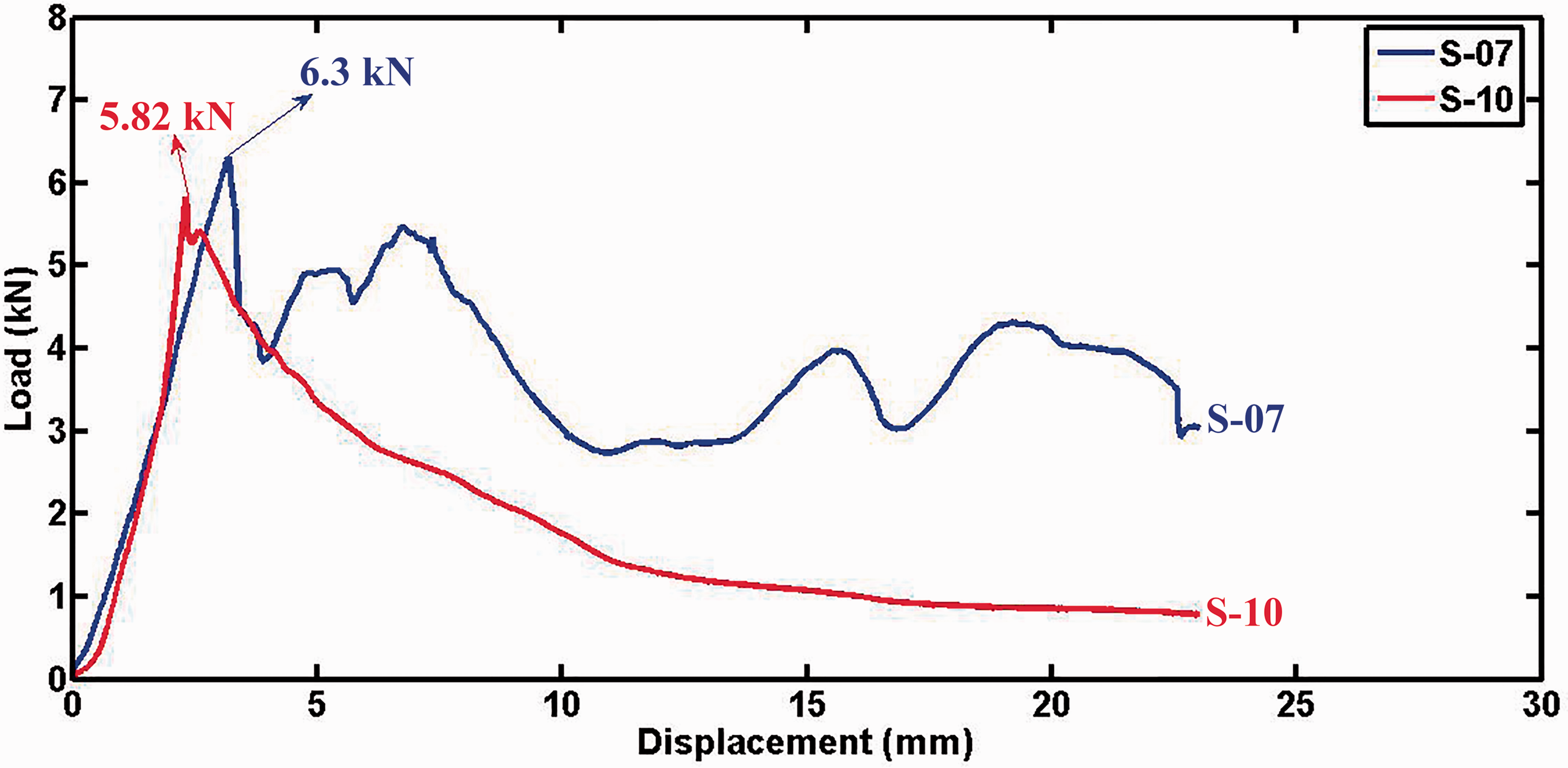
Effect of slenderness ratio on the buckling behavior of sandwich columns with a face sheet thickness of 1.66 mm under edgewise loading.
The energy–displacement diagrams of the tested specimens with different slenderness ratios are shown in Figure 11.
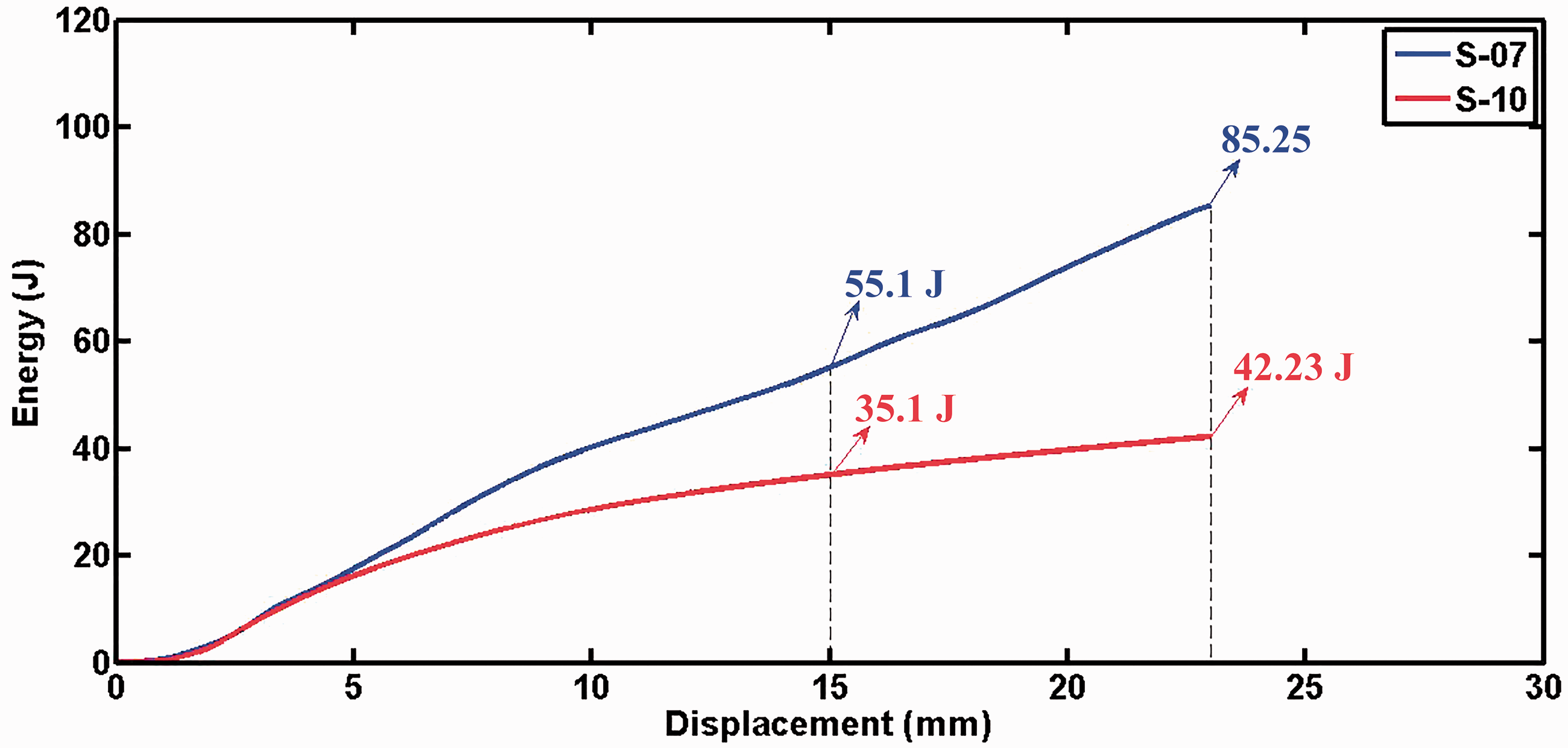
Effect of slenderness ratio on the energy absorption of sandwich columns with a face sheet thickness of 1.66 mm and lengths of 150 mm (S-07) and 200 mm (S-10) under edgewise loading.
Figure 12 shows the specimens S-07 and S-10 during the edgwise compression test. As can be seen from the figure, both specimens underwent Euler bucking failure mode. Also, it can be clearly seen that by increasing the slenderness ratio, the specimen undergoes a more unstable Euler buckling mode and absorbs less energy while being compressed.
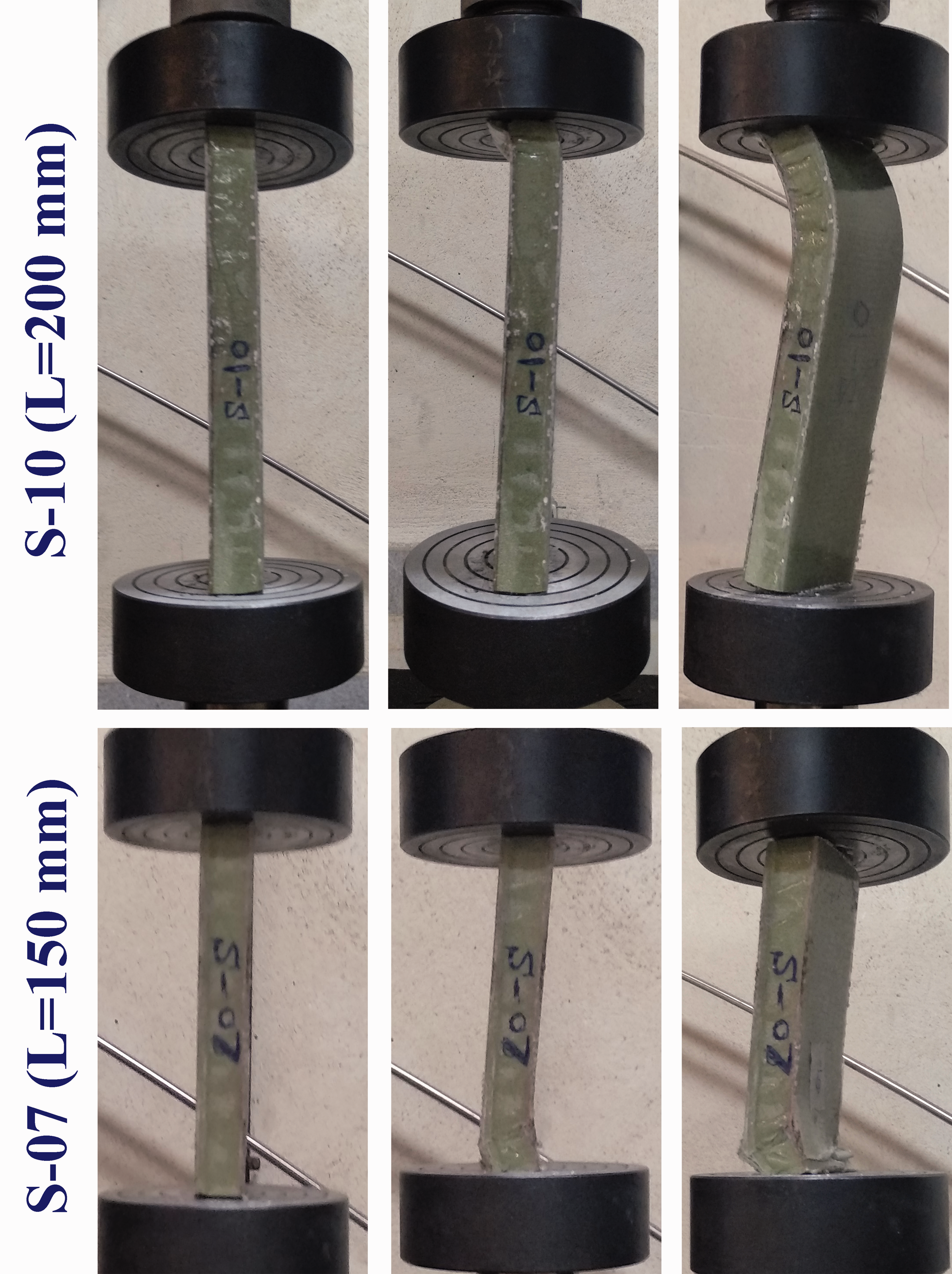
Specimens S-07 and S-10 with face sheet thickness of 1.66 mm and different slenderness ratios under edgewise compression loading.
Effect of stacking sequence
In order to investigate the effect of stacking sequence on the buckling and crushing behavior of hybrid composite face sheets, five different stacking sequence configurations of hybrid face sheets were manufactured and tested. The face sheets of all of these specimens have a nominal thickness of 3.65 mm. Figures 13 and 14, respectively, show the load–displacement and energy–displacement diagrams of all specimens with similar geometry, foam core type, and boundary condition, but different stacking sequence of face sheets.
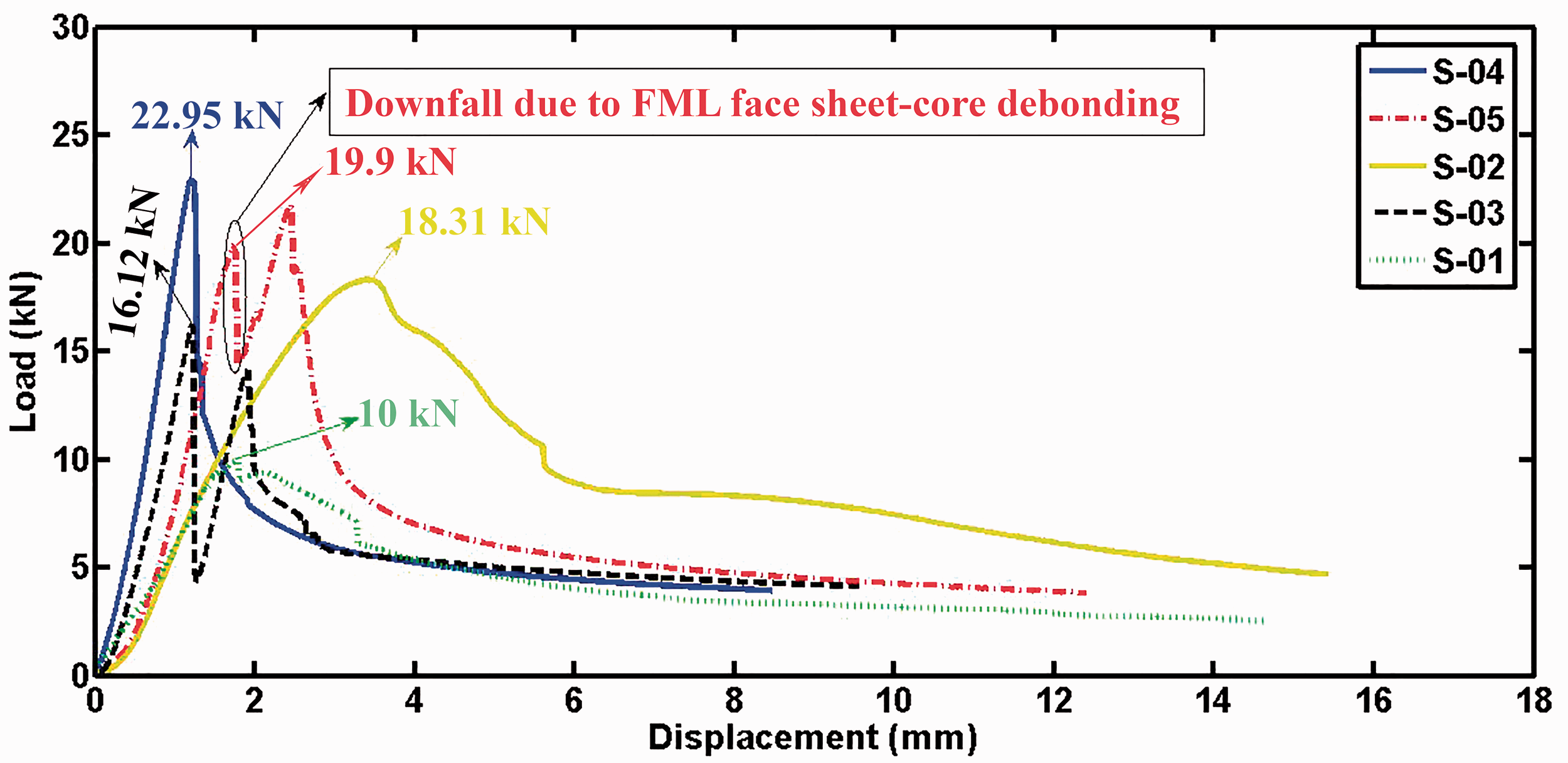
Effects of stacking sequence on the buckling and crushing behavior of hybrid composite sandwich columns.
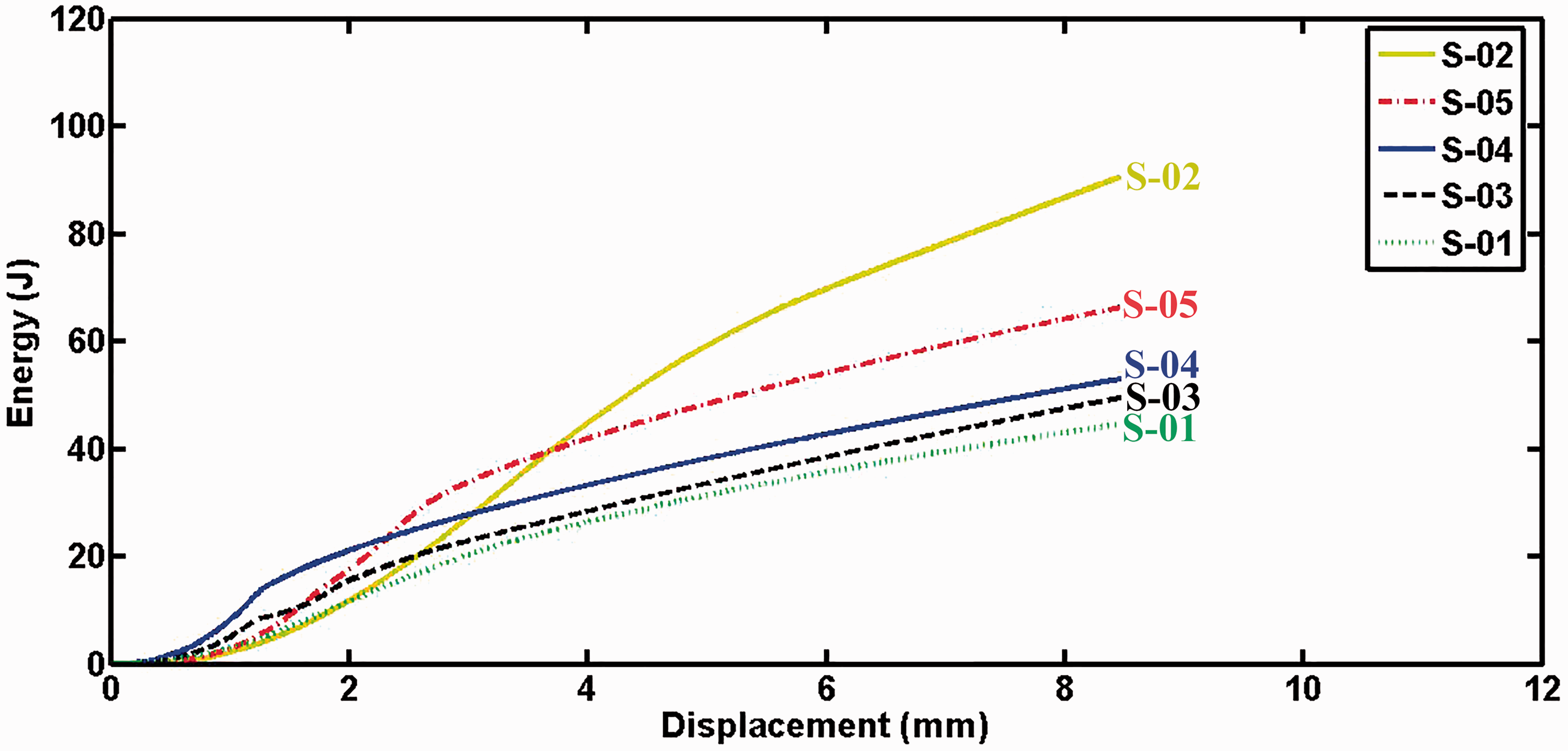
Energy–displacement diagrams of the specimens S-01, S-02, S-03, S-04, and S-05 under edgewise compressive load.
As shown in Figure 13, specimens with FML face sheets have higher buckling load and stiffness compared to other ones. This is due to the high stiffness and strength of the AL plates compared to the glass and Dyneema fabrics. As can be seen from the figure, the load–displacement diagrams of the specimens S-03 and S-05 have two peak loads while there is only one peak load in the diagrams of other specimens. The reason is that the specimens S-03 and S-05 have hybrid face sheets with the AL plates bonded to the PVC foam core. Therefore, as the specimens are subjected to the edgewise compression load, the face sheet core debonding happens immediately which is corresponding to the downfall in the load–displacement of these specimens.
Figure 15 depicts the failure modes occurred in the specimens S-01, S-02, S-03, S-04, and S-05 after the compression test. As shown in Figure 15, in the specimens with FML face sheets, the major failure modes are face sheet-core debonding and face sheets delamination (specially between the composite and AL layer). The face sheet-core debonding is due to the presence of AL plates which prevents the specimens from end-crushing and any local buckling, which is the major failure in the specimens without the AL plates.
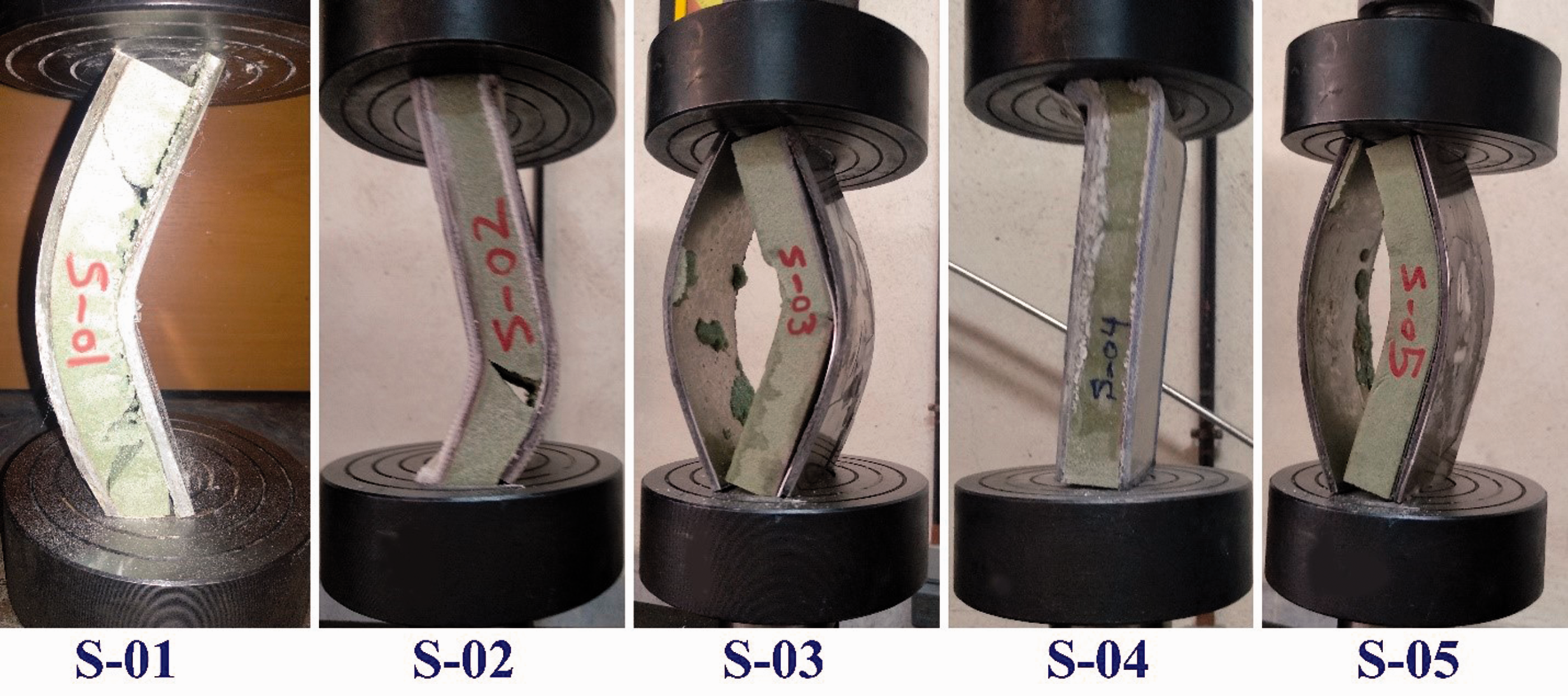
Failure modes of specimens S-01, S-02, S-03, S-04, and S-05 with different stacking sequence configurations under edgewise compression loading.
Effect of resin pins
In order to reinforce the bonding between both face sheets and their bonding with the foam core, some cylindrical through-thickness resin pins were made by drilling circular holes into the PVC foam core, as shown in Figure 2. Lei et al. [24] investigated the crushing behavior of sandwich composite under edgewise loading. They studied the buckling and crushing behavior of foam-filled glass-fiber reinforced sandwich composite column under edgewise compression by experimental, theoretical, and finite element analysis methods. In order to enhance the strength and stiffness of foam core, linear resin pins with a square grid shape pattern were used in foam core of their tested columns. However, the used resin pins of their specimens were made through the whole length and width of the sandwich columns with a square pattern.
The load–displacement and energy–displacement diagrams of the specimens S-07 without resin pins, and specimens S-08 and S-09 with, respectively, five and ten resin pins are illustrated in Figures 16 and 17. As can be seen from Figure 16, specimen S-09 has the highest buckling load while specimen S-07 without any resin pin has the lowest buckling load, which reveals the positive effects of using the resin pins on enhancing the mechanical performance of sandwich columns under edgewise compressive loading conditions. In addition, using resin leads to increase the mean crushing load and, consequently, the energy absorption capability (Figure 17) of the composite sandwich columns.
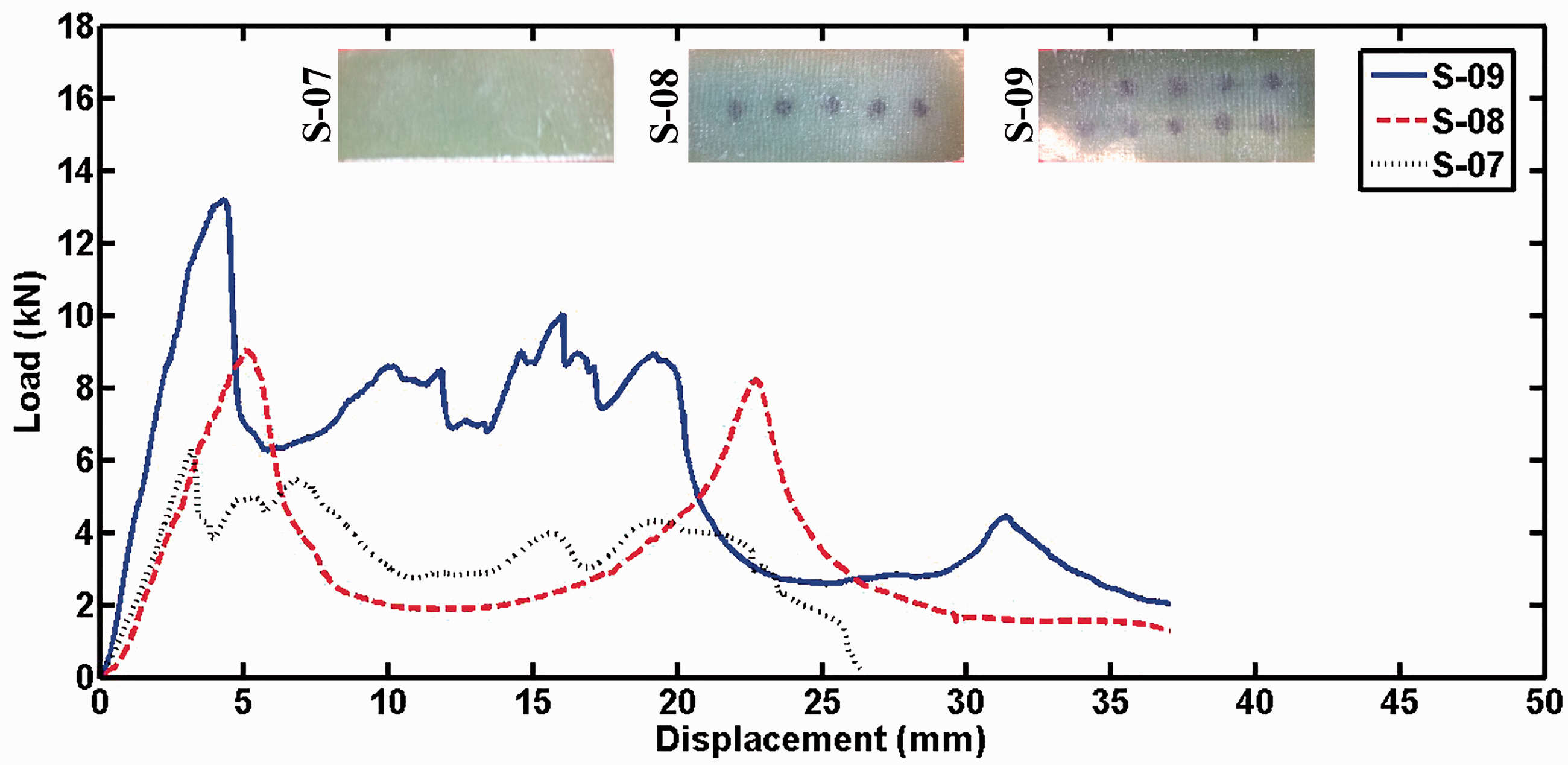
Effect of resin pins on the mechanical behavior of composite sandwich columns under edgewise compressive load.
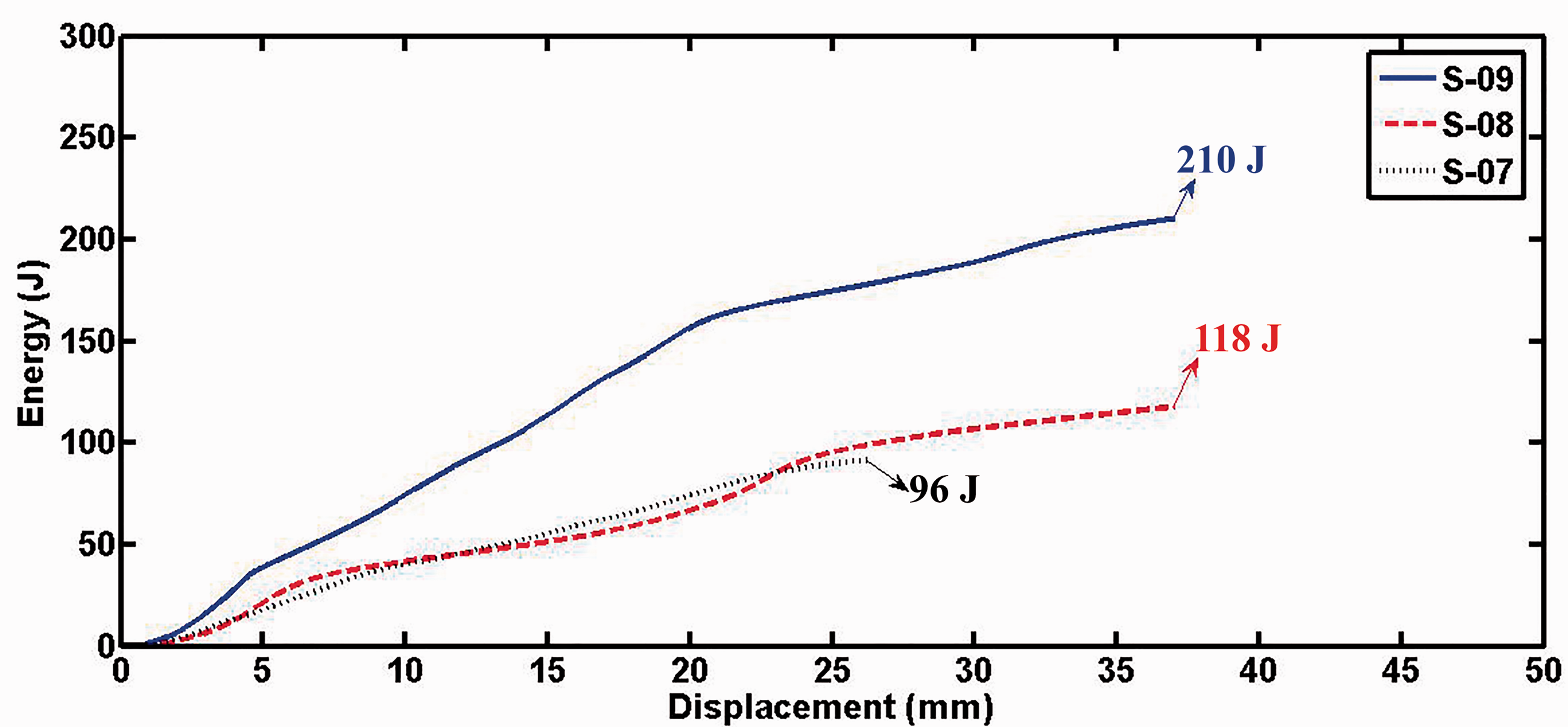
Effect of resin pins on the energy absorption capability of composite sandwich columns under edgewise compressive load.
Figure 18 shows the specimens S-07, S-08, and S-09 during the edgewise compression tests. As can be seen from the figure, the specimen S-07 underwent an unstable Euler buckling mode close to the lower end which corresponds to the first peak in the load–displacement diagram shown in Figure 16. Afterward, at the lower end of the specimen, an almost progressive crush occurred in both face sheets and the PVC foam core until a certain displacement of about 25 mm, which corresponds to the fluctuations in its load–displacement diagram.
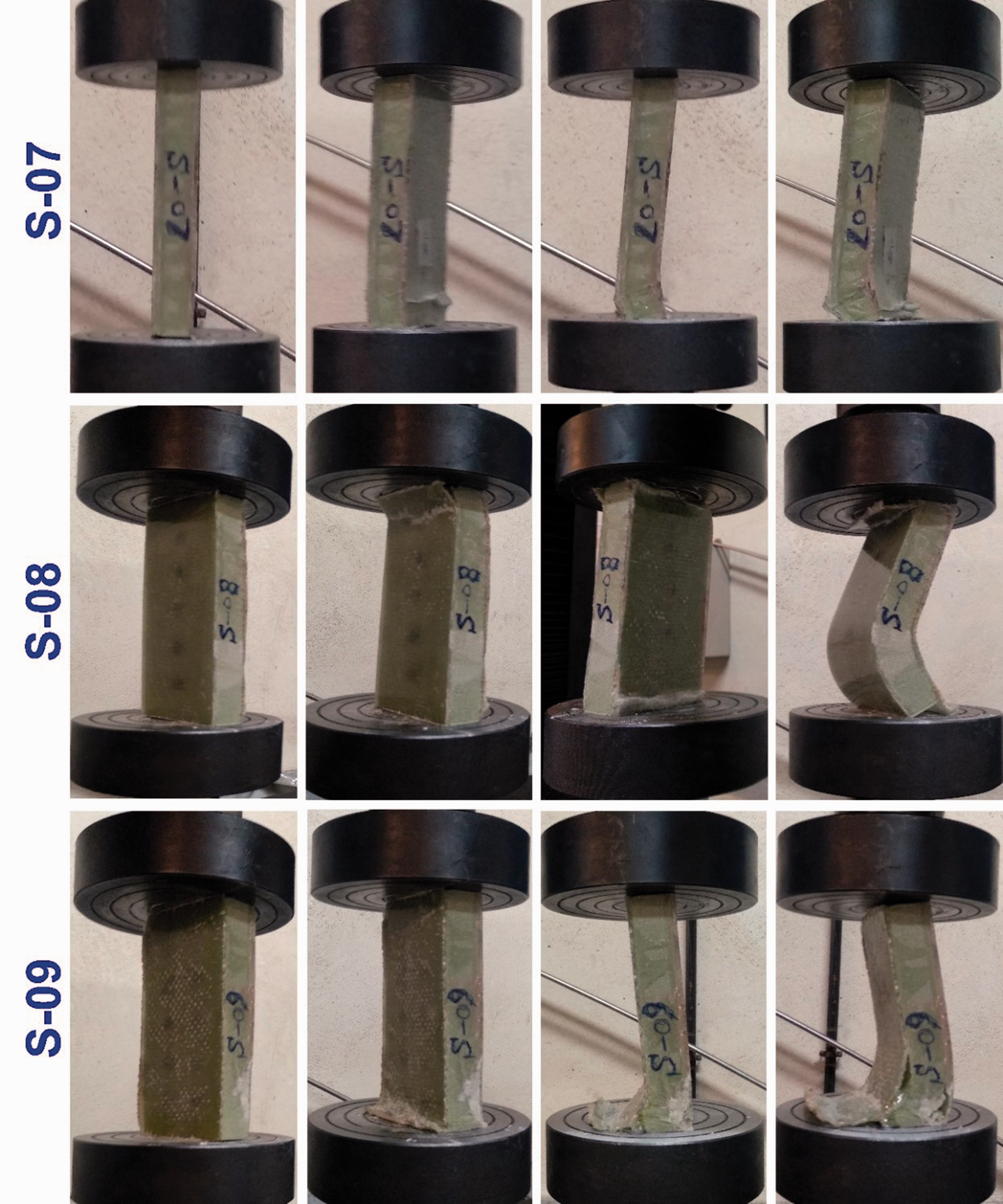
Specimens S-07 (with no resin pin), S-08 (with 5 resin pins), and S-09 (with ten resin pins) during the edgewise compression test.
The used five resin pins in the specimen S-08 changed the failure mode of this specimen compared to the specimen S-07 with no resin pins. As the specimen was loaded, failure occurred at the upper end of the specimen above the first resin pin from the top as well as the lower end of the specimen below the first resin pin from the bottom. This end crushing at both ends of the specimen S-08 corresponds to the first peak load which is higher than that of the specimen S-07. As the crushed end of the specimen S-08 got densified, the specimen underwent an Euler buckling as shown in Figure 18. This Euler buckling which occurs due to the presence of resin pins corresponds to the second peak in the load–displacement diagram of specimen S-08.
However, using 10 resin pins in the specimen S-09 leads to a higher buckling load as well as a more progressive end-crushing probability of the lower end of the specimen which is highly favorable in terms of energy absorption capability. The fluctuations in the load–displacement diagram of this specimen correspond to the progressive end-crushing of the specimen which also reveals a higher mean crushing load, and, consequently, a higher energy absorption capability is compared to the specimens S-07 and S-08. Based on these results, it can be concluded that using resin pins gives rise to an increase in the buckling load as well as an increase in the progressive end-crushing probability of the sandwich columns under edgewise compressive load. This is because the presence of resin pins prevents the face sheet-core debonding (disintegration) and leads to a stiffer and more stable sandwich column.
Effect of boundary condition
All of the above-mentioned specimens were tested at simply supported boundary conditions. As discussed above, in the specimens without the AL plates, the stable and unstable end-crushing of specimens were the most common failure mode. Therefore, in order to prevent the specimens from the stable and unstable end-crushing and also to investigate the effect of the boundary conditions on the buckling and crushing behavior of composite sandwich columns, laterally clamped specimens S-12 and S-13 were tested and, respectively, compared to the similar specimens S-01 and S-05. The load–displacement and energy–displacement diagrams of the specimens, which are shown in Figures 19 and 20, show the remarkable effect of the boundary condition on the buckling load and energy absorption capability of the sandwich column, respectively. This is because by laterally clamping the sandwich column, the probability of the end-crushing failure mode decreases significantly, while the probability of the overall Euler buckling mode increases. After the occurrence of initial overall Euler buckling mode, the composite face sheets fracture on a horizontal line and crush into the PVC foam core which leads to a higher crushing force and consequently energy absorption capability. Furthermore, by laterally clamping the specimen, the effective length of the column under the compressive load decreases (15 mm each side) which leads to a higher buckling load.
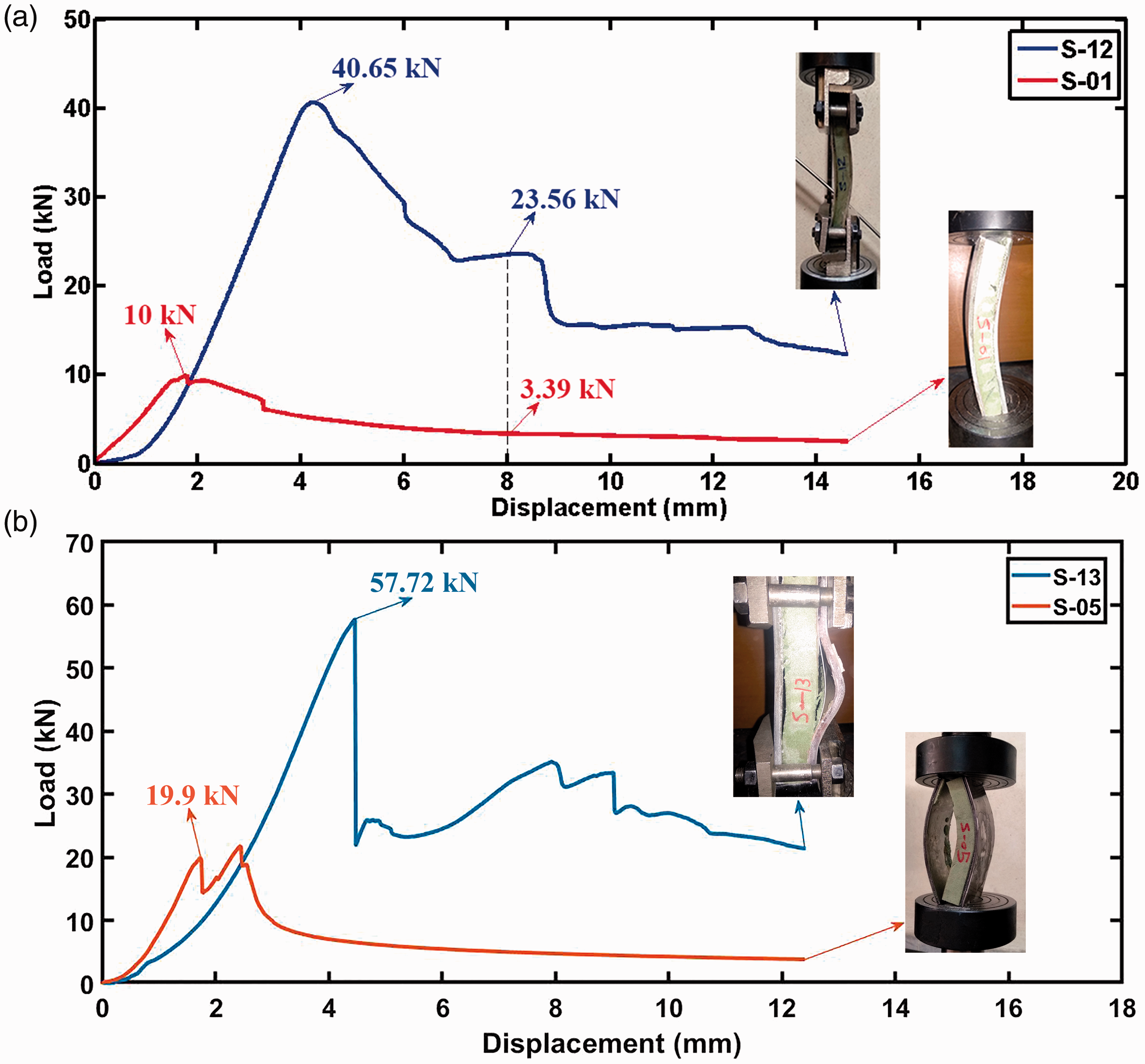
Effect of boundary condition on the buckling and crushing behavior of composite sandwich columns S-01 and S-12 (a) and S-05 and S-13 (b) under edgewise compressive loading.
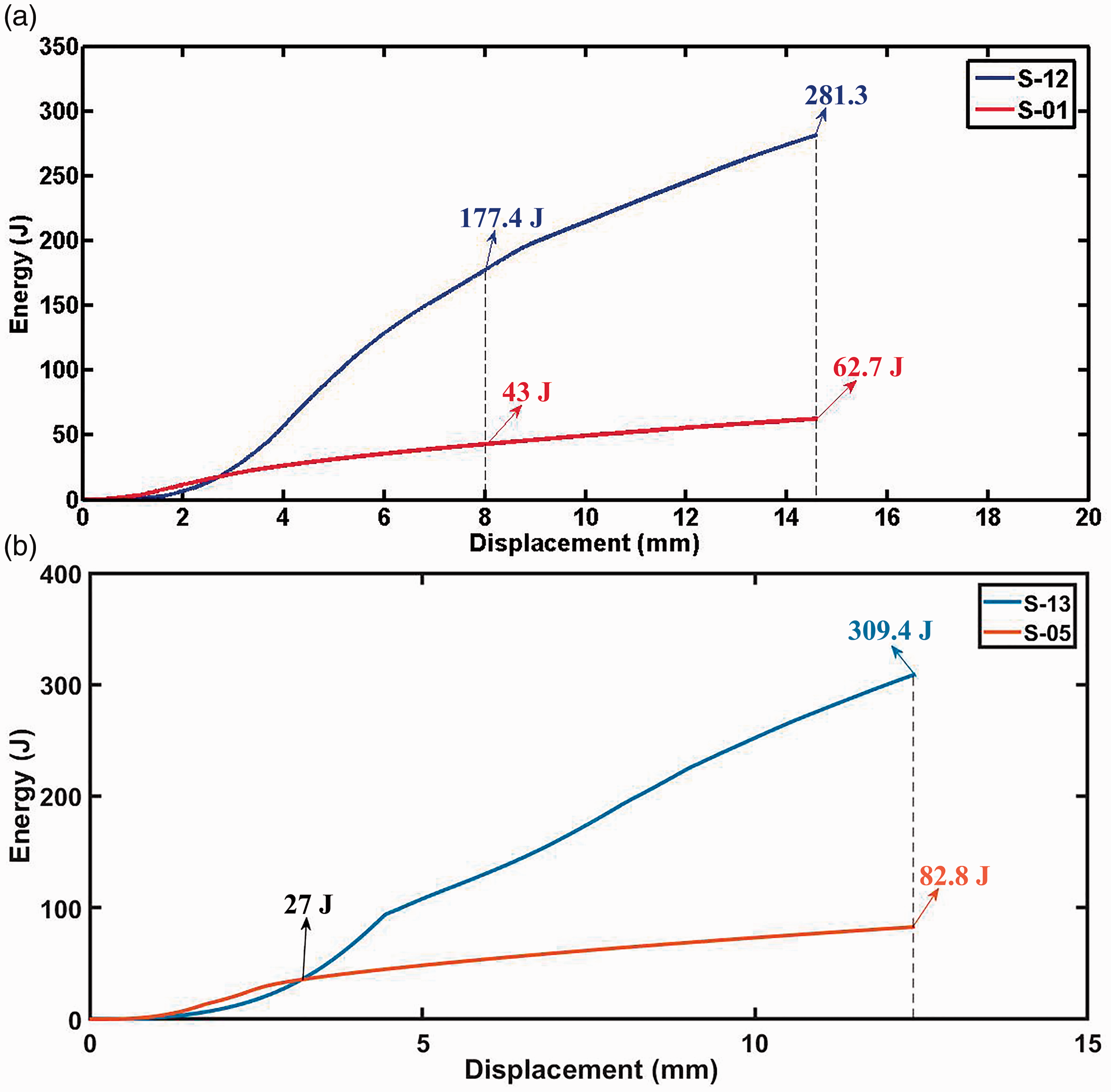
Effect of boundary condition on the energy absorption capability of composite sandwich columns S-01 and S-12 (a) and S-05 and S-13 (b) under edgewise compressive loading.
Figure 21 shows the specimens S-01 and S-12 (with composite face sheets) during the edgewise compression test. As can be seen from the figure, both specimens underwent Euler buckling failure mode. But, the laterally clamping fixture prevents the specimen S-12 from the end-crushing which occurs in the specimen S-01. Therefore, this gives rise to a more stability of the specimen S-12 compared to the specimen S-01.
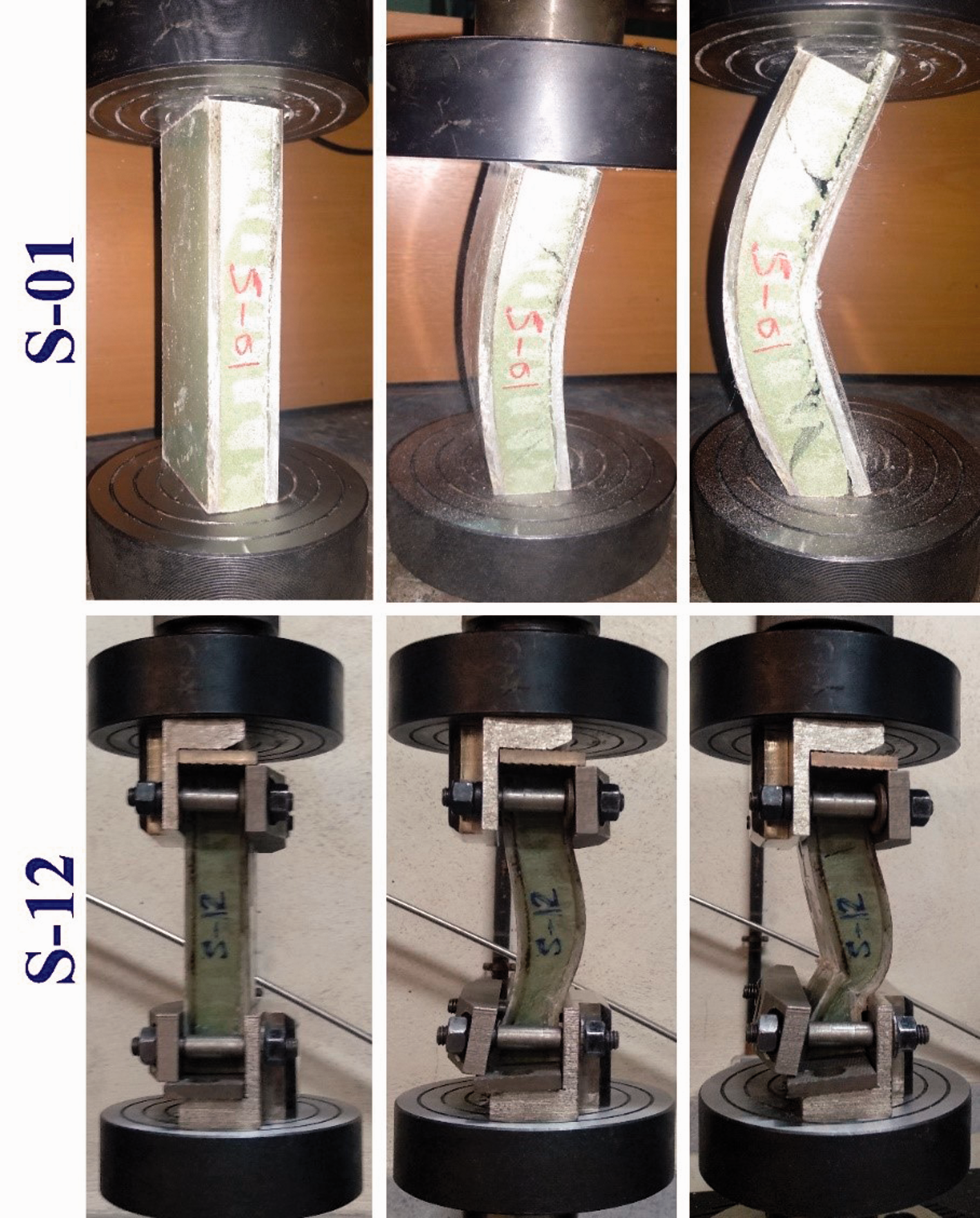
Similar S-01 and S-12 specimens tested under different boundary conditions; simply supported (top) and laterally clamped (bottom).
Similarly, Figure 22 shows the specimens S-05 and S-13 (with FML face sheets) during edgewise compression tests. According to the figure, using the designed fixture leads to less debonding between the foam core and face sheets of the specimen which consequently gives rise to a higher buckling load as well as a more stable crushing mode (see Figure 19(b)).
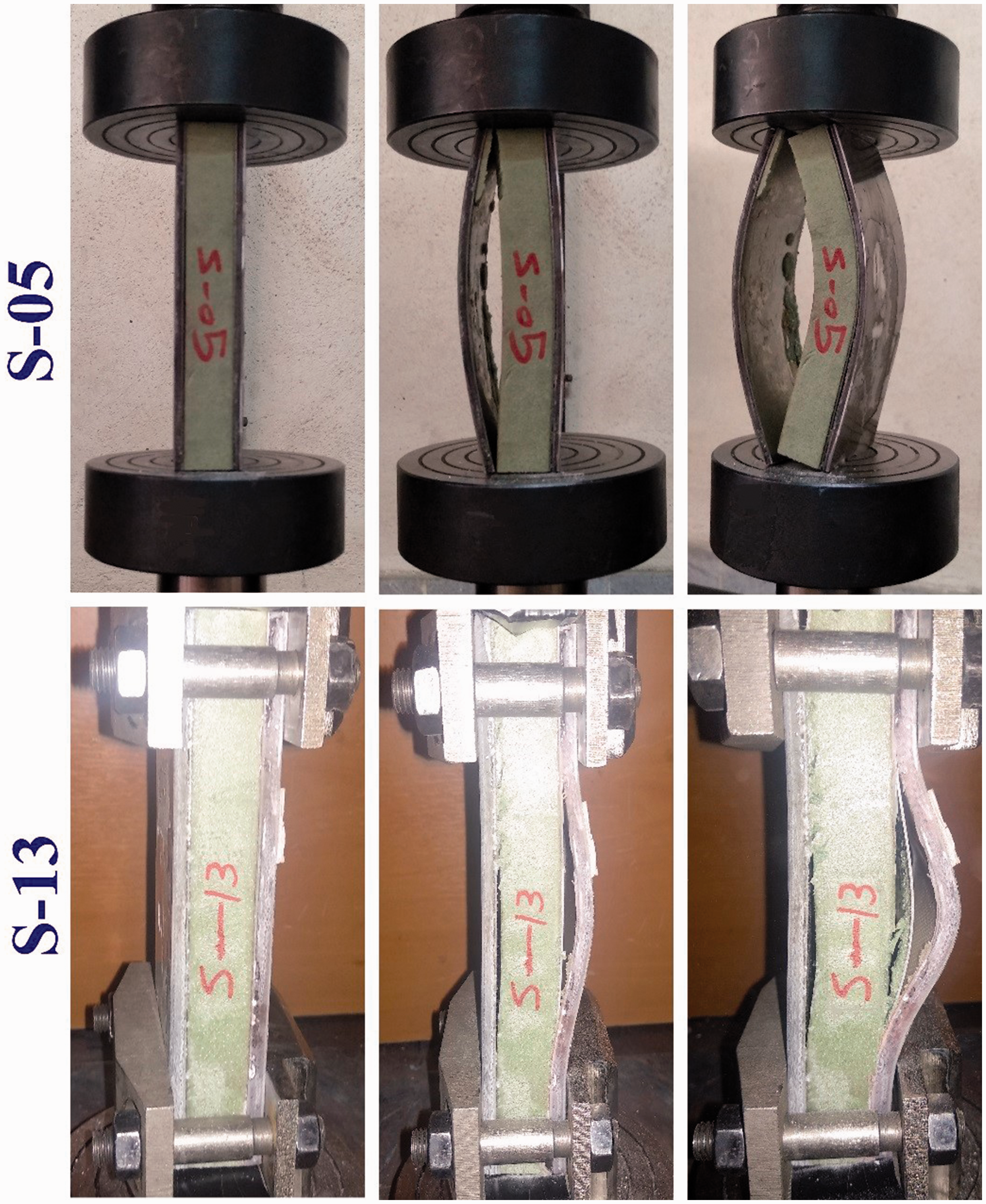
Similar S-05 and S-13 specimens tested under different boundary conditions; simply supported (top) and laterally clamped (bottom).
The damage mechanisms occurred in the specimen S-12 during the edgewise compression test are depicted in Figure 23. As can be seen in the figure, the main damage mechanisms are face sheet-core debonding, foam densification, and face sheet bending.
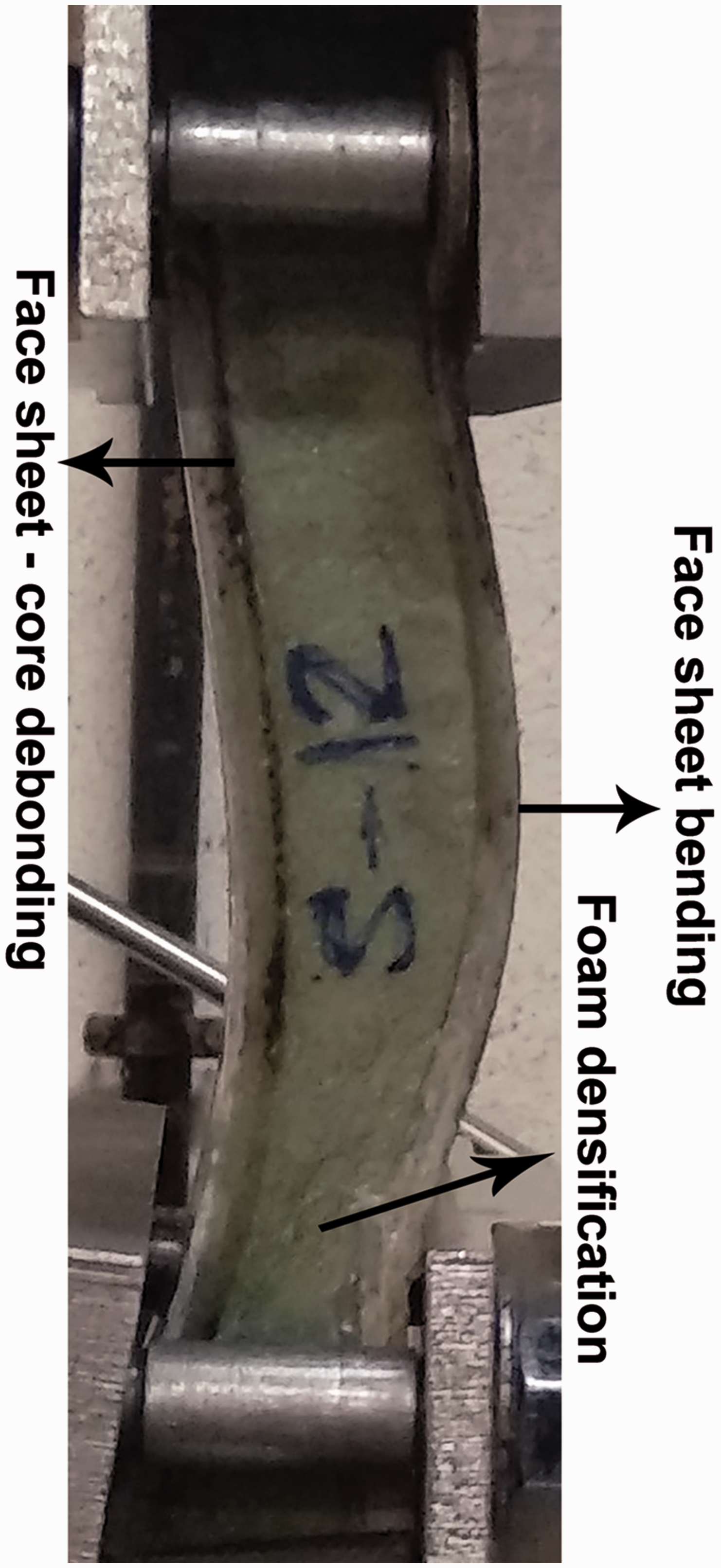
Damage mechanisms occurred in the specimen S-12 during the edgewise compression test.
Figure 24 depicts the buckling load and specific buckling load of all tested samples. As can be seen from the figure, using the designed fixture for laterally clamping both ends of the sandwich columns leads to a significant increase in the buckling load and specific buckling load of sandwich columns. Among all the specimens tested under simply supported boundary conditions, the specimens with the FML face sheets made from Dyneema fabrics and AL plates have the highest buckling and specific buckling loads. The second best configuration in terms of specific buckling load is the specimen S-02 with face sheets made from Dyneema/epoxy composite.
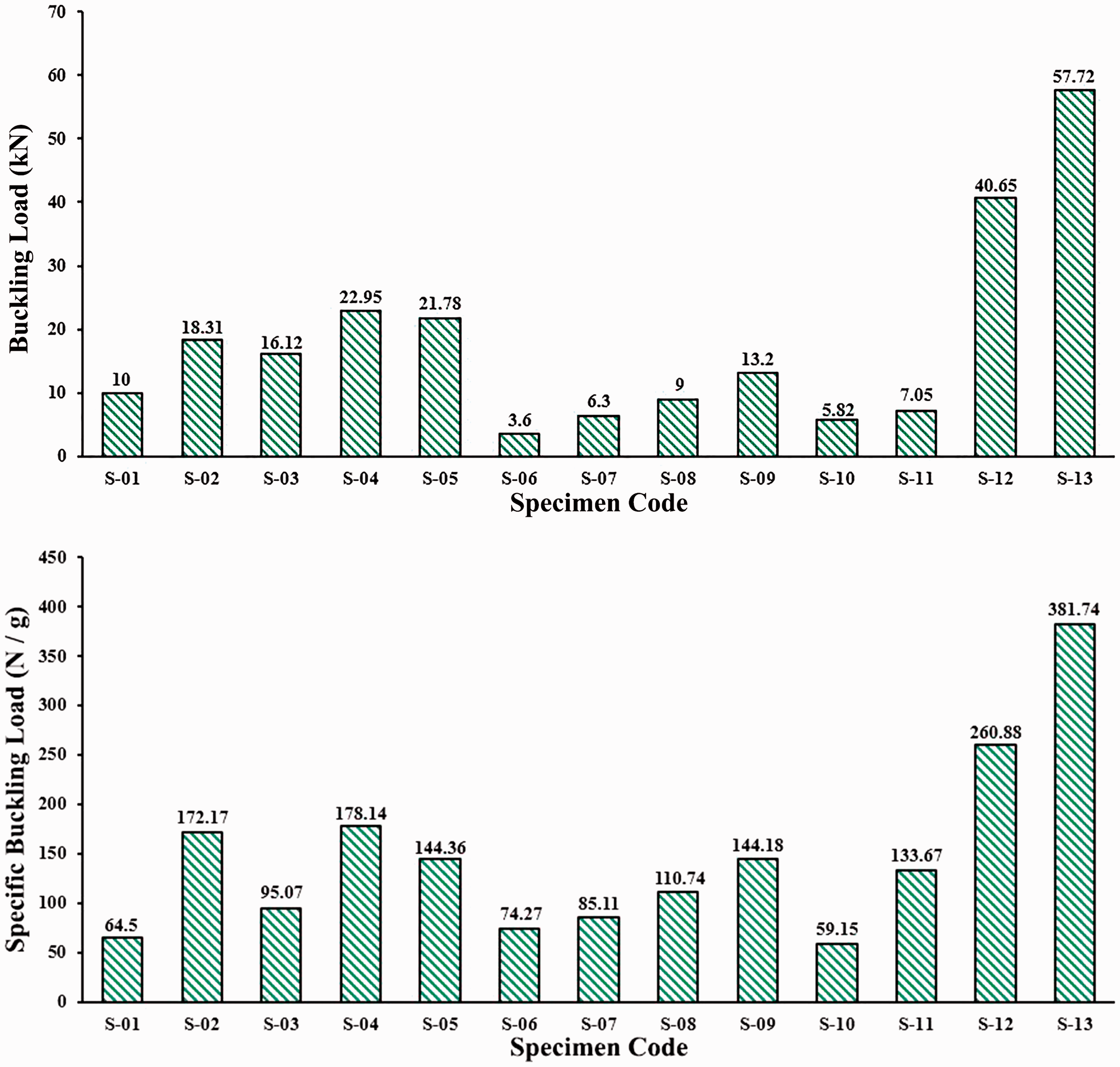
Buckling load (top) and specific buckling load (bottom) of all tested samples.
Conclusion
Buckling and crushing behavior of PVC foam core hybrid composite sandwich columns under edgewise loading condition was experimentally investigated in the present study. Effects of many parameters such as face sheet thickness, slenderness ratio, stacking sequence configuration of hybrid face sheets, boundary conditions, and sandwich reinforcement with resin pins were studied. The following results could be drawn from the present work: In the specimens with FML face sheets, the presence of AL plate prevents the column from end-crushing, which was one of the major failures in the composite columns with face sheets without AL plates. That is because the used stiff and tough aluminum alloy resists against any local buckling or end-crushing in the structure. Therefore, it gives rise to face sheet-core debonding as well as face sheet delamination between the composite and AL layers. The specimen with FML face sheets made from Dyneema fabrics and AL plates has the highest buckling load as well as highest specific buckling load compared to other specimens. The specimens made from Dyneema/epoxy face sheets have the second highest specific buckling load among all tested specimens. Using cylindrical through-thickness resin pins to reinforce the sandwich columns leads to a significant increase in the buckling resistance of composite sandwich columns. This is because reinforcing the structure by resin pins increases the bonding strength between the face sheets and the foam core. This prevents the face sheet-core debonding in the structure which is one of the major failure modes in the composite columns under edgewise compressive loads. Also, using resin pins changes the failure mode from the unstable Euler buckling mode to a more stable progressive end-crushing mode which consequently results in a higher energy absorption capability. Finally, the results revealed that using resin pins results in increasing the buckling load as well as the specific buckling load of the sandwich column, while its fabrication process is simple compared to other stiffening techniques such as Z-pinning and stitching techniques. Specimens with lower slenderness ratio have a higher buckling load. However, both specimens underwent the Euler buckling mode. The results showed that in the specimens with FML face sheets, the major failure modes are face sheet-core debonding and face sheet delamination. However, in the specimens with composite face sheets made from glass and/or Dyneema fabrics, the major failure modes are Euler buckling and progressive end-crushing of the specimen. Using a specific designed fixture to laterally clamp, the sandwich column decreases the probability of specimen end-crushing and significantly increases the buckling load.
Footnotes
Acknowledgements
The publication of this article was funded by the Qatar National Library.
Declaration of Conflicting Interests
The author(s) declared no potential conflicts of interest with respect to the research, authorship, and/or publication of this article.
Funding
The author(s) disclosed receipt of the following financial support for the research, authorship, and/or publication ofthis article: This report was made possible by GSRA grant GSRA2-1-0611-14034 from Qatar National Research Fund (a member of Qatar Foundation).
