



Abstract
Objectives
The goal of this study was to gather information on treatment approaches and trends for the treatment of non-obstructive feline idiopathic cystitis (FIC).
Methods
An internet-based survey of veterinarians was conducted focusing on outpatient treatment approaches for cats that are stable, not obstructed and that exhibit lower urinary signs suspected to be due to FIC, where other causes (eg, urolithiasis, urinary tract infection, other) have been ruled out.
Results
A total of 606 veterinarians submitted complete surveys for inclusion. Respondents reported that when obtaining patient histories, in ⩾75% of client interactions they gathered information about feline stressors (542/606, 89%), resource set-up (eg, number of litter boxes; 466/606, 77%) and diet (552/606, 91%). Only 31% (187/606) of respondents reported that they gathered information about daily human/cat interaction in ⩾75% of client interactions, with 69% (419/606) of veterinarians inquiring about this information 50% of the time or less. Top treatments selected for acute presentations of FIC were analgesics (537/606, 89%), modified litter box management (435/606, 72%) and synthetic feline pheromones (422/606, 70%). Top treatments selected for chronic FIC management were prescription diets (519/606, 86%), modified litter box management (508/606, 84%) and environmental enhancements (493/606, 81%). Challenges with owner compliance and expectations were selected as barriers to achieving a positive treatment outcome by 81% (486/599) and 62% (372/599) of respondents, respectively. Rehoming or euthanasia were recommended by 37% (224/606) and 10% (59/606) of veterinarians, respectively, due to difficulties managing FIC.
Conclusions and relevance
The treatment approach for non-obstructive FIC appears to be multimodal and recommendations vary between acute and chronic presentations. An area of opportunity is client communication and education, which may improve owner compliance and help set appropriate expectations. The importance of human/cat interaction as a management strategy appears under-emphasized.
Introduction
Feline idiopathic cystitis (FIC) is the most common feline lower urinary tract disease (FLUTD), making up 55–67% of cases;1 –4 however, it remains poorly understood. Cats with FIC present with hematuria, pollakiuria, stranguria and periuria, and in the most severe cases may experience urethral obstruction (UO).5,6 These non-specific signs overlap with those of urolithiasis, urethral plugs, bacterial cystitis and neoplasia; therefore, the lack of distinguishing signs or testing makes FIC a diagnosis of exclusion. 5 The etiology of FIC is similarly nebulous, although the current overall body of research on this condition supports a link between environmental stress and bladder inflammation.7 –11
FIC negatively impacts feline welfare and results in mortality for a percentage of cats.11 –14 Inappropriate elimination, as seen with FIC, has been identified as a risk factor for cats being relinquished to shelters.15,16 Two recent studies reported that 46–61.5% of cats initially diagnosed with FIC experienced recurrent episodes of FLUTD.12,13 Cats with a higher number of recurrences were significantly more likely to be euthanized because of FLUTD compared with cats euthanized as a result of other causes. 13 The mortality rate associated with FIC has been reported to be in the range of 5–21%, which includes cats that died or were euthanized because of UO, and thus may not be representative for non-obstructive FIC.11 –14
Despite the prevalence and impact of FIC, robust evidence-based support for various FIC treatments is lacking and there is no consensus within the veterinary community regarding treatment approach. A partial list of treatments that have been proposed anecdotally and in literature is summarized in Table 1. Studies supporting interventions such as multimodal environmental modification (MEMO), feline facial pheromone, and alpha casozepine reported decreased levels of perceived stress in cats.7,17 –19 Similarly, studies have reported a decreased occurrence of FLUTD signs when cats are fed various prescription diets or canned food.8,20 However, some of these results have been difficult to reproduce in a research setting. Kaul et al 12 reported that modifying housing, litter box management and/or diet did not result in a significant difference in the recurrence of FLUTD signs in cats with FIC. Studies evaluating amitriptyline or oral glucosamine for the treatment of non-obstructive FIC do not support their efficacy.21,22 Protocols using acepromazine, buprenorphine, intravesicular glycosaminoglycans, meloxicam and prazosin have been investigated for the treatment of obstructive FIC, with variable outcomes.23 –27 Studies are needed to evaluate whether these agents or protocols produce benefit in cats with non-obstructive FIC.
Summary of proposed treatments or interventions for feline idiopathic cystitis
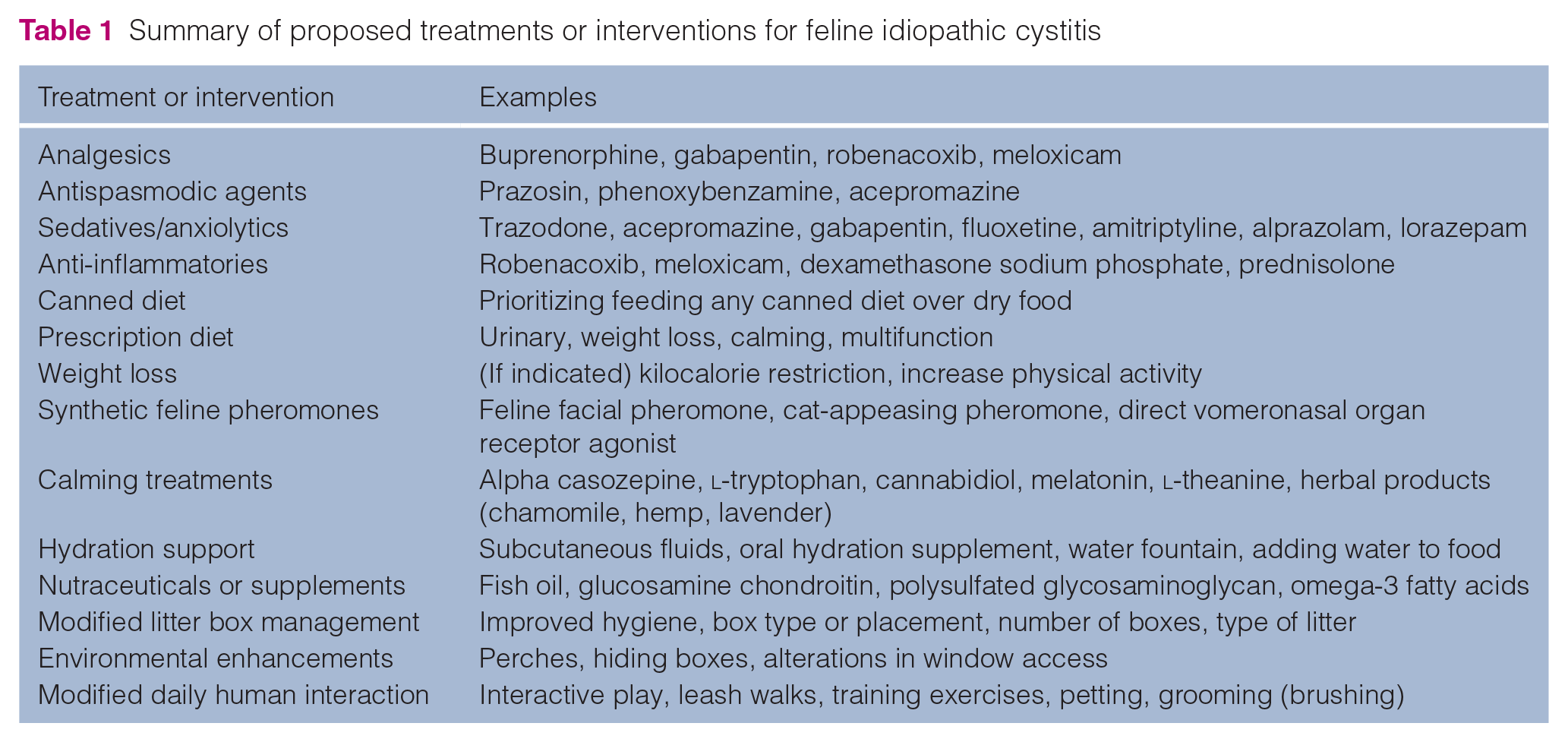
With so many unanswered questions surrounding a highly prevalent disease process, it is unclear how veterinarians in practice approach the treatment of FIC daily, and whether these choices are evidence-based. The goal of this study was to gather information on treatment approach and trends for the treatment of non-obstructive FIC. Additional goals were to identify areas for possible improvement in treatment approach and to help direct future research on individual treatments and comprehensive protocols for the management of FIC.
Materials and methods
An internet-based survey was created and hosted on the Qualtrics platform. The survey was intended for small animal veterinarians who see cats as part of their clinical practice. The survey was restricted to respondents in the USA because of differences in drug labeling, availability and cost between the USA and other countries. Before its launch, the survey was tested by colleagues for ease of use, functionality, visual appeal, cohesiveness and time required to complete the survey. The survey was available online between 22 September 2022 and 8 February 2023, and was distributed via social media sites and email list serves (Facebook, Colorado Veterinary Medical Association, American Association of Feline Practitioners). Survey response was voluntary and respondents were not offered an incentive for their participation. Responses submitted from non-veterinarians, from veterinarians practicing outside the USA or from respondents who did not consent for their anonymous response data to be shared were excluded from the study. Incomplete or duplicate survey responses were also excluded.
The survey consisted of 50 questions (see supplementary material) that focused on the outpatient treatment approach for cats that are stable, not obstructed and that exhibit lower urinary signs suspected to be due to FIC, where other causes (eg, urolithiasis, urinary tract infection, other) have been ruled out. For the purposes of this survey, acute presentations were defined as cases with acute onset of lower urinary tract signs or acute worsening of chronic signs where a cat is being treated on an outpatient basis. Chronic presentations were defined as cases where an ongoing plan or treatment was recommended to prevent or reduce the recurrence of acute lower urinary tract signs. The response format varied based on the question type, with respondents being asked to select a single answer with the best fit, select all options that apply or enter free text. An answer was required for all questions except those that were solely free-text entries. The first section collected demographic information from the respondents, such as practice region, practice type, degrees or certifications, and year of veterinary school graduation. The next section posed questions surrounding history-taking practices for cats presenting with non-obstructive FIC. Questions regarding history-taking practices (eg, the type of information collected and how frequently) were included in the survey as historical and home environment data are crucial for managing feline husbandry and behavioral needs as part of comprehensive FIC management. The next survey sections focused on various approaches to outpatient management for acute FIC, chronic FIC management, perceived barriers and patient outcomes.
Survey results are presented as descriptive statistics, expressed in percentages for categorical variables. Statistical analyses were performed using Qualtrics, and Fisher’s exact test was used to evaluate the relationships between categorical variables where appropriate. Differences were considered significant at P <0.05.
After review by the Ohio State University Office of Responsible Research Practices, the study was issued exemption 2022E0841 as it was determined to not meet the definition of human subjects research.
Results
A total of 688 survey submissions were registered. Eight submissions were disqualified because respondents did not consent to share their submissions with researchers. In total, 26 submissions from non-veterinarians were disallowed and 48 submissions were excluded because the respondent was practicing outside the USA. Finally, 606 survey responses were eligible for inclusion in the study. A summary of the respondents’ demographic information can be found in Table 2. The typical respondent was located in the Midwest region of the USA (257/606, 42%), practicing in an urban or suburban setting (529/606, 87%). Most respondents were general practitioners (391/606, 65%); however, 27% (162/606) of respondents identified themselves as holding at least one board certification. Most respondents had graduated from veterinary school between 2011 and 2022 (336/606, 55%). When asked to describe their patient population, 5% (32/606) of responding veterinarians indicated that they saw feline patients exclusively. The majority of respondents (520/606, 86%) stated that cats made up 25–75% of their patient population.
Summary of survey respondents’ (n = 606) demographic data

History-gathering practices
Respondents were asked to indicate which types of historical data they gather when evaluating a cat presenting for FIC and how consistently they gather historical data from various categories (Figure 1). More than 50% of respondents gathered information on potential sources of feline stress (eg, inter-cat conflict, recent travel, moving to a new house), resource set-up (number and location of perches, water bowls, litter boxes, etc) and dietary information (wet vs dry, brand of food, amount fed, meal feeding vs free choice, etc) in 75% or more of client interactions. However, 69% (419/606) of respondents answered that they asked about daily human/cat interaction (interactive play, brushing, petting, etc) in ⩽50% of client interactions, with 32% (196/606) of respondents gathering this information in only ⩽25% of client interactions. Of the respondents, 18% (111/606) reported that they never ask about daily human/cat interaction. By comparison, 84% (27/32) of feline-only practitioners answered that they gather information about daily human/cat interaction in at least 50% of client interactions, with only one feline-only practitioner answering that they never gather this information.

Self-reported frequency of history-gathering across four categories of data for evaluation of cats with feline idiopathic cystitis (FIC). Responses from a total of 606 veterinarians who submitted completed surveys. Respondents were allowed to select one answer in response to how often (percentage of client interactions) they gathered historical information from four categories when evaluating cats with FIC
Treatments utilized for acute FLUTD signs due to FIC
Respondents were asked to select treatment types from broad categories they might utilize or recommend for a cat experiencing an acute presentation of non-obstructive FIC. Treatment categories and selections are shown in Figure 2. The top 50% of treatment categories selected for acute presentations of FIC were analgesics (537/606, 89%), modified litter box management (435/606, 72%), synthetic feline pheromones (422/606, 70%), hydration support (409/606, 67%), canned diet (386/606, 64%), environmental enhancement (380/606, 63%), prescription diet (363/606, 60%) and anti-inflammatories (300/606, 50%).
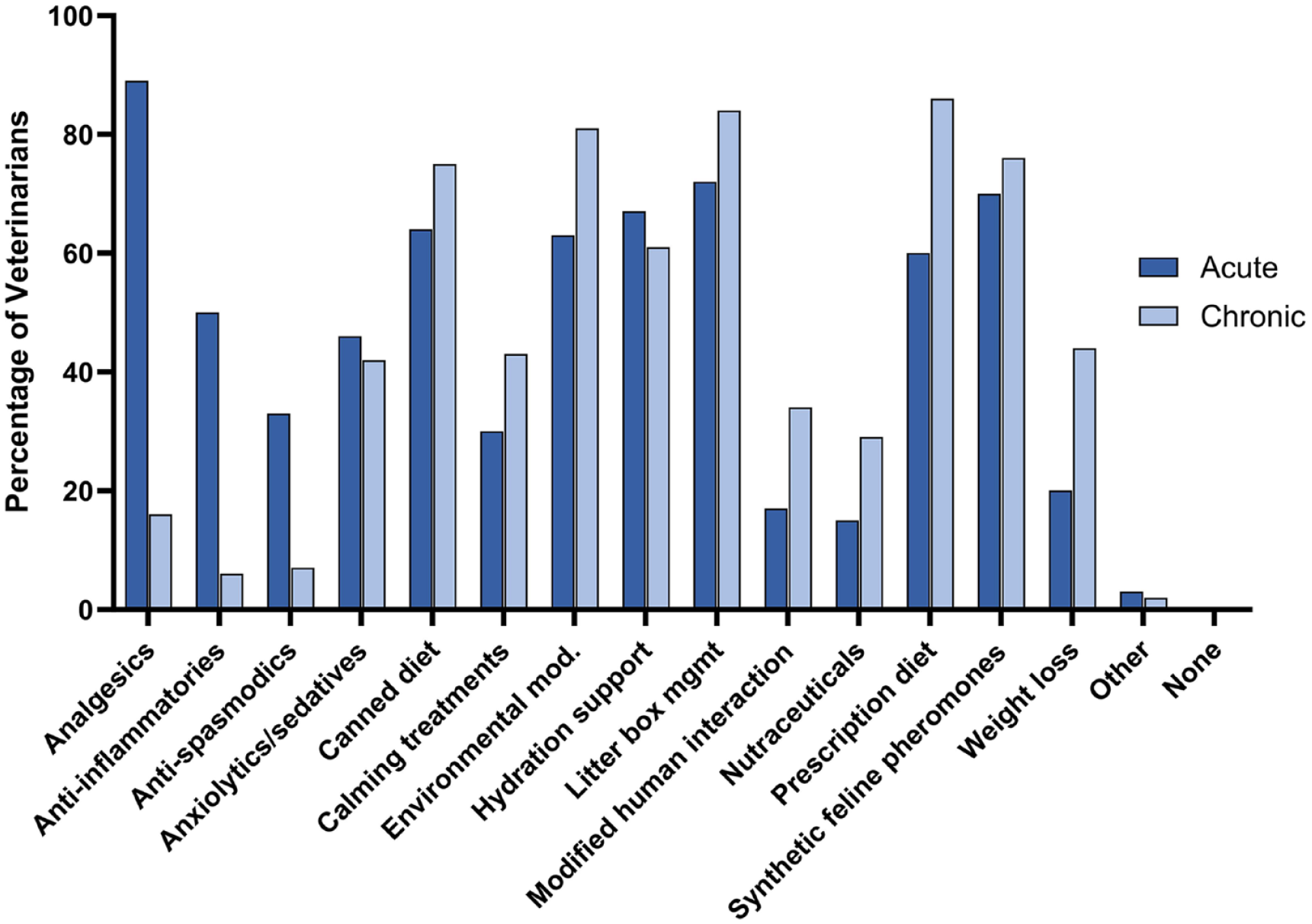
Treatment categories utilized by veterinarians for acute vs chronic management of non-obstructive feline idiopathic cystitis (FIC). Percentages represent the number of veterinarians out of 606 who indicated that they utilized a category of treatments for acute or chronic presentations of FIC. Respondents were allowed to select as many treatment categories as applicable
When asked which specific analgesics they utilized, 460/606 (76%) respondents selected buprenorphine and 473/606 (78%) selected gabapentin. Of the 606 respondents, 367 (61%) selected both buprenorphine and gabapentin in the analgesics category. Gabapentin was also selected as a sedative/anxiolytic by 331/606 (55%) respondents who selected buprenorphine and gabapentin for analgesia for acute presentations of FIC. A total of 475/606 (78%) respondents indicated that they utilize gabapentin for sedation/anxiolysis, independent of other answer choices. Robenacoxib was selected as an analgesic option by 256/606 (42%) respondents and as an anti-inflammatory option by 288/606 (48%) respondents. Of the 606 respondents, 203 (33%) indicated that they did not prescribe anti-inflammatories for acute care, whereas only 4 (0.66%) indicated that they did not utilize analgesics for acute care. Maropitant was entered by seven respondents as an ‘other’ option under the anti-inflammatory drug category.
In the anti-spasmodics category, 286/606 (47%) respondents had utilized prazosin, 144/606 (24%) had utilized acepromazine and 61/606 (10%) indicated that they had utilized both medications for acute care. Of the 606 respondents, 206 (34%) indicated that they did not prescribe anti-spasmodics for acute care. Nutraceuticals (91/606) and weight loss (124/606) were the least commonly selected interventions for the management of acute presentations of FIC.
Treatments utilized for the management of chronic FIC
For chronic or long-term outpatient maintenance of cats with FIC, treatment categories selected by more than 50% of respondents were prescription diets (519/606, 86%), modified litter box management (508/606, 84%), environmental enhancements (493/606, 81%), synthetic feline pheromones (461/606, 76%), canned diet (454/606, 75%) and hydration support (369/606, 61%) (Figure 2).
Respondents indicating analgesics and sedatives/anxiolytics for use in chronic FIC management were in the minority at 16% (96/606) and 42% (257/606), respectively, based on respondents’ selections from the broader treatment categories. However, 344/606 (57%) respondents then indicated gabapentin as a specific drug selection under the analgesia category. Comparatively, gabapentin was selected by 358/606 (59%) respondents under the sedatives/anxiolytics category. Fluoxetine was the only other drug in that category that was selected by more than half of respondents (313/606, 52%). The majority of respondents indicated that they did not utilize anti-spasmodics (420/606, 69%) or anti-inflammatories (412/606, 68%) for chronic care. Nutraceuticals were less commonly selected than other interventions in the chronic care category (177/606, 29%).
Feeding recommendations
The most common overall diet recommendations were for a prescription urinary diet (492/606, 81%) and a canned diet (491/606, 81%). Prescription multipurpose diets (381/606, 63%) and prescription calming diets (285/606, 47%) were also common choices. For cats that are overweight, more than half the respondents indicated that they recommended kilocalorie restriction (467/606, 77%), meal feeding rather than free choice (446/606, 74%), measuring food (441/606, 73%), increased activity/play (374/606, 62%) and prescription weight-loss diets (330/606, 54%).
Informational resources utilized
Respondents were asked to identify which informational sources they utilized when making recommendations for an outpatient treatment plan for cats with non-obstructive FIC. The question was structured for respondents to select as many options from a list as applicable, with each item allowed to be selected only once. All respondents selected at least one option. The most common selections were personal experience (497/606, 82%), continuing education seminars (479/606, 79%), expert/consensus guidelines (446/606, 74%), veterinary school training (399/606, 66%), research studies (395/606, 65%) and colleagues’ experiences or recommendations (382/606, 63%). The least selected options were social media (11/606, 2%) and various other websites (10/606, 2%).
In addition, respondents were asked what types of educational resources they offered to owners with cats affected by FIC (Figure 3). This question was structured similarly, where respondents were asked to select as many options from a list as applicable and each option could be selected only once. In total, 49 (8%) respondents opted out of this question by selecting ‘I do not provide or recommend resources to owners’. The remaining 557 respondents selected at least one option each. The most common choice overall was internet-based cat owner resources (502/577, 87%), which included websites for the Ohio State University Indoor Pet Initiative, Veterinary Partner by VIN, icatcare.org, Cornell Feline Health Center and foodpuzzlesforcats.com. General or clinic-produced brochures and American Association of Feline Practitioners (AAFP) brochures were selected by 194/577 (34%) and 167/577 (30%), respectively. Referral to a specialist was selected by 111/577 (19%) respondents.

Types of educational resources supplied to owners of cats with feline idiopathic cystitis. Veterinarians were allowed to select as many answer categories as applicable unless ‘I do not provide or recommend resources to owners’ was selected, in which case any additional selections were not allowed. Out of 606 respondents, 49 selected ‘I do not provide or recommend resources to owners’. Percentages for all other answer choices are calculated based on the number of veterinarians who indicated that they supplied educational resources to owners (n = 557). AAFP = American Association of Feline Practitioners; OSU = Ohio State University
Barriers to management
Respondents were asked to select items from a list of potential barriers to achieving a positive treatment outcome in cats with non-obstructive FIC. Seven respondents opted out of the question by selecting ‘I do not perceive any significant barriers’. The other 599 respondents selected at least one option each, and responses are depicted in Figure 4. Owner compliance and expectations were selected most often, with 81% (486/599) and 62% (372/599) of respondents selecting these options, respectively.

Significant barriers to achieving a positive treatment outcome in cases of feline idopathic cystitis (FIC), as perceived by surveyed veterinarians. Percentages represent the proportion of respondents out of 599 who acknowledged barriers to achieving a positive outcome in management of FIC. Respondents were allowed to select more than one answer. The answer choice ‘I do not perceive any significant barriers’ (7/606, 1%) was not included in this graph. Respondents who selected this answer choice were not allowed to select additional choices. CE = continuing education
Fewer than half of the veterinarians surveyed (224/606, 37%) had recommended that an owner rehome their cat because of difficulties controlling signs of FIC. Veterinarians board-certified in emergency and critical care (DACVECC; n = 67) were least likely to recommend rehoming (13/67, 19%), which was significantly different (P = 0.0012) when compared with all other veterinarians surveyed. Of the other 95 specialists (DACVECC excluded), 32 (34%) reported that they had recommended rehoming a cat with FIC because of difficulties controlling the condition. Just over half of feline-only practitioners had recommended rehoming (17/32, 53.13%).
A little more than half of all respondents had been asked to perform euthanasia as a result of non-obstructive FIC (319/606, 53%). Considering DACVECC respondents only, the percentage who had been asked to perform euthanasia was similar to that for all respondents (32/67, 48%). A slightly larger majority of feline-only practitioners had been asked to perform euthanasia (20/32, 62.5%) in non-obstructive cases of FIC; however, this difference was not significant compared with the total surveyed population (P = 0.2790). The majority of all respondents had never recommended euthanasia because of non-obstructive FIC (547/606, 90%), and there were no proportional or statistical differences between various groupings of veterinarians.
Discussion
The goal of this survey study was to describe trends and treatment approaches for non-obstructive FIC. The response data suggest that veterinarians are utilizing a multimodal approach for the management of FIC, and the most commonly recommended treatment strategies vary between acute and chronic presentations of FIC. Analgesics and a prescription diet were the most commonly selected treatment options for acute and chronic FIC presentations, respectively; however, there was notable overlap in selected recommendations for prescription diets, litter box management, environmental modification, a canned diet, hydration support and feline synthetic pheromones. This combination of treatments is in close agreement with the concept of MEMO, as described in a 2006 study by Buffington et al. 7 MEMO is a system of changes to a cat’s environment that together result in decreased likelihood of activation of the cat’s stress response system, thereby reducing signs of FIC. 7 Recommendations from this study included client education and combinations of other changes as appropriate: avoiding punishing the cat; changing from dry to canned food; increasing water intake; using unscented clumping litter; litter box management (location, increasing number and cleaning frequency); providing climbing structures, perches and scratching posts; auditory and visual sensory stimulation; increased human interaction; and identifying and reducing inter-cat conflict.7,28 Medical management was employed in some cats but was considered to be a co-therapy and not a part of MEMO. 7 To date, only one other study (in which non-obstructive FIC was not specifically distinguished) and two case reports directly evaluating the effects of a MEMO-type treatment model for FLUTD management have been published, all of which reported positive outcomes.29 –31 Future studies are needed to continue investigating this treatment approach.
Analgesics were utilized by 89% (537/606) of veterinarians when treating a cat with signs of acute FIC, which may indicate that most veterinarians appreciate pain as a significant component of an acute presentation. Only 16% (96/606) of respondents indicated that they utilized analgesics for chronic FIC treatment, implying that analgesics are not used as a continuous treatment and chronic pain may not be recognized as an aspect of the chronic disease process. Alternatively, this response could be driven by limited options and/or lack of evidence for the treatment of chronic pain in cats with FIC. Overall, buprenorphine was a common analgesic choice among respondents (460/606, 76%) and has been utilized in multidrug protocols for the treatment of obstructive FIC with varying success.23,32 Gabapentin was selected by 78% of respondents in both the analgesia and sedative/anxiolysis categories, making it the most commonly selected drug for the treatment of acute FIC. Interestingly, there have not been any studies directly evaluating gabapentin for the treatment of this condition, despite its popular use. Although a 2018 paper by Guedes et al 33 described an owner-perceived improvement in physical activity in geriatric cats with osteoarthritis treated with gabapentin, gabapentin’s true analgesic effect in cats remains controversial.33 –35 Both buprenorphine and gabapentin were selected as analgesics by 61% (367/606) of respondents for the management of acute FIC. A study evaluating postoperative pain control in cats undergoing ovariohysterectomy reported that 26% (5/19) of cats receiving a buprenorphine + gabapentin protocol required rescue analgesia; however, that study was underpowered, making it difficult to draw larger conclusions. 36 This drug combination has not been evaluated in cats with FIC, and respondents were not asked to indicate dosing route or a specific buprenorphine product in this survey. It is likely that both drugs are favored for outpatient treatment of non-obstructive FIC because of convenient dosing options, especially buprenorphine, which is commonly administered as transmucosal, 24 h subcutaneous injection (Simbadol; Zoetis US) and transdermal (Zorbium; Elanco) formulations. Notably, a recent study found that buprenorphine had only 24% bioavailability when dosed transmucosally, 37 and another study documented significantly higher treatment failure (need for rescue analgesia) in cats that received transmucosal buprenorphine after ovariohysterectomy compared with cats that received buprenorphine via other dosing routes. 38 The role of buprenorphine as an analgesic for the treatment of FIC remains open; however, there may be concerns with transmucosal dosing based on the current literature. Analgesic protocols for the outpatient treatment of FIC are an area for future research.
Determining the intention behind prescribing a medication becomes complex when considering drugs with more than one therapeutic effect, such as gabapentin and robenacoxib. Gabapentin was listed as an option in both the analgesics and the sedatives/anxiolytics categories in this study. Respondents indicated that they uncommonly prescribed analgesics (96/606, 16%) and sedatives/anxiolytics (257/606, 42%) for the chronic management of FIC, but then 344/606 (57%) and 358/606 (59%) respondents selected gabapentin specifically under these respective categories. One interpretation may be that although respondents rarely prescribe medications for analgesia or sedation/anxiolysis for the chronic management of FIC, gabapentin is a common drug of choice in either of these categories when the need arises. Alternatively, veterinarians may not always consider or may not be aware of all the therapeutic effects of a drug. Potential discrepancies were also noted between the number of respondents who selected anti-inflammatories for use in the management of acute FIC (288/606, 48%) and then subsequently opted out of selecting specific anti-inflammatory drugs by marking ‘I do not prescribe anti-inflammatories for acute care’ (203/606, 33%). However, some respondents that opted out offered clarity by entering a free-text reply, indicating that they prioritized other medications first (eg, opioids, fluid therapy) or that they may use anti-inflammatories on a case-by-case basis. There are no published studies reporting the use of robenacoxib for the treatment of non-obstructive FIC, and studies examining meloxicam use in obstructive FIC were unable to establish a benefit for its use in this disease process.25,32 Interestingly, seven respondents entered maropitant under the anti-inflammatory drug category. Maropitant is labeled as an antiemetic; however, it has gained interest for its anti-inflammatory or analgesic potential based on its mechanism of action as a neurokinin-1 receptor antagonist. A recent meta-analysis found, however, that it has no proven effect on pain or inflammation. 39 Question wording or survey presentation may have been confusing or unclear pertaining to drugs with multiple therapeutic uses. Survey complexity was likely a limitation of this study, and the scope could be narrowed to focus solely on medication use in future studies of this type.
This survey was open for responses shortly after two research groups published evidence from studies that prazosin does not appear beneficial in preventing recurrent urethral obstruction in cats.26,27 Prazosin was the most commonly selected medication in the anti-spasmodic category for acute care (286/606, 47%), although five respondents entered free text stating that they were less likely to use prazosin now, based on recent studies. Prazosin use may be expected to decrease further as more veterinarians become aware of these new findings.
This survey supports that there is an opportunity for cultivating human/cat interactions when managing FIC. More than half of veterinarians in this survey stated they did not consistently gather historical data on human/cat interaction and even fewer stated that they made recommendations for modified human interaction as an intervention: 17% recommended modified human interaction in acute management and 34% in chronic management of FIC. ‘Positive, consistent and predictable human-cat social interaction’ is one of the five pillars of a heathy feline environment, according to AAFP and the International Society of Feline Medicine (ISFM) Feline Environmental Needs Guidelines, 40 and is a component of MEMO.7,41 Importantly, recommending modified human/cat interaction is free. As reported in this survey, this intervention is under utilized and is an opportunity to enhance conversations with clients on FIC management.
Communicating treatment expectations with clients appears to be another opportunity to improve client education discussions regarding FIC. Respondents indicated that owner compliance (82.1%) and client expectations (61.2%) were the two biggest barriers in achieving a positive treatment outcome. These terms were not more specifically defined in the survey and were left to the interpretation of the responder. Compliance may be related to inability or unwillingness to institute changes (eg, inability to medicate the patient, or inability or unwillingness to make household changes). Unrealistic expectations may exist regarding the disease’s response to treatment (eg, management vs cure) and normal feline behaviors and environmental needs. However, challenges with compliance and expectations may be directly related to the manner in which recommendations are conveyed, and additional time spent on effectively communicating recommendations may be valuable. Effective communication involves a quality interaction where the clinician explains the purpose or reasoning behind treatment and a two-way exchange takes place with the client, indicating a shared understanding. 42 Increased compliance and expectation adjustment are both positive outcomes of effective communication. 43 Reiterating that FIC is a condition that is managed and not cured may be helpful in setting realistic expectations with a client. Veterinarians also indicated that lack of owner education and lack of time for owner education were barriers to achieving a positive treatment outcome. Owner education is a component of MEMO, 7 and dedicated time for client education could be incorporated into FIC consultations similarly to the way time is allocated to perform diagnostics or therapeutic interventions. Other resources, such as websites or brochures, could be used to augment client education discussions in the clinic and as a way to direct clients toward reputable sources of information for at-home reading.
When reasonable treatment efforts have been exhausted, sometimes the most appropriate recommendation may be to rehome a cat with FIC. 28 In this survey, DACVECC respondents were significantly less likely to recommend rehoming a cat with non-obstructive FIC when compared with all other survey respondents. One explanation could be that DACVECC respondents do not feel that they are able to fully assess all aspects of FIC management in cases presented to them, given the brief interaction on an emergency basis. Given that most respondents (382/606, 63%) have not recommended rehoming, it should be considered that perhaps this recommendation could be seen as socially unacceptable – to suggest that a client’s home is not a suitable environment for a particular cat. Although broaching the subject may require more delicate communication skills, rehoming is a reasonable recommendation, especially if a client is considering euthanasia with FIC as the sole concern. 28
Bias is an inherent limitation to survey studies, and several types of bias should be considered when interpreting these survey results. Self-reporting bias occurs when study participants are required to report their own data, which can be unreliable, but can also be very helpful when attempting to gather views and perspectives, as was the goal of this study. Two types of self-reporting bias likely limiting this study were social-desirability bias and recall bias. Social-desirability bias may have occurred when respondents felt compelled to give an answer that would be considered favorable (eg, recommending MEMO) rather than what is actually being recommended. However, a less-than-favorable response was recorded when veterinarians were asked how often they gathered historical data on human/cat interactions, which may indicate a reasonable degree of self-reporting accuracy. Alternatively, the number of respondents who gathered human/cat interaction data could be even lower than that reported here. Recall bias was likely also present in this study, where recommendations for certain treatments could be over- or underestimated based on experiential impact. Lastly, participation bias should be considered, where the population of respondents may not be representative of the overall population of interest. In this study, participation was optional and veterinarians with a particular interest in FIC may have been more likely to respond than those with equivocal opinions or lack of interest in this topic.
Conclusions
Trends in the treatment approach for non-obstructive FIC appear to be multimodal in nature, with various drug treatments being prioritized for acute presentations, and feeding and environmental modifications being more commonly recommended for the management of chronic FIC. There may be room for improvement in client communication, where a greater focus on quality interactions and client education may help set realistic owner expectations and encourage compliance. Human/cat interaction is also an aspect of acute and chronic treatment that appears to be under emphasized.
Supplemental Material
Supplemental Material
Full survey form
Footnotes
Acknowledgements
The authors wish to thank all the veterinarians and organizations who promoted this survey online, specifically the American Association of Feline Practitioners and the Colorado Veterinary Medical Association.
Supplementary material
The following file is available as supplementary material:
Full survey form.
Conflict of interest
The authors declared no potential conflicts of interest with respect to the research, authorship, and/or publication of this article.
Funding
Dr Krause’s residency and the publication cost of this article were sponsored by Veterinary Centers of America.
Ethical approval
This work did not involve the use of animals and therefore ethical approval was not specifically required for publication in JFMS.
Informed consent
This work did not involve the use of animals (including cadavers) and therefore informed consent was not required. No animals or people are identifiable within this publication, and therefore additional informed consent for publication was not required.

References
Supplementary Material
Please find the following supplemental material available below.
For Open Access articles published under a Creative Commons License, all supplemental material carries the same license as the article it is associated with.
For non-Open Access articles published, all supplemental material carries a non-exclusive license, and permission requests for re-use of supplemental material or any part of supplemental material shall be sent directly to the copyright owner as specified in the copyright notice associated with the article.
