



Abstract
Objectives
The objectives of this study were as follows: (1) to describe the AMC to the Rescue (AMCTTR) funding criteria and the application process; (2) to describe the distribution of species cared for through the program, the medical conditions treated in cats compared with those treated in dogs and the cost of that care; and (3) to define the successes and challenges of the program.
Methods
The AMCTTR database was reviewed for applications submitted between 1 January 2020 and 31 December 2022. Data collected included the following: the date of application; rescue organization seeking financial support; species; age of pet at time of application; expenditures funded by AMCTTR; and the method by which the rescue organization learned about AMCTTR. The animals in the AMCTTR database were sorted into two groups: those accepted for funding and those that did not meet funding criteria. The Animal Medical Center (AMC) medical record system was searched for the total number of individual animals, species and age seen at AMC during the study period.
Results
In total, 267 applications were reviewed and 190 applications from 134 cats, 52 dogs and four rabbits were accepted for advanced veterinary care funded by AMCTTR. Over the 3-year study period, US$612,564 were awarded and over half of those funds were awarded to cats. The average expenditure per animal during this time period was US$3224. The most common referrals to AMCTTR were made to ophthalmology, surgery and dentistry.
Conclusions and relevance
The needs of cats differed from dogs in that feline applications were most commonly submitted for ophthalmology or dentistry. Expenditures per cat were less than per dog because dogs were referred for more expensive orthopedic surgery. The need for advanced veterinary care for rescue animals is enormous, especially for cats. Programs that subsidize advanced veterinary care increase access to that care.
Introduction
Lack of access to veterinary care is a complex, worldwide problem involving multiple socioeconomic factors. 1 Animals relinquished to rescue organizations are often relinquished because of the cost of medical care.2,3 Barriers to veterinary care increase when animals are unowned or are relinquished to rescue organizations with limited resources. Two surveys of animal shelters in the USA listed animal health and medical issues as the top reasons for relinquishment of dogs and cats to an animal shelter.3,4 In Spain, between 2008 and 2013, 25–30% of dog and cat relinquishment was reported to be due to financial reasons related to medical care. 5 In the UK, the need for care of unowned animals exceeds the available financial, facility and personnel resources. 6 A survey of shelters operated by the Royal Society for the Prevention of Cruelty to Animals in Queensland, Australia reported approximately 25% of cats admitted to the shelters were brought in by ambulance because of injuries. 7 Injured cats were twice as likely to be euthanized compared with stray cats or cats surrendered by their owners. While cats are medically underserved as a species, cats without owners have even more limited access to veterinary care. 8
To combat this issue, the Schwarzman Animal Medical Center (AMC) established the AMC to the Rescue (AMCTTR) program to fund advanced veterinary care for rescue animals. AMC is a tertiary care veterinary teaching hospital including a level I trauma center designated by the American College of Veterinary Emergency and Critical Care. The AMC employs over 100 veterinarians, and approximately 40 of those veterinarians are board certified by organizations recognized by the American Board of Veterinary Specialties. AMCTTR was established in 2013 to fund advanced veterinary care for animals under the care of federal income tax exempt [501(c)(3)] recognized rescue organizations. The program supports treatment for conditions that are barriers to adoption, have a diagnosis, but not for diagnostic testing. The ultimate goal of AMCTTR is to improve a pet’s chance of adoption. Organizations operating a shelter do not qualify for AMCTTR funds. The fund was established in response to requests from local rescue organizations for improved access to, and financial support for, advanced veterinary care.
Access to AMCTTR funds requires a formal application and review process (Figure 1, Boxes A, B, C; see also the supplementary material 1–5). However, regardless of AMCTTR application status, all animals cared for by a 501(c)(3) recognized not-for-profit rescue organization receive a 20% discount on all veterinary care at AMC. Funds awarded through AMCTTR are in addition to this not-for-profit discount and are exclusively for advanced veterinary care. These funds support treatment-related costs and are available to all species of animals cared for at AMC up to a limit of US$5500 per animal.

Flow chart of AMC to the Rescue (AMCTTR) process
Box A
Components of an AMC to the Rescue (AMCTTR) application
Medical record – including diagnostic images and laboratory results
Referral letter from referring veterinarian*
Completed AMCTTR application form*
Official government letter indicating not-for-profit status
Signed AMCTTR policies and procedures*
*Documents in supplementary materials
Box B
Criteria for application review and level 1 approval
Diagnosis of a condition with high likelihood of correction which will increase the pet’s ability to be adopted
Results of complete blood count, biochemical profile
Species specific infectious disease testing:
– Feline leukemia virus/feline immunodeficiency virus
– Heartworm test
Diagnostic images appropriate to the diagnosis
Cytology or histology appropriate to the diagnosis
Rescue organization’s Animal Medical Center account paid in full
Medical condition is not emergent
Box C
Criteria for level 2 approval based on Animal Medical Center (AMC) specialist examination
Confirmation of the referral diagnosis
Diagnosis with a high likelihood of a good outcome after treatment
AMC to the Rescue (AMCTTR) grant can cover the full cost of treatment or rescue willing to cover costs beyond AMCTTR grant
The objectives of this study were threefold: (1) to describe the AMCTTR funding criteria and the application process; (2) to describe the distribution of species cared for through the program, the medical conditions treated in cats compared with those treated in dogs and the cost of that care; and (3) to define the successes and challenges of the program.
Materials and methods
The AMCTTR database was searched for applications submitted between 1 January 2020 and 31 December 2022. The information collected included the following: the date of application; rescue organization seeking financial support; species; age of pet at time of application; and the method by which the rescue organization learned about AMCTTR (see supplementary file 6). The ages of cats and dogs applying to AMCTTR were categorized according to the AAHA/AAFP Feline Life Stage Guidelines to allow comparison of age groups. 9 The animals in the AMCTTR database were sorted into two groups: those accepted for funding and those not meeting funding criteria. Animals not receiving funding were further sorted into level 1 and level 2 denials (Figure 1, Boxes B and C). The reasons for denial were recorded and categorized. Total expenditures and average expenditures by species were determined from the AMCTTR database. The AMC’s medical record system was reviewed to determine the hospital service providing care, treatment administered and, in some cases, the reason treatment was denied. The AMC medical record system was searched for total number of individual animals, species and age seen at AMC during the study period.
Results
Pets accepted for funding
A total of 267 applications for AMCTTR funding were reviewed between 1 January 2020 and 31 December 2022. In total, 190 applications from 134 cats, 52 dogs and four rabbits were approved for AMCTTR funding. Figure 2 shows that the applications for cats comprised 67–73% of all applications over the 3-year period. Table 1 shows that 70% of AMCTTR funding during the study period was awarded to cats. This percentage differs from the hospital’s feline population during the same time, which was 25%. When using the AAHA/AAFP Feline Life Stage Guidelines to categorize the age of cats and dogs accepted for AMCTTR funding, the majority applying and accepted for funding were aged 6 years or less (Table 2). Three specialty services – ophthalmology, surgery and dentistry – provided care for 88.4% (n = 168/190) of the animals accepted for treatment. Table 3 shows the procedures approved for AMCTTR funding. In cats, the most common procedure was enucleation.
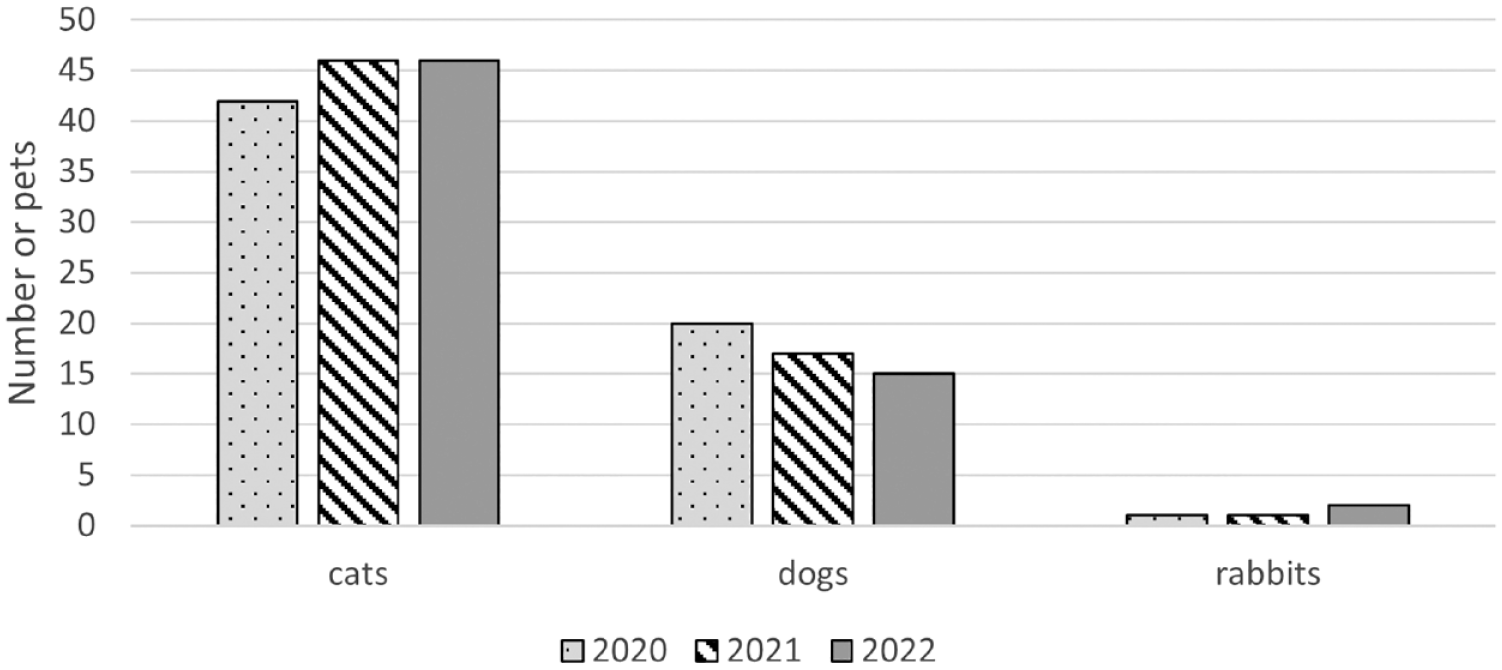
AMC to the Rescue (AMCTTR) applications by species and year 2020–2022
Applications to AMC to the Rescue by species and age compared with the AMC hospital population, species and age between 2020 and 2022

Data are presented as n (%)
Cats and dogs accepted or denied AMC to the Rescue funding by age group

Data are presented as n (% of pets in age group)
Procedures funded by AMC to the Rescue for cats and dogs 2020–2022

Over the 3-year study period, US$612,564 in funding was awarded to animals accepted for AMCTTR care and this amount was calculated after the 20% rescue discount had been applied and does not include the cost of the diagnostic evaluation performed before the treatment (Table 4). The average expenditure per animal during this time period was US$3224. The fact that AMCTTR funded treatment for 2–3 times as many cats as dogs annually resulted in a higher total annual expenditure for cats than for dogs. On an individual animal basis, average feline expenditure was approximately US$1000–1300 less than the average canine expenditure. In total, 13 animals’ care (five cats, eight dogs) exceeded the AMCTTR grant limit. These included four congenital cardiac malformation corrections, three portosystemic shunt repairs, three orthopedic surgeries, two interventional radiology procedures and a colopexy. The cost of expenditures beyond the AMCTTR funding and paid by the rescue organization was not recorded. Animals that did not meet AMCTTR criteria were unable to access AMCTTR funds. All qualified applicants received funding for care.
Expenditures by AMC to the Rescue (AMCTTR) per year for cats and dogs between 2020 and 2022

The amounts are after application of the 20% rescue discount
Rounded to the nearest US dollar
Includes rabbits
Pets not meeting AMCTTR criteria
In total, 77 animals were unable to access funds because they did not meet the AMCTTR criteria (Table 1). Accepted and denied cats and dogs had nearly identical mean ages, but accepted animals were slightly younger; nearly all animals denied funding were aged under 6 years, which is similar to animals accepted for funding (Table 2). Cancellation of a scheduled AMCTTR consultation was the most common cause of level 1 denial (Table 5). Level 2 denial occurred after a consultation with an AMC specialist, and the most common cause of level 2 denial was that the procedure the animal was referred for was not medically indicated (Table 5). These were frequently cats and dogs with healing fractures or orthopedic disorders that did not result in discomfort or dysfunction. The second most common reason for level 2 denial was that the animal had a poor prognosis. These included cats and dogs with uncorrectable cardiac malformations, cases of urinary and fecal incontinence, and a rabbit with a diaphragmatic hernia. Combined, chronic conditions and procedures not medically indicated accounted for 64% of denials in cats and 58% of denials in dogs.
Total denials and reason for AMC to the Rescue (AMCTTR) level 1 and 2 denial in 45 cats and 31 dogs

Data are presented as n (%)
AMC = Animal Medical Center
Characteristics of rescue organizations submitting applications
A total of 86 different rescue organizations applied to AMCTTR over the 3-year period. In total, 50 individual rescue organizations applied to AMCTTR in 2020, 41 in 2021 and 38 in 2022. The number of applications per rescue organization in each of the three study years is displayed in Figure 3. The range of applications per rescue organization per year was 1–25. In 2/3 years studied, the organization with 5–10 applications per year was the same organization. In all 3 years, the same rescue organization submitted >20 applications per year. Of the 193 applications that the rescue organization included the method by which they learned about AMCTTR funding, over half were prior recipients of funding. Additional information about how rescue organizations learned about AMCTTR funding is included in Figure 4.
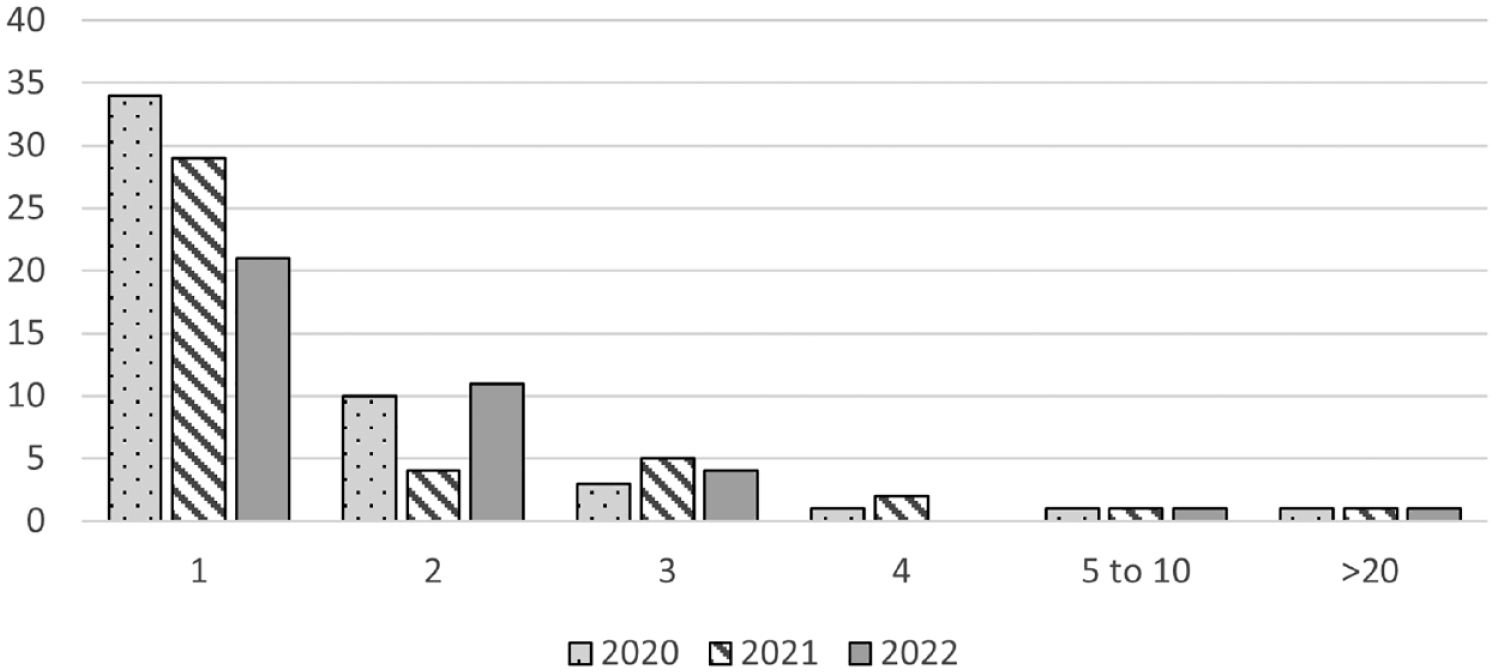
Applications per rescue organization between 2020 and 2022

How the rescue organization learned of AMC to the Rescue funding
Discussion
The data presented here confirm the enormous need for access to advanced veterinary care for rescued animals, especially cats. Between 2020 and 2023, AMCTTR supported treatment for 134 cats, at a cost of over US$380,000. Cats were the species most frequently approved for AMCTTR-funded care, despite the AMC hospital population being predominantly canine. Estimates suggest up to half a million feral cats currently live in New York City, potentially driving the large number of feline applications. 10 Furthermore, the care provided improves clinician morale by reducing the moral distress and workplace burnout resulting from the economic limitations of rescue organizations, which can lead to limited care or euthanasia. AMCTTR-funded animal care provides valuable training opportunities for interns and residents. These data also serve as a guide for other organizations considering a program to improve access to advanced veterinary care for rescue organizations.
The distribution of feline illnesses approved for AMCTTR funding is not unexpected. Dental disease and ophthalmologic disorders were frequent causes of referral, likely stemming from the frequency of these disorders in the feline population and the ease of recognition of these conditions by rescue organizations and referring veterinarians. Dental disease is one of the top feline insurance claims in the USA, as well as a common diagnosis in first opinion practice in the UK.11,12 Upper respiratory infections, a major cause of ocular disease in cats, are common in stray cats and were believed to be the underlying reason for most of the enucleation surgeries funded by AMCTTR. 13
Ophthalmologic disorders were the most common reason why AMCTTR funded care for cats. The mission of AMCTTR is to correct medical conditions that are a barrier to adoption. Ruptured globes, chronic ocular discharge and ocular discomfort from eyelid agenesis, and entropion are readily observable by potential adopters. These conditions can be corrected by enucleation or other ophthalmologic surgery and are typically not associated with systemic diseases, making these cats immediately adoptable after surgery. The age of cats with ophthalmologic disorders varied according to the diagnosis (data not shown). Among the AMCTTR feline population, the average age of cats with entropion was 5.8 years, while the average age of kittens undergoing eyelid agenesis repair and enucleation were 0.5 years and 1.1 years, respectively. Eyelid agenesis is the most common congenital ocular disorder of cats, and the young age of AMCTTR cats with eyelid agenesis is consistent with other reports.14,15 Organizations funding advanced veterinary care for rescue cats should be prepared to fund ophthalmology procedures across the age spectrum.
Age and species appeared to influence AMCTTR funding. When compared with the general AMC hospital population, the average age of an AMCTTR pet was about 5 years younger. Young animals whose medical conditions are corrected become readily adoptable because they are in high demand by adopters. Approximately 75% of feline applications to AMCTTR were accepted for funding and this rate of approval was similar across all age groups, with the notable exception of the 7–10-year age group. In this group, 100% of cats were accepted for funding and 9/12 cats underwent dental procedures. Overall, dogs had a lower rate of acceptance for AMCTTR funding than cats and only in the 1–6-year age group did dog acceptances equal cat acceptances.
The list of reasons pets were denied AMCTTR funding is long and includes medical, rescue organization and AMC barriers to care. The difference between cats and dogs denied at level 1 can be accounted for by more feline applications from cats with chronic conditions that did not meet the AMCTTR criteria and a recue organization being unable to accept an appointment because of the lack of someone to transport the cat to the appointment. The two largest categories and the most common level 2 denial were medical ones: the procedure was not medically indicated, and the disease carried a poor prognosis. All determinations that medical procedures were not indicated or had a poor prognosis were made by an AMC specialist. In speaking with rescue organization personnel, it is clear they care a great deal about the animals under their care and want the adoption process to be successful. Even if a procedure was not medically indicated, the consultation with an AMC specialist provided the rescue organization with a better understanding of the pet’s medical condition and allowed the rescue organization to explain the condition to potential adopters with greater confidence. Of the 76 cats and dogs denied AMCTTR, 15 did not receive care because of barriers faced by rescue organizations (Table 5). Further study is needed to quantify the barriers faced by rescue organizations, but from the limited information presented here, there are both financial and personnel reasons why rescue organizations do not pursue advanced veterinary care.
The data show a decrease in applications from 92 to 85 over the study period, driven by a decrease in applications from rescue organizations submitting only one application annually from 34 to 21 (Figure 3). An investigation of this trend would require surveying the rescue organizations and determining application barriers, which was outside the scope of this study, but we can speculate about potential causes. Over the 3-year period of the study, the number of denied cases decreased from 29 to 22 cases per year. This suggests rescue organizations better understood AMCTTR criteria and submitted applications more likely to be approved. A concerted effort was made to assist rescue organizations in understanding AMCTTR criteria. The author telephoned every rescue organization that was denied AMCTTR funding to discuss the reason for denial and encourage future applications. Conversations with New York City rescue organizations indicated a major source of rescue animals is Animal Care Centers of New York City. This organization reported a drop in animal intake between 2019 and 2020, which was sustained in 2021 but increased slightly in 2022, most likely an effect of the COVID-19 pandemic. 16 The decrease in intake at Animal Care Centers of New York City may have decreased animals available to rescue organizations and thus applications to AMCTTR. Although not part of this study, the author noted a number of rescue organizations with suspended AMC accounts due to unpaid bills. Since the rescue organization’s financial account must be paid in full to access AMCTTR funds, this may have decreased applications. Despite the decrease in applications, the number of cases approved for AMCTTR were static over the study period, indicating an actual increase in the percentage of animals awarded financial support.
Financial expenditures
Since its inception a decade ago, AMCTTR has funded US$1.7 million in advanced veterinary care and over US$600,000 in the 3 years included in this study, clearly indicating that AMCTTR is succeeding in supporting rescue organizations in financial need. To date, charitable donations and AMC’s commitment to providing a rescue group discount have supplied all AMCTTR funds. Cats were the major beneficiaries of this funding. The gross charges for all animals accepted for AMCTTR funding are 20% greater than the dollar amount funded by AMCTTR because all rescue organizations receive a 20% discount on AMC services. The increase in AMCTTR expenditures between 2020 and 2022 without an increase in approved cases reflects the annual fee increase during this time (P Green, 2023, personal communication).
Benefits for veterinary personnel
Advanced veterinary care, economic euthanasia, moral distress and work exhaustion are tightly intertwined. One unintended consequence of providing advanced veterinary care is moral distress in veterinarians. 17 Moral distress was originally defined in the nursing profession as ‘the experience of knowing the right thing to do while being in a situation in which it is nearly impossible to do it’. 18
In veterinary medicine, moral distress is common and is frequently the result of economic limitations leading to limited care or euthanasia and culminating in work exhaustion.19,20 This scenario is most common in younger, female veterinarians. 19 Currently, the AMC employs 133 veterinarians, 74 of whom are interns and residents. 21 Of the 133 AMC veterinarians, 71 are women, placing the organization at high risk of work exhaustion. Furthermore, economic limitations on veterinary patient care and outcome have been negatively linked to professional career satisfaction and resulting career burnout.22,23 The human benefits of decreasing moral distress by funding care for rescued animals should not be overlooked. Rescue organization workers are not immune to these psychological distressors. 24 The impact of AMCTTR on veterinary and rescue organization workers’ mental health is an area for further investigation.
Improving rescue animals’ access to advanced veterinary care also provides a valuable educational opportunity and helps academic institutions, such as AMC, to meet their teaching mission. AMCTTR animals exposed interns and residents to a different patient population, with diseases and treatments than they might not otherwise experience. The data presented here clearly demonstrate that AMCTTR serves a younger and overwhelmingly feline patient population compared with the AMC hospital population. Interns and residents also benefitted from the opportunity to treat uncommon conditions because of AMCTTR funding. Eyelid agenesis is reported to occur in 12.5% of cats with ophthalmologic disorders, yet in the AMCTTR population, eyelid agenesis represented 22% of feline ophthalmologic disorders. 15 AMCTTR improves training by providing diagnostic and therapeutic opportunities in young cats, which augments the training opportunities provided by the general hospital population. In addition, AMCTTR helps AMC meet its research mission by providing a varied caseload with broader opportunities for education of veterinarians through publications such as this one and others.25,26
Program and staffing challenges
AMCTTR provides access to advanced veterinary care for treatment of correctable conditions and does not fund diagnostic evaluations. The cost of an expensive diagnostic evaluation for diseases, such as nasopharyngeal stenosis or portosystemic shunts, can be beyond the means of underfunded rescue organizations and can limit access to AMCTTR funds. The rescue organization caring for one cat, presumed to have nasopharyngeal stenosis, one dog presumed to need a total hip replacement and one dog with a mass on the head, could not afford testing required to make a diagnosis, which is one of the criteria for accessing AMCTTR funds (Table 5).
The current veterinary workforce issues have also intermittently limited access to AMCTTR funds when specific specialists were unavailable (Table 5). 27 An additional complicating situation is scheduling animals requiring the skills of multiple specialists or when the rescue organization requests that ovariohysterectomy or castration be combined with another procedure. Yet, combined procedures did occur in 13 dogs and cats, perhaps because AMC personnel are willing to work around the difficulties associated with scheduling multiple procedures due to the popular support of the program among the staff.
Rescue organization challenges
In general, the rescue organizations were compliant with AMCTTR policies and procedures; however, this study identified some challenges to working with rescue organizations. One of the contingencies for a rescue organization to access AMCTTR funds is a fully paid AMC account. The fact that at least one cat did not qualify for funding because of the rescue organization’s outstanding bills at AMC further highlights the need for funding options, such as AMCTTR, to support rescue organizations’ access to advanced veterinary care. While exact data were not collected regarding compliance with recommended follow-up examinations, the lack of follow-up was noted in a number of medical records. Multiple reasons may account for this finding, including adoption and unavailability of rescue organization volunteers to provide transportation.
Rescue organizations submitting over five applications per year accounted for 31.8% (n = 85/267) of the total applications. Nearly all (n = 77/85) rescue organizations submitting over five applications per year requested support for feline patients (data not shown). This information further confirms the need for advanced veterinary care for cats under the care of rescue organizations. Frequent users of AMCTTR present administrative challenges. AMCTTR allows only three approved animals per rescue organization at one time and careful tracking of approvals and close communication with the rescue organization are required to prioritize care appropriately.
Promotion of AMCTTR
The success of AMCTTR depends on program awareness by the public and rescue organizations. AMC actively promotes AMCTTR and appeals for financial support through its website, social media, weekly blog, as well as email and direct mail.28,29 AMC uses specific hashtags (#AMCTTR and #AMCtotheRescue) to track social medial posts regarding AMCTTR animals on Facebook, Instagram and X (formerly known as Twitter). The broad efforts of AMC to promote AMCTTR may in part explain the static number of accepted animals. It is possible that these efforts have saturated social media savvy rescue organizations and alternate marketing channels will be needed to reach rescue organizations not currently submitting applications to AMCTTR. This interpretation is supported by the fact that only 11/193 rescue organizations reporting how they learned of AMCTTR did so via electronic sources.
Conclusions
The data presented here demonstrate the enormous need for access to advanced veterinary care for kittens and cats being cared for by rescue organizations. Ophthalmology and dentistry were the most common specialty areas for which cats were referred to AMCTTR. The needs of cats differed from dogs in that feline applications were most commonly submitted for ophthalmology or dentistry and canine applications were for surgery. Expenditures per cat were less than per dog because dogs were referred for more expensive orthopedic surgery. Programs like AMCTTR that subsidize advanced veterinary care increase access to that care, especially for cats.
Supplemental Material
sj-pdf-1-jfm-10.1177_1098612X231211755 – Supplemental material for Improving access to advanced veterinary care for rescued cats and dogs
Supplemental material, sj-pdf-1-jfm-10.1177_1098612X231211755 for Improving access to advanced veterinary care for rescued cats and dogs by Ann E Hohenhaus in Journal of Feline Medicine and Surgery
Supplemental Material
sj-pdf-2-jfm-10.1177_1098612X231211755 – Supplemental material for Improving access to advanced veterinary care for rescued cats and dogs
Supplemental material, sj-pdf-2-jfm-10.1177_1098612X231211755 for Improving access to advanced veterinary care for rescued cats and dogs by Ann E Hohenhaus in Journal of Feline Medicine and Surgery
Supplemental Material
sj-pdf-3-jfm-10.1177_1098612X231211755 – Supplemental material for Improving access to advanced veterinary care for rescued cats and dogs
Supplemental material, sj-pdf-3-jfm-10.1177_1098612X231211755 for Improving access to advanced veterinary care for rescued cats and dogs by Ann E Hohenhaus in Journal of Feline Medicine and Surgery
Supplemental Material
sj-pdf-4-jfm-10.1177_1098612X231211755 – Supplemental material for Improving access to advanced veterinary care for rescued cats and dogs
Supplemental material, sj-pdf-4-jfm-10.1177_1098612X231211755 for Improving access to advanced veterinary care for rescued cats and dogs by Ann E Hohenhaus in Journal of Feline Medicine and Surgery
Supplemental Material
sj-pdf-5-jfm-10.1177_1098612X231211755 – Supplemental material for Improving access to advanced veterinary care for rescued cats and dogs
Supplemental material, sj-pdf-5-jfm-10.1177_1098612X231211755 for Improving access to advanced veterinary care for rescued cats and dogs by Ann E Hohenhaus in Journal of Feline Medicine and Surgery
Supplemental Material
sj-xlsx-6-jfm-10.1177_1098612X231211755 – Supplemental material for Improving access to advanced veterinary care for rescued cats and dogs
Supplemental material, sj-xlsx-6-jfm-10.1177_1098612X231211755 for Improving access to advanced veterinary care for rescued cats and dogs by Ann E Hohenhaus in Journal of Feline Medicine and Surgery
Footnotes
Acknowledgements
The author gratefully acknowledges Dr Julie Levy’s suggestions during the development of this manuscript, the support of AMC’s Andrew Weatherhead for inciteful commentary on the manuscript, Sandra van der Woerdt, Paul Green and Judith Harbour for helpful discussions, Nicole Trinler, Kristen Crage and Lynne Freeman-Gassem for document formatting, and Katie Probst and Kimberly Young for data collection.
Supplementary material
The following files are available as supplementary material:
1. AMCTTR policies & procedures.
2. Referring-veterinarian letter.
3. AMCTTR estimate approval.
4. AMCTTR-application form.
5. Request for additional information.
6. AMCTTR raw data supplement.
Conflict of interest
The author declared no potential conflicts of interest with respect to the research, authorship, and/or publication of this article.
Funding
The author received no financial support for the research, authorship, and/or publication of this article.
Ethical approval
The work described in this manuscript involved the use of non-experimental (owned or unowned) animals. Established internationally recognized high standards (‘best practice’) of veterinary clinical care for the individual patient were always followed and/or this work involved the use of cadavers. Ethical approval from a committee was therefore not specifically required for publication in JFMS. Although not required, where ethical approval was still obtained, it is stated in the manuscript.
Informed consent
Informed consent (verbal or written) was obtained from the owner or legal custodian of all animal(s) described in this work (experimental or non-experimental animals, including cadavers) for all procedure(s) undertaken (prospective or retrospective studies). No animals or people are identifiable within this publication, and therefore additional informed consent for publication was not required.

References
Supplementary Material
Please find the following supplemental material available below.
For Open Access articles published under a Creative Commons License, all supplemental material carries the same license as the article it is associated with.
For non-Open Access articles published, all supplemental material carries a non-exclusive license, and permission requests for re-use of supplemental material or any part of supplemental material shall be sent directly to the copyright owner as specified in the copyright notice associated with the article.
