




Abstract
Clinical challenges:
It is not easy for a veterinarian to determine the cause of infertility in a queen. The simplest method is to start by investigating the most common causes and then progress by successive elimination to the less common causes. For example, mating problems are commonly responsible for reproductive failure, and owners should be particularly vigilant in checking that the mating is progressing satisfactorily. Frequently, a veterinarian may have to determine, among other things, if there is a uterine or hormonal disorder or if an infectious pathology may be involved. In the case of a queen that is not cycling, it is important to differentiate a lack of onset of puberty in a young queen from a lack of cyclicity in an adult queen.
Aim:
This review sets out a practical, step-by-step approach that veterinarians can follow, starting with the most common causes of infertility in queens and moving towards more rare or specific causes.
Equipment and technical skills:
Simple techniques such as vaginal smears are essential to determine if a queen that is ready to be mated is in full oestrus, if a queen is cycling or not and to diagnose inflammation of the genital tract. Veterinarians should be familiar with the peculiarities of the swabbing technique in cats, as well as the interpretation of feline vaginal cytology. Progesterone assays are useful on many occasions in the diagnosis pathway. A laboratory capable of performing karyotypes should ideally be available. Finally, it is important to be able to perform an ultrasound examination of the ovaries and uterus in a queen.
Evidence base:
Although it appears that infertility is a problem among purebred queens, there is a lack of knowledge in this area and too few published studies. Some causes of feline infertility remain poorly investigated.
Keywords
Introduction
Purebred cat breeding is growing throughout the Western world, and cat breeders faced with a reproductive problem expect their veterinarian to have the same expertise, knowledge and understanding of the cause of problems as they do for purebred dogs. Unfortunately, feline reproduction has been much less studied than canine reproduction, and for too long in this field of veterinary medicine, as in other fields, the cat has been wrongly considered a ‘small dog’. For example, at the 2019 European Veterinary Society for Small Animal Reproduction congress in Berlin, Germany, only 24/166 scientific communications (14.5%) were about cats. It is therefore unrealistic to assume that all problems encountered in feline reproduction can be solved, and there is an urgent need for more veterinary knowledge in this area.
Infertility is defined as the inability to conceive and produce viable kittens. Normal fertility in the queen requires ovulation of normal ova into a patent, healthy reproductive tract, mating at an optimal period during heat, and maintenance of pregnancy for 2 months. 1 This last point is important to note because when embryonic resorption occurs in a pregnant queen before the beginning of the second month of gestation, no clinical signs are usually seen. Sometimes, the queen shows a pinkening and hardening of the nipples, and the abdomen becomes a little rounder, suggesting the beginning of a pregnancy, but then everything stops and the female does not produce any offspring. This means that, when faced with a case of suspected infertility, veterinarians should not only follow the queen during oestrus and check that the mating has taken place properly, but they should also follow the progress of the pregnancy.
For a discussion on the prevalence of feline infertility, see the box ‘Is feline infertility frequent?’ on page 826. In addition to infertility in queens, infertility in the tom cat is also a frequent cause of reproductive failure and is the focus of an accompanying review in this series. 4


Pre-breeding examination of the queen
It is important to detect any clinical problem that could compromise mating, and therefore pregnancy, early. An infantile vulva or vaginal atresia may sometimes be diagnosed 5 and may prevent intromission. Other anatomical problems, such as segmental aplasia of the cranial vagina, an imperforate hymen or rectovaginal fistula, have been described. 1 In longhaired breeds, the hair around the vulvar opening should be trimmed or clipped to facilitate intromission. Veterinarians should be observant for any abnormal vulvar discharge, and, in case of doubt, a vaginal smear should be performed (see the box ‘Vaginal swabbing in queens’ on page 826). Where a high number of polymorphonuclear cells are present on vaginal cytology, it may be wise to postpone mating so further clinical investigations can be carried out. Ideally, and especially in a previously infertile queen, a uterine and ovarian ultrasound examination should be performed to assist in detecting any abnormality (see later discussion on uterine and ovarian problems). Finally, it is important to make sure the queen’s vaccinations are up to date.
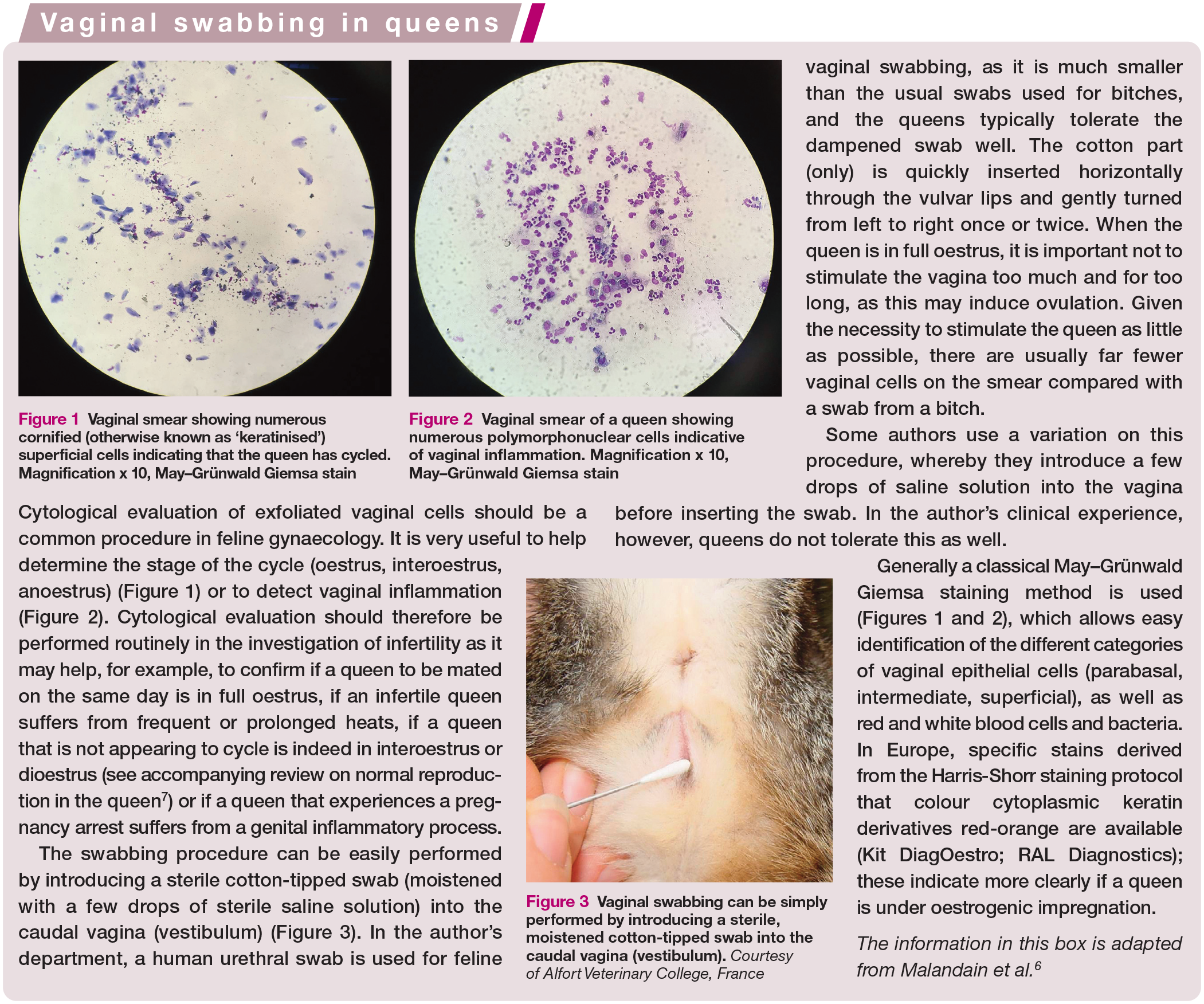

Vaginal smear showing numerous cornified (otherwise known as ‘keratinised’) superficial cells indicating that the queen has cycled. Magnification × 10, May–Grünwald Giemsa stain

Vaginal smear of a queen showing numerous polymorphonuclear cells indicative of vaginal inflammation. Magnification × 10, May–Grünwald Giemsa stain

Vaginal swabbing can be simply performed by introducing a sterile, moistened cotton-tipped swab into the caudal vagina (vestibulum). Courtesy of Alfort Veterinary College, France
Timing of the mating
In a survey conducted in France of 1521 cat breeders, it was reported that 75% of matings occurred during the first 3 days of oestrus. 3 However, very early mating is not a guarantee of success. One of the problems that have been identified in domestic shorthair cats is that some individuals ovulate when matings occur on the first day of oestrus. 8 The resultant ovulated oocytes are immature and of poor quality, and, although they may be fertilised, the embryos may degenerate rapidly. If a previously infertile queen is to be bred, it may be best not to mate her too soon, or to leave her with the male for at least 2–3 days. Indeed, Concannon et al demonstrated that 100% of queens ovulated after multiple copulations on the third day of heat. 9 Another study showed that more than 85% of queens ovulated when mated on the second and third days of oestrus. 10

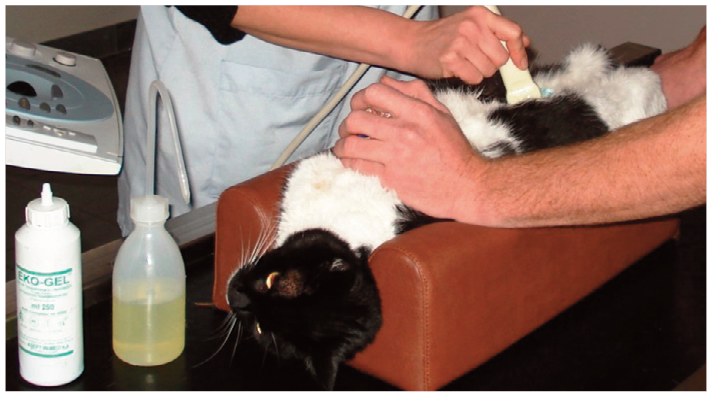
Ovarian ultrasound being performed in a queen. Courtesy of Dr Françoise Lemoine

Pre-ovulatory follicles (arrows; measuring 0.32 cm, 0.33 cm and 0.32 cm) just before ovulation in a queen

Ultrasound visualisation of an ovarian cyst (between the measuring calipers, caudal to the kidney [asterisk])
However, to be on the safe side, it may be useful to perform some additional tests on any queen with suspected infertility before taking her to the male. A vaginal smear will confirm if she is in full oestrus; indeed, for reasons that have yet to be determined, certain queens can display oestrus behaviour despite not being in heat. This simple test can be complemented by an ultrasound examination of the ovaries (see box) if the queen is calm and amenable to examination. Malandain and colleagues showed that at the pre-ovulatory stage, at least one follicle reaches a diameter greater than 3 mm (Figure 5). 6 If this is not the case, it may be too early to mate the queen, or she may already have passed the optimal period and the follicles may be in the process of atresia, perhaps because the owner did not detect the first day of heat accurately. The queen may also have already ovulated spontaneously (see box).

Mating process
There is no guarantee that a successful mating will occur simply because a queen in oestrus and a male are put together in the same room and, unfortunately, owners are often unaware when things go wrong. In a study in Sweden, it was found that owners were present in the room to observe the mating in only 35% of cases. 2 Many factors may prevent copulation from taking place. An aggressive or an abnormally stressed queen may not accept the male. Anecdotally, some breeders even report that their queen may lie on her back to avoid being penetrated. In such a case, the solution may be to house the female with the male before the beginning of heat or to introduce the queen to the tom when she is not in heat so that she gets used to him and accepts the mating once she is in oestrus. 1
In cats, there may be additional factors, such as a potential partner preference, aggression or inexperience, that complicate the smooth running of a mating. In 15/38 cases (39.5%) in one study, queens did not allow the male to breed on multiple attempts, despite exhibiting oestrus behaviour and with fully cornified vaginal cytology being obtained. 14 There may be a failure to mate when both animals are too young or inexperienced; as such, it is better if at least one of the two cats has already performed successful matings. In the author’s experience, mating failure appears to be more frequent in breeds where toms often have poor libido, such as Persians or Maine Coons.
It should be recommended that owners observe from a distance to determine if a mating actually takes place. Just hearing the queen’s yowls after the male dismounts does not guarantee successful penetration. Veterinarians should advise owners to observe the post-coital reaction of the queen carefully, as vulvar licking, yowling or chasing the male are not 100% proof that penetration occurred. According to some authors, only the queen vigorously rolling on her back after being mounted (Figure 7) is fully indicative of successful vaginal penetration. 14

A queen vigorously rolling on her back following mounting, indicating successful vaginal penetration
Another approach may be for the veterinarian to perform a vaginal smear or a vaginal wash within the first few hours after a mating to check for the presence of spermatozoa, thus confirming that copulation has taken place. 1 It is unclear for how long after a mating sperm can be found on a vaginal smear.
Failure to ovulate despite mating
In cats, it is recognised that only 50% of females may ovulate after a single mating and that more than one mating may be required for queens to express their full ovulatory potential. 1 in fact, it is reasonable to expect that if a queen is mated at 7 am and for a second time at 5 pm, an interval of this length may not induce enough pituitary luteinising hormone to cause ovulation. Thus, not only the number, but also the frequency, of copulations is something that owners should be asked to confirm.
Checking if ovulation has taken place after a mating is especially important, as failure to ovulate is a cause of infertility in cats. 15 it is therefore recommended that all infertile queens have their blood progesterone concentration measured at least 5–7 days after the last observed mating. if the concentration of this hormone remains basal (⩽1–2 ng/ml, depending on the machine, the type of assay used and the reference values provided by the manufacturer), it confirms the cat has not ovulated.15 in such cases, ovulation must be assisted during the next heat, either mechanically or hormonally. Preliminary data from the author’s department showed a series of five vaginal stimulations of 3–5 s at 30-min intervals with an ordinary cotton swab at the peak of oestrus induced ovulation in 8/11 queens (A Boyeaux, unpublished data). Otherwise, it may be possible to treat the queen with a single injection of human chorionic gonadotropin (hCG; 75–100 iU/cat iM 16 ) or gonadotropin-releasing hormone (GnRH) agonist (gonadorelin; 25–50 μg/cat iM 17 ) the day she is presented to the male to ensure that ovulation will be successfully induced.
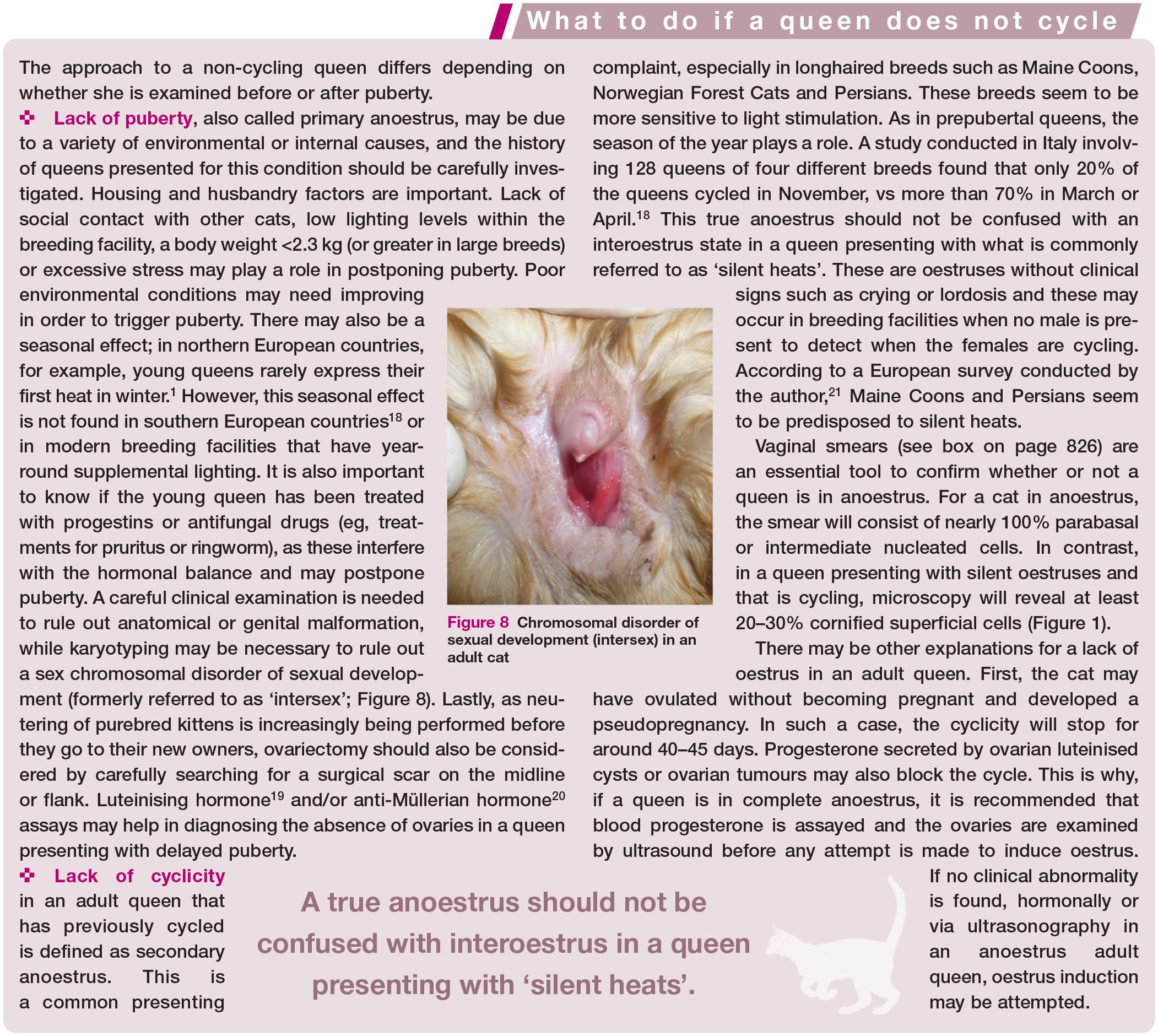

Chromosomal disorder of sexual development (intersex) in an adult cat
Uterine diseases
Uterine problems may well be among the major causes of infertility in pedigree cats. In a study of seven infertile purebred queens of six different breeds, Axner et al 22 diagnosed a uterine pathology in four cases: two of the queens had cystic endometrial hyperplasia (CEH), one had pyometra with acute endometritis, and there was one case of suspected mild endometritis.
Cystic endometrial hyperplasia and pyometra
CEH is occasionally diagnosed in infertile older queens seen at the author’s department and is quite common in the cat. It is characterised by hyperplasia of the endometrial epithelium and cystic dilatation of the endometrial glands (Figure 9). CEH may occur following the erroneous use (too high a dose or too long a treatment duration) of exogenous progestins (see accompanying reviews on reversible control of reproduction in queens and reproductive management in catteries23,24), 25 or in a cat that has experienced several episodes of spontaneous ovulation or infertile matings, with subsequent prolonged progesterone secretion leading to endometrial development without pregnancy. 22 CEH may be a cause of infertility as it seems unlikely that embryos could survive in such a hostile environment and placentation would be hampered. Usually, no other clinical signs are seen, unless the condition is complicated by an infection.
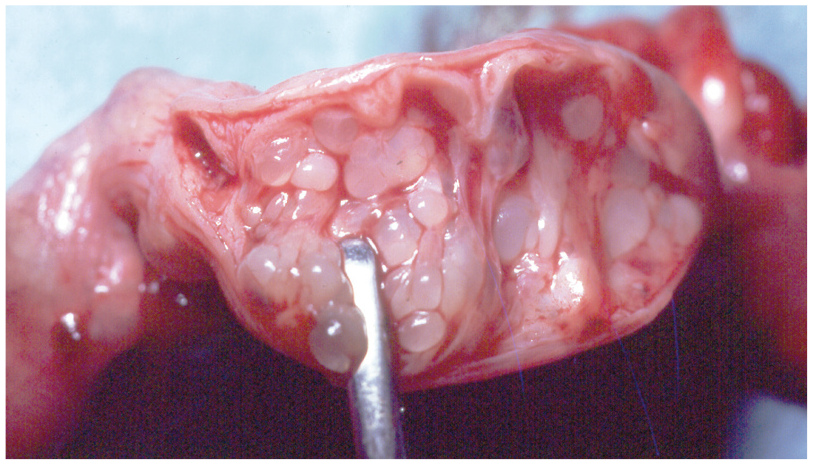
Cystic endometrial hyperplasia of the uterus
In some cases, a pyometra may develop as a result of undiagnosed underlying CEH. It is interesting to note that a study conducted on behalf of an insurance company in Sweden showed a significant breed effect with respect to the development of pyometra. 26 The breed with the highest incidence rate (433 cats per 10,000) was the Sphynx. Other breeds with an incidence rate of over 60 cats per 10,000 were the Siberian, Ocicat, Korat, Siamese, Ragdoll, Maine Coon and Bengal. Pyometra was more commonly diagnosed in older animals, with a marked increase in cats over 7 years of age. Although CEH and pyometra are different diseases that may occur independently, 27 CEH is considered a predisposing factor for the development of pyometra, and they are often seen together. 28 CEH-associated degenerative changes within the uterine tissues (cystic distension of glands, fibrosis, etc) provide ideal conditions for the establishment of uterine infections. 29 Opportunistic bacteria from the vagina proliferate inside the uterus due to reduced local immunity, excessive mucus accumulation within the lumen, and also the presence of numerous crypts and cysts where bacteria can develop easily. It can be assumed that the breeds described in the aforementioned Swedish study as being predisposed to pyometra were also predisposed to develop CEH. The author has also observed spontaneous ovulation and development of pyometra in Siamese and other Oriental breeds.
CEH may be readily diagnosed by ultrasound (Figure 10); the endometrial cysts appear as anechoic structures within the uterine wall, with a small amount of fluid often being observed within the uterine lumen. The diameter of healthy uterine horns (which should contain no fluid) is usually 0.4–0.7 cm, depending on the stage of the cycle, while it is usually increased in cases of CEH. 28

Ultrasound appearance of cystic endometrial hyperplasia (arrows)
Mucometra
In some cases, mucometra (Figure 11) has been reported as a cause of infertility in queens. 30 It is characterised by an accumulation of mucous secretions of the endometrial glands – up to 500 ml – and/or free within the uterine lumen, sometimes as a consequence of congenital abnormalities leading to atresia of the cervical canal (author’s personal observations). Most of the time, no other clinical signs are detected aside from infertility. A pre-breeding ultrasound examination of the uterus will allow diagnosis of this problem (Figure 12). No standardised treatment has been described and ovariohysterectomy remains the sole option. 31

Unilateral mucometra of a uterine horn in a queen

Ultrasound examination revealing mucometra in a queen. The uterus (asterisk), below the bladder, appears full of anechoic liquid
Subclinical/mild endometritis
An understudied problem in infertile queens is subclinical or mild endometritis. In breeding bitches, subclinical endometritis is now recognised as a major factor leading to infertility or subfertility. 32 Equivalent studies have not been performed in breeding queens, although it seems reasonable to assume that subclinical endometritis is a cause of infertility in this species also. However, the pathogenicity of subclinical endometritis is still unclear. In particular, the presence and exact role of bacteria remain unknown.
In Axner et al’s study of seven infertile purebred queens, vaginal bacteria were isolated in all cases – namely, mainly sparse growth of Pasteurella multocida, Haemophilus species, beta-haemolytic streptococci, haemolytic Escherichia coli, coagulase-negative staphylococci and Micrococcus species in pure or mixed cultures; 22 two queens treated with antibiotics later became pregnant.
In a preliminary study performed in the author’s department (Z Niewiadomska and A Fontbonne, unpublished data), nine post-pubertal 1-6-year-old queens were presented for fertility problems, including repeat matings with fertile males without pregnancy (n = 4), previous abnormally small litter sizes (n = 2), and embryonic resorption and abortion (n = 3). Surgical uterine biopsies (3/9) and uterine bacteriology were performed under general anaesthesia immediately prior to ovariohysterectomy (6/9). Histology revealed the presence of cystic endometrial hyperplasia in 4/9 animals. Two of these four queens showed a neutrophilic and lympho-plasmacytic inflammation of the endometrium, compatible with subclinical endometritis. Another of the nine queens showed a slight neutrophilic and macrophagic endometritis with the presence of chronic haemorrhage. No intrauterine aerobic or anaerobic bacteria were isolated in any of the samples. On the basis of finding endometritis in 33% (3/9) of these infertile queens, it can be concluded that this problem may well be a cause of infertility, as it appears to be in the bitch.
Other causes
Other uterine problems have been described in bitches and may also exist in infertile queens, such as a lack of endometrial progesterone receptors. 33 In the above-mentioned unpublished study (Nie-wia dom ska and Font-bonne), the endometrium of one queen showed very scarce endometrial glands, which could indicate a lack of progesterone stimulation on the endometrium.
According to Axner et al, 22 low-grade endometritis is extremely difficult to diagnose in the queen, and its incidence and importance as a cause of infertility are unknown. Consequently, in subfertile queens, an early pregnancy diagnosis by ultrasound examination, as soon as 10-15 days after the last observed mating (see accompanying article on feline breeding and pregnancy management 34 ), is recommended to rule out embryonic resorption. Furthermore, uterine clearance may be observed; this refers to a form of mechanical drainage due, among other things, to cervical relaxation and myometrial contractions (in mares, it is recognised as a major factor in the elimination of bacteria and inflammatory products from the uterine lumen and therefore the prevention of endometritis). In bitches, Freeman et al 35 found that the presence of uterine intraluminal fluid on days 5 or 14 after a mating was associated with a significantly reduced pregnancy rate. In their study, Axner et al 22 observed with ultra-sonography that 4/7 infertile queens showed intrauterine fluid at the time of examination. Uterine ultrasound at around 2 weeks of pregnancy may therefore be a useful examination to perform on an infertile queen.
Uterine surgical biopsies – preferably performed at the time of diagnosing a lack of pregnancy or embryonic resorption by ultrasound – are the ‘gold standard’, allowing simultaneous histological and bacteriological investigations, but many cat breeders are reluctant to agree to this invasive procedure. An alternative may be to perform a transcervical flush with sterile saline solution, as has been performed in bitches. 36 This would allow a bacteriological and cytological survey of the uterine content. To the best of the author’s knowledge, no such study has been reported in cats to date. Blood markers of uterine inflammation might also help veterinarians to suspect endometritis as being a cause of infertility, but only one preliminary study looking to identify such biomarkers in cases of pyometra has been published in this species. 37
New techniques for better monitoring of pregnancy in the cat are being investigated, such as using Doppler ultrasound to assess arterial blood flow in the uterus. 38 In a study where medical abortion with aglepristone was experimentally performed on pregnant queens, the authors observed an abnormal increase in the resistance index of the uterine artery, indicating a decrease in placental blood supply. 39 In the future, such an approach may allow early detection of ‘at risk’ pregnancies.
Infectious diseases
The risk of infectious disease is likely higher in breeding facilities, especially when some of the matings are performed with non-resident males, or when cats are taken to cat shows. A survey study conducted in Sweden revealed that, when returning from a show, 10.4% of breeders reported conjunctivitis in some of their cats and 14.6% reported upper respiratory tract diseases. 2 The role of shows with respect to reproductive problems, including infertility, has not been studied, but cannot be excluded. In catteries, a high cat density causes stress and immunosuppression. This should be avoided, and core vaccinations should be up to date (see guidance from the World Small Animal Veterinary Association – wsava.org/global-guidelines/vaccination-guidelines).
There are few publications reviewing the role of infectious agents in feline infertility. Those that are available suggest that these pathological agents may prevent implantation and/or embryonic development or induce early pregnancy arrest, which will remain unnoticed by the owner.40,41 The infected queen will appear infertile.
Of the viral diseases, only retroviruses (feline leukaemia virus, feline immunodeficiency virus) and feline parvovirus have been confirmed as potentially detrimental during pregnancy.42,43 The role of respiratory viruses, such as feline herpesvirus (FHV) or calicivirus, remains unclear, although there is evidence in the literature of an impact on reproduction. An early study involving experimental inoculation with FHV reported that pregnancy arrest may occur. 44 A later study indicated that resorption or abortion due to calicivirus may occur in unvaccinated queens due to fetal contamination, 45 and that vaccination does not offer full protection. Furthermore, asymptomatic carriers exist. Meanwhile, feline coronavirus is considered an uncommon cause of reproductive problems. 42 Notwithstanding, all of these disease agents are of major concern in most catteries, which is why it is important to avoid any contact between cats in the cattery and those living outside (Figure 13).

In breeding facilities with outdoor access, it is important to protect the animals from the risk of contact with feral cats with a double fence
Among the bacterial diseases, the main concern is Chlamydia felis (previously Chlamydophila felis and before that Chlamydia psittaci var felis). It is not clear if this pathogen can cause reproductive disturbances, but it has been suggested as a causal agent of abortions or pregnancy arrest in cats. 46 For some authors, there is circumstantial evidence that C felis may cause abortion. 47 Other publications report a potential negative role on fertility of Coxiella burnetii, 48 Leptospira species and Bartonella henselae. 49 There is also published evidence to indicate that queens may be sensitive to Brucella species, as Brucella abortus may induce pyometra in queens, 50 but it is unknown if it leads to infertility or pregnancy arrest in this species.
The role of imbalances in the vaginal flora is probably underestimated. Very few studies have been performed on the genital flora in cats, and pure growth of bacteria within the vagina seems to be a normal finding in many queens without any reproductive failure. 51 Overgrowth of E coli or other potentially pathogenic strains of bacteria may predispose to the development of vaginitis and further endometritis, though this remains to be proved. Again, however, this highlights the importance of a vaginal smear in an infertile queen, in order to rule out the presence of white blood cells on cytology (Figure 2).
It is worth noting that the protozoan parasite Toxoplasma gondii has been hypothesised as having a potential impact on reproduction, as experimental transplacental contamination has been shown to cause pregnancy arrest. 52 If a pregnant queen is seronegative, it may be prudent to keep her from hunting and eating raw meat.
Hormonal problems
Ovarian problems
Ovarian problems, such as follicular cysts or granulosa cell tumours, may cause an endocrine disturbance leading to infertility. Ovarian ultrasound is an easy way to confirm the diagnosis (see box on page 827 and Figure 6), together with hormonal assays and vaginal smears (see box on page 826). Oestrogens secreted by these pathological entities alter the transit time of zygotes within the oviduct, change the biochemical environment inside the uterus and cause degeneration of the embryos, as well as having a direct embryo-toxic effect. 53 Testosterone-producing ovarian tumours, such as ovarian dysgerminomas, luteomas and thecomas, have also been described in the cat and may impair fertility. 28
In the author’s experience, some queens, frequently Orientals or Siamese and possibly Maine Coons, do not suffer from ovarian problems per se, but show hyperoestrus, a condition characterised by abnormally frequent oestruses such that consecutive follicular waves overlap, creating prolonged heats. 28 It is not known if this phenomenon alters fertility, but it is suspected to, as the action of oestrogens may prime the endometrium, thereby facilitating the development of CEH if the queen ovulates. 27
Hypoluteoidism
Hypoluteoidism, which refers to absent or insufficient progesterone secretion to maintain pregnancy, has been hypothesised as a potential cause of pregnancy failure in the queen, 43 but it has not been proven so far and the minimum level of progesterone needed to maintain pregnancy in the queen has not been determined.
Hypothyroidism
Hypothyroidism has been suspected to be a cause of fertility problems in the dog, but naturally occurring hypothyroidism is rare in the cat. 54
Chromosomal or genetic problems
Abnormal chromosomal patterns
Abnormal chromosomal patterns are found quite commonly in cats, such as monosomy 37,XO, trisomies (39,XXY, 39,XXX, 39,XYY), chimerism or mosaicism 55 (see the accompanying review on disorders of sexual development 56 ). This may lead to a lack of puberty or to infertility in females that seem to cycle normally, or to the abortion of fetuses with an abnormal karyotype.
Inbreeding, which is often cited as a cause of poor reproductive performance, appears comparatively uncommon in pedigree cats. A study of Polish purebred cats estimated the degree of inbreeding to be around 3%; 57 only Siberian cats were slightly more inbred (>5%). Leroy et al 58 reported an average degree of inbreeding of 5% within French purebred cats (except for the Devon Rex, in which it was higher). The rather low degree of inbreeding compared with dogs may be due to the fact that the majority of breeders are occasional breeders and use their breeding animals with moderation.
However, it cannot be ruled out that some breeding lines, which may be more inbred than others, suffer from fertility disorders potentially linked with inbreeding (for further discussion, see accompanying review on inbreeding 59 ). In France, the national cat club (LOOF – Livre Officiel des Origines Félines) has drawn the attention of breeders to the practice of early neutering of kittens, which risks considerably lowering genetic variability in certain breeds with a low population, such as the Burmese.
Other potential causes of infertility
Nutrition
Nutrition is often cited by cat breeders as a cause of infertility, although the role of nutrition is likely overestimated given that the majority of commercial pet foods are well balanced. However, in some cases, nutrition may have an effect on reproductive performance. First, essential nutrients such as taurine, arachidonic acid and the supply of polyunsaturated fatty acids and copper have to be available in sufficient amounts within the cat food (pet food companies are well aware of this, and, as referred to above, commercial feline diets are supplemented accordingly). However, there has been recent concern about raw food diets, which have become very popular among purebred cat breeders. Attention is drawn by some publications 60 to the microbiological content of these diets, as bacteria (Salmonella species, Campylobacter species, Listeria species) that are well known to cause reproductive problems, among other manifestations, have sometimes been isolated, linked to poor food preservation and storage. The contamination of industrial food by mycotoxins has been proposed as a potential issue affecting reproduction, 61 with Singh et al 62 reporting a high content of mycotoxins in industrial pelleted cat food.
Environmental pollutants
Environmental pollution, and the impact of the environment on reproduction more generally, is a growing concern. Compounds such as bisphenol A (found in some plastic materials such as polycarbonate food and storage containers) are increasingly cited as having a negative influence on reproductive processes in humans. Bisphenol A has also been demonstrated to have a suppressive effect on uterine contractions in queens, which may potentially lead to infertility. 63 Some disinfectants, such as phenols, should be avoided in breeding catteries because of their toxicity. 64
Key Points
✜ Infertility is a common condition in pedigree queens. Problems related to mating appear to be a major cause, but other potentially important factors, such as uterine pathology or the role of infectious diseases, require further research to understand how they may affect fertility. Male infertility should also not be overlooked.
✜ Infertility may be due to lack of fertilisation or early embryonic death. A previously infertile queen should be followed during oestrus; checks should be made that the mating has taken place under suitable conditions; and the progress of the pregnancy should be monitored.
✜ If a queen’s fertility is questioned, she should be examined before mating to detect any vulvar or vaginal abnormality. A normal vaginal smear will rule out the presence of inflammatory conditions in the reproductive tract.
✜ Although some queens will conceive when mated on day 1 of oestrus, infertile queens shoud be mated on day 3 of oestrus. A vaginal smear will confirm if the queen is in full oestrus and an ovarian ultrasound examination will show pre-ovulatory follicles, indicating that she will soon ovulate, or, alternatively, may suggest that she has already ovulated.
✜ A queen rolling on her back vigorously indicates that a mating has occurred. A vaginal smear or a vaginal wash performed on the day of the mating should show evidence of spermatozoa.
✜ Matings should be repeated during the same day to induce ovulation. As lack of ovulation is a common cause of infertility in the queen, progesterone concentrations should be measured in all cats with suspected infertility at least 5-7 days after the last observed mating. If progesterone remains basal (below a threshold of 1-2 ng/ml, depending on the type of machine, the assay used and the reference values provided by the manufacturer), the queen has not ovulated.
✜ Uterine diseases such as cystic endometrial hyperplasia or mucometra are easy to diagnose by ultrasound examination. Subclinical endometritis may be an important cause of feline infertility but is difficult to diagnose.
✜ Infectious diseases may be a significant problem in breeding facilities, especially when many cats are housed together. Retroviruses and parvoviruses are well-recognised causes of reproductive failure. The role of respiratory viral diseases in the context of infertility is unclear, as is the role of bacteria and Toxoplasma species.
✜ Hormonal problems are mostly related to ovarian cysts or ovarian tumours, which are identified by ultrasound.
✜ Chromosomal problems are not uncommon in breeding queens and may be identified by karyotyping.
✜ A raw food diet is at risk of bacterial contamination if preservation and storage protocols are not thoroughly adhered to.
Footnotes
Conflict of interest
The author declared no potential conflicts of interest with respect to the research, authorship and/or publication of this article.
Funding
The author received no financial support for the research, authorship, and/or publication of this article.
Ethical approval
This work did not involve the use of animals and therefore ethical approval was not specifically required for publication in JFMS.
Informed consent
This work did not involve the use of animals (including cadavers) and therefore informed consent was not required. No animals or people are identifiable within this publication, and therefore additional informed consent for publication was not required.