



Abstract
This study investigates career-ending police misconduct that occurs with little or no prior warning. Using administrative data from a large policing agency in the United Kingdom, we examine the predictive value of unsubstantiated complaints and related career characteristics for career ending misconduct. While unsubstantiated complaints were correlated with minor complaint types and overall complaint volume, they showed no clear relationship with career ending misconduct. Among officers with unsubstantiated complaints, however, significant predictors included duty type, frequency of transfers, and, most notably, the presence of secondary employment. A separate analysis of officers who committed “spontaneous” career ending misconduct—without any history of prior complaints—revealed no consistent demographic or career predictors. These findings challenge the utility of traditional early warning indicators among officers without complaint histories. We conclude that early intervention approaches must be refined to reflect multiple misconduct trajectories.
Despite a recent and justified increase in attention, estimates of the rate at which police officers engage in deviance and misconduct remain subject to considerable uncertainty (Porter & Warrender, 2009). The ability of law enforcement agencies to maintain legitimacy—both in the eyes of the public and among their own personnel—depends on the effective detection, investigation, and management of misconduct (Walker & Archbold, 2005). A growing body of research suggests that prior workplace misconduct or criminality outside the workplace may be instructive in assessing the risk of career-ending misconduct (Cubitt, 2023; Cubitt & Birch, 2021; Cubitt et al., 2020, 2022; Cubitt & Gaub, 2025; Donner, 2019; Greene et al., 2004; Kane & White, 2009; Simpson & Kirk, 2022; White & Kane, 2013; Gaub & Cubitt, 2025). However, while most research into career ending misconduct finds that these officers tend to accrue substantiated complaints before the career ending misconduct event, this is not true for all officers. In fact, when prediction models in the literature fail to identify officers at risk of career ending misconduct, it is most often those with limited histories of substantiated complaints. This study therefore focuses on officers whose misconduct is unlikely to be anticipated by traditional metrics, related to accrual of complaints, to better understand those who commit career ending misconduct with little or no warning.
Literature Review
Measuring Misconduct
Although the notion of police misconduct is widely discussed in the academic and policy literature, definitions of misconduct are still contentious. Early work by Barker and Carter (1994) proposed a foundational distinction between two key forms: occupational deviance, which involves violations of internal departmental norms, and abuse of authority, which reflects violations of external legal or ethical norms. Kappeler and colleagues (1998) expanded on this framework by proposing four categories: police crime, occupational deviance, abuse of authority, and corruption. These were later refined by Kane and White (2009) into three broad, administratively defined categories: police crime, abuse of authority, and police corruption. However, these categories are not mutually exclusive and tend to restrict their focus to on-duty behavior, potentially overlooking significant off-duty conduct that may still reflect career ending misconduct. These definitional limitations are particularly pronounced when conducting cross-national comparisons, where variations in cultural expectations, legal definitions, and institutional structures can result in divergent understandings of what constitutes police misconduct.
In terms of measurement, many studies rely on administrative data. Notable examples include the Bad Cops studies (Kane & White, 2009; White & Kane, 2013; see also Gaub, 2020; Gaub & Holtfreter, 2022), which used personnel records from the New York Police Department (NYPD) to examine patterns of misconduct among matched samples of officers. These data allow for robust analysis but come with important limitations: they depend on the department’s willingness to acknowledge and formally document misconduct. Departments vary in their thresholds and follow-through for substantiating complaints, and in doing so, they exert significant control over which behaviors are officially recognized and recorded as misconduct (Gaub & Holtfreter, 2022).
Other studies have used self-report data obtained through surveys or vignettes, asking officers to disclose their own likelihood of committing specific types of misconduct, or to estimate the frequency with which such behavior occurs among their peers (Chappell & Piquero, 2004). This method aligns with findings from broader delinquency research, which suggest that intention to offend is strongly associated with actual offending behavior (e.g., Pogarsky, 2007). However, these studies often focus on relatively minor violations, such as drinking and driving, and are frequently administered to general population samples rather than law enforcement personnel. Given the occupational risks and stigma associated with misconduct, it is reasonable to expect that officers may downplay their likelihood of engaging in more serious violations—or may simply be unwilling to answer such questions honestly (Mastrofski & Parks, 1990). Moreover, the hypothetical nature of vignettes may not accurately replicate the complex, dynamic, and high-stakes decision-making environments that officers face in the real world (Simpson & Kirk, 2002).
Another widely used data source for measuring misconduct is citizen complaints (e.g., Chappell & Piquero, 2004; Wolfe & Piquero, 2011). Unlike administrative records, which are generated within the organization, these complaints are initiated externally by members of the public. This introduces both strengths and limitations. On one hand, citizen complaints may reflect community concerns and serve to support institutional self-regulation. On the other hand, they are inherently subjective, potentially shaped by misunderstandings, public-police tensions, or even vexatious motives. Moreover, they are limited to misconduct that is visible or reportable by the public, and do not capture covert forms of misconduct, such as perjury, that rarely come to light without internal whistleblowing or criminal investigations (Kane & White, 2009). Citizen complaints also rely on the public’s willingness to file a report—an act that may be more likely following egregious incidents but is not guaranteed, especially in communities with low trust in the police (Archbold & Maguire, 2002). Some scholars have advocated for using both internal and external complaints to obtain a more comprehensive picture of misconduct (Mrozla et al., 2021).
Who Commits Career Ending Misconduct?
A substantial body of literature has examined the individual-level correlates of police misconduct, identifying several consistent patterns. First, gender emerges as a robust predictor: male officers are significantly more likely than female officers to engage in both general and serious forms of misconduct (Cubitt, 2024; Cubitt et al., 2022; Gaub, 2020; Kane & White, 2009). Other individual risk factors include a prior criminal history (Cubitt, 2023; Kane & White, 2009; Mollen Commission, 1994), problematic employment records either before joining the police or during their tenure (Cubitt et al., 2020; Kane & White, 2009; White & Kane, 2013), and a history of internal or external complaints lodged against the officer (Harris, 2010; White & Kane, 2013). Conversely, some protective factors have also been identified. Officers with some form of college education appear less likely to commit misconduct (Kane & White, 2009; Kappeler et al., 1998), as are older officers and those holding supervisory or command roles (McElvain & Kposowa, 2008; Wolfe & Piquero, 2011). Other individual factors, such as race, ethnicity, and marital status, have been found to play more complex roles, with effects that may vary by context or department (Chappell & Piquero, 2004; Gaub, 2020; Gaub & Holtfreter, 2022; Kane & White, 2009).
An emerging line of inquiry focuses on how life-course events influence misconduct risk. Stressors such as marital breakdown, parenting responsibilities, occupational injuries, and impending retirement have been self-reported by officers as contributing to serious or career-ending misconduct (Cubitt & Judges, 2018). These life events are more common among experienced officers and may correspond with late-career misconduct, often through indirect indicators such as secondary employment (Cubitt, 2023; Cubitt et al., 2020, 2022). This suggests that while early-career misconduct may stem from inexperience or impulsivity, the drivers of misconduct may evolve over the life course, with different risk factors becoming salient at different career stages. At a broader ecological level, Kane (2002) found that precinct-level characteristics—such as structural disadvantage and residential mobility—were predictive of police misconduct. Notably, these effects were more pronounced within units than between them.
Despite the breadth of this research, most studies rely on traditional regression-based models to estimate associations between predictors and outcomes. While this approach is useful for identifying correlates of misconduct, it does not facilitate the development of typologies. Kane and White (2009) offer an important exception, classifying officers into three categories based on “time to failure” and comparing these groups with a matched control group. While Cubitt and Gaub (2025) also developed typologies of officers who engaged in career ending misconduct, finding notable differences between officers from USA, Australia and the UK.
Theoretical Approaches
Beyond individual characteristics, a smaller set of studies has explored group, organizational, and environmental predictors of misconduct. Drawing on social learning theory, research has shown that deviant norms can spread within agencies through mechanisms such as promotion (Frake & Harmon, 2023), unit transfers (Quispe-Torreblanca & Stewart, 2019), or informal peer networks (Ouellet et al., 2019; Wood et al., 2019). Organizational climate also plays a role: officers who perceive higher levels of fairness and procedural justice within their agencies appear less likely to engage in misconduct (Wolfe & Piquero, 2011). At the agency level, factors such as department size, officer salaries, the rigor of hiring practices, and the presence of effective internal affairs units have all been associated with varying levels of organizational misconduct (Huff et al., 2018).
Theoretical models explaining misconduct have traditionally reflected the demographic majority of police forces—primarily straight white men—and have evolved accordingly. Several frameworks have been applied, including opportunity theory (Kappeler et al., 1998), personality-based models (Niederhoffer, 1967), ecological theories of neighborhood context (Kane, 2002; Klinger, 1997), and theories of impulsivity and deterrence (Pogarsky & Piquero, 2004). However, two frameworks tend to dominate the field: general strain theory and social learning theory.
General strain theory conceptualizes misconduct as a possible mechanism in response to occupational stressors, frustration, and burnout. In this view, misconduct may emerge not solely from deviance-prone individuals, but also from the psychological toll of routine policing—especially under conditions perceived to be unfair or dangerous (Agnew, 1992, 2006; Bishopp et al., 2020; Paoline, 2004). In contrast, social learning theory emphasizes the role of police culture and group dynamics, suggesting that deviant behavior is often learned and reinforced within peer networks. This perspective is grounded in ethnographic research highlighting informal codes of silence, loyalty, and resistance to external oversight (Akers, 1998; Chappell & Piquero, 2004; Skolnick, 2002).
The intention of this study was to focus on career and demographic data, to consider whether there were any notable relationships with committing career ending misconduct, among officers for whom complaint data was unlikely to be helpful.
The Present Study
In view of prior research, we find that there are several gaps. Principally, with a few notable exceptions (Cubitt et al., 2022; Gaub, 2020; Gaub & Holtfreter, 2022), historical analyses have focused on aggregating all officers who commit career ending misconduct, alongside a comparison group, to find trends and correlates of career ending misconduct (Chappell & Piquero, 2004; Kane & White, 2009; Wolfe & Piquero, 2011; White & Kane, 2013; Gaub, 2020; Cubitt et al., 2020; Cubitt & Birch, 2021; Gaub & Holtfreter, 2022; Cubitt, 2021; Cubitt, 2023; Cubitt, 2024; Cubitt & Gaub, 2025; Gaub & Cubitt, 2025). These studies have been successful in generating considerable insight, and strong prediction models, with findings commonly suggesting that prior deviance (complaints or criminal histories), and certain demographic and career characteristics held important relationships with career ending police misconduct.
Due to the (appropriate) inclusion of prior deviance among covariates in past analyses of police misconduct, findings have often focused on prior deviance and non-linear interactions of complaint variables with demographics to elucidate significant predictors. This favored approach has led to strong rates of prediction; however, these models have tended to mis-classify officers who had limited complaint histories. In other words, because the majority of officers who commit career ending misconduct feature records of substantiated complaints, statistical models often predict these officers quite well, and may fail to classify the smaller proportion of officers who commit equally career ending misconduct without having records of prior deviance. Our study therefore steps through three related analyses to consider the correlates of career ending misconduct among officers who have limited recorded histories of deviance. To do this, we ask three research questions; first, (1) whether there was an identifiable relationship between the number of unsubstantiated complaints, and committing career ending misconduct. This question focuses on the relatively common assertion that ‘where there’s smoke there’s fire’, or in other words, that officers who accrue an elevated number of unsubstantiated complaints (i.e., the smoke), are more likely to commit career ending misconduct (i.e., the fire). To answer this question, we organized the summary statistics into a series of strata to review changes in average demographic, and career related trends, before computing a heterogeneous correlation matrix to assess the correlation between number of unsubstantiated complaints and career ending misconduct, alongside other variables.
The second research question extends the first, by asking (2) what are the demographic and career related predictors of career ending misconduct among those who accrue unsubstantiated complaints? This question is intended as an extension of the first; if officers have a limited history of substantiated complaints, and the volume of unsubstantiated complaints appears to hold limited interaction with career ending misconduct (RQ1), it is therefore important to consider whether demographic or career related data may predict career ending misconduct. To answer this research question, we restricted the sample of officers to exclude those with extensive records of substantiated complaints, and to include officers with notable records of unsubstantiated complaints.
Our final research question considers the notion of spontaneous misconduct. This question seeks to answer the research gap relating to officers who have limited complaint histories of both types, substantiated and unsubstantiated, yet still commit career ending misconduct. However, we note that this label relates to the observability of behavior; it is possible that this misconduct is truly spontaneous, however it may also reflect a gap in reporting, deficiencies in complaint resolution processes, or limited visibility of prior misconduct. We use the term spontaneous in the organizational sense to mean that, from the perspective of the law enforcement agency, these officers feature limited complaints or management history, meaning their career ending misconduct is observably spontaneous to the organization. Our final research question therefore asks (3) What are the predictors of spontaneous career ending misconduct; when officers have very limited complaint histories before an instance of career ending misconduct? To answer this question, we restricted the sample of officers to exclude those with extensive records of substantiated or unsubstantiated complaints, we then estimate a logistic regression, and associated evaluation metrics.
Data
The data used in this study emerged from a large police agency in the United Kingdom, which we have anonymized for the purposes of this study. These data first comprised of officers who had committed career ending misconduct, resulting in consideration for dismissal, or the officer having resigned during the administrative misconduct process. We define career-ending as misconduct sufficiently serious to require the police organization to institute dismissal procedures, or to charge an officer with a criminal offense. The anonymized police agency in this study considered the following behaviors to meet the threshold for consideration as potentially career ending: criminal acts; dishonesty, theft, or fraud; violence; unauthorized disclosure of information; possession or use of illegal drugs or alcohol in the workplace; unlawful discrimination; breach of organizational security or financial procedures; serious insubordination; obscene or sexual misconduct; serious aggression; abuse of authority; inappropriate association. The most common types of career ending misconduct were dishonesty, disclosure of information, or abuse of authority related.
A five-year window was selected for data collection, to ensure a standardized procedure for complaint management and policy across the entirety of the data. The five-year period represents the window during which the career-ending misconduct occurred and officers were eligible for inclusion. Prior research has suggested that allegations of misconduct against police are strong proxies for measuring officer behavior, particularly among more misconduct prone officers (Cubitt, 2021; Rozema & Schanzenbach, 2018). All included officers had completed their probationary period and had been confirmed in their rank, with data screened to remove duplicate records. Data were then obtained in relation to the demographic and career characteristics of each officer, including their duty type, rank, length of service, income, awards or complimentary remarks received, and history of secondary employment.
A matched comparison group was then developed, in which each officer who had committed an instance of career ending misconduct was matched to a comparison officer who had not. These officers were selected from the same academy class, and were matched by gender and age at the time of joining. If an exact age match was unavailable, the closest in age within the same gender was selected. This procedure resulted in a matched comparison group of 168, and a total sample of 336, collectively associated with 7,338 allegations of misconduct between April 1, 2016, and April 31, 2021.
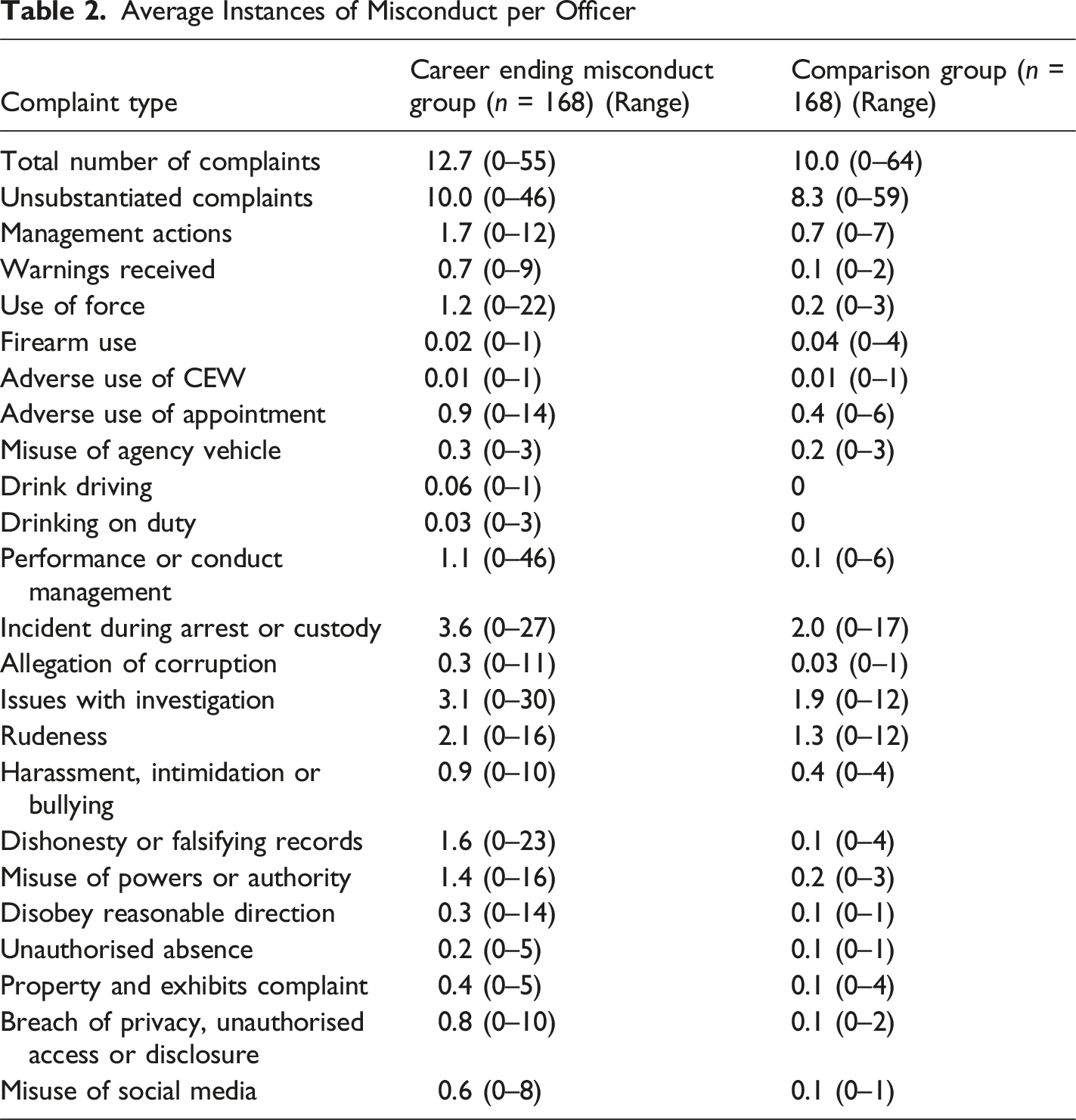
Data for each officer were extracted from agency’s complaint management database, with information obtained for each allegation type available. Complaint categories were arranged similarly to prior research in this field (Kane & White, 2009; Cubitt et al., 2020; see Table 2 for full list of complaint variables). To limit challenges associated with naturally occurring data (Lester et al., 2017), data cleaning was performed during the extraction process, to validate each of the allegations made against officers.
Analytical Method
Given the amount of data available, and limited prior research in this area, this research is best considered to be a sequence of exploratory analyses, and it is not intended to be generalized to a broader population. To assist in answering RQ1, summary statistics were provided for each variable across the total sample, alongside a heterogeneous correlation matrix. This correlation analysis had several purposes, while it provided insight into RQ1 by measuring the basic relationship between variables, it also assisted in considering collinearity across the dataset. These variables featured a heterogeneous structure, and as such required a heterogeneous correlation matrix (McGrath & Meyer, 2006). Because the data featured a mix of binary, categorical and continuous variables, the correlation matrix produced here employed a mix of tetrachoric (Brown & Benedetti, 1977), polychoric (Babchishin & Helmus, 2016; Brown, 2006), and Pearson correlations (Babchishin & Helmus, 2016; Holgado-Tello et al., 2010). We employed this approach because it allowed us to explore associations across binary, categorical, and continuous variables without presupposing directionality, and to screen for potential collinearity at an early stage. By contrast, RQ2 and RQ3 relied on more constrained subsamples where logistic regression was selected as it is better suited to estimating conditional probabilities of misconduct and identifying characteristics in smaller, focused groups.
Logistic Regression
The logistic regression is a commonly employed statistical method using police data (Cubitt, 2023; Gaub, 2020; Kane & White, 2009). Given the sample size available, and the research questions, this research estimated a logistic regression using the binary outcome variable of substantiated career ending misconduct among officers, and the previously described explanatory variables. The intention of this analysis was to focus on career and demographic data, to consider whether there were any notable relationships with committing career ending misconduct, among officers for whom complaint data was unlikely to be helpful.
To answer RQ2, we restricted our full sample to those representing an elevated number of unsubstantiated complaints, with relatively few substantiated complaints. We first restricted the sample of officers to those who have (1) at least 8 unsubstantiated complaints, the average number for the total sample, and (2) had more unsubstantiated complaints than substantiated complaints. This left a dataset of officers who had, on average, 11 more unsubstantiated complaints than substantiated complaints, providing a group who tended to accrue unsubstantiated complaints, but did not accrue substantiated complaints (see Table 3 for summary statistics for this sample). We then estimated a logistic regression to measure the relationship between demographic and career variables and career ending misconduct.
To RQ3 this research question, we again restricted the sample. This time, our inclusion criteria required officers to have no more than 8 total complaints across their career, leading to an average of fewer than four complaints across the sample (see Table 6 for summary statistics for this sample). Using this sample, we then estimated another logistic regression to measure the relationship between these variables and career ending misconduct. For each logistic regression, we computed both supervised and unsupervised modelling approaches, primarily to identify the approach with strongest modelling performance, but also to account for any potential overfitting. In each circumstance, the modelling performed equally well, we therefore report the unsupervised approach, to align with prior research in this field.
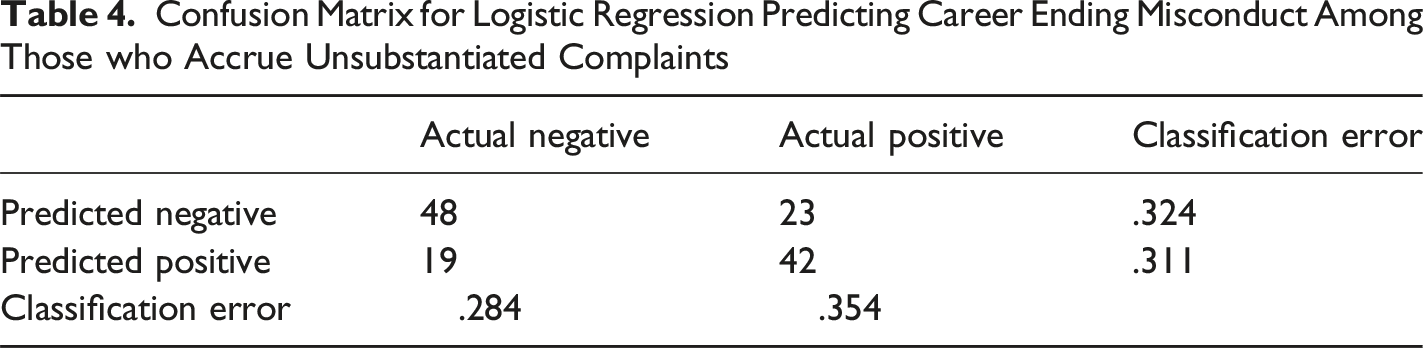
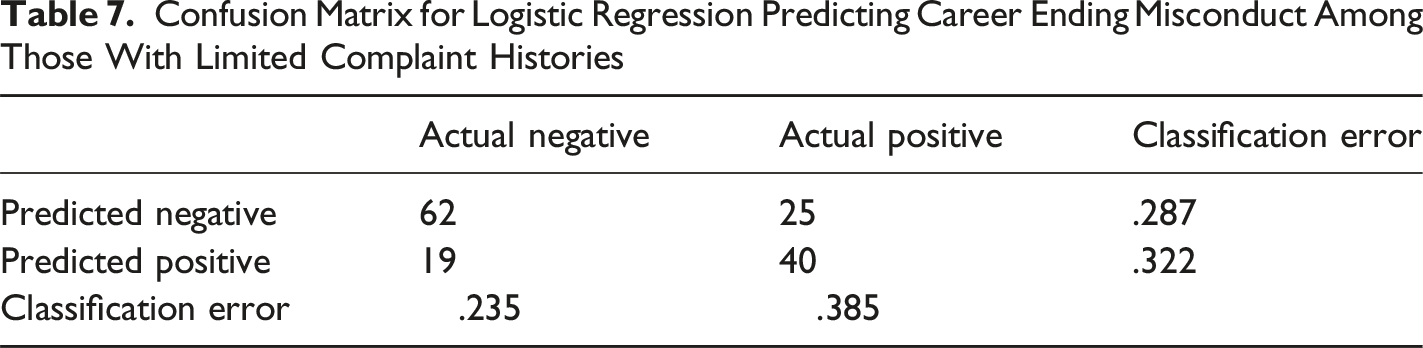
To consider the accuracy of each of the logistic regression models, we undertook a sequence of post-hoc testing. First, a Receiver Operating Characteristic (ROC) curve was used to identify the accuracy of the logistic regression through the Area Under the Receiver Operating Characteristic (AUROC) curve. The ROC curve identifies the true positive rate of classification (y-axis), compared with the false positive rate (x-axis) at any threshold value. The AUROC, which we refer to in simple terms as the accuracy of the model, represents the probability that a randomly selected case will be accurately classified. To measure the distribution of correct predictions, we then produced a confusion matrix to provide a measure of how often the model successfully or unsuccessfully made predictions (Barnes & Hyatt, 2012).
Analytical Limitations
We acknowledge that the logistic regressions in this paper use a relatively small sample size, however it is sufficient for their use in this context. It is certain that a key limitation of this study is the restricted sample size in the spontaneous misconduct analysis (n = 65), which constrains statistical power, and limits the reliability of effect estimates. Recent research has considered whether the available sample size is the absolute criteria for validity and model performance of the logistic regression. Known as the Events Per Variable criterion (EPV), this has traditionally led to a requirement of ten cases representing the event of interest per independent variable included in the model (Bujang et al., 2018). However, recent research has suggested the miscalibration of the modelling that occurs in low EPV settings, does not tend to occur when the events fraction approaches 50/50. In other words, when the sample size is relatively low, if the distribution of cases and comparisons is even, or close to even, the concerns from low EPV tend not to materialize (van Smeden et al., 2016, 2019). Moreover, blanket use of the rule of thumb that EPV must be at least 10, does not adequately account for fluctuations in the events fraction. As van Smeden and colleagues (2016) show, a range of diagnostic criteria for binary regressions (AUC, MSPE, MAPE, Brier and CS) vary when events fraction is under one event to four comparisons, however they then converge as the events fraction approaches 50/50. While the sample size in the present research is smaller than in other studies (although we note, it is not nearly as small as in some applications; Zhang & Wang, 2009; Choi & Ma, 2020; Cubitt et al., 2021), the events fraction in each logistic regression either achieves or approaches 50/50. Nevertheless, we acknowledge that the small sample limits statistical power and the reliability of effect estimates, particularly regarding RQ3, and we therefore report this analysis as exploratory and the findings as indicative.
Results
Summary Statistics
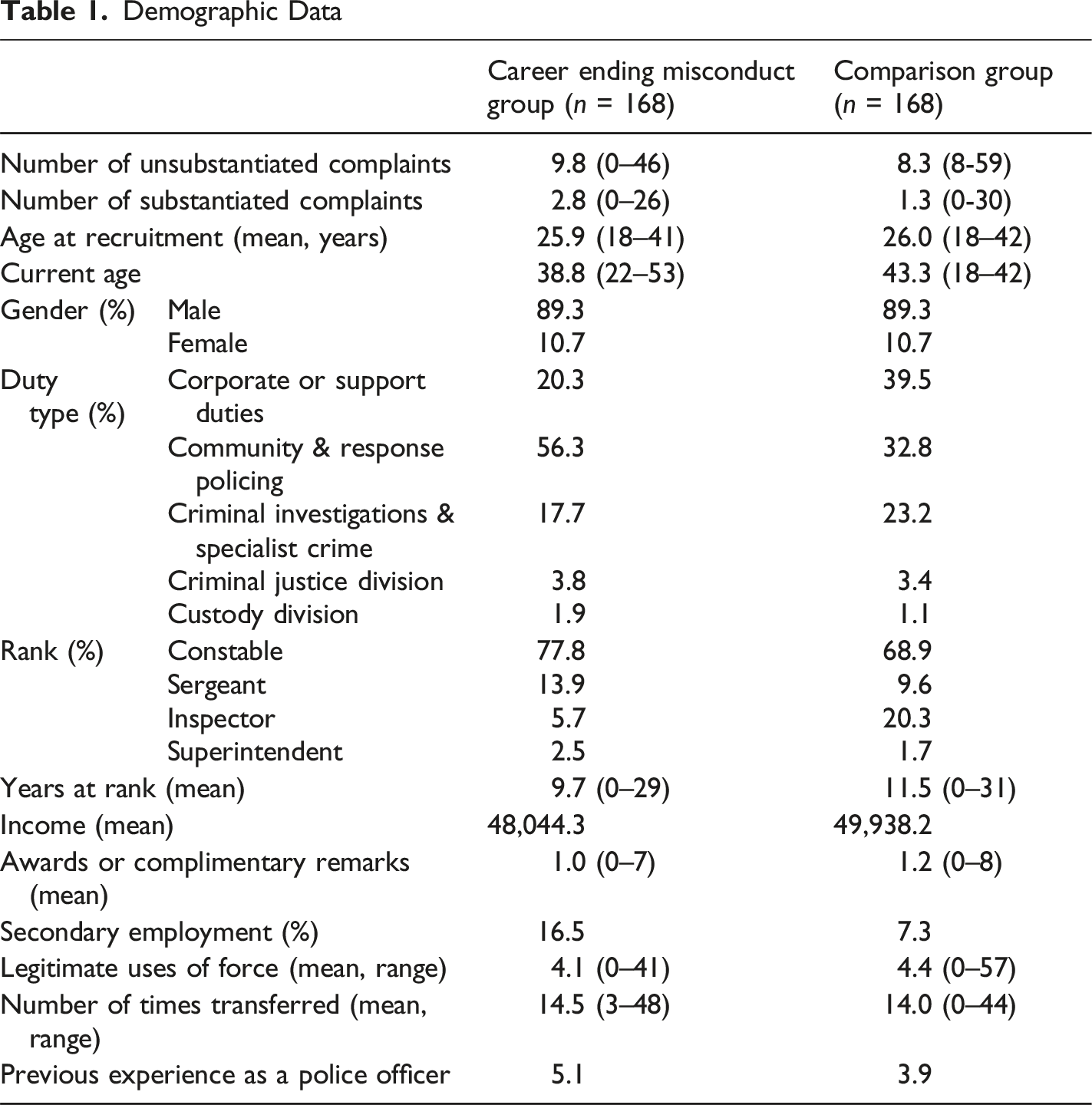
Demographic Data
Average Instances of Misconduct per Officer
Research Question 1
There appeared to be some prima facie evidence that increasing numbers of unsubstantiated complaints held a relationship with career ending misconduct. Within the total sample of 336 officers, there were 112 officers who accrued more than 11 unsubstantiated complaints, of whom 60 had committed career ending misconduct. When we increased the unsubstantiated complaint threshold we then found that there were only 31 who had accrued more than 20 unsubstantiated complaints, however of those 31, 20 went on to commit career ending misconduct. These findings tentatively suggested that as the number of unsubstantiated complaints increased the relationship with career ending misconduct became marginally stronger.
Correlations are shown for all interactions achieving statistical significance (Figure 1; p < 0.05). In relation to RQ1, unsubstantiated complaints demonstrated several statistically significant correlations, each of which adhered to conventional logic. For example, unsubstantiated complaints were positively correlated with certain more common minor complaint types such as rudeness, incidents during arrest or custody, and importantly for face validity, they were correlated with overall number of complaints accrued. In relation to RQ1, despite the trend in the summary statistics, the accrual of unsubstantiated complaints of misconduct did not hold a statistically significant relationship with career ending misconduct. Correlation matrix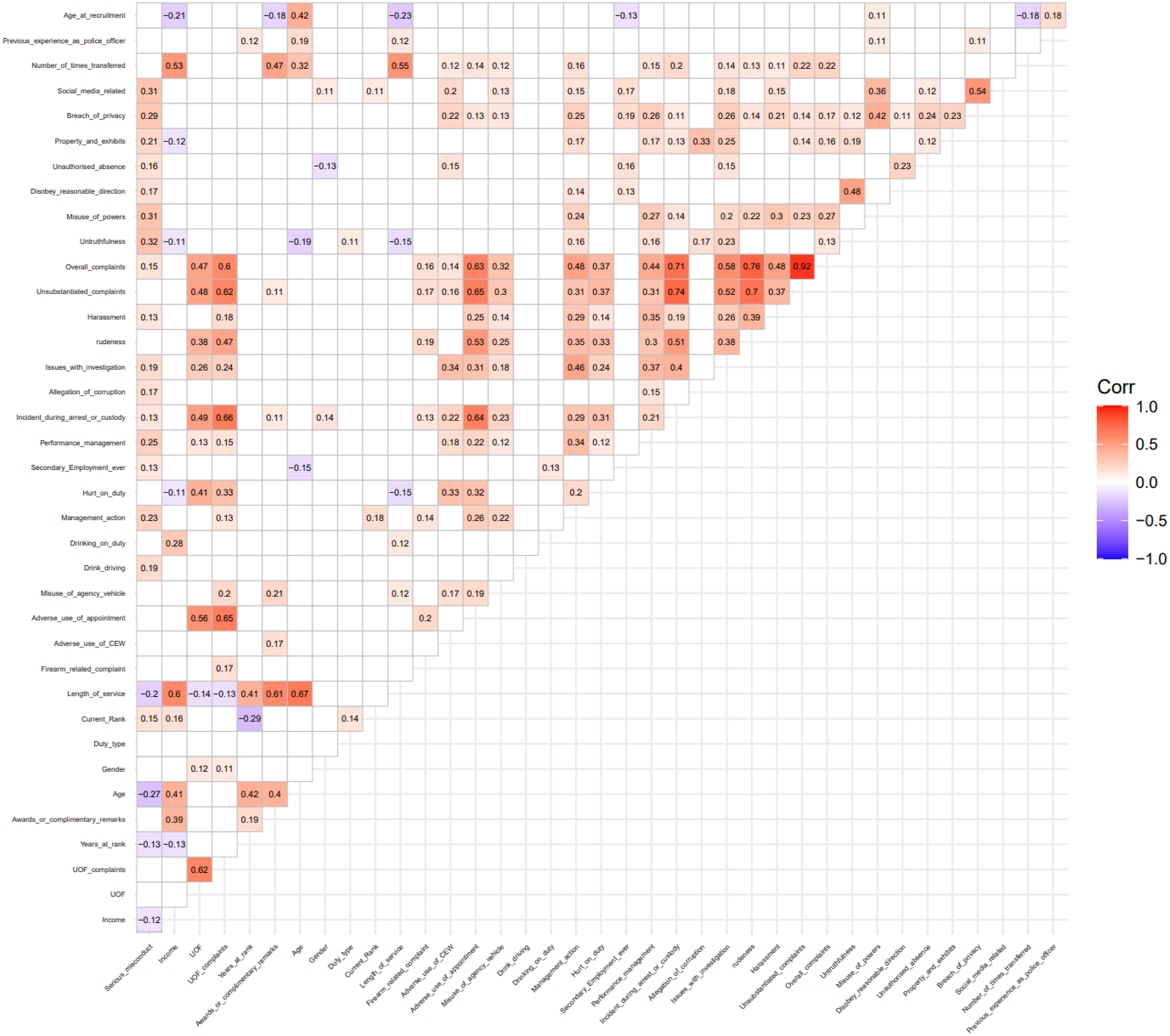
Research Question 2
Demographics and Career Information for Officers who Accrue Unsubstantiated Complaints
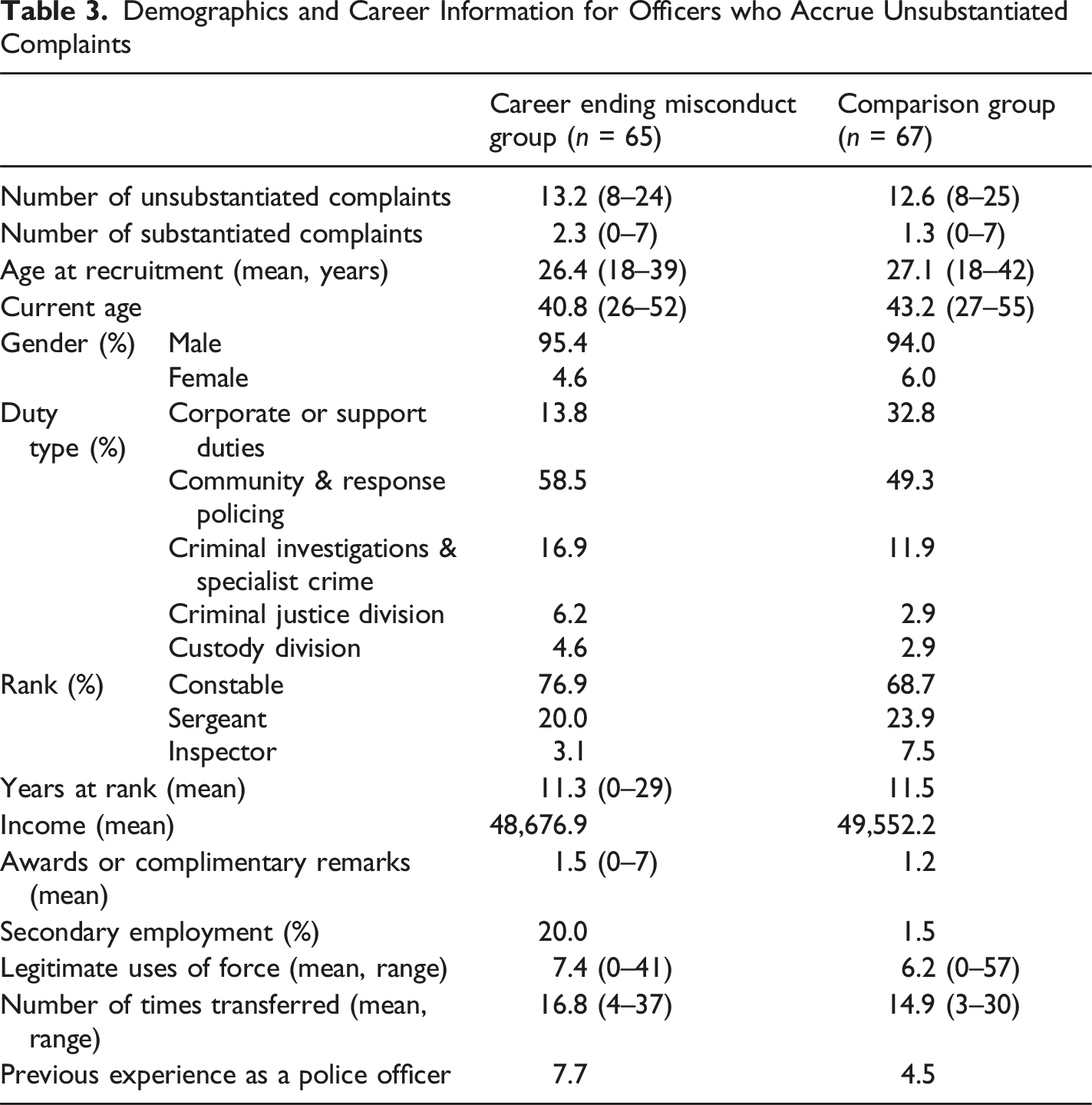
Officers who had a history of unsubstantiated complaints, and committed career ending misconduct, were more likely to undertake community and response duties, and tended to be marginally more junior than their counterparts. Importantly, those who committed career ending misconduct had a significantly higher rate of secondary employment than the comparison group. We then computed a logistic regression model, with the binary outcome of having committed career ending misconduct or not. The model performed well, with the area under the receiver operating characteristic curve returning 0.7892 (Figure 2). Receiver Operating Characteristic (ROC) Curve for Logistic Regression model predicting career ending misconduct among those who accrue unsubstantiated complaints (AUROC = 0.7892)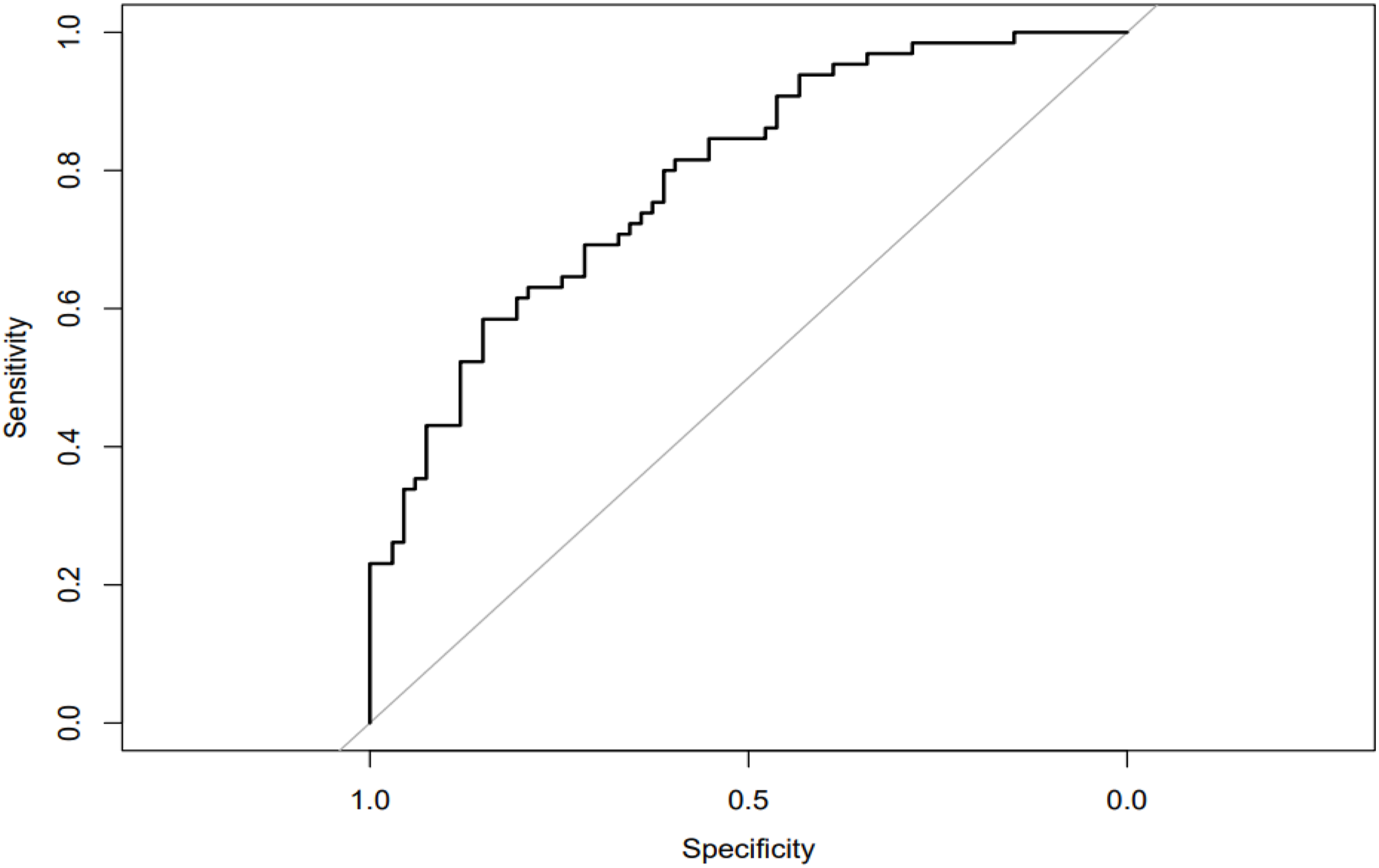
Confusion Matrix for Logistic Regression Predicting Career Ending Misconduct Among Those who Accrue Unsubstantiated Complaints
Logistic Regression Estimates and Odds Ratios
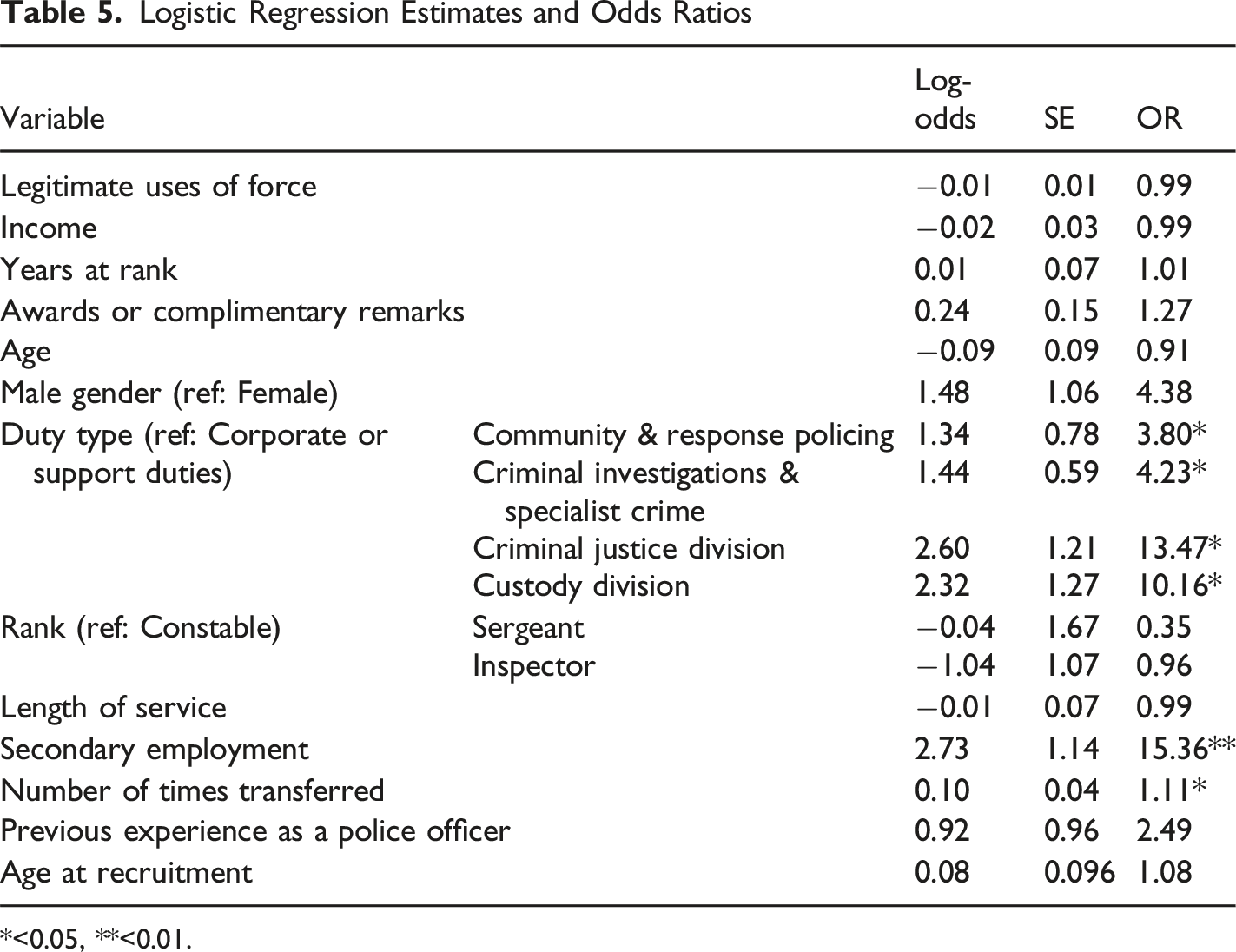
*<0.05, **<0.01.
Research Question 3
Demographics and Career Information for Officers who Commit Spontaneous Misconduct, and Comparison Group
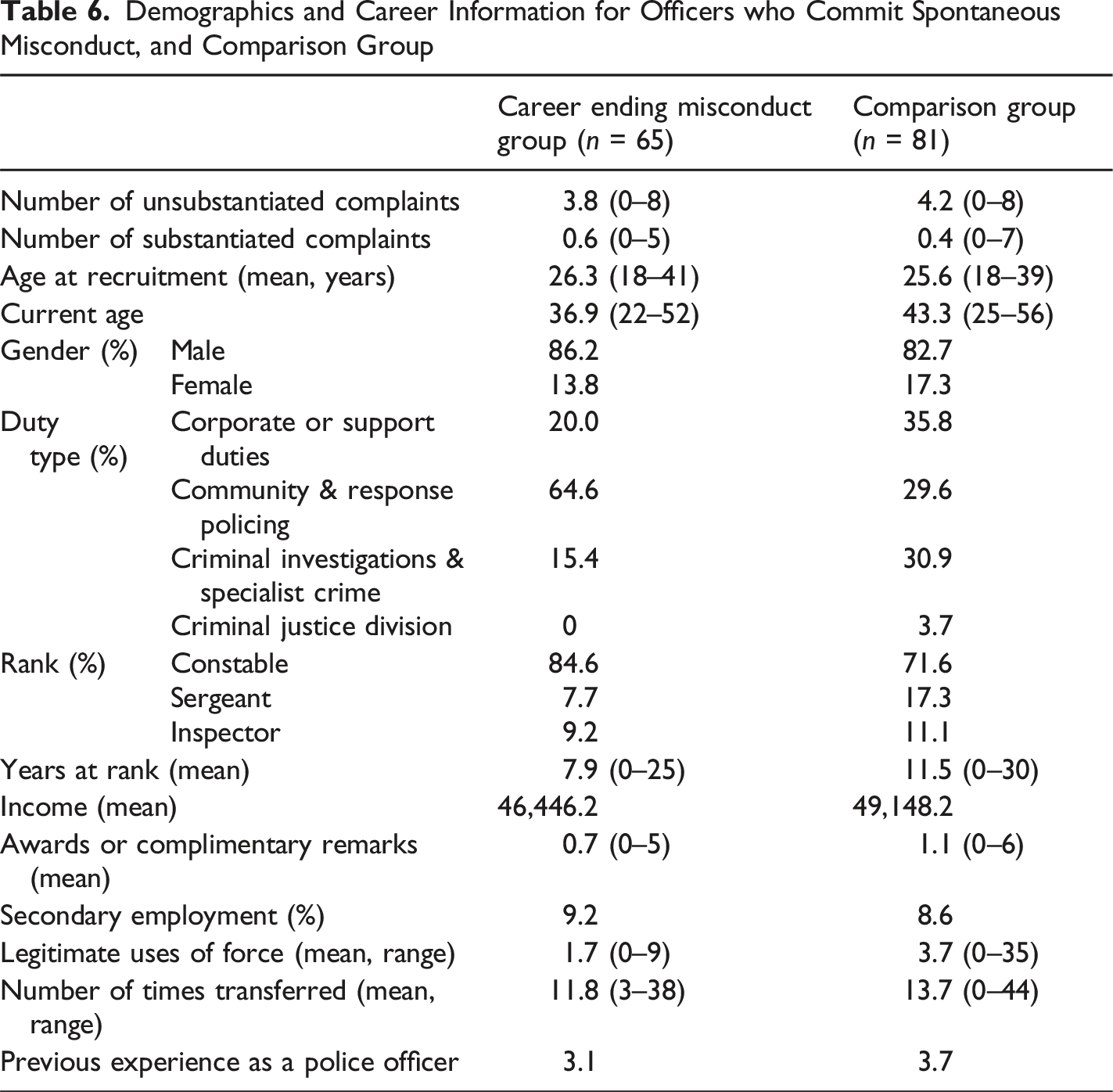
Officers who committed spontaneous misconduct were marginally more likely to be men, and were substantially more likely to be undertaking community and response policing. They were also notably more junior than the comparison officers. Officers who committed spontaneous career ending misconduct did not feature elevated rates of secondary employment, and despite being more likely to undertake community and response policing, tended to have less history of legitimate uses of force. Despite notable differences in the sample from the prior analysis, the logistic regression model performed well, with the area under the receiver operating characteristic curve returning 0.8236 (Figure 2) (Figure 3). Receiver Operating Characteristic (ROC) Curve for Logistic Regression model predicting career ending misconduct among officers with limited complaint histories (AUROC = 0.8236)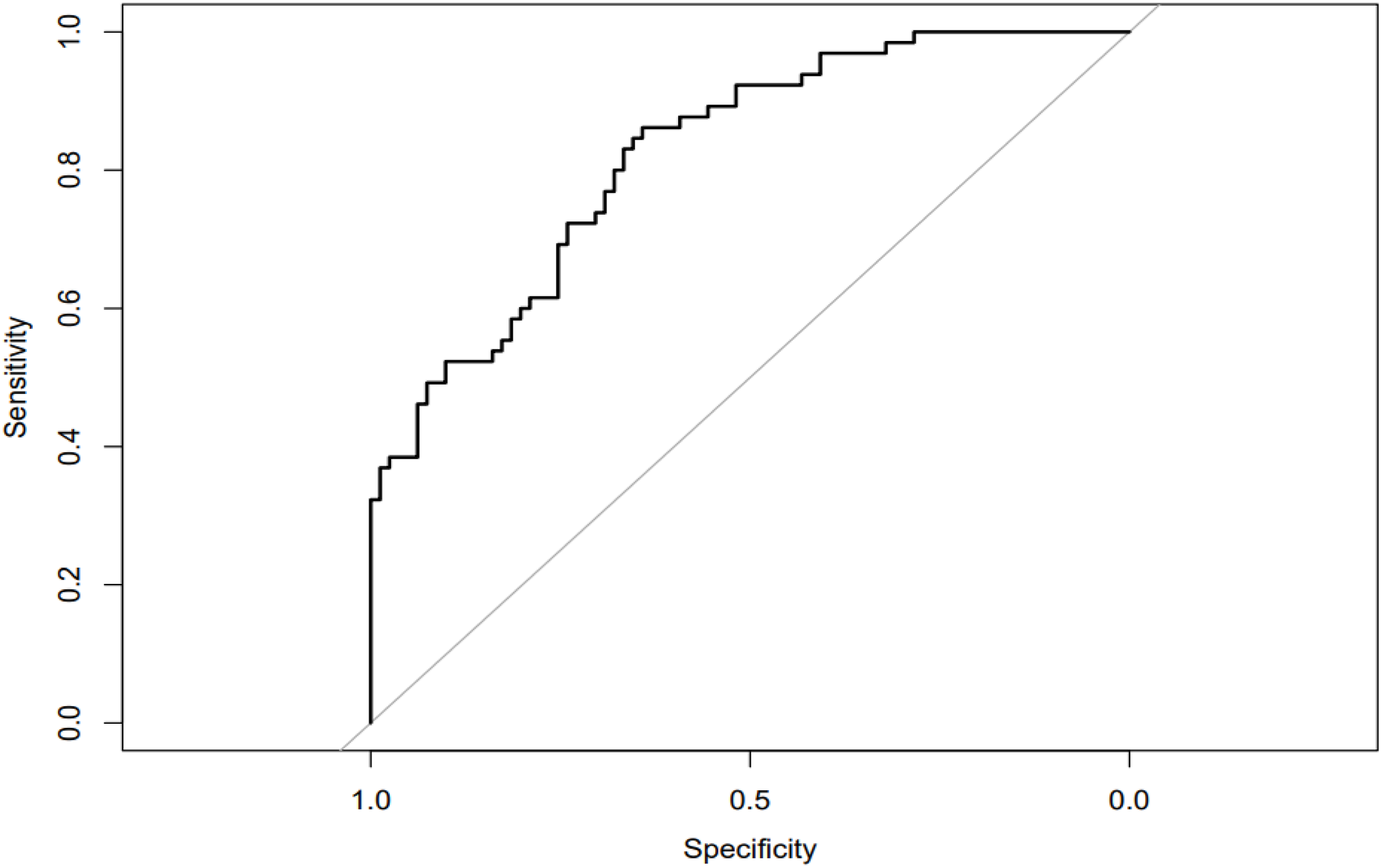
Confusion Matrix for Logistic Regression Predicting Career Ending Misconduct Among Those With Limited Complaint Histories
Logistic Regression Estimates and Odds Ratios
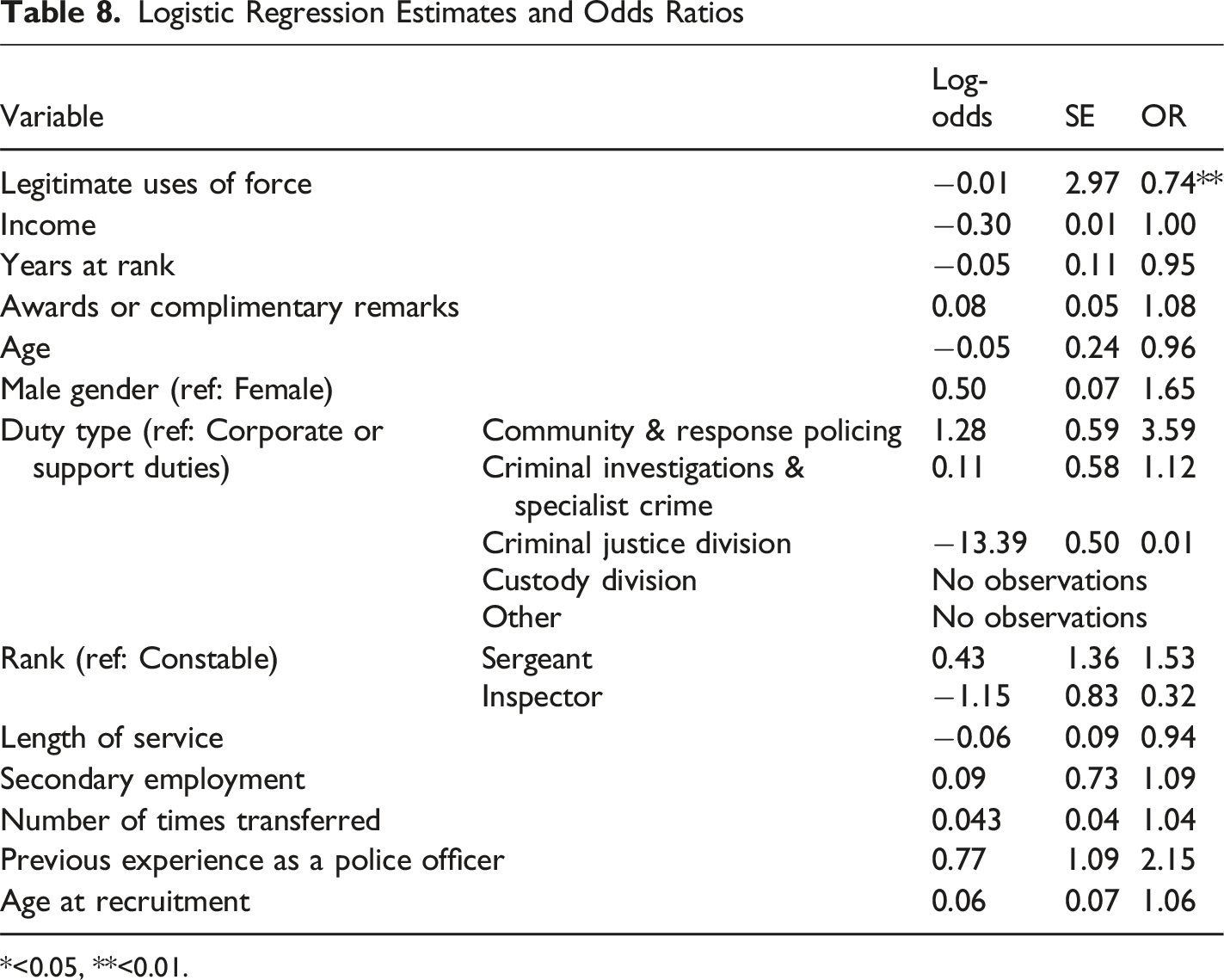
*<0.05, **<0.01.
Discussion
Collectively, our findings suggested that there was little discernable interaction between the accrual of unsubstantiated complaints of misconduct and downstream career ending misconduct. The accrual of unsubstantiated complaints held a relationship with several interesting variables, including statistically significant correlations with complaints of rudeness, incidents during arrest or custody, and overall number of complaints accrued. These findings adhere to conventional logic regarding those who tend to accrue unsubstantiated complaints; minor complaint types involving members of the public, and overall volume may be higher. However, pivotally, there was no identifiable relationship between the accrual of unsubstantiated complaints, and career ending misconduct. In answering our first research question we make an important, tentative, finding. Prior research estimating prediction models for career ending misconduct tends to find that overall number of complaints, while not the strongest predictor, still tend to predict career ending misconduct (Cubitt & Birch, 2021; Cubitt et al., 2020; Kane & White, 2009). The same relationship was not discernable for unsubstantiated complaints. We then set about confirming this finding by estimating a logistic regression.
We then constrained the sample to focus on officers with notable records of unsubstantiated complaints; logistic regression findings suggested the duty type undertaken by an officer, and the number of times transferred in their career at that time were important predictors. However, the strongest predictor of career ending misconduct was secondary employment. Ultimately, while there may be limited relationship between volume of unsubstantiated complaints and an instance of career ending misconduct, among those who accrue unsubstantiated complaints, there remained important correlates of career ending misconduct among their career characteristics. It is important to emphasize that this is exploratory research. However, we make an important tentative finding that, while officers who accrue unsubstantiated complaints may require a different approach to those who accrue substantiated complaints, there may still be opportunity to predict and intervene with those officers. Although we note that individual types of unsubstantiated complaints may carry some predictive power, this was unobservable to the present study due to the structure of the data available.
Our final research question sought to measure the small, but important, group who commit spontaneous career ending misconduct. The measurable complaint trajectory into the misconduct committed by this group is limited. They tend to have limited unsubstantiated, or substantiated complaints, and they are therefore unlikely to be detected by traditional prediction models. Pivotally, the characteristics discernable in the prior model, when considering those who commit spontaneous misconduct, disappeared. Previous models attempting to predict career ending misconduct tended to find that career characteristics, prior deviance, or demographics at least in part predicted the career ending misconduct event (Cubitt & Birch, 2021; Cubitt et al., 2022; Cubitt et al., 2020; Kane & White, 2009). However, we find that when considering spontaneous misconduct, these types of predictors were not present. Rather, there was one notable predictor, legitimate uses of force reported by officers, inversely related to career ending misconduct. In other words, officers who had more instances of legitimate uses of force, tended to commit less career ending misconduct. To be clear, this variable referred to legitimate and formally reported uses of force, not inappropriate force. This finding is counterintuitive, as greater use of force would not conventionally be expected to correlate with reduced misconduct. While one possible explanation is that this measure reflects reporting honesty (Cubitt, 2023), alternative interpretations are also plausible, including assignment bias, in which officers in lower-risk duties have fewer opportunities to use force, and simple variation in reporting practices, or demographics, or a combination of these factors. It is also possible that there are unobserved variables influencing these findings, or that it is simply an artefact of noise in a small sample. While we present this finding alongside several possible explanations, it is again important to emphasize that this analysis is exploratory, and the sample size is small. While it signals an interesting effect, more granular data on use of force encounters is required to better understand this relationship.
Collectively, these findings suggest that unsubstantiated complaints alone appear unlikely to be instructive regarding the likelihood that an officer may be prone to career ending misconduct. However, we do note that the absence of consistent statistically significant predictors in the spontaneous misconduct model should be interpreted cautiously, as this may reflect the limited statistical power of a necessarily small sample rather than the true absence of meaningful effects. Among those who accrue unsubstantiated complaints, career characteristics remain important metrics for probability of career ending misconduct, similar to those who accrue complaints. In other words, the demographic and career predictors of career ending misconduct appear similar among those who accrue substantiated complaints and those who do not. However, officers who commit spontaneous misconduct without the prior accrual of either unsubstantiated or substantiated complaints, appear to be a separate group again. The prospect of anticipating career ending misconduct by these officers may be limited.
The absence of consistent predictors for the spontaneous misconduct group requires careful interpretation. It is possible that this subset of officers is genuinely harder to predict using traditional indicators such as demographics, complaint histories, or career characteristics. By definition, these individuals do not exhibit the kinds of observable precursors that underpin most prediction models, and their pathways into career ending misconduct may be qualitatively distinct. However, it must be noted that the small sample size (n = 65) inevitably limits statistical power, meaning that some associations may remain obscured by wide confidence intervals rather than reflecting true null relationships. The range of available predictors may also have been too narrow to capture salient influences, particularly factors such as mental health, financial stress, peer dynamics, or exposure to organisational strain, all of which have been theorised to contribute to misconduct but were not available in the administrative data (Agnew, 2006; Bishopp et al., 2020; Cubitt & Judges, 2018). Future research should expand data collection, incorporate psychosocial and contextual measures, and consider multi-method designs to better illuminate these complex cases.
Explaining the Role of Secondary Employment
The strong association between secondary employment and career ending misconduct warrants further consideration. One possible explanation emerges from general strain theory (Agnew, 1992, 2006), which emphasises the role of stressors and negative affect in shaping maladaptive outcomes. Secondary employment may signal heightened financial strain, whether through insufficient primary income, family obligations, or personal debt. Officers under such pressures may perceive policing as insufficiently rewarding or stable, increasing their susceptibility to misconduct as a maladaptive coping strategy. Relatedly, strain may arise not only from financial pressures but also from the cumulative stress of balancing competing demands across two occupations. Policing already imposes long and irregular hours, high stress, and psychological strain (Bishopp et al., 2020). Adding secondary employment to this load may further erode resilience, creating conditions in which otherwise avoidable misconduct becomes more likely. This interpretation aligns with prior findings that late-career misconduct is often preceded by life-course stressors such as divorce, injury, or financial instability (Cubitt et al., 2020; Cubitt & Judges, 2018).
Another perspective arises from theories of role conflict and organizational sociology. Officers engaged in secondary employment must navigate divided loyalties between policing and external employers, potentially blurring professional boundaries or creating competing obligations. These competing roles may reduce organisational commitment, weaken identification with police values, and increase opportunities for misconduct that benefits the secondary role or provides short-term relief from stress. Social learning theory also provides a useful framework; secondary employment may expose officers to networks outside the police environment, where norms and expectations may diverge sharply from organizational standards (Akers, 1998; Chappell & Piquero, 2004). Such exposure may broaden opportunities for misconduct or normalize behaviours that conflict with professional codes. Taken together, these frameworks suggest that secondary employment should not be viewed simply as a binary variable but as an indicator of intersecting pressures, conflicting obligations, and alternative social influences. While our data do not allow us to discern which explanation is more fitting, the consistency of the association across literature suggests that further research is necessary, particularly given its potential relevance for policy around secondary employment approvals.
Implications for Practice
These findings have important implications for police policy and practice. First, our study informs police processes and programs that target misconduct. For example, early warning systems use various correlates of misconduct as “red flags” that are monitored for early intervention (Shjarback, 2015); our findings suggest that these systems may require more nuance if they intend to select all types of officers who commit career ending misconduct, not only the ones with considerable complaint histories. If these systems are expected to perform well among the totality of officers, they may require augmentation to successfully capture those who commit spontaneous misconduct. Second, forming a robust understanding of which officers are problematic may translate to considerable cost savings. The Washington Post recently estimated that repeat misconduct by officers resulted in more than $1.5 billion in lawsuit settlements in the United States (Alexander et al., 2022). It is reasonable that developing methods to better identify misconduct prone officers could save police departments, and government considerable sums of money across time. The amount of savings may be enhanced by being better able to stratify officers and identify those at risk, for remedial management or support.
Police departments implementing metrics for evaluating risk of misconduct tend to rely on established characteristics from the literature to determine flagging criteria in early warning/intervention systems (see, e.g., Walker et al., 2000; Shjarback, 2015; Briody & Prenzler, 2020; Gullion & King, 2020). Recently, Cubitt and Gaub (2025) showed that this may be more complex than it initially seems, finding considerable variation between the characteristics of misconduct-prone officers between police agencies. However, it remains that the majority of the metrics used to measure probability of misconduct fail to appropriately classify officers when they have limited complaint histories. It is an important implication of the present research that, when enough data are available, demographic and career information may be instructive in predicting career ending misconduct among those who accrue unsubstantiated complaints, but not substantiated complaints. Additionally, that officers who commit spontaneous misconduct are particularly difficult to classify. The central implication of these findings being that an alternate approach may be required for these officers, and certainly further research is required, if early warning systems are to be pursued.
From a theoretical standpoint, these cases may represent the failure of institutional mechanisms to capture early warning signs rather than intrinsic spontaneity. For example, organizational cultures of underreporting or procedural barriers to substantiating complaints could obscure behavioural patterns that would otherwise be detectable (Kane & White, 2009; Skolnick, 2002). Accordingly, we acknowledge that the apparent unpredictability of these cases may be shaped as much by organizational and cultural limitations in recording as by the behavioural trajectories of the officers themselves.
Finally, it is important methodological implication that this research used complaints against police as a proxy measure for misconduct. Police complaints have been noted as robust proxies for officer behavior, particularly among more misconduct-prone officers (Ouellet et al., 2019; Rozema & Schanzenbach, 2018). However, there remains the risk that misconduct unobserved by the public may not be reported (Kane & White, 2009), and that the complaint reporting process, relying on citizens, may mean that reported complaints bias toward more serious misconduct events (Archbold & Maguire, 2002). More detailed data, and sophisticated analytical approaches, such as clustering, factor analysis, or machine learning methods, may provide deeper insights into latent patterns of misconduct and should be pursued in future research.
Conclusion
This study contributes to the growing literature on police misconduct by exploring an under-examined group of officers: those who engage in career-ending misconduct without prior warning. While prior research has focused largely on officers with identifiable histories of substantiated complaints, our analysis finds that not all misconduct trajectories are the same, and this approach may overlook a subset of officers whose misconduct emerges in the absence of such traditional red flags. We did not find a consistent relationship between the accrual of unsubstantiated complaints and career ending misconduct, suggesting that volume alone may not be a reliable proxy for risk. However, among officers with histories of unsubstantiated complaints, certain career characteristics—particularly secondary employment—did emerge as significant predictors. More challenging yet are the officers who commit career ending misconduct spontaneously. The only clear signal of career ending misconduct among this group was an inverse relationship with legitimate, reported uses of force. This subgroup poses a fundamental challenge for early intervention systems that rely on observable patterns to flag risk. Future research should extend this analysis to full officer populations where data access permits, as this would allow more robust assessment of prevalence and population-level predictors of misconduct. Such an expansion would complement our exploratory matched-sample design by testing the generalizability of these findings and clarifying the broader utility of complaint histories and career characteristics in prediction.
Collectively, our findings point toward the need for a more nuanced approach to misconduct prevention. Traditional early warning systems may be effective for officers with known histories, but alternative strategies, perhaps informed by organizational or behavioral cues, are needed for those who present no such signals. Future research should explore new metrics such as reporting behavior or work-related stress as potential avenues for additional indicators of risk among these officers. Ultimately, understanding these different misconduct trajectories is essential to developing more nuanced, effective, and fair approaches to police accountability.
Footnotes

Funding
The authors received no financial support for the research, authorship, and/or publication of this article.
Declaration of Conflicting Interests
The authors declared no potential conflicts of interest with respect to the research, authorship, and/or publication of this article.