



Abstract
Over the last decade, research on police training showed significant development. Nevertheless, the field was lacking a consistent framework based on the best available scientific evidence indicating what should work in police training. The present article presents such a model, based on Litmanovitz (2016). It provides a succinct description of the model, its development and importance, and tests the outcome of a procedural justice (PJ) training module designed based on its principles, within the context of a quasi-experiment in the National Police College in Israel. Findings show a statistically significant effect on recruits’ support for PJ, but not on their perceived ability to exercise PJ. We conclude that the general, ecological training model proposed by Litmanovitz (2016) shows promise, is useful for the development of evidence-informed police training interventions, and should be viewed as a starting point for ongoing elaboration and refinement of our knowledge on police training.
Across the globe, police agencies invest an immense amount of time and resources in training their officers. The various training programs are considered the most important tool police agencies have for reaching the ethical and professional standards expected of them in democratic societies (Chan et al., 2003; COPS Office, 2015; Goldstein, 1977; Haberfeld et al., 2011; Manning, 2010; Reiner, 2010), and, accordingly, training has been treated as a key feature in police reforms that seek to make officers more effective and fair (e.g., Edwards, 1993; Reiner, 1992). At the same time, for decades, the body of knowledge on “what works” in police training was thin, and the design of training interventions was generally not based on scientific evidence indicating what is effective in achieving training goals (Neyroud, 2011; NRC, 2004).
Over the last decade, more and more rigorous studies examining the outcomes of various police training interventions have been published (Bennett et al., 2020; Nagin & Telep, 2020). At the same time, they have not developed from a consistent theoretical framework that allows us to consider them jointly as a coherent body of knowledge. Without such a framework in the background, it is difficult to understand why specific programs worked (or did not work), or what specific elements of the program made it more (or less) effective (Fraser et al., 2009; Weisburd et al., 2015). As a result, specific programs that showed positive outcomes are difficult to replicate, scale-up, or implement in other policing contexts or agencies. Addressing this gap poses a critical stepping-stone for advancing the design and implementation of effective police training interventions, as well as for gaining in-depth understanding of the processes underlying police training more generally.
In a notable endeavor to address this challenge, Litmanovitz (2016) developed a framework of what should “work” in police training. It was designed based on an integration of a thorough literature review of the occupational training literature in the areas of policing, medicine, and education, with a Grounded Theory analysis (Strauss & Corbin, 1994) of a training model in a specific police agency – the Israel Police Border Guard (IPBG). The two sequential phases allowed Litmanovitz (2016) to merge scientific knowledge indicating “what works,” with real-world knowledge of “how it works.” The general, ecological training model (GET) 1 includes three domains -- the realms in which training operates, which, in turn, house seven mechanisms, which are the processes influencing learning in each realm. Altogether, the model illuminates the main issues one should consider when developing a training intervention in policing, and the “dos” and “don’ts” in each sphere.
We are unaware of parallel attempts to construct an evidence-informed, general ecological model of police training. At the same time, and despite the comprehensive and meticulous process by which the model was developed, it clearly needs to be applied in the real world, and its outcomes should be examined. Do police training interventions designed based on the principles outlined in the model “work?” Do they work better than training programs that do not follow these “dos and don’ts?” Clearly, this question cannot be answered with a single study testing the outcomes of a training intervention based on the model, as it would require comparing the outcomes of a host of training interventions of both types. Nevertheless, in the present study we take the first step in this direction. Our goal is to provide a succinct description of the GET model and the process by which it was developed [a detailed description can be found in Litmanovitz (2016)], and examine the outcomes of a training intervention designed based on the model -- a procedural justice (PJ) training module in the National Police College (NPC) in Israel.
We begin by explaining why an evidence-informed, general, ecological model of police training is necessary for advancing both the research and the practice of police training. We describe the GET model (Litmanovitz, 2016) of what should work in police training, including the process by which it was developed, its components, and the “dos and don’ts” proposed in the model. Following a brief review of the body of work on PJ training, we describe our study, in which we tested the outcomes of a short PJ training module delivered to police recruits in the NPC of the Israel Police (IP). Our findings reveal that despite less-than-optimal implementation conditions, the training showed significant effects on recruits’ support for PJ (but not on their perceived ability to exercise PJ). We conclude that the GET model shows promise as a basis for designing police training interventions. Nevertheless, the model should not be viewed as an end, but as a starting point for additional refinement and elaboration of our understanding of the field of police training.
The Problem: Lack of an Evidence-Informed, General, Ecological Model of Police Training
For decades, police training has been considered a central organizational tool for achieving the ethical and professional standards required from police in democratic societies (Manning, 2010). Training is used across the globe to orient police recruits and officers to the complexity of their role, and to secure their commitment to the policies and priorities of the organization (Chan et al., 2003; Cox & Moore, 1992; Goldstein, 1977; Haberfeld, 2002; Mastrofski & Ritti, 1996; NRC, 2004). Training has also been proposed as a key tool for making police agencies more evidence-based (Brown et al., 2018; Neyroud & Weisburd, 2014; Sherman, 2015), and, more recently - a key component in the numerous reforms initiated in response to public protests against police misuse of force and biased treatment of minorities (Chan et al., 2003; COPS Office, 2015; Edwards, 1993; Reiner, 1992). Two recent examples are the demand to re-train all officers in England and Wales in the appropriate practice of Stop and Search (Giacomantonio et al., 2016), and the recommendation of the President’s Task Force on 21st Century Policing to improve and standardize police training across the United States in order to ensure fair and impartial treatment (COPS Office, 2015).
At the same time, empirical studies lagged behind the expectations from and popular use of training in policing (Manning, 2010; Mastrofski, 1990; Neyroud, 2011; NRC, 2004; Skogan et al., 2015). The National Research Council identified over 15 years ago that the empirical evidence on police training is insufficient to make any clear policy recommendations (NRC, 2004). The report points to significant gaps in the evidence, with almost no rigorous studies supporting causal relationships between specific training interventions/principles and the expected outcomes of the training. A decade ago, Neyroud (2011) found that policy reports promoting specific training strategies are not based on evidence regarding the effectiveness of the strategies, but on common practice.
Over the last decade, significant progress has been made in the study of police training, which is expressed both in the number of studies and in their methodological rigor. More assessments of police training are published every year, including experimental and quasi-experimental studies (e.g., Bennett et al., 2020). At the same time, there is a troubling lack of a connected, theory-based body of work. This is because, to date, studies of police training were carried out in isolation from one another, with no consistent theoretical framework to guide the design of the intervention and allow for the results to be considered together, as a joint body of knowledge.
Notably, this is different from other areas of research in policing in which theory plays a more significant role. For example, studies of crime-control strategies often seek to identify not only if the strategy “worked,” but also why it worked. One example is place-based policing, and particularly “hot-spots policing,” which was designed based on the theory of crime concentration (Weisburd, 2015), and can be traced back to more basic theories of crime opportunity [e.g., Rational Choice Theory (Cornish & Clarke, 1989); Routine Activities Theory (Cohen & Felson, 1979); Crime Pattern Theory (Brantingham & Brantingham, 1993)]. Moreover, attempts have been made to identify basic principles that characterize all effective policing strategies that seek to prevent crime (e.g., Lum et al., 2011; Weisburd & Majmundar, 2018).
There have been no parallel attempts to identify a general theoretical framework of police training. Research on police training tends to focus on the specific content of the training, such as the learning material that should (or should not) be delivered in the classroom. This approach mistakenly views police training as a simple intervention -- an intervention that can be assessed by standard experimental designs (similar to medical trials; see Petticrew, 2011). But a careful examination of police training suggests that it is more aligned with the definition of a complex social intervention -- an intervention with several interacting components, which targets multiple groups and levels within the organization; is flexible; requires specific tailoring and adaptations; and aims to change complex behaviors (Craig et al., 2008). Complex interventions require study designs that go beyond the question of “did it work?” to the question of “how did it work?” (Bonnell et al., 2012; Moore et al., 2015), and can, for example, illuminate the relationships between the different elements of the intervention; identify the moderating effects of the context in which the treatment is delivered, and clarify the role of the implementation. Thus, theory plays a critical role in evaluating complex interventions (Craig et al., 2008).
The GET Model of What Should Work in Police Training
Litmanovitz (2016) sought to respond to the challenges outlined above by developing an evidence-informed, general, ecological model of what should work in police training (GET). The model is “general” in the sense that it is relevant to a wide range of policing contexts, but, importantly, it allows researchers and practitioners to consider the practical implications of the model in specific contexts. As an “ecological” model (Bronfenbrenner & Morris, 1998), it recognizes that the success (or failure) of training interventions are intertwined with the different realms in which police officers work and learn. The GET model (Litmanovitz, 2016) is made up of seven mechanisms nested within three domains (detailed below). Together, the mechanisms are expected to contribute to successful training transfer-the implementation of the training in the field (Kraiger et al., 1993).
The Construction of the Model
The GET model was constructed using a three-step process. First, Litmanovitz (2016) conducted a comprehensive literature review of the occupational training literature, with the goal of identifying effective training mechanisms -- the “underlying entities, processes, or structures which operate in particular contexts to generate outcomes of interest” (Astbury & Leeuw, 2010, p. 7). In addition to the police training literature, the review included studies on medical (physicians and nurses) and education training, because these areas of research are more developed and can thus provide robust evidence regarding “what works” in occupational training more generally (Cant & Cooper, 2010; Colliver, 2000; Davis et al., 1995; Green & Ellis, 1997). The search strategy was geared towards identifying systematic reviews and experiments, as these research methods are less prone to bias and produce more generalizable findings (Petticrew & Roberts, 2003; Whittemore & Knafl, 2005).
The second phase included an in-depth analysis of police training in practice, using the Grounded Theory methodology (Strauss & Corbin, 1994). This step enabled Litmanovitz (2016) to go beyond training as a non-contextual intervention, to illuminating how police training is carried out in the “real world.” In other words, it allowed for the transition from specific studies that identified effective mechanisms, to a comprehensive, general model. Accordingly, this step required focusing on a specific police agency. Litmanovitz (2016) focused on a sub-organization within the Israel Police: the IPBG. 2 To produce the Grounded Theory, data was collected and analyzed over a 6-months period. A range of data sources were used, including policy documents describing pedagogical and technical aspects of the training; elite interviews (Richards, 1996) -- in-depth interviews with high-ranking officers across the organization; individual/group interviews with the staff of the education unit, field commanders, and police officers who underwent training in the IPBG (see Lavie-Ajayi, 2014); and structured observations of various types of training sessions. The data was analyzed using an intricate, multi-stage process, which follows the structured approach proposed by Strauss and Corbin (1998).
In the final phase, Litmanovitz (2016) integrated the findings of the first two phases and constructed the final model. In order to identify the “domains,” the findings of the Grounded Theory – the IPBG’s training model – were scrutinized, and Litmanovitz (2016) sought to determine which “systems” were fundamental to the training, or, in other words, in which ecologies the training operates. Three domains were identified: the individual officer, the learning environment, and the police organization. The identification of the mechanisms within the domains was an interactive process that required moving back and forth between the findings of the literature review and the Grounded Theory to identify commonalities between the two data sets. 3
The Outcome: What Should Work in Police Training?
The outcome of the above process is a comprehensive, general, ecological model of police training -- a “recipe” for designing effective training interventions. Below we provide a description of the essence of each of the three domains and list the mechanisms it includes (also see Figure 1).
4
The domains and mechanisms of the general, ecological training model.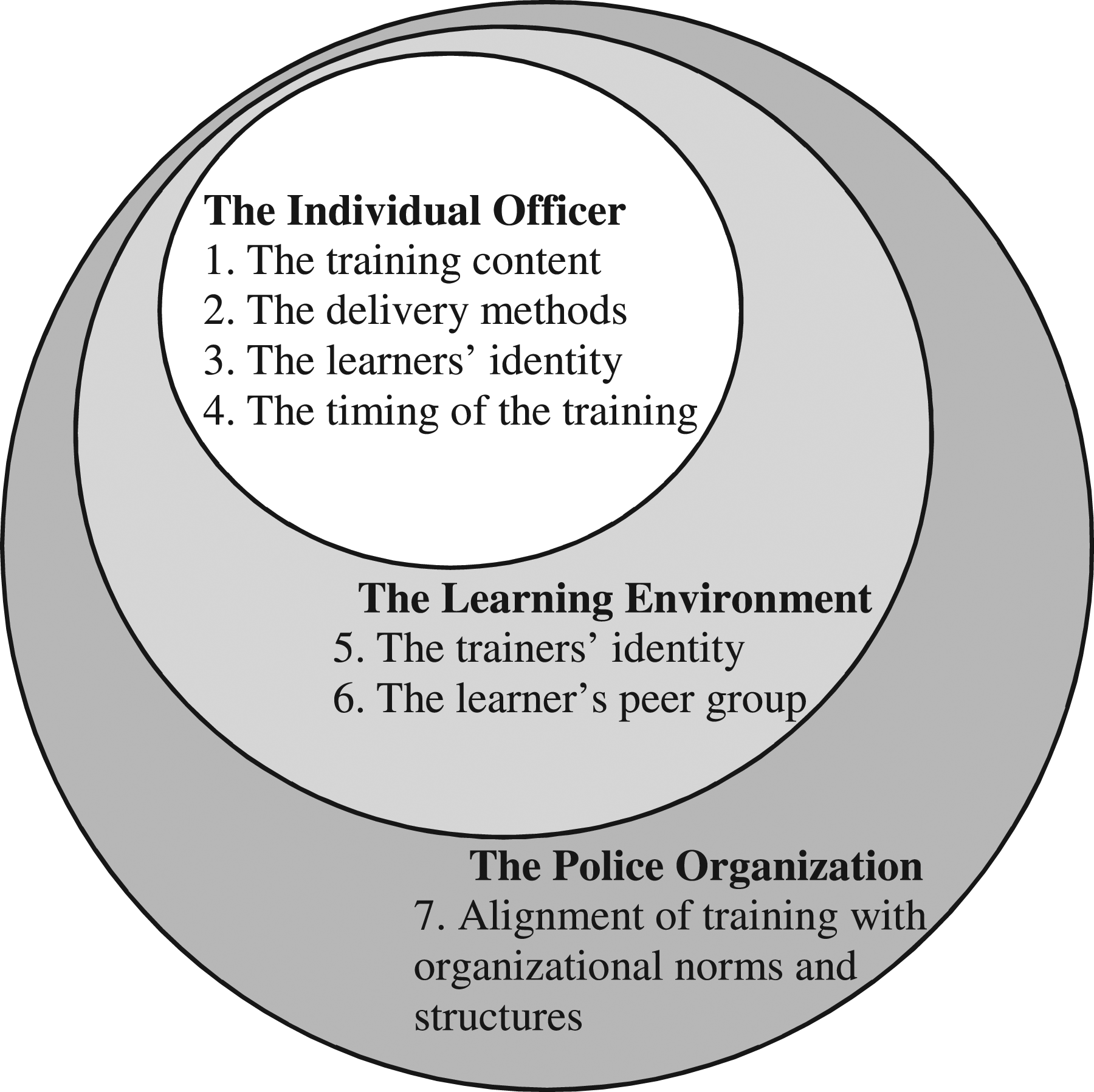
Domain I: The Individual Officer
The innermost domain of the model is the individual officer undergoing the training. Litmanovitz (2016) identifies four mechanisms that influence learning at this level: (1) The content of the training. Training should seek to influence the triad of knowledge, attitudes, and skills (e.g., Salas & Cannon-Bowers, 2001); focus on the desirable, task-specific behaviors (avoid “grand values” such as “liberalism” or “humanism”); and target focused outcomes/changes (avoid complex content/goals); (2) The methods by which the content is delivered. It is advised to use interactive, participatory delivery methods that link training to practice (e.g., role play, hands-on practice), while avoiding pure didactic methods (Brouwer & Korthagen, 2005; Davis et al., 1999); (3) The identity of the learners. Training should recognize that police recruits/officers are adult learners, and thus build on and work with their professional and life experience (e.g., Bennett-Levy et al., 2004). Additionally, training content should be as relevant as possible to the officers’ professional needs (Bayley & Bittner, 1984); (4) The timing of the training in officers’ career. The unique features of the timing of the training (recruit training? On-the-job training?) should be acknowledged and reflected in the training. Additionally, training must be reinforced throughout the officers’ career- reminder/booster sessions are necessary (e.g., Wortley & Homel, 1995).
Domain II: The Learning Environment
Numerous studies identified that the learning environment has significant effects on students’ outcomes (Church et al., 2001; Dorman & Adams, 2004; Goh & Fraser, 1998; Henderson et al., 2000; MacAulay, 1990; McRobbie & Fraser, 1993). Different factors such as teachers’ evaluation methods and communication skills, classroom psycho-social climate, and the physical characteristics of the environment, were found to influence the success of learning. The domain of the learning environment includes two mechanisms: (5) The identity of the trainers. Trainers should be credible experts/opinion leaders (experienced, respected officers). Ideally, training interventions would not be delivered solely by professional trainers or academics (Davis et al., 1995; Skogan et al., 2015); (6) The learner’s peer group. It is recommended to be attentive to the learning group, as it interacts with individual learning (for example, it may affect motivation to learn). It is thus encouraged to conduct the training in the officers’ natural environment and be attentive to potential group resistance (e.g., Craig et al, 2008; Haarr, 2001).
Domain III: The Police Organization
There is strong evidence to suggest that the organization in which officers serve will affect their attitudes, decision making, and even the way they understand their role (e.g., Alpert & MacDonald, 2001; Eitle et al., 2005; Myhill & Bradford, 2013; Trinkner et al., 2016). Thus, Litmanovitz (2016) argues that the police organization – including its formal and informal structures - can assist (or undermine) the learning process of a specific skill, or the integration of concepts and norms into officers’ work (Chaiklin, 2003). One mechanism was included in this domain: (7) Alignment of training with organizational norms and structures. It is advised to align training goals with existing organizational norms, policies and strategies (e.g., Mastrofski & Ritti, 1996; Rosenbaum, 1987). This may include, for example, incorporating supervision and incentives to implement the training content in the field.
As suggested by the above review, the GET model provides a unique, comprehensive, evidence-informed “recipe” for what effective police training interventions should look like. At the same time, and despite the thorough process by which the model was constructed, its real-world application clearly needs to be examined. In the present study we take the first step in this direction, and test the outcomes of a PJ training module designed based on the GET principles. A concise review of this specific area of police training is provided in the next section.
Procedural Justice Training in Policing
Procedural justice in the context of policing refers to the perceived fairness of the processes by which the police exercise their authority. The concept can be traced back to seminal work in social psychology (e.g., Lind & Tyler, 1988; Thibaut & Walker, 1975; Tyler & Lind, 1992), which showed that fair processes are highly important to individuals, presumably because they influence their judgments about their own identity and status. Fair processes send the message that the social group values the individual, who, in turn, feels good about herself and about being part of the group (Blader & Tyler, 2003b; Bradford et al., 2014; Tyler & Blader, 2013).
Four key assessments have come to be recognized as the constituent elements of PJ, or, in other words, the behaviors that, when received from authorities, lead to an overall feeling of “fair treatment” (Schulhofer et al., 2011; Sunshine & Tyler, 2003 Tyler, 2004, 2009): participation (or voice) -- enabling the individuals involved to express their opinions, and taking this input into account when making decisions; neutrality -- making decisions in a neutral, unbiased fashion; dignity and respect -- treatment with politeness and dignity, while acknowledging and respecting the rights of those involved; and displays of trustworthy motives -- showing that the authorities are truly concerned with the wellbeing and quality of life of the individuals involved and/or the larger public (Blader & Tyler, 2003b, 2003a; Jonathan-Zamir et al., 2015; NRC, 2004; Schulhofer et al., 2011; Sunshine & Tyler, 2003; Tyler, 2004, 2009, 2011).
In turn, an overall assessment of fair treatment is expected to increase the legitimacy of the police in the eyes of the citizen, which should lead to numerous socially desirable outcomes, including willingness to comply and cooperate with the police, to accept police authority, to empower the police, and, in the long run, to obey the law more generally (Jonathan-Zamir et al., 2015; Mazerolle, et al., 2013). Given its expected desirable outcomes, as well as the normative appeal of the idea of “fairness in policing,” it is not surprising that the PJ model received tremendous attention in the last decade from researchers, policy makers and police practitioners (see reviews by Nagin & Telep, 2017; NRC, 2004; President’s Task Force on 21st Century Policing, 2015; Weisburd & Majmundar, 2018).
At least 10 experimental and quasi-experimental studies of PJ training in policing have been published in the last decade. Nagin and Telep (2017) note that the majority of earlier studies defined officers’ attitudes or performance in controlled environments as the outcomes measures (e.g., Skogan et al., 2015), and thus, while their findings are encouraging, there is still little evidence that training can enhance PJ policing in the “real world.” Nevertheless, several experimental studies have demonstrated change in officers’ behavior as a result of the training. These studies use as outcomes measures evaluations of trained observers (e.g., Weisburd et al., 2022; Wheller et al., 2013); assessments of the officers’ supervisors (Antrobus et al., 2019); attitudes of local residents toward the police (Weisburd et al., 2022), or “hard” outcomes such as arrests and use of force (Owens et al., 2018; Weisburd et al., 2022). Together, these findings suggest that training can facilitate PJ policing.
At the same time, as an integrated body of knowledge, these studies suffer from the same weaknesses described earlier: because the training interventions did not develop from a consistent theoretical framework, they vary tremendously in terms of their logic model (how change is expected to occur), content, the timing of the training in the officers’ career, and length and pace (“dosage”). For example, in terms of the training content, some interventions focused directly on PJ (e.g., reviewing the PJ model and practicing its implementation; Antrobus et al., 2019; Weisburd et al., 2022), while others have taken the approach that more general skills are necessary to implement PJ, including communication and interpersonal skills, empathy and de-escalation techniques (e.g., Owens et al., 2018; Robertson et al., 2014; Wheller et al., 2013). In terms of the timing of the training in officers’ careers, some studies targeted recruits (e.g. Antrobus et al., 2019) while others focused on on-the-job training for more experienced officers (e.g., Owens et al., 2018; Weisburd et al., 2022). Another example is the identity of the trainers: in some cases, the intervention was led by professional trainers (e.g., Wheller et al., 2013), in some by middle-management police officers (Skogan et al., 2015), and yet in others by academics (Weisburd et al., 2022). Thus, and in line with the problems reviewed above, without a model such as GET, here too it is difficult to judge why some training programs worked better than others, and it is unclear which specific elements make for an effective “PJ training package.” As detailed below, the PJ training intervention evaluated in the present study was designed to comply with the principles identified in the GET model of what should work in police training (Litmanovitz, 2016).
Method
Study Context: PJ Training in the IP
The present study took place in the NPC of the IP. A detailed description of the history of this national police agency, its organizational structure and functions, and well as the ways by which it resembles and differs from other policing contexts in the Western, democratic world, can be found elsewhere. It is important to note that local policing in Israel is considered similar overall to many policing contexts in the West, particularly in terms of the basic functions of the police and the legal and ethical restraints imposed on officers (e.g., Jonathan-Zamir et al., 2019; Jonathan-Zamir & Harpaz, 2018; Weisburd et al., 2009).
With regard to training in the IP, as of 2015 all training takes places in the NPC, which replaced local training centers in order to ensure unified training across the agency. The centralization process triggered a major reform in the training curriculum for recruit patrol officers: the new curriculum sought to strengthen recruits’ “mental preparedness” by providing officers not only with knowledge of the law and technical skills, but also by exposing them to an array of broader ideas deemed necessary for police officers, such as “the police as public servants,” communication skills, and multi-culturalism. The PJ training intervention evaluated in the present study was developed as part of this reform by a professional training developer in cooperation with the researchers, based on the GET model (Litmanovitz, 2016). Importantly, some constraints dictated by the NPC limited our ability to implement the GET model in full: the training module was to be designed specifically for recruit patrol officers within the setting of the College (no booster sessions were possible), and to consist of (only) four 45-min sessions within a 27-week course (which limited, for example, the amount of role plays in the module). Additionally, we had no influence over other training modules in the curriculum that could potentially overlap in content, such as diversity, equality and human rights, and communication skills.
Designing the PJ Training Module in Line with the GET Model
The PJ module consisted of four sessions. The first introduced the idea that public trust is necessary for police effectiveness in democratic societies, and the expected link between PJ and trust in the police. The second provided an in-depth description of the constitute elements of PJ and related examples. The third consisted of role plays in which officers practiced PJ in three types of policing scenarios: teenagers drinking alcohol in a park at night, responding to a domestic violence call, and order maintenance in a small demonstration outside the home of a public official. The fourth and final session sought to sum the module and provide practical tools officers could use in the future.
The seven mechanisms outlined in the GET model (Litmanovitz, 2016) guided the design of the training. As reviewed above, according to mechanism 1 in the GET model, The content of the training, training interventions should include the triad of relevant knowledge, attitudes, and skills, and focus on task-specific behaviors rather than “grand values.” Accordingly, the present training module sought to provide officers with knowledge on PJ and strengthen favorable attitudes toward this policing style. While the module provided information on the four constitute elements of PJ, it paid particular attention to their “translation” to real-world police behavior (as reflected in the empirical literature; e.g., Jonathan-Zamir et al., 2015), thus seeking to provide officers with the skills necessary to display PJ in real-world police-citizen encounters. This “translation” was expressed particularly in the role plays. Further, the training was focused on the PJ model and explicitly tied theory to practice, as opposed to discussing relevant but more diffused ideas such as “democratic policing,” “humanism,” and “service orientation,” thus meeting the GET recommendation to focus on task-specific behaviors as opposed to “grand values.”
With regard to mechanism 2, The method of the training, the GET model recommends relying on participatory delivery techniques, and those were used in all four sessions, including small group discussions, watching and analyzing short video clips, and role plays (with professional actors in the role of “citizens”). The scenarios of the role plays were developed in collaboration with two experienced commanders of a patrol department in a large police station, which made them realistic in terms of the policing tasks, the construction of the situation, and the recommended procedurally-just responses.
Ensuring the training fits well with those who receive it and designing the training for adults is expressed in mechanism 3 of the GET model- The identity of the learners. The first session built on the life experience of the participants as adult citizens, by reflecting on the effects of public trust/distrust in the police using a learning exercise from the adult education literature, which draws from the Lewin-Kolb experiential cycle (see Bennett-Levy et al., 2004). Additionally, to meet the GET requirement to focus on officers’ professional needs, the third session was oriented to reflecting on the potential benefits and challenges involved in implementing PJ in policing, through the analysis of officers’ performance during the role plays.
Due to the constraints set forth by the NPC, reminder/booster sessions that are required by mechanism 4, The timing of the training, were not possible. At the same time, this mechanism also asks us to consider the unique features of the timing of the training. Thus, because the learners were new recruits, the module taught PJ at the elementary level: basic understanding of what PJ is, favorable attitudes toward PJ, and motivation to use PJ in future encounters with citizens. In other words, it sought to place PJ as a basic, ideal model of “professional policing.”
With regard to mechanism 5, The identity of the trainers, the GET model recommends that trainers be experienced, respected officers. Indeed, the training was delivered by the unit’s organic commander (as opposed to a “professional PJ trainer”). 5 These commanders are active police officers at the rank of Superintendent, temporarily “on loan” to the College. They were asked to use their experience in the training, for example by “bringing to life” the different components of PJ using examples from their own experience. Thus, due to their status as the units’ organic commanders and their rich experience in real-world policing, they were considered “credible experts.” Moreover, the commanders’ familiarity with the individual recruits in their unit allowed them to pay attention to group dynamics (as required by mechanism 6, The learner’s peer group), for example by quickly identifying and diffusing resistance that arose during the sessions, and choosing participants for the role plays who would both benefit from the practice and serve as role models to the group. This mechanism also requires conducting the training in the officers’ natural environment, and indeed it was delivered separately to each of the units undergoing recruit training for patrol (∼30 participants per unit). These are the organic teams to which recruits are assigned throughout their 27-week course.
The PJ training module as a whole was designed in consideration of existing organizational norms and structures, as required by mechanism 7, Alignment of training with organizational norms and structures. Throughout the sessions, the training content was linked to recent reforms in the IP, such as “EMUN” (e.g., Weisburd et al., 2020). Current strategic and tactical frameworks were used both as anchors for the normative claims conveyed in the training and to help participants understand how PJ fits with required practices.
Participants and the Quasi-Random Allocation
All 16 units (20–35 recruits per unit) that began recruit training for patrol in the NPC between January and December, 2018, were initially included in the study. Starting January 2018 and following a preliminary selection process in the national recruitment department, a new unit began training every 3–4 weeks. These recruits were intended to be stationed across the country in the role of patrol officers, traffic officers, or in special units within the national patrol division.
While we initially sought to include all the 2018 units in the study, the first five (which began training between January and March) were subsequently excluded because this period, which marked the beginning of a major reform in the NPC, was characterized by extreme disorganization that significantly undermined the fidelity of the intervention. For example, some units received only partial training (some training sessions were skipped); the PJ module was sometimes delivered by the commander’s assistants rather than by the commander herself; and/or it was delivered without the required preparation session. Thus, the setting of the College, as well as the PJ training sessions delivered in this time period, differed significantly from both the treatment and control condition (see below), and did not form a consistent third condition. Nevertheless, data collected in this time period was deemed appropriate to assess the reliability of the questionnaire as expressed in the internal consistency of the indices, because the PJ training module was expected to impact scores on particular survey items, not the extent to which they adequately represent latent psychological structures. Thus, in order to make the most of the data collected, these observations were included in the process of scale construction (detailed below). 6
The remaining 11 units were assigned to a control (7) or treatment (4) condition. While all units eventually underwent the PJ training module as part of their course, the control condition completed the survey (see below) prior to the PJ training (unusally within the same week), while the units in the treatment condition completed the survey up to 7 days after the PJ training. The allocation was quasi-random: we sought to randomize the units in chronological pairs to either the treatment or control condition; however, in practice the allocation depended on when the researchers were allowed access to the College to disseminate the survey. Following the exclusion of the first five units, units 6–9, 11–12 and 14 were assigned to the control condition, while units 10, 13, 15, and 16 were assigned to the treatment condition.
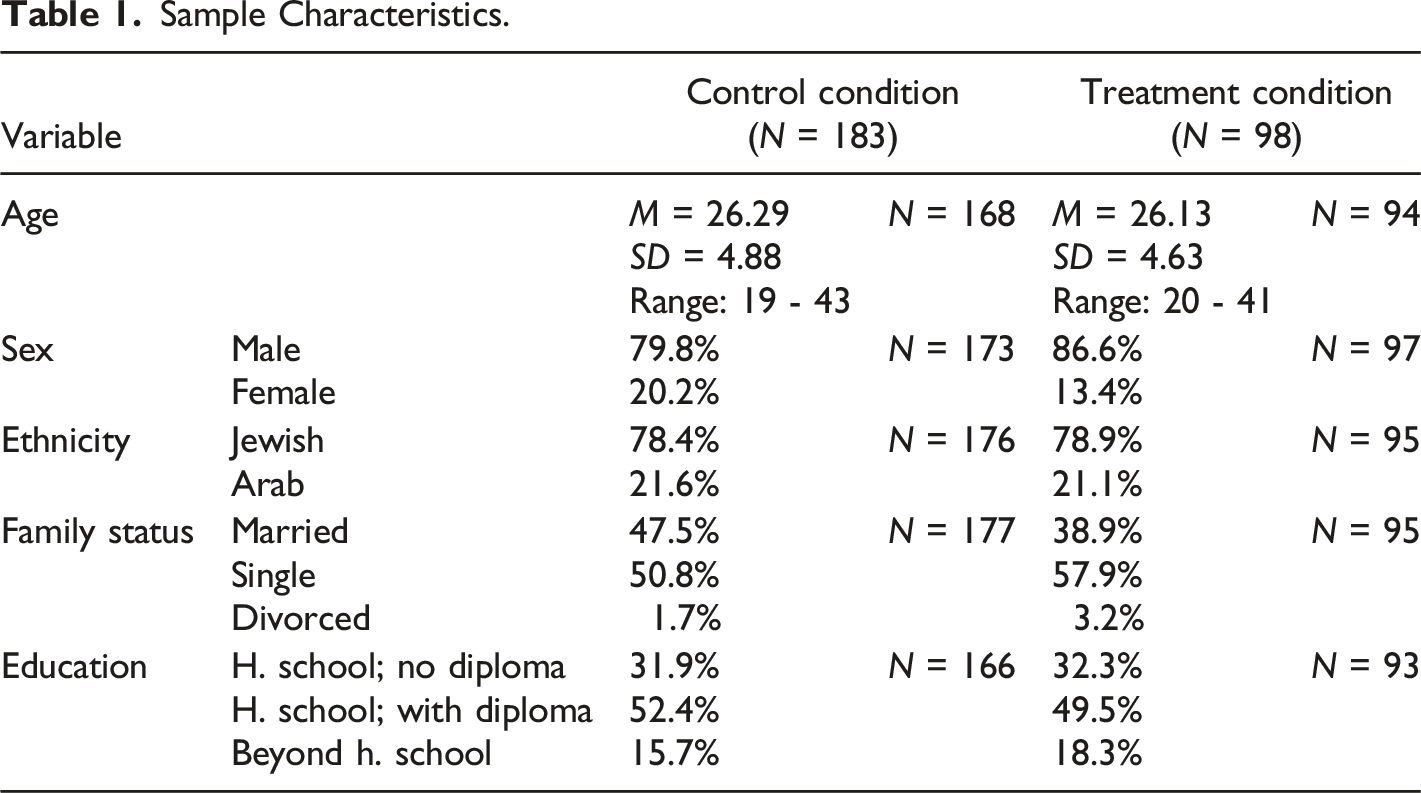
Sample Characteristics.
Survey Procedure, Instrument, and Main Variables
The survey was carried out by the second author using a pencil-and-paper format. She introduced the study to the recruits, explained that its purpose was to improve training at the NPC, and emphasized that the survey was not about any particular module they had undergone thus far. She was present while the recruits filled out the questionnaires, made sure they worked individually, collected the forms, and sealed them in an envelope with the date and number of the unit. The forms were subsequently entered into an SPSS file by trained research assistants and checked for coding errors by the first author.
The questionnaire began with the standard consent form explaining the overall purpose of the study, the expected duration of the survey, the fact that it is anonymous and voluntary, and the identity of the researchers. 7 The participants were then presented with nearly 60 items designed as statements, which they were asked to rank on a scale ranging from 1 (“strongly disagree”) to 5 (“strongly agree”). The final section of the questionnaire inquired about recruits’ socio-demographic characteristics.
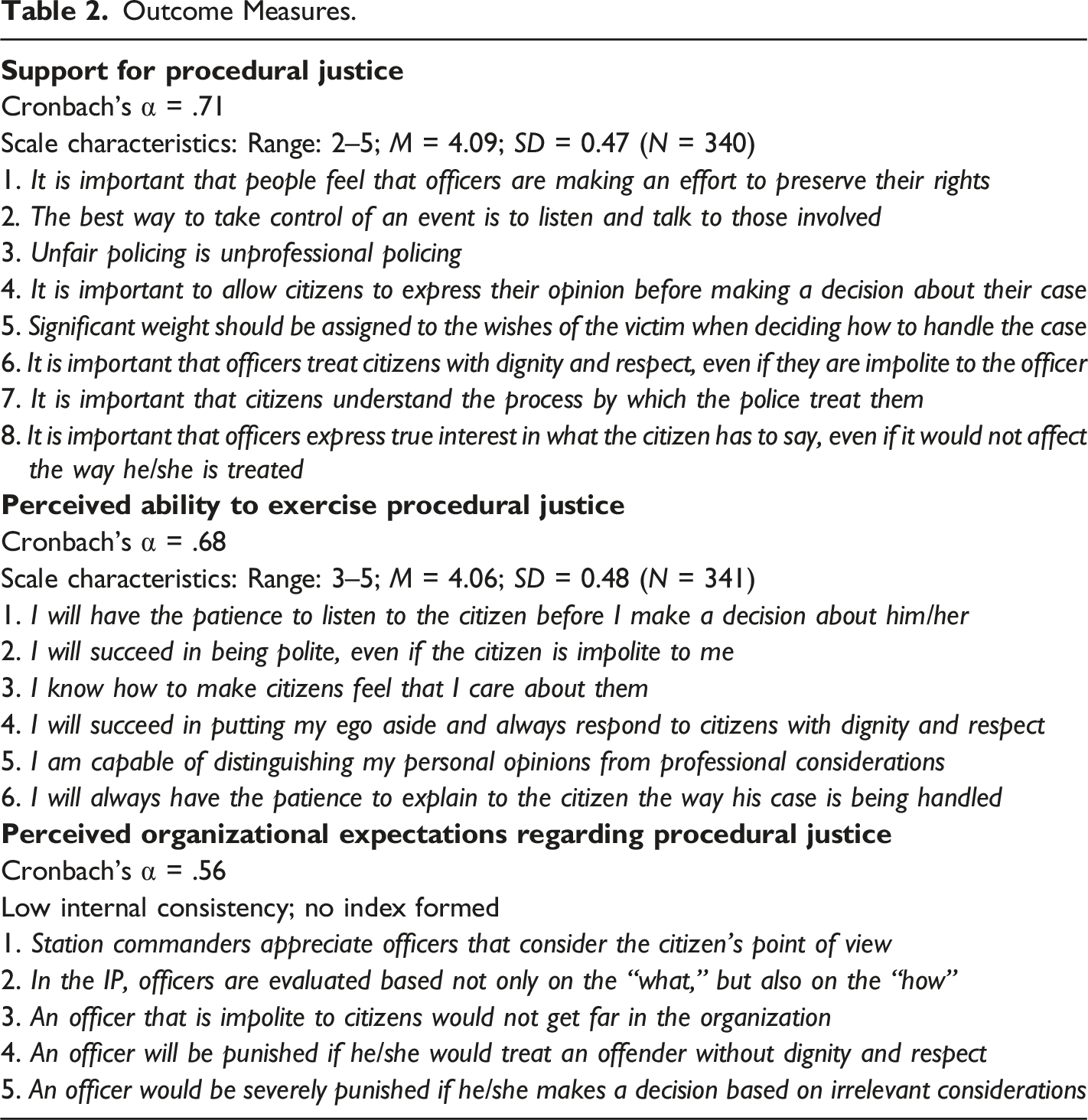
The statements in the questionnaire captured attitudes in numerous areas, three of which were expected to change as a result of training in PJ. Moreover, based on expectancy-motivation theory (e.g., DeJong et al., 2001; Mastrofski et al., 1994), as well as Ajzen and Fishbein’s theories of reasoned action (TRA) and planned behavior (TPB) (Ajzen, 1985, 2012; Fishbein & Ajzen, 1975, 2010), these attitudes could potentially influence actual behavior (see review by Jonathan-Zamir & Harpaz, 2018). These three themes were therefore chosen as outcomes measures: Support for PJ – these are the attitudes toward the behavior itself the training sought to impact, or, in other words, the degree to which its performance is positively or negatively valued; Perceived ability to exercise PJ – the (perceived) skills the training sought to strengthen (“perceived behavioral control” - the degree to which one believes she is capable of performing the behavior); and Perceived organizational expectations regarding PJ – these views were expected to change post-training, because undergoing training in PJ suggests that the organization values and expects this type of behavior from officers (“subjective norm” - assessment of the extent to which the behavior is accepted or desired by important others). According to TRA and TPB, these three types of evaluation are robust predictors of readiness to perform the behavior (“behavioral intention”), which, in turn, is highly correlated with the behavior’s actual occurrence (conditioned on one’s control over the performance of the behavior) (see review by Kruglanski et al., 2015; also see Albarracin et al., 2001; Armitage & Conner, 2001).
Outcome Measures.
Analytic Strategy
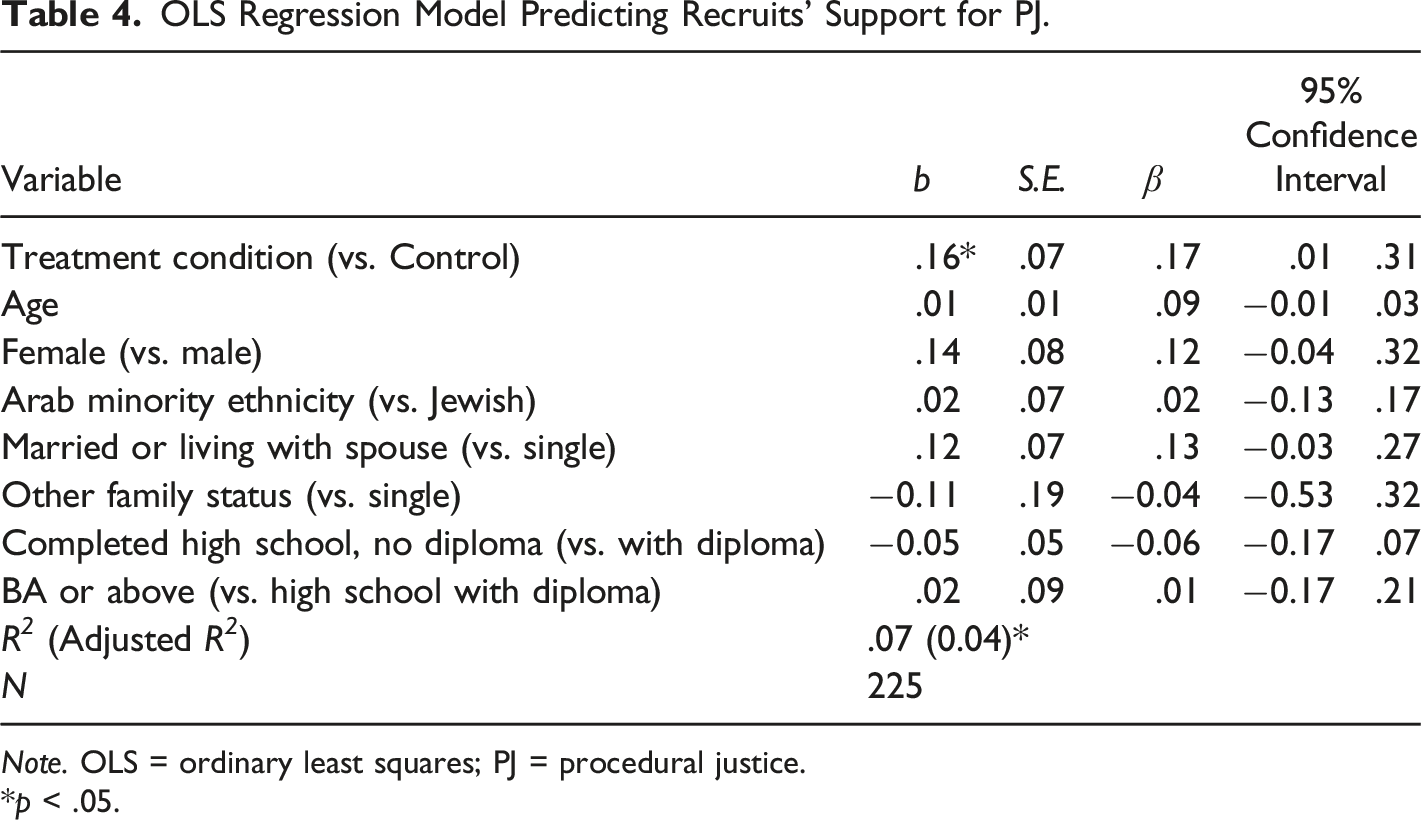
We begin with t-test comparisons of the average scores of the two outcomes measures across the treatment and control conditions. Because of the quasi-random allocation, if statistically significant differences are found, we continue with Ordinary Least Squares (OLS) regression models predicting the outcome measures while controlling for recruits’ background characteristics.
Findings
T-Tests Comparing the Outcomes Measures Across the Experimental and Control Conditions.
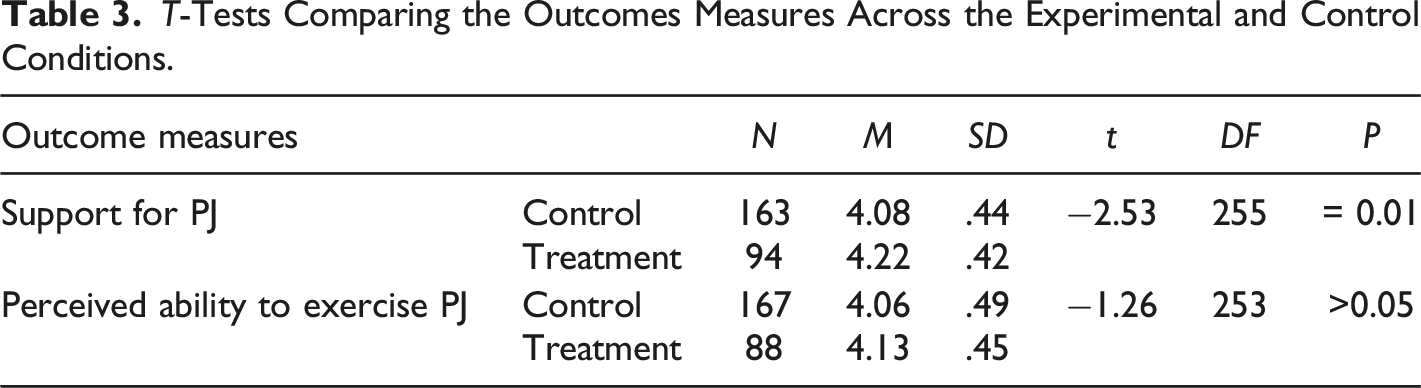
Figure 2 provides a visual illustration of the mean Support for PJ score of all units in descending order. Assuming the PJ training module is effective in increasing Support for PJ, the four units in the treatment condition should appear on the left of the dashed line. As can be seen from Figure 2, three of the four units on the left of the line indeed belong to the treatment condition. Of all 11 units, only two (units 12 and 13) do not appear where expected. Average Support for procedural justice at the unit level.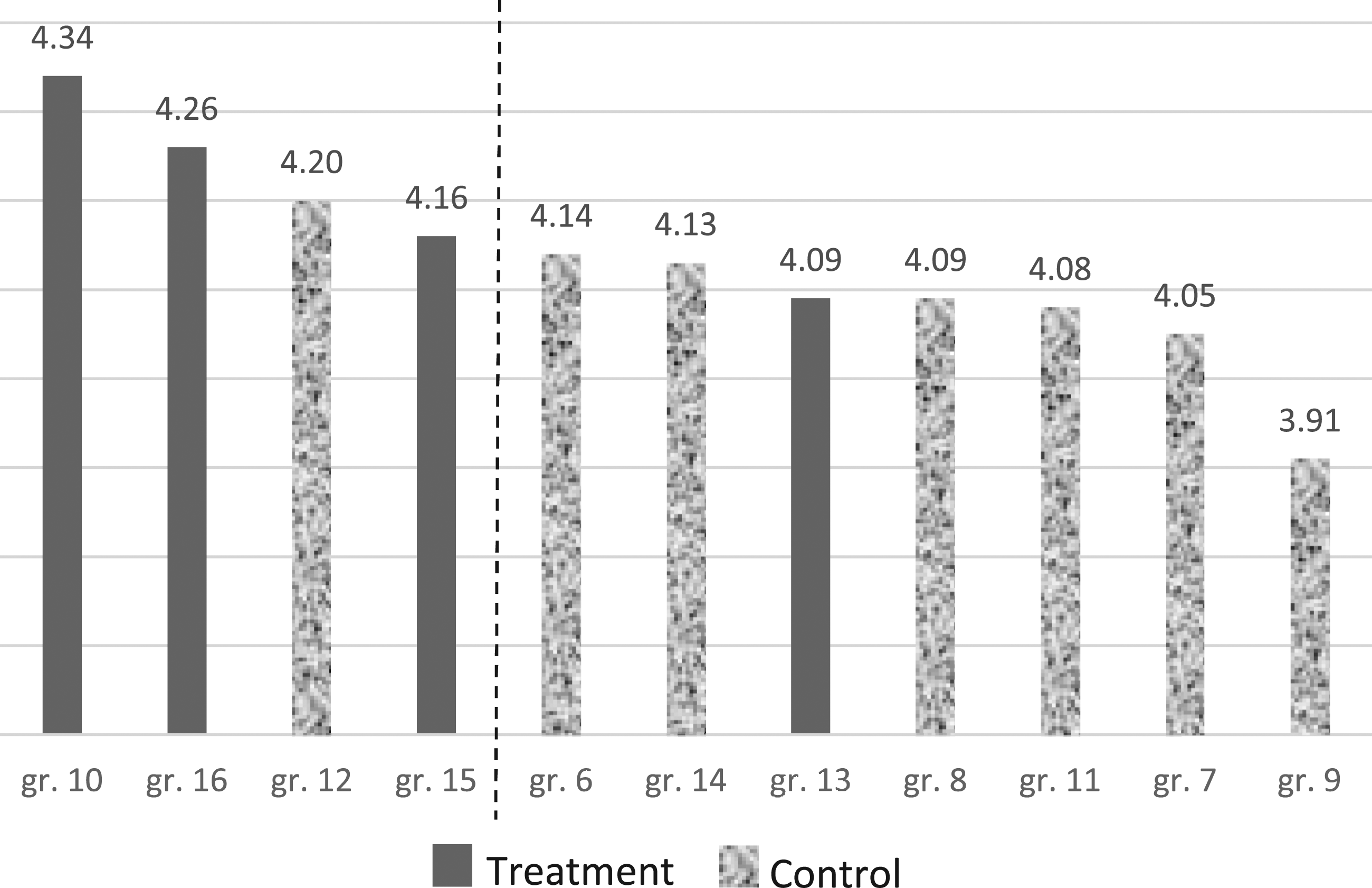
OLS Regression Model Predicting Recruits’ Support for PJ.
Note. OLS = ordinary least squares; PJ = procedural justice.
*p < .05.
Discussion
We began by arguing that although research on police training significantly improved in the last decade in terms of both quality and quantity (e.g., Engel et al., 2020; McLean et al., 2020), it nevertheless lacks a consistent theoretical framework based on the best available scientific evidence indicating what should work in police training. We have further argued that this is no small matter. In line with the premise of evidence-based policing (e.g., Lum & Koper, 2017; Sherman, 2015), such a model could aid in the development of training interventions that have the best chance of succeeding. It would also provide a framework for integrating the growing body of work on police training, thus addressing the problem of isolated studies that do not add up to a consistent, coherent body of knowledge. Moreover, such a model would present an epistemological shift, as it would allow police training to be conceptualized and studied as a complex social intervention; that is, it would enable researchers to acknowledge the different components of training and their interactions, which, in turn, could lead to more sophisticated study designs that go beyond the question of “what works” to the more nuanced question of “what works for whom and in what circumstances” (Bonnell et al., 2012).
In the present article we have presented a notable endeavor to develop such a model – the GET model (Litmanovitz, 2016), and a PJ training intervention in the NPC of the IP, developed based on the “dos and don’ts” of the model. As noted earlier, the training module was designed within the constraints imposed by the NPC, and thus, although complying with the GET model to the maximum extent possible, was not optimal. Perhaps most noteworthy is the length of the training: within a 27-week course, only four 45-min sessions were allocated to PJ training, compared to other published PJ training interventions that ranged from 8 to 40 hr (e.g., Skogan et al., 2015; Weisburd et al., 2022). Additionally, the researchers could not impact other training modules in the recruits’ curriculum that could potentially overlap in content, such as “the police as public servants”; equality and human rights, de-escalation, and communication skills. Thus, the “business as usual” control condition was not very different from the treatment condition.
Nevertheless, statistically significant differences of a small to moderate size were found in Support for PJ between the treatment and control condition, whereby recruits who received PJ training were more likely (on average) than those who did not to acknowledge the importance of listening and talking to citizens, allowing them to express their views, treating them with respect regardless of their behavior, and being transparent about the process by which they are treated. As already noted, these attitudes are among those that are expected to impact behavior (e.g., Kruglanski et al., 2015). Thus, our findings suggest that the GET model (Litmanovitz, 2016) has merit as a general “recipe” for police training interventions, which is not surprising given the solid empirical evidence on occupational training at its root. We thus encourage police practitioners and researchers to consider the principles outlined in the model when designing training interventions.
At the same time, we also call for ongoing testing and development of the model. First, as already noted, a robust assessment of the GET model would require comparing the outcomes of a host of training interventions that implement the “dos and don’ts” of the model to those that do not. Put differently, future research is encouraged to examine a potential relationship between the extent to which police training interventions are aligned with the GET model (Litmanovitz, 2016) and their effectiveness in achieving the training goals. Second, there are important training-related considerations that are not addressed in the model. For example, the model does not provide instructions regarding the optimal setting for PJ training: what is the ideal length for this training? Should it be carried out in the police academy/college or as on-the-job training? Nevertheless, the present study provides preliminary support for the usefulness of the model in designing training interventions in policing.
Before concluding, the limitations of the study should be acknowledged. First, as noted above, the real-world nature of the experiment meant that we could not conduct a “pure” Randomized Controlled Trial (e.g., Ariel, 2018), but compromised on a quasi-random allocation into the experimental conditions. Nevertheless, no statistically significant differences were found between the background characteristics of the recruits in the two conditions, and none showed statistically significant effects in the regression model on our main outcome variable – Support for PJ. Second, because all recruits eventually participated in the PJ training, it was not possible to compare subsequent, real-world behavior of officers who received PJ training to those who did not. Nevertheless, and as detailed earlier, the specific attitudes chosen as outcomes measures are those that should be robust predictors of actual behavior (e.g., Ajzen, 1985, 2012; Fishbein & Ajzen, 1975, 2010). Third, the role-play session of the intervention proved to be challenging in terms of implementation fidelity (e.g., Hassell & Lovell, 2015), both because the commanders were often challenged by the participatory training technique (which required analyzing the behavior of the recruits in the role plays in PJ terms), and because lack of manpower often did not enable conducting the role plays in small groups, as originally intended. We suspect that this may be the reason for lack of a statistically significant difference between the conditions in our second outcome variable – Perceived ability to exercise PJ. Finally, as noted earlier, our measurement of Perceived organizational expectations regarding PJ did not prove to be a reliable one, and thus this theme was excluded from the anlysis. We encourage future research on PJ training to continue developing this and other relevant outcomes measures.
Conclusions
The scientific field of police training should move beyond questions concerned with the effectiveness of specific training interventions in specific contexts, to questions concerned with the more general principles underlying effectiveness in police training. In turn, training interventions should be developed based on the best available scientific evidence on what works in police training. However, until recently, available evidence from policing and other fields of occupational training was not integrated into a coherent framework that would enable this quantum leap. The findings of the present study suggest that the application of the GET model proposed by Litmanovitz (2016) for what should work in police training shows promise, and we expect that the model would prove highly useful to police researchers and practitioners in developing training interventions and testing their outcomes. At the same time, we do not view the GET model as the end product, but as a starting point for ongoing elaboration and refinement of our knowledge on what works in police training.
Footnotes
Acknowledgements
The authors would like to thank the staff, trainers and trainees of the National Police College in Israel for their cooperation and support of the present study.
Declaration of conflicting interests
The author(s) declared no potential conflicts of interest with respect to the research, authorship, and/or publication of this article.
Funding
The author(s) disclosed receipt of the following financial support for the research, authorship, and/or publication of this article: This research was supported by the Aharon Barak Center for Interdisciplinary Legal Research, Faculty of Law, The Hebrew University of Jerusalem.
