




Abstract
Research on Positive Behavioral Interventions and Supports (PBIS) has been conducted extensively in the United States, but examining the implementation of PBIS in other countries is also essential. Positive Behavioral Interventions and Supports has been implemented in school settings in several European countries for many years. To the best of our knowledge, no literature reviews have focused on PBIS implementations in European countries. This scoping review provides an overview of the literature on the implementation and adaptation of PBIS in European countries. We searched the electronic databases of ERIC, Scopus, and the Web of Science. Studies were included based on a priori eligibility criteria. For each of the identified 30 studies from 12 countries, we examined the country and number of research studies on SW-PBIS Tier 1, implementation details, the author reported essential elements and cultural adaptation, study characteristics, and outcomes. Results showed that researchers in the Nordic countries and the Netherlands have made significant progress in SW-PBIS implementations. Researchers in other European countries also have made great efforts to adapt and spread PBIS in their local contexts. Most adaptations incorporated essential elements of PBIS. However, we identified gaps in equity, policy, and technical assistance centers in most of these adaptations.
Educators frequently encounter problematic student behaviors in school settings. Historically, their responses to these student behaviors involved exclusionary disciplinary practices. Every year, a substantial number of grades k–12 students miss out on instructional time in schools because of exclusionary disciplinary actions such as suspensions and expulsions. According to the U.S. Office for Civil Rights (U.S. Department of Education Office for Civil Rights, 2023), approximately 786,600 students received one or more in-school suspensions, and 28,300 students were expelled from schools in a single year. Similarly, the United Kingdom Department of Education (2024) report highlighted that 263,904 suspensions and 3,039 permanent exclusions were reported in the spring term of the 2022–2023 school year. Although exclusionary disciplinary practices have commonly been used to address problematic student behavior in schools, past studies have documented the detrimental consequences of exclusionary disciplinary actions on students’ later behavioral (e.g., American Psychological Association Zero Tolerance Task Force, 2008; Losen & Gillespie, 2012; Wilkerson & Afacan, 2022) and academic outcomes (e.g., Lassen et al., 2006).
One of the alternative approaches to exclusionary disciplinary practices in schools is Positive Behavioral Interventions and Supports (PBIS). Positive Behavioral Interventions and Supports is a preventative, evidence-based, and multitiered system of support framework that provides behavioral support for all students in schools (Sugai & Horner, 2006). Recent statistics show that nearly 30,000 schools have implemented PBIS in the United States (Center on PBIS, 2024).
Positive Behavioral Interventions and Supports consists of five essential elements: systems, practices, data, outcomes, and equity (Center on PBIS, 2023). The PBIS team must focus on the development and maintenance of the system to ensure high implementation fidelity (Horner & Sugai, 2015). A system can be defined as the policies, team structures, database systems, funding, regulations, and technical assistance necessary to ensure the fidelity and sustainability of PBIS (Center on PBIS, 2023; McIntosh et al., 2010). In schools, the system should include (a) the establishment of an engaged leadership team, (b) the provision of training and support to the individual members of teams, (c) the resources and time so that teams can receive training and practice skills during training, and (d) the adaptation of procedures in response to the data, local cultural values, and organizational variables (Horner & Sugai, 2015). By incorporating these practices, schools can implement PBIS with high fidelity and sustain practices with meaningful outcomes for students (Center on PBIS, 2023; Horner & Sugai, 2015; McIntosh et al., 2010).
Practices can be defined as the evidence-based supports and interventions selected to achieve the desired outcomes and delivered by typical intervention agents such as implementers and educators. School-wide practices include establishing a shared vision and approach to supporting student behavior in the mission or vision statement (Center on PBIS, 2023). Students are provided with a continuum of behavioral support practices across three tiers (i.e., Tier 1, Tier 2, and Tier 3). In Tier 1, the school’s PBIS team establishes three to five clearly stated expectations, teaches these expectations explicitly and reinforces the expected behaviors with a continuum of recognition strategies to ensure the success of all students. Recognition strategies include providing behavior-specific feedback, encouraging appropriate behavior, and response strategies that re-teach and discourage inappropriate behavior in a multitiered approach. The effectiveness of practices is monitored through the collection and use of student behavior data to guide ongoing decision-making (Center on PBIS, 2024; Horner et al., 2014). The Tier 2 of PBIS is designed for students who are unresponsive to Tier 1 practices. This tier can include approximately 10% to 15% of the total students in a school, and these students require additional behavioral support, increased adult supervision, prompts, and reminders. Finally, the Tier 3 of PBIS provides intensive and individualized behavior support for a smaller number of students for whom tier one, and tier two supports are ineffective (Center on PBIS, 2024).
Positive Behavioral Interventions and Support teams in schools use several types of data to monitor and evaluate systems, practices, and outcomes to ensure continuous improvement through proactive problem-solving (Center on PBIS, 2023). These data usually include implementation fidelity, student outcomes, and needs. As a result, schools implementing PBIS gather and use data to guide their implementation and evaluate outcomes. To contribute to equitable outcomes for all students and staff, the decision-making process must consider local culture and context (Center on PBIS, 2023; Horner et al., 2010, 2018; McIntosh et al., 2017). Outcomes aim to determine whether PBIS is being implemented as intended or designed and reflects the values of the local context (such as enhanced prosocial behavior, reduced disciplinary incidents, increased instructional time, and reduced disparities). School leadership teams, families, students, and educators collaborate to establish goals and develop and implement plans. Positive Behavioral Interventions and Supports outcomes include academic and behavior outcomes that are specified, endorsed, emphasized, and monitored. Schools select outcomes based on their significance to local communities in terms of social and educational needs (Center on PBIS, 2023). PBIS also focuses on equity across all essential elements, recognizing the impact of local environments, individual characteristics (e.g., abilities, race, and gender), learning histories, and language on implementation fidelity and outcomes.
Several studies have evaluated the effectiveness of PBIS implementation on school discipline outcomes. Findings from empirical research have shown that PBIS is effective in reducing reported disciplinary actions in schools. For example, schools that implemented PBIS reported significantly fewer problem behaviors and exclusionary disciplinary outcomes than schools that did not implement PBIS in the United States (Gage et al., 2019, 2020; Gage, Lee, et al., 2018; Gage, Whitford, et al., 2018; Grasley-Boy et al., 2019). In schools where PBIS was implemented, students with disabilities were less likely to be subject to exclusionary disciplinary actions than students with disabilities who received education in schools where PBIS was not implemented (Gage, Lee, et al., 2018; Simonsen et al., 2022). Students with disabilities were also less likely to be referred to alternative schools because of behaviors deemed problematic in PBIS schools (Grasley-Boy et al., 2019). Moreover, PBIS aims to do more than reduce the frequency and severity of behavioral events that result in disciplinary exclusions. Positive Behavioral Interventions and Supports also aims to enhance students’ academic performance by improving access to instruction. By reducing misbehavior through PBIS, teachers can provide effective academic instruction for students (Scott et al., 2019). In the U.S. state of Missouri, for example, students with disabilities in schools that implemented the PBIS framework had more academic gains. They spent more time in general education classrooms than students with disabilities in schools that did not implement PBIS (Gage et al., 2014). Thus, findings from various studies indicate that PBIS can be regarded as an evidence-based practice for reducing exclusionary disciplinary outcomes for all students (Santiago-Rosario et al., 2023).
Positive Behavioral Interventions and Supports is a flexible framework that offers opportunities for researchers and educators to adapt and modify its components for use in different educational and noneducational settings. For example, PBIS can be implemented with some adaptations in alternative education schools that serve students with behavioral difficulties (Grasley-Boy et al., 2021; Simonsen & Sugai, 2013), rural school settings (L. Kern et al., 2022), secure juvenile justice settings (Scheuermann et al., 2023), therapeutic group home environments for youths with significant emotional/behavioral needs (Scheuermann et al., 2023), and home environments (Center on PBIS, 2020). These variations in PBIS implementation highlight the importance of considering the local contexts and resources of schools and other organizations (e.g., public schools, residential settings, daycare centers, alternative schools), including culture, language, and socioeconomic status, when designing and implementing PBIS (Leverson et al., 2021).
While PBIS has been implemented in nearly 30,000 schools in the United States (Center on PBIS, 2024), efforts have been made to expand its practices to other countries, such as many countries throughout Europe (e.g., Goei & De Pry, 2024; Kincaid et al., 2023; Kourea & Phtiaka, 2023; Paal et al., 2024) and across the Pan-Pacific (e.g., Barker et al., 2023; Fox et al., 2021; Hayward et al., 2023; Luh et al., 2025; Okamura et al., 2023). Although PBIS has been implemented in these countries for several years, researchers have highlighted the importance of cultural and contextual fit. Thus, PBIS should be culturally and contextually responsive to the diverse and changing needs of local schools and organizations in different countries (Bal et al., 2016, 2018; Leverson et al., 2021).
It is essential to investigate the global implementation of PBIS to demonstrate its worldwide expansion in different countries. While PBIS has been extensively researched in the United States, examining new practices in different countries remains an important area of inquiry. Globally, schools require a framework to create secure environments for all individuals. Therefore, examining the cultural and contextual experiences of people who implement PBIS in different countries’ local schools is crucial. Learning about the experiences of people who adapt and implement PBIS in different countries can provide valuable insights for people seeking to initiate similar processes in their local contexts.
One such adaptation of PBIS can be examined in European countries, where researchers in several countries have been implementing PBIS in school settings for years (e.g., Goei, 2013; Hazar, 2014; Kourea & Phtiaka, 2023; McClean et al., 2023; Van Oudheusden & Hazar, 2014). For instance, the EuroPBS project, funded by the European Commission 1 in 2010 (Lewis, 2010), implemented PBIS in target schools in the Netherlands, Finland, Türkiye, Portugal, and Hungary. Since then, numerous initiatives, among others from Cyprus, Germany, Denmark, the Czech Republic, Lithuania, and Spain, have emerged. In 2015, these initiatives united under the PBS-Europe Network (Goei, 2014, 2016; Goei & Kourea, 2017a; PBS-Europe Network, 2025a). This network became an official network of the U.S. Association for Positive Behavior Support (APBS) in 2016 (Goei & Kourea, 2017b). Each year, the PBS-Europe Network organizes events and a research symposium (Paal et al., 2024; PBS-Europe Network, 2025b). The Dutch PBS network organized its fifth research symposium in Zwolle (the Netherlands) after a 4-year hiatus due to COVID-19 and 6th research symposium of the PBS-Europe Network took place 2024, in Vantaa, Finland (PBS-Europe Network, 2025b). It provided a platform for researchers and educators from various European countries to present their PBIS implementation work. It is evident that PBIS has gained traction in several European countries, with increasing interest and attention. Therefore, learning from the diverse experiences of people who implement PBIS in different European countries is beneficial.
To date, researchers have conducted several reviews on the different aspects of PBIS implementation. For example, literature reviews on PBIS implementation have focused on high school settings (e.g., Estrapala et al., 2021), alternative education settings (e.g., Grasley-Boy et al., 2021), disciplinary exclusion (e.g., Gage, Whitford, et al., 2018), academic and behavioral outcomes (e.g., Lee & Gage, 2020; Noltemeyer et al., 2019), the social validity of Tier 2 interventions (e.g., Beahm et al., 2024), and facilitators and barriers to the sustained implementation of PBIS (e.g., Fox et al., 2022). To the best of our knowledge, no literature reviews have focused exclusively on implementing PBIS in European countries.
Purpose of the Present Scoping Review
The primary purpose of this scoping review was to map and summarize the existing literature on the implementation of SW-PBIS Tier 1 in Europe, and to identify gaps based on published studies that meet the eligibility criteria. By documenting existing SW-PBIS studies in Europe, our review examined the extant body of published research on implementing SW-PBIS across European countries. The main research question was, “What studies and knowledge exists on SW-PBIS Tier 1 implementation in Europe?” In this context, we focused on the country and number of research studies on SW-PBIS Tier 1, implementation details of SW-PBIS such as the initial implementation date, targeted tiers, school type and/or grade levels, and native language name of SW-PBIS across European countries. We examined how European countries adapted the essential elements of PBIS, focusing on culturally appropriate versions as described in the reviewed studies. Moreover, we examined the characteristics of the published studies, including their designs, dependent variables, samples, and implementation fidelity. Last, we synthesized the outcomes using a narrative approach.
Method
We conducted this review following the PRISMA Extension for Scoping Reviews (PRISMA ScR) checklist (Tricco et al., 2018). A scoping review aims to provide an overview or map of the existing evidence (Arksey & O’Malley, 2005) for the purpose of investigating the breadth or extent of the literature, mapping and summarizing the evidence, and informing future research (Tricco et al., 2016).
Eligibility Criteria
We included the studies in the review based on the following criteria: (1) articles that focused on Tier 1 SW-PBIS implementation, including (a) qualitative studies, (b) quantitative studies, and (c) mixed method studies; (2) studies that were conducted in European countries; and (3) studies that were written in English and published in peer-reviewed journals. We did not limit our review to a specific publication year. We excluded studies from the review if they were not conducted in European countries, policy documents, reviews, expert opinions, commentaries, conference abstracts, theses or studies that only focused on Tier 2 or Tier 3.
Search Strategy
We searched for articles in three electronic databases: ERIC, Scopus, and Web of Science-all editions. The first author, an academic in special education, and the second author, a researcher with a PhD in special education, comprehensively searched each database. Both researchers constructed search strings and conducted the search separately adapting the search strings for each database. Boolean operators AND and OR are connected to the search string. For the ERIC database, we used the following search strings: “School-wide positive behavio#r* support” OR (“Positive behavio#r intervention* and support*”) OR (“School-wide positive behavio#r* intervention* and support*”) OR “Positive behavio#r support*” OR PBIS OR SW-PBS OR SW-PBIS. In the Web of Science database, we used the following search terms: “School-wide positive behavio$r* support” (All Fields) OR “School-wide positive behavio$r* intervention* and support*” (All Fields) OR SW-PBS (All Fields) OR SW-PBIS (All Fields) OR “Positive behavio$r intervention* and support*” (All Fields) OR “Positive behavio$r support*” (All Fields) OR PBIS (All Fields). For the Scopus database, we used the following search terms: “School-wide positive behavio*r* support” OR “Positive behavio*r intervention* and support*” OR “School-wide positive behavio*r* intervention* and support*” OR “Positive behavio*r support*” OR PBIS OR SW-PBS OR SW-PBIS. We examined the search terms in the articles’ abstracts, titles, and keywords. We completed the search process on December 27, 2023.
Study Selection
Figure 1 shows a flow diagram of the PRISMA review process (Page et al., 2021). Once we completed the initial database searches, we used automation tools such as region, country, peer-reviewed, and journal articles to exclude irrelevant results. Consequently, automation tools removed 17,508 items retrieved from the initial search, leaving 4,015 items for the screening process. The first and second author independently reviewed the titles and abstracts of the identified records (n = 4,015). Following this initial screening, we conducted a full-text review of the studies (n = 715). We selected articles that met the eligibility criteria. We calculated the inter-rater reliability of the screening process to ensure consistency and reliability. We calculated inter-rater reliability for study inclusion using the formula: (number of agreed articles/total articles) × 100, resulting in 93.3% agreement ([28/30] × 100). We discussed and reached a consensus on the inclusion of studies with discrepancies. In total, 30 articles met the inclusion criteria and were included in this review.
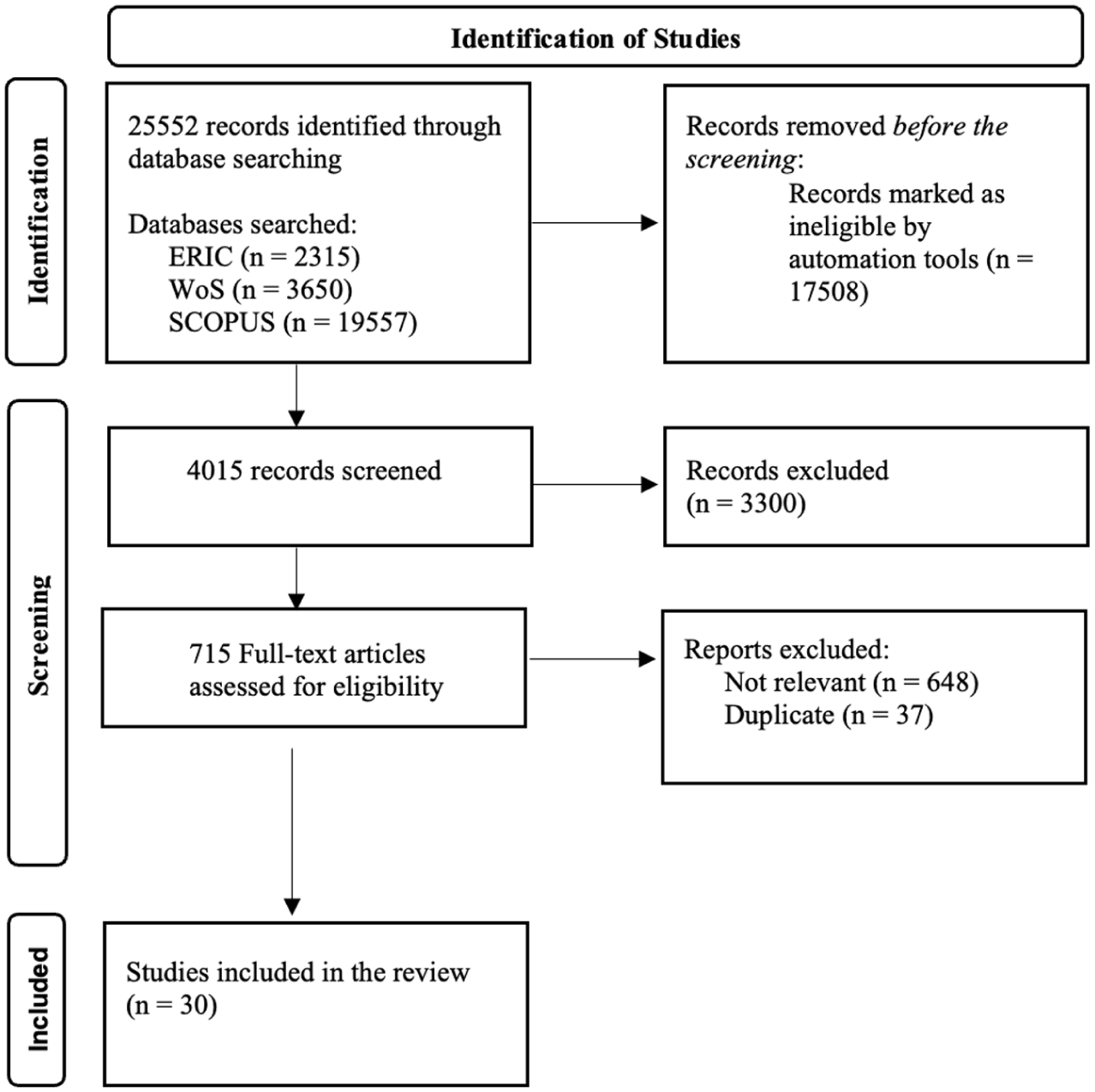
PRISMA Flow Diagram (Page et al., 2021) of Study Inclusion.
Data Extraction
We identified key variables to map and summarize SW-PBIS adaptation in Europe. Using a pre-prepared and piloted table, we extracted the following data: (a) the country and number of research studies on SW-PBIS Tier 1; (b) implementation details of SW-PBIS, including information on the initial implementation date, which tiers were targeted, which school types and/or grade levels of the PBIS was adapted, and the native language name of SW-PBIS; (c) an overview of the essential elements of PBIS, including which aligned with the essential elements presented by the PBIS Implementation Blueprint (Center on PBIS, 2023) and which elements were culturally adapted; (d) characteristics of the studies, including their designs, dependent variables, sample sizes and implementation fidelities; and (e) outcomes.
The first author independently extracted relevant data from all studies. Following training, the second author completed the data extraction template for all studies. We calculated an inter-rater reliability (IRR) score for the full sample by dividing the number of agreed items by the agreement and disagreement numbers of items and multiplying by 100. Consequently, the calculated IRR was 94.6% (86/91). The researchers then discussed any disagreements and reached consensus.
Results
Country and Number of Research Studies on SW-PBIS Tier 1
Table 1 summarizes the country and number of research studies that implemented SW-PBIS Tier 1. We identified 30 research articles that reported implementing SW-PBIS Tier 1 across 12 countries. Four of the 12 countries were Nordic: Norway, Sweden, Denmark, and Finland. Three countries represented the Mediterranean region: Spain, Greece, and Cyprus. Western European countries included Belgium, France, and the Netherlands. There were two countries in Eastern Europe: Romania and Türkiye.
Number of Research Studies Implementing SW-PBIS Tier 1 in European Countries.
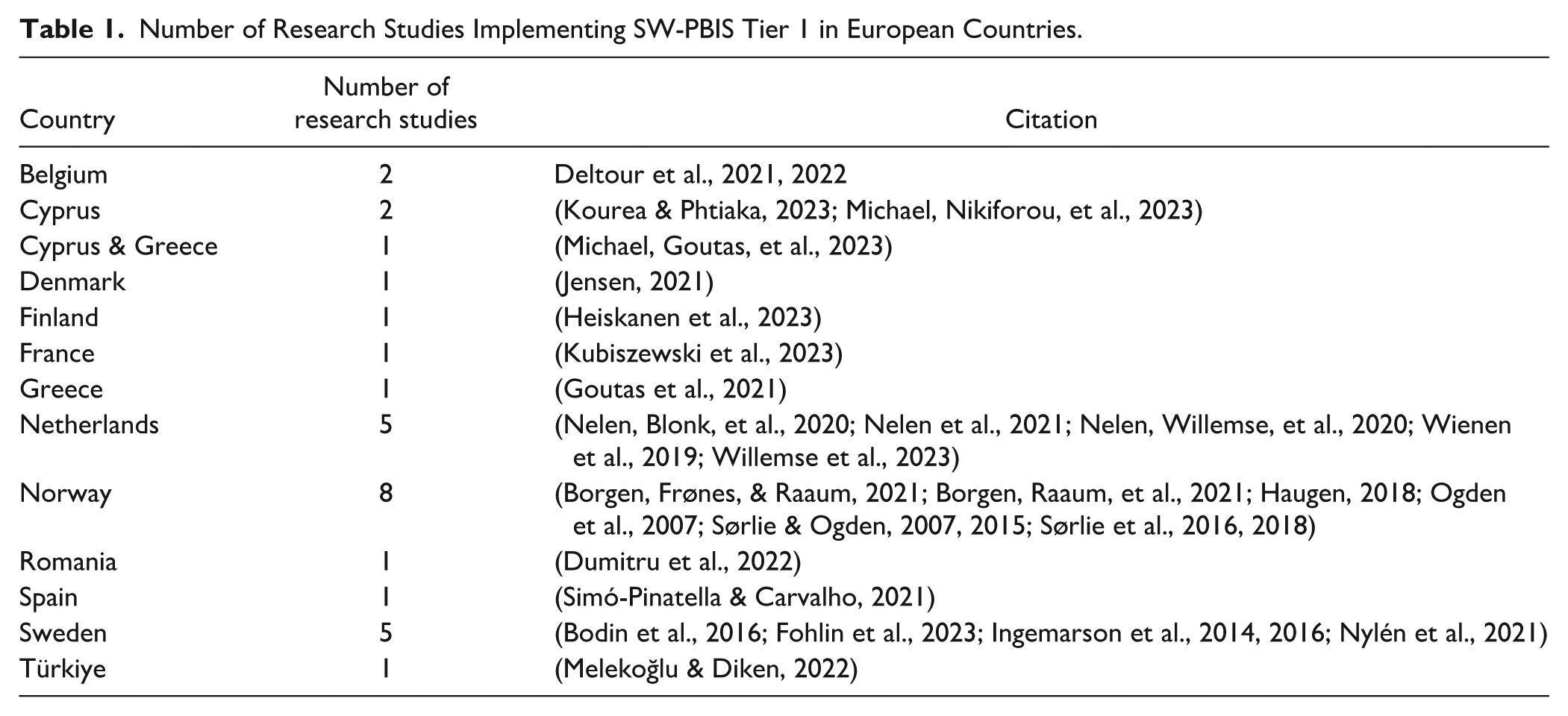
Researchers conducted eight studies in Norway (Borgen, Frønes, & Raaum, 2021; Borgen, Raaum, et al., 2021; Haugen, 2018; Ogden et al., 2007; Sørlie & Ogden, 2007, 2015; Sørlie et al., 2016, 2018). Five studies took place in the Netherlands (Nelen, Blonk, et al., 2020; Nelen et al., 2021; Nelen, Willemse, et al., 2020; Wienen et al., 2019; Willemse et al., 2023) and five studies took place in Sweden (Bodin et al., 2016; Fohlin et al., 2023; Ingemarson et al., 2016, 2014; Nylén et al., 2021). Researchers completed two studies in Cyprus (Kourea & Phtiaka, 2023; Michael, Nikiforou, et al., 2023) and two studies in Belgium (Deltour et al., 2021, 2022). Researchers conducted one study each in (Denmark Jensen, 2021), Greece (Goutas et al., 2021), Spain (Simó-Pinatella & Carvalho, 2021), Türkiye (Melekoğlu & Diken, 2022), Finland (Heiskanen et al., 2023), Romania (Dumitru et al., 2022), and France (Kubiszewski et al., 2023). One study occurred in Cyprus and Greece (Michael, Goutas, et al., 2023). According to the publication dates, the first studies were conducted in Norway (Ogden et al., 2007; Sørlie & Ogden, 2007) and Sweden (Ingemarson et al., 2014). These publications were followed by publications resulting from research in the Netherlands (Wienen et al., 2019) and (Denmark Jensen, 2021). Publication dates ranged from 2021 to 2023 among the remaining studies. Nearly 70% of these studies were published after 2020.
Implementation Details
Table 2 presents the implementation details of SW-PBIS, including the initial implementation date, the targeted tiers, school type and/or grade levels, and the native language name of SW-PBIS. Rather than alphabetical organization by study or country, we arranged the findings in this table chronologically by author-reported initial implementation date. Notably, the initial implementations occurred in Nordic countries, with Norway in 2002 (Borgen, Raaum, et al., 2021), Sweden in 2005 (Ingemarson et al., 2016) and 2018 (Nylén et al., 2021), and Denmark in 2008 (Jensen, 2021). Following the Nordic countries, researchers in the Netherlands implemented SW-PBIS in 2009 (Nelen, Blonk, et al., 2020). Researchers in eight countries implemented SW-PBIS between 2016 and 2019.
Implementation Details by Country, School Type, Initial Date of Implementation, and Targeted Tiers of SW-PBIS.
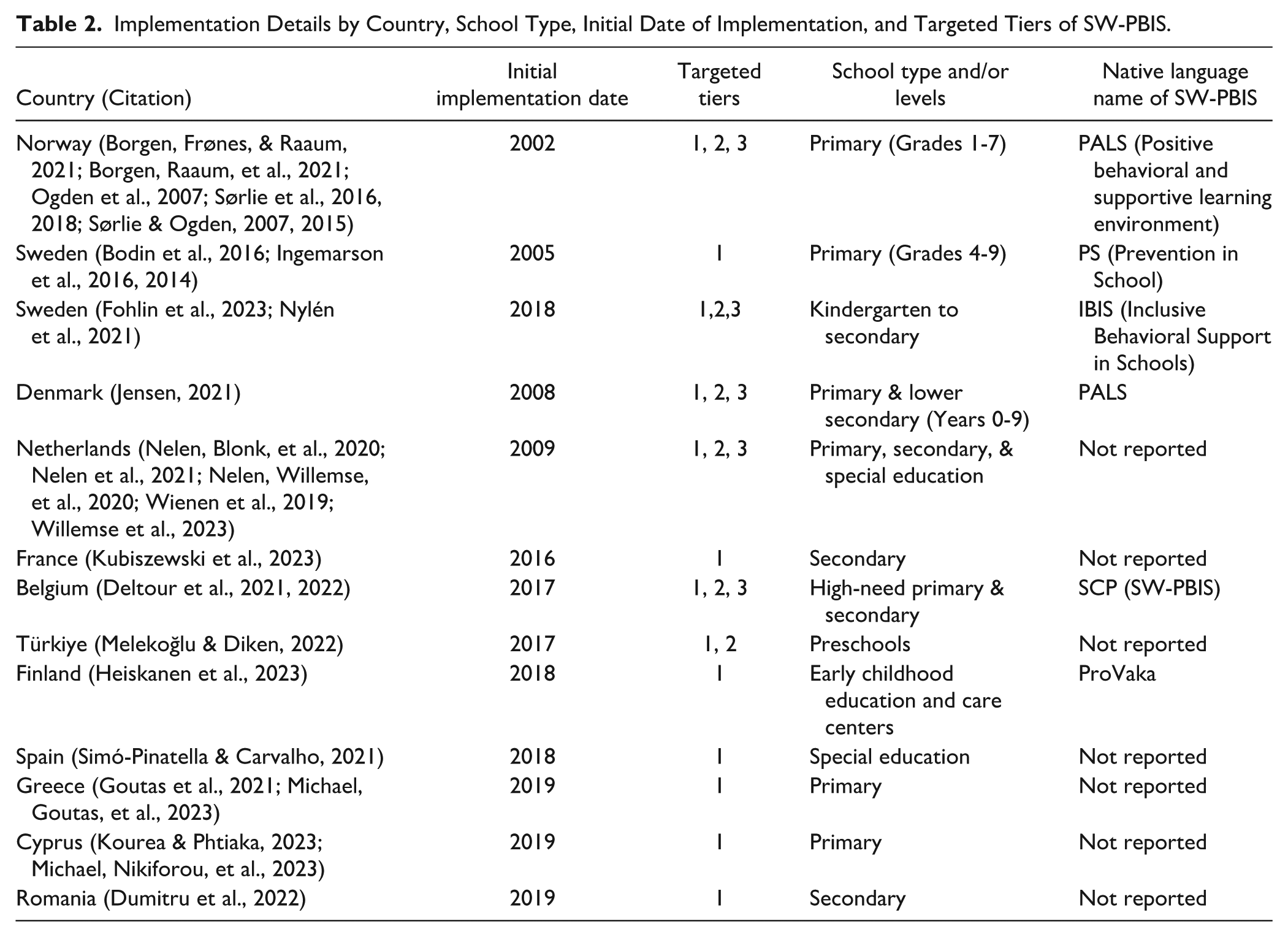
Among the 12 countries, researchers in (Ingemarson et al., 2014, 2016) Sweden (Bodin et al., 2016), France (Kubiszewski et al., 2023), Finland (Heiskanen et al., 2023), Spain (Simó-Pinatella & Carvalho, 2021), Greece (Goutas et al., 2021; Michael, Goutas, et al., 2023), Cyprus (Kourea & Phtiaka, 2023; Michael, Nikiforou, et al., 2023) and Romania (Dumitru et al., 2022) targeted only Tier 1. However, researchers in Norway (Borgen, Frønes, & Raaum, 2021; Borgen, Raaum, et al., 2021; Ogden et al., 2007; Sørlie et al., 2016, 2018; Sørlie & Ogden, 2007, 2015), (Denmark Jensen, 2021), Netherlands (Nelen, Blonk, et al., 2020; Nelen et al., 2021; Nelen, Willemse, et al., 2020; Wienen et al., 2019; Willemse et al., 2023), and Belgium (Deltour et al., 2021, 2022) targeted all three tiers. Researchers in Türkiye implemented Tier 1 and Tier 2 (Melekoğlu & Diken, 2022). It is also important to note that the recent Sweden implementation, IBIS, targeted all tiers (Fohlin et al., 2023; Nylén et al., 2021).
While researchers mainly implemented SW-PBIS in primary and secondary schools, they also extended implementations to special education settings in the Netherlands (Willemse et al., 2023), and Spain (Simó-Pinatella & Carvalho, 2021). In Belgium, SW-PBIS has also been implemented for students with diverse linguistic and cultural backgrounds in high-need secondary and primary schools (Deltour et al., 2022). Initially, researchers in Sweden implemented SW-PBIS only for primary schools (Ingemarson et al., 2016) but later expanded its implementation from kindergarten to secondary school under the IBIS program (Fohlin et al., 2023; Nylén et al., 2021). Researchers in Finland (Heiskanen et al., 2023), Sweden (Fohlin et al., 2023; Nylén et al., 2021), and Türkiye (Melekoğlu & Diken, 2022) also included early childhood education settings in their implementation research.
Researchers in only five countries provided information regarding the SW-PBIS name in their native language. Specifically, SW-PBIS is called PALS in Norway (Borgen, Raaum, et al., 2021) and (Denmark Jensen, 2021), SCP in Belgium (Deltour et al., 2021, 2022) and ProVaka in Finland (Heiskanen et al., 2023). Initially, Sweden used PS (Ingemarson et al., 2016) but more recently has used IBIS (Fohlin et al., 2023; Nylén et al., 2021).
Overview of Essential Elements and Cultural Adaptations
Table 3 presents an overview of essential elements and cultural adaptations. We focused on how researchers adapted SW-PBIS according to the essential elements of the PBIS Implementation Blueprint (Center on PBIS, 2023) and which cultural adaptation features researchers reported. As a result, we provided a summary of the essential elements incorporated by researchers in each country, including cultural adaptations and regional influences in this section. We also presented specific funding sources across the reviewed studies.
Overview of Essential Elements and Cultural Adaptation of SW-PBIS by European Country.
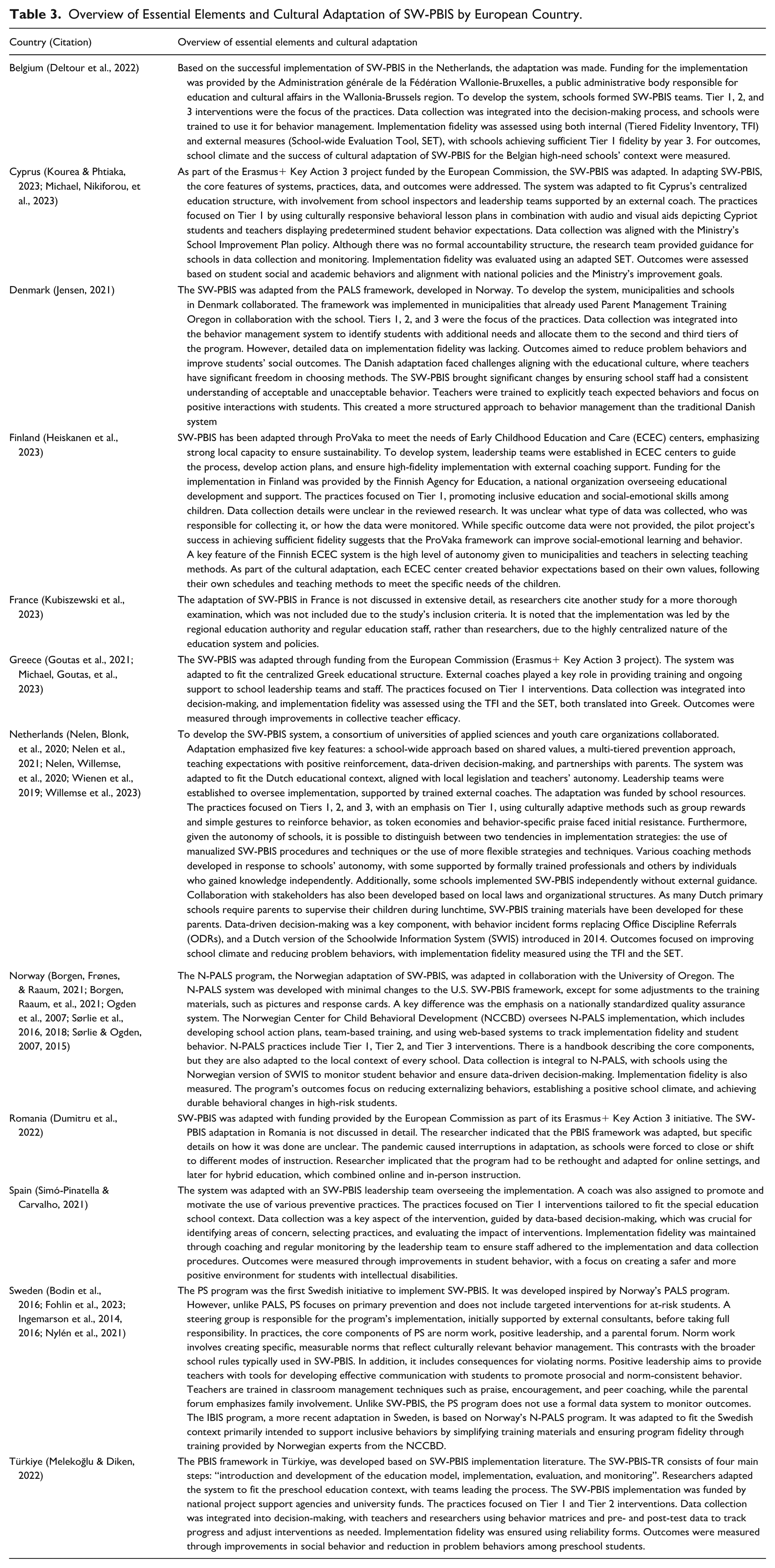
As a part of the system element, researchers indicated that they established leadership teams and coaches to assist in SW-PBIS implementations. The key strategies included monitoring, evaluating, disseminating, and selecting, training and coaching staff based on data (Deltour et al., 2021, 2022; Heiskanen et al., 2023; Kourea & Phtiaka, 2023; Michael, Goutas, et al., 2023; Nelen, Blonk, et al., 2020; Nylén et al., 2021; Simó-Pinatella & Carvalho, 2021; Sørlie & Ogden, 2007, 2015; Willemse et al., 2023). For practices, researchers targeted Tier 1 interventions (Bodin et al., 2016; Dumitru et al., 2022; Goutas et al., 2021; Heiskanen et al., 2023; Ingemarson et al., 2014, 2016; Kourea & Phtiaka, 2023; Kubiszewski et al., 2023; Michael, Goutas, et al., 2023; Simó-Pinatella & Carvalho, 2021). Practices included collaboratively developed positive behavior expectations, strategies to reinforce expected behaviors and discourage undesired ones, and efforts to strengthen school–family partnerships, supported by team-based approaches and external coaching (Borgen, Frønes, & Raaum, 2021; Deltour et al., 2022; Dumitru et al., 2022; Heiskanen et al., 2023; Ingemarson et al., 2016; Jensen, 2021; Kubiszewski et al., 2023; Michael, Goutas, et al., 2023; Nylén et al., 2021; Simó-Pinatella & Carvalho, 2021).
Data analysis included an assessment of SW-PBIS’s effectiveness and evaluations of implementation fidelity in several studies. Data collection and monitoring supported the decision-making process within schools (Deltour et al., 2021, 2022; Heiskanen et al., 2023; Kourea & Phtiaka, 2023; Melekoğlu & Diken, 2022; Michael, Goutas, et al., 2023; Nelen, Blonk, et al., 2020; Nylén et al., 2021; Simó-Pinatella & Carvalho, 2021; Sørlie & Ogden, 2007, 2015; Willemse et al., 2023). Researchers in the Netherlands (Nelen et al., 2021) and Norway (Borgen, Raaum, et al., 2021; Ogden et al., 2007) also adapted the U.S. originated School-Wide Information System (SWIS) to support data-based decision-making by modifying it to align with their specific data needs. Outcomes included improvements in school and classroom climate, reductions in problem behaviors, increased social competence, academic achievement, and enhanced teacher collective efficacy (Deltour et al., 2021, 2022; Bodin et al., 2016; Borgen, Raaum, et al., 2021; Jensen, 2021; Kourea & Phtiaka, 2023; Michael, Goutas, et al., 2023; Nelen et al., 2021; Ogden et al., 2007; Sørlie & Ogden, 2007, 2015; Simó-Pinatella & Carvalho, 2021; Wienen et al., 2019). Importantly, the initial Swedish implementation, PS, was not equipped with a data system for continuously documenting and evaluating program output (Bodin et al., 2016).
The results showed various cultural adaptations of SW-PBIS across European countries, shaped to align with each country’s educational structure and cultural norms. In Norway, the PALS system maintained most aspects of the U.S. SW-PBIS framework, with minor adjustments to training materials, including culturally relevant pictures and response cards, and introduced a nationally standardized quality assurance system (Borgen, Frønes, & Raaum, 2021; Borgen, Raaum, et al., 2021; Ogden et al., 2007; Sørlie et al., 2016, 2018; Sørlie & Ogden, 2007, 2015). Sweden’s PS model included “norm work” to establish specific and measurable norms for behavior management that differed from the broader school rules traditionally used in SW-PBIS (e.g., “At this school, we welcome each other” rather than “We treat one another with respect”; Ingemarson et al., 2016). In Denmark, the adaptation of SW-PBIS introduced significant changes by establishing a consistent understanding of acceptable and unacceptable behavior among all school staff, creating a more structured approach to behavior management within the traditionally decentralized Danish educational system (Jensen, 2021).
Researchers in the Netherlands implemented both manualized and flexible approaches due to high teacher autonomy. They also developed various coaching methods. They used group rewards and simple gestures as culturally adaptive methods to reinforce positive behavior. As many Dutch primary schools require parents to supervise their children during lunchtime, SW-PBIS training materials have been developed for these parents (Nelen, Blonk, et al., 2020; Nelen et al., 2021; Nelen, Willemse, et al., 2020; Wienen et al., 2019; Willemse et al., 2023).
In Finland, adaptation emphasized autonomy as each center developed behavior expectations based on its values. Centers followed flexible schedules and teaching methods to meet children’s specific needs (Heiskanen et al., 2023). Researchers in Cyprus developed culturally responsive lesson plans with audio and visual aids featuring Cypriot students and teachers, aligning SW-PBIS with the centralized education system and the Ministry’s School Improvement Plan policy (Kourea & Phtiaka, 2023).
In various countries, regional influences were evident in the adaptation of SW-PBIS. Sweden’s PS (Ingemarson et al., 2014) and IBIS frameworks (Nylén et al., 2021), along with Denmark’s SW-PBIS adaptation (Jensen, 2021), were based on Norway’s PALS framework, incorporating similar strategies. Researchers in Belgium followed the Netherlands’ example, modeling its SW-PBIS adaptation on the successful Dutch implementation (Deltour et al., 2022). Additionally, researchers in Greece, Cyprus, and Romania collaborated on joint projects to implement SW-PBIS in 2018 (Dumitru et al., 2022; Michael, Goutas, et al., 2023), reflecting a shared regional approach to adaptation and implementation.
Reported funding for implementing SW-PBIS consisted of governmental funding and intergovernmental funding. National or regional agencies provided direct governmental funding as in Norway through the Norwegian Center for Child Behavioral Development (NCCBD; Borgen, Frønes, & Raaum, 2021; Borgen, Raaum, et al., 2021; Sørlie & Ogden, 2015), The Scientific and Technological Research Council of Türkiye (TÜBİTAK) and universities in Türkiye (Melekoğlu & Diken, 2022), the Administration générale de la Fédération Wallonie-Bruxelles in Belgium (Deltour et al., 2021, 2022), Finnish Agency for Education in Finland (Heiskanen et al., 2023), and school-allocated resources in the Netherlands (Nelen, Blonk, et al., 2020; Nelen et al., 2021; Nelen, Willemse, et al., 2020; Willemse et al., 2023). Intergovernmental organizations funded several SW-PBIS adaptations, primarily the Erasmus+ Key Action 3 program of the European Commission in cooperation partnership with Cyprus Michael, Goutas, et al., 2023), Romania (Dumitru et al., 2022), and Greece (Michael, Goutas, et al., 2023). However, researchers in (Denmark Jensen, 2021), Spain (Simó-Pinatella & Carvalho, 2021), France (Kubiszewski et al., 2023), and Sweden (Ingemarson et al., 2016; Nylén et al., 2021) did not clearly state whether they received any funding for research and/or implementation of SW-PBIS.
Study Characteristics
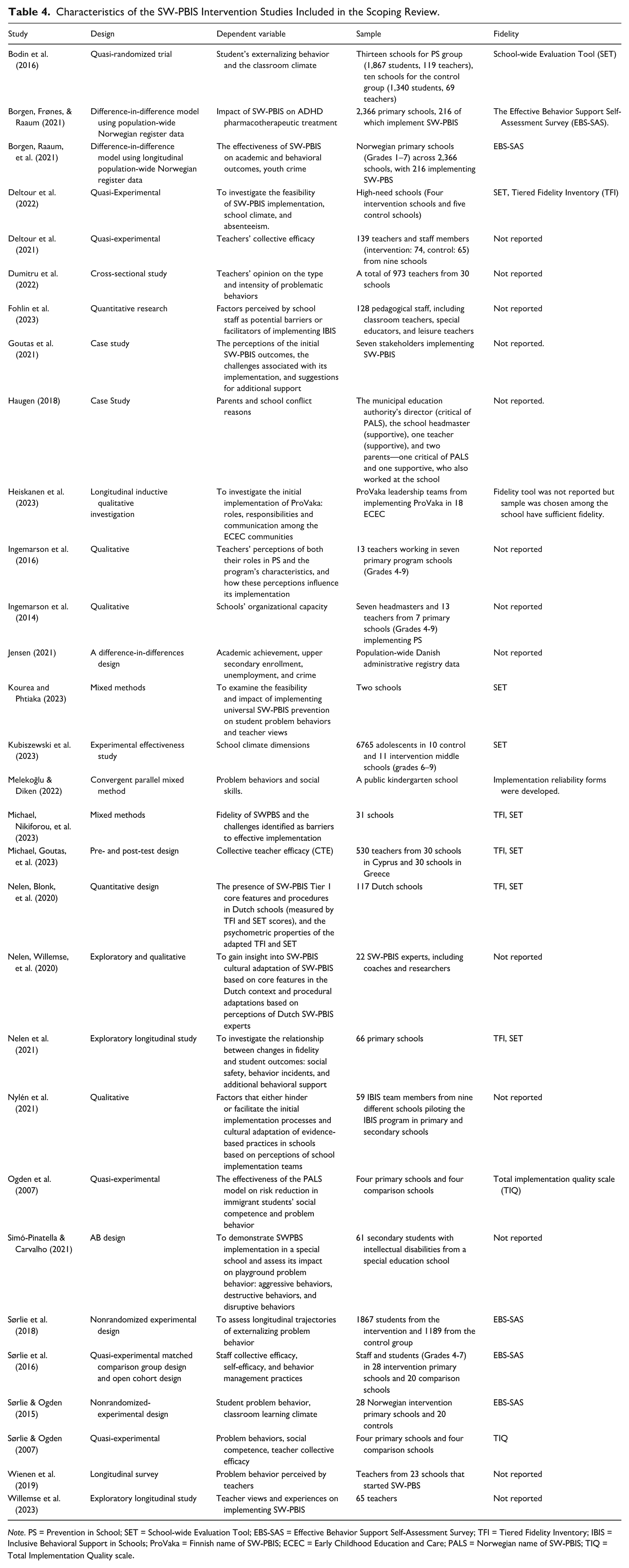
Table 4 provides an overview of the research designs, dependent variables, sample sizes, and implementation fidelity. In the study’s characteristics, we did not include independent variables as SW-PBIS served as the inclusion criteria and was used as an independent variable in all studies. Results indicated a range of research designs used across the studies.
Characteristics of the SW-PBIS Intervention Studies Included in the Scoping Review.
Note. PS = Prevention in School; SET = School-wide Evaluation Tool; EBS-SAS = Effective Behavior Support Self-Assessment Survey; TFI = Tiered Fidelity Inventory; IBIS = Inclusive Behavioral Support in Schools; ProVaka = Finnish name of SW-PBIS; ECEC = Early Childhood Education and Care; PALS = Norwegian name of SW-PBIS; TIQ = Total Implementation Quality scale.
Six research used quasi-experimental designs (Bodin et al., 2016; Deltour et al., 2021, 2022; Ogden et al., 2007; Sørlie et al., 2016; Sørlie & Ogden, 2007). Sørlie et al. (2018) and Sørlie and Ogden (2015) utilized a nonrandomized experimental design. Borgen, Frønes, and Raaum (2021) and Borgen, Raaum, et al. (2021), as well as Jensen (2021), used difference-in-difference models. Fohlin et al. (2023) used a quantitative research design. Two studies utilized case study designs (Goutas et al., 2021; Haugen, 2018). Researchers used mixed methods in three studies (Kourea & Phtiaka, 2023; Melekoğlu & Diken, 2022; Michael, Nikiforou, et al., 2023). Michael, Goutas, et al. (2023) used pre- and posttest designs. Dumitru et al. (2022) used cross-sectional studies. Kubiszewski et al. (2023) used experimental effectiveness studies. Five studies utilized qualitative and exploratory designs (Heiskanen et al., 2023; Ingemarson et al., 2014, 2016; Nelen, Willemse, et al., 2020; Nylén et al., 2021). Four studies used longitudinal designs (Heiskanen et al., 2023; Nelen et al., 2021; Wienen et al., 2019; Willemse et al., 2023). Simó-Pinatella and Carvalho (2021) used an AB nonexperimental single case research design.
Researchers primarily examined the effects of SW-PBIS on student behavior, school climate, and teacher efficacy. Student behaviors included externalizing behaviors (e.g., Bodin et al., 2016; Sørlie et al., 2018) and specific problem behaviors such as aggression, disruption, and destruction (Simó-Pinatella & Carvalho, 2021). In two studies, researchers investigated academic achievement (Borgen, Raaum, et al., 2021; Jensen, 2021). Furthermore, researchers studied the impact of SW-PBIS on attention deficit and hyperactivity disorder (ADHD) medication use in one study (Borgen, Frønes, & Raaum, 2021). Researchers also investigated school or classroom climate (e.g., Deltour et al., 2022; Kubiszewski et al., 2023), teacher collective efficacy (e.g., Deltour et al., 2021; Michael, Goutas, et al., 2023; Sørlie et al., 2016; Sørlie & Ogden, 2007;), implementation, and adaptation challenges (e.g., Fohlin et al., 2023; Goutas et al., 2021; Nylén et al., 2021). In terms of the implementation and adaptation challenges, researchers examined schools’ organizational capacity (Ingemarson et al., 2014), barriers and facilitators of implementation (Fohlin et al., 2023), perceptions of SW-PBIS core features (Nelen, Willemse, et al., 2020), adaptation experiences (Heiskanen et al., 2023; Willemse et al., 2023), and cultural and situational barriers (Michael, Nikiforou, et al., 2023; Nelen, Willemse, et al., 2020). Haugen (2018) examined the causes of conflicts between parents and schools.
The study samples ranged from small-scale research involving one school or a small group of individuals to large-scale national research involving hundreds of schools and thousands of individuals. Researchers in the following countries implemented SW-PBIS and included the highest number of school samples: Norway 216 schools (Borgen, Frønes, & Raaum, 2021; Borgen, Raaum, et al., 2021), the Netherlands 117 schools (Nelen, Blonk, et al., 2020), Belgium 74 schools (Deltour et al., 2021), Denmark 36 schools (Jensen, 2021), Cyprus 31 schools (Michael, Nikiforou, et al., 2023), Greece 30 schools (Michael, Goutas, et al., 2023), Romania 30 schools (Dumitru et al., 2022), Sweden 13 schools in PS (Bodin et al., 2016) and nine schools in IBIS (Nylén et al., 2021), Finland 18 schools (Heiskanen et al., 2023), and France 11 schools (Kubiszewski et al., 2023). According to studies conducted in Türkiye (Melekoğlu & Diken, 2022) and Spain (Simó-Pinatella & Carvalho, 2021), each study’s sample was from a single school.
Researchers in 16 studies reported data regarding implementation fidelity. Researchers in three studies (Bodin et al., 2016; Kourea & Phtiaka, 2023; Kubiszewski et al., 2023) assessed implementation fidelity using the School-wide Evaluation Tool (SET; Sugai et al., 2005). Researchers in five studies (Deltour et al., 2022; Michael, Nikiforou, et al., 2023; Michael, Goutas, et al., 2023; Nelen et al., 2021; Nelen, Blonk, et al., 2020) used both the SET and the PBIS Tiered Fidelity Inventory (TFI, Algozzine et al., 2014). In five Norwegian studies, (Borgen, Frønes, & Raaum, 2021; Borgen, Raaum, et al., 2021; Sørlie et al., 2016, 2018; Sørlie & Ogden, 2015), researchers utilized the Effective Behavior Support Self-Assessment Survey (EBS-SAS, Solomon et al., 2015) to assess fidelity. Researchers used the TIQ, which is based on the Effective Behaviour Support Survey (Sugai et al., 2000) and the School-Wide Evaluation Tool (Horner et al., 2004), to measure the overall quality of implementation in two studies from Norway (Ogden et al., 2007; Sørlie & Ogden, 2007). In one study conducted in Türkiye, researchers developed the implementation reliability forms (Melekoğlu & Diken, 2022). The remaining 14 studies did not report on implementation fidelity. This indicates either a lack of assessment or documentation regarding implementation fidelity (Deltour et al., 2021; Dumitru et al., 2022; Fohlin et al., 2023; Goutas et al., 2021; Haugen, 2018; Heiskanen et al., 2023; Ingemarson et al., 2014, 2016; Jensen, 2021; Nylén et al., 2021; Nelen, Willemse, et al., 2020; Simó-Pinatella & Carvalho, 2021; Wienen et al., 2019; Willemse et al., 2023).
Some studies could not report implementation fidelity measures due to specific circumstances. For example, in the Goutas et al. (2021) study, Tier 1 implementation was still in progress, and researchers had little influence over the process. Similarly, Nylén et al. (2021) in Sweden conducted interviews at a preliminary stage, capturing only initial perceptions of the intervention. Consequently, researchers in these studies could not draw any conclusions about the fidelity or quality of implementation, as they did not fully establish the intervention. Heiskanen et al. (2023) did not report fidelity tools, but they chose the sample from schools that demonstrated sufficient fidelity.
Some studies have adapted implementation fidelity tools for local cultural contexts. Bodin et al. (2016) modified the SET by focusing on specific items. As part of Tier 1, they asked participants if they knew their school’s rules (Items B4, B5) and if they had given or received rewards for expected behaviors in the past 2 months (Items C2, C3). As a result, most schools received a “not implemented” score. Kourea and Phtiaka (2023) adapted the SET to fit local practices in Cyprus by removing items relating to monitoring and decision-making as Cypriot schools do not use discipline referral forms or record significant problems. Due to schools’ financial dependence on the Ministry rather than district funding, district-level support items were also excluded. The management feature has been adjusted considering the frequency of team meetings and reporting procedures. Michael, Nikiforou, et al. (2023) further refined this in a study carried out in Cyprus. To increase practicality, researchers excluded items irrelevant to the local context, such as a question regarding handling armed intruders (“What is the procedure for dealing with a stranger with a gun?”).
Outcomes
Table 5 summarizes the outcomes of the reviewed studies. The outcomes demonstrated various effects, primarily influenced by fidelity levels and contextual adaptations. High-fidelity implementation (e.g., Borgen, Frønes, & Raaum, 2021; Sørlie & Ogden, 2007) was associated with reductions in problem behavior, increased social competence, and decreases in ADHD medication prescriptions among the students. Conversely, low-fidelity implementation yielded minimal or statistically insignificant results, as in the case of Bodin et al. (2016), where fidelity issues likely contributed to ineffective outcomes. A unique example is France, where SW-PBIS implementation by Kubiszewski et al. (2023) achieved positive outcomes in school climate aspects despite a fidelity score below the desired threshold.
Outcomes of SW-PBIS Intervention Studies as Reported by Study Authors.
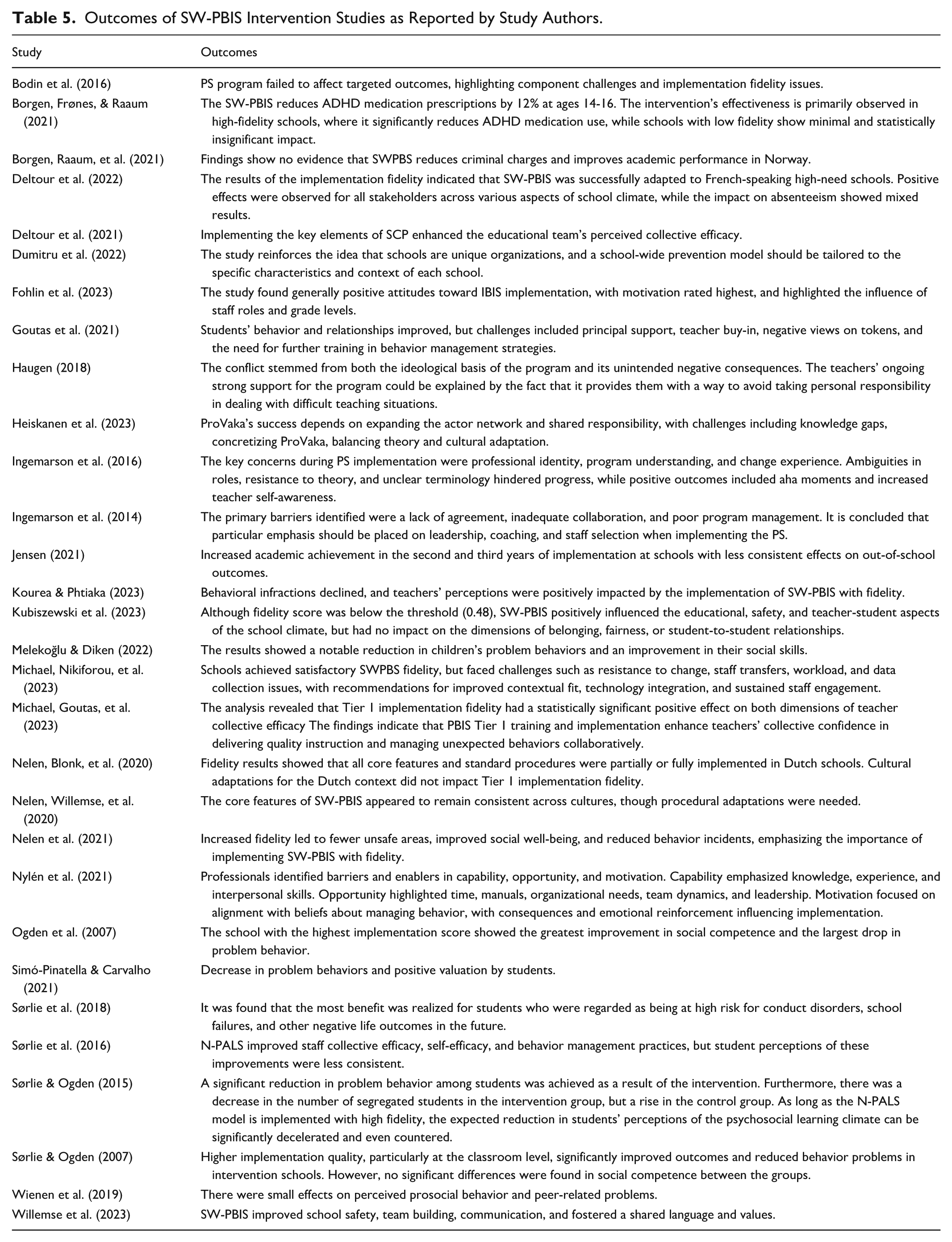
Overall, SW-PBIS was found effective in reducing problem behaviors and improving social competence in these European contexts (Kourea & Phtiaka, 2023; Melekoğlu & Diken, 2022; Ogden et al., 2007; Sørlie & Ogden, 2007, 2015). Furthermore, SW-PBIS has demonstrated improvement in the school or classroom climate (Kubiszewski et al., 2023; Sørlie & Ogden, 2015; Willemse et al., 2023). For academic achievement, Jensen (2021) indicated positive outcomes, while Borgen, Raaum, et al. (2021) indicated no evidence that SW-PBS improved academic performance. The SW-PBIS was also evaluated for its impact on teachers’ collective efficacy. Studies showed that SW-PBIS was effective in improving teachers’ collective efficacy (Deltour et al., 2021; Michael, Goutas, et al., 2023; Sørlie et al., 2016). Furthermore, Borgen, Frønes, and Raaum (2021) found that SW-PBIS reduced ADHD medication prescriptions by 12% in adolescents between 14 and 16 years of age.
Researchers also examined facilitators and barriers to SW-PBIS adaptation to cultural contexts. They identified motivation (Fohlin et al., 2023), interpersonal skills, and the knowledge of similar evidence-based programs as facilitators (Nylén et al., 2021). They reported several barriers including inadequate program management, collaboration, and consensus (Ingemarson et al., 2014), principal support (Goutas et al., 2021), staff buy-in (Goutas et al., 2021; Kourea & Phtiaka, 2023), resistance to change, teacher appointments and transfers, additional workload, team structure, time constraints (Michael, Nikiforou, et al., 2023), disagreements over educational approaches, and concerns about teacher autonomy (Haugen, 2018).
Researchers also evaluated the impact of SW-PBIS on various school types and/or grade levels. Nelen, Blonk, et al. (2020) demonstrated that staff implemented core features and standard procedures for SW-PBIS Tier 1 in a special education setting. The SW-PBIS enhanced teachers’ perception of safety and predictability in special education settings (Willemse et al., 2023). In addition, Simó-Pinatella and Carvalho (2021) found that SW-PBIS effectively reduced problem behaviors among individuals with intellectual disabilities in special education schools. Deltour et al. (2022) demonstrated that the SW-PBIS was successfully adapted to French-speaking Belgian high-need schools and worked well. The SW-PBIS has also been demonstrated to be effective in kindergarten settings (Heiskanen et al., 2023; Melekoğlu & Diken, 2022).
Discussion
The primary purpose of this scoping review was to map and summarize the existing literature on the implementation of SW-PBIS Tier 1 in European countries. In the following sections, we provide a detailed discussion of the key findings, and offer recommendations for future research and practice along with a discussion of the study’s limitations.
Country and Implementation Details
Our review included 30 research studies on SW-PBIS Tier 1 from 12 countries, with half of the studies originating from Nordic countries (n = 15). The Netherlands had the most studies (n = 5) outside Nordic countries (see Table 1). Regarding sample size, studies in Norway included the largest number of schools, consisting of 216 schools (Borgen, Frønes, & Raaum, 2021), followed by the studies in the Netherlands with 117 schools (Nelen, Blonk, et al., 2020). Researchers in the Nordic countries (except Finland), along with the Netherlands and Belgium, implemented all three tiers of SW-PBIS, while researchers in other countries focused on Tier 1 and/or 2 (see Table 2). Researchers in Nordic countries and the Netherlands made significant progress in implementing SW-PBIS.
This review included studies that focused on Tier 1 implementation of SW-PBIS which was an inclusion criterion. In addition to Tier 1, we also investigated whether or not these studies implemented Tier 2 and/or Tier 3. Results suggested that a few studies have reported implementation at Tier 2 and/or Tier 3. As most studies in the review focused on the initial outcomes on SW-PBIS (e.g., Fohlin et al., 2023; Goutas et al., 2021; Heiskanen et al., 2023), implementation can likely extend to other tiers in the future. To sustain and scale PBIS implementation, stakeholders should carefully plan the framework’s essential elements (Sugai & Horner, 2020).
Researchers in the reviewed studies described the adaptation of SW-PBIS to meet the needs of various school types and/or grades including for students in kindergarten, primary, and secondary schools, special education schools, and high-need secondary and primary schools (e.g., Deltour et al., 2022; Heiskanen et al., 2023; Nylén et al., 2021; Ogden et al., 2007). Similarly, SW-PBIS has been adapted to meet the needs of different educational settings within the United States. For example, PBIS has been adapted in the United States for alternative education schools serving students with behavioral difficulties (Grasley-Boy et al., 2021; Simonsen & Sugai, 2013), rural school settings (L. Kern et al., 2022), secure juvenile justice settings (Scheuermann et al., 2023), therapeutic group home environments for youth with significant emotional/behavioral needs (Scheuermann et al., 2023), and home environments (Center on PBIS, 2020). This underlines the adaptability of SW-PBIS to meet the unique requirements of various educational contexts in different countries, thus demonstrating its flexibility and effectiveness in promoting positive behavior across diverse cultural and linguistic contexts.
Overview of Essential Elements and Cultural Adaptation
The PBIS Implementation Blueprint (Center on PBIS, 2023) describes the essential elements of the PBIS framework. However, the reviewed studies lack a shared language regarding terms when describing essential elements. Nelen, Willemse et al. (2020) previously noted the difficulty presented by a lack of consistent terminology in PBIS research. Researchers in some studies referred to essential elements as core features (e.g., Kourea & Phtiaka, 2023; Nelen, Blonk, et al., 2020) while others used core components (e.g., Borgen, Raaum, et al., 2021; Nylén et al., 2021; Sørlie & Ogden, 2015). The term core element was also used (Michael, Nikiforou, et al., 2023), while Deltour et al. (2021) employed key elements. Researchers in some studies described these elements as basic components (e.g., Melekoğlu & Diken, 2022; Simó-Pinatella & Carvalho, 2021). The inconsistency in terminology may create difficulties in understanding PBIS essential elements and synthesizing findings. A consistent terminology could enhance the understanding of PBIS essential elements among researchers, practitioners, and policymakers, ensuring greater clarity and consistency in PBIS implementation and dissemination. Therefore, a shared language aligned with the PBIS Implementation Blueprint (Center on PBIS, 2023) is recommended for future research to ensure consistency in the conceptualization and reporting of PBIS essential elements.
We compared the essential elements of SW-PBIS reported by the included studies to the essential elements described within the PBIS Implementation Blueprint (Center on PBIS, 2023). We found that researchers generally incorporated SW-PBIS essential elements, focusing on systems, data, practices, and outcomes. However, studies often omitted report of equity. Equity may have been considered in the adaptation process (e.g., Fohlin et al., 2023; Heiskanen et al., 2023; Nylén et al., 2021); however, a more detailed explanation of how equity was addressed would have contributed to improved understanding of the essential elements as implemented in the diverse European contexts represented in this review and their alignment with the implementation framework. Future research should provide details about the equity element.
In terms of cultural adaptations, both centralized and decentralized educational systems influenced implementation. The adaptation of SW-PBIS practices in centralized systems resulted in standard practices and mandatory policies across all schools to promote uniformity of SW-PBIS implementation (e.g., Goutas et al., 2021; Kourea & Phtiaka, 2023; Kubiszewski et al., 2023). On the other hand, a decentralized system allowed for more locally tailored approaches, reflecting school needs and preferences (Heiskanen et al., 2023; Nelen, Blonk, et al., 2020). It is also important to note that the Dutch PBIS adaptation is a clear example of cultural responsiveness. Initially, some Dutch schools expressed concern about behavior-specific praise and token economies, which conflicted with cultural preferences. Consequently, schools used reinforcement practices, such as group rewards and gestures, to reinforce appropriate behavior (Nelen et al., 2021). This adaptation emphasizes the importance of considering cultural compatibility within SW-PBIS practices. Therefore, it is recommended that future research and practice consider stakeholders’ cultural perspectives on practices and engage them in the problem-solving process. A framework that meets stakeholder expectations can enhance relevance and effectiveness (Payno-Simmons, 2021). Finally, findings showed that researchers in some countries adapted the fidelity tool to their specific cultural contexts (Bodin et al., 2016; Kourea & Phtiaka, 2023; Michael, Nikiforou, et al., 2023), while others did not clearly state cultural adaptation. It may be ineffective to simply translate the tool without considering cultural aspects (Allden et al., 2009). To ensure their success, assessment tools should be adapted to cultural context (Kaiser et al., 2019). Consequently, we recommend that future European research conduct its own validity and reliability studies to ensure that the tools are accurate and relevant to their specific cultural contexts.
Regional steps also significantly influenced the SW-PBIS adaptations. For instance, researchers in Sweden (Ingemarson et al., 2014; Nylén et al., 2021) and (Denmark Jensen, 2021) adapted the Norwegian framework, collaborating with Norwegian initiatives. Similarly, researchers in Belgium adapted the Netherlands framework (Deltour et al., 2022). Researchers adapted the SW-PBIS in these countries through their cultural and geographical proximity. This proximity allowed them to collaborate with experts in neighboring countries and adapt frameworks aligned with their cultural values. It is possible that cultural similarities facilitated the adaptation process. In addition, researchers in Cyprus (Michael, Nikiforou, et al., 2023), Greece (Goutas et al., 2021), and Romania (Dumitru et al., 2022) who are PBS-Europe Network members collaborated on the initial implementation of SW-PBIS through an Erasmus+ project. As a result, EU-funded projects and the PBS-Europe Network played a significant role in this initiative. It is recommended that similar projects be initiated and that the PBS-Europe Network be utilized strategically to accelerate regional progress and enhance cross-border collaboration.
The SW-PBIS requires policy advocacy to secure funding and establish a technical assistance center to guide implementation and support its sustainability. For example, federal and state policies have been foundational to the widespread implementation of PBIS in the United States. The U.S. Department of Education has continuously provided funds to The National Center on PBIS for nearly 25 years (Kincaid et al., 2023). Therefore, we also focused on how countries adapted SW-PBIS regarding policy and technical assistance centers. Norway (Sørlie & Ogden, 2015) was the only European country with a national center, the NCCBD, which supported SW-PBIS implementation fidelity and sustainability. To facilitate the adaptation and successful implementation of SW-PBIS (Gage et al., 2024), researchers, educators, and policy makers in European countries should consider establishing a technical assistance center. It would be possible for these centers to provide consistent training, resource distribution, and ongoing technical support. This can ensure that schools have the guidance required to adapt and maintain SW-PBIS effectively. It is also recommended that practitioners in countries lacking such centers collaborate with universities or local institutions to develop frameworks. School teams can gain professional development and problem-solving approaches through partnerships with these organizations that will help them maintain high-quality implementation practices.
It is also essential to recognize that policy support may be limited in the initial implementation of SW-PBIS. However, policy support can grow over time (Gage et al., 2014). In the first implementation of SW-PBIS in the United States, few state representatives reported that state policy influenced the process (Gage et al., 2014). No federal policy was also reported as a factor in funding initiation. Despite initial policy challenges, the success of early outcomes led to the eventual support of scale-up efforts through the development of new or revised state policies. Having outcome data to establish SW-PBIS-friendly policy structures was essential because they demonstrated SW-PBIS’s effectiveness and benefits. The leadership team also significantly advocated policy changes and developed legislation to facilitate broader implementation (Gage et al., 2014). Through the initial implementation of SW-PBIS in Europe, policy support can be obtained for its long-term sustainability. It is possible to achieve this support if SW-PBIS is based on outcome data and its implementation is embraced by leadership. As a result, to gain policy support, the leadership team should focus on both short-term and long-term outcomes and disseminate their findings. The outcomes of SW-PBIS should be disseminated to policymakers, educators, and the public through various channels to raise awareness, gain support, and focus attention on the benefits of SW-PBIS.
Some countries carried out the initial implementation of SW-PBIS through a variety of projects (e.g., Dumitru et al., 2022; Goutas et al., 2021; Melekoğlu & Diken, 2022; Michael, Goutas, et al., 2023). However, the sustainability of these adaptations is a concern once project funding has ended. To ensure sustainability, it is recommended that long-term funding strategies be established and SW-PBIS be integrated into local and national educational policies. We also found that nongovernmental organizations (NGOs) funded none of the adaptations. Investigating the reasons for NGO disengagement in SW-PBIS implementation and identifying potential opportunities for collaboration may lead to a new fundable avenue, especially for the initial implementation of SW-PBIS.
Study Characteristics and Outcomes
Researchers in the reviewed studies utilized a variety of research designs, focusing primarily on SW-PBIS effects on student problem behavior, school climate, and teacher efficacy. The SW-PBIS was generally effective at preventing problem behavior, school climate, and teacher collective efficacy (e.g., Kourea & Phtiaka, 2023; Melekoğlu & Diken, 2022; Ogden et al., 2007; Sørlie & Ogden, 2007, 2015). These results are consistent with those of other studies conducted in the United States (e.g., Gage et al., 2019, 2020; Gage, Lee, et al., 2018; Gage, Whitford, et al., 2018; Grasley-Boy et al., 2019). These results indicate that PBIS yields effective outcomes in European schools. However, only two studies evaluated academic outcomes despite a well-established relationship between academic and behavioral outcomes (Algozzine et al., 2012; Melton et al., 2024). It is recommended that future research evaluate the effectiveness of SW-PBIS on academic outcomes.
Jensen (2021) observed improved academic achievement in the second and third years following SW-PBIS implementation. However, Borgen, Raaum, et al. (2021) found no evidence that SW-PBIS led to academic improvement. It may be attributed to low levels of fidelity, as only 18% of SW-PBIS schools achieved 80% fidelity. It is also possible that SW-PBIS effects on academic outcomes may be limited due to academic and behavioral supports not being integrated. Academic and behavioral needs frequently co-occur; thus, a lack of integrated support can lead to poorer outcomes, especially for students who require intensive and individualized interventions (Duble Moore et al., 2024). Implementing integrated systems, such as the integrated multi-tiered systems of support framework (I-MTSS), which incorporates academic and behavioral support, may benefit schools (Melton et al., 2024). Therefore, researchers and practitioners should integrate academic and behavioral interventions to achieve more effective results.
Overall, PBIS contributes to the improvement of a variety of outcomes. The implementation of PBIS can also promote behaviors that contribute to ecological sustainability. For instance, Demirtaş et al. (2024) suggested integrating pro-environmental behaviors into SW-PBIS to enhance these behaviors in schools to mitigate climate change. Therefore, it is recommended that practitioners and researchers incorporate pro-environmental expectations into SW-PBIS as a means of combating climate change with all students (Demirtaş et al., 2024).
For research studies, it is recommended that implementation fidelity be reported, as fidelity is essential for drawing accurate conclusions about intervention effects (Estrapala et al., 2021; Horner et al., 2005). This review included 30 studies; 16 of them reported implementation fidelity, and 14 did not report it. The limited number of fidelity reports can be attributed to the fact that many implementations are still in the early stages, which makes fidelity evaluation difficult. Following initial training, Tier 1 implementation of PBIS generally requires 2 to 3 years to achieve adequate fidelity (Center on PBIS, 2023). This review also indicates that it generally takes two to three years for SW-PBIS implementation to achieve an adequate fidelity score in Europe (e.g., Borgen, Frønes, & Raaum, 2021; Borgen, Raaum, et al., 2021; Deltour et al., 2022; Kourea & Phtiaka, 2023; Nelen, Blonk, et al., 2020; Sørlie et al., 2016). Therefore, to achieve adequate fidelity, European adaptations of SW-PBIS require sustained commitment for a number of years.
The results showed that high implementation fidelity leads to positive outcomes (Nelen et al., 2021; Ogden et al., 2007; Sørlie & Ogden, 2007), while low fidelity often yields limited effects (Bodin et al., 2016; Borgen, Raaum, et al., 2021). However, it is essential to note that Kubiszewski et al. (2023) found SW-PBIS to be effective even though it did not meet the sufficient implementation fidelity threshold. In their study, Kubiszewski et al. (2023) stated that low-fidelity implementations could yield positive results, if there was considerable scope for improvement and practices align with contextual needs. The ceiling effect may however occur in schools where behavioral issues are minimal or already well managed. It is therefore difficult to achieve significant improvements when baseline outcomes are near optimal (Nelen et al., 2021). As a result, PBIS is most likely to produce the largest positive outcomes when it is tailored to the local context and implemented in schools that have demonstrated a need for such a framework.
Limitation
A critical aspect of interpreting this study’s findings is acknowledging its limitations. We conducted the review based on specific inclusion criteria. Although the number of research studies per country provides a general overview of SW-PBIS Tier 1 research in Europe, it may not fully capture its breadth or depth. This review focuses on the number of schools included in the sample of research rather than the total number of schools implementing PBIS throughout Europe. The search was also completed on December 27, 2023. After that, some studies were published (e.g., Berg et al., 2024; Heiskanen et al., 2024; Karlberg et al., 2024; Kubiszewski & Carrizales, 2024; Willemse et al., 2024). Studies written in native languages and published in other databases may also have been excluded from the review. Additionally, we excluded studies that included only Tier 2 or Tier 3 interventions. As a result, the review may not fully reflect the actual scope of SW-PBIS Tier 1 implementation in Europe. Thus, readers should cautiously interpret the findings, as our review may not encompass the full range of SW-PBIS implementation across European countries.
Future research should include broader sources such as native-language documents, books, government reports, and policy papers, to obtain a more accurate and comprehensive picture of SW-PBIS implementation across European countries. Furthermore, we presented the outcomes of our scoping review in a narrative synthesis. Future research could evaluate the outcomes of SW-PBIS through a meta-analysis. In this scoping review, we also did not conduct specific quality assessments of the methods of included studies due to the broad scope of our review. Therefore, we recommend that future research consider including quality assessments to provide deeper insights into the methodological rigor of SW-PBIS studies in Europe.
Conclusion
This scoping review provides significant insights into the implementation of SW-PBIS in European countries. According to the reviewed studies, the Nordic countries and the Netherlands have made significant progress in the implementation of SW-PBIS. Other European countries are also making great efforts to adapt and spread PBIS in their local contexts. A promising finding is the cross-country collaborations and mutual influence among European countries. SW-PBIS is expected to rapidly expand across Europe through collaborations and the PBS-Europe Network, driven by shared learning and collective efforts.
Studies have shown that essential elements of the PBIS framework are generally incorporated into adaptations. However, there was a gap in equity, policy, and technical assistance in most of these adaptations. Positive Behavioral Interventions and Supports has also been adapted to various school types and grade levels in Europe, similar to its implementations in the United States. In addition, the results showed that researchers within the represented European countries could achieve an adequate implementation fidelity score within 2 to 3 years. These findings align with the PBIS implementation blueprint. The reviewed studies indicated that PBIS adaptations led to positive outcomes. In conclusion, researchers within a variety of European countries have successfully adapted PBIS and achieved positive outcomes.
Footnotes
Declaration of Conflicting Interests
The authors declared no potential conflicts of interest with respect to the research, authorship, and/or publication of this article.
Funding
The authors received no financial support for the research, authorship, and/or publication of this article.
