



Abstract
Group contingencies are well established as methods for reducing disruptive classroom behaviors and increasing academic behaviors. However, their role in increasing prosocial behaviors has not yet been explored to the same extent. We conducted a systematic review of the single-case literature to synthesize the types of prosocial and antisocial behaviors targeted in school settings, the short-term and long-term behavioral contingencies used to target these behaviors, and the quality of the literature. We searched five databases for studies exploring the use of group contingencies to increase prosocial behaviors or decrease antisocial behaviors in children. Our narrative synthesis of the twenty-two included studies noted contingencies employed in these interventions consisted of either positive reinforcement or a combination of positive reinforcement and positive punishment. Of the 22 studies included for review, none met the What Works Clearinghouse Design Standards without reservations. Interobserver agreement and demonstration of effects over time were the most commonly unmet design standards. Future research should seek to encourage greater focus on both prosocial behavior and positive behavior change mechanisms. PROSPERO ID: CRD42022337025.
Keywords
Prosocial behavior (PSB) is broadly defined as behavior engaged in with the intention of benefiting others, even if this may at times come with a personal cost (Dunfield & Kuhlmeier, 2013). Such behavior includes helpful, considerate, and kind behaviors (Hartas, 2011) as well as sharing, cooperating, and comforting behaviors (Jackson & Tisak, 2001). PSB has been associated with a range of both psychological and personal benefits (Wagaman, 2011), including more positive peer relationships (Lee, 2016), less prejudice (Dovidio et al., 2010), greater academic achievement (Caprara et al., 2000), more inclusive attitudes (Cigala et al., 2015), and lower levels of aggression (Cigala et al., 2015), and lower levels of aggression (Raskauskas et al., 2010). PSB not only impacts an individual personally, but has also provided a basis for our understanding of citizenship and responsibility across the lifespan (Hope & Jagers, 2014).
In contrast with PSB, antisocial behaviors (ASB) has been defined as recurring violations of socially accepted patterns of behavior (Mayer, 1995) and may include behaviors such as aggression, defiance, and lack of self-regulation (Walker et al., 1998). ASB is most prominent in middle childhood and adolescence (Otto et al., 2021). ASB is associated with negative outcomes including current and future social and health problems (Paradis et al., 2016), increased anger, poor executive control, poorer empathetic responding, and greater display of negative emotions (Ensor et al., 2010). Students who demonstrate ASB are at a greater risk of exclusion from schools and dropping out of school, and demonstrate poorer school adjustment (Erskine et al., 2016). Inadequate social and emotional competencies are not only associated with emotional and societal issues for youth, but have also been recognized as central to public health concerns such as substance abuse, violence, and obesity (D. E. Jones et al., 2015).
There are a number of ways the school environment can impact the development of PSB such as the nature of teacher child relationships (Longobardi et al., 2021), social skill development (Frostad & Pijl, 2007), teacher support (Estévez et al., 2016), the presence of an inclusive environment (Diamond & Carpenter, 2000), cooperative learning activities (Vernon et al., 2016), and the use of targeted behavioral interventions in the classroom (e.g., Dillenburger & Coyle, 2019).
Behavioral Contingencies
Two core behavioral techniques—the use of reinforcement and the use of punishment can modify individual behavior (Miltenberger, 2016). Reinforcement is used to strengthen or increase a behavior, whereas punishment is used to weaken or decrease a behavior (Cooper et al., 2020). Positive reinforcement involves the presentation of a positive stimulus to increase the likelihood of future occurrences of behavior, whereas negative reinforcement involves the removal of a negative stimulus to strengthen behavior. Positive punishment involves the presentation of a negative stimulus to decrease the likelihood of future occurrences of a behavior and negative punishment involves the removal of a positive stimulus to weaken behavior (Cooper et al., 2020). The use of reinforcement or punishment to target children’s behavior may be referred to as a contingency. A “contingency” in the case of behavior analysis describes the potential for a future consequence based on reaching a certain criteria.
Group Contingency Interventions
A group contingency is a behavioral intervention in which a common consequence is contingent upon the behavior of one or more individuals in a group of people (Little et al., 2015). They are particularly well-suited to classroom situations because they facilitate changing the behavior of multiple individuals simultaneously. Group contingency interventions have been successfully used in educational and social settings to increase academic engagement (Bohan et al., 2022), increase academic achievement (Weis et al., 2015), decrease disruptive behaviors (Beaver et al., 2023; Bohan & Smyth, 2022), increase attendance (Costello & Smyth, 2017), and increase social interactions (Pokorski et al., 2019).
Group contingencies can take one of three forms, each form distinguished by how access to the reinforcer is achieved: independent, dependent, and interdependent group contingencies (Chafouleas et al., 2012). In independent group contingencies, each member of a group is held to the same criterion; however, an individual’s access to reinforcers is based on their own behavior (Pokorski et al., 2017). In dependent group contingencies, access to the reinforcers is reliant on the behavior of a select few individuals in the group (Sloman et al., 2014). In interdependent group contingencies, the group’s access to reinforcers is reliant on the behavior of the whole group (Lum et al., 2019).
Behavioral Contingencies in Group Contingency Interventions
Group contingencies are generally seen as a positive behavioral support because they commonly use positive reinforcement to shape desirable behaviors (Maggin, Johnson, et al., 2012, Maggin et al., 2017). Despite this general perception, some group contingency interventions, such as the traditional Good Behavior Game (GBG; Barrish et al., 1969; Dillenburger & Coyle, 2019; Donaldson et al., 2015), incorporate punishment procedures during the intervention (Bohan & Smyth, 2023; Wahl et al., 2016). Specifically, participants are allocated “fouls” or “marks” for engaging in undesired behavior or breaking rules. The goal in such interventions is for a team to remain under a certain criterion of fouls. Positive reinforcement is delivered as a reward for achieving this criteria, this may be considered differential reinforcement of low rates of disruptive behavior (DRL; Mitchell et al., 2015). It could be argued that group contingencies impose two separate contingencies on a group of participants, a short-term contingency and a long-term contingency (e.g., Schonewille et al., 1978). The short-term contingency focuses on either punishing or reinforcing instances of target behaviors via points or fouls, and the long-term contingency typically rewards the participants for successfully meeting the game criteria (e.g., less than X fouls or more than X points; Little et al., 2015). Other games such as the Caught Being Good Game (GBG; Bohan et al., 2021; R. A. Wright & McCurdy, 2012), or positive versions of the GBG, use only reinforcement. Again, there are both short- and long-term contingencies; however, instead of fouls for undesired behaviors, points are given for desired behaviors and a reward is then given if the points target is reached (e.g., Bohan & Smyth, 2022; Wahl et al., 2016). Research has highlighted that the use of punishment, as traditionally used in classroom management (Oliver et al., 2011), may pose ethical concerns or moral dilemmas (Cooper et al., 2020) and can have negative implications for the individual (Mathur & Corley, 2014; Roache & Lewis, 2011). More recently, there has been a shift to focusing on more positive forms of behavioral support (LaVigna & Willis, 2012), and it has been suggested that reinforcement-based behavior change techniques should be used in educational settings over punitive or punishment-based ones (Korpershoek et al., 2016; McDaniel et al., 2022; Osher et al., 2010). Many researchers reporting on group contingency interventions do not specifically identify the two contingencies at play nor do they label the short-term contingency in particular as reinforcement or punishment. Given the importance of positive behavioral supports to support behavior change in children and young people, this is an important distinction. Punishment procedures, as used in the traditional GBG and other group contingency interventions, are not considered positive behavior support (Yeung et al., 2016). One aim of this review was to identify group contingency studies that could be considered positive behavior interventions by recording which included punishment procedures within group contingency studies and which did not. In this current review, we define a positive behavioral intervention as an intervention that utilizes reinforcement-based contingencies throughout.
Synthesis of the Literature
Whether they employ only reinforcement, or a combination of punishment and reinforcement, researchers investigating the utility of group contingencies in educational settings have frequently focused on decreasing disruptive behaviors and increasing academic engagement (Little et al., 2015; Maggin, Johnson, et al., 2012; Maggin et al., 2017). A smaller number of studies have looked specifically at behavior toward others, for example, PSBs (e.g., Dillenburger & Coyle, 2019; Pokorski et al., 2019; Wright et al., 2021) and ASBs (e.g., Grasley-Boy & Gage, 2022; Yassine & Tipton-Fisler, 2022). Group contingencies have been used to target a number of ASBs including aggression (Kleinman & Saigh, 2011; Maggin, Fallon, et al., 2012; Saigh & Umar, 1983) and negative interactions (Wiskow et al., 2021) and PSBs such as positive interactions (Groves & Austin, 2019; Sewell, 2020; Wiskow et al., 2021), teamwork (Sewell, 2020), and supportive behaviors (Sewell, 2020).
Reviews of the literature on group contingency interventions have often focused on specific types of intervention and their utility in targeting undesired classroom behaviors (e.g., Beaver et al., 2023; Maggin, Johnson et al., 2012; Maggin et al., 2017). The dependent variables investigated in these reviews included any classroom behavior deemed problematic including social interactions, academic engagement, or disruptive behaviors. Although types of PSBs and ASBs may have been discussed in these reviews, they were not the primary focus and were not addressed in such a way that conclusions can be drawn on the use of group contingency interventions for targeting such behaviors.
There are two main design types used in the implementation of group-contingency interventions in the literature. The first, and most typical exploration, is through the use of single-case experimental designs, in which the participants act as their own control (Kazdin, 2020). The second is through the use of randomized control trials (RCTs), which involves random assignment to a control or intervention group to assess the effect of the intervention (Hariton & Locascio, 2018). Systematic reviews of group contingencies typically focus on either synthesizing research adopting single-case designs (e.g., Maggin, Johnson, et al., 2012; Maggin et al., 2017) or those adopting RCT designs (e.g., Smith et al., 2021). No known reviews have looked at both single-case and RCT designs in the same synthesis of the data. Single-case designs were the specific focus of the current synthesis given that they are the most typical design for group contingency research targeting PSB and ASB. This allowed for clear communication of research aims, methods and findings, reducing the heterogeneity of results.
Novel Focus on Interpersonal Behaviors
Although a number of reviews have addressed the use of group contingencies for targeting academic engagement (e.g., Beaver et al., 2023), typically there is less focus on synthesizing literature targeting positive behaviors in classrooms. Disruptive behaviors, as typically synthesized in the literature, include a range of school-specific behaviors that are not specifically interpersonal such as out-of-seat behavior or talking out of turn (e.g., Bohan et al., 2022). By contrast, PSB and ASBs are interpersonal forms of behavior that are not only important in the school environment but also impact society more generally (Hope & Jagers, 2014; D. E. Jones et al., 2015). Given the numerous positive outcomes associated with PSBs (Wagaman, 2011) and negative effects associated with ASBs (Ensor et al., 2010), as well as the potential for group contingency interventions to foster these types of behaviors, it is important to understand how these interventions can be used to encourage positive behaviors in classrooms.
Assessing Quality of Single-Case Designs
Assessing the quality of literature is important not only to understand the strengths of studies but also to provide an opportunity to critically evaluate reliability and validity as well as recognize common pitfalls in literature (Moeyaert & Dehghan-Chaleshtori, 2022). The What Works Clearinghouse (WWC, 2020) provides specific guidelines for conducting single-case research and systematic reviews as well as design evaluation. Previous reviews (Maggin, Johnson, et al., 2012; Maggin et al., 2017) of the group contingency literature more generally have highlighted the lack of high-quality evidence as specified by the WWC (2020). Maggin, Johnson,et al. (2012), for example, in keeping with design standards (WWC, 2020), excluded 70% of eligible studies from their review because they did not meet WWC standards. While previous reviews were interested in examining effect sizes, the current review planned a narrative synthesis and thus provided a good opportunity to explore and document the issue of quality in the group contingency literature on ASB and PSB. Publishing such information should provide better understanding of the difficulties posed in conducting such applied research but should also be useful for researchers aiming to design group contingency research which meets WWC standards. Researchers have highlighted concerns surrounding the typical exclusion of empirically valid designs in synthesis of single-case research (Maggin et al., 2022). Including studies not meeting WWC design standards in reviews of the literature allows us to highlight patterns of strengths and weaknesses in study designs and make recommendations for future research to avoid common pitfalls.
The Current Review
Group contingencies have been established as effective methods at targeting desired and undesired behaviors of students in classroom settings (Maggin, Johnson, et al., 2012; Maggin, et al., 2017). However, their role in promoting PSBs and reducing ASBs in school-age children has not yet been established through evidence synthesis. Given the numerous positive effects associated with PSBs (Wagaman, 2011), it is important that we gain insight into how they can be developed in children from a young age. Our systematic review aimed to synthesize the single-case literature using group contingency–based interventions in increasing PSBs and decreasing ASBs in school settings using single-case experimental design. Specifically, we sought to address three key questions:
Method
Study Identification Procedures
The procedures used in this systematic review are consistent with the procedures used in other systematic reviews in the area (e.g., Ballard & Bender, 2022; Maggin et al., 2017; Pokorski et al., 2017). A protocol was developed and published to Prospero, a systematic review protocol register, prior to commencing the search (Brennan et al., 2022). Relevant literature was identified using search terms relating to classroom settings, PSBs and ASBs, and group contingencies across five electronic databases. The search terms used across databases are outlined in the published protocol and can be seen in the supplementary material. The databases Education Research Complete, Education Resources Information Center (ERIC; Including ERIC and Australian Education Index), PsycInfo, Scopus and Web of Science were searched on June 14th, 2022. These databases were chosen based on those searched in similar reviews (Browne, 2013; Maggin et al., 2017; Silke et al., 2018). The search terms were searched across “All fields” and were not filtered or limited in any way.
Inclusion Criteria
The following criteria were used to assess whether the article was eligible for inclusion. (a) Studies must be written in English; (b) study must utilize a single-case design, studies in which the sample did not act as their own control were excluded; (c) the intervention used is a group contingency intervention (as defined in the Introduction), any other group intervention was excluded; (d) Participants must be school-age children at either primary or secondary school age, adult participants and preschool children were excluded; (e) the study must take place in a school setting during everyday activities, general and special educational settings were included, studies investigating after-school settings or summer school settings were excluded; (f) the dependent variable must be a PSB (encouraging or cooperative) or ASB (antagonistic or uncooperative) that is measured through observation, studies that measured behaviors through any other means were excluded; (g) data relating to the PSB or ASB must be distinguishable from other data, any data that were provided collectively for a PSB or ASB as well as other nonrelevant behaviors were excluded; and (h) the article must be peer-reviewed, theses and dissertations and other gray literature were excluded.
All authors had completed the WWC in single-case design standards online reviewer training and had acted as reviewers on previous reviews. Searches on all databases were run by the first author on June 14, 2022. The returned search results from each database were subsequently exported and imported to Zotero, an online citation manager. At this stage, duplicates appearing across multiple databases were manually removed. The final set of citations were imported to Covidence, an online systematic review management system. The first and second authors independently screened titles and abstracts and assessed each article against the inclusion and exclusion criteria. Any article deemed unsuitable was excluded at this stage. Inter-rater agreement between both reviewers at this stage was 90.78%. The same two reviewers independently assessed the full texts of all remaining articles. Interrater agreement between both reviewers at the full text stage was 93.59%. The first and second authors discussed any conflicts in the decision process until they reached a consensus on inclusion/exclusion. In the case that reviewers could not reach consensus, the fourth author was consulted. The fourth author was consulted in the case of four full texts.
Coding Procedures
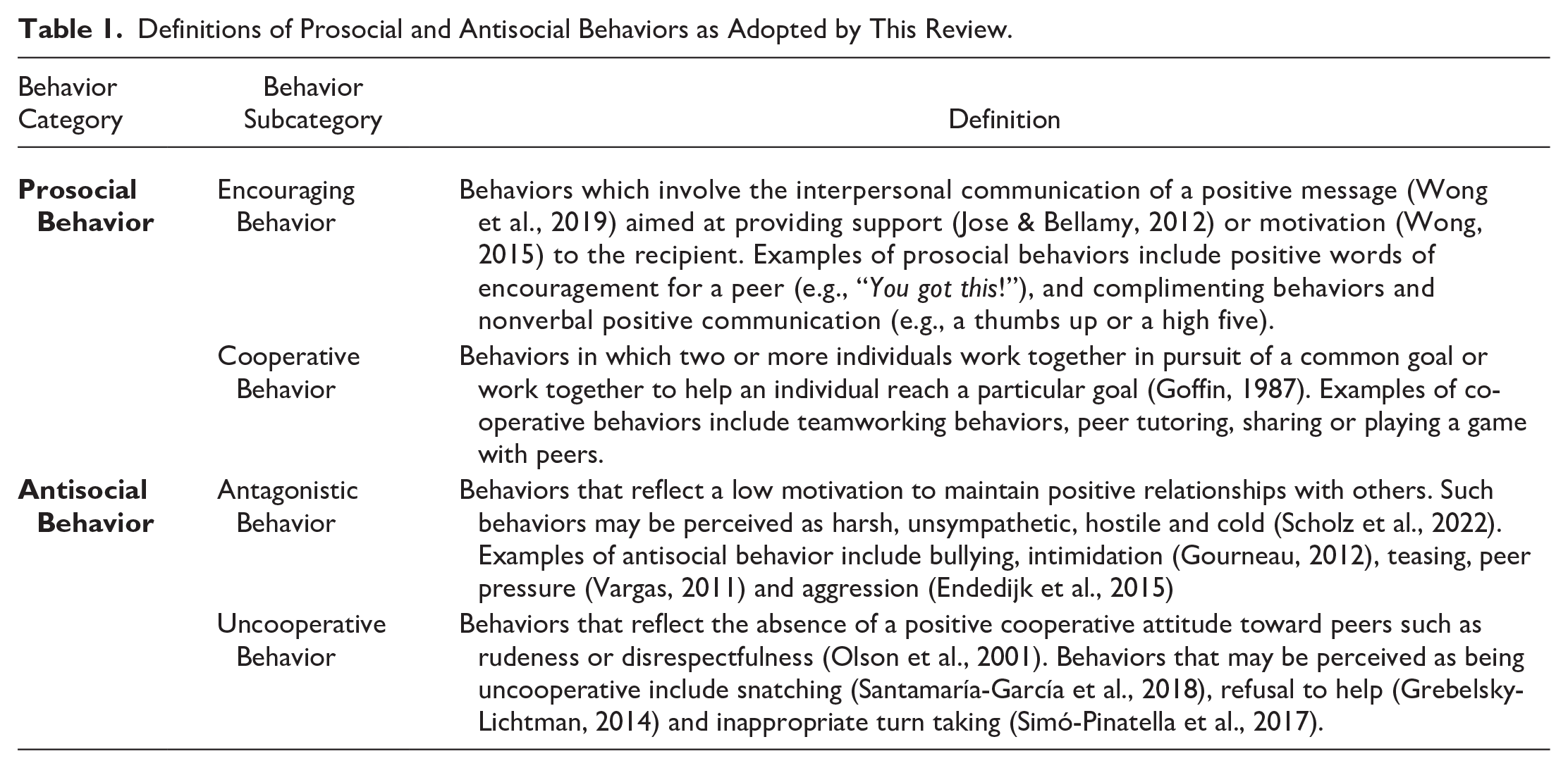
Characteristics and variables from the studies were coded using a systematic coding procedure developed by the first author based on the proposed research questions. To explore increases in PSB the literature was systematically reviewed for research reporting on increases in PSBs and decreases in ASBs. Definitions of PSBs and ASBs, as adopted in this review, are outlined in Table 1.
Definitions of Prosocial and Antisocial Behaviors as Adopted by This Review.
Data extracted from each article included general information relating to a paper, sample and setting characteristics, detail relating to group contingency features, detail relating to the study design, detail relating to targeted behaviors, and statistics generated in the results. We extracted data from each paper through Covidence. The primary author was responsible for extracting this data from each study. In the case of
Design Evaluation
The WWC (2022) Design Standards Version 5 were used to assess the quality of the final set of studies. For design evaluation, each case was evaluated separately (i.e., one case, one dependent variable, one independent variable). According to the WWC guidelines, each case was assessed for (a) the availability of the data in raw or graphical format, (b) the systematic manipulation of the independent variable, (c) the collection of interobserver agreement for at least 20% of phases with an average of 80% agreement, (d) the likelihood of residual treatment effects, and (e) the investigation of the effect of the intervention across time. Based on this assessment, cases were classified as “Meeting WWC SCD Standards Without Reservations,” “Meeting WWC SCD Standards With Reservations,” or “Does Not Meet WWC SCD Standards” with those who met the standards without reservations being considered the highest quality. Any case deemed to meet WWC Standards without reservations for the first 5 criteria undergoes evaluation of a sixth criteria. Studies meeting WWC Standards without reservations are assessed for risk of bias. If a case indicates a baseline trend, lack of reversibility or overlapping data then it is reduced to a rating of “Meeting WWC SCD Standards with Reservations.” Both reviewers independently conducted the quality assessment. Doctoral students who had completed online training in WWC Design Standards in single-case research and had experience in conducting systematic reviews served as reviewers. The interrater agreement of the quality assessment was 100%. Table 2 outlines the outcome of this quality assessment for each paper.
What Works Clearinghouse Design Standards Version 5 Evaluation.
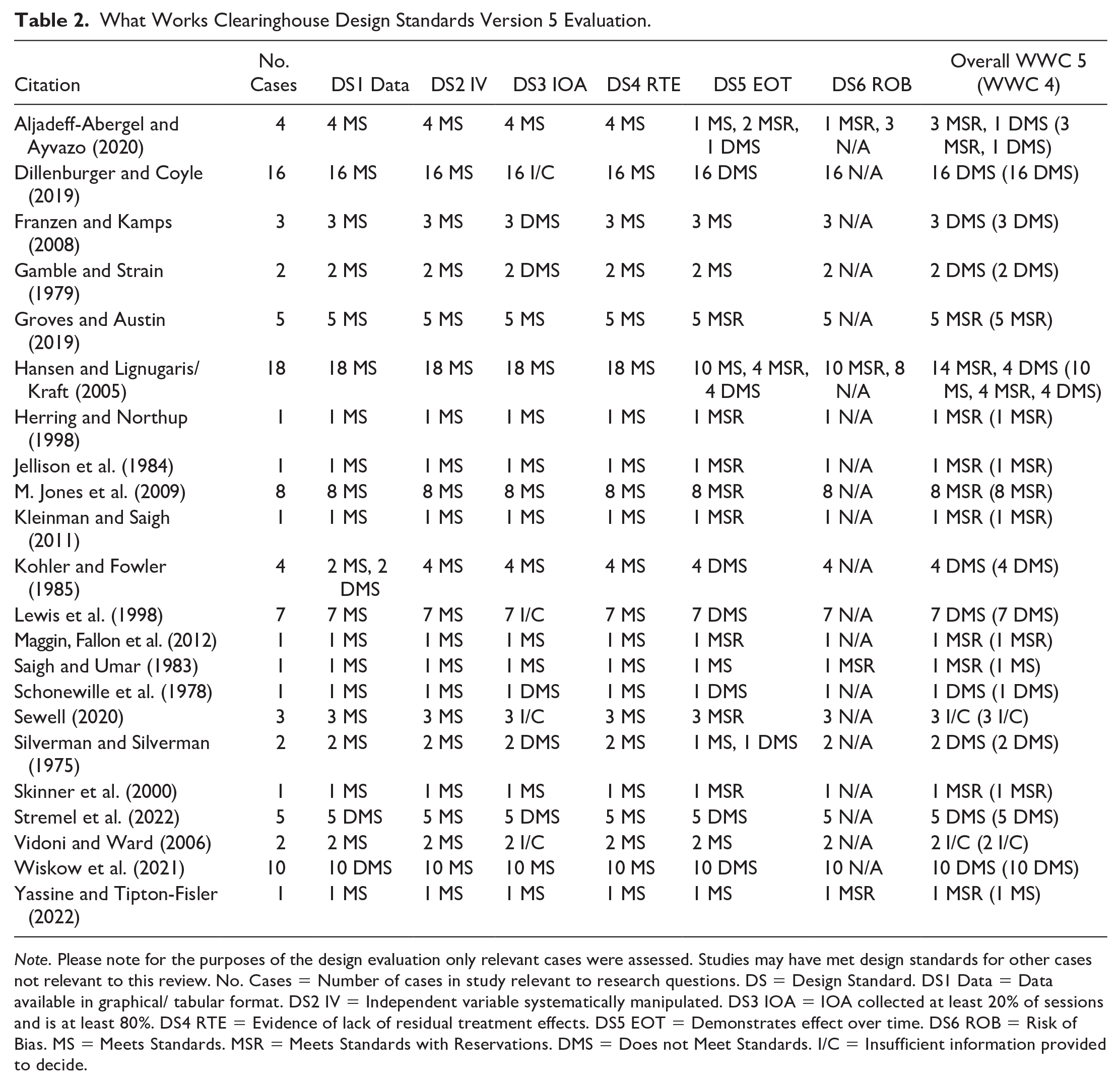
Note. Please note for the purposes of the design evaluation only relevant cases were assessed. Studies may have met design standards for other cases not relevant to this review.
No. Cases = Number of cases in study relevant to research questions. DS = Design Standard. DS1 Data = Data available in graphical/ tabular format. DS2 IV = Independent variable systematically manipulated. DS3 IOA = IOA collected at least 20% of sessions and is at least 80%. DS4 RTE = Evidence of lack of residual treatment effects. DS5 EOT = Demonstrates effect over time. DS6 ROB = Risk of Bias. MS = Meets Standards. MSR = Meets Standards with Reservations. DMS = Does not Meet Standards. I/C = Insufficient information provided to decide.
Data Synthesis
To address the research questions in this review a narrative synthesis was deemed the most appropriate method of synthesis. This approach allowed us to examine carefully the contingencies employed, as well as the quality of the literature. We synthesized the extracted data using guidelines provided by Popay and colleagues (2006). Data from the included studies were synthesized to explore the behavioral contingencies imposed on participants, relationships in the data and assess the robustness of the literature.
Results
Searches across the five databases generated 2,916 results. Of these, 891 duplicates were excluded from the review. Of the remaining 2,025, 1,790 did not meet the inclusion criteria at abstract and title screening. Full-text review was then carried out on the remaining 235 articles where 22 texts fulfilled the inclusion criteria and have been included in this review. Figure 1 depicts a schematic overview of the search process and reasons for the exclusion of papers at the full text stage.
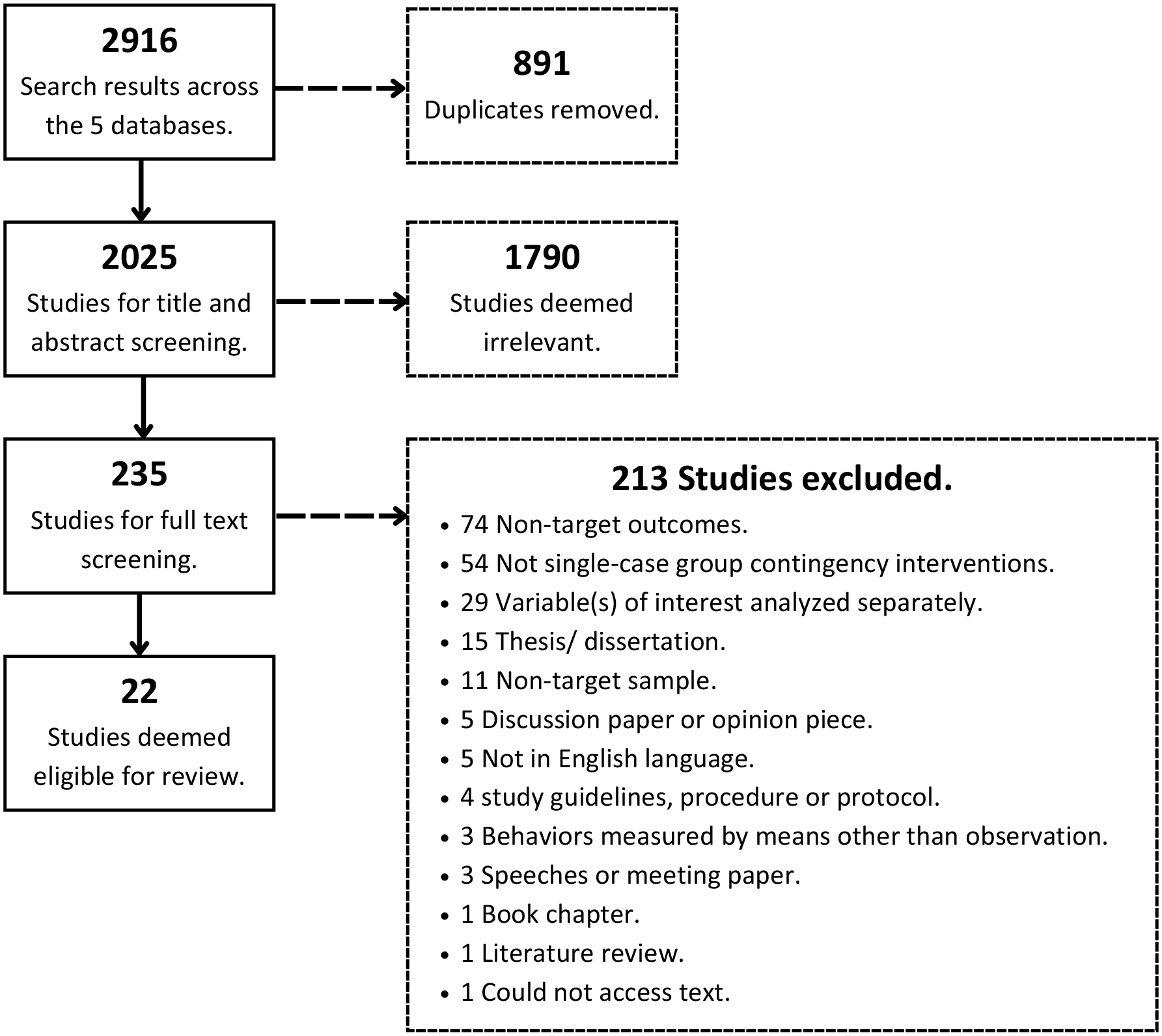
PRISMA Diagram of Study Screening Process.
Study Characteristics
Across the 22 included studies, data were collected from more than 1,750 participants with sample sizes ranging from four to 574. Larger samples consisted of whole-school approaches to targeting ASBs at recess (N = 574; Yassine & Tipton-Fisler, 2022) or on the school playground (N = 180; Franzen & Kamps, 2008). A summary of study characteristics is provided in Table 3. Students ranged from 6 to 16 years of age and included both primary-level and secondary-level students. Seven studies did not report on the gender of participants (Dillenburger & Coyle, 2019; Franzen & Kamps, 2008; Gamble & Strain, 1979; Herring & Northup, 1998; Jellison et al., 1984; Kohler & Fowler, 1985; Yassine & Tipton-Fisler, 2022), but the remaining studies included 223 male students and 172 female students. A considerable majority of studies were conducted in the United States (N = 17) with others conducted in the United Kingdom (N = 3), Canada (N = 1), and Sudan (N = 1). Sixteen studies investigated the effects of a group contingency on whole class groups, four investigated the effects of a group contingency on a combination of whole group and targets, and two explored the effects of a group contingency on target individuals only.
Summary of the Characteristics of the Included Studies.
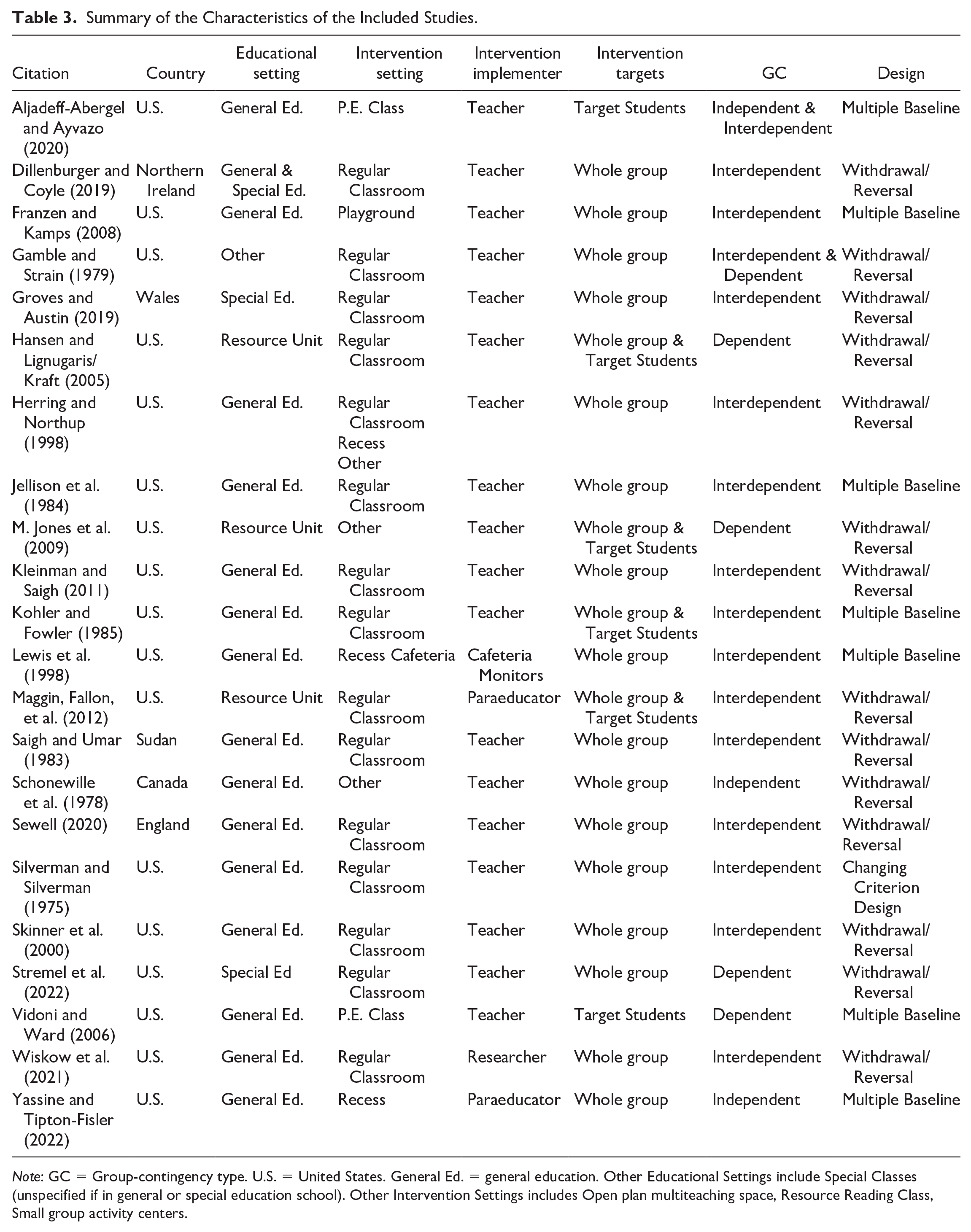
Note: GC = Group-contingency type. U.S. = United States. General Ed. = general education. Other Educational Settings include Special Classes (unspecified if in general or special education school). Other Intervention Settings includes Open plan multiteaching space, Resource Reading Class, Small group activity centers.
Targeting Prosocial and Antisocial Behaviors
Single-case group contingency interventions in school settings have targeted both PSBs and ASBs. Table 4 outlines all the behaviors targeted by the studies included in this review, as well as the behavioral mechanisms by which they were increased or decreased.
Contingencies in Place to Target Behavior.
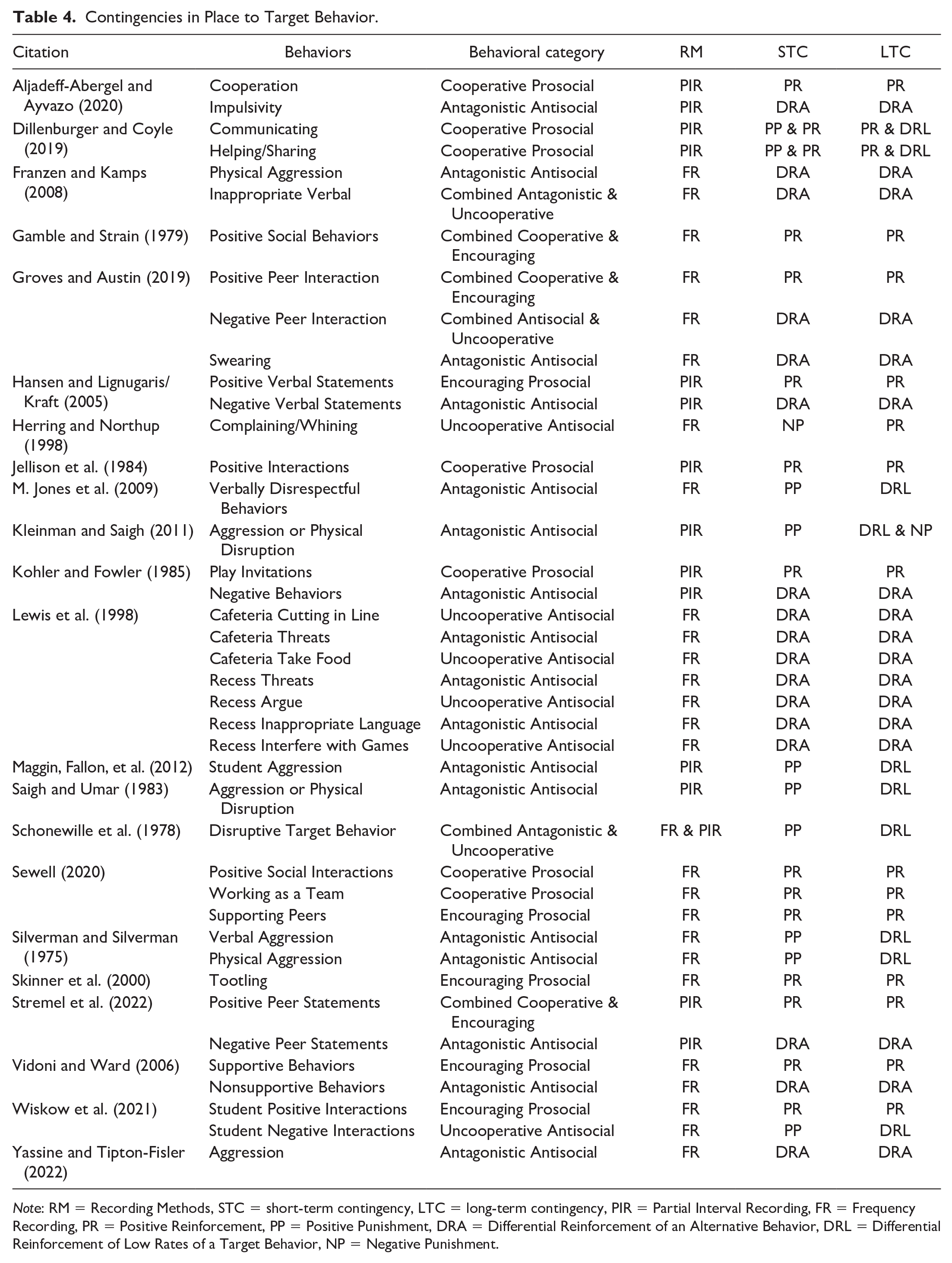
Note: RM = Recording Methods, STC = short-term contingency, LTC = long-term contingency, PIR = Partial Interval Recording, FR = Frequency Recording, PR = Positive Reinforcement, PP = Positive Punishment, DRA = Differential Reinforcement of an Alternative Behavior, DRL = Differential Reinforcement of Low Rates of a Target Behavior, NP = Negative Punishment.
Prosocial Behaviors
A total of 15 behaviors which we categorized as PSBs (see Table 1) were targeted across the 22 studies included in this review (see Table 4). Seven behaviors can be defined as cooperative behaviors, five as encouraging behaviors and three as combinations of both encouraging and cooperative behaviors. Cooperative behaviors included behaviors such as cooperation (Aljadeff-Abergel & Ayvazo, 2020), working as a team (Sewell, 2020), play invitations (Kohler & Fowler, 1985), and helping/reciprocal interactions (Jellison et al., 1984). Encouraging behaviors included positive verbal statements (Hansen & Lignugaris/Kraft, 2005), tootling (Skinner et al., 2000), and supportive behaviors (Vidoni & Ward, 2006). Behaviors that were combinations of both cooperative and encouraging behaviors included positive peer statements (Stremel et al., 2022), positive peer interactions (Groves & Austin, 2019) and positive social behaviors (Gamble & Strain, 1979). These behaviors could not be extracted as either encouraging or cooperative but were defined in a way that was classified as PSBs. For example, Stremel and colleagues (2022) defined positive peer statements as “an audible verbalization toward a peer that reflected collaboration or encouragement” (p. 615).
Antisocial Behaviors
Twenty-six ASBs were targeted across the 22 full texts reviewed (See Table 4). Based on the operational definitions in Table 1, 17 behaviors could be categorized as antagonistic behaviors, six as uncooperative and three as combinations of antagonistic and uncooperative behaviors. Eight of the antagonistic behaviors across eight studies focused on more extreme physical forms of ASB such as aggression (Franzen & Kamps, 2008; Kleinman & Saigh, 2011; Lewis et al., 1998; Maggin, Fallon, et al., 2012; Saigh & Umar, 1983; Silverman & Silverman, 1975; Yassine & Tipton-Fisler, 2022). Physical aggression took many diverse forms across these studies and this heterogeneity in target behaviors adds complexity to the synthesis of results. Antagonistic behaviors also included behaviors such as impulsivity (Aljadeff-Abergel & Ayvazo, 2020), negative peer statements (Stremel et al., 2022), inappropriate language (Groves & Austin, 2019; Lewis et al., 1998), and threatening behaviors (Lewis et al., 1998).
Uncooperative behaviors included behaviors such as complaining or whining (Herring & Northup, 1998), snatching (Lewis et al., 1998), and negative student interactions (Wiskow et al., 2021). Three behaviors that could not be categorized as either antagonistic or uncooperative ASBs alone, including disruptive target behaviors (Schonewille et al., 1978), inappropriate verbal behavior (Franzen & Kamps, 2008), and negative peer interaction (Groves & Austin, 2019). These behaviors were included in the review as their operational definitions included aspects of both definitions created for this review for uncooperative and antagonistic behaviors. For example, Groves and Austin (2019) defined negative peer interaction as behaviors that “included verbalizations or gestures that threatened, provoked, or demeaned a peer. . . or interfering with a peer’s work” (p.6).
Behaviors Targeted Based on Educational Setting
Across the 22 papers, 15 studies were conducted in general education settings, 2 in special educational settings, and 3 in a resource unit within a general education school (see Table 3). One study was conducted in a special class which was not specified as being in a general or special education setting (Gamble & Strain, 1979). Dillenburger and Coyle (2019) studied the effects of a group contingency across both general and special educational settings. Group contingencies applied in special education settings focused on social interaction between peers such as “positive peer interaction” (Groves & Austin, 2019), “negative peer statements” (Stremel et al., 2022), and “swearing” (Groves & Austin, 2019). Similarly, studies conducted within resource units focused mostly on communication-based behaviors such as “positive social behaviors” (Gamble & Strain, 1979), “negative verbal statements” (Hansen & Lignugaris/Kraft, 2005), “verbally disrespectful behaviors (M. Jones et al., 2009), and “student aggression” (Maggin, Fallon, et al., 2012). It was only in general education settings that more collaborative or less individualistic forms of PSB or ASBs were targeted such as “working as a team” (Sewell, 2020), “tootling” (Skinner et al., 2000) and “cutting in line” (Lewis et al., 1998).
Behaviors Targeted Based on Educational Level
Those between grades kindergarten and sixth (and their international equivalents) were considered primary level and those between grades 7th and 12th were considered secondary level in this review. Of the included studies, only three studies explored the use of a group contingency at the secondary level (Groves & Austin, 2019; Hansen & Lignugaris/Kraft, 2005; Silverman & Silverman, 1975). Consistent with whole group findings, at secondary school level more ASBs were targeted than PSBs with four ASBs targeted across the three papers and only two PSBs across two (Groves & Austin, 2019; Hansen & Lignugaris/Kraft, 2005) of the three articles. Although limited behaviors were targeted in second level settings, these behaviors were similar to those targeted at the primary level, for example, peer interaction and aggression were explored at both primary (Saigh & Umar, 1983; Sewell, 2020) and secondary school levels (Groves & Austin, 2019; Silverman & Silverman, 1975).
Short-Term and Long-Term Contingencies Used to Target Prosocial and Antisocial Behaviors
The behavioral principles underpinning the group contingencies used in the 22 studies varied. Interdependent group contingencies were the most commonly used group contingencies with fourteen studies adopting this methodology only (See Table 3). Four studies reported adopting dependent group contingencies only (See Table 3) and only two studies reported using only independent group contingencies (Schonewille et al., 1978; Yassine & Tipton-Fisler, 2022). One study explored the use of both an independent and an interdependent group contingency (Aljadeff-Abergel & Ayvazo, 2020). One study compared an interdependent and dependent group contingency (Gamble & Strain, 1979). Each of the included studies had two contingencies in place—both a short-term contingency and a long-term contingency. Overall, only 59.1% could be considered a purely positive behavioral intervention (i.e., using reinforcement-based contingencies throughout the intervention). Table 4 outlines the contingencies put in place to target specific behaviors.
Short-Term Contingency
All studies targeting PSBs (N = 12) utilized positive reinforcement procedures during the group contingency intervention to increase the behavior (see Table 4). Positive reinforcement was delivered in a number of ways including earning points (e.g., Sewell, 2020), receiving a golden nugget (Wiskow et al., 2021) or receiving a sticker (Kohler & Fowler, 1985). One study compared the use of positive reinforcement to positive punishment to target a PSB (Dillenburger & Coyle, 2019); however, it must be noted that the punishment procedures used had no effect on increasing inclusive behaviors of the students. In the short-term contingency, positive reinforcement was delivered to students for demonstrating the desired PSB (i.e., they met the behavioral expectations placed on them during the group contingency intervention). Ten of the studies using reinforcement during the short-term contingency to target PSBs explicitly label their use of points or praise or other consequences as reinforcement (Aljadeff-Abergel & Ayvazo, 2020; Dillenburger & Coyle, 2019; Gamble & Strain, 1979; Groves & Austin, 2019; Hansen & Lignugaris/Kraft, 2005; Jellison et al., 1984; Kohler & Fowler, 1985; Sewell, 2020; Stremel et al., 2022; Wiskow et al., 2021). Two studies did not explicitly label their use of reinforcement during the short-term contingency to target PSBs as reinforcement (Skinner et al., 2000; Vidoni & Ward, 2006).
The means of targeting ASBs in the short-term contingencies varied with nine studies using reinforcement, seven studies using positive punishment and one study using negative punishment (See Table 4). Each of the nine studies using reinforcement used differential reinforcement of alternative behavior (DRA). Applications of DRA included, for example, reducing problem behaviors of students by rewarding points for following school-wide rules focused on reducing those behaviors (Lewis et al., 1998) or reducing the negative statements of students by reinforcing students’ positive statements or providing students with a point (Hansen & Lignugaris/Kraft, 2005). The eight studies using punishment during the short-term contingency to target the children’s ASB typically used positive punishment procedures (N = 7) such as giving a “foul” (e.g., Maggin, Fallon, et al., 2012) or giving a ‘‘wormy apple’’ (Wiskow et al., 2021) for not following class rules or for demonstrations of ASBs. The one study using negative punishment removed a happy face during the group contingency (Herring & Northup, 1998). One study compared the use of punishment and reinforcement and labeled both as such (Wiskow et al., 2021). The other eight studies using punishment in the short-term contingency to target ASBs did not explicitly label their use of ‘‘fouls’’ or marks as punishment.
Four studies reported using the Good Behavior Game (GBG; Barrish et al., 1969) as their chosen group contingency intervention (Kleinman & Saigh, 2011; Maggin, Fallon, et al., 2012; Saigh & Umar, 1983; Wiskow et al., 2021) to target ASBs. The GBG is one of the most common group contingencies used to target ASBs and typically adopts a positive punishment procedure as the short-term contingency in place. In the traditional GBG, children’s disruptive behavior is positively punished with a “foul” and the children are granted access to a reward if they remain under a certain criterion of fouls for a given game period. One study (Wiskow et al., 2021) reported using the Caught Being Good Game (CBGG; R. A. Wright & McCurdy, 2012). The GBG involves a positive short-term contingency and giving children access to a prize for reaching or exceeding a certain criterion of points in the long-term contingency. Both Groves and Austin (2019) and Sewell (2020) reported using the GBG. However, both of these studies used a positive short-term contingency rather than the positive punishment approach, which is typically used during the GBG; therefore, these studies may be better categorized as the CBGG.
Long-Term Contingency
All studies (N = 12) focusing on targeting PSBs used positive reinforcement as the behavioral mechanism in the long-term contingency. Reinforcers used included extra recess (Skinner et al., 2000), small prizes (e.g., Vidoni & Ward, 2006) and listening to rock music (Jellison et al., 1984).
Studies targeting ASBs used either DRA or DRL during their long-term contingency. When DRA was used to target ASBs in the short-term contingency, DRA was used again in the long-term contingency. When positive punishment was used to target ASBs in the short-term contingency, DRL was used in the long-term contingency. Nine studies reported the use of DRA to reinforce children’s behavior following the completion of the group contingency intervention (see Table 4). These studies positively reinforced alternative positive behaviors such as reinforcing cooperation to decrease impulsivity (Aljadeff-Abergel & Ayvazo, 2020) or reinforcing positive social interactions to decrease negative social interactions (Groves & Austin, 2019), rather than directly targeting the ASB. Examples of ways students were reinforced using DRA include receiving a reward from a grab bag (Hansen & Lignugaris/Kraft, 2005) or the accumulation of school dollars in exchange for a prize (Yassine & Tipton-Fisler, 2022).
As outlined in Table 4, eight studies used DRL as the long-term contingency to reinforce the children’s behavior. All eight of the studies using DRL used positive punishment procedures during the short-term contingency. During the long-term contingency children were then reinforced for demonstrating low levels of the targeted ASBs, for example, in the GBG children were positively reinforced if they received fewer than the set criterion of ‘‘fouls’’ (e.g., Kleinman & Saigh, 2011). In the long-term contingency, DRL was delivered in a number of ways including, for example, earning free time (Silverman & Silverman, 1975) or a mystery reward (M. Jones et al., 2009). While all 17 of the studies focusing on reducing at least one ASB utilized reinforcement procedures in the long-term contingency, one study (Kleinman & Saigh, 2011) also negatively punished the losing team (those who accumulated the most ‘‘fouls’’) resulting in that team losing free time as well as the winning team receiving a pizza party.
Quality of Literature
Each study included in this review was assessed against the WWC Design Standards for single-case research. The design evaluation was conducted for each case separately. Cases were classified as “Meeting WWC SCD Standards Without Reservations,” “Meeting WWC SCD Standards with Reservations,” or “Does Not Meet WWC SCD Standards” with those who met the standards without reservations considered the highest quality. Table 2 outlines the quality evaluation for each of the included studies.
What Works Clearinghouse Standards (Version 5)
None of the included studies met WWC Design Standards Version 5 without reservations. Overall, 37 cases across 11 studies met WWC standards with reservations (See Table 2). A total of 55 cases across 11 studies did not meet standards including 10 studies that did not meet standards in any of their cases (total number of cases across these 10 studies was 54. See Table 2). WWC Design Standards Version 5 saw the addition of the assessment of risk of bias as well as a new requirement in Design Standard 5 to have 6 initial baseline data points to meet standards without reservations. The WWC Design Standards were updated during conduct of this review; thus, none of the included studies would have been conducted with these standards in mind. While we report here on WWC standards Version 5, for comparative purposes, Table 2 reports overall design evaluation using both Standards 4.1 and 5.
Design Standards Met
Each of the 22 included studies met WWC version 5 Design Standards 2 and 4. Design standard 2 outlines requirements for systematic manipulation of the indpendent variable. Given the nature of group contingency interventions involves measuring the dependent variable at both baseline and intervention phases, this standard was met by all cases in all 22 included studies. Design standard 4 is met if a study demonstrates evidence of a lack of residual treatment effects. All 22 of the included studies appeared free of residual treatment effects across baseline and intervention phases.
Design Standards not Met
Design Standard 1 (data should be available in graphical or tabular format) was not met in 17 cases across three studies (Kohler & Fowler, 1985; Stremel et al., 2022; Wiskow et al., 2021). Design Standard 3 (interobserver agreement should be collected in at least 20% of sessions across all cases and outcomes and is at least 80% agreeement) was not met in 13 cases across five studies (See Table 2) and was not reported in sufficient detail in 28 cases across 4 studies (Dillenburger & Coyle, 2019; Lewis et al., 1998; Sewell, 2020; Vidoni & Ward, 2006). More cases failed to meet Design Standard 5 than any other standard. This standard (in which a study must demonstrate effect over time) was not met by 49 cases across nine studies (See Table 2). As seen in Table 4, thirteen cases across four studies were assessed for Design Standard 6 (risk of bias). All cases were reduced to a rating of meeting standards with reservations at this point due to overlapping data.
Association of Quality With Author-Reported Effectiveness of Intervention
Although the purpose of this narrative synthesis was not to assess the effect of group contingencies for ASBs and PSBs, we did synthesize information relating to the author-reported effect. The WWC Design Standards version 5.0 suggest synthesizing only cases Meeting WWC Design Standards with and without Reservations. Therefore, we synthesized author-reported effects for cases “Meeting WWC Standards with Reservations.” In cases meeting standards with reservations, the majority of authors suggested that the group contingency was an effective means to increase PSB or decrease ASB (Aljadeff-Abergel & Ayvazo, 2020; Groves & Austin, 2019; Hansen & Lignugaris/Kraft, 2005; Herring & Northup, 1998; Jellison et al., 1984; Kleinman & Saigh, 2011; Maggin, Fallon, et al., 2012; Saigh & Umar, 1983; Skinner et al., 2000; Yassine & Tipton-Fisler, 2022). M. Jones and colleagues (2009), although meeting design standards with reservations, reported mixed findings. They reported effectiveness of their group contingency interventions for two of the seven individually targeted participants. However, these two individuals demonstrated low levels of ASB in baseline and therefore may not have been accurately targeted for study inclusion. Although the author-reported effect was only explored for those meeting WWC standards with reservations, Stremel and colleagues (2022) regarded their group contingency intervention as ineffective. This study did not meet the WWC Standard in more areas than any other study, not satisfying design 3 of the design standards.
Discussion
This review aimed to identify the types of PSBs and ASBs targeted by group contingencies as well as explore the behavioral mechanisms underpinning the contingencies put in place in the included single-case studies. A systematic search of the single-case literature found 22 studies deemed suitable for inclusion in the narrative synthesis. Across the 22 studies included in this review, group contingencies have been used to target both ASBs and PSBs, although the nature of target behaviors differed across school types. The contingencies used included positive reinforcement alone or a combination of positive or negative punishment in the short-term contingency followed by positive reinforcement in the long-term contingency.
Targeting Prosocial and Antisocial Behaviors in School Settings
As outlined in the narrative synthesis, researchers more frequently targeted ASBs more frequently for reduction than targeting PSBs for increase. This is an interesting finding as it demonstrates the use of group contingencies to focus on socially relevant behaviors is still aligned with, and indeed has grown out of, their traditional use in classroom management. Traditionally, behavior management is seen as a tool for decreasing problem behaviors (Oliver et al., 2011). However, in recent years, an emphasis has been placed on utilizing more positive forms of behavior support and encouraging positive behaviors in children (LaVigna & Willis, 2012). While a number of researchers have now used group contingencies to establish PSB in the classroom, this has focused mainly on younger students (c.f. Groves & Austin, 2019; Hansen & Lignugaris/Kraft, 2005). Previous research has suggested disruptive behaviors may occur with higher prevalence in older students, which may explain the emphasis on targeting ASBs in these groups (McDaniel et al., 2022). Given the numerous positive associations with PSBs (Wagaman, 2011), it is surprising the research exploring how group contingencies can target these behaviors is limited. Literature has suggested that teachers move toward adopting more preventive approaches (e.g., encouraging positive behaviors and the development of skills) to behavior management rather than reactive approaches (e.g., punishment; Korpershoek et al., 2016). The findings of the review highlight a need for further exploration of the use of behavior management as preventative approaches for disruptive behaviors by encouraging positive skill development such as the development of PSBs.
In special education settings, researchers explored the effects of group contingencies on more basic communication-based or individualistic forms of PSB and/or ASB (e.g., positive peer interaction; Groves & Austin, 2019). Only in general education settings did researchers evaluate intervention effects on more collaborative forms of ASB and PSB (e.g., working as a team; Sewell, 2020). It must be noted that group contingency interventions are used to target behaviors seen as challenging or in need of improvement specifically for the intervention context (Pokorski, 2019), which may explain differences in behaviors targeted across educational settings. Research has suggested special education students may require more support with social skills than those in general education settings (Frostad & Pijl, 2007); thus, teachers in special education settings may prioritize more communication-based behaviors over more collaborative behaviors. However, it has been suggested that collaborative and teamworking skills are important for the social skills development of individuals with additional support needs (e.g., autistic students; Vernon et al., 2016).Future research should further explore the use of group contingency interventions for increasing more collaborative behaviors of special education students as well as comparing behaviors in need of improvement across educational settings. In general, the use of group contingency interventions for targeting PSBs is under researched and with a shift toward more positive forms of behavior management, research too must shift toward exploring more positive behaviors.
We are also mindful that the degree to which PSBs and ASBs are distinct constructs is not always clear. While many times these behaviors might be connected (e.g., when increasing PSBs, we see a decrease in ASB), this is not always the case. Often, as seen in this review, the degree of connection between PSB and ASB relies on the contingencies in place to target those behaviors. For example, the use of positive reinforcement during the short-term contingency may aim to increase desirable behaviors and decrease undesirable behaviors (e.g., Groves & Austin, 2019). However, given that ASBs and PSBs are distinct constructs, an intervention may not be equally as effective for both (e.g., Wiskow et al., 2021).
Contingencies in Place for Targeting Prosocial and Antisocial Behaviors
For the purpose of this review, a group contingency intervention was considered to comprise of both a short-term and a long-term contingency, as in previous literature (Schonewille et al., 1978). Previous systematic reviews have not explored group contingencies in this way (e.g., Maggin, Johnson et al., 2012; Maggin et al., 2017). However, with a recent shift toward and focus on positive forms of behavior support we must do so. The GBG is commonly referred to as positive behavior support because reinforcement is delivered when meeting the game’s criterion (Barrish et al., 1969). However, until the short-term and long-term conditions are dissected, we miss the subtlety of the fact that the traditional GBG is not solely reinforcement -based. Punishment (whether positive or negative) is commonly used in the short-term contingency of group contingency intervention (e.g., in nine studies within this synthesis). Yet, this is often overlooked as reinforcement is used in the long-term contingency.
Traditionally, teachers have adopted more reactive strategies (e.g., punishment; Shook, 2012) for managing classroom behavior. Although punishment methods were found effective in this review, there are a number of concerns relating to the use of punishment procedures in classrooms. Past research has emphasized the use of punishment may pose a moral dilemma, may be unethical (Cooper et al., 2020), and may lead to the development of resistance and oppositional behavior (Mathur & Corley, 2014). Research has indicated students may prefer positive reinforcement over positive punishment (Wahl et al., 2016) further emphasizing the importance of positive behavior change techniques over punitive techniques (Osher et al., 2010).
All PSBs targeted by the studies included in this review used positive reinforcement to increase these behaviors. ASBs were targeted using DRA, positive punishment, or negative punishment. Any study using DRA to target an ASB in the short-term contingency also adopted DRA in the long-term contingency, and therefore the ASB was never directly targeted. This demonstrates group contingency interventions can reduce problematic behaviors even without direct focus.
Previous reviews have not explored the short-term and long-term contingencies of group contingency interventions in this way. This review highlighted that punishment procedures are commonly used in group contingency interventions. However, with a recent focus in literature to focus on more positive forms of behavior support (LaVigna & Willis, 2012), it must be considered whether punishment procedures are necessary. Research should remain aligned with current positive focus and consider using positive reinforcement methods in their behavior management strategies, as well as exploring the effects of more preventative approaches to behavior management (Korpershoek et al., 2016). By raising awareness of the short-term and long-term contingencies of an intervention, we hope researchers and practitioners can make informed decisions about the interventions they use in practice. Specifically they should aim to use interventions adopting only reinforcement-based contingencies where possible. Researchers should provide greater clarity in publications by (a) reporting the short- and long-term contingencies and (b) using the GBG to refer only to procedures incorporating punishment in the short-term contingency. Conversely, the CBGG or positive-GBG should be used to refer to procedures incorporating reinforcement in both short- and long-term contingencies. Clear reporting is essential to further positive behavior support in group contingency research and practice. Future research may seek to compare other characteristics of the behavioral contingencies in place such as comparing the effect of interdependent, independent, and dependent group contingencies on PSBs.
Quality of the Literature
The findings of our narrative synthesis indicated the majority of included studies did not meet WWC Design Standards (2022) for single-case research (see Table 2). Given that one focus of this review was to explore whether studies using group contingencies to target PSBs and ASBs meet WWC Standards, all studies were included in the synthesis of the results. Many past systematic reviews exclude studies not meeting WWC standards from their evidence evaluation (e.g., Maggin, Johnson et al., 2012; Maggin et al., 2017), and thus, much novel research and valuable information is frequently missed. Across previous literature, group contingency interventions are commonly deemed to not meet WWC Design Standards 3 and 5 due to collecting interobserver agreement in less than 20% of cases or failing to demonstrate effect over time (e.g., Maggin, Johnson et al., 2012). Similarly, in this review, Design Standards 3 (interobserver agreement) and 5 (effect across time) were the most common design standards not met.
WWC single-case design standards are typically used to assess the strengths of studies as well as the reliability and validity of studies (Moeyaert & Dehghan-Chaleshtori, 2022). However, concerns have been posed surrounding the systematic exclusion of studies not meeting WWC Standards from synthesis (Maggin et al., 2022). Given that the focus of the current review was not to make inferences about the effect of group contingencies, this study synthesized studies meeting WWC Standards with Reservations and not meeting WWC Standards. This review aimed to ascertain the extent to which between the studies reviewed met WWC Standards as well as to highlight areas in which standards are not met to improve the quality of future studies. We hope researchers can learn from our synthesis of common issues in the design and reporting in this literature and this can support both the design and the implementation of future single-case group contingency investigations.
Limitations
There are several limitations to this review. First, as most of the studies included in the review were conducted in the United States and other Western countries, the results may not be generalizable to Eastern cultures or different educational systems. As with all systematic reviews, there is potential several relevant texts may not have been included in the search results of the various databases used. However with careful, strategic development of search terms in collaboration with an expert panel and librarian, we have minimized this risk as much as possible. As gray literature was excluded from this review, valuable data from other forms of literature may not be included. At the full text stage of the review several papers explored behaviors of interest but were excluded because these behaviors were indistinguishable from other behaviors (e.g., measured collectively with other irrelevant behaviors such as out of seat behavior). Research exploring the effect of group contingencies using RCTs were excluded from the current synthesis. Future reviews may seek to synthesize the evidence for the use of these studies in targeting PSBs and ASBs.
Conclusion
Developing an understanding of the use of group contingencies for targeting PSB and ASB within the single-case literature can contribute to the development and improvement of behavioral management strategies and provide insight into the malleability of these behaviors in children. Future research should evaluate the necessary components to an effective group contingency to simplify the procedures, should adopt a collaborative approach with educators and students and should explore the generalization of results across settings. More subtle and more common forms of ASBs such as teasing, mocking, and tattling require investigation as well as further exploration of PSB in both general and special education settings. Aligned with positive behavioral support recommendations, researchers shiould design interventions using positive reinforcement procedures. Researchers should mind common pitfalls in single-case research and strive to conduct high quality research paying particular attention to issues surrounding interobservor agreement collection and demonstrating effect over time.
Supplemental Material
sj-docx-1-pbi-10.1177_10983007241235865 – Supplemental material for A Systematic Review and Narrative Synthesis of Single-Case Group Contingency Interventions Targeting Prosocial and Antisocial Behavior in School Children
Supplemental material, sj-docx-1-pbi-10.1177_10983007241235865 for A Systematic Review and Narrative Synthesis of Single-Case Group Contingency Interventions Targeting Prosocial and Antisocial Behavior in School Children by Ciara Brennan, Avril Deegan, Clare Bohan and Sinéad Smyth in Journal of Positive Behavior Interventions
Footnotes
Authors’ Note
This research was completed as part of the first author’s PhD thesis. Given that secondary data was used to complete the review ethical approval was not required.
Declaration of Conflicting Interests
The authors declared no potential conflicts of interest with respect to the research, authorship, and/or publication of this article.
Funding
Ciara Brennan was supported by the Dublin City University School of Psychology stipend-only scholarship. Avril Deegan was supported by Breakthrough Cancer Research and the Irish Research Council (grant no. EPSPG/2022/167).

References
Supplementary Material
Please find the following supplemental material available below.
For Open Access articles published under a Creative Commons License, all supplemental material carries the same license as the article it is associated with.
For non-Open Access articles published, all supplemental material carries a non-exclusive license, and permission requests for re-use of supplemental material or any part of supplemental material shall be sent directly to the copyright owner as specified in the copyright notice associated with the article.
