




Abstract
Positive effects of Positive Behavior Intervention and Supports (PBIS) frameworks have been reported in juvenile justice facilities but have not yet been extended to adult prisons. As part of initial PBIS development in a large prison in the United Kingdom, this study utilized focus groups to investigate the valued outcomes considered most important to prison officers and prisoners. We found that although prisoners and staff largely shared the same values, there were meaningful differences in their relative priorities, reflecting the disparate roles that each play in the functioning of the prison. Focus groups also revealed possible contextual barriers to PBIS implementation in this setting. We conclude that input from both parties is essential in designing values-based support strategies that are aligned across key stakeholders. We discuss how focus groups might inform PBIS intervention planning and how our findings point to specific research gaps in applying PBIS in adult prisons.
Keywords
Violent and disruptive behavior in prisons has risen to unprecedented levels in recent years, presenting significant safety concerns for correctional institutions (Prison Reform Trust, 2022). Despite recent attempts at rehabilitative reform, prisons continue to rely heavily on punitive strategies to address problematic behavior (HM Chief Inspector of Prisons, 2020). While this might be expected given societal views of prisons as being foremost a place of punishment (Chamberlen & Carvalho, 2019), such approaches fail to address reinforcement contingencies that may be maintaining problematic behavior or teaching expected behaviors (Apel & Diller, 2017). Worse, punitive strategies have not been found to be effective in preventing recidivism (MacKenzie & Farrington, 2015), arguably the primary purpose of prison sentencing.
Researchers have discussed a similar reliance on punitive strategies in schools, arguing that this approach may increase the frequency and severity of problematic behavior (e.g., Sugai & Horner, 2002). Positive Behavioral Interventions and Supports (PBIS) is an intervention framework that has been successfully employed to refocus behavior change efforts to more positive and proactive strategies in schools (Simonsen & Sugai, 2013). The PBIS framework provides a continuum of behavioral interventions that increase in intensity in tandem with the needs of the population to which it is applied. Critical elements of the approach include a focus on the valued outcomes of key stakeholders, incorporation of evidence-based practices, reliance on data-based decision-making, and due consideration of the systems available to support implementation (Sugai & Horner, 2002). Behavior support strategies within the PBIS framework focus on establishing universal behavioral expectations, developing systems to systematically communicate, teach, and reinforce those expectations, responding instructively and functionally to mild problem behavior, and implementing consistent strategies for defusing more serious challenging behavior (Sprague et al., 2013).
Drawing on the success of the school-wide PBIS (SW-PBIS) framework, researchers have begun adapting the approach to juvenile justice settings (Jolivette & Nelson, 2010), using the moniker “facility-wide PBIS” (FW-PBIS) to denote the difference in setting. Although most core elements are shared between settings, key differences between FW-PBIS and SW-PBIS include a 24/7 delivery model and implementation across multiple facility environments (Kumm & Jolivette, 2017). Although implementation across all facility environments may facilitate better consistency and generalization of treatment effects, Jolivette and Nelson (2010) note that determining the scope of the intervention is an important first step in adapting PBIS to alternative settings. Positive Behavioral Interventions and Supports efforts in juvenile justice facilities have been associated with reductions in the number of behavioral incidents (Johnson et al., 2013) and the use of restraint, seclusion, and disciplinary removals (Sidana, 2006). Perhaps equally important, residents have reported positive views of both the procedures employed and results achieved by PBIS practices (e.g., Jolivette et al., 2015). While these findings are encouraging, little is currently known about the adaptations that would be necessary to promote PBIS success in adult prison populations, where population numbers, staffing ratios, and severity of problem behaviors may be vastly different. Research aimed at uncovering some of the key issues and challenges of employing a PBIS framework with adult offenders is an essential first step.
As noted above, a fundamental feature of PBIS is ensuring that the implemented systems and supports are congruent with the valued outcomes of the organization (McIntosh et al., 2010). In schools, this typically involves consultation with key staff members and administrators to identify important goals for intervention (e.g., McDaniel et al., 2018). Regularly consulting with direct stakeholders throughout the development and maintenance of PBIS initiatives promotes ownership of interventions and is an essential part of establishing staff buy-in to the PBIS model (Boden et al., 2020). Failure to recruit staff support could be a significant barrier to the success and sustainability of implementation attempts, given that they typically are responsible for the implementation of intervention procedures (McDaniel et al., 2018). Researchers also have recognized the importance of incorporating the voice of the population for whom the framework is being implemented, particularly when extending the model’s application to older populations (e.g., in secondary schools; Flannery & McGrath Kato, 2017). The primary goal of PBIS is to improve quality of life, with reductions in problem behavior occurring as a by-product (Carr et al., 2002). As such, consultation with the individuals for whom interventions are designed is important in identifying goals and environmental changes that will meaningfully improve their lives.
In correctional settings, incorporating the views of incarcerated individuals as part of decision-making processes can be considered especially important, given the complex and delicate power dynamic that exists between prisoners and staff (Brunton-Smith & McCarthy, 2016). Jolivette et al. (2015) argued that incorporating the perceptions of incarcerated youth may be even more important than those of administrators and staff, given that they are the recipients of any behavior change strategies that are implemented. They further suggest that incorporation of these views might facilitate buy-in, thereby improving engagement with the interventions and supports. As buy-in is important for both those who will implement interventions and those who will experience them, considering the values of both stakeholder groups appears essential (Boden et al., 2020).
Across the broader literature of PBIS in secure settings, few studies have investigated consumer voice relating to PBIS implementation. Those that have done so have used a number of strategies, including interviews (e.g., Swain-Bradway et al., 2013), focus groups (e.g., Jolivette et al., 2015), and adapting surveys utilized in school-based applications of PBIS (e.g., the Stakeholder Input and Satisfaction Survey-Student; SISS; Jolivette et al., 2020). However, evaluations to date have explored consumer voices post-implementation of PBIS, which naturally limits the utility of the data to address barriers and improve social validity proactively. To our knowledge, no PBIS studies have formalized consumer voice as part of the initial development process. Given the importance of centering PBIS approaches upon the valued outcomes of key stakeholders (Sugai & Horner, 2002), this study aimed to address this gap in the literature. We also sought to address another important omission by conducting the study in an adult prison. To date, there has been no research examining PBIS procedures in adult prisons, and little is known about the potential adaptations that would be necessary to promote success. An important consideration is that key stakeholders (prisoners and staff) represent two very distinct factions within the social climate of the prison setting, separated by a disproportionate allocation of authority and power (Crewe, 2011). While research suggests there have been improvements in their historically fraught relationship, failing to identify mutually important values may affect their relative buy-in and ultimately, the success of any PBIS approach (Boden et al., 2020; Jolivette et al., 2015). This study was designed to provide preliminary data for addressing some of these important issues, with three primary research questions:
What are the valued outcomes of adult prisoners and prison officers?
To what extent do the valued outcomes of prisoners and prison officers align?
Are focus groups a feasible approach for identifying the foundational values of a PBIS approach in adult prisons?
Method
Recruitment
Potential prisoner participants were informed about the opportunity to participate via posters, the prisoner electronic communication systems (CMS), and by providing face-to-face information about the study to prisoners during association times. Staff participants were recruited by the prison’s training department, which requested study volunteers via email. All prisoners and prison officers across the main residential units were eligible to volunteer for participation, provided they had been residing or working there for a minimum of three months. Participants were recruited until data saturation occurred with regard to the research questions (i.e., responses became repetitive and did not reveal additional data beyond that which had already been obtained; Saunders et al., 2018). As there were more prisoner volunteers than focus group spaces, prisoners were randomly selected for participation from the pools of recruited volunteers in each of the main residential units of the prison.
Participants and Setting
The study was conducted in a large, privately operated Category B prison in the United Kingdom housing approximately 1,600 male offenders. Category B prisons in the United Kingdom are high-security institutions that accommodate high-risk prisoners (Ministry of Justice, 2020). These individuals typically are serving sentences for offenses involving violence or threat to life, arson, firearms, drugs, sexual offenses, or robbery. Guidelines for prisons in the United Kingdom require that prisoners be afforded 30 minutes of time outdoors each day but do not set minimum requirements for time out of cell overall; however, some prisoners report being out of their cells for less than two hours each day (HM Chief Inspector of Prisons, 2020). Time spent out of the cell might include attendance in work or education on-site, engaging in exercise, or association with peers in their residential unit.
We recruited a convenience sample of 54 prisoner participants and 14 staff participants (prison officers) who resided or worked in the main residential units of the prison. Prison officers represent the operational frontline of the prison, having the most direct contact with prisoners and being responsible for most of the day-to-day governance of the prison regime. We collected demographic information using a brief questionnaire administered before commencing each focus group. The mean prisoner age was 30 (range 21–51). Prisoner sentence lengths varied, with two participants reporting life sentences and another participant reporting serving an imprisonment for public protection (IPP; i.e., indeterminant) sentence. Sentence length for the remaining prisoners ranged from 7 months to 19 years (M = 6.2 years). Prisoner participants identified as white British (81.5%), Pakistani (5.6%), white Gypsy or Irish traveler (1.9%), white and Asian (1.9%), black British (1.9%), Bangladeshi (1.9%), and Indian (1.9%). One participant preferred not to report ethnicity.
Nine male and five female prison officers participated (ages 22–47 years old; M = 31.6). Most staff identified as white British, with one identifying as white and black African. Length of service at the prison ranged from 6 months to 13 years (M = 2.9 years).
Procedure
Prisoner and staff focus groups were conducted separately (i.e., no staff in prisoner groups and vice versa) to minimize conflict and promote open expression of viewpoints. For privacy, we conducted focus group sessions in classrooms or offices adjacent to the residential areas. Each focus group had one to two facilitators (the first and last authors, respectively), with the first author always serving as one of the facilitators. Both facilitators had experience working in the prison setting (see positionality information in “data analysis” below). The last author had experience in conducting focus group research and led initial groups, with the first author leading later groups.
All groups followed the same structure. At the start of each group, participants were informed about the purpose and requirements of the study, both verbally and in writing, and were asked to provide written consent if they still wished to participate. No participants opted against participation, but participants were free to leave the group at any point. Responses during groups were recorded digitally and transcribed verbatim. To maintain confidentiality, we asked that groups refrain from using the names of prisoners and staff members (any names were redacted during the transcription process). To allow transcriptionists to track individual comments throughout recordings, we asked participants to verbally identify themselves with a participant number when the recording began.
Focus group discussions began by asking the group to comment on the valued outcomes that would be important in the design of a “perfect prison.” Specifically, we asked, “If you could design a perfect prison, what word would describe how you would want it to be?” While the purpose of this question was to identify underlying values relevant to the design of a PBIS framework, researchers were careful not to set expectations that participant responses would necessarily evoke changes in prison practices. Instead, facilitators informed participants that data from the groups would be shared with the prison’s executive team and would be considered when designing new strategies for supporting prisoners and staff.
When participants provided a word in response to the question, we asked them to elaborate (e.g., “What does that word mean to you?” or “What would that look like in an ideal world?”). When participants offered negatively framed comments (e.g., expressed discontent with the current workings of the prison), we asked them to reframe their points in terms of how things could be improved for the better (e.g., “What word describes how you would want that to be?”) and then prompted them to elaborate if necessary. This approach was taken to align with the PBIS convention of establishing values, which are defined by positively stated expectations for behavior, as part of framework development (Jolivette & Nelson, 2010).
To stimulate conversation and summarize ideas, we wrote keywords or comments on a flip chart. This allowed us to confirm or clarify statements and identify potential errors in the facilitator’s understanding of a group member’s comment (O’Connor & Joffe, 2020). This was a valuable aspect of our methodology, given that post-hoc follow-up meetings were precluded by the anonymization of participant data immediately following groups.
We conducted nine focus groups with prisoners and three groups with staff. Prisoner groups were conducted with a minimum of five and a maximum of seven participants in each group. Staff groups were conducted with a minimum of three and a maximum of six participants. Prisoner groups lasted on average 47 minutes (range 40–55 minutes); staff focus groups lasted 68 minutes on average (range 48–82 minutes).
Data Analysis
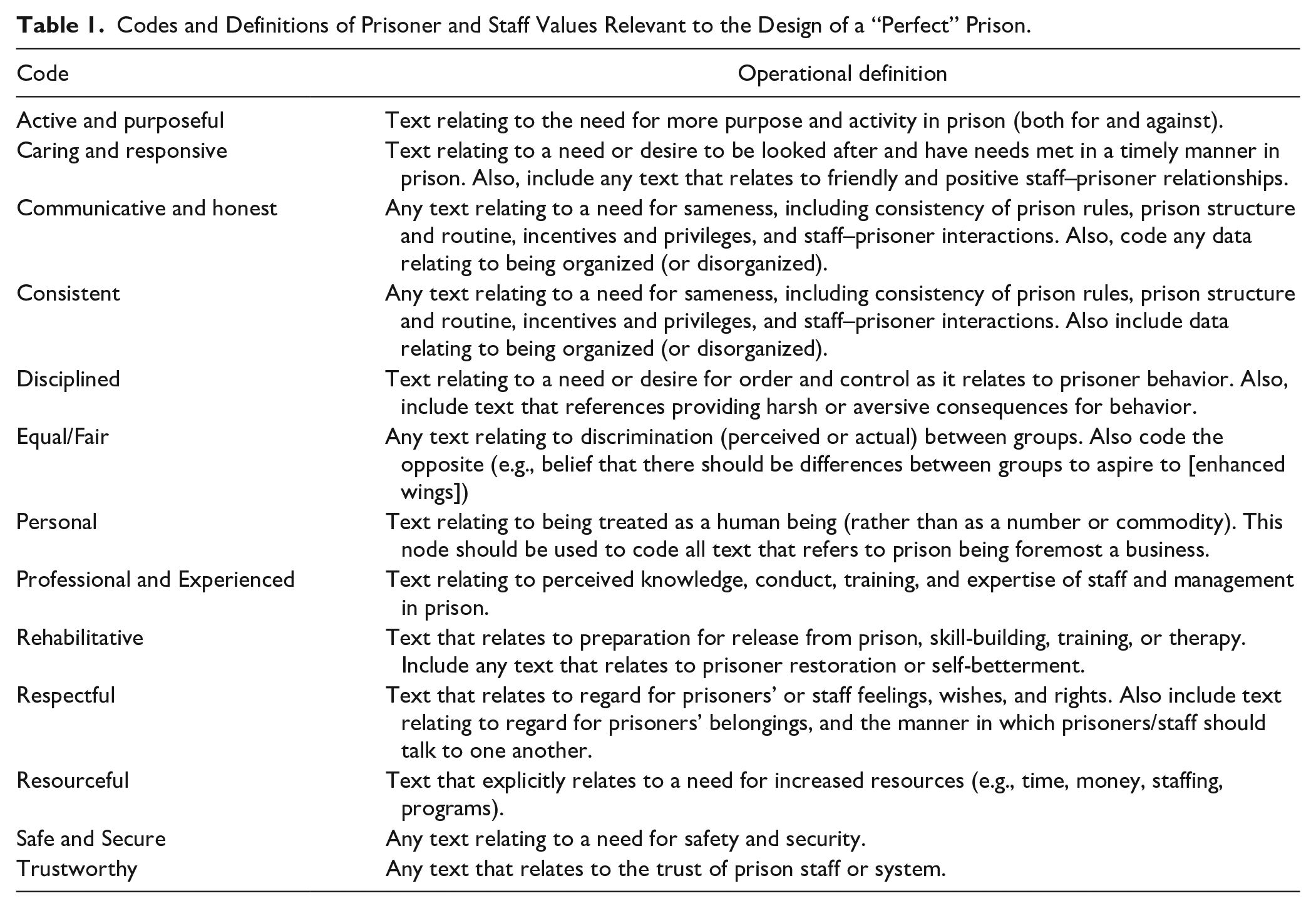
We utilized an inductive approach to the thematic analysis of the data (Braun & Clarke, 2006). This involved initial familiarization with the data and inductively developing a coding frame using the NVivo 12 software package. We chose this strategy to limit the extent to which our preconceived notions would shape the formation of the coding. The coding frame was initially developed by the first author and consisted of several codes that represented distinct ideas and issues expressed as being critical to prison design by prisoners and staff (e.g., respectful, safe, and secure, and consistent). Operational definitions were created to support and differentiate each code (Table 1).
Codes and Definitions of Prisoner and Staff Values Relevant to the Design of a “Perfect” Prison.
Regular credibility checks of the operational definitions for each code were conducted with the last author, who was involved in most of the focus group sessions. No new codes were added to the frame beyond the first three focus groups (prisoner groups; n = 19), suggesting that saturation (Saunders et al., 2018) for that group was achieved early in the data collection process. However, we continued to collect data past the point of saturation to honor commitments to prisoners who had signed up for subsequent groups. No new codes were required for analyzing staff data, with existing codes effectively capturing this cohort’s responses. Once all focus groups had been coded by the first author, a research assistant independently assessed the completeness of fit of the frame across 33% of the transcripts from each participant group (one staff and three prisoner transcripts). The research assistant was not involved in the initial phases of the research, increasing the external objectivity of this assessment (O’Connor & Joffe, 2020).
To produce a quantitative measure of inter-coder agreement, we utilized the NVivo software package to highlight text coded by the lead researcher into discrete text samples. The research assistant then coded these discrete units of data according to the operational definitions created for each code within the frame. After each transcript was coded, we conducted a coding comparison using the NVivo 12 software package to calculate a kappa coefficient. Across all nodes, κ = 0.939 (range 0.265 to 1) for the first transcript. Disagreements were discussed and utilized to refine the definitions within the coding frame. Inter-coder agreement was high throughout and improved after each transcript was coded, with a perfect inter-coder agreement being calculated for the final transcript (κ = 1). The average kappa coefficient across the entire process was κ = 0.977. Once the coding frame was finalized and approved by the research team, the first author recoded the entirety of the data set using this frame.
In terms of positionality, the first and the last authors had specific knowledge of the setting and populations via their experience designing and implementing behavioral interventions for prisoners in special units of the prison. These efforts were part of the first author’s graduate practicum requirements, which were supervised by the last author, who also had experience supporting schools in implementing PBIS systems. The research assistant had experience working with sexual offenders as part of the prison probation service, but this experience was not specific to prisoners in the current sample. The first author and research assistant identified as white British; the last author identified as white American. The prior experiences of the researchers may have influenced their perspectives and interpretation of the data; however, codes were generated inductively in an attempt to provide a more objective account of participant responses.
Findings
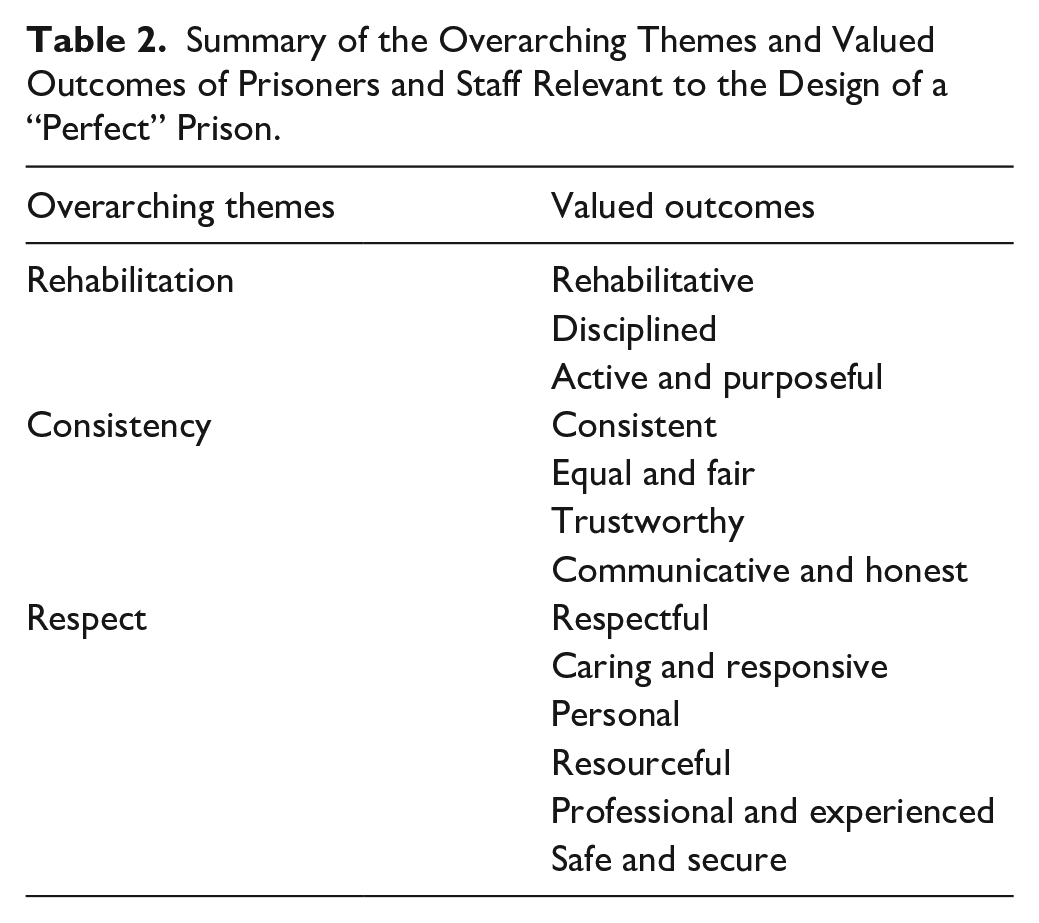
Table 2 summarizes the three overarching themes identified across participant responses and the valued outcomes associated with those themes. Across prisoner and staff groups, values associated with rehabilitation, consistency, and respect (i.e., being person-orientated) featured most prominently; however, how these valued outcomes were defined, and their relative importance in a “perfect prison” sometimes varied both within and between groups.
Summary of the Overarching Themes and Valued Outcomes of Prisoners and Staff Relevant to the Design of a “Perfect” Prison.
Rehabilitation
Table 3 provides examples of staff and prisoner responses regarding rehabilitation, including the need for rehabilitation, the focus of rehabilitation, and views on rehabilitation success in the current environment. A central tenet of the rehabilitative ideal appeared to be the prevention of recidivism, with the primary goal being that prisoners “learn not to come back” to prison. Some participants petitioned for various skill-building, personal growth, and educational enterprises. Other prisoners and staff suggested that prison should be a place to learn basic life skills, with a couple of staff discussing the importance of simply teaching prisoners to structure their day. However, both cohorts generally agreed that providing more educational and vocational opportunities that enabled prisoners to gain employment post-release was important.
Representative Prisoner and Staff Comments on Rehabilitation.
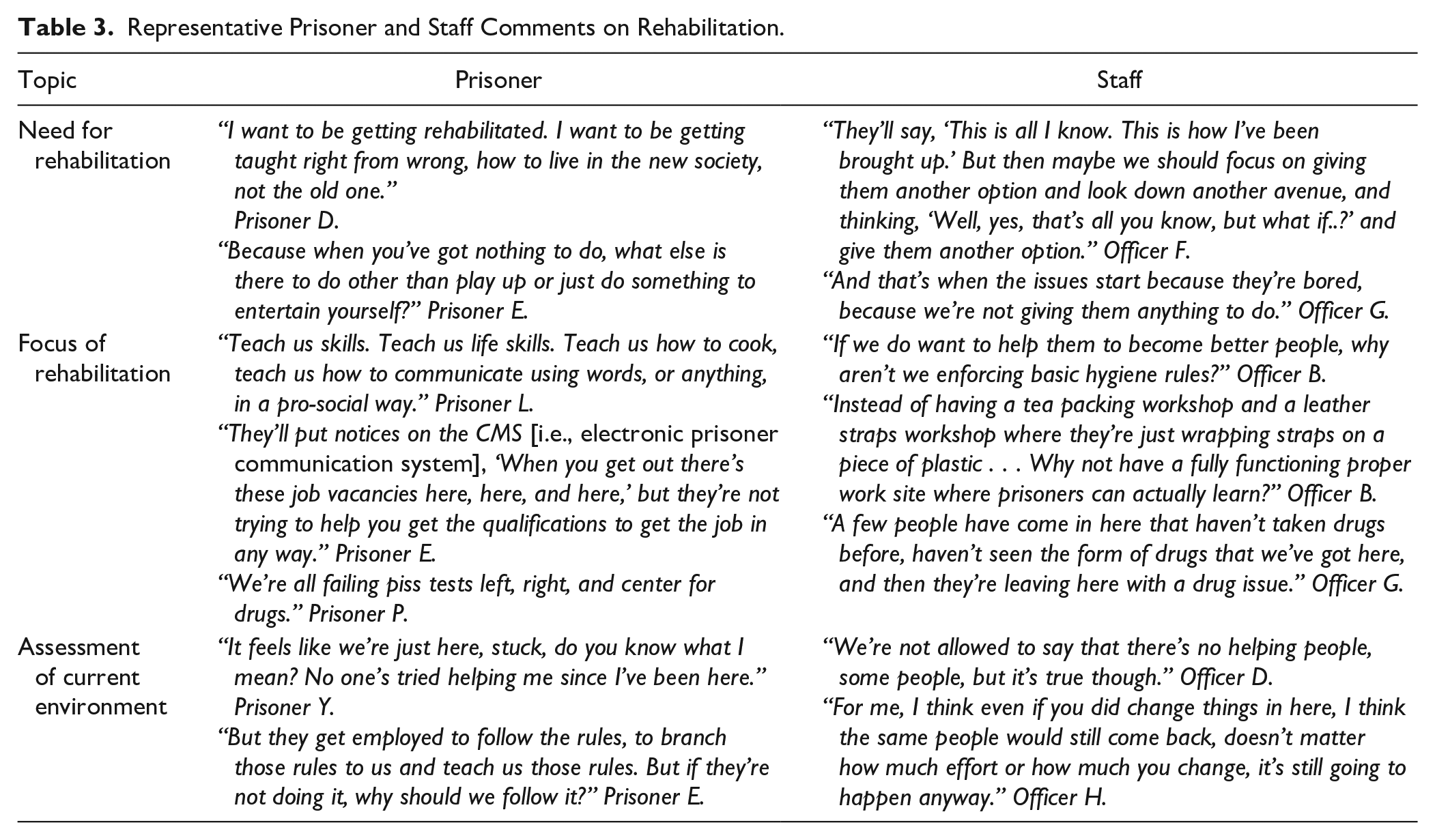
A lack of purposeful activity whilst in prison was discussed across groups, with prisoners stating they wanted to “be kept busy,” and staff also expressing their perceptions that prisoners spent too much time “doing nothing.” The quality of activity seemed to matter to some, with a few prisoners and staff also discussing how there was little value in the “irrelevant” menial labor of the prison workshops. A few other prisoners discussed how simply “getting out the cell as much as you can” was important to them, with one commenting “I love to work. It makes time fly.” Both prisoners and staff further suggested that a lack of things to do was a source of a range of problem behaviors in the residential units.
Another issue that arose in several groups focused specifically on drug rehabilitation, with participants suggesting that there needed to be “a lot more help with drug misuse.” Prisoners suggested that the prison’s approach to drug misuse needed to shift away from punishment-based approaches (e.g., giving “extra days [in prison] for it”) toward giving prisoners “something to help us come off the drugs.” The issue also appeared important to staff groups, with officers suggesting that “there’s more drugs in here than there is in the public,” and that helping prisoners with drug problems would “solve a lot of problems.”
Although most prisoners and staff focused on skill-building as the primary rehabilitation strategy, a small minority envisioned a stricter, more disciplined prison that served as a deterrent against future criminal activity. These participants argued that more drastic action needed to be taken in prisons, suggesting that there was not “enough of a fear factor about prison anymore.” For prisoners at least, it was clear that these perceptions were held by a small minority, with other group members suggesting, “Nobody wants to come back.”
With regard to perceptions of rehabilitation success in the current environment, both prisoners and staff consistently agreed that the prison system was not currently rehabilitating, with staff reporting that they saw the “same faces over and over.” The consensus amongst many prisoners was that the prison did “nothing to rehabilitate” them. Despite the acknowledgment in staff groups that prisoners often were not engaged in purposeful, rehabilitative activity, some staff were more likely to blame the prisoners rather than prison provision for failures to rehabilitate. They admitted frustrations concerning the reality of prisoner rates of reoffending, stating that they felt most prisoners “don’t want to change.” A few staff even suggested that recidivism was inevitable and outside of their control. Overall, while staff largely agreed that rehabilitation was important, some expressed largely pessimistic views toward the success of rehabilitative efforts.
Consistency
The second overreaching value identified across groups was consistency. Comments pertaining to this theme referred not only to the need for procedures, rules, and routines to be delivered in predictable ways but also that there be greater equity in their application across the prison. The need for consistency in communication between prisoners and staff also featured as a critical component. Table 4 shows representative comments from prisoners and officers regarding this value.
Representative Prisoner and Staff Comments on Consistency.
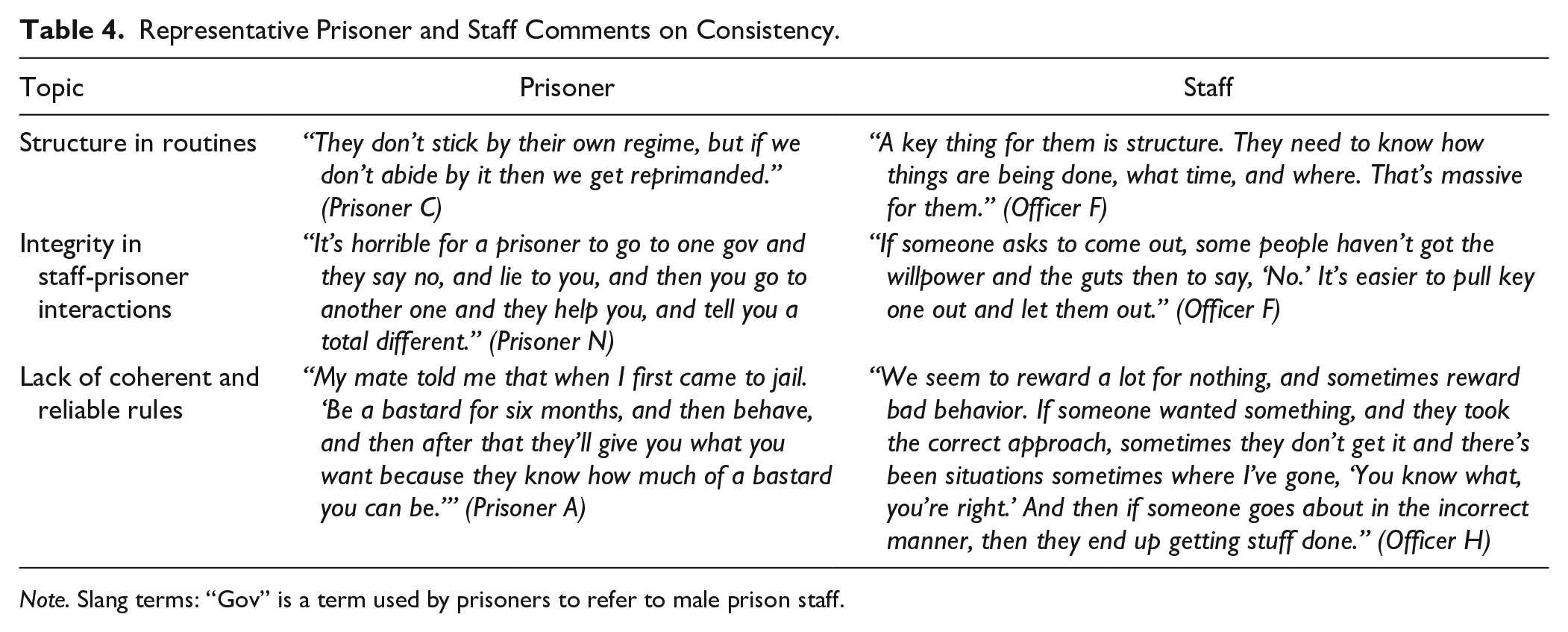
Note. Slang terms: “Gov” is a term used by prisoners to refer to male prison staff.
Structure and stability of routines was an important facet of discussions about consistency, with prisoners suggesting that “If they get everyone a structured routine, things will work a lot better, and prisoners will behave more.” Prisoners complained that the routine was currently “never stuck to,” or that “they’re changing the routine here like the weather.” Several prisoners highlighted the inequity of being required to stick to a routine that was not upheld by the prison itself, with one prisoner commenting that “they steal five minutes every couple of weeks, and before you know it, you’re banged up [i.e., locked in your cell] 20 minutes early.”
Staff members also discussed how consistency with daily routines was important from a prisoner’s perspective, stressing that disruptions to the regime could cause a “backlash” from prisoners. For example, officers discussed how “something so small” as a schedule change created issues and arguments because elements of the regime were not delivered when expected.
I get away with absolutely murder Some staff also discussed frustrations with the lack of consistency in implementing rules across different units of the prison and stressed the importance of “singing off the same hymn sheet.” They explained how inconsistencies among staff were sometimes due to officers wanting “an easy life,” or because they feared saying “no” to prisoners. Some staff commented that officers might be negatively “singled out” by prisoners “for being the only one who does something.” The lack of consistency in the application of rules did not go unnoticed by prisoners, who commented that some people seemed to be able to get away with more than others. One prisoner commented.
Perhaps unsurprisingly, prisoners often conveyed a lack of trust between them and officers, commenting that officers “feed you lies” or deliberately tried to “make your life hard.” However, several staff stressed the need to communicate honestly with prisoners and follow through with one’s word. One member of staff stated “if someone’s asked you to do something and you’ve said you’re going to do it, actually do it.”
A common theme when discussing the misapplication of the rules was that “bad” behavior appeared to be the only reliable way for prisoners to get what they needed in prison. One prisoner commented that “you’re learning that kicking off and being aggressive about something gets you what you want, in a place where you’re meant to better yourself and do the opposite, which is a little bit confusing.” Both prisoner and staff groups agreed that this was “backwards” and that an important goal should be reversing these contingencies.
Respect
The third overreaching value was respect (i.e., being person-orientated). Table 5 shows representative comments from prisoners and officers regarding this value. Discussions revealed the need for both staff and prisoners to treat one another with respect, to be valued as individuals, to be cared for, and to be given the resources and support to do well in their respective roles.
Representative Prisoner and Staff Comments on Respect.
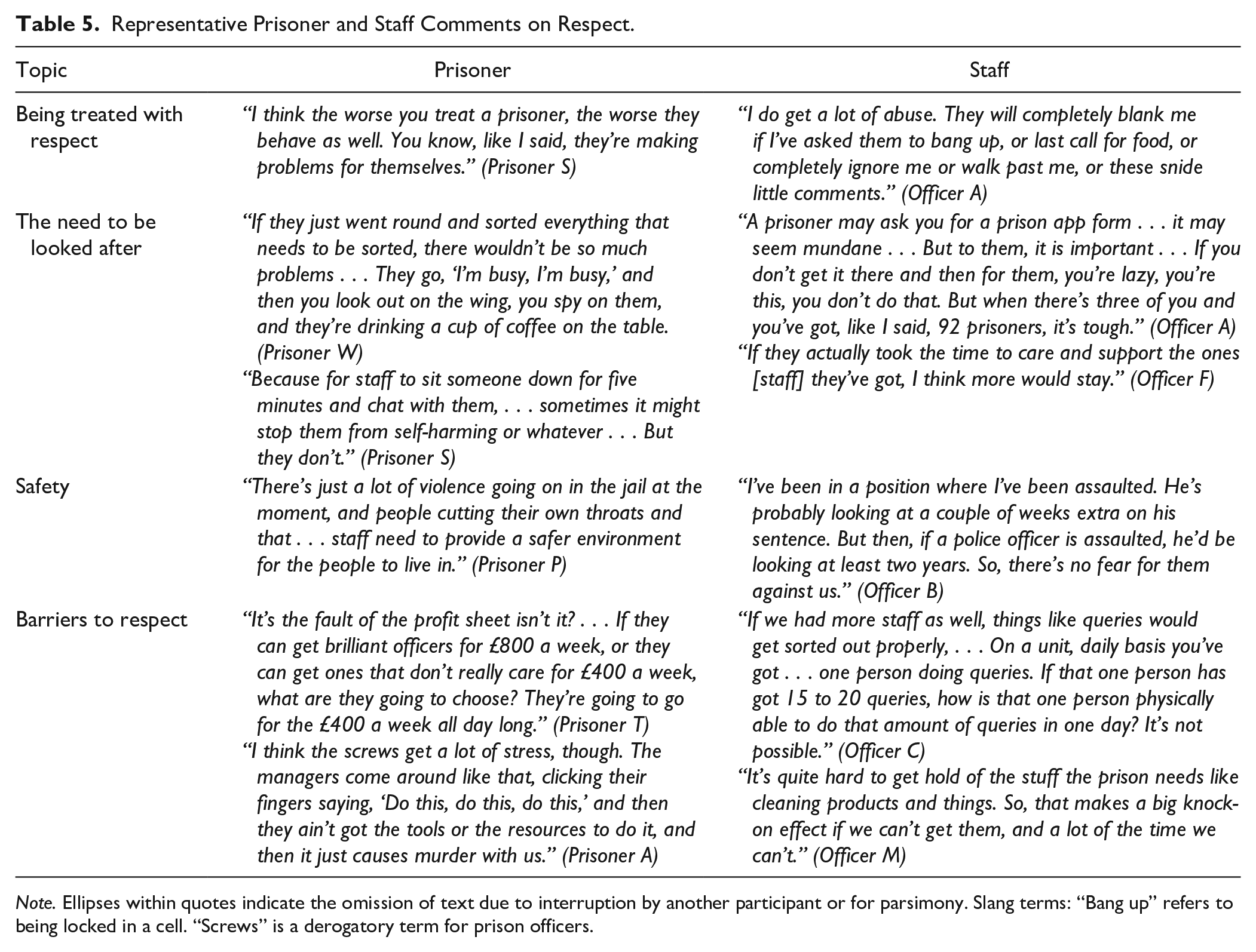
Note. Ellipses within quotes indicate the omission of text due to interruption by another participant or for parsimony. Slang terms: “Bang up” refers to being locked in a cell. “Screws” is a derogatory term for prison officers.
The need to be spoken to with respect featured prominently in both staff and prisoner groups, with each expressing discontent about how they were treated by the other. Some prisoners reported perceptions that some staff members looked down at them as a “lesser member of society” just because they were in jail, while staff reported “vile” and “inappropriate” language that could be “hurtful” and difficult to deal with. In many cases, it was clear that prisoner–staff relationships had been deeply damaged, making reconciliation and a shared value of mutual respect particularly salient. Both groups admitted that respect “works both ways,” though one prisoner stated, “it’s hard to like them,” while a staff member also admitted that in spite of best efforts to be respectful, they sometimes reached “the point where you’re just broken.” Respect was discussed by prisoners as being critical to a good prison, with several prisoners suggesting that a lack of respect was a source of poor behavior. One prisoner commented, “If you treat people like animals they’re going to act like an animal aren’t they?”
Prisoners and staff agreed that treating people with care was an important component of respect. Some prisoners articulated the importance of more “emotionally involved” prison officers, with several mentioning how valuable simply having an officer “chat with you” could be. More commonly, prisoners equated the idea of being cared for with simply receiving help with their queries and issues. Staff member’s comments echoed these perspectives, with several commenting on the importance of having “meaningful conversations” and “giving the prisoners time.” However, staff stressed that supporting their own welfare was also an important goal for the prison. For some, this meant receiving increased recognition from management for the work that they did, while others discussed the importance of better support following serious incidents.
For prisoners, there were clear links between being cared for and feeling safe. Some described safety in terms of being protected from the violent behavior of other prisoners, with one participant stating they “shouldn’t have to walk around thinking something’s going to happen all the time.” A few others discussed that it was the violent behavior of staff that was more concerning, with one stating “you have to be careful everything you say to them.” Staff members also discussed how safety in prison was of paramount importance, with some commenting that there needed to be “strong repercussions” and greater discipline to manage dangerous prisoner behavior.
While staff appeared to share prisoner goals of a safer, more caring prison, they were very clear that they currently had “nowhere near enough staff” or the resources necessary to achieve these goals. The issue with understaffing appeared to cascade into many of the other issues cited as hindering the development of a more respectful and caring prison, with the result being that discussions on other needs almost invariably returned to the necessity of more and better resources. The implications of these resource and staffing deficits were that staff felt unable to do their job to a high standard, with a better-resourced prison being unequivocally the number one priority for officers. A few prisoners empathized with the challenges these issues posed for prison officers, suggesting that a lack of adequate staffing was where “99 percent of the problems come from.”
Overall, the thematic analysis revealed that both groups generally reported the same values as critical to running a “perfect” prison and largely agreed on the definitions of these values. However, despite their agreement that rehabilitation was a critical value, the groups differed somewhat in their perceptions of whether goals related to that value could be reasonably achieved. There also were some important differences in how the two groups prioritized the identified values, with each naturally tending to focus on changes that would improve their personal circumstances. For example, prisoner groups prioritized increasing rehabilitative enterprises that improved their post-release prospects, as well as improving their treatment whilst in prison (e.g., valuing mutual respect, responsive and caring prison officers, predictability in prison rules and routines, and safety). In contrast, staff participants focused on discussing changes that improved their working life, such as the need for increased resources, and more consistency in working practices.
Discussion
The primary purpose of this study was to assess the values that might underlie a PBIS framework in an adult offender setting. We sought to identify and assess the alignment of valued outcomes across two critical, but very different, stakeholder groups. A secondary goal was to explore whether focus groups were a feasible strategy for achieving these research aims. Our thematic analysis revealed substantial overlap in the valued outcomes discussed by prisoners and staff, with three overarching themes being identified: rehabilitation, consistency, and respect. However, the relative importance placed on these values by prisoners and staff varied to some degree, most notably regarding the need for rehabilitation. These discrepancies in relative priorities between prisoner and staff cohorts were perhaps unsurprising, considering the respective roles that each play in the functioning of the prison. Given that staff members are responsible for the delivery of the prison regime and supporting prisoners day-to-day, it is appropriate that they would focus on needs pertaining to their working practice and the effective delivery of services. It is equally appropriate that prisoners would focus on needs that would improve their quality of life as recipients of the prison’s services. However, these differences in focus exemplify the very reason that recruiting both prisoner and staff perspectives is critical in developing a PBIS framework that comprehensively addresses the needs of the organization as a whole. A focus on the operational needs and priorities espoused by staff serves to recruit their buy-in and identify barriers that may impact the treatment integrity of implementation attempts (McDaniel et al., 2018). Equally, prisoner perspectives supplement those offered by staff in giving crucial insight into the organizational changes that will improve their quality of life, an important dimension of PBIS (Carr et al., 2002). Incorporating prisoner views in framework development also helps ensure that the goals of interventions are important to the recipients, a factor that may have a positive impact on their buy-in and subsequent engagement (Jolivette et al., 2015). Given the perceptions of some staff that prisoners “don’t want to change,” involving prisoners in this process might be considered especially important.
In addition to identifying shared values between prisoners and staff, focus group discussions pointed to specific obstacles that likely should be addressed prior to intervention development and implementation. This proved to be a specific strength of our approach, as mapping shared values at the outset provided clear information regarding potential misalignment that could pose challenges to implementation. In practice, this approach would allow a PBIS implementation team to proactively address these issues from the outset, rather than employing a reactive strategy as barriers arose.
Contextual Barriers to PBIS in Prisons
With regard to potential obstacles identified in the current study, some participant perspectives were identified that could prove incompatible with PBIS practices. For example, regarding rehabilitation, some officers expressed views that increasing rehabilitative enterprises was a wasted effort, while some staff and prisoners also expressed that prison should be a more punishing experience. That some participants might hold these views is perhaps unsurprising, given sobering rates of reoffending married with record levels of violence and self-harm witnessed by officers in recent years (Prison Reform Trust, 2022). Staff motivation for punitive recourse might therefore be at least partially explained by their desperate need for effective tools to respond to problematic prisoner behavior, which could either be a powerful establishing operation for engaging with a new approach or an abolishing operation for attempting the positive, preventative strategies espoused by PBIS (Simonsen & Sugai, 2013; Sprague et al., 2013).
Unfortunately, given staff learning histories with ineffective prison practices, combined with day-to-day stressors such as staff turnover and other resource constraints, recruiting their support might prove a substantial challenge. As preferences for punitive interventions might be more prevalent in correctional facilities than in other PBIS environments, assessing the degree to which these views are held across staff may prove a critical task in PBIS planning. It is possible that greater exposure to effective, values-driven, evidence-based behavior change strategies could begin to shift officer predictions of rehabilitation success. However, resistance to employing these types of strategies, combined with staff concerns regarding resource limitations, may point to the need to select intervention approaches that are more likely to be efficacious with poorer levels of integrity, or to initially scale down procedures to allow their implementation by a smaller, highly committed staff team. Future research should look to more directly explore staff and prisoner views toward specific PBIS practices as a preliminary measure of its feasibility in adult prisons.
To provide additional context for staff concerns regarding resources, it may be important to note significant budget cuts in U.K. prisons in recent years, with staffing levels being cut by 10% relative to 2010 (Prison Reform Trust, 2022). As resource inadequacies are likely to be a pervasive issue in prisons, the “work smarter not harder” PBIS mantra (Sugai et al., 2016) may prove essential in these settings. When serving populations with complex needs, Jolivette et al. (2012) discussed the temptation to employ numerous organizational practices to address those needs. However, employing too many practices can decrease the likelihood that those strategies are implemented systematically and with fidelity (Jolivette et al., 2012). This in turn prevents a valid measurement of their impact and ultimately results in organizations employing a range of ineffective and inefficient practices. To attenuate these issues, Jolivette et al. recommend that PBIS frameworks first eliminate processes that are either not evidence-based or not being consistently used. The goal of this streamlining process is to establish a core set of practices that may be systematically monitored and evaluated to allow data-based decisions, which ultimately will improve efficiency.
Resource deficiencies in prisons might also be attenuated by using more prisoner-led interventions. A systematic review of 57 studies has suggested that peer-delivered interventions and support can have positive effects on both deliverers and recipients, with evidence also suggesting that peer-delivered interventions are preferred by prisoners (Bagnall et al., 2015). Typologies of prisoner-led interventions reported by this review included peer education strategies aimed at increasing knowledge or awareness of other prisoners, peer mentoring interventions, wherein prisoners are paired with peer role models who model and teach positive behaviors or skills, and peer support interventions, wherein prisoners provide social and emotional support to prisoners in need. Notable findings of the review were that prisoners reported gains in self-respect and empowerment when trusted by prison authorities to deliver peer support interventions. Incorporating prisoner-led interventions within a PBIS framework may therefore be a useful strategy in reducing the burden of intervention implementation on staff, but perhaps most importantly, also appears to align with the values of rehabilitation and respect identified via our focus groups. However, further research is needed to evaluate the cost-effectiveness and feasibility of this approach, as well as its compatibility with PBIS practices.
Study Strengths and Limitations
Another important goal of this study was to determine the utility of focus groups as an approach for delineating prison values around which a PBIS system could be built. Given that literacy skills can be poor amongst prisoner populations (Creese, 2016), a particular strength of this approach relative to the use of surveys was that reading skills were not a prerequisite for participation. We also found that acceptability of the approach was high, with both prisoners and staff commenting that they appreciated having a forum in which to express their views. Because we collected data past the point of saturation, our analysis strategy was therefore a relatively lengthy process, which, while both a valuable and appropriate strategy for the epistemic pursuits of this study, represented a much longer planning phase than would likely be practical in real-world applications. A limitation of our process was that our anonymization of participant data precluded consultation with participants to ensure our ultimate conclusions resonated with their views. In applied practice, continued consultation with both prisoners and staff throughout the development process is probably preferable to the in-depth analysis of cross-sectional data delineated in the current study.
A related limitation was that it was not possible to evaluate the degree to which our sample was representative of the larger prison population or of prison populations across the United Kingdom. However, across prisons in England and Wales, one-quarter (27%) of the prisoner population and 7.7% of prison officers in England and Wales are from minority ethnic groups (Ministry of Justice, 2021; Prison Reform Trust, 2022). In terms of age profiles, the 30–39 age group accounted for the largest proportion of prisoners (33%) and around 55% of prisoners were serving sentences of 4 years or longer, with a quarter serving a sentence between 1–4 years (Sturge, 2022). Our recruited sample was therefore similar in many respects to the broader prison population, though greater recruitment from minority ethnic groups would have improved representation.
We also acknowledge that recruiting perspectives from a broader range of prison staff would have improved representation and potentially added richness to the data. Although the views of prison officers provide an important snapshot of the organizational climate from those closest to the day-to-day realities of prison life, important and alternative perspectives might be offered by managerial staff and administrators. These voices offer crucial operational and logistical insight, which are essential to PBIS planning. An interesting extension of the current study would be to assess how closely aligned the values and priorities of these parties are to those of prisoners and “on the ground” staff. Second, it is important to note that although our study was conducted in one of the largest prisons in the United Kingdom, and many of our prisoner participants had experienced multiple prisons, our sample consisted of individuals residing or working in a single institution. Replicating this process across other prisons would add greater confidence in the generality of the findings.
Footnotes
Acknowledgements
The authors thank Mike Vigar for their assistance in conducting the study.
Declaration of Conflicting Interests
The author(s) declared no potential conflicts of interest with respect to the research, authorship, and/or publication of this article.
Funding
This study was supported by a grant from the European Social Fund as part of a Knowledge Exchange Skills Scholarship (KESS 2).
