




Abstract
Hotel performance is one of the core concerns for managers and investors. However, a clear pathway from investment in branding to hotel performance is scarce. To fill this research gap, the study aims to explore the effects of brand identity, physical facility quality, and brand equity on hotel performance; and to examine the moderating effect of social capital in the brand–performance transformation model in both international and domestic brand hotel settings. Data were collected from 1,201 hotel managers in China, with 757 from international and 444 from domestic brand hotels. Theoretically, this study represents a first attempt to reveal the indirect roles that social capital plays in the hotel financial performance formation. The identified brand–performance pathway also provides implications for hotel practitioners regarding how to boost desirable hotel performance through both internal and external resources.
Keywords
Highlights
Brand–performance transformation model in upscale hotels with different brand origins
Data collected from 757 international and 444 domestic brand hotel managers
Moderating effects of corporate and government social capital examined
Valuable insights generated to provide practical implications for hotels
Introduction
Globalization has brought the China hospitality industry dramatic development opportunities together with increasingly severe market competition. As of 2019, there are 846 five-star hotels in China (Gov.CN, 2020). Despite the growing number, the average operating profit ratio experienced a continual decline from 9.44% in 2010 to 3.07% in 2015 (Meadin.com, 2018). Various external factors, including the absence of mature and healthy market environment (Sun et al., 2017), reduced government entertainment expenses, competition from online travel agencies and emergence of sharing economy all influenced the performance of upscale hotels (A. X. Liu et al., 2020). Facing these challenges, hotels have recognized that a robust brand is an indispensable competitive advantage (A. X. Liu et al., 2020). However, due to the development of China’s hospitality industry being a recent phenomenon, branding, especially among domestic hotel brands, has not been fully implemented.
In daily operation, hotel managers have always been questioned by owners about the return on investment. Though it is widely noted that branding is important for the hotel performance, investors are eager to know what kinds of specific investment could bring a significant and optimal return rather than evenly splitting the resources to all areas (Lee et al., 2017). Therefore, an understanding of the brand–performance transformation process with clear pathways to consolidate internal and external resources is urgently needed to guide hotel practitioners’ decision making. Existing research on brand–performance transformation emphasizes the components of band equity and confirms the positive effects of brand identity and equity on business performance (Harris & de Chernatony, 2001). Though acknowledging the organizational role in initiating brand identity and recognizing brand equity, existing brand–performance models overlook the importance of physical facilities in transforming the intangible brand identity into business performance. This is particularly essential for the experience-based business sectors, such as luxury hotels. The intangible nature of the service experience and the large information asymmetry between hotel guests and operators make physical facilities important elements to form brand equity and lead to brand performance (Castaldi & Giarratana, 2018). Moreover, the positioning, communicating, delivering, and leveraging model proposed by Ghodeswar (2008) conceptualized the brand building process in competitive markets. In this model, brands’ features and attributes are communicated and delivered through physical factors, such as themes, product design, and decoration, which lead to business performance. Therefore, inspired by existing brand–performance models, this study bridges the gap by introducing physical facilities into such transformation, aiming to delineate a holistic influencing mechanism, including both direct and indirect effects from brand identity to business performance.
Besides branding, environmental factors, such as social capital, also play important roles in influencing financial performance. The definition of social capital is an external asset that could help businesses synergize various resources and leverage their competitive advantages especially in China, where guanxi and connections are extremely important for business (Peng & Luo, 2000). In such a market, social ties become effective strategies that allow companies to safeguard resources and cope with dynamic environments, especially in their early stages of development (Peng, 2003). However, investigations of the effects of different types of social capital in the China hotel industry are still limited (Hsu et al., 2015). Moreover, hotel brand origin (i.e., international versus domestic brand) determines hotel branding approaches and its internal and external resources consolidation (Lee et al., 2017; Schuckert et al., 2019). Thus, international and domestic brand hotels cannot be deemed as homogeneous in brand–performance transformation and social capital engagement. Due to the scarcity of studies across brands from different origins, limited nuanced suggestions could be offered to guide hotel practitioners to develop the best-fit competitive strategies.
To address the above research gaps, the current study aims to (1) explore the influence of brand identity, physical facility quality, and brand equity on hotel performance; (2) examine the moderating effect of social capital in the relationship between physical facility quality and hotel performance; and (3) validate the brand–performance transformation model in both international and domestic brand hotel settings (Figure 1). This study is a first attempt to explore the brand–performance transformation process. It also pioneers in revealing the indirect roles that social capital plays in the hotel financial performance formation. The analysis of hotels with different brand origins facilitates different hotels to form evidence-based competitive strategies which best suit their own developing situations. Practical implications are offered for hotels to understand the performance generation mechanism.
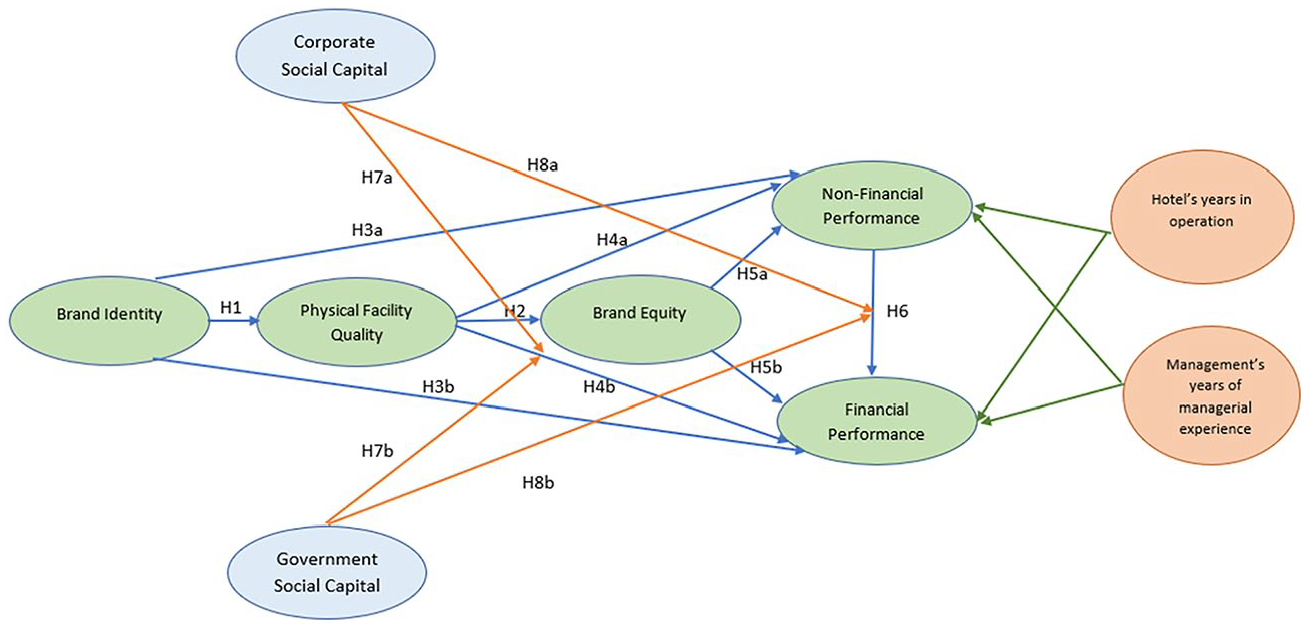
Proposed Brand–Performance Transformation Model
Literature Review
Hotel performance depends on various tangible and intangible resources, involving both internal and external assets. Branding activities, physical facilities, and social capital with external partners are influential to the overall hotel performance, therefore are reviewed in this section to establish a theoretical base of the proposed model.
Brand Identity
The academia and industry both recognize the crucial role of brand identity in effectively managing brands (da Silveira et al., 2013). The conceptualization of brand identity has evolved since the early 1990s, from single- to multidimensional, from company-centered to company–customer interactive, and from stable to dynamic perspectives. Introduced by Kapferer (1992), brand identity refers to a brand’s meaning defined by a firm, including different dimensions of brand uniqueness and value. It is determined by the organization and describes what the brand stands for through a comprehensive understanding of the firm’s customers, competitors, and business environment (Aaker & Joachimsthaler, 2000). In the hospitality industry, brand identity includes both tangible and intangible elements, covering logo and slogan design, location strategy, service style, employee grooming standards, structure, and culture (Mohammed et al., 2016). For example, W Hotels set their passion points, iconography, tone of voice, and colors as salient elements of identity to differentiate their brand from the others (O’Neill & Mattila, 2010).
The increasingly dynamic business environment leads to the reconsideration of the traditional perspective. Although a brand should retain a consistent identity, brand identity is also perceived as dynamic, built over time through joint influencing inputs from the management and other stakeholders (da Silveira et al., 2013). Therefore, brand identity, as adopted in the current study, covers a core identity, including the key and enduring elements of the brand and an extended identity, covering other dynamic aspects that may be adjusted in various circumstances (da Silveira et al., 2013).
The effects of brand identity at business, employee and customer levels have been confirmed in the general marketing literature. Brand identity could positively influence business performance (Harris & de Chernatony, 2001), employees’ organizational identification (Bravo et al., 2017) and the customer-based brand equity (Alvarado-Karste & Guzmán, 2020). Brand identity is initially formed at the business level and needs to be recognized, received, and accepted by customers (A. X. Liu et al., 2020). In hospitality services, especially luxury hotels, the intangible brand identity is transformed into performance in a tangible environment. However, the literature revealing the role of hotel physical facility quality in this brand identity-performance transformation process is still scarce and deserves a thorough investigation.
Hotels’ Physical Facility Quality
Physical facility is a fundamental component of hospitality products (Cetin & Walls, 2016) and can attract customers’ attention through its meaning on an individual level (Diller et al., 2008). Cetin and Walls (2016, p. 407) stated that “ambiance, space/function/amenities, design, and signs/symbols/artifacts are the main themes under the physical environment.” Different elements of a hotel’s physical facilities could influence customers’ experience in different ways. For instance, Baek and Ok (2017) suggested that aesthetics and symbolism in hotel design could influence customers’ purchase intention through emotional arousal and quality expectation. Thus, the physical facility is an important element of the service product offerings.
Hotels’ physical facilities need to be consistent with and reflect their brand identity. Brand identity is communicated through properties, products, presentations, and publications and can be reinforced by tangible attributes (Kapferer, 2004). Hotel managers’ understanding of the brand identity determines their effort in maintaining and investing in message-carrying physical facilities. Those physical facilities act as the primary element of tangible products offered by a hotel, and the essential platform to provide intangible services (A. X. Liu et al., 2020). A strong brand identity held by hotel executives will guide the physical facility design and its quality, which will reflect the hotel brand’s market positioning and promise to customers (Ghodeswar, 2008). Therefore, the following hypothesis is proposed:
Brand Equity
Aaker (1991) defined brand equity as “a set of brand assets and liabilities linked to a brand, its name and symbol, that add to or subtract from the value provided by a product or service to a firm and/or to that firm’s customers” (p. 15). Keller (2003) defined customer-based brand equity as “the differential effect that brand knowledge has on consumer response to the marketing of that brand” (p. 60) and is adopted by the current study. Organizations with high brand equity hold features such as high brand loyalty, brand awareness, perceived quality and credibility, and have strong brand associations (Papasolomou & Vrontis, 2006). Research also shows that brand image (Faircloth et al., 2001), identity and social influence (Alvarado-Karste & Guzmán, 2020) could positively influence brand equity.
Hospitality research has also broadly applied the brand equity concept (Hsu, Oh, & Assaf, 2012). Corporate social responsibility (Martínez & Nishiyama, 2017), value cocreation (González-Mansilla et al., 2019) and authentic experience (Lu et al., 2015) were found to enhance brand equity. Hsu, Oh, and Assaf (2012) added customers’ trust and confidence in the brand’s management into the brand equity model for luxury hotels in China.
Hotels’ physical facility quality could reference their service standards, and retain and expand their customer base (Shanka & Taylor, 2004). As stated by X. Liu and Zhao (2010), hotels’ physical environment could influence customers’ perceived value and is an effective stimulus for customer engagement (Choi & Kandampully, 2019) and revisit intention (So et al., 2020). Thus, brand equity is heavily influenced by the physical facility quality (A. X. Liu et al., 2020).
Hotel Performance
Performance is an essential planning and control indicator that helps assess business strategies’ success (Evans, 2005). Organizational performance is multidimensional and can be influenced by different factors in different contexts. Company performance measures were classified into financial and nonfinancial components (Gupta & Zeithaml, 2006). The financial performance represents “objective measures,” including occupancy rate and market share, whereas nonfinancial performance comprises “perceptual measures” such as reputation and customer retention (Grissemann et al., 2013). A balanced approach considering both financial and nonfinancial indicators of performance is necessary for service-oriented businesses, where intangible and knowledge-based assets play essential roles in determining the performance (Patiar & Wang, 2020). Therefore, both financial and nonfinancial performance should be considered for the business’s sustainable and long-term development (Patiar & Mia, 2009).
The determinants of hotel performance have been well documented in the literature. Internally, the organization’s productivity, efficiency, and cost control measures (Claver et al., 2006), investment in equipment, employee training and satisfaction (Sharma & Upneja, 2005), and corporate strategies (Xiao et al., 2012) could all influence hotels’ performance. Externally, customers’ satisfaction and market mix have positive effects on performance (Kim et al., 2013). Moreover, external market environment and social capitals (Sainaghi & Baggio, 2014) are reported to be strong predictors of hotel performance. Although some studies especially those examining external factors reported their influences on financial performance (Xiao et al., 2012), most studies did not identify the specific influencing paths to nonfinancial and financial performance, leading to ambiguity in the brand–performance transformation process.
Specifically, brand identity represents the brand’s value and commitment (Kapferer, 2004). Through brand identity, customers could establish emotional connection with the brand, differentiate the brand from its competitors, and hence make proper decisions (Urde, 2003). Therefore, brand identity could enhance customers’ loyalty, trust, and commitment (Ghodeswar, 2008), leading to better performance. Clear brand identity also provides guidance for employees’ daily performance and such organization-employee communication facilitates brand standard compliant behaviors among employees, which represents an essential component of the nonfinancial performance (Aaker & Joachimsthaler, 2000). A strong brand identity could generate powerful market appeal and contribute to the financial performance (Ghodeswar, 2008).
Though the influence of physical facility quality on hotel performance has not been widely investigated in academia, best practices have been shared by the industry, which call for further exploration and justification. Siguaw and Enz (1999) argued that various well-known hotel brands used the architecture and design to increase their financial performance (e.g., average daily rate, occupancy rate, and revenue) and nonfinancial performance (e.g., high customer satisfaction and new brand development). Baek and Ok (2017) suggested that the aesthetics element in hotel design could directly increase customers’ booking intention. The physical facility, an important representation of hotels’ atmosphere, has been confirmed as an effective stimulus for engagement (Choi & Kandampully, 2019), customer satisfaction (Calza et al., 2020), and revisit intention (So et al., 2020).
Extensive studies indicate that brand equity improves customer satisfaction and trust (Sürücü et al., 2019). When brands and services are designed to meet customers’ specific needs, they would be inclined to pay higher prices (Moreau & Herd, 2010), which in turn improves the firms’ financial performance. Customer value also contributes to nonfinancial performance through loyalty and reputation (Carpenter & Moore, 2009). Therefore, brand equity could enhance firms’ performance.
Neely (2002) indicated that, firms’ nonfinancial performance can build a solid base for the operators and result in financial performance. The financial performance could be driven by nonfinancial elements through customer satisfaction, internal process efficiency, and innovations (Kaplan & Norton, 1992). Fisher (1992) stated that companies monitoring key success factors via nonfinancial performance have superior financial results. Furthermore, nonfinancial performance measures can be used by organizations to improve their companies’ financial performance (Fullerton & Wempe, 2009). In the airline industry, timely nonfinancial performance information is a predictor of revenues, expenses, and operating income (Behn & Riley, 1999). In hotels, nonfinancial performance measures including customer satisfaction, business types, staff development, and morale could energize the financial performance (Patiar & Mia, 2009).
Social Capital
Social capital is an environmental factor influencing individual and organizational behaviors. It represents the “actual and potential resources embedded within, available through, and derived from the network of relationships possessed by an individual or social unit” (Nahapiet & Ghoshal, 1998, p. 243). Managers’ social connections and networks could influence firms’ strategic choices and performance and help a firm gain useful information, scarce resources, advanced technologies, and more business opportunities (Peng & Luo, 2000). Social capital could also play different roles in different developing stages of a company. For instance, offering initial information and knowledge about a new market and establishing confidence with new partners at an early stage, and committing to intercompany relations and accelerating internationalization at a later stage (Halaszovich & Lundan, 2016).
Although managers, globally, devote considerable efforts in cultivating interpersonal ties, Chinese executives rely more heavily on personal relationships to cope with situational exigencies due to their strong belief in guanxi (Peng & Luo, 2000). Two specific types of social ties that executives cultivate in China (Luo & Chen, 1997) are corporate and government social capitals. The corporate social capital refers to ties with executives of other organizations, such as suppliers and competitors (Dubini & Aldrich, 1991). For example, favorable connections with suppliers enable a firm to obtain valuable materials and timely delivery. Moreover, maintaining good relationships with managers at competing firms may facilitate cross-company collaboration and implicit collusion (Peng & Luo, 2000). Government social capital describes the social ties executives develop with government officials at different levels (Peng & Luo, 2000). As China’s market economy is under the influence of the Communist party-state (Bian et al., 2019), firms also need to cultivate government social capital with government officials to cope with environmental uncertainty and to secure a desirable performance (Luo & Chen, 1997). Among hotels in China through the business lifespan, hotels used a mixture of strong and weak ties in the early start-up stage; applied strong ties in the establishment stage; and only used weak business ties in the final growth stage as strategies for acquiring intangible resources (Hsu et al., 2015).
Social capital acts as an environmental factor that influences the operation, strategy making, and performance of a firm (Halaszovich & Lundan, 2016). Though several studies have explored the direct impact of social capital on companies’ financial performance (Peng & Luo, 2000), the indirect/contextual impact relating to the structural nature of social capital is largely overlooked (Adler & Kwon, 2002). The moderating effect of social capital has been identified by general management studies. Social capital could leverage the productivity of a company’s internal resources and strengthen the relationship between firm orientation and both types of performance (Stam & Elfring, 2008). The trust through social capital between a firm and its stakeholders and investors could help the firm recover quickly from a financial crisis (Lins et al., 2017). In the hospitality industry, good connections with other corporate partners will equip the management with proper knowledge to position the brand (Hsu et al., 2015), possibly through features of physical facilities, and hence could effectively lead to hotel financial performance.
Updated information regarding design, trends, and aesthetics could promise regular adjustment and fit of the physical facility to generate good financial performance. Social ties with business and political partners could enhance hotel managers’ knowledge about customers’ preferences and boost desirable customer relations (Luo et al., 2004), which would strengthen the efficiency of transforming hotel nonfinancial performance to financial performance. Meanwhile, strong corporate-government ties will keep the companies updated with policy or regulation changes, which may help reduce environmental uncertainties, acquire optimal resources, and build strategic advantages, hence strengthening the effects of physical facility and nonfinancial performance on hotel financial performance (Hsu et al., 2015).
Control Variables
In addition to the main constructs, two variables, hotel’s year in operation and management’s years of managerial experience, were controlled because of their potential effects on hotel performance. Coad et al. (2018) stated that a firm’s age has a significant effect on the firm’s performance though such effect could be heterogeneous across different types of firms. Managers’ working experience also has significant effects on firms’ overall performance (Chandrakumara et al., 2009). The proposed structural model with all hypotheses is presented in Figure 1.
Brand Origin
As globalization accelerates, companies have more opportunities to expand their businesses beyond their national borders. Brand origin is described as the place to which the brand is perceived to belong by its consumers (Thakor, 1996) and could be further categorized into domestic brand and international brand. Domestic brands are present in only one country or in a limited geographical area (Schuiling & Kapferer, 2004), and international brands have marketing mix and strategies in various countries (Suhartanto, 2011). Brand origin becomes an important cue for customers when making service purchase decisions and for businesses when determining their operational styles (Xiao et al., 2008).
Both domestic and international brands hold their own competitive advantages. Domestic brands benefit from cultural and environmental familiarity with markets, quick response to market needs, and flexible pricing and marketing strategies (Suhartanto, 2011) based on the localness (Ger, 1999). Comparatively, international brands benefit from economies of scale and cost savings (Pine & Qi, 2004), reputation in quality and acceptability, and trustful brand image (Schuiling & Kapferer, 2004). By comparing guest evaluation between international and domestic brand hotels in China, Hsu (2014) revealed that respondents had similar brand performance ratings and service satisfaction regardless of the type of hotel visited. In summary, the differences between international and domestic brands have been well investigated among tangible products, but only limited attention has been paid to service sectors, especially for hospitality services (Hsu, 2014; Lee et al., 2017; Suhartanto, 2011). Therefore, this research examines the brand–performance transformation model in both brand origin groups to assess the external validity of the proposed model.
Methodology
Research Context
This study was carried out in China’s five-star hotel context. Given the many external factors, such as relatively short development history, reduced government entertainment spending and competition from online travel agencies, that have affected the performance of upscale hotels, branding has become a strategic approach for hotels to stay competitive. Comprehending the transformation of brand power from intangible brand identity to tangible physical facility and then to hotels’ nonfinancial and financial performance is a pressing issue for hotel owners and managers. Moreover, compared with Western countries, Chinese managers rely more on the cultivation of personal and organizational relationships to cope with the exigencies of their business (Peng & Luo, 2000). Thus, this situation provides a suitable context to examine the effect of social capital on brand–performance relationships.
The study sample comprises senior managers of a major Chinese hotel group that owns 111 five-star properties. This hotel group was selected for the following reasons. First, among the 111 five-star hotels, one third (36.94%) were under management contract of multiple international brands and the rest were managed under its own various domestic brands. This is consistent with the management mode proportion among all five-star hotels in Mainland China (Meadin.com, 2018), of which 30.34% were management contract-based and 69.66% were self-managed. Second, the 111 properties are located across the country, mirroring five-star hotel geographic distribution patterns in China. Last, using one hotel group could control the potential influence of hotel ownership on the brand–performance transformation process.
Measurement Development
In this study, seven constructs need to be measured, namely brand identity, physical facilities, brand equity, nonfinancial performance, financial performance, corporate social capital, and government social capital. Existing measurements are available in the literature for brand identity, brand equity, hotel performance and social capitals; however, they were composed in other research fields and cultural contexts. Thus, their applicability needed to be verified by industry and academic experts. A focus group was organized with seven participants. Four participants were from the selected hotel group (two at the management level and two from the frontline), one hotel consultant, one academic, and one experienced guest of the hotel group. One of the authors moderated the 2.5-hour discussion.
The focus group confirmed the appropriateness of the following measurement scales and did not suggest any major modification on wording. Hirvonen and Laukkanen’s (2014) and Baumgarth and Schmidt’s (2010) works were adopted to measure brand identity and brand equity, respectively. Hotel performance was measured by Delaney and Huselid’s (1996) 11-item measurement which includes both financial and nonfinancial aspects. Social capital was measured by Peng and Luo’s (2000) six-item scale capturing both the corporate and government social capitals. Due to the lack of proper measurements, nine indicators were proposed by focus group participants to represent the physical facility quality. The development of this measurement scale strictly followed the procedure suggested by Churchill (1979) and refined by other scholars (e.g., Fan et al., 2020), which included specifying domain of construct (through literature review), generating sample of items (from focus group discussion), purifying measures (exploratory factor analysis [EFA] in pilot test), assessing reliability and validity (reliability and validity examination in confirmatory composite analysis [CCA] in main survey), and developing norms (statistics of means, standard deviation, kurtosis, and skewness). Detailed results regarding the steps in scale development are reported in the following sections.
Questionnaire Design and Pilot Study
The questionnaire had three sections, including project introduction, construct measurement items, and demographic/hotel information. The introduction briefly describes the study, the estimated time required to participate, and the confidentiality of personal data storage. Respondents were asked to indicate the name of the hotel where they worked, including the hotel brand (e.g., Westin, Sofitel, Le Meridien, Conrad, or one of the group’s own brands), and complete the survey accordingly. The construct measurements included items for brand identity, physical facility quality, brand equity, hotel performance and social capitals, and was intended to obtain managers’ assessment of the hotel they were employed at the time of survey using 7-point Likert-type scales (1 = low to 7 = high). The last section captured respondents’ demographics, including work experience, and hotel’s operation information.
Prior to the main survey, a pilot test was conducted to ensure the clarity of instructions and explore the dimensionality of all constructs. For the pilot test, convenience sampling was used to select 20 hotels in the hotel group and 10 questionnaires were distributed to managers in various departments in each hotel. In total, 185 valid questionnaires were collected. The measurements were assessed by EFA. The Kaiser–Meyer–Olkin was larger than 0.8 and the p value of Bartlett’s test was less than .000, indicating sufficient condition to conduct the EFA (Hair et al., 2010). Results showed that all factor loadings were greater than .685 and only one factor can be extracted from each of the proposed constructs. The Cronbach’s alphas for the seven constructs were all greater than .925, which showed favorable internal reliability.
Data Collection and Analysis
The main survey was carried out in all 111 five-star properties in the hotel group. One coordinator was designated in each hotel and was asked to distribute the online survey link to at least 10 senior managers (e.g., GM, residence manager, owner’s representative, and directors) in the hotel. To avoid duplicated completion, each IP address was allowed to fill-out the survey once. Of the 1,290 invitations issued, 1,201 returned valid responses for further analysis. Among them, 757 were from 41 international brand hotels and 444 were from 70 domestic brand hotels. Therefore, the 757 respondents formed the international brand hotel sample and the 444 cases formed the domestic brand hotel sample.
The normality test was implemented to evaluate the data distribution. The skewness and kurtosis ranged from −2.608 to −0.593 and −0.770 to 10.482, respectively. According to Kline (2011), the data were not normally distributed. Furthermore, considering the complexity and the exploratory nature of this research, partial least squares structural equation modeling (PLS-SEM) was regarded as appropriate to examine the proposed relationships with the data lacking normal distribution (Usakli & Kucukergin, 2018). Respondents’ demographic profile and descriptive information for all variables were generated by descriptive analysis. CCA was used to confirm measurement models in PLS-SEM using composite-based method (Hair et al., 2020). Constructs’ internal reliability was examined using composite reliability and ρAs. Convergent and discriminant validities were applied to test the validity of all constructs. After testing the measurement model, PLS-SEM was used to examine the hypotheses. Interaction moderation analysis was used to capture the moderating effects of corporate and government social capitals.
Findings
Profile of Respondents
As shown in Table 1, among respondents from international brand hotels, 52.4% (n = 397) were male. In terms of education, 39.4% (n = 298) held associate degrees and 48.4% (n = 367) with a bachelor’s degree or above. The majority (88.3%, n = 669) worked in managerial positions for less than 10 years. Over one third (36.4%, n = 276) of hotels were in operation for less than 5 years. For domestic brand hotel respondents, 62.8% (n = 279) were male and 43.5% (n = 193) held a bachelor’s degree or above. The majority (87.2%, n = 387) worked in managerial positions for less than 10 years. About two thirds (n = 297) of domestic brand hotels were in operation for less than 5 years.
Respondents’ Demographic Profile
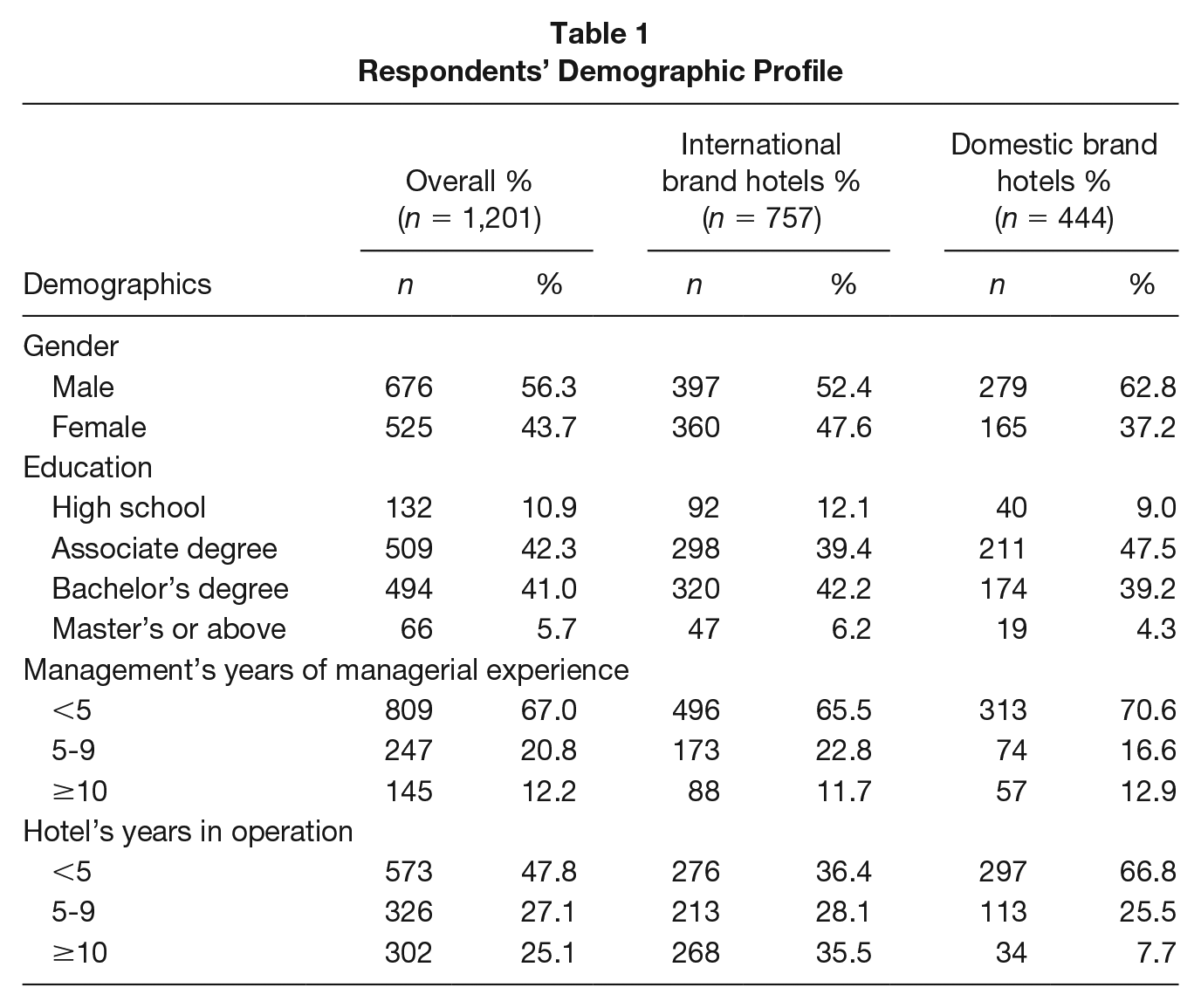
For the modeling, the measurement and structural model examinations were performed. Descriptive statistics of the 38 items are shown in Supplemental Table 1 (available in the online Supplemental Material). Prior to examining the models, common method variance was examined by Harman’s single factor score to identify any potential bias caused by the measurement method (Podsakoff et al., 2012). The total variance explained by the single factor was 49.45% and 54.63%, respectively, for the two samples, which were less than or close to the cutoff point of 50%, thereby suggesting a marginally acceptable level.
Measurement Model
The measurement model was first examined to further validate the measurements from the EFA. CCA was used to examine the reliability and validity of the measurement model in both the international and domestic brand samples (Supplemental Table 1, available in the online Supplemental Material). Specifically, the reliability of each construct in the model was examined by the composite reliability and ρAs, which were higher than 0.9, indicating an acceptable reliability level suggested by Bagozzi and Kimmel (1995). The construct validity was examined by convergent and discriminant validity. Convergent validity represents the internal consistency of the variables within one construct and was assessed by factor loadings and the value of average variance extracted (AVE) for each construct (Fornell & Larcker, 1981) in PLS-SEM. All standardized factor loadings were above 0.7 at 1% significant level and the construct AVEs were greater than 0.5, suggesting a satisfactory convergent validity (Hair et al., 2010). Discriminant validity measures the distinctiveness of a construct (Hair et al., 2020) and was assessed by the heterotrait–monotrait ratio of correlations (HTMT) in PLS-SEM. As indicated in Supplemental Table 2 (available in the online Supplemental Material), all the HTMTs between two constructs were below 0.9, thereby representing a satisfactory validity level (Fan et al., 2020).
Structural Model
The proposed structural model based on the hypotheses was assessed in both the international and domestic brand samples. Before assessing the structural relationships, collinearity was examined by variance inflation factor (VIF) to ensure that it did not bias the regression results. Ideally, VIF should be close to 3 and lower (Hair et al., 2019). In addition, relationship assessment criteria in PLS-SEM, including R2 and the statistical significance and relevance of the path coefficient (β) were reported to examine the proposed model structure (Hair et al., 2019).
In the international brand sample, the proposed relationships and their corresponding results are reported in Figure 2. The VIF values among constructs were all less than 3.113, indicating that there is no collinearity problem in this model. R2 of all the endogenous constructs were between 0.253 and 0.677 (Figure 2), showing reasonable explanatory power of the model (Shmueli & Koppius, 2011). A positive effect of brand identity was identified on physical facility quality (Hypothesis 1: β = .504, p < .01, supported) and nonfinancial performance (Hypothesis 3a: β = .242, p < .01, supported), but not on the financial performance. Physical facility quality had a positive effect on brand equity (Hypothesis 2: β = .514, p < .01, supported), nonfinancial performance (Hypothesis 4a: β = .461, p < .01, supported) and financial performance (Hypothesis 4b: β = .216, p < .01, supported). Brand equity had a positive effect on nonfinancial performance (Hypothesis 5a: β = .461, p < .01, supported), whereas it did not have any significant effect on financial performance. Nonfinancial performance has a positive effect on financial performance (Hypothesis 6: β = .542, p < .01, supported). Indirect mediating effects were also tested and are displayed in Supplemental Table 3 (available in the online Supplemental Material). Results indicated that, though brand identity did not have a direct effect on financial performance, it could indirectly influence financial performance through physical facility quality (β = .115, p < .01) and nonfinancial performance (β = .129, p < .01). Similarly, though brand equity did not show a direct effect on financial performance, the influence was indirectly delivered to financial performance through nonfinancial performance (β = .143, p < .01). Regarding the moderating effect, interaction terms were created with the two-stage approach. Results indicated that neither corporate nor government social capital had any significant effects on any of the proposed relationships. Therefore, Hypotheses 1, 2, 3a, 4a, 4b, and 5a were supported, but the rest were rejected (Table 2).
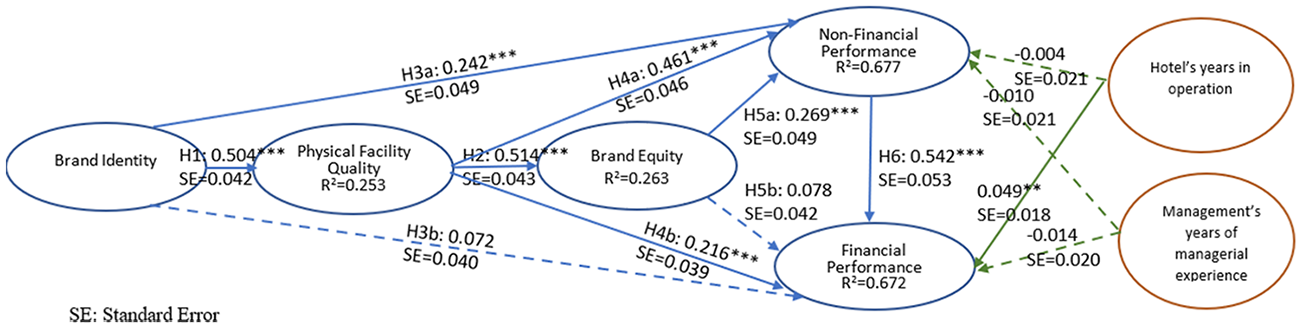
Structural Model With Standardized Paths (International Brand Hotels)
Structural Model and Hypotheses Assessment Results
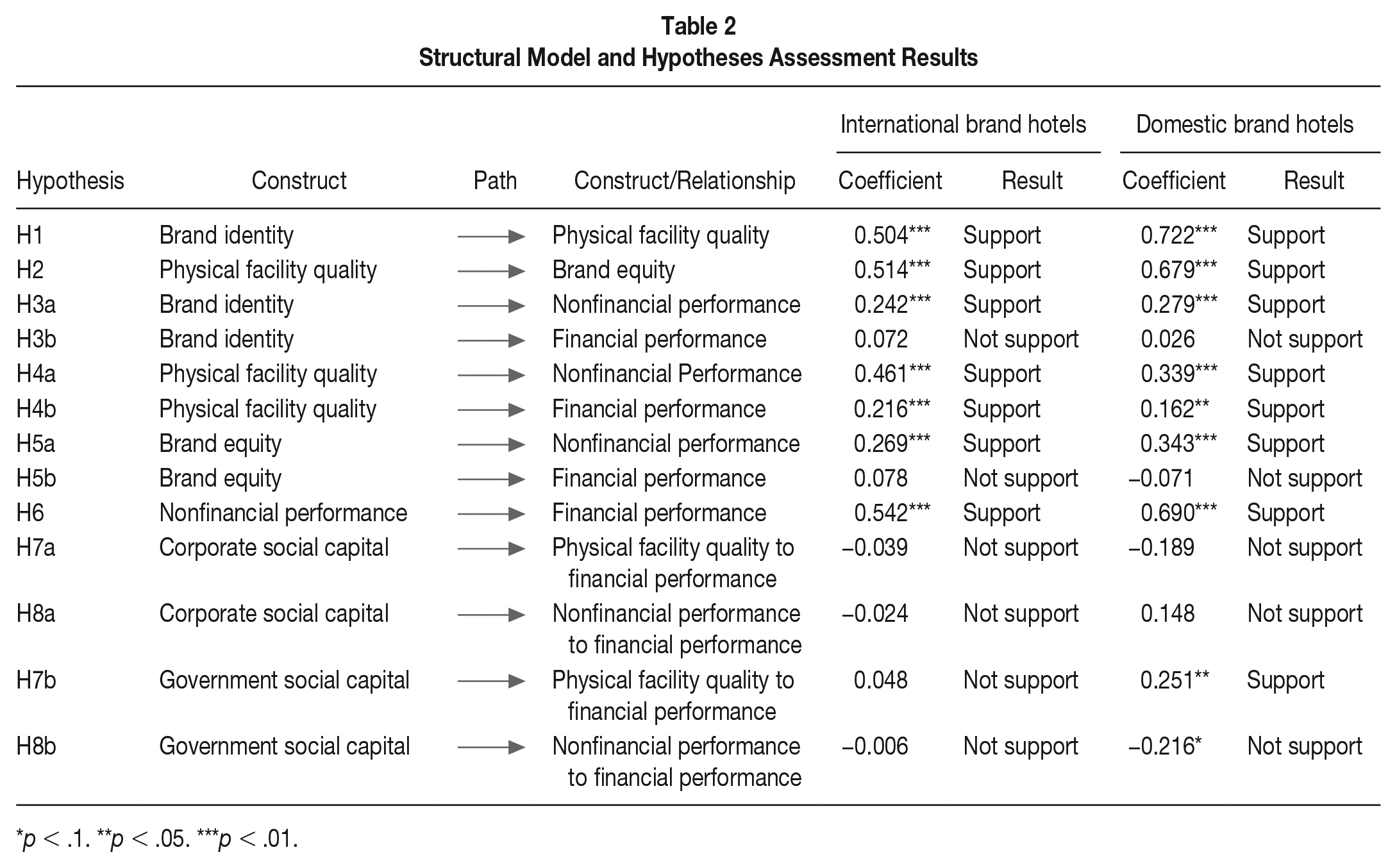
p < .1. **p < .05. ***p < .01.
Figure 3 presents the structural model results from the domestic brand sample. All VIFs showed satisfactory values to support the nonexistence of collinearity (all less than 3.145). R2 of all endogenous constructs were between .460 and .737, demonstrating good explanatory power of the model. The path coefficients showed great consistency with those in the international brand group. Brand identity had a positive effect on physical facility quality (Hypothesis 1: β = .722, p < .01, supported) and nonfinancial performance (Hypothesis 3a: β = .279, p < .01, supported) but did not have any significant effect on financial performance. Physical facility quality had a positive effect on brand equity (Hypothesis 2: β = .679, p < .01, supported), nonfinancial performance (Hypothesis 4a: β = .339, p < .01, supported) and financial performance (Hypothesis 4b: β = .162, p < .1, supported). Brand equity had a positive effect on nonfinancial performance (Hypothesis 5a: β = .343, p < .01, supported), but an insignificant effect on financial performance. Nonfinancial performance has a positive effect on financial performance (Hypothesis 6: β = .690, p < .01, supported). Regarding the indirect mediating effect shown in Supplemental Table 3 (available in the online Supplemental Material), brand identity had an indirect effect on financial performance through both physical facility quality (β = .128, p < .01) and nonfinancial performance (β = .183, p < .01). Brand equity indirectly influenced financial performance through nonfinancial performance (β = .224, p < .01). In terms of the moderating role of social capital, government social capital could enhance the positive relationship between physical facility quality and financial performance (Hypothesis 7b: β = .251, p < .05, supported), however weaken the positive relationship between nonfinancial and financial performance (Hypothesis 8b: β= −.216, p < .1, supported). The corporate social capital did not have any significant moderating effects on the proposed relationships. Therefore, in the domestic brand sample, Hypotheses 1, 2, 3a, 4a, 4b, 5a, and 7b were supported, but the rest were rejected (Table 2). Supplemental Figure 1 (available in the online Supplemental Material) shows the slope analysis for moderating effects of government social capitals in domestic brand hotels.
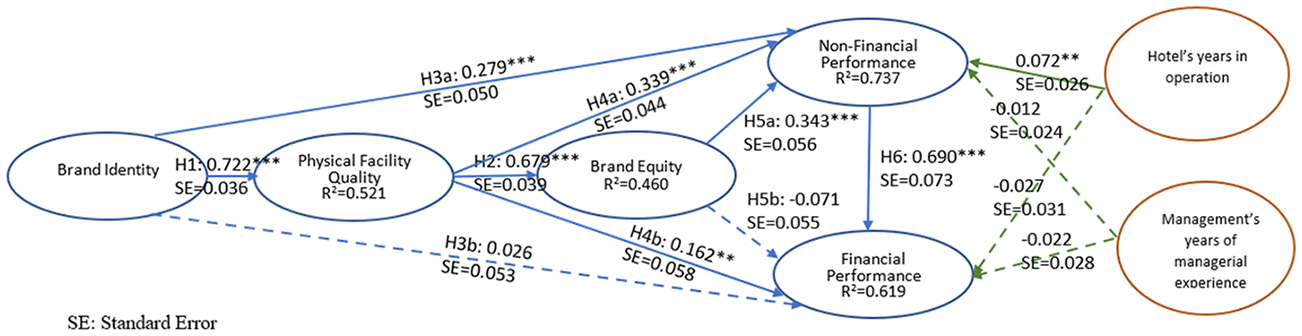
Structural Model With Standardized Paths (Domestic Brand Hotels)
In addition, two control variables, hotels’ years in operation and respondents’ years of managerial experience, were tested (Figures 2 and 3). For international brands, hotels’ age had a significant but weak impact on financial performance, whereas for domestic brands, the impact was significant yet weak for nonfinancial performance. Respondents’ years of managerial experience had no impact on financial or nonfinancial performance for either group.
Discussion
Hotel performance is always the priority of concern for investors and the ultimate operating goal for hotel managers. This research investigated the multistage brand–performance transformation process, involving different tangible and intangible components and such process is consistent between international and domestic brand hotels. In both groups, branding starts with managers’ clear understanding of brand identity, which is reflected in physical facilities (Hypothesis 1). Well designed and maintained physical facilities would lead to strong brand equity (Hypothesis 2), contributing to the hotel nonfinancial performance (Hypothesis 5a) and subsequently the financial performance (Hypothesis 6). The detailed influencing mechanism is discussed in the following paragraphs.
First, this study examined the effects of brand identity, physical facility quality, and brand equity on hotel nonfinancial performance. Results (the confirmation of Hypotheses 3a, 4a, and 5a) indicated that all three constructs positively contribute to the nonfinancial performance regardless of brand origin, which shows consistency with the literature (e.g., Carpenter & Moore, 2009; Ghodeswar, 2008; Urde, 2003). Second, the effects of brand identity, physical facility quality, and brand equity on hotel financial performance were assessed. Results showed that brand identity (Hypothesis 3b) and brand equity (Hypothesis 5b) did not have significant direct effects on financial performance, which is contradictory to what has been suggested in previous studies (Baek & Ok, 2017; Moreau & Herd, 2010). However, the physical facility quality (Hypothesis 4b) showed a positive effect on financial performance. This is because physical facilities are designed and maintained strictly following the brands’ standard and could be an effective stimulus for customers’ (re)patronage (Baek & Ok, 2017). Compared with brand identity and brand equity, physical facilities are more explicit and identifiable, therefore, could generate immediate effect on hotels’ financial performance. Such effect could support a clear return on investment, indicating that investment in hotel physical facilities could directly lead to an increase in financial performance. The insignificant direct effects of brand identity and equity on hotel financial performance contradicted the assertion that branding could positively contribute to financial performance as customers would be more willing to pay higher prices for hotels with more positive brand (Moreau & Herd, 2010). Results showed that developing and maintaining clear brand identity as well as brand equity do not provide direct financial payoffs for hotels in China, at least not yet. This may be a reflection of the hotel brand development maturation process. As hotel branding is a recent phenomenon in China, the costs may exceed the immediate return on investment. The insignificant relationships identified in this study could change as hotels accumulate more branding and operational experience.
Although the direct effect was not supported, brand identity could have an indirect positive effect on financial performance through the mediator of physical facility quality. This result confirms the important role of physical facilities in transforming the intangible brand identity into business performance (Castaldi & Giarratana, 2018). Moreover, brand identity and equity could also influence financial performance through nonfinancial performance. This supports the claim that nonfinancial performance normally acts as a mediator between different influencing factors, such as leadership and market competition (Patiar & Mia, 2009) and a company’s financial performance.
Beyond the basic structural model, brand origins could differentiate the brand–performance transformation process by influencing the performance of social capitals’ moderating effect. Among international brand hotels, neither corporate nor government social capital presented significant moderating effect (rejection of Hypotheses 7a, 7b and 8a, 8b), which challenged the previous belief in the power of social capital on hotel performance (Stam & Elfring, 2008). Such result could be due to the nature of upscale international brand hotel development in China. As argued by Hsu et al. (2015), Chinese entrepreneurs used a combination of strong and weak business ties to gain knowledge in the early start-up stage; however, in the final growth stage, they did not value network ties. In China’s hotel development, international brands dominated the upscale market since the open-door policy in 1978; thus, these brands already went through the initial growth phase. The maturity of international brands can also be reflected in the hotels’ years in operation, as shown in Table 1. Therefore, as international brand hotels are in general experienced in the Chinese market, the moderating effect of social capital in the relationship between physical facility quality, nonfinancial performance, and financial performance is not significant.
Comparatively, among domestic brand hotels, social capital’s moderating effect is evident. Government social capital could strengthen the relationship between physical facility quality and financial performance (Hypothesis 7b). A strong corporate–government tie will keep the hotels informed of any policy or regulation changes and local developing trends (Luo et al., 2004). This could help acquire optimal resources, strengthen the effects of physical facility on overall performance and eventually maximize the return on investment. The moderating effect of social capital is not always facilitating. In domestic brand hotels, the relationship between nonfinancial and financial performance was reduced when the hotel’s government social capital was strong (Hypothesis 8b). Comparing with bringing facilitating resources externally, social capital inhibited the internal transformation from nonfinancial to financial performance. As noted by Wang and Chung (2013), strong political ties may change the organizational culture to be more hierarchical and cohesive across functional departments, which could be negatively associated with efficiency and product innovation. Furthermore, it is not surprising to note that the corporate social capital’s moderating effect is not significant for domestic hotels (Hypotheses 7a and 8a), which corresponded to the literature that local entrepreneurs believed political ties were more important than business ties in their business operations (Hsu, Liu, & Huang, 2012).
Comparing the moderating effects for both international and domestic brand hotels, it is interesting to notice that social capital tends to have a more obvious moderating effect among domestic than international brand hotels. This corresponded to the institutional theory, which stated that social ties become less influential when regulation and legal institutions develop and market-supporting systems establish (Peng, 2003). Comparing with domestic brand hotels, international brand hotels have more mature practices in branding, operation and management and a longer period of development in China and the world, therefore, are less influenced by external ties. Furthermore, as discussed by Li et al. (2008), social ties play a more important role for firm performance when structural uncertainty increases. Thus, as domestic hotel brands investigated are still in the growth stage of their brand lifecycle, environmental uncertainties and internal instabilities may have triggered the finding that social capital, especially government connection, had a stronger effect on performance. This is supported by findings of Hsu et al. (2015) that government connection is important for domestic brand hotel development, especially in their starting-up and growth stages.
Theoretical Contributions
This study provides rich theoretical contributions on branding, business performance and hospitality management. First, this study is among the initial attempts to explore the brand–performance transformation process by connecting different branding activities with hotel performance. Specifically, the study firstly introduced the physical facility quality into the traditional brand–performance process, highlighting the importance of physical facilities in transforming the intangible brand identity into business performance (Castaldi & Giarratana, 2018).
Second, this study explored the nuanced differences between financial and nonfinancial performance in the brand–performance transformation process. Results indicated that hotel managers’ brand identity and brand equity could only directly and positively influence the nonfinancial performance, but not the financial performance. Comparatively, physical facility quality could directly enhance both the nonfinancial and financial performance. This difference between financial and nonfinancial performance challenges previous literature (Ghodeswar, 2008) and contributes to theoretical advancement by specifying the different influencing approaches of various brand-related effects on different types of hotel performance.
Third, by examining the research model in both the international and domestic brand hotels, this research establishes the external validity of the brand–performance transformation model by examining it in different hotel brand settings. The similar model path structure between two brand groups indicates potential for generalization across different brand origins regarding the internal resource consolidation, meanwhile revealing the influence of hotel brand origin on hotel external resource (social capital) intervention. It deepens the awareness that international and domestic brand hotels hold similar operational features in brand–performance transformation but are heterogeneous in social capital engagement (Hsu, 2015; Hsu et al., 2015).
Fourth, results of this study contribute to theoretical advancement by introducing both corporate and government social capitals into the brand–performance transformation process. Social capital is an important environmental/contextual factor that could influence the performance of a hotel (Halaszovich & Lundan, 2016); however, the exploration of the indirect effect of social capital on nonfinancial and financial performance is still in its infancy. This study pioneers in considering the moderating effect of both corporate and government social capitals on hotel performance in different brand origin scenarios. It further signposts the possibilities of situational factors, such as brand origin and different social capitals, in leading to hotel performance differences.
Practical Implications
Results of the study delineated clear branding–performance pathways to boost desirable hotel performance through both internal and external resources. First, results confirmed the significant and positive effect of hotel nonfinancial performance on financial performance regardless of brand origin, and the effect of brand identity and brand equity on financial performance is mediated through nonfinancial performance. As hotel managers are always asked about the financial performance and branding efforts’ return on investment, results from this study provided evidence to convince hotel owners about the importance of holding a big picture of hotel brand development to achieve healthy and all-rounded performance. Operators should not expect immediate financial return on their brand building investment, as the brand–performance transformation journey takes time to come to fruition.
Second, the direct effects of physical facility quality on financial performance could provide focused suggestions for hotels. As physical facility quality could both directly and indirectly enhance financial performance, developing hotel physical facilities as a competitive advantage would effectively generate positive financial results. Hotel owners often negotiate with brand-holding companies and try to lower the costs of building physical facilities. This study offers support for management companies to uphold their building and fitting standards. For existing operations, maintaining and updating facilities and paying attention to the design aesthetic elements of different functional areas could contribute to financial returns. Having a clear understanding of the brand identity among managers would help understand the requirement of physical facilities, which leads to high brand equity. Thus, cultivating a clear brand identity and having an integrated branding strategy, along with quality tangible facilities, are essential elements of good nonfinancial and financial performance.
Third, the moderating effects of social capital could guide hotel executives’ practices, especially for domestic brand hotels in how to boost their financial performance. Since government social capital could reinforce the positive effect of physical facility quality on financial performance, domestic hotels should continue to establish external political ties to ensure a facilitating business environment. Capitalizing on the government social capital, domestic hotels could target the government sector for events, rooms, and food and beverage businesses. Under the macro-environment of reduced government entertainment spending, such social capital is especially valuable in securing limited government businesses. Chinese hotel customers are highly brand conscious (Sun et al., 2017), and domestic luxury hotel brands are under more competitive pressure than hotel brands in other sectors (Schuckert et al., 2019). By securing connection with government officials, upscale domestic brand hotels could develop such social capital as an essential competitive strategy under severe competition with international brands.
Limitations and Future Research
Several limitations of this study should be considered. First, all hotels participated in this study were based in China, thus Chinese culture may implicitly frame the findings. As in Chinese culture, social ties are extremely important for business and exchange, the effect of social capital might be salient compared with countries of other cultures. Therefore, future studies are encouraged to verify this model in other cultural contexts. Second, findings were purely based on the examination among upscale hotels. The brand–performance transformation process in other categories, such as mid-scale and budget hotels, deserves further investigation. Factors relating to construction and operating costs could also be important in influencing the financial performance, therefore should be investigated in future research. Third, the domestic hotel brand group has a marginally acceptable common method variance level. In future studies, multiple data sources for predictor and criterion variables are recommended to minimize the potential common method bias. Fourth, the financial performance measurements used in this study are based on managers’ perspectives, rather than objective figures, such as RevPAR. Future studies could incorporate both the objective financial statistics at the hotel level and managers’ assessment of brand identity, equity and facility quality at an individual level, using multilevel analysis to further validate the brand–performance transformation model. Last, as brand identity and brand equity are important concepts for both the customers and managers, it will be valuable to explore the brand–performance transformation process from a customer’s perspective in future research.
Conclusion
The current study explored the brand–performance transformation process in upscale hotels in China. Data were collected from 1,201 managers, with 757 from international brand and 444 from domestic brand hotels. Results revealed that brand identity, physical facility, and brand equity all had positive effects on hotel nonfinancial performance, which further leads to hotel financial performance. Social capital was found to have different moderating effects on international versus domestic brand hotels. This study contributes to theoretical advancement by exploring the brand–performance transformation process and revealing the indirect roles that social capital plays in hotel financial performance formation as an environmental factor. The analysis across hotels with different brand origins facilitates the development of evidence-based competitive strategies, which best suit different hotels’ brand situations. Valuable insights were generated to provide practical implications for hotels regarding branding, investment, and connecting with external resources.
Supplemental Material
sj-docx-1-jht-10.1177_10963480221074278 – Supplemental material for Transforming Brand Identity to Hotel Performance: The Moderating Effect of Social Capital
Supplemental material, sj-docx-1-jht-10.1177_10963480221074278 for Transforming Brand Identity to Hotel Performance: The Moderating Effect of Social Capital by Daisy X. F. Fan, Cathy H. C. Hsu and Andy Xiaofeng Liu in Journal of Hospitality & Tourism Research
Supplemental Material
sj-docx-2-jht-10.1177_10963480221074278 – Supplemental material for Transforming Brand Identity to Hotel Performance: The Moderating Effect of Social Capital
Supplemental material, sj-docx-2-jht-10.1177_10963480221074278 for Transforming Brand Identity to Hotel Performance: The Moderating Effect of Social Capital by Daisy X. F. Fan, Cathy H. C. Hsu and Andy Xiaofeng Liu in Journal of Hospitality & Tourism Research
Footnotes

Supplemental Material
Supplemental material for this article is available online.
References
Supplementary Material
Please find the following supplemental material available below.
For Open Access articles published under a Creative Commons License, all supplemental material carries the same license as the article it is associated with.
For non-Open Access articles published, all supplemental material carries a non-exclusive license, and permission requests for re-use of supplemental material or any part of supplemental material shall be sent directly to the copyright owner as specified in the copyright notice associated with the article.
