



Abstract
Well-known actors, or stars, clearly are relevant for movies. Today, their influence also extends to interactive video games, for which budgets have reached triple-digit millions of dollars. Yet no existing research addresses the economic impact of star power on video game success across various game traits and reviews. Analyzing video games released on the popular distribution platform Steam between 2008 and 2022, the current study reveals that casting stars as game characters has positive effects on the valence of professional reviews, which in turn affect game success. Stars can therefore increase the quality of a game and reduce uncertainty about it. This impact varies depending on game traits, however. Based on these results, the authors develop an interactive dashboard that managers can use to simulate how they can strategically leverage star power to increase game success.
The moment [Keanu Reeves took his role as Johnny Silverhand in Cyberpunk 2077] may mark a notable shift in gaming, a coming out for an … industry that is challenging established media genres like film and television by attracting A-list talent. The John Wick actor is far from alone. (Shanley 2019)
The financial success of the video game industry has surpassed that of the film industry for years; the capabilities of its performance-capture technology also have increased to the point that stars (i.e., well-known professional actors) can perform not just as voice characters but as integrated figures that players can control. In turn, video game developers are increasingly integrating stars as ingredient brands in their games (Cruz 2023; Statista 2024). They recognize the value of stars, who can serve as either templates or full performers in games (Shanley 2019). Some examples are Kristen Bell in the video game Assassin's Creed 2; Emma Stone in Sleeping Dogs; Keanu Reeves in Cyberpunk 2077; Jeff Goldblum, Gary Oldman, and Kevin Spacey in the Call of Duty game series; Willem Dafoe in Beyond: Two Souls; Liam Neeson in Fallout 3; and Mads Mikkelsen in Death Stranding, to name just a few.
However, despite the remarkable growth of the video game industry as a technological pioneer and influential sector, practitioners still debate the role of stars in video games, and research has not addressed the impact of hiring stars to appear in video games nor offered clear revenue forecasts for these investment-intensive projects (Hennig-Thurau and Houston 2019). This raises the question of whether it is worthwhile to feature stars in video games.
In contrast to the movie industry, for which extensive research details how stars influence movie success (Carrillat, Legoux, and Hadida 2018; Hofmann et al. 2017), the influence of stars on video game success has not, to our knowledge, been studied yet. This research gap is pertinent because video games and movies differ in critical ways. In particular, unlike passively consumed movies, video games provide active consumption scenarios for players, who interact with the characters virtually or even control their in-game behaviors and experience a more flexible story (partly) through the star's point of view. Furthermore, artificial intelligence (AI) offers means to depict the stars, such that the actors themselves might not need to record all possible scenes in advance. Video games and the integrated stars also can be consumed interactively with millions of other consumers at the same time (i.e., online multiplayer feature, which is a prerequisite for esports). A movie might be consumed for a duration of up to about 3 hours; video game consumption often lasts longer than 100 hours. Thus, in terms of both duration and degree, consumers engage substantially more with stars in video games than in movies (Marchand and Hennig-Thurau 2013; Shanley 2019). Finally, video games charge higher consumer prices, unlike movies. Thus, distribution and word-of-mouth factors likely differ in their relevance and interaction with stars in video games versus movies (Marchand, Hennig-Thurau, and Wiertz 2017).
To fill these research gaps and provide context-specific insights, we analyze data on 300 video games, including their worldwide player count since their release between 2008 and 2022. Accordingly, we seek to address two main research questions: How does star power affect (1) perceived video game quality and (2) video game success? For star power, we initially focus on whether a game contains any well-known stars and subsequently expand on this with further analyses (e.g., number and popularity of stars). In addition to star power, the analysis includes game traits, such as the player character's point of view (POV); genres such as action, adventure, or role-playing game (RPG); and measures of expert or amateur reviews. With this sample, we can make a direct comparison of video games with and without popular movie actors. The results reveal a mediation effect over an increased video game quality on game success.
This study in turn enriches marketing research by advancing unique insights into entertainment product marketing, pertaining to the impact of star power on video game success. It also establishes some pertinent links among influencer marketing, video games, and the movie industry. The resulting pragmatic insights for managerial decision-making suggest ways that studios can leverage star power effectively to elevate video game performance. By highlighting the internal validity and value for pertinent business stakeholders, this study emphasizes the potential benefits of sector-specific research innovation (Stremersch et al. 2023). The ramifications also extend beyond the realm of video games, offering valuable insights for various sectors that rely on celebrities in their marketing strategies. The study concludes with an interactive simulation tool that readers of this article can use to predict the success of video games as a function of stars and other variables, as well as ideas for future research.
Research Background and Framework
Video Games Versus Movies
Insights from movie research are vital for understanding video game dynamics, due to their notable similarities. In particular, substantial evidence establishes the impact of star power on movie success (Carrillat, Legoux, and Hadida 2018; Hofmann et al. 2017; Weber, Marchand, and Kunz 2024). Video games, like movies, serve as hedonic, experiential products tailored to consumer enjoyment (Hennig-Thurau and Houston 2019; Ingendahl et al. 2023). Both forms of entertainment feature storytelling, character development, visual aesthetics, and the incorporation of skilled actors who also serve as ingredient brands. Both industries also grapple with the transformative impacts of digitalization, which is reshaping production, distribution, and consumption paradigms (Marchand and Hennig-Thurau 2013).
Yet it is equally crucial to recognize the nuanced differences between industries (e.g., Marchand, Hennig-Thurau, and Wiertz 2017), particularly because the impact of stars on game success might not mirror the results for movies (Handrich, Heidenreich, and Kraemer 2022) due to their distinct distribution, consumption, and contextual features. For example, the importance of gameplay mechanics might overshadow star power, and celebrities usually take a less central role in video game distribution efforts. This could make their impact on the success of games smaller than that of films. Video games also require greater financial and time investments by consumers, leading to more thorough prepurchase research, which could increase the impact of star power. Moreover, the longevity and replayability of games might conflict with the volatile nature of star popularity (Marchand, Hennig-Thurau, and Wiertz 2017). Even if there are some similarities to acquiring watch-at-home videos, video game purchases still differ, in that best-selling games often command a higher price point and furnish extended experiences. Triple-A video games (i.e., games with high budgets, produced and distributed by large and well-known publishers) such as Red Dead Redemption or The Witcher 3: The Wild Hunt offer content for base playtimes around 150 hours. Multiplayer hits such as the Battlefield and Call of Duty franchises even have playtimes that extend 1,000 hours for some consumers (Mathews and Wearn 2016). To play, consumers also must purchase product complements in the form of specific hardware (e.g., a branded video game console with specific controller), which creates its own market dynamics (Allen et al. 2022; Gretz et al. 2019).
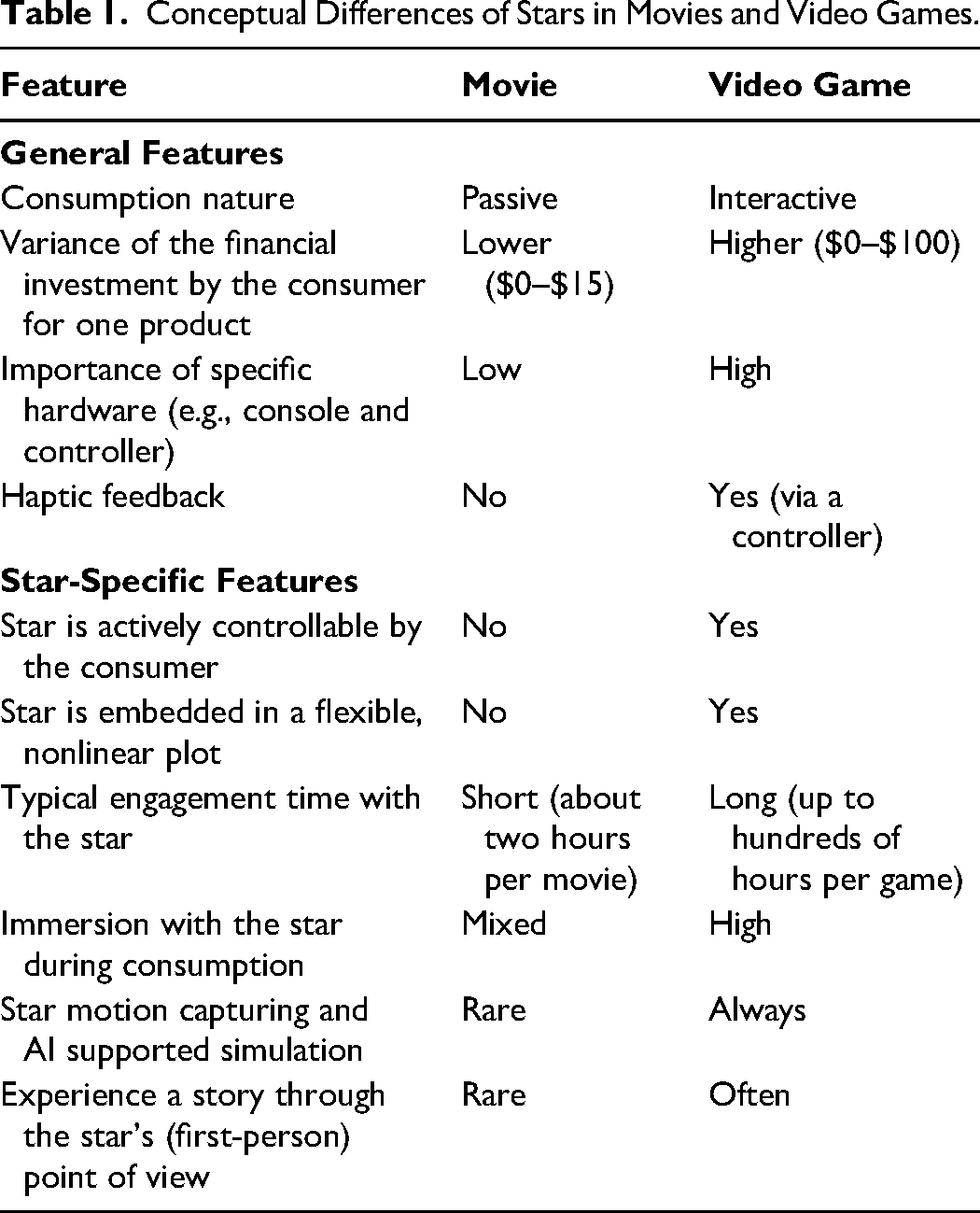
Unlike the passive activity of watching movies, playing video games is interactive. Heightened immersive engagement is intrinsic to the mechanics of gameplay (Handrich, Heidenreich, and Kraemer 2022). Thus, the triumph of a video game character hinges not solely on the actor's portrayal but on the player's interaction with the storyline and gameplay mechanics. Finally, the transferability of acting prowess from movies to video games is not certain. The latter demands skill sets tailored to digital productions, such as performance capture and voice acting (Handrich, Heidenreich, and Kraemer 2022; Shanley 2019). Players can often experience a story from the perspective of a star and in a nonlinear plot. This is atypical for films and could also make a difference to the importance of stars for the chances of success. These disparities underscore the need for a more nuanced understanding of the characteristics of both media and the intricate interplay of their relevant components. We summarize the conceptual differences between movies and video games, particularly regarding stars, in Table 1.
Conceptual Differences of Stars in Movies and Video Games.
Video Games Research in Marketing
Despite the popularity, market size, and potential for consumer behavior analyses of gaming, marketing research offers only limited perspectives on this industry. Marchand and Hennig-Thurau (2013) and Hennig-Thurau and Houston (2019) offer comprehensive syntheses of existing studies. To add to these extant research collections and distinguish the contributions of the current study, in Table 2 we list related studies from marketing or management, according to their comparable methodologies. None of these studies examined the effect of stars in video games.
Quantitative Studies of Video Game Success.
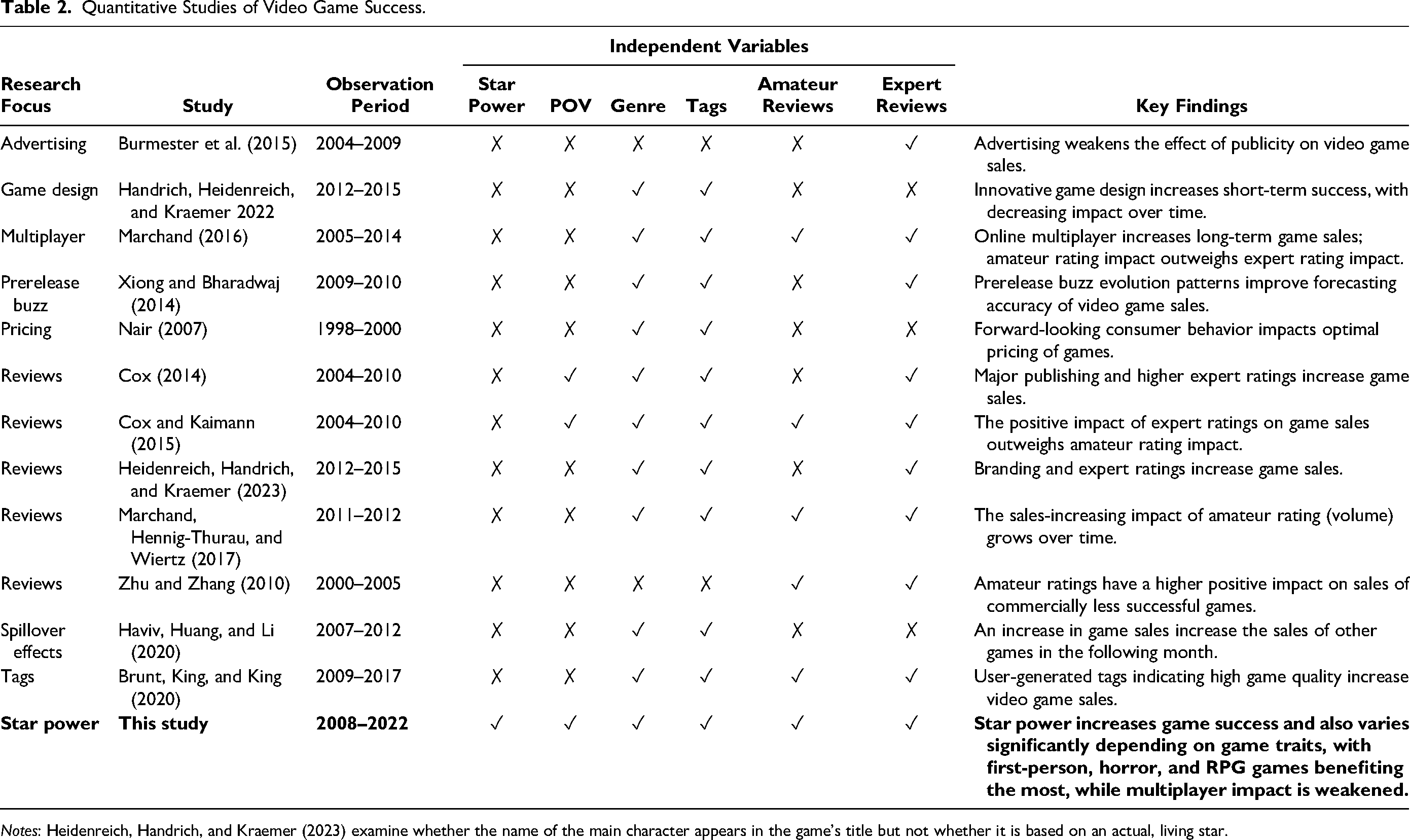
Notes: Heidenreich, Handrich, and Kraemer (2023) examine whether the name of the main character appears in the game's title but not whether it is based on an actual, living star.
Studies outside this scope also cover mobile gaming (Haenlein, Libai, and Muller 2023); in-game brand placements, citing the importance of a good gaming experience when encountering such marketing measures (Ingendahl et al. 2023); and strategic marketing issues such as entry timing (Engelstätter and Ward 2018), advertising budgets (Schöndeling et al. 2023), advergames (Ghosh, Sreejesh, and Dwivedi 2021), business model stakeholders (Kleer and Kunz 2021), and gaming platforms (Ghosh, Sreejesh, and Dwivedi 2021; Landsman and Stremersch 2011; Sun, Rajiv, and Chu 2016; Wiegand, Peers, and Bleier 2023). These studies emphasize video games’ importance as a cultural good, providing artistic achievement and an outlet for talent from all arts. Game consumption is also closely related to increasing consumption of cultural products and can affect personal socioeconomic development (Borowiecki and Bakshi 2018; Borowiecki and Prieto-Rodriguez 2015, 2017; Chen, Zeng, and Zhang 2023; Drenten, Harrison, and Pendarvis 2023). Rieger et al. (2014) also show that advancing in a game following challenging tasks can enhance feelings of happiness by satisfying players’ need for competence and autonomy.
Without extant analyses of the role of star power for video game success, we turn to insights from research into the impact of star power for movie success (Carrillat, Legoux, and Hadida 2018; Hofmann et al. 2017; McKenzie 2023). Some movie studies distinguish between commercial and artistic star power. However, artistic star power, often measured on the basis of Oscar wins, does not seem relevant for video games currently (we find hardly any instances in our data), which may be due to the controlling and cocreating of characters by AI.
Research Framework
Figure 1 displays the research framework that reflects our main research questions, guided by extant research and actual market situations. We treat stars as an adjustable lever that management can apply and examine two resulting paths. In the first path (quality path), video game success is mediated by of professional and nonprofessional quality assessments. The second path (familiarity path) uses stars as ingredient brands that reduce consumer uncertainty about the experiential characteristics of a video game.
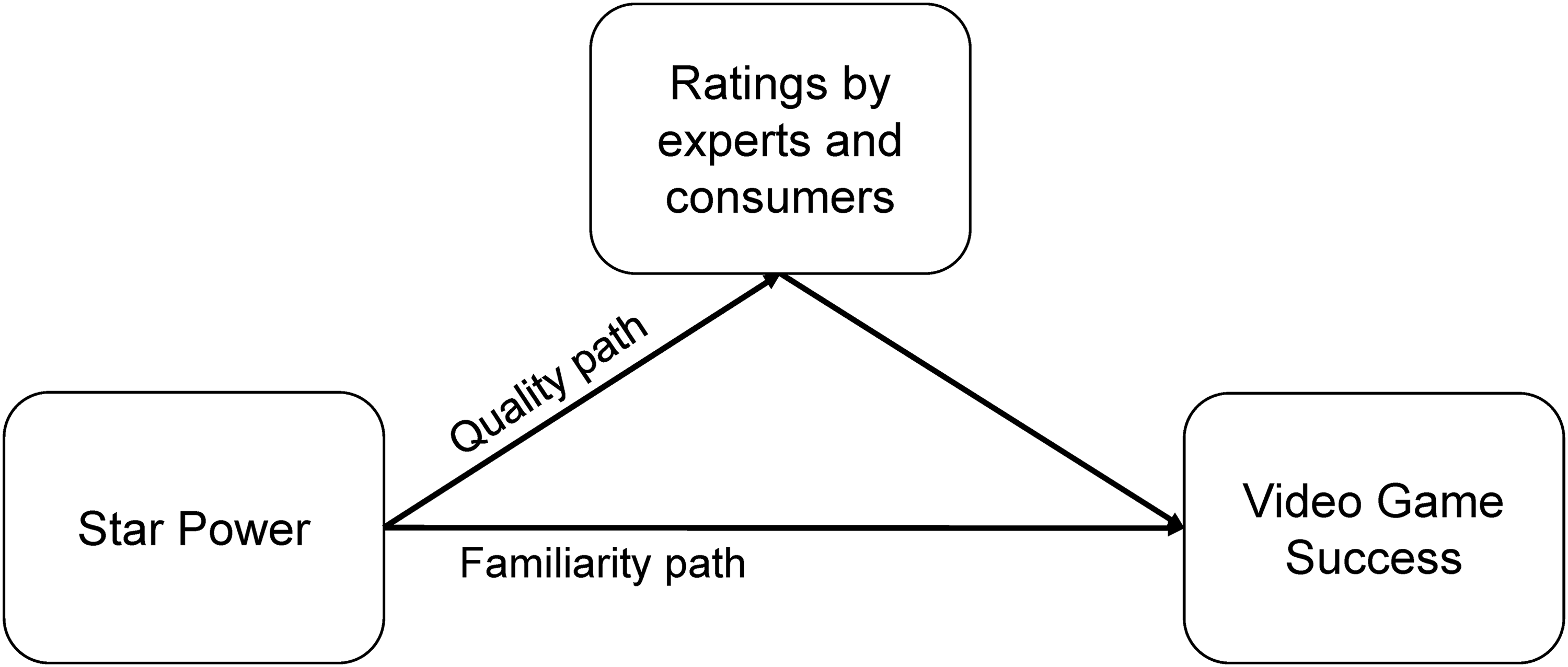
Research Framework.
Video games are created by people with a creative vision, striving to produce the best possible result with the given resources (Hennig-Thurau and Houston 2019). With regard to the relationship between star power and the reception of video games, we posit that stars could have effects on the perceived, subjective quality of video games through their professional acting within a video game. Such an improvement in quality, usually expressed by experts or laypeople that consumers strongly rely on (Brunt, King, and King 2020; Marchand, Hennig-Thurau, and Wiertz 2017; Santos et al. 2019), should make a game more attractive and therefore lead to higher demand.
However, even for games with bad reviews, star power might counteract this effect, such that stars’ popularity outweighs purchase restraint, due to familiarity or fandom effects (Carrillat, Legoux, and Hadida 2018). We therefore also expect a direct effect of stars on video game success, because popular actors appeal to consumers in several ways that should be beneficial for games as well as for movies (Hennig-Thurau and Houston 2019; Shanley 2019). Stars’ acting talent and experience also might improve the sense of narrative immersion, a pivotal element in improving consumer experiences and achieving longer-term game success (Handrich, Heidenreich, and Kraemer 2022). Due to rapid technological advances, the performance and likeness of actors continues to approach reality (Bouwer, Human, and De Lange 2019). In addition, star power can increase product visibility and publicity while still providing appealing familiarity (Carrillat, Legoux, and Hadida 2018). In this way, stars reduce uncertainty about the experience good (i.e., the video game). We further anticipate varying influences of star power, contingent on other game traits, together with a moderating effect on review-related factors.
The perspective of the player (i.e., POV) is highly relevant to gameplay mechanics and, thus, on players’ immersion and identification with the main character(s) (Cox 2014; Heidenreich, Handrich, and Kraemer 2023). “Seeing” through the eyes of the character, played by the star, could be preferable to consumers, and engaging with the in-game world from stars’ perspective might trigger a more immersive experience and stronger identification with the character. In first-person games, consumers either directly embody the character or see through their eyes, which could create a stronger connection with the star. The stars’ performance also might enhance the immersive experience if it appears highly credible (Handrich, Heidenreich, and Kraemer 2022; Spry, Pappu, and Bettina Cornwell 2011). In this sense, game genres that are especially narrative-driven, such as RPGs, might benefit more from star power than, for example, a strategy game in which players control hundreds of anonymous characters (Marchand 2016). Games based on popular intellectual properties such as movies (i.e., licensed games) also might benefit from employing the original movie cast; changing the cast instead might deter fans (Gretz et al. 2019). Popular examples include games in the Harry Potter franchise, such as Hogwarts Legacy; Marvel-inspired games such as Spider-Man; and video games based on toy brands, such as Hot Wheels and LEGO. Yet from another perspective, games without large budgets or support from the marketing power of major studios might benefit from the publicity and familiarity bump provided by a star actor (Heidenreich, Handrich, and Kraemer 2023; Mathews and Wearn 2016).
Based on these considerations and with an exploratory empirics-first approach (Golder et al. 2023), we propose the following research questions to guide our analyses: How does star power affect (1) perceived video game quality and (2) video game success?
Study Design
Data
Table 3 lists the variables and their operationalization. Table 4 provides descriptive details about the sample and the distribution of games that include stars.
Variable Overview.
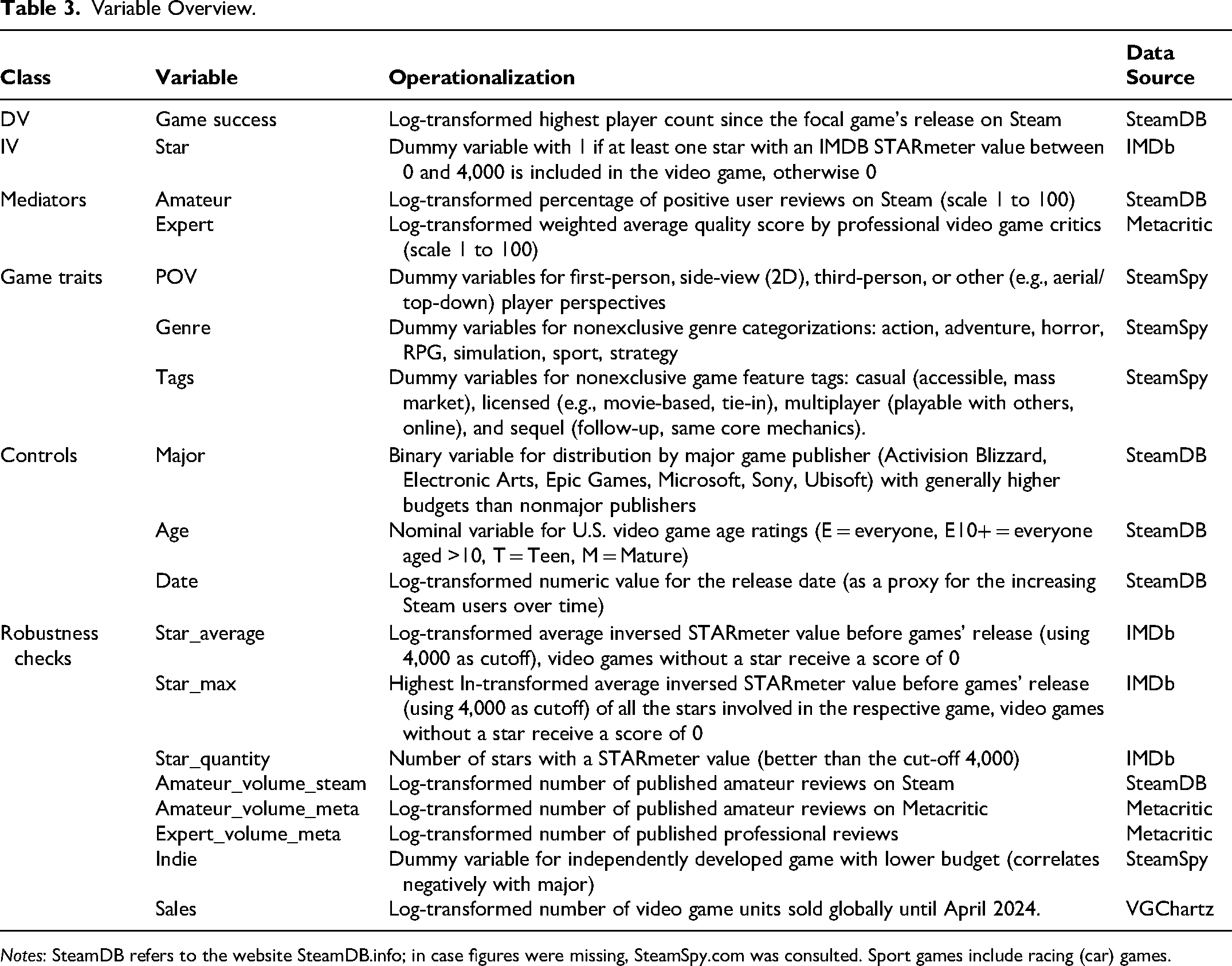
Notes: SteamDB refers to the website SteamDB.info; in case figures were missing, SteamSpy.com was consulted. Sport games include racing (car) games.
Descriptive Statistics.
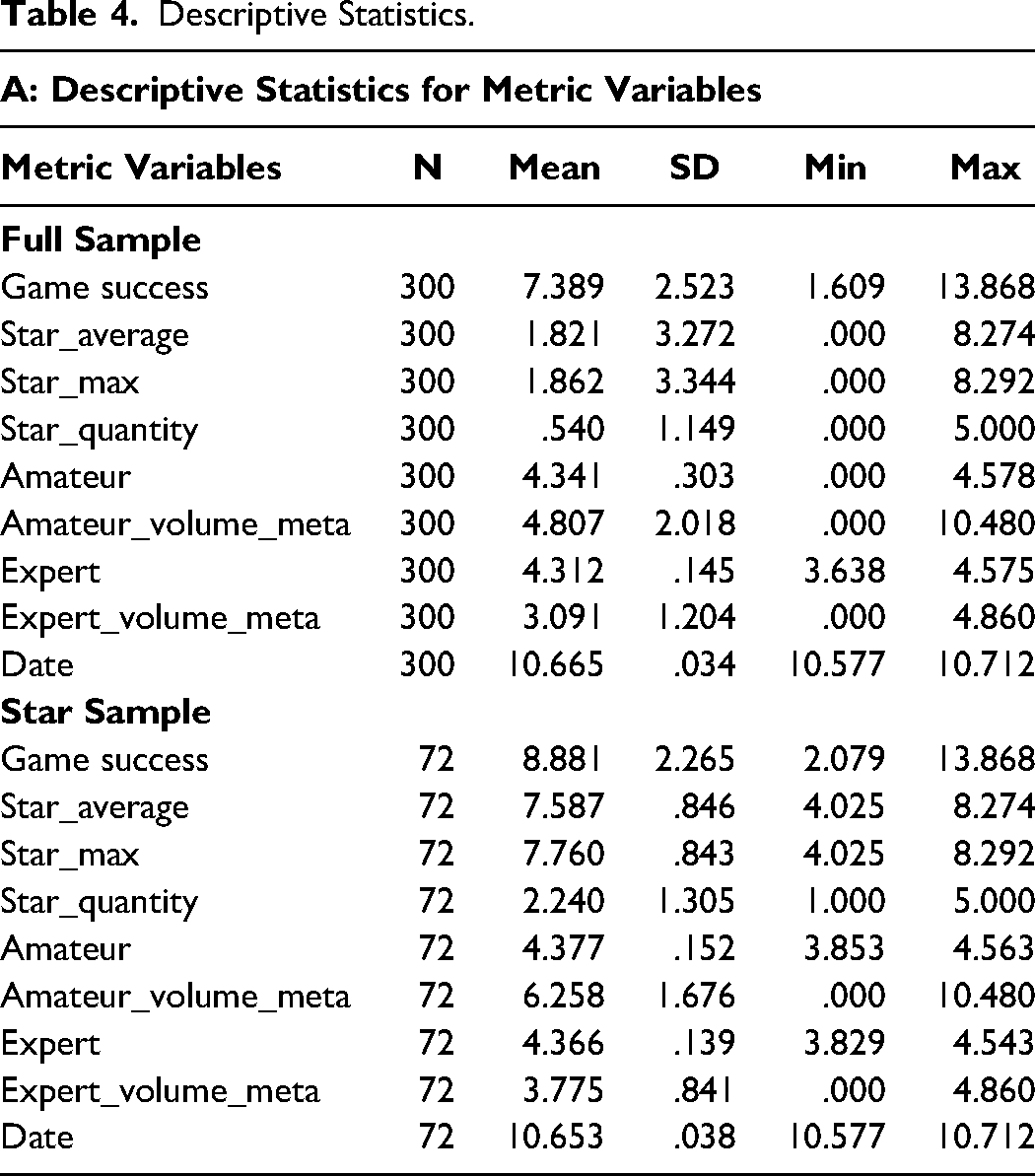
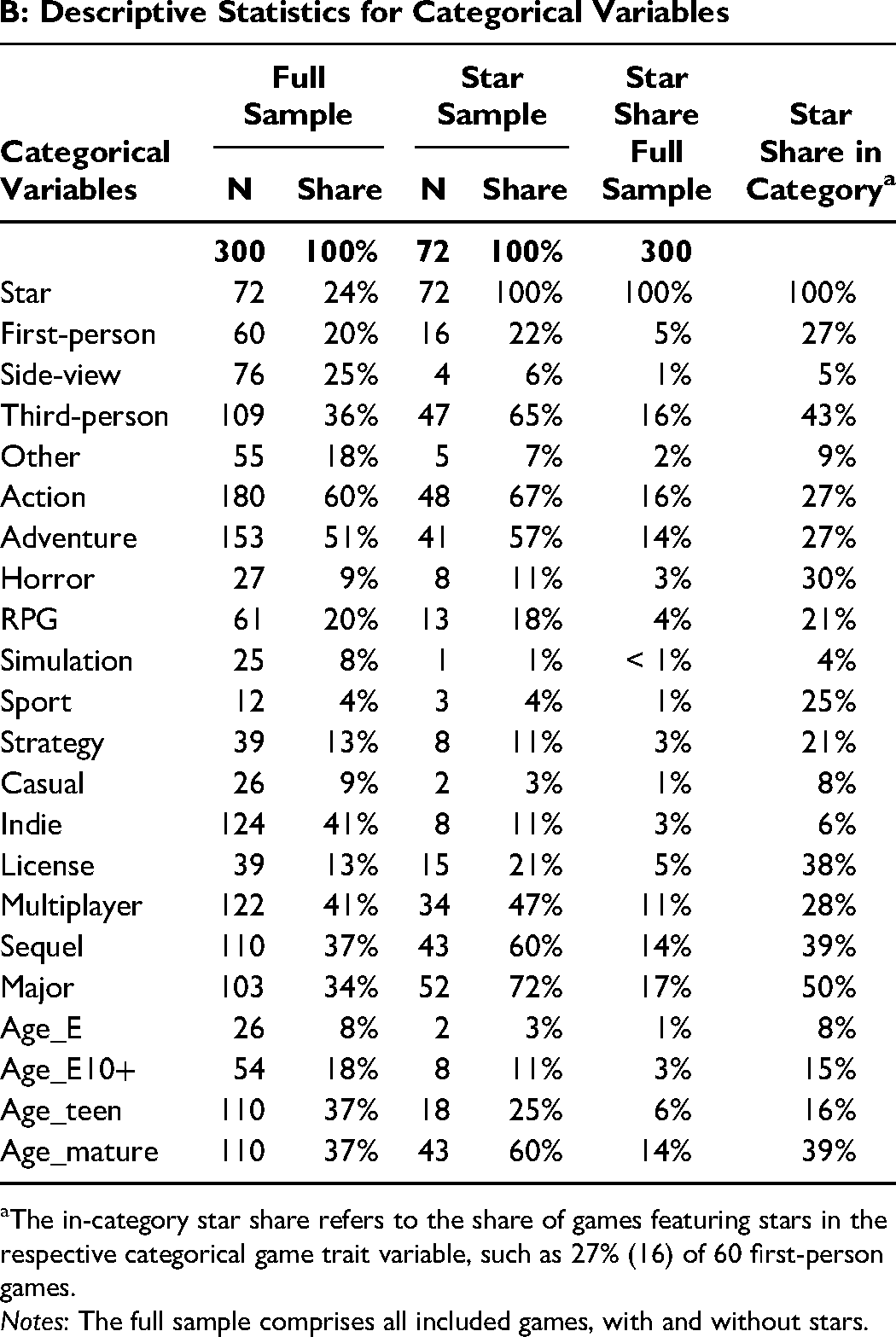
The in-category star share refers to the share of games featuring stars in the respective categorical game trait variable, such as 27% (16) of 60 first-person games.
Notes: The full sample comprises all included games, with and without stars.
Unlike readily available box office figures, video game sales are seldomly published, especially for sales achieved through increasingly digitalized, direct distribution. Therefore, we rely on data about games sold through the popular distribution platform Steam (https://store.steampowered.com/), which aptly represents the gaming market, with its diverse inventory of blockbuster and indie games (Brunt, King, and King 2020). We gather abundant data from this platform, with the help of data aggregators such as SteamSpy.com and SteamDB.info. From 2008 to 2022, we identified 72 games that employed stars as either voice actors or full performers, with the help of motion capture technology. The latter can be used to recreate actors’ likeness (e.g., Keanu Reeves in Cyberpunk 2077) or, as is common practice in movies such as Avatar, to capture their voice performance but transfer it to a fictional appearance (e.g., Christopher Judge in God of War: Ragnarök). We also dummy coded variables for voice acting only, which led to no significant differences in the results and did not increase model efficiency. To obtain a representative sample of games that competed with these 72 star games, we included all games with complete data on Steam released within a week before or after the focal star game, leading to a total sample of 300 video games.
Video game success
We use a unique metric to gauge game success, which would be infeasible for physical copies and offline gaming. The transformative impact of digitization on business models for entertainment products underscores both the relevance and the necessity for a new approach (Marchand and Hennig-Thurau 2013). Noting the interactive nature of video games, the maximum count of simultaneous players serves as a real-time indicator of player engagement and interest. It also provides insights into a game's longevity, because it can capture sustained player interest beyond initial sales driven by marketing or hype. The measure might also signify the scope and vitality of a game's community. Thus, our proposed measure reflects evolving understanding of success in the gaming industry, shifting focus from mere acquisition to engagement as a pivotal tool to ensure long-term customer retention (Brunt, King, and King 2020; Chang, Chiu, and Hwang 2020).
Therefore, our dependent variable game success refers to the worldwide maximum number of people that simultaneously and globally play each focal game on Steam since its release. Whereas movie success is usually measured by sold tickets (Hennig-Thurau and Houston 2019), sales figures are not always the best metric to measure game success. Video games are pure home entertainment products, and a purchase does not always lead to substantial consumption. Because digitization provides endless storage space, on both supply and demand sides, consumers might accumulate video games in their digital libraries without ever playing them (i.e., “pile of shame”; Plunkett 2021).
In parallel, we note the increasing popularity of subscription and free-to-play models, for which individual sales are not primary revenue sources. By selling in-game products, game distributors can achieve better margins; producing additional content for an existing game is far less expensive than producing a new game (Guo et al. 2019; Haenlein, Libai, and Muller 2023; Mai and Hu 2023). Many publishers thus seek sustained high player counts, and to attract them, they continuously provide fresh, relatively minimal content updates, in a model sometimes referred to as “games as a service” (Chen et al. 2021, p. 4809). The maximum number of concurrent players serves as an accurate measure of success, in that being counted as a concurrent player necessitates a purchase (i.e., sale from the supplier side), and the readily available nature of this metric enhances its utility as a research tool.
As a robustness check, we also collected the global sales figures for these video games up to April 2024 from vgchartz.com. However, these were only available for 143 games (48%). The log-transformed sales figures for this subsample correlate highly with the log-transformed maximum count of simultaneous players (r = .641, p < .001) and all different star power measures (all ps < .003; see next section). A price variable could not be included, because no information is available about regional pricing variations, currency differences, or discounts across different markets at the time of the individual purchases.
Star power
Studies of stars in movies draw from historical star performance data. In contrast, the current study relies on actor popularity, gauged by dynamic online search intensity. This measure captures nearly real-time star power and can be easily accessed by managerial entities, including game studios. We measure star power with the IMDb STARmeter ranking at one year before the focal games’ release, when casting decisions can still be adjusted. 1 Long-term observations show that STARmeter ranks tend to remain stable over the course of a year (Clement, Wu, and Fischer 2014; Karniouchina 2011).
Our sample includes high-profile blockbuster games, such as Cyberpunk 2077, featuring The Matrix star Keanu Reeves (STARmeter rank = 34), or Call of Duty: Black Ops, featuring Ed Harris (STARmeter rank = 810) and Gary Oldman (STARmeter rank = 83). Assassin's Creed: Brotherhood features celebrities like Kristen Bell (STARmeter rank = 9) but also actors known primarily for their voice acting, like Fred Tatasciore (STARmeter rank = 3,853). Even indie games shine with star power, as seen in titles like Broken Age, a point-and-click adventure game featuring actors Elijah Wood (STARmeter rank = 261) and Jack Black (STARmeter rank = 565). A reverse career path can also be observed: Troy Baker (STARmeter rank = 1,610) gained prominence from roles in video games such as The Last of Us, Batman: Arkham Origins, and Uncharted 4.
In order not to include all actors but only stars, we assume a minimum STARmeter rank of 4,000. If at least one such star is included in the video game, we code our star variable with 1, and 0 otherwise. To reflect whether multiple star actors are involved in a project, such that they could attract several fanbases and for robustness checks, we calculated further star variables. Specifically, we also tested the average STARmeter rank (for which we reverse the ranking), the highest STARmeter rank, and the number of stars with a minimum STARmeter rank of 4,000.
Game quality
To measure game quality, we consider the ratings by experts and amateurs. Professional game reviewers typically receive test versions well in advance of the market release so that we consider them first (Basuroy et al. 2020). We capture expert reviews by the published average critic's score of 0–100 offered by Metacritic (Gretz et al. 2019; Hofmann et al. 2017). For amateur reviews, we use the percentage of positive reviews on Steam, a 0%–100% value that consumers can see directly in the Steam store (also available on SteamDB.info). For robustness checks, we also collected the number of published expert reviews (expert_volume_meta) available on Metacritic and the number of published amateur reviews on Steam (amateur_volume_steam) and on Metacritic (amateur_volume_meta).
Game traits
We concentrate on distinctly measurable factors, as opposed to subjective factors such as gameplay mechanics or graphics. First, to assess the levels of involvement or identification that players can experience with game characters, we capture the perspective from which players see what they are controlling with their hardware inputs, that is, the POV they take in the virtual world (Cox 2014; Przybylski, Scott Rigby, and Ryan 2010). Reflecting common designs of video games, we control for first-person, side-view (2D platformers, side-scrollers), and third-person games in 3D environments, as well as other perspectives, such as a top-down/aerial view, as is typical in strategy games (Cox 2014). However, in the final model we only include a first-person dummy since we limit ourselves to the question of whether a player sees the self-directed star completely. Second, genres help categorize entertainment products and have been employed by multiple video game studies (see Table 2). We measure seven distinct genre categories with dichotomous variables: action, adventure, horror, RPG, simulation, sport, and strategy. However, genres often overlap, so each game might be classified as multiple genres.
Third, Steam tags games with specific traits, which we translate into categorical variables. The model thus captures if a game caters to casual gaming audiences, is based on a movie or toy license (e.g., LEGO games, Harry Potter games), can be played by several people at once (multiplayer), and is a sequel or part of a series (e.g., the Call of Duty games). Fourth, we include additional variables to account for the focal game's release conditions and potential audience size. We measure the game publisher's influence with a dummy code for major companies (vs. an independent [indie] studio), incorporate the U.S. age rating, and introduce a numeric variable to control for the release date (Brunt, King, and King 2020; Marchand 2016).
Method
To approximate a normal distribution and to be less distorted by outliers, we log-transform all metric variables to log-log models. We propose a mediation model for game i with stari as independent variable, game successi as log-transformed dependent variable, and the log-transformed review valences amateuri and experti as parallel mediators between them. For game traits, we include players’ game perspective with the matrix POVi, its GENREi, content- or feature-describing TAGSi on the distribution platform Steam, and a CONTROLSi matrix that comprises variables that indicate a major publisher, age rating, and release date. We thus derive the following equations:


Results
Mediation Results
To analyze the mediation, we applied Hayes’s (2022) PROCESS macro (version 4.2; Model 4; 10,000 bootstrap samples). According to this, stars have a positive effect on expert judgment (.053, p = .023), while the effect on amateur judgment is also positive but not significant (.091, p = .072). Accordingly, only the indirect effect via expert judgments is significant (.298, 95% CI = [.049, .575]). In addition, stars have a direct positive effect on the game success (.803, p = .006), together with the judgments of experts (5.599, p < .001) and consumers (.926, p = .020). Stars therefore increase the quality of a game (which, however, is mainly recognized by experts), and thus both indirectly and directly increase the success of the game. Specifically, the majority of the total effect (1.212) for game success is the direct effect of the stars (.830, approximately 68% of the total effect), while the indirect effects for expert judgment (.298, 25% of the total effect, 78% of the indirect effect) and amateur judgment (.084, 7% of the total effect, 22% of the indirect effect) are smaller.
In addition, the first-person point of view of the protagonist in the game has no significant effect on expert judgments (.009, p = .694) and even a negative effect on consumer judgments (−.105, p = .038), although it has a significant positive effect on the success of the game (.708, p = .017). In addition, game features such as genres (RPG, strategy), a multiplayer option, brand strength in the form of a game sequel, a major distributor and an age restriction for adults have positive effects on gaming success, leading to an R2 of .514 (F(18) = 15.529, p < .001). Table 5 displays the details of the mediation analysis.
Mediation Results.
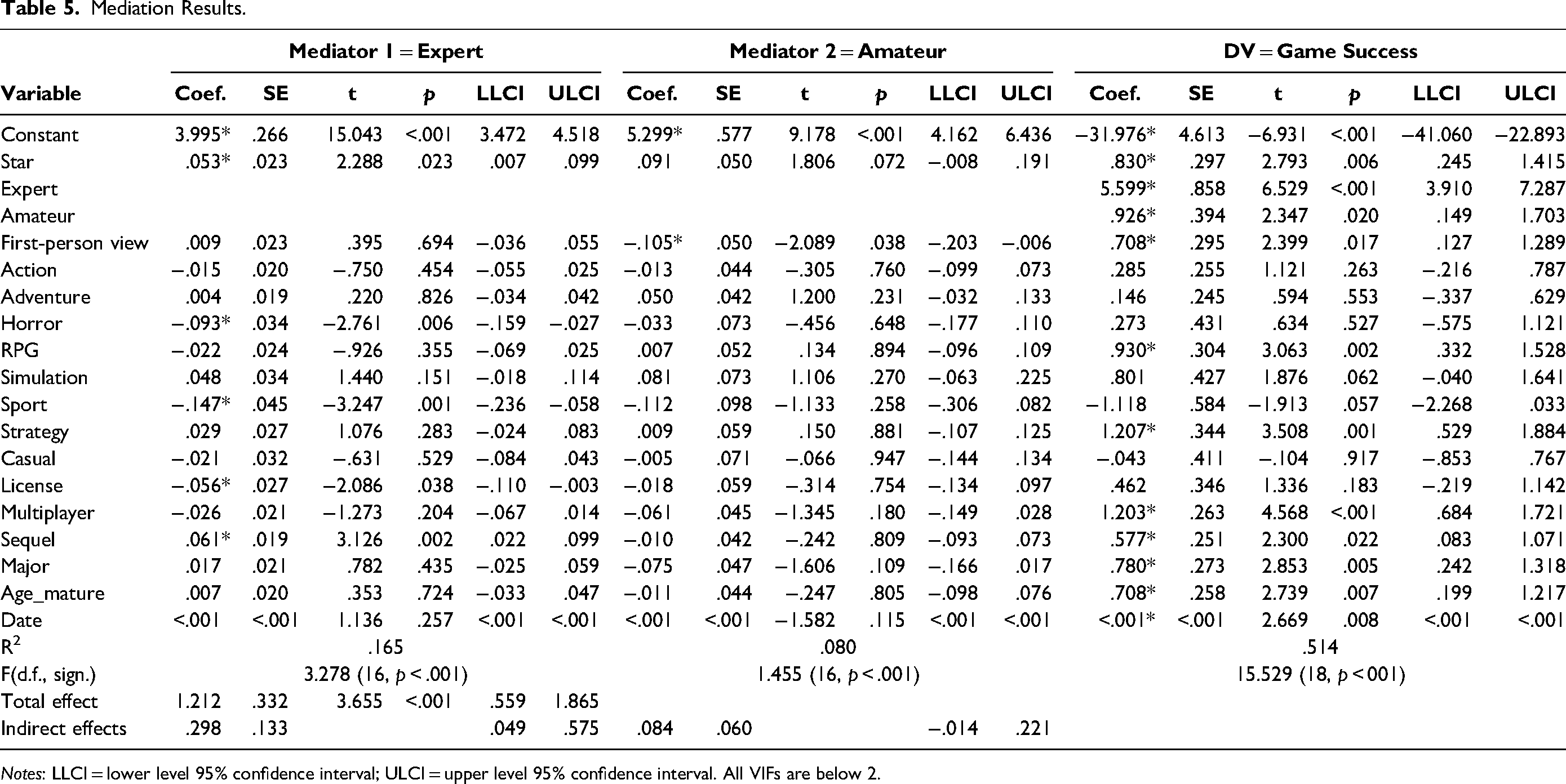
Notes: LLCI = lower level 95% confidence interval; ULCI = upper level 95% confidence interval. All VIFs are below 2.
Further Results and Robustness Checks
For deeper insights, we also looked at interactions with stars. For this purpose, we extended the main model by one interaction variable to be tested. We find a weak positive nonsignificant interaction effect between stars and the first-person view (1.052, p = .059) and a positive interaction between stars and of horror games (2.436, p = .004) on game success. We also find a negative interaction effect between stars and multiplayer games (−1.535, p < .001). In all three cases, the interaction effects were not significant for the ratings by experts and amateurs (see Web Appendices B1–B3).
In addition to the star dummy variable, we tested for each game the mean inverse STARmeter ranking, the highest inversed STARmeter value, and the number of stars. Without the dummy variable, these variables also exerted separate positive effects on game success. However, if a dummy variable and one of these alternative star variables were included simultaneously, they became insignificant and thus provided no additional explanatory power. We conclude that it mainly depends on whether a star is involved or not (see Web Appendices C1–C3 for details).
As alternatives to the dependent variable (game success, which is the log-transformed highest player count since the focal game's release on Steam) and game sales, which correlate significantly with game success, but is only available for slightly less than half of the games in the data set, we also took a closer look at alternative variables. It can be argued that the number of ratings is also an indication of the cultural and commercial success of a game. First, we tested at the number of amateur reviews on Steam, which are directly visible in the Steam store. Second, we tested the number of amateur reviews on Metacritic, a number that is not directly visible in the Steam store. Third, and signaling cultural rather than commercial success, we tested the number of reviews by professional critics on Metacritic. The star variable had a significant positive effect on all three alternative dependent variables, similar to the game success variable (see Web Appendices D1–D3 for details).
Conclusion
Discussion
This study provides a first, comprehensive analysis of the impact of star power on video game success, including game traits such as POV, genre, and the mediating role of expert and amateur reviews. It also provides an updated literature overview of video games research in marketing. It adds to limited research on video game marketing and provides insights into key success drivers for entertainment products. In addition to advancing the theoretical understanding of star power's influences on video game success, it establishes a pragmatic tool for industry professionals to apply in their decision-making processes. This dual contribution underscores the study's value to both the academic community and industry.
Casting popular actors as characters in video games can indirectly and directly increase video game success. Indirectly, stars have an effect on the ratings of professional critics, whose assessment of game quality is an important factor in the success of video games. Well-known stars directly reduce uncertainty about the video game experience, the individual benefits of which consumers only know when they play them.
Compared with movies, where meta-analyses by Carrillat, Legoux, and Hadida (2018) and Hofmann et al. (2017) found positive elasticities of .14 to .16 of stars on movie success, the positive impact of stars on video game success seems to be somewhat lower. This could be due to the differences between films and video games (see Table 1). Although the engagement time that consumers typically spend with the respective product is higher for video games than for movies, the stars are not directly visible in video games but are integrated into the games through motion capturing. Players often do not see the stars from the outside but act from the direct perspective of the stars, so that only the voice of the stars could be relevant in such cases. The fact that the artistic performance of a star is often controlled by the consumers themselves, rather than being viewed from the outside, could also reduce the impact compared with movies. Nonetheless, the integration of stars in video games seems to be an interesting and relevant aspect, which we have now examined for the first time in marketing research.
Managerial Implications
To facilitate the practical application of our findings, we have developed an interactive dashboard (bit.ly/gamestarforecast; see Figure 2). This tool enables managers to visualize and analyze the data, extracting actionable insights seamlessly. Managers can simulate various scenarios, experimenting with the integration of star power while accounting for specific game characteristics. This data-driven approach empowers decision-makers to devise targeted strategies, optimizing resource allocation and maximizing the potential for game success. Our analysis indicates that incorporating a star into the baseline action game with mean amateur and expert rating could enhance its success by approximately 8.3%. This increase differs between genres, and, for a first-person horror game, for example, it rises to 15.6%.
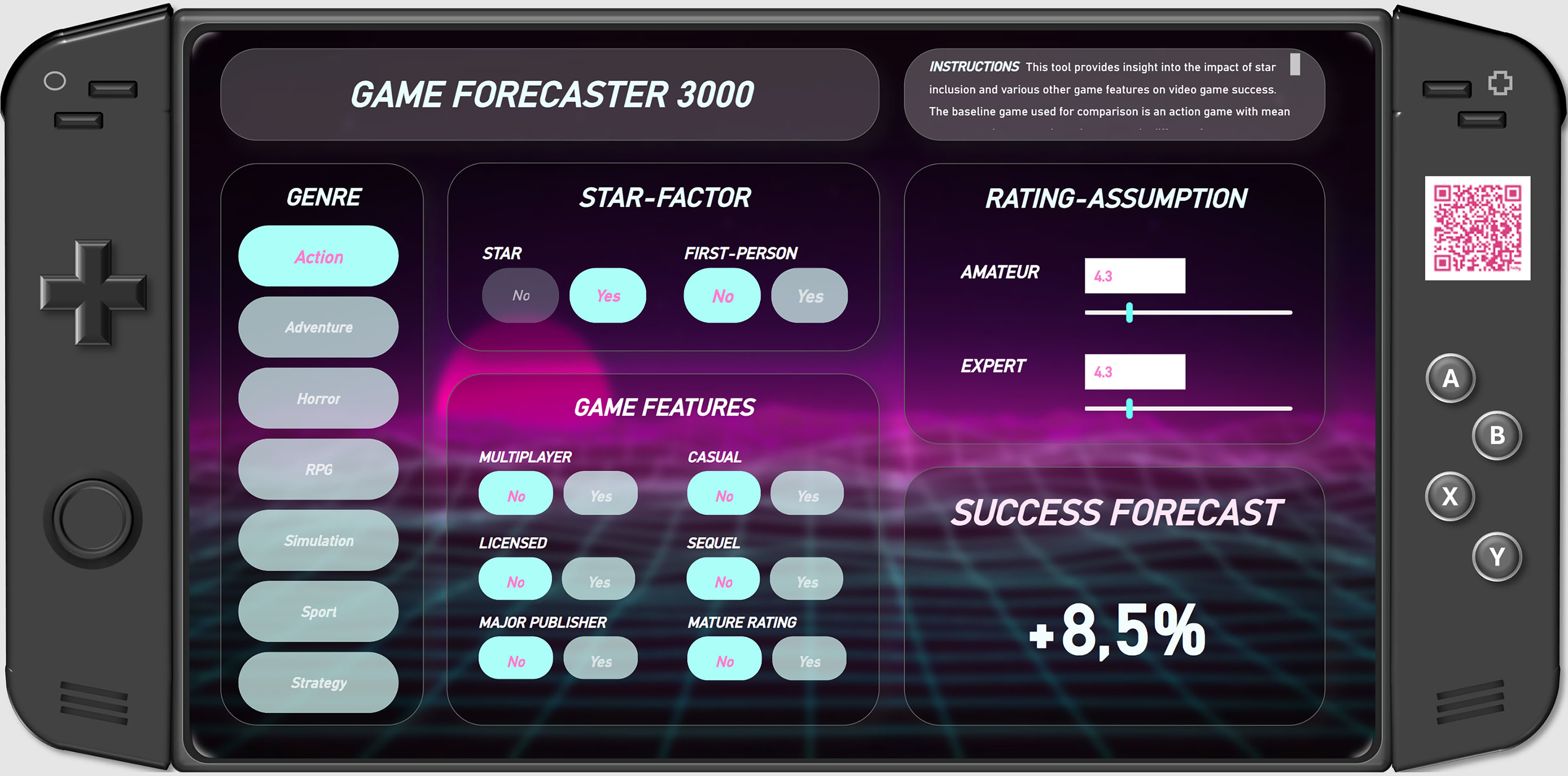
Star Power Forecast Dashboard.
For game studios, being able to predict the impact of star power on the success of their games should strongly drive their strategic decisions, especially given the long development cycles and significant costs involved. Our results can assist game developers and marketers in their prerelease decision-making processes, particularly with regard to casting popular actors and designing game properties. Real-time data about star power, measured by the IMDb STARmeter, also provide useful insights for industry professionals to monitor trends, track the popularity of potential cast members, and make appropriate decisions.
We recommend that also low-budget games employ stars with varying levels of fame. Even if A-list celebrities receive exorbitant salaries, average actors typically receive standard union rates (e.g., $3,150 per week, depending on budget and other restriction; Shanley 2019). Noting the enormous costs of developing video games, even for independent studios, investing in appropriate talent likely will pay off, without breaking the budget. Including popular, talented names and faces in games increases their visibility and differentiation in a crowded market and even may attract more investors.
Just as star power enhances video game success, employing social media influencers might benefit marketing efforts. Like star actors, social media influencers’ impact appears to vary according to product attributes, target audiences, and other factors (e.g., Karagür et al. 2022). Marketers should consider the fit between the influencer's persona and their games’ attributes. Moreover, the real-time measurement approach we used, applied a year before a game's launch, can be adapted to various influencer-related performance indicators that would support predictions of the potential impact of influencer partnerships.
Limitations and Directions for Further Research
It could be argued that video games with stars could have a generally higher budget than video games without stars, which could lead to endogeneity. As the budget information for many games is only vague estimates (or not available at all), we were only able to estimate this for a subsample. Here, the low correlation between budget and stars (r = .16) seems to be significantly lower for video games than for films, and there are numerous examples of successful video games with high budgets but no stars (e.g., Final Fantasy VII, Forza Horizon 5, Horizon Zero Dawn, The Sims 4). As a proxy variable for budget, we have complete information on whether a video game is from a major publisher, which usually invests more budget than a minor publisher. The correlation between major publisher and star is only moderate, and the maximum VIF in our regression is below 2, so we do not recognize a substantial bias. Nevertheless, this is a limitation that should be further investigated with better data on game budgets, which are not publicly known.
As an alternative method, we tested the first model with a propensity score approach with an inverse probability of treatment weighting. We calculated Equation 1 using propensity-score-weighted least squares. The weighted coefficient of the star dummy variable (.852; p = .017) is similar to the unweighted coefficient (.830; p = .006; Web Appendix E). However, the metric star variables (e.g., how well a star is rated, how many stars are involved) cannot be tested with this method, as there is no unambiguous treatment. Based on the existing literature on video games, we have a sufficient understanding of potential confounders to control for them directly. Nevertheless, the sample of games with stars differs significantly on some variables from the sample of games without stars, such that a selection bias is possible. Future studies should examine this more closely.
The detailed data available on platforms such as SteamDB and SteamSpy, including Twitch streams, provide abundant opportunities for research. For example, studies could examine the possible different effects of star influencers across various channels (e.g., Twitch, YouTube), as well as conduct panel analyses to track the success of games over time. In a separate analysis, we found no significant effect of the star's role in the game plot or the type of performance (voice acting vs. full performance) on game success. However, these results could be revisited in continued research focusing on artistic power, such as if Oscar-winning actors participate in video games more frequently.
Future studies could collect additional data to be able to analyze dynamic models over time. Perhaps there are certain dynamic patterns (functional shapes) or inverted U-shaped relationships that could be relevant for the effects of stars over time. The storytelling and immersion aspects through the integration of stars also deserve more in-depth investigation. Stars could also experience an increase in value through participation in video games, which could also make them more valuable for feature films through feedback loops. This would require adding a comprehensive dynamic dataset with all relevant factors for movies to the analyses, which could be a worthwhile future research project. Finally, the development of stars in video games is also interesting in terms of future work (Frey and Osborne 2017). Could AI-animated stars, which we currently know mainly from video games, also become established in other areas such as movies, TV, influencer marketing, and modeling professions?
Supplemental Material
sj-pdf-1-jnm-10.1177_10949968241274693 - Supplemental material for How Star Power Drives Video Game Success
Supplemental material, sj-pdf-1-jnm-10.1177_10949968241274693 for How Star Power Drives Video Game Success by André Marchand and Nicolas R. Weber in Journal of Interactive Marketing
Footnotes
Acknowledgments
The authors thank Pauline Röhr and Saskia Kuhn for the support with the data collection.
Editor
Sonja Gensler
Associate Editor
Steven Bellman
Declaration of Conflicting Interests
The authors declared no potential conflicts of interest with respect to the research, authorship, and/or publication of this article.
Funding
The authors received no financial support for the research, authorship, and/or publication of this article.

Notes
References
Supplementary Material
Please find the following supplemental material available below.
For Open Access articles published under a Creative Commons License, all supplemental material carries the same license as the article it is associated with.
For non-Open Access articles published, all supplemental material carries a non-exclusive license, and permission requests for re-use of supplemental material or any part of supplemental material shall be sent directly to the copyright owner as specified in the copyright notice associated with the article.
