




Abstract
This study investigates how physical and psychological distance from one's surroundings may influence one's perception of connectedness with the servicescape and, ultimately, perception of value. It also examines the effect of consumers’ techno-psychological differences and interaction modes on this distance–closeness relationship. The researchers develop and test a conceptual framework of how personal cognitive traits and technological intervention may alter consumers’ perceived connectedness to the servicescape and influence their perceived value in different service settings. Via a quasi-experiment design in three service scenarios, this research shows a synthetical effect of contactless technology in the distancing setting that may work more effectively on high self-efficiency customers to change their perceived closeness to the servicescape and further change their evaluation of the service. The findings reveal the practical implications of social distancing for different types of consumers in service encounters during or after the COVID-19 pandemic.
Keywords
The COVID-19 pandemic had a devastating impact on almost all high-contact service sectors, particularly when various countries enforced social distancing measures to curb the spread of the virus. Public health administrations urged service providers to follow the 2-meter social distancing rule to maintain service operations at minimal cost to public health. Studies have shown that social distancing measures significantly affect consumers’ behavior, cognition, emotions, and psychological state, along with altering how they evaluate services (Hyun and Han 2012; Kim and Moon 2009; Lin 2004). Numerous sociologists and consumer psychologists have used social and behavioral sciences to tackle the pandemic's repercussions. They have provided insights on balancing self-interests with public well-being (Bavel et al. 2020), reducing loneliness, and improving quality of life (Geirdal et al. 2021; Hoffart, Johnson, and Ebrahimi 2020). They have also attempted to align human behavior with the recommendations of epidemiologists and public health experts while safeguarding consumer values.
Despite the resumption of daily activities two years after the first wave, people voluntarily maintained a social distance in public spaces, following the World Health Organization's (2020) guidelines. This has brought forth some questions: Does social distancing impact consumers? How does it affect consumers psychologically? Does it create a distant sensation and undermine intimacy? How do visible clues in the service sector (for instance, a new mode of interaction) alter consumers’ perceived value? These questions have inspired researchers to examine the interface between service design, consumer psychology, and consumers’ perceived value. Therefore, this study investigates the psychological effects of social distancing on consumer perceptions in specific service contexts. It examines whether the social distancing policy changed consumers’ mindsets. Since consumers’ perceived value often relies on their perceived physical and psychological distance, this study investigates whether their distance perceptions affect their perceived value in service encounters via their perceived connectedness with the servicescape.
This study investigates two practices representing the pandemic—social distancing and machine-based interactions—for their unique contributions to shaping customer perceptions in the pandemic's special context. Particularly, it examines how their seemingly opposite effects in the service sector could have changed the way we perceive things. Social distancing increases physical distance to ensure safety from the virus but at the cost of sacrificing customers’ comfort. Meanwhile, machine-based interactions reduce physical distance to increase psychological intimacy. The coexistence of these two practices may have affected customers’ value perceptions. Thus, it becomes imperative to investigate this possibility.
First, we propose that customers’ evaluation of a service depends on the context. Studies on consumer value state that it is a multifaceted construct encompassing utilitarian, hedonic, and social needs (Baker et al. 2002; Ha and Jang 2010; Sweeney and Soutar 2001). According to value creation logic, consumers’ perceived value varies according to different factors of a service encounter. Generally, it depends on the service's functionality (Gallarza and Saura 2006; Koller, Floh, and Zauner 2011), the appearance of the physical layout (Erol et al. 2016), and the presence of social companionship (Lee et al. 2017). However, these factors fail to explain consumers’ value perceptions in dynamic service encounters in specific contexts. After all, the pandemic caused an unprecedented need for safety awareness in public spaces, considering COVID-19's high fatality rate and the psychological shadow it has cast on society.
Second, we categorize the potential determinants of consumers’ perceived value in service encounters into physical settings and psychological mechanisms. Social distancing protects one from the virus, building one's confidence and ensuring safety. However, its social consequences, such as isolation, loneliness, incapableness, inactiveness (Geirdal et al. 2021; Hoffart, Johnson, and Ebrahimi 2020), and frustration cannot be neglected. Similar effects arise from the adoption of nonhuman interactions to reduce the bilateral contact risks of service systems. Technological intervention reduces human contact as a tool to reinforce social distancing rules (Chiang and Trimi 2020; Seyitoğlu and Ivanov 2021), regardless of the pandemic's catalytic effect. Machine-based communications tools act as substitutes for human contact, ensuring the level of responsiveness, interactiveness, and personalization required for service encounters. However, these benefits may come at the cost of sacrificing the psychological benefits of human interactions, increasing isolation and discomfort (Holthöwer and Van Doorn 2022) and reducing empathy and engagement (Heller et al. 2021). Despite the increasing interest in the effects of social distancing and technological interventions, it remains unclear how changes in physical distance and interaction mode affect consumers’ value perceptions.
Third, the degree of confidence and readiness to accept technology-based services and enjoy human or nonhuman interaction differs between customers according to their individual differences. In the context of consumer consumption, psychological research shows that an individual's consciousness is sparked, and a different outcome is triggered when a stimulus is presented subtly (Overgaard and Sørensen 2004). We intend to investigate how consumers trace different psychological hints to develop their well-being in a fixed scenario. In the distance-enforced environment, service providers offered different modes of contact in service encounters. Considering consumers’ self-efficacy in pacing and controlling service encounters, we incorporate cognitive diversity in our study to make our results more generalizable.
Therefore, we intend to examine the effects of social distancing and technology-based interactions in service encounters according to the individual differences of customers. First, we examine how digital technologies empower customer interactions. Moreover, we investigate how machine-reliant service delivery influences customers’ perceived value, particularly its safety, utilitarian, hedonic, and social dimensions. Second, we analyze consumers’ self-efficacy in the distance–closeness–value mechanism. We assume that technological interventions can provide value as high as the value human-based services provide. However, we intend to test whether consumers demonstrate different levels of efficacy in handling service tools and how the equipment used alters their perceived distance and value. That is, we explore how consumers’ self-efficacy in using innovative tools influences their perceived value.
In the next section, we develop a conceptual model by reviewing the existing literature and developing hypotheses. Then, we present the study's methodology. After the analysis, we present our findings, discuss their implications, and highlight conclusions that shed light on personalized consumer intervention in various service contexts.
Literature Review and Hypothesis Development
Social Distancing and Consumer Well-Being
Social distancing is an effective strategy that reduces one's chances of getting infected via direct contact (Milne and Xie 2020). It completely changes the paradigm of interpersonal interactions. However, despite its effectiveness, it can have some negative consequences. For instance, it can make individuals feel distant from others, also known as a “distal” sensation that affects people's mental health and increases disconnectedness (Jakhar and Kharya 2020). Explanations for such effects are complex. Biologically, the human brain's neurons are dopaminergic. Studies have shown that forced social isolation can cause mental problems, such as loneliness, anxiety, and depression (Holt-Lunstad 2020; Lewis et al. 2020; Matthews et al. 2016). It can also arouse biological responses, such as a craving for social interaction, similar to how fasting induces food cravings (Tomova et al. 2020). Furthermore, it can induce neural cravings from optical stimulation, depending on social rank (Kaufman 2020), and even contribute to dire health issues such as heart disease (Lewis et al. 2020). Psychologically, forced social isolation results in reward deprivation. Related studies show that social isolation is associated with negative and positive emotions (Matthews et al. 2016) and that social contact addresses unmet social needs (Tomova, Tye, and Saxe 2021). However, feelings toward the surroundings may differ from person to person depending on geographical psychology (Rentfrow 2020).
Numerous studies have explored the relationship between “distance” and consumer behavior (Dickson and MacLachlan 1990; Kim, Zhang, and Li 2008; Zhao and Xie 2011). For instance, Dickson and MacLachlan (1990) devised a new measure for social distance and showed that consumers tend to avoid the stores they perceive as being socially distant from themselves. Multiple dimensions of psychological distance (temporal and social distance) have been applied to investigate consumers’ product appraisals (Kim, Zhang, and Li 2008) and their responses to peer recommendations (Zhao and Xie 2011). Furthermore, the emergence of the COVID-19 pandemic has advanced the research on consumers’ well-being and social distancing in recent years (Finsterwalder 2021; Minton 2022). The underlying mechanism of consumers’ psychology when exposed to a populated environment can be complex (Zhang et al. 2021). Wang et al. (2021) show that crowding can hamper consumers’ perceptions of safety in service encounters, thus affecting their patronage intentions. Studies have also discussed the relationship between social distancing and consumer buying decisions (Ang, Wei, and Arli 2021). However, rarely has social distancing been explored to understand consumers’ psychology and subjective evaluations in the service sector, particularly their perception of service quality, satisfaction, and value (Boksberger and Melsen 2011). More specifically, consumers’ perceived value has not been explored as a dimension of consumer well-being in the context of social distancing in the service sector. Therefore, we advance the understanding of social distancing and consumers’ well-being from the perspective of their perceived value.
Perceived psychological closeness versus physical distance
Studies have discussed the relationship between physical and psychological distance (Cacioppo and Tassinary 1990; Yan, Sengupta, and Hong 2016). Generally, the concept of distance encompasses locational and spatial characteristics. However, it has different interpretations in different disciplines. For example, construal level theory (CLT) explains the concept of psychological distance in the field of consumer behavior (Yan, Sengupta, and Hong 2016). It explains how individuals perceive people, objects, or events according to the psychological distance between them and the entity (Bowen 2021). Psychological distance is egocentric, such that it is a cognitive separation of oneself from others in terms of temporal, spatial, social, or hypothetical distance (Trope and Liberman 2010). Notably, it affects individuals’ risk perceptions and preventive behavior (Chandran and Menon 2004; Trope and Liberman 2003; Yan, Sengupta, and Hong 2016; Zhao and Xie 2011). It is challenging to execute typical social functions, such as maintaining valued relationships, during a pandemic. Social-cognitive perspectives derived from CLT can offer insights into our unique interpersonal experiences and suggest ways to cope healthily (Bowen 2021). According to the dimensions of CLT, the essence of social distancing is to maintain physical distance. Various studies have emphasized the salient role of maintaining a suitable physical distance (Saatcioglu and Corus 2016). Spatial occupancy is associated with a higher symbolic social status, representing power and identity (Dickson and MacLachlan 1990; Lapointe 1992; Monnet 2011).
Psychological distance is also defined as the “subjective experience that something is close or far away from the self, here and now” (Trope and Liberman 2010). In other words, it is the degree to which something is close to the mind. Research on consumer psychology indicates that psychological distance has a subtle effect on consumers’ decision making. Applying the concept of one's psychological distance to a specific organizational setting, some associated concepts that emerge are a sense of belonging (Dickson and MacLachlan 1990), consciousness (Simonson 2005), and social interaction (Liberman and Trope 2008). Thus, people tend to have a positive perception of and accommodative behavior toward an object when the psychological distance between the two is short. Moreover, psychological closeness may encourage people to engage in actions that help solve an issue (Liberman, Trope, and Stephan 2007) or make them feel that they are a part of a community or an event (Lee, Hon, and Won 2018). Notably, consumers’ decisions are determined by their conscious inputs (such as the characteristics of options in a choice set) and unconscious inputs (such as seemingly irrelevant observations or tasks). The latter is more unpredictable and influential but understated in the literature (Simonson 2005). Therefore, psychological closeness can explain and measure consumers’ perceptions and cognition in service encounters.
Evaluation of service experience: Perceived value and consumer well-being
Consumers’ perceived value is their perception of the utility of a product or service they consumed (Ryu, Han, and Jang 2010). Notably, it also influences their behavior (Babin, Darden, and Griffin 1994; Batra and Ahtola 1991; Koller, Floh, and Zauner 2011; Sweeney and Soutar 2001). Therefore, it is a critical factor in understanding consumers in the service sector (Hanzaee and Rezaeyeh 2013) and transaction-specific value of the quality of life (Boksberger and Melsen 2011). The existing literature presents multiple dimensions of perceived value, such as social, emotional, functional, and cognitive value (Ha and Jang 2010; Sweeney and Soutar 2001). Among these, utilitarian, hedonic, and social values are the most common in the service marketing literature (Babin, Darden, and Griffin 1994; Park 2004).
Following this trend, this study investigates four dimensions of perceived value—utilitarian value, hedonic value, social value, and perceived safety—to evaluate service experiences. Utilitarian value refers to the inherent attributes, practicality, and functionality of a product or service (Shukla, Singh, and Banerjee 2015). Essentially, economic aspects, quality, efficiency, and task-specificness determine a product's or service's utilitarian value (Berthon et al. 2009; Shukla and Purani 2012). Hedonic value was defined as being “more subjective than its utilitarian counterpart. It increases with fun and playfulness rather than with task completion” (Babin, Darden, and Griffin 1994, p. 646; Hirschman and Holbrook 1982). The hedonic value of service experiences (or products) is triggered by their uniqueness and the emotions they arouse. Furthermore, it reflects entertainment, adventure, and other aspects of service experiences that arouse spiritual enlightenment (Babin, Darden, and Griffin 1994; Ha and Jang 2010). Communication makes people empathize, thus leading them to recognize others’ existence and show them kindness and respect (Valente 2016). Also known as communication value, social value is a common measure of consumers’ perceived value. Perceived safety, a determinant of service experience, refers to consumers not perceiving risks or doubts in their service experience.
Studies on perceived safety have focused on consumer satisfaction in the context of e-commerce or e-service. Some have highlighted the role of perceived security on consumers’ satisfaction in online consumption based on the perceived security of payment, personal information, hardware, and software (Flavián and Guinalíu 2006; Santos 2003). However, owing to the pandemic, the perceived safety of offline service venues has also become a crucial factor in service evaluations (Li et al. 2022; Vich et al. 2022). Some studies show that perceived security positively affects consumers’ intention to use mobile payments (Khalilzadeh, Ozturk, and Bilgihan 2017; Zhao and Bacao 2021). Moreover, safety messages increased the competitiveness of small and independent restaurants during the pandemic, serving as an effective sales promotion strategy (Kim, Bonn, and Cho 2021). However, few studies explore perceived safety in the servicescape as a factor contributing to consumers’ perceived value. It inextricably influences consumers’ well-being, particularly in the context of social distancing during the COVID-19 pandemic. Therefore, this study incorporates perceived safety as a dimension of consumers’ perceived value to investigate their well-being in the servicescape.
Essentially, we investigate how anxiety-reducing measures affect fulfillment of consumers’ safety expectations and their value perceptions of the service encounter. We also ascertain the optimal balance between reducing anxiety (safety value), delivering functionality as expected (utilitarian value), enhancing the experience (hedonic value), and ensuring satisfaction from interactions (social value) to make the servicescape highly satisfactory. From these arguments, this study proposes the following hypotheses.
Mediating Effect of Connectedness to the Servicescape
The servicescape can shape consumers’ experience and value expectations (Baker and Cameron 1996; Baker et al. 2002). As stated previously, in the context of consumer consumption, subtly presenting a stimulus sparks consciousness and triggers a different outcome (Overgaard and Sørensen 2004). The servicescape can consciously and unconsciously influence consumers’ choices in service encounters using contextual cues (Simonson 2005). Several service cues, such as physical layout (Lin 2004), fragrance, and music (Mattila and Wirtz 2001), can influence consumers’ value perceptions (Berry, Wall, and Carbone 2006). Furthermore, special servicescapes of consumption venues also determine consumers’ value perceptions. The concept of “third place” has often been applied to places where social interaction happens. For example, a restaurant is an encountered space (Ji et al. 2021), live sport events provide a unique experience to fans (Chen, Lin, and Chiu 2013; Uhrich and Benkenstein 2010), and a café is a place where people can work or arrange meetings (Nguyen et al. 2019). Notably, many bookstores in the United Kingdom have been repositioned as destination stores (Clements 2005).
Since the 1970s, scholars have used different terms to conceptualize the servicescape. Kotler (1973, p. 50) termed it “atmospherics” and explained it as “the effort to design buying environments to produce specific emotional effects in the buyers that enhance their purchase probability.” Emphasizing the role of the retailing atmosphere, Kotler (1973, p. 48) stated that “in some cases, the atmosphere is the primary product.” Owing to the atmosphere's “silent” language (encompassing body, temporal, and spatial language), in-service communication can generate tangible or intangible effects. Other studies show the importance of atmospherics (i.e., features of aesthetics, socialization, and family gathering) in purchase decisions (Hoffman and Turley 2002). Solomon et al. (1985) introduced the term “service encounter” to denote the interaction between consumers and service providers. Service encounters are considered salient determinants of consumers’ satisfaction because consumer attitude evolves according to the service encounter (Ji et al. 2021). The “physical environment,” as introduced by Baker (1987), is a crucial feature of service encounters because services are produced and consumed simultaneously. Meanwhile, Bitner (1992) believed that the “servicescape” (or physical surroundings) affects consumers’ as well as employees’ behavior, thus influencing the degree to which service transactions are executed successfully. Designing an effective servicescape involves predicting employee and consumer responses to environmental conditions and creating an appropriate environment for service encounters (Bitner 1992). Therefore, we adopt the term “servicescape” to investigate consumers’ perception in service encounters.
People exhibit supportive behavior and have a strong cognition of the servicescape when the psychological distance between them and the servicescape is short (Lee, Hon, and Won 2018). Moreover, psychological closeness positively influences participants’ intention in an event or activity. It is represented by emotional connectedness and empathy toward people or the servicescape (Deza and Deza 2016). From these arguments, we present the following hypotheses.
Interactive Effect of Self-Efficacy and Technical Embedment in the Servicescape
Technological intervention: Service delivery by digital agents
Various social distancing measures were implemented to combat the pandemic. However, consumers could still feel anxious about contact with service providers and other people in service encounters. Therefore, some studies examined the impact of employing cutting-edge digital technologies in frontline services. They revealed that self-service scanners and mobile payments can reduce direct contact (Zhao and Bacao 2021) and increase checkout efficiency (Grewal et al. 2020). Moreover, artificial intelligence (AI) agents, such as service robots, can improve frontline interaction and safeguard consumers and staff (Grewal et al. 2020; Seyitoğlu and Ivanov 2021).
Theories on human–agent and human–human interactions have been conflicting (Cacioppo and Tassinary 1990; Nie 2001). However, considering digital agents similar to humans, an interpersonal framework can accommodate these two types of interactions and their outcomes (Clark, Algoe, and Green 2018). Agents are intermediaries or independent entities that perform an additional role apart from that of the service provider and recipient. Digital agents are computer- or algorithm-controlled (Morkes, Kernal, and Nass 1999; Nowak and Biocca 2003), and they are categorized as functional (e.g., industrial and sweeping robots), social (e.g., chatbots, conversational agents), and functional-social (e.g., virtual assistants, social robots) agents. Some attributes of digital agents, such as social activity, interpersonal interaction, locus of control, sensation seeking, and innovativeness, can link them to viewing behavior and perceptual connection (Haridakis and Hanson 2009). The existence of these attributes determines the sociability of digital agents. Moreover, digital agents have a certain level of physiological, mental, intellectual, or humanlike attributes. For instance, they have lineament and physiognomy (Guido and Peluso 2015) or face pareidolia (Guido et al. 2019) that can function in service encounters. The presence of facial features or expressions can induce consumers to form a humanlike connection (Landwehr, McGill, and Herrmann 2011; Windhager, Hutzler, and Oberzaucher 2010). Various digital agents have induced a high level of sensation authenticity (Parise, Guinan, and Kafka 2016; Portal, Abratt, and Bendixen 2018), animacy (Castro-González, Admoni, and Scassellati 2016; Mende et al. 2019), perceived power, control, risk judgment (Kim and McGill 2011), fairness (De Kleijn et al. 2019), automation level (Crowell et al. 2019), moral concern (Waytz, Cacioppo, and Epley 2010), enjoyment (Van Pinxteren et al. 2019), and positive affect (Landwehr, McGill, and Herrmann 2011; Letheren, Martin, and Jin 2017). Many have also reduced psychological distance (Chu, Lee, and Kim 2019; Puzakova and Aggarwal 2018) and loneliness (Epley et al. 2008).
Employing technological artifacts in consumer interaction affects service result perceptions (Zhu and Chang 2020) and human cognition (Hu et al. 2021). The service experience can be influenced by interactions between those who exist and the environment as “others” that share the same atmosphere, affection, or feeling (Häubl and Trifts 2000). In addition, interactions can establish collective engagement (Goldy and Piff 2020) or joint action (Marsh, Richardson, and Schmidt 2009) and synchronize common behaviors, with an ideal spirit, fun, excitement, and enthusiasm (Lloyd and Luk 2011). The future may bring even bigger developments in the manifestation of AI, possibly ushering in the fourth industrial revolution. Corresponding to such expectations, numerous researchers are beginning to explore the current and potential impact of technological interventions on service theories (Belanche et al. 2020; Bock, Wolter, and Ferrell 2020; Heller et al. 2021). However, no study has examined the interactive effect of consumers’ individual differences and technological interventions in the servicescape.
Moderating effect of the interaction of self-efficacy and technology intervention
While interacting with the servicescape, individuals are bound to be affected by their surroundings and their own characteristics. Self-efficacy is a salient construct in psychology (Nickerson and Mele-Taylor 2014) and service marketing (Kim and Muralidharan 2020). Bandura (1977, 1993; Bandura, Freeman, and Lightsey 1999) defined it as an individual's perceived capability of accomplishing a task. An essential aspect of the social cognitive theory is individuals’ attitudes, cognitive skills, and capabilities. Psychology also explains self-efficacy as a capability owned or earned by oneself from specific activities (Luszczynska, Scholz, and Schwarzer 2005). It affects how an individual handles tasks, the energy they invest, and their response to failure (Lee 2015). Studies have examined various types of self-efficacy in the digital field, such as computer (Agarwal, Sambamurthy, and Stair 2000; Compeau and Higgins 1995), internet (Hsu and Chiu 2004; Torkzadeh and Van Dyke 2002), social media (Błachnio, Przepiórka, and Rudnicka 2013; Hocevar, Flanagin, and Metzger 2014), and digital game (Lee 2015) self-efficacy.
Tourism and service literature has extended the concept to interpersonal contexts, such as service encounters (Kim and Muralidharan 2020) or human–machine interactions, such as AI-aided communication (Chattaraman et al. 2019; Zhu and Chang 2020). Those studies show that a low degree of self-efficacy hampers the usage of digital devices (Ghobadi and Ghobadi 2015; Van Deursen and Van Dijk 2015). Lucas et al. (2006) reported that highly self-efficacious participants perform more independently than low self-efficacious ones.
Based on the self and surroundings, self-efficacy enables the individual to take in and successfully handle every possible stimulus the external environment presents in self–external interactions. Therefore, one can hypothesize that individuals’ self-efficacy affects their perceived psychological and physical distance to the servicescape when different interaction modes are present (human–machine interactions and human–human interactions). Consequently, it affects their perceived value. Therefore, we posit the following hypotheses:
Highly self-efficacious consumers rely heavily on their psychological perceptions in service encounters. They tend to engage with the staff so that they can effectively integrate into the environment. Conversely, low self-efficacious consumers tend to use other cues (such as social distancing signs) to establish their preferences since they do not know exactly what they want (Hong, Yu, and Wang 2020). Therefore:
Figure 1 illustrates our research model.
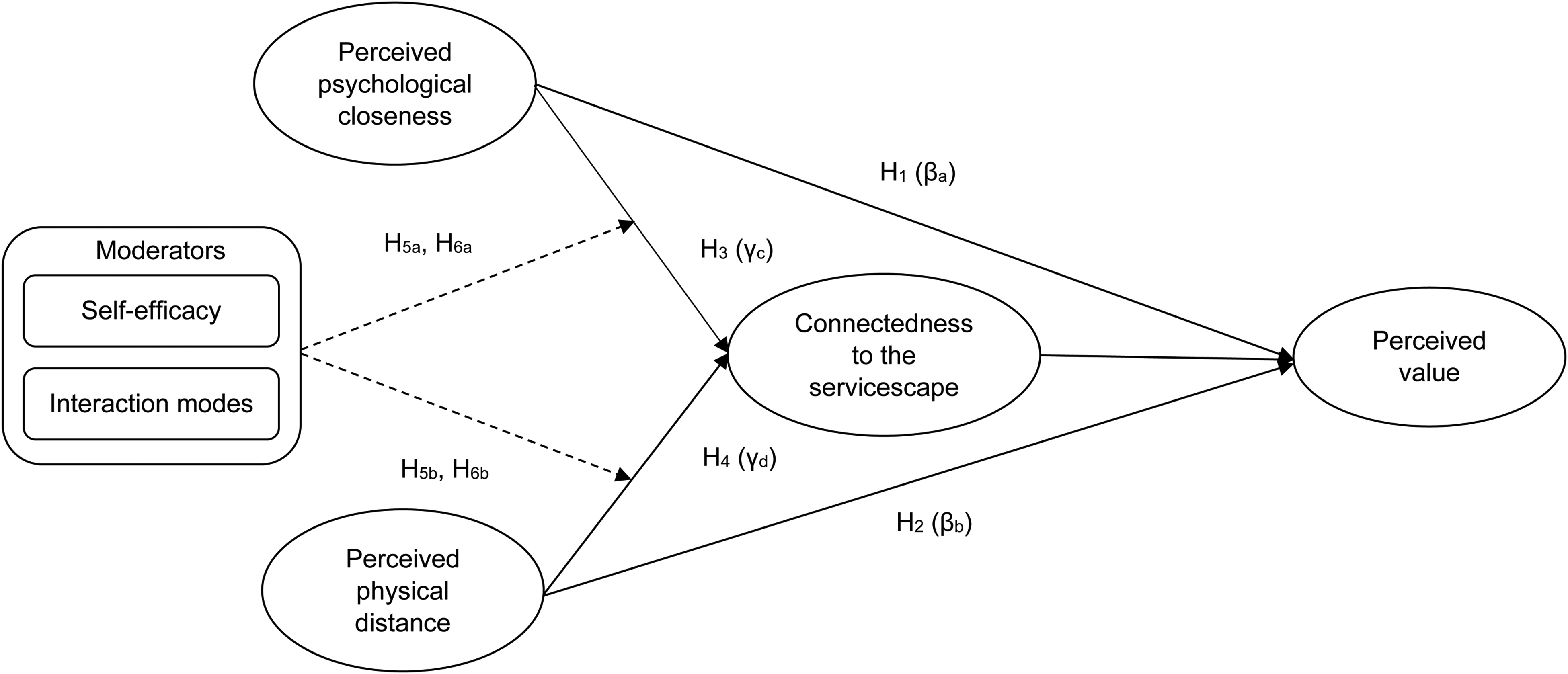
Research Model.
Empirical Study
Methodology
Samples and procedures
A web-based experiment was conducted to test the proposed hypotheses. Respondents were recruited from Wenjuanxing (https://www.wjx.cn/), a Chinese professional online survey platform similar to Amazon Mechanical Turk (MTurk) with more than 2.6 million “crowdworkers” in its sample base. Through this survey service tool, respondents were recruited in January 2021 to participate in this quasi-experiment provided the criteria were met:
Respondents lived in China during the COVID-19 pandemic. Respondents could access an online link to fill out the questionnaire.
Before the experiment began, participants filled out a pre-experiment questionnaire to measure self-efficacy. Participants were asked about their attitudes toward social distancing policies before the investigation started and were prompted to see an experimental scenario that required social distancing. The next step randomly assigned the participants to one of the three experimental scenarios: a bookshop, a café, and a sports stadium. Scenario texts and pictures were manipulated and presented to the participants. At the end of the experiment, participants were asked to fill out a postexperiment questionnaire on their perceptions and evaluations of the experimental service scenario. Demographic information was collected at the end of the questionnaire. The data collection lasted for two weeks. Invalid responses (e.g., responses with the same answer for all items) were removed, and 546 valid samples were retained. Nonresponse bias was checked by comparing the mean of all variables with the demographic data of early and late respondents.
Measurement
A five-point Likert scale (1 = “Strongly disagree,” and 5 = “Strongly agree”; 1 = “Very low,” and 5 = “Very high”) was used to measure all items. The constructs included in the research model (see Table 1) were adapted from previous studies or were constructed by the researchers. The “perceived psychological closeness” and “perceived physical distance” concepts were each measured by a three-item scale, adapted from the existing literature (Hernández-Ortega 2018; Liberman, Trope, and Stephan 2007; Trope and Liberman 2003; Vaske and Shelby 2008) and modified to fit the experimental design. “Connectedness to the servicescape” is a reflective construct with a self-constructed six-item scale constructed by the researchers. The “perceived value” construct contained four components adapted and modified from Gallarza and Saura (2006) (1 = “Very low,” and 5 = “Very high”). Self-efficacy was measured by an eight-item scale adapted from Chen, Gully, and Eden (2001). Since the data were collected in China, two bilingual researchers were invited to translate the questionnaire into Chinese to ensure that the Chinese version retained the same meaning as the English one.
Definitions and Scale Items of Key Constructs.
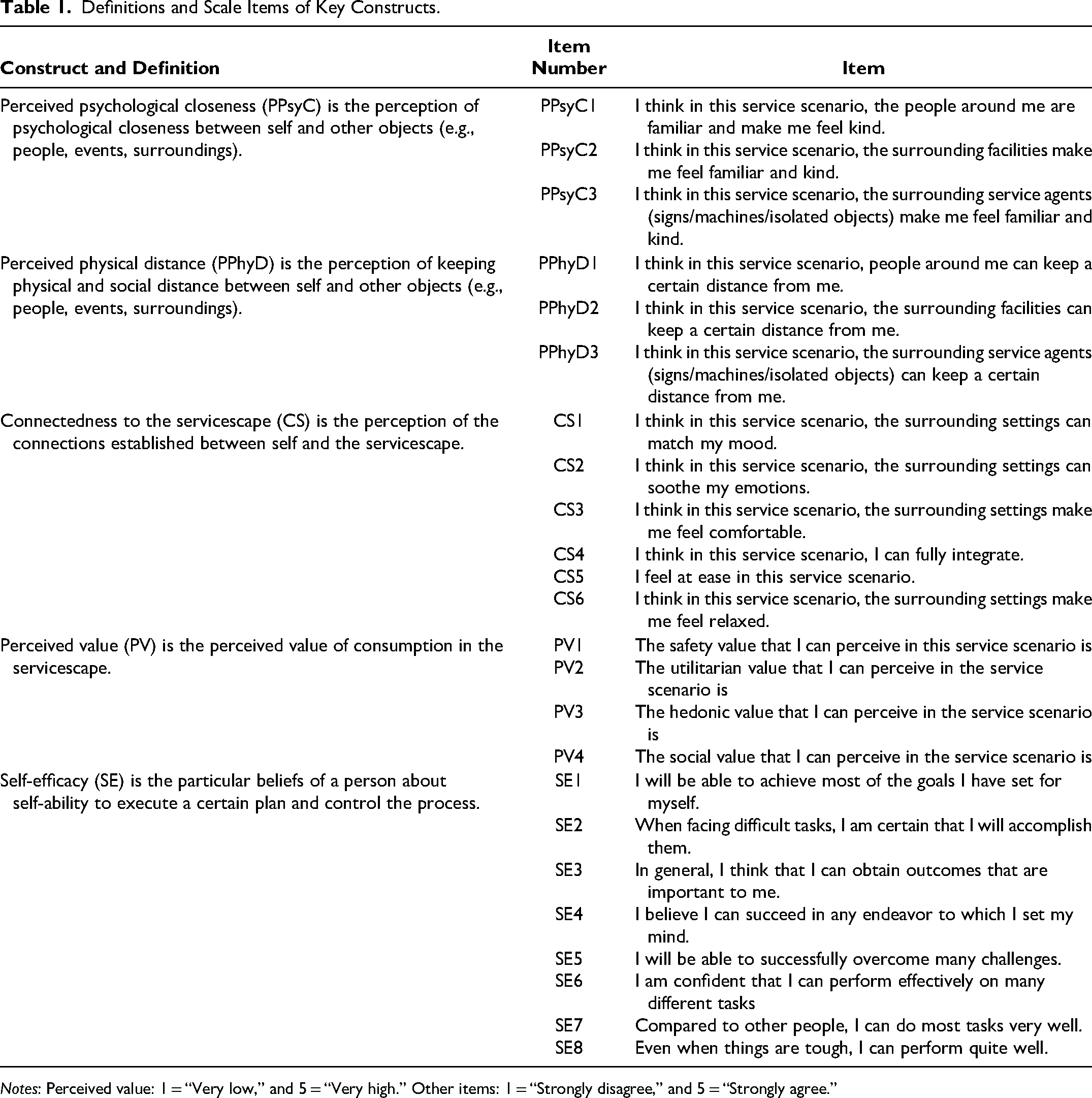
Notes: Perceived value: 1 = “Very low,” and 5 = “Very high.” Other items: 1 = “Strongly disagree,” and 5 = “Strongly agree.”
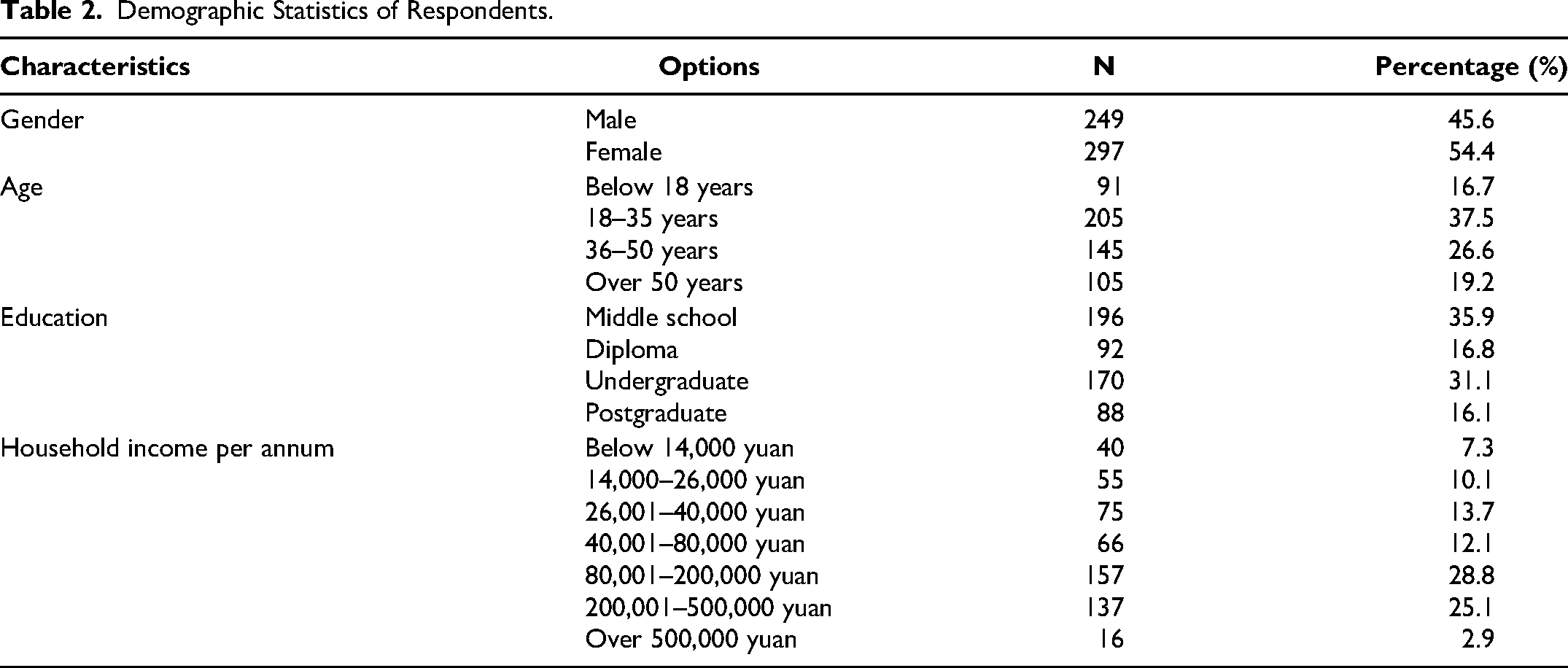
Table 2 shows the sample demographics: 45.6% of the respondents were male and 54.4% female. The age distribution of respondents is relatively even, with over 64.1% of respondents aged 19–50 years. Respondents had a high level of education, as most respondents (64%) had a diploma or higher. Regarding household income per annum, 43.2% of respondents reported income below 80,000 yuan, 28.8% had income between 80,001 and 200,000 yuan, and 28% had income over 200,000 yuan.
Demographic Statistics of Respondents.
Analysis and Results
Measurement model results
In three stages, several statistical analyses were conducted with the help of SPSS and Amos software for structural equation modeling. The first stage used SPSS to test the statistical validity and reliability of the measurement items. Then, the structural model was examined, and H1–H4 were tested using Amos 27. Finally, on the basis of the findings of the second stage, the moderating effects of interaction modes and self-efficacy on the model were analyzed, and H5 and H6 were examined.
Using self-reported data in any study might lead to common method bias. To check for common method bias, we carried out several statistical analyses. We first applied Harman's one-factor test (Podsakoff et al. 2003) using the principal axis factoring method in SPSS. A total of five factors accounted for 66.33% of the variance. However, only 29.11% of the variance was explained by the first factor, indicating that common method bias was not a significant issue in this study.
Reliability and validity testing
Before the model was tested, the reliability and convergent validity of the measurement scales were evaluated using exploratory factor analysis, followed by confirmatory factor analysis. The results are reported in Table 3. All values of factor loadings of the constructs exceeded the .7 threshold (Williams, Onsman, and Brown 2010). The Cronbach's alpha values and composite reliability values of the measurement items were all greater than the threshold of .7, indicating an acceptable reliability level (Bollen 1984). In addition, Kaiser–Meyer–Olkin values of the measurement constructs were all above .7, which exceeds the threshold of .5 (Williams, Onsman, and Brown 2010).
Validity and Reliability of the Measurement Model.
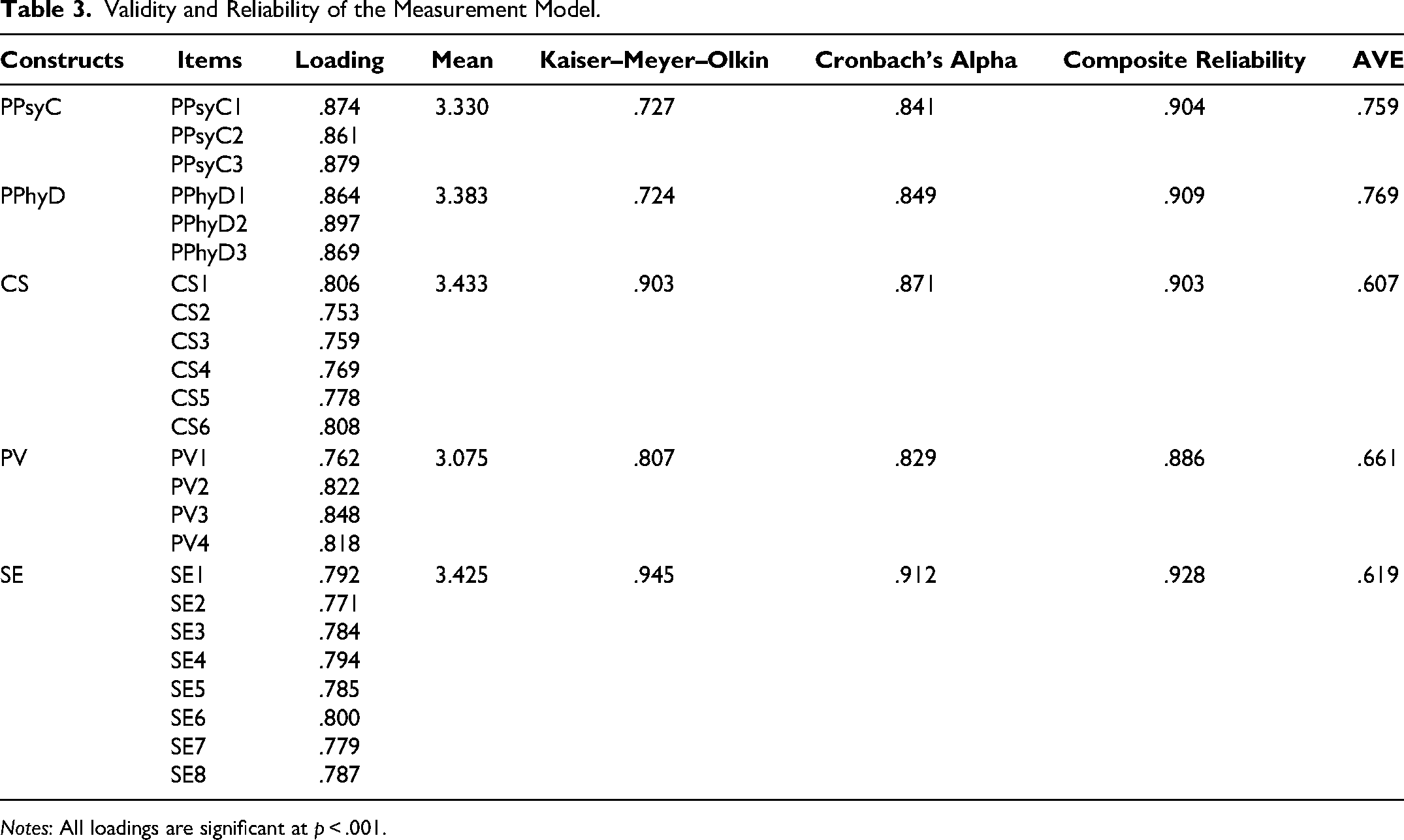
Notes: All loadings are significant at p < .001.
For convergent validity, the average variance extracted (AVE) values of the measurement construct were above the threshold of .50, suggesting that the latent construct explains at least 50% of the variance in the items (Larcker and Fornell 1981). According to the evaluation criterion, all results revealed a high level of convergent validity (Bagozzi and Yi 1988) and were thus appropriate for structural equation modeling.
In addition, Table 4 shows the heterotrait–monotrait ratio of correlations. The values were below the cutoff of .9 (Henseler, Hubona, and Ray 2016), which indicated excellent discriminant validity of these constructs (Gefen and Straub 2005).
Discriminant Validity, Heterotrait–Monotrait Ratio Method Correlations.
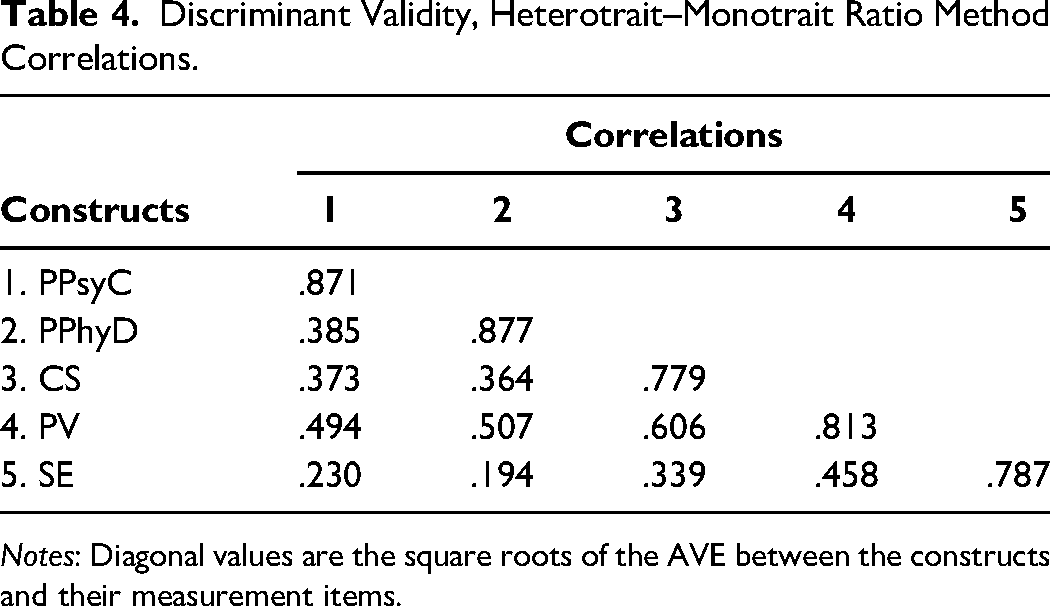
Notes: Diagonal values are the square roots of the AVE between the constructs and their measurement items.
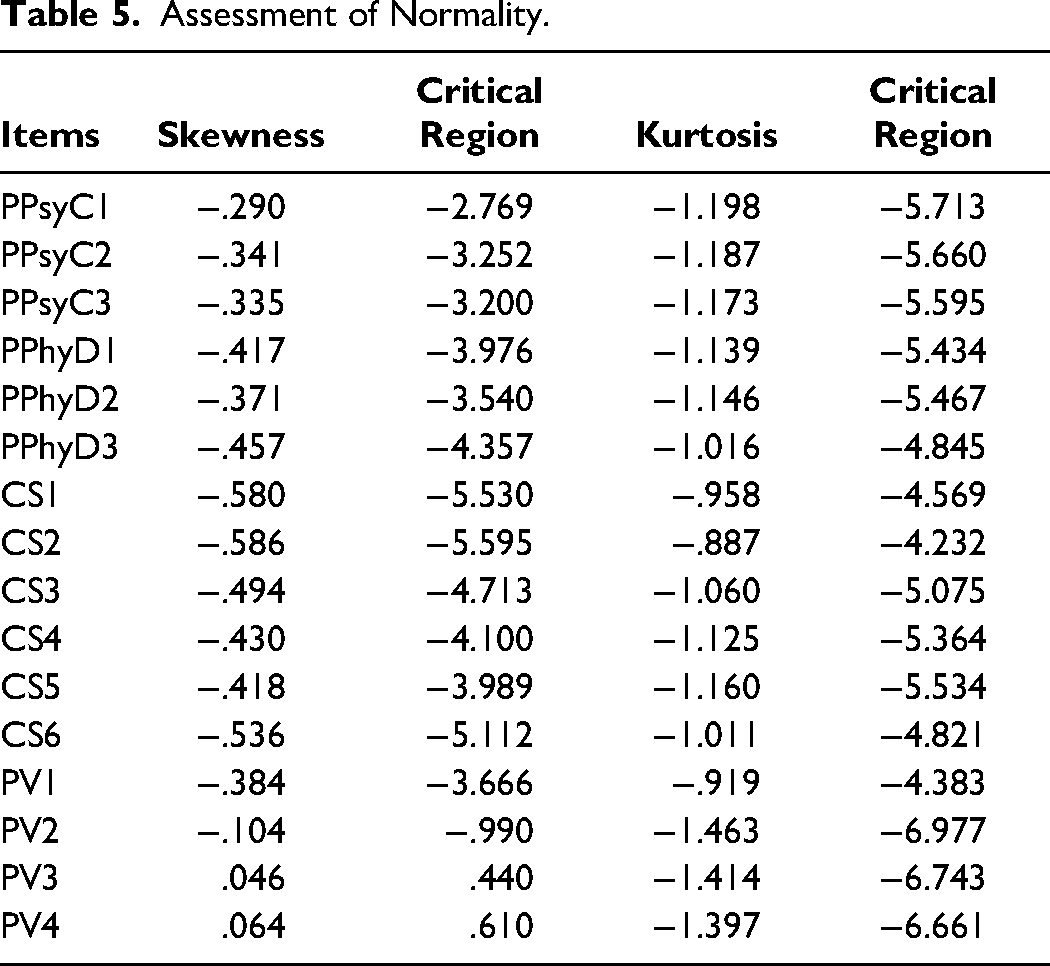
As shown in Table 5, a multivariate normality test using maximum likelihood estimation was applied in Amos 27 to check that the data are distributed generally before the structural model was created. All absolute skewness values of measurement items were lower than 2, and absolute values of kurtosis were acceptable at less than 3 (Westfall and Henning 2013). Nor et al. (2019) suggested that when the critical region for the skewness does not exceed 7.0 and the sample size is large (greater than 200), using maximum likelihood estimation is robust to kurtosis violations of multivariate normality. Therefore, the results suggested a normal distribution for each variable.
Assessment of Normality.
Structural path results
We employed criteria similar to the measurement model to assess the structural model's goodness of fit. As illustrated in Figure 2, the structural model's results demonstrated a strong fit for the data (χ2 = 115.103, d.f. = 98, χ2/d.f. = 1.175). The comparative fit index (CFI = .996), goodness-of-fit index (GFI = .974), and adjusted goodness-of-fit index (AGFI = .964) were all above .90. The root mean square error of approximation (RMSEA = .018) and root mean square residual (RMR = .047) were lower than the threshold of .08, suggesting a good model fit. The incremental fit index (IFI), normed fit index (NFI), and Tucker–Lewis index (TLI) were .996, .972, and .995, respectively, providing sufficient evidence to support the model.
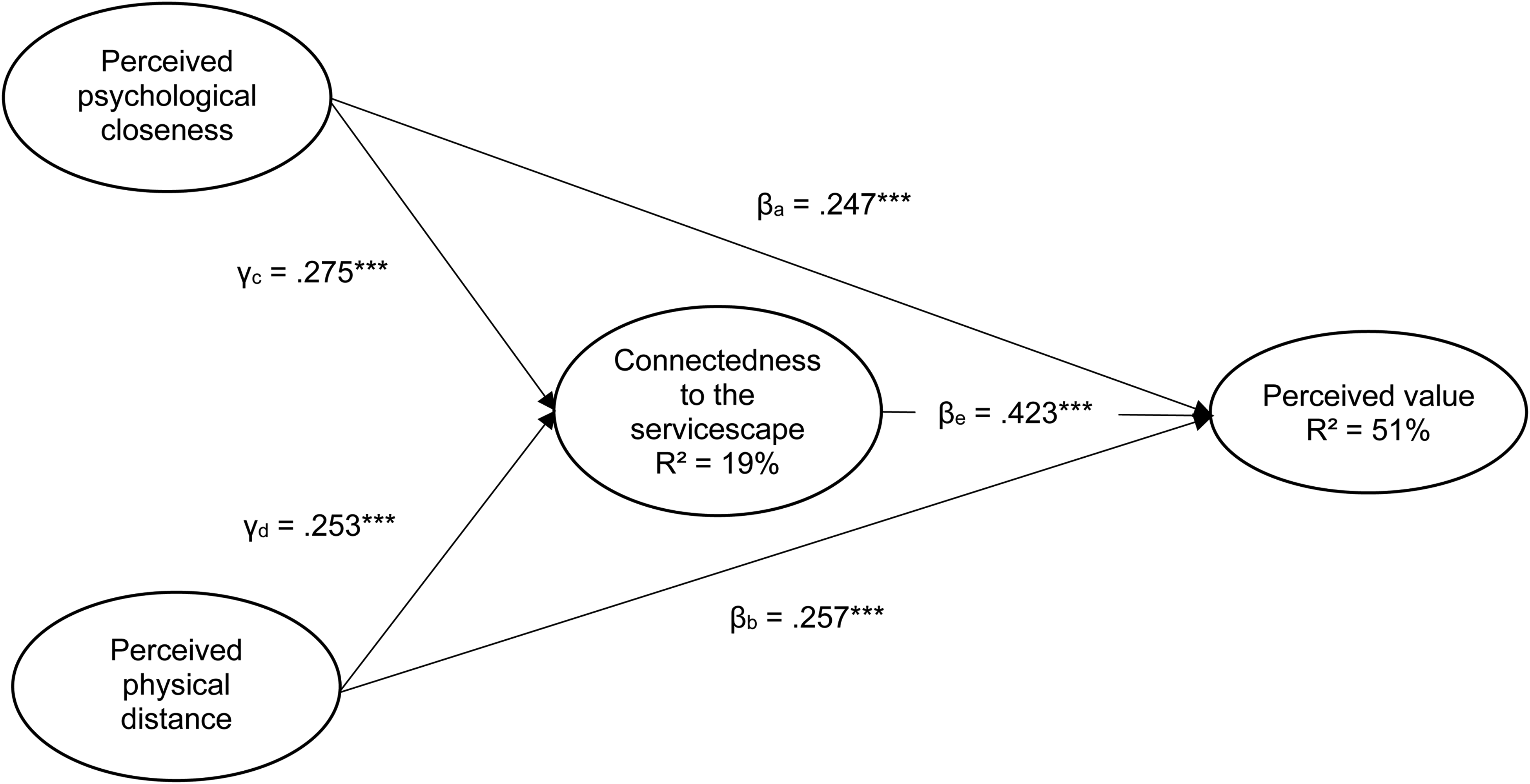
Path Analysis Results for All Samples.
Perceived psychological closeness (βa = .247, p < .001) and perceived physical distance (βb = .257, p < .001) had a significant positive effect on perceived value. Therefore, H1 and H2 were supported. These findings highlighted that the perception of psychological closeness and maintaining a certain physical distance could directly affect consumers’ perceived value of the service experience during the pandemic.
Figure 2 shows that perceived psychological closeness (γc = .275, p < .001) and perceived physical distance (γd = .253, p < .001) were both significantly related to the establishment of connectedness to the servicescape. These findings suggest that consumers’ perception of psychological closeness and maintaining an appropriate physical distance from the servicescape can positively impact their perception of connectedness to the servicescape. In addition, a significant relationship was found between connectedness to the servicescape and perceived value (βe = .423, p < .001). The finding indicates that as consumers establish more connections to the servicescape, they perceive the value of the consumption more positively.
Mediation test results
We further sought to quantify the mediating role of connectedness to the servicescape on the relationship between perceived psychological closeness, perceived physical distance, and perceived value. Following Preacher and Hayes (2008), this study adopted the bootstrapping technique to determine the mediating effect in the structural model: a bootstrap of 1,000 samples was performed, with bias-corrected 95% confidence intervals (CIs).
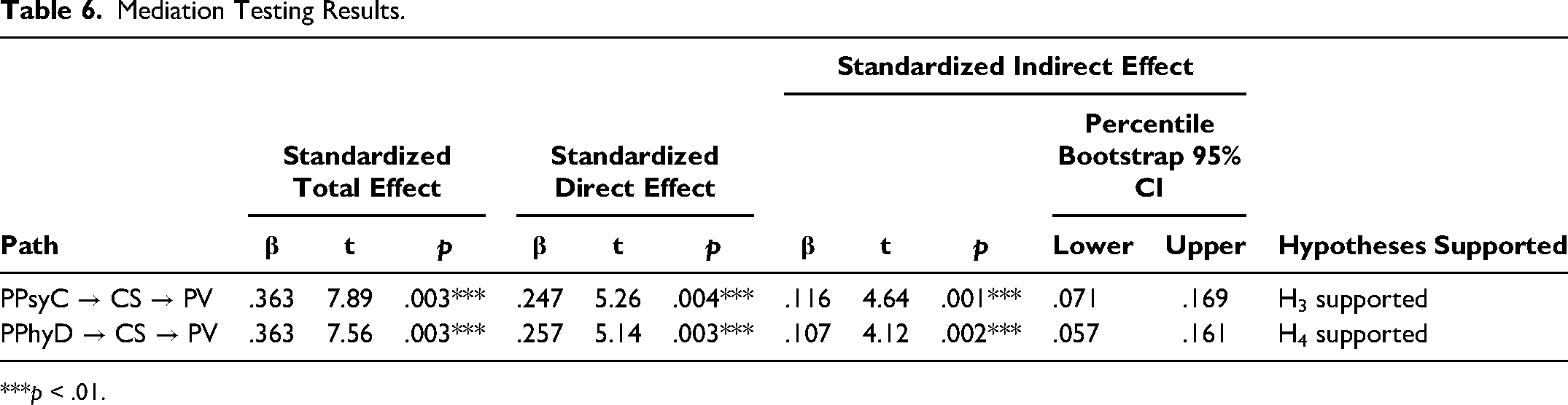
The results (see Table 6) indicated a significant standardized indirect effect of perceived psychological closeness on perceived value (β = .116, t = 4.64, p < .01; 95% CI: [.071, .169]). The total effect of perceived psychological closeness on perceived value was significant (β = .363, t = 7.89, p < .01), and even with the inclusion of connectedness to the servicescape as a mediator, the impact of perceived psychological closeness on perceived value was still significant (β = .247, t = 5.26, p < .01). The results indicate that the connectedness to the servicescape partially mediates the relationship between perceived psychological closeness and perceived value. Therefore, H3 was supported.
Mediation Testing Results.
***p < .01.
The results also indicated a significant indirect effect of perceived physical distance on perceived value (β = .107, t = 4.12, p < .01; 95% CI: [.057, .161]). The total effect of perceived physical distance on perceived value was significant (β = .363, t = 7.56, p < .01); even with the inclusion of the mediator variable, connectedness to the servicescape, the impact of perceived physical distance on perceived value was still significant (β = .257, t = 5.14, p < .01). The results indicated that the connectedness to the servicescape partially mediates the relationship between perceived physical distance and perceived value. Thus, H4 was supported.
Moderating effect of interaction modes and self-efficacy
A broad range of studies has examined the moderating effect of self-efficacy in accepting human–machine interaction (Chattaraman et al. 2019; Ghobadi and Ghobadi 2015; Kim and Muralidharan 2020; Van Deursen and Van Dijk 2015). Robotic service delivery is considered an effective measure because of the need to provide contactless service for social distancing during the pandemic (Chiang and Trimi 2020; Seyitoğlu and Ivanov 2021). Since self-efficacy is essential for consumers to perceive the value of services, it is necessary to compare the moderating effect of self-efficacy in machine and employee service delivery.
To test the generalizability of the moderating effect, we randomly assigned participants to one of three typical service scenarios for an empirical test: bookshop service, café, and a sports event in a stadium. Each service scenario was randomly embedded with two service interaction modes: human–human interaction and human–machine interaction. Participants filled out a self-efficacy questionnaire before the investigation began to verify the moderating effect of technical traits on the experiment. Participants were divided into a high self-efficacy group and a low self-efficacy group on the basis of mean value (M = 3.425).
As shown in Figure 3, all the scenarios were presented both textually and diagrammatically, controlled strictly by presentation order and time of exposure. We supplemented each scenario in a specific relational context using a paragraph of text description and a context-describing picture to satisfy different kinds of information readers. Moreover, in the experiment manipulation, the treatment of imposing social distancing measures was achieved by displaying a “social distancing” sign outside the service venue.
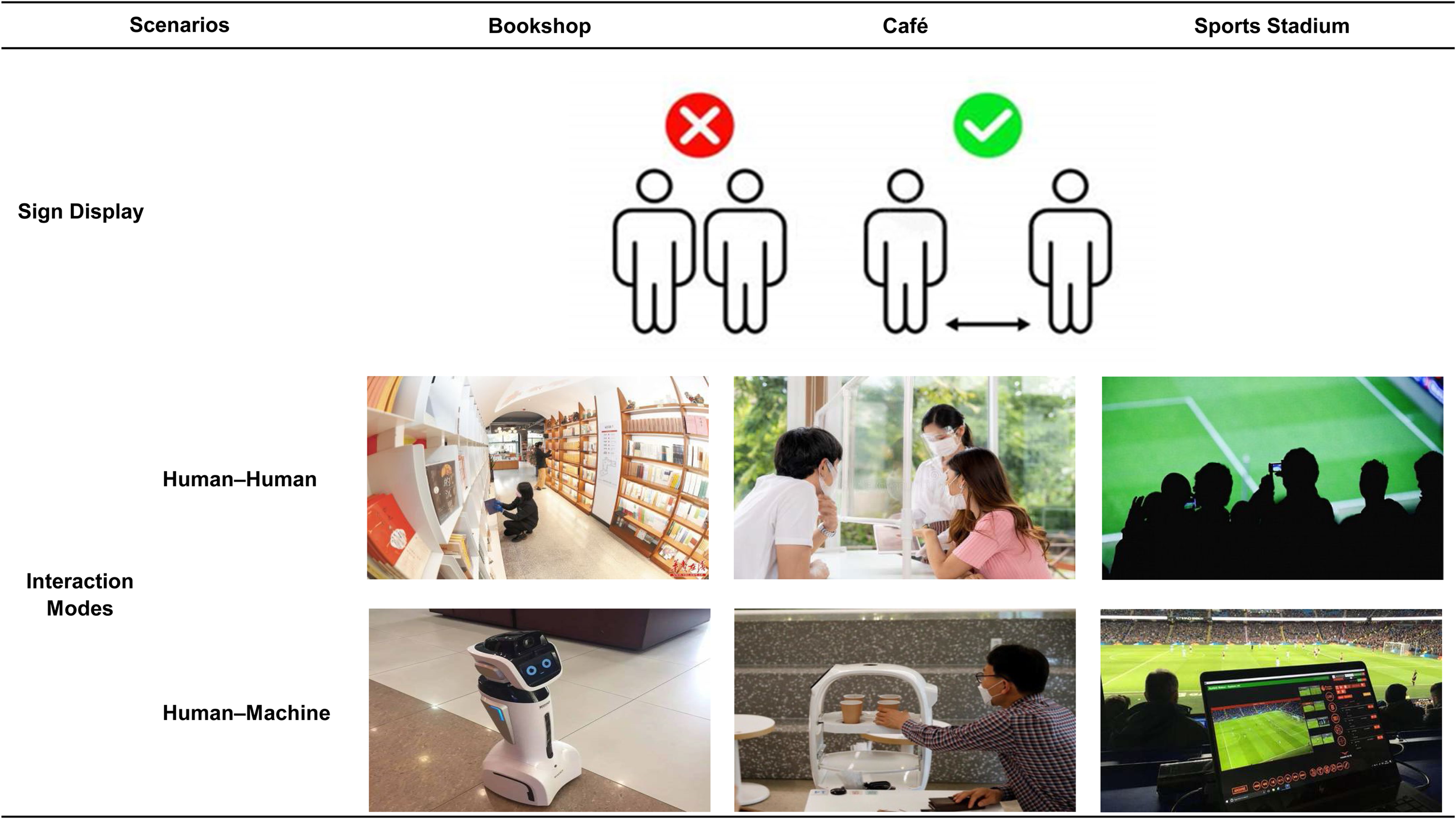
Scenario × Sign Display × Interaction Modes Setting.
The total sample was divided into four groups based on the interaction modes (human–human interaction vs. human–machine interaction) and self-efficacy (low vs. high). The focus was on how different interaction modes within a service and differing consumer self-efficacy in the interaction significantly impact the consumer's perception of the service. To test the moderating effect, we employed a multigroup analysis.
The standardized coefficients of the constructs’ relationships for the four groups are shown in Table 7 by the z-scores. According to the table notes, the z-scores, with the indication of significance, illustrate the difference between low and high self-efficacy under two interaction modes. For the results to be significant, the absolute value of the z-score must be higher than 1.65 with a 90% confidence level or higher than 2.58 with a 99% confidence level. Thus, H5a and H5b were supported, but H6a and H6b were rejected.
Z-Statistic of Intergroup Comparisons of Self-Efficacy × Interaction.
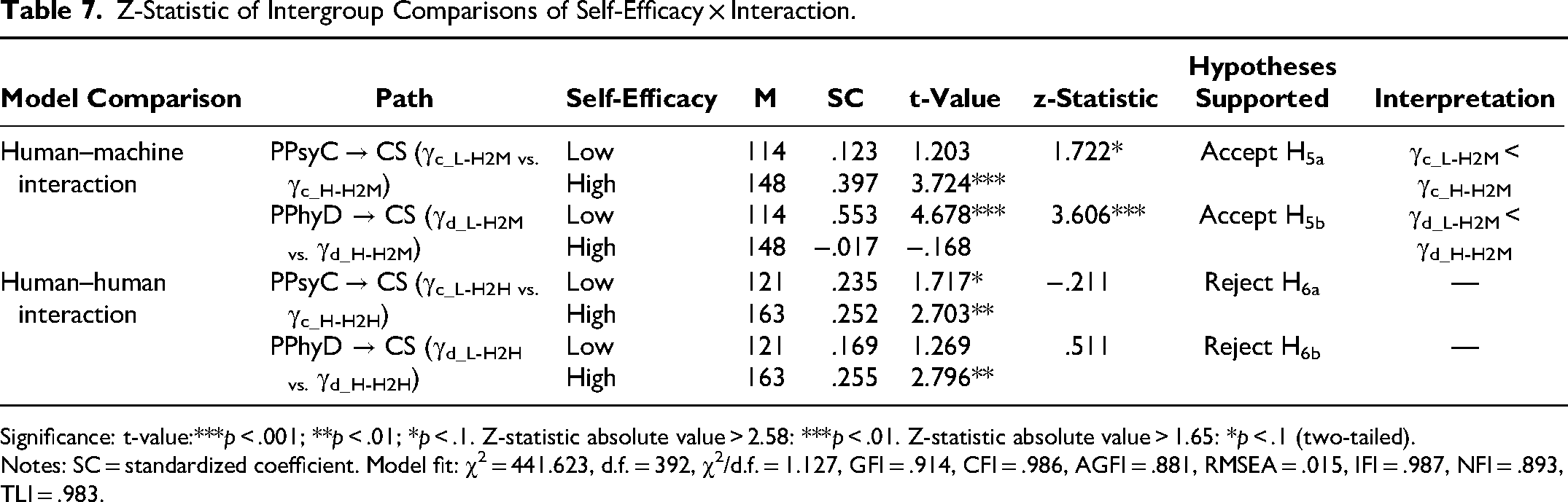
Significance: t-value:***p < .001; **p < .01; *p < .1. Z-statistic absolute value > 2.58: ***p < .01. Z-statistic absolute value > 1.65: *p < .1 (two-tailed).
Notes: SC = standardized coefficient. Model fit: χ2 = 441.623, d.f. = 392, χ2/d.f. = 1.127, GFI = .914, CFI = .986, AGFI = .881, RMSEA = .015, IFI = .987, NFI = .893, TLI = .983.
In human–machine interaction, there is a significant difference in the path γc between low and high self-efficacy groups with a 90% confidence level (z-score = 1.722, p < .10). The effect of perceived psychological closeness on connectedness to the servicescape is significantly lower for the low self-efficacy group (γc low self-efficacy = .123, n.s.; γc high self-efficacy = .397, p < .001). These findings indicated that the perception of psychological closeness had a more substantial effect on establishing connectedness to the servicescape in the high self-efficacy group than in the low self-efficacy group. However, there is a significant difference in the path γd between low and high self-efficacy groups with a 99% confidence level (z-score = −3.606, p < .01). The low self-efficacy group (γd low self-efficacy = .553, p < .001) was found to be receiving more potent effects of perceived physical distance on connectedness to the servicescape than the high self-efficacy group (γd high self-efficacy = −.017, n.s.). In contrast, consumers with high self-efficacy did not rely on the perception of physical distance to establish a connection with the servicescape, although the finding is insignificant. Thus, H5a and H5b were supported, and self-efficacy and machine intervention moderated the model. However, the relationship between perceived psychological closeness and connectedness to the servicescape was lower in the low self-efficacy group than in the high self-efficacy group (γc_L-H2M < γc_H-H2M), in contrast to the relationship between perceived physical distance and connectedness to the servicescape (γd_L-H2M > γd_H-H2M). This implies that when building connections with the servicescape, consumers with high self-efficacy rely on perceived psychological closeness, whereas low self-efficacy consumers rely on perceived physical distance.
Regarding human–human interaction, both γc and γd are lower in the low self-efficacy group (γc low self-efficacy = .235, p < .1; γd low self-efficacy = .169, n.s.) than in the high self-efficacy group (γc high self-efficacy = .252, p < .01; γd high self-efficacy = .255, p < .01). This implies that the positive impacts of perceived psychological closeness and maintaining an appropriate physical distance on establishing the connectedness to the servicescape were more substantial among consumers with high self-efficacy than among those with low self-efficacy. However, the difference is not significant. Thus, H6a and H6b were rejected.
Discussion
This study was executed in a specific social context, where the pandemic necessitated the adoption of social distancing measures and contactless service experiences. In this special context, customers’ value perceptions regarding service encounters have extended from utilitarian and hedonic value perceptions to social connection and safety considerations. This extension implies that customers will rely more on the servicescape and clues to form their value perceptions. Moreover, safety has become a vital determinant of service value. This study does not focus on the relative weighting of the determinants of perceived value as some studies do (Boksberger and Melsen 2011; Sweeney and Soutar 2001). However, the multidimensionality of customers’ perceived value substantially furthers the discussion on customer well-being. It shows service encounters from the perspective of interaction attributes and connection with the environment over the service's benefits. The findings of this study provide new insights into the determinants of consumers’ perceived value. More specifically, social distancing measures and machine-based interactions influence different components of service values, thus enhancing different dimensions of perceived value and ultimately benefiting consumers’ well-being. It is imperative to understand how consumers’ perceptions change in the scenario of technological interventions. Interestingly, this study explores the interactive effect of technological intervention and self-efficacy in service encounters, extending the body of knowledge on human–machine interactions. The findings show the crucial role of self-efficacy in such interactions. More specifically, low self-efficacious consumers consider physical distance more vital than psychological closeness, but highly self-efficacious ones perceive the opposite. That is, the latter group of consumers interacts with machines more independently than the former, consistent with the findings of Ghobadi and Ghobadi (2015) and Lucas et al. (2006). Thus, service marketers should consider their target audience when deciding to introduce service machines. This study shows that technology adoption in the market is contingent on tech-savvy customers. It also shows that customers’ self-efficacy and interaction with machines influence their cognitive distance, psychological connection, and overall perception of the service. For highly self-efficacious customers, human–machine interactions will have a stronger effect in reducing the psychological distance than enhancing the physical clues and building a connection with the servicescape. This finding confirms the importance of considering customer attributes when deciding between human- or machine-based interactions. In contrast, traditional human-contact-based service delivery may seem more accommodating to different types of consumers (out of a spectrum of capabilities) to trigger cognitive outcomes.
This study contributes to the existing literature in the following ways. First, it is a pioneering attempt at investigating the indirect role of adaptation and connectedness to the servicescape in influencing consumers’ perceived value. There was an absence of research on how adaptations in the servicescape affect perceived value, and this study fills the gap. Second, it presents a novel conceptual model that explains the relationship between “distance perception” and “perceived value” with the mediation of “connectedness to the servicescape.” Third, previous studies (Dickson and MacLachlan 1990; Lee, Hon, and Won 2018) only examined the behavioral outcomes of perceived distance. However, our study sheds light on the psychological pathway from consumers’ perceived distance to their perceived value. According to CLT, it reveals that consumers’ perceptions of psychological and physical distance positively relate to their perception of value, consistent with the findings of Dickson and MacLachlan (1990) and Liberman and Trope (2008). Finally, one can generalize this study's analytical framework and approach to distance-enforced settings to examine customers’ mindsets during service delivery.
Practical Implications
The results of this study suggest that marketers can boost perceived value by incorporating both social distancing measures and machine-based interactions in service design. Thus, service industries should integrate social distancing into the servicescape. Moreover, they must examine consumer experiences under different segregation settings (such as seat-taking instructions) via market research. Then, they should adapt the servicescape's layout based on the findings to provide the highest possible quality in services. In a distance-enforced environment, customers will rely on their perception of the actual and psychological distance to the surroundings, as mediators, to determine the value perceptions. Perceived psychological closeness and physical distance influence perceived value both directly and indirectly (via connectedness to the servicescape). When implementing different measures simultaneously, marketers must remember that each may alter consumers’ perception of physical and psychological distance differently, thus influencing their subjective evaluation.
The pandemic has altered the paradigm of service provision and consumption. Resultingly, both consumers and service providers must adapt to the modified servicescapes. As a widely accepted solution, digital intermediaries, such as service robots and kiosks, can replace humans in high-contact services and upgrade the system of service industries. This move will increase business opportunities for human–machine interactions in service sectors. Moreover, robots and related technologies will usher in new developments to solve labor issues and reduce social contact, especially after the pandemic (Chiang and Trimi 2020; Seyitoğlu and Ivanov 2021).
Limitations
The limitation of this study lies in the external environment, such as the lack of contrasting samples from pre- or postpandemic situations. Displaying a social distancing sign can partially influence customers’ awareness of distancing and safety. Although most samples could successfully recall the stimuli, our postexperiment test indicates that nearly 5%–11% of the participants in our samples have a bias in either memory or item selection when recalling what sign they had seen in the experiment. Furthermore, this study does not show the situational factors in service consumption, such as the different motives and occasions of service consumption (e.g., for individual, family, or business motives). Broadening the spectrum of service types would increase the results’ external validity.
Footnotes
Acknowledgments
We thank the JNM review team for their valuable comments and suggestions during the revision process.
Special Issue Editors
Daniele Scarpi, Martina Benvenuti, and Lia Zarantonello
Declaration of Conflicting Interests
The author(s) declared no potential conflicts of interest with respect to the research, authorship, and/or publication of this article.
Funding
The author(s) received no financial support for the research, authorship, and/or publication of this article.
