




Abstract
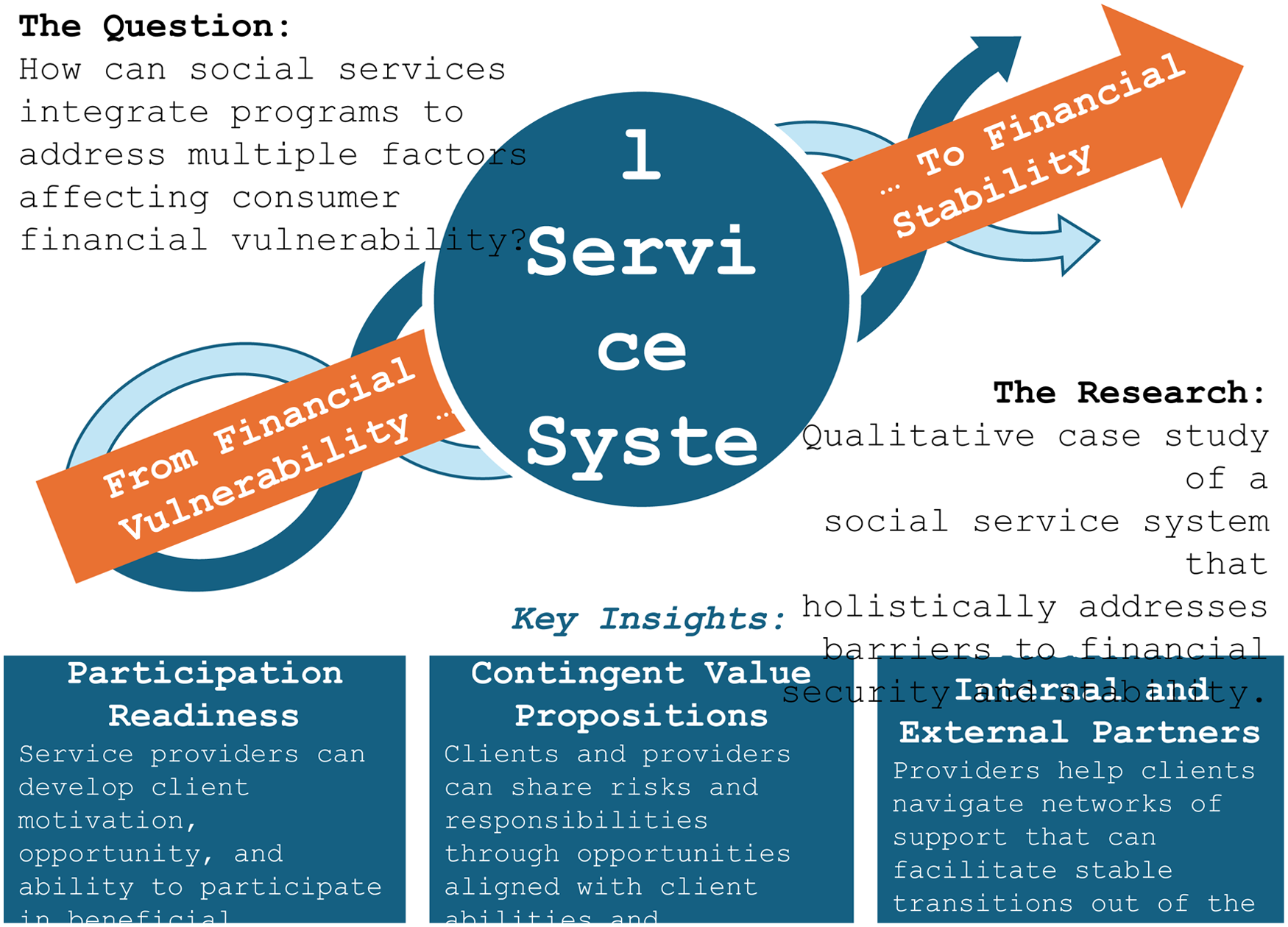
Consumers experiencing financial vulnerability often face multiple intersecting barriers to well-being. Accordingly, social service systems have begun integrating programs to more holistically address the many factors affecting financial vulnerability. Results from a qualitative case study show how an integrated approach to financial vulnerability influences consumer experiences as they navigate through social service systems. Findings explain how initiation into social service systems requires adequate client readiness to comply with entry conditions placed by service providers. Furthermore, while many organizations believe readiness must be attained prior to entering the system, we find that a network of internal and external providers can support the cocreation of client readiness. Integration into the system deepens as clients take on structured responsibilities, as providers take on risks in supporting clients through vulnerabilities, and as both clients and providers develop mutual trust. The authors introduce the concept of contingent value propositions to explain how providers can structure services to make support available based on client readiness and cocreative action. Client transitions through the service system can be hindered or supported by integration with external partners. Implications for social service theory and practice are discussed, including recommendations for delivering holistic social service support to consumers experiencing financial vulnerability.
Get full access to this article
View all access options for this article.