




Abstract
Entrepreneurs entering stigmatized markets face barriers to entry beyond those encountered in traditional markets. Yet, little research examines factors influencing the diffusion of these goods and services. Through the lens of institutional theory, this paper proposes and demonstrates the application of a conceptual model outlining the process by which stigmatized innovations become (de-)institutionalized. We combine mixed methods by blending qualitative with quantitative tools to analyze the legitimating influence of electronic word-of-mouth (eWOM) over time. Our findings suggest that dichotomized consumer preferences stem from normative (natural and benevolent versus artificial and malevolent), cultural-cognitive (ecological health and sustainable services versus public health and traditional services), and regulatory (government rule versus market rule) binaries that influence the deinstitutionalization of orthodoxy (utopian versus dystopian worldviews). Notwithstanding, we show that, in stigmatized markets, consumers look to eWOM to inform their choices, which can aid in deinstitutionalizing rational myths and help perpetuate service innovation. We also find that in stigmatized markets, the existing industry does not show a predictable response to societal pressures for service innovations that promote social wellbeing and sustainability.
Introduction
Stigmatized markets are those where products, services, and/or consumers become negatively stereotyped, discrediting the overall market (Slade Shantz et al. 2019). Entering stigmatized markets entails challenges above and beyond those encountered by traditional market entrants (Slade Shantz et al. 2019). Deeply embedded traditions perpetuate rational myths dictating that these markets lack social legitimacy. As such, consumers of stigmatized goods and services often feel pressure to conceal their consumption (e.g., abortion [Major and Gramzow 1999], medicinal marijuana [Bottorff et al. 2013], and sex robots [Belk 2022]). Information disclosure by organizations is also frequently concealed. Many stigmatized goods and service providers are geographically inconspicuous (e.g., legal brothels [Wolfe and Blithe 2015], slaughterhouses [McCabe and Hamilton 2015], and cemeteries [American Planning Association 1950]). Similarly, mainstream service providers often choose not to disclose personal attributes that are highly scrutinized such as sexual orientation (Stenger and Roulet 2018) or mental health issues (Choi et al. 2016). Goods and services can become devalued by mere association with stigma (e.g., selling a house in which someone died [Bouwman 2018]).
Discussions regarding stigmatized services are taboo. Moreover, marketing these goods and services can be considered distasteful (e.g., advertising for deathcare services is perceived as an exploitative attempt to capitalize on grief [Beard and Burger 2020]). The surreptitious nature of stigmatized markets can lead to monopolization by existing players. Thus, entrepreneurs developing service innovations within these markets struggle to gain consumer awareness and legitimacy. This is particularly problematic when the service innovation is more conducive to social wellbeing and sustainability than the traditional offering. So, how might the service scholarship help to inform the problem?
Ostensibly, unease concerning stigmatized services is not only a consumer phenomenon but also an academic one. Scholars often overlook stigmatized services for fear of being associated with the subject of investigation (Larsen and Patterson 2018). As a result, there is scant literature examining perceptions of legitimacy for stigmatized services. To our knowledge, service literature has yet to investigate innovations within these markets. This paper aims to address this gap.
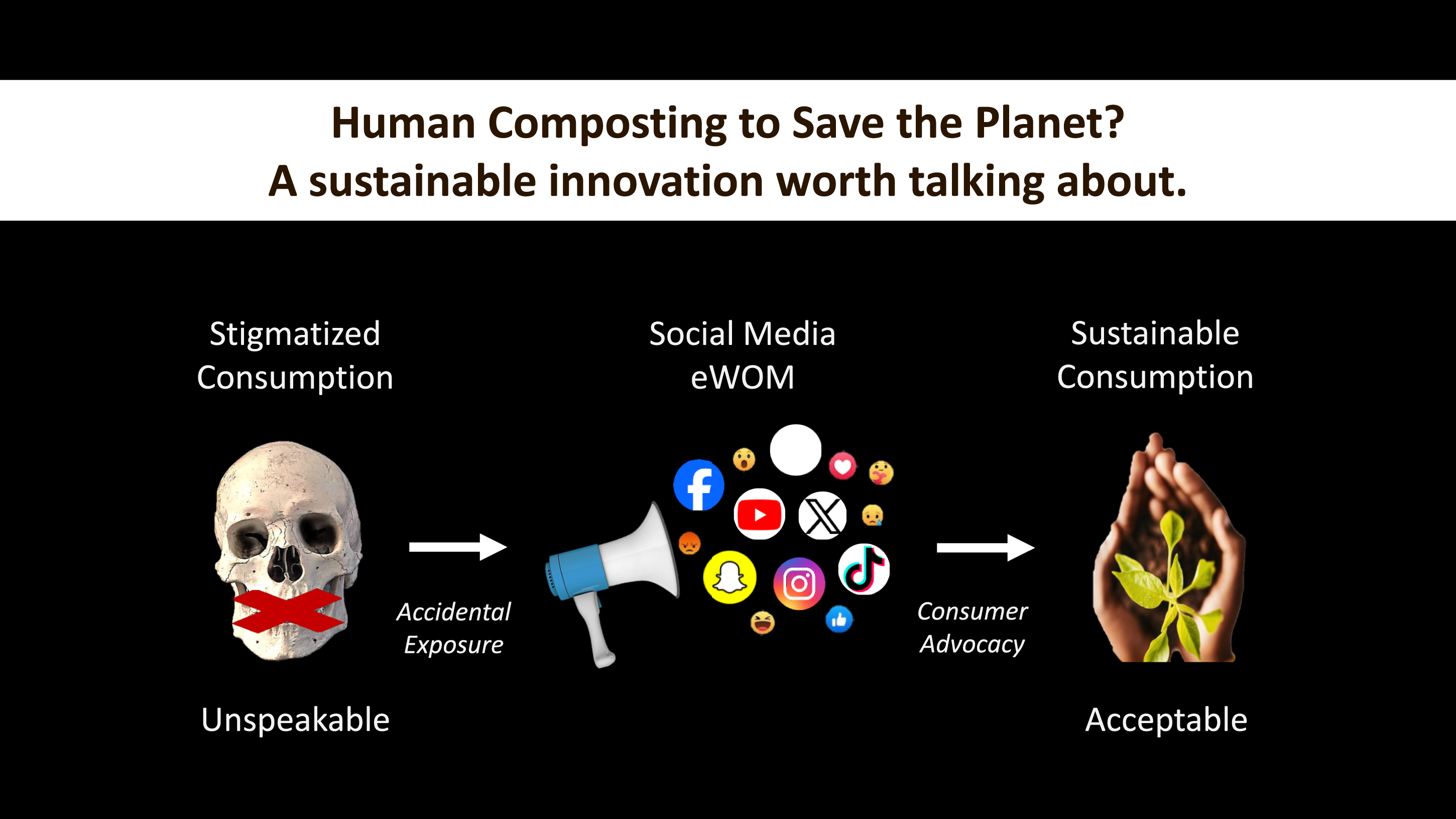
A conceptual model is proposed utilizing institutional theory. It outlines the process by which electronic word-of-mouth (eWOM) influences the (de-)institutionalization of service innovation within stigmatized markets. The model is applied to the context of deathcare service innovations using a mixed methods analysis. We show that traditional players have dominated the market through regulatory, normative, and cognitive cultural legitimation perpetuated by deeply embedded rational myths that seem to resist institutional pressures for change. However, eWOM from accidental exposure can encourage conversations that were previously considered to be unspeakable. The ensuing dialogues aid in the legitimation of underdogs’ service innovations for wellbeing and sustainability. The findings contribute to service scholarship by using institutional theory to offer novel insights concerning the adoption of service innovation and the legitimating impetus of eWOM within stigmatized markets. In so doing, we contribute more broadly to the well-established domain of institutional theory by offering a novel case of non-adaptation to institutional pressures.
Conceptual Background
Institutional Theory: The Rational Myths of Stigmatized Markets
We draw on the nascent service literature on institutional theory to explore the influence of eWOM on the legitimation of service innovation. It is becoming increasingly important to service research (Bouncken and Tiberius 2023; Koskela-Huotari, Vink, and Edvardsson 2020) and to the study of service-related phenomena (Gäthke, Gelbrich, and Chen 2021) such as service ecosystems (Bouncken and Tiberius 2023; Chandler et al. 2019; Koskela-Huotari and Vargo 2016), service innovations (Chandler et al. 2019), customer learning, and co-creation of value (McColl-Kennedy et al. 2012) and services (Azzari et al. 2021). Service researchers stress the relevance of institutional theory to understanding social norms and conventions and their implications for consumers’ decisions in legitimating service choices (Gäthke, Gelbrich, and Chen 2021). Institutions create social contexts that bind societal actors (Baron et al. 2018) and legitimize conventions and norms that guide actor behavior, interactions, and decisions (Koskela-Huotari and Vargo 2016). Gäthke, Gelbrich, and Chen (2021) show that social conventions can influence behavior and that institutions guide socially appropriate behavior. Thus, they provide impetus or constraints in legitimizing conduct.
We also looked at the broader management literature on institutional theory, a well-established management approach to explain organizations and organizational behavior within a social context (Suddaby 2013). Institutional theory is defined as “a framework for understanding the development, maintenance, and persistence of social structures called institutions” (Humphreys 2010, p. 491). Institutional theory challenged the prevailing assumption in management studies that organizational behavior is calculated and rational (Scott 1998). While much of the institutional theory literature in the management domain focuses on organizational-level phenomena, service researchers have argued that the theory also provides insights for individual behaviors (e.g., Gäthke, Gelbrich, and Chen 2021).
Meyer and Rowan (1977) explain that “institutionalized products, services, techniques, policies, and programs function as powerful myths” (p. 340). These rational myths become (in)formal rules (Starbuck 1976). For example, a no-smoking sign is a legally and socially sanctioned institution (Meyer and Rowan 1977). The sign acts as a rational myth, as it holds no power outside that ascribed by society, but nevertheless it gets legitimized, and people comply. From the institutional perspective, individuals and organizations are believed to be driven to conform to collective norms and beliefs (Gäthke, Gelbrich, and Chen 2021) and the adherence to rules and regulations drives them toward isomorphism (Oliver 1991). Institutional theory is underpinned by the idea of legitimacy, being the perceptual appropriateness of actions based on a set of socially construed values and norms (Suchman 1995). According to Scott (2001, 2003, 2014), assessments of legitimacy stem from three environmental forces: regulative (formal laws and informal rules), normative (prescriptive moral guidelines), and cultural-cognitive (shared belief systems and worldviews). In service literature, legitimacy is conferred by customers who make assessments about the services they consume and then influence others (Bouncken and Tiberius 2023).
Response to External Pressures
It is well accepted in the extant management literature that organizations face institutional pressures and respond accordingly (Goodstein 1994; Ingram and Simons 1995; Oliver 1991; Suchman 1995). Kraatz (1998) points out that institutional pressures from various sources, including changing government regulation, technology advancement, and change in social values and demographics, can cause erosion of industry boundaries, and a shift in consumer preferences. Institutionalization is the process through which social processes, obligations, and standards become mainstream, taken-for-granted behaviors (Meyer and Rowan 1977). Institutional theorists suggest that social behaviors are influenced by and reproduced because of institutionalization and normalization of social mores (Greenwood and Suddaby 2006). Gäthke, Gelbrich, and Chen (2021) argue that the need to conform to social norms and align behavior to attain legitimacy is also relevant at an individual level.
Dacin, Goodstein, and Richard Scott (2002) contend that institutions can be compelled to change when there is a misalignment between regulatory, normative, and cultural-cognitive environmental forces. Organizations change to respond to pressures from the external environment (DiMaggio Paul & Powell Walter 1983; Oliver 1991). The three main mechanisms that drive change are coercive isomorphism which comes from political pressures, mimetic isomorphism that is derived from a standard response to uncertainty in the environment, and normative isomorphism which is motivated by the need for professionalization (DiMaggio Paul & Powell Walter 1983). Organizations are impelled to conform to collective norms and beliefs and to adhere to rules and regulations, which pushes them towards isomorphism (Oliver 1991). This adaptive response to external pressure is essential for organizational survival (Carroll & Hannan 1989; Deephouse 1996; DiMaggio Paul & Powell Walter 1983; Greenwood & Hinings 1996; Meyer & Rowan 1977; Oliver 1991, 1997; Ruef & Scott 1998; Scott 1998; Suchman 1995). Adaptation can encourage deinstitutionalization, which is the erosion of legitimacy and discontinuation of an established process (Oliver 1992). The transitionary period between legitimizing old and new institutional norms can be contentious. Extant literature shows that isomorphism holds in traditional industries, but it is still unknown whether the lack of dialogue about stigmatized services subdues these pressures. The current investigation seeks to understand this phenomenon as well as the legitimating role that eWOM might play in the process.
eWOM and Legitimation
While eWOM has been defined in many ways, Babić Rosario, de Valck, and Sotgiu (2020) offer a revised definition, being “consumer-generated, consumption-related communication that employs digital tools and is directed primarily to other consumers” (p. 427). eWOM is a hot topic among practitioners and scholars alike. Industry reports show that 64% of surveyed marketing professionals believe eWOM to be the most powerful customer persuasion tool (Freedman 2022). In a meta-analysis of 1,896 publications across 397 journals, Verma and Yadav (2021) found that since the early 2000s there has been steady growth in the number of eWOM studies with a dramatic spike beginning in 2016. The authors find that since services are more challenging to evaluate before purchasing, consumers rely more heavily on eWOM. Moreover, when the service is controversial, online comments offer a source of advocacy via misinformation rebuttal (see Sun and Lu 2022 [COVID-19 vaccines]). Thus, consumer dissent in eWOM can serve as a vital persuasive function.
One might reasonably presume that consumers are disinclined to initiate online dialogues about stigmatized services unprompted, albeit they may be encouraged to engage in eWOM upon accidental exposure to such content. Moran, Muzellec, and Nolan (2014) posit that accidental exposure while browsing online occurs frequently, particularly on social media platforms. Of the limited studies linking eWOM to consumers’ legitimation of sustainable innovation, much attention has been paid to products (see Valor, Ronda, and Abril 2022 [used clothing]; Recuero-Virto and Valilla-Arróspide 2022 [lab-grown meat]; Rofianto, Pratami, and Sabrina 2021 [reusable menstrual products]). Valor, Ronda, and Abril (2022) illustrate that institutional actors use eWOM to shape perceived legitimacy within stigmatized markets. However, this study is believed to be among the first to explore the influence of eWOM in a stigmatized context where the incumbent institutional actors are entrenched in the prevailing social norm and may not be actively engaged in creating new services. We aim to understand how underlying orthodoxy shapes propriety judgments and how eWOM legitimizes service innovation in stigmatized markets.
Conceptual Model
Institutional theory is becoming an essential theoretical framework in the marketing literature to comprehend the behaviors of service providers and their consumers (Slimane Karim Ben et al. 2019) and understand how innovation emerges (Vickers et al. 2017). What is clear is that while there is greater interest in studying the implications of institutional pressures on firms and markets, the role of consumers in shaping institutional change for the adaption of service innovation is still significantly under-researched (Slimane Karim Ben et al. 2019). This is perplexing since service researchers have emphasized service innovation as a Strategic Research Priority (Ostrom et al. 2015, Ostrom et al. 2021 [as it spans across all SRPs]) and have called for the need for theoretical frameworks and empirical research to understand the role of institutions in service innovation (Helkkula, Kowalkowski, and Tronvoll 2018) and adoption (Kropp Eva & Totzek Dirk 2020). Perhaps this can be attributed to the high barriers to market introduction of service innovation (Gustafsson, Snyder, and Witell 2020). Moreover, while there is no shortage of literature on service innovation in terms of what it is or how to develop and measure it, one area that remains understudied is how it contributes to societal wellbeing and sustainability (Witell, Carlborg, and Snyder 2022). Skiera et al. (2022) show that argument mining can help identify reasons consumers are for or against service innovation and how these insights can be used to influence consumer behavior. Building thereupon, we examine the role of eWOM in legitimating service innovations that enhance wellbeing and sustainability within stigmatized markets.
Service innovation is said to “challenge existing offerings and business models, shape existing markets, and create new ones” (Gustafsson, Snyder, and Witell 2020, p. 111). We examine the role of eWOM vis-à-vis each of these criteria in the context of stigmatized service innovations. In the next section, we outline our conceptual model explaining the process of deinstitutionalizing the prevailing rational myths of and legitimizing the new stigmatized services that enhance wellbeing and promote sustainability. We propose that environmental forces (regulatory, cultural-cognitive, and normative) can (de)institutionalize (i.e., challenge, shape, and create) service innovations in stigmatized markets. Figure 1 outlines a conceptual model establishing the process by which this transpires, including drivers of institutional change. eWOM legitimation of service innovation in stigmatized markets.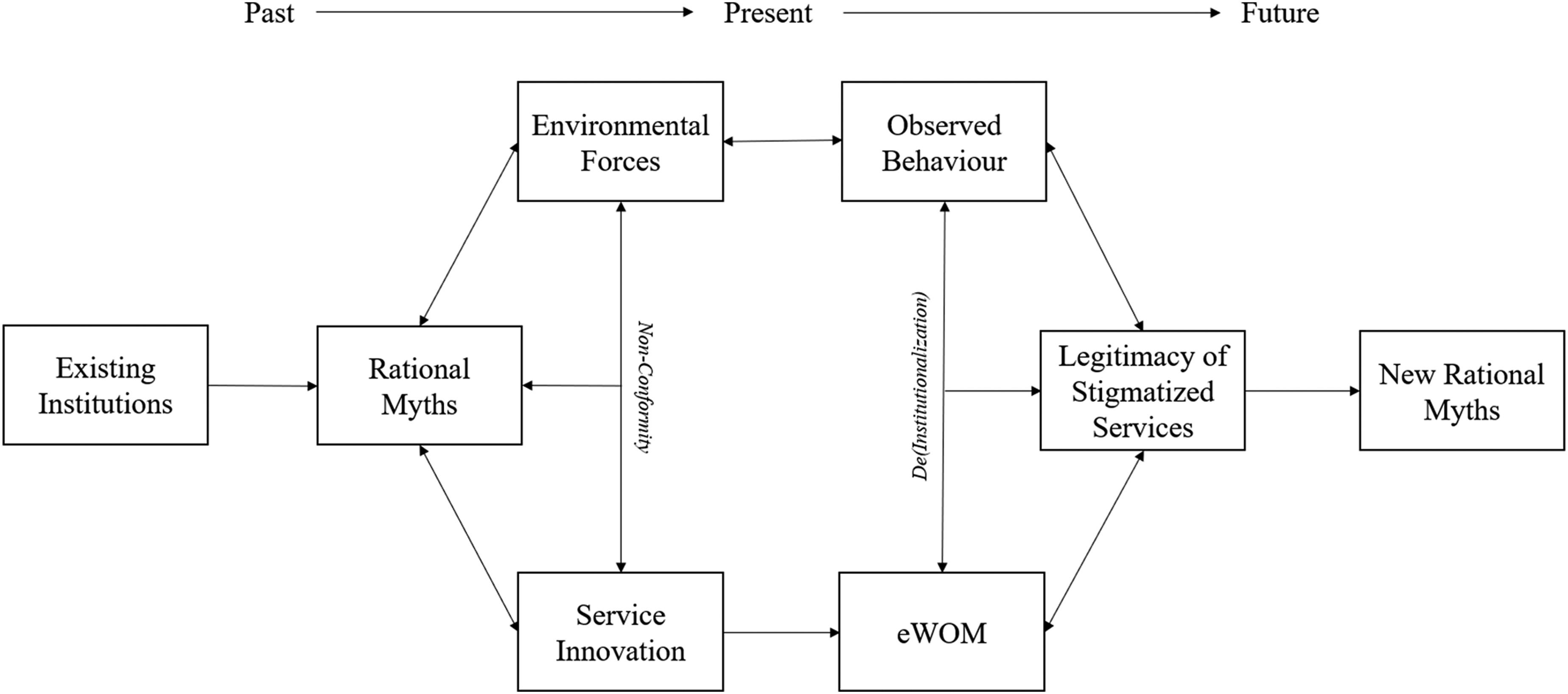
We argue that service innovations become institutionalized in stigmatized contexts via conforming, informing, and norming. Caprar and Neville (2012) suggest that when there are sufficient external pressures, consumers and service providers will adhere to social conventions (conforming). In the absence of institutional responsiveness, consumers observe the behavior of those in their respective reference groups and depend on external information to understand the environmental forces that are emerging around social norms and practices (informing). Looking to reference groups, they adapt their purchase activities. These adjusted behaviors form new social norms that deinstitutionalize the prevailing rational myths (Oliver 1992) that proscribe and prescribe legitimate practices (norming). Modish consumption behaviors get institutionalized and new rational myths emerge (Oliver 1992). Notably, trends that shape the institutionalization process are geo-temporal.
Today, eWOM plays a pivotal role in influencing the adoption of service innovations. As environmental forces shift in response to changing social issues (e.g., concerns for the planet, social inequality, and pandemics), consumers use eWOM to challenge tradition and endorse change. Dialogues can positively sway others when one side is more closely aligned with now-prevailing social values. Yet, the destigmatization of innovative services can embody adversarial discourses underpinned by judgments about morality (Valor, Lloveras, and Papaoikonomou 2021). As more consumers endorse these service innovations, deinstitutionalization leads to the emergence of new norms, thereby mitigating the stigma of these consumption practices. Institutional theory elucidates how stigmatized services become rational myths and how eWOM can help innovations break through these institutional barriers.
Methodology
This study employs mixed methods by combining manual and computer-assisted data collection and text analysis of archival documents. First, using qualitative research principles, news media articles are explored to develop themes for further investigation. Next, a quantitative analysis gives a high-level overview of changes in eWOM sentiment intensity over time. To identify the intensity of word relationships expressed by both opponents and proponents, a Python script is used to create a cooccurrence matrix and two Gephi keyword visualizations. This output aids in the identification of polarizing and complementary themes, which are then plotted into a Semiotic Square. Finally, through the lens of institutional theory, the semiotic points are drawn upon to “offer insight, enhance understanding, and provide a meaningful guide to action” (Strauss and Corbin 1998, p. 12).
Industry Selection: Setting the Context
We were interested in exploring institutional processes that influenced legitimizing a sustainable service in an understudied and stigmatized industry. Specifically, we wanted to understand institutional pressures for the legitimation and institutionalization of service innovations in sustainable deathcare, the role of institutional processes, and the response from the traditional deathcare industry profiting from the prevailing social norms. A National Funeral Directors Association (2019) report finds that 53.8% of Americans prefer sustainable deathcare services. Yet, these preferences are not translating into purchase outcomes. The Cremation Association of North America (2020) estimates that the number and rate of cremation services will increase even more than projections made before the COVID-19 pandemic, reaching up to 72.8% by 2030. Environmentally, cremation produces an estimated 534.6 pounds of carbon dioxide (CO2) per carcass and crematoriums account for approximately 360,000 metric tons of CO2 emissions annually (Little 2019). This green-intention gap might stem from the fact that despite the belief in its importance, only 21.4% of respondents discuss corpse disposition wishes with loved ones (Haneman 2020). Indeed, death is macabre. So many, particularly in developed economies, engage in the psychological defense of death avoidance (Firestone 2020). However, in the aftermath of the COVID-19 global pandemic, death has become a predominant social paradigm, evoking long overdue conversations.
The study of service innovation in deathcare is fraught with challenges, as grieving consumers are particularly vulnerable research participants. This could help to explain why deathcare is understudied in the service literature. One of the newest sustainable service innovations gaining increasing attention is natural organic reduction “NOR” (aka human composting), which was selected for this study. Industry estimates project that NOR saves one metric ton of CO2 compared to a traditional funeral and corpse disposition (Recompose n.d.). The starting point for the analysis is 2018, as this is when the service began to attract the attention of regulators, consumers, and the media. In 2019, Washington State became the first place in the world to legalize the process followed by Colorado and Oregon (2021), Vermont and California (2022), and New York (2023). Furthermore, its legalization is gaining momentum with bills pending in Nevada, Rhode Island, Illinois, Connecticut, Maine, Maryland, Massachusetts, Minnesota, New Jersey, Pennsylvania, and Virginia. While NOR has garnered media attention locally (e.g., Forbes, New York Times, and Fortune) and abroad (e.g., CBC, Globe and Mail, BBC, and The Guardian), a worldwide Google Trends query on the firm that introduced the innovation, Recompose, reveals that the highest concentration of search activity is in the United States, specifically in Washington State, which is currently the only state with operational facilities.
Qualitative Analysis of Media Articles
Our initial investigation aimed to gain new insights into novel phenomena and concepts (Gioia, Corley, and Hamilton 2013). Thus, we based our data collection and analysis on the well-established tenets of qualitative analysis of secondary data. Due to the dearth of literature in this field, we did not conduct a systematic literature review of empirical studies. Instead, we focus on the emergence of knowledge in the legitimation of this service innovation (Gioia, Corley, and Hamilton 2013). Specifically, we wanted to understand factors influencing the acceptance of sustainable deathcare innovation in the public domain. So, we selected media articles for this qualitative study. The results of this exploratory analysis can be found in the Web Appendix.
We found this initial analysis useful in understanding the context of this stigmatized service industry and identifying how it responded to pressures. In the next section, we outline the environmental forces influencing the emergence and institutionalization of NOR as a sustainable deathcare innovation. Key themes that emerged from our analysis helped us understand the context. In the next section, we examine eWOM sentiment to better understand the proponents’ and opponents’ justifications.
eWOM Data
Since deathcare dialogues are unlikely to arise organically, online newspaper articles focusing on sustainable deathcare services constitute a mechanism of accidental exposure to incite eWOM. In this part of our investigation, the articles were not analyzed. They merely served as a catalyst for consumer comments. We started with The Seattle Times (TST = A) as this is the top newspaper in Washington State (where NOR has operational facilities). We used this as our sample dataset to test the reliability of the NLP algorithm. Once established, we collected and analyzed the social media content of the top circulated national newspapers as ranked by Press Gazette (Turvill 2022), being: The Wall Street Journal (no results), New York Times (NYT = B), USA Today (USA = C), Washington Post (TWP = D), and Los Angeles Times (LAT = E). Within the search function of each newspaper’s Facebook page, the terms “recompose” or “human composting” were entered revealing relevant articles between April 13, 2015, and December 5, 2022. Since our units of analysis are comments and reactions, we excluded posts with fewer than 20 comments to derive sufficient discursive polarity. In addition, we excluded posts before February 4, 2016, as this predates Facebook’s introduction of emoji reactions.
 = Like,
  = Love,
  = Haha,
  = Wow,
  = Sad,
  = Angry, and
  = Care (introduced June 23, 2021). Per Table 1, we analyzed 6,296 comments from 5,233 unique commenters (µ = 1.20 posts/person) together with 60,337 reactions.
Sustainable Deathcare eWOM Data.
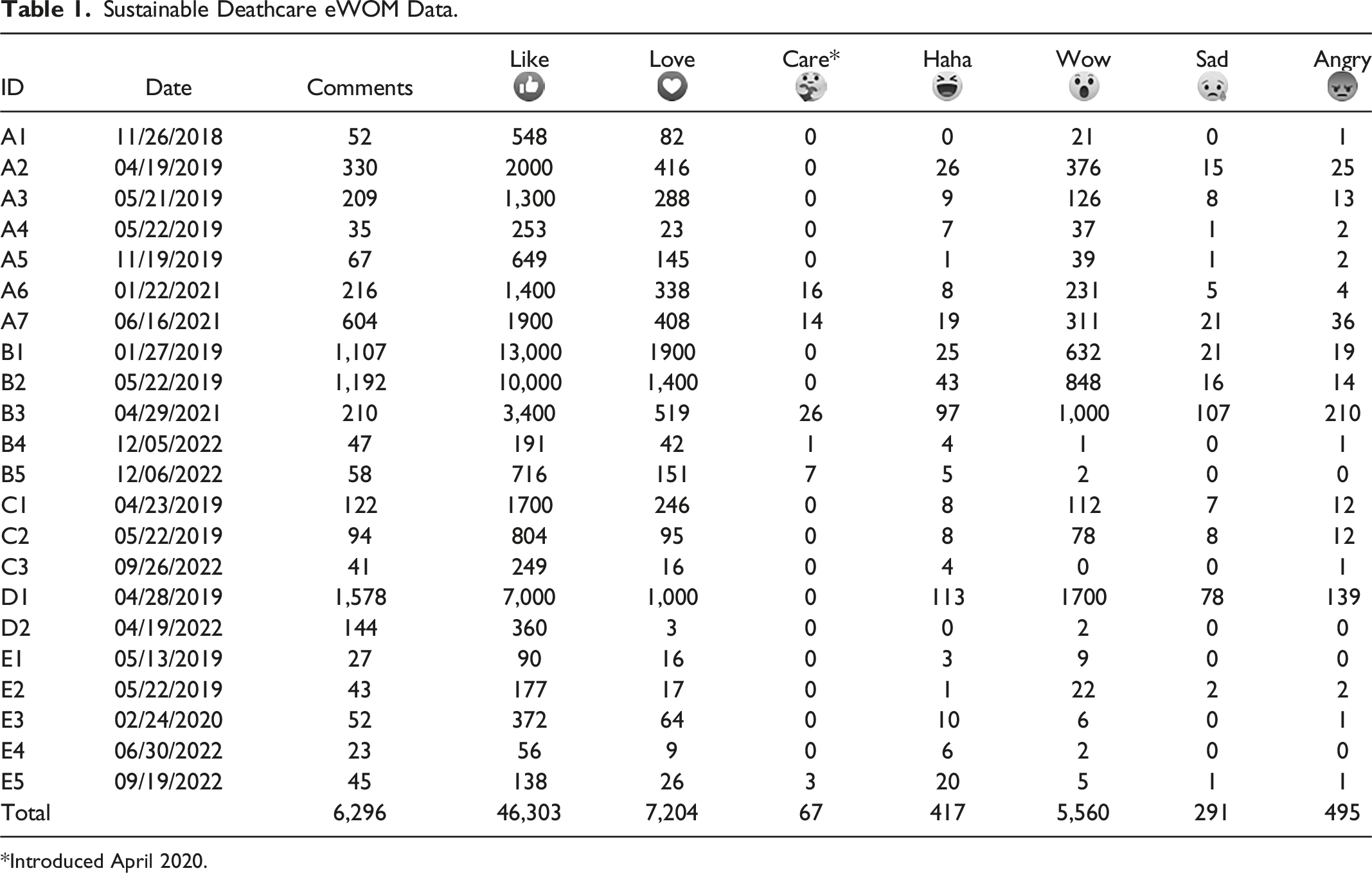
*Introduced April 2020.
Data Analysis
Data Coding
The rigor of qualitative content analysis is often tested using intercoder reliability, which is the degree of agreement between two or more human coders expressed as a percentage. Calculating intercoder reliability improves communicability and transparency by offering confidence that the results transcend the subjective assessment of a single researcher (O’Connor and Joffe 2020). A statistical measure called kappa (κ) has been developed to correct for the probability that agreement between two coders (Cohen 1960) or multiple coders (Fleiss 1971) occurs by chance. In service research, κ has been used to analyze positive (e.g., net promoter scores [Raassens and Haans 2017]) and negative emotions (e.g., rage [Surachartkumtonkun, McColl-Kennedy, and Patterson 2015)]) in eWOM. Accordingly, we report on both the percentages of agreement and kappa scores.
Sentiment Trends Over Time
Humphreys (2010) proposes that a signal of legitimation for stigmatized services is an attenuation in the intensity of discursive polarity over a longitudinal period, particularly following the establishment of a physical presence. The current investigation aims to substantiate whether this holds over a shorter duration. Since the theoretical model considers temporal (de-)institutionalization of stigmatized markets, we analyze sentiment intensity over time to predict the influence of eWOM. This serves as a barometer of institutional change. NLTK’s pre-trained sentiment analyzer, Valance Aware Dictionary and sEntiment Reasoner (VADER), was designed for social media and informal language. Unlike most BERT-based analyzers, it can detect slang, acronyms, and emojis. For emojis, VADER uses Common Locale Data Repository (CLDR) short names to classify emoji sentiment (e.g., “I love dogs  ” becomes “I love dogs smiling face with heart eyes”). The classification of emoji sentiment in comments was automatically processed. However, Facebook “reactions” have words associated with each emoji (e.g., when mousing over the corresponding word “Like” appears). Since current sentiment libraries cannot score proprietary Meta reactions, we adopted the sentiment for the word used in conjunction with the emoji as a more accurate representation of the user’s intention. VADER produces a sentiment polarity score ranging from −1 (perfectly negative) to 1 (perfectly positive). The VADER sentiment intensity is validated against a sample of manually coded data as a reliability measure.
Keyword Visualization
In this step, neutral posts are dropped to better understand legitimating influences underlying the juxtaposition in eWOM. Data cleansing includes lower-case conversion, tokenization, and stopwords. High-frequency keywords are then mapped to a cooccurrence matrix table. Next, the relationships between keywords are visually depicted in their respective Gephi network graphs. Each “node” represents a high-frequency keyword, and each line represents an “edge” (association with that node). Node size reflects its number of occurrences and is a sign of the importance of that keyword in the network. Edges are depicted as darker/thicker for stronger word associations and lighter/thinner for weaker ones. These results elucidate the semiotic analysis, which explores nuances underlying polarizing views.
Semiotic Square
Semiotics is a tool widely used in text analysis to study how signs (most often text and media) come to convey meanings that are interpreted using prevailing social conventions (Chandler 2002). Semiotics offers a mechanism to better understand the consumer discourses used to (de-)legitimize service preferences during institutional change (Humphreys 2010). According to Greimas and Courtés (1982), semiotic categories are ascribed meaning by identifying discursive binaries or oppositional stances. These socially constructed binaries help consumers make sense of their behavior by establishing ideas of right and wrong (cf. Kozinets 2008 [technology adoption]; Humphreys 2010 [casino gambling]; Ourahmoune and Özçağlar-Toulouse 2012 [wedding apparel]). A Semiotic Square is a geometric manifestation of logical semantic relationships between concepts wherein horizontally, the right (positive connotation) and left (negative connotation) corners of the square are in opposition; vertically, concepts directly above and below one another are complementary; and diagonally, concepts are contradictory (Greimas Algirdas Julien and Rastier François 1968; Pelkey 2017). The schema from the internal semiotic square is used to form broader themes depicted in an outer square. We use a Semiotic Square to identify underlying reasons for divergent eWOM reactions to stigmatize service innovations.
Results
Sentiment Analysis
Comments in the test sample were manually extracted and coded by two independent researchers using a coding frame to classify each comment as “opponent,” “proponent,” “neutral,” or “not applicable” (omitted). Both researchers have subject matter familiarity and experience in coding qualitative data. The comments on six articles from the Seattle Times were selected for analysis as this was the starting point for our data collection process. We wanted to test the reliability of the VADER sentiment tool before collecting and analyzing additional data. The average intercoder reliability between the two coders is high at 90.77% (A1 = 0.9250, A2 = 0.8472, A3 = 0.9330, A5 = 0.9432, A6 = 0.8909, A7 = 0.9068) and Cohen’s Kappa of 86.03 falls in the range of near perfect agreement (A1κ = 0.7727, A2κ = 0.7250, A3κ = 0.9535, A5κ = 0.9239, A6κ = 0.8699, A7κ = 0.9169). Moreover, Figure 2(a) graphs the difference between VADERs sentiment scores and the mean scores of the coders. It shows that the comparison between human- and machine-coded data follows similar patterns with corresponding trends. While the VADER sentiment is generally more conservative than human coding (a less intense positive and negative sentiment with a less dramatic declining slope), the similarity in the patterns between the two suggests a high degree of reliability. Sentiment intensity: (a) reliability; (b) trends over time.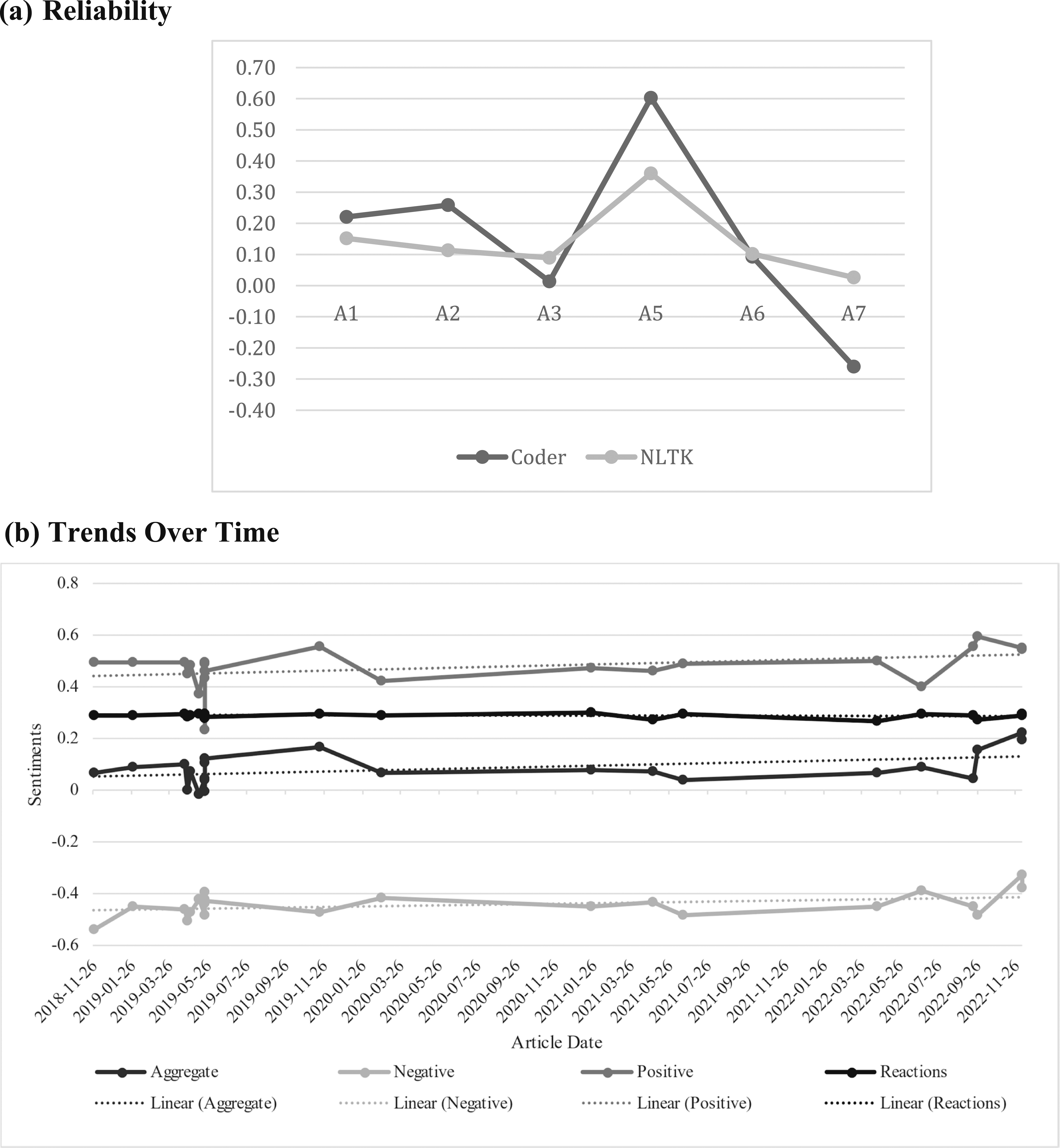
For the VADER sentiment analysis of all article comments, 2,913 that were classified as perfectly neutral (combined sentiment polarity = 0) were included for the aggregate trend analysis but removed from comparisons of the positive and negative comments to better understand discursive contraposition. Figure 2(b) shows trends in the intensity of aggregate, negative, positive, and reaction sentiment over time.
Controversial topics in the media have an almost near split in public opinion (Choi, Jung, and Myaeng 2010). While the sentiment shows opposition, we see more positive (n = 2,163) than negative (n = 1,220) comments. Moreover, the aggregate trend reflects that there is indeed a slight attenuation of negativity over time driven by both a decrease in negative sentiment and an increase in positive sentiment. These findings suggest that over a relatively short period of time (4 years), eWOM can aid in expediting the legitimation of service innovations in stigmatized markets. Chimmalgi (2013) uses low instances of “Likes” as an indicator of whether a topic can be classified as “controversial.” Similarly, Dunn and Harness (2019) find that the higher the number of “Follows” or “Likes” that a post receives signals popularity and social approval. The aggregate emoji-word reaction sentiment remains consistently positive over time due to a disproportionately high number of Likes (see Table 1). We posit from these findings that positive eWOM (via comments and reactions) signals legitimation of service innovations that in turn dissuades the number of negative comments or at least mitigates the intensity of negative feedback. Next, we examine the legitimating forces underlying polarity in users’ feelings.
Gephi Keyword Visualizations
Keyword visualizations are conducted to understand words used by proponents versus opponents and facilitate the identification of broader themes for the Semiotic Square. Data cleansing is carried out to enhance the output of the sklearn feature CountVectorizer, which converts text to a vector of term/token counts that are used to calculate the word’s cooccurrence matrix. To optimize the size of the Gephi network graph and minimize noise in the data, we limited the inclusion criteria to the top 20 cooccurrences for each visualization. The nodes (bigger/smaller circle = higher/lower frequency) and edges (dark-thick/light-thin lines = stronger/weaker word associations) for both proponents and opponents are discussed below.
Figure 3(a) contains high-frequency keywords used by proponents (µ = 9.95 edges/node). The most prominent edge connects the nodes “buried” and “body” (77 direct cooccurrences, indirect via “tree” [71 indirect], “natural” [53 indirect], and “compost” [22 indirect]). The “body” node also has strong edges between the nodes for “tree” (35), “compost” (36), “human” (32), “earth” (26), and “natural” (23). Similarly, the “buried” node directly connects to “green” (27) and “cremation” (41). These two nodes are responsible for 24% of node density, suggesting heterogeneity in proponents’ eWOM rationale. Notwithstanding, the Gephi results allow us to make meaningful propositions. The “buried” and “body” cooccurrences suggest that proponents perceive NOR as a green alternative to cremation that is on par with natural burial. Proponents use eWOM to advocate using the composted body to grow a tree and replenish the earth. The presence of the lower frequency node “better” used in conjunction with “cremation” (11 direct cooccurrences) is demonstrative of this comparison. Moreover, our supposition is further supported by the strong edges between “human” and “compost” (31 direct cooccurrences, and via “natural” [19 indirect]), showing that those who express positive sentiment for NOR view it as natural. Proponents enhance this favorable sentiment through moderate-frequency words such as “good,” “great,” and “love.” Gephi keyword visualization: (a) positive keyword; (b) negative keywords.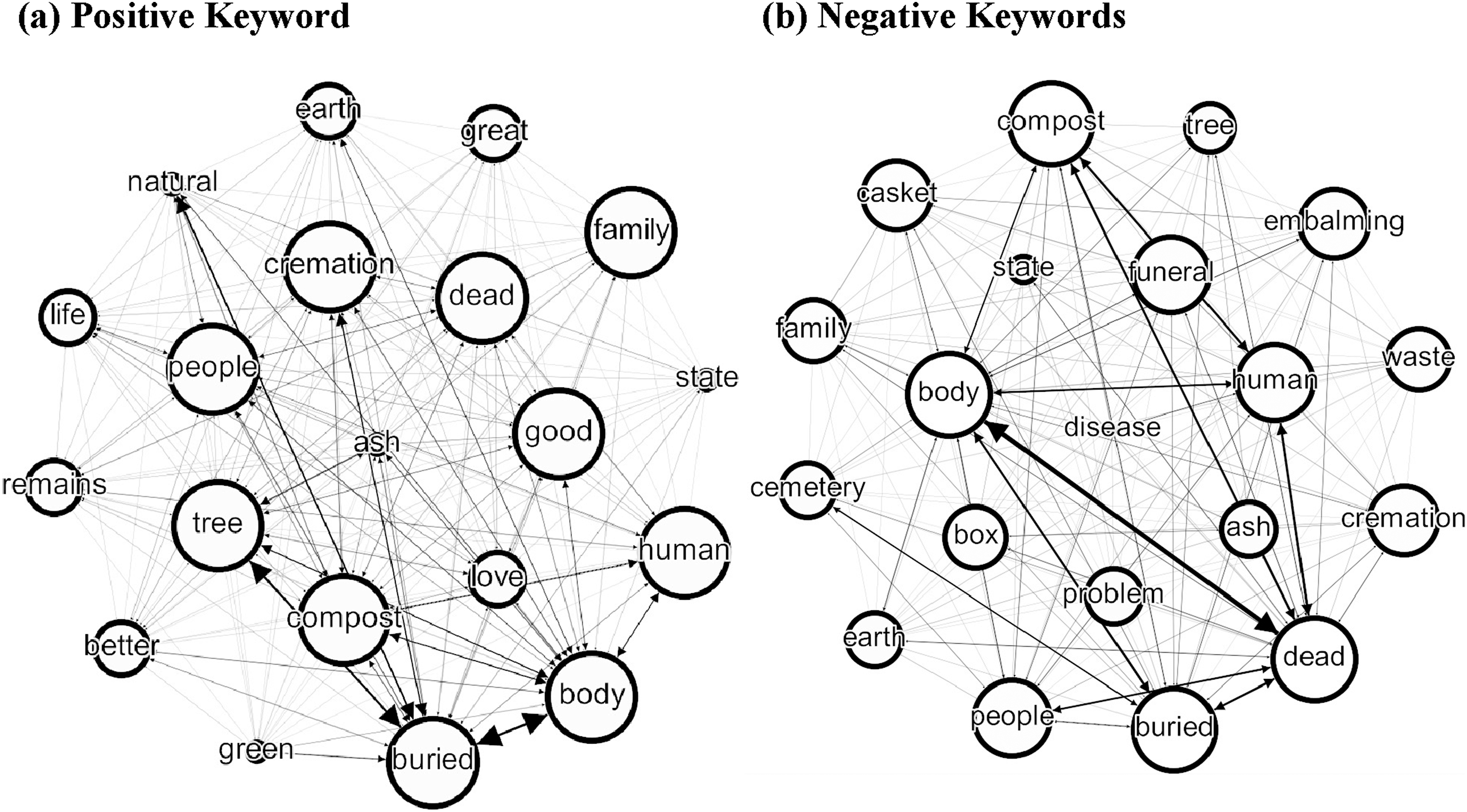
Figure 3(b) contains high-frequency keywords opponents use (µ = 10.83 edges/node). The most prominent node is “dead” with its strongest (darkest/thickest) edges to “body” (155 direct cooccurrences, and via “human” [62 indirect] and “people” [61 indirect]). The edge between “body” and “buried” is also notable (75 direct cooccurrences, and via “cemetery” [40 indirect] and “dead” [71 indirect]). These three nodes (dead + body + buried) account for 40.25% of all edge density, suggesting homogeneity in opponents’ eWOM verbiage. Finally, the last relationship of significance is that between the “human” and “compost” nodes (77 direct cooccurrences, and via “dead” [62 indirect] and “body” [59 indirect]). The findings of the Gephi analysis show that those expressing negative sentiment believe that the human body (i.e., dead people’s bodies) should be buried in a cemetery as opposed to being turned into human compost. They have a strong preference for traditional deathcare services and use eWOM to demonstrate their disdain for service innovation in this stigmatized industry. Nuanced justifications for proponents’ and opponents’ perceptions are explored in the semiotic analysis.
Semiotic Square
Relevant keywords were repeatedly grouped into contradictory and complementary themes until no further insights could be generated (Glaser and Strauss 1967). Keywords identified in the cooccurrence matrix were color-coded to aid in categorization. Themes were then labeled and input into a Semiotic Square (Figure 4). Since nodes have multiple edges, keywords were permitted to repeat within association-relevant themes. Semiotic square of consumer discourse for human composting.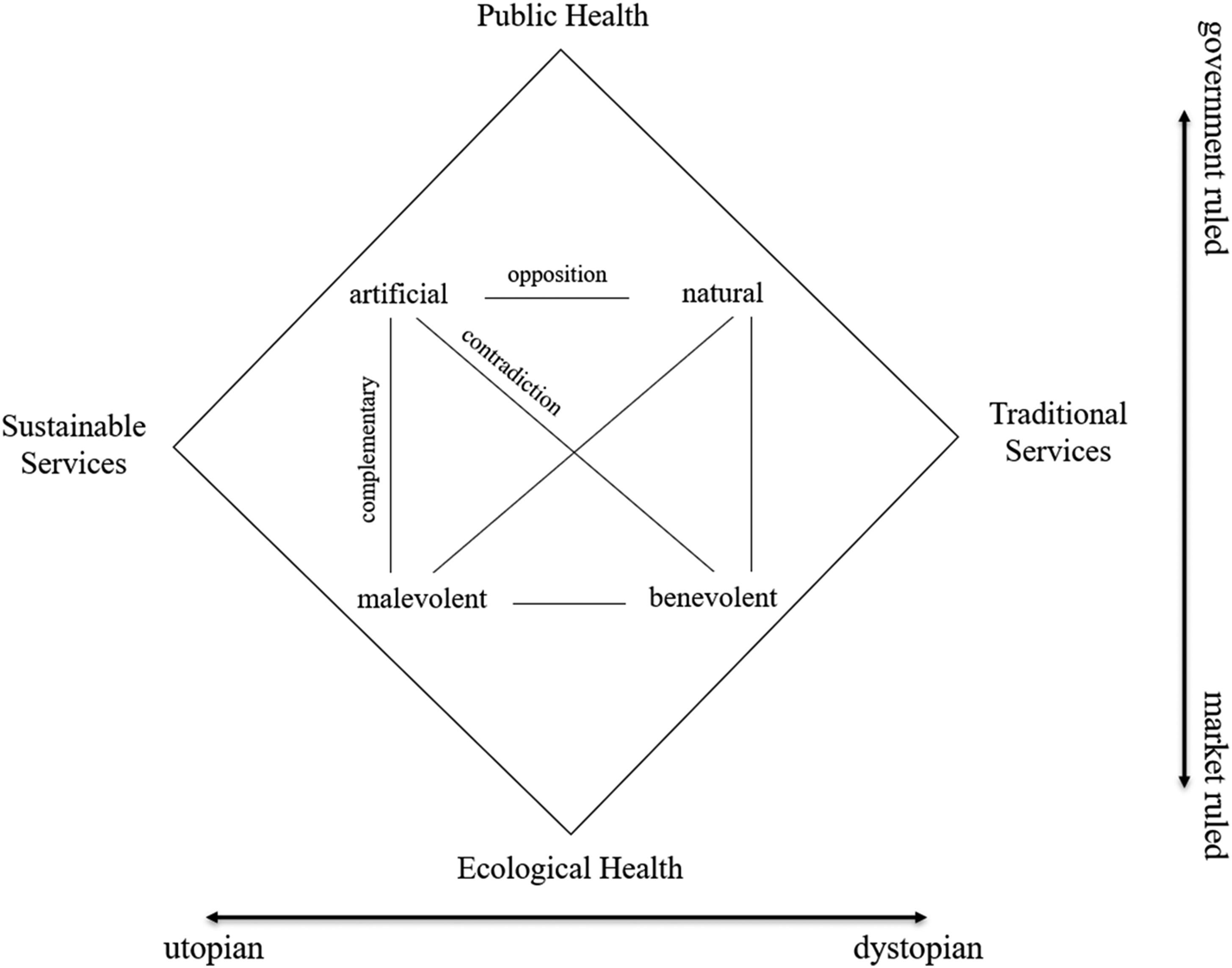
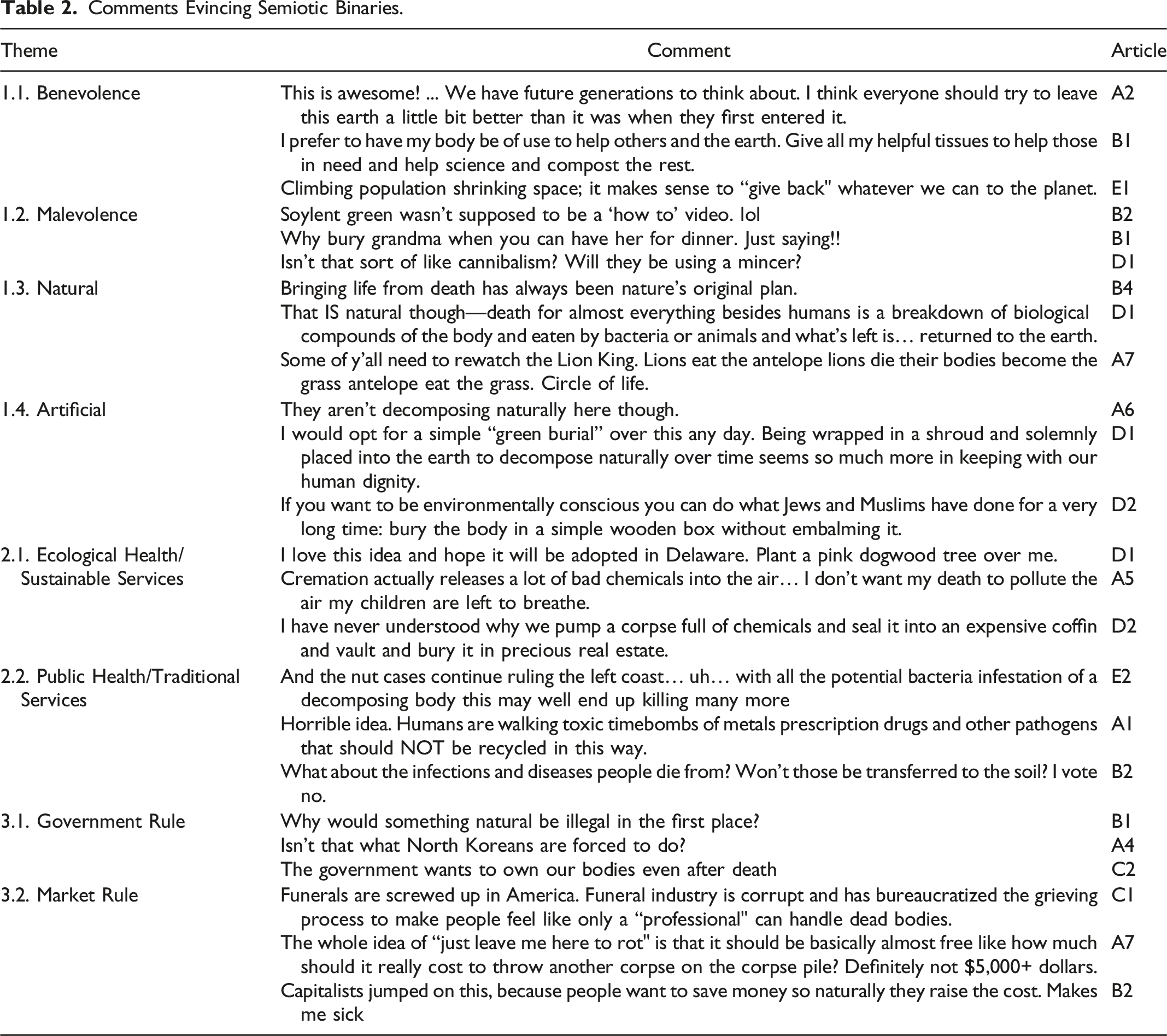
Comments Evincing Semiotic Binaries.
Normative Legitimacy: Benevolent and Natural versus Malevolent and Artificial
An emerging body of research within the normative/moral legitimacy domain aims to understand how controversial or counter-normative practices diffuse (Greenwood et al. 2017). Green, Li, and Nohria (2009) maintain that even when counter-normative practices attain diffusion, they do not become institutionalized until they are uncontested through rhetorical devices. Our findings suggest that service innovation in deathcare remains counter-normative. While proponents tout NOR as a natural and benevolent deathcare alternative with normative legitimacy, opponents counter that it is morally illegitimate because it is malevolent and artificial.
Proponents’ eWOM keywords “human” + “compost,” “dead” + “body,” “life” + “earth,” and “family” are classified as thematically Benevolent. Benevolence is a normative ideology with moral foundations in the virtue ethics of caring (Besser-Jones and Slote 2015). Benevolent is defined as a psychological personality trait of someone who is “positively motivated to bring about an improved state of happiness or welfare of others” (Brandt 1976, p. 430). In a social context, benevolence is often linked to intergenerational responsibility (Puaschunder 2020). Krupar (2018) finds that the legitimation of sustainable corpse disposition stems from the necro-ideology that carcasses are a utilitarian renewable resource (e.g., recycling medical implants and organ donation) and that death is being reimaged as a legacy of biopresence and perpetuation of life. Proponents point to the prescriptive obligation of people to use their dead bodies as human compost to perpetuate life on planet Earth (Table 2, 1.1).
Contrariwise, opponents’ eWOM keyword combinations “family,” “funeral” + “casket,” buried” + “cemetery,” and “cremation” as well as “human,” “compost,” and “problem” are classified as thematically Malevolent. Malevolent is defined as intentional opposition to the general good which “amounts to one of the strongest, purest, most wicked forms of epistemic vice” (Baird and Calvard 2019, p. 268). Opponents use eWOM to express social resistance to this service innovation. They allege that human composting is a problem because it desecrates the dead body by negating the traditional funeral ritual, which typically involves embalming and a casket viewing along with either burial in a cemetery or cremation. Some opponents use eWOM to express concerns that human composting is a problem because it is akin to cannibalism (Table 2, 1.2). Specifically, while it does not appear in the Gephi analysis regarding keyword frequency, there is a small but meaningful cohort of (likely older) opponents that compare NOR to the movie Soylent Green. This is a 1973 dystopian film set in New York City, where overpopulation has exhausted the food supply, leading to Soylent Industries developing a mystery protein that, unbeknownst to consumers, turns out to be made from human cadavers.
Proponents’ responses often counter opponents’ malevolent justifications by pointing out that NOR is a naturally occurring phenomenon. The eWOM keywords “natural,” “ashes,” “earth,” “dead,” “body,” “remains,” and “life” are classified as thematically natural in an evolutionary sense. While this word has many meanings, in the present context, natural is defined using the Merriam-Webster Dictionary Online (n.d.) definition 8(a): “occurring in conformity with the ordinary course of nature.” Proponents seemingly become defensive at the suggestion that human composting is malevolent and therefore normatively illegitimate since it happens regardless of moral intent. Proponents claim that this is nature taking its course via the circle of life or ashes-to-ashes (Table 2, 1.3). The latter is an abbreviation of the religious idiom “earth to earth, ashes to ashes, dust to dust,” which is used in reference to eternal life (Oxford Reference 2010).
Opponents use the eWOM keywords “human” + “remains,” “dead” + “body,” “compost,” and “waste” to justify that NOR is normatively illegitimate because it is an artificial rather than a natural process. According to the Oxford English Dictionary Online (n.d.), artificial refers to something “made or produced by human beings rather than occurring naturally, especially as a copy of something natural.” Opponents argue that NOR merely mimics nature and that you do not need technology to do what occurs without human intervention. Opponents use eWOM to advocate for other methods like green burial as a better mechanism to compost dead bodies naturally (Table 2, 1.4). The underpinnings of normative legitimacy conferral within these juxtaposed positions are interconnected with perceptions of cultural-cognitive legitimacy.
Cultural-Cognitive Legitimacy: Ecological Health and Sustainable Services versus Public Health and Traditional Services
Cultural-cognitive legitimacy prescribes what a collective considers socially acceptable based on shared social values (Scott 2003). Concerning public perceptions of sustainability, Campbell (2007) posits that corporations are more likely to act in socially responsible ways when environmental forces such as regulation, the press, and social movements (among other factors) mobilize to monitor and change their behavior. Some reports find that sustainable goods and services have twice the growth rate of their traditional counterparts, yet the intention-action gap persists (White Katherine et al. 2019). Adaption of sustainable service innovation in deathcare follows this trajectory as consumers struggle to reconcile competing beliefs about its cognitive-cultural legitimacy.
Proponents use both positive and negative eWOM to express concerns over Ecological Health and endorse Sustainable Service innovations as a solution. Negative terms relate to the detrimental environmental impact of traditional deathcare services. Keywords used to express this distress include “embalming,” “waste,” “box”/“casket,” “buried,” “cemetery,” and “cremation.” They use these terms to point to the negative environmental impacts of embalming (e.g., leaching toxins), burial (e.g., land scarcity), and cremation (e.g., carbon emissions). Proponents also use eWOM to support sustainable service innovations in deathcare. The positive keywords used to legitimate NOR include: “good,” “great,” “love,” “better,” “human” + “remains,” “dead” + “body,” “tree,” “life,” and “family.” They see this as a better way to deal with human remains and use highly favorable adjectives such as good and great to show their support. One common theme from the data is that many NOR supporters love the idea of using their remains (i.e., dead body) to produce human compost that family members will then use to nourish and grow a tree in commemoration of their life (Table 2, 2.1). According to Recompose (n.d.), human compost has macronutrients and appropriate pH levels to sustain most plant life.
Azer and Alexander (2020) find that negative customer reviews often attempt to dissuade others and endorse competitors. Unsurprisingly, opponents’ keywords “body,” “problem,” “disease,” “waste,” and “people” as well as “cremation” and “embalming” + “burial” demonstrate how Public Health concerns substantiate the cultural-cognitive legitimacy of Traditional Services. Legitimated through mortuary sciences, deathcare professionals have emerged to mitigate health concerns and, in turn, have expanded commemoration through memorial products and services (Krupar 2018). According to Scott (2003), “[m]ore so than other types of collective actors, the professions exercise control by defining social reality—by devising ontological frameworks, proposing distinctions, creating typifications, and fabricating principles or guidelines for action” (p. 213). This is done through symbolic coding of cultural-cognitive processes (Scott 2003). Deathcare professionals have symbolically encoded the traditional death ritual. These services provide stability and comfort for mourners (Udell 2015). The funeral and associated commemorative paraphernalia (e.g., caskets, flowers, video montages, tombstones, and urns) allow a bereaved collective to engage in the sense-making of death. Mortuary professionals have long relied on sanitation rhetoric to legitimize traditional services. The data shows that opponents of service innovations in deathcare echo these public health concerns to champion traditional services (Table 2, 2.2). The conferral of regulatory legitimacy on traditional services during COVID-19 has seemingly exasperated the discursive divide.
Regulatory Legitimacy: Government versus Market Rule
Regulatory legitimacy refers to the power of an actor to establish (in-)formal laws/rules and enforce conformity (Scott 2014). Since the 1990s, power balances between government and industry have continuously shifted in response to external forces (Scott 2003). As Scott (2003) suggests, “[M]arket structures are not exogenous to and independent of the actions and interactions of the firms operating within them but are created by these interactions, as mediated by agents of the state” (p. 360). The COVID-19 pandemic incited power shifts between government and market rule of deathcare services and particularly corpse dispositions. On March 24, 2020, the World Health Organization released guidelines recommending restricting physical contact with infected corpses. In response, countries enacted laws that dramatically altered corpse disposition practices (Frayer, Estrin, and Arraf 2020), many of which were perceived as civil rights infringements. The polemic of NOR mimics this contention as seen in emergent themes of government and market rule.
Concerning Government Rule, the keywords used by both opponents and proponents to advance their respective positions are “state” and “people.” Opponents perceive laws regulating human composting as infringing on civil liberties and express concerns that sustainable services will become mandated. They compare the legalization of NOR to the policies of communist regimes. Proponents see this government intervention as superfluous because this service innovation should already be legally permissible (Table 2, 3.1). In terms of Market Rule, both proponents and opponents use the word “people” to gain legitimacy for their comments by inferring that others share their personal feelings (Table 2, 3.2). Proponents also use “funeral” to express that mortuary professionals exploit people. Opponents’ use of eWOM includes the keywords “compost” and “dead” + “body” (i.e., corpse) to argue that the price of NOR is also unjustified and that this is yet another capitalist exploitation of grief. According to Kopp and Kemp (2020), since the 1960s American deathcare practices have been “among the most costly and lavish in the world” (p. 156) because a high standard of living became associated with a high standard of dying. The National Funeral Directors Association (2023) reports that, for the past 5 years in America, the median cost for a funeral with internment is $7,848, and for cremation it is $6,971. NOR is priced lower than both options at $5,500 (Recompose n.d.). Facebook eWOM demonstrates a general lack of financial literacy for deathcare expenses. What can be extrapolated from our broader analysis of eWOM is a gradual deinstitutionalization of deathcare orthodoxy among consumers and regulatory bodies.
Utopia versus Dystopia
The juxtaposition in eWOM demonstrates that normative, cultural-cognitive, and regulatory forces surrounding the deathcare market are being challenged as are ideas of what constitutes a utopian versus dystopian future for the planet. Proponents see laws as a necessary precondition for social and moral acceptance of service innovation. Influenced by the climate movement, they view NOR as a market-ruled, natural, sustainable disposition to promote ecological health. Indeed, scientists paint a dystopian future for humanity should the climate crisis continue unabated, and governments are increasingly enacting laws that lend legitimacy to this outcome. However, market rule versus government rule is evident by the lack of regulatory urgency in reaching greenhouse gas emissions targets or addressing issues of socio-economic inequality. The paucity of regulatory legitimacy stemming from legal inaction and deathcare industry protectionism can vindicate opponents’ non-conferral of cognitive-cultural and normative legitimacy.
Many opponents see NOR as a mechanism for cannibalism (i.e., that compost will be used to grow food). We posit that older opponents who perceive NOR to be akin to Soylent Green will not be receptive to this service innovation despite being the ideal consumer from an immediacy perspective. Normatively, opponents argue that human composting is artificial, socially deviant, and immoral. Beyond normative legitimacy, opponents rely on cognitive-cultural sanitation rhetoric, such as public health arguments to justify traditional services and thwart service innovation. COVID-19 legislative interventions reinforce opponents’ dystopian worldviews.
The results of the semiotic analysis confirm that eWOM related to deathcare innovation remains polarized. Yet, taken together, the quantitative and qualitative analyses suggest that environmental forces (normative, cultural-cognitive, regulatory) stemming from social wellbeing and sustainability considerations are shifting worldviews and aiding in the geo-temporal legitimation of this service innovation. This begs the question: how might these insights inform the (de-)institutionalization of innovation in stigmatized markets more broadly?
Discussion
What can be extrapolated from our case study of service innovation within stigmatized markets? Are new service offerings challenging existing offerings? Are new business models being adopted? Are new markets emerging? The answer to each of these questions is yes, albeit slowly. Broadly, our findings show institutional resistance in stigmatized markets. This can be seen in the failure of organizations to respond to environmental pressure for service innovation. In other words, traditional service providers ignore the theoretical model’s “informing” stage. This finding is counterintuitive to the dominant neo-institutional logic (i.e., that firms adapt to survive). Consumer demand for innovation that aligns with broader social wellbeing and sustainability is growing. However, the lack of dialogue in the context of stigmatized markets has historically muted these voices and mitigated mimic pressures to conform. As such, traditional service providers of stigmatized services have long lacked incentive to evolve. eWOM can augment this pressure.
Accidental exposure to taboo topics provokes dialogues that might not otherwise ensue. Voices of dissent to the status quo via eWOM facilitate a new form of observed behavior that informs and persuades proponents. This acts as a “norming” mechanism to perpetuate service innovation through deinstitutionalization. Entrepreneurs who emerge to address the market gap for service innovation typically struggle for legitimation in stigmatized markets. However, eWOM dialogues re-envision new rational myths and perpetuate social advocacy for the underdog. Our findings show that as the conversation ensues, awareness grows, information disseminates, and dissension to the service innovation abates over time (“conforming”). The implications of the theoretical model are discussed in greater detail below.
(De-)Institutionalization of Stigmatized Markets via eWOM
Past to Present—Tradition and Institutionalization
Institutionalization is the result of deeply embedded tradition. Through a case study analysis of the deathcare industry, we show that perceptions of stigmatized services are entrenched in the cultural fabric of society. Traditional services have been legitimized through the medicalization, professionalization, and ritualization of death aimed at mitigating public health concerns. Industry protectionism in stigmatized markets mimics that of other monopolistic industries. The oil industry uses physical infrastructure to safeguard its market share (e.g., gas stations and combustion engine mechanics) and thwart the diffusion of electric car adoption. Likewise, funeral homes offer a one-stop-shop for embalming services, caskets, cremation, and other ceremonial paraphernalia. One explanation might be that the taboo nature of the topic discourages discussions of innovation within these markets. A darker perspective might be that such industries are benefiting from the stigmatization in a way that precludes scrutiny of outdated business models that fail to adapt to consumers' evolving needs. This inhibition perpetuates rational myths of decorous purchase behavior and deviation, creating tensions that frustrate the institutional reconciliation of service innovations.
Other instances include stigmatized services that arise from traditional ideals of male/female gender roles (e.g., gender reassignment surgery, gay adoption, abortion, and surrogacy); capitalism and socio-economic inequalities (e.g., homeless shelters, food banks, disabilities, and addiction); or aesthetics (e.g., representation of diversity in the beauty industry). Fortunately, like people, ideals evolve. While non-exhaustive, these examples demonstrate how rational myths perpetuating stigma are geo-temporal institutions that progress in response to changes in the external environment. As innovation challenges tradition, consumers undergo a process of institutional reconciliation, being the convergence of divergent habitus (Chandler et al. 2019). Chandler et al. (2019) find that institutional reconciliation can be wrought with tension because individuals vary in their commitment to the current institutional order and willingness to maintain or disturb it. Inopportunity for institutional reconciliation is especially challenging for entrepreneurs entering stigmatized markets. Before internet diffusion, accidental exposure to these services was constrained, meaning there was limited occasion to facilitate discourse around new ideas. Unfortunately, a service provider’s survival depends on consumers’ endorsement of legitimacy (Bouncken and Tiberius 2023; Deephouse 1996). However, eWOM has been shown to influence consumer purchase behavior and has become increasingly important for service research (Raassens and Haans 2017).
Present to Future—Innovation and Deinstitutionalization
Stigmatized service entrepreneurs face turbulent institutional environments. Yet, innovation emerges in these volatile (versus stable) service ecosystems because “innovation is an ongoing reconciliation of competing institutionalized norms, rules, and beliefs … [and] complete alignment of a service ecosystem may not be necessary for an innovation to emerge” (Chandler et al. 2019, pp. 84–5). Regulatory, normative, and cultural-cognitive shifts in society perpetuate this process of deinstitutionalization. Legislative interventions change power dynamics (e.g., women’s suffrage, abolition, and LGBTQ+ rights). Social values evolve in response to grand challenges (e.g., United Nations SDGs). Cultural values evolve as social and mainstream media enhance the mobilization of opposition to outdated ideology (Me Too, Black Lives Matter, Truth and Reconciliation). These forces are reshaping perceptions of legitimacy, albeit different services are at varying stages of legitimation, depending on the persistence of tradition, the severity of stigma, and the process of institutional reconciliation.
Poignantly, acute disturbances in the institutional environment can reinforce rational myths and thwart progress in the market diffusion of innovation. Chandler et al. (2019) submit that since innovation is a dialectic (versus something won/lost by one side), the innovation process can retrogress to its original phase when institutional reconciliation does not produce a solution. This can be seen in the case of sustainable deathcare and the retrogression of consumer preferences in the aftermath of the COVID-19 pandemic. Ultimately, innovation within stigmatized markets is painfully slow. To take hold, time is needed to change beliefs and for actors to learn (Chandler et al. 2019). Legalization of new sustainable services typically requires a champion to prioritize the issue on the policy agenda, as established service providers (e.g., casket companies) engage in industry protectionism to safeguard their market share and profits. Normative ideals (e.g., death rituals) and cultural-cognitive arguments (e.g., public health concerns) can reinforce rational myths that promote traditional services.
Positive eWOM for new products and services can help to build consumer trust (Hajli et al. 2014) and significantly influence buying decisions (Sweeney et al. 2020). Accidental online exposure to stigmatized services can incite an eWOM dialogue. These comments act like customer reviews, which are a form of influencing behavior that impacts the knowledge, perceptions, and preferences of others (Jaakkola and Alexander 2014). In many cases, negative reviews can deter sales. However, Rasmussen, Berger, and Sorensen (2010) find that when consumer awareness about a product or service offering is low, negative publicity can positively affect product choice and sales by increasing awareness. Azer and Alexander (2020) show that the intensity of the negative valance matters, and that less intensely negative reviews are moderated by positive ones. Our results support this contention in that the presence of opposition has incited proponents to perpetuate awareness, advocacy, and information (e.g., the environmental impact of traditional services, the cost of sustainable alternatives, and proper use, such as growing a tree versus food). We show that eWOM plays an important role in the institutional reconciliation process. Humphreys (2010) posits that the physical presence of a stigmatized establishment can shift the public discourse from polarizing to prosaic when attenuated over a longitudinal period (27 years). We demonstrate that even over a relatively short period preceding the market introduction of service innovation (4 years), consumer discourses in eWOM aid legitimizing stigmatized services. We call on scholars to explore the legitimating influence of eWOM on the adoption of service innovations in other stigmatized markets.
Research Contributions
Our study contributes to the growing service literature that suggests a need to understand how institutions influence the emergence and adoption of innovations (Chandler et al. 2019). Our study also contributes to the dialogue in service literature attempting to bridge the understanding of institutional theory across disciplines (Koskela-Huotari and Vargo 2016; Slimane Karim Ben et al. 2019) by exploring how customers, using eWOM, influence institutions and adoption and legitimation of stigmatized service innovations. It also contributes to the service research domain that aims to have a broad social impact (Huang et al. 2021) and critical societal issues (Azzari and Baker 2020). In so doing, it pushes the boundaries of existent literature by tackling an under-researched topic with a high potential for impact vis-à-vis the Service Research Priorities (SRP) identified by Ostrom et al. (2021) and Field et al. (2021). Specifically, this study informs service research by exploring capabilities and constraints related to environmental, social, cultural, and demographic shifts and responses to uncertainty for entrepreneurs offering service innovations within stigmatized markets. While arguably concentrated in a geographic area (i.e., NOR is only legal in the USA), our study is among the first to unpack emerging phenomena using a well-established theoretical framework. We hope that this will encourage other service scholars to study stigmatized markets.
Our research contributes to the service literature in three ways. First, it contributes to the study of service innovation. Specifically, it answers calls for research that focuses on social wellbeing and sustainability versus a profit-driven maxim (Slimane Karim Ben et al. 2019) by examining sustainable stigmatized services through the lens of institutional theory. We do so by exploring the capabilities and constraints related to environmental, social, cultural, and demographic shifts and responses to uncertainty for entrepreneurs offering sustainable service innovations within stigmatized markets. Institutional theory is useful for studying how individuals, organizations, and institutions respond to changes in societal norms and conventions. Second, we build on existing service scholarship on eWOM by showing its legitimating impetuous for social wellbeing and sustainability (Valor, Ronda, and Abril 2022). We apply this to the context of underdogs who challenge the prevailing orthodoxy. Academically, these contributions open a new line of inquiry for service researchers contributing to the emerging socially responsive society and practitioners looking to research ways to enter and thrive in stigmatized industries. Indeed, practitioners seeking guidance from the service literature may have formerly hit a “dead” end in this regard. Managerially, our research highlights the importance of using marketing mechanisms that promote dialogue (e.g., social media and discussion forums) versus one-way communication (e.g., mass marketing and print media).
Finally, our study contributes to the research on stigmatized services in institutionalized environments. Contrary to the prevailing thought by institutional scholars (DiMaggio Paul and Powell Walter 1983; Oliver 1991), we show that these industries do not conform to isomorphic response to environmental pressures. We found that contrary to significant pressures from proponents and burgeoning support from regulators advocating for service innovation, traditional service providers remain resolute and unyielding to these pressures. There may be insufficient external forces, yet, to induce a response at this nascent stage. However, few other service providers evade mimetic pressures. Our paper is among the first to explore service innovation in stigmatized markets using an institutional framework. Thus, it contributes to the literature on counter-normativity and the interaction between three different forms of institutional legitimacy as antecedents of deinstitutionalization.
Research Limitations
While this research is robust, it is not without limitations. The first is that it uses a case-study approach to understand the legitimating impetuous of eWOM in institutional reconciliation within the deathcare industry. This approach is somewhat limited in terms of generalizability in that, while we believe that the findings would hold in other stigmatized contexts (i.e., non-mimetic pressures and eWOM legitimation), additional research is needed to substantiate these findings. Moreover, this methodology does not elucidate the individual motivations for (non-)adoption of other service innovations. Another limitation is the scope. A longitudinal study across different states and/or countries could better inform this topic. The current study has provided a glimpse into the challenges of exploring how service innovations are deinstitutionalized in stigmatized industries. Future research is needed to discover whether the conceptual model applies to other service innovations in stigmatized and traditional industries. It is hoped that service scholars will build upon the current results to aid practitioners in understanding mechanisms for legitimation and market diffusion of service innovations that promote social wellbeing and sustainability, particularly within stigmatized markets.
Conclusion
Consumers are usually reluctant to discuss taboo purchases. In the past, this lack of dialogue fostered rational myths that inhibited innovation. Ethically, it can be argued that traditional practices arising from antiquated worldviews should not “haunt” future generations. We found that service providers operating in stigmatized markets have profited from rational myths and have little impetus to change, thus reinforcing the status quo. New sustainable service innovations (e.g., NOR) may be the catalyst if the service becomes legitimized through regulation and acceptance by an increasing populace seeking service innovation. Oftentimes, consumers of service innovations in stigmatized markets belong to vulnerable or marginalized groups, and swaying perceptions within these industries require the minority to challenge the majority. Accidental exposure through eWOM offers a mechanism to do so without direct confrontation. The ensuing consumer discourses can aid in legitimizing innovations by endorsing new services and moderating opposition. Particularly, since traditional service providers seem immune to political, mimetic, and normative isomorphic pressures, eWOM can help legitimate underdogs offering service innovations in stigmatized markets. In this sense, eWOM becomes a service innovation in and of itself—challenging, shaping, and creating markets for social wellbeing and sustainability.
Supplemental Material
Supplemental Dying to Understand How Electronic Word of Mouth Legitimates Sustainable Innovations in Stigmatized Markets
Supplemental Material for Dying to Understand How eWOM Legitimates Sustainable Innovations in Stigmatized Markets by Stephanie Villers, Rumina Dhalla, and Jan Oberholzer in Journal of Service Research
Supplemental Material
Supplemental Material—Dying to Understand How eWOM Legitimates Sustainable Innovations in Stigmatized Markets
Supplemental Material for Dying to Understand How eWOM Legitimates Sustainable Innovations in Stigmatized Markets by Stephanie Villers, Rumina Dhalla, and Jan Oberholzer in Journal of Service Research
Footnotes
Acknowledgments
The authors would like to sincerely thank the editorial review team for their constructive and comprehensive feedback which helped to improve the quality of the manuscript. Stephanie also thanks her supervisor, Dr Vinay Kanetkar, for his support and guidance throughout this project as well as his enthusiasm for the admittedly macabre subject matter.
Author Note
The article is based on the lead author’s dissertation.
Declaration of Conflicting Interests
The author(s) declared no potential conflicts of interest with respect to the research, authorship, and/or publication of this article.
Funding
The author(s) received no financial support for the research, authorship, and/or publication of this article.

Supplemental Material
Supplemental material for this article is available online.
Author Biographies
References
Supplementary Material
Please find the following supplemental material available below.
For Open Access articles published under a Creative Commons License, all supplemental material carries the same license as the article it is associated with.
For non-Open Access articles published, all supplemental material carries a non-exclusive license, and permission requests for re-use of supplemental material or any part of supplemental material shall be sent directly to the copyright owner as specified in the copyright notice associated with the article.
