



Abstract
Utah parks are attracting an increasing number of visitors due to the quality dark sky viewing opportunities. Despite increasing engagement in nighttime recreation, limited research exists on visitor interest in interpretation for dark skies in state and national parks. Nighttime visitors at nine Utah state and national park units certified as dark sky parks were surveyed to evaluate their preferences for dark sky-related interpretive topics and communication methods. Visitors expressed the strongest interest in astronomy and improving dark sky viewing, with ranger-led programs emerging as the most favored delivery method. National park visitors showed greater interest than state park visitors in self-guided learning formats such as interpretive displays and mobile apps for topics such as dark sky viewing/astronomy and viewing wildlife at night. These findings highlight the benefits of diverse, yet targeted communication strategies to improve visitor experiences of dark skies and foster stewardship of natural darkness in parks.
Keywords
Introduction
Artificial light at night is currently at its highest known recorded levels, with more than 80% of the world population experiencing obstructed views of the stars (Falchi et al., 2016) and the overall brightness of the night sky increasing 7–10% per year (Kyba et al., 2023). A growing body of literature has underscored the associated negative impacts on human health, such as chronic disruptions to circadian rhythms that increase risk for cardiovascular disease and diabetes (Chepesiuk, 2009; Hu et al., 2024; Rijo-Ferreira & Takahashi, 2019). The consequences of light pollution extend beyond humans to other species with research demonstrating negative impacts on bird migration (Adams et al., 2024), sea turtle nesting (Leader et al., 2024), attracting insects (Corsini et al., 2025), and displacement of bats across North America (Seewagen et al., 2023). Building on this evidence, both the scientific community, which continues to document the ecological and social impacts of light pollution (Challéat et al., 2021; Davies & Smyth, 2018; Sordello et al., 2022), and the technical community, which is advancing practical mitigation strategies (Alva et al., 2023), are intensifying efforts to expand our understanding of this pervasive issue. Despite these advances, research on communication strategies focused on naturally dark night skies remains nascent (Crump et al., 2024). Strengthening these efforts requires not only continued scientific and technical innovation but also a deeper understanding of how visitors to dark sky destinations wish to engage with—and ultimately more fully appreciate—the value of naturally dark skies.
Nature-based noctourism centers on astronomy-based experiences (Soleimani et al., 2019), nocturnal wildlife programs (Henry et al., 2022), and other activities in which natural darkness and dark night skies are critical (Beeco et al., 2011, 2025). As some of the few remaining places with quality dark skies, parks and protected areas offer opportunities for teaching visitors about the ecological and human health benefits of naturally dark environments, dark night skies, and culturally relevant dark sky stories—positioning management agencies such as the National Park Service (NPS) as responsible stewards of dark night skies (Manning et al., 2015). Recent data suggest that visitors experiencing dark sky friendly lighting within parks and protected areas are more supportive of dark sky preservation strategies in the park and have a willingness to engage in similar practices after their trip (Crump, 2025).
Several organizations dedicated to dark sky protection have established principles and guidelines to reduce light pollution, though their terminology varies (Beeco et al., 2023). Terms like "wildlife-friendly," "night sky-friendly," and "dark-sky friendly" lack uniform definitions and serve as general indicators of intent rather than specific standards. Common among these approaches are the practices themselves, with key organizations such as Dark Sky International and the Illuminating Engineering Society outlining the various principles—summarized by Beeco et al. (2023) as:
Only using light where it is needed.
Using warmer color lights and limit the use of blue-violet light.
Using only as much light as needed for the task.
Using fixtures and light-emitting diodes (LEDs) that direct the light to only the area it is needed.
Using controls to light only when needed, and color/dimmer controls to achieve other lighting goals.
Strategies to minimize light pollution are used not only for protecting the resources and experiences offered by parks and protected areas but also for advancing resource management goals through the promotion of stewardship principles that visitors carry home with them beyond their visit (Johnson et al., 2023). One common approach parks and protected areas use to support resource management is visitor communication, which requires relatively minimal investment of time and resources (Miller et al., 2018). Although education on the ecological and cultural value of natural darkness, sustainable lighting principles, and other night-related issues remains limited, effective communication with park visitors can ensure a positive and meaningful visitor experience (Moyle & Croy, 2009). However, parks can ensure the messages they are delivering to their visitors are relevant or they risk their messages being ignored (Miller et al., 2018). Additionally, Dark Sky International requires that certified dark sky parks provide communication and education about the importance of dark skies and impacts of light pollution (Harrison, 2024).
For parks and protected areas to create meaningful and transformative communication, it is important for them to ensure they are delivering content that engages visitors. The Elaboration Likelihood Model suggests that there are two routes messages can take to persuade readers. The first route is the central route when a person considers the information provided, used most often when motivation to evaluate the information is high (Kitchen et al., 2014). The second route is the peripheral route, where non-central aspects of the message, such as an attractive design, provide subtle cues to change attitudes without deep consideration, generally used when motivation is lower (Petty & Cacioppo, 1986). While both routes can lead to changes in attitudes, communications that engage the central route are thought to lead to long-term attitudinal shifts (O’Keefe, 2013). Since the central route can lead to long-term changes in behavior, park and protected areas can ensure they are communicating in ways that engage visitors effectively. Considering the importance of engaging visitors, we turn to Uses and Gratifications Theory (Palmgreen, 1984) to provide insights into the communication preferences of park visitors.
Uses and Gratifications Theory suggests people do not engage with information passively but instead seek out information they need (Chavez et al., 2020; Palmgreen, 1984). Visitor interest in a communication message is thought to be influenced by how much the individuals rely on the information provided and the extent to which it meets their needs (Ruggiero, 2000). Uses and Gratifications Theory suggests media choice may be driven by individual characteristics (Falgoust et al., 2022). Despite visitors choosing to engage with media that meets their needs, Uses and Gratifications is conspicuously absent from much of the literature on environmental communication and interpretation (Ng, 2022). This absence is interesting considering that gratifications from media consumption, such as information seeking, has been demonstrated to lead to pro-environmental behavior (Ma et al., 2021). Considering the importance of ensuring information is processed through the central route and that park visitors seek out communications they believe would benefit them in attaining their goals, we propose an integrated Elaboration Likelihood Model and Uses and Gratifications Theory framework. In this integrated framework, visitors’ seeking information through interpretation would lead to selecting central route information sources that increase retention of information and potentially to support for dark sky protection actions. Combining these two theories can facilitate land managers and interpreters’ understanding of which dark sky related topics park visitors may find the most useful. Additionally, this framework can help determine whether differences in media content and delivery are preferred by visitors to different types of locations, such as state and national parks.
Visitor Communication
Research suggests communication through preferred channels is most effective at disseminating information and considering channels visitors want to receive information from can be beneficial (Wilkins et al., 2018). Preferences for different information channels can depend on the type of information as well as how great the information need is; one person may prefer to get different types of information from different channels (Lu & Yuan, 2011). Land managers have the ability to share information with their visitors in a variety of ways, including through visitor centers, exhibits and signs, ranger-led interpretive programs, websites, and official social media channels (Wilkins et al., 2020). Additionally, unofficial channels such as local blogs and travel influencers are possible options for park staff to deliver their messaging. Research suggests that not only do visitors use social media to learn about parks and what they offer, but that they use different social media platforms for different types of information (Wilkins et al., 2020). However, social media is not always the preferred method of communication, with research suggesting personal experiences, such as ranger-led interpretive programs, tend to be universally highly favored (Wilkins et al., 2018; Yamada & Knapp, 2010).
Although research about communication with park visitors has determined generally effective ways of communicating with visitors and what media channels visitors prefer (Miller et al., 2018; Wilkins et al., 2020), research suggests the reception of messaging is highly dependent upon visitors’ preferences (Beall et al., 2021; Hughes et al., 2009). While studies have explored dark sky visitors’ support for management actions (Beeco et al., 2023), awareness of the impacts of light pollution (Crump et al., 2024), perceptions of safety in dark places (Himschoot et al., 2024), and preferences for alternative lighting types (Fristrup et al., 2024)—few studies have explored the communication of information on dark skies to park visitors. Understanding the role of communication about issues with light pollution is important as research suggests once people are informed of the environmental impacts of light pollution (Boomsma & Steg, 2014), they are supportive of lower lighting levels in urban settings and park users who are informed intend to reduce their personal light use when in the park (Crump et al., 2024).
Two notable pieces of scholarship on dark sky communication/interpretation are discussed. First is Hvenegaard and Banack’s (2024) study which examined who attended a dark sky festival, as well as learning outcomes and satisfaction with their experience. Results suggested that visitors to the festival stay overnight and come in groups, highlighting that dark sky event organizers should consider planning events that cater to these groups. While findings from this study demonstrated that attending a dark sky festival could increase awareness of light pollution and intentions to reduce light pollution in a small proportion of visitors, this study did not offer clear guidelines for the ways in which educational resources were shared with study participants to change behavioral intent. Second is Mace and McDaniel’s (2013) study which assessed the effectiveness of knowledge transfer through dark sky interpretation. This study surveyed day and nighttime visitors’ attitudes towards light pollution as well as a subset of attendees at a dark sky interpretive program. Although the findings suggest an increase in knowledge for both attendees of a dark sky interpretive program and daytime visitors who engaged with park brochures, handouts, and visitor center exhibits. Results indicate that knowledge transfer is greater for attendees of interpretive programs, rather than those who engage in self-led learning. While these findings are important for demonstrating the effectiveness of a variety of information sources, this study focused on knowledge outcomes rather than visitor preference for learning about different topics. More research can support a basic understanding of what visitors want to learn about dark skies during their visits, particularly as Dark Sky International requires certified parks to provide educational resources about light pollution to visitors (Harrison, 2024). A Dark Sky International certification is granted to parks and protected areas that are “possessing an exceptional or distinguished quality of starry night skies and a nocturnal environment that is specifically protected for its scientific, natural, educational, cultural heritage, and/or public enjoyment” (Harrison, 2024).
In addition to understanding which communication methods visitors may be interested in hearing about, the differences in types of park can be considered as well. State and national parks have different missions, levels of support and funding, as well as different types of visitors (Xiao et al., 2022). In the aftermath of the COVID-19 pandemic, visitation to national parks increased in the United States, particularly those parks that have a strong focus on nature-based recreation (Lu et al., 2023). Despite increased visitation to NPS sites (Alba et al., 2022), many non-visitors highlight the distance to the park as a common constraint to their visitation (Xiao et al., 2022). Although they may not visit national parks, these people do still engage in outdoor activities through visiting their local community and state parks (Lee, 2024). When examining state park visitation, visitors have been shown to be inclined to visit due to their proximity (Whiting et al., 2017). Considering the differences in motivations for state and national park visitation, determining whether visitors to these different types of parks are interested in receiving dark sky specific information in unique ways can be beneficial.
Study Objectives
Uses and Gratifications Theory suggests visitors play an active role in their media choices, such that those choices achieve personal goals (Falgoust et al., 2022) and according to the Elaboration Likelihood Model, the chosen media can have persuasive impact through both the central route (preferred) or peripheral route. Further, because Dark Sky International requires that certified dark sky parks provide communication and education about the importance of dark skies and the impacts of light pollution, understanding what topics and methods of interpretation can interest visitors and whether they seek certified parks for this information can be evaluated. Understanding visitors’ preferences in topic and channels for learning about dark skies can be beneficial to resource managers. In this study, we draw on the same sample as Beeco et al. (2023). That study found visitor support for management actions that protect dark sky quality, as well as a general interest in visitors wanting to learn more about dark sky topics. Here, we extend this work by delving deeper into visitor interest in learning about dark skies by seeking to understand more about the preferred delivery method of topics, and whether there is a difference between state and national park visitors interest in dark sky interpretation. With these gaps in mind, this study seeks to address the following research questions.
What type of dark sky information are visitors interested in learning about?
Are visitors to state and national parks interested in the same type of dark sky related information?
Do visitors have different preferences for communication channels based on the dark sky topic?
Do visitors to state and national parks have different preferences for channels to receive information related to dark skies?
What role does the Dark Sky International certification play in visitation to a dark sky park?
Methods
Study Site
Data were collected via an on-site survey administered at select Dark Sky International certified parks throughout Utah. This included four state parks (Antelope Island State Park, Fremont Indian State Park and Museum, Dead Horse Point State Park, and Goblin Valley State Park) and five National Park Service units (Arches National Park, Bryce Canyon National Park, Canyonlands National Park, Capitol Reef National Park, and National Bridges National Monument) (Figure 1). These parks were selected due to the overall quality of their dark skies and their status as Dark Sky International certified parks.
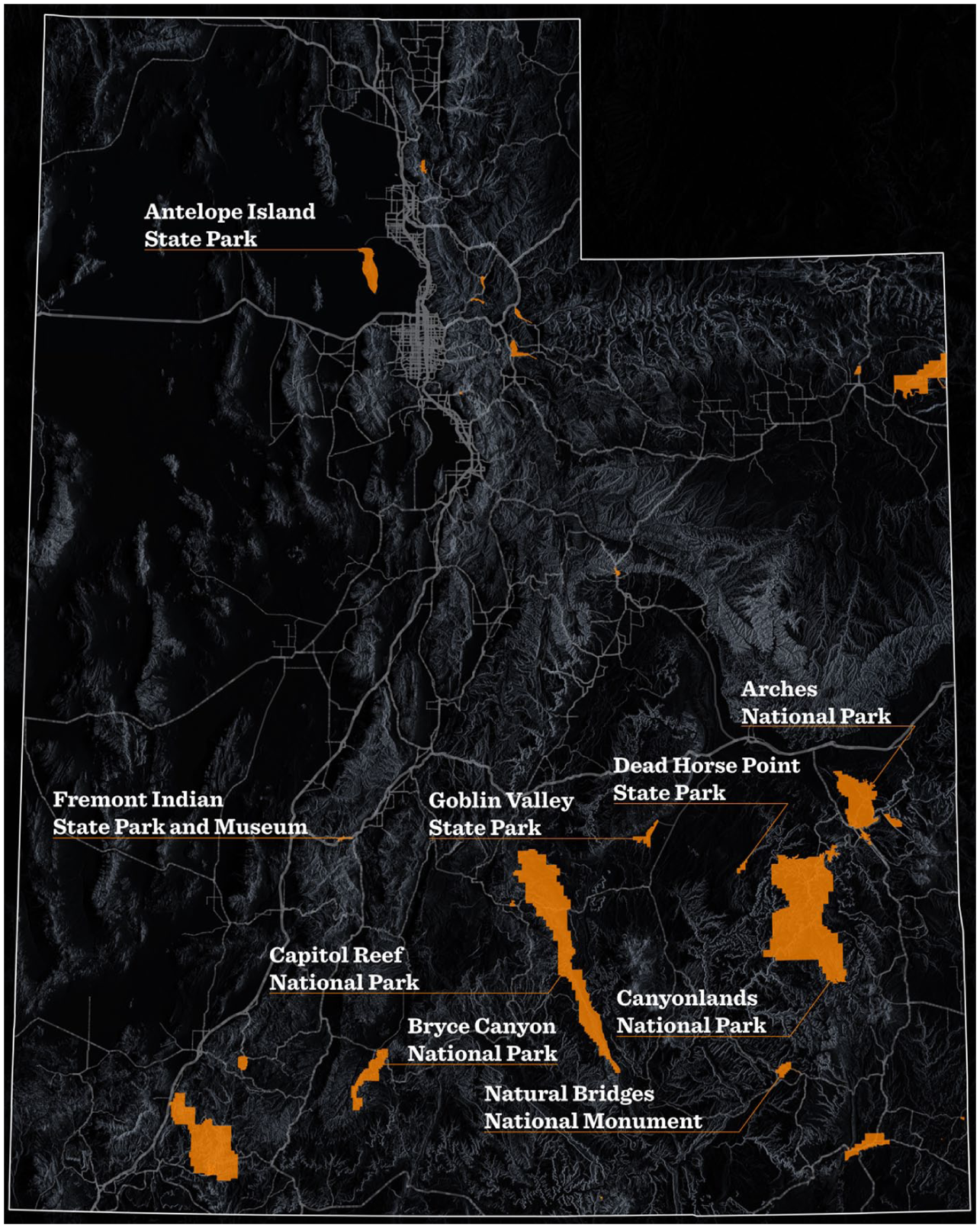
State parks, national parks, and the national monument included in the study.
Survey Administration and Instrument
Participants were intercepted between April 2021 and May 2022 across 82 distinct site-nights. Despite the proximity of data collection to the COVID-19 pandemic, visitation for the Utah parks had rebounded during the data collection period, even though international visitors remained a largely missing segment during this time. Site-nights were spread as evenly as possible between weekdays and weekends, although schedule adjustments were made due to weather and survey technician availability. Sampling locations within each park were determined with assistance from park staff and included parking lots, campgrounds, overlooks, and roadside pull-offs.
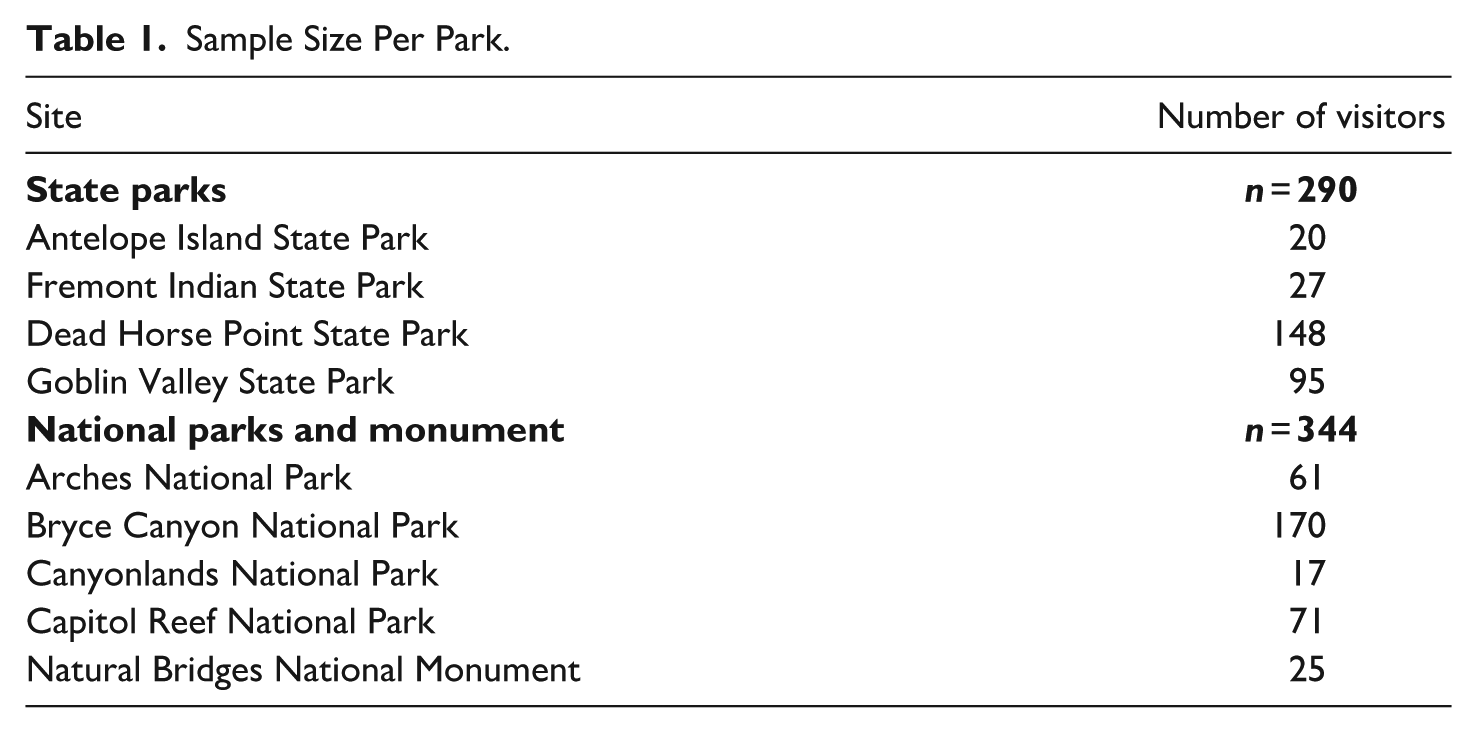
The study population consisted of park visitors recreating just before and after sunset. Visitors were surveyed from one hour before sunset to two hours after sunset, which makes this a unique sample of nighttime visitors. This time was chosen to maximize the likelihood of contacting people participating in dark sky dependent activities such as stargazing and astrophotography. A total of 776 visitors were intercepted (403 at national parks and 373 at state parks; breakdown in Table 1) leading to 634 complete surveys and a response rate of 81.7% (Dillman et al., 2014). Sixty-two percent of visitors surveyed indicated they engaged in ‘dark sky dependent activities, such as night sky viewing, astrophotography, and viewing wildlife at night (Beeco et al., 2023). Furthermore, the sample consisted primarily of male (54.8%), Caucasian (93.8%), and highly educated participants (81.5% holding a bachelor’s degree or higher).
Sample Size Per Park.
The survey instrument—approved by the U.S. Office of Management and Budget (#1024-0024) and the Utah State University Institutional Review Board (#11535)—first asked visitors about their trip characteristics (e.g., where they have been and intend to go, how long they will be visiting the park) and recreational activities (e.g., dark sky viewing, hiking, camping). Visitors were also asked if they would be interested in learning more about dark sky viewing, viewing wildlife at night, Native American connections to night skies, or ways to improve night sky viewing using a five-point scale ranging from strongly disagree (1) to strongly agree (5). In addition to these interpretive topics, visitors who expressed interest in a topic were asked how they would prefer to learn about the topic by checking all media they were interested in engaging with. The four channels presented to visitors were learning through ranger led programs, private clubs (such as local astronomy groups), interpretive signs and displays, and via mobile phone applications. The full survey instrument can be found in the appendix of Smith et al. (2023).
To analyze our data, we used a paired t-test with a Bonferroni correction to determine which topics visitors were most interested in. An independent samples t-test was used to compare differences between park type and visitor interest in the dark sky topics. To better understand the preferred communication channel of visitors while accounting for topic and park type, we used a chi-square test. Finally, we used an independent samples t-test to compare the importance of dark sky certification for visitors at state and national parks.
Results
To address our first research question, we examined the interest level for four topics related to dark skies: learning more about night sky viewing/astronomy, about viewing wildlife at night, Native American connections to the night sky, and how to improve night sky viewing. Visitors to both state and national parks were most interested in learning about night sky viewing/astronomy, followed by how to improve night sky viewing (Table 2). Visitors were less interested in learning about viewing wildlife and Native American connections to the night skies. However, both wildlife viewing and Native American connection to the night sky were above the scale’s mid-point, indicating there still exists a general interest in these topics, even if they are not the most preferred.
Mean Interest Ratings for Night Sky Topics Among Nighttime Visitors to Utah’s State and National Parks.
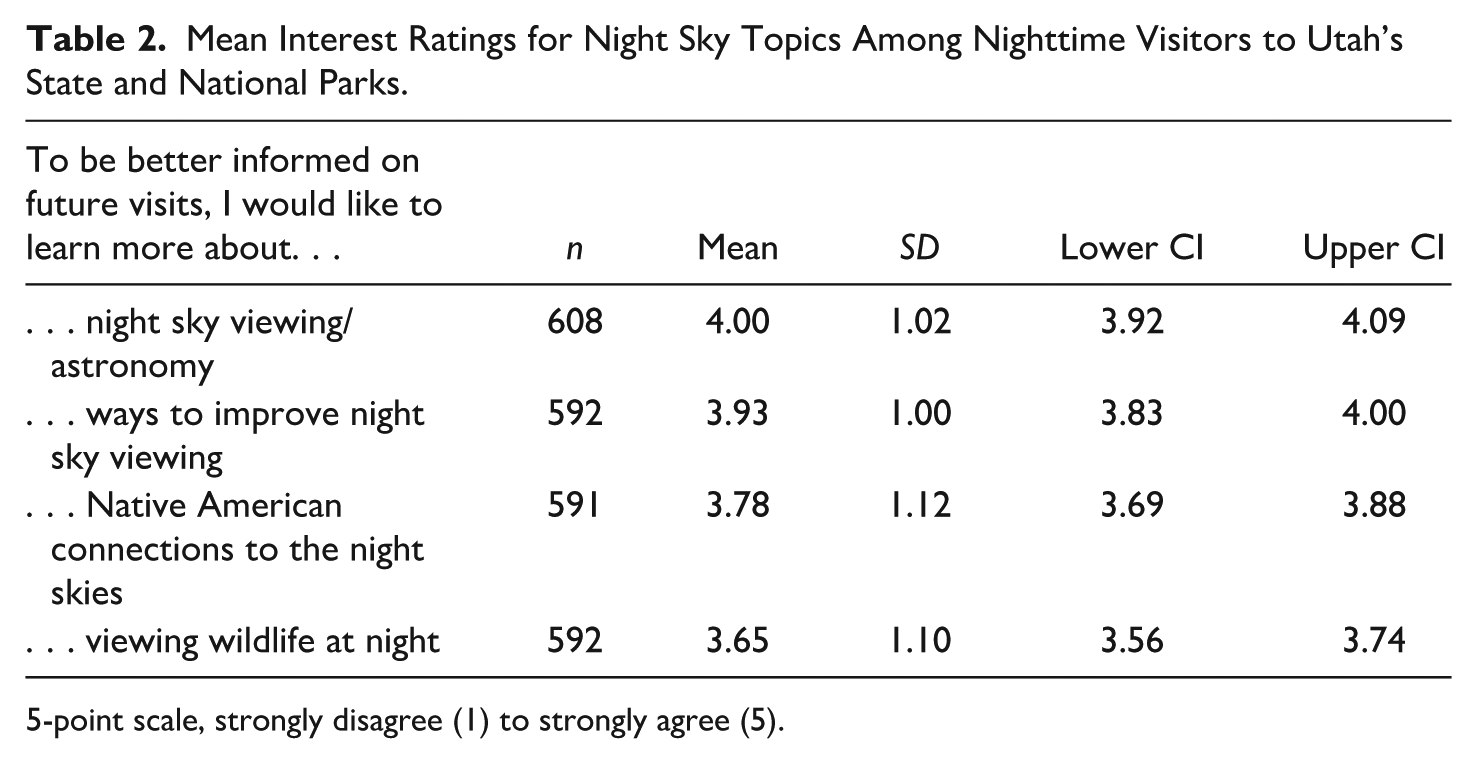
5-point scale, strongly disagree (1) to strongly agree (5).
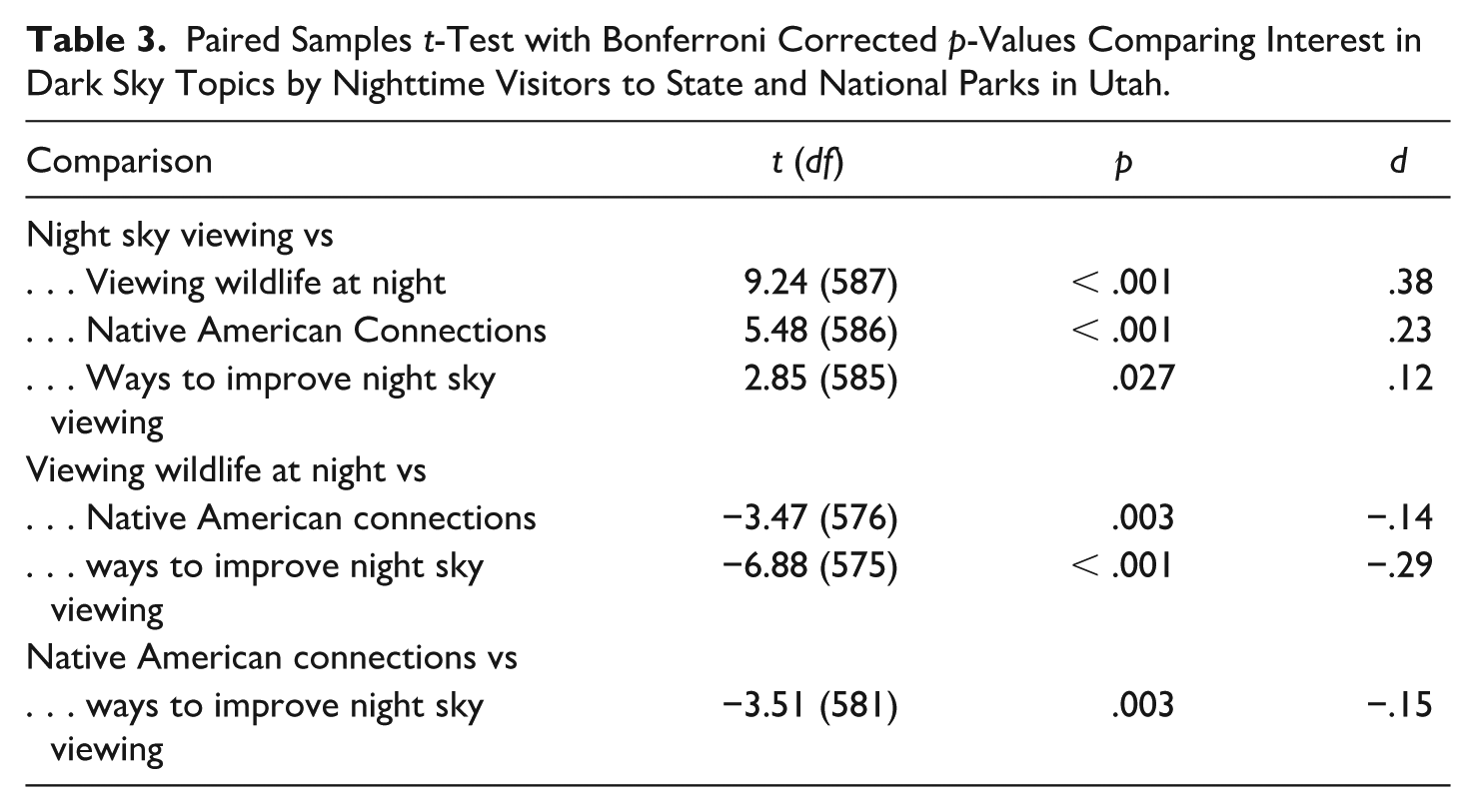
A one-way within-subjects analysis of variance test with a Greenhouse-Geisser correction was conducted. Results showed a significant difference between visitor ratings for each topic (F(2.80, 1584.6) = 34.04, p < .001, η2 = .016). Paired samples t-tests were then conducted with a Bonferroni correction to determine the significant differences between visitor preferences for each topic (Table 3). Results suggest significant differences across all topics. Night sky viewing was significantly more preferred when compared to viewing wildlife at night (p < .001), Native American connections to the night skies (p < .001), and ways to improve night sky viewing (p = .027). Improving night sky viewing was also significantly more preferred than viewing wildlife (p < .001) and Native American connections (p = .003). Finally, there was a significant visitor preference for learning about Native American connection to the night skies compared to viewing wildlife at night (p = .003). Effect sizes for these differences were generally small to moderate (Cohen’s d range = .12 – .38), suggesting that while all differences were statistically significant, the magnitude of preference varied.
Paired Samples t-Test with Bonferroni Corrected p-Values Comparing Interest in Dark Sky Topics by Nighttime Visitors to State and National Parks in Utah.
Since there were significant differences in which topics visitors preferred, we examined whether there were differences between the preferences for each dark sky topic based on park type. Independent samples t-test indicated that despite high levels of interest from both state and national park visitors on all four topics, there were no significant differences in interest level based upon park type (Table 4).
Independent Samples t-Test Results Comparing Interest in Dark Sky Topics by Nighttime Visitors to State and National Parks.
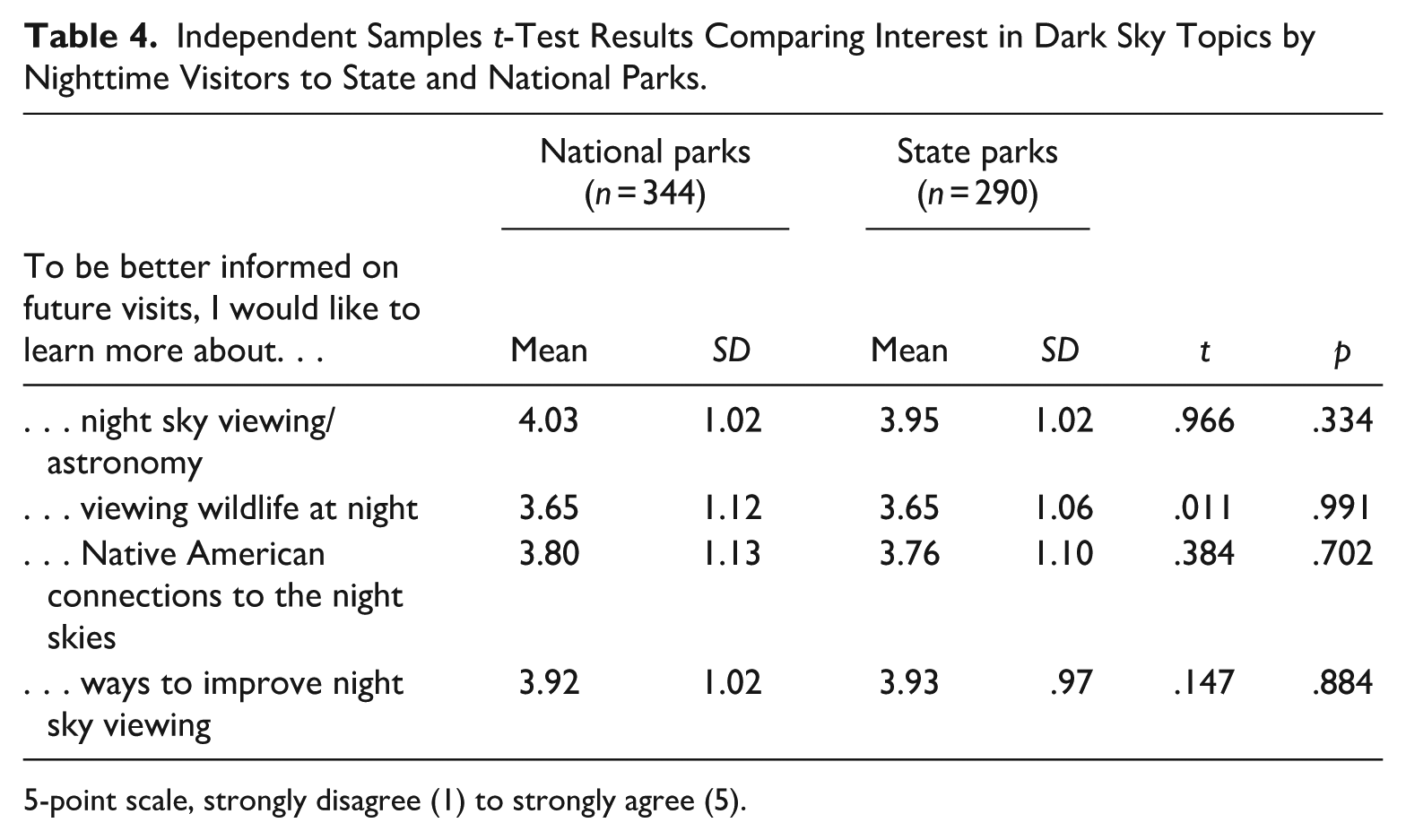
5-point scale, strongly disagree (1) to strongly agree (5).
Next, we wanted to understand which communication channels visitors preferred for learning about dark sky related topics. Across the entire sample, visitors were most interested in having ranger-led programs on dark sky viewing and astronomy (49.4% & 43.1% for national and state parks, respectively; Figure 2). Outside of ranger led interpretation, other ways of learning more about dark sky viewing and astronomy were also popular with visitors who indicated that mobile phone applications (41.0% & 31.7%) and interpretive displays (38.4% & 29.7%) were preferred to interpretive programs run by local clubs. National park visitors preffered interpretive displays as a way to learn more about viewing wildlife at night (27.0%) and Native American connections to the night sky (19.5%). However this interest in interpretive displays for Native American connections did not hold for state park visitors. Learning from programs organized by local clubs was consistently rated as the least preferred communicaton method.
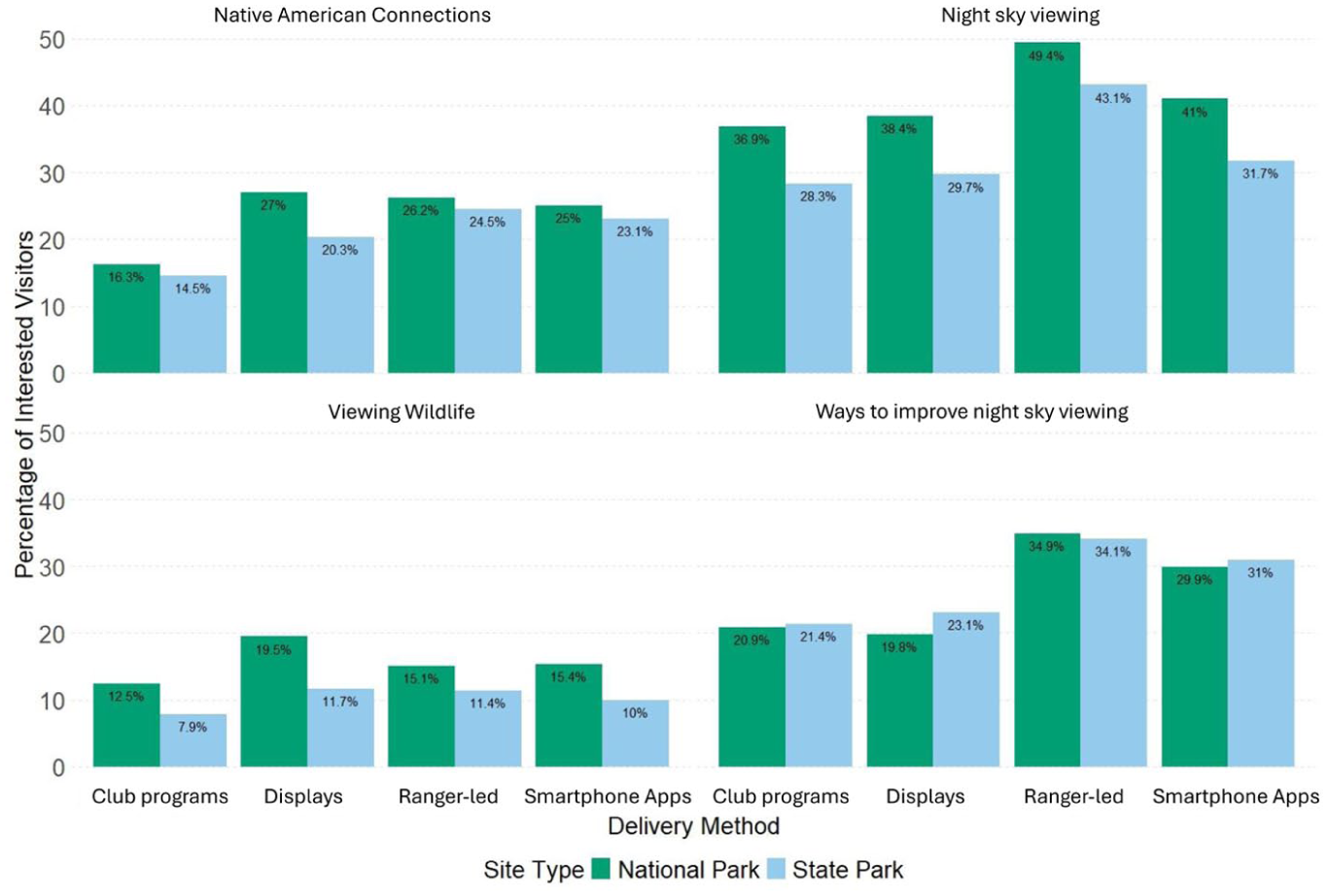
Proportion of nighttime visitors interested in dark sky topics by communication channel and park type.
After understanding which topics and method of delivery visitors were most interested in, we sought to determine whether visitors to state and national parks had a statistically significant difference in preferences for communication methods for each dark sky topic. To test this, a chi-square difference test was conducted to determine if there were any differences between program delivery methods and topics of interest for state and national park visitors (Table 5). Results suggest there is no difference between state and national park interest in ranger-led programming, regardless of topic choice. Visitors to national parks demonstrated a higher level of interest in programming that taught about dark sky viewing/astronomy from more self-driven communication methods such as interpretive displays (p = .027), smartphone applications (p = .020), and local clubs (p = .026). National park visitors were also more interested in learning about wildlife viewing at night through interpretive signage when compared to state park visitors (p = .011). State and national park visitors did not express any significant differences in any of the communication methods when learning about Native American connections to the night sky or ways to improve dark sky viewing.
Results of Chi-Square Test for Communication Method and Topic Preferences of Nighttime Visitors to State and National Parks.
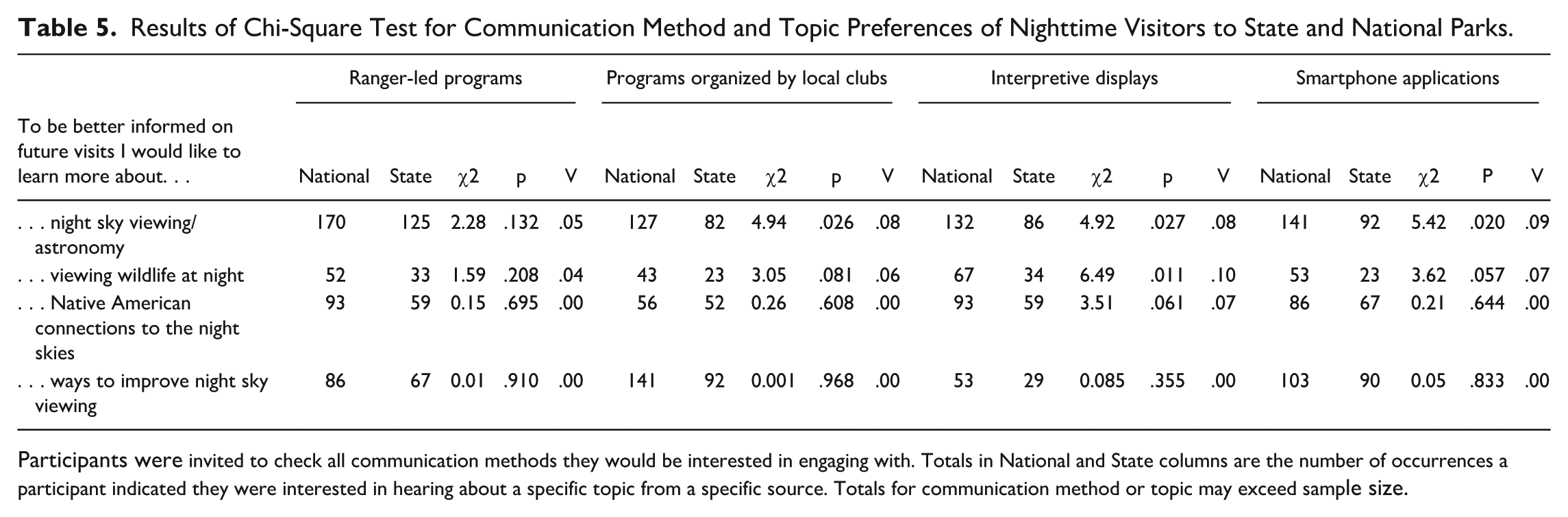
Participants were invited to check all communication methods they would be interested in engaging with. Totals in National and State columns are the number of occurrences a participant indicated they were interested in hearing about a specific topic from a specific source. Totals for communication method or topic may exceed sample size.
Finally, we asked visitors about their awareness of the park’s certification as a Dark Sky International certified park and how important this knowledge was when planning their visit. Results suggest overall awareness of the park’s certification status was low with less than half of participants being aware that the park they visited was certified (40.2% of national park visitors were aware compared to 43.6% of state park visitors). Visitors who were aware of the park’s certification were then asked how important visiting a Dark Sky International certified park was for their trip. Most of these visitors indicated the certification status of the park was of some importance (M = 2.94 with 3 representing “somewhat important”). Only 19.6% of nighttime visitors indicated the certification was of no importance to their visit. Additionally, state park visitors (M = 3.07) considered the certification more important to their visit than national park visitors (M = 2.85; p = .032), however with a very small effect (d = −.18).
Discussion
Research on light pollution has continued to demonstrate the importance park visitors place on dark skies (Beeco et al., 2011, 2025). Despite dark skies being a critical component to the park experience, there has been limited research exploring visitor interest in interpretation about dark sky topics, despite parks being some of the few spaces for visitors to experience natural dark skies. This study integrated the Elaboration Likelihood Model and Uses and Gratifications Theory to understand what topics and delivery methods state and national park visitors preferred when learning about dark skies. The Elaboration Likelihood Model suggests that persuasion can occur through peripheral and central routes while Uses and Gratifications Theory suggests visitors consume media to achieve their goals and choose the media most helpful to meeting that goal (Palmgreen, 1984; Petty & Cacioppo, 1986). Integrating these two models provides insights into which dark sky topics visitors are most interested in and the delivery method they prefer to help them meet their goals during their visit. Understanding this visitor preference can help land managers and interpreters deliver interpretive programs that can improve the visitor experience. This enhanced visitor experience can then potentially educate visitors about light pollution centrally through interpretation on their preferred dark sky topic or peripherally through experiencing a dark night sky and potentially lead to stewardship of natural darkness as a resource.
First, our results show that the most interest lies with parks sharing information on dark sky viewing/astronomy and how to improve dark sky viewing conditions. The interest in these topics does not depend upon whether park visitors are at a state or national park. This suggests people find receiving information about dark sky viewing at parks beneficial, regardless of type of park they are visiting.
Our findings align with previous research indicating that hands-on ranger-led interpretation, especially at national parks, is the most preferred channel for visitors seeking information, especially on topics such as enhancing dark sky viewing conditions and astronomy (Yamada & Knapp, 2010). Beyond the preference for hands-on interpretation, our results demonstrated national park visitors were more interested in self-paced interpretation such as reading interpretive signage for certain topics relative to state park visitors. Specifically, topics such as Native American connections to the night sky and nighttime wildlife viewing were associated with a preference for more self-guided or hands-off interpretive approaches, indicating visitors believe self-guided learning would provide the most benefit for communicating these topics to meet their needs (Falgoust et al., 2022). Visitors to national parks had a higher preference towards these hands-off approaches, which may indicate visitors to these sites may be seeking more interpretive content than those who visit state parks or that there is a higher level of trust in national park interpretation compared to state parks (Brown et al., 2010).
Using a smartphone application to learn more about each topic also received consistent support, especially related to viewing the dark sky and ways to improve dark sky viewing. Numerous smartphone apps assist in observing and identifying planets, satellites, and constellations—providing the opportunity for self-paced learning.
Utah offers some of the most pristine dark sky viewing in the world, and the finding that less than half of nighttime visitors were aware of the Dark Sky International certification represents both progress and potential. This could be further evaluated, as certification may function as an attractor for dark sky tourists or noctourists (Rodrigues et al., 2015), yet additional factors such as interpretive programming may also play a role in drawing visitors. These findings highlight how future research could be used to further understand how certification and visitor experiences influences interest in nature-based noctourism and how raising the profile of these certifications can strengthen their role as indicators of quality recreation opportunities for visitors.
Additionally, state park visitors were slightly more likely than national park visitors to say a Dark Sky International certification was important to their visit. There are a couple of potential explanations for this phenomenon. First, state parks tend to have lower visitation, meaning they may be more likely to attract visitors looking to avoid crowds (Driver & Tocher, 1979; Manfredo et al., 1996), such as visitors interested in engaging in nature-based noctourism activities to improve their dark sky viewing experience. Second, because visitation to national parks tends to be higher than state parks, it is possible that the primary motivation for most visitors to a national park may not be the quality of the dark sky but experiencing other aspects of the park (Whiting et al., 2017). Finally, it could be that state parks are more likely to be visited by locals, who intentionally sought out stargazing opportunities, relative to national park visitors, whose motivations for visiting are likely more diverse. Future research could attempt to understand these potential differences in motivation for nature based noctourists to national, state, and regional dark sky parks.
Implications for Practice
In line with past research in other locations, our results suggest visitors to Utah state and national parks are interested in ranger-led interpretation (Yamada & Knapp, 2010), particularly for the two most popular topics of dark sky viewing/astronomy and ways to improve dark sky viewing. This suggests interpretive training for rangers can be used for programing (e.g., pointing out constellations) and for educating visitors about ways they can improve dark sky viewing conditions (e.g., best lighting practices). Programs, such as the NPS’s Night Skies Academy—which is a hands-on training program for operating telescopes and navigating the night sky, developing astronomy-based park programming and facilities, establishing partnerships, and learning about dark sky friendly outdoor lighting—are important training programs for building interpretative capacity (Z. Vanderbosch, NPS employee, oral communication, July 22, 2025).
Visitor support for smartphones is encouraging as an independent learning source because there are already several high-quality apps available for free. Considering visitor interest, it would be beneficial for park rangers to be aware of and to have practiced with a variety of apps to assist visitors in using them. For parks without rangers, promotion of the apps might benefit visitors interested in learning more about dark skies. Additionally, visitors could be directed to the NPS app, which already has a section related to astronomy.
Based on the results of this study park rangers and interpreters can be informed that there is a high level of interest in both hands-on and more self-driven interpretation for dark skies information. Interpreters may consider applying our findings towards other interpretive products, such as pamphlets. For example, the NPS’s Junior Ranger Booklet (National Park Service, n.d.) covers a range of topics, but mostly focuses on solar system organization and astronomy. Our findings align with previous research that content focused on improving lighting for dark sky viewing may be welcomed and lead to increased awareness of light pollution as an issue (Lane, 2025).
Limitations
First, our sample of park visitors comes exclusively from parks in Utah; it is unknown whether nighttime visitors to parks in other locations have similar communication preferences. Moreover, Utah is known for their quality dark skies. This could mean that our sample was highly interested in dark sky interpretation and conservation and that visitors to areas with more light pollution may not have similar levels of interest in the dark sky topics about which they are willing to learn about. Additionally, visitors were only intercepted at night, meaning we did not hear about preferences for dark sky topics or delivery method from daytime visitors. It is possible that those who visited these parks during the day in our sampling period may have differing interest in dark sky topics and how they would like to receive that information.
Conclusion
As artificial light at night continues to accelerate globally, the dual challenges of understanding its impacts and communicating effective mitigation strategies are becoming increasingly evident. Our findings demonstrate that visitors to Utah’s state and national parks are interested in learning about astronomy, improving dark sky viewing, and engaging with interpretation through both ranger-led and self-directed channels. These preferences can provide managers with actionable insights for shaping communication strategies that not only enhance visitor experiences but also may cultivate stewardship behaviors beyond park boundaries. The scientific community’s efforts to document the ecological and human consequences of light pollution and the technical community’s advances in mitigation are beneficial but incomplete without parallel efforts to understand how visitors themselves value and wish to encounter natural darkness and dark night skies. By aligning scientific and technical progress with visitor-centered communication, parks and protected areas can foster connections to dark skies—connections that can inspire broader societal commitment to protecting one of the planet’s most threatened yet easily recoverable natural and cultural resources: naturally dark skies.
Footnotes
Acknowledgements
The authors would like to acknowledge Dr. Morgan Crump for her insightful feedback on this manuscript. The research would not have been possible without the work of nearly a dozen research technicians who tirelessly traveled across the study region to meet and survey hundreds of astronomers, campers, photographers, and the many other types of recreationists who enjoy parks at night.
Any use of trade, firm, or product names is for descriptive purposes only and does not imply endorsement by the U.S. Government
Consistent with requirements of the Federal Paperwork Reduction Act, the information-collection activities for the survey described in this study were approved by the Office of Management and Budget [2021 #1024-0224]
Ethical Approval
The survey instrument—approved by the U.S. Office of Management and Budget (#1024-0224) and the Utah State University Institutional Review Board (#11535)
Data Availability Statement
Data is available via OpenICPSR Repository.
Declaration of Conflicting Interests
The authors declared no potential conflicts of interest with respect to the research, authorship, and/or publication of this article.
Funding
The authors disclosed receipt of the following financial support for the research, authorship, and/or publication of this article: This research was funded jointly by the Natural Sounds and Night Sky Division of the National Park Service (Task Agreement P20AC00525) and by the Public Lands Initiative at Utah State University (UTAO+ Number 1566).
