



Abstract

Keywords
Introduction
Innovative Engineers, Innovation in Engineering Education
Innovation is key to progress in all areas of life; innovative ideas and solutions enable significant changes in the circumstances that shape people's lives. It has always been an integral part of engineering driven by economic or social needs, or by people's curiosity and desire to create new things. Beyond their benefits in expanding technical knowledge, innovative solutions must always be evaluated in terms of their social utility, examining the extent to which they (i) serve humanity's needs, (ii) minimise the harmful side effects of technical and technological development, and (iii) strike a balance between well-being and threats to humanity's future. Today, knowledge management tools, including prompt engineering, create unlimited opportunities for technological innovation. However, as a side effect of this potential, many powerful and risky tools are available to people with little experience or understanding. A lack of adequate knowledge can lead to an unacceptable, irresponsible use of technology in engineering.
Engineering education (EE), which is expected to meet young people's changing needs and the economic and social expectations, is an important field for innovation. Innovation in engineering education (IiEE) can arise from (i) didactic or epistemological considerations; (ii) training needs related to new industrial technologies and technical solutions; or (iii) general expectations of engineers. IiEE should address the following questions: (i) What kind of innovation is required in modern EE to address societal, environmental, and sustainability challenges? (ii) What kind of education produces innovative engineers with well-structured hard and soft skills? The greater the complexity of harmonising industrial, economic, and societal challenges, the greater the effort required to design, create, and operate an educational system that supports development. Mapping the road to next-generation engineering education (NGEE) requires reviewing the state of the art in fields such as engineering design, process organisation, systems science, data science, knowledge science, sociology, economics, sustainability, engineering ethics, and artificial intelligence (AI). The design, process, and systems sciences offer multidisciplinary insights, resources, and approaches to support IiEE, providing their latest transdisciplinary achievements. When searching for answers to global challenges, EE is a system to be optimised with respect to certain general aspects. However, at the practical level, implementation varies depending on the given conditions.
Objectives of the Special Issue
This special issue aims to highlight contributions to the NGEE in the following areas: (i) engineering design, (ii) process organisation, (iii) systems science, (iv) data science, (v) knowledge science, (vi) sociology, (vii) economics, (viii) sustainability, (ix) engineering ethics, and (x) AI applications. The focus is on pillar: (i) a multidisciplinary approach to the design of the educational system, (ii) methods for organising the teaching process, and (iii) the use of modern technology, including AI, on the one hand, and on the desired skills and expectations (i) systems thinking, adaptability, and responsibility, (ii) engineering literacy (industrial technology, information and communication technology, and AI), and (iii) an innovative mindset and engagement, on the other hand (see Figure 1).
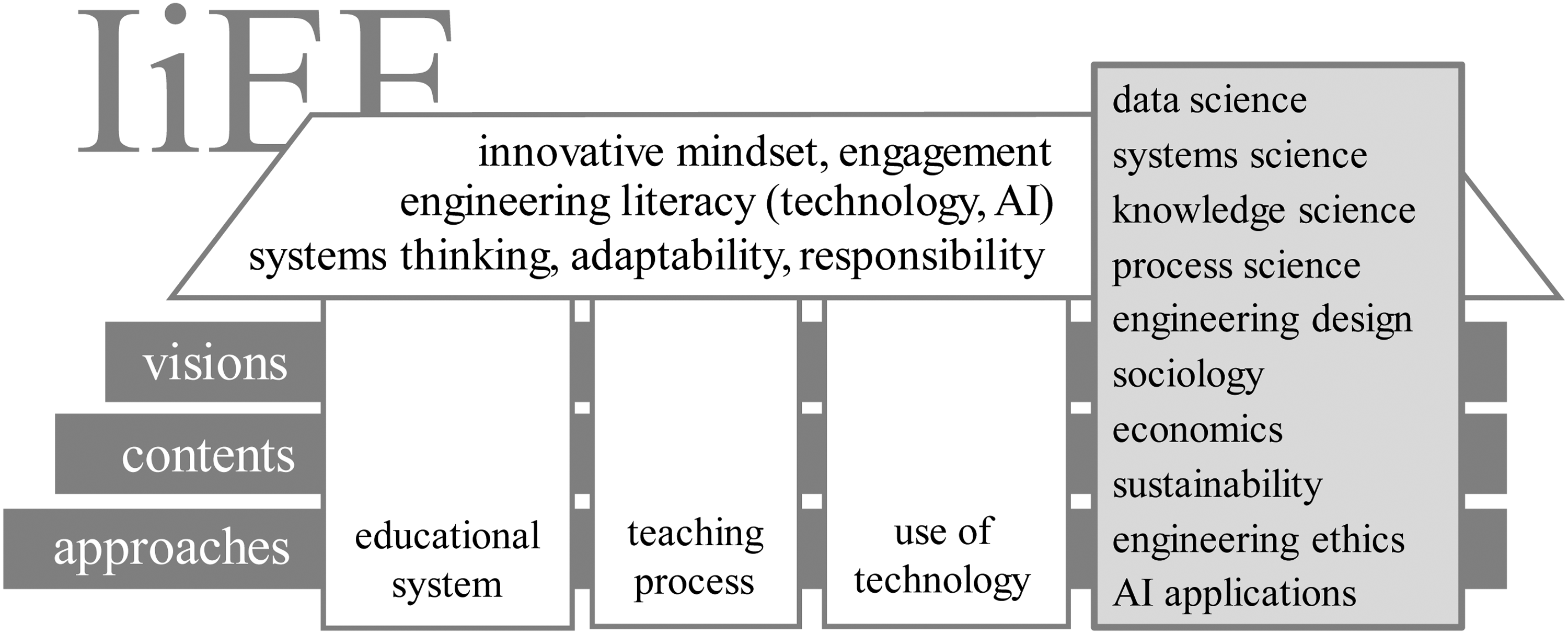
The scope of the special issue.
The epistemological and methodological convergence of the design, processes and systems sciences (DPSS) offers multidisciplinary insights, resources and approaches to support IiEE. Given the high complexity of the ecosystems in which engineers currently work and will work in future, mastering the DPSS mindset and methodology seems inevitable.
Training the next generation of successful and innovative engineers requires moving away from the traditional approach to education, which focuses on transferring specific knowledge. Young engineers must adapt to the changing realities of engineering work and assume greater responsibility for shaping people's lives. Changes in Industrial Technology and information and communication technology (ICT), including generative AI (GenAI), require the rapid adoption of new engineering tools. It is therefore more important than ever to develop adaptability in engineering education by continuously updating content and methodology. This special issue pays particular attention to transdisciplinary teaching and learning methodologies, as well as to the knowledge and competencies relating to hardware, software, cyberware and brainware. It also considers the responsible use and ethical deployment of AI at various stages of education.
We must address the growing impact of the following contradiction. On the one hand, younger generations question the traditional learning process due to a variety of information sources and effective problem-solving algorithms, and tend to rely on information-providing tools rather than learning fundamentals. On the other hand, working in large, complex systems requires a high level of engineering literacy, which cannot be achieved without a solid foundation of knowledge. The most desirable engineering skills are based on the ability to think logically and critically, interpret problems, and find solutions. The innovative skills are based on observing, understanding and analysing natural and artificial phenomena, and on building and using mathematical models. However, young people tend to spend less time on mathematics due to modern computational devices and problem-solving tools.
Quick Overview of What Follows
Section 2 discusses six domains demonstrated in Figure 2 that have been extensively researched in the literature.
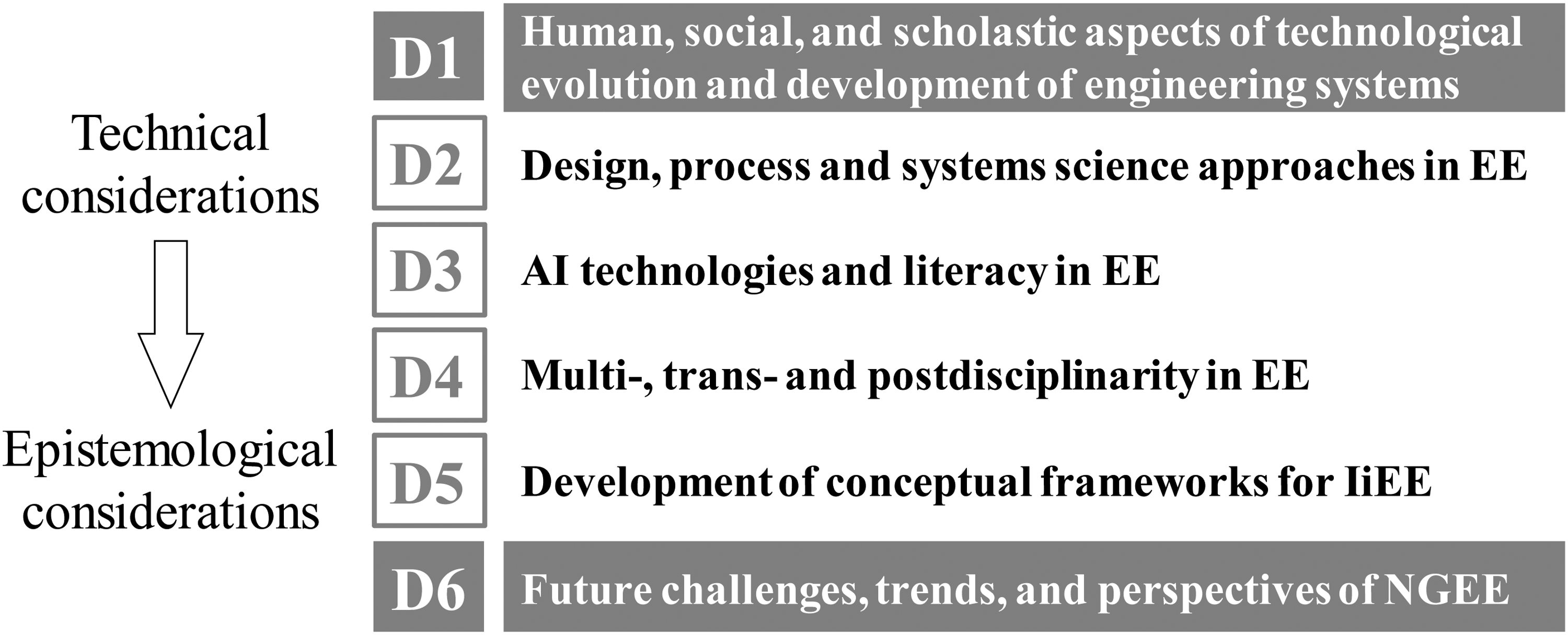
Six domains of research in EE.
Section 3 provides an overview of the contributions to the special issue. The papers pose and discuss various problems at different levels of generality, emphasising various aspects of EE. The first group of articles outlines the most significant issues and ideas related to NGEE, as well as global responses to the challenges (Section 3.1). The second group of articles covers some topics related to the principles of engineering pedagogy (Section 3.2). The third group presents new pedagogical tools related to specific applications (Section 3.3). Section 4 discusses open issues and topics for further research.
Insights into Some Current Issues of the Engineering Education
Two fundamental topics of interest in EE didactics are as follows:
EE programmes must ensure that graduate engineers are competitive in complex and rapidly changing technological and economic environments. As the most important resource in a competitive industry, up-to-date knowledge and soft skills require increasing attention in the planning of (a) the curriculum; (b) the organisation of education; and (c) didactic methods. The growing economic and social impact of engineering activities, coupled with ever-increasing expectations placed on engineering work by the modern world, necessitates the constant improvement of EE.
The National Academy of Engineering (2025) explains that the global engineering services market is increasingly influencing the economy. Furthermore, the steady integration of technology into public infrastructure and daily life means engineers must play a greater role in setting public policy and participating in civic life. Blass and Hayward (2014) emphasise the role of research universities in meeting the growing need for multidisciplinary and systems-based approaches, new customisation paradigms, and an increasingly international talent pool. Sunthonkanokpong (2010) believes that the following are key aspects of IiEE: (i) the globalisation of industry and engineering practice; (ii) the shift in engineering employment from large companies to small and medium-sized enterprises; (iii) the growing emphasis on entrepreneurship; (iv) the increasing proportion of engineering employment in non-traditional, less technical engineering work; (v) the shift towards a knowledge-based ‘services’ economy; and (vi) the growing opportunity to use technology in EE and work.
The problematics of EE across domains (D1)–(D6) can be discussed at different levels, taking into account the impact on the environment and stakeholders, and vice versa, at each of the abovementioned levels. Specifically: (i) The global level: aspects of world economic and business processes, as well as sustainable technological development, must be considered; (ii) The national/regional level: relations with national economic, educational and social policies, local industrial and business processes, the labour market and mobility must be analysed; (iii) The institutional level: the organisation of education, curricula, cooperation with academia and industry, internationalisation and multidisciplinarity must be studied; (iv) The classroom/personal level: the focus must be on didactic tools and methods, mentoring, the attitudes of educators and students, harmonised educational programme goals and activities, and the application of AI. Issues of EE can be characterised by the conditions, opportunities, and limitations present at these levels.
The Education 4.0, 5.0, and 6.0 frameworks referred to by the World Economic Forum (2020) facilitate navigation of EE topics. Education 4.0 focuses on the knowledge and competence requirements. Education 5.0, as studied by Shahidi Hamedani et al. (2024) and Ahmad et al. (2023), is a holistic, transformative, and learner-centric approach that aims to keep up with industry trends, adapt to scientific convergence and technological integration, and work towards a more sustainable and equitable global society. Education 6.0 discussed by Moleka (2023)emphasise the following eight factors: (i) high-level learner autonomy, (ii) balanced integration of technology and human interaction, (iii) holistic development of cognitive, social, emotional, and physical skills, (iv) development of spiritual, and emotional intelligence, (v) essential skills for the future workforce, (vi) a combination of continuous and formative assessments, (vii) integration of AI practice, and (viii) establishment of flexible learning environments.
The remainder of this section presents some key ideas from the domains (D1)-(D6).
The interaction between human needs, societal challenges and educational pathways can create a dynamic environment that drives the evolution of technology and engineering systems. When studying NGEE and IiEE, it is essential to focus on the interplay between human factors, societal impacts, and educational influences in the evolution of technology and engineering systems. (Figure 3).
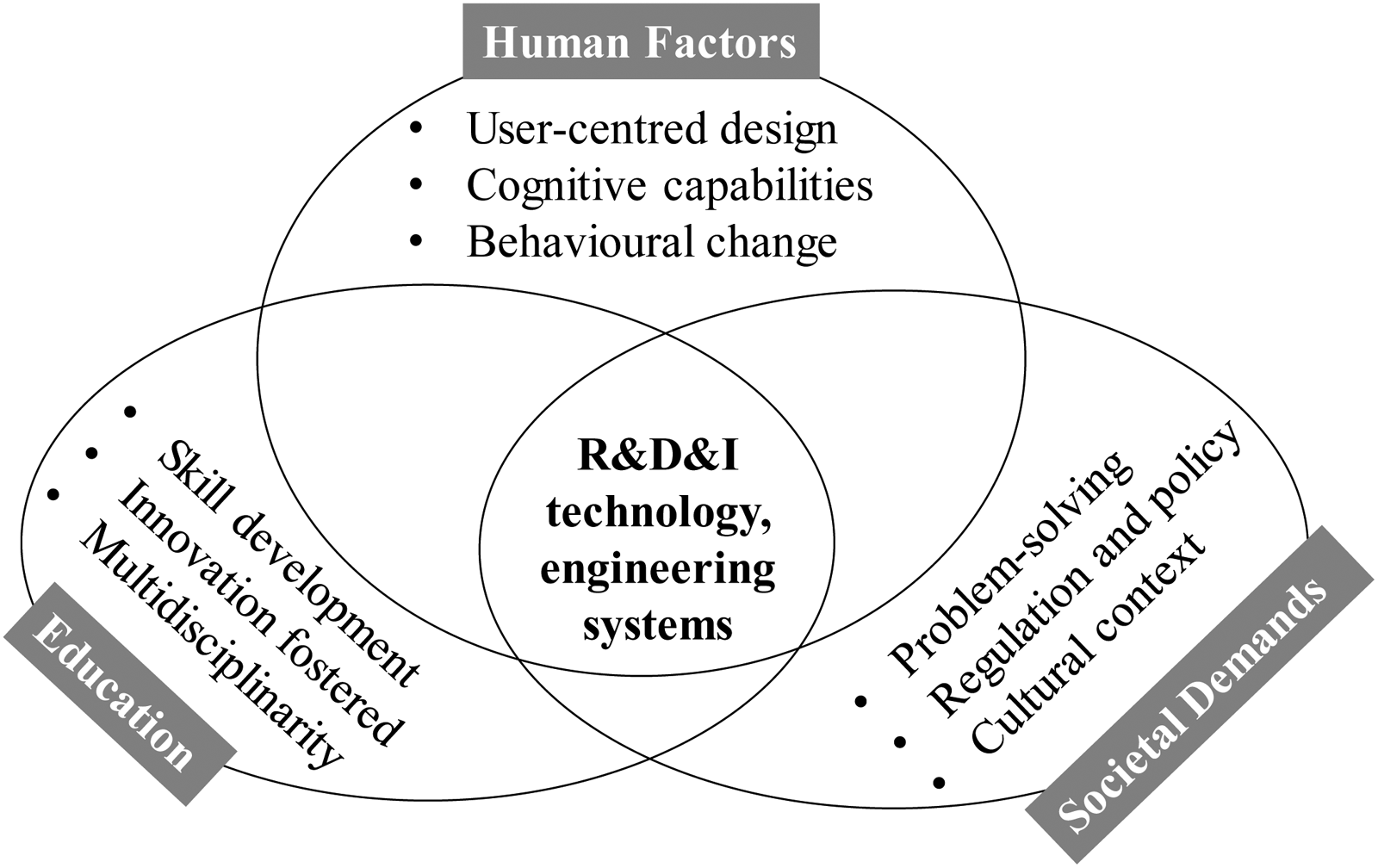
Determinants of engineering R&D&I.
Technology is developed to meet users’ needs, preferences and limitations, leading to more intuitive and accessible designs (‘User-centred design’). The growing importance of human–machine interaction means that system designers need to understand how individuals process information to improve usability and efficiency (‘Cognitive capabilities’). Conversely, technologies are developed to influence behaviours relating to education, health and entertainment, reflecting human psychology and social interactions (‘Behavioural change’). Engineering innovations often arise in response to societal challenges such as climate change, public health issues and infrastructure needs (‘Problem solving’). Government regulations and policies encourage sustainable practices and ethical standards, thereby shaping the direction of technological development (‘Regulation and policy’). Societal values and cultural norms influence which technologies are developed and adopted, thereby determining innovation priorities (‘Cultural context’). Educational institutions equip individuals with the necessary skills for technological and engineering roles, thereby influencing the availability of the workforce ('Skill development’). Research and development in academic settings encourages the exploration of new ideas and technologies, contributing to the evolution of engineering (‘Innovation fostered’). Curricula that integrate social sciences and ethics with STEM subjects help to create well-rounded engineers who consider the broader societal implications of their work (‘Multidisciplinarity’).
Social and technological developments interact constantly. The specific effects can be assessed from different perspectives, and opinions may differ as to whether certain developments are positive or negative. Great technological leaps have always had a profound impact on society, reshaping the roles and competencies required for individual success and well-being. As these leaps become more frequent and impactful, innovators’ responsibility increases.
As smart tools increasingly take over complex tasks, including decision-making and reasoning, the role of humans in industry becomes uncertain. Future engineers are expected to take on higher-level tasks such as analysis, assessment and control. These responsibilities require a broader range of literacy skills, as well as a higher level of systemic, abstract and critical thinking. According to Trbušić (2013), the broad education provided by a holistic approach ensures engineers adopt the right attitude towards a changing world. Engineers in leadership positions are also responsible for public relations policies, corporate social responsibility strategies, and political matters. To promote their ideas effectively, engineers must understand the social aspects of their activities, including social trends and needs, as well as political and economic trends. Engineering students must be aware of the important and far-reaching effects they have on their community and society in general. Cheville (2014) shows how the intricate relationship between EE and its broader social, intellectual and economic contexts evolves over time. These contexts are interrelated, forming a complex system of which EE is a part.
Proposing a model that demonstrates how knowledge and skills from the social sciences and humanities can be applied to engineering in relation to people. Hynes and Swenson (2013) call on educators and education researchers to recognise the humanistic side of EE as an integral and research-worthy part of the discipline. Black et al. (2025) claim that incorporating human-centred design into EE can equip graduates with the skills needed to fulfil their ethical obligations to safeguard life, health and public welfare. Lantada (2020) explains that engineers should be trained to address large-scale socio-technological issues and complex situations with integrity. Growing levels of intellectualisation, socialisation and personalisation can consequently place systems in completely different social and educational contexts.
According to Jakubiak (2007), EE should be more responsive to societal needs and human challenges, yet engineering institutions in many countries face bureaucratic obstacles, which hinder their ability to respond quickly to scientific and technological changes, thereby limiting the positive impact of advanced research. Cao et al. (2021) show that national education policies have a significant impact on EE. Goldberg et al. (2008) note that IiEE faces organisational and conceptual obstacles; it is difficult to incorporate the new additions into the existing ‘traditional programme structure’. Fromm (2003) states that simply adding social subjects to the curriculum without integrating them with professional content is not enough. Crawley et al. (2007) think that, in many cases, teaching staff are inclined to resist practical and conceptual changes to the curriculum.
The ‘input’ of the EE largely depends on the social conditions. Students’ general intelligence, attitude, motivation and professional preparedness determine the effectiveness of their education, particularly during the initial training period. Santiago-Muñoz et al. (2025) demonstrate that pre-university socio-demographic and academic data can predict performance in EE.
Large, complex systems are playing an increasingly dominant role in the modern economy. Technological knowledge is advancing so rapidly that it is difficult to stay up to date, even within a specific field. Horváth and Erden (2024) state: ‘We live in an age in which new things are emerging faster than their deep understanding.’ Due to its (i) multidisciplinary nature, (ii) ability to engage with complexity, (iii) capacity to describe system dynamics and change, (iv) ability to represent the relationship between micro- and macro-level analysis, and (v) ability to bring together the natural and human worlds, Chen and Stroup (1993) suggest using system theory (ST) as a unifying theoretical framework for ‘science and technology education for all’. Törngren and Herzog (2016) recommend integrating systems engineering (SE) into EE. With its set of best practices and systems thinking, SE offers highly relevant guidelines for studying complex systems. Asbjornsen and Hamann (2000) would integrate SE education into all disciplines. Thuan and Antunes (2022) advocate the use of design science (DS) as a pedagogical approach to encourage innovation and problem-solving, and to introduce graduate students to exploratory research strategies. DS can also play an important role in undergraduate education in subjects such as engineering, management, and communications. The DS Research Proficiency Model, introduced by Hevner and vom Brocke (2023), emphasises the essential abilities required for success in planning, implementing, and communicating DS. It generates knowledge through the design and evaluation of innovative solutions to real-world problems. Goldkuhl et al. (2017) explain that information systems practitioners need to be trained in design issues during their studies.
Technology provides us with powerful tools with which to experiment with different designs, enabling us to develop a science of education rather than theories of education. A systematic methodology for conducting design experiments is provided by Collins (1992), with the ultimate goal of developing a design theory to guide the implementation of future innovations. Presenting their positive influence on EE, Winarno et al. (2020) and Brocke et al. (2021) propose implementing the toolset of engineering design and process science, respectively.
In their discussion of the current socio-techno-scientific environment and the demand for systems-oriented education, Horváth and Erden (2024) contend that research and education should be incorporated into the processes of acquiring and disseminating academic knowledge. By analysing mechatronics education, Horváth and Ábrahám (2025) explore the multifaceted development of system-paradigm-driven disciplines, examining the factors driving these shifts, the stages they undergo, their content and their impact. They aim to address the conceptual and linguistic challenges associated with modern systems science, with a particular focus on information technologies and AI. Cederbladh et al. (2024) examine cyber-physical systems from industrial and academic standpoints, identifying areas where complexity poses challenges in development.
The multidisciplinary study of complex systems in the physical and social sciences has given rise to new conceptual perspectives and methodologies. Jacobson and Wilensky (2006) discuss the significant challenges involved in learning about complex systems from the perspective of learning science theory and research. Research on complex systems in K–12 science education by Yoon et al. (2018) reveals the need for (i) research to be conducted within a more diverse range of knowledge domains, (ii) more research on learning about system states, (iii) agreement on the essential features of complex systems content, (iv) a greater focus on contextual factors that support learning, including teacher learning, and (v) more comparative research. The literature on IiEE covers a wide range of fundamentals, from philosophical and psychological approaches to the digital transformation (DT) in EE, see e.g., (Konyukhov et al., 2019). According to Lyngdorf et al. (2024), DT involves using digital technologies to transform educational and pedagogical practices, thereby enhancing the learning and teaching experience, preparing students for industry needs, and fostering innovation.
Regarding AI, from an engineering perspective, the following questions arise: (i) How can AI be integrated into professional work? (ii) How can responsibility be allocated when results are provided by algorithms whose operation is not precisely defined? (iii) What is the role of humans in intelligent systems?
The emergence of new technologies has always reshaped human, economic and social relations. Among young people, ICT and, more recently, AI tools have fundamentally changed attitudes towards knowledge, learning, knowledge management and communication. AI literacy, based on general and professional intelligence, can ensure that the technology's benefits are realised rather than its risks. Effective use of AI requires professional preparedness. Young people's lives are shaped by virtual reality, yet they must make realistic and responsible decisions in the real world. This can be challenging for individuals who are increasingly inclined to base their decisions on virtual reality experiences. The main ideas in papers dealing with AI in EE can be classified into the following categories:
Technical considerations
− integration of AI into professional engineering work; − application of co-pilot, co-designer; − testing multiple variants; − human-robot interaction, interconnected tasks; − AI in research; − data quality.
Managing AI tools
− allocation of responsibility; − reliance / over-reliance on AI technology; − automated thinking and decision-making; − adapting changes; − impact of AI on human, economic and social relations.
Learning with AI
− personalised learning, real-time feedback; − dynamic and interactive learning environment; − limitations of what software can teach; − AI in design education; − knowledge management vs learning.
AI literacy
− students’ and teachers’ preparedness for the use of AI; − metrics for AI literacy evaluation. A. Technical considerations
Today, the use of AI agents is cited by the Capgemini Institute (2025) as one of the biggest tech trends. Large Language Models are blurring the line between human and machine by enhancing robotic capabilities and accelerating the development of the next generation of robots. These robots can handle complex, interconnected tasks, thereby improving operational efficiency, personalising customer experiences and enhancing decision-making processes across a variety of industries. Clearly, AI is becoming increasingly prevalent across all engineering fields, leading to a large number of articles discussing its applications. For instance, Gau et al. (2025) discuss the potential of AI in design science research (DSR), noting that its successful integration depends on data quality, proper alignment with existing DSR methodologies, and a balance between automated support and human interpretation. Integrating AI into the problem exploration phase has the potential to improve the rigour and relevance of DSR outcomes while preserving the fundamental human-centred approach that defines DSR. During the design and implementation phase, AI can act as a co-designer, generating components or even entire artefacts. Using such tools can accelerate the prototyping or development phase, enabling the exploration of the solution space at scale by testing multiple solutions.
B. Managing AI tools
In a world of prompts and ready-made solutions provided by AI, where all data and information seem readily accessible, knowledge acquisition has changed dramatically. The feeling that memorising is unnecessary significantly impacts younger generations’ attitudes towards education. While focusing on knowledge management rather than knowledge itself may seem sensible, knowing less by heart can lead to an inability to manage knowledge effectively. According to Song and Abdual Rabu (2025), teachers should encourage students to avoid overreliance on technology, while also posing issues such as the standardisation of design content and communication barriers. Addressing these issues is crucial for creating a healthy, sustainable design education environment in which students can develop the critical thinking and innovation skills necessary for using AI. Sellar and Gulson (2021) offer a new theoretical perspective on automated thinking in education policy, illustrating how it is emerging within a specific policy context. Digital platforms and AI are enabling new forms of automated thinking that influence human decision-making and result in new cognitive infrastructures.
C. Learning with AI
Mosly (2024) demonstrates that, by making educational experiences more dynamic and interactive, AI can provide students with real-time feedback and personalised learning, as well as simulations that bridge the gap between theory and practice. Students can benefit from personalised learning experiences that strengthen their comprehension and communication skills. Song and Abdual Rabu (2025) believe that integrating AI into design education should be supplementary, aiming to enhance rather than replace traditional teaching methods. In the approach of Cai et al. (2024), AI for interdisciplinary learning manifests primarily in four forms: models, robots, systems, and conceptual frameworks. The application of AI in teaching and research tasks in academia is discussed, e.g., in Verboom et al. (2025). Clearly, software will take over several routine teaching tasks. However, application of ‘machines’ in education raises questions such as (i) Can software interpret higher-level human thought processes, such as setting meaningful goals considering ethics? (ii) Can teaching software produce intelligent humans, or only intelligent machines?
D. AI literacy
Hershkovitz et al. (2025) introduce a task-centred GenAI literacy framework which identifies eight skills informed by the six cognitive domains of Bloom's Taxonomy. While AI-based applications can assist students with almost any aspect of their academic studies, we have to face issues regarding integrity and assessment. New skills, literacies, and competencies are emerging that will be necessary for navigating a GenAI-saturated world. A common, broad definition of AI literacy encompasses the ability to: (i) be aware of and comprehend AI technology in practical applications; (ii) apply and exploit AI technology to accomplish tasks proficiently; and (iii) analyse, select, and critically evaluate the data and information provided by AI, while fostering awareness of one's personal responsibilities and respect for reciprocal rights and obligations. Tadimalla and Maher (2025) introduce an adjustable, interdisciplinary, sociotechnical AI literacy framework for designing and delivering introductory AI literacy courses. Their approach integrates social and technical learning, making AI education more accessible and equipping all learners with the multidisciplinary, socio-technical perspectives necessary to navigate and shape the ethical future of AI.
Naixin et al. (2024) critically evaluate the integration of AI into EE, focusing specifically on its transformative role in the digital-intelligent era and exploring its impact on the evolution of educational frameworks. Key AI applications in EE identified in the study include (i) intelligent tutoring systems, (ii) adaptive learning platforms, (iii) virtual laboratories, and (iv) personalised curriculum design. Tucker et al. (2020) believe that both students’ and teachers’ preparedness for AI is an ongoing dilemma. Ning et al. (2025) propose the AI Literacy Scale for Teachers as a systematic and reliable evaluation tool. Memarian and Doleck (2024) urge the creation of a universally accepted framework of AI literacy metrics and scales.
In the context of the Engineering Education 5.0 concept, Lantada (2020) asserts that the transformative power of engineers hinges on their ability to interpret complex issues holistically and collaborate effectively with diverse profiles within multidisciplinary teams. As the boundaries between science, technology, and society gradually dissolve due to the varied applications of modern technologies, EE requires more flexible programmes to respond effectively to societal needs. While traditional EE approaches were knowledge-based, more recent trends have shifted toward outcome-based strategies that focus on professional and soft skills. Liu and Tran (2022) note that many EE communities recognise the benefits of transdisciplinary activities in EE and practice, and the adoption of transdisciplinary practices is becoming widely accepted.
Conceptual issues of the EE can be classified as follows:
A. Competencies: EE must fulfil the competency expectations set by industry and society for graduated engineers, and also propose competencies to serve social development. B. Integration, effectiveness: To achieve technical, economic and social goals, EE is expected to increase engineering efficiency by creating synergy between individual disciplines, integrating all interests and involving the full range of stakeholders. C. Epistemology: In the modern world, efficient management and transfer of engineering knowledge requires epistemological foundations.
A. Competencies
According to Fomunyam (2019), employers are looking for creative, entrepreneurial engineers with leadership skills who can collaborate with others and apply interdisciplinary knowledge to their work. To give young people a clear idea of what is required for a successful, innovative engineering career, expectations must be identified and harmonised at the study programme level. Butta et al. (2018) propose a methodology for developing a Transdisciplinary Engineering Design Education Ontology (TEDEO) that supports students in addressing the challenges of the current transdisciplinary industrial environment.
B. Integration, effectiveness
Engineering universities of the future will benefit from increased collaboration through innovative research and training schemes, as well as knowledge sharing. Participation is a key factor in the trans- and postdisciplinary education. Based on Arnstein's (1969) typology of citizen participation, Botchwey et al. (2019) propose new rungs between ‘placation’ and ‘partnership’. Dussel (2020) analyses contemporary curriculum reforms in relation to disciplinary knowledge. Maties et al. (2012) explore the potential of mechatronic platforms for transdisciplinary learning. Kubisch et al. (2020) discuss the opportunities and challenges involved in integrating transdisciplinary education into the formal school curriculum. Clark and Button (2011) represent the components of the Sustainability-Transdisciplinary-Education Model, a modern approach that connects art, science, and community.
C. Epistemology
In McMurtry (2024), pragmatic constructionism is presented as an interdisciplinary learning theory grounded in epistemology, a branch of philosophy concerned with the theory of knowledge. It provides a framework for integrative thinking in interdisciplinary research and education. Vienni-Baptista and Hoffmann (2024) believe that environmental and societal challenges require responses that integrate a wide range of perspectives from different disciplines, as well as from research, policy and practice. Integration into interdisciplinary and transdisciplinary research involves cognitive, social, and emotional dimensions, in which different worldviews converge to address the complexities of real-world issues. Celaschi et al. (2013) provide a critical interpretation of certain formative models of the designer from an evolutionary perspective. It also identifies a profile that cannot be formed within modern schools, producing ‘out-of-context’ designers. Nicolescu (2005) claims that transdisciplinary education enables scientists to establish connections between people, facts, images, representations, areas of knowledge and fields of action.
At the conceptual level, three of the intensively discussed fields of EE are as follows:
A. Up-to-date knowledge, broad education, and a complex approach;
B. Social engagement and responsibility, awareness of the role of engineers;
C.
Motivating educational environment, professional network, and social interactions.
A. Up-to-date knowledge, broad education, and a complex approach
Unlike specialists, who have more in-depth but narrower knowledge, innovative engineers must have a broad understanding of the following: (i) available technology and its development potential, (ii) existing and potential customer needs, (iii) the social impact of products, (iv) the environmental impact of production, and (v) current and future social expectations. Ertas et al. (2000) point out that design and process sciences provide the patterns, insight and logic necessary to apply knowledge and skills to any problem. In the transdisciplinary research and educational model, all engineering knowledge and skills are considered design tools. Although the engineering profession requires people who can think realistically and make reliable decisions, modern lifestyles mean that younger generations increasingly judge phenomena and situations based on their experiences in the virtual world. Kartini et al. (2022) highlight potential obstacles in the science education process, including students’ lack of concentration and understanding of the material, as well as the use of learning media.
B. Social engagement and responsibility, awareness of the role of engineers
As responsible professionals, engineers should have a positive impact on social processes through their work, particularly in leadership positions. Industrial products, especially communication devices, are increasingly shaping people's lifestyles, relationships, and health. An innovative engineer must be sensitive to these aspects. This can only be achieved through sensitisation in education, which requires integrating certain elements of the humanities, especially sociology and psychology, into the educational process. True integration does not mean teaching humanities theory, but rather applying their tools to the learning process to foster desired personality development.
C. Motivating educational environment, professional network, and social interactions
Forcael et al. (2023) note that EE has evolved through the adoption of innovative pedagogical methods and supporting technologies, with a focus on societal impact and sustainability. This evolution involves shifting towards more democratic contexts, where students play a central role and professors act as facilitators. Broo et al. (2022) explain that Engineering Education 5.0 goes beyond the development and application of technology, including ICT and AI, encompassing ethics and humanism as key aspects for a new generation of engineers. The intensive use of AI in industry, coupled with DT, has created a new technological environment for engineering work, which must also be reflected in EE. Lyngdorf et al. (2024) provide a systematic and holistic framework to facilitate and guide DT in EE. The development of soft skills, including technical communication skills, such as CAD, plays a central role in holistic EE. DaMaren et al. (2025) provide a comprehensive list of learning outcomes and teaching considerations for CAD instruction. This is presented alongside a discussion of trade-offs among learning outcomes, activities, and assessments.
The future of engineering is a recurring question in the literature, see e.g., Shuman et al. (2002). The impact and risks associated with new technologies, and the role of engineers in future ecosystems, raise numerous content- and organisation-related questions in EE. The tools of systems and process science, data-driven solutions and automated decision-making functions based on increased AI reasoning capabilities will play a significant methodological role. The increasing range of industrial tasks that AI-based tools can take over from humans leads to the following questions: (i) How will humans and machines cooperate in industry?, (ii) Which roles will remain for humans?, and (iii) What knowledge and competencies will be required for new engineering tasks? Clearly, two skills, AI literacy and the general engineering intelligence (GEI, see in Burján-Mosoni et al., 2026) are becoming increasingly important. Jacobson et al. (2019) provide a Complex Systems Conceptual Framework for Learning, consisting of generally shared conceptual perspectives on educational complex systems to inform educational policy by demonstrating the various possible outcomes of different systemic educational reforms. AI-based systems can automate the learning process, allowing real-time monitoring of students’ interest levels, knowledge and academic performance. They can also create personalised learning opportunities and enhance interactivity between teachers and students. AI technologies are particularly effective in supporting lower-performing students by providing customised assistance in challenging areas. Abdulhakovna (2025) provides an in-depth academic analysis of the integration of AI technologies into education. The paper explores reforms, strategies, and innovative platforms, including AI-integrated school activities. The paper thoroughly discusses the effectiveness of AI in education, AI-pedagogical methods, personalised learning, assessment systems, and teacher training. Sunthonkanokpong (2010) discusses the attributes that will be required of engineers in the future as well as the factors that will determine engineering roles. Pirani et al. (2024) explain the crucial cybernetics in interdisciplinarity in EE and propose Cybernetics 5.0, which aims to address the challenges of controlling and managing pervasive networks of digital, analogue, mechanical, and human-centred systems.
Synopses of the Special Issue Contributions
IiEE encompasses three distinct yet interconnected themes: (1) Educational innovation transforming the process of EE, (2) Technical innovation as an engineering activity and capability, and (3) Training innovative engineers. The special issue contributions primarily address themes (1) and (3) from three perspectives: (P1) Conceptual issues, (P2) Didactical considerations, and (P3) Educational methods related to applications.
(P1) Conceptual Issues
The growth in size and complexity of technical and economic systems, coupled with the impact of technical processes on the environment and society, poses an increasing challenge to EE. EE has become a complex system whose effective development and operation requires discussion at a conceptual level. The integration of engineering activities into economic and social processes requires a holistic, multidisciplinary approach from the engineering community. The following questions characterise topics discussed at a conceptual level (Figure 4):
− Why is innovation challenging in EE? − What enablers are needed for NGEE? − What can we expect from AI tools? − What kind of new mindset is needed for NGEE? (Horváth, 2026) − What impact does GenAI have on the system engineering (SE) process, and what will the future role of software engineers be? − Which curricula can combine process thinking, systems theory, and GenAI technologies with an emphasis on soft skills and ethical issues? − What are the requirements, options, and guidelines for system engineering education (SEE) in the GenAI era? (Marlowe et al., 2026) − What competencies are required for engineering design (ED) for smart societies? − What methods can be used to impart these competencies in EE? − How can these methods be embedded into a structured EE design plan? (Erden & Erden, 2026)
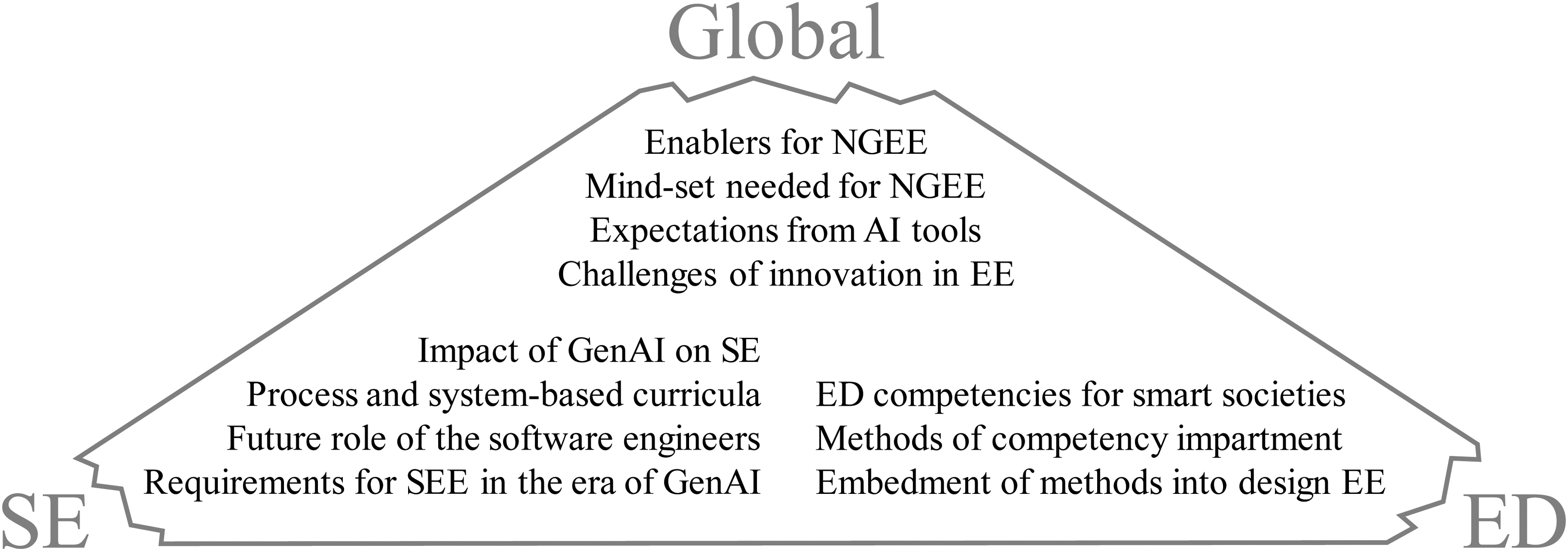
Conceptual questions from the global, engineering design (ED), and software engineering (SE) perspective.
Horváth (2026) summarises the most challenging conceptual issues in the context of NGEE, stating that education and research are increasingly shaped by knowledge economy strategies, governmental policies, financing schemes and agencies, complex research problematics, and industrial and societal expectations. A new conceptual framework is required for IiEE. NGEE is linked to innovation, and that (i) it is becoming increasingly transdisciplinary, (ii) it needs novel conceptual models, methodological frameworks and management scenarios, (iii) it should adopt a holistic rather than reductionist approach to systems, (iv) it should consider the increased diversification of engineering roles, (v) it should equip engineers with autonomous learning competencies, and (vi) it should encourage a constructive yet critical attitude towards the use of AI technologies. Horváth suggests treating NGEE as a large-scale, domain-dependent, multifaceted, and postdisciplinary problem induced by technological, industrial, social, and demographic trends and factors. Erden and Erden (2026) explain that the current global transition from the industrial-digital age to a sustainable knowledge economy and digital society is opening up a new path for EE, enforcing a paradigm shift towards training creative professionals to develop and implement new knowledge in real-world social environments.
As it was expected, AI topics dominate the papers in this special issue. The authors also address new paradigms in EE, focusing particularly on multidisciplinary and transdisciplinary approaches.
AI capabilities are advancing faster than we can imagine and providing solutions that previously seemed impossible. The ability to apply AI tools will determine business efficiency across all areas, so seizing the opportunities AI offers may be critical to maintaining competitiveness. Given the rapid evolution of AI capabilities, it is necessary to continuously analyse new functions and leverage them. We are now very close to the availability of artificial general intelligence (AGI), which is an AI that can match or exceed the cognitive versatility and proficiency of a well-educated adult. We are also close to the point at which AI will be able to reason and prove mathematical theorems, which can be considered the highest level of formal thinking. Hendrycks et al. (2025) present that while specialised AI systems master tasks once thought to require human intellect, AGI provides not just specialised performance in narrow domains, but also the breadth and depth of skills that characterise human cognition.
Horváth (2026) claims that NGEE requires a new mindset, which is expected to be facilitated by a combination of complexity science knowledge and the potential of specialised AI mechanisms, such as Large Action Models. Current GenAI implementations as personalised education facilitators lack the unique qualities, such as critical thinking and social-emotional competencies, that would make them universally acceptable and irreplaceable. Using GenAI in EE could transform the way students learn and prepare them to apply engineering knowledge and skills to domain-specific innovation. However, GenAI tools should be used to support learning rather than replace it.
Marlowe et al. (2026) offer a comprehensive framework for rethinking software EE, with particular attention to the impact of GenAI on the software engineering process and the future role of software engineers. The software EE curriculum must integrate process thinking, systems theory, ethical engagement and GenAI technologies. Courses should place greater emphasis on soft skills and combine the development of professional expertise with conceptual capabilities and an enhanced capacity for lifelong learning (LLL). Due to the growing influence of AI and data analytics in both the development process and the final product, the role of software EE will continue to undergo significant transformation. AI in education promotes personalised learning, automates administrative tasks and provides real-time feedback. GenAI can support students by providing feedback on their work and helping them to improve their results. Evaluating the results produced by GenAI also involves critical thinking, including both existing content and prompt-triggered output.
Future engineers are expected to develop solutions based on human-machine interaction that take into account more complex social needs. Given the growing use of AI and automation, as well as the impact of biotechnologies, engineers will need to incorporate human behaviour, biological data and machine learning into the design process. For this reason, according to Erden and Erden (2026), a broad approach is expected in the design EE to produce more holistic solutions.
The ideas of complexity science position EE as a complex adaptive system, creating a conceptual framework for exploring possibilities from the near future perspective. The convergence of scientific knowledge, the integration of systems technologies and the shift towards complex systems are forcing educational institutions to transition from a unidisciplinary to a pluridisciplinary approach, addressing the challenges arising from transdisciplinary education programmes and courses. Transdisciplinarity implies revisiting the fundamentals of EE and asking about new objectives, content, and approaches. Integrating academic disciplines in EE has proven to be a challenging pedagogical problem. The wide range of competencies required for engineering roles necessitates flexible, accessible and efficient EE that provides a methodological basis for LLL and promotes autonomous learning. When discussing the soft skills required in software engineering, Marlowe et al. (2026) emphasises the need for an interdisciplinary or multidisciplinary approach in EE, as well as the importance of enabling active learning and LLL.
When talking about IiEE, design EE must be at the heart of the conversation, reorienting pedagogical paradigms toward NGEE to meet the needs of an ever-changing technological society. As Erden and Erden (2026) explain, beyond focusing on methodological problem-solving based on technical competence, more attention should be paid to human factors, social dynamics, and environmental sustainability in system design.
(P2) Engineering Didactics
The literature of engineering didactics shows that (i) the topic is diverse and there is no universal approach that is satisfactory in every respect, and (ii) the methods must be adapted to changing circumstances. The increased amount of knowledge, higher intellectual expectations and the task of providing a sufficient number of well-trained engineers have placed EE at the centre of attention at corporate, national and global levels. This is also demonstrated by the fact that supporting education and promoting debate about it are among the priority activities of international engineering organisations. Ideally, didactic considerations in EE would also affect public education and teacher training more broadly. Promoting engineering thinking in secondary school, for example, through a design-based approach, would help students navigate STEM subjects and understand the current local and global challenges facing our world.
Research into the didactics of natural sciences has a long-standing tradition. Didactic considerations emerged much later in EE, initially in relation to basic science subjects and subsequently to technical subjects and EE in general. When teaching science subjects, the primary focus is on understanding the field's intrinsic logic and developing specific knowledge and thinking skills. However, due to the role and social embeddedness of engineering work, as well as engineers’ social responsibility, engineering didactics must go far beyond merely supporting an understanding of and application of core engineering knowledge. A postdisciplinary organisation of education can provide an environment that meets current expectations. This approach considers EE alongside its industrial and social context, providing a broader domain for optimisation.
To promote the desired outcome of EE, some papers in this special issue address assessment, teachers’ preparedness, and the development of soft skills. Kumar and Summers (2026) propose and validate a three-step, computationally measurable coding scheme that enables the scalable, real-time analysis of student thinking. This lays the groundwork for automated feedback systems and has potential applications in adaptive learning and the tracking of engineering identity among students pursuing EE. Burján-Mosoni et al. (2026) present a Soft Skills Development Method that focuses on personality development through simulations of everyday personal interactions engineers encounter in their work. Haiping et al. (2026) claim that enhancing AI literacy among college teachers is imperative for developing digital competence. Figure 5 illustrates the key concepts in the three aforementioned fields, as well as potential topics for linking them, such as training of trainers, peer assessment (both sender and receiver), and automated assessment, including AI assistance.
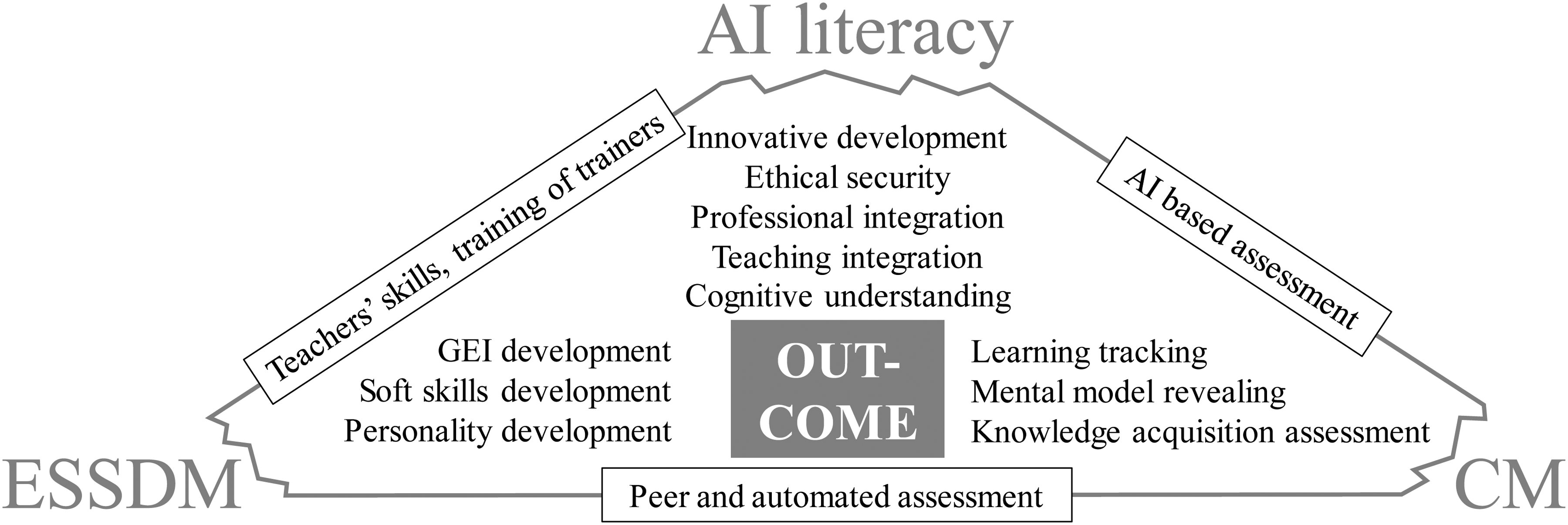
Learning outcome supported by concept maps (CM), extended soft skills development (ESSDM), and teachers’ AI literacy improvement.
EE is expected to equip students with the ability to understand and manage increasingly complex systems at a high level of abstraction, as well as realistically assess the operation and impact of technical systems. However, the traditional education system's methods of control and evaluation cannot clearly demonstrate the effectiveness of the learning process. The concept maps discussed by Kumar and Summers (2026) can be used to assess knowledge acquisition, track learning and reveal mental models. Their study proposes and validates a three-step, computationally measurable coding scheme that enables the scalable, real-time analysis of student thinking, paving the way for automated feedback systems. As well as enabling the structural and semantic analysis of students’ thinking, the scheme supports the automated translation of hand-drawn maps into a digital, analysable format, enabling the measurement of how students organise and evolve their understanding within project-based curricula. Engineering curricula increasingly emphasise inquiry, reflection, and problem solving, demanding assessment tools that can account for growth in cognitive complexity, thinking processes, and the formation of disciplinary identities, for which more expressive and diagnostic tools are required to reveal how students organise and connect knowledge. The use of concept maps in design education is especially promising where systems thinking, creativity and iterative refinement are integral learning outcomes. These applications require a standardised, evidence-based coding framework that can deliver structural and semantic insights from hand-drawn, student-generated concept maps.
The value added by an engineering programme depends on how closely it reflects the creative and professional environment of future engineers. Burján-Mosoni et al. (2026) propose the Soft Skills Development Method (SSDM) for advanced engineering courses in undergraduate programmes, and expand the method's ideas and actions to cover the entire training process. The SSDM focuses on personality development by simulating typical personal interactions encountered in engineers’ everyday work, such as instruction, collaboration, communication, objective and subjective assessment, and criticism of each other's work. Students are encouraged to step outside their comfort zones by completing unexpected tasks and undergoing unconventional assessments, such as working with a somewhat provocative and seemingly subjective teacher (‘boss’) and relying on peer (‘colleague’ or ‘client’) assessments. According to their learning objectives, SSDM assignments (including documentation, presentations, teamwork, and reports) fall into one of three categories: (i) learning and applying specific course material, (ii) recalling (or relearning) some aspects of General Engineering Intelligence, and (iii) developing soft skills.
Haiping et al. (2026) propose a competency framework to help educators transition from being technical operators to becoming intelligent instructional designers. This framework contains the following five components: (i) a cognitive understanding of AI fundamentals; (ii) pedagogical integration through instructional design; (iii) discipline-specific applications via industry collaboration; (iv) ethical governance; and (v) educational innovation. Intelligent technologies are fundamentally reconfiguring knowledge production paradigms and pedagogical scenarios. AI literacy is gradually emerging as an essential competency for human survival and development. Cultivating teachers’ AI literacy represents a systemic shift in professional development for the digital age, encompassing the exploration of technology-enabled educational practices and the reimagining of teacher professional development theories. University faculty must treat AI technological knowledge as a core element in order to restructure existing pedagogical architectures.
(P3) Educational Methods Related to Applications
The studies from the forefront of education focus on deep understanding and a high level of application skills. Koelman (2026) highlights the importance of understanding our physics-based engineering world as a core engineering competence and the preparedness for an unknown future, discussing the concepts of routine and adaptive expertise. Levin and Talis (2026) offer a theoretical and historical reconstruction of threshold logic as a foundational model for understanding neural computation. Ekwaro-Osire et al. (2026) contribute a generalizable teaching-learning-assessment construct to support uncertainty reasoning in advanced engineering design courses. Hegedűs (2026) presents a simulation-driven Project-based Learning model centred on a multi-semester microdrone design project, aiming to create a scalable, competency-based framework for engineering curriculum renewal. Figure 6 illustrates the key ideas of the four contributions focusing on ‘understanding’.
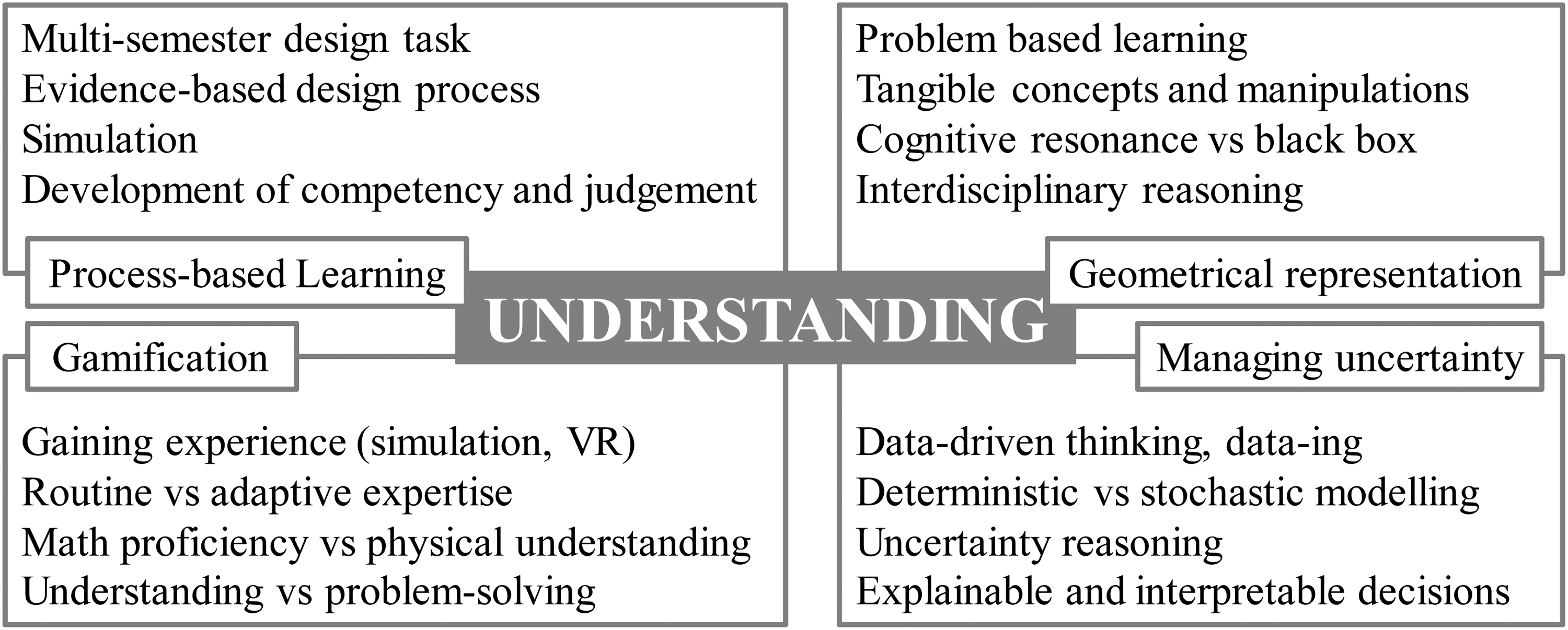
Some teaching methods that support understanding: process-based learning in design education (Hegedűs, 2026); gamification in design education (Koelman, 2026); geometrical representation for threshold logic in teaching NNs (Levin and Talis, 2026); managing uncertainty in design engineering (Ekwaro-Osire et al., 2026).
Although modern tools and technologies can make learning more efficient in many ways, there is a risk that this convenience comes at the expense of deep understanding and long-term knowledge retention. For generations who have used GenAI as an everyday tool, the concepts of a complete and proven solution to a problem and the need and method of formal proof have different meanings than for older generations. Skilfully using smart tools, particularly GenAI, to ‘manage’ knowledge can mask students’ lack of professional knowledge, which can cause problems later in their careers. Due to the multitude of problem-solving applications, care must be taken to ensure that students learn to understand rather than simply collect external tools. Another issue in the learning process is that the vast amount of knowledge available from external sources can be misleading, giving people an unrealistic view of how adequate and valid their knowledge is. Conversely, excessive information can lead to saturation, reducing motivation to gain a deeper understanding, which is ultimately detrimental to knowledge quality.
When using modern educational tools, it is important to bear in mind the role of common sense in engineering thinking. This can be developed through creative activities that produce tangible results and foster an accurate perception of real processes and an appropriate relationship with reality. In the modern world, a crucial question is how engineering thinking is influenced by young people's increasingly dominant experience of the virtual world. Losing common-sense control over computer-operated processes radically changes the role of humans within systems. Without this control, catastrophic events are more likely to occur, and people become vulnerable to technology. On the other hand, people tend to stop thinking for themselves, creating a negative, self-perpetuating cycle. Ready-made answers and ‘solutions’ alter students’ relationship with the learning process. Many students see the steps involved in deepening their knowledge — such as understanding proofs, learning formulas, and solving problems — as unnecessary. Rather than making an effort, they use a ‘smart’ tool, which means that the thinking process is omitted, and their knowledge becomes uncertain. However, it is difficult to decide whether memorising a particular piece of knowledge is necessary for problem-solving.
Another problem arises in connection with the engineering applications of learning algorithms. During mathematical computations, data often lose their original physical meaning, and the results require further expert consideration to yield an answer to the original technical problem. This phenomenon is exacerbated when using learning algorithms, since the details of the calculation remain hidden when they are developed by learning from a training database. As long as learning systems cannot enforce physical laws and interpret data meaningfully, they can provide nonsensical solutions that may cause problems in engineering applications.
Koelman (2026) believes that understanding our physics-based engineering world is a core engineering competence that can be applied throughout a career and at various job levels. Regarding the preparedness of engineering students in the maritime field for an unknown future, a key consideration is ‘routine versus adaptive expertise’. Routine expertise means a person is highly skilled at a specific task, but lacks the flexibility to apply these skills to new problems. Adaptive expertise, on the other hand, involves using creativity and flexibility to solve problems. In an ever-changing world, educational institutions should help students develop these skills in order to train adaptive experts. The engineering curriculum should devote more focus to the lowest (practical) level of interaction with and by the students. Koelman notes that while young students are equipped with tools for quantifying and predicting physical phenomena, this hampers their understanding of core physical phenomena and mechanisms. Recognising the necessity of interdisciplinary and multidisciplinary education and the importance of deep understanding, he recommends a monodisciplinary approach for courses dedicated to the transfer of knowledge about basic technical, physical, or mechanical phenomena.
The emergence of learning systems and soft computing algorithms in engineering work indicates that, to some extent, it is necessary to clarify the theoretical background of AI-based applications in the EE. The black box nature of AI tools is incompatible with classical engineering problem-solving processes, so a specific approach is required for their application and education. While the black box nature may be acceptable at the user level, a deeper understanding of the computational processes is desirable for developers.
According to Levin and Talis (2026), contemporary AI education faces multifaceted challenges in knowledge, methodology, and accessibility, particularly within engineering and computer science curricula. Teaching neural networks (NNs), a key subset of AI, often prioritises programming over foundational understanding. Current pedagogical approaches to NNs often emphasise procedural fluency while neglecting the structural logic of neural computation. This creates an urgent challenge: how can NNs be taught in a way that is intellectually rigorous, historically grounded and accessible to learners from diverse backgrounds without conflating them with the entirety of AI? Levin and Talis (2026) propose threshold logic as a foundational model for understanding neural computation. This provides a structurally transparent, spatially intuitive and cognitively resonant framework for interpreting decision functions in artificial neurons, and argues for the epistemological value of reintroducing the model in the GenAI era, where black-box abstractions increasingly dominate educational practices. Its geometric representations enable learners to engage with neural functions as comprehensible structures rather than opaque algorithms.
Technical processes obviously have a random nature, which manifests as randomness in operational conditions, variations in dimensions and materials from piece to piece, a lack of knowledge of assumptions, and manufacturing imprecision. All of these factors must be considered in the design process. Although engineering standards, procedures and rules are based on data analysis and statistical tests, a deterministic approach has traditionally dominated EE. However, due to increasing accuracy expectations for computationally difficult engineering problems, greater data acquisition and processing capacity, and demand for real-time applications and control, data-driven solutions have become prevalent in practice. These solutions include stochastic modelling, statistical methods, numerical algorithms, and machine learning and soft computing algorithms.
EE should reflect the demand for a stochastic approach, enabling students to understand a non-deterministic perspective and handle uncertainties in practice. In a data-driven course, it is important to introduce both epistemic (model-related) and aleatory (data-related) uncertainty to develop a more mature, balanced perception of uncertainty. Hüllermeier and Waegeman (2021) state that enhancing students’ ability to reason about uncertainty prepares them for real-life problems, as real life is stochastic rather than deterministic. Ekwaro-Osire et al. (2026) address issues with the stochastic approach in EE and propose a teaching, learning, and assessment method to support uncertainty reasoning in advanced engineering design courses. They hypothesised that experience in data-driven conceptual design would improve students’ ability to reason about uncertainty. To this end, they constructed a course with implementation and evaluation strategies and designed an educational flow to support students’ engagement with uncertainty through structured tasks. They employed the concept of ‘data-ing’, introduced by Gafny et al. (2025). Teaching the concepts of data analysis and ‘data-ing’ could improve students’ understanding of data and prepare them better for real-life scenarios. An uncertainty-based conceptual design course would teach students about appropriate data types for design, how to process them to derive meaningful information, and how to create designs while accounting for epistemic and aleatory uncertainties. This approach is fundamental to shifting from subject-centred to student-centred pedagogies. The methodology for creating an educational flow that supports student engagement was broken down into a structured sequence balancing the progressive development of student skills with meaningful deliverables. Regenwetter et al. (2023) note that incorporating uncertainty when selecting the best conceptual design can make the decision-making process more comparable and clearer.
Although process-based learning has gained widespread acceptance in engineering programmes, its implementation is often narrow in scope, confined to a single course, or driven by a specific tool. Many examples focus on device fabrication, short-term tasks or competition-oriented builds rather than the progressive development of engineering judgement through multi-semester, evidence-centred design processes. This restricts the opportunity to monitor how modelling assumptions evolve, how the depth of iteration influences performance and how rubrics can be aligned with system-level competence progression. Hegedűs (2026) presents a simulation-driven project-based learning model centred on a multi-semester microdrone design project. This model creates a scalable, competency-based framework for engineering curriculum renewal that can also be adapted for use in other STEM fields. The proposed framework offers a transferable, evidence-based model for simulation-driven curriculum reform. The author argues for the systematic embedding of design and process-science mechanisms that govern iteration, alignment of modelling and testing, evidence collection, and reflective decision-making. The study addresses these gaps by positioning microdrone design as a postdisciplinary learning environment that naturally integrates mechanical design, electronics, control, simulation, sensing and optimisation.
Open Issues and Possible Further Research
While the scope of the ten articles varies, each of them makes a significant contribution to the topic of IiEE, discussing the conditions and goals of NGEE. Conceptual papers provide a vision of transdisciplinarity and highly integrated EE, serving as guidance for improving the teaching process. In contrast, approaches grounded in everyday experience highlight obstacles and deficiencies that hinder education.
Clearly, improving educational systems is akin to solving an optimisation problem with constraints. Some researchers focus on the objective function of optimisation, while others focus on the constraints. The objective of optimisation must represent the desired hard and soft competencies. While engineering science is driven by internal forces such as technological development, productivity, reliability, and safety, challenges increasingly arise from complex social, political, and economic expectations. Constraints come from (i) national education politics (e.g., administrative rules, structure and financing); (ii) the organisation of the educational process at the institutional level (e.g., curriculum, modular system, infrastructure and cooperation with industry); (iii) educators’ competencies. Clearly, different constraints imply different optimums.
The high complexity of technical systems, the rapid expansion of knowledge and the development of knowledge management tools mean that time is a crucial constraint in EE. Declaring the desired knowledge and hard competencies at the institutional level characterises and positions an engineering programme in the education market. While external circumstances push for an increase in the quantity and quality of knowledge to be learned, we consider that students’ average preparedness, comprehension, and motivation can significantly limit this. Techniques of autonomous learning can broaden horizons. Another way to enhance learning efficiency is to learn several principles together within projects using a multidisciplinary and transdisciplinary approach.
The results reported in this special issue address some of the open questions introduced in Section 2 concerning domains (D1)–(D6). Figure 7 illustrates the primary relationship between the domains and the contributions to the special issue.
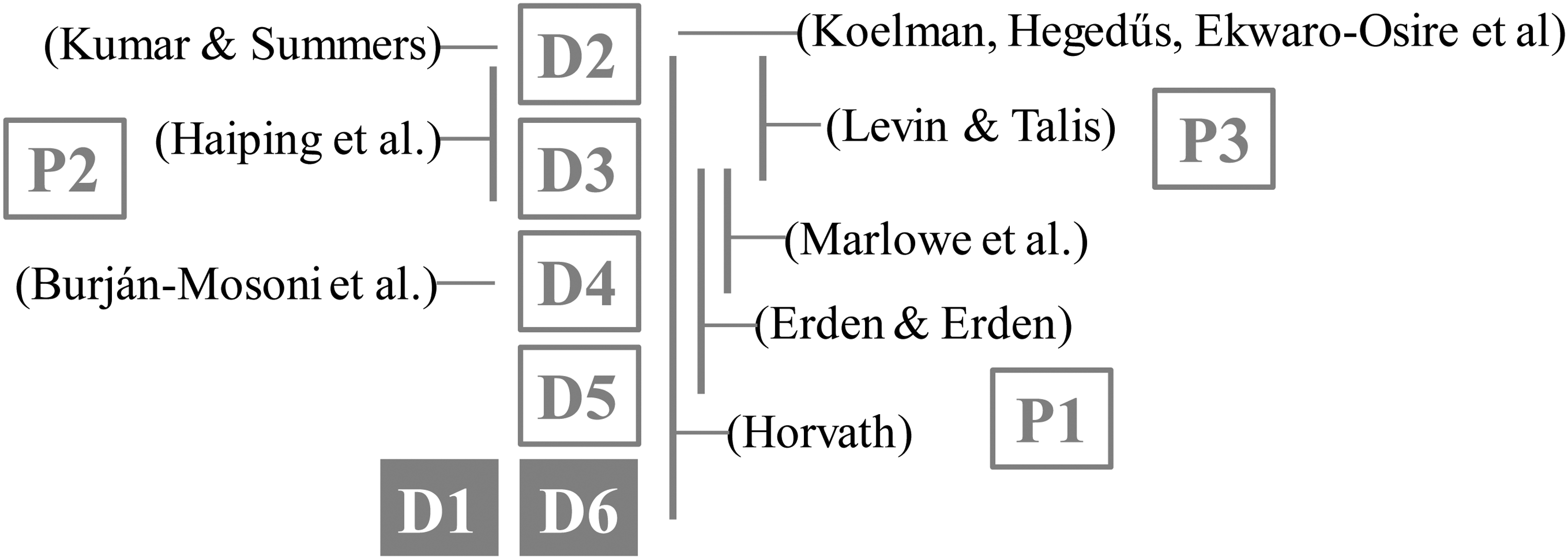
Links between the EE research domains and the special issue contributions.
Due to the complex nature of the EE, in-depth considerations tend to raise more questions than they can answer. The accelerating change in the technological, economic and social environment gives rise to new issues. The subjective nature of ideas about education and the large number of studies linked to different educational conditions, assumptions, and goals make it challenging to overview the approaches, proposals, and methods and identify trends in EE. Some outstanding review papers, e.g., Bond et al. (2024), provide a comprehensive overview of the answers to global issues offered by different research teams, and assess and present the results and ideas in context.
Horváth (2026) provides a comprehensive summary of the state of the art and future challenges in domains (D1)–(D6), as well as setting the framework for this special issue. He identifies the most significant problems of EE and presents conceptual and functional solutions in a critical manner. Beyond his extensive analysis of the state of the art, he systematically outlines the steps engineers must take in the future to be aware of their responsibilities and prepared to address global issues. Key words regarding the NGEE include convergence of knowledge, transdisciplinary education, future engineering positions and competencies, autonomous learning, integration of AI into EE, and ethical, legislative and inclusion issues.
There is significant diversification in the positions engineering graduates can take, ranging from technicians to researchers. These roles require different competencies and, consequently, different educational programmes. Autonomous learning appears capable of addressing some of the current issues facing EE and is set to play an important role in the future. Its most important feature is that it provides a foundation for LLL. There is a need for wide-ranging longitudinal studies that investigate related trends and provide reliable forecasts on future prospects. This is particularly relevant in the context of the latest AI technologies and tools, which are permeating EE too quickly and in an incomparable manner. The integration of AI into EE appears to be an ongoing process. This goes hand in hand with the emergence of revolutionary possibilities and unprecedented challenges, as it influences the perceptual, cognitive, and attentive domains of the human mind. While it supports learners in moving towards autonomous and LLL, it also requires an insightful and disciplined approach to be used effectively as a trainer or peer.
Figure 8 presents a framework for future research in EE, grounded in three pillars.
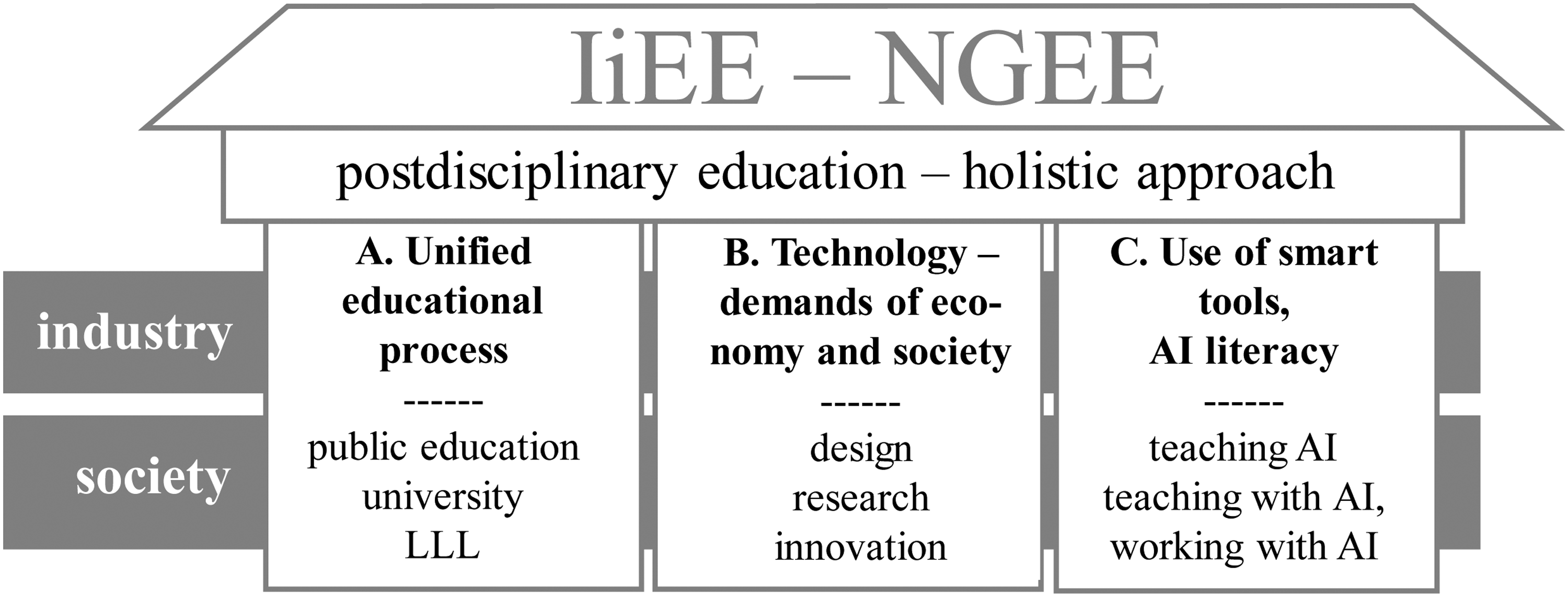
Some future fields of development in EE.
Optimum efficiency would require all levels of education, from elementary to postgraduate, to operate as a unified, coherent system, where the different levels work together and contribute their own resources towards clearly defined, shared goals. This must be followed by continuous learning that is linked organically to institutional education. Given the different preferences and opportunities, harmonisation is challenging. One way to achieve this is to incorporate engineering thinking and approaches into public education. Preparing for EE is not the only benefit of this approach; it also fosters young people's awareness of and responsibility for technical and economic processes. Institutional education must teach learners how to learn, providing them with strategies for autonomous learning. Content and teaching methods must be prepared and regularly updated using modern technology to create an engaging, user-friendly environment. One of the most important educational applications of AI is managing a personalised learning process, including adaptive content, automated assessment, and feedback. In a unified approach, layers of knowledge must be built on each other consciously, and a defined level of knowledge must be guaranteed at all levels. The literature clearly states the need for harmonisation, presenting evidence that shortcomings in students’ preparation and knowledge significantly hinder achievement in university education.
Today, keeping up with technological innovations is easier due to the availability of information (including GenAI), but more difficult due to the sheer volume of new developments. In technical education, the challenge has always been to strike the right balance between theoretical and practical knowledge relating to specific technologies. The wide range of IT tools available tempts us to rely on them when solving technical problems. However, preferring non-standardised software solutions means that unprepared people will apply solutions of an unguaranteed quality. This tendency must be stopped deliberately. EE assignments must shift from calculation to analysis. In this approach, GenAI answers must be critically analysed using professional knowledge, and the correct solutions must be presented. For generations growing up in the GenAI era, AI-based answers are so natural that they must learn to approach them critically. The algorithms behind mobile applications and software are hidden from the average user, so it is difficult for them to distinguish between tools that provide correct answers and those that generate ‘best’ answers without “understanding”. The infrastructure and time frames limit the extent to which EE institutions can keep up with the digital transformation and the rapidly expanding technological knowledge and design tools. While cooperation with industry through projects, dual education or modular training can provide effective insight into modern technology, there is a risk of training specialists. Industry expects graduated engineers to have a high level of digital competence, and students find computational and design tools popular because they can produce spectacular (though not necessarily positive) results immediately. Since the GEI will ensure that future engineers are well-placed in a world dominated by algorithms, EE institutions must communicate that excessive reliance on software comes at the expense of GEI.
The problem-solving ability of AI-based software creates new ways for ‘machines’ to be used. The possibilities seem limitless, as do the related educational tasks. The ever-increasing capabilities of AI, particularly its formal, logically based (non-reproductive) reasoning ability, are prompting a change in attitude among potential users, including engineers. Two important aspects of EE are: (i) the standardisation of AI-based tools in terms of engineering correctness; and (ii) the different generations’ attitudes towards solutions provided by AI.
Standardising AI-based tools poses a significant challenge in engineering. While some general expectations have been formulated regarding explainability, reliability, security, and ethical use, ensuring that the solutions’ core technical requirements are met in an engineering sense is a future challenge. The security of technological, business and personal data has recently been a key issue. The proximity of AI-based tools to protected data poses an even greater security challenge due to the uncontrolled way in which data is stored and used. Engineering solutions must be based on physical laws. Algorithms that work with abstract data, ignoring their physical meaning, and which may provide solutions that contradict the laws, cannot be considered engineering solutions. However, if AI can reach a level of reasoning where the laws of physics are guaranteed to apply, there will be no reason not to accept its answers as correct solutions.
While familiarisation with engineering design systems typically occurred during technical studies alongside the acquisition of related technical knowledge, nowadays, children are starting to use AI tools that require a high level of knowledge and capacity. Consequently, young people develop an attitude towards the ‘solutions’ provided by AI. Misjudgement of GenAI content can cause problems in everyday life, but incorrect thinking about GenAI in professional contexts can have serious consequences. Engineering students must learn to distinguish between irresponsible gaming and professional engineering practice and be aware of the risks involved. Taking a professional approach with critical thinking requires serious preparation and a high level of hard skills. Without adequate theoretical knowledge, it is impossible to realistically assess the results obtained using GenAI. Unprepared students may find themselves in a situation where they seem to have the answers to all the questions, but are unable to apply them correctly.
Clearly, AI is a valid engineering tool that is becoming increasingly relevant and important. Although AI has a relatively short history, it has had a significant impact. Consequently, it is challenging to keep pace with the development of AI tools in EE. The generational gap in AI use is significant and must be addressed in education. It is important to coordinate educators’ and students’ views on the use of AI, bearing in mind that the mindset of new generations can change significantly year on year, depending on the tools they use and the experiences they have. Learning to use AI effectively is a prerequisite for successful engineering education. This requires educators to have a high level of AI literacy.
Footnotes
Acknowledgments
As the responsible guest editor, I would like to thank Prof. Imre Horváth for his contribution to this Special Issue. He encouraged its inception, invited some of the field's most distinguished researchers, and offered invaluable advice to ensure its high quality. His ideas were invaluable throughout the editorial process from shaping the structure of the Special Issue and defining the range of questions addressed to presenting the state of the art and discussing the responses submitted. His paper, “We pretend to have some solutions … but do we understand the problematics as a whole?”, is not only a significant contribution to the Special Issue but also provides an excellent framework for discussion on innovation in engineering education. I would also like to thank all authors who submitted their work to this Special Issue, “Design, Process and System Science–Triggered Innovations in Engineering Education.” I hope that our readers will appreciate these contributions, which present a vision of next-generation engineering education by addressing a wide spectrum of challenges and solutions, ranging from conceptual perspectives to pedagogical methods and application-specific educational tools. The selected contributions provide a comprehensive overview of key issues in engineering education. Appreciation is also due to the peer reviewers who, upon invitation, supported the authors’ work through critical assessments and clear, constructive comments. Finally, I would like to acknowledge the publisher for creating a submission channel dedicated to this Special Issue and its authors.
Funding
The author received no financial support for the research, authorship, and/or publication of this article.
Declaration of Conflicting Interests
The author declared no potential conflicts of interest with respect to the research, authorship, and/or publication of this article.
Author Biography