




Abstract
Keywords
Conclusion
In the1996 amended safety assessment of polyvinyl acetate, the Cosmetic Ingredient Review Expert Panel stated that this ingredient is safe as a cosmetic ingredient in the present practices of use. 1 The Expert Panel reviewed newly available studies since that assessment along with updated frequency and concentration of use information. 2 –11 The Expert Panel confirmed that polyvinyl acetate is safe in the present practices of use and concentration given in Table 1 and did not reopen this safety assessment.
Historic and Current Uses and Concentrations of Polyvinyl Acetate.1,6,10
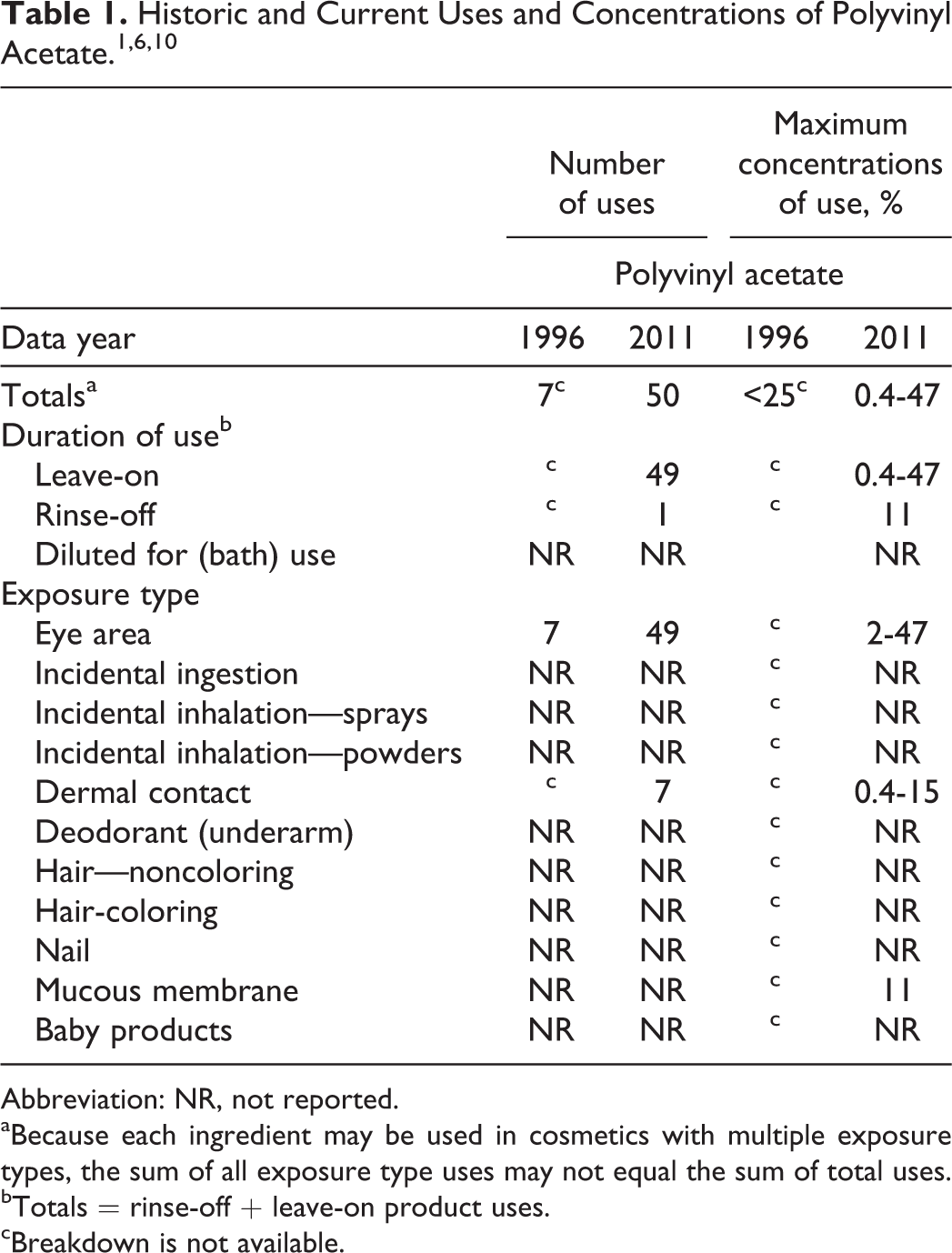
Abbreviation: NR, not reported.
aBecause each ingredient may be used in cosmetics with multiple exposure types, the sum of all exposure type uses may not equal the sum of total uses.
bTotals = rinse-off + leave-on product uses.
cBreakdown is not available.
Discussion
Polyvinyl acetate was used in 7 products in 1996, based on voluntary reports provided to the US Food and Drug Administration (FDA) by industry, at concentrations <25%. 1 Data provided to FDA in 2011 indicated that polyvinyl acetate was being used in 50 products. 6 Current use concentration data from a cosmetics industry survey indicated that the ingredient was being used in cosmetics at concentrations ranging from 0.4% to 47%. 10 Although concentration of use for polyvinyl acetate had increased since the original safety assessment, the 1996 safety assessment detailed a human repeat insult patch study in which polyvinyl acetate was tested at a concentration of 50% with no allergic or irritation responses. 1
Footnotes
Declaration of Conflicting Interests
The author(s) declared no potential conflicts of interest with respect to the research, authorship, and/or publication of this article.
Funding
The author(s) disclosed receipt of the following financial support for the research, authorship, and/or publication of this article: The articles in this supplement were sponsored by the Cosmetic Ingredient Review. The Cosmetic Ingredient Review is financially supported by the Personal Care Products Council.