




Abstract
A functional observational battery (FOB) is recommended as the first-tier neurotoxicity screening in the preclinical safety pharmacology testing guidelines. Minipigs have increasingly been used in regulatory toxicology studies; however, no current FOB protocol is available for neurotoxicity testing in these species. Hence, a minipig FOB instrument was developed. A complete crossover study with Sinclair minipigs was performed to evaluate physiologic, neurologic, and behavioral effects of amphetamine, ketamine, and diazepam. The treated minipigs were first observed in their home cage, were video-recorded for 10 minutes in an open field, and then went through a complete neurologic examination. Both ketamine and diazepam were shown to reduce the freezing and behavior shifts of treated minipigs, while increasing their exploratory behaviors. Both drugs also caused muscular and gait impairment. The effects of ketamine and diazepam were consistent with their roles as central nervous system (CNS) suppressants. Unique effects were also observed with ketamine and diazepam treatments, which may reflect their unique mechanisms of action. Consistent with its role as a CNS stimulant, amphetamine caused the treated minipigs to be hyperactive and to display increased freezing and behavior shifts and reduced exploring activities. These effects of amphetamine were opposite to those observed with ketamine and diazepam. Amphetamine also increased locomotion in the treated minipigs. The present effects of amphetamine, ketamine, and diazepam are in agreement with observations by others. In conclusion, the minipig is a suitable species for FOB evaluation of pharmaceuticals in preclinical safety pharmacology testing.
Introduction
The nervous system is one of the most complex organs in the body, and it possesses unique vulnerabilities to toxic compounds that may have multiple modes of action. 1,2 Neurologic functions are multifaceted and represent the intricacies of the nervous system; therefore, alterations in these functions would be sensitive in reflecting the adverse effects of toxicants on the nervous system. 1 The central nervous system (CNS), along with the cardiovascular and respiratory systems, has been listed in the safety pharmacology core battery of the harmonized test guidelines for preclinical testing of human pharmaceuticals (ICH S7A, 2001). Functional observational batteries (FOBs) have been recommended in these guidelines as the first-tier neurotoxicity screening that encompasses motor activity, behavioral changes, coordination, sensorimotor reflex responses, and body temperature.
Functional observational battery protocols have been validated in multiple species used in preclinical studies, but to our knowledge, a protocol has not yet been validated in the minipig. 3 -5 The minipig is an accepted species for preclinical toxicity assessments of drugs intended for use in humans, and they have increasingly been used as an alternative to dogs or nonhuman primates (NHPs) as the nonrodent species of choice in regulatory toxicology studies. 6
The miniature swine, or minipig, is also an appropriate species for FOB studies. Minipigs share similar anatomic and physiologic characteristics with humans in a number of organ systems 6 and may be an alternative species to NHPs for bridging the gap in behavioral studies between rodent preclinical research and human clinical trials. 7 The CNS, especially the brain, of the minipig is similar to that of humans with respect to tissue composition, gyrencephalic structure, and developmental growth and myelination patterns. 8 -12 Due to the potential for this additional use of minipigs in preclinical toxicity studies, it is essential to validate an FOB in the minipig for the safety pharmacology assessments of pharmaceuticals intended for human use. Various behavior studies, which are relevant to both animal welfare and modeling of human diseases, have been performed in minipigs previously. 11 Amphetamine, ketamine, and diazepam have well-defined dose ranges that do not have any negative impact on the health of animals 13 -15 ; thus, they can be used as positive central-acting compounds. With regard to the effects of drugs on the CNS, amphetamine has been previously investigated in minipigs for its potential to evoke the behaviors that are associated with dopaminergic system activation. 7 In addition, ketamine and diazepam are anesthetic pharmaceuticals routinely used in pharmacology and toxicology swine studies and reliably produce clear, distinct, and rapid neurological effects in suppressing major brain functions.
In order to evaluate the effects of these drugs on the CNS, a swine FOB instrument was developed with observation parameters designed to monitor changes in autonomic functions, excitability, behavior and posture, gait and motor activities, and sensorimotor reflexes. In the present report, a complete crossover study was performed with Sinclair minipigs to capture the neurological outcomes of amphetamine, ketamine, and diazepam and thus to indicate the potential use of this FOB in the minipig.
Materials and Methods
Test System
Four intact male Sinclair minipigs, approximately 7 to 10 months of age and weighing 21 to 25 kg, were used for this study. In order to minimize the influences of multiple exposures to the open field on animal behaviors, minipigs were acclimated for 7 days before study initiation; this included acclimation in the open field for at least 30 minutes every day and being trained to receive a treat following an auditory stimulus by a clicker; animals were only handled by the caretaker who would handle them during the study. The animals were monitored weekly by a clinical veterinarian for the duration of the study. All study procedures were reviewed and approved by the Institutional Animal Care and Use Committee. Housing and animal care conformed to the guidelines of the Guide for the Care and Use of Laboratory Animals, 8th edition published by the US National Institutes of Health and to applicable institutional standard operating procedures.
Each minipig was identified by ear tags with unique 4-digit numbers. To reduce interaction between the study animals, the minipigs were housed individually. Housing pens were raised and had at least 3 × 5.5 ft floor space in a room that was maintained at a temperature of 21ºC to 25ºC with a 12-hour light/12-hour dark photoperiod. Each minipig was fed maintenance amounts of S-9 swine diet (Purina, St Louis, Missouri) based on weight once daily in the morning and had access ad libitum to tap water. All animals were weighed once weekly before being dosed with control and test articles.
Test Articles
Saline (0.9% NaCl for injection) was obtained from Hospira (Lake Forest, Illinois) for use as a control and vehicle solution. Amphetamine (
Experimental Design
Dosing procedure
An unblinded crossover design was used for the study. For the first 5 weeks, each animal was observed once weekly for basal neurological, behavioral, and physiological activities after being administered 0.5 mL/kg saline intramuscularly (IM). For the remainder of the study, minipigs were first tested with amphetamine, then ketamine, and lastly diazepam, all administered IM. Amphetamine was administered at 3 dose levels: 0.3, 1.0, and 1.6 mg/kg, which were selected based on a previous pig study. 13 Ketamine was given at 3.0 and 5.0 mg/kg, similar to doses reported to affect spreading depolarization in swine gyrencephalic cortices without producing anesthesia. 14 Diazepam was dosed at 1.0 and 2.0 mg/kg based on reported doses in a behavior study. 15 All dose volumes were 0.2 to 0.5 mL/kg. Each minipig was treated with no more than 1 test article each week during the study. A washout period of at least 5 days was allotted between different doses of test article or different test articles; since the half-life of diazepam in swine was not available for determining a species-specific washout period, and diazepam has the longest half-life of the 3 test articles in the present study, this period was selected to ensure residual effects of previous doses were not present. This is supported by a study evaluating diazepam in NHPs that successfully utilized a washout period of 3 days 16 ; relative to this time frame, 5 days was determined to be an adequate washout period.
Functional observational batteries
The comprehensive clinical observations for signs of neurological, behavioral, and physiologic alterations, also referred to as FOB, were performed for a total of approximately 30 minutes in 3 different environments beginning approximately 20 minutes postdose for each minipig. Observations were categorized into excitability, behavior and posture, gait and motor activities, autonomic functions, and sensorimotor and reflex responses. First, the minipigs were observed in their home pen for approximately 5 minutes. Then, the minipigs were video-recorded with a camera placed above the enclosure for 10 minutes without human interference in the “open field,” an 8 × 8 ft enclosure with approximately 4-ft tall solid walls to remove visibility of the surrounding environment (Figure 1). The enclosure was divided into 4 quadrants with a movable cone placed at the center of each quadrant to serve as environmental enrichment objects. The center of the enclosure was also delineated from the outside perimeter. Parameters for behavior, motor activities, and gait were scored by a trained observer viewing the video recordings. The enclosure was cleaned with detergent and thoroughly rinsed after each use to reduce odor and potential influences on subsequent minipigs and observation periods. The final step of the FOB was a neurologic examination performed by a clinical veterinarian. The animals were examined in a sling or on the ground as portions of the examination required. Animals were returned to their home pens following the neurologic examination. The trained individual performing pen-side and open-field observations was not the same as the clinical veterinarian. An additional FOB was performed approximately 2 hours postdose on the animals that were administered amphetamine, ketamine, or diazepam, with the exception of when 5.0 mg/kg ketamine was administered; in this case, 2-hour postdose observations were not performed. The 5 categories of FOB parameters were evaluated in the 3 different environmental settings as listed in Table 1.
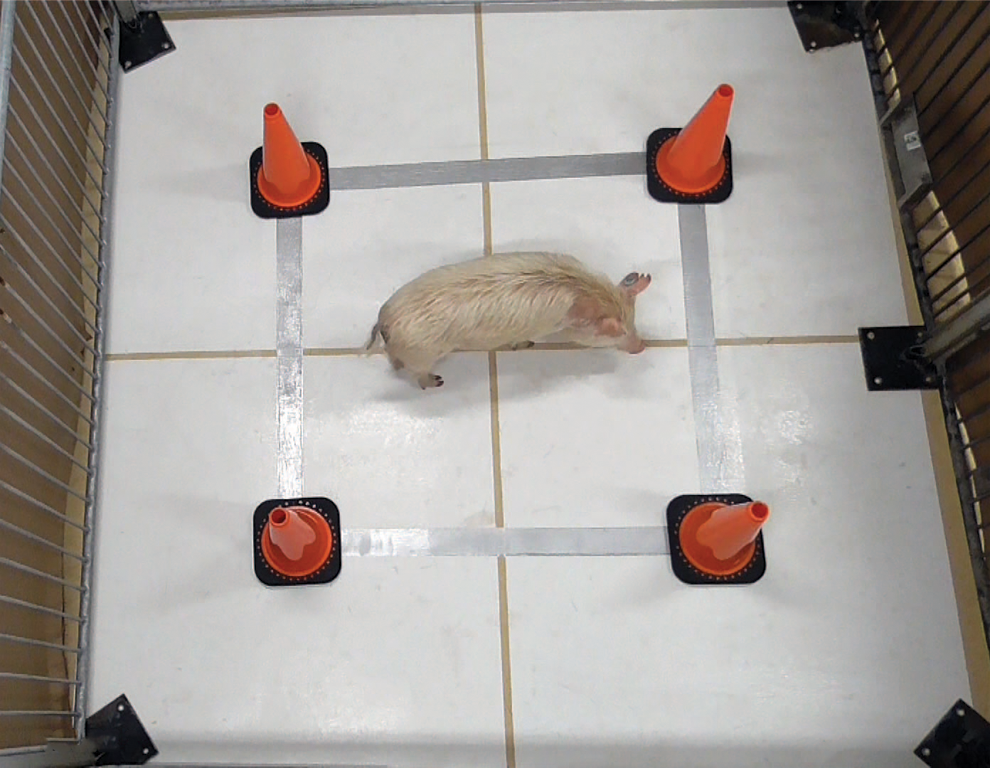
Open-field evaluation of the behavior of a minipig. The enclosure is 8 × 8 ft and is divided into 4 quadrants and a central area delineated by cones.
Summarya of Specifications of the FOB Parameters.
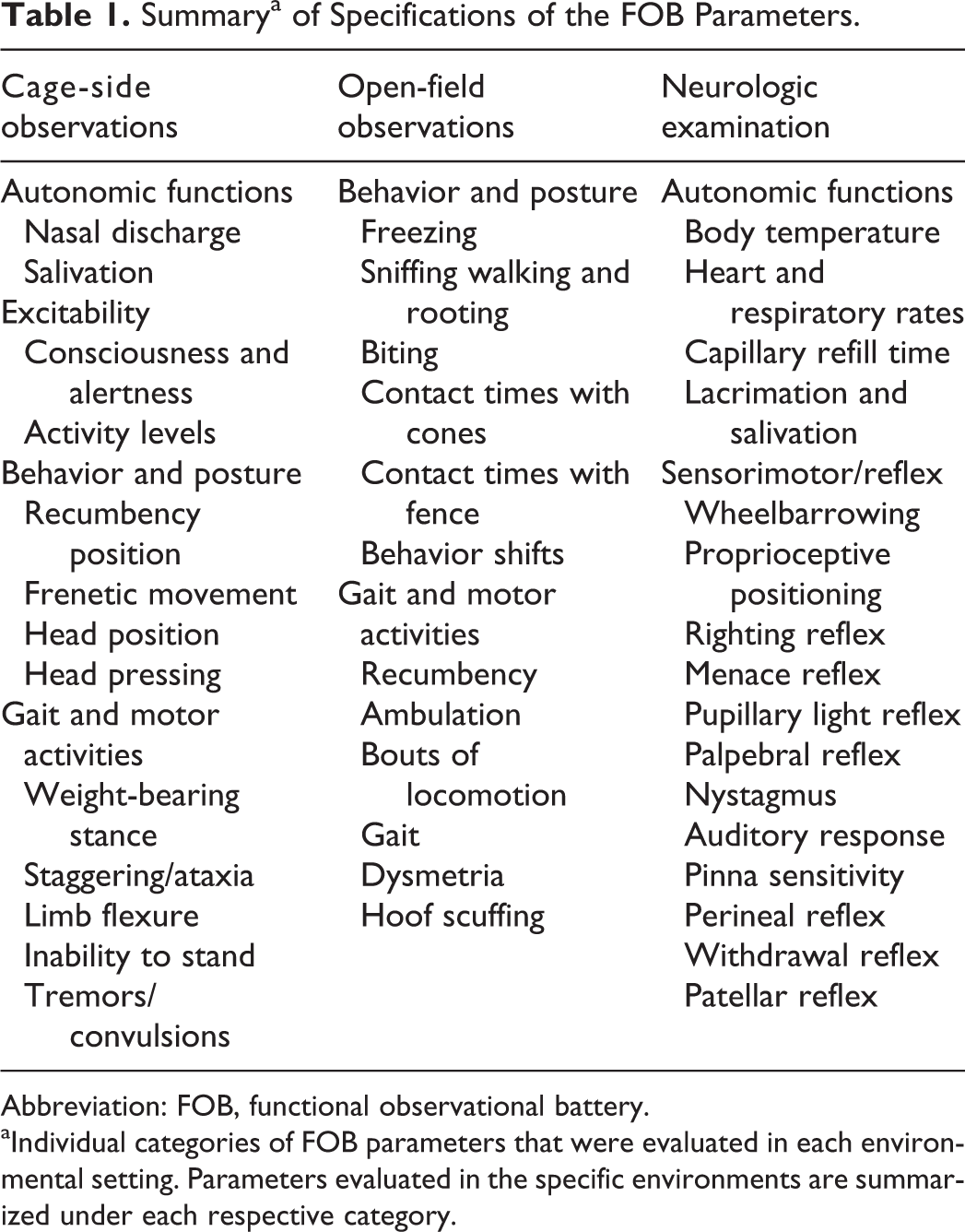
Abbreviation: FOB, functional observational battery.
aIndividual categories of FOB parameters that were evaluated in each environmental setting. Parameters evaluated in the specific environments are summarized under each respective category.
Functional observational battery data were evaluated as continuous, descriptive, count, and binary variables. Continuous variables are those variables that are measurable: temperature (°C), heart rate (beats per minute), respiration rate (breaths per minute), capillary refill time (seconds), rapidity of righting reflex (seconds), and time (seconds) spent standing still, exploring, biting, contacting cones, contacting enclosure boundaries (fence), laying down, and walking. Righting reflex was determined by placing the animal in lateral recumbency and timing of how long it took the animal to stand up. Standing still is referred to as “freezing” for the purposes of this FOB; it refers to the animal standing completely still in order to better pay attention to its surroundings. Exploring behavior, termed “sniffing, walking, and rooting” for the present purposes, is the time spent walking around while exhibiting sniffing and rooting behavior. Biting is the time spent exhibiting a biting behavior. Contact with cones or the fence is the time spent intentionally interacting with the cones and fence, respectively. Walking, termed bouts of locomotion, is time spent only walking. Count variables are the number of shifts in activity, or changes from 1 activity to another, as well as how many times an animal walks from 1 quadrant to another. Descriptive and binary parameters were assigned scores with specific guidelines in order to standardize evaluation and minimize interindividual variability for future studies. Descriptive variables are those evaluating the severity of certain reactions, including gait, proprioception, and gland secretion (lacrimation, salivation, and nasal discharge).
General consideration for scoring of descriptive parameters was 0 = absent, 1 = normal, 2 = moderate, or 3 = exaggerated. Hypoactivity, hyperactivity, frenetic movement, head tilt, opisthotonus, staggering, limb flexure, tremors, convulsions, ataxia, dysmetria, and hoof scuffing (foot dragging) were all scored with the guidelines of 1 = normal (no abnormality present), 2 = moderate, and 3 = exaggerated. The remaining descriptive variables had scores that were specific for each parameter. Lacrimation was scored as 0 (absent) = dry nose, 1 (normal) = no lacrimation observed, 2 (moderate) = moisture around eyes, and 3 (exaggerated) = tears around eyes. Nasal discharge was visually scored as 1 (normal) = moist nares, 2 (moderate) = fluid in nares, and 3 (exaggerated) = fluid dripping from nares. Salivation was measured by briefly pressing a piece of paper against the gums (duration: <1 second) and was scored as 0 (absent) = the piece of paper was not wet after being placed against the gums, 1 (normal) = moisture in mouth, 2 (moderate) = white foam observed around mouth, and 3 (exaggerated) = fluid dripping from mouth. Consciousness and drowsiness, or arousability, was scored as 1 (normal) = animal responded to the observer, 2 (moderate) = animal was drowsy but arousable, and 3 (exaggerated) = animal appeared to be asleep but was arousable with a strong stimulus. Alert levels were scored as 0 (absent) = animal was not conscious, 1 (normal) = animal was aware and responded correctly to the observer, 2 (moderate) = animal had delayed response or did not respond correctly to the observer, and 3 (exaggerated) = animal showed apathy or confusion. Body posture was scored as 1 = standing, 2 = sternal recumbency, 3 = lateral recumbency, and 4 = dorsal recumbency.
Binary variables are descriptive variables that were categorized as either 1 = present and 2 = absent or 1 = normal and 2 = abnormal. Variables scored as either present or absent were inability to stand up or difficulty standing up. When inability to stand up, despite obvious effort, did occur, this was also counted as abnormal standing, and additionally, the time counted as time spent in recumbency. Those scored as normal or abnormal include head posture (normal was specified to be head held level and positioned above the shoulders), head pressing, normal standing (specifically equal weight bearing on all 4 limbs with normal head posture), proprioceptive response to wheel barrowing (referring to either thoracic or pelvic limbs), normal gait (walking coordinated and in balance), menace response, pupillary light reflex (abnormal was defined as absent pupillary light reflex), palpebral reflex, nystagmus (specifically resting nystagmus), auditory response (to a clicker—specifically animal should normally orient its head or ears toward a loud or unexpected noise), pinna sensitivity, perineal reflex, withdrawal reflex, patellar reflex, and proprioceptive positioning of the feet.
Statistics and Data Analysis
Descriptive and binary drug effects were considered to be potentially positive when signs differing from the controls were observed in more than 1 study animal. Continuous and count variables were expressed as mean ± standard deviation (SD) and were speculated to be increased or decreased in results (), when results from 3 or 4 animals were increased or decreased relative to the control. Additionally, continuous and count variables were analyzed for statistical significance with Dunnett test (JMP 8.0.2.2; SAS Institute Inc, Cary, NC); descriptive and binary variables were rank transformed and then analyzed for statistical significance with Dunnett test. Statistically significant findings were then indicated with a superscript letter (b) in the results
Results
There were no reported findings with respect to general health or any signs of disease for the duration of the study. In all settings, the animals were additionally monitored for frequency of defecation, as well as vomiting and diarrhea. There were no test article-related findings related to any of these parameters.
Baseline of the FOB Parameters
All binary and descriptive parameters evaluated for the development of baseline data had scores of 1 (normal) for all animals at all times. Results of continuous and count parameters evaluated for the development of the baseline for FOB are listed in Table 2. Minipigs spent an average of more than 6 minutes in sniffing, walking, and rooting—or exploring behavior—during the 10 minutes of open-field observation, more than 3 minutes just walking, and an average of 2 minutes freezing. Less time was spent interacting with the cones and fence (mean 39 and 59 seconds, respectively), and much less time was spent biting (mean 29 seconds). During the evaluation of daily changes in basal neurological functions of individual animals (Table 3), variability was observed only in 11 continuous and count variables among all the FOB parameters. Four parameters in the category of behavior and posture (times spent freezing, biting, in contact with cones, in contact with the fence) displayed higher variations overall than the other parameters (44.1%-146.7% vs 0%-36.2%, respectively). Variations derived from individual animals were 0.4% to 85.2% higher than those from the combined repeated daily observations of all animals for all parameters except biting and contact with fence; these variations were 7.5% to 31% higher in the repeated daily observations.
Variability of Quantitative FOB Parameters of Sinclair Minipigsa After Saline Administration.
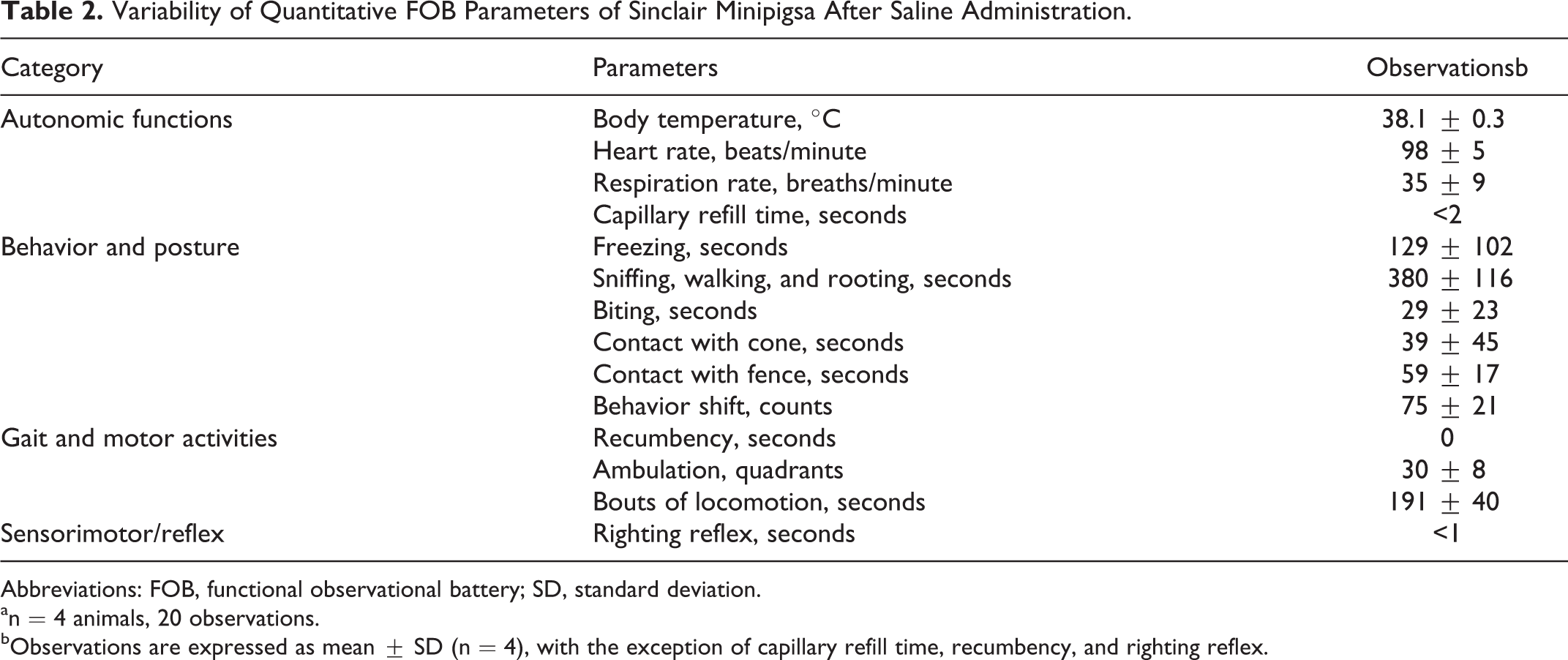
Abbreviations: FOB, functional observational battery; SD, standard deviation.
an = 4 animals, 20 observations.
bObservations are expressed as mean ± SD (n = 4), with the exception of capillary refill time, recumbency, and righting reflex.
Baseline FOB Variations Between Individual Animals and Repeated Observations.
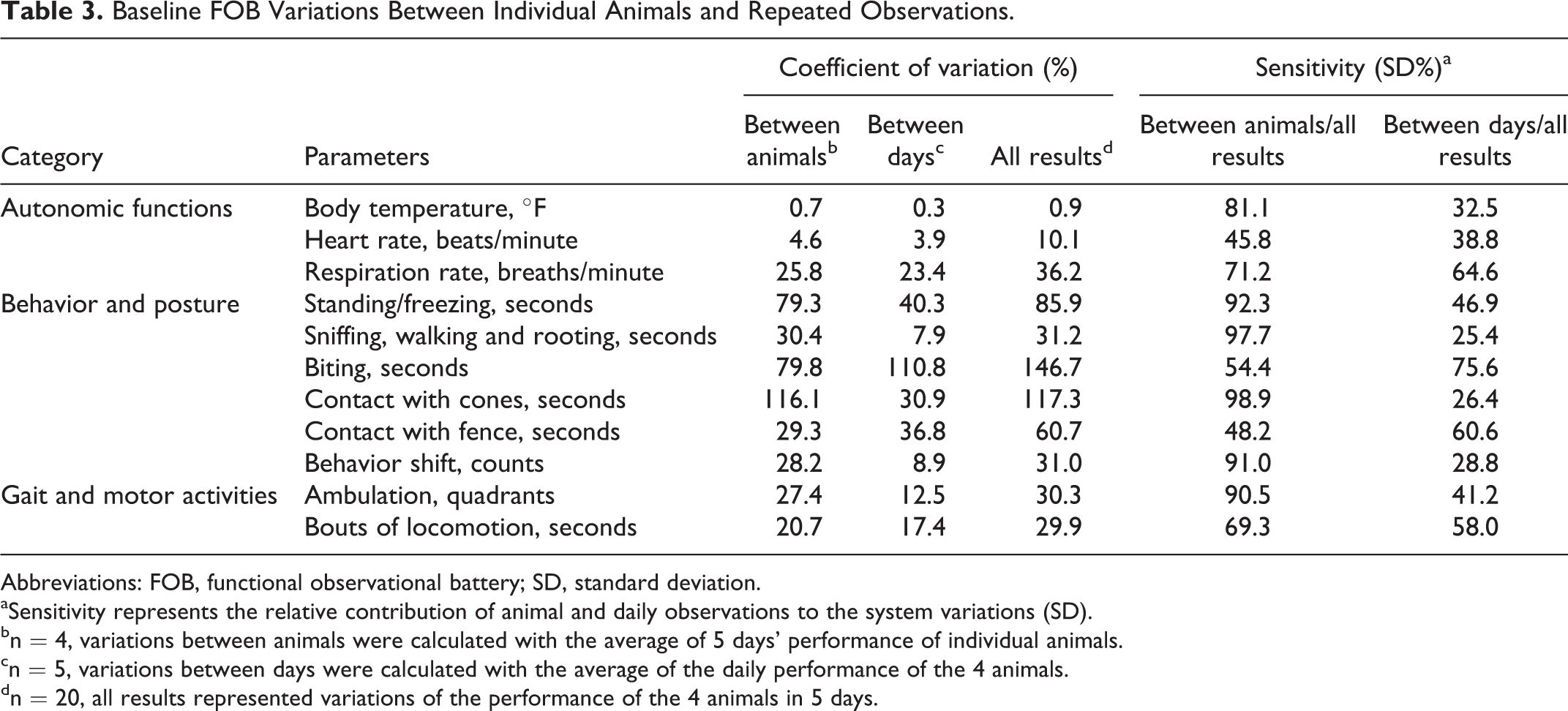
Abbreviations: FOB, functional observational battery; SD, standard deviation.
aSensitivity represents the relative contribution of animal and daily observations to the system variations (SD).
bn = 4, variations between animals were calculated with the average of 5 days’ performance of individual animals.
cn = 5, variations between days were calculated with the average of the daily performance of the 4 animals.
dn = 20, all results represented variations of the performance of the 4 animals in 5 days.
Effects of ketamine on minipig neurological functions
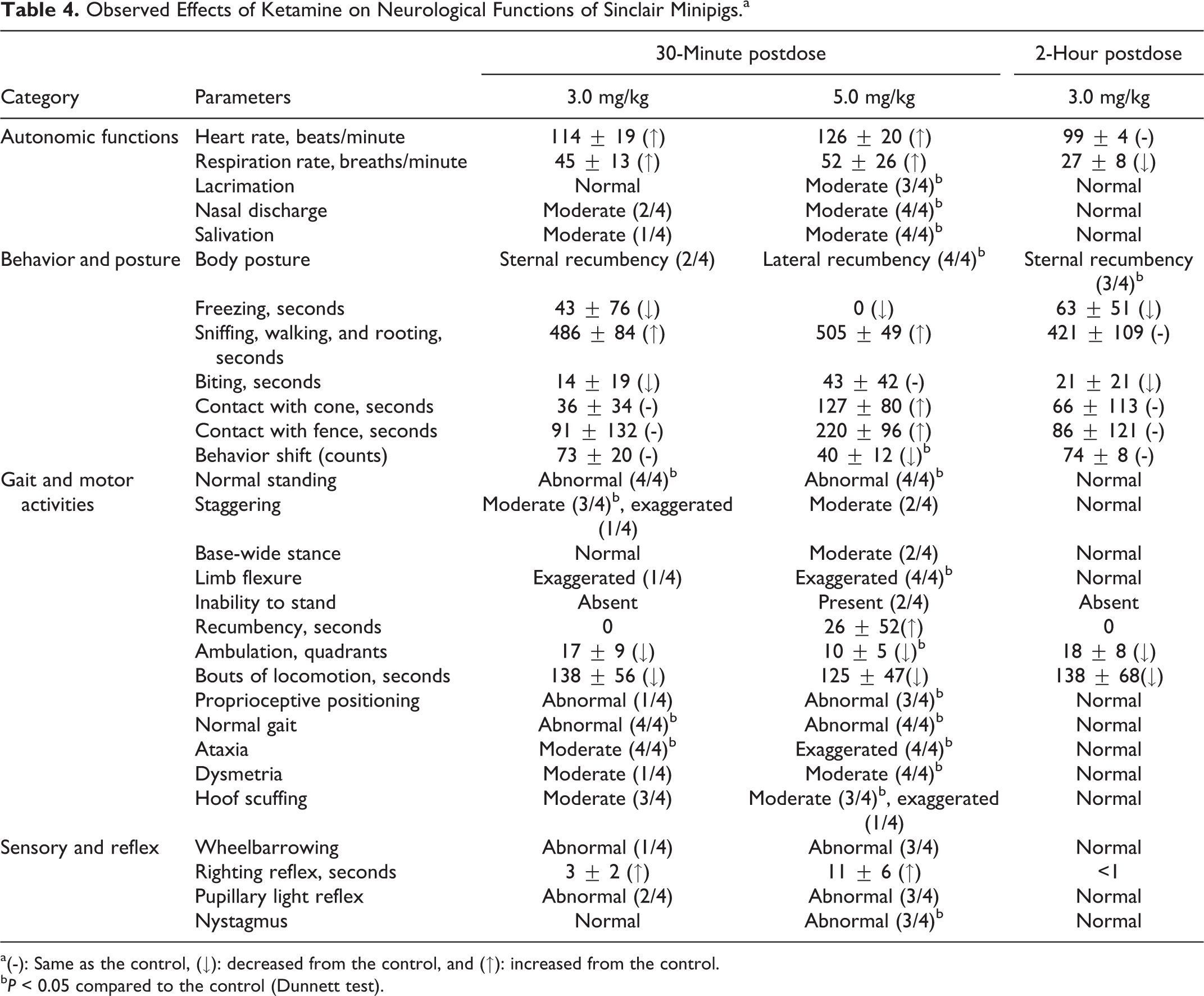
Ketamine effects are listed in Table 4. Compared to baseline parameters, heart and respiration rates were increased 30 minutes postdose for both low (3.0 mg/kg) and high (5.0 mg/kg) doses of ketamine, more so for the higher dose (mean 126 beats per minute and 52 breaths per minute) than the lower (mean 114 beats per minute and 45 breaths per minute). The increased heart rate was resolved by 2 hours postdose for the low dose. Conversely, the 2-hour postdose respiration rate for the low dose was significantly lower compared to the baseline parameters (mean of 27 breaths per minutes vs 35 for baseline). Lacrimation and salivation were both moderately increased 30 minutes postdose for the high-dose treatment, whereas nasal discharge increased moderately compared to baseline for both doses and returned to normal by 2 hours postdose for the low dose. The low dose had animals sternally recumbent and the high dose had animals laterally recumbent upon pen-side observation as compared to all animals standing during pen-side observation for baseline; sternal recumbency persisted at 2 hours post-low dose.
Observed Effects of Ketamine on Neurological Functions of Sinclair Minipigs.a
a(-): Same as the control, (↓): decreased from the control, and (↑): increased from the control.
b P < 0.05 compared to the control (Dunnett test).
All animals in both dose observations were not able to stand normally during pen-side observations 30 minutes postdose. The low-dose group exhibited moderate to exaggerated staggering, whereas the high-dose group exhibited moderate staggering as well as base-wide stances, limb flexure, inability to stand up, and prolonged recumbency (mean 26 seconds vs 0 for baseline). In the open field, animals treated with low dose spent less time than baseline freezing 30 minutes postdose (mean 43 seconds vs 129 for baseline) and continued to spend less time freezing 2 hours postdose (mean 63 seconds); the high-dose group did not freeze at all during the 30-minute postdose open-field observation. Animals spent more time engaged in sniffing, walking, and rooting (>100 seconds more than baseline) with both doses 30 minutes postdose. The low-dose group spent less time biting at both observation periods (mean 14-21 seconds vs 29 for baseline), whereas the high-dose group spent much more time contacting the cone (mean 127 seconds vs 39 for baseline) and contacting the fence (mean 220 seconds vs 59 for baseline) and exhibited a significantly lesser number of behavior shifts (mean 40 vs 75 for baseline). The number of changing quadrants (ambulation) was decreased for both doses and both observation periods (mean 10-18 vs 30 for baseline); the decrease was greater for the high-dose group than the low-dose group. Both groups spent less time simply walking around (bouts of locomotion) compared to baseline observations (mean 125-138 seconds vs 191 for baseline). All animals in both groups were ataxic and mostly exhibited hoof scuffing at the 30-minute postdose observation; the severity of ataxia was greater in the high-dose group, and the animals also exhibited moderate dysmetria. Ataxia and hoof scuffing were resolved by 2 hours postdose in the low-dose group. During the neurologic examination, righting reflex was delayed in both dose groups 30 minutes postdose; the delay was longer in the high-dose group. Wheelbarrowing and proprioceptive placement were abnormal in the high-dose group 30 minutes postdose. Pupilary light reflex (PLR) were abnormal in both dose groups 30 minutes postdose, but only the high-dose group also displayed nystagmus. PLRs normalized by 2 hours postdose in the low-dose group.
Effects of diazepam on minipig neurological functions
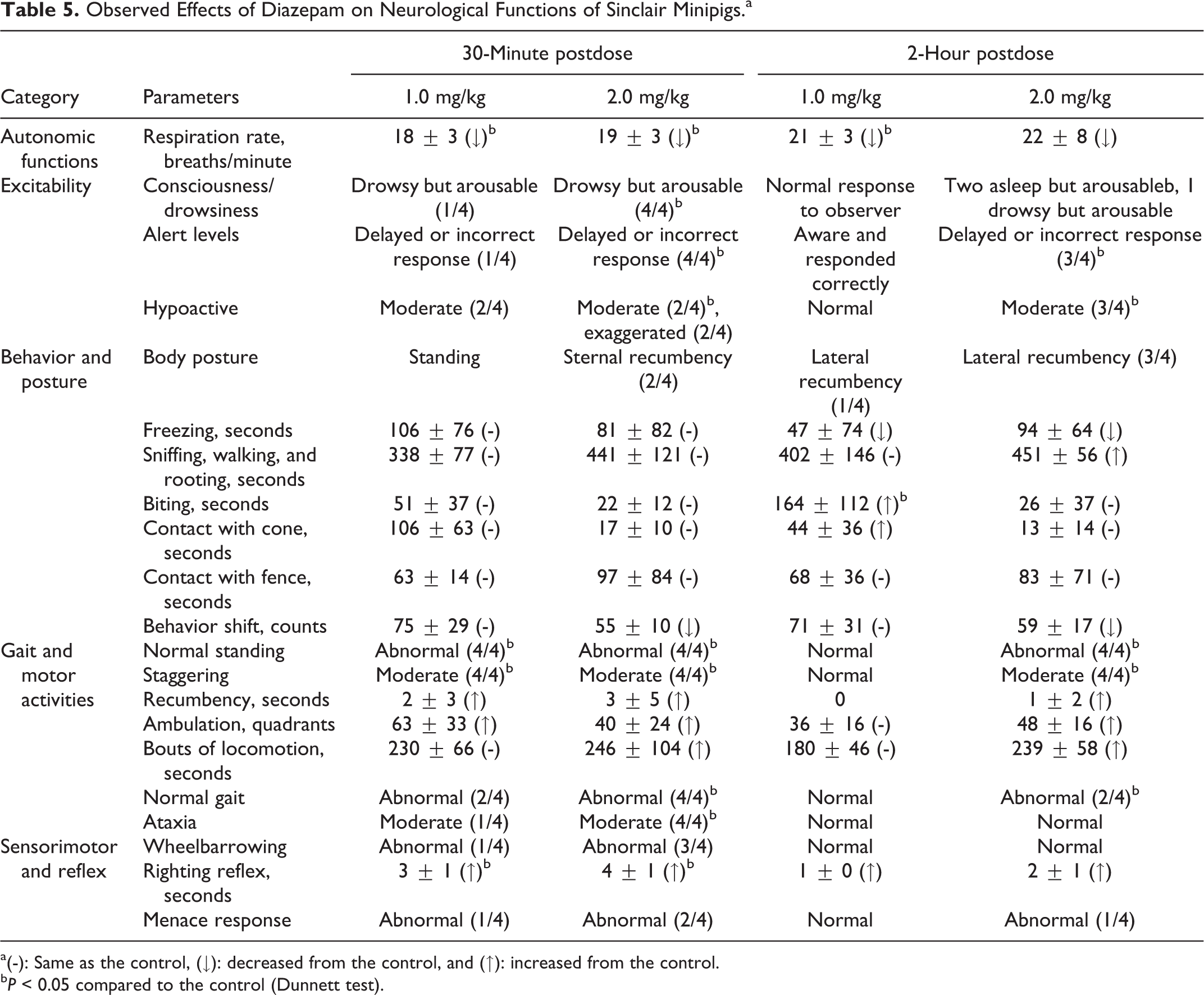
Diazepam effects were evaluated at 1.0 mg/kg (low dose) and 2.0 mg/kg (high dose) (Table 5). Respiration rates were consistently decreased across both doses and both 30-minute and 2-hour postdose observations (mean 18-22 breaths per minute vs 35 for baseline). Animals dosed with high dose were either drowsy or asleep but arousable at both postdose observations; as expected, these animals were also found to be in sternal or lateral recumbency. Recumbent animals quickly stood up after stimulus by the observer. Additionally, animals in both dose groups exhibited staggering and abnormal standing during pen-side observations 30 minutes postdose; this was resolved by 2 hours in the low dose, but not with the high dose. In both pen-side observations and neurologic examinations at both observation periods, animals given a high dose either had a delayed or incorrect response to the observer (alert levels) compared to baseline. Additionally, these animals had moderate to exaggerated hypoactivity at both observation periods, whereas low-dose effects only produced moderate hypoactivity at the 30-minute postdose observation that resolved by the 2-hour postdose observation. Overall, during open-field observations, the number of behavior shifts was lower for the high-dose observations (mean 55-59 vs 73 for baseline), but any other variability in behaviors that occurred relative to the baseline was minimal. Animals of both doses had abnormal gait during the 30-minute postdose observation, but only the high-dose animals additionally exhibited ataxia; ataxia was resolved by the 2-hour postdose observation, but abnormal gait did not. The high-dose group also had abnormal wheelbarrowing responses and menace responses at the 30-minute postdose neurologic examination; these were both resolved by the 2-hour postdose examination.
Observed Effects of Diazepam on Neurological Functions of Sinclair Minipigs.a
a(-): Same as the control, (↓): decreased from the control, and (↑): increased from the control.
b P < 0.05 compared to the control (Dunnett test).
Effects of amphetamine on minipig neurological functions
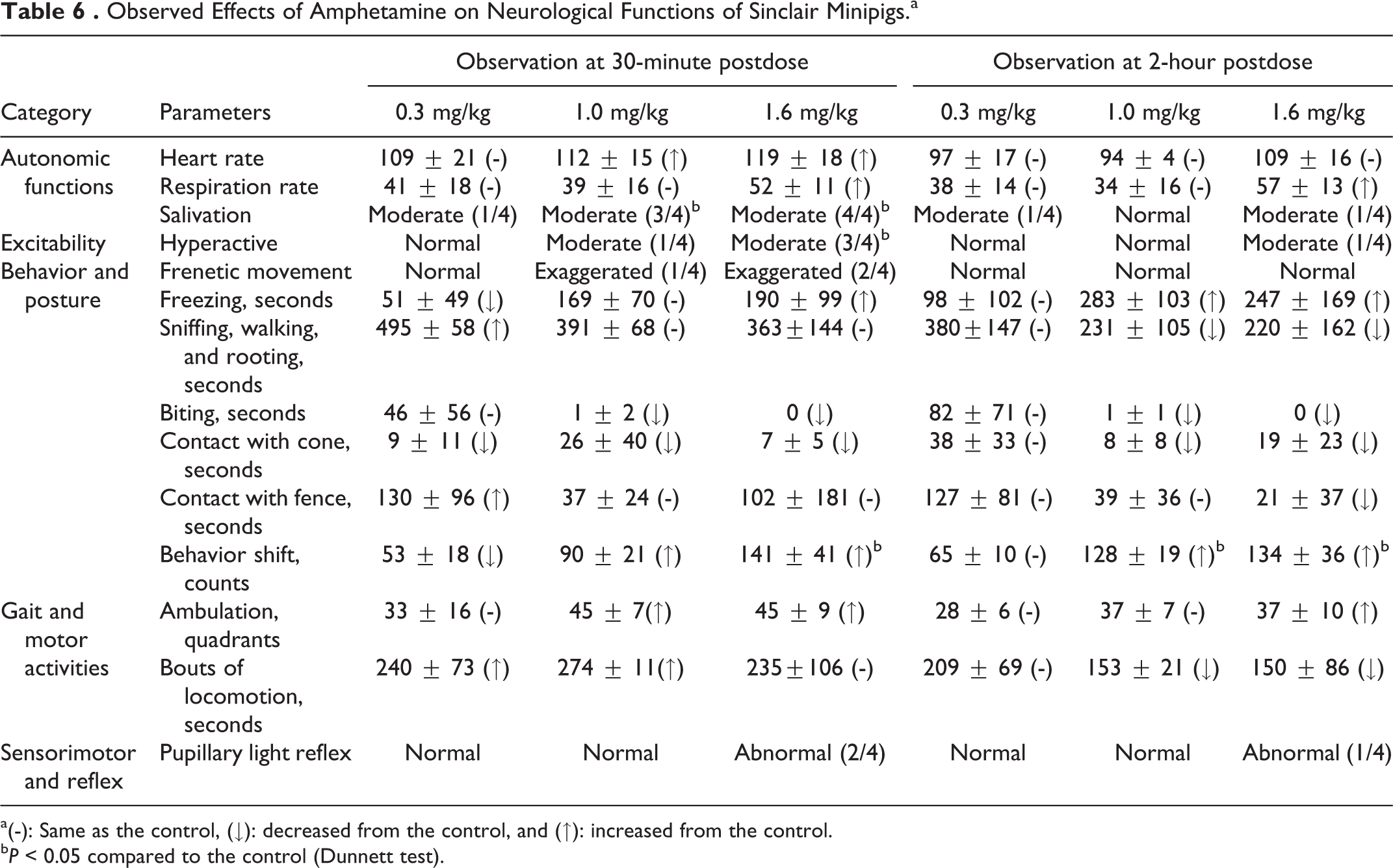
All observed amphetamine effects are shown in Table 6. Upon physical examination, after dosing with amphetamine, heart rate was observed to have increased relative to baseline in the 1.0 mg/kg (mid-dose) and 1.6 mg/kg (high dose) treatment periods (mean 112 beats per minute and 119 beats per minute, respectively, vs 98 for baseline) but not in the 0.3 mg/kg (low dose) treatment group at the 30-minute postdose observation period. Respiration rates increased only for the high-dose group at the 30-minute postdose observation (mean 52 breaths per minute vs 35 for baseline) and remained elevated at the 2-hour postdose observation (mean 57 breaths per minute). Mid- and high-dose animals had moderately increased salivation 30 minutes postdose; this was resolved by the 2-hour postdose observation. Hyperactivity and frenetic motion were observed with high-dose amphetamine 30 minutes postdose, but resolved by 2 hours. The high-dose group also had abnormal pupillary light reflexes during the 30-minute postdose neurologic examination that returned to normal by 2 hours postdose.
Observed Effects of Amphetamine on Neurological Functions of Sinclair Minipigs.a
a(-): Same as the control, (↓): decreased from the control, and (↑): increased from the control.
b P < 0.05 compared to the control (Dunnett test).
The majority of observed amphetamine effects were noted in the open field. The medium- and high-dose groups followed trends and patterns similar to each other; the predominant observations for these doses were that exploratory behavior decreased and perception of the surroundings increased. Time spent freezing increased relative to baseline at 30 minutes (mean 169 seconds for mid dose and 190 seconds for high dose vs 129 seconds for baseline) and increased further still at 2-hour postdose observation (mean 283 seconds for mid dose and 247 seconds for high dose). The number of behavior shifts was increased for both mid dose (mean 90) and high dose (mean 141) at 30 minutes; this increased further for the mid dose by 2 hours (mean 128). Ambulation (quadrants) increased for both mid and high dose (mean of 45 at 30 minutes and 37 at 2 hours vs 30 for baseline). Time spent sniffing, walking, and rooting did not change from baseline at the 30-minute postdose observation but had decreased by 2 hours (mean 231 seconds for mid dose, 220 seconds for high dose vs 380 seconds for baseline). Time spent biting significantly decreased from baseline for both mid and high dose at 30 minutes (mean 0-1 seconds vs 29 for baseline) and remained decreased at 2 hours (mean 0-1 seconds). Time spent contacting the cone did not follow a trend, as the mean time was decreased for both doses at 30 minutes (mean 26 seconds for mid dose and 7 seconds for high dose vs 29 for baseline) but increased to 19 seconds with high dose and decreased further to 8 seconds with mid dose at 2 hours. Conversely, the high dose spent more time contacting the fence at 30 minutes than the mid dose (mean of 102 seconds and 37 seconds, respectively, vs 59 for baseline). The low-dose group of 30-minute postobservation had decreased time spent freezing (mean 51 seconds) and increased time in sniffing, walking, and rooting (mean 495 seconds) and bouts of locomotion (mean 240 seconds vs 191 for baseline). They had decreased frequency of behavior shifts (mean 53 vs 75 for baseline), decreased interaction with the cones (mean 9 seconds vs 29 for baseline), and yet had increased interaction with the enclosure boundaries (mean 130 seconds vs 59 for baseline). All these changes in behavior returned to baseline ranges by the 2-hour postdose observation.
Discussion
The regulatory FOB guidelines (both EPA (Environment Protection Agency) and OECD (Organisation for Economic Co-operation and Development) have provided a spectrum of observation parameters to be utilized for rodent studies; these guidelines were adapted to minipig observations in the current study. Additionally, in order to assure thorough compliance with the guidelines of ICH S7A, parameters of the minipig FOB were grouped into 5 categories of autonomic functions, excitability, behavior and posture, gait and motor activities (including coordination), and sensorimotor reflexes. A similar spectrum of neurological functions has also been examined in FOBs for other species. 1,3,17
Several adaptations were made in the FOB design to accommodate the unique behavior of minipigs. Though vocalization is part of the rodent regulatory FOB guidelines, it was deemed unnecessary for indicating discomfort of the naturally vocal minipig and was excluded from the present FOB. Due to the nature of minipig anatomy and the inability to evaluate “grip strength” as can be done in rodents or NHPs, wheelbarrowing was performed not just as a measure of proprioception but also as an indicator of forelimb and hind limb muscle strength. The term “wheelbarrowing,” as used in a neurologic examination, is supporting an animal so that it is bearing weight on its forelimbs, then guiding the animal to walk forward on the forelimbs. This process was also repeated for the hind limbs for the purpose of this evaluation. Defecation was used to monitor abnormal excretion; specifically, abnormal excretion was defined as the presence of diarrhea. Sniffing, walking, and rooting are dominant natural foraging behaviors of swine. 18 Subsequently, the enclosure was specifically designed to enhance evaluation of these and other natural behaviors. Minipigs are curious animals, and it has been shown that minipigs prefer the cone more than other environmental enrichment objects. 19 Four identical cones were therefore placed in each quadrant of the open-field enclosure to facilitate the exploratory behavior measurements. The minipig FOB was additionally implemented with neurological examinations developed based on the recommendations by Thomas, Dewey, and Dewey 20,21 to more thoroughly assess mental status, level of activities, behavior, posture, gait, neuromuscular functions, and sensory reflexes. As a unique feature, the minipig FOB was strengthened with quantitative parameters for assessing changes in behavior and motor activities.
Similar to the current FOBs for rodents, canines, and NHPs, FOB parameters of the present study were collected from minipigs in their home pen, in the open field, and through a complete neurologic examination by a clinical veterinarian. The open-field observation has been routinely employed in behavior studies to investigate changes in fear and anxiety in a number of animal species. 22 The home-pen observation was performed first, followed by the open field, and finished with a complete neurologic examination, evaluating sensory reflexes and autonomic functions in the present study. The order of this evaluation was designed to reduce the interferences of emotional changes in study animals.
Ketamine is a noncompetitive N-methyl-
Diazepam is another suppressor of nervous system functions. Effects of diazepam were exerted through a mechanism to enhance functions of the major inhibitory neurotransmitter γ-aminobutyric acid. 26 The effects of diazepam were evident in the present study at approximately 30 minutes postdose and endured for up to 2 hours. Among autonomic functions, diazepam was shown to reduce respiratory rate in the treated minipigs similarly to prior reports. 27 Consistent with its known hypnotic and sedative effects, 26 diazepam was shown to suppress excitability and to reduce the perception to environmental changes in the treated minipigs, as the diazepam-treated minipigs were hypoactive, displayed reduced consciousness and alertness levels, and also displayed reduced behavior shifts and decreased time of freezing. The desire of exploration was increased in the treated minipigs, as they spent more time sniffing, walking, and rooting, and the low dose had increased time spent biting and contacting the cone in the open field. Diazepam was shown to similarly increase exploratory behavior in mice, likewise associated with the anxiolytic effect of diazepam. 28 As expected based on the previous publications by Rudolph evaluating the effects of diazepam in humans, 26 diazepam-treated minipigs displayed abnormal standing, staggering, and lateral recumbency during pen-side observations as well as abnormal gait, ataxia, impaired wheelbarrowing in the pelvic limbs, and prolonged righting reflex during the open-field observation and neurologic examination. The menace response, which was delayed, was the only sensory and reflex parameter that was influenced by diazepam in multiple treated minipigs. Contrary to what has been previously observed in rodents, 29 ambulation and bouts of locomotion were increased in the treated minipig, unlike ketamine’s inhibitory effect on motility.
Unlike ketamine and diazepam, amphetamine is a CNS stimulant 30 that has been shown to increase behavior shifts and motor activities and to decrease exploratory behavior in treated pigs. 7,31 These behavior changes were likewise observed in the present study; the effects of amphetamine were evident at approximately 30 minutes postdose, with treatments predominantly affecting excitability, behavior, and motor activities in minipigs. Excitability was particularly enhanced with amphetamine treatments, especially with the high dose. Minipigs displayed increased motor activities after being treated with mid and high doses of amphetamine. The treated minipigs also displayed increased behavior shifts and decreased exploratory behavior that was manifested by spending more time freezing and less time exploring and interacting with their surroundings. Therefore, amphetamine at doses on and above 1.0 mg/kg (mid dose) increased the perception of the treated minipigs to their surroundings. Conversely, opposite effects of amphetamine were observed at the low dose in a number of behavior parameters, such as freezing, sniffing, walking, and rooting, and behavior shifts. Although the underlying mechanism is not known, there is evidence suggesting that low doses of amphetamine facilitate performance on attention and learning tasks and high doses disrupt performance 32,33 ; this coincides with the present findings. None of the gait functions were influenced by dosing with amphetamine, and autonomic functions and sensory and reflex were the parameters least affected in amphetamine-treated minipigs.
When the sensitivity of the variations during baseline development—variation between animals compared to total variation and variation between daily performances of the whole animal group compared to total variation (Table 6)—was evaluated, it was evident that interanimal variability (animal individuality) was more frequently the much greater source of variation, with the exception of time spent biting, which had variability between daily performances as the greater source of variation. To a lesser extent, heart rate, respiratory rate, and bouts of locomotion were more varied between animals, while times spent interacting with the enclosure boundaries were more varied from day to day. Since variations derived from individual animals were higher than those from the repeated daily observations for most of the 12 parameters evaluated for baseline, results of the present study suggest that an increase in the number of animals would be preferred over an increase in the repeat tests when looking for statistical power. Additionally, the incorporation of historical baseline data collected from subsequent studies will increase the sensitivity of the FOB testing.
In summary, the minipig has been shown to be an acceptable species for the FOB evaluation in the present study, because the common major effects of the test articles in question have been captured in the minipigs as they are captured in other species. The unique effect of diazepam to increase ambulation and bouts of locomotion in the treated minipigs additionally demonstrate the benefit of employing the minipig as an alternative species in the neurotoxicity FOB testing. The study data have pointed out that variations derived from individual animals are higher than those from the repeated daily observations for most of the parameters evaluated for baseline. Hence, a stand-alone crossover study involving more minipigs would be appropriate for the safety pharmacology neurotoxicity investigations. Limitations of this FOB instrument should be taken into account when being applied for the neurotoxicity testing. The procedure to ensure production of comparable results by individual observers has not been developed in the current FOB instrument. Proper training of individual observers to use this FOB instrument and a follow-up validation procedure should be implemented before beginning the FOB testing in minipigs. Although the individual performing the observations in the present study was not blinded, this should be considered for application of the FOB in toxicological studies. The study animals should be observed at multiple time points to capture the delayed onset of signs. Optimization of this FOB instrument is also envisioned after being applied in different laboratories.
Footnotes
Acknowledgments
The authors gratefully appreciate the assistance from the Animal Care Team of Sinclair BioResources, LLC.
Author Contributions
Miao Zhong contributed to conception and design, acquisition, analysis, and interpretation, drafted the manuscript, and critically revised the manuscript. Catherine Shoemake contributed to analysis and interpretation, drafted the manuscript, and critically revised the manuscript. Amber Fuller contributed to acquisition and critically revised the manuscript. David White contributed to analysis and interpretation and critically revised the manuscript. Derek Brocksmith contributed to acquisition and critically revised the manuscript. Jason Liu contributed to conception and critically revised the manuscript. Shayne Gad contributed to conception and design and critically revised the manuscript. Guy Bouchard contributed to conception and critically revised the manuscript. Alain Stricker-Krongrad contributed to conception and design, contributed to interpretation, drafted the manuscript, and critically revised the manuscript. All authors gave final approval and agree to be accountable for all aspects of work ensuring integrity and accuracy.
Declaration of Conflicting Interests
The author(s) declared no potential conflicts of interest with respect to the research, authorship, and/or publication of this article.
Funding
The author(s) received no financial support for the research, authorship, and/or publication of this article.