




Abstract
In a subchronic toxicity study, administration of β-caryophyllene (BCP) oil by oral gavage to Wistar rats at dosages of 0, 150, 450, or 700 mg/kg/d for 90 days, including a 21-day recovery period, did not produce any significant toxicologic manifestations. The study design also included a 28-day interim sacrifice in the control and high-dose groups. The BCP oil test article was well tolerated as evidenced by the absence of major treatment-related changes in the general condition and appearance of the rats, neurobehavioral end points, growth, feed and water intake, ophthalmoscopic examinations, routine hematology and clinical chemistry parameters, urinalysis, and necropsy findings. The no observed adverse effect level was the highest dosage level administered of 700 mg/kg body weight/d for both male and female rats. The study was conducted as part of an investigation to examine the safety of BCP oil for its proposed use in medical food products.
Introduction
β-Caryophyllene (BCP; CAS No. 87-44-5) is a bicyclic sesquiterpene that occurs widely throughout the plant kingdom as a component of essential oils at concentrations varying from <1% to >50% depending on the species, growing conditions, and analytical methods used. 1 –8 Numerous studies have reported the presence of BCP at notable concentrations in common dietary ingredients such as basil (Ocimum spp.), cinnamon (Cinnamomum zeylanicum), clove (Syzygium aromaticum), hops (Humulus lupulus), lavender (Lavandula angustifolia), oregano (Origanum vulgare), black pepper (Piper nigrum), black and white West African pepper (Piper guineense), and rosemary (Rosmarinus officinalis). 1 –8 β-Caryophyllene is also approved as a flavoring/adjuvant under the US Code of Federal Regulations 21 CFR § 172.515. 9
β-Caryophyllene has been used in a wide variety of prepared foods including baked goods, frozen dairy, meat products, condiments, candies, chewing gum, alcoholic and nonalcoholic beverages, and puddings in concentrations between 25 and 720 ppm. 10 Potential human daily intake has been estimated to be 10.24 mg. 10 Clove cigarette smoke can deliver up to 2 mg of BCP per cigarette. 11
β-Caryophyllene is considered generally recognized as safe (GRAS) by the Flavor and Extract Manufacturers Association 10 and is approved for use as a flavoring substance in food by the US Food and Drug Administration (21 CFR § 172.515). A BCP monograph can be found in the US Pharmacopeia Food Chemicals Codex 12 (FCC IX, 2014). β-Caryophyllene is also used in some cosmetic products. 10,13
The BCP oil used in this study was extracted from the leaves of Cinnamomum. It was manufactured and purified through a solvent-free extraction and multistep steam distillation process. The genus Cinnamomum includes a large number of species, all of which can produce a volatile oil when subjected to steam distillation. The composition of the oil from steam distillation depends largely on the plant species, the part of the plant being distilled, and the inherent variations in seasonal growth and habitat factors that may impact plant metabolism. 14 The most common Cinnamomum oils in commerce are those from Cinnamomum verum (cinnamon bark and leaf oils), Cinnamomum cassia (cassia oil), and Cinnamomum camphora (sassafras and Ho leaf oils). 13
β-Caryophyllene and other sesquiterpenes are components of many botanical essential oils. They have been shown to mediate analgesia in experimental pain models, including those associated with inflammatory and neuropathic conditions.
15
–21
In addition to its effects on peripheral inflammatory processes and inflammatory pain signals, BCP has been studied in a variety of organ-specific models in which inflammatory responses are a major cause of tissue damage. For example, in a classic model of experimental liver disease, rats treated with CCl4 developed liver fibrosis associated with a high level of hepatic stellate cell (HSC) activation and abundant evidence of oxidative damage including elevated reactive oxygen species and lipid peroxidation products. β-Caryophyllene significantly reduced measures of oxidative stress, HSC activation, and fibrosis and improved histologic liver architecture.
15
β-Caryophyllene also inhibited the activity of 5-lipoxygenase, an inflammatory enzyme that is upregulated in the process of liver fibrinogenesis, and reduced the overexpression of the Timp1, Tgfb1, and Col1a1 genes (i.e., metallopeptidase inhibitor 1, transforming growth factor beta 1, collagen type 1 alpha 1) that are upregulated in fibrosing conditions. Similarly, BCP was found to protect the rat brain against secondary inflammation-induced damage after experimental middle cerebral artery occlusion. A single intraperitoneal dose of BCP inhibited RNA expression of inducible nitric oxide synthase, interleukin 1β, interleukin 6, cyclooxygenase 2, and prostaglandin E2 without altering N-methyl-
The acute oral lethal dose (LD50) value for BCP in rats is reported as >5,000 mg/kg body weight (bw). 22 β-Caryophyllene has been found to be nonmutagenic in multiple Salmonella strains at concentrations up to 150 mg/plate and did not affect DNA synthesis in rat hepatocytes in concentrations up to 10 mg/plate. 23 Since subchronic/chronic studies were lacking for BCP, the current oral subchronic toxicity study was conducted as part of an investigation to examine the safety of BCP oil and adds to the publicly available preclinical safety database on BCP.
Materials and Methods
Test Material and Animals
β-Caryophyllene, a yellow transparent liquid (lot no. C201403013; storage condition, cool and dry, 2°C-8°C), was produced and received from Primus Pharmaceuticals, Inc (Scottsdale, Arizona). The BCP test material as analyzed by Primus contained approximately 77% (wt/wt%) BCP, 1.28% (wt/wt%) eugenol and eugenol derivatives, and 21.72% (wt/wt%) of other essential oils. Analytical testing of the BCP oil confirmed the absence of heavy metals and microbiological contaminants. β-Caryophyllene oil was derived from Cinnamomum and manufactured by a solvent-free extraction and multistep steam distillation process. The 6-month stability of BCP oil has been confirmed at conditions of 40°C and 75% humidity. Therefore, the BCP test article was stored at a temperature of 2°C to 8°C and humidity of <75% in order to assure stability of the test article over the course of the study. The vehicle control article was corn oil (trade name Saffola, multiple lots) manufactured by Marico India. The corn oil vehicle, per label directions, was stored at ambient temperature and had an expiration date of 6 months from the date of packaging.
β-Caryophyllene was formulated in the corn oil vehicle daily; corn oil served as the vehicle control article. Test and control article formulations were prepared daily at concentrations of 0, 15, 45, and 70 mg/mL for administration of dosage levels of 0, 150, 450, or 700 mg/kg/d. The homogeneity, concentration, and stability of the test article formulations were not tested as part of the study. However, all test article formulations were used within 3 hours of the time of preparation. In-house bred male and female Wistar rats (7-8 weeks of age) were used in the study. The animals were housed in polypropylene cages in temperature-controlled and humidity-monitored quarters. Test and control animals received a rodent diet manufactured by Pranav Agro Industries Limited (Sangli, Maharashtra, India). Food and water were provided ad libitum.
Experimental Design
The study protocol was conducted under the guidelines of the Government of India’s Committee for the Purpose of Control and Supervision of Experiments on Animals and the Institutional Animal Ethics Committee of the laboratory animal facility. The study was conducted in accordance with the Organisation for Economic Co-operation and Development (OECD) guidelines for the Testing of Chemicals (Part 408): Repeated Dose 90-Day Oral Toxicity Study in Rodents and OECD Principles of Good Laboratory Practice C(97) 186/Final at the study laboratory, Liveon Biolabs Pvt Ltd, Karnataka, India.
The 90-day oral gavage study included 28-day interim sacrifice (IS) groups and 21-day recovery (REC) groups. Four toxicity (TOX) groups (3 dose levels + 1 control group), 2 IS groups (1 dose level [high dose] + 1 control group), and 2 REC groups (1 dose level [high dose] + 1 control group) in both males and females were selected for the test. After at least a 5-day acclimation period, groups of 10 rats of each sex (TOX groups) and groups of 5 rats of each sex (IS and REC groups) received the BCP test article by oral gavage at dosage levels of 0, 150, 450, or 700 mg/kg/d. The dose volume was maintained at 10 mL/kg for all test and control groups. The dose levels were selected to bracket an anticipated human dose of 200 mg BCP/d (approximately 3 mg/kg/d) and provide a margin of exposure of approximately 100×. Primus previously conducted a 4-week dose escalation study in human participants with doses ranging from 75 mg BCP/d to a maximum of 300 mg BCP/d without notable adverse effects.
The animals were observed for viability, signs of gross toxicity, and behavioral changes at least once daily during the study and weekly for a battery of clinical observations or until death occurred. A functional observational battery was performed on all animals except those in the 28-day IS groups. Each animal was evaluated during handling and while in an open field for excitability, autonomic function, gait and sensorimotor coordination (open field and manipulative evaluations), reactivity and sensitivity (elicited behavior), and other abnormal clinical signs. Body weights were recorded on day 1, weekly thereafter, and just prior to terminal sacrifice. Individual food consumption was also recorded to coincide with bw measurements. Ophthalmologic examinations were performed prior to treatment and at study termination for all animals except those in the IS and REC groups. Blood was sampled from all IS, 90-day TOX, and REC group animals on days 29, 91/92, and 112, respectively, for hematology and clinical chemistry analysis. The week before collection of samples for clinical pathology, rats (90-day TOX groups only) were placed in metabolism cages and urine collected for subsequent analysis. At the termination of the IS, 90-day toxicity test, and REC group periods, the rats were anesthetized and blood samples were collected from the retro-orbital plexus. Selected hematology (using Sysmex, KX-21; Transasia Bio-Medicals Ltd, India) and clinical chemistry analyses (serum analyses using Chem Touch Analyzer; Transasia Bio-Medicals Ltd; electrolytes using model Prolyte; Diamond Diagnostics, Holliston, MA) were performed and included hematology—total white blood cell count, erythrocyte count (red blood cell), hematocrit (Hct), hemoglobin (Hgb) concentration, mean corpuscular volume, mean corpuscular Hgb, mean corpuscular Hgb concentration, platelet count, differential leukocyte count, and clotting time; clinical chemistry—serum aspartate aminotransferase, serum alanine aminotransferase, alkaline phosphatase (ALP), creatinine phosphokinase (CPK), blood urea nitrogen, triglycerides, fasting glucose, total serum protein, albumin, creatinine, T4 thyroxine (G1 and G4 groups only), sodium (Na), potassium (K), and chloride (Cl). Urinalysis (model Uricha, using Robonik) included appearance, volume, pH, glucose, ketone bodies, specific gravity, protein, blood/blood cells, nitrate, and leukocytes. Gross necropsies were performed on all surviving animals. All animals were humanely sacrificed using carbon dioxide, necropsied, and gross observations recorded. Liver, kidneys (combined), adrenals (combined), brain, heart, uterus, thymus, spleen, ovaries or testes (combined), and epididymides weights were recorded for all animals. Collected tissues and organs included lungs, trachea, brain, spinal cord, salivary glands, thymus, heart, sternum, adrenals, liver, spleen, kidneys, thyroid, urinary bladder, ovaries, uterus, vagina, esophagus, ileum with payers patches, cecum, prostate and seminal vesicles, peripheral nerve (sciatic), stomach, duodenum, jejunum, colon, rectum, mesenteric and mandibular lymph nodes, pancreas, pituitary, aorta, bone (femoral–tibial joint), skin with mammary glands, skeletal muscle, epididymis, testes, tongue, adipose tissue, bone marrow smear, eyes, and all gross lesions. Tissues were fixed in 10% neutral-buffered formalin (except eyes and testes that were preserved in modified Davidson fluid), embedded in paraffin, sectioned, stained with hematoxylin and eosin, and examined microscopically. Tissues from the control and high-dose animals (TOX and IS groups) as well as those of potential toxicologic interest were evaluated histologically.
Statistical Analyses
The collected data were evaluated using Graphpad Prism software. Treated and control groups were compared using a 1-way analysis of variance, followed by Dunnett t test for multiple comparisons. 24,25 Levels of significance were set at P < 0.05.
Results
Survival and Clinical Signs
No treatment-related deaths were observed in any of the groups during the course of the study. However, 2 high-dose animals (1 male and 1 female; TOX groups) died on days 78 and 83, respectively, due to asphyxiation from aspiration of the test formulation administered via oral gavage. Gross pathology and histopathology of the lungs of both animals provided the basis for the conclusion. No overt signs of toxicity, abnormal behavior, or changes in functional/neurological parameters were noted in the test, IS, or REC group animals. However, isolated cases of nasal discharge were noticed with similar incidence/severity from week 6 of the experiment in low- and high-dose TOX group males, control and high-dose REC group males, and in all groups of females. Similar observations occurred across all groups and both sexes from weeks 7 to 13. However, the nasal discharge was not observed during the treatment-free/recovery period. No ophthalmological abnormalities were observed in any of the test or control animals over the course of the study.
Body Weight and Food Consumption
There were no statistically significant changes in bw or bw gain in any of the treatment or REC group animals attributable to the administration of BCP (data not shown). There were no statistically significant changes in food consumption attributable to administration of the BCP test article. A slight reduction in mean food consumption (grams/animal/d) compared to pretreatment levels was observed across all control and treatment groups over the 13-week study period but returned to week 1 levels during the 21-day REC period (data not shown).
Hematology, Clinical Chemistry, and Urinalysis
Under the experimental conditions of the study, all observed hematologic, clinical chemistry, and urinalysis differences (P < 0.05) were not considered adverse or specifically related to the administration of the BCP test article because the differences were not biologically or clinically significant, were of a small magnitude, and were within the normal range for the clinical pathology parameters. Sporadic differences were observed across test and control groups of both sexes and included decreased total platelet count (low-, mid-, and high-dose males only) and total red blood cell count, Hgb, and Hct (low-dose males only; Tables 1 and 2). Differences such as decreased glucose (P < 0.05; low-dose males), aspartate aminotransferase (P < 0.05; mid-dose males, high-dose females), alanine transferase (P < 0.05; low- and high-dose males), urea (P < 0.05; mid-dose females), K (P < 0.05; high-dose females), total protein (P < 0.05; mid- and high-dose males), CPK (P < 0.05; low-, mid-, and high-dose females), and urobilinogen and total protein (urinalysis; P < 0.05; low-, mid-, and high-dose males) when compared to the vehicle control groups were considered not to be adverse and within the normal reference range for the age/sex of the Wistar rat as well as the testing laboratory (Tables 3 and 4).
Hematology Data for Male Rats Administered β-Caryophyllene in the Diet for 90 Days.a
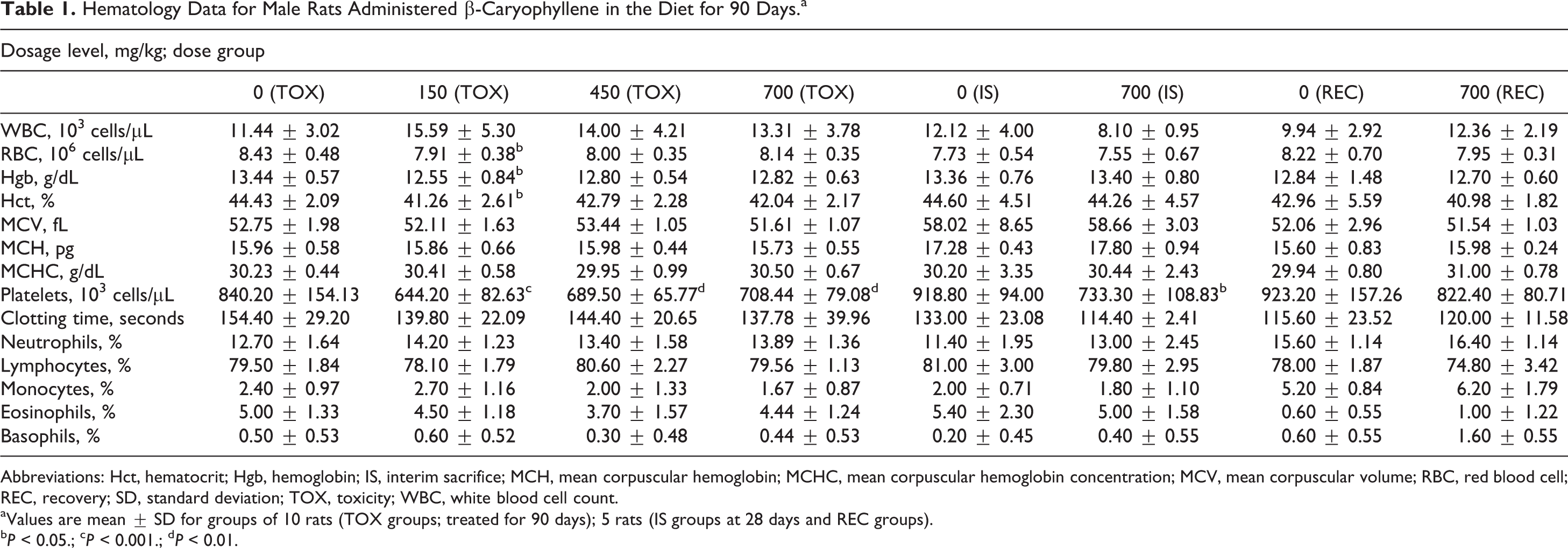
Abbreviations: Hct, hematocrit; Hgb, hemoglobin; IS, interim sacrifice; MCH, mean corpuscular hemoglobin; MCHC, mean corpuscular hemoglobin concentration; MCV, mean corpuscular volume; RBC, red blood cell; REC, recovery; SD, standard deviation; TOX, toxicity; WBC, white blood cell count.
aValues are mean ± SD for groups of 10 rats (TOX groups; treated for 90 days); 5 rats (IS groups at 28 days and REC groups).
b P < 0.05.; c P < 0.001.; d P < 0.01.
Hematology Data for Female Rats Administered β-Caryophyllene in the Diet for 90 Days.a
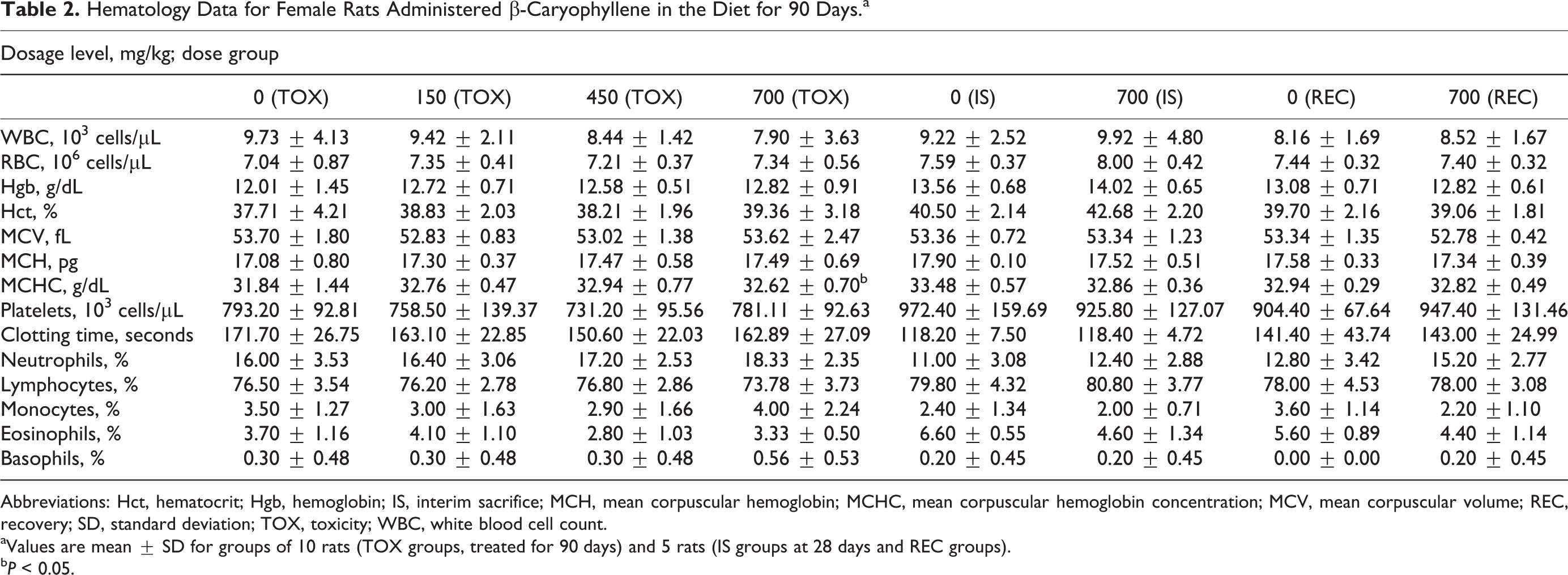
Abbreviations: Hct, hematocrit; Hgb, hemoglobin; IS, interim sacrifice; MCH, mean corpuscular hemoglobin; MCHC, mean corpuscular hemoglobin concentration; MCV, mean corpuscular volume; REC, recovery; SD, standard deviation; TOX, toxicity; WBC, white blood cell count.
aValues are mean ± SD for groups of 10 rats (TOX groups, treated for 90 days) and 5 rats (IS groups at 28 days and REC groups).
b P < 0.05.
Blood Chemistry Data for Male Rats Administered β-Caryophyllene in the Diet for 90 Days.a
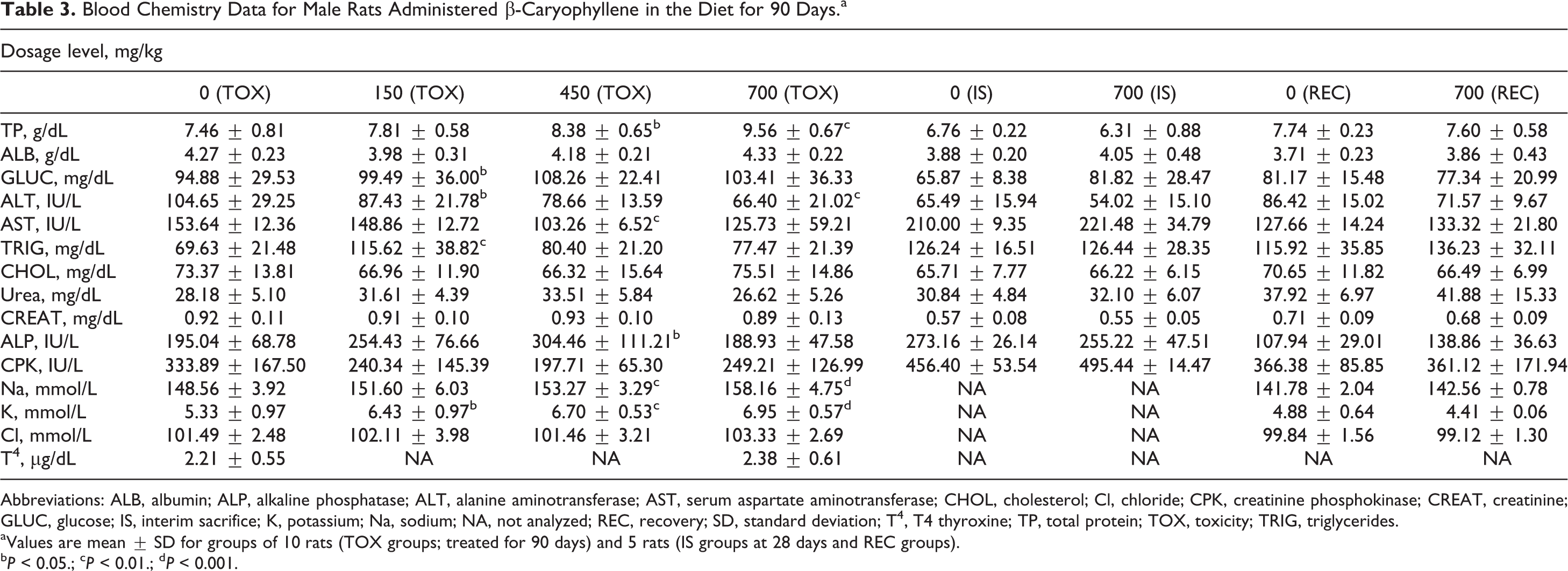
Abbreviations: ALB, albumin; ALP, alkaline phosphatase; ALT, alanine aminotransferase; AST, serum aspartate aminotransferase; CHOL, cholesterol; Cl, chloride; CPK, creatinine phosphokinase; CREAT, creatinine; GLUC, glucose; IS, interim sacrifice; K, potassium; Na, sodium; NA, not analyzed; REC, recovery; SD, standard deviation; T4, T4 thyroxine; TP, total protein; TOX, toxicity; TRIG, triglycerides.
aValues are mean ± SD for groups of 10 rats (TOX groups; treated for 90 days) and 5 rats (IS groups at 28 days and REC groups).
b P < 0.05.; c P < 0.01.; d P < 0.001.
Blood Chemistry Data for Female Rats Administered β-Caryophyllene in the Diet for 90 Days.a
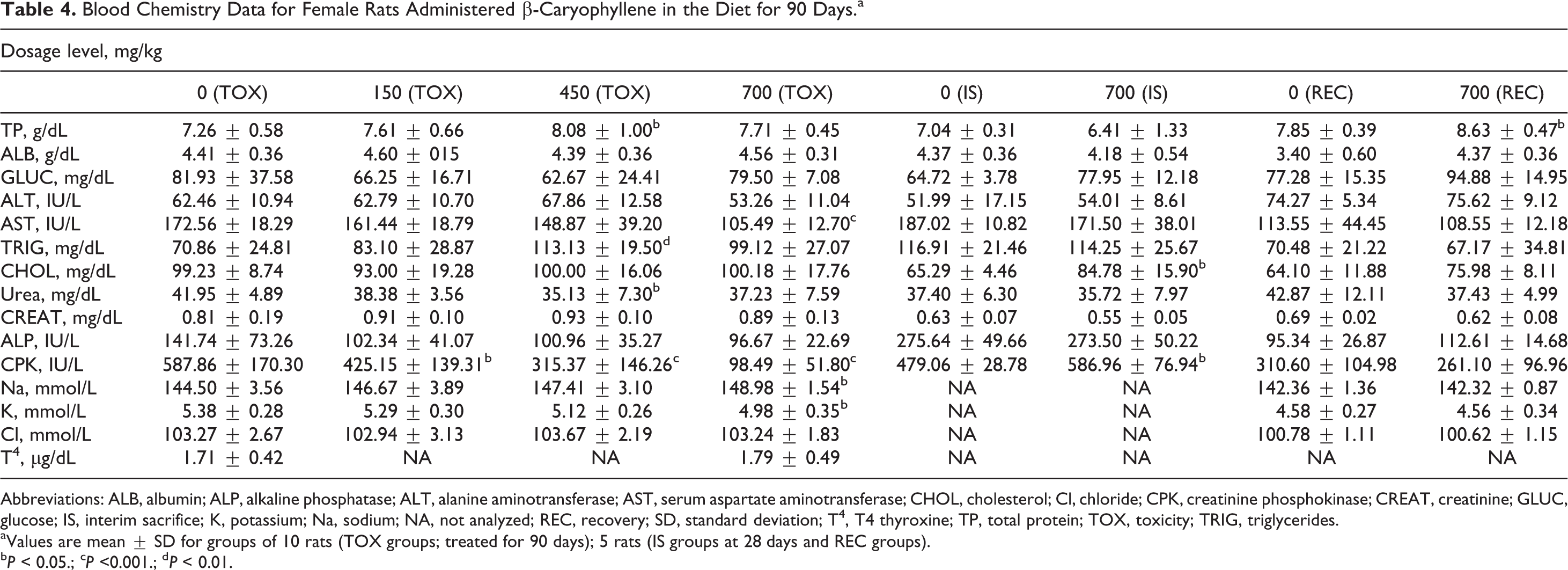
Abbreviations: ALB, albumin; ALP, alkaline phosphatase; ALT, alanine aminotransferase; AST, serum aspartate aminotransferase; CHOL, cholesterol; Cl, chloride; CPK, creatinine phosphokinase; CREAT, creatinine; GLUC, glucose; IS, interim sacrifice; K, potassium; Na, sodium; NA, not analyzed; REC, recovery; SD, standard deviation; T4, T4 thyroxine; TP, total protein; TOX, toxicity; TRIG, triglycerides.
aValues are mean ± SD for groups of 10 rats (TOX groups; treated for 90 days); 5 rats (IS groups at 28 days and REC groups).
b P < 0.05.; c P <0.001.; d P < 0.01.
Pathology
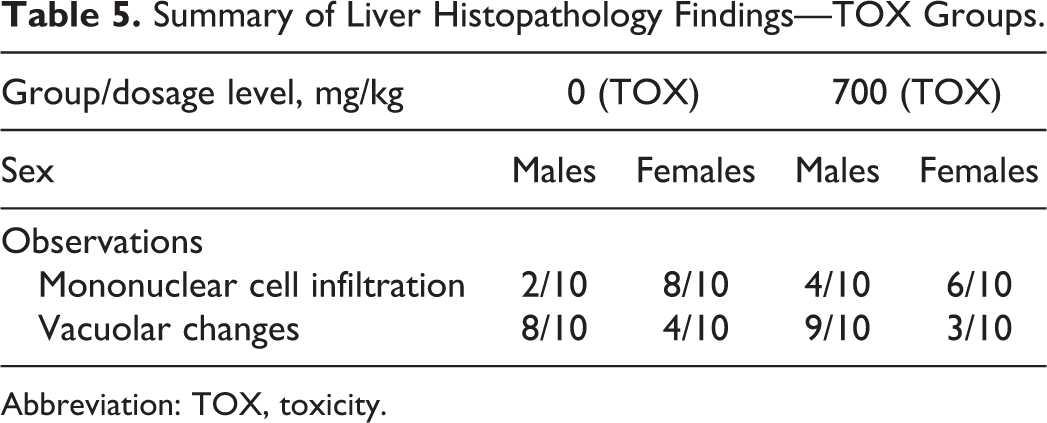
There were no macroscopic findings deemed related to administration of the BCP test article. Gross pathological observations were observed in the 2 animals that died due to gavage administration errors and included reddish discoloration of the lungs, pale liver and/or kidneys, and autolytic changes. Incidental microscopic findings were limited to the liver of both control and high-dose test article animals of both sexes. When compared to control group animals, the vacuolar changes (both macrovesicular and microvesicular) in the cytoplasm of hepatocytes were of similar incidence and severity and therefore not considered treatment related or adverse (Table 5).
Summary of Liver Histopathology Findings—TOX Groups.
Abbreviation: TOX, toxicity.
Organ Weights
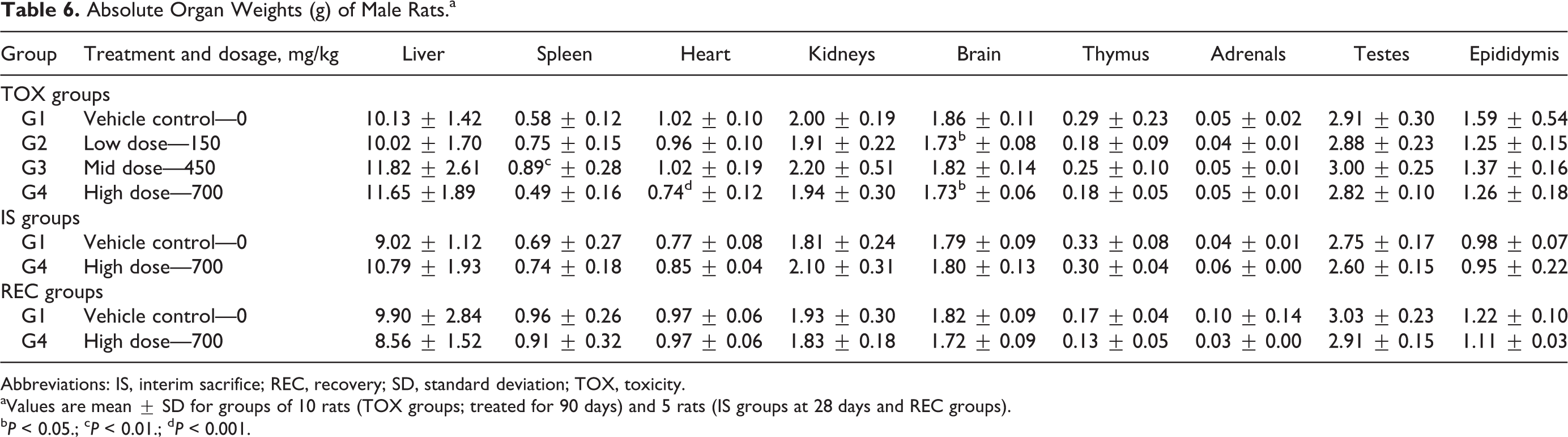
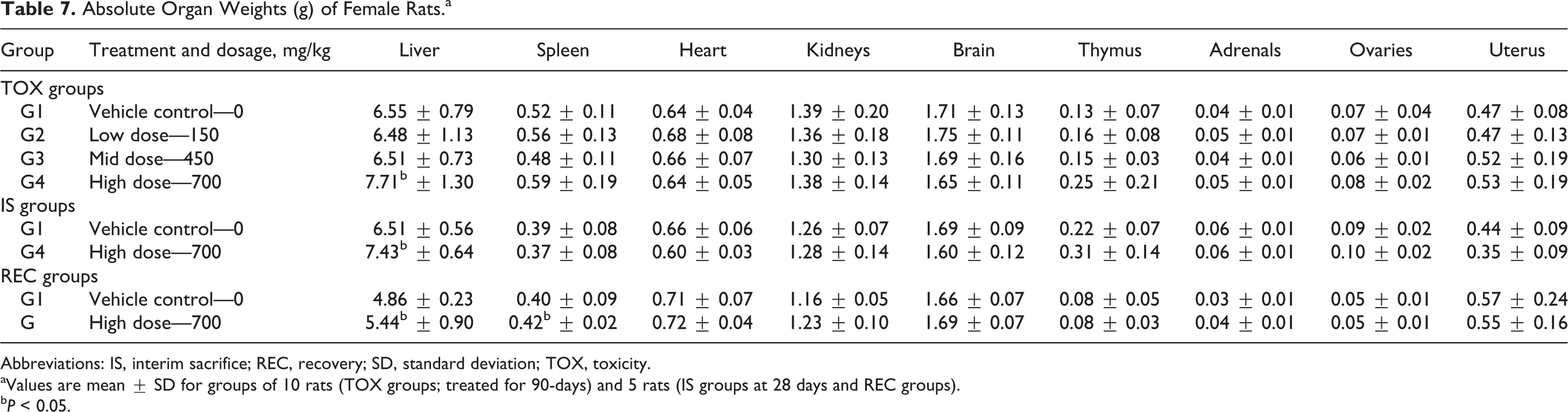
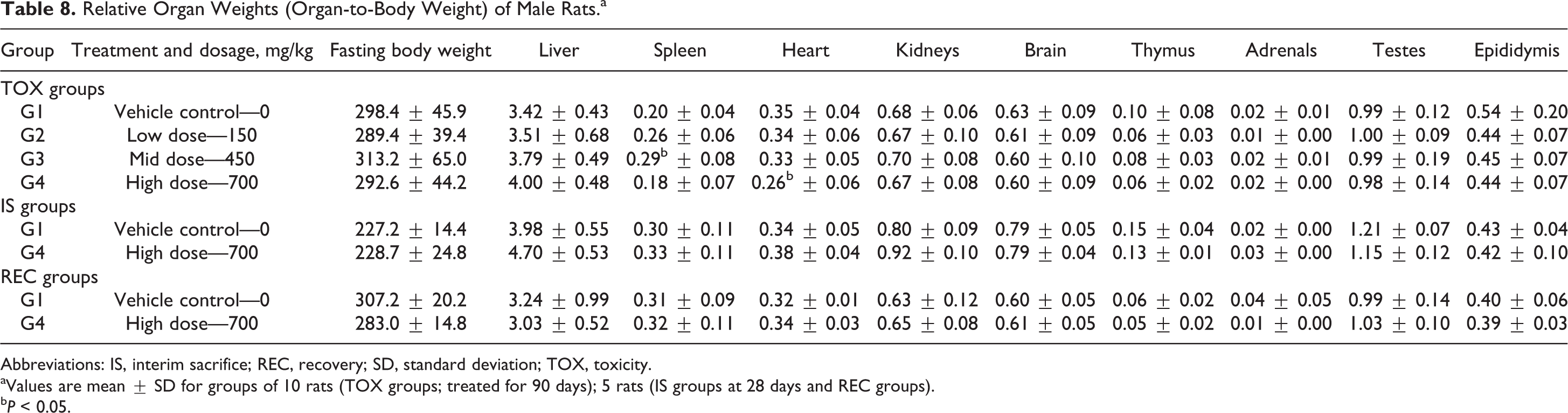
Both absolute and relative organ-to-bw ratios were analyzed. There were no statistically significant, dose-related responses observed in absolute or relative organ weights. However, statistically significant increased absolute and relative splenic (mid-dose males) weight changes, increased absolute and relative liver (high-dose females) weight changes (and a similar nonstatistically significant trend in high-dose males), increased absolute splenic (high-dose REC group females) weight changes, and increased absolute liver (high-dose REC group females) weight changes were observed (Tables 6 –9). Additional statistically significant findings included decreased absolute and relative heart (high-dose males) weight changes and decreased absolute brain (low- and high-dose males) weight changes. Relative organ weights of the test groups were otherwise not different from the control groups.
Absolute Organ Weights (g) of Male Rats.a
Abbreviations: IS, interim sacrifice; REC, recovery; SD, standard deviation; TOX, toxicity.
aValues are mean ± SD for groups of 10 rats (TOX groups; treated for 90 days) and 5 rats (IS groups at 28 days and REC groups).
b P < 0.05.; c P < 0.01.; d P < 0.001.
Absolute Organ Weights (g) of Female Rats.a
Abbreviations: IS, interim sacrifice; REC, recovery; SD, standard deviation; TOX, toxicity.
aValues are mean ± SD for groups of 10 rats (TOX groups; treated for 90-days) and 5 rats (IS groups at 28 days and REC groups).
b P < 0.05.
Relative Organ Weights (Organ-to-Body Weight) of Male Rats.a
Abbreviations: IS, interim sacrifice; REC, recovery; SD, standard deviation; TOX, toxicity.
aValues are mean ± SD for groups of 10 rats (TOX groups; treated for 90 days); 5 rats (IS groups at 28 days and REC groups).
b P < 0.05.
Relative Organ Weights (Organ-to-Body Weight) of Female Rats.a
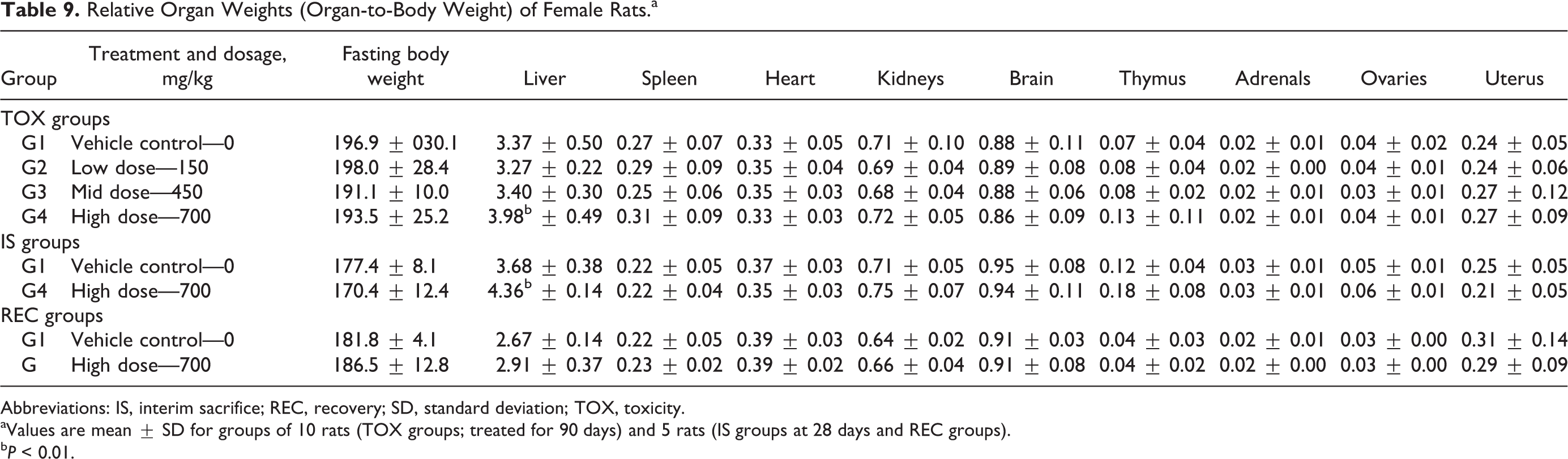
Abbreviations: IS, interim sacrifice; REC, recovery; SD, standard deviation; TOX, toxicity.
aValues are mean ± SD for groups of 10 rats (TOX groups; treated for 90 days) and 5 rats (IS groups at 28 days and REC groups).
b P < 0.01.
Discussion
In addition to the ability of BCP to mediate analgesia in experimental pain models, including those associated with inflammatory and neuropathic conditions, BCP has been shown to have hepatoprotective properties, the ability to inhibit solid tumor growth in high-fat diet-induced obese mice, and beneficial effects in glucose homeostasis in diabetic rats. 26 –28 β-Caryophyllene has previously been found to be nonmutagenic in multiple Salmonella strains and concentrations and did not affect DNA synthesis in rat hepatocytes. 23 The current oral subchronic toxicity study was conducted as part of an investigation to examine the safety of BCP oil and adds to the publicly available preclinical safety database on BCP.
No treatment-related deaths were observed in any of the groups during the course of the study. The minimal to mild degree of nasal discharge noticed was considered incidental and not due to treatment with BCP as it was observed in the vehicle control group animals as well, and REC group animals were free of nasal discharge following withdrawal of treatment of both the test and control article.
Several statistically significant differences were noted in clinical parameters and are discussed below. The slight reduction in food consumption (not statistically significant) during the treatment period was considered to be related to study conditions including daily physical handling, oral gavage administration, and the nature/physical state (ie, oil) of the vehicle and test article formulations. Several statistically significant differences were noted in clinical chemistry parameters and organ weights but were not considered adverse or specifically related to the administration of the BCP test article as the differences were not biologically and/or or clinically significant, were of a small magnitude, were generally within the normal range for the clinical pathology parameters, and were not accompanied by pathological findings. Although a statistically significant, dose-dependent decrease was noted in the CPK values of female rats, it has been reported that CPK activity can vary within animal species and gender, age, stress, site of bleeding, puncture technique, handling procedures, specimen storage, and analytical method. As a result, high variability has been noted in the CPK values of untreated Wistar rats ranging from 76 to 828 IU/L. 29,30 As a result, the decreases in CPK values were considered not to be adverse and not corroborated by other clinical or pathological findings. Similarly, the slight but statistically significant, dose-dependent increase in total protein, Na, and K levels was within or slightly above the reference range for the age/sex of the Wistar rat and the testing laboratory. 29,31 The observed increases were not accompanied by other clinical or pathological findings and as a result were not considered to be of toxicological significance. It should be noted that the Na and K levels of the REC group males (both control and high-dose groups) decreased below levels observed in the vehicle control group at sacrifice and may indicate an overcompensation/rebound effect upon cessation of treatment with the corn oil vehicle as well as the test article formulation in corn oil. The decrease in the urinalysis parameters urobilinogen and total protein was considered not biologically significant and ranged within the normal physiological limits for the parameters. Increases in triglycerides (P < 0.05; low-dose males and mid-dose females) and ALP (P < 0.05; mid-dose males) were considered sporadic, not adverse, and not corroborated by other clinical or pathological findings.
Differences noted in the relative liver weight of high-dose females appeared to be adaptive/reversible and were not reflected in the relative liver weight of the high-dose female REC group. Furthermore, corresponding dose-related histological changes in the liver were not observed, and the histological changes observed were considered unrelated to test substance administration. The other statistically significant findings of decreased absolute and relative heart (high-dose males) weight changes and decreased absolute brain (low- and high-dose males) weight changes also did not display corresponding dose-related histological changes in male heart and brain tissues, and the histological changes observed were considered incidental and unrelated to test substance administration.
The 90-day oral gavage study was conducted in order to examine the safety of BCP and help support a GRAS determination and its safe use in medical foods. Administration of BCP by oral gavage at dosages of 0, 150, 450, and 700 mg/kg/d for 90 days did not produce any significant toxicologic manifestations. The BCP test article was well tolerated at the administered doses as evidenced by the absence of toxicologically significant treatment-related changes in the condition and appearance of the rats, neurobehavioral parameters, growth, feed and water intake, ophthalmoscopic examinations, hematology and clinical chemistry parameters, urinalysis, and necropsy findings. The no observed adverse effect level, the highest dosage level administered, was determined to be 700 mg/kg bw/d for both male and female rats. Future preclinical and clinical research will continue to establish the toxicological profile of BCP oil in animals and man. The results of the current oral subchronic toxicity study support the safety of β-caryophyllene for its proposed use in medical food products.
Footnotes
Authors’ Note
The authors declare that the corresponding author Donald Schmitt was contracted to assist in the authorship of the publication.
Acknowledgments
The authors thank the study personnel at Vedic Lifesciences, including P. Sreedhar (study director), N. Somashekharayya, B. R. Soumya, Dr Kotrappa Y. Mathur, Nisha Gandhi, and Anil Yadav.
Author Contributions
D. Schmitt contributed to conception and design, contributed to analysis and interpretation, drafted the manuscript, and critically revised the manuscript. R. Levy and B. Carroll contributed to conception and design, contributed to acquisition, analysis, and interpretation, and critically revised the manuscript. All authors gave final approval and agree to be accountable for all aspects of work ensuring integrity and accuracy.
Declaration of Conflicting Interests
The author(s) declared the following potential conflicts of interest with respect to the research, authorship, and/or publication of this article: R. Levy and B. Carroll are current employees of Primus Pharmaceuticals, Inc, the sponsor of the toxicity study and manufacturer of β-caryophyllene.
Funding
The author(s) disclosed receipt of the following financial support for the research, authorship, and/or publication of this article: All aspects of the study described in this publication as well as its authorship were funded by Primus Pharmaceuticals, Inc.