




Abstract
The lack of a clear guidance on the adequate number of animals used for positive controls in the short-term (26-weeks) transgenic mouse carcinogenicity studies has resulted in the use of high number of animals. In our earlier Tg.rasH2 studies, 25 mice/sex were used in the urethane-positive control dose groups that were sacrificed by 18 weeks. Based on a robust response, several of our protocols for Tg.rasH2 studies with 15 mice/sex and terminal sacrifice at 17 ± 1 weeks were submitted and accepted by the Carcinogenicity Assessment Committee of the US Food and Drug Administration since we demonstrated close to 100% response for the development of lung and splenic tumors (target organs) in 500 mice/sex. These 500 mice/sex included 17 groups of 25 mice/sex and 5 groups of 15 mice/sex. The objective of this investigation was to determine whether the number of animals can be further reduced along with the shortened duration of exposure to urethane. Accordingly, 10 Tg.rasH2 mice/sex/group were administered a total of 3 intraperitoneal (IP) injections of urethane (1000 mg/kg per day) on study days 1, 3, and 5, and the presence of tumors in the lungs and spleen was evaluated after 8, 10, 12, 14, or 16 weeks. Our results demonstrate that 100% of the mice at 8 weeks had developed lung tumors, whereas close to 100% of the mice at 14 weeks had developed splenic tumors. Based on the development of lung tumors alone in 100% of the mice, we recommend that 10 mice/sex are sufficient and that these mice can also be sacrificed as early as 10 ± 1 weeks following the administration of urethane.
Introduction
Concurrent with late phase II-III clinical trials, carcinogenicity studies may be conducted to support the New Drug Application (NDA) for marketing. However, for pharmaceuticals developed to treat certain serious diseases for adults or pediatric patients, carcinogenicity testing, if recommended, can be conducted postapproval. 1 Short-term (26-weeks) transgenic mouse studies have been accepted by the regulatory agencies as an alternate model to the conventional 2-year mouse carcinogenicity model. 2 –7 The 26-week model is recommended for rapid, cost effective, and sensitive identification of carcinogens 8 –11 and may provide mechanistic information. From the 3 main transgenic mouse models recommended by the International Conference on Harmonization of Technical Requirements for Registration of Pharmaceuticals for Human Use (ICH) guideline (Tg.rasH2, p53, and Tg.AC) to be used in carcinogenicity testing of pharmaceuticals and biopharmaceuticals, 2,12 only 1 of the 3 models (Tg.rasH2) is currently in use at our facility.
The CByB6F1-Tg(HRAS)2Jic (± hemizygous c-Ha-ras), originally described by Saitoh et al, 13 is recommended for genotoxic and nongenotoxic carcinogen identification. 14 –16 The hemizygous Tg.rasH2 mouse carries multiple copies of the human c-HA-ras oncogene linked to its promoter/enhancer conferring an unusually high susceptibility to tumor formation. 17 More rapid onset and higher incidence of malignant tumors were observed after treatment with various genotoxic carcinogens in the Tg.rasH2 mice than in control nontransgenic mice. 18 Total ras encoded p21 proteins are expressed at 2 to 3 times of normal levels in all tissues in the Tg.rasH2 mouse, and this model therefore mimics the molecular changes observed in human cancers with tumors resulting from mutation in the Ras pathway. The spontaneous tumor frequencies in transgenic animals are low during the in life portion of the study, and studies are terminated well before the health complications of advanced aging are observed. Few tumors develop in untreated Tg.rasH2 mice by 33 weeks of age; 50% of mice have tumors by 18 month. 14 Spontaneous tumors include hemangiosarcomas, lung adenocarcinomas, Harderian gland adenocarcinomas, and lymphomas.
In each 26-week Tg.rasH2 study, a positive control group is used to demonstrate the validity of the test system’s susceptibility to carcinogen and to ensure the use of the proper transgenic mouse strain. Two main positive control agents used with this strain of animals are N-methyl-N-nitroso-urea (MNU) 18 or urethane. 19 In our laboratory, we administer 3 IP doses of urethane on days 1, 3, and 5 of the study at 1000 mg/kg to the mice. In the initial study designs 25 mice/sex were used in the positive control dose group and the duration of the in life period in our laboratory was 17 ± 1 weeks based on 100% occurrence of lung and splenic tumors in these mice. Reducing the number of animals used and shortening the evaluation period further without impacting the objectives of the positive control group in these studies is of considerable interest, especially from an animal welfare and cost perspectives. The purpose of this study was to evaluate the acceptability of reducing the number of animals and duration of the exposure for the positive control group using urethane in Tg.rasH2 carcinogenicity studies. 20
Materials and Methods
All procedures were performed in the spirit of the Good Laboratory Practice Standards of the US Food and Drug Administration (US FDA; 21 CFR Part 58).
Urethane (Ethyl Carbamate)
Urethane was purchased from Sigma-Aldrich (St. Louis, MO) and was stored at room temperature, protected from light and moisture. Stability data on urethane in 0.9% saline over a number of days was established for 100 mg/mL at 2°C to 8°C for 1, 4, 8, 16, and 21 days. Quadruplicate (duplicate for T = 1) samples of each formulation were analyzed. The analysis of the urethane was performed by gas chromatography utilizing flame ionization detection (Agilent 6890N Gas Chromatograph, Agilent Technologies, Inc., Wilmington, DE). To assess the accuracy of the preparation, the samples were diluted to bring the test article concentration to a suitable level within the calibration range of the analytical assay. The concentration of urethane was calculated by reference to the standard solutions prepared and analyzed concurrently with the urethane formulation.
Animals
CByB6F1-Tg(HRAS)2Jic (± hemizygous c-Ha-ras) Tg.rasH2 mice were purchased from Taconic Farms (Germantown, New York). The knock-in Tg element (human prototype c-Ha-ras gene with its own promoter/enhancer) is injected into C57BL/6 × BALB/c F2 zygotes, which are crossed back to C57BL/6J forming C57BL/6JJic-Tg(HRAS)2Jic. The CByB6F1-Tg(HRAS)2Jic (± hemizygous c-Ha-ras) is the offspring from a cross of the C57BL/6JJic-Tg(HRAS)2Jic hemizygous male mice with the BALB/cByJJic female mice. Each mouse was genotyped by Taconic to verify the presence of the transgene before placed on study.
Animals were housed in an Association for Assessment and Accreditation of Laboratory Animal Care International (AAALAC) accredited facility (controlled room temperature of 69°F to 75°F and a relative humidity of 30% to 70% with a 12-hour light/12-hour dark cycle). Animals were group housed in polycarbonate cages during acclimation and individually housed following test animal selection. Sani-Chip Hardwood bedding (PJ Murphy Forest Products, Montville, New Jersey) was used to absorb liquids. Bedding was analyzed by the manufacturer and there were no contaminants at levels that were expected to interfere with the study. All animals received Harlan TEKLAD Global Diet #2018CM (Certified 18% Protein Rodent Diet, Harlan TEKLAD, Madison, Wisconsin). Drinking tap water from Washington Suburban Sanitory Commission Potomac Plant was provided from an automatic watering system ad libitum from arrival until study termination.
The animals were acclimated for at least 13 days before placing them on the study. Animals were verified to be free of illness prior to placing them on the study. At the start of treatment, the animals were 12 to 13 weeks of age. On study day 1, the average male and female animals weighed approximately 24 and 20 g, respectively, and the weight variation of the animals did not exceed ±20% of the mean weight for each sex. Negative control (0.9% saline) animals were housed on a separate rack away from the urethane-treated animals to prevent any possible cross-contamination.
Assignment of animals to treatment groups/tumor induction and histopathological evaluations
The Tg.rasH2 mice of each sex were randomized by body weight into 6 groups of 10 mice per sex (Table 1) using a computer-generated randomization program for 0.9% saline control (group 1) and urethane-positive control (groups 2-6).
Experimental Design for Carcinogenicity Assessment (Time Course)
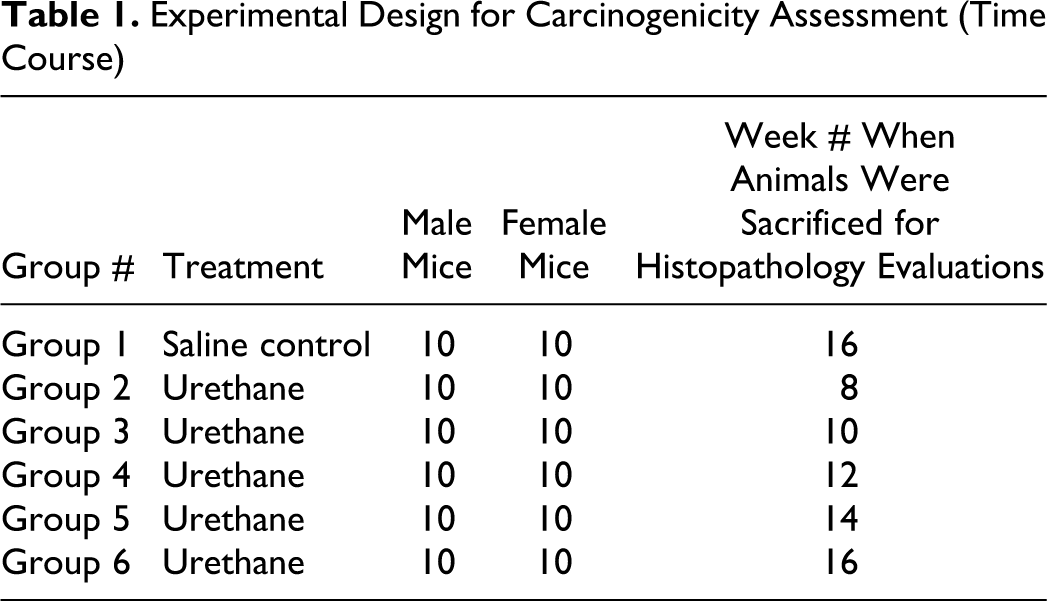
The saline control or positive control group received 3 ip injections of 0.9% saline or urethane (1000 mg/kg, 100 mg/mL) in saline, respectively, at a dosage volume of 10 mL/kg of 1 injection on each study day (SD) 1, 3, and 5 (SD 1 was the first day of dosing). Fresh dosing solutions were prepared once for the entire study, used within the available stability period of 21 days, and were stored at 2°C to 8°C when not in use. The formulations were stirred for 30 minutes prior to dosing and during dose administration.
Mice were evaluated for clinical observations, moribundity and mortality, body weight, food consumption, and histopathologically based on the schedule listed in Table 2.
Procedures Performed in Test Animals
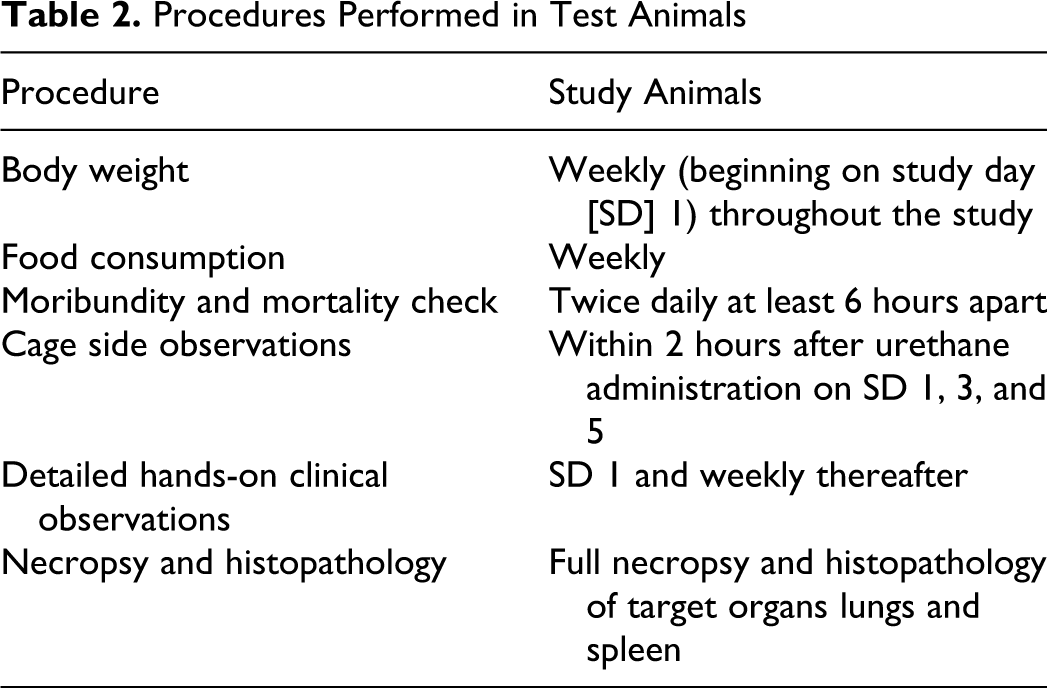
Lungs and spleen are the primary target tissues in urethane-treated Tg.rasH2 mice. Therefore, expected urethane-related clinical signs include but are not limited to rapid and shallow breathing, palpable internal masses, and edema. Lungs and spleen from all animals were embedded in paraffin, sectioned at 6 μm or less, stained with hematoxylin and eosin, and evaluated microscopically.
Calculations for body weights and food consumption were evaluated by comparing the mean and standard deviations, analysis of variance (ANOVA), and Dunnett T test. Due to the robust response observed in urethane-treated animals, statistical analysis was not performed for the tumor data.
Results
Stability of Urethane (Ethyl Carbamate) Formulation
The urethane formulation at T = 1, 4, 8, 16, and 21 days met the acceptance criteria of 90% to 110% of the concentration found at T = 0 and no degradation products were detected, and it was determined that urethane in 0.9% saline was stable for 21 days when stored at 2°C to 8°C.
Effects of urethane and saline
As expected, treatment with the positive control resulted in early death in 12 of 50 males and 5 of 60 females beginning on study day 13 and up to study day 93 in their respective groups. Remaining 83 urethane-treated mice reached their intended terminal sacrifice weeks as stated in Table 1. All 10 male and 10 female mice treated with saline survived the study duration of 16 weeks.
Clinical observations seen in the majority of the urethane-treated positive control animals during postdose cage side and hands-on observations included decreased motor activity, labored breathing, rapid and shallow breathing, ruffled fur, hunched, and palpable internal masses. These signs were expected based on the known toxicity and carcinogenicity of urethane.
The average body weights of Tg.rasH2 male or female mice were similar in the saline- and urethane-treated animal groups at the start of the study. Group body weights and body weight gain in the positive control male animals were statistically significantly decreased (P < .05) compared to the saline control mice for most weeks. Group body weight and body weight gains in urethane-treated females did not indicate any consistent significant decreasing trend (Figure 1).
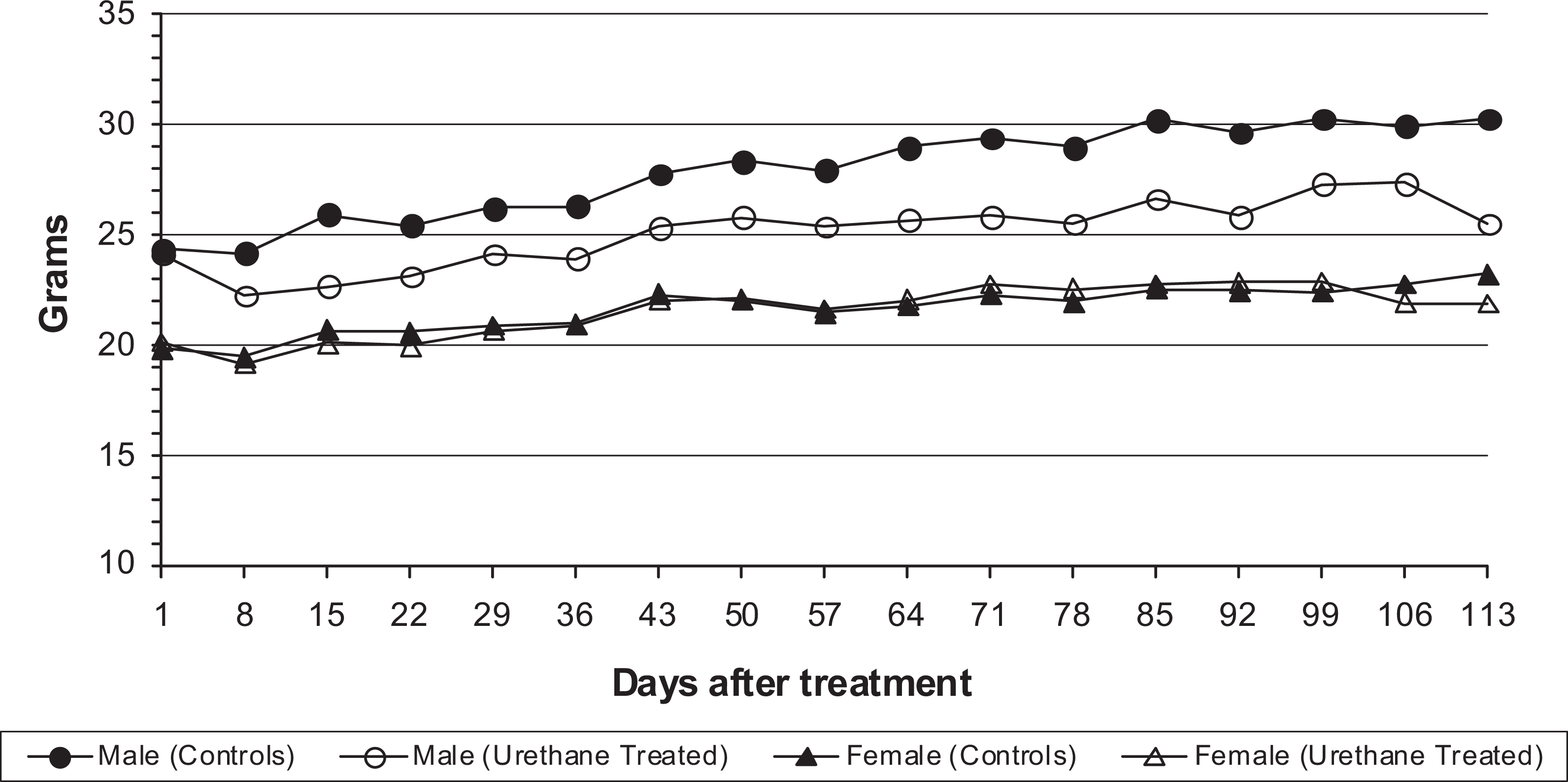
Average weekly body weights of Tg.rasH2 mice (10/sex/group) treated with saline negative control or urethane (3 intraperitoneal [IP] injections at 1000 mg/kg per injection) for up to 113 days. Due to high mortality, the final positive control group was terminated at approximately 17 weeks.
There were no statistically significant differences in the food consumption through week 16 for the positive control male and female mice as compared to the saline-treated control mice.
Incidence of tumors in positive control and saline-treated Tg.rasH2 mice
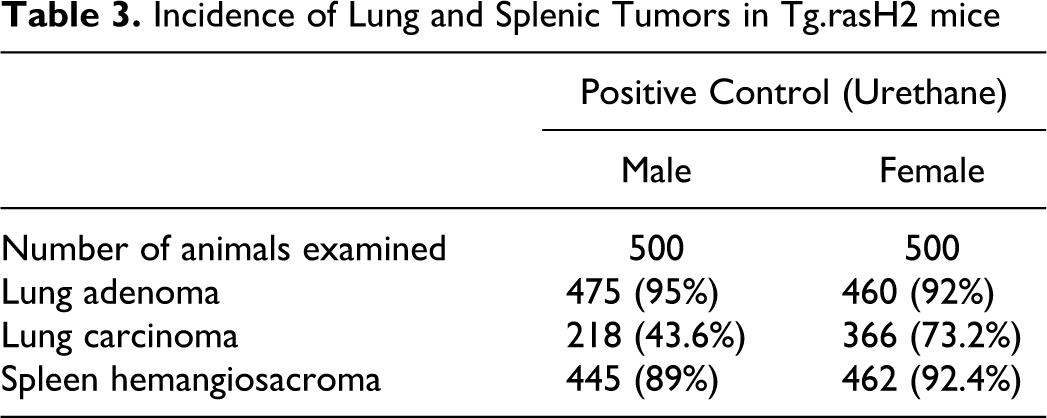
Our historical control database for urethane-treated positive controls comprising altogether 500 Tg.rasH2 mice/sex shows that almost 100% of the urethane-treated positive control Tg.rasH2 mice develop pulmonary tumors (adenomas) and splenic tumors (hemangiosarcomas). The average incidence of multiple adenomas was similar in males and females (95% and 92%, respectively). The incidence of lung carcinoma was higher in females (73.2%) than in males (43.6%). The incidence of spleen hemangiosarcomas was similar in males and females (89% and 92.4%, respectively). These pulmonary and splenic tumors are also common spontaneous tumors of Tg.rasH2 mice. The incidence of these tumors following urethane treatment from our historical control database is shown in Table 3.
Incidence of Lung and Splenic Tumors in Tg.rasH2 mice
Representative gross and microscopic tumors in lung and spleen following urethane treatment in Tg.rasH2 mice as compared to vehicle-treated control animals are shown in Figures 2 to 6. The alveolar bronchiolar adenomas are discrete lesions that compress the surrounding parenchyma (Figures 2 and 4). Alveolar bronchiolar carcinomas are usually large masses that occupy the entire lung lobe or even multiple lobes and obliterate the underlying alveolar architecture (Figure 3). Malignant cells in splenic hemangiosarcoma proliferate randomly, cellular outlines are distinct, and the tumors acquire solid pattern (Figure 6).
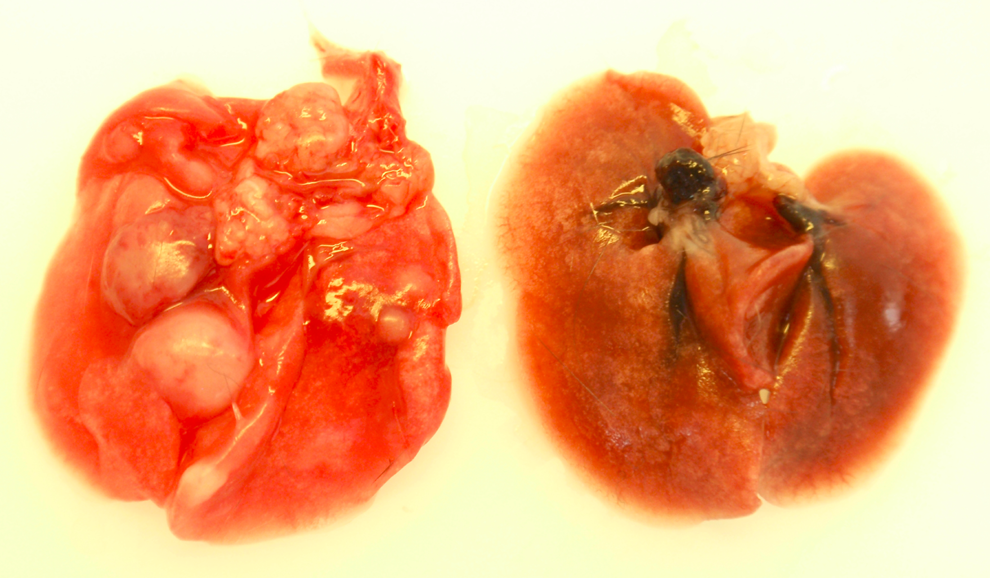
Representative urethane-induced lung nodules in Tg.rasH2 mice sacrificed on study day 56 after 3 intraperitoneal (IP) injections of urethane at 1000 mg/kg per injection (left) or saline (right).
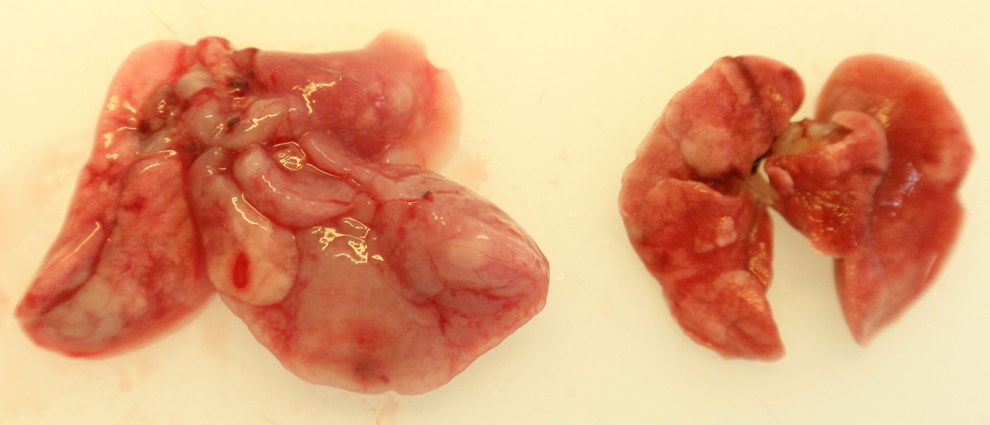
Representative urethane-induced lung masses in Tg.rasH2 mice sacrificed on study day 96 after 3 intraperitoneal (IP)injections of urethane at 1000 mg/kg per injection (left) or saline (right).
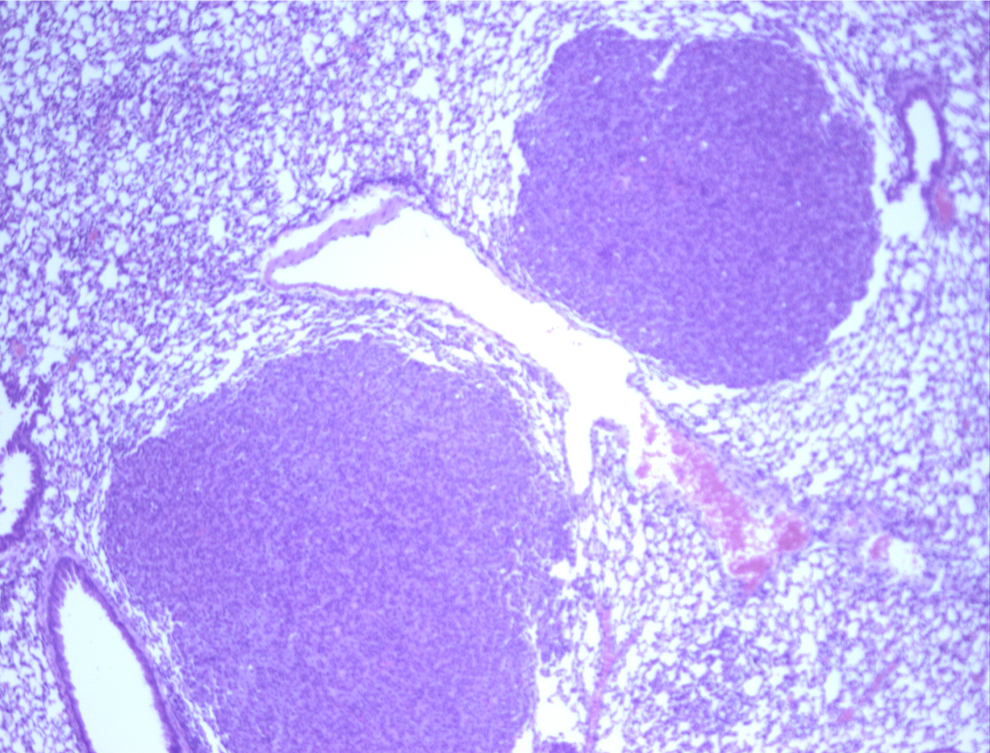
The histopathological appearance of alveolar/bronchiolar lung adenomas in a male Tg.rasH2 mouse sacrificed on study day 56 after 3 intraperitoneal (IP) injections of urethane at 1000 mg/kg per injection. Lungs were fixed in 10% Neutral Buffered Formalin (NBF), embedded in paraffin, sectioned, stained with hematoxylin and eosin, and evaluated microscopically, ×40.
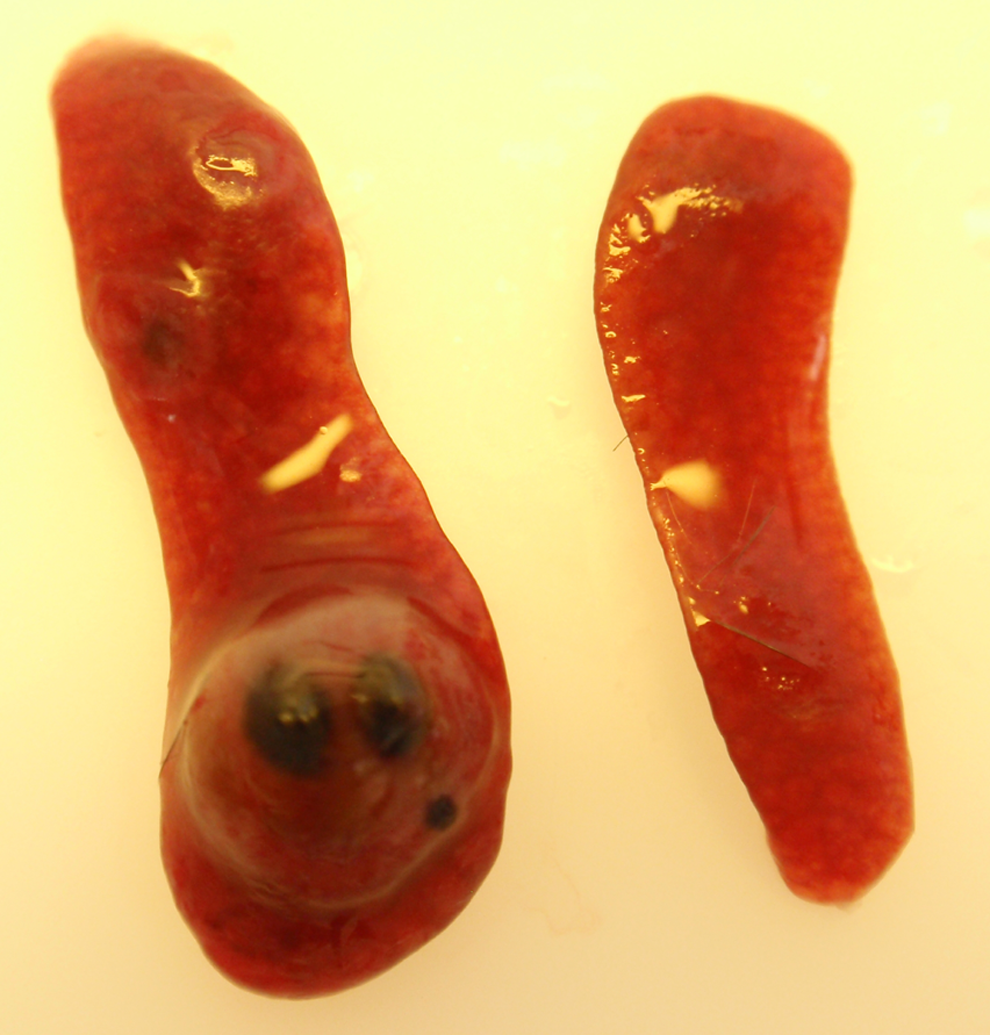
Representative urethane-induced spleen nodules in Tg.rasH2 mice sacrificed on study day 70 after 3 intraperitoneal (IP) injections of urethane at 1000 mg/kg per injection (left) or saline (right).
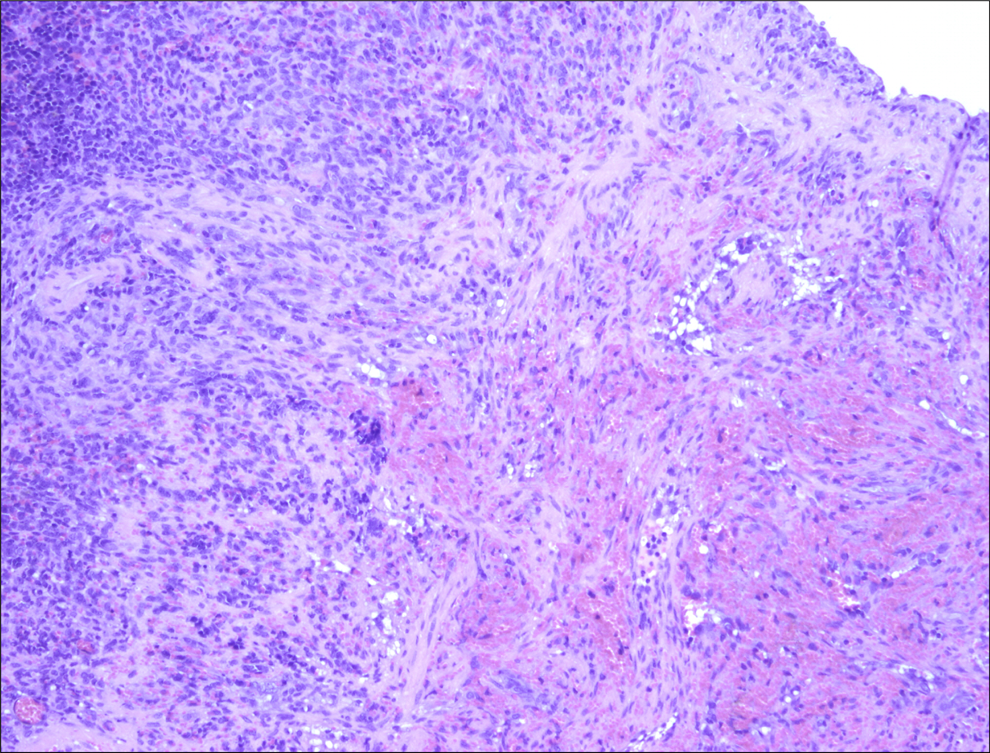
The histopathological appearance of spleen hemangiosarcoma in a male Tg.rasH2 mouse sacrificed on study day 70 after 3 intraperitoneal (IP) injections of urethane at 1000 mg/kg per injection. Spleen was fixed in 10% Neutral Buffered Formalin (NBF), embedded in paraffin, sectioned, stained with hematoxylin and eosin, and evaluated microscopically, ×40.
Effect of time course on urethane-induced tumors
Effect of time course on tumor induction following urethane treatment in Tg.rasH2 mice is shown in Table 4. As can be seen from this table, 100% of the male (except 90% for week 10) and the female mice at 8 weeks started developing adenomas in the lungs. Carcinomas started to develop in female mice at week 10 and in male mice at week 14. Hemangiosarcomas in spleen started to develop at week 8 in male and female mice and 90% to 100% of the mice developed hemagiosarcomas by week 14. In comparison, all except 1 of 10 males and all 10 females treated with saline remained tumor free at 16 weeks.
Microscopic Findings: Effect of Time Course on Lung and Spleen Tumors Induced by Urethane or Saline in Tg.rasH2 mice
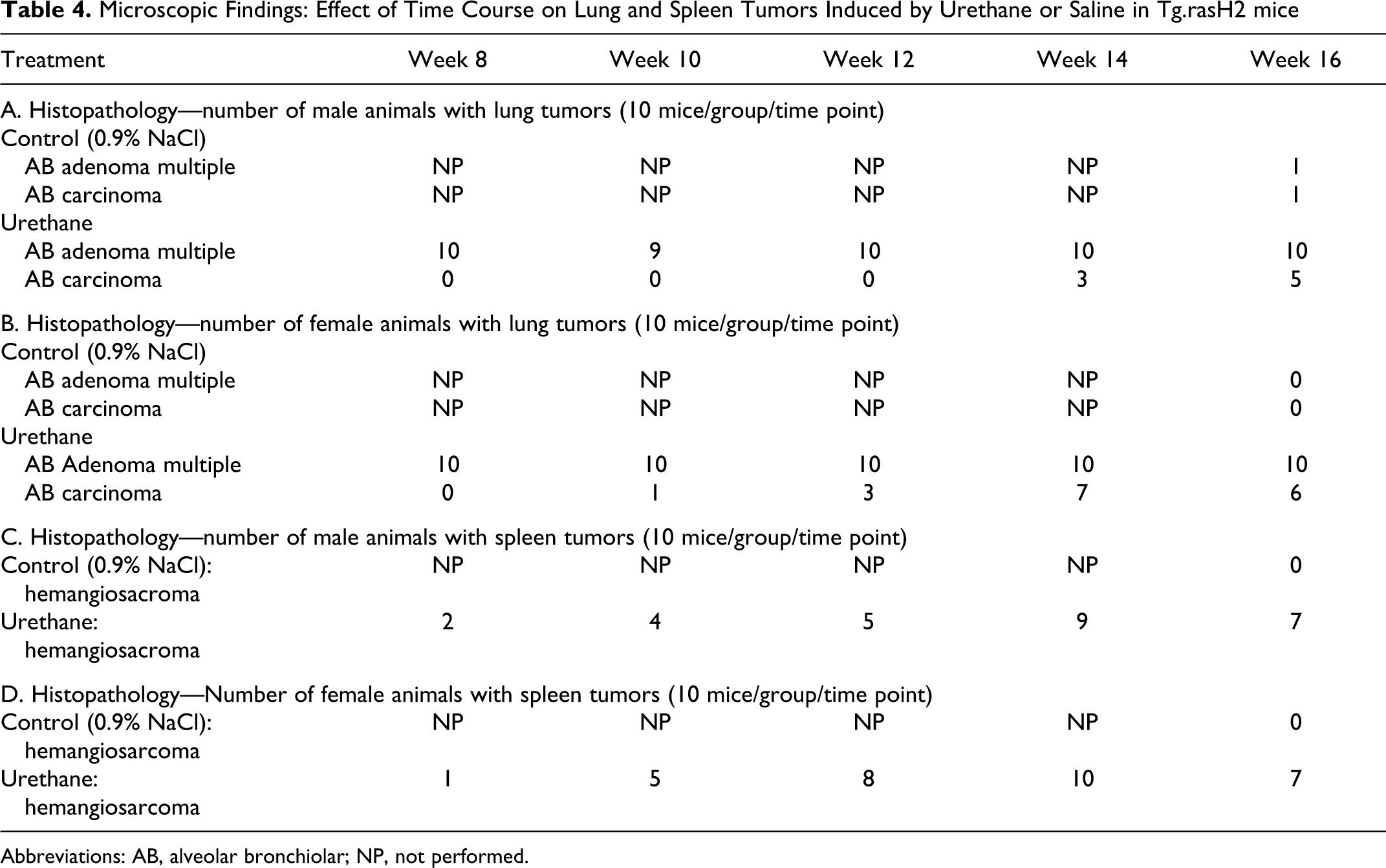
Abbreviations: AB, alveolar bronchiolar; NP, not performed.
Discussion
As is suggested for regulatory genotoxicity testing, 21 the scientific community should be encouraged to present and publish data related to animal “reduction opportunities” for regulatory carcinogenicity testing. For the purpose of shortening the experimental period, Umemura et al 22 restricted the target to the lung and used an established 2-stage carcinogenesis model of just 9 weeks for detecting 6 genotoxic lung carcinogens using the rasH2/butylhydroxytoluene (rasH2/BHT) model. The fact that exposure to the chemicals alone failed to induce tumors at significant incidence highlighted the advantage of the 2-stage model used with regard to rapid detection. The rasH2/BHT 2-stage carcinogenesis model was further used by Umemura et al 23 to demonstrate increased and more rapid development of pulmonary lesions following single IP injections of urethane at 250 mg/kg in males or 500 mg/kg in females within 6 weeks. Administration of BHT increased the multiplicity of hyperplasia observed 3 weeks after the urethane injection and additionally caused adenomas which did not occur in the urethane-alone–treated animals. Overall the data suggested the possibility of rapid assays for lung carcinogens using the TgrasH2 mice.
Our historical control database with 22 Tg.rasH2 studies in 500 mice/sex showed a robust response with almost 100% of the urethane (3 ip injections at 1000 mg/kg)-treated mice developing pulmonary and splenic tumors. The Carcinogenicity Assessment Committee (CAC) at FDA has accepted our current transgenic carcinogenicity protocols (from our Clients) with 15 Tg.rasH2 mice/sex for urethane as positive control that are sacrificed at 17 weeks ± 1 week. 24 We now recommend reducing the number of animals for urethane-positive control to 10 mice/sex. In addition, we recommend sacrificing animals for tumor evaluation at 10 weeks ± 1 week posturethane treatment instead of between 16 and 18 Weeks. One hundred percent of male and female Tg.rasH2 animals developed lung tumors by 8 weeks and between 90% and 100% of animals developed spleen tumors by 14 weeks posturethane treatment. It is not necessary to have both types of tumors (lung and spleen) present in mice for proving the validity of the test system. Therefore, we suggest that development of lung tumors alone is sufficient to determine the validity of the assay, which can be achieved in 100% of the mice at 8 weeks.
Our findings with urethane in Tg.rasH2 mice were similar to those reported in the literature for this model. Mori et al 19 injected 1000 mg/kg urethane in 0.9% NaCl once or 3 times (as in this study) at 2-day intervals. Hyperplasia and adenomas of the lung were observed in all animals of each group from week 10, and carcinomas were observed in rasH2 mice of the triple injection group from week 10 onward. The main adduct seen in mouse lung DNA after treatment with urethane is 1, N 6-ethenodeoxyadenosine, 25,26 and this may cause a point mutation at the second base of codon 61 of murine c-Ki-ras gene. These and our results indicate that the multiplicity of the lung proliferative lesions is increased in Tg.rasH2 mice by the administration of multiple doses of urethane, presumably attributable to increased exposure to vinyl carbamate epoxide (a highly reactive metabolite that reacts with adenosine to produce 1, N 6-ethenodeoxyadenosine).
In conclusion, we recommend decreasing the number of Tg.rasH2 mice used for urethane-treated positive control group from 15 animals/sex to 10 animals/sex and shortening the time period for study duration from 17 weeks ± 1 week to 10 weeks ± 1 week since 100% of animals have shown tumors in lungs by this time. Until the FDA changes the requirement, positive control will be needed for each study. However, we feel that a positive control may not be required for every study in our facility, and we suggest that keeping 1 group of positive control animals per sex in the same month (even for a different client) for full histopathological evaluation of lungs and spleen could serve as a “validation” of the assay. The supplier of the Tg.rasH2 mice provides the animals to our facility following genetic testing, and we also collect tail snips at the time of necropsy from all animals and store them for possible future genetic typing, should it becomes necessary.
Footnotes
Acknowledgment
We are grateful to all the mammalian toxicology team members for their support and scientific advice throughout the study.
Declaration of Conflicting Interests
The authors declared no conflicts of interest with respect to the research, authorship, and publication of this article. The authors are employees of BioReliance Corporation, and they did not receive any other financial support from a third party.
Funding
The authors received no financial support for the research, authorship, and/or publication of this article.