




Abstract
Benzocaine has a long history of use in human medicine. However, benzocaine also has been used in aquaculture with finfish for more than 40 years for sedating fish for marking, transport, surgery, and so on, although benzocaine does not have a current Food and Drug Administration (FDA) approval for this application in the United States. As part of a FDA approval for use as an animal drug, the genotoxicity of benzocaine was evaluated in the in vitro bacterial reverse mutation assay and the forward mutation assay and in vivo in the mouse micronucleus assay. These studies were conducted in compliance with Good Laboratory Practice regulations and according to Veterinary International Conference on Harmonisation guidelines. Based on the results of these studies, benzocaine was determined not to be genotoxic.
Introduction
Benzocaine (ethyl ρ-aminobenzoate; CAS# 94-09-7), the ethyl ester of ρ-aminobenzoic acid, was first synthesized by the German chemist Dr Eduard Ritsert, in 1890. Prior to its synthesis and clinical use, cocaine was being used as a local human anesthetic, but its use was complicated by numerous side effects. Hence, part of the stimulus behind the synthesis of benzocaine was the need for a local anesthetic without deleterious side effects.
In the human pharmaceutical market of the United States, benzocaine is available as the active ingredient in a plethora of over-the-counter (OTC) products including those intended to ease the pain of sore throat, otis media, sunburn, and toothaches. 1 It has also been included in products to reduce the sense of taste (eg, diet aids) and as a desensitizing agent in, for example, condoms and hemorrhoids. In addition to its use as a human pharmaceutical, benzocaine has found wide use in the culture of aquatic animals, in particular for freshwater finfish. Numerous authors have documented its use and characteristics in this application as far back as 1959 and possibly even earlier. 2–8 Part of the incentive for the use of benzocaine in fish culture was its homology to tricaine methanesulfonate (CAS # 886-86-2; referred to as MS-222 in aquaculture), the latter of which was widely being used to sedate finfish for a variety of reasons, for example, sedation for live transportation, surgery, and tagging. Additionally, during the 1960s, there was some concern within the aquaculture community that MS-222, due to regulatory and commercial constraints, may become difficult to obtain, 9 and hence, an alternative drug was needed to potentially replace MS-222.
Despite the apparent common historical use of benzocaine in aquaculture, to date, it has not been approved for use on finfish by the Food and Drug Administration’s Center for Veterinary Medicine (CVM) and is technically illegal to use on finfish. Although MS-222 has been approved by CVM for many years and has been considered by aquaculturists as an excellent anesthetic/sedative, it has one major shortcoming. MS-222 is approved for use on several finfish considered to be “food fish,” but it has unfortunately a 21-day withdrawal period, that is, the required holding period following last treatment until a fish can be used for human consumption. In practice, this is a nearly impossibe condition for use by which natural resource agencies must comply. Consequently, there has been a concerted effort by federal and state resource agencies to obtain a new fish anesthetic/sedative with a zero-day withdrawal period, and benzocaine has been identified as the candidate drug of choice.
To obtain a FDA CVM approval for an animal drug, it must be demonstrated to be effective and safe, including safe for human consumption when used in fish treated with the drug. Part of the human food safety component of a New Animal Drug Application (NADA) is the demonstration of lack of genotoxicity. Much to the surprise of the authors and others, given the significant historical use of benzocaine in human OTC compounds, no genotoxicity data were located in the published literature. Hence, to fill this data gap, in vitro and in vivo genotoxicity studies were undertaken with benzocaine. The studies were conducted in compliance with Good Laboratory Practice guidelines (21CFR Part 58) and in compliance with the International Cooperation on Harmonisation of Technical Requirements for Registration of Veterinary Medicinal Product. 10
Methods and Materials
Test Article
Benzocaine, a white powder, was obtained from Spectrum Chemicals (New Brunswick, New Jersey) with a purity of 101.4%. The compound was stored at 15°C to 30°C and was protected from exposure to light.
Animals
For the in vivo micronucleus study, ICR mice were obtained from Harlan (Frederick, Maryland) and were approximately 6 to 8 weeks old and weighed 28.4 to 35.3 g. All procedures involving mice followed the specifications recommended by the American College of Toxicology.
In Vitro Studies
In the bacterial reverse mutation assay, Salmonella typhimurium tester strains TA98, TA100, TA1535, and TA1537 and Escherichia coli tester strain WP2uvrA were incubated with the test article in the presence (+S9) and absence (−S9) of Aroclor-induced rat liver microsomal fraction. The assay was performed using the plate incorporation method. The vehicle was dimethyl sulfoxide (DMSO). A dose-range finding study was conducted at doses of 1.5, 5.0, 15, 50, 150, 500, 1500, and 5000 µg per plate. In the confirmatory mutagenicity assay, the dose levels tested were 15, 50, 150, 500, 1500, and 5000 µg per plate. All assays in the definitive study were done in triplicate and included positive control substances (see Results).
Benzocaine also was tested in the L5178Ytk+/− mouse lymphoma assay in the absence and presence of Aroclor-induced rat liver S9. The DMSO was used as the vehicle, and all dosing solutions were prepared on the day of dosing. In the preliminary toxicity assay, the maximum concentration of benzocaine in the treatment medium was 1660 µg/mL with visible precipitate present at concentrations ≥1500 µg/mL after the 4-hour exposure and ≥500 µg/mL after the 24-hour exposure. Suspension growth relative to the solvent controls was 0% with and without S9 activation with a 4-hour exposure at ≥1500 µg/mL and 0% without activation with a 24-hour exposure at ≥500 µg/mL. Based on the results of the preliminary assay, the concentrations used in the initial mutagenesis assay ranged from 50 to 1500 µg/mL in −S9 cultures and 5 to 1000 µg/mL for the +S9 cultures with a 4-hour exposure. No visible precipitate was present at any concentration in the treatment medium at the end of treatment. The concentrations chosen for cloning were 200, 300, 400, 500, and 600 µg/mL without activation and 5, 15, 25, 50, 250, and 500 µg/mL with S9 activation. The concentrations of benzocaine for the 24-hour treatment without S9 ranged from 2.5 to 500 µg/mL. No visible precipitate was present at any concentration in the treatment medium.
Methyl methanesulfonate (MMS) and 7, 12-dimethylbenz-(a)anthracene (DMBA) were used as positive control materials. The MMS was diluted in water and used in assays without metabolic activation. The DMBA was diluted in DMSO and used in assays with metabolic activation.
In Vivo Study
The clastogenicity/aneugenicity potential of benzocaine was determined in a bone marrow micronucleus study with male ICR mice. Corn oil was used as the vehicle for benzocaine and was used as the vehicle (negative) control and as the vehicle for the positive control material (cyclophosphamide, 50 mg/kg). All dosing solutions were prepared on the day of dosing. The test or control articles (vehicle and positive) were orally administered at a dose volume of 20 mL/kg. In the dose-range finding study, 2 male mice each were dosed at 1, 10, 100, or 1000 mg/kg, while 5 male and 5 female mice were treated at a dose of 2000 mg/kg. The mice were observed for clinical signs and body weight changes over a 3-day observation period. Based on the results of the range finding study, dose levels were set at 500, 1000, and 2000 mg/kg for the micronucleus (definitive) study.
For the definitive micronucleus assay, 7 groups of 5 male mice each were treated with benzocaine at doses of 500, 1000, or 2000 mg/kg or the control articles (vehicle or positive control). The animals in the vehicle and positive control groups and in the benzocaine-treated groups were euthanized at 24-hour postdose. An additional 5 mice per group in the vehicle control group and the 2000 mg/kg were euthanized at 48-hour postdose. Additionally, 5 male mice were dosed at 2000 mg/kg to be used as replacement animals in the event of mortality at high dose. As there was no mortality, these animals were not further evaluated. At the time of euthanasia, the femoral bone marrow was collected, smears prepared, and stained with May Gruenwald Giemsa stain. Bone marrow cells (polychromatic erythrocytes [PCEs]; 2000 PCEs per animal) were examined microscopically for the presence of micronuclei (micronucleated PCEs [MPCEs]).
Formulation Analyses
For the in vitro studies, benzocaine was dissolved in DMSO with samples collected for verification of the solution concentration using a validated high-pressure liquid chromatography (HPLC) method. For the bacterial reverse mutation assay, duplicate samples were collected from the high concentration (100 mg/mL) used for the assay. Concentration analysis revealed that the measured concentration was 94% to 95% of the target concentration (100 mg/mL). For the mouse lymphoma assay, duplicate samples were collected from the high concentration (150 mg/mL) used for the assay. Concentration analysis revealed that the measured concentration was 100.8% of the target concentration. The DMSO solutions were found to be stable for 21 hours at room temperature.
Corn oil was used as the vehicle for the in vivo micronucleus with verification of the dosing solution concentrations verified using a validated HPLC method. Duplicate samples from the dosing formulations (25, 50, and 100 mg/mL) were collected for homogeneity and concentration. Concentration analysis revealed that the measured concentrations were within 15% of the target concentrations.
Statistical Analyses
For the bacterial reverse mutation assay, a positive response for mutagenicity was determined as a dose-related increase in the mean revertants per plate of at least 1 tester strain over a minimum of 2 increasing concentrations of the test article. Data for tester strains TA1535 and TA1537 were judged to be positive if the increase in mean revertants at the peak of the dose response was equal to or greater than 3 times the mean vehicle control value. Data for tester strains TA98, TA100, and WP2uvrA were judged to be positive if the increase in mean revertants at the peak of the dose response was equal to or greater than 2 times the mean vehicle control value.
An increase in mutant frequency in the mouse lymphoma assay that occurred only at highly toxic concentrations (<10% total growth) were not considered biologically relevant. All conclusions were based on scientific judgment based on established criteria. 11 A result was considered positive if a concentration-related increase in induced mutant frequency was observed in the treated cultures and one or more treatment conditions with 10% or greater total growth exhibited induced mutant frequencies of ≥90 mutants per 106 clonable cells (based on the average mutant frequency of duplicate cultures). If the average negative control mutant frequency was >90 mutants per 106 clonable cells, a doubling of mutant frequency over the background was necessary to be considered positive for mutagenicity. A result was considered negative if the treated cultures exhibited induced mutant frequencies of <90 mutants per 106 clonable cells, and there was no concentration-related increase in mutant frequency.
Statistical significance was determined for the micronucleus study using the Kastenbaum-Bowman tables which are based on the binomial distribution. 12 All analyses were performed separately for sampling time.
Results
In the bacterial reverse mutation assay, no positive mutagenic response was observed at any dose level in either the dose-range finding or definitive assays. Also, neither precipitate nor background lawn toxicity was observed although there was a reduction in revertant counts at 5000 µg per plate (Tables 1 and 2).
Bacterial Reverse Mutagenicity Assay With Benzocaine: −S9
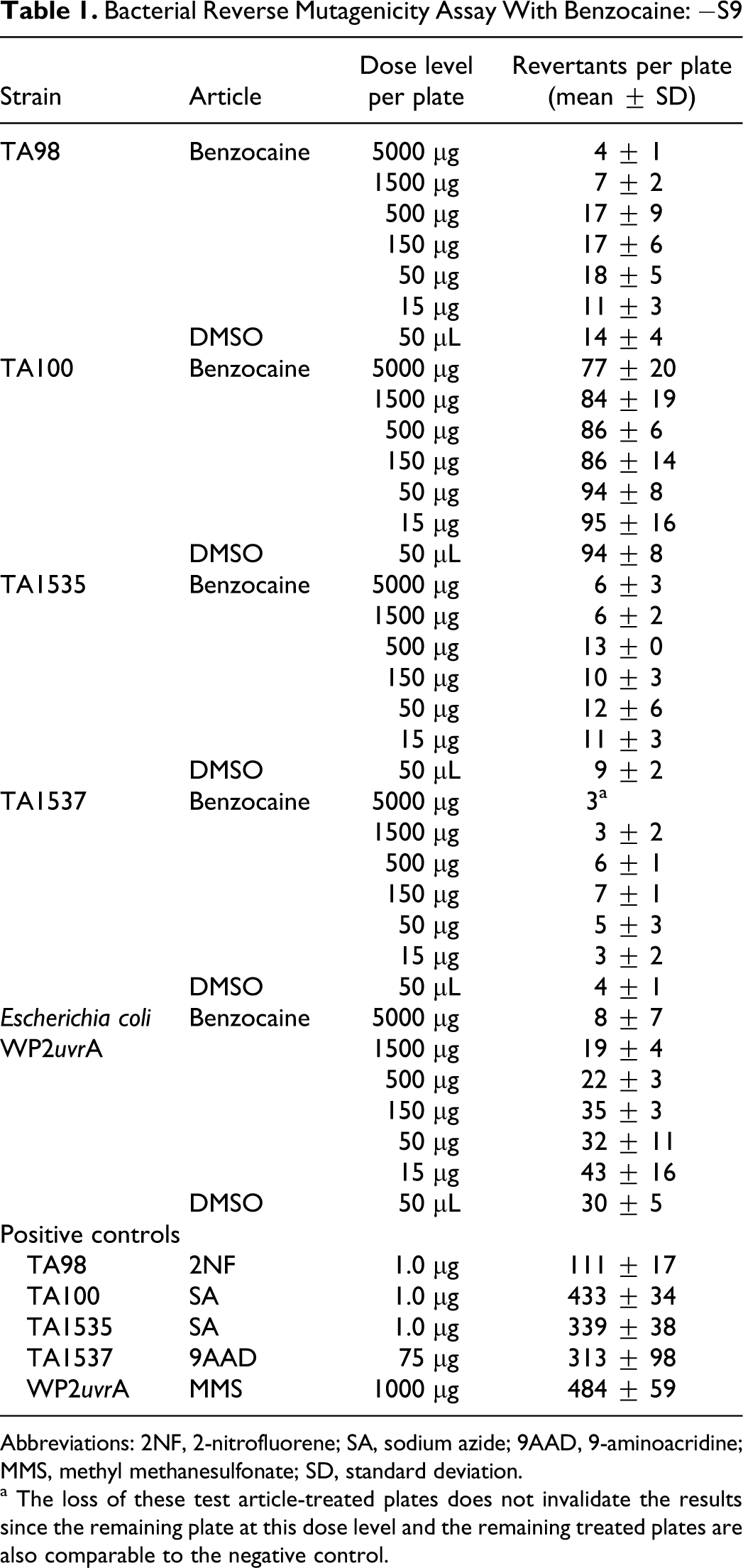
Abbreviations: 2NF, 2-nitrofluorene; SA, sodium azide; 9AAD, 9-aminoacridine; MMS, methyl methanesulfonate; SD, standard deviation.
a The loss of these test article-treated plates does not invalidate the results since the remaining plate at this dose level and the remaining treated plates are also comparable to the negative control.
Bacterial Reverse Mutagenicity Assay With Benzocaine: +S9
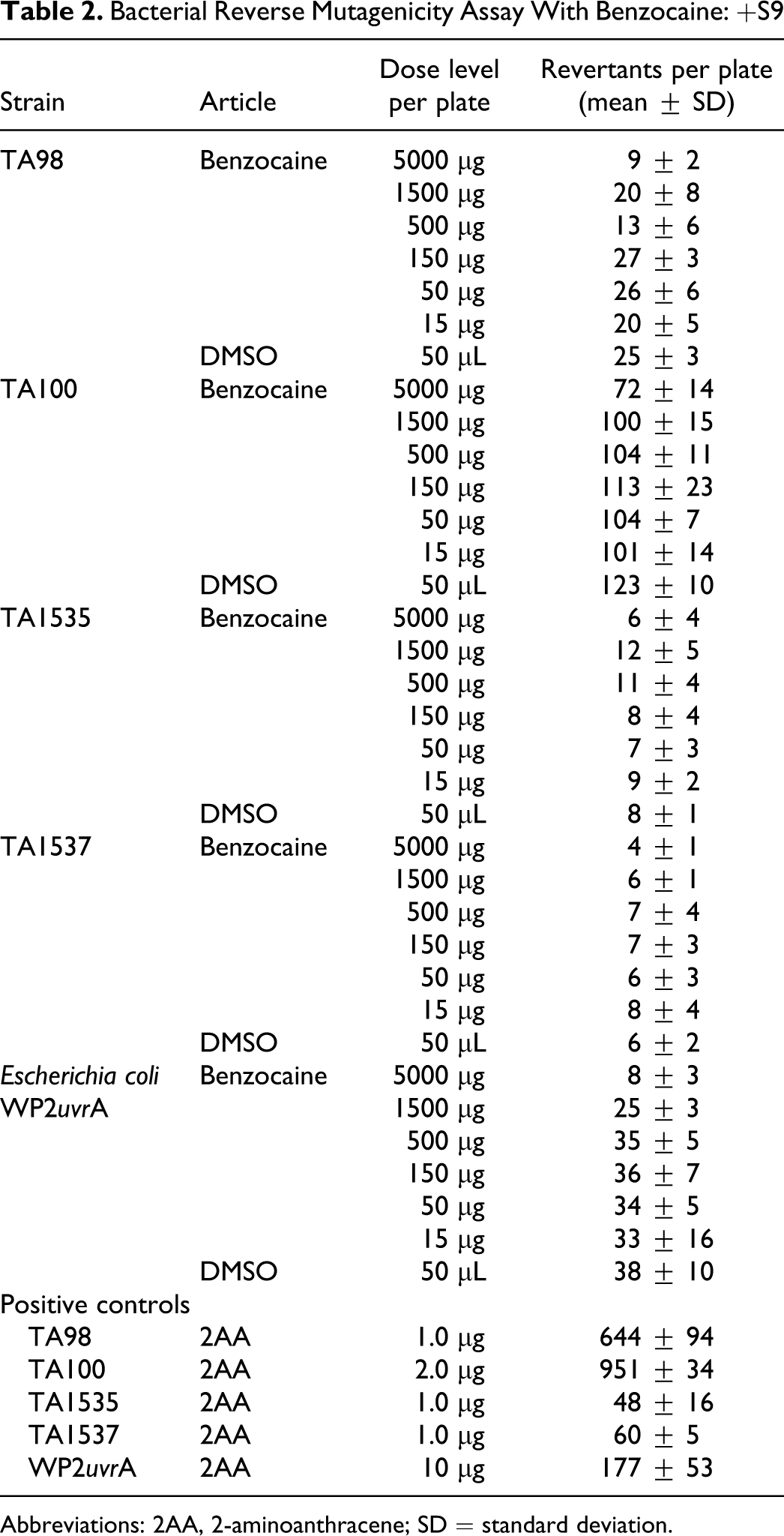
Abbreviations: 2AA, 2-aminoanthracene; SD = standard deviation.
In the mouse lymphoma assay, no increase in mutant frequencies, that is, ≥90 mutants per 106 clonable cells, was observed with a 4-hour treatment in +S9 or −S9 (Table 3). There was no concentration-related increase in mutant frequency. With a 24-hour treatment in −S9, the concentrations examined for cloning were 2.5, 5.0, 10, 25, 100, and 250 µg/mL. No increase in mutant frequencies ≥90 mutants per 106 clonable cells was noted over that of the solvent control. There was no concentration-related increase in mutant frequency. The trifluorothymidine-resistant colonies for the positive and solvent control cultures were sized according to diameter over a range from approximately 0.2 to 1.1 mm. The colony sizing for the MMS-positive controls yielded the expected increase in small colonies (verifying the adequacy of the methods used to detect small colony mutants) and large colonies.
Mutagenicity of Benzocaine in the Mouse Lymphoma Assay
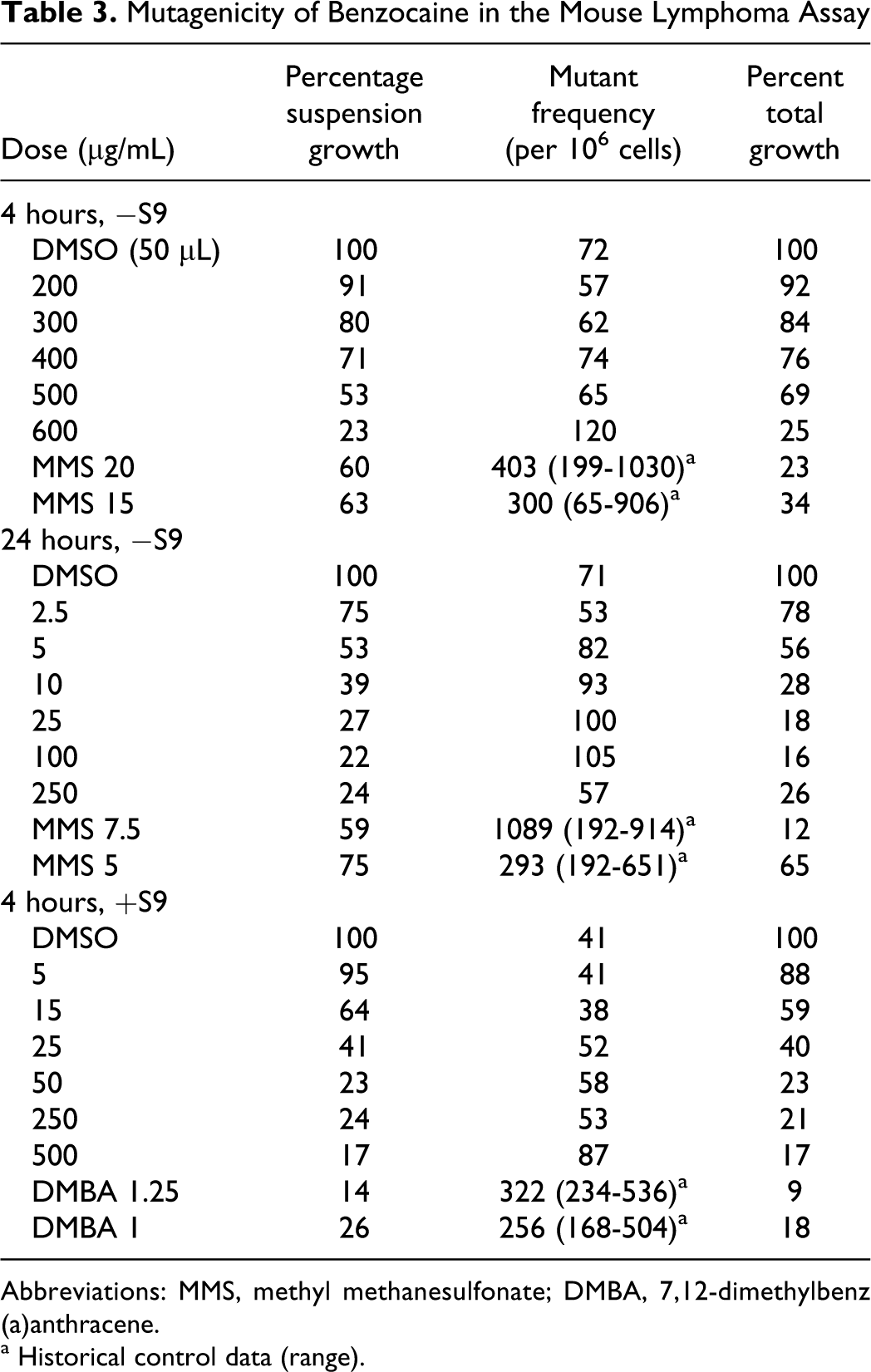
Abbreviations: MMS, methyl methanesulfonate; DMBA, 7,12-dimethylbenz(a)anthracene.
a Historical control data (range).
During the course of the dose-range finding for the micronucleus study, no mortality was observed at any of the dose levels. Clinical signs observed included piloerection in all males at 1, 10, 100, and 1000 mg/kg and in all males and females at 2000 mg/kg. Lethargy was seen in all males at 10, 100, and 1000 mg/kg and in all males and females at 2000 mg/kg. Prostration, palpebral closure, irregular breathing, and convulsions were observed at 1000 and 2000 mg/kg. Based on these results, the high dose for the definitive micronucleus study was set at 2000 mg/kg. In addition, since no significant differences in the toxicity between male and female mice were observed, only male mice were used in the definitive study.
In the definitive study, no mortality was observed in any of the control (vehicle or positive) groups or in the test article groups at 24- or 48-hour postdose. However, 1 male mouse in the 2000 mg/kg group was found dead prior to bone marrow collection. No clinical signs of toxicity were observed in mice treated with the control articles (vehicle or positive). In mice treated with benzocaine, convulsions were seen in all animals at 500, 1000, and 2000 mg/kg immediately after dosing. Lethargy and piloerection were seen in all animals at 500, 1000, and 2000 mg/kg, and palpebral closure, irregular breathing, and prostration were seen in all animals at 1000 and 2000 mg/kg.
No reduction in the ratio of PCE to total erythrocytes in the bone marrow was observed in the test article groups relative to the vehicle control groups, thereby indicating that benzocaine did not inhibit erythropoiesis. No statistically significant increase in the incidence of MPCEs in test article groups relative to the respective vehicle control groups was observed at 24- or 48-hour postdose (Table 4). Cyclophosphamide, the positive control, induced a statistically significant increase in the incidence of MPCEs relative to the vehicle control group. The number of MPCEs in the vehicle control groups did not exceed the historical vehicle control range (historical incidence 0-10 MPCE per 1000 cells).
Effects of Benzocaine in the Mouse Micronucleus Study
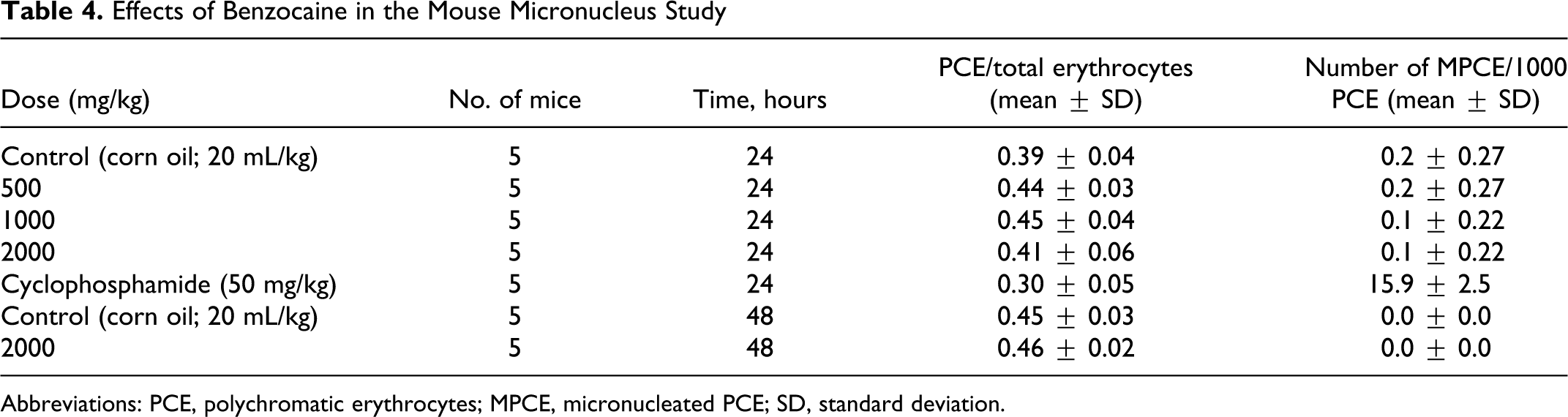
Abbreviations: PCE, polychromatic erythrocytes; MPCE, micronucleated PCE; SD, standard deviation.
Discussion and Conclusions
Several amide local anesthetics were nominated for testing by the National Toxicology Program (NTP) in the early 1990s based on their widespread use in dentistry, general medicine, surgery, and in some consumer products. The amide local anesthetics bupivacaine, etidocaine, lidocaine, mepivacaine, and ropivacaine were found to be metabolized to 2,6-xylidine and 4-hydroxyxylidine, and prilocaine is metabolized to o-toluidine. 13 Both 2,6-xylidine and o-toluidine have been shown to be carcinogenic in laboratory animals in NTP studies. 14 ,15 However, none of these amide anesthetics have undergone any long-term testing to date. The metabolic profile of benzocaine has not been fully characterized although the compound undergoes ester hydrolysis that may be associated with benzocaine-induced methemoglobinemia following high-dose administration. 1
In the current in vitro studies, no cytotoxicity or a diminished background lawn was noted in the bacterial reverse mutation assay, and a cytotoxic response was not evident in the mouse lymphoma assay up to the maximum in vitro concentrations. Benzocaine was not mutagenic in either assay. Although the details are not available, prilocaine was not mutagenic in the bacterial reverse mutation assay and mepivicaine is currently undergoing testing in the bacterial reverse mutation assay. 13
Toxicity was observed in mice treated with benzocaine at doses up to 2000 mg/kg, with convulsions noted in all animals at all tested doses. With high-dose administration to humans, convulsions are a known adverse effect. 1 Despite the observed toxicity, benzocaine did not result in an increase in MPCEs at any dose. Therefore, benzocaine was not genotoxic in this in vivo micronucleus assay.
In the human health risk assessment of benzocaine for use in aquaculture, tolerances, for example, acceptable daily intake values, based on residual levels of the drug are established as part of the NADA process for approval. As part of that risk assessment, genotoxicity data are key. At the present time, the risk assessment for benzocaine has not been completed.
Footnotes
Acknowledgments
These studies were conducted at BioReliance (Rockville, MD), and the authors express their appreciation to the staff at the laboratory for their diligence and expertise in undertaking these studies.
The author(s) declared no potential conflicts of interest with respect to the research, authorship, and/or publication of this article.
The author(s) disclosed receipt of the following financial support for the research: Sport Fish and Wildlife Restoration Programs of the U.S. Fish & Wildlife Service.