



Abstract
p-Synephrine is an adrenergic amine found in Citrus aurantium L. fruits and has been used for weight loss in dietary supplements. There are commercial products containing this substance associated to caffeine, salicin, and ephedrine. The aim of this study was to evaluate the acute toxicity of this mixture in mice of both sexes. The significative results observed after acute oral administration to male and female mice of 300, 350, and 400 mg/kg total of p-synephrine, ephedrine, salicin, plus caffeine in a 10:4:6:80 w/w ratio included a reduction in locomotor activity and ptosis in all treated groups for both sexes. Seizures were also observed in male (400 mg/kg) and female groups (350 and 400 mg/kg). Gasping and tearing were observed in males. Salivation (400 mg/kg), agitation (350 and 400 mg/kg), and piloerection (all treated groups) were significantly observed only in females. Deaths occurred in males at 350 and 400 mg/kg treated groups and the necropsy showed cardiopulmonary hemorrhage. A reduction in locomotor activity was confirmed through the spontaneous locomotor activity test, in which the number of crossings considerably decreased (P < .01) in all treated groups. The rotarod test showed a decrease in motor coordination at 400 mg/kg. Body temperature decreased significantly (P < .01) in all treated groups compared to controls. The results suggested clear signs of toxicity of p-synephrine, ephedrine, salicin, and caffeine association; this toxicity augments the attentiveness on commercial products containing this mixture, given the expressive number of adverse events related to its utilization.
Introduction
p-Synephrine is an adrenergic amine described as “the major active component” of Citrus aurantium L. fruit, a plant belonging to the Rutaceae family. 1,2 It has a chemical structure similar to other adrenergic agonists such as epinephrine, norepinephrine, ephedrine, amphetamine, and phenylpropanolamine. 3 The interest in p-synephrine arouse since it has been used as a component of dietary supplements for weight loss, 4 replacing ephedrine, which was banned in some countries due to the occurrence of significant adverse effects, mainly related to cardiovascular system. 5 –9 More than 13 000 health complaints and 100 deaths were attributed to ephedra alkaloids 10 in 2001.
The believed increase in metabolic rate through thermogenesis followed by the consumption of C. aurantium justifies its use for weight loss. The stimulation of β3-adrenoceptors could help to reduce fat mass since lipolysis increases the metabolic rate and promotes fat oxidation by increasing the thermogenesis. 11 On the other hand, synephrine also stimulates α-adrenoceptors, being more effective on α1 than on α2-adrenoceptors. 12 Studies and reports demonstrated that marketed supplements containing extracts of C. aurantium or p-synephrine are associated with the cause of vasoconstriction, increased blood pressure, 9,13 variant angina, 14 and myocardial infarction in patients with no previous history of heart disease 15 or brain ischemia. 8
Nevertheless, Arbo and coworkers 16 –18 demonstrated that both p-synephrine and C. aurantium extracts showed low toxicity in mice, even when tested at high doses. Rossato and coworkers 19 showed low or negligible cardiotoxicity of p-synephrine in an in vitro model. These results suggest that the toxic events already reported in humans could be related to the simultaneous use of C. aurantium/p-synephrine with other substances, including stimulants.
Dietary supplements and weight loss compounds marketed worldwide commonly contain many associated substances, often in the form of standardized extract of natural sources. Among the most frequent substances associated with C. aurantium/p-synephrine are caffeine (Paullinia cupana Kunth, Cola nitida Vent Schott & Endl, Cola acuminata P. Beauv. Schott & Endl., and Camelia sinensis L. Kuntze) and salicin (Salix sp), besides vitamins, minerals, and other plant extracts. Although ephedrine (Ma Huang, Ephedra sinica Stapf) has been banned in several countries and it is not so commonly present in many formulations anymore, we still find products containing this substance, probably due to adulterations in order to improve product performances. In Brazil, this amine has not been banned, but its sale is regulated by Directive SVS/MS no 344/98. 20
Ephedrine is a sympathomimetic agonist for both α and β adrenergic receptors, which initiates stimulating effects in the cardiovascular and central nervous system (CNS). 21 Likewise, p-synephrine is an adrenergic amine with α and β agonist action and both ephedrine and p-synephrine are structurally and pharmacologically related to amphetamine. 22 Caffeine is a CNS stimulant and has α-adrenergic-like properties (phosphodiesterase enzyme inhibition), thus influencing the cardiovascular system. 23 It is also recognized to enhance the effects of other sympathomimetics such as ephedrine 24 and probably also synephrine, since there is a very large structural similarity between these 2 amines. 25 Salicin is a phenolic glycoside extracted from Salix sp (white willow bark) and exhibits analgesic effects. It is frequently present in weight loss products, but there is no scientific basis to support its use in this context. It is believed that salicin helps to potentiate the effect of other substances in a synergistic way, prolonging the time of action of ephedrine and caffeine and enhancing their effectiveness as weight loss agents by extending or increasing the activity of these thermogenic ingredients. Acetylsalicylic acid belongs to the same salicylate family as salicin, and it showed to enhance the effect of both ephedrine and caffeine on thermogenesis in obese women. 26 However, there are no studies in scientific literature specifically about salicin with this purpose showing results of efficacy either its true role or its contribution within the association. This is a point that deserves further investigations to be clarified.
The lack of studies evaluating the safety of these combinations is evident and disturbing, particularly given the increasing number of these products in the market. Based on these considerations, the aim of this study was to investigate p-synephrine acute toxicity when it is associated with ephedrine, salicin, and caffeine, a mixture that is widely used in weight loss products.
Materials and Methods
Chemicals and Reagents
(±)-p-Synephrine (99%) was purchased from MP Biomedicals (California), ephedrine (99.5%) from Sigma-Aldrich (St Louis, Missouri), salicin (99%) from Fluka BioChemika (Switzerland), and caffeine (99%) from Merck (Darmstadt, Germany). In all experimental procedures, the substances were used in a ratio of 10:4:6:80 (w/w) of p-synephrine, ephedrine, salicin, and caffeine in distilled water, respectively, in order to prepare a mixture which provides a total dose of all active ingredients that was 300, 350, and 400 mg/kg. The proportion of substances in the mixture was defined considering the weight loss products available in the market.
Animals
Male (N = 108) and female (N = 24) albino CF1 mice, weighing 40.1 ± 5.2 g and 33.1 ± 2.0 g, respectively, obtained from Fundação Estadual de Produção e Pesquisa em Saúde (FEPPS) were used for the experimental tests. They were housed in 47 × 34 × 18 cm polyethylene cages under standard conditions of temperature (22°C ± 2°C), controlled humidity and a 12-h light/dark cycle (experimental procedures were performed during the light phase of the cycle). The experiments were performed after approval of the University Ethics Committee (deliberation number 2007982) and were carried out in accordance with current guidelines for the care of laboratory animals. 27,28
Acute Toxicity
The experimental protocol was based on Organisation for Economic Co-operation and Development (OECD) guideline 420 (Acute Oral Toxicity—Fixed Dose Procedure) 29 and adapted to the Brazilian agency. The initial dose used was 300 mg/kg as recommended by OECD and the others were lower than the dose (500 mg/kg) considered lethal in pilot study carried (lethality of n = 8/8). Animals (N = 48) were distributed in groups of 6 male and 6 female mice each and treated by oral gavage with water (control) or a 300, 350, or 400 mg/kg aqueous solution of p-synephrine, ephedrine, salicin, and caffeine. All doses were administered at a constant volume of 10 mL/kg. The animals were observed for the presence of neurological, digestive and respiratory alterations for 1 minute at 5, 15, 30, 60, 120, 180, 240, 300, and 360 minutes in observational acrylic cages and 24 hours after administration. The specific signs monitored were alterations in locomotor activity, stimuli reaction, agitation, piloerection, ptosis, salivation, gasping, tearing, tremors, writhing, and seizures. Lethality was monitored daily for 14 days and then the surviving animals were euthanized and necropsied. Vital organs such as heart, liver, spleen, lungs, kidneys, and adrenal glands were analyzed for macroscopic alterations.
Spontaneous Locomotor Activity
The method used to measure spontaneous locomotor activity was adapted from Creese et al. 30 Activity cages (45 × 25 × 20 cm; Albarsch Electronic Equipment) equipped with 3 parallel photocells that allowed the automatic recording of the number of crossings. Male mice (N = 35; n = 7/group) were individually habituated to an activity cage for 10 minutes and then received the following treatments by oral gavage: water, 30 mg/kg p-synephrine, or a 300, 350, or 400 mg/kg aqueous mixture of p-synephrine, ephedrine, salicin, and caffeine (10:4:6:80 w/w, respectively). The animals were returned to the activity cages 30 minutes after treatment and crossings were recorded for 15 minutes. 16
Rotarod Performance Test
Male mice were initially trained to remain on the rotarod apparatus (18 rpm; Hugo Basile, Italy) for 120 seconds; those that did not remain on the bar for at least 2 out of 3 consecutive trials were discarded. 31 A p-synephrine, ephedrine, salicin, and caffeine aqueous mixture (300 and 400 mg/kg) or water (control) was administered to the animals (N = 21; n = 7/group) by oral gavage 24 hours after the initial training. The latency to fall from the rotarod (one 60-second trial) was determined 30, 60, 90, and 120 minutes after the administration.
Body Temperature
Groups of 7 male mice (N = 28) were treated by oral gavage with water (controls) or a 300, 350, and 400 mg/kg of the p-synephrine, ephedrine, salicin, and caffeine aqueous mixture. Rectal temperature was measured by inserting the sensor probe of a digital thermometer into the rectum (1 cm). The temperature was recorded before drug treatment (time 0) and 30, 60, 90, and 120 minutes after the administration. 32 Room temperature was maintained at 22°C to 24°C throughout the test.
Statistical Analysis
Data were expressed as mean ± standard error of mean (SEM). The organ weights were determined and expressed as relative weight (organ mass/body weight × 100). Body weight gain, rotarod, and body temperature were evaluated by repeated measure analysis of variance (ANOVA, drug treatment vs time) followed by Bonferroni post hoc test. Relative organ weight and spontaneous locomotor activity were analyzed by 1-way ANOVA/Bonferroni post hoc test. Survival curves were analyzed by Logrank test. Clinical signs were expressed as the percentage of animals that presented the effect and were analyzed by independent samples Kruskal-Wallis test/Bonferroni. Results were considered significantly different when P ≤ .05.
Results
The results of acute toxicity test are presented in Table 1. A reduction in locomotor activity that started 5 minutes after administration and persisted for 2 to 3 hours in all mixture treated groups for both gender mice could be observed. In males, gasping, ptosis, tearing, muscle spasms, tremors, and seizures were noted in 400 mg/kg. Salivation, periods of agitation, and jumping episodes were also observed; however, the percentage of occurrence was not statistically significant. In female, the occurrence of ptosis, piloerection, agitation, gasping, tremors, and muscle spasms was noted. Jumping episodes and tearing, though present, were not statistically significant. Piloerection and ptosis were significantly present in females in all tested doses. Excepted for the seizures, which occurred immediately before deaths, all signs observed were transitory and were visualized at different times during the 6 hours of observation as described in Table 1. Deaths happened in the first 6 hours only in male (350 and 400 mg/kg), the percentage of deaths in 400 mg/kg dose being significantly higher (Figure 1). The LD50 interval of the mixture of p-synephrine, ephedrine, salicin, and caffeine for male mice was estimated as being between 350 and 400 mg/kg. The necropsy of died animals showed cardiopulmonary hemorrhage, whereas in the euthanasia of surviving animals (done after 14 days of experiment) no macroscopic or significant weight changes in organs were noted.
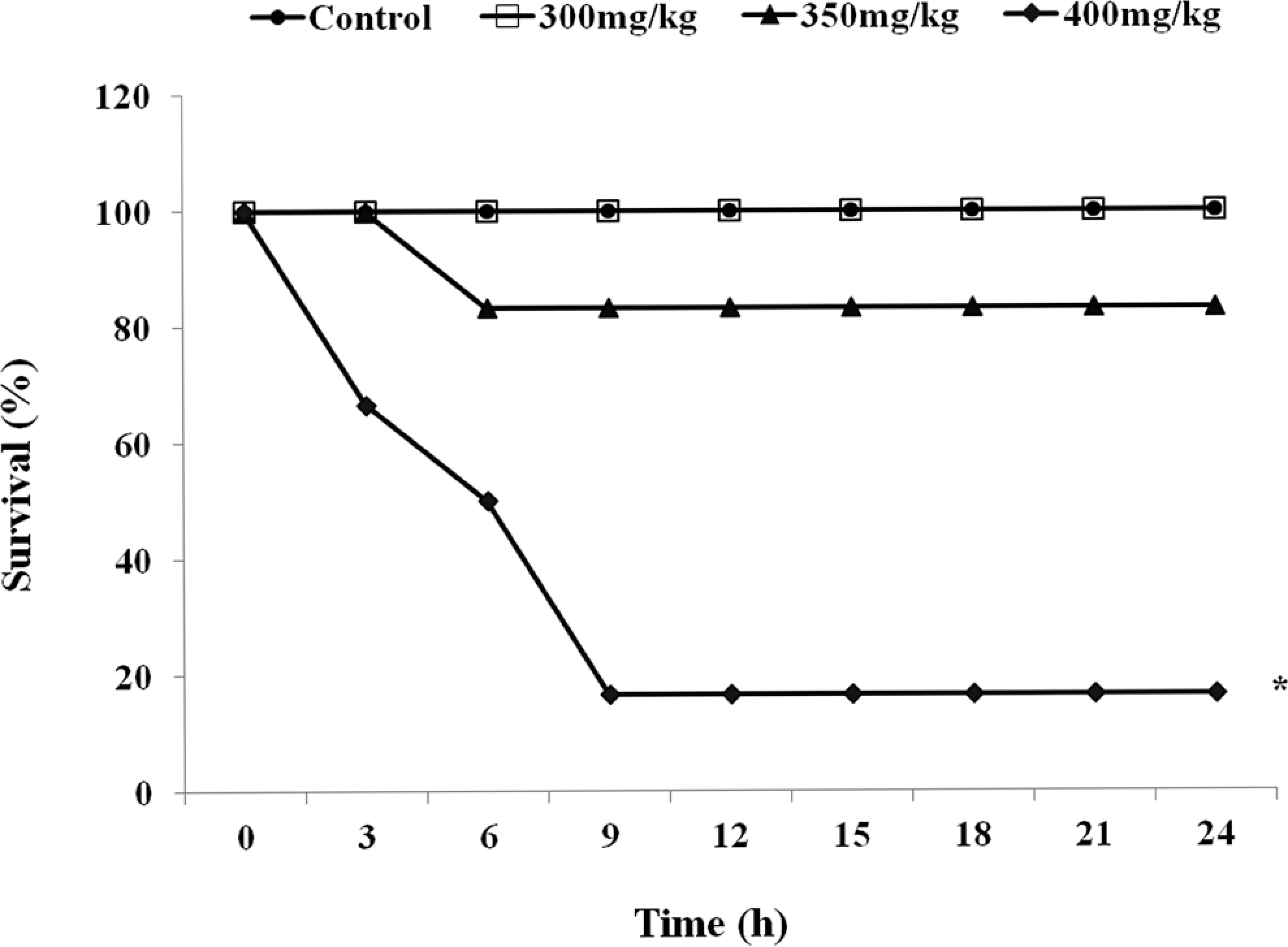
Percentage of male mice survivors in control group and in the mixture of p-synephrine, ephedrine, salicin, and caffeine 300, 350, and 400 mg/kg groups. *Statistically different from control group by Log rank test, P < .01.
Acute Effects of p-Synephrine, Ephedrine, Salicin, and Caffeine Association (10:4:6:80 w/w) After Oral Administration to CF1 Mice a
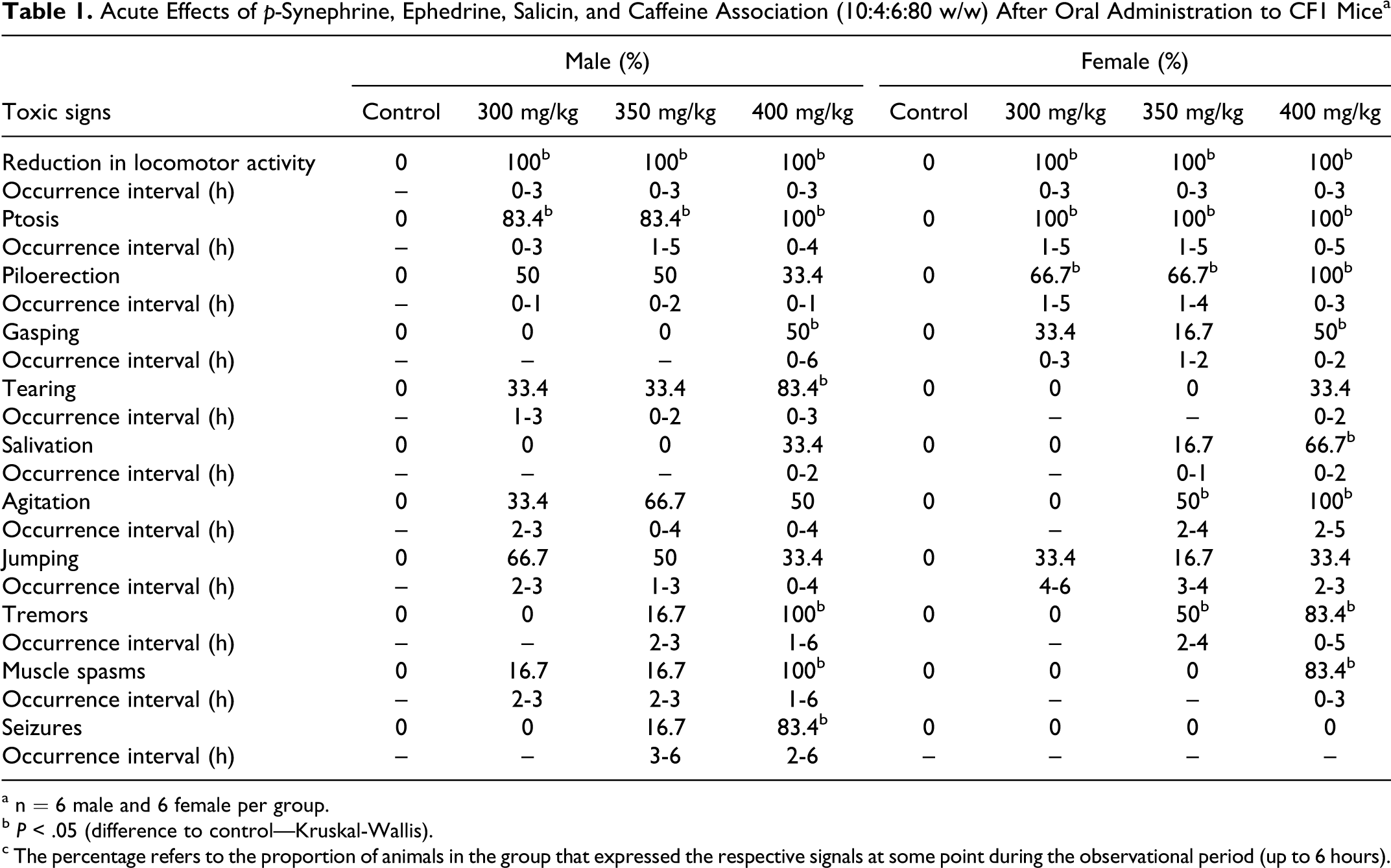
a n = 6 male and 6 female per group.
b P < .05 (difference to control—Kruskal-Wallis).
c The percentage refers to the proportion of animals in the group that expressed the respective signals at some point during the observational period (up to 6 hours).
Since males were more susceptible to the effects of the drugs in the acute toxicity test, only this gender was included in the spontaneous locomotor activity, rotarod, and body temperature tests in order to minimize the number of animals used.
Figure 2 shows that the number of crossings in the group treated with 300 mg/kg (68.3 ± 13.3), 350 mg/kg (66.4 ± 9.1), and 400 mg/kg (59.4 ± 10.8) of the mixture were significantly reduced (P < .01) in comparison to the control group (241 ± 25.8). Moreover, they also meaningfully differed (P < .01) from the one treated with p-synephrine 30 mg/kg (148.6 ± 17.5), including the dose of 300 mg/kg of the mixture, which contained 30 mg/kg of p-synephrine, that is the same amount, but combined with other substances.
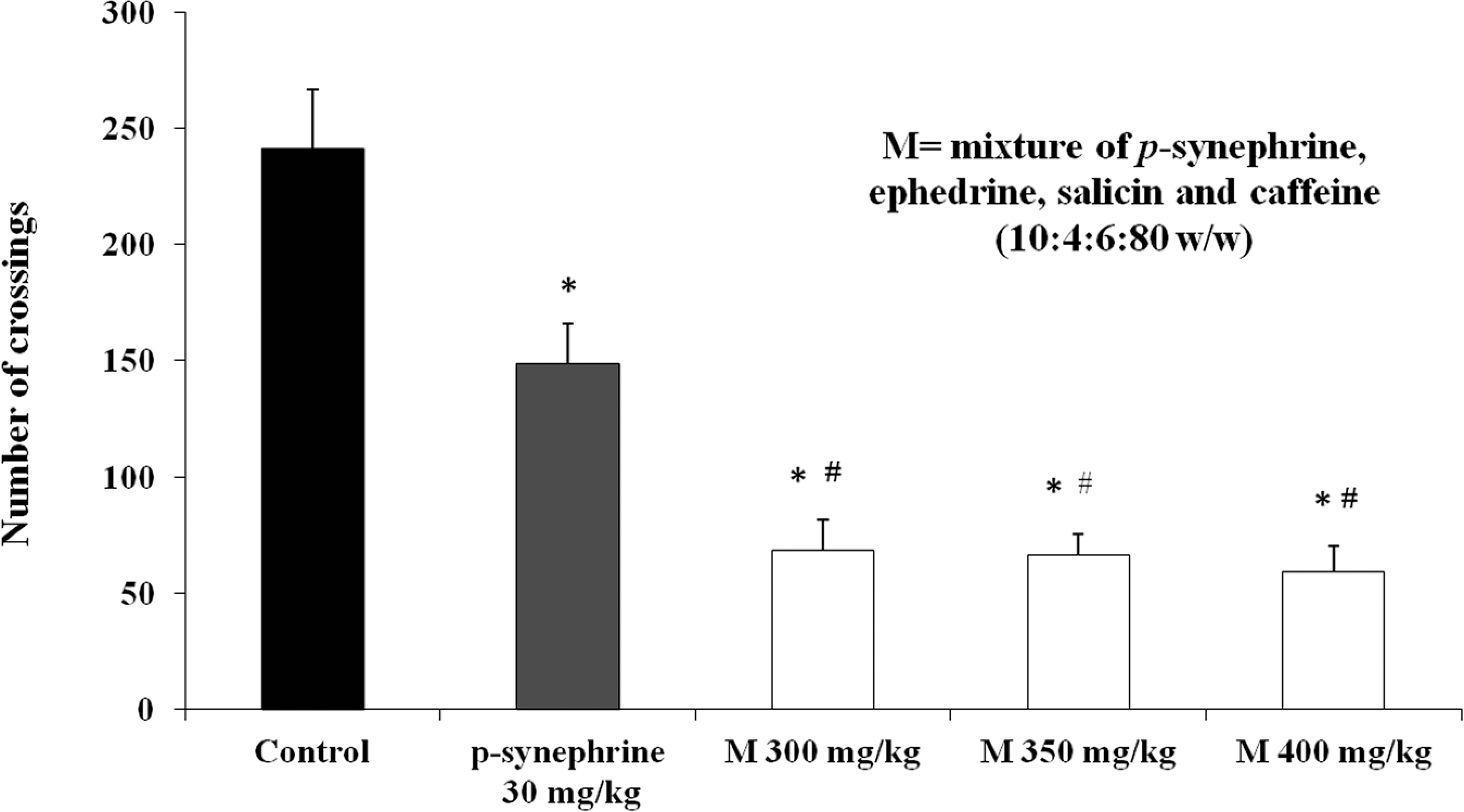
Effects of the association of p-synephrine, ephedrine, salicin, and caffeine on spontaneous locomotor activity. The number of crossings was measured during 15 minutes. Data expressed as mean ± SEM (n = 7). ANOVA with repeated measures (treatment vs time) follow by Bonferroni post hoc. *P < .01 different from control and # P < .01 different to p-synephrine 30mg/kg group. ANOVA indicates analysis of variance; SEM, standard error of the mean.
Figure 3 shows the rotarod test results and presents a significant (P < .01) difference between the dose of 400 mg/kg in relation to control group and 300 mg/kg dosing group. There was no difference between times for each treatment.
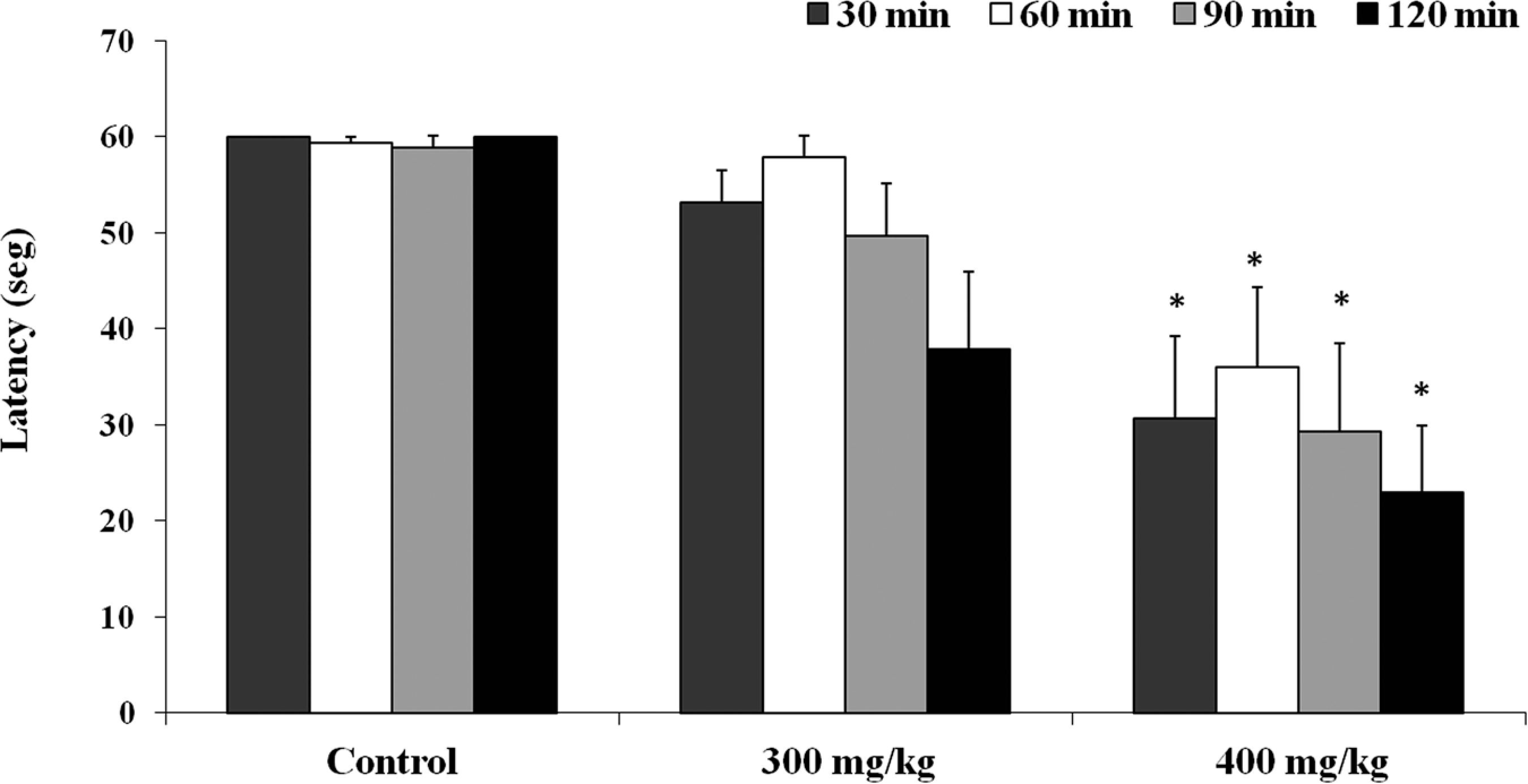
Effects of the association of p-synephrine, ephedrine, salicin, and caffeine on rotarod test. Data expressed as mean ± SEM (n = 7). ANOVA with repeated measures (treatment vs time) follow by Bonferroni post hoc. *P < .01 different from control. ANOVA indicates analysis of variance; SEM, standard error of the mean.
As can be observed in Figure 4, the body temperature notably decreased (P < .01) in relation to the control group when p-synephrine, ephedrine, salicin, and caffeine (300, 350, and 400 mg/kg) were administrated. The initial and final body temperature ranged from 37.4°C to 36.4°C in the control group, 37.2°C to 33.6°C at 300 mg/kg, 37.4°C to 34.3°C at 350 mg/kg, and 37.4°C to 34.3°C at 400 mg/kg.
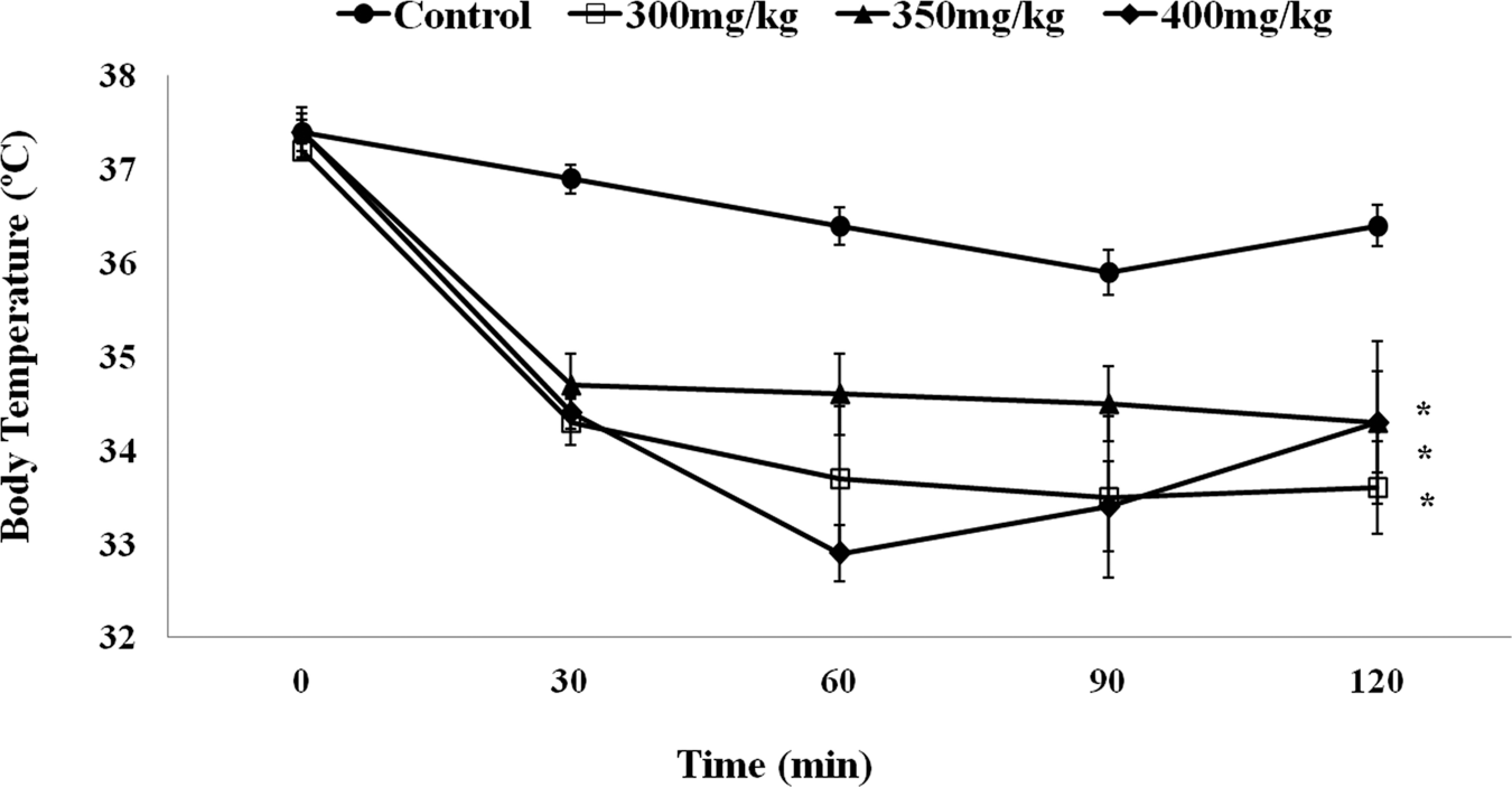
Effects of association of p-synephrine, ephedrine, salicin, and caffeine on body temperature. Data expressed as mean ± SEM (n = 7). Repeated measures ANOVA (treatment vs time) follow by Bonferroni post hoc. *P < .01 different from control. ANOVA indicates analysis of variance; SEM, standard error of the mean.
Discussion
Salivation and piloerection are nonspecific toxic effects but indicative of α1-adrenoceptor agonist-mediated actions. 33 Ptosis usually occurs when depressant drugs are used 34 and was observed at all tested doses, although the mixture tested shows feature stimulants. Gasping has been previously observed when p-synephrine 16 or a hydroalcoholic extract of Sida cordifolia L. containing ephedrine alkaloids 34 were tested, and it is an indication of action in the adrenergic system. 16
In this work, for both sexes, all doses led to episodes of ptosis, piloerection, and alterations in locomotor activity. The intensity of signs was dose dependent and gender different. Signs were more intense in males, although females presented greater signs of toxicity in a less intense way but statistically significant. This has been previously observed in another study 35 in which females were more resistant than males to the toxic effects of the amphetaminic compound MDMA (3,4 methylenedioxymethamphetamine), possibly due to hormonal or metabolic differences. Both p-synephrine and ephedrine are structurally and pharmacologically related to amphetamine. According to Dluzen et al 36 methamphetamine-related deaths and nigrostriatal dopaminergic (NSDA) neurotoxicity are greater in males. The exact basis for this gender difference is not known, but data show that estrogen can function as a protectant of both cardiovascular and NSDA systems and also suggest an important role for gonadal steroids in modulating the central and peripheral toxicity. Sex differences in pharmacokinetics and pharmacodynamics characterize many drugs and contribute to individual differences in drug efficacy and toxicity. 37
Alterations in locomotor activity were evident in both the acute toxicity and the spontaneous locomotor activity tests. The findings of acute toxicity test indicate a first stage corresponding to the toxic effect of the mixture, probably due to the extreme stimulation of adrenergic receptors, and a second stage, of stimulatory effects, owing to the pharmacological characteristics of the tested substances.
In the spontaneous locomotor activity test, the group treated with only p-synephrine 30 mg/kg (equivalent to the amount of p-synephrine presented in the 300 mg/kg dose in the mixture) showed a lower decrease in activity compared to the groups treated with the mixture. This is consistent with the theory that the association of other substances with p-synephrine may be responsible for toxic effects which may be produced by excessive adrenergic stimulation since the administration of β2-adrenoceptor agonists and high doses of α1-adrenoceptor agonists bring about the same effect. 38,39 A reduction in motor activity was observed when a hydroalcoholic extract containing ephedra alkaloids was tested 40 and occurred with p-synephrine as well. 16 In the same way, higher doses of caffeine reduce locomotor activity. 41 The decrease in motor activity may be related to sedation, resulting from depression of the CNS. 42 Even though amphetamine drugs increase the locomotor activity in animals, 43 they can also decrease the ambulation. 44
These data indicate that the mechanism of action and toxicity of the mixtures involves more than a simple sum of the pharmacological consequences of each component. The pharmacokinetic and pharmacodynamic properties could be modified when the substances are administered together and interact, 45 possibly promoting unexpected adverse responses, as can be seen in this experimental work.
The latency to remain on the rotarod was significantly lower in the 400 mg/kg than in the control and 300 mg/kg groups, indicating nonspecific (stimulant or depressant) neurological effects 32 caused by the mixture at this dose, capable to induce a decrease in motor coordination or muscular relaxation.
The body temperature in all groups treated with the mixture was significantly reduced (P < .01) in relation to the control group. The results are controversial since these substances have been used as thermogenics. 46 The dissonant result could be explained by the toxic effect of the mixture at these doses, including hyperstimulation of α-adrenergic receptors. Watanabe et al 47 demonstrated that an α-adrenergic stimulus could induce hypothermia in mice. Moreover, it has been reported that caffeine at high doses can lead to hypothermia. 41,48 In addition, body temperature is regulated by neurons from the preoptical region of the anterior hypothalamus, and thus another hypothesis is that the central action of the mixture could promote deregulation at this level and lead to a hypothermic effect. Despite having antipyretic properties, which are one of the characteristics of salicylates, salicin does not affect the normal body temperature. 49 The doses used in the experiments ranged from 18 to 24 mg/kg.
The necropsy performed on dead animals during the acute toxicity test showed cardiopulmonary hemorrhage. Our results corroborate some clinical reports which show that the association of p-synephrine, ephedrine, and caffeine may be potentially toxic. 50 Our findings demonstrate that the consumption of products with the association of substances caused deaths due to cardiac complications. The use of a dietary supplement containing ephedra-like alkaloids, p-synephrine, large quantities of caffeine, and other ingredients led to tachycardia and a prolonged QT interval. 51 Arrhythmias, hypertension, heart attacks, and strokes are adverse events caused by the combination of ephedra alkaloids and caffeine, these symptoms also seem to be related to the association of p-synephrine and caffeine. 52 In contrast, subjects treated with p-synephrine plus caffeine did not show an increase in cardiac rate but a significant increase in diastolic pressure could be observed, suggesting that C. aurantium, when ingested alone in modest doses, is unlikely to have considerable pharmacological activity, but when taken as a combination product with other herbal ingredients including caffeine it could be harmful. 9,53
In conclusion, among the commercially available supplements and weight loss compounds, those products containing p-synephrine associated with several substances such as ephedrine, salicin, and caffeine should receive more attention considering the excessive number of adverse events related to their utilization. It is known that the association of substances with similar actions could increase and/or potentiate their pharmacological action and can produce several unexpected reactions. Future studies should focus on more toxicity tests to investigate and elucidate the role and the contribution of each component of the supplements to the adverse health effects, assessing the different toxic responses of genders, including metabolic studies to clarify this point.
Footnotes
Acknowledgments
The authors would like to thank Dr Elaine Elisabetsky for scientific support and CNPq (Conselho Nacional de Desenvolvimento Científico e Tecnológico) for the fellowship to Gabriela Cristina Schmitt.
The author(s) declared no potential conflicts of interest with respect to the research, authorship, and/or publication of this article.
The author(s) received no financial support for the research, authorship, and/or publication of this article.