




Abstract
The increased use of digital technologies in educational settings has raised concerns about their impact on students’ physical and mental well-being, particularly regarding perceived fatigue. This study explores the extent to which physical activity can regulate perceived fatigue associated with digital technology use among middle school students. Using an explanatory mixed-methods design, the study was conducted with 108 sixth-grade students (ages 11–12) who were assigned to exercise, nonexercise, and control groups. A quasi-experimental pretest-posttest control group design was applied in the quantitative dimension, and the Fatigue Severity Scale (FSS) was used to assess fatigue levels before and after the use of different digital devices (computer, smartphone, tablet PC). A 3 × 2 split-plot repeated-measures analysis of variance (ANOVA) revealed a statistically significant decrease in perceived fatigue levels among students who performed stretching exercises following digital device use, while fatigue levels increased in the nonexercising group. Qualitative data from the exercising group indicated that students found the exercises enjoyable, health-promoting, and expressed a willingness to integrate them into their daily routines. This study contributes to the literature by demonstrating that simple, school-based physical activity interventions can effectively mitigate the negative physiological and psychological effects of technology use in educational contexts. The findings emphasize the need to incorporate structured physical activity, such as short classroom-based stretching exercises, into daily school routines. This approach may promote student well-being and academic engagement in increasingly digital learning environments and has direct implications for updating health promotion policies and behavior-focused interventions in schools.
Keywords
The digital revolution has permeated all aspects of daily life, becoming indispensable and opening the doors to a new era, particularly in the educational environment. In today’s information age, where access to information has accelerated through technology, the technologies used in educational settings have diversified the means of accessing knowledge (Criollo-C et al., 2018). The adoption of innovative technologies plays a significant role in enabling students to achieve their educational goals (Sobral, 2020). In addition, technology not only facilitates students’ access to and sharing of information, but also positively influences their motivation by supporting active participation in learning activities both inside and outside the classroom (Camargo et al., 2012; Pinto & Leite, 2020; Zydney & Warner, 2016). This suggests that technology is not merely a tool, but also a resource that makes access to information multifaceted and accessible. Particularly, the use of these technologies in educational environments by today’s children, who were born in the digital age and live intertwined with digital technologies in all aspects of their lives and are referred to as “digital natives” is considered quite normal (Dunleavy et al., 2019). However, as Paracelsus stated, “The dose makes the poison” (Dokmeci, 2001), it should not be overlooked that uncontrolled interaction with digital technologies may cause more harm than good.
Uncontrolled interactions with digital technologies, which are a combination of digital devices and digital content, can create both short- and long-term adverse effects on physical and psychological health. While interacting with these technologies, remaining in improper body positions for extended periods is known to lead to musculoskeletal disorders, posture problems, shoulder, back, neck, and head pain, numbness in the hands and fingers, physical fatigue, and eye health issues (e.g., Cuéllar & Lanman, 2017; Hedge et al., 2005; Jacobs et al., 2009; Kar & Hedge, 2021; Kim & Kim, 2015). However, the excessive use of digital technologies can lead to various psychological disorders, such as increased stress levels, decreased sleep quality, anxiety, depression, memory problems, attention deficits, and mental fatigue (e.g., Howie et al., 2017; Lemola et al., 2015; Nadler, 2020; Si & Lee, 2023; Tollit et al., 2018).
The physical and psychological effects of the intensive and uncontrolled use of digital technologies cause individuals to experience both physical and mental fatigue over time. This feeling of fatigue can reduce the quality of life of individuals and negatively affect their daily functionality. In the field of health and medicine, this situation is expressed by the concept of “perceived fatigue” as a subjective measure of fatigue and is addressed in cognitive, physical, and mental dimensions (Chalder et al., 1993; Smets et al., 1995). Physical fatigue typically manifests as reduced muscle performance and strength, often accompanied by symptoms such as reluctance, posture-related discomfort, or tension in the neck and shoulders (Okuyama et al., 2000; Vijayakumar et al., 2018). In contrast, mental fatigue refers to cognitive exhaustion following sustained attention or stress and is associated with memory problems, anxiety, and depression. However, its subjective nature makes it more difficult to classify and measure consistently (Malley, 2006). This fatigue, which can be observed in healthy individuals after cognitive activities, may persist as a permanent effect of the disease in some patients (Millikin et al., 2003).
It is well known that regular exercise plays an important role in managing such fatigue and mitigating its negative effects. Research has demonstrated that exercise alleviates symptoms of physical fatigue and has positive effects on mental fatigue (Hansen et al., 2001; Puetz et al., 2006). Regular physical exercise has been shown to reduce perceived pain, making it suitable for preventive and therapeutic uses (Andersen et al., 2010; Chen et al., 2018). Furthermore, studies have revealed that physical activity increases serotonin levels, reduces symptoms of depression (Satman, 2018), and supports the growth of the hippocampus, which is known as the memory center of the brain (Erickson et al., 2011). Considering all these positive effects, the importance of healthy habits in protecting against the adverse effects associated with the intensive use of technology in the digital age has become even more evident. In this framework, predicting and taking preventive measures against health issues is far more effective than treating these problems after they have emerged (Chung & Seomun, 2021). Instilling these healthy habits, especially during adolescence, is crucial, as it creates long-term impacts, contributing to the healthy upbringing of individuals. Adolescence is a period of peak physical and mental development, and the habits acquired during this process significantly affect an individual’s health in adulthood (Hills et al., 2007; Kayiran et al., 2010; Strong et al., 2005).
However, in the digital age, the intensive use of digital devices and constant consumption of digital content may lay the groundwork for habits that can cause both physical and mental fatigue among students. Therefore, understanding the health impacts of digital technologies frequently used by students during their learning and teaching processes and developing effective strategies to mitigate their negative effects are of great importance. Based on these needs, this study aimed to determine the levels of perceived fatigue associated with digital technologies frequently used by students during teaching processes and to examine the effects of exercises aimed at reducing perceived fatigue.
Do digital technologies (computers, smartphones, and tablet PC) used during the teaching process have an impact on students’ perceived fatigue levels?
Do exercises affect the perceived fatigue associated with the digital technologies used in the teaching process?
What are the students’ views on the process after the implementation phase?
Methods
Research Design
The study was designed within a mixed-methods framework to integrate research findings, aimed at capitalizing on the strengths of both qualitative and quantitative methodologies while minimizing their limitations (Creswell & Plano Clark, 2007; Tashakkori & Teddlie, 2003). Accordingly, an explanatory mixed-methods design was adopted, wherein quantitative data were first collected and analyzed, followed by the use of qualitative data to support or refine the findings (Creswell, 2013). In this framework, a quasi-experimental design with a pretest–posttest control group was used in the quantitative dimension of the study to determine the change in the participants’ perceived fatigue levels during the process. The qualitative dimension of the study was designed using a case study approach that allows for an in-depth examination of events and adopts an inductive approach to evaluate the phenomenon (Bogdan & Biklen, 2006; Gall et al., 2003).
Participants
Criterion sampling, a purposeful sampling method, was used to determine the participants of the study conducted with sixth-grade (11- to 12-year old) secondary school students. Care was taken to ensure that the criteria determined in line with the purpose of the study were met, and the criteria for ensuring the continuity of the experimental procedures, ease of access to the subjects, availability of the technological infrastructure required for the application, and volunteerism were considered in the selection of the study group. After the preliminary examination, it was determined that all students in the sample met these criteria. The study protocol was approved by the institutional ethics committee (Approval No:2022-YÖNP-0220) prior to data collection, and informed consent was obtained from all students and their legal guardians through consent forms. Students continuing their education at the same level in three different public-school classrooms were included in the study. Accordingly, three classrooms (each comprising 36 students) from the same school and grade level, which exhibited comparable demographic and academic characteristics, were randomly assigned to one of the three experimental conditions: exercising, nonexercising, or control. The group assignment had been conducted at the classroom level rather than at the individual level, which allowed the intervention to be implemented within intact class structures and permitted the preservation of baseline equivalence among the groups. A total of 108 students (59 females, 54.6%; 49 males, 45.4%) participated in the study, and all students took part in the pretest and posttest.
Instrumentation
In this study, quantitative data were collected using the Fatigue Severity Scale (FSS), a widely used instrument developed by Krupp et al. (1989) to assess perceived fatigue levels on a 7-point Likert-type scale. Total scores range from 9 to 63, with higher scores reflecting greater fatigue severity. The Turkish validity and reliability study of the scale, conducted by Armutlu et al. (2007), demonstrated high internal consistency, with Cronbach’s alpha values of 0.89 and 0.94 in repeated measurements. In this study, the Cronbach’s alpha was calculated as 0.92, confirming the scale’s internal reliability. For additional details regarding statistical assumptions and baseline equivalence checks related to the use of this scale, see Supplemental Appendix A.
Although the FSS was originally developed to assess fatigue associated with neurological or chronic medical conditions (Krupp, 2004; Krupp et al., 1989), it has been widely used in behavioral and educational research to evaluate perceived fatigue that interferes with daily functioning (Muranaka et al., 2023). While not explicitly designed for digital contexts, its emphasis on cognitive, physical, and motivational fatigue aligns conceptually with symptoms commonly observed in prolonged digital technology use. Given this theoretical alignment and the exploratory nature of this study, the FSS was considered an appropriate and methodologically defensible instrument for assessing perceived fatigue in classroom-based digital technology environments.
Qualitative data were collected through an open-ended written questionnaire given to students in the exercise group. These questions were designed to explore students’ experiences with the exercise sessions and their general opinions on the inclusion of physical activity in school settings. The responses were written in the classroom environment under the supervision of the researchers, allowing students to express their thoughts clearly and independently.
Procedure
This study was conducted with three groups—control, exercising, and nonexercising—to examine students’ perceived fatigue levels following engagement with different types of digital technology. The control group followed standard instructional content without the use of digital devices or any intervention. In contrast, the experimental groups interacted with curriculum-based digital content delivered via computers, smartphones, and tablet PCs, and participated in related educational tasks such as watching, writing, and drawing.
Before and after each digital session, all students completed the FSS. After using digital technologies, only the exercising group performed a structured classroom-based stretching program developed under the guidance of physiotherapy experts and supervised by the researchers. The nonexercising group did not engage in any physical activity during this period. A detailed overview of the weekly implementation procedures and group-specific activities is provided in Supplemental Appendix B.
Planning of Exercises
The exercise program used in this study was developed under the supervision of a physiotherapy faculty expert to ensure that it was both developmentally appropriate and safe for implementation in a typical classroom setting. The movements were selected to support posture and overall physical well-being through stretch-based exercises and were based on established principles of classroom-based physical activity (Baltaci, 2008; Otman, 2006), with particular attention to adolescent joint development to avoid physical strain (Kayiran, 2016). All activities were designed to be simple, nonstrenuous, and executable without the need for equipment. During the implementation, students were guided by the researchers, and attention was paid to ensuring that each movement was performed safely and with proper posture. Further details regarding the structure, repetition scheme, and targeted muscle groups are provided in Supplemental Appendix C.
Data Analysis
All assumptions required for parametric testing, including normality, homogeneity of variance, and baseline equivalence, were evaluated and confirmed prior to statistical analysis (see Supplemental Appendix A for detailed results; Tabachnick & Fidell, 2013). Accordingly, the data were analyzed using a 3 × 2 split-plot repeated-measures analysis of variance (ANOVA) and descriptive statistics. Effect sizes were calculated using Cohen’s d and interpreted based on standard thresholds: d < 0.20 = negligible, 0.21 ≤ d < 0.50 = small, 0.50 ≤ d < 0.80 = medium, and d ≥ 0.80 = large (Cohen, 1988).
The qualitative data were obtained from students in the exercising group through open-ended written responses. These data were analyzed using categorical and frequency analysis techniques in line with content analysis procedures (Corbin & Strauss, 2008; Ryan & Bernard, 2000).
Results
Perceived Fatigue Levels of the Study Groups Depending on Exercise Status
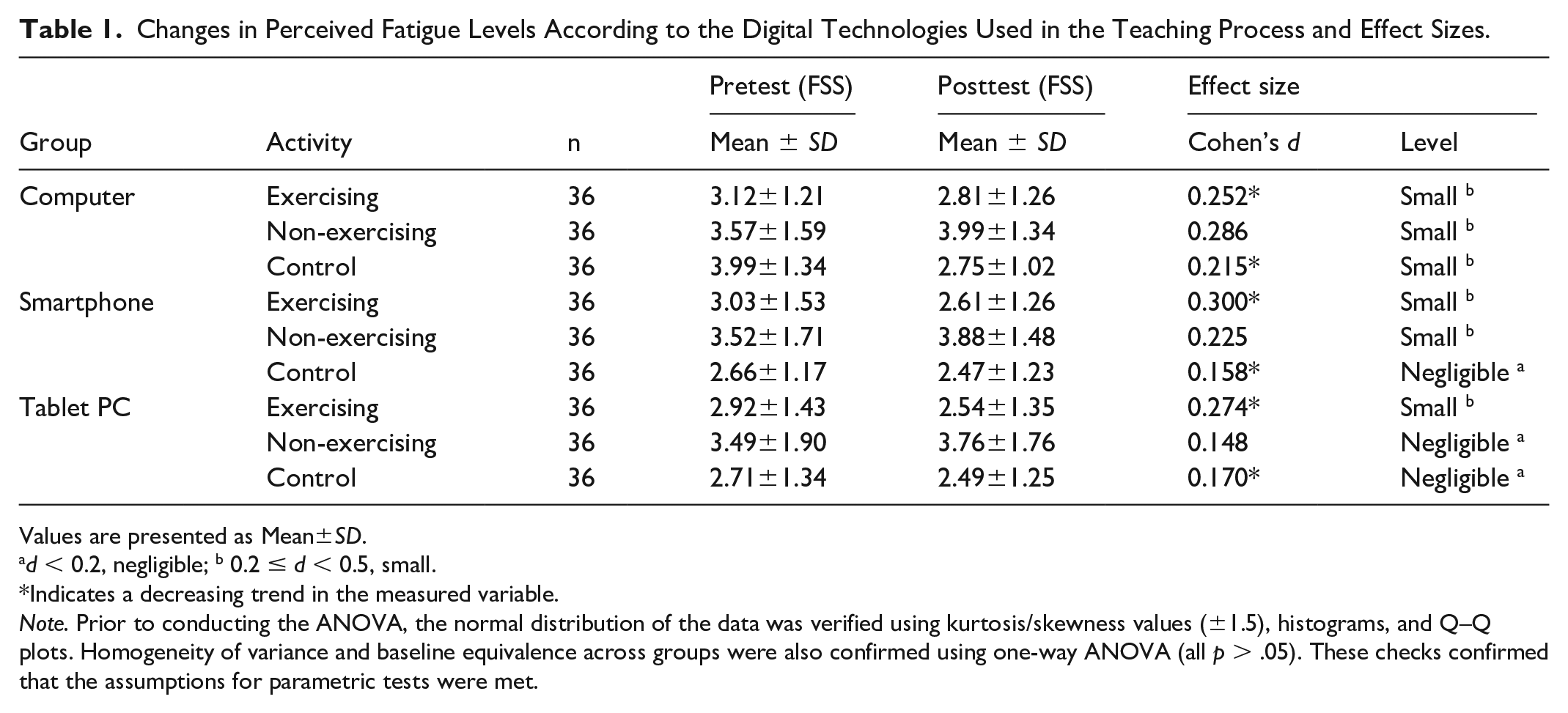
In line with the aim of the study, pretest–posttest fatigue averages and effect sizes were calculated for each type of digital technology and exercise status (exercise, nonexercise, and control groups), and the results are presented in Table 1.
Changes in Perceived Fatigue Levels According to the Digital Technologies Used in the Teaching Process and Effect Sizes.
Values are presented as Mean±SD.
d < 0.2, negligible; b 0.2 ≤ d < 0.5, small.
Indicates a decreasing trend in the measured variable.
Note. Prior to conducting the ANOVA, the normal distribution of the data was verified using kurtosis/skewness values (±1.5), histograms, and Q–Q plots. Homogeneity of variance and baseline equivalence across groups were also confirmed using one-way ANOVA (all p > .05). These checks confirmed that the assumptions for parametric tests were met.
When the data in Table 1 were examined, significant changes were observed in the pretest and posttest fatigue levels for each digital technology and group. The exercise group showed a decreasing trend in fatigue levels for all device types, whereas the nonexercising group showed an increase in these levels. In the control group, there was a general downward trend, but this decrease was not as pronounced as that in the exercising group. The significance of these changes was analyzed based on the digital technology used, and the results are presented in detail in the following sections.
The Effect of Exercise on Perceived Fatigue Levels Due to the Use of Digital Technology in the Teaching Process
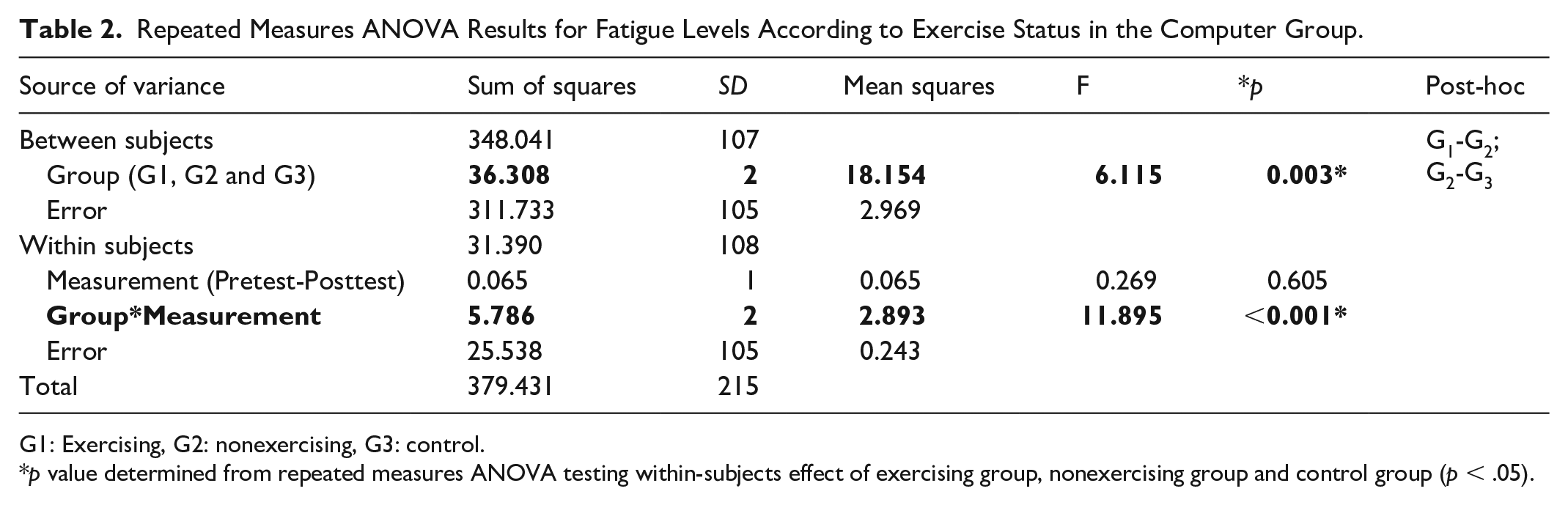
The effect of computer use on perceived fatigue levels was examined by considering the exercise status of students. In the computer group, students who exercised showed a decrease in FSS values during the computer use process, with a small effect size (d = 0.252) between pretest (3.12 ± 1.21) and posttest (2.81 ± 1.26) scores. Conversely, students who did not exercise exhibited an increase in FSS values, with a small effect size (d = 0.286) between pretest (3.57 ± 1.59) and posttest (3.99 ± 1.34) scores. In the control group, where students completed the process without any intervention within the framework of the existing instructional program, a decrease in FSS values was observed, with a small effect size (d = 0.215) between pretest (3.99 ± 1.34) and posttest (2.75 ± 1.02) scores. The statistical significance of these changes in perceived fatigue levels among the groups was evaluated using a repeated-measures ANOVA test, which included the factors of group (exercising, nonexercising, and control) and measurement (pretest, posttest). The results are presented in Table 2.
Repeated Measures ANOVA Results for Fatigue Levels According to Exercise Status in the Computer Group.
G1: Exercising, G2: nonexercising, G3: control.
p value determined from repeated measures ANOVA testing within-subjects effect of exercising group, nonexercising group and control group (p < .05).
The repeated-measures ANOVA results in Table 2 indicate that the interaction between group (exercising, nonexercising, control) and measurement time (pretest, posttest) was statistically significant for perceived fatigue levels during computer use (F(2, 105) = 11.895, p < .05). Post hoc analyses revealed that the posttest perceived fatigue levels of the nonexercising group (G2) were significantly higher than those of the exercising group (G1) and the control group (G3). In contrast, no significant difference was found between the exercising group (G1) and control group (G3). These findings suggest that exercises performed after computer use may have a positive effect on reducing perceived fatigue levels.
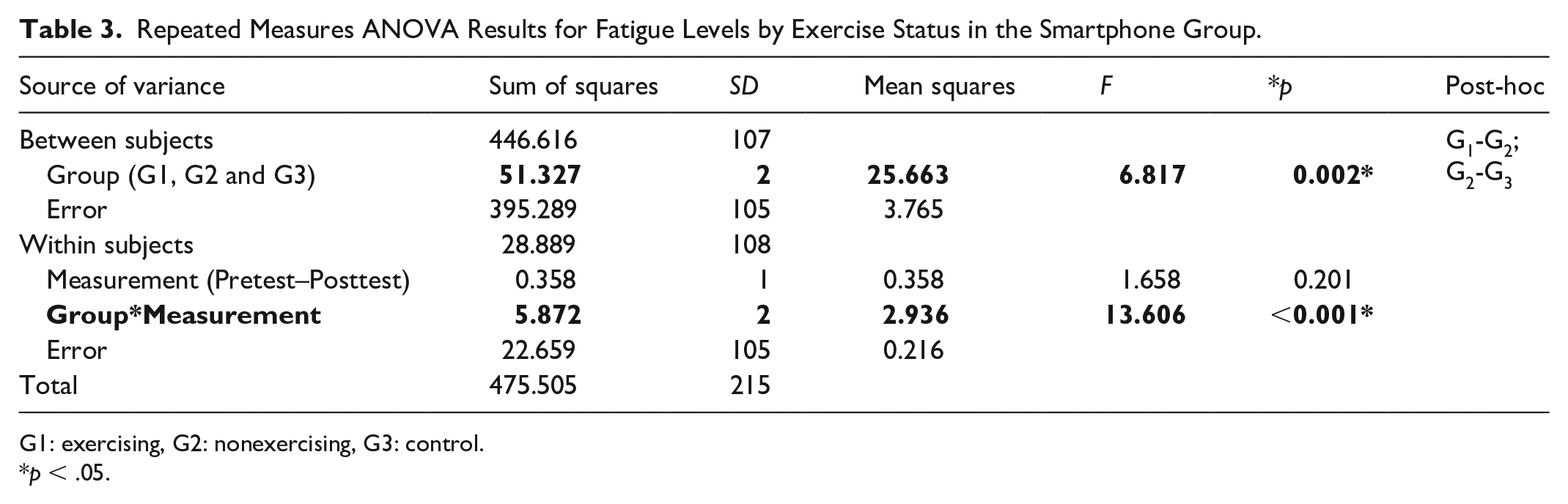
Similarly, the effect of smartphone use on students’ perceived fatigue level was evaluated by considering their exercise status. In the smartphone group, students who exercised showed a decrease in FSS values during the smartphone use process, with a small effect size (d = 0.300) between pretest (3.03 ± 1.53) and posttest (2.61 ± 1.26) scores. Conversely, students who did not exercise exhibited an increase in FSS values, with a small effect size (d = 0.225) between pretest (3.52 ± 1.71) and posttest (3.88 ± 1.48) scores. In the control group, where students followed the existing instructional program without any intervention, a negligible effect size (d = 0.158) was observed between the pretest (2.66 ± 1.17) and posttest (2.47 ± 1.23) FSS values, showing a slight decrease. The analysis results of whether these changes in fatigue levels among the groups were statistically significant are presented in Table 3.
Repeated Measures ANOVA Results for Fatigue Levels by Exercise Status in the Smartphone Group.
G1: exercising, G2: nonexercising, G3: control.
p < .05.
The repeated-measures ANOVA results in Table 3 indicate that the interaction between group and measurement time factors was statistically significant for perceived fatigue levels during smartphone use (F(2, 105) = 13.606, p < .05). Post hoc analyses revealed that the posttest perceived fatigue levels of the nonexercising group (G2) were significantly higher than those of the exercising group (G1) and the control group (G3). In contrast, no significant difference was found between the exercising group (G1) and control group (G3). These findings suggest that exercise performed after smartphone use may reduce perceived fatigue levels.
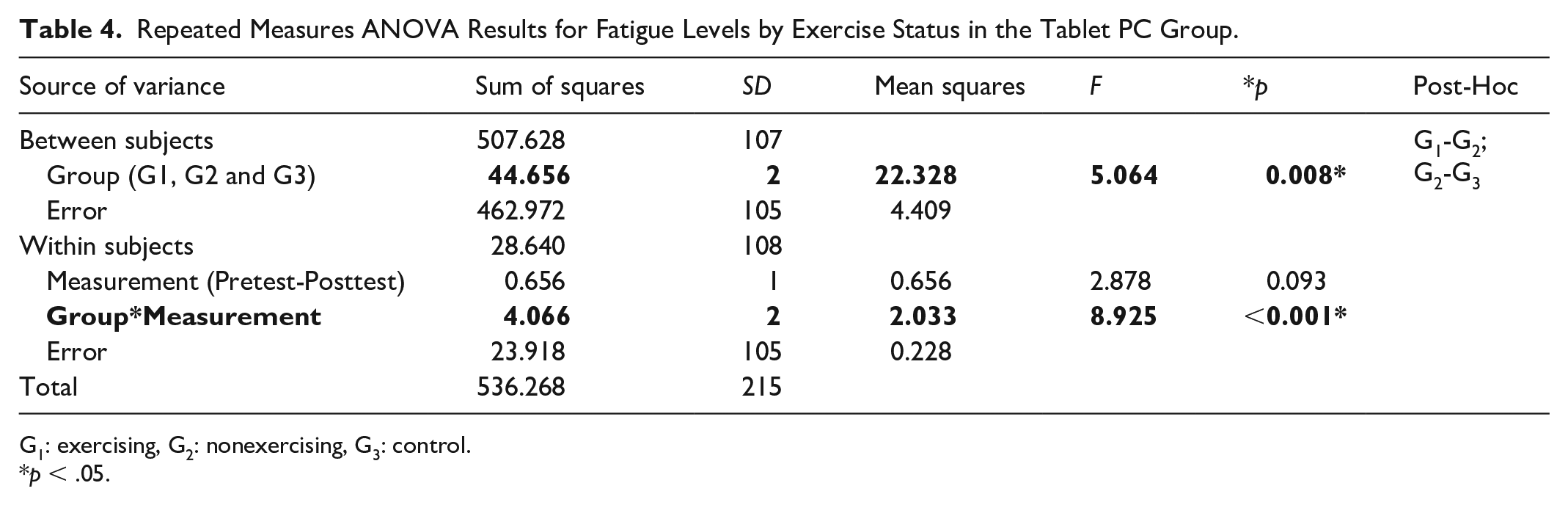
A similar evaluation was conducted to analyze the effect of tablet PC use on students’ perceived fatigue levels. In the Tablet PC group, students who exercised showed a decrease in FSS values during the tablet use process, with a small effect size (d = 0.274) between pretest (2.92 ± 1.43) and posttest (2.54 ± 1.35) scores. Conversely, in nonexercising students, a negligible increase (d = 0.148) was observed between pretest (3.49 ± 1.90) and posttest (3.76 ± 1.76) scores. In the control group, where students completed the process within the framework of the existing instructional program without any intervention, a negligible effect size (d = 0.170) was observed between the pretest (2.71 ± 1.34) and posttest (2.49 ± 1.25) FSS values, indicating a slight decrease. The results of the analysis of whether the changes in fatigue levels among these groups were statistically significant are presented in Table 4.
Repeated Measures ANOVA Results for Fatigue Levels by Exercise Status in the Tablet PC Group.
G1: exercising, G2: nonexercising, G3: control.
p < .05.
The repeated-measures ANOVA results in Table 4 indicate that the interaction between group and measurement time factors was statistically significant for perceived fatigue levels during tablet PC use (F(2, 105) = 8.925, p < .05). Post hoc analyses revealed that the posttest perceived fatigue levels of the nonexercising group (G2) were significantly higher than those of the exercising (G1) and control (G3) groups. In contrast, no significant difference was found between the exercising group (G1) and control group (G3). These findings suggest that similar trends were observed for tablet PC use, as well as for other digital technologies (computers and smartphones). Overall, it was determined that exercises performed after digital technology use positively contributed to reducing perceived fatigue levels, whereas fatigue levels increased in the nonexercising group. A general visualization of these trends is presented in Figure 1.
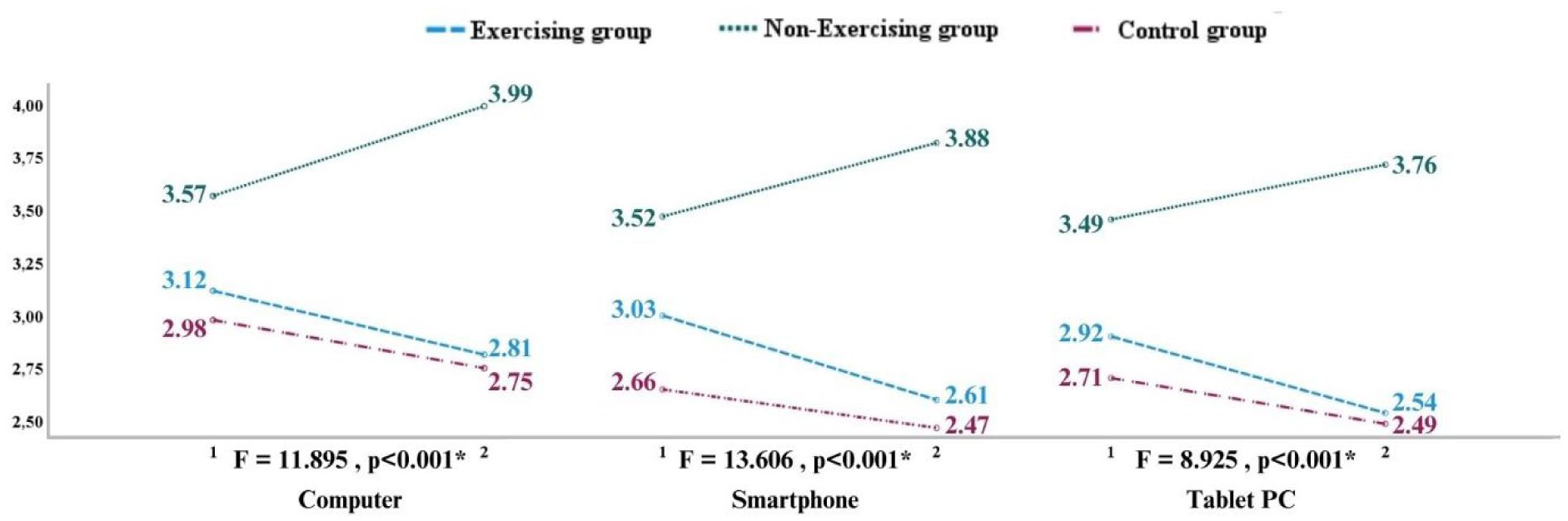
Perceived Fatigue Levels After Digital Technology Use by Exercise Status (with F and p values).
As depicted in Figure 1, a decrease in perceived fatigue levels was observed among students who exercised following digital device use, whereas an increase was noted among nonexercising students. These findings substantiate the positive impact of postusage exercise on mitigating perceived fatigue. Particularly in the cases of computer and smartphone use, the contrasting trends identified between the exercising and nonexercising groups underscore the potential regulatory role of exercise in alleviating fatigue associated with digital technology use.
Reflections of Exercises After Digital Technology Use on Students’ Opinions
The experiences and opinions of students in the exercising group were analyzed using categorical and frequency analysis, both of which are content analysis techniques. The findings obtained from these analyses classified students’ evaluations of the exercises into positive and negative themes, with detailed results presented in Supplemental Appendix C (see Table C2).
When the opinions of the students in the exercise group were examined, it was observed that positive evaluations predominantly stood out. Among the positive opinions, it was particularly highlighted that the exercises were enjoyable (69.4%) and beneficial to health (63.8%). In addition, statements indicating a reduction in fatigue (47.2%) and postexercise pain (27.8%) were also noteworthy. In this context, M3 summarized the positive aspects of the exercise process, stating: “. . . it was enjoyable and also good for me. . . .I even started doing it at home.”
Despite the limited amount of negative feedback, this study provided noteworthy insights. For instance, some students found the exercises to be lengthy or difficult (13.9%), experienced increased post-exercise pain (13.9%), or reported a heightened sense of fatigue (11.1%). Among these, it was particularly notable that the proportion of male students who found exercise boring (17.7%) was significantly higher than that of female students (5.3%). This sentiment was further articulated by F9, who stated: “While doing the exercises, I felt some pain, but it wasn’t much . . . in some movements, but it also felt good.”
The findings indicate that students generally have a positive perspective on exercises, emphasizing their enjoyment and health benefits. These results highlight the success of the program’s motivational elements as reflected by the low proportion of negative feedback. Nonetheless, the presence of minor negative feedback underscores the need for further refinement of the exercise program and its implementation in future iterations.
Discussion
The findings of this study demonstrate that intensive use of digital technologies during instructional processes can increase students’ perceived fatigue levels, and these effects can be significantly mitigated through exercises performed after digital technology use. This finding highlights the need to develop effective strategies for managing the potential adverse effects of increased digital technology usage on students. The observed reduction in fatigue levels among the exercising group suggests that exercise can be effectively used as a tool to alleviate digital fatigue. While the effect sizes observed were small (Cohen’s d ≈ 0.25–0.30), such magnitudes can still carry practical significance in scalable, school-based interventions, particularly when considering the cumulative benefits of small effects over time in educational settings (Gråstén et al., 2015). These findings align with the literature indicating that interventions aimed at increasing opportunities for physical activity in schools can effectively enhance students’ physical activity levels and help manage issues, such as perceived fatigue. A more detailed evaluation of this phenomenon can help clarify how digital technologies produce varying effects across different usage contexts and individual habits.
In this context, the results obtained from the study also revealed that the effects of digital technologies on fatigue differ according to the type of device used and the physical activity status of individuals. For example, it was observed that the increases in fatigue levels due to computer and smartphone use were significantly alleviated in the exercising groups, whereas this increase continued in the nonexercise groups. In addition, students in the control group completed the process with standard course content and applications, without using any digital technology. A general trend of decreasing fatigue level was observed in this group. It is thought that this trend may be due to the fact that the students in the control group were only listeners throughout the process and were in an environment that required less physical or cognitive effort, which aligns with cognitive load theory suggesting that passive engagement may reduce immediate fatigue but limit deeper learning (Sweller, 2010).
The results obtained indicate that the effects of digital technologies on fatigue are not only related to usage duration and frequency but also to individuals’ physical activity habits. Kar and Hedge (2021) stated that intermittent physical activities and posture changes could be an effective strategy for reducing physical fatigue caused by digital technologies. Furthermore, recommendations for managing long-term fatigue also support the effectiveness of physical activity programs, such as those applied in this study, as tools for alleviating digital fatigue (Tollit et al., 2018). The observed increases in fatigue following computer and smartphone use clearly highlight the importance of using these devices in educational settings consciously and in balance, along with integrating physical activities. In this context, exercise stands out as a protective and regulatory strategy that supports both students’ physical well-being and academic engagement. When structured to align with educational settings and student needs, such programs become more effective. Indeed, school-based physical activity interventions have been found to reduce digital fatigue and contribute to long-term healthy behavior development (Gråstén et al., 2015). Beyond these findings, the same study demonstrated that school-based interventions, such as developing motivational learning environments and increasing access to physical activity, could create long-term changes in students’ physical activity behavior.
When students’ opinions regarding exercise in schools were examined, many expressed positive views and reported that exercising with peers was more enjoyable and motivating. Students’ positive attitudes toward exercise and their willingness to continue such activities in their daily lives demonstrate that physical activity is an acceptable and sustainable intervention. Interestingly, a greater proportion of male students reported finding the exercises boring compared to female students (17.7% vs. 5.3%). This gender difference may reflect varying motivational orientations or engagement patterns, suggesting that exercise interventions may benefit from gender-sensitive adaptations in future implementations, as previous research indicates differing motivational profiles among boys and girls in physical activity settings (Ntoumanis et al., 2009). This provides an opportunity for schools and educational institutions to integrate exercise programs into their curricula. Indeed, these findings not only offer theoretical contributions, but also highlight practical strategies for managing the effects of digital technologies in educational environments and supporting students’ overall health and success. Encouraging students to engage in physical activity in teaching environments where digital technology use is inevitable is considered a critical element for the effective implementation of these strategies. Such strategies must ultimately be institutionalized through integrated health and instructional policies to mitigate digital fatigue and foster students’ long-term academic and psychological well-being.
Conclusion and Practical Implications
This study demonstrates that the widespread use of digital technologies in educational settings significantly increases students’ perceived fatigue levels. However, incorporating structured physical exercises into instructional processes was found to be an effective strategy for mitigating these symptoms. Students who participated in the exercise sessions reported not only reduced fatigue but also a willingness to continue such practices, indicating the sustainability of physical activity as an intervention. These findings highlight the critical importance of integrating movement-based strategies into educational environments where digital device use is prevalent. Embedding such preventive approaches into institutional health and instructional frameworks may not only alleviate the health-related burdens of digital immersion but also enhance students’ academic engagement, mental well-being, and holistic development. Drawing on these insights, several institutional strategies emerge as both feasible and impactful for addressing the challenges posed by digital fatigue in educational contexts:
Incorporating Stretching and Postural Exercises: Integrating brief, developmentally appropriate movement routines into daily classroom practice can offer a low-cost, high-access strategy to sustain students’ physical well-being.
Providing Ergonomics Education: Instruction on optimal device use, posture, and screen habits may enhance students’ awareness and reduce strain.
Revisiting School Health Frameworks: Institutional policies should explicitly acknowledge digital fatigue and embed preventive physical activity recommendations.
Capacity Building for Educators: Teacher training should include modules on the physical and cognitive implications of digital fatigue, equipping them with tools to integrate movement into learning routines.
Ensuring Age-Responsive Implementation: Exercise programs should be tailored to students’ developmental needs, with administrative support to foster continuity and scalability.
Beyond institutional action, these findings also open pathways for future research. Studies should aim to validate these outcomes across diverse age groups and school contexts, evaluate the long-term effects of integrated physical activity programs, and compare the efficacy of various exercise modalities (e.g., stretching, aerobic, resistance training) in alleviating digital fatigue. Incorporating objective measures of both physical and mental fatigue would provide a more holistic understanding of intervention effects.
Taken together, these implications highlight a timely and practical path forward: embedding movement into digital learning ecosystems is not only achievable but may be essential for promoting equitable, health-informed educational environments. Implementing such strategies can reduce the adverse impacts of digital technologies, support students’ academic performance, and promote physical health. Ultimately, in an era where digital immersion increasingly defines learning environments, even modest, well-integrated physical interventions may restore balance, promote resilience and engagement, and support a more human-centered educational experience.
Limitations
Although this study was carefully designed and implemented, several limitations must be acknowledged. First, the participant group was limited to sixth-grade students, which may restrict the generalizability of the findings to other age ranges or educational levels. Second, the FSS, while widely used, is a self-report tool that captures perceived fatigue. This subjective nature may introduce individual biases or variability in interpretation. Although the FSS was not originally developed for digital contexts, its alignment with cognitive and motivational fatigue domains was considered appropriate for exploratory use in this educational setting. Finally, the exercise program focused specifically on posture and stretching-based movements. Although this design prioritized safety and developmental appropriateness, it did not allow for comparison across exercise types. Recognizing these limitations will guide the development of more targeted and context-sensitive research, ultimately contributing to scalable and evidence-based educational interventions.
Supplemental Material
sj-docx-1-heb-10.1177_10901981251362826 – Supplemental material for The Regulatory Effect of Physical Activity on Perceived Fatigue from Digital Technology Use in Schools
Supplemental material, sj-docx-1-heb-10.1177_10901981251362826 for The Regulatory Effect of Physical Activity on Perceived Fatigue from Digital Technology Use in Schools by Nesibe Büşra Kabaçalı, Levent Çetinkaya and İlke Keser in Health Education & Behavior
Supplemental Material
sj-docx-2-heb-10.1177_10901981251362826 – Supplemental material for The Regulatory Effect of Physical Activity on Perceived Fatigue from Digital Technology Use in Schools
Supplemental material, sj-docx-2-heb-10.1177_10901981251362826 for The Regulatory Effect of Physical Activity on Perceived Fatigue from Digital Technology Use in Schools by Nesibe Büşra Kabaçalı, Levent Çetinkaya and İlke Keser in Health Education & Behavior
Supplemental Material
sj-docx-3-heb-10.1177_10901981251362826 – Supplemental material for The Regulatory Effect of Physical Activity on Perceived Fatigue from Digital Technology Use in Schools
Supplemental material, sj-docx-3-heb-10.1177_10901981251362826 for The Regulatory Effect of Physical Activity on Perceived Fatigue from Digital Technology Use in Schools by Nesibe Büşra Kabaçalı, Levent Çetinkaya and İlke Keser in Health Education & Behavior
Footnotes
Acknowledgements
This study is derived from a master’s thesis conducted under the guidance and supervision of the second author. The third author, an expert in physiotherapy, made significant contributions to the design, implementation, and evaluation of the exercises that were central to this study. The authors also acknowledge the participation of all students involved in the study and the valuable support provided by individuals who assisted at various stages of the research. Finally, the authors wish to express their deepest gratitude to Prof. Dr. Hafize Keser for her invaluable insights and expert guidance throughout the research process.

Ethical Considerations
The study was approved by the Ethics Committee of Canakkale Onsekiz Mart University (Approval No: 2022-YÖNP-0220) and the Ministry of National Education (Decision No: E-60305806-44-47848759).
Consent to Participate
Both approvals explicitly confirmed that participation was voluntary at every stage and that students could withdraw at any time without penalty. Only students who provided written informed consent, along with parental or guardian consent, were included in the study.
Author Contributions
This article was derived from a master’s thesis conducted by the first author (NBK) under the guidance of the second author (LC). The third author (IK), an academic in the field of physiotherapy, contributed to the selection, implementation, and evaluation of the exercises used in this study. All authors contributed equally to all stages of the article writing process and have read and approved the final manuscript.
Funding
The author(s) received no financial support for the research, authorship, and/or publication of this article.
Declaration of Conflicting Interests
The author(s) declared no potential conflicts of interest with respect to the research, authorship, and/or publication of this article.
Data Availability Statement
The datasets generated and/or analyzed during the current study are available from the corresponding author on reasonable request.
Supplemental Material
Supplemental material for this article is available online.
References
Supplementary Material
Please find the following supplemental material available below.
For Open Access articles published under a Creative Commons License, all supplemental material carries the same license as the article it is associated with.
For non-Open Access articles published, all supplemental material carries a non-exclusive license, and permission requests for re-use of supplemental material or any part of supplemental material shall be sent directly to the copyright owner as specified in the copyright notice associated with the article.
