




Abstract
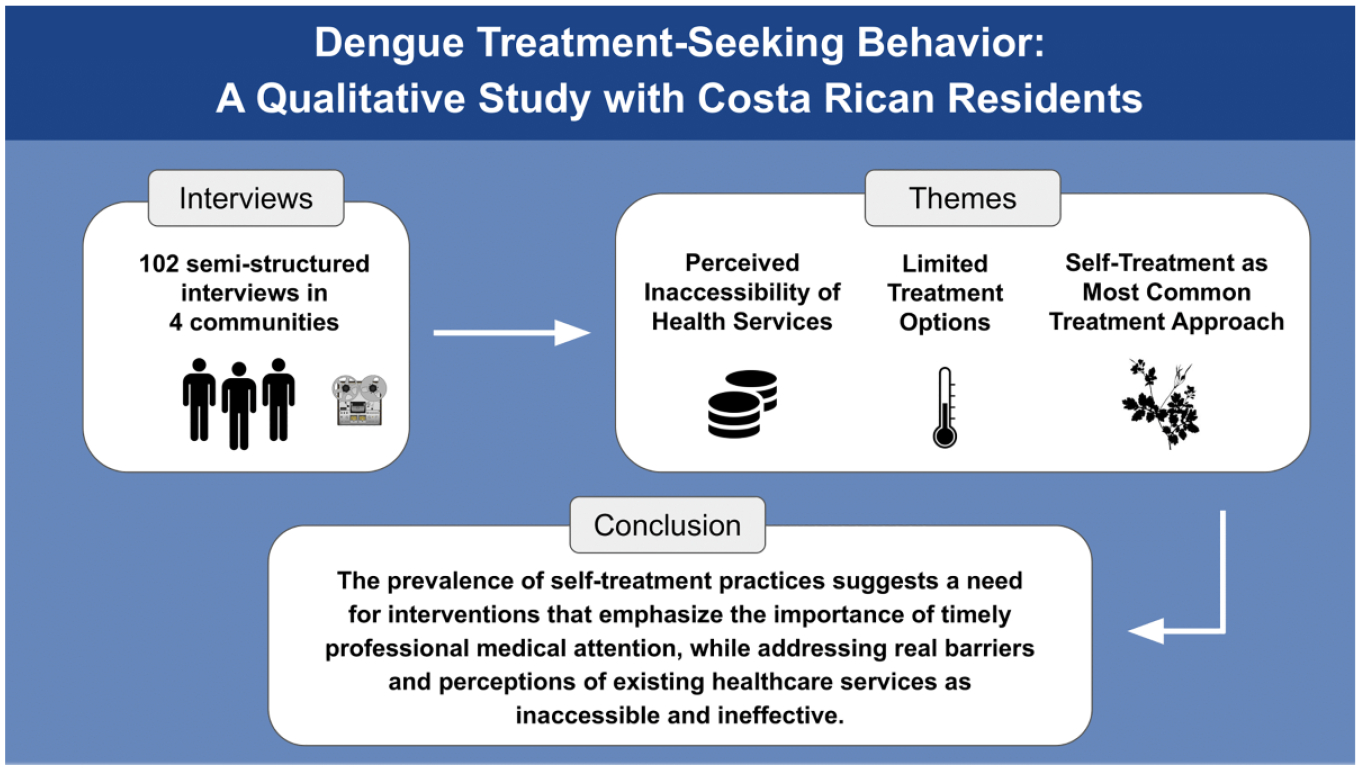
Treatment-seeking behavior (TSB) in relation to dengue infection is a critical aspect of public health, and understanding the factors that influence it is crucial for effective disease management. This research delves into key determinants of dengue TSB by examining the perceptions and behaviors of individuals in Costa Rica, in relation to the Health Belief Model (HBM). This study utilized naturalistic inquiry and incorporated a qualitative research design involving nine students organized into four teams, with at least one student on each team with high Spanish fluency. In total, we initiated 102 semi-structured field interviews with Costa Rican residents in four communities. The interviews were recorded, transcribed verbatim, and coded in several cycles using MAXQDA 2022©. Thematic analysis was used to identify patterns and themes using an inductive approach. We found that several HBM themes influenced dengue TSB among participants. Self-treatment was the most common initial step in managing dengue. Perceived inaccessibility of health care services and perceived ineffective treatment options discouraged medical care-seeking. Ultimately, the prevalence of self-treatment practices suggests a need for interventions that emphasize the importance of timely professional medical attention, while addressing real barriers and perceptions of existing health care services as inaccessible and ineffective. These findings provide a key perspective on dengue TSB, guiding future public health strategies aimed at optimizing health-seeking behaviors and mitigating the negative impacts of dengue on population health.
Keywords
Introduction
With 400 million cases worldwide annually, dengue imposes a significant burden on the health systems of affected countries (Centers for Disease Control and Prevention, 2023). As a mosquito-borne viral infection, dengue is one of the most rapidly spreading diseases in the world (World Health Organization [WHO], 2009). It can cause a range of clinical manifestations, from mild fever and headache to severe hemorrhagic fever and shock. Dengue is transmitted by the Aedes aegypti mosquito, which is highly adapted to tropical and subtropical regions, with multiple serotypes that each elicit a different immune response (Gupta et al., 2021). Consequently, this makes the disease challenging to diagnose.
Health-seeking behavior (HSB) encompasses the actions individuals take when faced with health-related issues, directed toward obtaining suitable remedies (Ward et al., 1997). Treatment-seeking behavior (TSB), a subset of HSB, is shaped by a combination of individual, socio-cultural, environmental, and policy-related factors (Mburu et al., 2021; Olenja, 2003). These behaviors exhibit a degree of homogeneity across regions, but what factors influence these behaviors varies depending on personal health beliefs, socioeconomic barriers, and trust in health care systems (Elsinga et al., 2015; Khun & Manderson, 2007; Mburu et al., 2021).
One notable trend in dengue TSB is the perceived severity of dengue symptoms, both in terms of general awareness about dengue and during the actual experience of the disease (Ng et al., 2023). Preexisting knowledge about dengue and its potential consequences further influences individuals’ decisions regarding seeking treatment for dengue (Ng et al., 2023). Given that dengue places individuals at high risk only after the second infection, the perceived threat associated with the disease tends to be relatively low. Paradoxically, despite this increased risk, those who previously have had a dengue infection are more likely to treat subsequent infections first at home (Elsinga et al., 2015). Indeed, self-medication by home remedies or over-the-counter drugs remains a significantly common first step for illnesses globally, including for dengue (Khan et al., 2022; Malik et al., 2020).
Individuals with suspected dengue infection often only seek medical care (where they can receive appropriate diagnosis and treatment) after the third day following fever onset, when they may be more critically ill (Brasier et al., 2012). This delayed care-seeking for dengue is associated with the development of severe complications, underscoring the importance of understanding dengue TSB (Vicente et al., 2013). With prompt supportive therapy, mortality rates for dengue hemorrhagic fever can fall from as high as 20% in young children to just 1% (Stephenson, 2005). Even in areas with high baseline knowledge of dengue transmission and symptoms, care-seeking tends to be delayed in favor of self-medication, necessitating further exploration into dengue TSB across different backgrounds (Elsinga et al., 2015; Ng et al., 2023).
The Health Belief Model (HBM) is a social psychological model that explains and predicts health-related behaviors based on people’s beliefs (Becker, 1974). It can be used to predict TSB by outlining multiple themes, including perceived susceptibility and severity, perceived benefits and barriers of action, and self-efficacy. The HBM has been widely used to study health-related behaviors, such as vaccination, screening, and symptom response; thus, it provides a useful framework for understanding dengue TSB. To date, there have been few studies in the literature regarding practices and perceptions of dengue in relation to the HBM, especially in the Americas (Elsinga et al., 2015).
This study examined the dengue TSB of residents in northeastern Costa Rica. Our findings offer valuable insights into the factors that influence dengue-related decisions by contextualizing them within the broader framework of the COVID-19 pandemic. In addition, the insights of this study provide implications for public health interventions and policy development, especially in dengue-endemic countries like Costa Rica.
Method
Setting
Costa Rica is a dengue-endemic country and a suitable habitat for the Aedes aegypti mosquito due to its tropical climate and humidity. In the 2022-2023 season, more than 2,700 cases of dengue infection were reported, which is 19% higher compared with the previous 5-year average (WHO, 2023). Northeast Costa Rica has a large agricultural economy and a substantial population of Nicaraguan migrant workers, increasing the potential for cross-border mosquito transmission with adjacent Nicaragua, where dengue is also endemic (Edgerton et al., 2021; International Atomic Energy Agency—Technical Cooperation Program, 2015).
Study Design
This study utilized naturalistic inquiry and a qualitative research design to investigate HSB related to dengue among individuals living in Costa Rica. This approach allowed for an in-depth exploration of participants’ perspectives, experiences, and attitudes regarding topics such as barriers to health access, experiences in the health care system, and dengue risk and infection. Interviews were conducted in a semi-structured manner and questions were designed to uncover barriers and facilitators influencing health care decisions, providing valuable insights into participants’ dengue TSB.
Data Collection
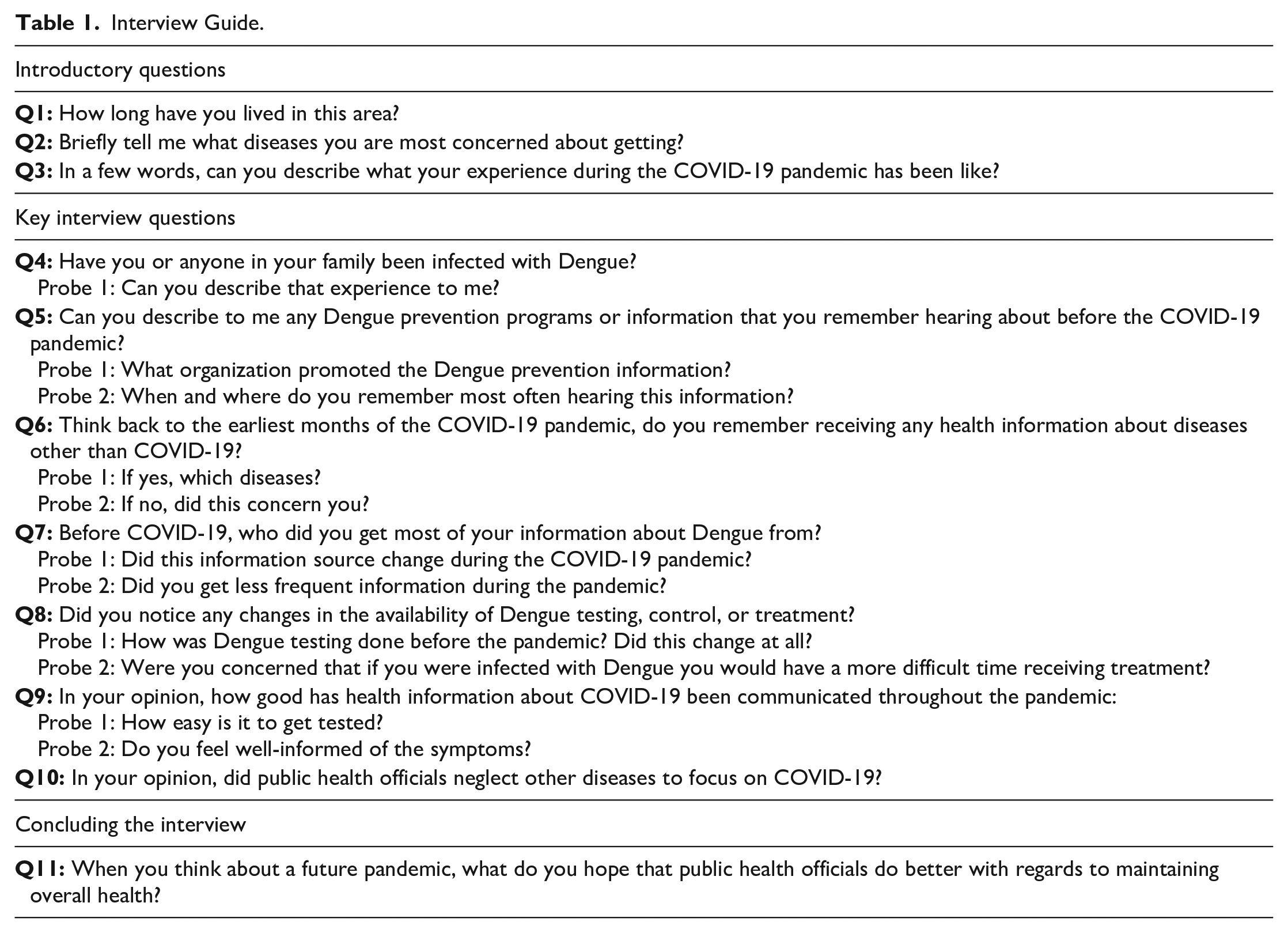
The research team comprised nine students and two faculty members from Texas A&M University and Sam Houston State University, organized into four teams with at least one Spanish-speaking researcher on each team. Students received training on qualitative research and conducting interviews over a period of several months prior to arriving. We developed an interview guide consisting of 10 prompts that aimed to elicit information about participants’ experiences relating to COVID-19, dengue, and how the COVID-19 pandemic impacted dengue prevention and other disease related behaviors (Table 1). The interview guide was tailored to the study objectives and relevant literature on dengue. We pilot-tested the interview guide with two Costa Rican residents and modified it for appropriateness and clarity. It is important to note that no demographic or clinical information was collected during the interview process. The following authors participated in conducting interviews: SA, FA, SR, YZ, NK, KO, ED, KJ, JH.
Interview Guide.
We utilized a geographic quota sampling approach to recruit individuals in four communities in Costa Rica, namely, San Jose, Pital, Santa Fe, and San Carlos. The focus of the quota sampling was to include individuals from both urban and rural areas and, within this geographic selection, one community with higher levels of migrant workers from Nicaragua, as they typically are at higher risk for dengue infection. We sought to sample 20-40 individuals from each community based on general agreement in the literature that this number of interviews allows for data saturation (Hagaman & Wutich, 2017; Vasileiou et al., 2018).
This approach was time-efficient and a practical option that allowed for greater ease of access across the multiple communities where our research was conducted. Participants were approached in public and residential settings and included in the study if they consented, based on interest and availability. Those who expressed willingness and provided verbal consent were included. These Spanish-language semi-structured field interviews lasted between 10 to 60 min.
Interviews were conducted over a 10-day period in late July and early August 2022. Respondents participated either individually or in group formats (e.g., families, couples) from either their homes or in public settings distanced from others, to facilitate an open conversation. Any identifiable information was removed or anonymized during the transcription and translation process to maintain privacy and confidentiality.
Quality Control
We initiated 102 semi-structured interviews, with 84 completed. While the 18 participants with non-completed interviews had initially given consent to participate, they changed their minds during the course of the interview and asked to be removed from the study. Per study processes, the participants were excluded from the study with no consequences to the excluded participants, and any recorded audio was deleted. Of the 84 completed interviews, 12 recordings were excluded due to audio recording errors. In total, 72 interviews were used for the data analysis. The interviews were transcribed verbatim in Spanish and then translated into English by a bilingual researcher while being checked for accuracy and consistency. The translated transcripts were subjected to quality control checks by another researcher who verified the translation and corrected any errors or ambiguities. The final cleaned transcripts were then analyzed.
Data Analysis
We conducted a thematic analysis of the interview transcripts. Translated transcripts were then coded using MAXQDA 2022©. The data was subjected to three levels of coding, utilizing an inductive approach. The first level of coding consisted of descriptive deductive coding and was conducted by authors CCB, AL, JH, and AA. Only one of the authors coding the data had participated in conducting interviews. This first-level generated initial codes capturing basic features of the data. In addition, during the initial level of analysis, we confirmed that data saturation had been reached. All first-level coding was examined and quality checked by CCB to ensure that coding was harmonized across coders. The second level was led by CCB and AL. This second level of coding focused on consolidated the initial codes into broader categories reflecting main topics. The third level refined the categories into final themes representing core meanings of the data. This third and final level of coding was led by AL, with support and quality check from CCB.
Results
We found that most participants were familiar with dengue and had a general baseline knowledge of dengue prevention behaviors. This was exemplified by discussions of removing stagnant water and trash when asked what activities they could do to protect themselves from dengue infection. While the high levels of familiarity with dengue are encouraging, this familiarity seemed to contribute to the health-seeking behavior of individuals interviewed. We identified several themes relating to dengue TSB that can be classified within the HBM framework. Of these, we identified two main themes and one subtheme: Theme 1 is Perceived Inaccessibility of Health Services Decreases Dengue Treatment Seeking Behavior, Theme 2 is Limited or Ineffective Treatment Options Decrease Dengue Treatment Seeking Behavior, Theme 2b is Self-Treatment is Common for Dengue.
Perceived Inaccessibility of Health Services Decreases Dengue Treatment-Seeking Behavior
Some participants expressed disappointment with the accessibility of general medical treatment. They reported long wait times at clinics, making it difficult to receive prompt care. One participant said, “I have always gone to the emergency department because I knew that if I was feeling sick with a cold or something, I would be seen faster there.” Another spoke of limited physical access to health care facilities in rural areas, stating, “normally in [those] districts, there aren’t hospitals. You have to come to the center.” In addition, the perceived cost and complexity associated with navigating aspects of the health care system were mentioned; one respondent said that “the system here to get tested [for dengue]. . . it’s a little complicated. Here, the only test that one gets done quickly is the COVID test.”
One participant suggested that having “medicine be made more accessible for those who are insured” would be an improvement. Another participant explicitly noted “if it’s not good insurance, they don’t attend to you.”
Limited or Ineffective Treatment Options Decrease Dengue Treatment-Seeking Behavior
Many participants perceived a limited range of medical treatment options available for dengue. They felt that clinics and hospitals did not offer many treatments, if at all. One respondent said that clinics “don’t provide treatment. Nothing at all” for dengue infection. Two people spoke about perceptions that clinics only provide pain relievers, rather than curative treatments: “some people complain about going to the hospital and only receiving acetaminophen injections” and “the only treatment they give for dengue is acetaminophen, or paracetamol as some people know it.” Some participants mentioned that the clinics primarily focused on symptom management rather than curative treatment of dengue. One participant whose son became infected with dengue during the onset of the COVID-19 pandemic decided against taking their son to the local clinic in lieu of home treatment:
I told my husband that they would probably just give him acetaminophen without really knowing if he had dengue, so I decided to treat him at home instead. I tried everything I could think of, and that’s why I didn’t take him to the clinic.
Another respondent remarked:
There is no treatment at all, other than taking care of yourself and hydrating.
Subtheme: Self-Treatment as the Most Common Treatment Approach
Many participants preferred the use of home remedies as an initial, often sole step in managing dengue. A significant number believed dengue could be effectively treated at home in lieu of medical care. Participants viewed self-treatment via pharmaceutical and non-pharmaceutical remedies as viable alternatives to seeking medical care. Examples of home remedies included vitamins, medicinal plants, and chamomile with flaxseed. One participant “self-medicated with paracetamol,” relying on an over-the-counter pain reliever to manage their dengue infection, while another participant who contracted dengue during the COVID-19 pandemic consumed beetroot to alleviate their symptoms. One person applied a poultice on their niece to lower their temperature from an ongoing dengue infection. This preference for self-treatment extended beyond dengue and encompassed other diseases as well, including the flu. One respondent stated that they would seek treatment for a suspected dengue infection, but that:
It is better to rely on natural treatments that are 100% more effective than some of the medications provided by the pharmacy.
This participant also treated their dengue-infected nephew with a mixture of beetroot, orange juice, and other natural ingredients that “in just two days . . . managed to increase his platelet count.”
Another respondent affirmed this attitude of forgoing medical care as a general sentiment, stating that they “rarely go to hospitals or clinics for non-urgent matters. It would have to be something really serious for me to seek medical attention.”
Discussion
Treatment-seeking behavior in relation to dengue infection has rarely been explored in the literature, particularly within the framework of the Health Belief Model. This study aimed to investigate the perceptions of individuals in Costa Rica regarding participants’ dengue TSB. We found insights that shed light on key aspects of dengue TSB, including that (a) dengue TSB is influenced by perceived inaccessibility of health care access and ineffectiveness of treatment and (b) most individuals pursue home self-treatment for suspected dengue infection as their primary option.
Our study suggests that knowledge alone was not sufficient to motivate individuals to seek medical care for dengue infection. Many participants had high levels of baseline knowledge about signs and symptoms of dengue infection, transmission, prevention, and control. However, other factors associated with the HBM, such as perceived ineffectiveness and inaccessibility of health care resources, were more significant influences on participants’ dengue TSB than solely knowledge. As a result, we chose to use the HBM as the main foundation for interpreting dengue TSB for our study.
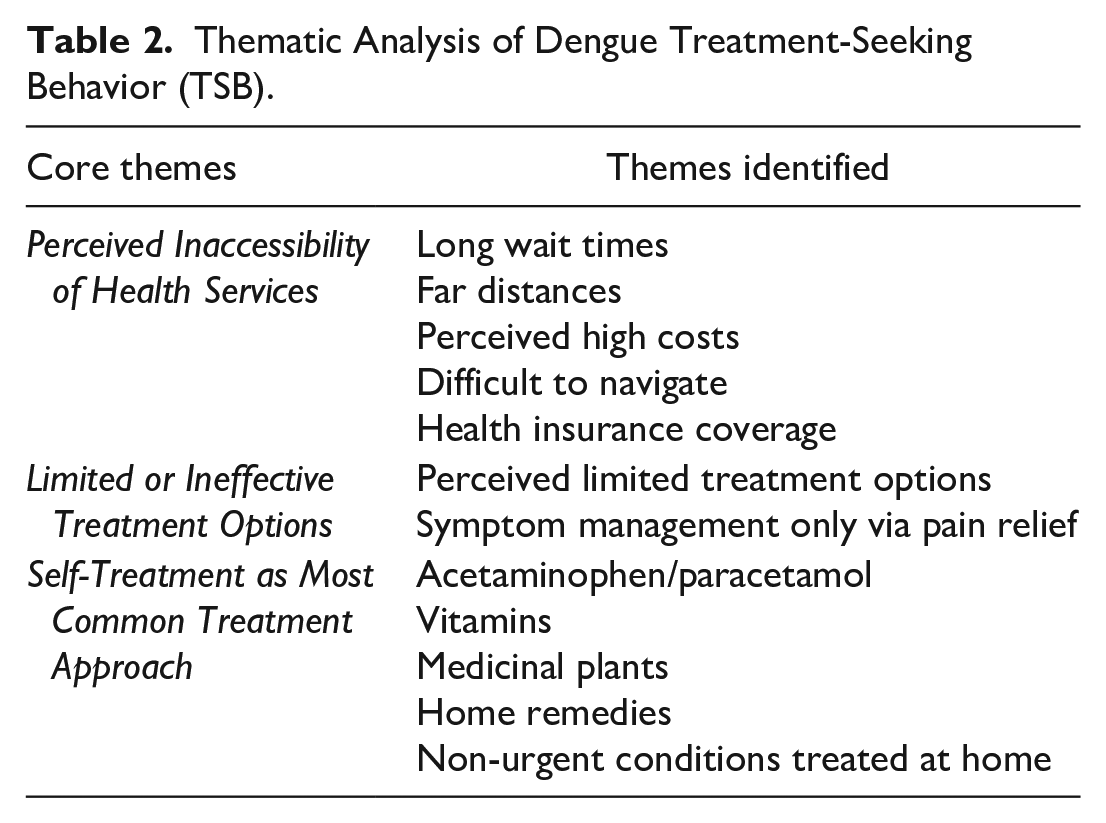
Notably, the pervasive nature of these themes across our interviews underlines the relative homogeneity in beliefs and actions related to dengue TSB in this region, consistent with research that supports local tradition, culture, and education as strong influences on community-specific dengue practices (Carabali et al., 2015). This convergence in thematic content could explain the limited number of themes identified, as the prevailing perspectives were shared among the majority of participants, leaving fewer viewpoints to surface (Table 2).
Thematic Analysis of Dengue Treatment-Seeking Behavior (TSB).
Perceived Inaccessibility of Health Care Services and Perceived Ineffectiveness of Treatment Options
We found that both the perceived inaccessibility of health care services and the perceived ineffectiveness of treatment specific for dengue impact one’s willingness to seek medical care. These findings align with the HBM’s concept of perceived barriers, where individuals weigh the potential obstacles, such as difficulty accessing care or doubts about its effectiveness, against the perceived benefits of taking action. Individuals are less likely to seek medical care when they perceive these barriers as substantial.
Our participants reported barriers that discouraged them from seeking medical care for their health issues, such as long wait times, limited physical access, high costs, and complex system navigation. These barriers are consistent with previous studies that have identified similar challenges in accessing health care in rural locations (Coombs et al., 2022; Hulland et al., 2019). Moreover, these barriers may have a negative impact on the health outcomes of those with comorbidities requiring regular medical attention. The literature is scarce in relation to health care accessibility and dengue, but one study found that accessible health care is linked to high-quality, timely treatment and prevention of viral hemorrhagic fevers (Riley, 2012). One review also found that social determinants of health play a significant role in dengue mortality (Saghir et al., 2022).
Many participants felt that clinics and hospitals did not offer any curative treatment for dengue but only provided pain relievers or symptom management, decreasing their likelihood of seeking medical care. This perception could be due to the lack of effective and widespread antiviral drugs or vaccines for dengue, which is a major challenge for dengue control globally (Obi et al., 2021). This may lead to underutilization of health services for dengue, with individuals opting to self-medicate at home. Consequently, this may result in delayed diagnosis or treatment, increasing the risk of severe complications.
Most Individuals Pursue Home Self-Treatment for Suspected Dengue Infection as Their Most Common Treatment Approach
Notably, our findings did not uncover themes involving the perceived severity of dengue among participants. Perceived severity is traditionally a core concept of the HBM. However, we can infer that participants generally had a decreased perceived severity of dengue by their approaches to treatment. For example, participants who choose to self-medicate with home remedies over seeking formal medical treatment for dengue would put themselves at greater risk for more dangerous complications, such as dengue hemorrhagic fever. This supports our finding that participants overall had a high level of understanding regarding dengue treatment options, but a lower level of understanding of the risk of dengue complications.
A key subtheme that emerged from this discussion was the use of home remedies as an initial, often sole step in managing dengue. This is consistent with studies that have reported similar practices in initial management in other dengue-endemic countries, such as Venezuela, Colombia, and Cambodia (Elsinga et al., 2015; Hottz et al., 2011; Khun & Manderson, 2007). Participants viewed self-medication via pharmaceutical and non-pharmaceutical remedies as alternatives to seeking medical care. Examples of home remedies included vitamins and medicinal plants. Similar traditional folk remedies used for dengue are also common self-treatments for infectious diseases in other global settings (Wong & AbuBakar, 2013). Pharmaceutical interventions primarily comprised over-the-counter paracetamol as fever and pain relief.
Some participants believed home remedies were more effective than conventional medications in increasing platelet count, reflecting the thrombocytopenia that is considered a hallmark of dengue infection (Suarez et al., 2005). This preference for self-treatment may be motivated by various reasons, such as convenience, affordability, accessibility, familiarity, and perceived effectiveness of home remedies (Wong & AbuBakar, 2013). However, self-treatment poses risks, such as underestimating symptom severity, delaying medical care, and increasing the potential for complications (WHO, 2009). Therefore, dengue awareness initiatives should address the benefits and limitations of home remedies as well as the need for timely and appropriate medical care for suspected dengue infections.
Limitations of this study include the use of a quota sampling method, and thus, the generalizability of the findings is limited only to those who have similar characteristics. Another limitation of this study is the lack of demographic data or participant characteristics tracking. The interviews did not involve specific questions about what might encourage participants to seek care in a health care setting. The interviews were exploratory and semi-structured, primarily focusing on how and why participants don’t seek care, limiting our ability to collect comprehensive data on facilitators and barriers. Future research can incorporate directed questions to better capture the factors that influence individuals’ decisions regarding dengue TSB.
This study is novel in its approach to utilizing the Health Belief Model as a framework for understanding the attitudes and beliefs underlying dengue TSB. Our findings help explain the reasons why participants may or may not pursue medical care for suspected dengue infection, which is a common, yet underexplored behavior in dengue-endemic regions. Understanding why individuals opt for self-treatment over seeking medical care is essential for designing targeted interventions that address severe health outcomes toward mosquito-borne pathogens and other infectious diseases on a population level. Future studies should expand upon this research by collecting additional characteristics to provide a more comprehensive understanding of the factors influencing perceptions related to dengue TSB. We encourage the usage of the Health Belief Model as a suitable foundation for future qualitative dengue research.
Conclusion
We conducted a study of 72 individuals in Costa Rica to understand TSB related to dengue. Using the HBM, we determined that people frequently do not seek care at all because of the perceived inaccessibility of health services and a lack of treatment beyond pain relief. These findings suggest that it is not a lack of perceived severity or susceptibility to dengue that prevents people from seeking care but rather a perception that the health care system is ineffective for dengue infection. This understanding has implications for public health professionals and health promotion and education in Costa Rica because it demonstrates that changes in TSB for dengue will need to come through changes in perceptions of the effectiveness of health care. It also suggests that, given the high prevalence of self-treatment among study participants, the number of dengue cases in the region is likely an underestimate.
Footnotes
Acknowledgements
The authors acknowledge Rosibel Woodward for her invaluable assistance and hospitality in setting up lodging and interviews during our time in Costa Rica.
Authors’ Note
Alexander Le is also affiliated to Texas A&M University College of Medicine, Bryan, TX, USA.
Christine C. Blackburn is also affiliated to Sam Houston State University, Huntsville, TX, USA.
Declaration of Conflicting Interests
The author(s) declared no potential conflicts of interest with respect to the research, authorship, and/or publication of this article.
Funding
The author(s) disclosed receipt of the following financial support for the research, authorship, and/or publication of this article: This project was funded by Texas A&M University, as an internal grant with no associated grant number. The sponsors did not play a role in study design, data collection, data analysis, decision to publish, or preparation of the manuscript.
Ethical Approval
The Texas A&M University Institutional Review Board approved the study. IRB Number: IRB2022-0248. Oral consent was obtained from all study participants.
