




Abstract
Key Points
• Intergenerational dance is an under-researched area of dance literature and more primary studies are required.
• Intergenerational dance programmes can boost the confidence and socialisation of both young and older participants due to their creative and social nature.
• Older adults can subjectively feel improved health benefits and feel empowered to become more involved in other activities through the medium of intergenerational dance.
Introduction
Research on intergenerational interventions, which bring people together from two different age groups, began approximately 60 years ago and focused on family cohorts. 1 More recently, research in this area has gained in popularity and has expanded to non-familial groups, and groups with different age gaps. Ageism is a significant issue that affects a large portion of the population. 2 This discrimination has serious consequences on the health of individuals across the lifespan. Experiencing everyday ageism can worsen depressive symptoms and health outcomes linked to chronic conditions. 3 The World Health Organisation’s Global Report on Ageism 4 highlighted intergenerational programming as a key and essential mechanism of tackling ageism in the community.
Intergenerational programmes can target a range of outcomes including understanding of different ages, creating meaningful relationships, and nurturing emotional growth. 5 These programmes can vary in content, including artistic programmes, educational activities, health-based activities, and community projects. 6 They have been found to benefit both older adults and young people alike.7,8 While the breakdown of age-related barriers and stereotypes between age groups is commonly a primary outcome assessed in many intergenerational programmes, other outcomes have been targeted, such as health and cognition. 7 Previous systematic reviews found some evidence to suggest improvements in mental health outcomes and self-reported health in older adults, 9 and children’s attitudes towards older people, however, limited evidence was found to support these benefits due to a lack of outcomes being assessed. 5 This is due to variance in content of the programmes and measurement of outcomes and issues with heterogeneity of reporting made it difficult to analyse their effects. 5 Physical outcomes, such as balance or strength, are generally neglected in such interventions. 10
Both older and younger populations are struggling to achieve their recommended physical activity (PA) levels, with over one-quarter of adults and three-quarters of adolescents not reaching the recommended guidelines.11,12 Dance is a form of PA at the intersection of arts and exercise that has been evaluated in both adults and children. Social dance programmes have been shown to improve health, wellbeing, and foster a sense of community in older adults. 13 Regardless of the style, dance can improve measures of balance, strength, and endurance in older adults 14 as well as cognitive outcomes 15 and physical function. 16 Previous qualitative research has shown that dance programme interventions are an enjoyable experience for older adults, encourage social connectedness, and improve participants’ attitudes towards their health and wellbeing. 17 In healthy young people, there is emerging evidence to show dance may improve subjective wellbeing. 18 Dance interventions can enable self-expression, provide a sense of freedom and increase self-confidence in young people. 19 Consequently, dance may be an acceptable alternative to conventional exercise for both older adults and young people. There is a need to explore participants’ experiences of these programmes. Analysis of participants’ values and experiences within intergenerational dance programmes can help to develop similar programmes in the future.
A scoping review 10 identified no published synthesis of the qualitative literature exploring the experiences of participants in intergenerational dance programmes. Qualitative syntheses can allow for greater interpretation and analysis of the experiences of participants, to help shape future work in intergenerational dance. 20 Thus, the aim of this qualitative review is to identify, explore and synthesise the qualitative and mixed-methods evidence surrounding participants’ experiences in intergenerational dance programmes.
Methods
A qualitative synthesis approach 21 was used to identify key themes across the literature of intergenerational dance. The Enhancing transparency in reporting the synthesis of qualitative research (ENTREQ) was used to guide the reporting of this review 22 (Supplemental Appendix 1).
To identify the research question, preliminary searches were conducted exploring search terms that would suit the research question. The PEO model was used to guide the inclusion criteria.
Population: intergenerational; two generations.
Exposure: dance or movement to music programmes.
Outcomes: all outcomes including participant experiences, perceptions, facilitator experiences etc. will be included.
Nine databases were searched, including CINAHL, Allied and Complementary Medicine Database, PubMed/Medline (Central), and Performing Arts Periodicals Database For the purpose of this review, only peer-reviewed articles were considered for inclusion, therefore the grey literature was not searched.
The search was conducted in October 2023, with an updated search completed in May 2025. The search string was created with a research librarian on CINAHL and adapted for other databases (Supplemental Appendix 2).
Following the search, all identified citations were collated and uploaded into Rayyan software 23 and duplicates were removed. Titles and abstracts were screened by two independent reviewers (SO′R; SD). Conflicts were resolved through discussion, and a third independent reviewer (A.C.) was involved with continued conflicts to determine eligibility of the papers. Full texts were sourced and screened for relevance against exclusion criteria by two independent reviewers.
Data were extracted by the lead author (SO′R) under headings listed in Table 1 and all were cross-checked for accuracy by a second reviewer with one change recommended based on a discrepancy between sample sizes reported throughout the text. First and second order data were extracted for the purposes of thematic synthesis.
Study Characteristics.
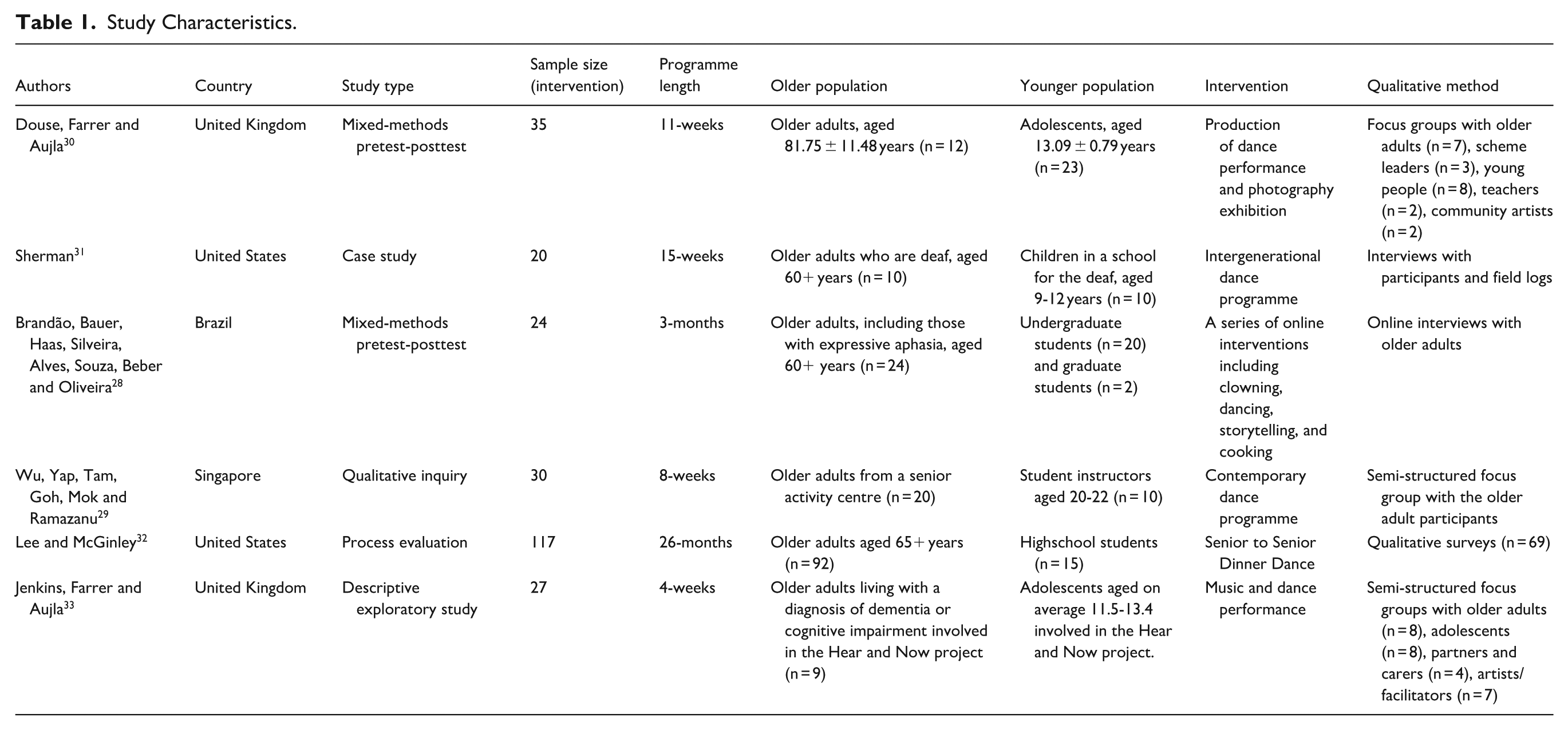
The qualitative Critical Appraisal Skills Programme (CASP) checklist was independently conducted to appraise the paper quality. 24 To assess confidence in the findings, the Grading of Recommendations Assessment, Development and Evaluation Confidence in the Evidence from Reviews of Qualitative (GRADE CERQual) research tool 25 was completed.
The thematic synthesis approach as outlined by Thomas and Harden 21 was chosen to analyse the findings and inductively identify themes. This approach was inductive and aligns with a critical realist position. 26 It is an accessible method for researchers new to QES and can appeal more to an audience of intervention developers or policymakers. 27 The included papers were uploaded to NVivo 14, and the findings and quotations were coded line-by-line by an independent reviewer (SOR). Peer debriefing sessions were held with the research team following coding and theme identification.
Results
The original search resulted in 395 papers, with 206 remaining after duplicates were removed. Once the exclusion criteria were applied, six papers remained (Figure 1). Two of these were mixed methods and four were solely qualitative.
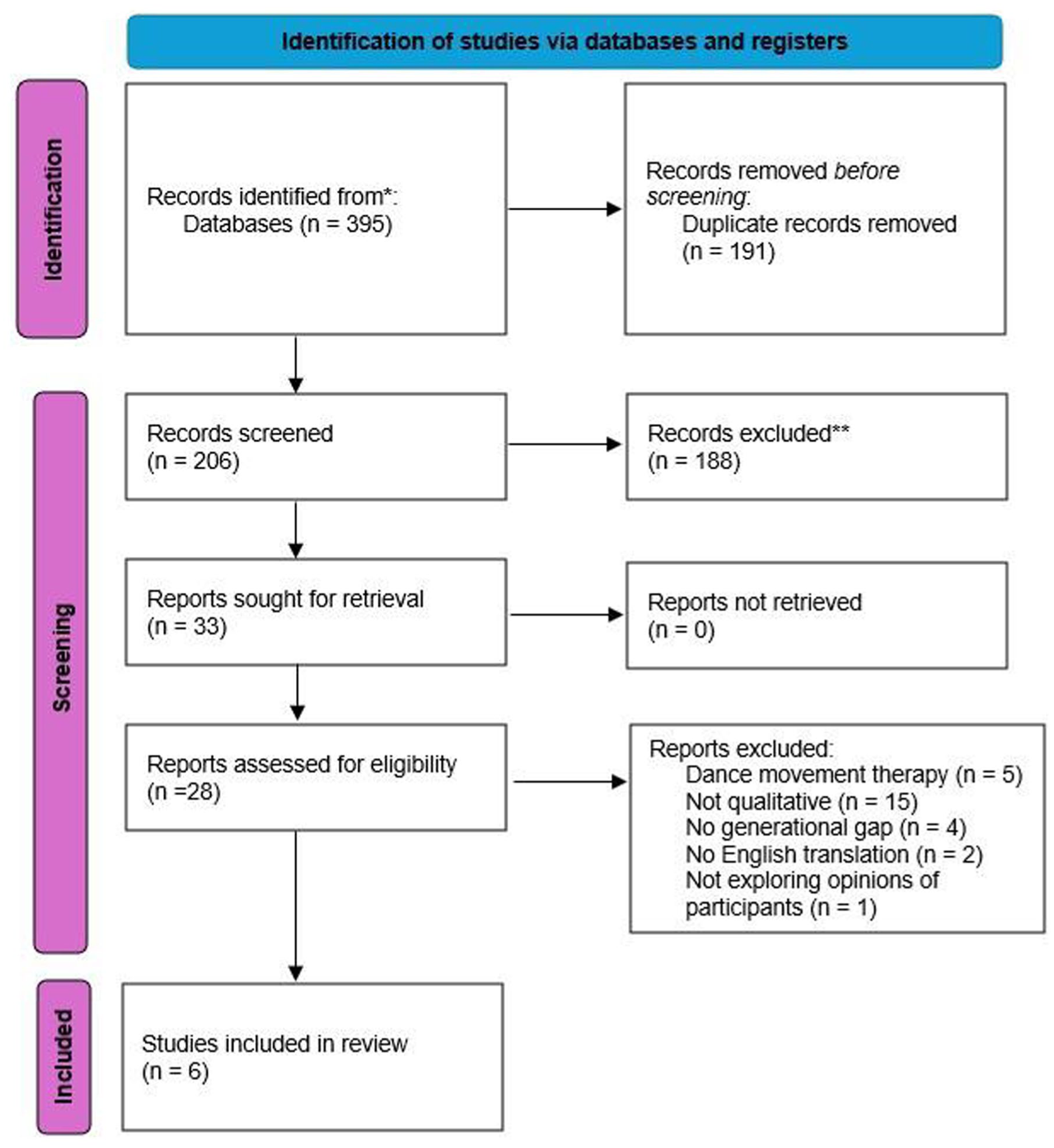
PRISMA flow diagram.
The total sample size across the six papers was 192 participants. Two papers present research conducted in each of the United Kingdom and the United States, and one from each of Singapore and Brazil. The older populations in these studies were typically recruited from day centres or programmes linked to existing research studies. In two studies,28,29 the younger population were student instructors enrolled in a university. In the other four studies, the younger population were schoolchildren. See Table 1 for study characteristics.
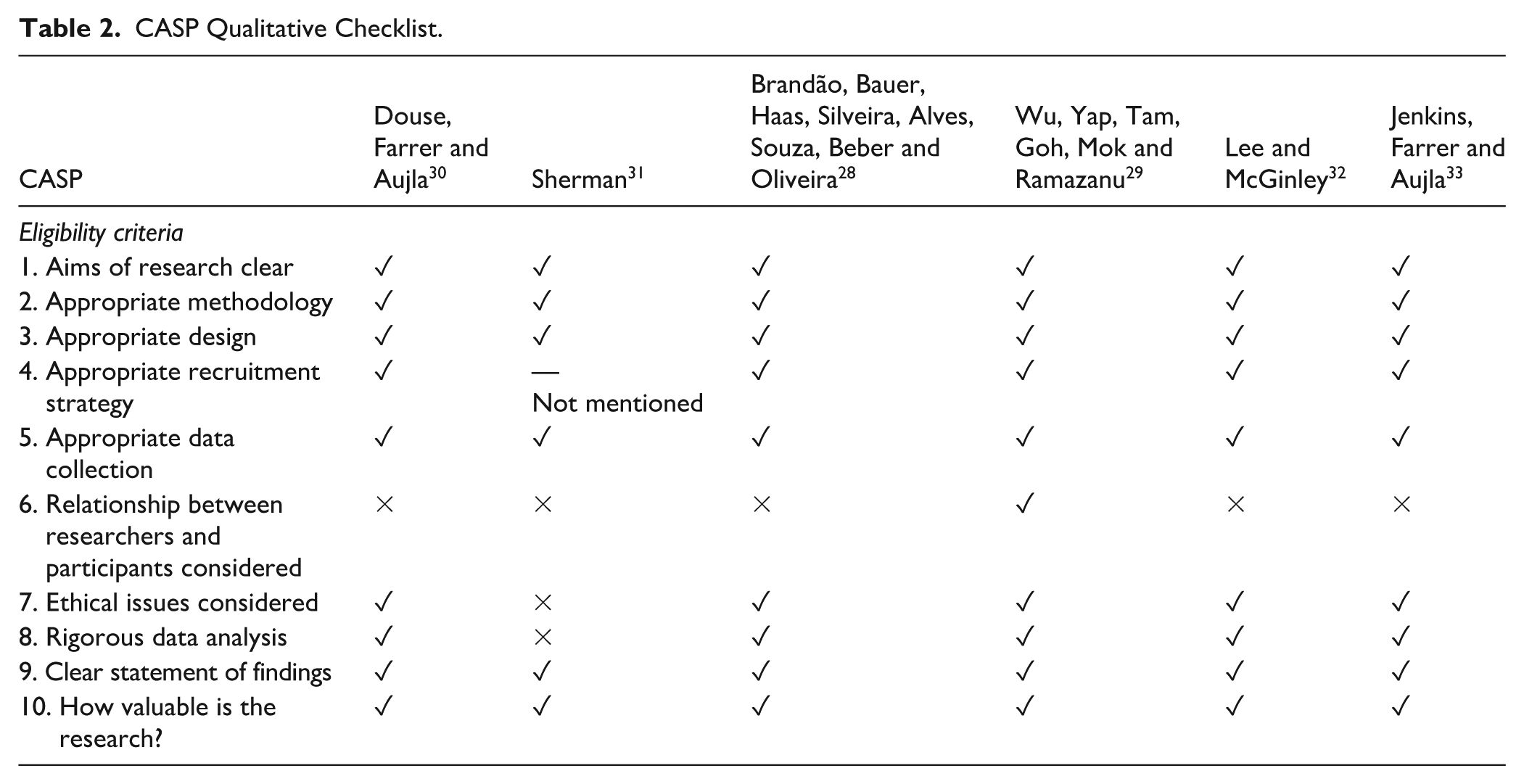
The findings from the CASP showed that five of the papers were good quality, however reflexivity was not well reported (Table 2). The GRADE CERQUal revealed low – moderate confidence in the findings of this review (Supplemental Appendix 3).
CASP Qualitative Checklist.
Two themes were identified during thematic synthesis. Figure 2 illustrates the coding tree and process to the final descriptive themes (Figure 3). The overarching themes were Socialisation, Communication and Participant Connections and Challenging and Rewarding. Most of the focus groups/interviews focused on the older adults’ experiences, with limited input from the younger cohorts. Therefore, both age groups are not equally represented in these themes.
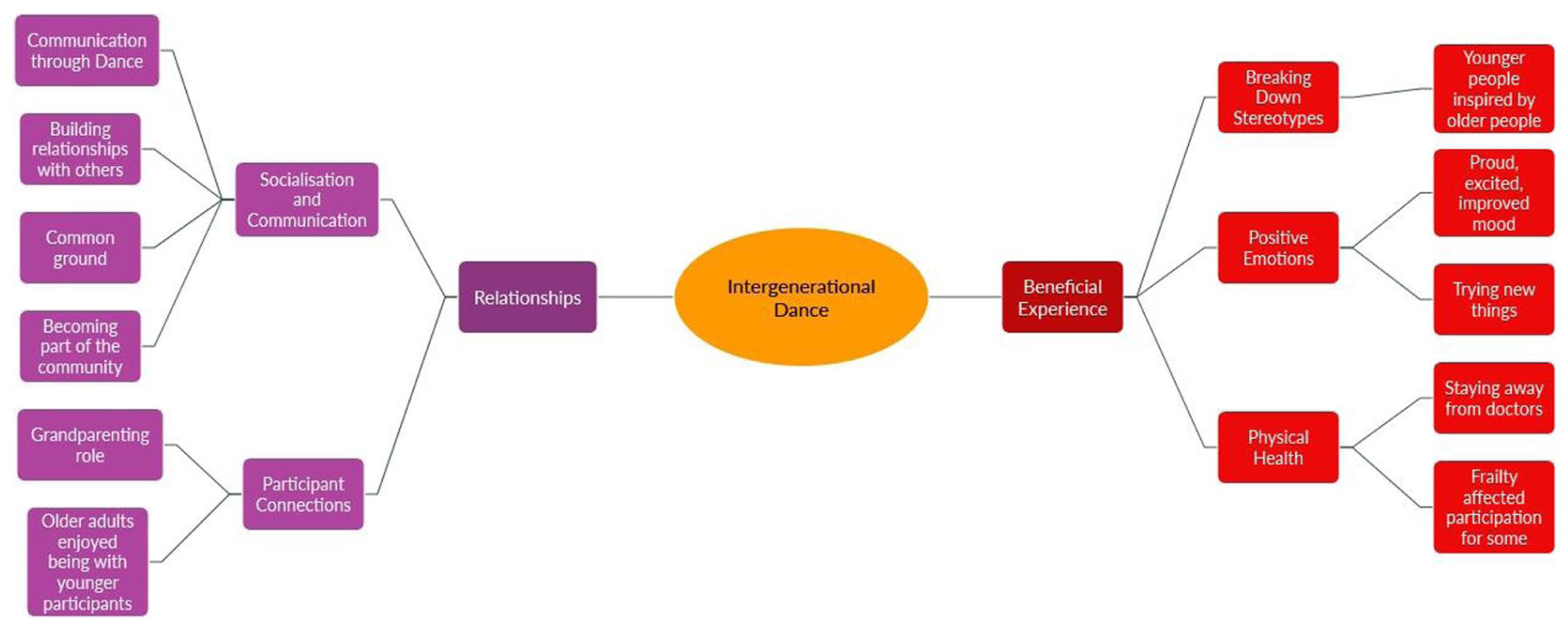
Coding tree.
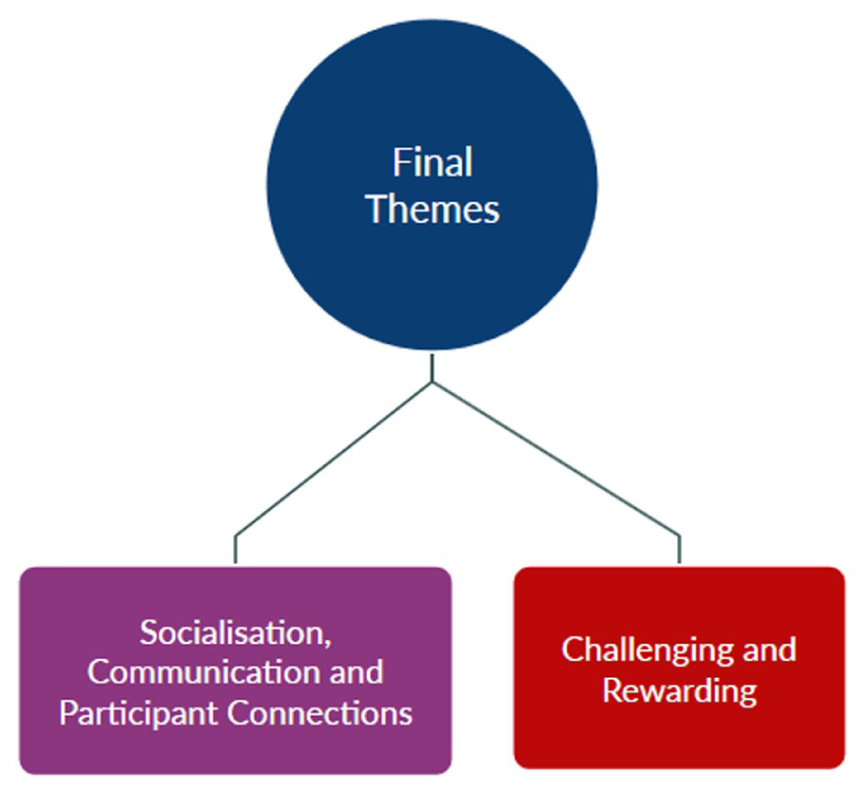
Final themes.
Socialisation, Communication and Participant Connections
Older adults involved in the intergenerational programmes enjoyed the social aspect of the group setting.28 -31 Older adults in Brandão et al 28 and Douse et al 30 commented on the loneliness they experienced as they aged, One participant stated, “You get a bit lonely, you see, on your own and all that”. 30 The studies by Brandão et al 28 and Wu et al 29 took place online during the Covid-19 pandemic and while the group was not meeting face-to-face, one participant remarked that “[They] like to see everyone on the screen”, 28 mitigating some of the loneliness felt during this time.
All papers commented on the relationships between the cohorts and the evolution of this throughout the programmes. Douse et al 30 described how the dance programme helped to dissolve stereotypes between the groups. “The young children were so good. You know, I thought they’d be a bit more airy, being with older people, um, but they were all extremely welcoming and they helped us, encouraged us. . .” 30 These stereotypes were challenged further in Lee and McGinley 32 due to an inversion of roles, for example an adolescent serving meals to older adults. The adolescents were encourage to share their hopes for the future and this enabled older participants to gain greater understandings of other age cohorts: “I think the more opportunities we have to spend with other generations, the better we will understand and be able to communicate with each other”. 32
Three studies described how participants formed an intergenerational community during the programmes, and dance was the ideal method for promoting that socialisation. Wu et al 29 noted that through communication with student instructors, the older adults were able to form a social support system with each other. The older adults reported an increase in their confidence to socialise following the formation of relationships with the teenagers. Conversely, Lee and McGinley 32 found that while the older adults enjoyed watching the younger participants and dancing with them, their social connections were mostly with those of similar ages. However, one participant found that the facilitators in the programme were patient and gave participants time with the activities. This made it feel like an age-friendly environment, and they would appreciate more intergenerational initiatives. “They were going ‘come on, take your hands,’ whatever, and I thought that was just lovely. Their participation was brilliant”. 30 The participants in Sherman 31 described how they were able to build relationships and support each other based on their common ground, with both groups being part of the deaf community. The older adults in this study also adopted grandparent roles, and the children adopted grandchild roles, similar to the younger people in Jenkins et al, 33 who became more sensitive and understanding towards the older adults who had a dementia diagnosis.
Challenging and Rewarding
Positive experiences were reported by older and younger participants in all papers, and the artistic elements of the interventions were enjoyed. Jenkins et al 33 highlighted that some participants felt mentally and emotionally stimulated through artistic engagement. Wu et al 29 found that their singing and dancing intervention was encouraging participants to be physically active as it was enjoyable “We sang, we cried. It was so much fun; it will stay in my heart”. 29
Older adults from Lee and McGinley 32 felt drawn to participate in a dance programme and felt revitalised from the active nature of the programme. Similarly, one older participant in Sherman 31 found that they had “more energy”. Another participant in Brandão et al 28 remarked that he no longer felt like a “dead weight”. A participant from Douse et al 30 remarked that “. . . I feel a bit more supple, I did. Because I’d got very stiff. And that helped.” In Wu et al, 29 it was highlighted that participants who practised steps at home and recalled these steps in the next session, reported that their memory and cognition improved. Participants in Lee and McGinley 32 found the inclusion of trivia questions, in conjunction with dance, helped their cognition.
Some participants were challenged physically and psychosocially in the dance programmes. Douse et al 30 found that some of the older participants initially felt vulnerable and nervous to dance in front of others. However, as the dance programmes progressed, participants reported feeling confident and proud of their involvement and enjoyed participating in something outside of their comfort zone.
The carers of some participants in one study felt anxious of the participants’ physical ability to participate in a dance programme.
. . . but the family are always very, very frightened for her to come out of that environment without them being there [. . .] Um, and it was that vulnerability . . .
29
Regarding this, Wu et al 29 recommend that future programmes include injury prevention components and ensuring that beginner older adults are taught the dance moves at their level.
Discussion
This review explored the experiences and opinions of those involved in intergenerational dance programmes, with six papers included. Following analysis, two main themes were identified. These were Socialisation, Communication and Participant Connections and Challenging and Rewarding. The first theme described the social aspect of the programme and how participants connected with each other. The second theme describes the experience of participating in the programme, including the associated emotions and physical benefits that were felt. Overall, the dance programmes were found to be an enjoyable intervention, and relationships were built between the younger and older participants.
Socialisation, Communication and Participant Connections
Within the first theme, participants described the social aspect of the programmes. Some of the older adults in this review noted that they felt lonely, and this loneliness was a factor in their decision to participate in the programmes. They described the beneficial effects of the programme on their loneliness. There are currently a high proportion of both older and younger people experiencing loneliness. 34 A qualitative study found that older adults experiencing loneliness generally prefer to participate in group-based activities with a shared interest, rather than groups with a focus on socialisation issues or loneliness. 35 In this instance, dance, or intergenerational activity, was the shared experience. This review found that many older adults did not desire to participate in interventions targeted towards older adults who are lonely, 35 therefore the dance component may have encouraged more people to participate and benefit from the programmes compared to just a social group. One study had to adapt to an online version of the intervention due to the initial Covid-19 lockdown, which was welcomed as the participants enjoyed being able to see each other virtually., In contrast, another study highlighted that reducing social isolation and loneliness during lockdowns was best done via face-to-face interactions, even with social distancing measures in place. 36 Thus, while face-to-face is the best way to target loneliness, given the restrictions that were in place, an online intervention was a safe and pragmatic alternative given the restrictions at the time. However, it is important to consider that those who were more vulnerable or did not have access to the internet were at an increased risk for becoming lonely during the pandemic, 36 so the studies in this review may have missed those who were more susceptible to loneliness, who had no internet access and were unable to connect virtually with others. Ultimately, both in-person and online interventions may provide opportunities and benefits to different populations. The method of delivery should be decided on within the individual contexts of who the intervention is targeted towards and the environment in which it is set.
While loneliness in the younger groups was not discussed much in these studies, PA interventions have shown to improve social isolation and loneliness, this is largely due to the social interactions and group-based nature of the interventions. 37 Therefore, dance interventions are an ideal opportunity for youth and older adults to come together, socialise, and be active due to the physical, social, and artistic nature of the activity.
Notably, adolescents experienced worsened mental health and psychological distress during the first Covid-19 lockdown 38 and were generally more open to the use of mobile health (mHealth) interventions to offset loneliness during this time 38 thus, having an online aspect of an intergenerational programme may be acceptable and of benefit to younger cohorts. However, as face-to-face interaction is important to form meaningful connections between generations, it should not be neglected in the design of an intergenerational dance programme.
Over half of the studies commented on the community that was built through participation in the intervention. Older adults felt more connected to their own community in which they were living, and participants felt an interpersonal community was formed between the older adults and youths within that community. Community involvement for older adults is important as those who are more involved in their communities tend to have higher resilience levels. 39 This resilience is associated with better psychological and physical outcomes including better quality of life, reduced mortality and improved mental health. 39 Moreover, learning a new skill can improve the wellbeing of older adults, while also increasing social and human capital. 40 This was mirrored by participants in the review who felt an emotional lift through their participation.
This review found that the older adults and young people enjoyed interacting with each other, despite concerns regarding preconceived ideas of the other age groups. Previous reviews have highlighted the possible health benefits associated with intergenerational programmes. 7 For young people, interacting with older people can reduce ageism and improve their perceptions of older populations. 41 As the population ages, ageism is a prevalent issue that can have negative effects on the health of older adults. 42 The younger participants found that stereotypes were broken down through participation and interaction. A recent review recommended that interventions that improve ageism through education or intergenerational contact should be part of an international strategy to fight this issue. 43 Moreover, participating in exercise and volunteering can help to reduce internalised ageism experienced by older adults. 44 The primary benefit from intergenerational dance programmes is the breakdown of prejudice and discriminatory mindsets. This aspect of intergenerational programmes is key to differentiating it from single generation programmes. A common theory used in intergenerational practice is the Intergroup Contact theory. 45 This theory specifies four conditions for intergenerational contact which are equal status, common goals, cooperation and authority support. Intergenerational programmes should embed these pillars to ensure there are no power imbalances and for participants to learn and work together. These conditions will provide an environment for stereotypes to be broken down and understanding relationships to be formed.
Intergenerational dance opportunities provide an opportunity for young people to bond with older people. When dance was a new activity for both cohorts, it allowed both ages to see each other as equals and helped to break down stereotypes between the age groups. Hence, including participants with a similar experience or history of dance should be considered to mitigate any potential power imbalances or intimidation felt by those with less experience.
Challenging and Rewarding
Overall, many of the older and younger participants found the programmes to be valuable and enjoyed the artistic element. The dance element of programmes was found to encourage participants to be more physically active. To encourage participation in and adherence to physical activity for both older adults and young people, enjoyment of the activity is important. 46 The older adults found that being in a dance intervention helped them feel healthier overall, including their cognition and physical abilities. This reflects the recent evidence that highlight the importance and advantages of arts-based/dance activities for older adults. 47 Creative activities, such as dance have been shown to improve lower limb strength, functional capacity, mobility as well as reduce the risk of frailty or functional decline. 47
As well as the physical benefits, many of the older adults in these interventions found that dance helped to improve how they were feeling emotionally. This is in line with evidence that found that dance can help improve wellbeing in older adults. 47 Similar to the findings of this review, a mixed methods dance intervention for older adults found that participants felt uplifted and had an improved mood after the classes, with some finding that their improved confidence helped their participation in daily activities. 17 Notably the papers included in this review did not discuss the cognition or mood of the younger participants. This is an important consideration in future studies; previous literature that explored the effect of dance on cognition of children and adolescents demonstrated the importance of programme dose as short-term dance interventions generally do not improve cognition in healthy children. 48
Some of the older adults felt nervous to move and dance in front of others. All the included programmes were group-based and therefore participants were dancing or exercising in front of the other participants. While the social support from group-based exercise can be a motivating factor for some people, 49 for those with lower functional capacities or disability, there can be a discomfort or fear of embarrassment to exercise in front of others. 50 Participants should feel empowered, and efforts should be made to ensure that individuals in groups are comfortable to dance or exercise in these interventions. Some carers of participants in this paper 50 had reservations of the older adults’ ability to participate in the programmes due to frailty or low functional capacity. Activities such as dance can improve physical outcomes in older adults, such as balance. 14 There is preliminary evidence to show that dance can improve frailty-related outcomes. 51 However, a qualitative study highlighted the need for a balance between meaningfulness of a programme and the risk of harm, with risk of harm being a barrier for frail older adults interested in exercise programmes. 52 A previous music and movement study for older adults tailored the programme to have two levels, as well as options for seated, supported, and independent dance movements. 53 This enabled people of different abilities to participate. Such interventions should be tailored to the abilities of participants and should be held in accessible locations to reduce the risk of any harm or fear.
Strengths and Limitations
To the best of our knowledge, this is the first paper to synthesise the qualitative evidence exploring participants’ experiences in intergenerational dance programmes.
The main limitation of this paper was the number of articles eligible for inclusion; however, this is a comprehensive review that examined the totality of qualitative research in intergenerational dance interventions and offers insight and key considerations to inform future programmes. As the breadth of the research expands, more reviews can be conducted in the future. It would be beneficial for future studies to ensure younger participants are involved in focus groups/interviews as well as older participants as they are currently underrepresented in the literature.
It is important to note that the findings from the GRADE-CERQual indicate low-moderate trust in the findings. This can be attributed to factors such as low geographic spread, less input from young participants, and a lack of researcher reflexivity. There was little contradiction between the underlying data and the review findings, and the themes were consistent throughout. Therefore, as the evidence-base grows, the review should be updated and confidence in findings should be reassessed.
Future qualitative/mixed-methods studies in the area would benefit from more input from the young cohorts involved in the interventions. While some studies involved the young people as instructors, it would be beneficial to hear more from young people who are involved in such studies as participants. This would help to highlight the experiences and possible benefits for this age group, while embracing the pillars of intergroup contact theory.
Implications for Future Research and Practice
Researchers involved in the evaluation of intergenerational dance interventions should emphasise the young person’s voice in focus groups or interview as this population has been underrepresented in focus groups. This may be due to several reasons, such as providing short answers or being apprehensive to share honest opinions. In the case of young children being involved in the interventions, it may be useful to involve parents or guardians in the evaluation via their own focus group or interview. This may provide context given to answers given by the children and also include the voice of the middle generation. Other possible options for data collection with these studies are arts-based methods such as ethnodrama, photovoice or art journaling. This may help with engagement of younger participants and improve dissemination within communities.
The medium of the intervention (online, in-person, or hybrid) must be rationalised given the context and target populations. For in-person programmes, the location and venue of the programme must be carefully considered to ensure the programme is accessible and welcoming for all. Moreover, ensuring that there are sufficient opportunities and time given to form the intergenerational links and communities is important, as this is something greatly appreciated in this review.
Conclusion
Intergenerational dance programmes can offer several benefits to older adults and young people, in addition to the benefits experienced within monogenerational programmes. These benefits included building an intergenerational community, gaining confidence, and improvements in self-perceived physical, mental, and emotional outcomes. Depending on the ability of participants, certain safety protocols should be put in place, however, while initially challenging, many participants found the interventions to be fulfilling. Intergenerational dance interventions may be an appropriate way to encourage people to become involved with their community and try a new type of physical activity. While there was limited research, with a total of six papers, a systematic and thorough approach was taken with this review. More qualitative research into this area, especially with the younger cohorts, will greatly strengthen the evidence base.
Supplemental Material
sj-docx-1-dmj-10.1177_1089313X261427128 – Supplemental material for Experiences of Participants in Intergenerational Dance Programmes: A Qualitative Evidence Synthesis
Supplemental material, sj-docx-1-dmj-10.1177_1089313X261427128 for Experiences of Participants in Intergenerational Dance Programmes: A Qualitative Evidence Synthesis by Siobhán M. O’Reilly, Orfhlaith Ní Bhriain, Sarah Dillon and Amanda M. Clifford in Journal of Dance Medicine & Science
Footnotes
Acknowledgements
The authors would like to acknowledge the authors of the original research articles included in this review.

Ethical Considerations
Ethical approval was not required for this review.
Consent to Participate
Consent to participate was not required for this review.
Funding
The authors disclosed receipt of the following financial support for the research, authorship, and/or publication of this article: Siobhán O’Reilly is a recipient of the Taighde Éireann – Research Ireland Government of Ireland Postgraduate Scholarship GOIPG/2023/4704.
Declaration of Conflicting Interests
The authors declared no potential conflicts of interest with respect to the research, authorship, and/or publication of this article.
Data Availability Statement
All data are available within this review.
Supplemental Material
Supplemental material for this article is available online.