




Abstract
Key Points
Most literature about Dance Medicine and Science (DMS) is published in the Journal of Dance Medicine and Science (JDMS) and MPPA (Medical Problems of Performing Artists).
Most DMS research is produced by authors in North America, Europe, and Australia (mostly English-speaking countries) and examines Western dance styles.
There is an even gender parity in the number of authors publishing DMS research.
Introduction
Dance as a scholarly field has received increased attention in medical, scientific, and educational paradigms over the past four decades. As the Dance Medicine and Science (DMS) field transitions from a nascent to an established discipline, it becomes crucial to understand its evolution, current state, and future directions. This understanding can be achieved through a comprehensive bibliometric analysis.
A historical progression of DMS has been described elsewhere. 1 Alternatively, other forms of analysis and metrics evaluate the information produced over time in the form of a bibliometric analysis. Bibliometrics is defined as “the application of statistical and mathematical methods to books and other media of communication” 2 and provides a multifaceted analysis of published research over time, and thus can provoke reflection within the scientific community about past, current, and future trends, thereby helping shape the field. 3 It goes beyond mere quality assessment to encompass the examination of publication patterns, authorship trends, geographical distributions, gender representation, and thematic developments within a field. This approach allows for a quantitative evaluation of the field’s growth, its key contributors, and the emergence and evolution of research themes.
In the context of DMS, a bibliometric analysis is particularly valuable for several reasons:
Quality assessment: Allows for the evaluation of research impact and the identification of influential works and authors, providing insights into the field’s scholarly standards and progression.
Demographic and geographical analysis: Understand the global reach of DMS research and identify potential areas for increased international cooperation.
Gender distribution: Can highlight existing disparities and track progress towards equity in the field.
Thematic analysis: Identifying and tracking research themes over time reveals the evolving focus of DMS, helping to pinpoint emerging areas of interest and potential gaps in the literature.
Interdisciplinary nature: Reveals the extent of interdisciplinarity work and if different fields contribute to DMS research.
Previous authors have conducted bibliometric analyses of research in other fields complementary to dance medicine and science. Bruner et al, 4 via a citation path analysis, traced the origins of athlete development models in sport psychology. Likewise, Russell et al 5 measured the scientific impact and relevance of sports-related concussion research. In dance, a bibliographer perspective reveals the status of a dance-specific research output of journal articles, secondary and tertiary texts, 6 and Ho and Ho 7 conducted a bibliometric analysis on dance research within the “arts and humanities citation index,” which is a digital repository that archives humanities-specific articles. The researchers noted a gradual yearly increase in articles over the period 1994 to 2013, mainly by single authors (95%). This high prevalence of single-author studies is significant for the field of DMS, offering insights into its nature and development. The dominance of individual authorship suggests a field characterized by high specialization, with researchers conducting focused studies that draw on their unique expertise and perspectives. However, it may also indicate that during this period, DMS was still in its early stages of development, with limited established collaborative networks. This trend could reflect the types of research being conducted, possibly favoring theoretical work, literature reviews, or case studies that are more conducive to individual scholarship. Furthermore, it may be indicative of the field’s origins in artistic and humanities-based disciplines, where individual interpretation and analysis are highly valued.
The high rate of single authorship might also point to potential limitations in networking opportunities, funding, or institutional support for larger, collaborative projects in DMS during this period. As the field continues to evolve, this pattern may shift, potentially leading to more interdisciplinary collaborations and team-based research approaches. Dance Magazine, a non-peer-reviewed output, published the most articles. Most articles were dance performance reviews, followed by articles, and then news items. Ballet was the most popular topic, though “body” and “education” were thought to be leading topics in the future. Still, to our knowledge, no published bibliometric literature exists that comprehensively examines the conceptual, intellectual, and social structure of research in Dance Medicine and Science (DMS). Thus, this study aimed to address this gap by exploring several key questions:
What is the annual scientific production in the DMS field? (Intellectual structure)
Where is DMS research published, and how do these journals compare in terms of frequency, relevance, and impact? (Intellectual and social structure)
What is the geographical distribution of authors publishing DMS research, and what are their collaboration patterns across institutions and countries? (Social structure)
What is the gender parity in DMS research authorship? (Social structure)
What thematic trends exist in current published DMS research? (Conceptual structure)
Answering these questions is crucial for several reasons
Understanding publication patterns can guide scholars in disseminating their work effectively, potentially increasing visibility and impact, and highlight areas that may require increased research attention or funding.
Analyzing journal comparisons can help identify suitable publications and understand the relative influence of different publications, which is particularly valuable given the interdisciplinary nature of DMS and the prevalence of single-author studies.
Examining the geographical distribution of authors and their collaborations can reveal potential gaps in international representation and opportunities for cross-cultural research partnerships.
Assessing gender parity in authorship can shed light on the field’s progress towards equity and identify areas where targeted support may be needed to ensure diverse perspectives.
Identifying thematic trends allows us to map the conceptual landscape of DMS, and to identify potential gaps, and guide future research directions.
By addressing these questions, our study aimed to provide a comprehensive overview of the conceptual, intellectual, and social structure and development of DMS research. This analysis also offers valuable insights for both established and emerging scholars, potentially guiding research directions, identifying collaboration opportunities, and highlighting areas that may benefit from increased attention or resources.
Thus, the overall purpose of this study was to analyze the dissemination of the DMS research output network between 2007 and 2024 via bibliometric indicators of knowledge, with a focus on elucidating the field’s conceptual, intellectual, and social structures.
Methods
We adopted a four-step approach to conduct this analysis, as depicted in Figure 1, based on a similar model from recent bibliometric research. 8
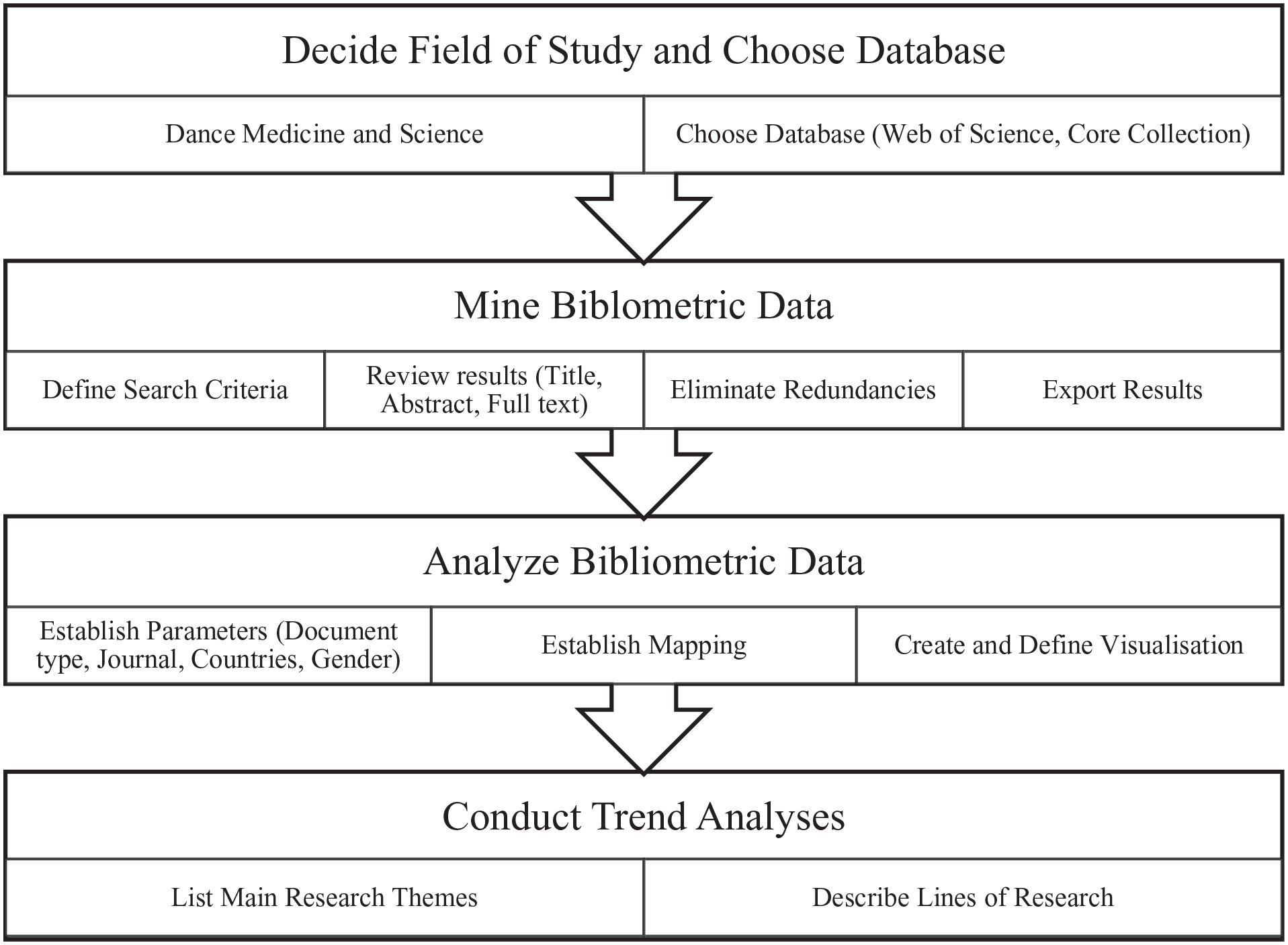
Schematic overview of the methodology used for bibliometric analyses.
Decide Field of Study and Choose Database
The bibliographic search was conducted in the Core Collection of Clarivate Analytics’ Web of Science corpus. We identified “Dance Medicine and Dance Science” as the field for this study. Thus, we excluded anthropological and purely ethnographic research as these disciplines do not normally fall within the scope of medical, educational, and scientific literature. Thereafter, we mined these data to obtain research results for further analyses. The inclusion/exclusion criteria, particularly our chosen timeframe, are in keeping with established bibliometric protocols. The selection of a 17-year period (2007-2024) was based on several important considerations in bibliometric and scientometric analyses. Firstly, this timeframe captures a period of significant growth and standardization in DMS research metadata, ensuring more complete and reliable data. 9 Secondly, it aligned with the improved coverage and data quality of major bibliometric databases for recent decades. 10 Lastly, this period likely reflects a phase of maturation in the DMS field, allowing us to observe meaningful trends and developments. 11
Mine Bibliometric Data
The search terms included: “dance,” “science,” “medicine,” and “education.” The timeline for the extraction was from the start of January 2007 to the end of October 2024. We excluded documents labelled as editorials, commentaries, meeting abstracts, book reviews, book chapters, and letters. The extracted database was initially reviewed for inaccuracies by the second and then independently by the third author with discrepancies resolved through discussion and, if needed by the first and last authors. The data were then manually reviewed to eliminate inaccuracies (eg, electronic publication ahead of print, spelling errors, institutional duplication (eg, University College London being the same as UCL), ASCII, and Unicode coding errors for foreign letters. After completing the initial database search, the second and third authors independently reviewed search results to ensure all relevant articles were captured and to cross-check for any discrepancies in the application of inclusion and exclusion criteria.
The review criteria for inclusion in the final analysis were as follows: (a) directly related to DMS; (b) the article must be peer-reviewed; (c) published in English; (d) within the specified time frame (January 2007 to October 2024); and (e) not be an editorial, commentary, meeting abstract, book review, book chapter, or letter. Articles that did not meet all these criteria were excluded from the final analysis.
For each article, we extracted comprehensive metadata including author names and affiliations, corresponding author’s country, number of citations, and publication year. In our geographical analysis, we used the corresponding author’s country as a proxy for the primary location of the research. To assess collaboration patterns, we gathered data on all co-authors’ affiliations, which enabled us to calculate both single intra-country (SCP) and multiple inter-country (MCP) collaboration indices.
Analyze Bibliometric Data
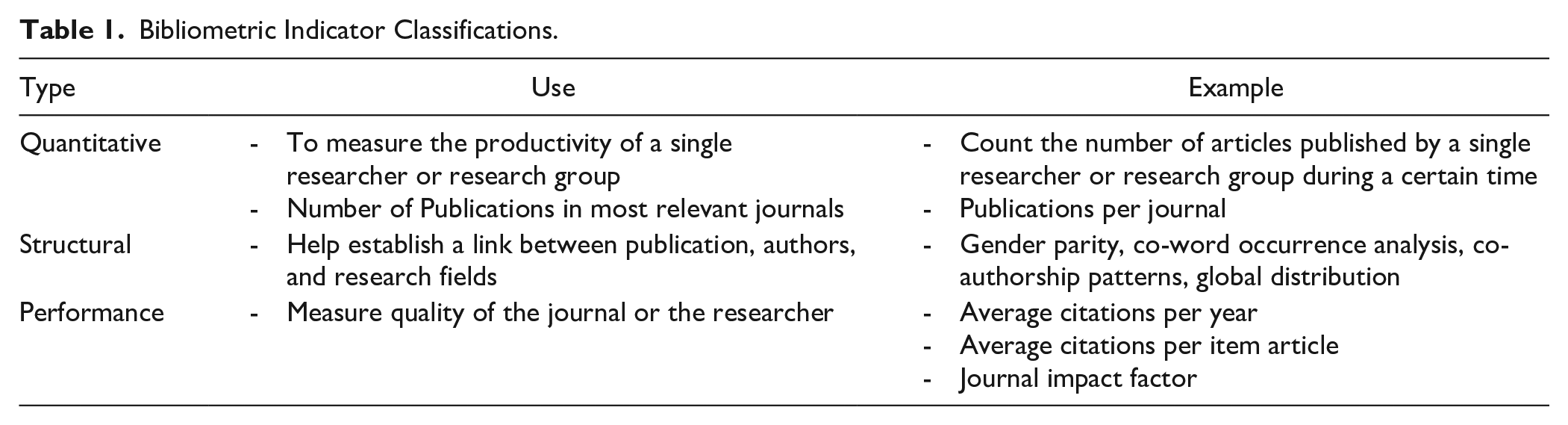
Bibliometrics in the academia and industry sectors are used to quantify the impact of publication production. As seen in Table 1, bibliometric indicators generally fall into three broad classifications. 12 For this review, we report on all three classifications but concentrate the scope of the analysis on the quantitative and structural indicators in DMS literature. We calculated and analyzed the h-index for each journal as a measure of both productivity and impact. The h-index is defined as the maximum value of h such that the given author/journal has published “h” papers that have each been cited at least “h” times. 13 This index provides a single number that combines both quantity (number of papers) and quality (impact, or citations) of an author’s or journal’s scholarly output.
Bibliometric Indicator Classifications.
Conduct Trend Analysis
The extracted data were exported into an Excel file for further collation and analysis. This comprehensive dataset included author information (names of first author, corresponding author, and all co-authors), along with their affiliations, institutions, and countries. We also extracted article-specific details such as title, publication year, journal name, keywords (both author-provided and index keywords), and abstract. Bibliometric data including number of citations and references were collected. Additionally, we recorded document type, language of publication, and funding information where available. This extensive data extraction enabled a thorough analysis of authorship patterns, institutional collaborations, geographical distribution of research, and thematic trends in the field of DMS. The possible gender of first and corresponding authors was determined using the method described by Mimouni et al. 14 This method utilized a name-gender association database to assign gender based on first names. A gender ratio of 3.0 or above was used as the threshold for gender assignment. Names with a ratio below 3.0 were excluded from gender analysis to improve accuracy. The full details of this methodology can be found in the referenced study. 14
The bibliometric analyses were carried out in two phases. The first consists of descriptive analysis of continuous and discrete data conducted in JASP (version 0.14.1). 15 The second analysis contains descriptive, mapping and network clustering analyses using with the open-source software “R” package Bibliometrix, 16 and VOSviewer software (Universiteit Leiden, The Netherlands) for the network visualization of the text corpora. 17 A co-word occurrence matrix was created to utilize a network analysis and map the topology of the scholarly output of the Keyword Plus from the Core Collection of Clarivate Analytics’ Web of Science. A co-word occurrence matrix measures the number of times key words appear together within a chosen dataset.
Results
The results section follows the indicator classifications: Quantitative, Performance, and Structural mentioned above.
Quantitative Indicators
We calculated quantitative indicators for 2715 documents published in DMS during a seventeen-year period. These indicators, presented in Figure 2, are defined and calculated as follows:
International co-authorship %: The proportion of documents with authors from more than one country, calculated as (Number of documents with international co-authorship / Total number of documents) * 100.
Authors per document: The average number of authors per publication, calculated as (Total number of author appearances / Total number of documents).
Documents per author: The average number of documents published by each author, calculated as (Total number of documents / Total number of unique authors).
Co-authors per documents: Like Authors per Document but using the total number of unique authors instead of appearances, calculated as (Total number of unique authors / Total number of documents).
Collaboration index: A measure of collaboration in multi-authored papers, calculated as (Total authors of multi-authored documents / Total multi-authored documents)
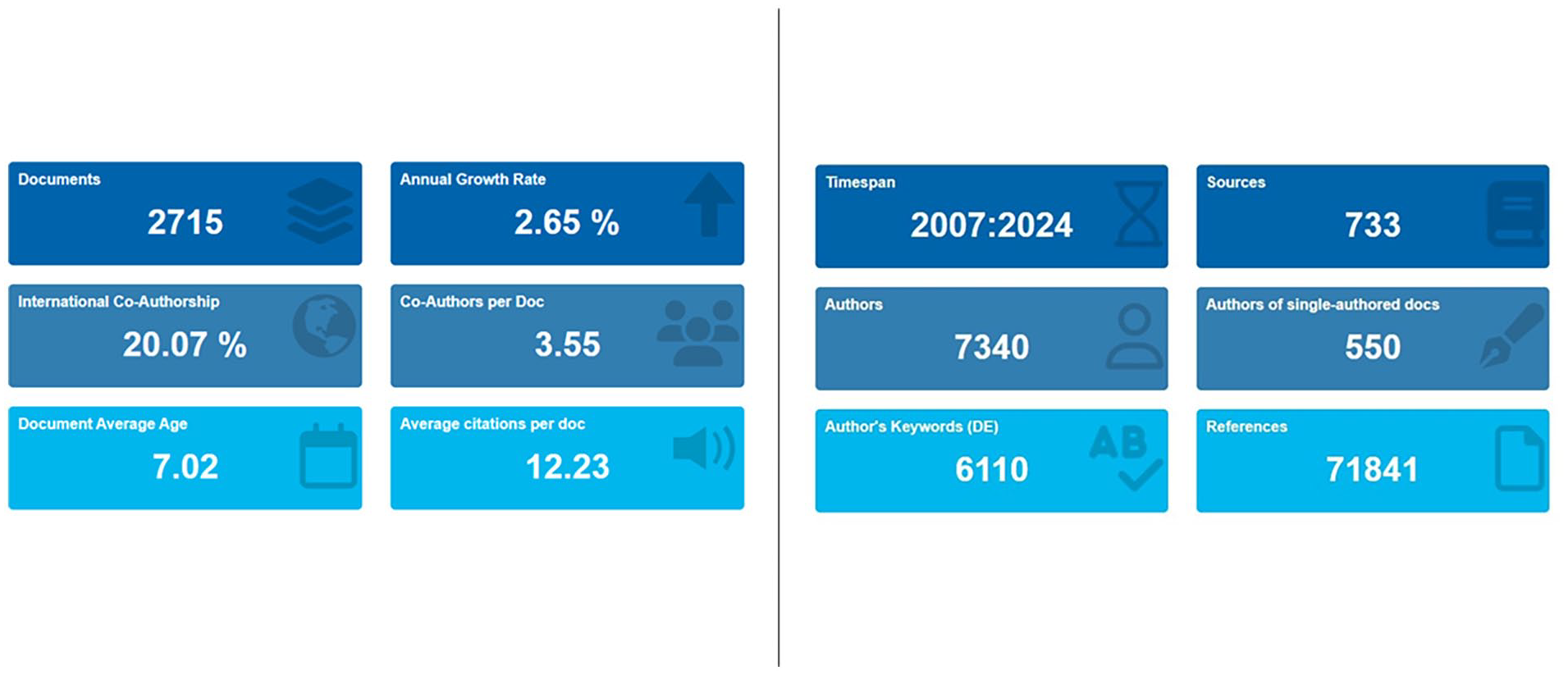
Descriptives of publications in dance medicine and science.
Journal Performance Indicators
Journal performance indicators were described for the twenty most relevant sources and the twenty most cited sources as seen in Figure 3. Relevance to the field of DMS was operationally defined in this review as the “Number of sources.” “Local citations” is the measure of how many times an author (or a document) included in this corpus was cited by other documents also included in the corpus.
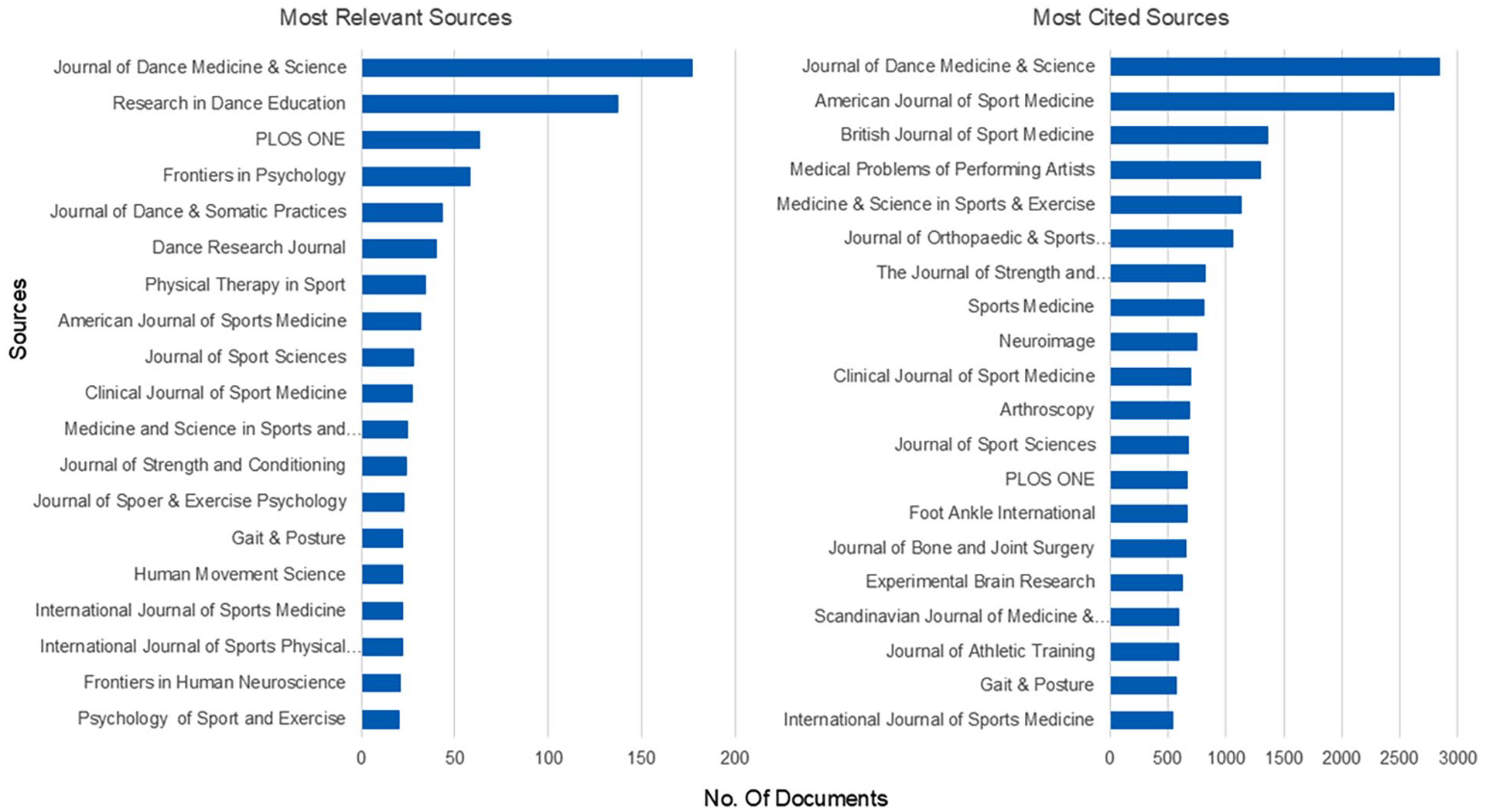
Performance indicators of the 20 most relevant journals described by number of sources and most cited sources.
All documents in the dataset received approximately 33 000 citations, leading to a ratio of 12 citations per publication. The h-index measures the research output with respect to its citation impact, considering the set of most cited works and the number of citations they received. 14 Figure 4 shows the h-index of the 20 most relevant sources.
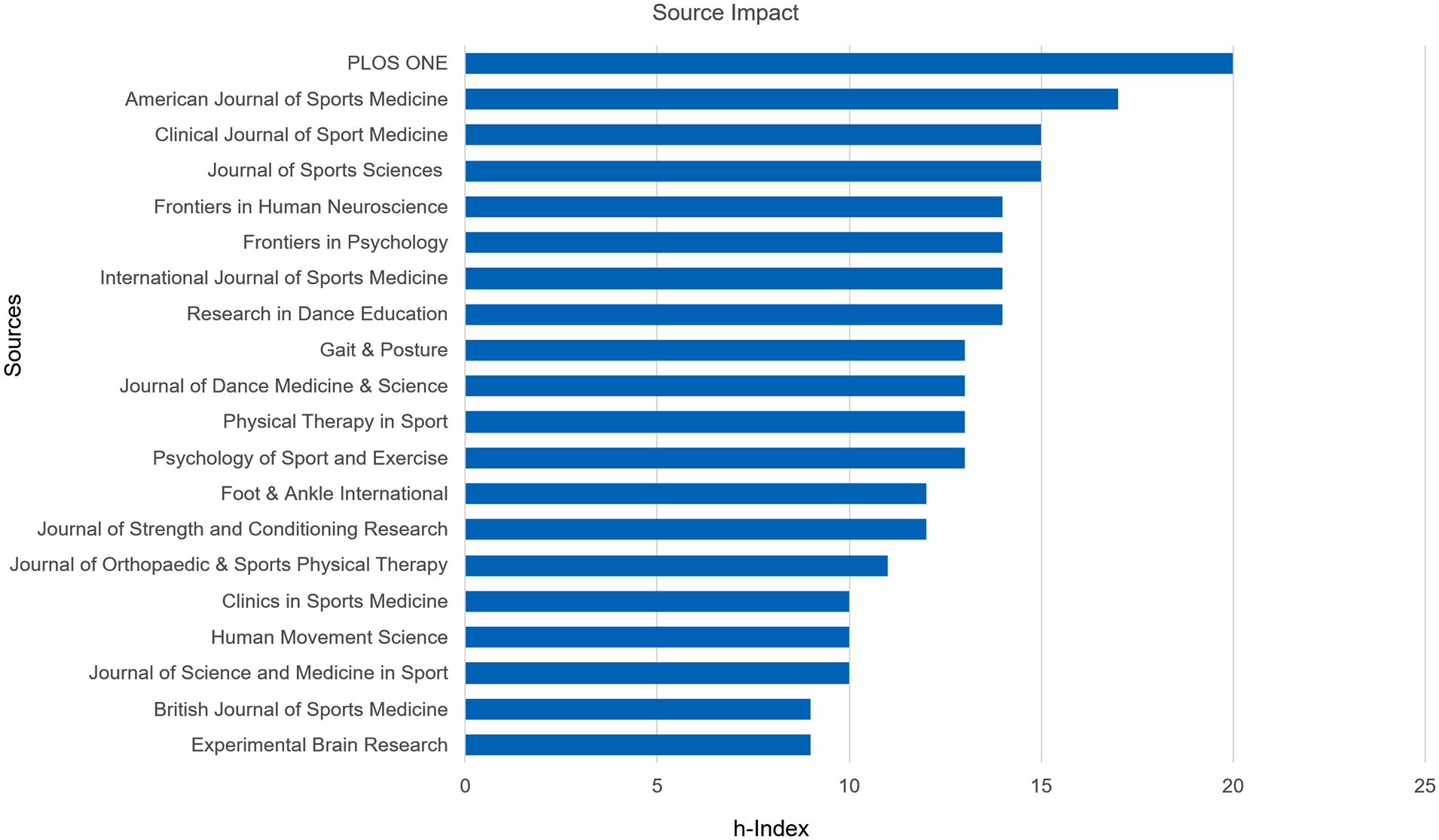
Performance indicators of the most relevant journals described by h-index.
Structural Indicators
With respect to authorship trends, the documents contained in this dataset were written by 7340 authors of which 550 were single authors. Further, 20% of the manuscripts published constituted international co-authorship collaborations. We calculated the average number of authors per document to evaluate collaboration patterns in DMS research. Our analysis shows that, on average, each document had three authors. This metric provides insight into the typical size of research teams and the extent of collaboration in the field. It also helps distinguish between single-authored and co-authored publications.
Genders of first authors
We analyzed the gender distribution of first authors based on their first names. Figure 5 illustrates the distribution of the number of authors per document, separated by the gender of the first author. It utilizes a violin plot, where the width of each “violin” represents the frequency of data points at that value.
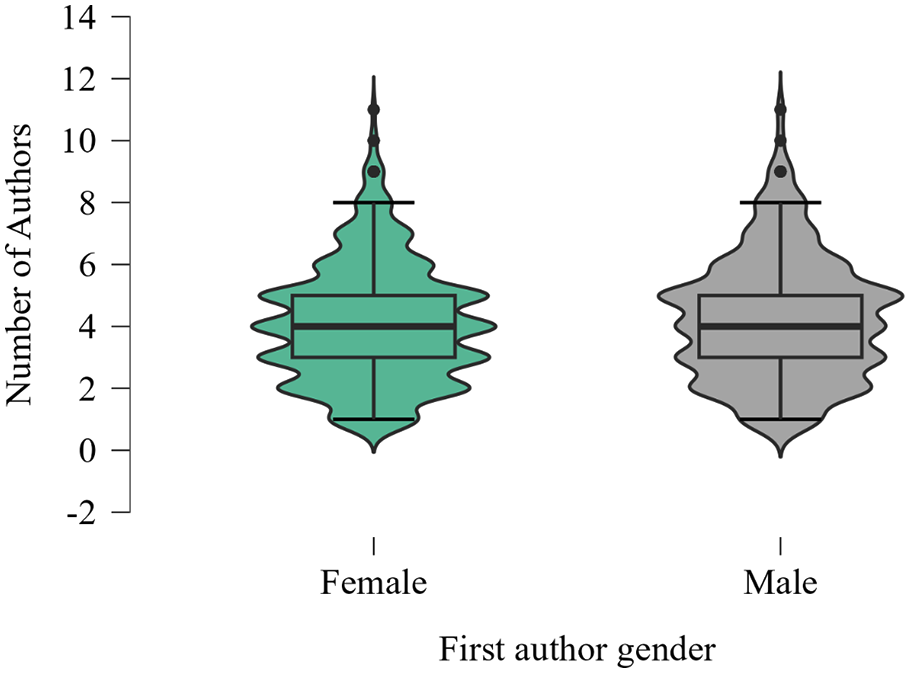
Distribution of authorship by gendered name.
The plot reveals two key pieces of information:
The distribution of team sizes (number of authors per document) for papers with feminine and masculine first authors.
The relative frequency of feminine and masculine first authors in our dataset.
For papers with feminine first author names (N = 809), the median number of authors per document was 4.0, with a range of 1 to 10 authors. Similarly, for papers with masculine first author names (N = 408), the median was also 4.0, with the same range of 1 to 10 authors.
The similar shape and range of both “violins” suggest that team sizes are comparable regardless of the first author’s gender. However, the larger N for feminine names (809 vs 408) indicates that in our dataset, papers with feminine first author names were more common.
It is important to note that this analysis is limited to first authors and based on name classification, which may not perfectly represent author gender or overall gender distribution in the field. Further analysis of all author positions would be needed to draw comprehensive conclusions about gender parity in DMS research.
Research Themes
Figure 6 represents the network with the fifty strongest nodes and edges in three different color-coded clusters derived from 6110 Keyword Plus terms. The network depicts co-occurrences of Keyword Plus terms within the resultant articles searched and thus reveals the semantic structure of a research domain. This figure represents a co-word occurrence network based on Keyword Plus terms. Nodes represent keywords, with the node size indicating frequency of occurrence. Lines between nodes represent co-occurrence relationships, with line thickness indicating the strength of the relationship. The network is divided into three color-coded clusters: Health (blue), Dance Performance (green), and Motor Control and Neuroscience (red). The layout is determined by the VOS clustering algorithm, with closer proximity indicating stronger relationships between terms. The network structure is normalized and clustered using heuristics to reveal the network centrality or the number of shortest paths that pass through a node divided by all shortest paths in the network. 18 Thus, the importance of key words within a research field, their density or proximity can denote a semantic measure of the development of the themes. 16
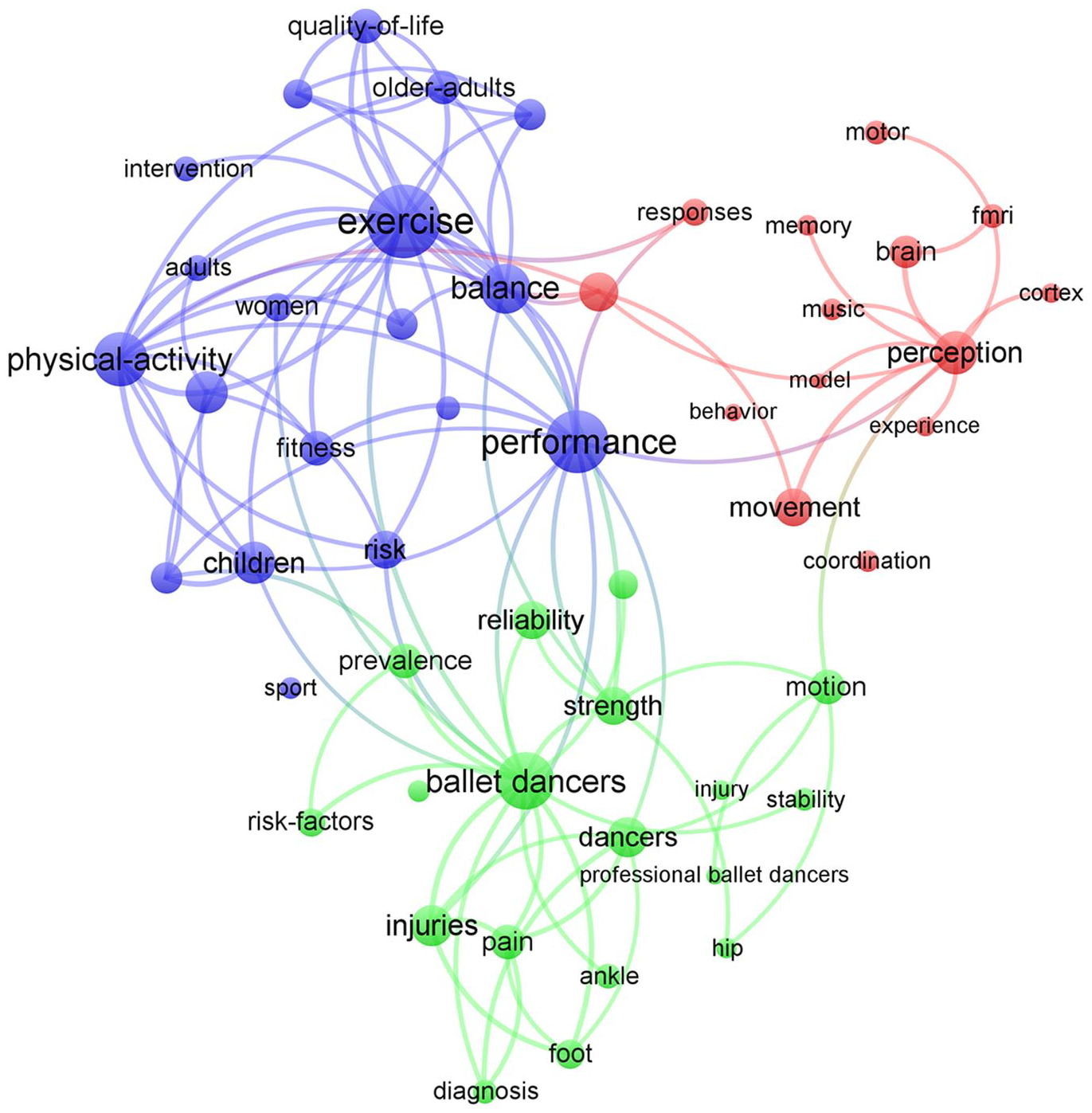
Network analysis mapping of scholarly output topology in dance medicine and science.
Geographical Network Distribution of Authors
Table 2 displays the 30 most active countries in DMS research, ranked by their total number of citations. This analysis considers both the quantity of publications and their impact. The table includes the following metrics:
Articles: The total number of publications from each country.
Total count: The total number of citations received by all articles from that country.
Average article citations (AC): The average number of citations per article for each country.
Articles % of total dataset: The percentage of the total dataset that each country’s articles represent.
Single country publications (SCP): The number of publications involving only authors from that country.
Multiple country publications (MCP): The number of publications involving international collaborations.
Percentage of multiple country publications (MCP %): The percentage of a country’s publications that involve international collaborations.
Geographical Locations of the Authors Publishing Dance Medicine and Science Research.
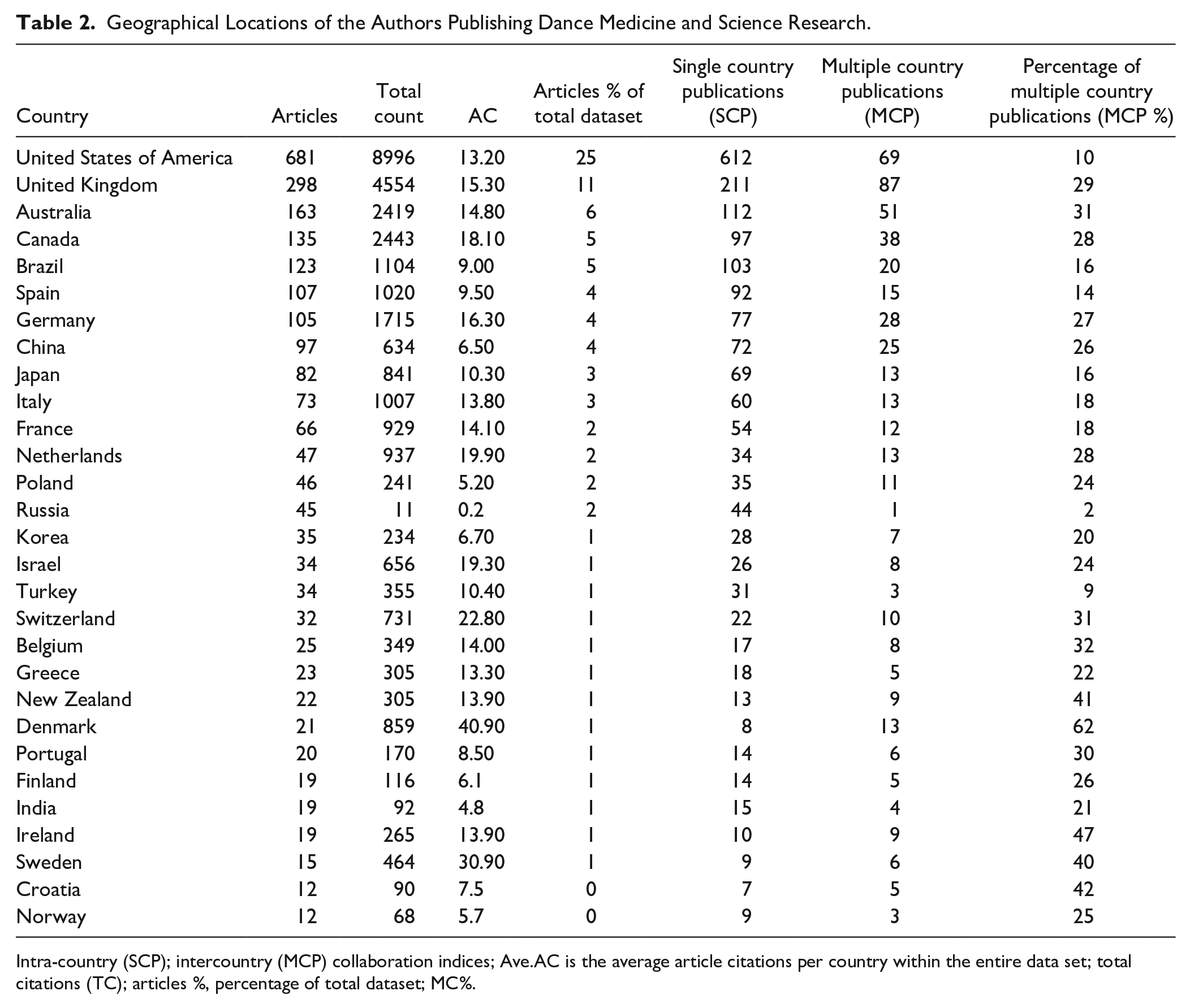
Intra-country (SCP); intercountry (MCP) collaboration indices; Ave.AC is the average article citations per country within the entire data set; total citations (TC); articles %, percentage of total dataset; MC%.
Our analysis revealed that authors from the United States of America (USA) produced the most publications both in terms of total number (681) and citations (8996). However, when examining international collaboration, we found interesting variations. For instance, while only 10% of USA publications involved international collaborations, Australia showed a higher rate at 31% for Multiple Country Publications. Figure 7 displays the collaboration networks across countries. Via network clustering heuristics, we see four distinct cross-country collaborations grouped with two or more countries.
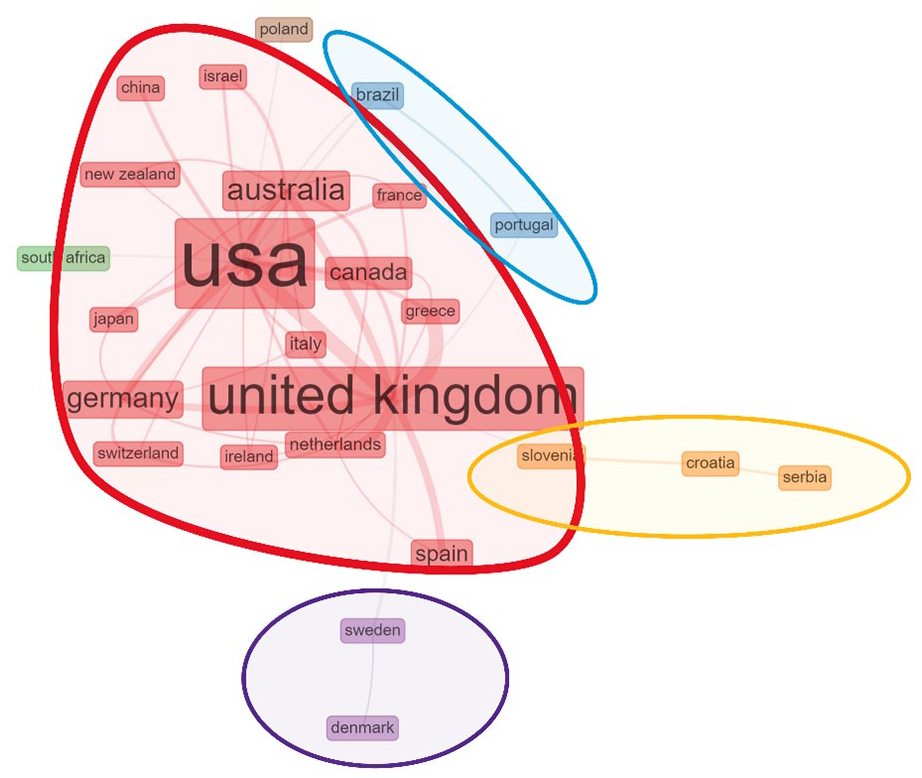
Social structure network of collaborations across countries.
Discussion
The purpose of this study was to identify the quantitative and structural bibliometric indicators of research produced in the field of DMS between 2007 and 2024. As one of the first studies to examine the DMS field, the current study represents the breadth and quality of the DMS field. An equally important aim was to inform researchers on the current state of the field regarding how and where peer-reviewed research is disseminated.
Outlets for DMS Research
Regarding growth of the articles produced over time, our findings indicate that journals on average published about 15 DMS-specific articles per year, with an annual growth rate average of 11.04%. Between 2007 and 2010, journals published an average of 138 documents per year. In terms of the 20 most relevant sources and the number of articles produced, the Journal of Dance Medicine and Science (JDMS) is the most relevant DMS-only publication, while Medical Problems of Performing Artists (MPPA) represents a hybrid of Performing Arts Medicine publications. Frontiers in Psychology and PLOS represent articles across the cognitive, neuroscience, and motor control domains related to dance. Notably, Research in Dance Education is also included, representing an increase in the number of DMS publications (Figure 4). This diverse range of journals reflects the interdisciplinary nature of DMS research, spanning from specialized dance medicine publications to broader scientific and educational outlets, the latter of which may disseminate scientific to a more applied setting and context.
However, it is crucial to recognize that citations as a metric accrue over time, which can significantly impact our analysis of journal impact and article influence. This time-dependent nature of citation accumulation is a critical factor to consider when interpreting our results. For instance, a paper published in 2007 (the start of our study period) has had 17 years to accumulate citations, while a paper from 2024 (the end of our study period) may have few or no citations yet. This stark difference in potential citation counts is an inherent limitation of bibliometric analyses covering a wide timespan. To illustrate this point, we can compare two hypothetical papers: one published in 2007 might have accumulated several hundred citations in 2025, while an equally impactful paper from 2024 might only have a limited citations. This disparity does not necessarily reflect the quality or importance of the more recent work, but rather the time it has had to be recognized and cited by the academic community. This limitation is particularly relevant when comparing the impact of different journals or articles across our study period.
Since 2021, the JDMS has become an open-access journal with a 12-month paywall for subscribers. In contrast to number of articles published, the journals most cited were the American Journal of Sports Medicine, JDMS, and Medicine and Science in Sport and Exercise. Consequently, JDMS fared well in terms of number of citations when compared with two leading sport science and sport medicine journals. Again aknowledging that citations as a metric accrue over a time-span or simply put—the older a document, the more success it has for many citations. As an example, a leading article in Dance Medicine: A profile of the musculoskeletal characteristics of elite professional ballet dancers 19 was published in the American Journal of Sports Medicine in 1992 and has 409 citations compared to a comparable paper in 2012, Ballet injuries: injury incidence and severity over one year, that has 324 citations at the time of this writing in January 2025.
When comparing the frequency of documents in a journal to the source impact using the h-index, an interesting pattern emerges. A higher h-index number denotes a stronger metric in terms of both productivity and impact. For example, the American Journal of Sports Medicine(AJSM) has an h-index of 17, compared to an h-index of 12 for JDMS (Figure 4), suggesting a higher overall impact for AJSM in terms of this metric. Still, the h-index does not concatenate based on the subjects within a journal, and therefore an h-index of 17 is not representative of citations of DMS-only articles. An h-index of 20 or higher is considered good.13,20 Thus, the current h-indices of both AJSM and JDMS represents opportunities for improvement when comparing with sport medicine and science journals shown in Figure 4, while still recognizing the niche status of the DMS field.
When comparing our findings to bibliometric analyses in other medical fields, we see both similarities and differences. For instance, Sweileh et al 21 found in their analysis of mobile health research that publications increased exponentially over time, with an annual growth rate of 34.1%. In comparison, our findings show a more modest but still significant growth rate of 11.04% in DMS research. This difference may reflect the relative maturity of the DMS field compared to the rapidly evolving mobile health research area.
Geographical Location of Authors
Regarding geographical location of scholarly output (see Figure 7), most literature is produced in North America, Australia, and Europe. When further observing the social structure of collaborations, the United Kingdom has a more diverse collaborative network. Current and future researchers may wish to increase the social structure of collaboration by consistently creating more researcher partners globally. This increase may additionally foster collaborations and expand research to include other dance genres outside of the Western theatrical dance genres that currently predominate this dataset.
Our findings on the geographical distribution of DMS research can be contextualized by comparing them to patterns in other medical fields. In their analysis of medical education research, Fontaine et al 22 found a dominance of North American and European authors, like our findings in DMS. However, they noted an increasing contribution from authors in Asia and Oceania, a trend that is less pronounced in our DMS data. This comparison highlights potential areas for growth in international collaboration within DMS research.
Gender of First Authors
Our analysis of gender distribution in DMS research authorship reveals interesting patterns that both align with and diverge from trends in other scientific fields. Historically, there have been challenges regarding gender representation in academic medical research output. An earlier analysis from 2006 revealed a positive progression of female first authors increasing from 6% in 1970 to 29% in 2004. 23 More recently, across diverse academic professions, traditional gender performance disparities have been diminishing. 24
In this review, we offer a first glance at the distribution of first authors based on first name gender classification in DMS research. We found a higher proportion of feminine names (N = 809, 66.5%) compared to masculine names (N = 408, 33.5%) among first authors. Interestingly, the median number of authors per paper was 4.0 for both groups, suggesting similar collaboration patterns regardless of the first author’s gender. This observation contrasts with findings in other scientific fields. For instance, Bendels et al, 3 in their comprehensive analysis of gender disparities in high-quality research, found persistent underrepresentation of women, particularly in senior authorship positions. However, it is important to note that our analysis is limited to first authors and based on name classification, which may not perfectly represent author gender or overall gender distribution in the field. The higher proportion of feminine first author names does not necessarily indicate overall gender parity in DMS research, as primary authors may often be student researchers, and the senior authors may be the last author on the publication.
The difference in first author gender distribution may reflect unique characteristics of the DMS field, such as its interdisciplinary nature as bridging arts and sciences, or the historically higher participation of women in dance-related professions. It is plausible that while exercise science and medicine authors are traditionally from a male-dominated industry, DMS might attract more female researchers, likely because of more female dancers as compared to male dancers in the dance field. To better understand gender representation in DMS research, a comprehensive analysis of all author positions and more robust gender identification methods would be needed. Overall, our findings suggest a trend towards increased female representation in first authorship positions in DMS, but further research is required to draw definitive conclusions about overall gender parity in the field.
Research Themes
Our analysis revealed three distinct research clusters in DMS: Health, Dance Performance, and Motor Control and Neuroscience (see Figure 6). The “Health” cluster focused on the relationship between dance, exercise, and health outcomes. Key terms in this cluster included “health,” “performance,” and “physical activity,” suggesting a strong emphasis on dance as a form of exercise and its health benefits. The “Performance” cluster centered on dance-specific issues, with terms such as “ballet,” “dancers,” and “injuries.” This cluster highlights the focus on performance-related aspects and injury prevention in dance research. The “Motor Control and Neuroscience” cluster encompassed research related to perception, movement, and brain function in the context of dance. This cluster underscores the interdisciplinary nature of DMS, bridging dance with cognitive and neuroscience research.
Regarding dance styles, our analysis did not directly extract or categorize dance styles from individual articles. However, we observed that “ballet” was a prominent keyword in the Dance Performance cluster, suggesting its significant representation in the research. It is important to note that the prevalence of ballet-related research does not necessarily indicate a focus solely on Western dance styles, as ballet is practiced globally. To better understand the dance styles represented in DMS research, a more detailed content analysis of individual articles would be necessary. This analysis could potentially reveal biases or gaps in the current body of DMS literature regarding different dance genres and cultural contexts.
Our approach to analyzing research themes aligns with methods used in other medical fields. Shen et al 25 employed a similar keyword co-occurrence analysis to identify research hotspots in cardiovascular disease. We found that DMS themes show more stability over time, suggesting consistent core focus areas. However, like other fields, we noted an increasing emphasis on technological applications, indicating that DMS is evolving while maintaining its specialized focus.
Limitations
A bibliometric analysis can manage a vast corpus of articles and yield both robust and valid results. However, there are limitations that should be acknowledged. First, the analysis is based on reference lists from a specific repository, revealing the metadata, date of publication, authorship, and other metrics, and not the content-specific information from each article. Therefore, this method is not a substitute for extensive in-depth reading. A more granular analysis of individual articles in a corpus this size is beyond the scope of bibliometrics. Regarding the current study, we acknowledge there are limitations caused by the chosen design and metrics chosen to analyze, whilst others are purely operational when working on large data sets across multiple authors. For example, researchers often cite themselves, colleagues 26 or institutions and sources with which they are familiar resulting in articles seeming more similar across the corpus. Given the relatively small number of authors and institutions working in DMS research when compared to exercise science, this might certainly be reflected in our results. Finally, we acknowledge that our gender analysis does not evaluate the gender of last authors as described earlier. While last authorship often indicates principal or senior investigator status in traditional Western university research with early career researchers as first author, this may not always be the case in other countries and with more institutional cross-collaborative research. This metric could provide insights into leadership roles and career progression within DMS. Future studies should include both first and last author gender analyses to offer a more comprehensive picture of gender representation across different levels of research leadership, revealing trends in senior authorship positions.
Future Directions
Our analysis reveals several key areas for future research:
Expanding research scope: While our findings show a concentration of DMS research in North America, Europe, and Australia, future studies should aim to include a wider range of dance styles and cultural contexts and provide valuable insights into dance practices and health considerations across diverse populations.
Improving database categorization: The lack of specific DMS categories in major academic databases presents a challenge for researchers. Advocacy for the inclusion of “Dance Medicine” and “Dance Science” as distinct categories could improve the visibility and accessibility of DMS research.
Enhancing international collaboration: Our analysis revealed varying levels of international collaboration across countries. Increasing cross-border research partnerships could lead to more comprehensive and globally representative studies in DMS.
Gender representation in authorship: While our study suggests a higher proportion of feminine names among first authors, further research is needed to understand gender representation across all authorship positions and its implications for the field.
English publication biases: We conducted our search for articles in English. We therefore acknowledge that it may be possible that other countries had prolific outputs of research in their own languages that were not addressed in this study. This is likely a limitation that could also be expanded upon as a topic for future study, especially when considering the global nature of future collaboration.
Practical and Clinical Applications and Implications
The findings of this bibliometric analysis have several practical and clinical implications:
For researchers: Our analysis of publication patterns and influential journals can guide researchers in selecting appropriate venues for their work, potentially increasing its visibility and impact.
For clinicians: The identified research themes provide an overview of current focus areas in DMS, which can inform clinical practice and highlight areas where evidence-based approaches are developing.
For educators: The interdisciplinary nature of DMS research, as revealed by our analysis, suggests the importance of broad-based education programs that integrate knowledge from various related fields.
Conclusions
This bibliometric analysis provides a comprehensive overview of the DMS field from 2007 to 2024. Key findings include the prominence of JDMS and MPPA as primary publication venues, a concentration of research output in North America, Europe, and Australia, and a higher proportion of feminine names among first authors. The analysis revealed three main research clusters: Health, Dance Performance, and Motor Control and Neuroscience, reflecting the interdisciplinary nature of DMS. While the field shows signs of growth and increasing sophistication, there are opportunities for expanding its scope geographically and in terms of dance styles studied. Regular bibliometric analyses can help track the field’s evolution and guide its future development.
Footnotes
CRediT Contributors’ Roles
Conceptualization; DB-A, JA
Data curation; DB-A, SS, SC
Supervision; JA;
Formal analysis; DB-A, MW, JA
Methodology; DB-A, JA
Project administration; DB-A
Visualization; DB-A
Writing—original draft; DB-A
Writing—review & editing; DB-A, MW, JA.
Declaration of Conflicting Interests
The author(s) declared no potential conflicts of interest with respect to the research, authorship, and/or publication of this article.
Funding
The author(s) received no financial support for the research, authorship, and/or publication of this article.
