




Abstract
Background:
Globally, male dancers are affected by low back pain (LBP) up to 2.5 times more than female dancers. While female dancers’ beliefs around LBP and dance-specific low back movements exist, no research has explored male dancers’ beliefs. This study aimed to (1) examine the low back beliefs of Australian male professional and pre-professional dancers, and (2) determine if beliefs toward common low back movements and lifting differed when current LBP or history of disabling LBP (DLBP) were considered.
Methods:
40 male dancers (mean age [SD] 26.9 years [7.9]) from a range of dance backgrounds (all participating in ballet) were recruited to complete a cross-sectional survey comprising a beliefs questionnaire considering dance-specific movement and lifting tasks, the Back Pain Attitudes Questionnaire (Back-PAQ) and the Athletic Fear Avoidance Questionnaire (AFAQ). Primary analysis included initial descriptives, a repeated measures ANOVA for movement-specific beliefs and visual thematic analysis for written responses within the belief’s questionnaire. Secondary subgroup analysis included independent T-tests for those with/without current LBP and those with/without a history of DLBP.
Results:
Fourteen dancers reported current LBP and 30 reported a history of DLBP. Dancers held generally negative beliefs toward the low back (Back-PAQ mean 123.1 ± 9.7) with neither subgroup demonstrating significant between-group difference (P < .05). Dance-specific flexion movements were seen as safer than extension movements (P < .05), and more extended-spine lifting was seen as safer than more flexed-spine lifting (P < .05). Dancers experiencing current LBP held less positive beliefs surrounding some dance-specific movements.
Conclusions:
Dancers hold negative general beliefs toward the low back irrespective of current or historical DLBP, however their beliefs surrounding dance-specific movements were relatively positive. Dancers’ beliefs surrounding some movements were affected by the presence of current LBP, in particular an arabesque and a fish dive.
Key points
Pre-professional and professional male dancers hold generally negative beliefs around the low back and LBP.
Male dancers beliefs around dance-specific movements are often positive and, largely, unrelated to the presence of LBP.
Male dancers had a strong focus on technique and strength being protective of the spine and variations in different movements being helpful.
Introduction
Dancers frequently experience low back pain (LBP).1 -5 In Australia, over 88% of professional and 75% of pre-professional dancers have reported LBP in their lifetime. 1 For half of these cases, LBP was disabling (DLBP), whereby modification or cessation of dance activity was required.1,2 Globally, male dancers are affected by LBP up to 2.5 times more commonly than female dancers.6,7 While there may be a role for biomechanical factors in the development of LBP,8 -10 consideration of psychosocial factors is also important,11,12 as these factors are often key influencers of disability and prognosis.11,13,14
Male dancers are thought to be at greater cumulative risk of developing LBP by participating in both typical dance movement and partnering. 15 Typical dance movement requires repetitive, end-range, multi-planar lumbar movements (Figure 1a-d) that may be associated with the development of LBP and specific low back injuries (eg, lumbar bone stress injuries). 8 Partnering refers to a duet style of dancing where males lift female dance partners in various degrees of lumbar range (Figure 1e and f). In Australian professional dancers (n = 146, 45% male, mean age: 28.5 years), partnering was perceived to be the fifth leading mechanism for dance-related pain. 16 Classic partnering maneuvers such as over-head lifts (Figure 1f) have been shown to increase compressive forces in the lumbar spine, 17 and cumulative occupational lifting has been linked to LBP.18,19 However, neither dance movement nor partnering alone have been clearly linked with LBP, suggesting that a broader investigation into non-physical factors may be needed.
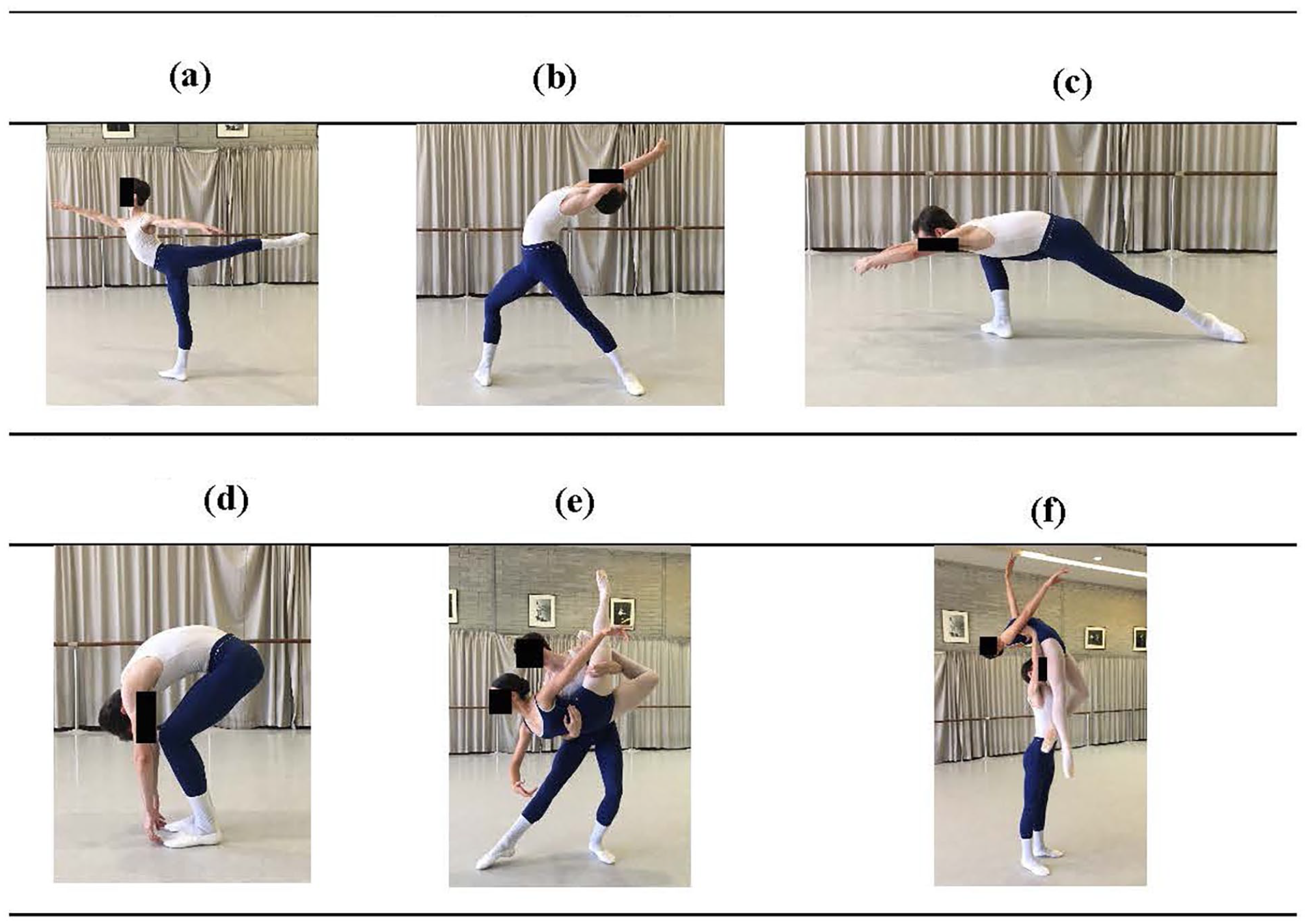
Common low back dominant dance movements utilized for the Modified Dance Movement Beliefs Questionnaire. (a) Arabesque, (b) Backward port de bras, (c) Forward port de bras, (d) Contemporary roll down, (e) Fish drive, (f) Presage.
Despite the paucity in causative research, negative beliefs in the general population about the low back and safe lifting are pervasive.20 -22 The general population has been reported to view round back (flexed lumbar spine) lifting as more dangerous than straight back (lordotic lumbar spine), irrespective of having current LBP. 23 In dance, only 2 published studies have examined the relationship between female dancers’ beliefs surrounding LBP and beliefs surrounding movement. Roussel et al, 24 using the Tampa Scale of Kinesiophobia, a tool used to assess avoidance to movement due to fear of pain and fear of injury, found no meaningful difference in scores for pre-professional females with and without current LBP (n = 40, mean age 20.3 years ± 2.4, 16 with LBP). Hendry et al 25 with a similar sample (n = 52, mean age 18.3 ± 1.4, 20 dancers with a history of DLBP), further explored these beliefs and how they specifically related to LBP and dance-specific low back movements. These female dancers held negative general beliefs toward the low back and LBP, with no difference found in attitudes to back pain between those who had a history of DLBP and those who had no history of DLBP. 25 Additionally, female dancers saw their spine as vulnerable, and rated dance-specific extension movements (see Figure 1a and b) as more dangerous than flexion movements (see Figure 1c and d). 25 When rationalizing their beliefs, female dancers described extension movements with catastrophic language, such as having the potential to “crush” or “crunch” the lumbar spine. 25 A common theme to protect the spine via strengthening, core stability and maintenance of correct technique was also identified. 25 Both studies were limited to female, pre-professional samples.
Despite the high prevalence of LBP amongst male professional dance populations, there is limited LBP research conducted in this population. Therefore, research exploring male dancers’ beliefs about LBP, movements of the low back, and lifting is warranted. The aims of this study were therefore to (1) explore the low back beliefs of male professional and pre-professional dancers’ beliefs, specifically in relation to dance-specific movements and lifting tasks, and (2) determine if beliefs toward common low back movements and lifting differed when current LBP or history of disabling LBP (DLBP) were considered. Additionally, we sought to understand the dancers’ rationale for these beliefs.
Methods
Study Design
A survey-based cross-sectional design was adopted. Ethical approval was provided by the Curtin University Human Research Ethics Committee (HRE2020-0712) and, where required, reciprocal ethics was gained. Written informed consent from the dancers was obtained for hard copy survey responses and a check box was selected for online options.
Participants
All professional dance organizations listed on the national AusDance directory 26 and the 4 major tertiary dance institutions in Australia were contacted via e-mail inviting male dancers to participate in the study. Additionally, dancers were recruited via social media advertising and health professionals working with dancers.
Dancers were included if they were male, professional or pre-professional dancers aged between 16 and50 years. These criteria meant capturing male dancers of early entering age at tertiary institutions, where partnering training begins, to those who would be considered near dance retirement age. Dancers were also required to be dancing full-time dance; participating in at least 1 relevant dance class per week; and participating in at least 1 hour per week of dance-related lifting or partnering in performance, rehearsal, or training. These requirements were based on schedules of Australian tertiary dance programs and considering the varied schedules of professional dancers based upon current employment. This determined via engagement with dance teachers within tertiary dance programs and prior to the commencement of the study.
Dancers were considered professional if they met any of the following criteria: obtained a dance contract/project in the previous 12 months from survey distribution date; participated in performances that are associated with a dance workspace; enrolled in any graduate program associated with a professional company; or employed in any touring group associated with a professional company. Dancers were considered pre-professional if they were currently enrolled full-time in a tertiary dance program; or if they were in the process of obtaining a dance accreditation (diploma or higher).
Participants were excluded from the study if they presented with factors that may significantly influence their beliefs of LBP (eg, the dancer had had spinal surgery or reported history of spinal trauma). This information was detailed within the participant information section at survey commencement.
Dance companies and dancers were provided with a direct link to an electronic survey created using Qualtrics software (Qualtrics, Seattle, WA, USA). Prior to consent, dancers were presented with a participant information form and inclusion criteria. If dancers did not meet the criteria, they were thanked for their time and participation ended. Consenting dancers meeting the criteria proceeded to the questionnaires. Upon electronic informed consent, dancers were directed to a 15-minute survey. One professional dance company requested hard copies of the survey to distribute amongst the dancers.
Follow up resembled a modified Dillman 27 method to increase survey return. Reminder emails were sent a maximum of 3 times to facilitate as large a response rate as possible.
Research Survey Tools
The survey had 4 sections: participant characteristics, the modified Dance Movement Beliefs Questionnaire (mDMBQ), 25 the Back Pain Attitudes Questionnaire (Back-PAQ), 28 and the Athletic Fear Avoidance Questionnaire (AFAQ). 29 As the AFAQ pertained to current pain, it was only completed by those who reported current LBP within the participant characteristics section.
Participant Characteristics
Participant characteristic data collected included age; professional status; years of dance experience; volume of dance training in a typical week (hours), performance and partnering in a typical week (hours); dominant dance style; and presence of current and/or previous LBP (described to the dancer as pain within the section of the body that spans from the lowest rib to the top of the pelvis on the dancer’s back), or DLBP (described to the dancer as pain within the aforementioned region that required modification or cessation of dancing for at least 1 day). Dancers also indicated how their LBP had affected their dancing (no modification required, slight modification for at least 1 day, substantial modification for at least 1 day or completely stopped dancing for at least 1 day). The definitions utilized were purposefully broad to capture all dancers’ experiences while also trying to capture those for whom their experience of LBP was more serious, requiring modification or cessation of dance.
Modified Dance Movement Beliefs Questionnaire
A previously developed questionnaire 25 was adapted for use with male dancers, by utilizing images of male dancers performing the movements and adding 2 lifting activities to the questionnaire, to determine beliefs about perceived level of safety regarding common dance movements. Whilst this survey had previously been used for research with dancers it had not been validated. Dancers were presented with 4 images, each incorporating multi-planar movements of the lumbar spine (Figure 1a-d). The movements were previously selected based on the commonly held belief that repeated end-of-range movement caused LBP, and following consultation with professional colleagues including dancers, dance teachers, and clinicians who work with dancers. 25 For the current study, images of 2 common dance-specific lifts were added to this tool; 1 extension dominant and the other flexion dominant to explore males’ beliefs regarding lifting/partnering (Figure 1d and e). The added lifting movements were selected on the basis that they are frequently performed by male dancers irrespective of genre and sit within the scope of movements reported to be associated with LBP. 17 Dancers then used a thermometer gage (zero to 10 scale) to indicate how harmful they believed each movement to the spine to be, where higher scores indicate greater harm (ie, a score of zero indicated very positive beliefs, a score of 5 indicated neutral beliefs, and a score of 10 indicated very negative beliefs). Dancers were asked to justify why they selected their option via an open text box. The tool was developed with the guidance of 2 male dance teachers, who were former professional dancers and who regularly coach professional and pre-professional male dancers in partnering. The 2 male dance teachers provided feedback on the appropriateness of the images and language used in instructions.
The Back Pain Attitudes Questionnaire
The Back-PAQ comprises 34 Likert-style items, each with 5 possible responses, and is divided into 6 subscales.28,30 The items pertain to beliefs surrounding the individual’s own back (2 subscales), beliefs about back pain in general (2 subscales), management of back pain (1 subscale), and attitudes toward back pain recovery (1 subscale). 28 The questionnaire has been shown to be reliable and valid with adequate reliability (Cronbach α coefficient .7) in general populations with and without LBP28,30 and has been used in dancers previously. 25 A Cronbach’s α level of .7 means that we can be confident that people would get the same scores on the questionnaire if they completed the questionnaire several times, and that people with similar beliefs would yield similar scores. 31 Scores from these items were summed to provide an indication of back pain beliefs. A range of scores from 34 to 170 is possible, whereby higher scores are indicative of more negative beliefs about the lower back.28,30 No cut points for this questionnaire have been published. In the absence of published norms or thresholds for beliefs being considered positive or negative, we assigned the midpoint of the scale from 34 to 170, or 102, as the point that differentiated between positive beliefs (a score of 102 or lower) and negative beliefs (a score of 103 or higher).
Athletic Fear Avoidance Questionnaire
The AFAQ comprises 10 Likert-style items, each with 5 possible responses. 29 The wording was modified to become more dance-specific. Dancers were presented with statements that resembled fearful and avoidant thoughts. Dancers then rated how much they agreed or disagreed with the statements considering their current LBP. The AFAQ scores range from 10 to 50, with higher scores indicating increased fear avoidance beliefs or negative thoughts regarding dance participation. 29 The AFAQ has high internal consistency (Cronbach α coefficient of 0.8). 29
Statistical Analysis
Participant characteristics and survey responses were analyzed descriptively using mean, standard deviation, and frequency as appropriate. Normality was tested via visual inspection of histograms, and the data were deemed to be normally distributed. To address the primary aim, a repeated measures ANOVA was adopted comparing scores of each movement in the mDMBQ for all dancers plus descriptive analysis of Back-PAQ and AFAQ scores. To address our secondary aim, subgroup analysis of Back-PAQ and mDMBQ scores for those with and without current LBP, and those with and without a history of DLBP were analyzed via multiple independent samples T-Tests. A P-value of < .05 was considered significant. Statistical analysis was completed using SPSS (ver. 23; SPSS-IBM, Armonk, NY, USA). Free text comments for each open question were tabulated, key phrases highlighted by the researchers, and themes identified employing a thematic analysis approach. 32
Results
Participant Characteristics
Forty (mean age 26.9 years ± 7.9) of the estimated 130 to 150 male dancers in Australia, who would potentially meet the inclusion criteria, consented to participate. Participant characteristics are presented in Table 1. Thirty-three dancers were professional level and 7 were pre-professional. These pre-professionals represented approximately half of the total male population enrolled in tertiary institution dance programs at time of data collection. Fourteen out of 40 dancers (35%) reported current LBP, and 30 of the 40 dancers (75%) expressed a history of DLBP. Table 1 details the number of these dancers who required modification, and to what degree modification was required, due to the presence of LBP and DLBP, with the majority of dancers requiring only slight or no modification. All dancers currently experiencing LBP also had a history of DLBP. Thirty-eight dancers completed all relevant sections and 2 completed only participant information and the Back-PAQ. Results for these incomplete surveys were included in the analysis.
Participant Characteristics.
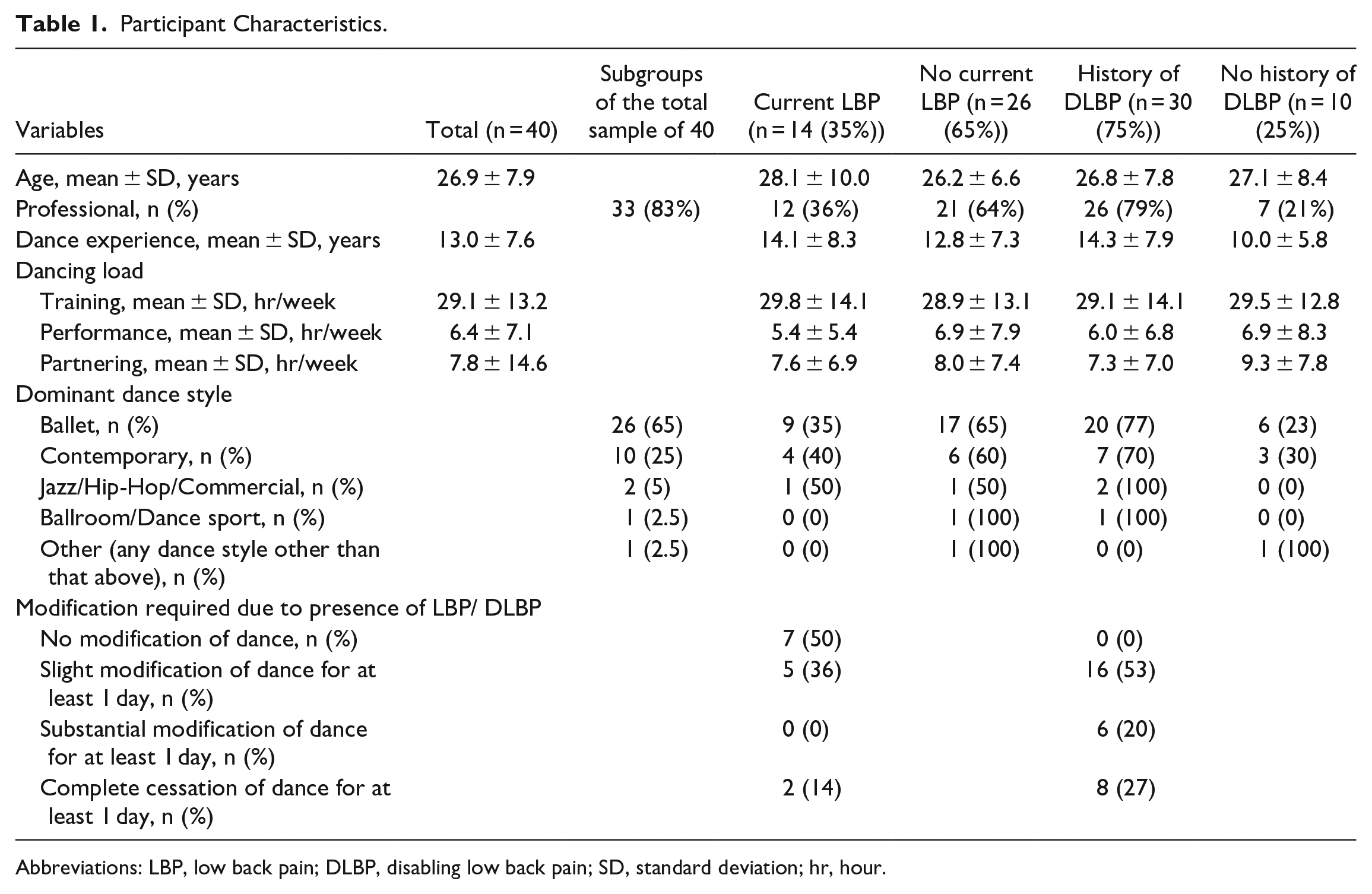
Abbreviations: LBP, low back pain; DLBP, disabling low back pain; SD, standard deviation; hr, hour.
Dancers’ Movement-Specific, Lifting and General Beliefs of the Low Back and Low Back Pain
Movement-Specific Beliefs
Addressing our aim of examining beliefs, results show that dancers did not perceive the presented movements as particularly harmful. No whole group mean was above five-tenths (Figure 2). Repeated measures ANOVA demonstrated a statistical difference in the dancers’ perception of movement safety (P < .001). Upon pairwise comparison, the contemporary roll down was statistically different when compared with all other movements, inferring it was considered the safest (contemporary roll down vs arabesque: P < .001, 95% CI: −3.3 to −1.3. contemporary roll down versus backward port de bras: P < .001, 95% CI: −3.9 to −1.8 contemporary roll down versus forward port de bras: P < .001, 95% CI: −1.9 to −0.9. contemporary roll down versus fish dive: P < .001, 95% CI: −3.5 to −1.9). contemporary roll down versus presage: P < .001, 95% CI: −4.2 to −1.9. The forward port de bras was also considered safer than the backward port de bras (P = .007, 95% CI: −2.5 to −0.4), the fish dive (P < .001, 95% CI: −1.9 to −0.7) and the presage (P = .004, 95% CI: −2.8 to −0.6). No other pairwise movement comparisons were statistically significant.
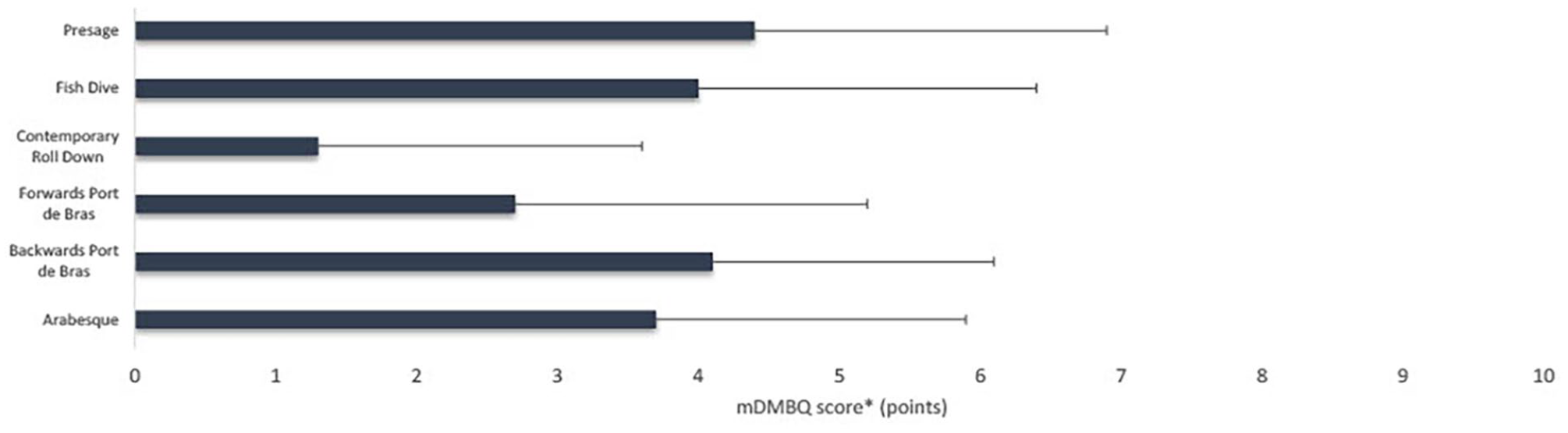
Modified Dance Movement Beliefs Questionnaire (mDMBQ) scores. *n = 38 One dancer with current LBP and 1 dancer with a history of DLBP did not complete the mDMBQ.
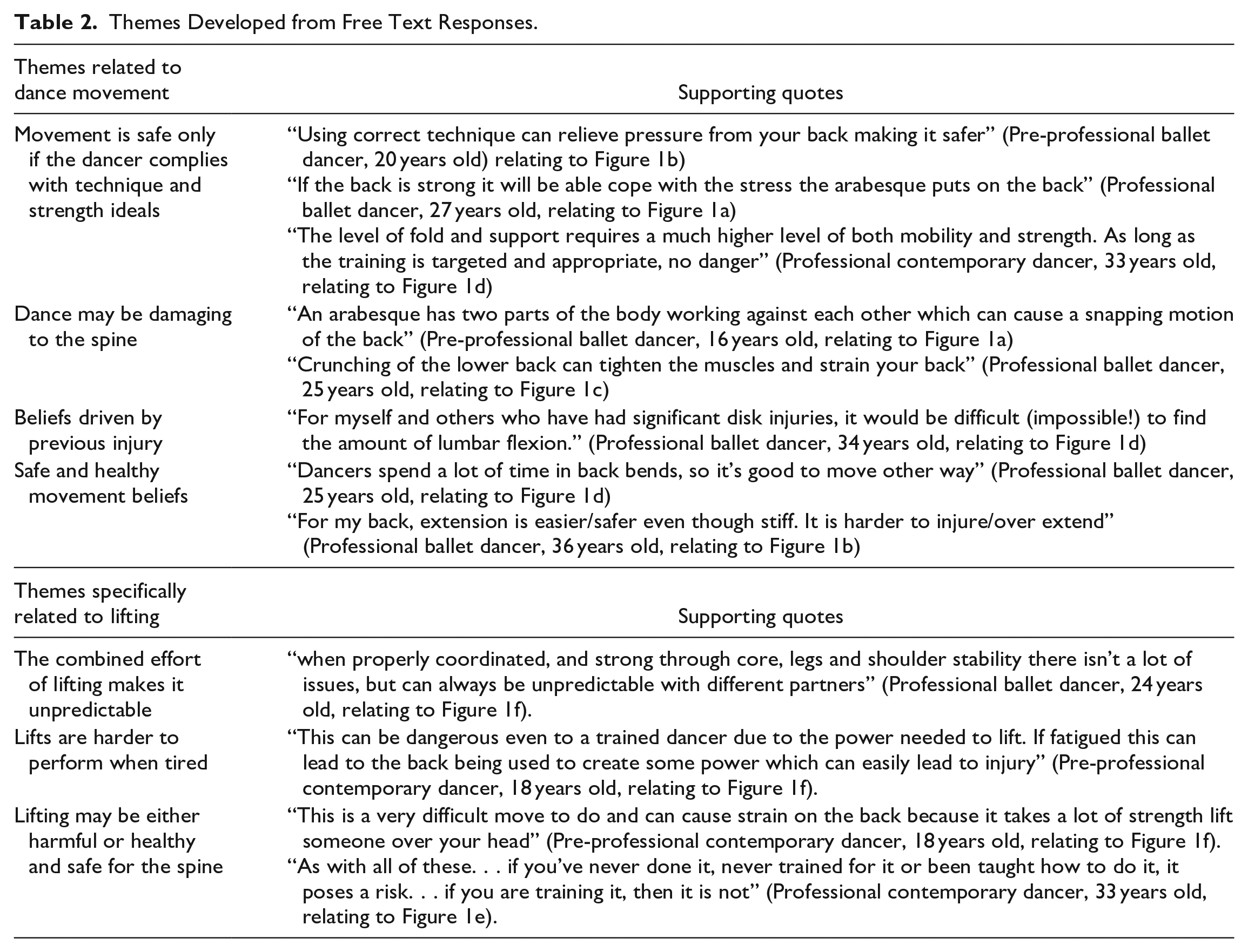
When justifying their responses to the movement images, dancers’ free text responses could be summarized into 4 themes (see Table 2). The 4 themes were: 1. A movement is safe only if the dancer complies with technique and strength ideals. 2. Dance may be damaging to the spine, with dancers often using catastrophic language to describe dance movements. 3. Beliefs seemed to be driven by previous injury experience. 4. Dancers had clear beliefs about what they considered to be safe and healthy movements (Table 2).
Themes Developed from Free Text Responses.
Lifting-Specific Beliefs
In line with our aim of examining beliefs surrounding lifting, dancers scored both lifts as relatively safe (Fish dive mean 4.0 ± 2.4, Presage mean 4.4 ± 2.5) (see Figure 2). Additionally, ANOVA results showed no statistically significant difference between flexion based (fish dive) or extension based (presage) lifting tasks (mean diff: 0.4, P = .352, 95% CI: −0.5-1.3).
When justifying their responses to the lifting images, dancers’ free text responses echoed those for the movement images in relation to technique. One dancer stated that “if done correctly, . . ., this should be very safe. It becomes dangerous if the lift is initiated from the back or relies upon the back heavily to do the majority of the work” 3 further themes specific to lifting were identified. Dancers reported that the combined effort of lifting often makes it unpredictable; lifts are harder to perform when tired; lifting may be harmful to the spine; and, depending on the direction of movement, lifting may be either harmful or healthy and safe for the spine.
General Beliefs
Total Back-PAQ scores ranged from 102 to 141 out of a potential 170 (mean 123.1 ± 9.7), suggesting some negative beliefs surrounding the lower back in general, including that the low back is fragile, easy to damage and difficult to heal. Additionally, of the 14 dancers reporting current pain, 13 completed the AFAQ with scores ranging from 11 to 40 from the possible range of 10 to 50 and mean score 21.9 ± 9.8, suggesting no evidence of fear avoidance in this sample.
Subgroup Analysis
Low back pain subgroup analysis revealed statistically significant findings, where dancers with current LBP perceived an arabesque and fish dive as less safe than those without LBP (Table 3). No significant between group differences existed in any other mDMBQ movements and Back-PAQ scores for those with and without current LBP, and there were no significant findings in the comparison of dancers with and without a history of DLBP (Table 3).
Results of the Subgroup Analysis Comparing Dance-Specific Movement and General Beliefs Between (a) Dancers With and Without Current Low Back Pain and (b) With and Without a History of Disabling Low Back Pain.
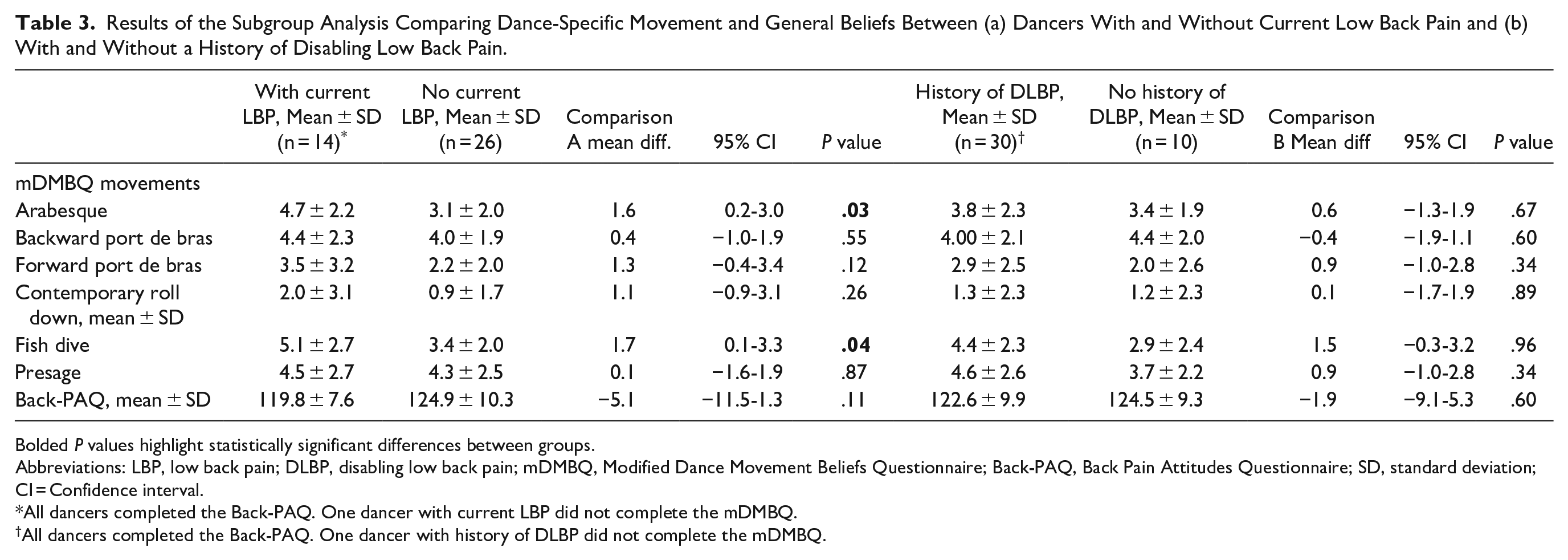
Bolded P values highlight statistically significant differences between groups.
Abbreviations: LBP, low back pain; DLBP, disabling low back pain; mDMBQ, Modified Dance Movement Beliefs Questionnaire; Back-PAQ, Back Pain Attitudes Questionnaire; SD, standard deviation; CI = Confidence interval.
All dancers completed the Back-PAQ. One dancer with current LBP did not complete the mDMBQ.
All dancers completed the Back-PAQ. One dancer with history of DLBP did not complete the mDMBQ.
Discussion
This study was the first to investigate general beliefs surrounding the low back and low back movements in male professional and pre-professional dancers. The prevalence of current LBP and disabling LBP was high in this sample, however levels of disability appeared to be relatively low, whereby dancers were frequently able to continue to dance with slight or no modification. Further, while negative beliefs around the lower back in general were common, the dancers in this study held generally positive beliefs regarding dance-specific low back movements and lifting activities. However sometimes dancers’ movement safety ratings differed to their described beliefs, particularly for those with current LBP. Additionally, male dancers currently experiencing LBP perceived the arabesque and fish dive as less safe than those without current LBP.
The male dancers in this study appeared to hold generally negative beliefs surrounding the lower back, with a mean Back-PAQ score of 123 out of a potential 170. These scores were higher than those of female dancers with and without a history of DLBP (n = 52, DLBP mean 111.2 ± 9.8; non-DLBP mean 113.0 ± 6.5), 25 and the general population not experiencing LBP (n = 67, mean 105.5 ± 13.8), 23 Similar to female dancers, 25 neither current LBP nor a history of DLBP appeared to have any effect on male dancers’ general back beliefs.
Despite negative general lower back beliefs, male dancers held positive beliefs regarding dance-specific low back movements and lifting tasks, as evidenced by generally low mDMBQ scores for all movements and lifting tasks. Results also indicated that the dancers surveyed perceived unloaded flexion dominant movements (ie, non-partnered movements) as the safest of all movements they were asked to rate. Specifically, the contemporary roll down (see Figure 1d), when compared to all other tasks, was considered safest for the lower back. Additionally, within free text responses, the dancers also predominantly noted this movement as “comfortable” and “stress relieving.” The findings from this study suggest that the dancers surveyed considered unloaded flexion a less threatening direction for lower back movement. This echoes findings in female pre-professional dancers, where unloaded, low back flexion-based dance-specific movements were considered safer than extension. 25
Male dancers perceived extension movements as less safe than flexion movements, however their extension rating on the mDMBQ was still relatively low, and, overall, dancers described these movements as extremely common in ballet and not harmful. However, some free text responses indicated a belief that extension was a dangerous movement for the spine and could result in “snapping” or “crushing” the lower back. This was similar to findings in female pre-professional dancers, who associated extension movements with greater stress on the lower back, and used similar terms of “crushing” and “crunching” the vertebrae irrespective of a history of DLBP. 25 Similar to previous work in female dancers, 25 the male dancers surveyed expressed the importance of correct dance technique and strength as being protective within extension movements.
A similar theme existed for dance-specific lifts, where dancers related correct dance-specific lifting technique and coordination as important in ensuring safety during lifting. To the researchers’ knowledge, this is the first study to survey male dancers’ perspectives surrounding safety during lifting. In describing the technique and coordination, male dancers focused not only on their own form, but on the combined coordination of both dancers, and how this can change with different partners. They also recognized the impact of other factors on lifting, in particular fatigue, highlighting the importance of regular training to reduce any risks associated with lifting. It is likely that these insights reflect the technical challenges associated with lifting for male dancers, and their experiences when lifting other dancers. Previous qualitative research surrounding dancers’ perceived rationales for the development of injury suggest a strong belief in the dance industry that pain and injury are caused by factors relating to technique and strength.25,33,34 The results of the current study further support this notion, specifically in relation to LBP.
Beliefs reported by dancers may also reflect messaging via dance teachers, where dancers commonly turn to their teachers for health-related advice, such pain and injury prevention strategies. 35 However, it is also possible that dancers seek this information from other sources, such as websites and social media. Future research exploring factors that influence dancers’ beliefs surrounding their health and wellbeing is required.
In this study, dancers with current LBP reported the loaded extension movement of the arabesque (Figure 1a) and loaded flexion lift of the fish dive (Figure 1e) as less safe than those dancers without current LBP. Additionally, negative free text responses pertaining to extension-based movements were more prevalent in dancers with current LBP. It is unclear whether these beliefs were secondary to the presence of LBP or contributed toward the development of LBP. Consequently, longitudinal research exploring male dancers’ LBP and perceptions surrounding dance movements is required.
Interestingly, while dancers rated loaded extension and loaded flexion movements as less safe, dancers’ mean movement safety scores on the zero to 10 thermometer scale were below 5 for each. These low scores indicate that dancers still believed the movements to be safe. This apparent paradox is difficult to explain but may be due to a number of factors. Primarily, rating a movement less safe than others does not automatically deem that movement to be injurious. The paradox is also potentially reflective of the general low levels of disability in this group, whereby almost all of the dancers continued dancing with their current pain with only slight training modifications or without modifying their training. These findings also reflect previous studies where dancers commonly continue to dance, irrespective of the presence of pain,5,36 -38 and are further supported by the low AFAQ scores demonstrated by the dancers. These results further indicate that dancers with current LBP show low/no fear of the 6 movements presented in this study. It is possible that this low level of fear of movement reflects the high levels of resilience and pain self-efficacy that has been previously reported in dancers. 36 Alternatively, it may reflect the common culture reported in dance literature of “the show must go on.”37,38
Strengths and Limitations
This study included a cross section of professional and pre-professional level ballet or contemporary dancers living and training in Australia. All dancers participating in the study were male. Male dancers are frequently underrepresented within the existing body of dance literature, potentially due to higher levels of female participation in styles of dance most commonly studied such as ballet. 39 However, generalizability of the study is limited by a small sample size and interpretations are vulnerable to type 2 error. This may have occurred in the subgroup analysis between dancers with and without current LBP in the movements of forward port de bras and contemporary roll down. These forward bending movements are consistent with the significant difference found in the fish dive movement. Whilst substantial efforts were made to recruit a strong, representative sample of the Australian male dance population, the authors acknowledge that participant recruitment was restricted by the impact that COVID-19 had on the arts in Australia. In addition, recruitment materials detailed that the study was exploring LBP in dancers, leading to the potential for selection bias, whereby dancers with LBP were potentially more likely to participate. Nonetheless, this exists as a proof of concept or a pilot study identifying the beliefs of male dancers surrounding the low back and dance-specific low back movements.
Practical and Clinical Applications and Implications
Pre-professional and professional male dancers hold generally negative beliefs around the low back, however positive beliefs around dance-specific movements, and their beliefs seem to be, largely, unrelated to the presence of LBP. Despite not appearing fearful when rating their perceived safety of back movements, male dancers still used some fearful language when describing their ratings. These findings suggest that male dancers’ beliefs about low back movements are firmly held and may not be affected by negative language, however further in-depth qualitative interviews exploring male dancers’ beliefs surrounding LBP and dance-specific movements are required to ascertain this claim.
Male dancers had a strong focus on technique and strength being protective of the spine and variations in different movements being helpful. It is possible that this focus influences the resilience of dancers, allowing them to continue to dance when experiencing pain. Conversely, secondary to these beliefs, and in order to continue dancing, dancers may modify their technique in maladaptive ways leading to potential chronicity of LBP. Currently, it is unknown if these beliefs influence male dancers’ dance practice and participation influence the trajectory of dancers’ LBP. Future longitudinal studies exploring the relationship between dancers’ LBP, beliefs and training/performance practices, including how dancers’ movement changes when experiencing pain are required to support these claims. While it is unclear what influences dancers’ beliefs, careful and considered discussion about dance movement beliefs is needed between clinicians, dance teachers and dancers. These discussions can potentially assist with the prevention and management of LBP.
Conclusion
Irrespective of current LBP and a history of DLBP, male dancers held negative beliefs about their lower back generally. These beliefs are similar to those in female dancers and the general population. In contrast, dancers held relatively positive beliefs relating to dance-specific movements as determined by ratings. However, the way male dancers described their beliefs varied, with some dancers perceiving movements as safe and others as less safe. Furthermore, dancers with current LBP appeared to have less positive beliefs around the arabesque and fish dive than those without current LBP. However, overall, their safety ratings indicated that they still perceived the movements as safe, potentially due to their low levels of disability and low fear of movement. While this study highlights the mixed beliefs that dancers hold relative to their low back, further work exploring what influences these beliefs, as well as the impact these beliefs may have on male dancers’ pain and movement, are required.
Footnotes
Declaration of Conflicting Interests
The author(s) declared no potential conflicts of interest with respect to the research, authorship, and/or publication of this article.
Funding
The author(s) received no financial support for the research, authorship, and/or publication of this article.
