




Abstract
Background:
Through pressure from funding and governing bodies, an audit culture invades the rhetoric of the dance medicine and science research community, leading to undue focus on justifying and legitimizing the holistic benefits of dancing. This paper critiques this hierarchical value system which disproportionately favors objective, generalizable, and quantitative research approaches still dominant in dance medicine and science, existing since the founding of the International Association for Dance Medicine and Science (IADMS) in 1990.
Purpose:
Whilst this may mean studies are generalizable when applied to broader contexts, objective outcomes lack granularity and do not automatically lead to appropriate, meaningful, inclusive, or accessible dance experiences for everyone. Subjective, idiographic, ethnographic, embodied, phenomenological, and transdisciplinary approaches to dance medicine and science research have great potential to broaden, deepen, and enrich the field.
Conclusions:
This paper highlights the tensions between qualitative and quantitative methodologies, advocating that researchers can rigorously embrace their positionality to contribute toward ontological and epistemological clarity with any researcher bias, assumption, or expectation transparently disclosed. The writing draws on research examples from Dance for Health (DfH) as a part of dance science and medicine field of study, including but not limited to Dance for Parkinson’s. This paper provides resourceful recommendations, encouraging researchers to remain imaginative and curious through application of arts-based, person-centered, collaborative mixed methods within their own studies.
Keywords
Key Points
An epistemological hierarchy is still dominant in academic research that values objective modes of inquiry, which can be problematic when researching an artform that is inherently subjective, unique, and felt. Researchers should question what is lost when trying to fit into the confines of a randomised controlled trial in this context.
The complexities of dancing lived experience are so often overlooked in research; these aspects are not easy to test, measure, or quantify. Future research ought to use methods that embrace individual differences and embodied knowledge, to truly understand the dance experience taking place.
Multidisciplinary collaboration ought to utilise artistic output more in research dissemination, through live performance, film, poetry, photography and practice, rather than relying so heavily on numbers and statistics to prove the value of dance.
Introduction
Over the past 30 years, the field of dance medicine and science has grown considerably through the development of key organizations, associations, publications, and higher education programs internationally. In a truly global endeavor, professionals from across the world have worked together to advance the field and create new opportunities for research, collaboration, and knowledge sharing. 1 In the 1970s, Myers and her devoted work within the American Dance Festival, saw artists and dancers come together with kinesiologists, somatic practitioners, and other professionals in what would be a key starting point for future collaborations and research. 2 By the late 20th century, a myriad of universities offered anatomy and kinesiology as part of their curriculum for dancers training in higher education institutions. Over 20 years ago, Emma Redding and colleagues at Trinity Laban Conservatoire of Music and Dance in London, UK, developed the first MSc in Dance Science which has since paved the way for professionals currently working in the field. 1
Recently, there has been a notable shift in research focus, with enquiry broadening to include diverse populations, dance genres, and environments. Discussions that initially centered around professional dancers in classical dance forms such as ballet and contemporary have now expanded. Research now includes recreational, vocational, and professional dancers in a variety of classical, modern, traditional, and cultural dance styles. While physiological and biomechanical inquiry, such as prevention and rehabilitation of physical injuries, are still at the forefront of concern, the field has developed a strong interdisciplinary focus. It now has a consistently heightened awareness about the significance of knowledge in dancer psychology, nutrition, public health, sociological and pedagogical dance principles.1,3 The field of dance medicine and science has begun to emphasize the benefits of dance for wider and more diverse populations. However, this particular work is arguably undervalued in dance science publications and conferences until recent times; as recently as 2016, the International Association for Dance Medicine and Science (IADMS) made an important step forward in recognizing broader research enquiry in its mission statement, IADMS is an inclusive organisation for professionals who care for those who dance by evolving best practices in dance science, education, research, and medical care to support optimal health, well-being, training, and performance. IADMS
4
This intention is evidenced by actively inviting publications on DfH topics in its quarterly peer-reviewed journal, the Journal of Dance Medicine & Science (JDMS), and the genesis of the Dance for Health committee, to name a few initiatives. These expansions promote an understanding and appreciation for the nuances that exist within dance as an aesthetic art form, whilst also striving for reliable and valid research processes. The multitude of interwoven approaches to research suggests that growth and adaptation is actively sought within the dance science and medicine community.
Whilst we acknowledge this growth, it is curious that dancing for health is considered a separate venture to dance medicine and science; surely both medicine and science are in the pursuit of health? Here, we query the epistemological hierarchy of methodologies evident in the dance medicine and science field through looking more closely at tensions that exist within the DfH context. Currently, numbers and statistics are seemingly valued more than the experience of dance itself. While we discuss issues particularly prevalent in the DfH context, the following discussion is relevant and necessary for dance science and medicine research more generally as an integral part of rather than a separate division of the field.
The Intentions of This Paper
This paper contributes to recent calls for change regarding research approaches and methods 5 , as well as critically engaging with what rigorous research means in phenomenological, subjective, and qualitative research. Quantitative data is argued to provide “accessible” data (p. 15), 6 that stakeholders, funding bodies and those external to the discipline can read and evaluate, to determine whether a dance program is worth investing. 7 , 8 Otherwise conceptualized as an audit culture of the arts, 9 the restrictive and reductive focus on numerical data makes discerning the experiential qualities of dance arduous, and thus advocating for the benefits of dance to wider fields difficult. The complexity of dance contributes to its propensity for messiness, for the abstract, for presence, for processes, and subjectiveness; these are all facets that can be discomforting and difficult for researchers to capture. Instead, Houston 10 advocates for qualitative research approaches, where understanding the meaningfulness and value of dancing for the participants is exceedingly relevant.
In the process of writing this article we the authors, a who both studied dance science-specific degrees and are active within DfH research, discussed the dualistic b tension with complex pressure to legitimize working across both dance and science fields. Thus, it is not our intention to feed such dichotomies, nor to discredit the value inherent within quantitative forms of measurement; it is necessary to provide results that are generalizable across populations and geographies. Instead, we argue for the disruption of the hierarchy between quantitative and qualitative, subjective and objective knowledge, science and art, and for softening the borders dividing DfH, dance science and medicine and philosophy, to ensure dance is “a more meaningful part of our collective pursuit of knowledge” (p. 179). 11 As Ellis, McLelland, and Cisneros state, the process of determining value is as important as the determination of value itself; “how value is measured by audit culture determines what is valuable” (p. 164). 9 Dance as tacit, embodied knowledge that comes from the experience of dancing itself is valuable. This paper expands on how researchers can draw this quality out more in this sector and disseminate findings by alternative means.
Whilst dance, as an expressive art form has intrinsic transdisciplinary potential, so often dance must tailor research approaches to be compatible with other fields. Here we ask, why must we adjust or filter embodied knowledge for it to be understood by other disciplines? Why must these disciplines be othered from dance? How has dance become the other in dance medicine and science? Far from a new observation, Sylvester 12 identifies the “otherness” the arts has, “can be an asset in thinking about connections in new ways” and yet “To view the arts like this permits their entrance to our social science world of inquiry, but on terms that are not quite ours” (p. 321). This paper advocates for how the field of dance medicine and science, inclusive of DfH, can get comfortable with new modes of inquiry, by outlining how such methodologies and methods are increasingly palatable and accessible for researchers.
The authors of this paper acknowledge that dance is not necessarily an enjoyable artistic activity for all people or populations, nor is it an activity everyone may benefit from. 13 Nonetheless, we do argue that the dance research and practice can be transferable to those outside the field, and that the applicability of dance research ought to be consistently championed and funded for those who wish to access and understand dancing experiences. There is consistent and relentless defunding of university dance programs in the United Kingdom, many of which have dance medicine and science modules, but also a defunding of public spaces for dancing. 14 This will have everlasting impact on the future legacy of the dance field.
Ways of Knowing: Breaking Down Hierarchy and Assumptions
Alongside aims to untether the apparent necessity for objective, positivist methodologies to further knowledge, this article responds to Crickmay et al’s 6 call for a deeper interrogation into ontological c and epistemological d assumptions that are not heavily enough critiqued (p. 2). Crickmay et al 6 confirm the debate about challenges that exist when using standardized, scientific approaches to measure the impact of creative arts with questions around the balance of objectivity and subjectivity. Similar arguments are made by Houston 10 in an article discussing the methodological challenges within Dance for Parkinson’s research. In her work, Houston discusses the apparent drive in this area to discover how dance can help to “treat” symptoms and slow progression of the condition often with use of a biomedical approach that does not involve attempting to understand the individual dancer and their experience. The author points to earlier work by Miller and Crabtree 15 noting “this drive to achieve wellness, to cure disease, to bring clear answers to untidy situations lends itself to the creation of research that is geared to answering questions in simple ways” (p. 337). 10 Quantitative measures can be biased toward behaviors that are easier to test thus not automatically equating to having the most value in dance settings. 6 Similarly, searching for objective, generalizable conclusions reduces knowledge to what is easier to consume. Chappell et al 5 advocates that in dance research, “there is no “right” research approach in this area” (p. 5).
Standardized research approaches and designs such as the Randomized Controlled Trial (RCT) that have been placed on a pedestal as being gold standard in medicine and science, are certainly necessary for some research questions and topics. However, other research would benefit greatly from critically engaging with and questioning the relevance of these approaches for their topics of concern. When it comes to DfH research, there appears a need to question and recognize what is lost when attempting to overlay standardized approaches onto a practice so inherently subjective, embodied, and unique to each individual person. There is also a need to critically engage with what health means in this context, and whether it is something that should be discussed in generalized and disembodied terms, or if it is inseparable from the individual person and their experience. For instance, a timed up-and-go test often used to assess mobility and fall risk may not show improvement numerically on a scale, however participants may feel more confident about their ability to be mobile in their own home or may feel improved self-efficacy about their stability in the dance class. The latter is rich research data and should not be discounted simply because it does not fall within the confines of the scale. As stated by Houston, 10 understanding the efficacy of dance as a potential treatment to help alleviate symptoms or slow progression is not enough to understand how people will actually “use it, perceive themselves in relation to it, and construct notions of health and illness around it. . .and how then the intervention is effective in real life” (p. 87).
In their research looking at the benefits of dance for people with Parkinson’s, Hulbert et al 16 discuss the need to move beyond questions regarding “does dance work?” with single outcome measures often utilized to prove or disprove dance efficacy. Instead, research should center to more complex, mixed methods approaches that capture unique experiences that do not assume the same effects will be experienced by all. Crickmay et al 6 suggest “a need to accept the complexity of dance’s contribution to health in order to understand, research, and evaluate it appropriately” (p. 2). These authors alongside other scholars argue the necessity to not ignore the more abstract, elusive, and creative contributions of dance simply because they are not as easy to test and measure. There is space to look at what else researchers can say about dance other than proving its worth through the use of outcome measures that demonstrate solely physical or psychological improvement. 5 In broadening our research questions, researchers can explore what aspects of the dancing experience are particularly meaningful to participants, and for what health and wellbeing feels like for them.
The call for new perspectives and research questions in this field is further supported by the participants of DfH classes. Recent research has drawn attention to an apparent discrepancy between outcome measures often chosen for research studies and what the participants think is actually meaningful and relevant about dancing and thus why they attend the dance sessions.5,10 Block and Kissell 17 cite David Levin’s understanding of movement as an “ontological attunement” arguing that “few human experiences are as profoundly orientated to our way of bodily being-in-the-world” (p. 12). Thus, our bodily way of being-in-the-world is connected to personal or social meaning. For instance, within recent Dance for Parkinson’s literature ideas around group bonding, developing a sense of community, expression of self, and nurturing feelings of beauty, grace, and dignity have been brought forth as relevant issues for some.18,19 However, most research in this field has placed focus elsewhere on outcomes that are objective and easier to assess, such as changes to balance, gait, and motor control; the latter of course being important for activities of daily living and participation in the wider community. 20 That said, participants and researchers are calling for a need to address the fact that dance, whilst a physical activity that can provide improved motor control, is also a creative art form that has potential for other emotional, social, and mental benefits. It is also an embodied practice that helps to develop awareness of ourselves and others, and with this comes the development of other important soft skills such as navigating our emotions, dealing with complexity or uncertainty, and developing patience and resilience. 21 These messier topics may be discussed less in the research, but we argue they are just as important and relevant to understanding the role of dance in health and living well.
Purser 22 provides useful connections and insights into the fundamental issues surrounding why tensions often exist between objective and subjective modes of enquiry, particularly in arts and health research and further discusses the philosophical underpinnings of cartesian dualism in relation to this issue. An idea brought forth by philosopher René Descartes, Cartesian Dualism is the thought that the mind and body are 2 separate entities with the suggestion that it is the mind that provides and holds knowledge. Mehta 23 suggests that centuries ago this division allowed for advances in medicine and science and paved the way for positivism and empirical research methods. Scientific method was seen as a more trustworthy and rigorous way of understanding in academic culture, while bodily knowledge was seen to be too subjective and abstract to be useful in a research context.
Purser
22
argues that in relation to the coming together of arts and health research, an interdisciplinary encounter of this sort must. . .push us beyond the confines of disciplinary assumptions about what constitutes progress, to engage with a more critical understanding of how these ideas have come to take shape and how they can be challenged, opened up and collaboratively rethought through a non-dualist framework (p. 167).
This author discusses how we might view the creative practice of dance as a way of knowing and understanding ourselves in relation to our world. In saying this she suggests that this may allow for an “epistemological untethering” (p. 172) 22 ; in other words, a welcome opportunity to challenge what constitutes knowledge. Valuing the notion that knowledge comes in many distinctive forms is at the heart of this methodological query. Traditional dualist divisions between body and mind can also be explained as doing, the body in action, and the mind, theoretical, abstract thought (see Figure 1). As advocated by Pakes, 24 “the intelligence of the choreographer’s action is embedded in the doing. . . Thought and knowledge are embodied in the activity of those who know how” (p. 13). Here, knowing and doing are intertwined in dance research and practice, where both symbiotically inform each other in one entity (see Figure 2). As such, doing and knowing connect us in understanding our lived experiences of being in the world.
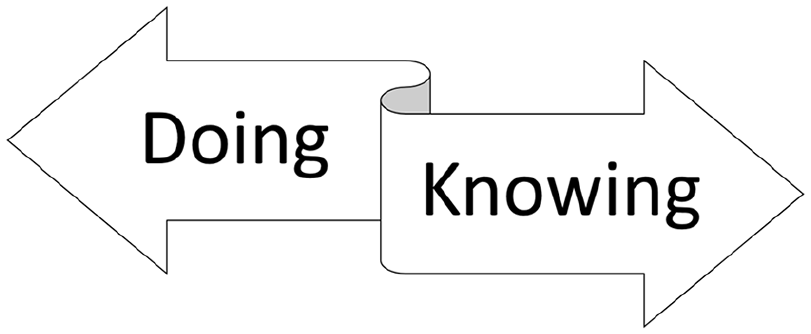
Visual representation of doing and knowing as alternate forms of understanding.
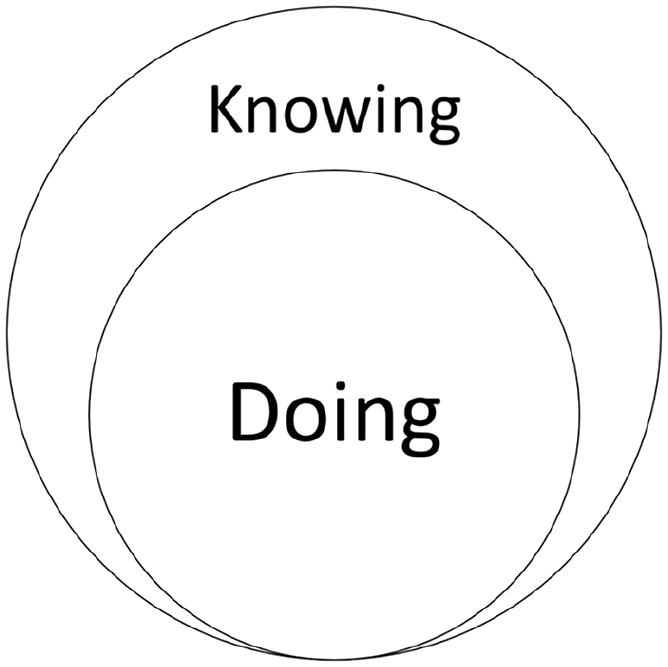
Visual representation of doing as a pivotal component of knowing and knowledge acquisition.
Objective, generalizable conclusions may be easier to consume, but are subject to numerous limitations as to their integrity. In traditional scientific disciplines, it is widely reported that negative or null results are disappearing from literature, appearing to contribute to a research culture where negative outcomes are undesirable due to growing competitions for funding and citations. 25 Paradoxically, this can lead to positive-outcome bias on a systemic scale, 26 meaning that the objective, reliable knowledge loses its trustworthiness. Upon reflecting on research in the dance science field, Crickmay et al note an additional challenge within this kind of research whereby participants cannot be “blinded” from the intervention they are partaking in. They state, “practitioners thought participants were inclined to give what they felt were the most desirable responses for funders, and therefore questioned the reliability of data” (p. 15). 6
Reliability of research is further challenged when we discuss the existing tensions between basic versus applied research and approaches that are highly controlled versus those that are more akin to normal life. Perhaps in drug trials the necessity to be so highly controlled is evident, though there still remains an individual response to these drugs that should be considered. However when discussing dance and movement as a means to health, the individual and their personal and environmental contextual factors will inevitably influence their experience and thus the resulting impact. 20 Statistical analysis, even with all of its factor controls, cannot consider all of these contextual factors for each individual person. Thus, the inclusion of qualitative information can help fill in the gaps and provide better context and understanding of the situation. 19
Combining both objective and subjectives lenses in research may help to address some of the concerns that highlight the challenge we as researchers face to more fully and accurately represent the dancers’ experience. Ontologically, research is always conducted from a person’s point of view, we cannot remove ourselves entirely from research 27 and thus might move toward finding a balance, a compromise. Incorporating both qualitative and quantitative, embracing the subjective with the objective may create a more balanced, holistic picture of the dancing experience. However, the combination of numerical and written data still does not fully address the fact that much of what is cultivated and gained through the dancing experience is implicit.21,22 Thus, there is a need for research to look more broadly at methodologies that help us to tap into the embodied experience and tacit knowledge acquired.
Embodiment is a prominent concept routinely explored in the field of dance and somatic practices, where the richness of bodily knowledge is readily embraced. 28 However, from a psychometric perspective, there is an absence of theoretical clarity about what embodiment is or involves, thus exhibiting a need to blend “phenomenological richness and experimental rigor” (p. 994). 29 Rigor, reliability, and validity are necessary in empirical research, to uphold ethical principles and ensure responsible dissemination of knowledge. And yet, embodied experiences that are generalizable and systematic that “generate testable predictions about human experience which can be directly measured” (p. 979) 29 are not synonymously rigorous. A shift in approach, and consequently semantics, is needed; rather than trying to measure and capture generalizable experiences, we should aim to share, represent, and value dancing diversity.
Advocating for Arts-Based, Co-Creation and Mixed Methods
Dance science researchers need to acknowledge and make use of the plethora of research methods that facilitate making sense of lived experience.30,31 Multiple or mixed methods is widely understood as the principle of using a collective of research methods from either qualitative or quantitative realms. The act of mixing qualitative and quantitative disrupts the dualist tendency of research to sit at one end of a normative methodology binary, but also challenges researcher reflexivity and positionality as being reserved only for the social sciences and somatic practice research. 32
Using a mixed-methods design is a complex task to be approached meticulously, whereby the researcher ought to be clear of their methodological, ontological, and epistemological assumptions. Phenomenologists have long criticized realist and naturalist scientific e investigations that “represent themselves to be autonomous,” (p. 160) 33 staking an undisputed claim that their findings are causally determined (p. 345). 34 Whilst positionality statements and researcher reflexivity statements are commonplace in qualitative research, these statements also ought to be included in quantitative and mixed methods research. Positioning the researcher does not invalidate the validity of the research process, merely it offers the reader a deeper insight into the choices made by the researcher, offering a more holistic review of how and why the research has been conducted, what assumptions are made and how readers can trust the writer’s authority on the subject. As noted by Coghlan and Brydon-Miller, 35 “The position adopted by the researcher affects how the research is designed, conducted, analyzed, constructed, disseminated, and published” (p. 627). While these insights may unsettle assumptions of how research processes can be considered rigorous, it is important for all researchers to understand that their investigative choices will bear on the contextualization, interpretation, and dissemination of findings. In objective scientific pursuit, reproducibility and replicability are key cornerstones in assessing the validity, reliability, and rigor of a study with the aim of obtaining consistent results that answer the same scientific question. Surely, in identifying, understanding, and sharing the inevitable bias scientific researchers hold, the generation and interpretation of results becomes more accurate. 36 Without acknowledging researcher bias, these unspoken partialities remain tethered to the results with the potential for misrepresentation and fraud. As noted by Sylvester, 12 “Positionality exists whether it is admitted by the researcher or not” (p. 313), meaning that hiding positionalities simply reduces the reader’s right to evaluate the findings and results presented.
The use of mixed and multiple methods f is far from a novel concept, and yet as the boundaries between science and dance become increasingly blurred, 32 this fluidity calls for dance medicine and science to go further in diversifying its research. Rather than preserving the separation between 2 different types of knowledge, new forms of knowledge need to be embraced. The dance medicine and science field has the unbound potential to expand the way it conducts research; it can explore varied methods such as practice-as-research (PaR) g and arts-based technological methods such as film and photo-elicitation. In turn, science can capture seemingly elusive psychosocial concepts such as embodiment but may require traditionally phenomenological approaches. 6 Thereby, this approach challenges science as a solely distinct institutional field, 32 without disregarding but illuminating each projects’ philosophical tethering. In practical terms, those researching in the sciences may look at the benefits of collaborating with others who can bring new perspectives and insights to their work; the inclusion of a dance ethnographer or qualitative researcher alongside a quantitative researcher has the potential to generate new ideas and connections.
There appears an incongruence between participant meaningfulness and measurement of dance effectiveness that needs to be addressed. As researchers, we must consider why participants want to dance when formulating research questions and devising research projects regarding participant health and wellbeing. In absence of this attention, research is at risk of repeatedly attempting to prove that dance is effective, that dance works by relying on specific outcome measures favorable for publishing, funding, and policy purposes. The research becomes predictable, operating in echo chambers without critically reflecting on what is truly happening in the dance space. To enact change, researchers could begin their process by talking with participants, engaging, and participating in the dance contexts before determining the research questions, design, and methodologies.
In effort to address these concerns, this paper argues for the inclusion of participant voice in the creation process to ensure the research is meaningful and relevant not only to researchers and academics, but to the people who are choosing to dance. This paper also advocates for the wider research team, inclusive of researchers, artists, volunteers, funders, stakeholders, to take part in dance and thus gain tacit knowledge, that is not possible via other means. This approach to research disrupts the power dynamics between participant and researcher as an ethical and methodological consideration, where all involved parties earn from the research experience. A symbiotic research relationship develops; the participant, by way of helping to devise key aspects of the research, becomes a co-researcher and the researcher becomes embedded as a participant, learning through experience.
Examples of this kind of research are already starting to surface in the DfH sector. Dancer and choreographer Monica Gillette, in conjunction with Theater Freiburg and Freiburg University, recently carried out research with people with Parkinson’s in a dance context. In their work dancers, scientists, and people with Parkinson’s were brought together in a non-hierarchical environment to research movement and movement disorders with the aim of using dance as a vehicle for research and cultural exchange. 37 In discussing the research Gillette 37 states, “a unique component from the start was the involvement of dancers in designing the projects, which allowed for the act of dancing to become the engine for discussion, reflection, and research. . . dance was also engaged with as a method of research, a pathway for understanding, and a source for generating new knowledge” (p. 15).
Embracing Embodied Dance Research Experiences
Bodily movement is a form of knowledge production, with dance researchers often already having the tools to delimit, define or describe it. Movement as dancing practice is seldom utilized within dance science and medicine research methods and dissemination. Whilst in postgraduate dance science studies, dance as a means to health is certainly discussed, it is not emphasized as strongly as dancer health, inclusive of preventing injuries and enhancing performance potential. Dance scientists learn and understand the necessity for objectivity to avoid bias, to control for factors that might influence data, and to look for statistical significance in effort to generalize conclusions. However, upon embarking on research in DfH situations, the tensions between art and science became clear to the authors of this paper, as did the rigidity in the research methodologies that underpin them. No longer does it seem appropriate, useful, or indeed possible to stay completely objective. By controlling too many factors, the researcher risks decontextualizing lived experience too heavily, so that it is drastically unreflective of real life. As dancers, both authors quickly recognized that to truly research dance in this context, an understanding of the lived experience was a significant and essential component, from both the participants’ point of view but also as an embedded researcher.
Embracing hybridity and inter/transdisciplinary approaches serves to enrich rather than muddy research by working openly, collaboratively, and reflexively. Hybrid ethnography, where exploring meaningful dance experiences includes the use of both participant observation and observant participation cooperatively with solicited journals and semi-structured interviews, can serve to help bridge gaps that are currently felt when attempting to work in separate silos. Hybrid ethnography can also be known as “embodied ethnography” and “enactive ethnography” where “insights are captured through active participation” (p. 3) 38 by a researcher. From a philosophical perspective, it is through this active participation and by way of sharing and moving together with others in the space, that we learn, perceive, and understand others. 39
Through engaging with an active role in the field as both a dancer and researcher, own embodied dance experiences are generated. Observations that are conducted overtly allow for participant experience to be described from an open and holistic perspective, where the researcher can be flexible and inductive. 40 These experiences can be creatively recorded, through writing journal entries during and after being in the field, reflecting through spoken word in a Dictaphone, writing poetry, drawing, whichever method accurately captures the researcher experience of dancing. This method, whilst having methodological and epistemological implications, facilitates a researcher to adopt both an inward and outward gaze, to “take part” as well as “take from” the observed dance class (p. 27). 38 This approach requires openness and empathy from the researcher, perhaps even an uncomfortable relinquishing of control to some degree since, “it is this very letting go of control that is the source of new insights” (p. 6). 41 Sharing a dancing experience with participants as a researcher breaks down the rigid power structures in study spaces, facilitating communication and connection with dance as an embodied, experienced practice.
In the fields of dance and somatics, practitioners discuss the concept of valuing process and product, and perhaps even at times process over product. 42 In this context the term product refers to the end result or outcomes whereas the process refers to the journey taken to arrive at those outcomes. In the case of DfH research, one could argue that much of the research to date has placed a heavy focus on the products and whether dancing, across a certain amount of time and with a specified frequency of classes, can significantly change or improve certain variables. Whilst an important endeavor, these kinds of studies may neglect to focus on the process, the experience of dancing itself and the tacit, embodied knowledge acquired through this experience. The tensions between art and science surface when we realize that the value of dance is not solely based in the research outcomes and products, but rather in the lived experience. A focus on process as well as product and approaches that combine science with somatics have been further called for by Batson et al 28 and McGill in her presentation at the annual International Association for Dance Medicine and Science (IADMS) conference in 2022. Chappell et al 5 further note that Challis 43 and Camic et al 44 also highlight the need to emphasize process rather than outcomes in creativity research and point toward this potentially being necessary for future methodological developments in the area (p. 12).
In their work entitled Integrating Somatics and Science, Batson et al 28 discuss how the earliest dialogue between science and somatics and further arguments for the combination of both in research, have often been underpinned by a recognized need to deal with or “reconcile scientific dualism” (p. 185). These authors shine a light on the debate that is interwoven throughout this paper and that academics have struggled with for decades stating that “somatic experiences are not often explicitly grounded in scientific constructs and dance science experiments often exclude somatic principles and experiences (p. 185). 28 They propose phenomenology and embodied cognition h as potential frameworks for future research noting that such theories establish the role of the body in thinking, learning, and meaning making. 28 Whilst phenomenology and science have been described as fundamentally incongruent with different methods and conceptualization of information, phenomenologist Merleau-Ponty 45 stated that the 2 were not so unalike, whereby phenomenology and psychology “. . .are not kinds of knowledge, but 2 different degrees of clarification of the same knowledge” (p. 24). Further, Romdenh-Romluc 34 reads that for Merleau-Ponty, 45 both science and phenomenology are “continuous” in their quest for knowledge (p. 341) since both disciplines hypothesize, refute, observe, and interpret experience in the world, a statement that is purposefully and gloriously abstract.
Similar ideas of bodily knowledge shaping our perception, thinking, and action in the world are seen in works by Merleau-Ponty. 39 Author Purser 22 brings these ideas into the forefront of her work in suggesting then that bodily movement such as dancing, is a form of knowledge production that is “freed from constraints of rationalization and objectivity” and allows for exploration of the more abstract and “uncertain elements of the human condition” (p. 254). In this way Purser 22 encourages researchers to not be so concerned with forming or indeed forcing concrete or “crystalised” ideas about certain phenomena, but rather to lean into the discomfort of multiple ways of seeing the world and shifting meanings.
Batson et al,
46
in a recent podcast for ResDance, further advocate for moving away from the hierarchy and silos of various fields and finding “the new.” Batson et al
46
further discuss ideas of Dance as Method and the need for describing rather than defining. Researchers and academics from all over the globe, separately but with similar aims, are demonstrating a need for change, change that will break down dualistic barriers and open new ways of working. Batson et al
28
state that it is clear interdisciplinary work and the combination of science and somatics, objective and subjective modes of inquiry will inevitably provide far more insight into phenomena. However, this requires those involved to learn new languages and be open to other perspectives. Crickmay et al
6
agree that this dialogue is important for future work in the field: “Practitioners” ability to observe and understand changes in body and movement in dance terms could be drawn on more extensively and productively put into a more balanced dialogue with medical understandings of the body in research. Increasing recognition of this expertise would also help address other methodological concerns, which included concern that dance was not often measured on its own terms, and that research often lacked clear descriptions of the dance practices and interventions involved” (p. 18).
Upon looking at scholarly work that spans across a multitude of different subfields within the dance sector, we can see a shift and advocacy toward broadening our perspectives, and opening our minds to new ways of approaching research. Inevitably, this work lends itself to working collaboratively with others, with the aim of creating new ideas and pathways through open knowledge exchange. In doing so, it encourages pushing the epistemological and ontological boundaries.
Capturing and Disseminating Tacit, Embodied Knowledge
Research does not exist without willing participants who generously share their time to further our comprehension of dancing practice. Recently there has been considerable scholarly interest in processes of care in research with a focus on treating participants with compassion and openness, 47 where person-centered approaches that value the participant voice are advocated for. If we take a step further in this direction, we can look at research designs that promote co-collaboration whereby participants play a role in the research processes and methodologies and researchers take part in the dancing. At the 32nd Annual International Association of Dance Medicine and Science (IADMS) conference, calls for greater diversity, equity, inclusion, and intersectionality in dance science and dance education research were explored by Brown, 48 the Chair of the International Association of Dance Medicine and Science (IADMS) Intersectionality Task Force. He called for artists, practitioners, academics, and policy makers alike to enact change in our dancing communities. Researchers, research practices and artist enquiry are not excluded from this call. According to Block and Kissell, 17 “a study of movement and dance encompasses the fullest meaning of embodiment: that the embodied way of being-in-the-world is also an embedded way of being in a world of others” (p. 5). Dancing is an embodied experience and thus by participating in the field, experiencing dance with others can act as a way of forging communities, creating rapport with lasting, meaningful connections that encourage collaborative knowledge creation between participant and researcher. Indeed, it is often the case that when visiting a DfH session, those in attendance, including researchers and stakeholders, are asked to not just sit back and observe but rather to participate and experience the dancing with others in the space. There are many reasons for this; the immediate shift in positionality means that the space is more inclusive, welcoming, and non-hierarchical, but it also allows those invited to the sessions to talk about the lived experience of what was felt, sensed, and embodied. Perhaps we as researchers can learn from this inherent aspect of many DfH classes and make it a foundational element of our research designs.
Dancers, movers, and artists may be physically attuned to their bodies existing, being, living, breathing, and moving within the world, thus having a responsibility to transparently disseminate and represent tacit and embodied knowledge. 49 Midgelow and Bacon 50 discuss the development of Creative Articulations Process (CAP) to help bridge the gap between embodied knowledge and written word making these experiences more tangible and visible. Developed with an aim to enhance reflective practice and encourage a deeper exploration of one’s creative process, CAP provides strategies that help “give voice” to embodied experiences and bring “dance and movement-based performance into language” (p. 10). 50 Though CAP was originally developed in the context of the choreographic process, its theoretical roots in philosophy, neuroscience, and somatics are relevant to this discussion. The CAP model draws on work by Antonio Damasio and his theories regarding “somatic markers” having a vital role in our thinking and decision-making processes (p. 41). 51 Similar to ideas from other philosophers and scholars Merleau-Ponty 33 and Purser, 22 we come back to the belief that it is through our bodily knowledge that we develop perception and thought. It is therefore essential that we consider bodily knowledge and thus subjective lived experiences within our research methods with an understanding that embodied experiences will inevitably shape how we perceive, think, and feel and thus how we are able to live well.
The wider model within CAP is geared toward artists who are seeking the time and space to question, explore, and attend more to their creative choreographic process. As such, the entirety of the model and its multiple facets may not be wholly relevant for some DfH classes or research endeavors in the area. However, the work encourages its participants to reflect in the moment, delaying the act of meaning-making, interpretation, opinion, or the desire to label something to find words that resonate with that particular moment, feeling and experience. 50 This immediate reflection in the dance space is something that can be taken away and utilized within the context of DfH settings and may be of particular use to access information about the lived experience. These reflections may take on a variety of formats such as reflective writings, drawings, poetry, word maps, or other modes of expression and will depend on the situation and setting.
Should representatives from funding bodies and stakeholders not be able to experience the dancing themselves, observing dance by way of film or performance may be another useful option. 5 It is often the case that funding bodies and stakeholders require written reviews and updates throughout a research project with a final comprehensive report at the end of a study. This documentation of what is happening often relies on researchers being able to clearly describe and evidence experiential practice in words and often in a formal and academic structure. There is an opportunity here to look at other modes of documenting and sharing experiences that will get us closer to what is taking place in the dance space. As described above, these other modes might include use of visual art and drawing, mapping, use of audio and film, and live performance. Researchers then may look at drawing out themes in a similar way that one draws out themes from interviews and focus group discussions. McGill 52 discussed the potential connections between Laban Movement Analysis (LMA) and clinical indications of physical health in DfH research. LMA classifies movement into 4 main categories: Body, Effort, Space, and Shape. Various factors within these categories can, over time, change and develop, and can provide evidence to adaptations in movement patterns and qualities of movement for those experiencing dance as a vehicle to health. 53 Policy makers, funding, and governmental bodies in positions of power ought to be invited into the dance spaces, coming to studios, theaters, research centers and communities, to experience value through dance movement for themselves. Although perhaps a more time-consuming and logistically taxing endeavor, we argue that reflecting on transient, person-centered insight of experience is just as accessible as numbers and statistics.
Recent literature also points to the argument that the embodied knowledge and expertise of the artists involved in leading the dance sessions should be valued and incorporated more into research methods and dissemination. 5 Whatley 49 states, “Dance Studies is alive to how different forms of knowledge can be articulated, and in particular how the embodied knowledge of the practitioner can and should be valued”.
If future research aims to capture the more elusive and intangible aspects of the dancing experience, then it seems necessary for dance artists to have a stronger role in data analysis. Their embodied knowledge is vital in being able to accurately depict and describe what happens in the dance space, alongside any changes to movement patterns and qualities. Chillemi and Fortuna 54 argue that the “sensing, perceiving body-as-researcher” can play an important role in breaking down habitual barriers and opening possibilities for new ways of moving, relating to others, and thus new pathways to knowledge and knowledge exchange (p. 72).
As a way to capture and disseminate tacit, embodied knowledge, it seems necessary for research to include arts-based methods that place dancing at the heart of the discussion, and to work with artists and practitioners who are embedded in the dancing experience and can therefore bridge the gap and language barriers that often exist between research and practice. Through this collaboration and knowledge sharing future research may be better able to “reveal ‘less visible, less legible moments of art, of history, and of knowledge production” to offer a “productive disciplinary and discursive intervention” (p. 4). 55
Challenging the Research Output Norm
The academy has overwhelmingly focused on communicating the value of dance through written publication outputs and presentations at conferences. Dance, in its many contexts and forms, is a mode of expression and a way to communicate things not easily expressed in words. Indeed, it is this alternative pathway to self-expression and communication that drives many to continue in the profession. And yet, paradoxically, the main form of research dissemination in dance is through written word. This form of communication and knowledge sharing can be globally accessible online, across many different countries, cultures, and fields. Yet, it is still the case that the more elusive, embodied knowledge acquired through movement experiences will not necessarily be wholly or accurately represented through words alone.
As such, researchers ought to disseminate information in a way that appeals to broader populations beyond members of the academy. We acknowledge that workshops and videos are routinely used in conferences, and yet with often high registration and attendance fees, this is another question of access. 56 Since the Covid-19 pandemic in 2020, many conferences have started to offer online provisions, moving toward geographical ease of sharing knowledge. And yet whilst writing is perceived as tangible research dissemination, films, images, and audio can capture the legacy of first-person experiences. In other words, the legacy of research can be the lived experience of an intangible movement experience. Dance and movement are ambiguous broad labels for workshop sessions so, for example, at the 6th International Dance and Somatic Practices Conference, 57 movement workshops were referred to as “gatherings,” “practical/facilitated/movement exercises,” “participatory film screening,” “improvisation jams” and “encounters.” Each term was carefully considered by the presenters, alongside rich descriptions of what delegates should expect from movement practice. Since trust and transparency is key when sharing embodied practices, 58 conference attendees need to feel informed to consent before delving into movement participation.
Dance and art, as argued by practice-as-research (PaR), can be sole outputs of research and capture the complexity of dance’s contribution to the field of science, medicine, and health. The debate of capturing “ephemeral” contributions, the process as well as the product, of dance is ongoing (p. 2).
6
This bodily endeavor, whilst common-place in dancing and dance-making, gives rise to PaR’s radical intervention into conventional academic work by placing the lived in-motion experience of the researcher at the center of research.
59
In defining PaR, Nelson
60
states that, it involves a research project in which practice is a key method of inquiry and where, in respect of the arts, a practice (creative writing, dance, musical score/performance, theatre/performance, visual exhibition, film, or other cultural practice) is submitted as substantial evidence of a research inquiry (p. 9).
Nelson goes further to challenge skeptical scholars who may not see this as a rigorous and worthwhile endeavor in stating that these types of projects often require far more labor, collaboration, and a broader range of skill sets than traditional research processes. The resulting interdisciplinary work is therefore representative of multiple different viewpoints and perspectives and has the potential to demonstrate an equivalent level of rigor when done well. In PaR and social science, methodological unknowns allow for methodological malleability and dynamism. 61 This is not to say that dance science researchers should be vague and hasty in their project designs but be open to the possibility of pending epistemic shifts.
Future research should investigate further how PaR could potentially be a useful tool in DfH research. The interdisciplinary nature of PaR and the fundamental principles of valuing different viewpoints and perspectives appears to connect well with recent calls for collaboration, co-creation, mixed methods as well as arts-based methods in the DfH sector. Furthermore, it is through a better understanding of the practice and dancing itself that we will be able to better understand and learn about this art form in relation to health and living well. For example, communities can dance their movement practices, followed by an articulation of their experience, a research design that may be done as an immediate, short-term exploration or repeated longitudinally. If we, as a society, want to understand more about dancing as a means to health, then it seems vital that we start to incorporate the dance and dancing experience in our research methods and outputs.
Conclusion
Disruption and reflexivity catalyze paradigm shifts and instrumental change. Through re-languaging movement experiences in research contexts, this writing stresses the innate value of observing and critiquing the current dance medicine and research landscape. Acknowledging, observing, and making connections are the first steps toward translating the abstract theoretical into practice.
Throughout this paper we have shared recommendations and suggestions for future work in the field. These suggestions include collaboration not only between researchers, stakeholders, and participants, but also across fields so that scientists, dance artists and ethnographers can share perspectives and insights. Through collaboration, research questions, designs, and methodologies will ensure a more holistic approach that can help to address some of the messier aspects of merging dance and science. Fundamentally, the dancing participants have a role to play in the research process and design, with researchers themselves embedded in the dancing experience thus gaining embodied, tacit knowledge. Furthermore, with considered dissemination, researchers can help to tackle the more allusive aspects of dance and science in their research outputs. We question why dance is not utilized more in the dissemination process through use of film, practice as research and performance; the use of written word imperfectly translates the transformative experiences dance can provide. There is power in language, so much so that by making use of processes such as CAP, researchers can tap into embodied experiences by asking participants to write, draw, and create in the moment.
Dancing experiences are not always easily expressed in words nor easily measured, meaning that time needs to be taken to carefully design research that conveys narratives with integrity and ethics. Future research writing ought to include recommendations and practical applications that can help those invested in the field to gain a better understanding of how and why dancing can be useful in a health context. While single outcome measures geared toward understanding dance’s contribution to changes in motor control and coordination are valuable, for example, the specialness of dance is not fully realized until we start to address the more intangible aspects of the art form. This paper begins to address some of the ways that researchers might begin to embark on capturing, contextualizing, and disseminating tacit, embodied knowledge gained through dancing.
Footnotes
Acknowledgements
We would like to thank Heike Salzer and Simon Ellis, for their valuable time and insight; our conversations with you both continue to challenge and inspire.
Declaration of Conflicting Interests
The author(s) declared no potential conflicts of interest with respect to the research, authorship, and/or publication of this article.
Funding
The author(s) received no financial support for the research, authorship, and/or publication of this article.
