




Abstract
Loneliness is a pressing global health crisis. A combination of close and not close ties (i.e., weak ties) is optimal to combat loneliness and improve psychological and physical health. The literature has not differentiated among weak ties, however. We identify possible categories of weak ties along a spectrum from passing strangers to the edge of friendship. We propose that one type of weak tie, which we term “fringeships,” may provide unique benefits for well-being compared to other weak ties. Fringeships sit on the edge of close ties and are characterized by a) regular contact in specific settings; b) volitional and mutual recognition of the connection; c) freedom from obligations that characterize close ties or formalities that characterize many types of weak ties; and d) a degree of shared affection and fondness. Fringeships engage in a balance of small talk and personal disclosure. We speculate on the potential benefits of fringeships, the contexts in which they are likely to arise, and individual differences in the propensity to develop them. We discuss potential interventions for the development of fringeships, particularly for those most in need of social contact. We conclude with research questions to launch this Next Big Idea.
Keywords
In 2025, the World Health Organization approved a resolution, Fostering Social Connection for Global Health, pushing for increased attention to belongingness and social ties as a basic human need (World Health Organization, 2025). Psychologists are well-situated to investigate this global imperative; they are the leading experts on close relationships at the center of the social world—romantic partners or spouses, children, siblings, close family members, and friends. However, sociability also encompasses social moments with strangers, acquaintances, co-workers, and other social ties encountered in daily life. These pervasive social encounters shape our activities, often evoke emotions, many positive, some negative, and ultimately such encounters contribute to overall well-being. However, we know far less about these more distal, but still influential ties. The importance of mundane social encounters became more salient during the lockdown phase of the COVID-19 pandemic, when the lack of casual connections left a noticeable hole. Many people reported feeling lonely or socially adrift, even if they were lucky enough to shelter in place with people they loved (Birditt et al., 2021; Ernst et al., 2022). It became clear that we need close social ties, but we also need ties that are not close in our daily lives.
Although a vast literature exists that classifies close ties based on factors such as structure, relationship type, functions (e.g., support), and emotional closeness and intimacy, there is comparatively less research on ties beyond close friends and family. In this paper, we address this gap by differentiating and classifying the vast array of social partners beyond close ties. We introduce potential categories ranging from stranger to the fringe ties that fall at the edge of friendship by considering the structures, situations, and subjective emotional closeness that distinguish these categories. We argue that one particular type of social tie in this realm has unique potential for enhancing well-being, what we term “fringeships.” We speculate that fringe ties, which lie on the cusp of friendship, may play a vital and often overlooked role in enhancing well-being. Identifying subtypes of ties that are not close and exploring the ones that may have the greatest impact on well-being sets the stage for The Next Big Idea in psychology.
What are examples of fringeships? They include the woman with purple hair who places her mat next to you at every yoga class, and after Shavasana, you speculate together on who will win the reality TV show you both watch. They include the father on the PTA who carpools with you and serves as your “partner in crime,” mocking the sugar-free bake sale. They could even include that one student who comes to office hours and talks with you on a regular basis, getting to know you well enough to bring you your favorite candy bar (KitKat, of course) on the final day of class.
These fringe ties are people we see frequently and regularly in a defined setting, such as at work, the gym, religious gatherings, or casual or informal contexts. The connection is typically limited to that particular setting and occurs without commitment or obligation. We have only so much time and emotional resources for close ties, and the ability to connect without the demands that come with close ties is valuable for well-being. Fringeships differ from close ties, but they are also unique and more impactful than the vast sea of other people who flow through daily life. Fringeships share mutual recognition, enjoyment of time together, and some degree of fondness. They provide a sense of connection in situations that might otherwise feel mundane, chaotic, or isolating. They hover between being an acquaintance and being a friend. These ties may play a particularly important role in adulthood, as compared to childhood and adolescence where school and activities allow latitude for different peer groups.
To note, we recognize that the nature of these ties is culturally constrained similarly to close relationships. The threshold for friendship may be higher or there may be more subtypes of friends and weak ties in some cultural groups than in others. Further, the likelihood of forming a fringeship generally stems from having opportunities and motivation to engage with less close ties in daily life. Engaging with people who are not known well may be more likely or inviting in some contexts than in others, and may vary by ethnicity, culture, and even region. For example, in Texas, people might talk with random people by complimenting their outfit, discussing an enjoyable show they just saw in the lobby of a movie theater, or ask the person ahead in line at Trader Joe’s about the taste of the snack they are buying (true stories—Texans are very chatty people). But similar behaviors in another region of the country may evoke a much less positive response. As such, we recognize limits in the generalizability of all categories of ties, including and perhaps especially fringeships. We suggest that ties on the edge of closeness may benefit people across cultures, just as close ties do, while acknowledging that the chance of developing such ties and the manifestation of such ties likely differ across cultures.
Why We Need Ties Beyond Our Circles of Close Friends and Family
Fringeships are one of many categories of ties that are not close. Scholars have applied a variety of umbrella terms for this spectrum of heterogeneous ties: peripheral ties, acquaintances, and tertiary ties (Fingerman et al., 2026; Sprecher, 2022; Zhang et al., 2011). Most often, however, the term “weak ties” is used in the social science literature to refer to relationships that fall somewhere between strangers and close ties, as a general term akin to acquaintances (Huxhold et al., 2020; Kim & Fernandez, 2023; Lam et al., 2023; Rajkumar et al., 2022; Sandstrom & Dunn, 2014b). Granovetter (1973) initially coined the term “weak ties” to refer to social ties that link two groups and proffer valuable information and resources unavailable in the primary network. However, the examination of weak ties has expanded to include any ties that are not primary and central in an individual’s life, including ties on the edge of closeness, which we are identifying as fringeships.
Our interest in fringeships stems from an interest in the benefits of weak ties more broadly. Research has shown that having a diverse social network comprised of weak ties as well as close ties fosters optimal cognitive functioning, better psychological health, enhanced physical health, and even longevity (Berkman et al., 2000; Cohen et al., 1997; Fiori et al., 2006, 2007, 2008). For example, in a widely cited meta-analysis; Holt-Lunstad et al. (2010) demonstrated that engaging with both close ties (e.g., family members, friends) and weak ties and social groups (e.g., neighbors, clubs) is more strongly linked with longevity than more commonly known predictors of mortality, such as smoking and obesity. More recently, Jeon and colleagues (2024) examined a US national sample of adults over age 50 and found that engagement in a broad array of social activities involving close and weak ties predicted reduced mortality eight years later. In other words, a combination of close ties and weak ties helps determine who lives longest and who lives well (Fiori et al., 2006, 2007).
Studies have shed light on the specific advantages of weak ties in these diverse networks. For example, Huxhold and colleagues (2020) found in a large US sample that having a greater number of weak ties was linked with more positive affect and less depressed affect over time, even more than having many close ties. Fingerman and colleagues (2020) revealed that when older adults were with weak ties, they engaged in beneficial activities (e.g., leisure, cognitive stimulation) and were more physically active throughout the day. But it may be the case that not all weak ties offer the same benefits. We propose that ties lingering at the edge of closeness—fringeships—may stand out among other weak ties. The number of weak ties may not matter so much as the presence of particular kinds of weak ties.
In this paper, we define fringeships, explain why and how fringeships stand out among weak ties, and propose ways in which they may contribute to well-being. These ties are a likely source of pleasant connections among an array of daily interactions. Moreover, we consider whether fringeships may serve as low-hanging fruit in interventions to address social isolation and loneliness.
What Distinguishes Fringeships from Other Ties?
Not every situation gives rise to fringeships. Some situations are constrained to our closest ties, and others are populated with a broader range of weaker ties. Several features taken together help differentiate fringeships from weaker and closer ties. Fringeships are characterized by a) regular contact in specific settings; b) mutual recognition of the connection; c) freedom from the obligations that characterize close ties or the formalities that characterize many types of weak ties; and d) a degree of mutual affection and fondness. That is, fringeships do not involve the commitment or deep emotional experiences characteristic of close relationships.
In contrast to close social partners, fringe ties are usually limited to settings with corresponding limited functions. The purple-haired lady in your yoga class does not read drafts of your papers. The colleague who collaborates with you does not do yoga with you. The purple-haired lady and the writing collaborator have never met each other, and neither is likely to have interacted with your close ties (e.g., children, spouse, best friend). Other types of weak ties also have regular contact and are limited to specific settings (e.g., non-fringeship co-workers), but the combination of characteristics is what makes fringeship ties special.
Fringeships do not, however, include all the people in a particular setting. Just because a boss forms work teams, or people belonging to the same church are next to each other during worship doesn’t mean that every colleague or church member counts as a fringeship. They are the ones with whom you share mutual recognition and a certain fondness. They gel with you—you have something in common. Fringeships make settings special. You may not always want to trudge to the exercise class, you may not be in the mood to discuss the boring book one of the members recommended for your monthly book club, and work (sometimes or always) is not a preferred activity. But when a fringeship has formed and there is mutual acknowledgment and communication, the whole experience feels more enjoyable.
Finally, and more broadly, interactions with fringe ties are volitional in nature. The unique and special connection involves a decision—you’ve formed a fringeship out of all the ties that were simply present. Research has found that in daily settings, the more volitional an interaction, the easier it is to maintain the relationship and the stronger the feelings of connection (Hall et al., 2021).
In contrast to these fringeships, interactions with other weak ties (e.g., strangers, service providers, and co-workers) can be energy-demanding, in part due to impression management demands (Dominguez et al., 2020). That is, interaction with weak ties in these settings requires a degree of formality. As familiarity increases, self-presentational and maintenance efforts decline (Dominguez et al., 2020; Hall et al., 2021). Likewise, although closer ties may allow for fewer self-presentation efforts, closer ties carry a great risk of conflict and tensions.
A fringeship is defined by fondness. Quality communication is a likely route for how such fondness is formed. Many weak ties engage in “small talk” or conversation around potentially impersonal topics such as the weather or the trade of a player on the local NBA team. Small talk forges connections in a constrained and safe manner (Coupland, 2003). Likewise, communication among some weak ties involves task-related information. Communication with fringe ties often involves a balance of superficial small talk and a sprinkling of more personal disclosures. You might talk about your worries about your child who is failing algebra, and a fringe tie might share that their child had the same problem in eighth-grade history but figured out how to study by 10th grade.
Although fringe ties may engage in small talk, they also ask each other questions, listen, and reveal disclosures that enhance the uniqueness of their ties. Indeed, Collins & Miller (1994) conducted a meta-analysis revealing that self-disclosure is associated with increased liking within relationships, particularly in early stages. Although self-disclosure is likely to occur with fringe ties, it is often not at the depth of disclosure with a friend. For example, you volunteer at the food pantry on Thursday evenings and you converse with the guy who grew up near your hometown. You reminisce about past community tragedies such as the tornado that wiped out homes on the east side and celebrations such as the annual marshmallow sculpture festival. At some point, you share how much you admired one of the “cool kids” at your old high school. In sum, fringeships likely fall in a “sweet spot” between other weak ties and close ties.
Fringeships are Not Quite Friendships
If fringeships are so special, why aren’t they friendships? Fringeships differ from close and intimate ties in important ways. Interactions over time are a gateway to relationship formation; friendships and romantic relationships may progress from relative strangers through a fringeship stage. Intimate ties require resources, the most notable of which is the investment of time. One study suggests that forming intimate friendships requires 200 or more hours of contact (Hall, 2019). People cannot dedicate that amount of time to generate intimate ties in every daily setting. Fringeships do not progress to friendships in many cases because of these time demands. Often, the motivation and energy to engage more deeply in relationships may be lacking.
Fringeships differ from friendships and other close ties in other significant ways, including fewer demands (Fehr & Sprecher, 2026; Ledbetter et al., 2007). Scholars have defined friendship as a personal, voluntary relationship characterized by respect, social support, intimacy, and interdependency. Friends make an effort to maintain contact and offer one another companionship. Friends tend to transcend one context and are involved in multiple situations in your life (Dunbar, 2018; Fehr & Harasymchuk, 2018; Fehr & Sprecher, 2026).
Conversely, fringe ties are situated in time and place and maintain their connection via contact in that setting. This type of tie arises in daily life without much effort, but fringe ties stand out as meaningful or particularly positive ties in that context. Fringeships exist because both partners continue to spend time in their shared setting; once either person exits that setting, the relationship either progresses to friendship or ends. We rarely invite fringe ties into our homes—perhaps for a large reception, but not a small dinner party. A fringeship does not include the expectation of a ride from the airport.
Many close ties, such as kinship ties, arise without choice (e.g., sibling) or involve a degree of commitment that requires effort to disband (spouse, live-in partner; O’Gorman & Roberts, 2017; Stanley et al., 2010). As such, intimate ties may afford a degree of security absent from fringeships. However, at the same time, close ties involve expectations and stress that do not arise among fringe ties.
In fairness, some friendships persist in the absence of these expectations. People acknowledge having dormant friendships or “old friendships” that have long periods with minimal contact (Aknin & Sandstrom, 2024; Fingerman et al., 2024). Such ties, however, stem from close ties that included an investment at one point in time. In contrast, fringeships typically disband when there is a loss of contact.
A social partner may also remain a fringe tie rather than transitioning to friendship due to structural impediments. You live in different parts of a large city with heavy commutes and getting together would involve over an hour of extra driving. They have small children at home demanding their time and you have a collection of glass vases precluding inviting small children to your house. One of you has a hobby that consumes a lot of your leisure time such as playing in the community orchestra. Or you are blessed to have a large social network and simply cannot fit in another friend. Because friendships require an investment of finite resources, such as time and emotions, it can be beneficial to have relationships that are “friendly” but are not friendships. People need ties that have meaning but do not necessarily progress to intimacy and do not involve complicated emotions.
We also need some relationships in our lives that provide minimal aggravation. Close ties are those we love and cannot live without, but they can also be irritating and annoying at times (Birditt, 2014). They evoke worry, disappointment, or frustration due to our investment in them and their well-being; they also place demands on us that can evoke negative emotions (Birditt et al., 2024; Cichy et al., 2013). Likewise, some types of weak ties can be sources of vexation. Think about that annoying co-worker in the cubicle next to you who randomly whistles out-of-tune. Fringeships are the weak ties that are on the whole positive. You want to be with them because your interactions are pleasant and annoyances are minimal. These benefits at minimal cost are the reasons that the fringeship exists, the raison d’être. If the negative begins to outweigh the positive, fringeships likely drift apart. One study found that young adults sometimes “ghosted” a short-term friend, cutting off all contact with little explicit warning, to end the relationship without effort (Freedman et al., 2019).
A number of terms involving “friendship” have been used to describe relationships that carry some of the same characteristics as fringeships: casual friendships, situational friendships, and third friendships. Some people have a wide array of social partners they consider “friends,” but for the sake of defining fringeships in research going forward, we suggest that fringeships have a different nuance. An example for a faculty member: You have one or two close friends in the department. But they happen to be absent from your monthly faculty meeting. So, you see another colleague you enjoy talking with, and you go over to catch up on what is going on with their children, where they have traveled, and some of their opinions about today’s agenda. These interactions are limited to this setting and are special within that setting. You do not go out with them outside of work, but they are also not just any old colleague. When you could not find a friend, you wanted to sit next to them. Ties that arise in a specific daily setting, that are low in investment, yet rewarding, contribute to a full social portfolio (Huxhold et al., 2022).
Fringeships on the Continuum of Weak Ties
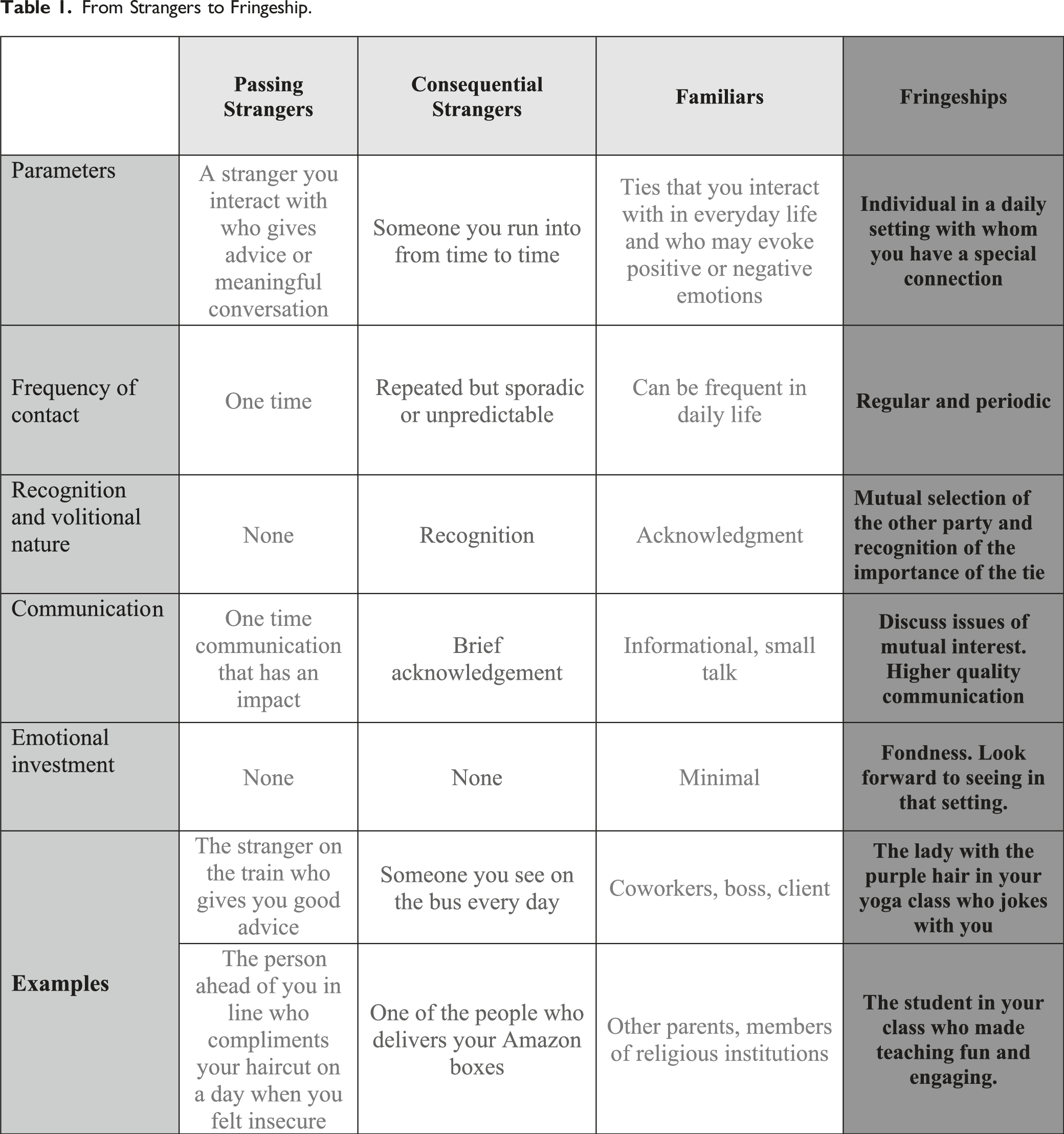
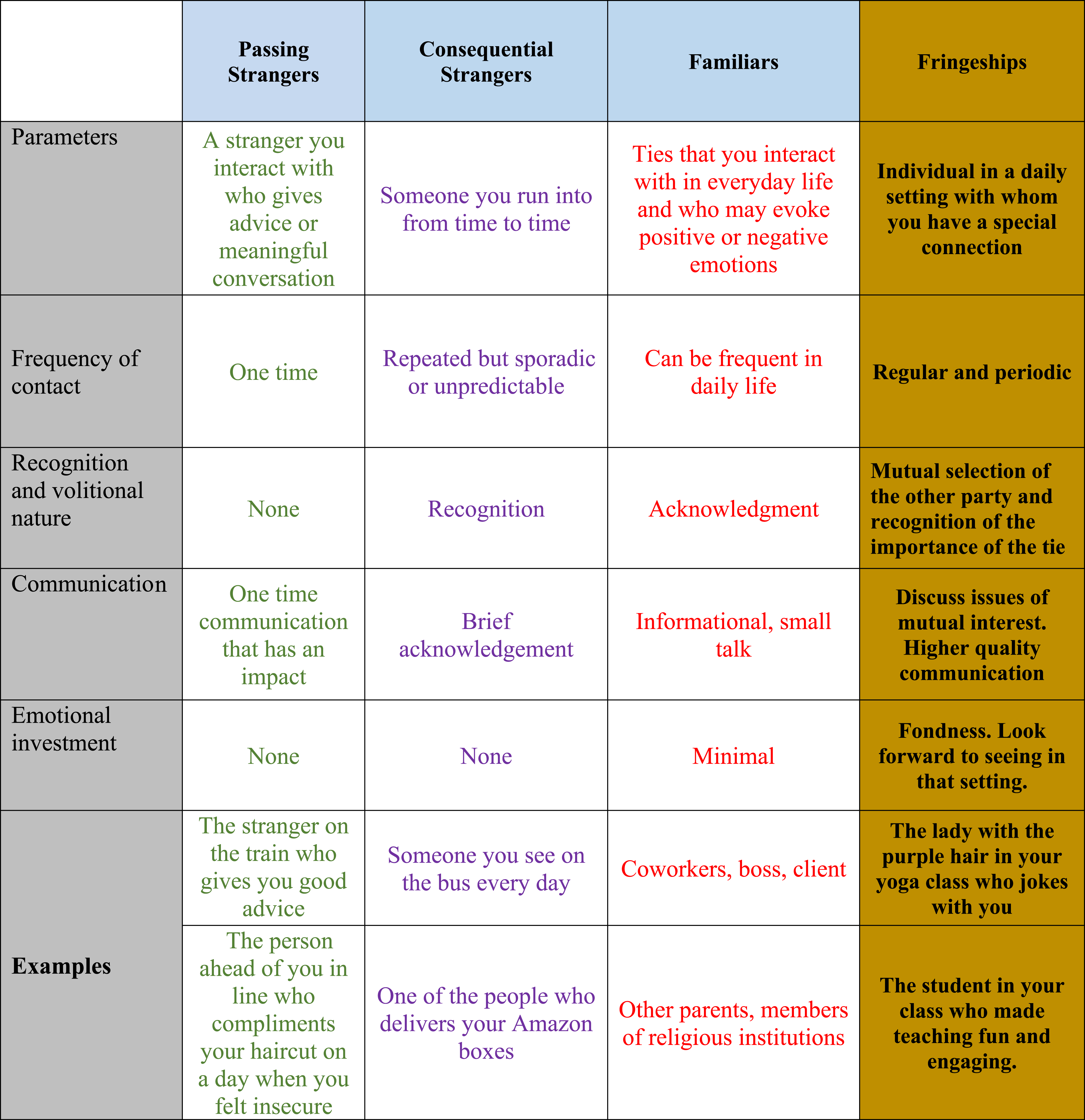
From Strangers to Fringeship.
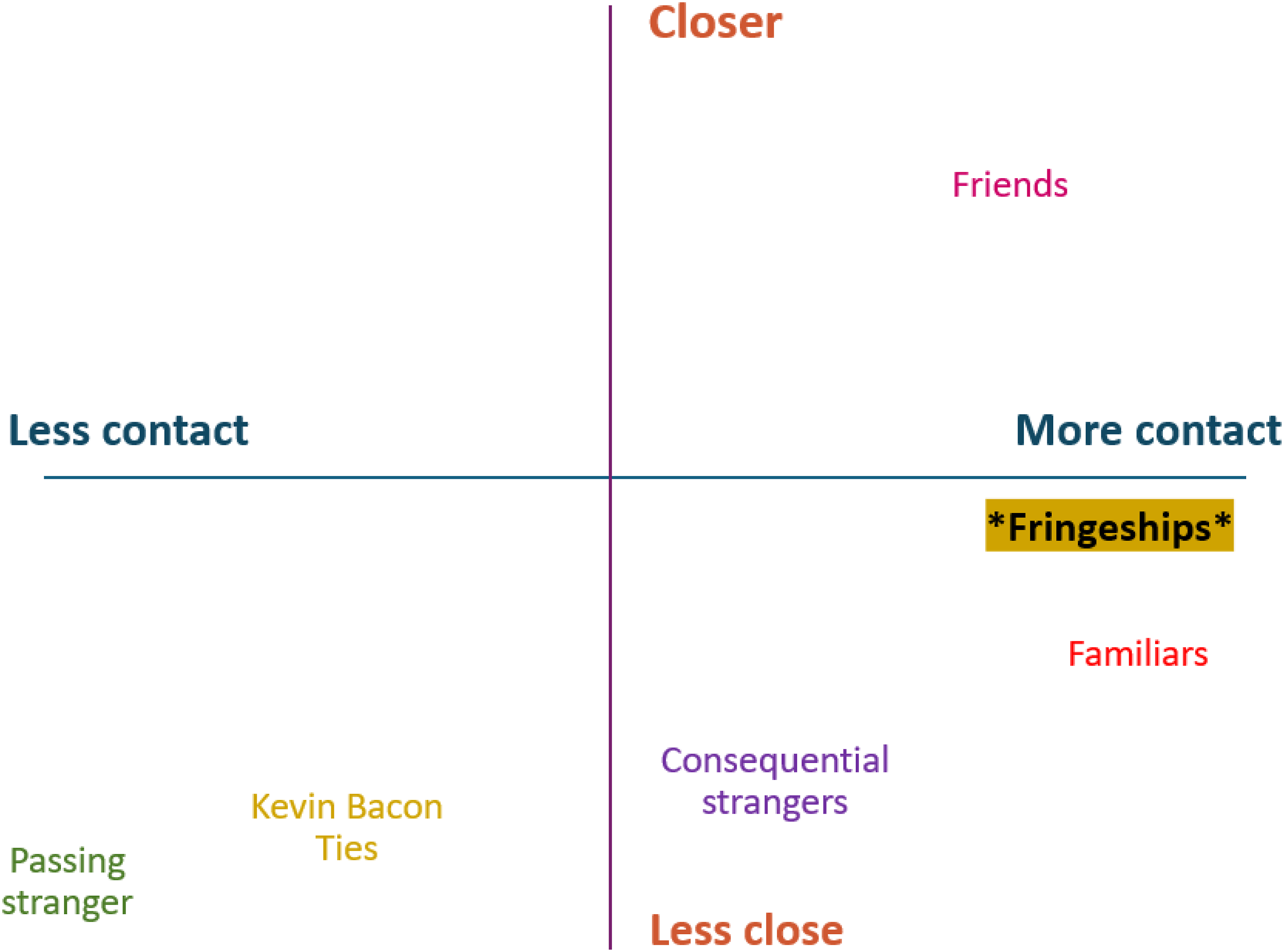
Spectrum of weak ties along dimensions of closeness and contact frequency.
Fringeships may form in a sequence—from stranger, to recognition, to familiarity, and finally, to a special connection in daily life. The connection may stall along the way; most weak ties will not become fringe ties. We consider this continuum as follows, and elaborate on some avenues through which fringeships may form if the opportunity arises (i.e., online or via another social connection).
Strangers
A complete stranger can have a significant impact on well-being via a “one shot” encounter. In one study in Canada, individuals who engaged more with a barista while going about their purchase of their morning coffee reported being in a better mood and feeling more connected (Sandstrom & Dunn, 2014b). In a similar study in Turkey, students who greeted or thanked a shuttle bus driver reported being in a better mood (Gunaydin et al., 2021). Significant interactions with strangers typically occur via one-time contact and do not require mutual recognition; rather, they involve responsive communication that shows an interest in the other person in a one-time passing encounter.
Consequential Strangers
Further along this continuum are “consequential strangers,” people whom we recognize and interact with in our daily lives (Blau & Fingerman, 2009; Fingerman, 2009). This term encompasses a broader array of weak ties but does not extend into the types of dyadic ongoing relationships that constitute fringeships. Consequential strangers are periodic relationships that include social partners in settings you attend on a regular basis but without ongoing engagement. They include the person you occasionally see at the gym, formal service exchanges (e.g., the person who manages the produce section at the grocery store who teaches you how to open those pesky plastic bags), the couple who is occasionally at the dog park when you go, or employees in more distal units at your company who you see at company parties. These social connections may be one-sided; one person’s consequential stranger may view the other as simply a stranger. But the relationship has a familiarity that becomes a part of the background and expectation of that setting.
Sometimes, consequential strangers reach out in contexts beyond those in which initial encounters began. For example, a study conducted during the holidays in the 1990s found that individuals felt more socially embedded during the holiday season when they received holiday cards from people they did not know well, including businesses or service providers (Fingerman & Griffiths, 1999).
In an experimental study, people were asked to talk to a stranger every day for a week. At the end of the week, those who did so were less worried about rejection and more confident in their social skills (Sandstrom et al., 2022). Such interactions may help move individuals from relative strangers to consequential strangers, with benefits for overall social engagement. Moreover, a consequential stranger may be the first step in forming a fringeship.
Familiars
Much of daily life is patterned by the same people gathering at the same times. These ties involve frequent and predictable contact, a degree of mutual recognition, and familiarity with one another, but do not include feelings of specialness and the forms of communication that constitute a fringe tie. Rather, these social contacts are simply familiar. They are more embedded in daily social settings, with more frequent and anticipated contact than consequential strangers.
Familiars often are fellow inhabitants of a setting where people gather for a specific task or reason, and interactions may have an obligatory feeling. Examples of familiars include people who work in cubicles on your floor, congregants who attend the same weekly religious worship, families of your child’s playmates that you meet at child-focused events, or the couple who have had season tickets next to yours at women’s basketball games for several years. Such settings are called closed fields (Murstein, 1970; Sprecher et al., 2015), where people are forced to interact based on their roles.
Familiars may encompass the majority of daily social encounters. A study in Canada asked participants to track daily interactions with people they feel close to or know well and with people they do not feel very close to or don’t know well. The participants reported nearly double the number of interactions with weak ties over strong ties (Sandstrom & Dunn, 2014b). Though the study did not specify the degree of familiarity or feelings of affection in these ties, based on the methodology, many were likely “familiars.” Among full-time employed adults, a large proportion of waking hours is spent working (Bureau of Labor Statistics, 2024a). As such, most social contact occurs with co-workers, customers, or clients who vary by familiarity, communication frequency, and closeness. In 2024, 22.8% of US employees worked at least part of the time remotely (Bureau of Labor Statistics, 2024b), suggesting these individuals may spend more time working alone, and their familiars may be faces on a screen in meetings rather than familiars who arise in person at a workplace.
Weak ties have been linked to the concept of “social capital,” and familiars may be the bedrock of this capital. Familiars may provide one another with information or access to resources that increase advantages in the larger society (Coleman, 1988; Milardo et al., 2014; Putnam, 2000). Fringe ties also may do this, but the diversity of the familiars may increase the likelihood of receiving unique resources not available from our closer relationships.
Familiars may be more likely to serve as a source of aggravation or of disagreeable communication than other weak ties. A boss may provide harsh feedback, a client may be particularly demanding, and the guy at the dog park on Thursdays doesn’t clean up after his pet. A study in the early 21st century asked participants of all ages to identify close ties and irritating ties, deriving a third overlapping “ambivalent” category from social partners listed as both close and irritating. The ambivalent ties tended to be primarily family, whereas the purely negative ones were primarily weak ties that were salient enough to come to mind and be listed (Fingerman et al., 2004). Familiars were the likely culprits.
Nevertheless, familiars can have positive interactions and are a part of daily life. Network scholars have observed that there is a lot of “tie churning” in the layers of social networks beyond an inner core of stable social partners (Roberts & Dunbar, 2011). The loss of a familiar is common when contexts change, but so is replacement with new familiars. A “familiar” at work quits and is replaced by a new co-worker, who eventually becomes a new familiar. Fringe ties are not available in all settings and cannot be easily replaced. They develop from the pool of familiars and are the ties that stand out.
In sum, we propose a continuum of contact and closeness in the realm of weak ties, progressing from stranger to fringeship. Individuals we encounter periodically and recognize without much emotion become consequential strangers. We engage with “familiars” regularly and they may evoke positive or negative feelings. And the familiars with whom we have a particularly fond relationship and particularly connect with are fringeships.
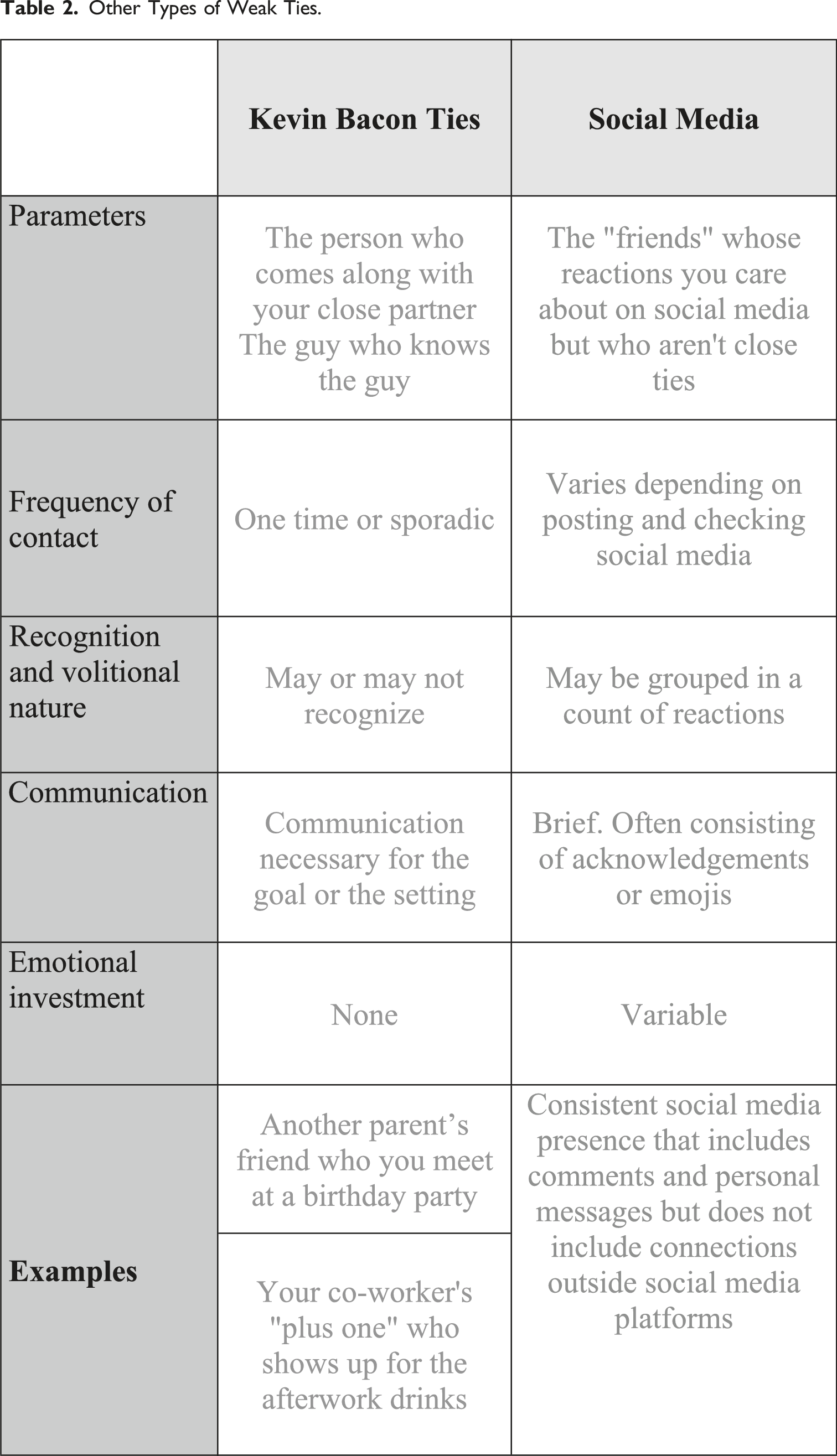
Other Types of Weak Ties.
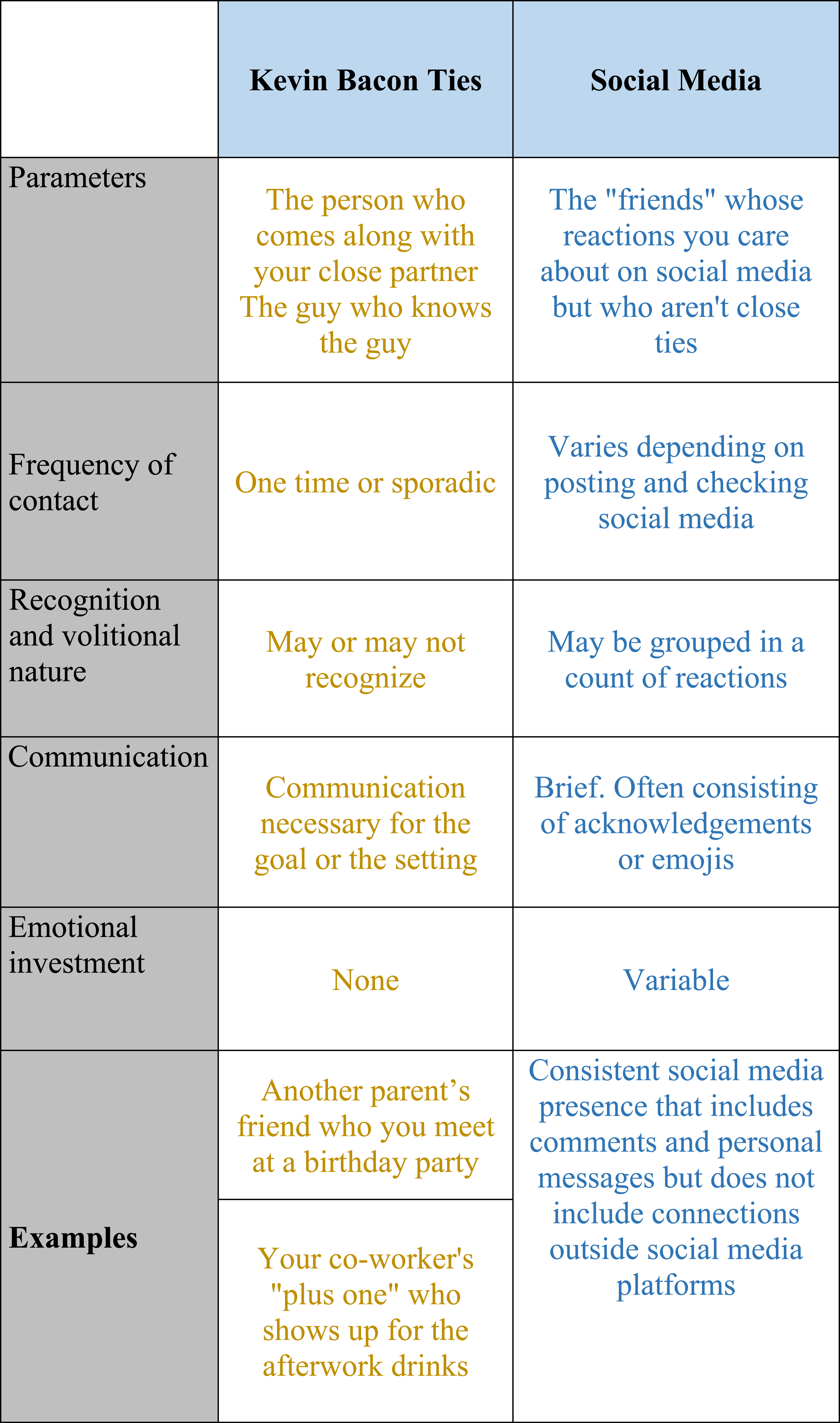
Kevin Bacon Ties
Connections to weak social partners via another, closer social partner can bring value. Many social settings allow the inclusion of an additional social partner, a “plus one” who attends the wedding, or an out-of-town guest who tags along to the after-work happy hour. Drawing on a trivia game that links the actor Kevin Bacon to other actors in different films, we could refer to these as “Kevin Bacon Ties.”
These ties may provide social capital and resources or an enjoyable conversation at a party but need not involve ongoing contact. Granovetter’s (1973) original conception of weak ties focused on individuals who bridge two different social groups, providing resources not available from closer ties, such as information about jobs. The value of these connections is evident in the popularity of social media such as LinkedIn. Research suggests that individuals who use these media derive professional information (Utz, 2016). Fringeships may arise via the “guy who knows the guy,” but these ties are more likely to be short-lived opportunities for information and resources.
Online “Friends”
Mobile and social media afford users technologically mediated forms of social contact. People may use social media to supplement face-to-face and other forms of communication such as text, phone, and email with their close ties. From the early days of the internet, people have used this technology to include distal contacts in their social world, many of whom may connect entirely online (Baym, 2015). Some connections in these large networks may be Kevin Bacon ties or consequential strangers. Social media ties may commence after meeting briefly in physical space (Standlee, 2019), such as someone with whom you exchange business cards at a conference and then connect via LinkedIn, due to shared interests, such as a euchre player’s Discord group, or as a result of increasingly sophisticated algorithms that suggest new contacts via one’s existing contacts.
Parasocial relationships also may occur online, particularly with regard to influencers or high-volume stars on video apps such as TikTok or YouTube (Gabriel & Schneider, 2024). Parasocial ties involve a perceived personal connection to a celebrity or public figure, and social media provide fodder for such identification (Hoffner & Bond, 2022). Although an individual may experience a strong interest or attachment to a parasocial tie, the nature of the “relationship” is primarily one-sided, although an influencer might respond to a specific comment posted by an online fan. Nevertheless, scholars have argued that these feelings of connection may enhance a sense of social embeddedness (Gabriel & Schneider, 2024).
Online sociality and offline sociality are strongly correlated. That is, individuals who are social in one setting typically are social in the other (Hall & Liu, 2022). Scholars have not delineated the process by which recognition and differentiation of a social partner online might transition into fondness. If this process occurs, it would likely require frequent communication and individuation involving regular online connection rather than random intermittent presence (Hall & Sharabi, 2025; Levordashka & Utz, 2016).
Online connections may range from completely unknown to a close friend or family member who has “friended” you on line. You may have contact rarely if you or that person does not check that social media often, or it may dominate your day with notifications. Given this range, we did not include social media ties in Figure 1. But we speculate that fringeships could arise online, perhaps eventually developing into friendship. Introducing new modalities of communication (e.g., direct messaging after becoming acquainted through public message board posting) as well as in-person interactions aid in relationship development from ambient awareness (Levordashka & Utz, 2016) to friend.
Why Fringeships Matter Most among Weak Ties
Elsewhere, we have proposed that different types of relationships serve distinct functions (e.g., Fehr & Sprecher, 2026; Fingerman et al., 2024; Fiori et al., 2006). Close ties serve vital functions, including social support, a sense of stability, and commitment, and often are members of a larger, relatively stable defined unit (e.g., kin network). Indeed, Bowlby’s (1969) attachment theory was predicated on the idea that babies begin life with an inherent need to attach to specific caregivers who become symbols of security. Fringeships may be one step down from this with a related purpose: In situations outside the parameters of security, knowing that a particular person will be there to whom you feel connected may make that setting feel safer and more desirable.
Fringeships are a particular type of weak tie with distinct benefits. In general, weak ties provide stability in everyday settings, opportunities to engage in diverse activities, and a bridge to information beyond what is known by one’s inner circle (Fingerman, 2009; Granovetter, 1973; Huxhold et al., 2020). But fringeships add to these general benefits of weak ties via their unique contributions to belongingness and grounding, motivation to be in a daily setting and connection to that setting, novelty, and a sense of specialness.
Belongingness and Grounding
Humans have an innate need for a sense of belonging. Much of the early literature on belonging focused on how close relationships foster such feelings (Baumeister & Leary, 1995). However, more recent work reveals that a broad spectrum of ties may contribute to feelings of belongingness. Hirsch and Clark (2018) argued that there are multiple paths to a sense of belongingness beyond close or communal relationships: the minor-sociability path involving pleasant everyday interactions with strangers and weak ties, group membership (belonging to groups such as book clubs, sports teams), and general approbation (receiving acceptance and validation from others).
Scholars have suggested that even momentary encounters that arise in everyday settings, including “minor sociability”—such as encounters with consequential strangers—can enhance a sense of belonging (Sandstrom & Dunn, 2014a; 2014b). Likewise, a study tracking older adults throughout the day assessed individual differences in the need to belong; the study found that older adults with the greatest need to belong felt less lonely when they had contact with a variety of weak ties (Zhou et al., 2024). But fringeships are likely to play a stronger role in this sense due to their consistency, predictability, and sense of connection. Having someone in the crowd who regularly affirms you makes you a part of that group.
Relatedly, fringeships ground a given setting. The premise of grounding is associated with belongingness, but is not quite the same. Instead, the situation feels familiar and safe because we know a particular person, that fringe tie will be there. Studies of migrant communities suggest that one of the processes facilitating adjustment in a new setting involves forming attachments to other people who lend a sense of stability in that setting. A qualitative study of Polish immigrants to the UK found considerable individual differences in how they developed ties in the UK. Some of these immigrants retained their closest relationships with people still in Poland and did not develop many new ties in the UK. However, those who reported the best mental health over time also formed meaningful connections with people in the UK, to people who were special but never became intimate (Grzymała-Kazłowska & Ryan, 2022). They had formed fringeships. Likewise, a study of over 700 migrants in Italy found that individuals who reported receiving emotional and instrumental support from a neighbor, above and beyond support from friends and family, felt a stronger sense of community associated with life satisfaction (Novara et al., 2023). Given the parameters of the study, these neighbors were likely fringe ties.
Novelty and Specialness
Psychologists have posited that novelty may serve as a basic human need that fosters curiosity, exploration, and learning. Indeed, research has linked novelty seeking with life satisfaction (González-Cutre et al., 2020). Fringe ties may help serve the role of providing novel experiences for self-expansion and growth. For example, during the COVID pandemic, individuals who sheltered with loved ones found little opportunity to share new ideas (Birditt et al., 2021). At the end of the day, they could discuss the snack they had eaten together in the afternoon, do a puzzle, or stream a TV series. However, the excitement and amusement of sharing something outside the scope of existing knowledge was limited. Weak ties of all sorts bring new information, behaviors, and ways of being. The transmission of novel information and activity is most likely to occur with the individuals with whom we interact most often in these settings, our fringe ties and friends.
Individualistic cultures—often found in Western nations—emphasize feeling unique and acknowledged (Triandis, 1995). Fringeships by their nature involve two people selecting each other in a way that makes each distinct, unique, and special. Family ties can make you feel special, but are often prescribed or formed without choice (O’Gorman & Roberts, 2017). Of course, friendships are a significant source of specialness. Nevertheless, in a daily context, standing out for a few moments in different contexts may matter. A fringeship involves a dyadic relationship distinct from others in the crowd and in situations that may be closed fields or settings without choice. For example, the Meals on Wheels program delivers prepared food to otherwise home-bound older adults. The program makes an effort to assign the same volunteer to the older adult on a regular basis to foster a meaningful relationship.
Likewise, a fringe tie may be a source of special communications. Our primary confidants typically are close social partners. However, close others are not always available to be the recipient of our disclosures—we are at the gym, at work, or our go-to confidants are just preoccupied. Furthermore, in some situations, people are more comfortable confiding in social partners outside their circle of close ties when they have a problem (Kim et al., 2021; Small et al., 2024). In addition, when people face certain situations, such as a health issue, they may want to communicate with others who have gone through or are currently in a similar situation, which may not be close ties (Moreton et al., 2023).
Notably, scholars suggest that collectivist cultures may place less value on “specialness” or on feeling unique in a given context. Rather, collectivist cultures may value fitting into a social group and following set norms and formal behaviors (Markus et al., 2024). This does not preclude forming fringeships but may highlight distinct behaviors that signal these affiliations. In languages with formal forms of the second person, fringeships might elicit the informal “you.” In other words, in cultures with a high degree of collectivism, these ties might have an implicit permission to veer away from formality in that setting.
Not Everyone has the Same Fringeship Experiences
Not everyone is likely to form fringeships, and not every setting permits their formation. Individual characteristics, structural factors, and culturally mediated behaviors all play a role in whether and how fringeships develop.
Psychological Traits
The formation of fringeships likely stems from psychological traits, favoring individuals who are higher on extraversion and self-esteem (Harris & Orth, 2020; Pollet et al., 2011). Notably, a study using the large Dutch LLIS study found these psychological traits also were associated with a greater likelihood of being out and about in activities where the full range of weak ties may occur. But people are likely to benefit from these connections regardless of their propensity to engage in different activities; in fact, the study also found that personality traits did not moderate associations between those activities and beneficial outcomes (Kuper et al., 2023).
Gender
Demographic characteristics such as gender may contribute to the number of fringe ties and the depth of their meaning. However, it is not clear whether men or women are more likely to have fringeships. Men are generally more able to form connections in the work world and in side-by-side activities (e.g., sporting events), whereas women fare better at forming volitional relationships such as friendships (McDonald, 2011; Umberson et al., 2022). Gendered patterns of socialization may be particularly evident if adults are parents, with mothers more likely to form affinity groups or to reach out to other mothers informally (Mulcahy et al., 2010).
At the same time, as they grow older, women disproportionately face increasing burdens, such as family caregiving, that detract from their ability to form or maintain ties requiring attendance in specific situations (Freedman et al., 2025). As such, caregiving earlier in the lifespan (i.e., parenting young children) may favor the formation of fringeships for women, but isolation may increase later when family care becomes more constricting.
Age
Likewise, age may be an important factor in the likelihood of forming fringeships, as developmental stages might affect opportunities for fringeships. For example, emerging adults in college may have unique opportunities and freedom to socialize compared to other periods of the lifespan. They are in the process of forming ties and those who are enrolled in higher education have opportunities to form fringeships in class, via extracurricular clubs, and in dormitories or apartment buildings where they may reside.
Established adults, especially those with children, may have limited time for friendships (Mehta et al., 2020). On the other hand, as mentioned above, having children may provide additional contexts in which fringeships may form—for example, while coordinating playdates, serving on the PTA, or attending children’s soccer games. In addition, because of reduced time available for friendships, fringeships may become even more important at this stage.
Fringeships may also look different at midlife and in older adulthood. Socioemotional selectivity theory suggests that individuals cull their social networks to their most meaningful closest relationships as they face foreshortened time horizons such as in old age (Carstensen, 2021; Charles & Carstensen, 2010). However, Nikitin and colleagues (2024) conducted an experience sampling study in which adults aged 18 to 88 in Switzerland reported their daily social interactions over three days. Older adults were more likely to derive meaning in daily encounters beyond their most intimate social partners, suggesting that older adults may have more fringeships than do younger adults, due to their ability to derive meaning from their weak ties. Moreover, as individuals face longer retirement periods, they may be more likely to view an extensive future with latitude to form less intimate ties, such as fringeships. In fact, some scholars posit that friendships (and, perhaps, fringeships) are becoming more important among later-born cohorts of older adults (Fiori et al., 2020).
Relatedly, not all observed age differences are likely to reflect maturational or motivational processes. Rather, cohort differences likely play a role particularly with regard to comfort and time commitment spent on social media and online socializing. Current research shows that at least 78% of adults aged 18 to 29 use Instagram and nearly two-thirds spend time on TikTok (Gottfried, 2024). By contrast, 58% of adults aged 65 and older spend time on Facebook, the most widely used social media platform in this age group. This difference is not as large as one might expect, particularly when considering the rate may be higher than 58% among those aged 65 to 70 and much lower among adults over age 80. As such, it is possible that the later born cohorts will find ways to foster stronger connections online as they grow older.
Race, Ethnicity, Class, and Culture
Homophily and the desire to socially connect with others who share similar characteristics may play a strong role in the formation of fringeships (McPherson et al., 2001). For example, minoritized populations may be more likely to form fringeships within communities that define their identities (Huxhold et al., 2022; Prasad et al., 2025; Taylor et al., 2013). When individuals are among the only people from their identity group in a given setting, they may gravitate towards one another, regardless of whether they eventually become friends.
Socioeconomic status also likely plays a role in the formation of fringeships. People with higher SES have more control over their schedules, greater access to settings where fringeships can form, and more resources to invest in leisure activities that facilitate fringeship formation. Decades ago, the journalist Barbara Ehrenreich went “under cover” and took on minimum wage jobs. In her resulting book, she described changing work shifts where co-workers differed constantly, the lack of physical locations for workers to connect, and types of work that precluded connection (Ehrenreich, 2001). More recent work suggests that “just in time” scheduling for hourly workers in the service sector is associated with unstable and unpredictable schedules impeding family time; we hypothesize that it impedes the formation of fringeships as well (Schneider & Harknett, 2019).
Furthermore, it is unclear whether fringeships are universal or a specifically American phenomenon. Certainly, the nature of fringeships may manifest differently in different cultures (Markus et al., 2024). Across cultures, individuals encounter other people in daily life. In collectivist cultures (including much of East Asia), people view themselves as interdependent with others and encompassing parts of a social whole rather than as individual free agents (Markus et al., 2024). This suggests that defining one individual in a group as special and having a dyadic relationship in this context may be less normative. In these cultures, a degree of emotional affiliation with a group in daily life may have the impact of a fringe tie, and such a group of fringe ties may serve the same beneficial functions.
Likewise, comfort with reading nonverbal communication may play a bigger role in meaningful communication in cultures with collectivist norms, particularly in East Asia (Markus et al., 2024). As mentioned earlier, thresholds for friendships vary by culture, and in some cultures a fringeship may be treated like a friend. Yet it seems that the ability to feel connected without high cost may be universally beneficial, though the manifestation may vary.
Where the Discussion Might Go Next
So, where do we go from here? Fringeships may be a “sweet spot” in the fight against loneliness. They provide many of the benefits of friendships, but without the planning or demands—low investment, high rewards. Indeed, interventions to combat loneliness must consider the demands adults today experience on their time; in some cases interventions that are time or resource intensive may have contrary results and inhibit desirable health effects (Strazdins & Loughrey, 2007). Given limited time and motivation to form relationships, developing interventions to encourage the formation of fringeships may be lower-hanging fruit than attempting to forge stronger, more committed ties.
However, they do require getting out of the home and being in locations, events, or activities that involve exposure to new acquaintances, with opportunities to connect. These opportunities appear to be increasingly limited structurally in the 21st century. Understanding why this is occurring is a first step towards increasing social engagement.
Lack of Connection
Many years ago, Putnam (2000) in the book Bowling Alone documented a substantial decrease in Americans’ involvement with formal institutions such as bowling leagues, the Rotary and other business clubs, and formal religion in the late 20th century. He argued that social capital in the form of religious organizations and civic groups set norms and collective actions that benefit society. Other scholars have criticized this premise for defining social capital too narrowly, potentially obscuring how more formal group memberships may have been replaced by new activities that occur in smaller, more informal groups (McLean et al., 2002). Indeed, the bowling team would have little meaning or impact if the other members changed weekly.
The concern remains that people are experiencing decreasing social connections in society. For example, Merolla and Hall (2025) argued that sociability has decreased dramatically in the 21st century, partly due to the ability to obtain necessities and leisure activities without leaving the home to engage with other people. Scholars have lamented changes in the built environment, observing the decline of communal gathering spaces or third places that provided a geographic locale for repeated encounters and connection (Williams & Hipp, 2019).
Interventions
Interventions to decrease loneliness via increases in opportunities for fringeships are likely to be successful in many ways, but challenging to implement and may need to be tailored to the individual users of the interventions For example, a study that focused on increasing extraversion, a necessary component of reaching out to start the transition from consequential stranger to fringeships, was stressful for undergraduates who were introverted (Martinez et al., 2025). Although it was helpful to others in the study, the target group for intervention is likely the introverts, the same ones who found it stressful. Nevertheless, a brief psycho-educational intervention focusing on young adults found that it was possible to increase their ability to communicate with strangers and weak ties, perhaps setting the basis for future formation of low-resource fringeships (West et al., 2024).
At the same time, informal communities such as running clubs and trivia nights may be on the rise among the most recent young adult cohort, Gen Z. These gatherings may be a source of social engagement, and potential opportunities to form fringeships. For example, research in China has shown that running clubs, where individuals gather several times a week to train provide forums for socialization (Yang et al., 2022). A large Dutch study found that social leisure activities such as running clubs, book clubs, and cultural groups enhanced mental health, particularly for those individuals who were at greatest risk of social isolation, such as people who were unemployed (Neilsen et al., 2021). Supporting the premise that social groups and fringeships may be important across cultures, a qualitative study of retirees in Saudi Arabia found that they valued culturally appropriate leisure activities such as calligraphy and gardening that allowed them to form social connections with neighbors and other social partners outside the scope of their families (Alanzai, 2024). These types of “drop in” social opportunities may be fodder for the formation of fringeships.
Ideally, these forums will be contexts where individuals can expect the other to be and to engage with them. However, we leave the door open for interventions that draw on the next class down in the spectrum of weak ties, familiars, to mitigate loneliness. As we described previously, fringeships may require a greater level of effort than simply being in the presence of other people such as familiars. Being with familiars is passive so long as the individual is in a location where others are located on a regular basis: same time and same place.
Nevertheless, familiars may also be sources of irritation, are present without choice, and may otherwise exert negative influences on well-being. Moreover, simply having a greater number of daily interactions is not always better. Some researchers find nonlinear associations between the number of interactions and well-being, indicating an optimal number of daily interactions is more important than a surfeit (Stavrova & Ren, 2021).This balance is likely associated with the constellation of close ties as well as personality and situational factors.
Questions also abound concerning distinctions between fringeships and friends, and whether and why fringeships transition into friendships. Although friendships certainly may start out as fringe ties and often do, we question whether most fringeships will transition to friendships. Based on the nature of the tie and the limitations in resources, time, and energy that individuals have (Huxhold et al., 2022), we propose that fringeships serve distinct and desirable functions from friendships, and as such, do not need to transition into friendships to be beneficial.
There is some hope that AI companions (aka “chatbots”) may alleviate loneliness and enhance feelings of connection (Machia et al., 2024). AI chatbots can provide what appear to be empathetic responses without judgments (Chaves & Gerosa, 2020). However, chatbots cannot provide practical support, nor will they likely have the insights and nuances into intergroup dynamics involved in family or other dense socially connected social partners.
Likewise, it is unclear whether chatbots can live up to the standard of a fringeship. For example, an observational study of Chinese young adults found that socially anxious individuals with a greater fear of rejection by humans were more likely to engage with a chatbot. However, that engagement steadily increased over time and became what the researchers deemed compulsive, and did not alleviate the anxiety (Ali et al., 2023). Perry (2023) reported that AI chatbots could communicate what the user wanted to hear, but the effect was diminished by the knowledge that those communications reflected technological programming. Similarly, a study of US college students found that participants reported greater satisfaction disclosing their own good news to the chatbot than a human, but less satisfaction listening to the chatbot’s good news (Folk et al., 2024). As such, the affirmative nature of chatbot communication may generate a rewarding sounding board rather than a relationship partner.
Conclusion
In sum, we argue that the field of psychology will benefit from moving beyond simply distinguishing “weak ties” from “close ties.” Instead, scholars should also distinguish among the many types of “weak” ties that we encounter in our day-to-day lives and focus on those ties that may have the greatest impact on our well-being—ties that we call “fringeships.” Fringeships offer the many benefits of friendship including comradery, meaningful interactions, stimulation, and a sense of belonging, grounding, and specialness, but without the significant investment of time and energy, as well as the potential for conflict, typically associated with our close ties.
Perhaps one of the most convincing arguments for the importance of fringeships as the “next big idea” for psychologists lies in their potential for psychological health. Amidst growing concerns over a socially disconnected society, fostering time-intensive intimate ties has not proven easy. From a practical standpoint, promoting fringeships may represent an effective and feasible loneliness intervention. We argue that a necessary first step towards this goal is to increase theory and research into how such ties may affect individuals in daily life.
Footnotes
Declaration of Conflicting Interests
The authors declared no potential conflicts of interest with respect to the research, authorship, and/or publication of this article.
Funding
The authors disclosed receipt of the following financial support for the research, authorship, and/or publication of this article: This work was supported by a grant from the National Institute on Aging (NIA), Social Networks and Well-being in Late Life: A Study of Daily Mechanisms (R01AG046460; Karen L. Fingerman, Principal investigator), and the Templeton Foundation, Loving Connections with Weak Ties (#62863, Susan Sprecher, Principal Investigator). This research also was supported by grant, P30AG066614, awarded to the Center on Aging and Population Sciences at The University of Texas at Austin by the National Institute on Aging, and by grants, P2CHD042849, T32HD007081 awarded to the Population Research Center at The University of Texas at Austin by the Eunice Kennedy Shriver National Institute of Child Health and Human Development.
Disclaimer
The content is solely the responsibility of the authors and does not necessarily represent the official views of the National Institutes of Health.
