



Abstract
The present work synthesises the self-talk literature and constructs a transdisciplinary self-talk model to guide future research across all academic disciplines that engage with self-talk. A comprehensive research review was conducted, including 559 self-talk articles published between 1978 and 2020. These articles were divided into 6 research categories: (a) inner dialogue, (b) mixed spontaneous and goal-directed organic self-talk, (c) goal-directed self-talk, (d) spontaneous self-talk, (e) educational self-talk interventions, and (f) strategic self-talk interventions. Following this, critical details were extracted from a subsample of 100 articles to create an interdisciplinary synthesis of the self-talk literature. Based on the synthesis, a self-talk model was created that places spontaneous and goal-directed organic self-talk as well as educational and strategic self-talk interventions in relation to variables within their nomological network, including external factors (e.g. task difficulty), descriptive states and traits (e.g. emotions), behaviour and performance, metacognition, and psychological skills (e.g. concentration).
Keywords
Introduction
Human language is a unique phenomenon in nature that is used to communicate with other members of the species (Hockett, 1959) and, to a similar extent, to communicate with oneself. This latter human behaviour is known as self-talk and has long fascinated researchers. Self-talk is a practice of the self through which the self can be created (Hofman, 2016) and a discursive mechanism to construct a dialogic self (Tovares, 2010). What we say to ourselves affects our emotions and behaviour (Beck, 1979; Hatzigeorgiadis et al., 2020). Self-talk is one of a large number of explanatory mechanisms for behaviour change (Michie et al., 2013) and is both symptomatic of, and used in the treatment of, a range of clinical disorders. Self-talk interventions play a role in helping people with addictions (Barnes & Jarlais, 2019), depression (Beck, 1979), and anxiety (Heimberg, 1989; Kendall & Hedtke, 2006), as well as promoting a healthier lifestyle (Furman et al., 2020; Oliver et al., 2016), managing cognitive impairments (Twamley et al., 2012), and improving performance in areas such as sports and mathematics (Latinjak et al., 2016; Thomaes et al., 2020).
The study of self-talk, which is sometimes referred to as private or inner speech, has a history that goes back to Greek philosophers (Plato and Aristotle [ca. 350 BC]; Duncombe, 2016) and late antiquity Roman Catholic theologians (Saint Augustine of Hippo [ca. 400 AD]; Stock, 2010). Through the works of Piaget (1923/1959) and especially Vygotsky (1934/2012), private speech was initially (and continues to be) studied within developmental psychology with a focus on the observable spontaneous speech that young children use during problem-solving activities. Private speech is thought to play a formative role in the initial development of higher-order, cognitive processes such as executive function and self-regulation (Berk, 1992; Winsler, 2009; Winsler et al., 2009; Zivin, 1979). With the emergence of cognitive theories of psychopathology (Beck, 1979; Ellis, 1962; Kendall & Korgeski, 1979; Meichenbaum, 1977), the study of self-talk became associated with psychotherapy and mental health in adults and older children (Beck, 2019). In contemporary literature, self-talk research has broadened to include other domains including deeply functional concepts such as self-awareness (Morin, 2018), and links to much more concrete neurological events (Alderson-Day & Fernyhough, 2015) and sport performance (Fritsch et al., 2022).
To illustrate within the performance domain, we can compare motivational self-talk to instructional self-talk. Motivational self-talk is used when an individual wants to psych themselves up for something challenging such as running a marathon. 'I can do this; I got this', would be an example. Instructional self-talk involves guiding one’s self through a specific task such as learning a new skill. For instance, someone who is learning how to effectively deliver a public presentation would say to themselves, 'First, make sure you give eye contact to everyone in the audience, speak slowly, remember to pause at key points in the speech'. When instructional self-talk and motivational self-talk are compared, instructional self-talk is associated with greater parietal alpha power and weaker connectivity between frontal and parietal electrodes (Bellomo et al., 2020). In addition, contemporary research focuses on the role of self-talk in contexts of skill acquisition and performance such as school (Thomaes et al., 2020).
Further Defining Self-Talk
Whereas definitions should include only the necessary and jointly sufficient attributes for an ontological realist description (about the objective truth) of a concept, conceptualisations are broader, as they include decisions on what is important about a concept (Goertz, 2006). Here, we first conceptualise self-talk as ‘verbalizations addressed to the self, overtly or covertly, characterized by interpretative elements associated to their content; and it [self-talk] either (a) reflects dynamic interplays between organic, spontaneous and goal-directed cognitive processes or (b) conveys messages to activate responses through the use of predetermined cues developed strategically, to achieve performance-related outcomes' (Latinjak, Hatzigeorgiadis et al., 2019, p. 363).
Importantly, this conceptualisation aids in differentiating between self-talk and inner speech or the closely related concept of private speech. The three concepts share an ontological-realistic definition: all are verbalisations directed at the self (Alderson-Day & Fernyhough, 2015; Hardy, 2006; Winsler, 2009). However, the differences between self-talk and private and inner speech are partly reflected in the role attributed to aspects such as articulation, development, controlled processing, and interventionist control. For example, it is known that self-talk is articulated overtly and covertly (Hardy, 2006), but this distinction is less important for self-talk than it is for private and inner speech (Hurlburt et al., 2013). In addition, the conceptualisation of self-talk includes the predetermined use of cue words as a separate self-talk entity (Hatzigeorgiadis et al., 2011), while private and inner speech are not scripted in research or practice. Because our conceptualisation of self-talk is different from that of private and inner speech, the present review includes studies in which the concept of self-talk was explicitly used. This sets the present work apart from other reviews of private and inner speech (Alderson-Day & Fernyhough, 2015; Perrone-Bertolotti et al., 2014; Winsler, 2009).
We would be remiss not to recognise that many definitions of self-talk have been proposed (for reviews see Brinthaupt & Morin, 2020; Hardy, 2006; Latinjak, Hatzigeorgiadis et al., 2019). Based on previous self-talk definitions (Hardy, 2006) and considering only its necessary and jointly sufficient components (Latinjak, Hatzigeorgiadis et al., 2019), self-talk is a concept with two attributes that, when combined, define it: (a) self-talk always consists of linguistic forms and (b) the sender of the message is also the receiver. Hence, self-talk can be defined as verbalisations directed at the self. Delimitation of self-talk is minimal, resulting in unclear conceptual boundaries with broader cognitive and verbal processes (Latinjak et al., 2020).
Regarding another conceptual ambiguity, self-talk subtypes with identical names were conceptualised differently in different studies. For example, sometimes positive self-talk is self-talk that has positive content (Sood & Kendall, 2007), and sometimes it is self-talk that has positive effects (Goldberg et al., 2018). Vague terminology impedes the integration of findings across studies and, consequently, has stunted the development of the field of self-talk research. In recent years, self-talk studies have increased in frequency, as has the associated expanse in self-talk research. Hence, the current review integrates and synthesises these works to inform the development of a single cohesive self-talk framework. The framework also links the self-talk model to theories about private and inner speech to facilitate the correspondence between self-talk research and the literature on intrapersonal communication from the private and inner speech perspectives.
Not All Self-Talk Is Equal
When people talk to themselves, they can do so naturally, such as when they could not help expressing what is going through their minds or because they are deliberately trying to achieve an outcome (e.g. Beck, 1979; Latinjak et al., 2020). Alternatively, some people talk to themselves because it was previously decided that they should, as might be the case in psychological treatments or performance-focused interventions. This latter self-talk commonly comprises scripted cue words or phrases that are designed to help support well-being, deal with problems, or enhance task execution (Meichenbaum, 1977). The difference between these self-talk entities is reflected in two different strands of research, one of which focuses on exploring people’s natural or organic self-talk (e.g. automatic self-talk such as ‘Why did I say that?') and the other testing the effects of strategic self-talk or self-cueing (e.g. ‘When they do that, I’ll say this') (Theodorakis et al., 2012; Latinjak et al., 2020). It is important to note that the effects of both strategic and organic goal-directed self-talk can be positive/facilitative (e.g. systematically guiding a person toward task completion) or negative/debilitative (e.g. preventing or distracting a person from staying on task). In short, strategic self-talk consists of using predetermined cue words and self-talk scripts, whereas organic self-talk is associated with both intuitive and rational cognitive processing, and these definitions are independent of function or effect.
The differentiation of self-talk entities is not without controversy. Where some see different entities that correspond to different lines of research (Latinjak, Hardy et al., 2019), others see a single self-talk entity that has merely been examined using two different methods (Van Raalte et al., 2019). To differentiate between strategic (e.g. telling oneself that ‘I should do that') and organic self-talk, it is important to focus on the cognitive origins of self-statements and not on their content, functions, or effects. The content of a cue word in strategic self-talk may be indistinguishable from an example of organic self-talk, but the former was determined prior to use, while the latter is formed just before or even during its verbalisation (Latinjak, Hardy et al., 2019). Strategic self-talk, like organic self-talk, can perform instructional or motivational functions (Hatzigeorgiadis et al., 2011; Fritsch et al., 2022), but strategic self-talk is planned in anticipation of needs, while organic self-talk is a response to ongoing events and emerging needs.
In support of different self-talk entities, two neuroimaging studies indirectly show differences between naturally occurring organic self-talk and the use of cue words in strategic self-talk. First, Alderson-Day et al. (2016) compared brain activation during dialogic inner speech (i.e. involving the co-articulation of differing perspectives on reality; organic self-talk is frequently dialogic; Latinjak et al., 2018, Puchalska-Wasyl, 2015; Tovares, 2010) and monologic inner speech (i.e. silent commentary of a single inner voice; repeating cue words in strategic self-talk is generally monologic). The results showed that different forms of self-talk exist which can be both phenomenologically and neurologically distinguished. At the very least, Alderson-Day’s study is proof that different types of self-talk have different neurological activation patterns. Moreover, Hurlburt et al. (2016) compared brain activation during spontaneous inner speech (i.e. organic self-talk) versus task-elicited inner speech (i.e. written prompts leading to strategic self-talk). The results, aligned with Alderson-Day et al., further support a position that it is meaningful to distinguish between organic and strategic self-talk. Table A1 in the Appendix provides examples of the different kinds of self-talk.
Differences Within Organic Self-Talk
Additional distinctions are possible for both organic and strategic self-talk. Within organic self-talk, there are distinctions between self-talk based on spontaneous thoughts (Latinjak et al., 2020) or System 1 processing (Van Raalte et al., 2016), and goal-directed self-talk based on System 2 processing. System 1 processing is fast, effortless, and emotionally charged, while System 2 processing is slower, effortful, and consciously monitored (for a review of dual processing, see Furley et al., 2015). Earlier, Ellis and Beck called these hot and cold cognitions (Beck, 2019). Inner speech researchers similarly distinguish between more and less deliberate inner speech (Perrone-Bertolotti et al., 2014).
Sometimes people cannot help but tell themselves what happens, how they feel, or what they think. Spontaneous self-talk is one way to describe this self-talk, and we consider it as a function of other psychological processes. Spontaneous self-talk includes unintentional, even sometimes unconscious self-verbalisations that serve to raise awareness of psychological experiences (e.g. ‘I love those clouds!') (Morin, 2018). In other cases, people talk to themselves less spontaneously and more intentionally to understand a situation, regulate themselves, solve problems, and make progress on a task (e.g. ‘You need to mow the yard this weekend!'). We view this goal-directed self-talk as a psychological skill that, over time, develops into an intentional self-regulation mechanism – for example, self-talk that serves as ‘self-monitoring' or ‘internal rehearsal' of an anticipated conversation. Overall, researchers have demonstrated that the dynamic interplay between spontaneous and goal-directed self-talk is a fundamental part of self-regulation (Boudreault et al., 2018; Fritsch et al., 2020). Goal-directed self-talk is not part of the task, it is part of the person who completes a task. It is not compulsory; the person decides whether to use it or not. It is similar to spontaneous self-talk insofar as none is compulsory. However, spontaneous self-talk is an uncontrolled process that serves to create awareness, while goal-directed self-talk is a controlled process that is aimed at self-regulation.
Care should be taken when distinguishing between organic self-talk types. Research on spontaneous as opposed to goal-directed thinking (Christoff, 2012) and System 1 versus System 2 processing (Kahneman & Frederick, 2007) has identified differences at a neurological level. Yet, it is noteworthy that none of the referenced studies focused on self-talk specifically. In addition, there is evidence that dual processing theories are somewhat oversimplified. To be more accurate, the difference between uncontrolled and controlled cognitive processes is better understood as gradual difference (Melnikoff & Bargh, 2018; Petracca, 2020). Nonetheless, the studies that have directly compared spontaneous and goal-directed self-talk report differences in grammar, content, and frequency (Boudreault et al., 2019; Fritsch et al., 2020; 2022; Latinjak et al., 2014; 2017; Latinjak, Torregrossa et al., 2019). The results suggest that the distinction between spontaneous and goal-directed self-talk, although simplistic, could prove helpful to organise the self-talk literature and guide future research.
Different Self-Talk Interventions
The use of predetermined cue words or phrases is the determining aspect of strategic self-talk interventions that have a long tradition particularly in sport psychology (Hatzigeorgiadis et al., 2011). A popular distinction separates two types of strategic self-talk interventions according to the aims of the cue words used. Instructional cueing (or instructional self-talk) aims to aid performance by triggering desired actions through proper focus of attention, correct technique, and strategy execution (Hardy et al., 1996). Motivational cueing (or motivational self-talk), in turn, is expected to increase performance by enhancing confidence, inspiring greater effort, and creating positive mood (Theodorakis et al., 2000; for further subdivisions, see Hardy et al., 2001). The difference between instructional and motivational strategic self-talk has also been observed at the neurophysiological level in terms of electroencephalographic alpha power and connectivity (Bellomo et al., 2020). Strategic self-talk interventions that use different types of cue words, like instructional and motivational, affect different physiological and psychological variables to ultimately improve or impair performance (Galanis & Hatzigeorgiadis, 2020).
Not all self-talk interventions have been based on the strategic use of cue words; many more have been based on learning about organic self-talk. In cognitive-behaviour therapy (CBT), there is a long tradition of working with people’s organic self-talk (Peris et al., 2015), which has been identified as a determinant for emotion and behaviour (Beck, 1979; Ellis, 1962). Accordingly, self-talk is a mechanism of change in CBT (Kendall et al., 2005; Michie et al., 2013). In sports, these interventions, in which people learn to identify their spontaneous self-talk and make better use of their goal-directed self-talk, have been termed reflexive self-talk interventions (Latinjak, Hernando-Gimeno et al., 2019). Yet, reflection is only one way to teach oneself about organic self-talk, and there are several ways to educate individuals about their organic self-talk that have been described across the disciplines, including explanation, role playing, and modelling (Peris et al., 2015). Hence, we suggest adoption of the term educational self-talk interventions to refer to these kinds of procedures.
As can be seen from this review of common terminology and higher-order classifications of self-talk types, the breadth of approaches to exploring self-talk permits generalised agreement concerning where important conceptual differences may exist.
The Aims of the Present Review
The present review is interdisciplinary. Researchers from diverse areas have divergent understandings of self-talk, on which subtypes exist, and under which names various subtypes should be identified. Overall, previous research on self-talk laid the foundations for a framework that separates organic from strategic self-talk, spontaneous from goal-directed self-talk, and differentiates between types of strategic self-talk based on the type of cue words used. Furthermore, in contrast to strategic self-talk interventions, educational self-talk interventions support people to learn about their organic self-talk (for a complete overview see Latinjak, Hatzigeorgiadis et al., 2019, 2020). Given the proliferation of disparate terminology for comparable concepts, we identified a need to align and integrate the literature using these evidence-based foundations as the basis for a transdisciplinary self-talk model. The present work synthesises the broader self-talk literature in order to propose a transdisciplinary self-talk model that can guide future research across disciplines that study self-talk. Our work aims at surveying the literature, pointing to some possible inconsistencies in methods and designs tracing to different ways terms are used. This work complements, yet differs from, previous reviews on private speech and inner speech (e.g. Alderson-Day & Fernyhough, 2015; Perrone-Bertolotti et al., 2014; Winsler, 2009) and those grounded in a single discipline (e.g. in sport psychology; Van Raalte et al., 2016). Note that our aim is to create an integrative model, unlike the aforementioned references which instead constitute standard literature reviews that merely provide summaries of the research in question.
Self-Talk Literature Review
First, we conducted a broad review of a very large number of self-talk articles
1
enabling us to divide the articles into the main research categories introduced earlier (i.e. organic, spontaneous, and goal-directed self-talk, and educational and strategic self-talk interventions). Then, we conducted a focused review, where we analysed a stratified sample of articles to describe how self-talk was conceptualised and described in each research category. The literature search strategy and classification process followed guidelines to conduct systematic literature searchers (Moher et al., 2009; see Figure 1 in appendix) and to write integrative literature reviews (Torraco, 2016). The present work also adapted parts of a Delphi technique (Landeta, 2006), in particular that the opinion of a group of experts was obtained through an iterative process (over 8 consultation rounds) in which the anonymity of the participants' answers was preserved and the exchange of information between the experts was coordinated by the first author. To be clear, we have defined a set of categories before conducting the review, and these were used for the review. Then, the model elaborates on the concepts presented in the introduction. Stages and results of the search and categorisation process based on the four-phase PRISMA flow diagram. https://www2.mtroyal.ca/∼amorin/Figure1.pdf.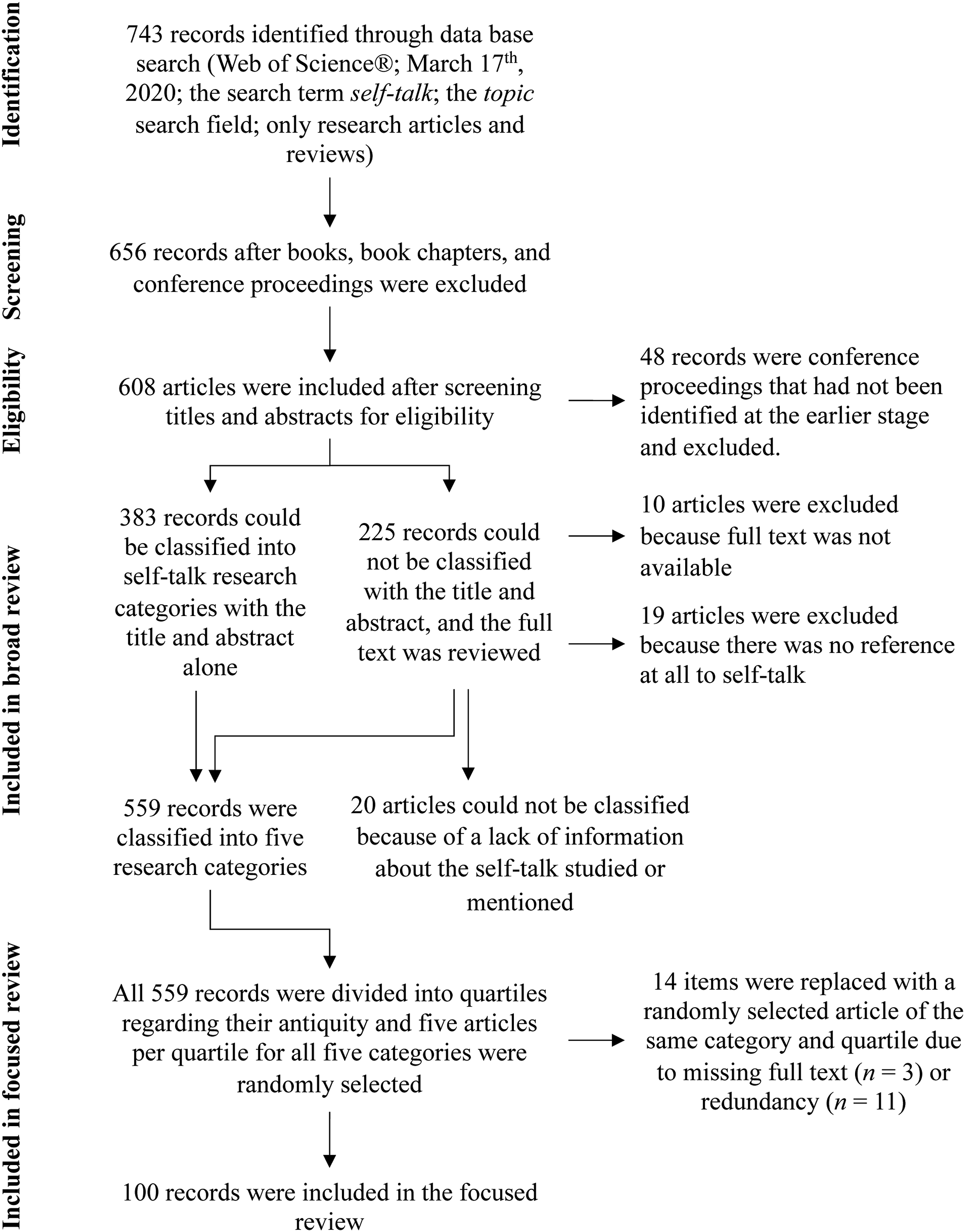
In the literature review, we searched for self-talk labels (i.e. specific names for self-talk and its subtypes; e.g. positive self-talk, anxious self-talk, or second-person self-talk) and descriptors (i.e. words or phrases describing the meaning of self-talk in a study; e.g. cue words, a dialogical process, or verbal self-guidance) to understand what type of self-talk researchers have focused on. To examine the main lines of self-talk research, we also summarised if and how self-talk was manipulated and the conclusions of studies.
The first author led the literature search and review. The multidisciplinary team of ten co-authors (who have contributed to over 250 articles and book chapters on self-talk or related topics) served as critical friends or judges in the review process. They contributed with their expertise in personality and individual differences, clinical and health psychology, organisational psychology, sport and exercise psychology and sports sciences/kinesiology, developmental psychology, and linguistics. Some co-authors added to this review on self-talk from their expertise on inner dialogue, private speech, or inner speech. In an ongoing discussion, each member critically reviewed the allocation and interpretation of articles in the review section. In the final step, they suggested additional articles that were used to adapt the transdisciplinary model. At all stages, the process of discussion continued until all co-authors agreed that the review accurately reflected the self-talk literature and the model represented sufficiently all approaches to self-talk from the various fields to serve its purposes.
The Broad Review
To start, we examined all the articles a Web of Science® search returned on March 17th, 2020, for the search term self-talk in the topic field (the topic field includes within a record the title, abstract, author keywords, and keywords plus – i.e. terms generated from the titles of cited articles). Web of Science (which includes the databases Science Citation Index, Social Science Citation Index, Arts & Humanities Citation Index, and more) was selected due to its interdisciplinary nature, and our desire to only include articles published in top-quality journals with impact factors included in Journal Citation Reports. As described earlier, we used ‘self-talk' as the umbrella term to encompass different kinds of intrapersonal communication. Terms like private or inner speech were not used in the search, although articles that included the terms private and/or inner speech along with self-talk were included. Books, book chapters, and conference proceedings were excluded from the search to limit review to fully peer-reviewed publications. The search yielded 656 results, which were examined further.
The screening process involved reading the title and abstract of all search results to identify self-talk labels and descriptions which would allow us to classify articles into the self-talk research categories introduced in the past section. However, some search results were impossible to classify based on the title and abstract, because they lacked an abstract, did not include the term self-talk in the title and abstract, or simply referred to self-talk without any description of its meaning in the context of that study. Most search results without abstracts were conference proceedings (n = 48) that should not have been included in the results according to the search parameters we had used. They were removed.
For all other articles that were difficult to classify based on the title and abstract alone, we searched their full text (n = 225 articles). In the full texts, we examined the aims, method, results, and conclusion sections to better understand the self-talk labels and descriptors and to classify the study. However, in 19 cases, we found neither self-talk labels nor descriptors (in all articles self-talk was a keyword plus created by the Web of Science®), in 20 articles we had doubts about the type of self-talk interventions that could not be solved even with the full text, and in 10 articles we were unable to access the full text to dispel our doubts. Ultimately, we were able to allocate 559 articles, based on the information available, into our clusters of self-talk research.
All 559 articles contained the term self-talk. In 369 articles, both in their titles and texts, self-talk was used without any further adjectives or descriptive nouns. The most popular adjective plus self-talk labels were positive self-talk (n = 91), negative self-talk (n = 56), motivational self-talk (n = 29), and instructional self-talk (n = 26). Regarding self-talk plus descriptive-noun labels, self-talk intervention (n = 17), self-talk strategy (n = 14) and self-talk training (n = 5) were the most repeated combinations. Popular labels without the term self-talk included inner speech (n = 17) and private speech (n = 14), together with self-statements (n = 11) and automatic thoughts (n = 6).
In line with the self-talk framework described in the introduction (Latinjak, Hatzigeorgiadis et al., 2019), studies examined a mixture of organic self-talk (n = 200), specifically goal-directed self-talk (n = 138) or spontaneous self-talk (n = 45), educational self-talk interventions (n = 23), or strategic self-talk interventions (n = 93). Although most of the articles focused primarily on one self-talk research category (89%), some studies focused on two or more (11%). Of the 60 articles that could fit into more than one self-talk research category, 52 examined two categories and 8 focused on more than two categories. Noticeably, articles on educational self-talk interventions also emphasised organic self-talk (n = 6), goal-directed self-talk (n = 12), and spontaneous self-talk (n = 1). The eight articles that focused on more than two categories were mainly theoretical contributions to the self-talk literature (Fritsch et al., 2020; Hardy, 2006; Latinjak et al., 2018; 2019a; 2019b; Van Raalte et al., 2016; 2019; Weinberg, 2018). With the categorisation of the articles, we were able to continue with the stratified sampling of the articles in each self-talk category for the focused review section.
The Focused Review
Article Sampling
Based on the available resources, we re-examined 100 articles, 20 of each self-talk research category with the specific purpose to create an interdisciplinary synthesis of the self-talk literature. To review articles regardless of their publication date, we first divided the publication year of all 559 articles into quartiles. The self-talk articles we had analysed in the broad review were published between 1978 and 2020 and the resultant cut points for quartiles were 2005, 2013, and 2017. Then, we sampled randomly 5 articles per quartile and self-talk research category (organic, goal-directed, and spontaneous self-talk, and educational and strategic self-talk interventions). There were two arguments behind this way of proceeding: it was manageable, and it was sufficient. In the last sampling of articles (5 articles per quartile and self-research category), little new information came to light. Also, we had an expert panel that would have noticed if important aspects were missing from the literature for which we would have had to increase the sample size. In addition, we decided to stratify the articles based on publication year rather than based on some other feature such as methodology or discipline for the following reason. The number of published articles in general has significantly increased in the past 25 years (Alderson-Day & Fernyhough, 2015). The chances were that most self-talk articles would have been contemporary. This would have distorted the image a lot given that older articles have probably had even a greater impact on our definition of what self-talk is than recent ones.
Since the literature review was conducted in March 2020, research on the topic of self-talk has continued. The number of studies adopting the distinction between strategic-organic self-talk and spontaneous-goal-directed self-talk has increased in recent years (e.g. Galanis et al., 2021; Santos-Rosa et al., 2022). However, researchers still distinguish between positive and negative self-talk without clarifying whether these are controlled or uncontrolled cognitive processes (e.g. Basset et al., 2022; Dahl-Leonard et al., 2022). Strategic self-talk interventions are still extensively studied, with a major focus on two types of cue words: instructional and motivational (e.g. Hidayat et al., 2023; Naderirad et al., 2022). In addition, discussions continued on the difference between thinking and self-talk (Kompa, 2023). Furthermore, research explored different types of self-talk, for example, based on grammar (e.g. distanced self-talk; Gainsburg et al., 2022; Webster et al., 2022) or context (e.g. dietary self-talk; Rose et al., 2022). Overall, studies published in recent years show that self-talk continues to be a popular topic in several scientific fields, including sport science (Basset et al., 2022), psychology (Webster et al., 2022), and education (e.g. Flanagan & Symonds, 2022); that researchers continue to use self-talk terminology inconsistently across different research areas; and that the self-talk classification adopted in the present study is being used by an increasing number of groups of researchers.
We checked the initial selection of articles for access to full text and redundancy. Regarding redundancy, an external judge, a psychology professor who was not involved in the current work, read the article list and recommended replacing articles if the same authors or the same research question appeared more than twice per self-talk research category. We discarded 14 items due to missing full text (n = 3) or redundancy (several articles by the same authors on the same topic; n = 11) and replaced them with other articles. The final lists of articles selected for the focused review can be found in Table A1 in the appendix.
Analysis Procedures
Interdisciplinary Synthesis of Major Lines of Multidisciplinary Self-Talk (ST) Research. https://www2.mtroyal.ca/∼amorin/Table1.pdf.
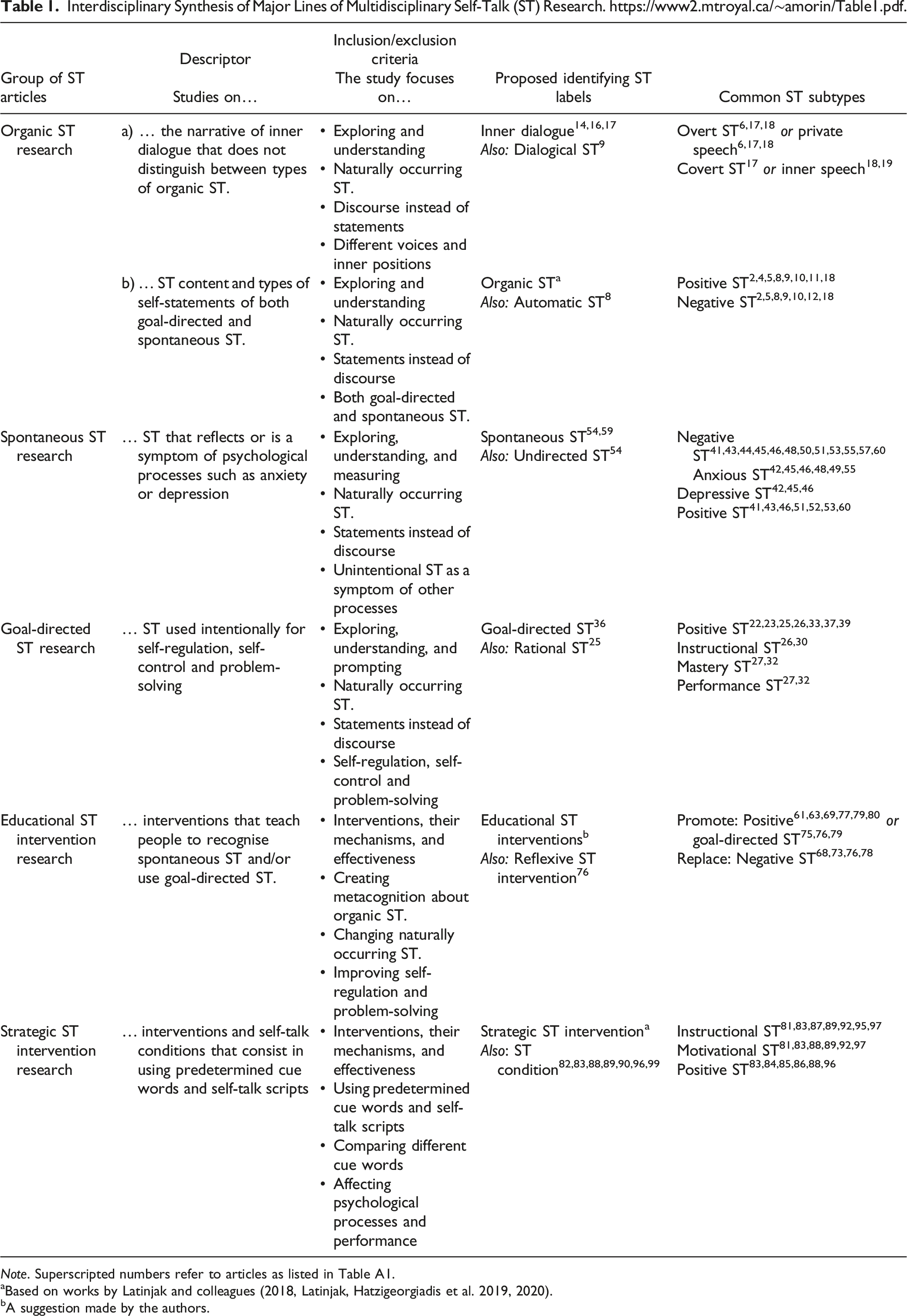
Note. Superscripted numbers refer to articles as listed in Table A1.
aBased on works by Latinjak and colleagues (2018, Latinjak, Hatzigeorgiadis et al. 2019, 2020).
bA suggestion made by the authors.
General Results
Regarding multidisciplinarity, the 100 articles in the focused review section related to various psychological disciplines, including sport, clinical, developmental, and addiction psychology, and other scientific areas such as computer science, social work, and medicine (Table A1).
As expected, we observed differences between all the categories of self-talk research, in the way in which self-talk is named and described (Table 1). Further, we found differences in the conclusions of organic, spontaneous, goal, and goal-directed, and self-talk studies, and in the intervention procedures of educational and strategic self-talk intervention studies (Table A1). The following sections summarise the main results of the literature review. Overall, our experience was that the categorisation criteria based on the preliminary self-talk research framework (Latinjak, Hatzigeorgiadis et al., 2019) are an adequate means of integrating the multidisciplinary self-talk literature into an interdisciplinary synthesis.
As clear as theoretical distinctions between self-talk research categories may seem, the categories of self-talk research are artificial entities introduced for clarity of exposition and argument, and it is not surprising that there is overlap between them. Some studies focused on changes in organic, goal-directed, or spontaneous self-talk as a result of educational self-talk interventions, which makes it more difficult to categorise them into a single option (Latinjak et al., 2016; Nabors et al., 2019). On occasions, the distinction between the two categories of self-talk intervention research was somewhat ambiguous as some articles presented methods that combined educational aspects with the use of predetermined cue words (Barnes & Jarlais, 2019; Thomas & Fogarty, 1997). Expectedly, there was further overlap between the organic, goal-directed, and spontaneous self-talk research categories since the first encapsulates the latter two (Calvete & Cardeñoso, 2005; De Muynck et al., 2017).
It is important to emphasise that we do not see overlap as a limitation of self-talk studies. Depending on the research aims, it may even be advisable to examine different types of organic self-talk, combine self-talk interventions, and examine the effects of self-talk interventions on organic self-talk. However, we encourage authors to clearly label the different types of self-talk concepts explored to facilitate the pooling of knowledge from different disciplines. Table 1 summarises the self-talk research categories, including inclusion criteria, suggested self-talk labels to identify self-talk relevant to each category, and typical self-talk terms to identify subtypes of self-talk in each category.
Organic Self-Talk Research
Regarding self-talk labels used in studies in the organic self-talk research category, most articles named self-talk by content, function, or effect. Nevertheless, from the information provided in most articles, it was difficult to know which of these three criteria was used to name self-talk. For example, the most popular self-talk labels, positive self-talk and negative self-talk (Table 1), could reflect the content of statements or their effects. Overall, we had the impression that the organic self-talk research category contained some of the most multifaceted research on self-talk that combines self-talk with the development of uniquely human characteristics (e.g. self-awareness or identity). The study of such processes requires the collaborative effort of many researchers, and therefore, terminological questions are very important when it comes to creating a socially shared knowledge network.
Organic self-talk research focuses on self-statements that reflect ongoing cognitive processes and can be of a spontaneous or goal-directed nature. The most salient aspect of the organic self-talk research category was that it contains two distinguishable types of studies, a broader and a narrower one (Table 1). First, some research explored organic self-talk as part of inner dialogue, as a continuous narrative blending spontaneous and goal-directed processes into one phenomenon (Alderson-Day et al., 2018; Morin, 1995). These studies were less focused on certain types of self-statements, their frequency, or functions. This self-talk within inner dialogue is seen to contribute to the development of relatively stable contextual and global psychological processes such as reflections or conclusions about one’s personality, identity, or morality (Alderson-Day et al., 2018; Morin, 1995). In these studies, organic self-talk was seen less as something that happens at a particular point in time, and more as a process that spans long periods of time. It is notable that many of the studies on inner dialogue are solely theoretical or use open interview designs and study general population samples. For example, Hofman (2016) theoretically examined the role of self-talk as a practice of the self that creates the self, and Tovares (2010) analysed oral and written narratives to examine self-talk as a discursive mechanism for constructing a dialogical self (i.e. how athletes develop their identities via self-talk). These provide rich and detailed considerations of generalised and trait-like self-talk, but are less helpful for understanding the varying forms, emergences, and effects of self-talk.
The second subset of studies in the category of organic self-talk research focused more on specific self-talk statements of both subtypes, goal-directed and spontaneous (Oliver et al., 2016; Ronan & Kendall, 1997; Zimmermann & Brugger; 2013). This category also includes research on inner dialogue understood narrowly, that is, as exchange of statements between (at least) two viewpoints/perspectives (Puchalska-Wasyl, 2015). In comparison with the first subset of research in the discussed category, organic self-talk in these studies is seen as something that happens at a particular point in time, rather than as a continuous narrative process. Additionally, these studies are focused on certain types of inner dialogues conceptualised in a narrow sense, their frequency, or functions (Oleś et al., 2020; Puchalska-Wasyl, 2020). Juxtapositioned against research on inner dialogue understood broadly, it was noteworthy that studies in this category often sampled self-talk (and narrowly conceptualised inner dialogue) through questionnaires (e.g. the Self-Talk Scale [STS]; Brinthaupt et al., 2009; Functions of Dialogues-Revised Questionnaire [FUND-R]; Puchalska-Wasyl & Zarzycka, 2021). By using questionnaires, authors were able to isolate and quantify specific sequences of organic self-talk to relate them to other types of self-talk (Thibodeaux & Winsler, 2018) as well as to other cognitive (Morin, 1995), affective (Shi et al., 2015), behavioural (Van Raalte et al., 1994), mental health (Alderson-Day et al., 2018), and other internal (e.g. prayer; Puchalska-Wasyl & Zarzycka, 2020) and external (e.g. social support; Zourbanos et al., 2011) variables. By examining isolated experiences with organic self-talk, the researchers deciphered parts of its nomological network, including antecedents and consequences of organic self-talk. These relationships are difficult to explore studying people’s inner dialogue broadly, due to the complexity of the relationships between utterances in inner dialogue that play out over longer periods of time.
Spontaneous Self-Talk Research
Spontaneous self-talk focuses on unintentional, non-instrumental statements that come to mind unbidden and effortlessly, and reflect other psychological processes such as emotions or beliefs. A prominent aspect of research into spontaneous self-talk was that it was frequently conducted in a clinical context (McGillivray & Evert, 2014; see Table A1). In addition, spontaneous self-talk was less often the focus of an article than goal-directed self-talk (or the broader organic self-talk classification). Spontaneous self-talk was often investigated as a correlate of other psychological processes, such as anxiety (Lodge et al., 1998) or loneliness (Reichl et al., 2013), or together with other self-talk categories, for example, goal-directed self-talk (De Muynck et al., 2017). Because spontaneous self-talk only played a secondary role in such studies, it is not surprising that the variety of self-talk labels and descriptors was among the lowest compared to other self-talk research categories.
Spontaneous self-talk was often described as a cognitive process (Lodge et al., 1998; Speer, 2019) and sometimes as a symptom or reflection of another psychological state (Brown & de Jong, 2018; Hammond et al., 2016). A large majority of the articles in the spontaneous self-talk research category used labels that identified negative content or outcomes of self-talk (Alfano et al., 2006). Most commonly, studies used a generic name such as negative self-talk (Table 1), but sometimes a self-talk label identified certain negative content or outcomes of self-talk (e.g. anxious self-talk or depressive self-talk; e.g. Lerner et al., 1999). On the contrary, self-talk labels that identified positive content or outcomes were almost always non-specific (i.e. positive self-talk; Lodge et al., 1998). Overall, through our review, it appeared that researchers have looked more closely into spontaneous self-talk that reflects negative psychological processes and have recognised the value of details in such self-statements. However, there is also evidence that it is important to understand which positive psychological processes are expressed through positive, spontaneous self-talk (e.g. positive emotions, attributions of success, or self-efficacy and self-esteem; Latinjak et al., 2014).
From the conclusions of the reviewed studies, it became clear that spontaneous self-talk also relates to many other psychological states and traits such as well-being (Brown & de Jong, 2018), positive and negative emotions (Latinjak et al., 2014) including anxiety (Karimi et al., 2015), and post-traumatic stress (Kubany et al., 2004). Although spontaneous self-talk has been seen as a window into the human mind (Latinjak, Hatzigeorgiadis et al., 2019), researchers have predominantly discussed its value in creating self-awareness (Reichl et al., 2013) and thereby self-triggering regulatory responses (Van Raalte et al., 2016). However, spontaneous self-talk can also directly influence other psychological processes, for example, by acting as a self-fulfilling prophecy (De Muynck et al., 2017). In addition, a lack of control over particularly negative spontaneous self-talk was associated with dysfunctional indicators of psychological well-being such as worries or ruminations (Boudreault et al., 2018).
Goal-Directed Self-Talk Research
Goal-directed self-talk research focuses on statements that reflect controlled mental processes that are consciously used for self-regulation, problem-solving, and rational thinking. According to the descriptors used in many goal-directed self-talk studies, this type of self-talk is thought of as a self-regulation strategy (Littlewood et al., 2018; Neck & Manz, 1992) that takes a verbal form (Lin, 2017; Manfra et al., 2014) or as a psychological skill (Filion et al., 2019; Kirschenbaum et al., 1998). This usage is clearly in line with the definition of goal-directed self-talk as a self-regulatory mechanism that is used intentionally and effortfully to make progress on a task, whether writing an essay or pursuing the acquisition of self-knowledge (Latinjak et al., 2014).
With regard to self-talk labels, most research named goal-directed self-talk after its functions or effects. The most common name was positive self-talk (see Table 1). In the case of goal-directed self-talk research, the label positive self-talk was mainly used to refer to the functions or effects of self-talk and not its content. To avoid doubts, researchers sometimes use the terms positive and negative self-talk only to describe the content of self-talk, especially if self-talk is spontaneous in nature (Cumming et al., 2006). We endorse this perspective; to indicate the effects of goal-directed self-talk, a clearer terminology would be to instead use the terms facilitative (referring to encouraging or supporting) or debilitative (referring to discouraging or counterproductive) self-talk. Other goal-directed self-talk labels identify the specific functions of self-statements. For example, self-talk used to self-instruct about task execution was referred to as instructional self-talk (Miles & Neil, 2013), and self-talk used to promote mastery-oriented motivation was referred to as mastery self-talk (Schwinger et al., 2012). In most studies, the context indicated that the study focused on goal-directed self-talk, rather than cue words used in strategic self-talk interventions where similar self-talk labels are common (Theodorakis et al., 2000). In such instances, self-talk labels like instructional or mastery have proven useful for organising statements and learning about the different roles that goal-directed self-talk plays in self-regulation (Latinjak, Torregrossa et al., 2019).
Overall, research on goal-directed self-talk has focused on self-talk functions and effectiveness. Goal-directed self-talk works in conjunction with many other psychological skills such as emotional control, goal setting, or imagery (Lane et al., 2004). Together, goal-directed self-talk and other psychological skills can be used, for example, to cope with diverse crises (Lukse & Vacc, 1999), for self-leadership (Neck & Manz, 1992), and to manage anxiety (Nabors et al., 2019). However, the effectiveness of goal-directed self-talk depends on several variables, such as the self-regulatory strategy chosen (Smit et al., 2017) or the grammar of the self-statements (Senay et al., 2010). Yet, all studies agree that goal-directed self-talk, in connection with spontaneous self-talk, has relevance for self-regulation.
Educational Self-Talk Intervention Research
A characteristic feature of educational self-talk intervention research compared to the previous categories is that self-talk is not measured but manipulated (Table 1). Educational self-talk interventions teach people about their organic self-talk to improve their self-regulation. Accordingly, self-talk was most commonly referred to as positive self-talk (Table 1) and described as a self-regulatory mechanism (Goldberg et al., 2018; Meyerson, 2017; Sassi-Dambron et al., 1995). As expected, educational self-talk interventions aimed to strengthen the goal-directed use of self-talk. In addition, educational self-talk interventions frequently help people to become aware of their negative self-talk (Table 1), which is usually spontaneous in this context.
The main components in educational self-talk interventions are (a) teaching about the meaning of self-talk and how it relates to other concepts (Neil et al., 2013), (b) how to recognise dysfunctional self-talk (Latinjak, Hernando-Gimeno et al., 2019), and (c) how to use goal-directed self-talk more efficiently (Goldberg et al., 2018). Regarding the part of learning to recognise dysfunctional self-talk, Farrell et al. (1998), for example, used thought bubble cartoons to help children with post-traumatic stress disorder (PTSD) symptoms generate a variety of possible thoughts that characters might have in different affect-eliciting situations. Regarding the part of improving goal-directed self-talk, Latinjak et al. (2016), for example, had an elite athlete bring in alternative self-statements to solve common problematic situations in sport and to consider whether and why these statements could be more effective than previous self-talk. In addition, in some cases, educational interventions were combined with strategic interventions; in such studies, self-talk scripts or cue words were also used as an additional aspect of the intervention (Mamassis & Doganis, 2004). However, when considering these studies as part of the educational self-talk intervention research category, it was apparent that the educational part was more prominent than using cue words.
Research on educational self-talk interventions has mainly focused on describing procedures for specific populations, such as athletes (Mamassis & Doganis, 2004), children with PTSD (Farrell et al., 1998), or military personnel (Taylor et al., 2011). It has also been widely described as an integral part of CBT (Kendall et al., 2005). In general, research suggests that these interventions are typically effective. Upon closer inspection of this research, it is important to note that some studies only provided qualitative reports on participants' impressions (Latinjak et al., 2016) or indications of the short-term effects of the intervention (maximum 6 months of follow-up; Walter et al., 2019). In addition, many studies included self-talk interventions within larger intervention packages (Ronen & Rosenbaum, 2010). Thus, more research is required that explores the long-term effects of specifically a solo self-talk intervention on trait-like indicators of self-regulation such as mental toughness or resilience (Latinjak, Hernando-Gimeno et al., 2019; Twamley et al., 2012).
Strategic Self-Talk Intervention Research
The hallmark of strategic self-talk interventions is the use of cue words to facilitate learning and improve performance. We identified some notable differences in the naming, description, and use of self-talk in this research category compared to the other categories (Table 1). Self-talk in this category was seen as strategic behaviour and referred to as assigned self-talk (Son et al., 2011) or trained self-talk (Edwards et al., 2008). In previous categories, self-talk was seen as a natural phenomenon and most commonly termed automatic self-talk (Boudreault et al., 2018). Although self-talk was still referred to as positive self-talk (Table 1) in this category, more precise terms have often been used to identify the two most apparent subtypes of strategic self-talk interventions: instructional self-talk (Lane et al., 2016) and motivational self-talk (Ferreira et al., 2016) interventions. In addition, self-talk is described in strategic self-talk intervention research as cue words, prompts, or statements (Angeli et al., 2018; Hatzigeorgiadis et al., 2004) that are used as an intervention (Cumming et al., 2006; Girodo & Roehl, 1978) or experimental condition (Thomaes et al., 2020; Turner et al., 2018).
Strategic self-talk interventions differ from educational ones chiefly because of the use of predetermined cues that are based on a particular rationale and serve a specific purpose. Accordingly, strategic self-talk aims at triggering responses/reactions that are 'linked' with the 'message' the cues convey (Hatzigeorgiadis et al., 2020). The vast majority of studies on strategic self-talk have been experimental/intervention studies, examining the effects of such self-talk on performance and aspects of self-regulation. From experimental/intervention studies, there is ample evidence that strategic self-talk can improve well-being and performance, primarily by means of attentional and motivational mechanisms (e.g. through focusing attention on task-relevant cues and by increasing effort expenditure; Galanis et al., 2021; Hatzigeorgiadis et al., 2011). However, some other results (Angeli et al., 2018) indicate that it is important to adapt the procedures to the specific needs of the participants and preferences.
With regard to strategic self-talk research, we observed two contentious issues. In order to show the effects of cue words, intervention groups are often compared with control groups that either perform as usual and do not use cues (Edwards et al., 2008), or are assigned neutral or unrelated cues (Hase et al., 2019). The purpose of this latter group of studies is for all participants to use self-verbalisation equally. However, it could be argued that these neutral cues interfere with natural self-regulation strategies, such as the use of goal-directed self-talk, and thus represent a negative intervention rather than a control condition (for a critical reflection, see Hase et al., 2019). Empirical examination of this issue is necessary to provide evidence and suggest research implications regarding the potentially intruding effect of self-talk manipulations within control conditions.
The second contentious issue worthy of further consideration pertains to the use of strategic self-talk to examine aspects related to organic self-talk. For example, experimental conditions were created to test the effect of cue words that were defined by grammar (Son et al., 2011), rational beliefs (Turner et al., 2018), or implicit theory (Thomaes et al., 2020) on diverse psychological processes and performance. Occasionally, the results of these studies were interpreted in terms of people’s organic self-talk. Yet, it is questionable to what extent knowledge from strategic self-talk research can be transferred to organic forms of self-talk. Even though there is evidence that strategic self-talk can have an (immediate) impact on organic self-talk (e.g. Hatzigeorgiadis et al., 2004; strategic self-talk reduced negative spontaneous self-talk), we do not have concrete, and importantly longitudinal, evidence that strategic self-talk (likely internalised through long-term processes) can develop organic self-talk as a psychological skill.
Accordingly, research is warranted to explore the degree to which strategic self-talk can have a long-term effect on organic, goal-directed, self-talk as a psychological skill to self-regulate, solve problems, and enhance performance. Towards this direction, research designs employing organic self-talk prompts (see, for example, Kross et al., 2014; Senay et al., 2010) instead of strategic self-talk appears to be a promising option for future research. Organic self-talk prompts consist of experimental manipulations, such as seemingly unrelated writing tasks, that prompt participants to use a certain type of self-statements to experimentally investigate certain aspects of organic self-talk (see Sood & Kendall, 2007; De Muynck et al., 2017; references 28 and 31 in Table A1).
A Transdisciplinary Self-Talk Model
In the previous sections, we reviewed the self-talk literature, offered some suggestions for an interdisciplinary synthesis of the main lines of self-talk research, and summarised how self-talk is labelled and described in each of these lines (Table 1). Based on the synthesis, we created a transdisciplinary self-talk model that reflects previous work and that can guide future research by delineating areas of inquiry using consistent self-talk terminology and proposing testable hypotheses (Figure 2 in appendix). Such a model may ultimately enable a coherent consolidation of future literature and a more fruitful dialogue between researchers, which in particular could intensify the cross-pollination of self-talk ideas and concepts in different contexts. The transdisciplinary self-talk model. Note. The different paths designated by letters are described within the main text. *Two overarching aspects in all self-talk research, organic and strategic are grammar (e.g. first and non-first person self-talk) and articulation (i.e. audible self-talk or private speech, and covert self-talk or inner speech). https://www2.mtroyal.ca/∼amorin/Figure2.pdf.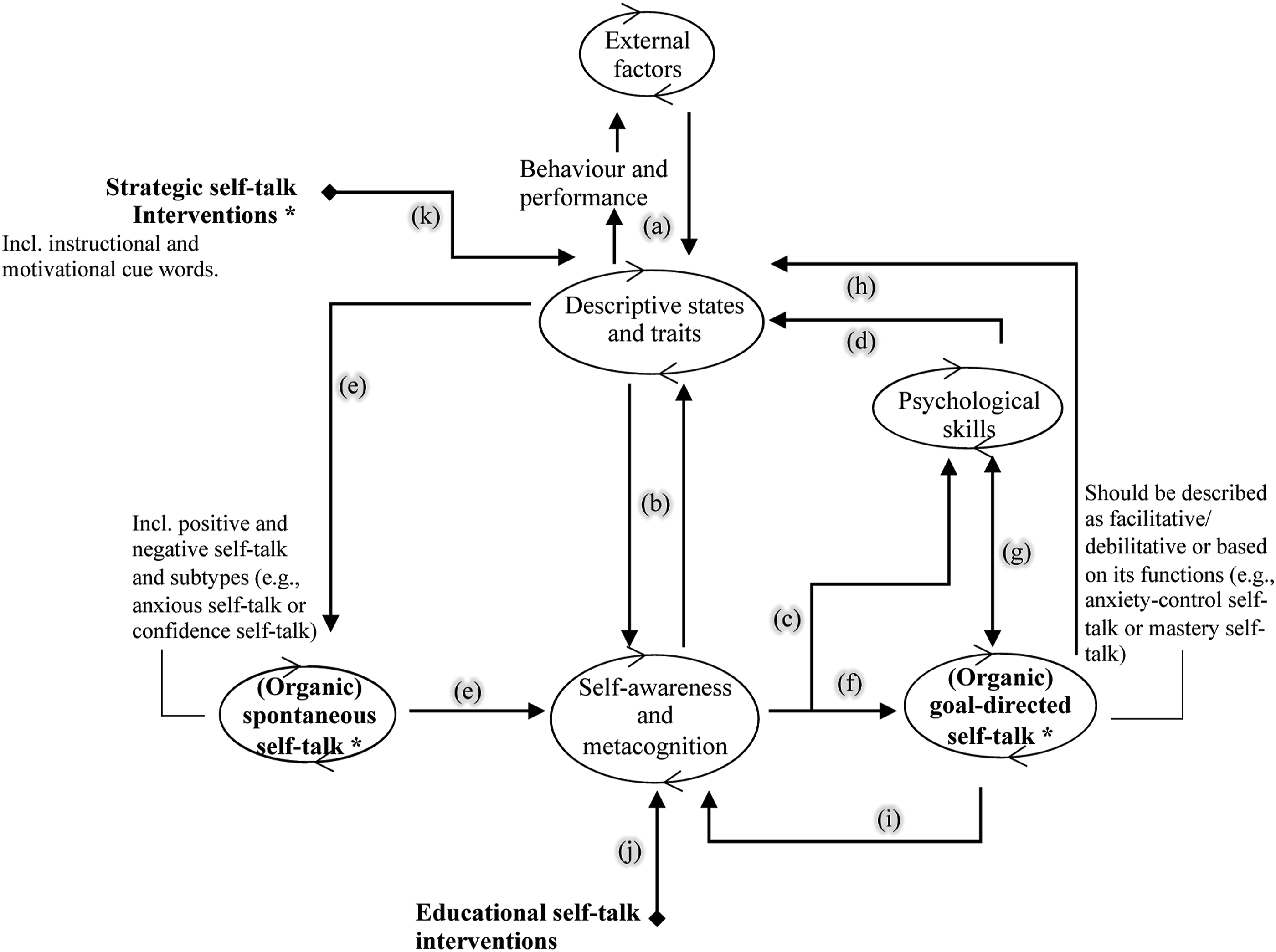
General Description
The transdisciplinary self-talk model demonstrates the main relationships between self-talk categories and conceptual clusters of other variables that are part of their nomological network (Figure 2). In particular, the clusters of descriptive states and traits, external factors, self-awareness and metacognition, and psychological skills were created to encapsulate most variables examined in relation to self-talk. Descriptive states and traits encompass biological and psychological variables that refer to how people are (e.g. hormonal responses, emotions, and behavioural intentions) and who they are (e.g. their age, personality, and social identity). External factors include environmental influences (e.g. heat), social determinants (e.g. peer support), and task characteristics (e.g. task difficulty) which influence people’s descriptive states and traits (Figure 2(a)). Descriptive states and traits also influence external factors through behaviour (e.g. empathic behaviour affects others) and performance (e.g. task progress reduces the workload; Figure 2(a)). One’s awareness of one’s own states and traits, and knowledge pertaining to how these states and traits can modulate behaviour (e.g. one’s tendency to be anxious when public speaking; Shi et al., 2015) have been linked to self-talk. Therefore, the self-awareness and metacognition cluster became essential to the model. Independent from self-talk, people develop awareness of their descriptive states and traits, and conversely, their self-awareness and metacognition influence their descriptive states and traits (Figure 2(b)). In addition, self-talk has been studied in relation to self-control ability, which is represented by the psychological skills (an umbrella term to refer to a range of mental skills that individuals use to cope and adapt to various challenging situations) cluster. In summary, self-awareness leads to the selection, use, and monitoring of psychological skills (Figure 2(c)) that are used for the self-regulation of descriptive states and traits and their relationship to external factors (Figure 2(d)). Variations of self-talk entities are situated within these conceptual clusters.
With regard to organic self-talk, we have placed spontaneous and goal-directed self-talk with the described clusters (Figure 2). We have situated educational and strategic self-talk interventions distally from the resulting network since they derive from external interventions. Spontaneous self-talk promotes self-awareness and metacognition in relation to descriptive states and traits and their link with external factors (Figure 2(e)). For example, spontaneously saying, We’re just wasting our time–I want to go home, draws attention to the low motivation to work that is affecting the relationship with colleagues. In addition, spontaneous self-talk through self-awareness and metacognition can have an automatic effect on descriptive states and traits (Figure 2(b)). For example, a spontaneous statement such as I can never do this right that expresses feelings of helplessness can trigger demotivation as an intuitive response to the awareness of helplessness. Goal-directed self-talk builds on self-awareness and metacognition (Figure 2(f)) and serves, combined with other psychological skills (Figure 2(g)), or even alone (Figure 2(h)), to regulate descriptive states and traits and thereby improve their relationship to external factors. Correspondingly, goal-directed self-talk is also a response to spontaneous self-talk; a response mediated by self-awareness and metacognition. For example, if after a spontaneous statement like I want to quit working on this, one becomes aware of demotivation and if one knows about their tendency towards ego-oriented motivation, one can say ‘I am good at this' to increase effort at work. In addition, goal-directed self-talk can influence self-awareness and metacognition by interpreting experiences and monitoring self-regulatory efforts (Figure 2(i)). For example, after a failure, one can say ‘this always happens when other people pressure me and avoiding conflict does not help' to form metacognition about oneself and one’s typical self-regulatory strategies.
A more direct way to improve the functionality of organic self-talk is through educational self-talk interventions that build the self-awareness and metacognition needed to interpret spontaneous self-talk and effectively use goal-directed self-talk to adjust descriptive states and traits as well as better their relationship to external factors (Figure 2(j)). For example, one can learn to accept spontaneous negative thoughts like I hate my job and use more self-accepting statements like ‘I’m just having a bad day' to reduce frustration and get along better with colleagues. In contrast, strategic self-talk interventions encourage people to use self-talk scripts to change descriptive states and traits improving their impact on external factors, while being relatively independent of self-awareness and metacognition (Figure 2(k)). For example, when arriving at one’s desk, one can repeat a predetermined statement such as lead by example to improve leadership behaviour and inspire others. Although less likely, educational self-talk interventions can have a direct impact on descriptive states and traits regardless of the use of organic self-talk (through path [b]), and strategic self-talk interventions can have an impact on organic self-talk if the intervention has implications for self-awareness and metacognition (also through path [b]). The likelihood increases when educational self-talk interventions lead to important new insights, and when strategic self-talk interventions integrate educational components into the process (Latinjak, Hatzigeorgiadis et al., 2019; 2019d).
Grammar and Articulation
The footnote of Figure 2 also mentions grammar and articulation as transversal aspects relating to spontaneous and goal-directed self-talk, as well as the use of cue words in strategic self-talk interventions. Research has shown that there are differences in grammar between spontaneous and goal-directed self-talk (Latinjak et al., 2014). While spontaneous self-talk is more often formulated in the first person (e.g. ‘I’m actually good at this'), goal-directed self-talk is more often found in the second person (e.g. You are actually good at this). Further, the effectiveness of goal-directed and strategic self-talk can change depending on the grammar of self-statements and cue words, respectively (Senay et al., 2010; Son et al., 2011). For example, there is evidence that phrasing self-talk as a question (e.g. Will I make it?) or in the plural (e.g. We will make it) could have advantages over first-person affirmations (e.g. I will make it), although the results are not always conclusive and more research is needed (Van Raalte et al., 2018).
Articulation refers to whether self-talk is audible as in private speech or fully covert as in inner speech. In many self-talk studies, the difference between audible and covert self-talk is recognised, but not treated as a key factor (Brinthaupt et al., 2015; Hardy, 2006; Hatzigeorgiadis et al., 2011; Latinjak, Hatzigeorgiadis et al., 2019). Additionally, the real or imaginary tone of voice in organic self-talk could be another avenue for future research.
Research on private speech, on the other hand, focuses by definition on audible and sometimes partially covert (whispered) speech that is not directed to another person (Winsler, 2009). Research on inner speech considers the subjective experience of language without overt articulation (Alderson-Day & Fernyhough, 2015; Morin, 2018). Inner speech is more common than private speech in adult samples (e.g. Dickens et al., 2018). There is a need for additional research on the circumstances and conditions under which people might prefer inner and private speech.
Private and Inner Speech Complexities Not Addressed by the Model
In the present review, having searched for studies by the term self-talk limited the degree to which studies on private and inner speech (e.g. Thibodeaux et al., 2019) found their way into the literature synthesis. Yet, discussions took place within the interdisciplinary research team about the relevance of private and inner speech for the self-talk model. The self-talk model depicts the role of spontaneous and goal-directed self-talk in self-regulation, yet it does not explain how both self-talk entities develop and acquire their functions in the first place in children, adolescents, and adults. Therefore, one area of private speech research of particular interest to the self-talk model has focused on the developmental processes (Winsler, 2009) by which children reproduce social regulatory messages (e.g. a parent who says: Liam keep still) to regulate themselves, first with private speech (the child Liam who says loudly: ‘Liam keep still') and later with increasingly inner speech (the child Liam, who verbalises internally: ‘keep still'). Research on private and inner speech informs about the processes through which self-talk develops and takes its place within the broader context of inner dialogue.
Although private and inner speech is related to articulation in the present model, the theories researchers have developed about them are more complex and informative than the mere question of overt or covert speech. What these theories explain and what is not part of the present model highlights some of the limitations of the present self-talk model and research conducted under the self-talk label. For example, private and inner speech theories explain how intrapersonal communication develops from early social conversation, and private speech theories focus on the social origins of self-statements (Fernyhough, 2008; Winsler, 2009). A few studies on self-talk have dealt with the internalisation process of social messages to form self-talk (Oliver et al., 2016; Zourbanos et al., 2011), and such studies are highly recommended in order to bring the self-talk perspective closer to the other perspectives. So far, however, such studies are still the exception, and therefore, the self-talk model remains limited in that it has difficulties explaining how self-talk develops from social conversations and where specific self-statements come from. In addition, although some self-talk studies have looked at the role of self-talk in psychopathology (Alfano et al., 2006; Kendall & Treadwell, 2007; Lerner et al., 1999), inner speech theories in particular still better explain clinical problems related to difficulties in generating or using self-directed verbalisations (Alderson-Day & Fernyhough, 2015; Williams et al., 2016).
Specific Propositions
To guide future research, partly by delineating areas of inquiry and proposing testable hypotheses, we summarise implications for research and applied practice in Table 2, alongside supporting references. In brief, based on past research, the model hypothesises the following: 1. Self-talk research encapsulates neurologically different phenomena, including organic, spontaneous, and goal-directed self-talk as well as overt and covert speech, and the use of predetermined cue words or self-talk scripts in strategic self-talk interventions. To illustrate, elicited inner speech is associated with decreased activation in Heschl’s gyrus and increased activation in left inferior frontal gyrus, while spontaneous inner speech has the opposite effect in Heschl’s gyrus and no significant effect in left inferior frontal gyrus (Hurlburt et al., 2016). Furthermore, inner speaking (actively speaking in silence) relies more strongly on an online motor-to-sensory simulation that constructs a multisensory experience, whereas inner hearing (passively and covertly hearing one’s voice) depends more strongly on a memory-retrieval process, where the multisensory experience is recreated from stored motor-to-sensory associations (Nalborczyk et al., 2021). Specifically, it is hypothesised that the same statement (e.g. ‘I can do it') made spontaneously, for the purpose of self-regulation or following a self-talk script, presents different underlying neural activation patterns. 2. Spontaneous self-talk is a rather uncontrolled process that reflects descriptive states and traits that may facilitate self-awareness and metacognition (Figure 2(e)), and that might affect descriptive states and traits more directly through self-awareness and metacognition (Figure 2(b)) and more indirectly by triggering self-regulatory responses (Figure 2(c and f)). In particular, it is hypothesised that the presence of a spontaneous self-statement like ‘I am the worst' that expresses, for instance, anger, increases awareness of anger, which affects the person (including their anger) directly and which may in turn trigger attempts to self-regulate. 3. Goal-directed self-talk is a rather controlled process, triggered by self-awareness and metacognition (Figure 2(f)), used with other psychological skills for self-regulation (Figure 2(g and h)), and capable of changing self-awareness and metacognition by interpreting experiences and monitoring self-regulatory efforts (Figure 2(i)). For example, it is hypothesised that the appropriateness of goal-directed statements (e.g. ‘I need to fix that') depends on metacognitive knowledge (e.g. knowing that something is wrong or not working the way it should) and that goal-directed self-talk contributes to the development of metacognition (e.g. ‘The last time I worked on this, this is what I did'). 4. Educational self-talk intervention procedures predominantly aim to provide enduring metacognitive knowledge and skills related to interpreting spontaneous self-talk and using goal-directed self-talk (Figure 2(j)). In particular, it is hypothesised that these interventions help people to learn more about themselves from their spontaneous self-talk (e.g. ‘This is not who you are') and to use goal-directed self-talk in a timely, flexible, and efficient fashion to support their attempts at self-regulation (e.g. ‘I should be doing this instead'). 5. Strategic self-talk intervention procedures predominantly consist of using predetermined self-talk scripts to momentarily improve behaviour and performance by regulating strategic descriptive states and traits (Figure 2(k)). In particular, it is hypothesised that the repetition of cue words (e.g. 'focus!') triggers changes in people’s attentional, emotional, and motivational processes that lead to desired behaviours and improved performance.
Propositions Derived From the Transdisciplinary Self-Talk Model with Implications for Research and Practice. https://www2.mtroyal.ca/∼amorin/Table2.pdf.
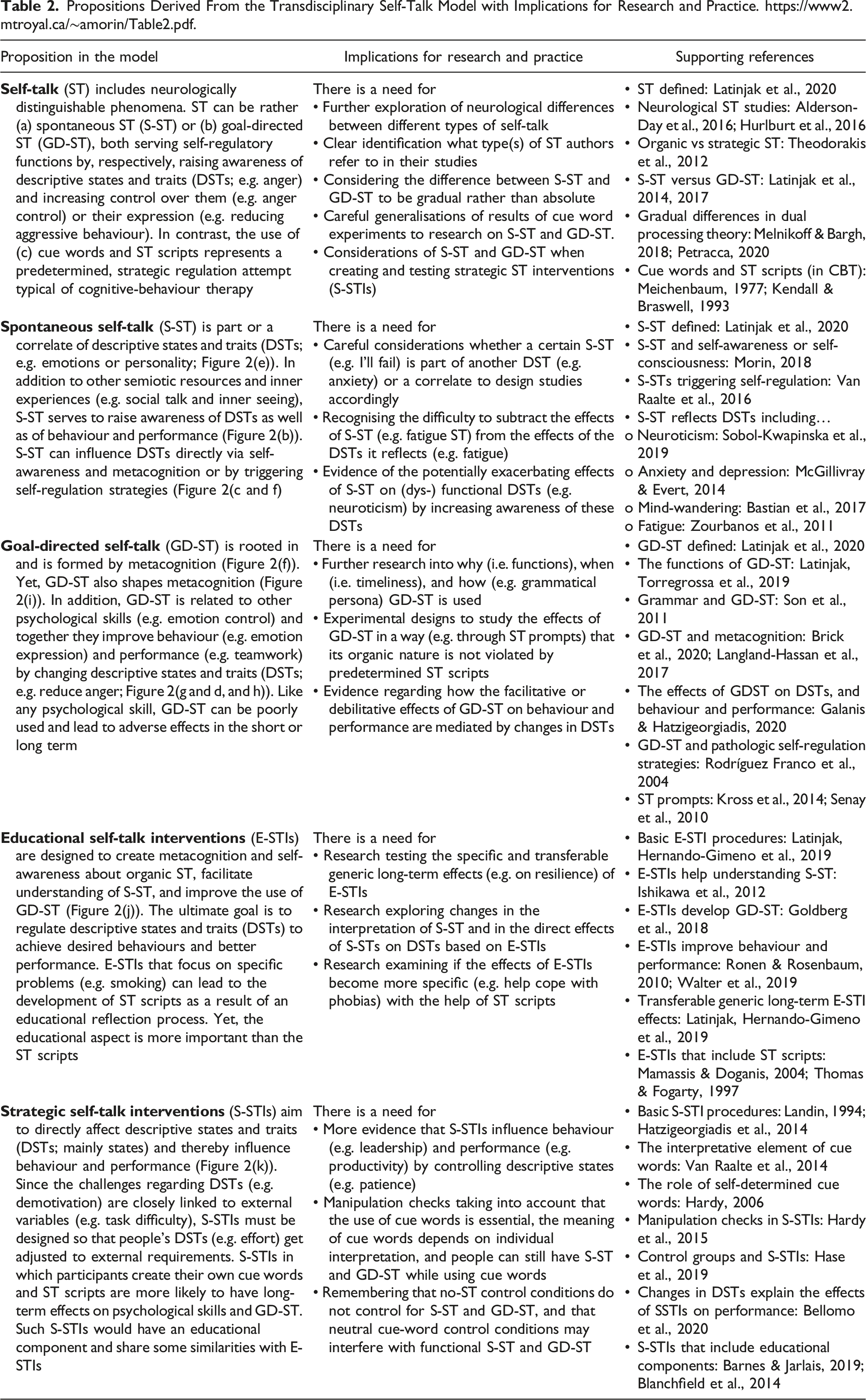
It is noteworthy, however, that self-talk research connects different self-talk entities. Some studies focus on both spontaneous and goal-directed self-talk, as well as on conceptually broader inner dialogue. In addition, some self-talk intervention methods combine education about self-talk with self-talk scripts and examine the momentary and long-lasting effects of the intervention on organic self-talk and inner dialogue. In Table 2, we have provided a detailed but non-exhaustive list of the research and practice implications for each of the five hypotheses.
Closing Remarks
We conducted an interdisciplinary synthesis of self-talk research and prepared a transdisciplinary self-talk model. We reviewed 559 articles that used the term self-talk and grouped the literature into six non-exclusive areas: (a) inner dialogue and (b) mixed spontaneous and goal-directed organic self-talk, (c) goal-directed and (d) spontaneous self-talk separately, and (e) educational and (f) strategic self-talk interventions. Guided by our interdisciplinary research background, we prepared a transdisciplinary self-talk model that places self-talk research in relation to variables within its nomologic network, such as social support, emotions, performance, metacognition, and psychological skills. As predicted, the self-talk model reflects a picture of the literature that differs somewhat from theories on private and inner speech and contributes to the general understanding of research on intrapersonal communication.
These achievements notwithstanding, we have decided not to focus on sampling and measurement problems related to self-talk. Without reviewing details or controversies, we mentioned several studies in which measures were developed (Sood & Kendall, 2007), their validity tested (Lane et al., 2004), or data sampling methods compared or combined (De Muynck et al., 2017). Generally, we agree with the claim that there is no one-size-fits-all approach to self-talk sampling (Brinthaupt & Morin, 2020), and that self-talk sampling methods are best when they match the study aims and the research question. Given the likelihood that outcomes will differ depending on how self-talk is sampled, future research needs to be clear about and careful in how it defines and operationalizes self-talk. We acknowledge that the review is circular to a certain extent. We started with a preconceived notion of five self-talk research categories and a few self-talk entities. Then, we reviewed 559 articles and confirmed that they fit our structure – in a sense, a confirmatory bias. Hence, we can argue that our structure works, but not that it is necessarily the best structure. And once we saw that our structure worked, we created a novel model.
Footnotes
Declaration of Conflicting Interests
The author(s) declared no potential conflicts of interest with respect to the research, authorship, and/or publication of this article.
Funding
The author(s) received no financial support for the research, authorship, and/or publication of this article.

Note
Appendix
Stratified Sample of Articles Read During the Focused Self-Talk (ST) Literature Review. ‘https://www2.mtroyal.ca/∼amorin/Table1A.pdf'.
#
Author
Year
Research discipline
Main conclusions related to organic, goal-directed and spontaneous ST research and intervention procedures used in educational and strategic ST interventions
Organic ST research category
1
Lawrence and Valsiner
2003
General psychology
The study suggested that in the process of ST, the once social message becomes part of the person’s own generalised thinking and feeling, and this integration can bring the disputing voices to an end
2
Ronan and Kendall
1997
Clinical psychology
The study suggested that ST is central to differentiating between affective disorders. Across age groups, positive and negative ST discriminated between anxious and normal controls. Differences between affectively distressed groups were attributable to differences only in negative ST
3
Morin
1995
General psychology
The study suggested that the more one talks to oneself to construct a self-image, the more this image will gain coherence and sophistication. A link between complexity of the self-concept and ST was found to represent a promising research avenue
4
Amundson
1994
Industrial and work psych.
The study suggested that managing ST during exchanges with others can be an effective negotiating strategy
5
Van Raalte et al.
1994
Sport psychology
The study found that negative ST was associated with losing and that players who reported believing in the utility of ST won more points than players who did not. It was suggested that ST influences competitive sport outcomes
6
Zimmermann and Brugger
2013
Special education
The study suggested that a frequent use of both inner and private speech in the deaf sample, highlighting the benefits of ST in general and providing the first description of an intriguing phenomenon in deaf signers’ self-communication: Signed soliloquy
7
Larrain and Haye
2012
General psychology
The study suggested that ST could be dialogal or monologal, or any mixture of them. ST could further be narrative or argumentative, among others, and fragmented into several authorships or integrated in one encompassing author, or any mid-point between these two extremes
8
Zourbanos et al.
2011
Sport psychology
The study suggested that athletes’ perceptions of support received from the coach were related to their ST, thus stressing the need to further consider the role of social factors in shaping athletes’ ST.
9
Tovares
2010
Linguistics
The study suggested that the discursive exploration of ST offers an exciting area of research for how different athletes manage their inner voices, (re)construct their identities, and (re)create the (sub)culture of sport
10
Jonason et al.
2008
Evolutionary psychology
The study suggested that ST and singing to the self are solutions in loneliness that essentially trick the person’s brain into feeling like they are socially interacting, thus appeasing the relative dependence humans have on social interaction
11
Deane
2017
Higher education
The study suggested that ST emerged in relation to the transition experience of nurse educators to concept-based teaching. Engaging in positive ST provided many participants with a boost of confidence once they began teaching in the concept-based curriculum
12
Oliver et al.
2016
Gero-psychology
The study suggested that ST may be usefully conceptualised as a process through which social messages are interpreted and internalised to integrate a new behaviour into one’s existing self-concept
13
Hofman
2016
History
The study suggested that by the ST practice people explicitly talk or write about their self, their inner or outer orientation, their wholeness or fragmentation, their autonomy or lack thereof
14
Puchalska-Wasyl
2015
General psychology
The study suggested the existence of four main types of inner interlocutors (Faithful Friend, Ambivalent Parent, Proud Rival, and Helpless Child) and provided a reason to verify the existence of Calm Optimist
15
Shi et al.
2015
Clinical psychology
The study suggested that self-critical and social-assessing ST were positively related to people’s anxiety scores, whereas self-reinforcing ST was negatively associated with their anxiety
16
Porr et al.
2019
Nursing
The study suggested that community nurses manage ethical conflicts through moral compassing (…), then ST, then seeking validation, then, finally, mobilising support for action or inaction
17
Alderson-Day et al.
2018
Clinical psychology
The study suggested that inner speech may be a key tool for unlocking creative, exploratory, and abstract thought. The study (…) provided new avenues for probing these relationships while continuing to explore the (…) connections between the phenomenology of ST and psychopathology
18
Thibodeaux and Winsler
2018
Sport psychology
The study suggested that the current working definition of ST (Hardy, 2006) should perhaps acknowledge that ST includes much spontaneous vocalised speech of which the athlete may or may not be aware. ST is not only cues or automatic thoughts reported inside the head
19
Dickens et al.
2018
Sport psychology
The study suggested that descriptive experience sampling can be feasibly implemented in sport settings and may be a useful approach for researchers exploring athletes’ inner experiences
20
Łysiak
2019
Clinical psychology
The study suggested that people characterised as having emotional lability, anxiousness, and separation insecurity, with unusual beliefs and experiences, as well as eccentricity, are prone to having ruminative and confronting dialogues
Goal-directed ST research category
21
Lane et al.
2004
Sport psychology
The study suggested that ST is one of eight psychological strategies, together with activation, automaticity, emotional control, goal setting, imagery, negative thinking/attention control and relaxation used by athletes in practice and competition
22
Lukse and Vacc
1999
Gynaecology
The study suggested that ovulation-induction medication patients in this study used isolation behaviours such as ST and sleep as strategies to cope with this situational crisis. Isolation from talking to their relatives and friends or seeking professional counselling are not effective coping mechanisms (…)
23
Kirschenbaum et al.
1998
Sport psychology
The study suggested that the Smart Golf approach, that consists of five components (preparation, positive focusing, plan, apply, and react) improved two critical psychological skills, emotion control and positive ST, even 3 months past the intervention
24
Vanleuvan and Wang
1997
Educational psychology
The study suggested that students' ST in first- and second-grade classrooms is a form of intrapersonal communication. It provides an account of what students were telling or asking themselves about the task, their actions, or their progress toward an end
25
Neck and Manz
1992
Industrial and work psych.
The study suggested a comprehensive model of thought self-leadership that suggests that purposeful practice of ST and mental imagery can potentially enhance individual performance
26
Miles and Neil
2013
Sport psychology
The study suggested that athletes used of instructional and motivational ST as a fluctuating continual narrative that enhanced skill execution, self-efficacy and focus of attention, whilst reducing performance anxiety. In particular, athletes described the effectiveness of self-determined ST on their performance
27
Schwinger et al.
2012
Educational psychology
The study suggested that students who emphasise mastery and/or performance-approach ST in their motivational regulation profiles gain the highest scores in effort and achievement
28
Senay et al.
2010
General psychology
The study suggested that priming the interrogative structure of ST is enough to motivate goal-directed behaviour. This effect was found to be mediated by the intrinsic motivation for action and moderated by the salience of the word order of the primes
29
Singer
2008
Educational psychology
The study suggested that ST emerged as an important component of four strategies to cope with discrepancies between performance and standards. Yet, ST was employed both adaptively and maladaptively
30
Hars and Calmels
2007
Sport psychology
The study suggested that gymnasts used different strategies to code new information, such as imagery, ST, imagery associated with ST, observing others, and listening to the coach’s feedback. These strategies were perceived to improve performance
31
Kross et al.
2014
General psychology
The study suggested that small shifts in the language people use to refer to the self during introspection consequentially influence their ability to regulate their thoughts, feelings, and behaviour under social stress, even for vulnerable individuals
32
Smit et al.
2017
Educational psychology
The study suggested that mastery ST and interest enhancement showed a stronger relation with pleasure. More autonomous levels of behavioural regulation were more beneficial for perceiving pleasure in schoolwork than more controlling strategies, such as performance ST and self consequating
33
Lin
2017
Computer science
The study suggested that immediate verbal communication such as ST or the expression of emotions by swearing and screaming is also a valid coping strategy in virtual reality horror games
34
Naughton et al.
2015
Addiction psychology
The study suggested that two specific strategies, ST and ‘avoiding spending time with other smokers’, while only used by a minority, were associated with more than a threefold increase in the odds of being abstinent
35
Manfra et al.
2014
Developmental psychology
The study suggested that children’s self-control was improved by using both motor and verbal strategies. These findings add to the growing literature demonstrating the positive role of verbalisations on cognitive control
36
Latinjak, Hardy et al.
2019
Sport psychology
The study suggested that ST in competitive basketball situations serves cognitive functions, motivational functions and emotion and activation-regulating functions, specific to the psychological demands experienced in each situation
37
Nabors et al.
2019
Clinical child psychology
The study suggested that children were developing personalised strategies for managing their anxiety, including positive ST in the form of 'I can do it' statements, talking through one’s 'happy thoughts', and telling oneself, 'I am getting a reward'
38
Littlewood et al.
2018
Populations with special needs
The study suggested that regulatory talk with the sub-themes of ‘ST’ is part of emotion regulation strategies used by adults with intellectual disabilities. The sub-theme ST illustrates how and when adults with intellectual disabilities talked to themselves as a regulatory process
39
Pennay et al.
2018
Addiction psychology
The study suggested that strategies most commonly implemented to support temporary alcohol abstinence included ST. Participants reflected on the need to remind themselves about why they were not drinking and what they were trying to achieve
40
Filion et al.
2019
Professional development in psychology
The study suggested that sport psychology consultants use, with themselves, ST to focus, for motivation and for relaxation, as well as deep breathing, goal setting, self-reflection, time management, imagery, mindfulness, ST, and bio-neurofeedback
Spontaneous ST research category
41
Calvete and Cardeñoso
2005
Clinical psychology
The study suggested that female adolescents’ lower levels of positive thinking and higher scores on negative problem orientation, need for approval and success, and self-focused negative cognitions partially mediate gender differences in depressive symptoms
42
Lerner et al.
1999
Clinical youth psychology
The study suggested that self-statements with content theoretically specific to depression were the best predictors of self-reported depressive symptoms, but the results were less clear for trait anxiety
43
Lodge et al.
1998
Clinical child psychology
The study suggested that increased levels of anxiety are associated with higher rates of negative ST, but not clearly associated with other types of ST. These results suggest negative ST plays a role in anxiety in normal children
44
Kubany et al.
2004
Clinical psychology
The study suggested that cognitive trauma therapy for battered women with post-traumatic stress disorder includes self-monitoring of negative ST, to break bad habits of using negatively evaluative words in thoughts and speech
45
Rodríguez Franco et al.
2004
Clinical psychology
The study suggested that unadaptive coping strategies used by people who suffered migraine and chronic tension-type headache, fibromyalgia, low back pain, arthrosis or arthritis, were related to negative, anxious and depressed ST
46
Kendall and Treadwell
2007
Clinical child psychology
The study suggested that as there are changes in children’s anxious distress, there are associated/accompanying reductions in anxious ST – this has been referred to as 'the power of nonnegative thinking'
47
Reichl et al.
2013
Health psychology
The study suggested that ST might be a risk factor for an increased negative correlation between loneliness and mental health. ST, which is supposed to be related to self-awareness, might reinforce the subjective feeling of loneliness
48
Sood and Kendall
2007
Clinical child psychology
The study found that 33 negative self-statements were found to separate anxious from non-anxious participants. Those statements and were combined to form the Negative Affectivity Self-Statement Questionnaire–Anxiety Scale
49
Wei et al.
2014
Clinical psychology
The study suggested that maternal anxious ST, but not paternal anxious ST, was significantly associated with youth’s anxious ST. Maternal anxious ST had an inverse association with youth-perceived maternal acceptance, but was not associated with youth-perceived maternal psychological or behavioural control
50
Alfano et al.
2006
Clinical youth psychology
The study found that only socially phobic adolescents reported the presence of negative ST during a social interaction and even among this subgroup, only 20% of adolescents reported the presence of such ST
51
De Muynck et al.
2017
Sport psychology
The study suggested that negative ST functions as a self-fulfilling prophecy such that the engagement in critical and anxiety-enhancing ST eventually relates negatively to competence and autonomy need satisfaction
52
Hammond et al.
2016
Rehabilitation psychology
The study suggested that ST triggers irritability. People with a history of traumatic brain injury report feeling irritable when they say to themselves, 'people don’t really care about me', 'people think I’m stupid', 'I am stupid', 'I’d be better off if I were dead', and 'other people are judging or blaming me'.
53
Karimi et al.
2015
Clinical psychology
The study suggested that cognitive treatment should focus on negative STs, which have a more important role than positive ones. Thus, treatments should focus on elimination of negative thoughts more that establishing positive ones
54
Latinjak et al.
2014
Sport psychology
The study suggested that spontaneous ST involved mostly explaining past outcomes and foreseeing upcoming events. Spontaneous ST could be classified based on valence and time perspective (retrospective, present-related, and anticipatory)
55
McGillivray and Evert
2014
Populations with special needs
The study found that a CBT-based group intervention program showed promise in assisting the reduction of negative symptoms in young adults with autism spectrum disorder. Less overall impact was evident on symptoms of anxiety and anxious self-statements
56
Sobol-Kwapinska et al.
2019
General psychology
The study suggested that attitude toward time affects the strength of the relationship between the tendency to feel negative emotions and internal dialogical activity, and unbalanced time perspective mediates the positive relationship between neuroticism and the general tendency to engage in this kind of internal dialogues
57
Speer
2019
Social psychology
The study suggested that self-deprecations can be treated as a communication practice. Findings suggest that widespread advice to self-deprecate less may be invalid
58
Brown and de Jong
2018
Medicine
The study found that many cancer patients’ stories were rich in emotional words and in metaphors and these, along with ST and meaning-for-life, provided the commonest indications of the patients’ well-being
59
Boudreault et al.
2018
Sport psychology
The study suggested that the self-talk of elite junior tennis players related to spontaneous ST (e.g. positive emotion expression, worry, rumination) and to goal-directed ST (i.e. motivational, instructional, emotional control)
60
Neumark-Sztainer al.
2018
General psychology
The study suggested that yoga may have a negative impact on body image via comparative critique and inner critique (e.g. negative ST). About a quarter of participants said that mirrors contributed to negative ST during class
Educational ST intervention research category
61
Mamassis and Doganis
2004
Sport psychology
In this study, athletes were taught the importance of ST and its link to negative thoughts, negative emotions and low performance. First, they became aware of their negative thoughts, comments or acts before, during and after practice. Then, they were taught to use positive body language, as well as to change a negative thought into a positive one, by using a trigger (cue word)
62
Morran et al.
1995
Professional development in psychology
In this study, counsellors guided clients’ task performance with self-instructions about what actions need to be taken, monitored and maintain action by using internal dialogue to cope with difficulties; and provided positive reinforcement throughout the process
63
Farrell et al.
1998
Clinical child psychology
In this study, to help children recognise negative cognitions and to begin restructuring these thoughts into positive ST, cartoons with thought bubbles were used to help each child generate a variety of possible thoughts that characters might have in various affect-provoking situations. In a role play, the child was encouraged to use positive ST as self-reinforcement
64
Thomas and Fogarty
1997
Sport psychology
In this study, two ST sessions focused on information, reflections about past ST, developing verbal cues, readings relevant to ST, creating a ST log, thought stopping and reconstruction exercises, and handouts on correct and incorrect thinking
65
Sassi-Dambron et al.
1995
Medicine
In this study, the role of thoughts related to dyspnea was discussed. For example, when short of breath, thoughts such as, 'I can’t breathe. I’m going to die', exacerbate panic, while thoughts such as, 'I can handle this, I just need to sit quietly and use breathing techniques', reduce panic and help to manage dyspnea
66
Neil et al.
2013
Sport psychology
In this study, the treatment involved self-dialogue that was prompted on a 'thought adjustment sheet', with the performers directed as follows: Acknowledge and understand the thoughts and emotions, rationalise the thoughts and emotions experienced, change the thoughts to a task focus, relive the experience, and believability of statements made
67
Twamley et al.
2012
Rehabilitation psychology
In this study, a 12-week, group-based, manualised, Compensatory Cognitive Training (CCT) intervention targeting prospective memory, attention, learning/memory, and executive functioning was developed and tested. The intervention focused on compensatory strategies including ST.
68
Hughes et al.
2011
Professional development in psychology
In this study, students received information regarding the definition of stress, the connection between stress and health, and common coping strategies. Information about negative ST was also provided. The instructor taught students how to recognise negative ST. In addition, the instructor provided examples regarding how to challenge maladaptive cognitions
69
Taylor et al.
2011
Military psychology
In this study, subjects were taught to recognise self-defeating and/or irrational internal dialogue and to replace it with more constructive, rational dialogue. They were provided with examples of this technique and were encouraged to use the technique to manage the anticipated stressors of survival training
70
Ronen and Rosenbaum
2010
Social work
In this study, adolescents practiced self-control skills such as ST, self-evaluation, self-monitoring, thinking aloud, and problem-solving skills
71
Babakhanloo et al.
2017
Medicine
In this study, the experiment group received 12 sessions of ST and positive empathy interventions. These sessions included: education on thoughts and emotions, identifying automatic thoughts, rehearsing how to inject thoughts, classifying beliefs, cognitive plans, and self-punishment and self-reward
72
Ishikawa et al.
2012
Clinical child psychology
In this study, the treatment consisted of: (a) Building rapport and education; (b) identifying emotions and recognising cognitive ST; (c) challenging anxious ST; (d) developing an anxiety hierarchy and in vivo exposures; and (e) planning for future challenges
73
Meyerson
2017
Hypnosis studies
In this study, two principles were useful for guiding patients’ ST: (1) the successive approximation principle, which asserts that intervention in patients’ ST should be gradual; and (2) the pacing and leading principle, which first directs the hypnotist to echo patients’ existing ST and only then to offer guidance
74
Aziz et al.
2016
Special education psychology
In this study, there was no script to follow. Rather the children were encouraged to verbalise their plan and the experimenter scaffolded each child’s planning individually using language the children understood and could use again
75
Latinjak et al.
2016
Sport psychology
In this study, the intervention consisted of a dialogue in which original ST is challenged and alternative instructions are theoretically examined before putting them into practice. The effects of these alternative instructions are discussed and the process of application and automatisation is monitored
76
Latinjak, Torregrossa et al.
2019
Sport psychology
In this study, a typical session consisted of five consecutive questions: (a) report a problematic situation; (b) what did you say to yourself in that situation; (c) did this statement help you to cope with the problems in that situation; (d) think of any alternative self-statement you could have used instead; and (e) why would this alternative statement be better
77
Chan et al.
2019
Nurse education and work
In this study, the steps to reinforce appropriate behaviours included focus discussion on what participants thought about unsuccessful executions, and then on the accomplishments and identifying positive ST.
78
Benight et al.
2018
Clinical psychology
In this study, the intervention consisted of 6 modules. One module focused on management of negative ST by gaining the skill of positive reframing and dysfunctional thought identification, which is a standard in trauma treatment and should also promote greater self-efficacy
79
Walter et al.
2019
Sport psychology
In this study, the ST intervention aimed to help athletes individually tailor their ST. The ST that was developed in this study is understood as goal-directed and self-determined, aiming to focus, control, or regulate cognitive reactions, activated states, or relevant motor tasks
80
Goldberg et al
2018
Medicine
In this study, the 'positive thinking and ST' sessions taught athletes the importance of ST and its link to negative thoughts, negative emotions and low performance. The first step was for them to become aware of their negative self-talk before, during and after practice. Then, they were taught to change a negative thought into a positive one, by using a trigger
Strategic ST intervention research category
81
Hatzigeorgiadis et al.
2004
Sport psychology
In Study 1, one experimental group used motivational ST ('I can'), whereas the other used instructional ST ('ball–target'). In Study 2, the keyword for the motivational ST group was ('I can'). For the instructional ST group the keywords were adjusted to the task ('elbow–hand'; corresponding to the instructions 'elbow high', 'hand follow the ball')
82
Callicott and Park
2003
Special education psych.
In this study, the intervention consisted of the experimenter’s requesting the student to make a statement to himself aloud about his fast and accurate performance on the math worksheet. The speech was prompted by teacher script
83
Theodorakis et al.
2000
Sport psychology
In this study, the first experimental group used a motivational ST strategy and repeat the words 'I can' before each attempt. The second experimental group used an instructional ST strategy and repeat the phrase 'I see the target' (Study 1), 'I see the net, I see the target' (Study 2), 'breath out' (Study 3) and 'I stretch fast and strong' (Study 4)
84
Martin and Toogood
1997
Sport psychology
In this study, participants were asked to identify where (in the jump) they usually had a problem, identify what they needed to do to counteract the problem, and list keywords to help them concentrate on what they needed to do to counteract the problem
85
Girodo and Roehl
1978
Clinical psychology
In this study, participants with fear of flying were instructed to imagine a stressful situation, to prepare their own list of coping self-statements, and to memorise this list. Subjects were instructed to rehearse making positive coping self-statements in anticipation of the flight of the following day
86
de Guast et al.
2013
Sport psychology
In this study, the consultant helped the client to find several positive, short, and personal ST sentences or words able to motivate him before (e.g. 'I can do it, I know I can') and during (e.g. 'Here we go!') competition
87
Latinjak et al.
2011
Sport psychology
In this study, participants in the instructional ST group turn a technical instruction into an instructional cue-word. In the ST feedback group, right after each shot, participants had to use a short self-statement to give themselves positive or negative feedback regarding the technical instruction they had previously chosen
88
Son et al.
2011
Sport psychology
In this study, individually referenced and group-referenced ST statements were identical in content except for the referent of the statement (e.g. ‘‘I am a [We are] confident performer[s]’’or ‘‘I [We] will perform well’’)
89
Edwards et al.
2008
Sport psychology
In this study, the motivational ST cue was 'I can jump higher' and the instructional ST cue was 'bend and drive'
90
Cumming et al.
2006
Sport psychology
In this study, ST cues were either 'I will hit the bullʼs eye' (facilitative) or 'I will miss the bullʼs eye' (debilitative). Each statement was designed to be either facilitative or debilitative toward the participant achieving the intended outcome of the task
91
Lotfi et al.
2016
Sport psychology
In this study, the positive motivational ST group participants expressed phrases like 'I can' or 'I’m talented'. In the negative motivational ST group, they expressed phrases like 'I cannot' or 'I’m not talented'. In the instructional ST group, they expressed phrases like 'Look at the goal' or 'Eye-ball-goal'.
92
Ferreira et al.
2016
Sport psychology
In this study, the ST groups used the following cues: 'ball', 'bounce', 'hit', and 'ready'
93
Ivy et al.
2016
Special education psych.
In this study, the participant identified a word to remember to chew with a closed mouth. The participant practiced saying the keyword each time a reminder vibrated
94
Hatzigeorgiadis et al.
2016
Addiction psychology
In this study, participants chose from a variety of suggested words or phrases the one that would be used during exercise to motivate themselves
95
Lane et al.
2016
Performance psychology
In this study, the process ST cues was 'I can react quicker this time', the outcome ST cue was 'I can beat my best score', the arousal-control ST cue was 'I will stay calm', and the instructional ST cue was 'I’ll focus on each number I need to find'
96
Thomaes et al.
2020
Developmental psych
In this study, children were requested to think a test and quietly say to themself 'I will do my very best!/I am very good at this!', in the effort and ability ST conditions, respectively
97
Hase et al.
2019
Sport psychology
In this study, the motivational ST cue was: 'I can'; the instructional ST cue was 'aim central'; the control ST cue was: 'Trial x', where x stands for the number of the throw
98
Angeli et al.
2018
Addiction psychology
In this study, participants were provided instruction about ST cues they could use to achieve their goal (e.g. 'I set a goal and I will make it', 'I can do that'), and were asked to use these cues they thought would help them reaching or overcoming their goal
99
Turner et al.
2018
Sport psychology
In this study, the rational and irrational statements contained the same contextual information (e.g. sink the putt, succeed, failing) to make sure that the statements were comparable, with the only differences between rational and irrational ST being the expression of rational or irrational beliefs
100
Barnes and Jarlais
2019
Addiction psychology
In this study, the baseline intervention guide was designed to elicit a conversational discussion and covered eight topics in separate modules, including ST introduction; ST related to drug use; non-first person ST; creating non-first person ST scripts; asking participants about their initial reactions to non-first person ST; and script rehearsal