




Abstract
A large and varied evidence base supporting the efficacy of social therapies to improve the social behaviors of children with autism spectrum disorders (ASD) does not permit a clear understanding of which specific types of social behavior are improved by specific social therapies. Social maintenance behaviors function to form and sustain relationships, which has been associated with a reduction in negative social experiences in children with ASD. The present systematic review investigates the effectiveness of interactive social therapy in increasing these specific behaviors in this population. A systematic search of PsycArticles, Medline, Education Resources Information Centre, Child Development and Adolescent Studies, and Scopus databases identified 18 articles as relevant for inclusion. The extant evidence suggests that interactive social therapies are effective in increasing social maintenance behaviors in children with ASD. Explicit targeting of these behaviors and inclusion of reinforcement are highlighted as potentially active components in this regard.
Autism spectrum disorder (ASD) refers to a group of neurodevelopmental disorders characterized by social-communication impairment, and repetitive and restricted behaviors and interests (American Psychiatric Association, 2013). Despite a diagnostic requirement for the presence of both of these characteristics, the social difficulties experienced by this population have been conceptualized as foundational in nature (Dawson & Bernier, 2007). This follows from evidence suggesting that atypical social behaviors are universal (Frazier et al., 2012), specific (Dawson & Bernier, 2007), and mostly by the observation that this category of symptoms is the first to emerge/be noticed, usually at an early age (e.g., Dawson et al., 1998; Osterling & Dawson, 1994; Rogers et al., 2003). Also relevant is evidence suggesting that the atypical social phenotype of ASD is associated with negative experiences, such as bullying and victimization in childhood (Schroeder et al., 2014).
Given the centrality of the social dimension of the ASD phenotype, a number of therapeutic strategies have been developed with a focus on targeting the frequency and typicality of social behaviors in children with ASD. Despite their differences, mainly based on the specific social behaviors being targeted, these are collectively referred to as social therapies. Of relevance is the considerable evidence supporting their effectiveness, largely suggesting that social therapies have the potential to improve the social experiences of children with ASD (see French & Kennedy, 2018; Reichow & Volkmar, 2010, for reviews). Despite the aforementioned supporting evidence of the effectiveness of these interventions, the wide range of social behaviors targeted by these studies does not permit a clear understanding of which specific types of social behavior are improved by specific social therapies.
Following from this range of social behaviors that may be targeted by specific interventions, a framework that allows categorizing such behaviors may contribute to a better understanding of the effectiveness of these therapies. The social motivation theory of autism (SMT; Chevallier et al., 2012) offers such a categorization of social behaviors based on a comprehensive consideration of their proximate explanatory power, and may therefore be useful in achieving a better understanding of the latter point. More specifically, the SMT categorizes social behaviors into three groups, according to distinct manifestations, all of which are driven by an evolutionary pressure of social motivation and facilitated by physiological mechanisms. The three categories outlined are (a) social orienting behaviors, defined as a manifestation of viewing social interaction as beneficial and rewarding and therefore as prioritized; (b) seeking and liking behaviors, defined as manifestations of a subjective reward received from social interaction; and (c) social maintenance behaviors, defined as manifestations of a desire to sustain engagement with others, through the formation and maintenance of relationships (Chevallier et al., 2012). Within these lines, social maintenance behaviors occur due to a motivation to maintain social interactions and relationships with others and are explored in more depth below. It is proposed that an impaired social motivation in ASD underlies the impaired social behaviors, across the three categories, reported among these conditions (Chevallier et al., 2012).
In line with this theory, it has been suggested that social motivation and the reward system should be considered in the evaluation of social therapies for children with ASD (Kohls et al., 2012). In particular, based on the suggestion that social behaviors are a presentation of social motivation, an increase in the reward value of social interactions facilitated through reinforcement strategies may increase the motivation to engage in these and therefore increase the quantity of social behaviors. Given the link between social therapies and social motivation, the aforementioned functional categories of social behaviors can offer a framework for evaluating the behavioral outcomes of social therapies in terms of their potential impact on social motivation.
Social maintenance behaviors in particular should be observed by means of interactive methods. These behaviors are essential to form and sustain positive relationships, mainly by means of promoting a positive self-representation to others (Chevallier et al., 2012). As such, it is argued that the presence of and opportunity to interact with another human, with whom a relationship can be formed or sustained, is required to achieve an accurate observation of social maintenance behavior. This category of behaviors includes but is not limited to imitation, giving compliments to others, prosocial lies, and presenting strategically to a certain audience (Chevallier et al., 2012). Consideration of social maintenance behavior outcomes following social therapies for children with ASD has the potential to indicate a fundamental change in the way social interaction is processed within this population, specifically in terms of an enhanced motivation for social relationships and continued social interaction.
Furthermore, consideration of social maintenance behaviors in particular in the evaluation of the effectiveness of social therapies for children with ASD is potentially relevant in terms of reduction of negative social experiences. As social support from peers and the presence of positive relationships have been associated with a reduction in negative social experiences in this population (Hebron & Humphrey, 2014; Humphrey & Symes, 2010), and the ability to form and sustain relationships with others is facilitated through social maintenance behaviors (Chevallier et al., 2012), evaluation of increases in social maintenance behaviors is required when the aim of social therapy is to reduce these negative social experiences. Despite the robust evidence supporting the efficacy of social therapies for children with ASD at the behavioral level, the extent to which social maintenance behavior outcomes were examined is less clear.
The purpose of the present review was to synthesize the literature reporting the effectiveness of social-based social therapy in increasing social maintenance behavior in children with ASD.
Method
Search Procedures
The methodology of this systematic review followed the Preferred Reporting Items for Systematic reviews and Meta-Analyses (PRISMA; Moher et al., 2009) statement, illustrated by Supplemental File Figure 1. PsycArticles, Medline, Education Resources Information Centre (ERIC), Child Development and Adolescent Studies, and Scopus databases were searched electronically for the key search terms: all(autis* OR ASD OR Asperger* OR PDD* OR pervasive development disorder) AND all(child* OR pediatric* OR youth) AND all(intervention OR therapy OR treatment) AND all(social*)
The key search terms were explored in all sections of articles, including titles, abstracts, and the full body of texts. Where possible, restrictions to include only empirical, peer-reviewed articles were applied. As this was not possible for all databases, any returned non-empirical articles were excluded further in the process. No limit was applied to publication dates. The last date of the search was in February 2017.
Inclusion Criteria
The titles of the 4,246 articles returned were screened for duplicates and, following removal, 3,227 articles remained for consideration of their relevance to the review. At this stage, following a review of each article, 589 records were excluded due to either non-human participants, languages other than English, or non-empirical research wherein no novel data was provided. Full copies of the remaining 2,638 articles were retrieved and screened for inclusion criteria. These were (a) inclusion of participants with ASD (co-morbidities included), (b) evaluation of a social-based intervention, (c) inclusion of participants aged between 6 and 12 years old within the sample, (d) inclusion of social maintenance behavior(s) within the dependent variables, (e) interactive methodology to measure the dependent variable(s) of interest, and (f) pre- and post-intervention data for the dependent variable(s) of interest. Clarification of and justification for these criteria are provided below. A fellow colleague reviewed independently a sample of the returned articles for inclusion criteria. A unanimous agreement was achieved for eligibility of the included articles based on the aforementioned criteria.
For the purposes of clarity, a “social-based social intervention” was defined as an intervention that involved engagement of participants in a reciprocal interaction as part of the intervention procedure with the aim to increase social behaviors. Reciprocal interaction was defined as a two-way interaction between the child and another individual, wherein each interaction partner contributed to the interaction freely or through turn-taking protocols. Social maintenance behaviors were defined according to the categories provided within SMT (Chevallier et al., 2012), which included motor/object imitation, verbal imitation, mimicry, giving compliments to another, positive self-presentation, prosocial lies, negative emotion concealment, greetings, farewells, hiding affect, presenting strategically to a certain audience, social laughter, displays of embarrassment and/or coyness, and audience effect on charitable behavior. Articles measuring these social maintenance behaviors were included if the variables were measured explicitly as outlined above, if spontaneous rather than instructed occurrences were measured as the outcome, and the behavior(s) of interest were reported individually from other dependent variables.
The age of participants was restricted to include participants between the ages of 6 and 12 years to reflect childhood, as opposed to infancy and adolescence. Articles wherein the age range of participants extended outside of 6 to 12 years, whether younger or older, were included if the sample contained within it participants between 6 and 12 years old.
The number of articles excluded following non-observation of specific inclusion criteria in the order of assessment is presented in Figure 1.
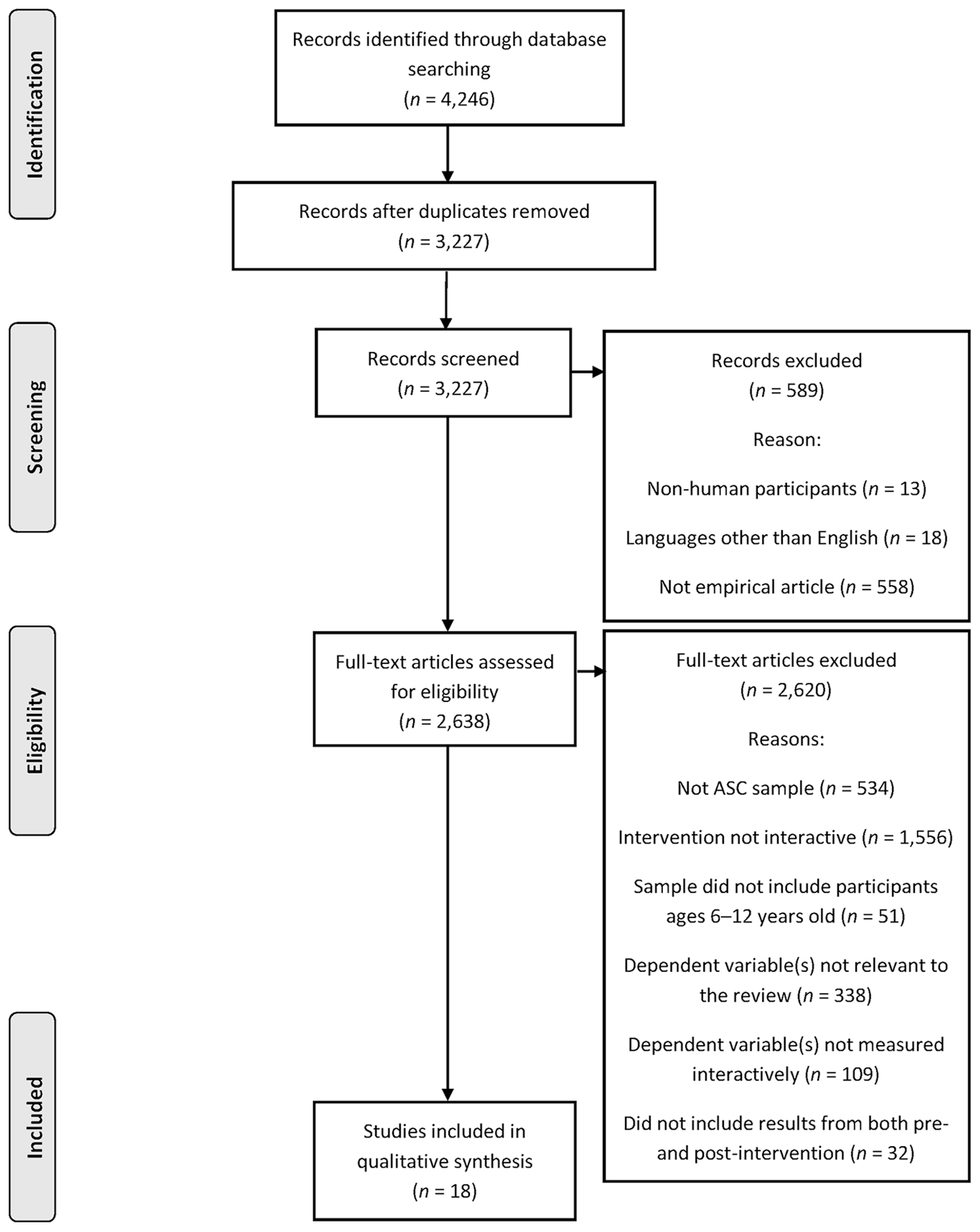
Article selection process at each stage of the review.
Quality Assessment and Interrater Reliability
Following screening for inclusion criteria, 18 articles were included in the review. Information on each of these articles is presented in Table 1. In addition, each article included in the review was appraised for methodological quality using the Mixed Methods Appraisal Tool (MMAT; Pluye et al., 2011). This instrument was applied due to the comparable quality assessment provided across quantitative and qualitative studies, both of which are included within the present review. The MMAT (Pluye et al., 2011) includes items that consider transparency, bias, and comprehensive data. Example items include “Is there a clear description of the randomization (or an appropriate sequence generation)?” and “Are there complete outcome data (80% or above)?” Quality scores were calculated to inform rather than exclude, interrater agreement of quality assessment scores was established on all included articles, and assessment outcomes are presented in Table 1. Interrater agreement was conducted independently by the first author and by a post-graduate student with no further connection to the research. Inclusion and quality were rated individually and were based on the inclusion criteria outlined above and the MMAT checklists (Pluye et al., 2011). Following an independent assessment, agreement reached 100% for application of inclusion criteria, and 100% for quality scores assigned to the included articles.
Overview of Included Articles, Organized by Social Maintenance Behavior(s) Measured.
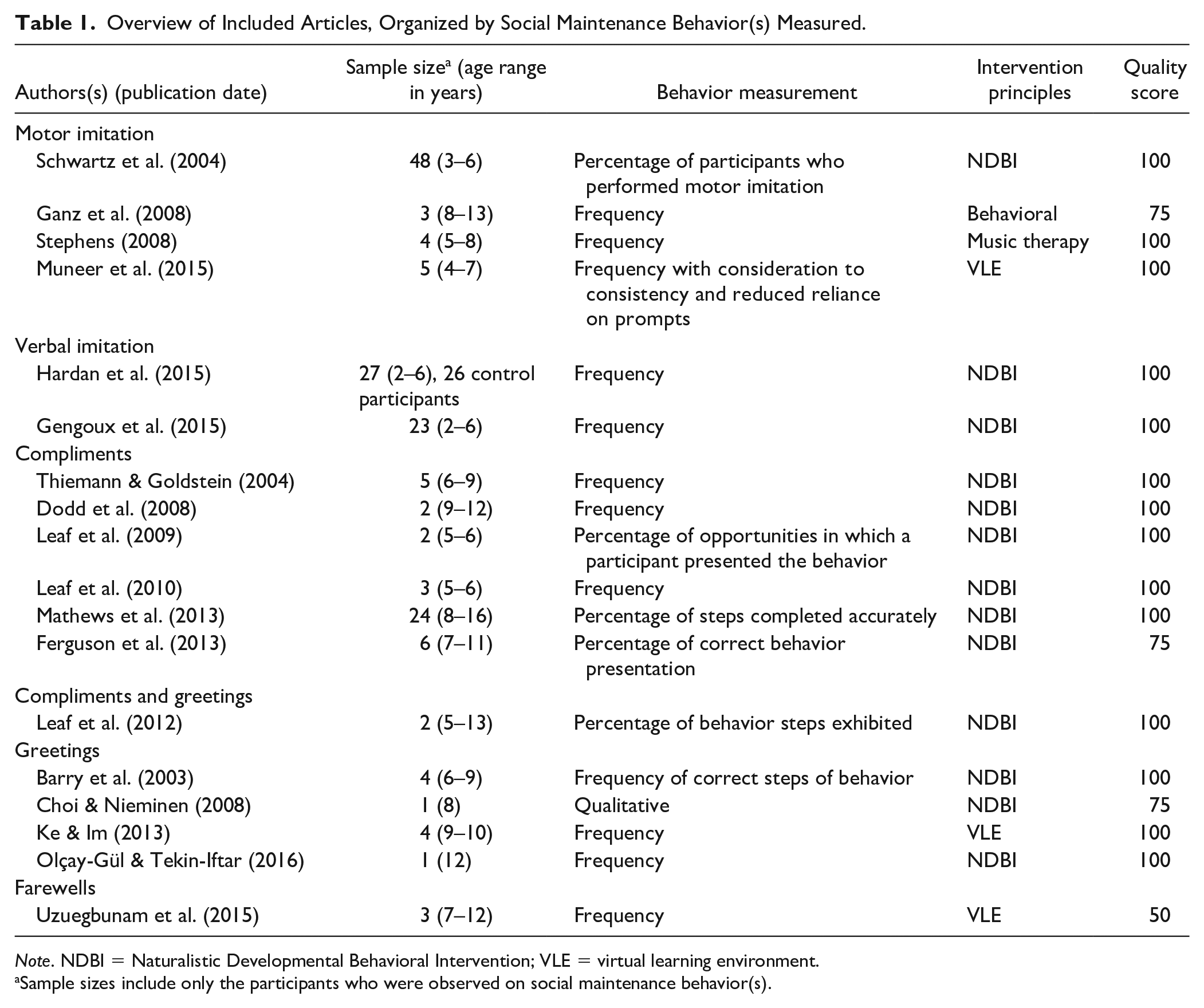
Note. NDBI = Naturalistic Developmental Behavioral Intervention; VLE = virtual learning environment.
Sample sizes include only the participants who were observed on social maintenance behavior(s).
Results
Overview of Articles Returned
A total of 18 articles met inclusion criteria. These included an evaluation of social maintenance behaviors using interactive methods in children with ASD, with samples that included children aged between 6 and 12 years. One of these articles provides follow-up data for another included article. No date restriction was applied and the included articles were published between 2003 and 2016. The samples included in the review ranged in size from 1 to 48 experimental participants. Fifteen of the articles applied a quantitative nonrandomized design and two articles applied a quantitative randomized controlled trial. One of the included articles presented qualitative findings.
While all of the interventions evaluated by articles within this review applied interactive methodology within the intervention procedure to target social maintenance behavior, the included articles represent a variety of intervention procedures. Thirteen of the articles reported findings following implementation of Natural Developmental Behavioral Interventions (NDBIs; Barry et al., 2003; Choi & Nieminen, 2008; Dodd et al., 2008; Ferguson et al., 2013; Gengoux et al., 2015; Hardan et al., 2015; Leaf et al., 2009, 2010, 2012; Mathews et al., 2013; Olçay-Gül & Tekin-Iftar, 2016; Schwartz et al., 2004; Thiemann & Goldstein, 2004), based on the definition provided by Schreibman et al. (2015), three evaluated implementation of virtual learning environments (VLEs; Ke & Im, 2013; Muneer et al., 2015; Uzuegbunam et al., 2015), one study appraised outcomes following implementation of a behavioral intervention (Ganz et al., 2008), and one study reported findings following engagement with music therapy (Stephens, 2008).
Although the interventions evaluated by the articles in this review targeted and measured social behaviors wider than the social maintenance behaviors, in line with the focus of the review, the synthesis is structured based on the outcomes on the social maintenance behaviors they measured. Four of the eligible articles measured motor imitation as a dependent variable (one of which included simultaneous verbal imitation), two measured verbal imitation without measuring an accompanying action, seven articles measured actions of providing compliments to others, five articles measured greeting behaviors, and one article measured vocalizations of “bye” as a farewell behavior.
Motor Imitation
The total sample of the four studies that evaluated motor imitation comprised 61 participants (47 male) aged between 3 and 13 years (Ganz et al., 2008; Muneer et al., 2015; Schwartz et al., 2004; Stephens, 2008); with the majority of these participants coming from one study of 48 children (Schwartz et al., 2004). Three of the samples, including Schwartz et al. (2004), included participants with a diagnosis of an ASD (Ganz et al., 2008; Muneer et al., 2015), one of which included one participant who did not have a diagnosis of ASD but instead was described as having a learning disability (Muneer et al., 2015). This sample is included as the majority of these participants had received a diagnosis of an ASD. One sample (Stephens, 2008) included participants who were eligible for autism services and scored within the mild-moderate category of the Childhood Autism Rating Scale (CARS; Schopler et al., 1980). None of the studies reported a control group.
The four articles included within this review that measured motor imitation as a dependent variable before and after engagement in a social-based social therapy did so quantitatively. Motor imitation was defined generally as the imitation of movement observed (including movements by a peer, therapist, and avatar). One article measured motor imitation for one participant but measured more specifically imitation of both action and word pairs simultaneously for three participants (Stephens, 2008). One article specified that the motor imitation measured was based on object-action (Ganz et al., 2008). Three articles reported imitation based on the frequency of this behavior: Two articles reported the frequency of motor imitation (Ganz et al., 2008; Stephens, 2008), and one article reported the frequency of motor imitation with consideration to consistency and reduced reliance on prompts (Muneer et al., 2015). Schwartz et al. (2004) reported the percentage of participants who presented motor imitation.
While the present review included only articles that evaluated interactive social therapies in particular, there is variation in the foundations of the social-based interventions applied. The effectiveness of an NDBI (Schwartz et al., 2004), a music therapy, which applied behavioral and developmental perspectives (Stephens, 2008), a behavioral intervention (Ganz et al., 2008), and a VLE intervention (Muneer et al., 2015) to improve motor imitation are presented.
In addition to measuring motor imitation as an outcome variable, three of these four articles explicitly targeted motor imitation within the interventions applied. The NDBI was the most intensive of the social-based social interventions targeting motor imitation, provided to children with ASD for an average of 16 months and for 20 hr per week (Schwartz et al., 2004). Alongside naturalistic teaching and techniques, embedded learning opportunities, discrete trial teaching methodology, and desired object reinforcers were used. The music therapy was provided to participants for one session each school day (Stephens, 2008). The duration of the intervention period differed for each participant; however, observation of the figures indicates that the lowest number of intervention sessions for a participant was 16. Two intervention conditions were applied: joint attention scaffolding strategies with music, which was provided to all participants, and an extended condition which included the addition of verbal prompts was required for two participants. Reinforcement was provided in the form of verbal praise. The third of these studies applied behavioral strategies, wherein approximately six 4-min sessions were provided to participants per week, with three sessions delivered in a day (Ganz et al., 2008). The duration of intervention differed for each participant; however, observing the figures indicates that the shortest duration was 12 sessions. Alongside modeling and prompting sequences, reinforcement in the form of verbal praise was used.
One of the four studies which measured motor imitation as an outcome of the therapy did not consistently explicitly target motor imitation within the intervention (Muneer et al., 2015). This VLE intervention, of four to six sessions lasting 2 to 30 min, targeted rarely if at all motor imitation directly, and no reinforcement was used.
While none of the four studies provided reports of statistical significance, three of the four studies reported an increase in motor imitation following engagement in the social-based social therapy (Ganz et al., 2008; Schwartz et al., 2004; Stephens, 2008). The three studies which reported an increase in motor imitation are the studies wherein the intervention evaluated targeted explicitly motor imitation and included a form of reinforcement. Two of these studies reported an increase in the frequency of motor imitation: one for all participants (Stephens, 2008) and one for three of four participants (Ganz et al., 2008). One study reported an increase in the percentage of participants who performed motor imitation (Schwartz et al., 2004). The study which reported no change in motor imitation, which scored the consistency of motor imitation and reduced reliance on prompts, did not target motor imitation directly within the intervention or provide reinforcement (Muneer et al., 2015). This study did however report an increase in motor skills, which suggests that motor imitation is not automatically increased with increased motor skill.
A commonality among the studies which reported an increase in motor imitation is the use of reinforcement, social or tangible, and the targeting of motor imitation explicitly as part of the intervention; characteristics which were not present in the intervention which was reported to not facilitate any change in motor imitation. The age of samples in which an increase in this behavior was observed did not differ from the sample in which changes were not observed. The quality score for Muneer et al. (2015) was 100, so the difference in findings was not assumed to be due to bias in reporting.
While the sample size of articles is small, consideration of the four studies which evaluate the effectiveness of social-based social therapy to increase motor imitation in children with ASD indicates that social therapies can increase this behavior in children ages between 3 and 13 years. The synthesis highlights explicit targeting of motor imitation within the social therapy and implementation of a reinforcement strategy as potentially active components in the facilitation of increased motor imitation.
Verbal Imitation
While two articles are included which measure verbal imitation without simultaneous motor imitation, both articles report findings from the same experiment. While Hardan et al. (2015) present findings at pre- and post-intervention, Gengoux et al. (2015) present follow-up data at 3 months after the intervention ceased.
Using randomized assignment, 25 children with a diagnosis of autism (19 male) received 12 weeks of NDBI from their parents, who received training in the implementation of the intervention procedures (Hardan et al., 2015). Functioning as a control group, the parents of a further 22 children diagnosed with autism (17 male) were provided with psychoeducation of autism. Participants were aged between 2 and 6 years, and the average age of each group was 4 years. Twenty-three participants from the experimental group provided follow-up data (Gengoux et al., 2015).
Verbal imitation was defined operationally as utterances that were imitative and were scored in terms of frequency of occurrence by trained coders who were blind to group assignment. Verbal imitation was scored alongside four other verbal behaviors, during a parent–child interaction. During this interaction, the parent played alone with the child and was instructed to elicit as much language as possible from the child. The same frequency-based data of verbal imitation was used to assess this behavior at 3 months post-therapy.
Parents of children who were allocated to the NDBI group received training on behavioral techniques to facilitate language development. The parents were then asked to implement the therapy with their child, and 21 of the 25 parents demonstrated the implementation of procedures with fidelity. This therapy focused on targeting pivotal areas, including motivation. The parents of children assigned to the psychoeducation intervention received general information about autism (Hardan et al., 2015).
Children assigned to both groups significantly increased the total number of utterances following the intervention; however, the total number of utterances increased the most for the children receiving pivotal response treatment. When considering individually each of the five categories of verbal behavior measured, verbal imitation was one of the two most apparent increased behaviors. In addition, visual reception at pre-therapy was found to be a significant predictor of increase in imitative utterances at post-therapy, accounting for 18% of the variance of imitative utterances (Hardan et al., 2015). Twelve weeks post-therapy, 24 weeks after baseline, the number of imitative utterances increased significantly across baseline, post-intervention, and 12 weeks following the end of the intervention; however, no significant increase in the number of imitative utterances was found between post-intervention and follow-up. No further intervention instruction was provided during the 12 weeks following post-intervention assessment, indicating lasting effects but no further increases (Gengoux et al., 2015). Despite the increase in the social maintenance behavior of imitative utterances following the intervention, not all of the wider social dependent variables measured changed significantly.
The results reported by Hardan et al. (2015) and Gengoux et al. (2015) suggest that a 3-month intensive treatment, implemented by trained parents, has the potential to increase imitative verbal utterances by young children with autism and that this can have a lasting influence. Differences between the intervention group and the control group reported by Hardan et al. (2015) include direct intervention provided to the children by the parents, reinforcement strategies, and consideration to motivation as pivotal.
The emphasis within this NDBI on targeting motivation (Koegel et al., 1989) could provide an explanation for the efficacy of this intervention to increase the social maintenance behavior of verbal imitation. The sample of articles synthesized to explore verbal imitation following social intervention is small and therefore further research is required to explore replication and to draw firm conclusions. However, these studies indicate that targeting social motivation using naturalistic and reinforcement techniques in real-life contexts can increase the social maintenance behavior of verbal imitation.
Providing Compliments to Others
Seven samples totaling 44 participants (39 male) were observed for the dependent variable of interest: giving compliments (Dodd et al., 2008; Ferguson et al., 2013; Leaf et al., 2009, 2010, 2012; Mathews et al., 2013; Thiemann & Goldstein, 2004). Participants were aged between 5 and 16 years. Twenty-four of these participants are from one sample, and this sample is the only one to include female participants (Mathews et al., 2013). This sample was also the only sample to include participants who did not have a diagnosis of an ASD, with 16 of the participants reported as diagnosed with ASD. None of the studies reported a control group in which the action of providing compliments to others was also measured.
The seven articles eligible for synthesis to explore the behavior of giving compliments to another all measured this dependent variable quantitatively. Of these articles, five defined compliments operationally through a series of between steps (Ferguson et al., 2013; Leaf et al., 2009, 2010, 2012; Mathews et al., 2013). While these steps were not identical between studies and ranged from two steps to five steps, each sequence that was explicitly outlined included components of orientation and a nice tone of voice in addition to verbally complimenting the interaction partner. Two of these articles did not explicitly provide details of the components (Leaf et al., 2009, 2012). The other two articles defined compliments solely as the behavior of giving verbal praise or verbal reinforcement (Dodd et al., 2008; Thiemann & Goldstein, 2004). Of the articles which defined compliments by a series of steps, four measured this behavior by percentage of steps exhibited (Leaf et al., 2012; Mathews et al., 2013), percentage of correct presentation of behavior (Ferguson et al., 2013), marks provided if participant engaged in each step for each opportunity provided (Leaf et al., 2009), the occurrence or non-occurrence of each step of the skill (Leaf et al., 2010). For articles wherein compliments were defined by the giving of verbal praise or reinforcement rather than inclusion of wider components, compliments were scored by frequency of occurrence (Dodd et al., 2008; Thiemann & Goldstein, 2004).
The interventions evaluated within each of the studies observing compliments were NDBIs. Therefore, while variation is present in the specific techniques applied by the interventions, the fundamental protocols of these interventions are consistent in the use of behavioral, developmental, and naturalistic procedures (Schreibman et al., 2015). Each intervention explicitly targeted compliments, and the procedures of each intervention included reinforcement. Six of the seven articles included use of either token economy reinforcement (Mathews et al., 2013; Thiemann & Goldstein, 2004), or a mixture of token economy reinforcement and verbal praise (Ferguson et al., 2013; Leaf et al., 2009, 2010, 2012). One study provided a reward regardless of behavior at the end of engagement with each intervention session (Dodd et al., 2008). The duration for which the intervention was applied across the seven studies ranged from just over a week to 7 months. Of the articles which provide this information, the duration of individual sessions ranged from 25 min to 6 hr per day, and the intensity ranged from one per week to up to 6 days per week.
Despite the inconsistency in duration and intensity of intervention, all of the articles reported an increase in compliments. All of the articles reported notable increases in the percentage of opportunities that participants engaged in compliments (Leaf et al., 2009), the mean frequencies of compliments (Dodd et al., 2008; Thiemann & Goldstein, 2004), and percentage of steps defined as compliments demonstrated correctly (Leaf et al., 2010, 2012). Two studies further explored statistical significance, reporting a significant increase of mean frequencies of compliments given by the children with ASD from before the NDBI was provided to following provision of the NDBI (Ferguson et al., 2013; Mathews et al., 2013). Of the four studies which measured generalization of compliments, this was reported to be observed (Leaf et al., 2010, 2012; Mathews et al., 2013; Thiemann & Goldstein, 2004). Of the five studies which measured maintenance of increased compliments, successful maintenance was not consistent. Four of these studies reported that increased compliments were maintained at rates higher than baseline following the end of the intervention (Leaf et al., 2009, 2010, 2012; Mathews et al., 2013). One study reported on average higher than baseline rates of compliments for the four participants observed at maintenance; however, one participant returned to 0 compliments when further intervention sessions began to target a different social skill (Thiemann & Goldstein, 2004). In sum, all samples across the studies reported increased compliments, to statistical significance where measured, generalization of compliments, and most participants maintained some level of increased compliments following the end of the intervention, where measured.
All of the studies reported a notable increase in compliments, concluding that the NDBI applied within the respective studies was effective in increasing this social behavior. As commonalities across the interventions evaluated within these articles extend beyond NDBI principles to include the explicit targeting of compliments and the use of reinforcement, it is indicated that the use of NDBIs which include these components is effective in increasing the social maintenance behavior of compliments in children with ASD. However, whether these components contribute equally to the increase in compliments is unknown.
Greeting Behaviors
Of the studies which measured greeting as an outcome variable, the five samples total 11 participants (eight male) between the ages of 5 and 12 years, who had received a diagnosis of an ASD (Barry et al., 2003; Choi & Nieminen, 2008; Ke & Im, 2013; Leaf et al., 2012; Olçay-Gül & Tekin-Iftar, 2016). No control groups were included.
Four of the five studies measured greeting quantitatively (Barry et al., 2003; Ke & Im, 2013; Leaf et al., 2012; Olçay-Gül & Tekin-Iftar, 2016) and one study measured greetings through qualitative report (Choi & Nieminen, 2008). Of the studies which measured greetings quantitatively, two studies defined greetings operationally through five steps, one of which recorded the percentage of steps exhibited (Leaf et al., 2012) and one of which scored participants for each step exhibited (Barry et al., 2003). The other means of recording greeting behavior was the frequency of greeting behaviors across trials (Ke & Im, 2013; Olçay-Gül & Tekin-Iftar, 2016). Qualitative observations reported whether or not the participant initiated or responded to greetings (Choi & Nieminen, 2008).
Four of the five studies evaluated the effectiveness of NDBIs to increase greetings in children with ASD (Barry et al., 2003; Choi & Nieminen, 2008; Leaf et al., 2012; Olçay-Gül & Tekin-Iftar, 2016) and one study evaluated the effectiveness of a virtual reality-based VLE to increase greetings in this population (Ke & Im, 2013). All of the five interventions evaluated targeted greetings explicitly. Use of reinforcement was reported in four of the five studies, and are described as use of token economy and verbal praise (Leaf et al., 2012), social reinforcement (Olçay-Gül & Tekin-Iftar, 2016), the use of reinforcing (Ke & Im, 2013) and providing feedback (Barry et al., 2003). One study did not report any information on reinforcement (Choi & Nieminen, 2008). Two studies reported explicitly the duration of the intervention period, which include 4 weeks (Choi & Nieminen, 2008) and 8 weeks (Barry et al., 2003). Of the articles which provide this information, the duration of sessions ranged from 40 min to 2 hr, and occurrence of intervention sessions ranged from daily to weekly support.
All of the five studies reported an increase in greeting behavior for all participants. Of the quantitative analyses, one study measured and reported statistical significance in the increase of frequency of exhibition of operationally defined components of greetings (Barry et al., 2003). The other three quantitatively measured outcomes reported an increase in the percentage of operationally defined greeting steps (Leaf et al., 2012), and an increase in the number of trials for which greeting behaviors were demonstrated by participants (Ke & Im, 2013; Olçay-Gül & Tekin-Iftar, 2016). Qualitative report described a noticeable increase in initiating greetings (Choi & Nieminen, 2008). Maintenance was reported across two studies, wherein one study informed of higher levels of greeting behaviors compared with baseline but also reported a downward trend (Leaf et al., 2012), and one study reported maintenance of greeting behaviors at 100% of opportunities provided (Olçay-Gül & Tekin-Iftar, 2016). Generalization probes for greetings were observed across two studies, wherein one study reported a similar pattern of response to generalization probes as to intervention probes, including during maintenance (Leaf et al., 2012), and the second study provided parent report of increased greeting behavior outside of the clinical setting (Barry et al., 2003).
Overall, all of the studies reported a noticeable increase in greetings and, where measured, this increase reached statistical significance. Commonalities between the interventions provided across these five studies include explicit targeting of greeting behavior and the use of behavioral strategies, indicating these as potential active components of social-based interventions to increase interactive displays of greetings in children with ASD.
Vocalizations of “Bye” as a Farewell Behavior
The sample of participants in the one study eligible for inclusion in the present review which measured farewells totaled three males with autism, aged between 7 and 12 years (Uzuegbunam et al., 2015).
Farewells were defined as vocalizing bye. Four opportunities for this behavior were presented at each probe, and the frequency of farewells exhibited in response to these opportunities was recorded.
The social-based social intervention evaluated in this study was a VLE. Specifically, video self-modeling was provided wherein farewells were targeted explicitly for 6, 10, and 14 sessions for the three individual participants. Reinforcement was provided by means of praise and in-game visual confetti.
An immediate increase in farewells was observed for each participant at the beginning of the targeted intervention. For one participant, farewells were scored at 0% during baseline probes and increased and remained at 100% following implementation of targeted intervention. For a second participant, farewells were scored at 0% during baseline probes and, after the initial three sessions of targeted intervention wherein this behavior fluctuated between 70% and 100%, farewells were reported at 100%. For a third participant, baseline levels of farewells were recorded at between 0% and 20% and increased to between 70% and 100% following implementation of targeted intervention. All three participants maintained increased farewells to the level demonstrated during intervention. No tests for statistical significance were reported.
This study demonstrates the potential of a social-based social intervention that targets explicitly farewell behavior and incorporates reinforcement to increase the social maintenance behavior of farewells during social interaction in children with ASD (Uzuegbunam et al., 2015). However, firm conclusions cannot be drawn from a sample of one study and further research is required.
Overall
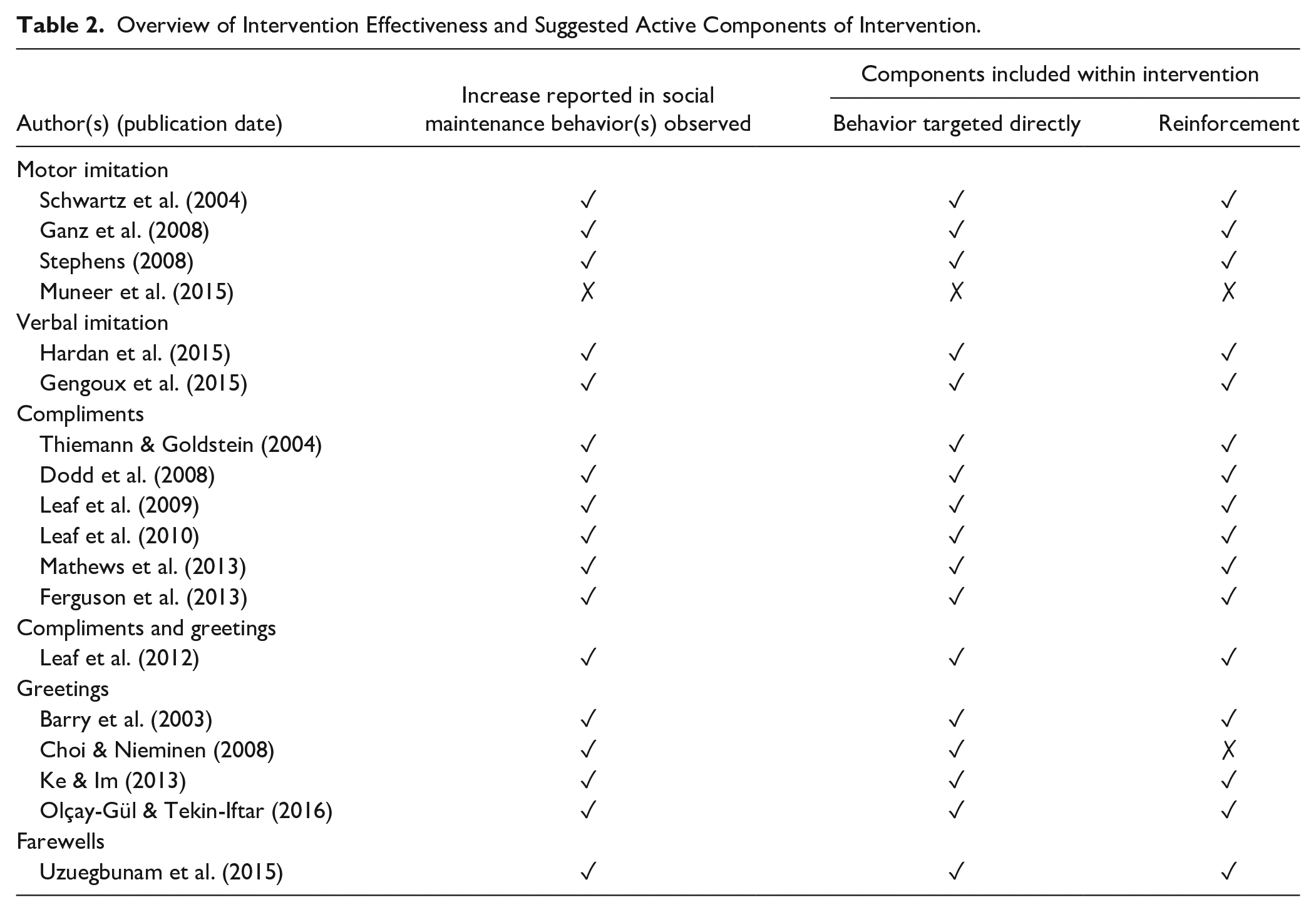
As presented in Table 2, there are commonalities in the interventions provided in the studies which reported an increase in social maintenance behaviors which are not shared with the study that did not report an increase in social maintenance behaviors. Specifically, all of the interventions found to increase social maintenance behaviors in children with ASD explicitly targeted the social maintenance behavior of interest, and all apart from one (Choi & Nieminen, 2008), included a variation of reinforcement. The one study included in this review that did not report an increase in the social maintenance behavior of interest did not include within the intervention evaluated either explicit targeting of the social maintenance behavior of interest or report of any reinforcement procedures (Muneer et al., 2015). Furthermore, Muneer et al. (2015) targeted motor imitation which was found to be malleable by three other studies included in the review (Ganz et al., 2008; Schwartz et al., 2004; Stephens, 2008), suggesting that social-based interventions do have the potential to increase this behavior and allowing an exploration of intervention procedures common among articles which reported an increase in social maintenance presentation and absent in the study which did not. Therefore, the present review indicates that social-based social therapy has the potential to increase social maintenance behaviors in children with ASD and that explicitly targeting social maintenance behaviors and the use of positive reinforcement are active components in facilitating this increase.
Overview of Intervention Effectiveness and Suggested Active Components of Intervention.
Methodological Quality
Overall methodological quality was assessed for each study included in the review using the MMAT critical appraisal tool (Pluye et al., 2011), chosen due to the ability to provide comparable assessment across mixed methods studies. Two reviewers independently assessed the methodological quality within each study and assigned an overall score based on the MMAT. A consensus was reached on the scores for all studies included in this review. The scores attributed to each article are presented in Table 1. Overall, 14 of the 18 studies were assigned a score of 100, three articles were assigned a score of 75, and one article was assigned a score of 50; therefore, the methodological quality of the articles included in the present review, as appraised using MMAT criteria, is high. This indicates that the evidence synthesized in the present review is well-substantiated in terms of methodological rigor and a reduced risk of bias.
Discussion
The present review explored the impact of social-based social interventions on social maintenance behaviors in children with ASD using an interactive methodology. Within a large evidence base of studies measuring interactive social behaviors of children with ASD before and after engagement in a social-based social intervention, a relatively small sample of 18 studies measured social maintenance behaviors in particular.
The 18 articles included in the present review indicate that social-based social interventions are effective in increasing social maintenance behavior in children with ASD. Specifically, 17 of the 18 articles reported an increase in the social maintenance behaviors measured following engagement in social-based social therapy. Common components of explicit targeting of the social maintenance behavior of interest and the inclusion of reinforcement were found across the studies which reported an increase in these behaviors but were not reported in the article that found no increase in the social maintenance behavior of interest. While the small number of studies eligible for inclusion in this review limits the potential for generalization, it is suggested that the explicit targeting of the social maintenance behavior of interest and use of reinforcement within the procedures of social intervention may be active components in the increase of social maintenance behaviors in children with ASD. As such, it appears that social maintenance behaviors may be directly taught and reinforcement may be an important component of this teaching process.
Social motivation theory (Chevallier et al., 2012) can provide an explanation for the indicated active components of explicit targeting and reinforcement in the increase of social maintenance behaviors in particular. According to SMT, social motivation, which can be presented behaviorally by means of social maintenance behaviors, is facilitated by an underlying physiological reward circuitry (Chevallier et al., 2012). It is possible that association between reward and the explicit social maintenance behavior measured was developed through reinforcement to motivate an initial increase in these targeted behaviors. This suggests that the way in which social motivation is processed at the neural level in children with ASD may have been modulated by reinforcement, thus facilitating a reward response to specific social maintenance behaviors and therefore increasing or changing their presentation. However, no studies included in this review measured simultaneously neural correlates of maintenance behavior at different stages of engagement in social intervention and, as such, this potential role of neural factors cannot be inferred.
The sustained increase of social maintenance behaviors following the termination of intervention procedures, including the removal of external reinforcers, observed across various studies included in this review suggests that internal social motivation had increased or developed. When the offer of external rewards was no longer present, the children with ASD were motivated to engage in behaviors that facilitate the formation and maintenance of relationships. In line with SMT, this indicates that the children with ASD were attributing a reward value to social interactions (Chevallier et al., 2012). It is suggested that, by means of increasing internal social motivation, social-based social therapies have the potential to facilitate lasting increases in social behavior by means of modulating reward system processing. In support of Kohls et al. (2012), reward value is indicated by the present review to be modulatory in the efficacy of social interventions. However, the scarcity of research does not allow for firm conclusions, and further studies are required.
The effectiveness of social-based social therapies to increase social maintenance behaviors in children with ASD has potential implications for the negative experiences reported among this population. Extending on the suggested association between a reduction in negative social experiences and positive and supportive relationships with peers (Hebron & Humphrey, 2014; Humphrey & Symes, 2010), the present review suggests that social-based social interventions have the potential to reduce these negative experiences. While relationships with others was not an outcome variable included within this review, therefore making extrapolation premature, social maintenance behaviors function to form and sustain relationships with others. As such, it can be suggested that, by means of increased social maintenance behaviors, engagement in social therapies may relate to a reduction of negative social experiences experienced by children with ASD.
A limitation in the studies included within this review is the absence of control participants for the observation of social maintenance behaviors in all but one of the studies (Hardan et al., 2015). Without inclusion of control groups, it cannot be concluded that the increases observed in social maintenance behaviors were a direct result of the interventions provided, nor can the increase in these behaviors be taken relatively to engagement in no intervention at all. However, it is noted that increased social maintenance behavior was observed consistently across 17 of the 18 studies reviewed. An additional limitation emerges from the small evidence base that exists within the parameters of the present review that considers social maintenance behaviors. Due to the small sample size of studies eligible for inclusion, findings should be interpreted with caution.
The present review can inform future implementation of social therapies for children with ASD which aim to increase social maintenance behaviors. While it highlights potential active components of social-based social intervention in increasing social maintenance behaviors, only five specific manifestations of social maintenance behaviors have been measured in the extant literature. Future research is required to explore the social maintenance behavior of facial mimicry as an outcome of social therapy, given its potential association with emotional understanding and emotional empathy (Iacoboni, 2005; Iacoboni & Dapretto, 2006; Oberman et al., 2007), and given that children with ASD have been rated as less expressive which may be associated with less positive expression formation from peers (Stagg et al., 2014). In addition, further research is required to explore the neural correlates of social maintenance behaviors during increased presentation. By measuring the neural correlates of these behaviors, which have been suggested by Chevallier et al. (2012), the underlying facilitation of increased social motivation and the potential for lasting change can be better understood.
In summary, the literature reviewed in the present study suggests that social-based social interventions based on various principles are effective in increasing interactive displays of social maintenance behaviors in children with ASD, suggesting the potential for increased social motivation in this population. Taken together, the literature also suggests that the use of reinforcement strategies and the explicit targeting of social maintenance behaviors are active components within these interventions in the efficacy to increase these behaviors in this population.
Footnotes
Declaration of Conflicting Interests
The author(s) declared no potential conflicts of interest with respect to the research, authorship, and/or publication of this article.
Funding
The author(s) received no financial support for the research, authorship, and/or publication of this article.

Supplemental Material
Supplemental material for this article is available online.