




Abstract
This study discusses risk management strategies caused by pandemic-related (Covid-19) suspensions in thirty-six engineering projects of different types and sizes selected from countries in the middle east and especially Iraq. The primary data collection method was a survey and questionnaire completed by selected project crew and laborers. Data were processed using Microsoft Excel to construct models to help decision-makers find solutions to the scheduling problems that may be expected to occur during a pandemic. A theoretical and practical concept for project risk management that addresses a range of global and local issues that affect schedule and cost is presented and results indicate that the most significant delays are due to a lack of good project risk management skills and remote project management capability which is exacerbated by shortfalls in technical development and information technology.
Introduction
The outbreak of the novel coronavirus disease (COVID-19) has caused unprecedented global health and humanitarian crisis with widespread social and economic disruptions across the globe. The first outbreak of this disease was recorded in Wuhan, the capital of Hubei Province, China, on December 29, 2019 (Statistical, Economic and Social Research and Training Centre for Islamic Countries, May 2020). Since then, it has spread to 119 countries and territories around the world, and on March 11, 2020, the World Health Organization declared the COVID-19 virus a global pandemic.
The COVID-19 has been spread worldwide since late 2019, it leads to critical challenges to all countries in the world and most sectors of civil fields. Until November 2020, there have been 57,639,631 confirmed COVID-19 cases with 1,373,294 deaths globally, according to the statistics of the World Health Organization (WHO) (Wang et al., 2020). Corona’s economic effects: huge losses and small and temporary gains, The rapid and deadly spread of Corona has paralyzed global economic centers, so its negative effects have spread to the Arab region, various governments are trying to get out of the impasse by adopting economic recovery programs. Another aim of this study is to distinguish the root cause of disputes between employers and contractors and the ways to increase the maturity level of organizations understanding of change management, crisis management, and risk allocation in construction contracts to enable both sides to overcome the negative impacts of COVID-19 in the construction industry. This technical paper will test: 1. The organization’’s level of understanding management change and control. 2. How does an organization’’s maturity level affect change management? 3. How organization’s maturity level influences the understanding of risk allocation? 4. What are the precautions or provisions that Employers and Contractors should include to control the change management plans? 5. The pre-actions that could be undertaken by buyer and seller to mitigate the disputes due to changes. 6. How should organizations deal with the post impacts of COVID-19?
It has understood that all parties including the employer and contractor whom are affected by the COVID-19 pandemic is ultimately still required to comply with their contractual obligation under a contract. Despite each project is unique in its product and circumstances, the risk allocation and change management standards and key concepts still remain the same in which most of the organizations lack to implement, and this was one of the most root cause of the disputes between the employers and contractors during the COVID-19 pandemic. As many of the employers and contractors are claiming delays, disruptions and cost overrun to mitigate the effect of COVID-19 pandemic without clear understanding of risk allocation, change management, crisis management and even without understanding of the contracts provisions that support the treatment of such pandemics.
In the last few months since March 2020 since WHO announced that COVID-19 is global pandemic most of the construction professional debates the COVID-19 and all its related effects whether its Force Majeure of Unexceptional Events as a way to remedy the impacts of COVID-19.
As to guarantee that the reconstruction programs under post disaster and emergency status will be implemented successfully, it is substantially for construction organizations to be resilient, able to return, and retrieve from an event. Resilient construction projects should be responsive, adaptable and able to operate in an emergency (Wilkinson et al., 2014). Waheeb (2018) has discussed deferent delay factors affecting construction projects where she found that security status was the main delay factors in the model that predicts delay in cost and time followed by deferent other factors, as an external factors was one of those factors affecting delays mentioning that emergency status under natural and artificial disasters could be one of those external controlling factors as we are witnessing the pandemic of covid-19.
Projects management through covid-19 pandemic sometimes partly as same as Status of Projects management post-disaster and emergency reconstruction. Appropriate handling plans are developed and implemented, Well-implemented life cycle risk management is essential for balance and cost, schedule, and performance goals, especially for programs with designs that approach.
Project management structured process can facilitate by defining a consistent approach by which risk and opportunity can be assessed, handled, monitored, and communicated to stakeholders. The systematic process provides a reliable way to ensure objectivity and minimization any unwarranted optimism, bias, or self-interest.
Project risk management process helps project managers and project teams make informed Decisions regarding alternative approaches to achieving their objectives and the relative risks
Participate in order to increase the probability of succeeding in the meeting or exceeding as many as possible important objectives.
Management encourages the project team to respond appropriately to: • Realistic planning of project activities in relation to the required scope, schedule and budget. • Recognize potential inconsistencies in resource use early on to proactively avoid conflicts. • Increased opportunities to improve project objectives at lower cost, shorter scheduling, improved scope, and higher quality. • Establish coordinated project practices and communication strategies to create predictability in project activities and reduce management in crises.
Price (2014) confirmed that, Project risk management is primarily implemented to increase the chance of achieving project objectives as follows. Benefits include: • Providing better information to support decisions regarding project direction and preparation Schedule, cost objectives, and contingency. • Determining the actions that may be taken to improve technical performance, schedule and cost. • Create a reliable foundation for each project by showing that it is possible, or alternatively, Shows that the project is not feasible so that it can be avoided or diverted.
Hussain et al., 2021, assert that COVID-19 has destabilized the global economy, disrupted the lives of billions of people globally, and caused the workforce to suffer. Moreover, the spread of this disease has caused most countries to impose strict lockdown regulations and shut down most industries. This study aimed to highlight construction projects that have been halted during the COVID-19 outbreak to follow social distancing, closure and public safety standards. Survey and questionnaires were performed to achieve the purpose of this study. The responses of a number of energy project specialists and experts were assessed using the Analytical Hierarchy Process (AHP) for collective decision-making. AHP hierarchy software is considered the most effective software for project performance during COVID-19 pandemic were Government actions and personal factors. The findings give insight to support project planning and management during and after a pandemic, including prioritizing workforce health and safety.
The COVID-19 pandemic has revealed that our work environments are characterized by volatility, complexity and uncertainty. Each organization varies by adapting to current challenges, and there are four common prospects for response and subsequent impact on effective project implementation. • Global Confirmed COVID-19 cases 51,636,989 • U.S. Confirmed COVID-19 cases 10,311,361 • The economy’s total output of goods and services declined, at a rate of 31.4% in the April-June quarter.
Al-Kraety et al. (2020) referred in their study that COVID-19, a new, rapidly spreading coronavirus strain, has reached more than 150 countries and is gaining worldwide attention. The shortage of drugs or successful vaccines for SARS-CoV-2 has exacerbated the situation further. Therefore, research is urgently required to establish effective therapeutics and affordable diagnoses for COVID-19.
Bushuyev et al., 2020 explored the “informational” phenomenon that occurs during the global crisis of the COVID-19 pandemic. The proposal is to implement an agile transformation of the project management system and epidemic programs, taking into account the impact of informational “noise” in the mental space of the global community. The model can significantly improve project setup by transforming agile management with a focus on stakeholder value systems. It is important to seize opportunities to increase the effectiveness of project implementation using agile umbrella tools such as Kanban, P2M, Kaizen, and others. Misinformation has expanded, which includes false claims about a “cure,” conspiracy theory, and misinformation about the spread of the virus. The effectiveness of the response to control this “information” varies from country to country and depends on the public’s trust in the authorities. It is likely that the new developments of the epidemic will lead to the detection of an outbreak of the virus in almost all countries of the world, the publication of epidemiological data, the start of clinical trials for the vaccine, and it may lead to new false information, which will hinder efforts to control the epidemic.
Seals et al. (2020) assured that COVID-19 has presented many new challenges and new opportunities for project management professionals and IT leaders. They addressed these challenges and identified best project management practices and processes that are effective in addressing these challenges. In addition, explained how Project Cost Management, Time Management, Risk Management, Human Resources Management, and Risk Management have enabled them to manage during the pandemic and as a part of “return-to-work” scenarios. Listening to these leaders as they carry out digital transformations for their businesses and organizations will be an opportunity to bridge the gap between research and practice and establish a dialogue between academics and IT industry leaders, which will ask many new questions to come. The COVID-19 environment has presented unprecedented challenges and changes to society and the economy. On August 31, 2020, 25,000,000 cases of COVID-19 were reported worldwide, with 6,000,000 cases in the United States. A drop in GNP was projected between 35 and 40%. Industries declined (airlines, accommodation, and travel) while others expanded (home improvement, amazon.com, video streaming, online groceries, and food delivery).
Without question, Digital is the New Normal. Netflix, with 182.8 million users, added 16 million new users in 2020. Zoom has 12.9 million users. Social events, professional meetings, conferences, and Career Fairs are now “virtual” as are most college and university classes. Digital health and digital content solutions are growing rapidly. Some statistics briefing by New York Times On September 3, 2020 coronavirus.
A New York Times survey of 1,500 colleges and universities revealed at least 51,000 cases in 1,020+ colleges and at least 60 deaths since the start of the coronavirus.
In accordance with The announcement since 31 January 2020 in which it recognized the COVID-19 outbreak as a global emergency and the official Director Generals’ declaration on 11th March 2020 stating that COVID-19 is a Pandemic due to the coronavirus outbreak globally, invoked unanticipated delays, increased costs, formed drastic negative implications on the construction market globally, and consequently prevented the contractors from fulfilling their obligations to complete the projects within the planned dates as the contractors encountered severe events disrupting the projects’ on-going activities.
Every business will face a number of inevitable risks. Some are specific to the specific industry you work in, while others are more general and common. Working on the best way to deal with these risks comes under the umbrella of the term “risk management” do you see; These risks cannot be overcome, and therefore must be controlled and managed through thoughtful strategies to ensure that they do not negatively impact your business prospects.
Wang et al. (2020) raise the Risk Management Framework to explore the specific risks posed by the COVID-19 pandemic, risk factors include men, machinery, materials, methods, and the environment, and these factors may be directly affected by the epidemic and generate specific risks that differ significantly from traditional risks, Abd El-Karim et al., 2017 Hazard such as site conditions, labor skills and availability, material delivery, equipment malfunction will lead to project cost and schedule overrun, thus, this study emphasizes two aspects of risk loss caused by epidemic, schedule delay and its effect on cost overrun. There may be interactions between these two outcomes of risks since catch-up measures and the schedule may require additional investment, which may increase the cost of the project. Based on the analysis.
The cost risk is the escalation of project costs and this risk is that the project will cost more than the budget allocated to it. Perhaps the most common cost risks are due to poor budget planning, inaccurate cost estimation, and scale intrusion. The stakes are higher when clients want a lot even though the project has only few resources. Cost risk can lead to other project risks such as schedule risk and performance risk.
The risk that activities will take longer than expected, and usually the result of poor planning, are schedule risks. Closely related to cost risk, since delays in the schedule usually increase costs, they also delay project outcomes, including benefits. Delays result in lost timelines and a potential loss of competitive advantage. Risk scheduling leads to cost risk because longer projects cost more. It can also lead to performance risk, missing the schedule to perform the intended task.
When the project fails to achieve results consistent with the project specifications, it means that the project has reached performance risk and here it is difficult to attribute these common risks to any one party. It is possible for the project team to deliver the project within budget and schedule but still fail to deliver those results and deliver benefits. Performance risk can lead to cost risk and scheduling risk when the performance of a team or technology increases the cost and duration of a project, e.g. a company loses money and time on a project that fails to deliver.
Governance risk may relate to the performance of the board of directors and management in relation to ethics, stewardship of society and the company’s reputation and may be directly related to the behavior of executives who are the project sponsors and stakeholders. It facilitates mitigation and management of these risks through appropriate stakeholder participation.
A type of performance risk is a strategic risk. They may result from errors in the strategy, such as choosing a technology that does not work as expected A good example is the selection of project management software that does not assist the project team in their responsibilities but instead takes more time to work on the software than on the actual project.
Operational risks include risks from poor implementation and process problems such as purchasing, production and distribution. It is also kind of a performance risk because poor implementation has prevented the perfect result from happening.
Market risks include competition, foreign exchange, commodity markets, and interest rate risk, as well as liquidity and credit risks. Planning for market risks is difficult and requires expertise because these types of risks are unpredictable. However, sound business and financial strategies can help protect the business.
A legal risk arise from legal and regulatory obligations. They can come from contract risks and litigation brought against the organization. Internal legal issues are also legal risks. These are unpredictable and can come from state policies, business competitors, and employees.
Risks associated with external hazards can include risks from storms, floods, and earthquakes. They can also result from vandalism, sabotage, and terrorism. Other sources are labor strikes and civil unrest. All serious incidents can have severe impact on cost and schedule.
In addition to project risks, project deferral risk is another important risk. Project deferral risk refers to the risks associated with failing to do a project. Like project risk, this risk can arise from any of the risk sources. It can also occur if there is only a limited window of opportunity for conducting a project. Failure to conduct the project now creates a risk that makes it impossible to effectively conduct a project later.
As indicated by these examples, project risks include both internal risks associated with successfully completing each stage of the project, plus risks that are beyond the control of the project team. These latter types include external risks that arise from outside the organization but affect the ultimate value to be derived from the project. In all cases, the seriousness of the risk depends on the nature and magnitude of the possible end consequences and their probabilities.
Serbulova et al. (2020) Show examples of government innovations and initiatives sharing their valuable approaches and advice in current unprecedented times and perform examples of young companies/successful companies that have been able to rebuild their businesses efficiently and in a timely manner. Laurence Crane et al., Crane et al., 2013 emphasized that risk management strategies should be, to create transitional goals to guide decision making through the process, consider other people who should be involved in making decisions about transition planning, and consider both process and outcome when determining what is fair and fair to allocate property, prepare an estate plan, and plan for any legal, tax, or other consequences that may arise as a result of the decisions.
Certain capabilities have proven so important during the COVID-19 crisis that every project management professional needs to hone in action and be flexible. Today’s organizations may need to be able to pivot quickly, and every day we see a more flexible way of working. It shows itself all over the world. For example, considering building operational Covid-19 hospitals in a matter of days or converting a car assembly plant to manufacture much-needed ventilators. As the world has moved to a virtual work environment. Unlike some other methodologies, which recommend face-to-face interactions, Disciplined Agile says you can work in an almost agile way. In fact, we have adopted many principles of disciplined flexibility here at PMI for team meetings and operational meetings. It has become a very important framework for working in the virtual world.
In the virtual world, collaborative leadership involves communicating purposefully with team members online, conveying a common goal and making use of online facilitation techniques that may not have been required before.
It is essential to use rapid design thinking to generate innovations during Covid-19, in this sense Design Thinking can be defined as an iterative process with improvement cycles similar to those of planning, implementation and study. (Lockwood, 2010). The strategies of the Design Thinking step are: Empathy: using the needs assessment process to identify problems and opportunities through observation, participation, and empathy with users; Definition: framing the problem in a user-centered way; The idea: is to identify a wide range of potential ideas and solutions; Prototype: Use an iterative process to test mini versions of solutions with users; and testing: implementing and refining the chosen solution through user feedback (Deitte & Omary, 2019), and the final step involves considering problems as compatibility in a dynamically changing context over time. (Badwan et al., 2018).
Design thinking is an iterative process with cycles of improvement. Similar to the planning-executing-study-executing cycles (Altman et al., 2018). It is well suited to a rapidly changing environment because it gives users the ability to innovate and act as a vehicle for organizational change. (Dunne, 2018). Design thinking can accelerate prototyping development and implementation in the current Covid-19 environment, where rapidly evolving information and rapid and broad dissemination are essential. Regardless of accelerating solutions, the goal of design thinking is to develop human-centered solutions and enhance the user experience; Both are important for better uptake of innovations. (McLaughlin et al., 2019).
Agile project management deals with design thinking, which has distinct advantages over other common innovation frameworks (Kitzmiller et al., 2006); Design thinking involves deep content analysis, opportunity mapping, problem framing and problem solving. In comparison, express project management is more focused on execution and generally smaller in size. Design Thinking is an ideal framework for identifying and implementing solutions to Covid-19 challenges that are extremely complex and larger in scope and involving multiple stakeholders.
The first step is inspired by a problem or opportunity. The second step is thinking, through which innovative educational ideas are born. Finally, the third stage of testing, deals with implementation (practicing innovations). (McLaughlin et al., 2019).
Kirchner et al. (2021) considered in their study that less attention has been paid to how managers experience WFH and how this might challenge them in their new role as remote managers. It investigates how knowledge work managers experience remote management during Covid-19, and much attention has been paid to the experiences of employees when working from home (WFH) during the Covid-19 pandemic, including their well-being and performance.
In their study, Serbulova et al., 2020 presents mechanisms for adapting corporate innovation processes in the context of Covid-19 and outlines techniques and solutions that can be applied to address current challenges.
Innovation may be the link in a company that will help survive a crisis and open opportunities to identify, analyze and test new products and processes. The use of new technologies and openness to innovations can be a critical factor to stay ahead of the competition in the future, then provide in their businesses paper examples of successful start-ups that have been able to rebuild their businesses efficiently and in a timely manner, and provide examples of government initiatives that share their approach and valuable advice On how to continue to innovate even in today’s unprecedented times. The paper was based on an analysis of the impact of the coronavirus on various industries using leading industry data sources, analytical reports, indexes and international indicators.
Covid-19 affect directly on the World Economic, Caused transformational changes in the global economy and industries. Sounds for everyone how the impact of COVID-19 is spreading to various areas of our lives, and outlines ongoing initiatives to combat the pandemic. Impact: workforce, trade, tourism, financial markets. Measures to combat COVID-19: government measures to support the economy, avoiding COVID-19 spread, finding a vaccine. Covid-19’s assault has prompted a rapid mobilization of scientists, pharmaceutical companies and government officials to launch a variety of scientific initiatives to find an effective response to the virus.
Serbulova et al. (2020) confirmed that the key task for many companies meanwhile is the need to ensure the continuity of operational processes not only the safety and health of employees. Almost all industries have had a negative effect on operational processes, with the exception of e-commerce.
The economic effects of the spread of the new Coronavirus are numerous and profound, as it is expected that the growth rates of the global economy will decline, as a result of three main channels. First, the supply side is affected by production disruptions as a result of virus infections, as well as measures to contain it. Second: The demand side is affected globally, especially in the tourism and entertainment sector. Third: The spread of these effects globally as a result of the transmission of the virus across borders, as well as, as a result of the decline in global demand rates in the major industrialized countries and China. Arab economies will be negatively affected through many channels, the most important of which are tourism, and revenues from oil exports. There are also some beneficiaries of the spread of the Coronavirus, as carbon dioxide emission rates have decreased as a result of the decline in global industrial activity, as well as the possibility of benefiting many other sectors such as pharmaceuticals, telecommunications, and e-commerce companies. Countries and economic institutions will need a set of policies that will mitigate the negative economic effects of the spread of the new Corona virus.
The negative effects of the outbreak of the new Corona virus exceed the direct human losses in the form of an increase in the number of deaths and infections with the virus, and then expand to include many dire economic effects, which warn of the possibility of entering the global economy. A phase of depression whose repercussions are unpredictable at this moment. This has prompted many countries to take unprecedented measures, such as closing borders and airports, as well as imposing curfews in some cities, in an attempt to limit the spread of the virus. Governments and international economic organizations are also trying hard to mitigate the negative effects of the spread of the virus on the global economy. Accordingly, our study focuses on listing the economic consequences of the spread of the virus based on the latest estimates issued by international economic organizations such as the International Monetary Fund, the Organization for Economic Cooperation and Development (OECD), and other relevant organizations and research centers. It should be noted that it is difficult to anticipate and measure all the economic effects, as the situation is constantly evolving, and no one knows how long the new Corona epidemic crisis will continue.
Not so long ago when the outlook for global economic growth was rosy and more optimistic than it is now. According to the International Monetary Fund’s January 2020 World Economic Outlook, the global economy has been on the mend, with global growth expected to rise from 2.9% in 2019 to 3.3%. In 2020, it will reach 3.4% by 2021. Fund experts based these optimistic estimates - at that time - on the growth of global industrial output, and the improvement in the global trade situation when there were signs of progress on the horizon in terms of defusing the trade war crisis between the two countries. Two giants of the world economy, China and the United States (International Monetary Fund, World Economic Outlook, January 2020). Now, with the outbreak of the new Corona epidemic, this wave of optimism has gone unheeded, scattered with positive growth expectations, and replaced by a wave of pessimism that portends a global recession. According to the United Nations Trade and Development Organization (UNICTAD), the global economy is expected to lose about a trillion US dollars - at the very least - as a result of the spread of the Corona virus, as global growth will fall below 2.5. % and a whole host of countries will go into recession (UN Conference on Trade and Development. The coronavirus shock: The story of another global crisis predicted and what policymakers should do about it, March 9, 2020).
The industrial sector was affected by three main factors. The first factor is the halt in production, as the virus has hit the global industrial production hub in East Asia as well as the United States and Germany. The second factor is the disruption of global supply chains, where disruption of production in the supplying country mainly and directly affects industries that depend on these inputs in other countries. While the third factor is the decline in the volume of global demand as well as global trade.
The tourism sector and the entertainment industry (such as cinemas and theaters) are among the sectors most affected by the spread of the new Coronavirus, as it negatively affected both sides of supply and demand, as a natural result of travel ban measures and the closure of airports and entertainment houses as a precautionary measure to limit the spread of the virus. According to the World Tourism Organization, preliminary estimates indicate a sharp decline in international tourism due to travel bans and cancellation of many flights, which caused losses estimated at 30 to 50 billion US dollars in tourism revenues (World Tourism Organization. Tourism and Coronavirus disease (Covid-19), March 17th, 2020).
On the other hand, global trade has been affected by the spread of the Coronavirus as a direct result of the suffering of the Chinese economy, as it is one of the most important trading partners of most countries. According to data from the World Trade Organization (WTO), China has been the largest exporter and second-largest importer in the world since 2009, including oil, iron ore, and soybeans. Thus, the decline in economic activity in China is expected to significantly affect the volume of global trade (Lee, Yen Nee, “5 charts show why the global economy is more vulnerable now than during SARS”, CNBC, February 4th, 2020).
In an attempt to reduce the negative economic effects of the spread of the new Coronavirus, international organizations and various governments sought to adopt a set of expansionary economic policies in the form of grants and loans, as well as increasing government spending, expanding tax exemptions, and reducing interest rates. The International Monetary Fund has announced the availability of $50 billion through its Emergency Financing Facility, which aims to assist low-income countries and emerging markets, as they seek to contain the negative economic effects of the spread of the virus (International Monetary Fund. IMF Makes Available, $50 billion to help counter the coronavirus, March 4, 2020) via the International Monetary Fund. On the other hand, many governments and central banks in developed countries have announced a set of different policies that will provide financial liquidity for companies and individuals affected by the spread of the new Coronavirus. For example, the British government made available a financial package of 30 billion pounds in addition to guaranteeing 80% of the wages of workers in sectors affected by the spread of the virus. In the United States of America, the government announced a plan to stimulate the economy equivalent to a trillion dollars and disbursed cash to help American citizens during the crisis of the new Corona epidemic.
In addition to the noticeable improvement in air quality as a result of the decline in economic activity, there are many other beneficiaries of the spread of the new Coronavirus. At the top of the beneficiaries are the makers of masks, gloves, and hand sanitizing fluids, as individuals rushed to acquire these goods in an attempt to protect themselves and their families from infection with the virus. Also, companies in the e-commerce sector, such as the commercial giant Amazon, fall under the umbrella of the beneficiaries of the spread of the virus, as in light of the restrictions imposed on gatherings in many countries, online shopping has become the only refuge for many individuals. It is also expected that pharmaceutical companies that are working to produce antiviral vaccines such as the emerging coronavirus will benefit. Telecom companies are also beneficiary, as in light of restrictions on the movement of individuals as well as on the field of entertainment such as cinemas and theaters, the demand is expected to increase on electronic communication applications, as well as providers of online entertainment services. In light of the expansionary monetary policies, which would provide a large volume of liquidity at a low cost, some businesspersons may seize this opportunity to expand their business at a very low-interest rate by borrowing.
The spread of the novel coronavirus is one of the most difficult current challenges to humanity. The danger of the new disease lies in the speed of its spread, while the new virus took 3 months to infect the first hundred thousand people around the world, it took only 12 days to infect another hundred thousand (World Health Organization. (COVID-19) 2019 - Status Report 59, March 19, 2020). In addition to the heavy human losses in the form of the increasing number of infections and deaths, the widespread and rapid spread of the virus had many negative effects on the global economy, which portends a wave of economic depression that will affect most countries of the world. Although it is difficult to predict the economic effects of the new Coronavirus, due to the lack of knowledge of the extent to which the virus will continue to spread, many international reports and research have tried hard to monitor the economic outcome of the new epidemic. Most of these estimates confirm a decline in global economic growth rates in 2020, which will affect Arab economies, especially in light of their dependence on the tourism and oil exports sectors. Whatever the case, it is of paramount importance to pursue expansionary fiscal and monetary policies that would limit the negative effects of the spread of the virus.
Hence, we should refer to extreme poverty is measured by the number of people living on less than $1.90 per person per day, and 2017 is the latest year for which official estimates of global poverty are available. (World Bank, 2016. Poverty and shared prosperity 2016: taking on inequality). The latest analysis warns that the pandemic has plunged another 88 million people into extreme poverty this year and that that number is just a preliminary reading. In a worst-case scenario, this number could rise to 115 million. The World Bank Group expects that the largest segment of the “new poor” will be in South Asia, closely followed by Sub-Saharan Africa. According to the latest edition of the Poverty and Shared Prosperity Report, “many of the new poor are likely to be employed in the informal services, construction, and manufacturing sectors – sectors where economic activity has been severely affected by public closures and other restrictions on movement. World Bank, 2020. Poverty and shared prosperity 2020: Reversals of fortune. The World Bank. The effects of the Corona pandemic draw many comparisons - some with the global financial crisis of 2007–2008, others with the Second World War, as well as with crises we know only from history books. Although the repercussions of these crises may seem enormous, the Corona pandemic has left wide-ranging effects on almost every area of development, as no crises before it did. The coronavirus pandemic was unknown a year ago, but it “is quickly becoming a new lens for the way we look at everything we do to support development”. The full scope of the pandemic’s impacts will only become clear in the coming years, as we collect and analyze data, adapt and develop our financing tools to meet countries’ needs, and continue our work to end extreme poverty and boost shared prosperity. To continue to effectively pursue this end, we will remain a long-term partner of our client countries, providing them with the data, technical assistance, and financing tools that will be needed to help the international community emerge from this truly global crisis.
Project Management and Covid-19
Waheeb (2022) invented APP to control risks management during crises she built an application that can be used in difficult cases and sudden circumstances during the pandemic and post-disaster state, which can be the development of digital risk management and mitigating the difficult impact of the epidemic through the improvement of IT and IoT that can be fine by finding initial solutions and make the world like a digital city that could be managed by the network. Everyone is working from home, 95% of the workforce is remote in many organizations. The Covid-19 pandemic has created unprecedented challenges to project management.
Project Cost Management was Affected during Covid-19
Covid-19 has affected business significantly. Many companies expect to “kill” their revenue between 30 and 50% this year. General and administrative costs have been cut by 20–30%. Overhead reduction is the norm. In terms of people, firms have deployed furloughs, salary reductions, and reduced hours. Discretionary spending is over and capital projects are halted, because of the anticipated business downturn. Revenues have fallen due to the closure of retailers and distributors, and the business has begun operating on the Internet. The process of risk management is a complex process. It is not only about thinking about the potential complications in the project but also knowing how to deal with them. Enrica et al. (2021) considered that there is generally a final cost overrun on completion of construction projects, and cost overruns may occur when the project has to face various risks due to the expected lack of willingness to reduce the risks causing delays in the execution of the sequence of work. This causes a major problem in the preparation of construction project budgets and critical challenges for both owners and contractors, so it must be managed to reduce or avoid wasting things. Covid-19 poses risks to individuals, organizations and society. Taking risks can be a daily decision by business leaders, clients, and families. Decisions and choices are based on risk and uncertainty. Fly or drive? Class attendance in person or virtual? Work from home (WFH) or in the office? In a business context, risks abound and risks must be controlled, assessed and mitigated. Work from home (WFH) can create risks through unreliable home networks. In the age of WFH, hackers know that security precautions are not in place and that there is a huge increase in hacking and spearfishing. There is a renewed focus on business continuity planning and cloud backup systems to manage and mitigate the risk of lost data. Companies deal with basic questions related to livelihoods. Business leaders monitor cash flow “like a hawk” and focus on analytics: accounts receivable, labor utilization, revenue forecasts, and forecasts in an effort to manage revenue, cost, and overhead to stay afloat. Business data analytics is more important than ever. Moreover, in managing project communications, many people work remotely and communicate remotely using Zoom, Microsoft Teams, WebEx, and platforms like Amazon Connect. Office phones are switching to cell phones due to WFH (work from home). Google Meetings, Classrooms and Zoom has become an educational platform for most of the university colleges. Office buildings are vacant. The new normal brings new challenges and places of contact such as daily check-in, company happy hours, and virtual training workshops. Each company coordinates. These communication and collaboration platforms are the foundation for doing business. In the management of human resources for the project, we find that the importance of this aspect lies in the, doing more with less (freelancers, contractors), as we need them, is the norm. People work 16 hours a day. An IT leader at one company said, “There is a 90% chance, we won’t go back to the office. We may find the emergence of new terms: alternate work schedules, mixed schedules, rotations, and recent collaborations with partners and contractors, which means we will never return to the office. The talent market is not limited to place, time and place. Organizations can now access the pool of talent around the world and virtual workers. Creating an engaging culture and connecting with people is a potential challenge. Offices strive to be sensitive to their employees: to show people that we really care. Project Procurement Management takes center stage for Covid-19. Covid-19 has necessitated a focus on supplier management: cancelling IT contracts to outsource services, renegotiating contracts, and suspending projects. Despite the increased workload, information technology (IT) had to reduce costs. The organizations at the Round Table were trying to put in extra effort in workstations, servers, phones...not buying new equipment.
Methodology
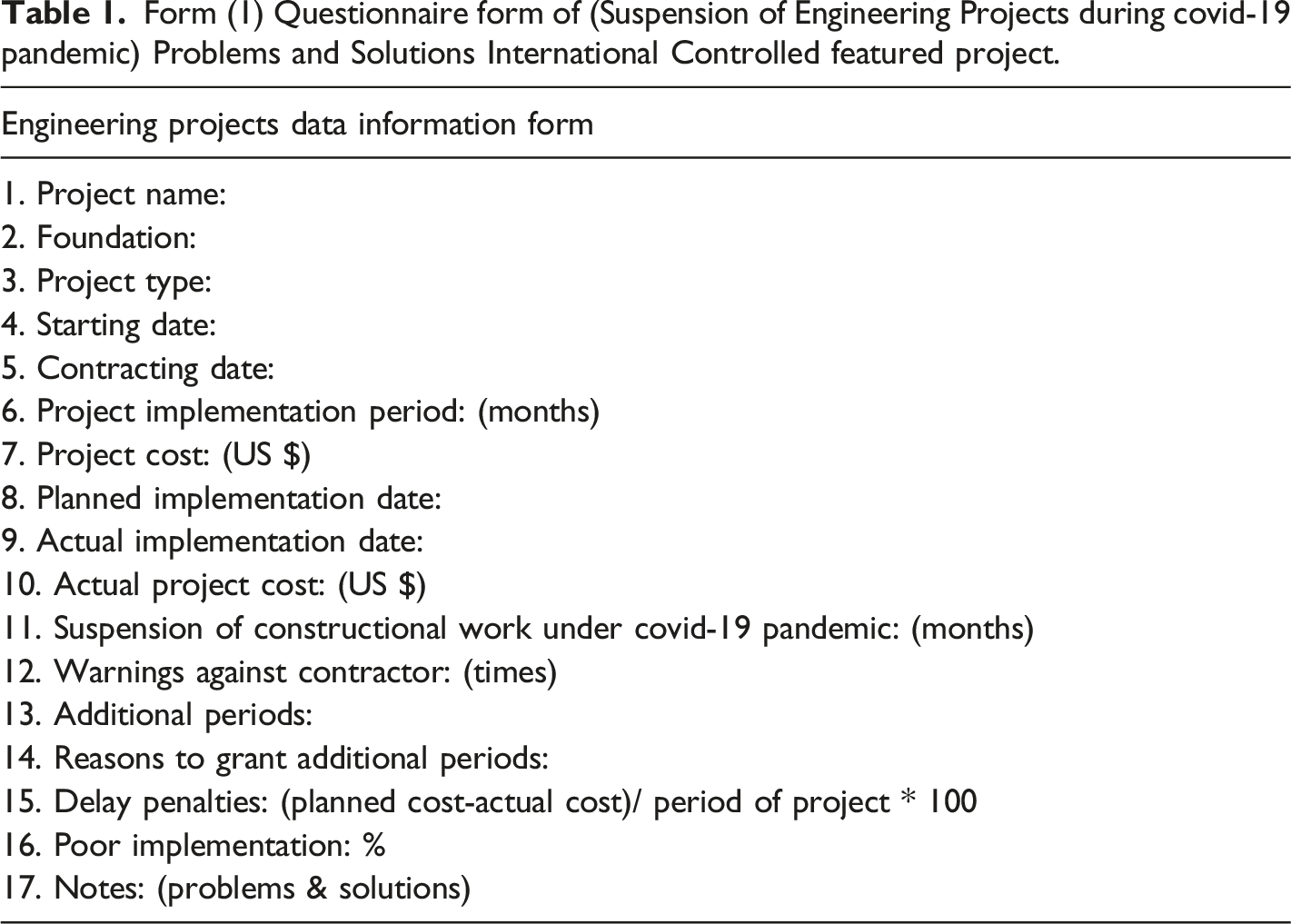
Form (1) Questionnaire form of (Suspension of Engineering Projects during covid-19 pandemic) Problems and Solutions International Controlled featured project.
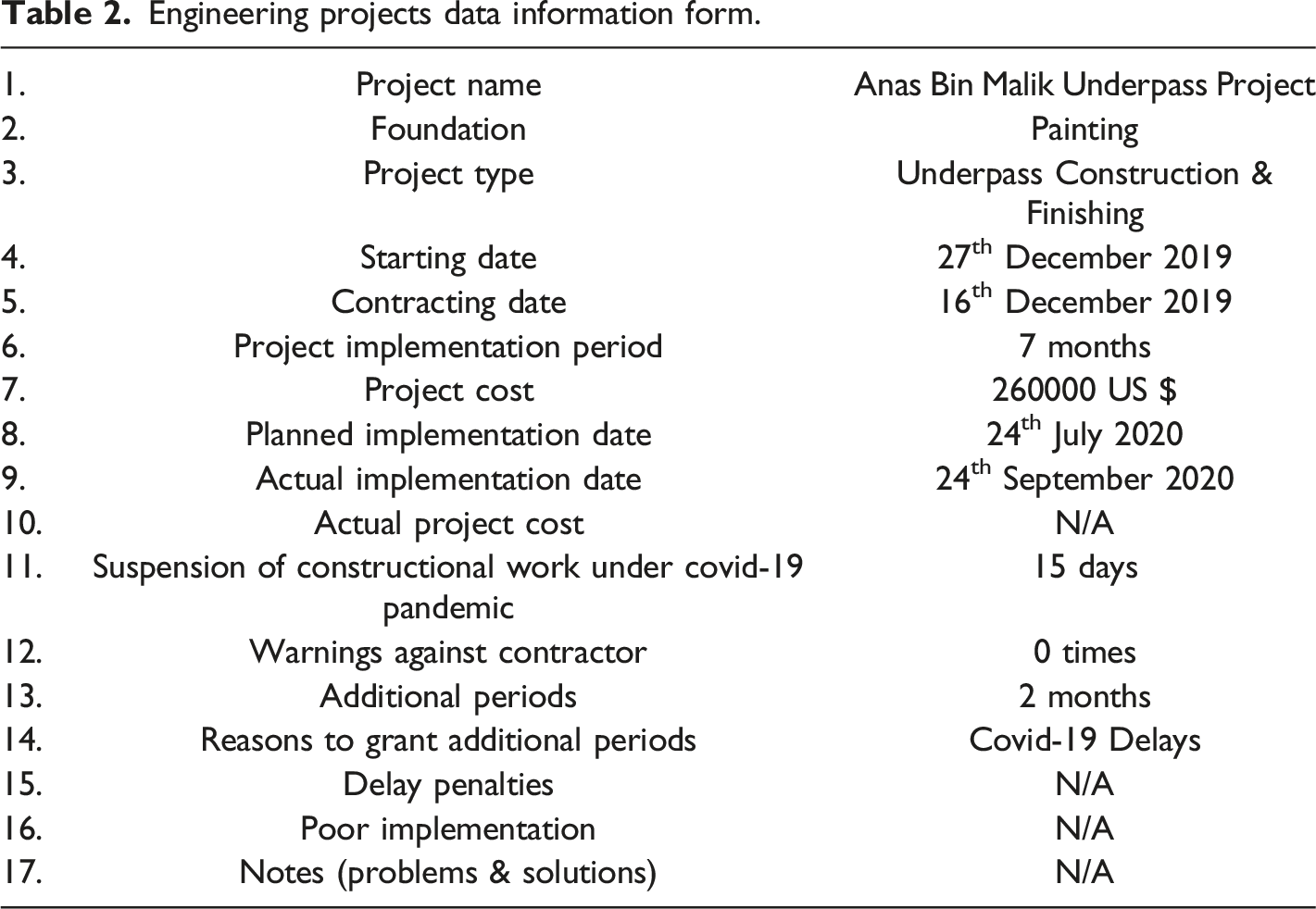
Engineering projects data information form.
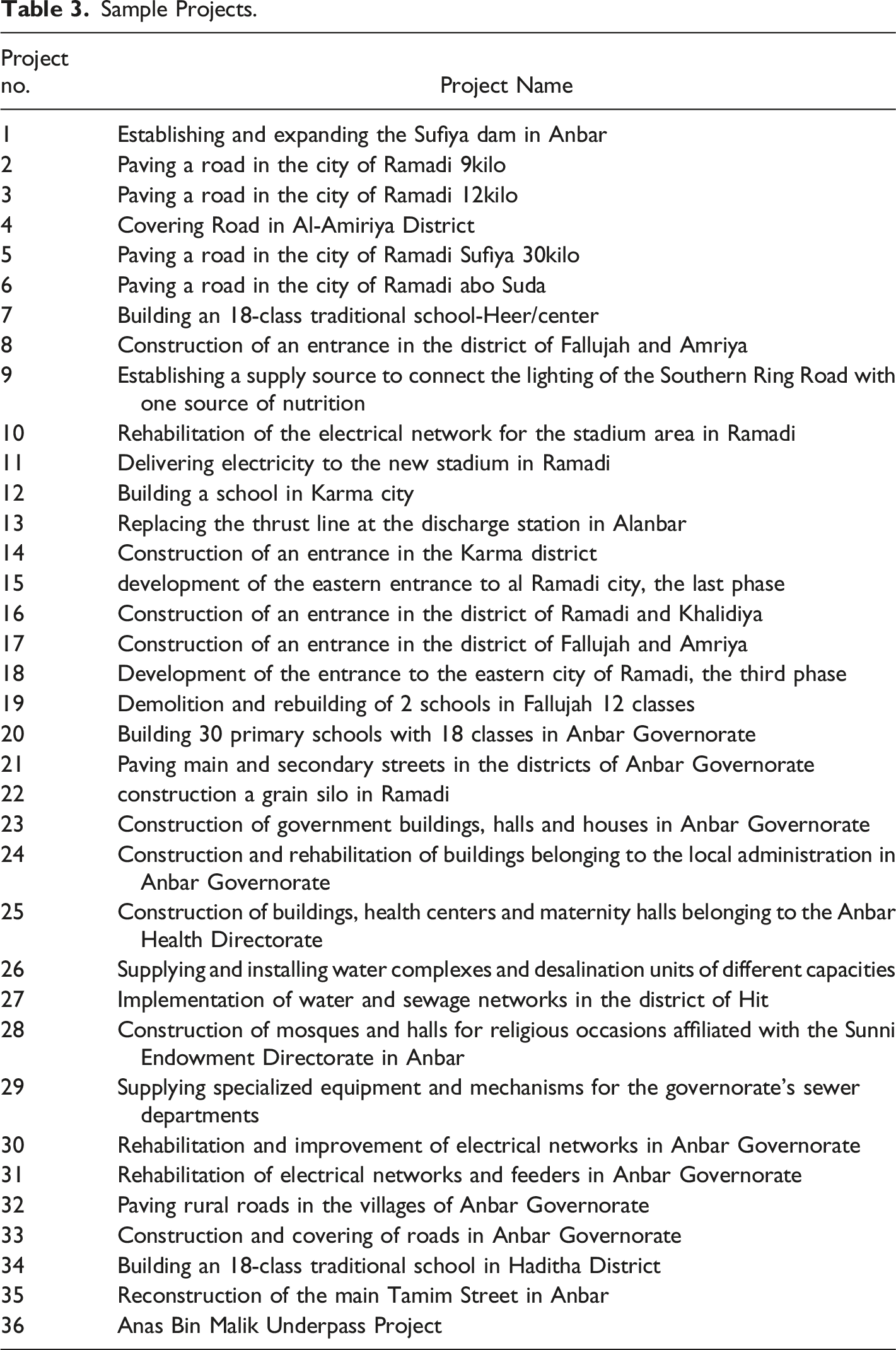
Sample Projects.
Results and Discussion
Project Cost and Time
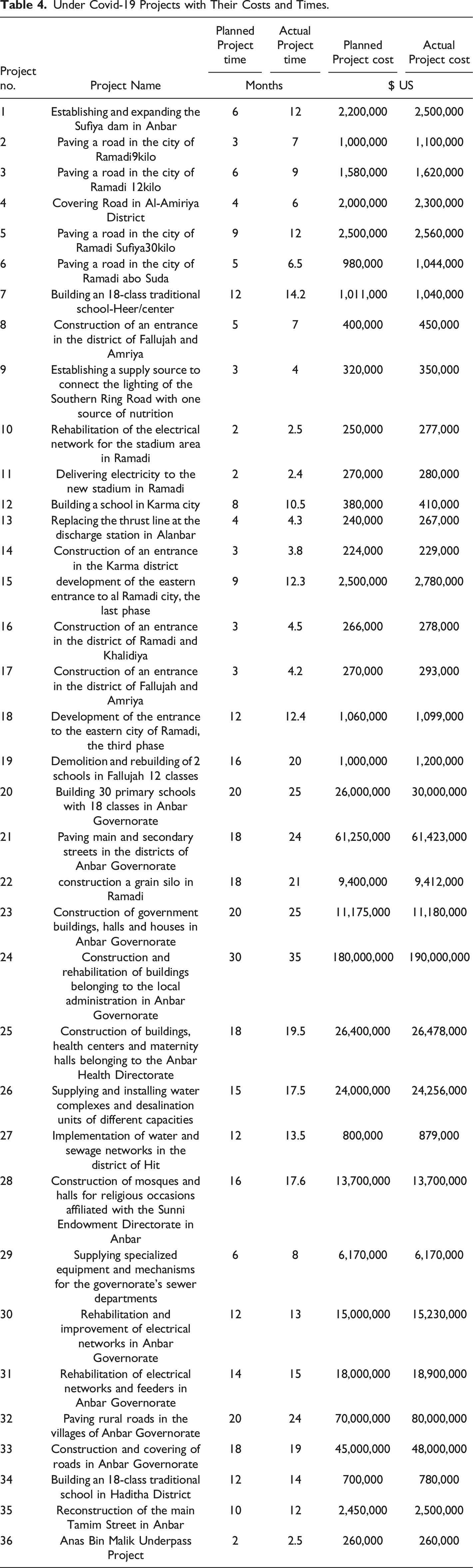
Under Covid-19 Projects with Their Costs and Times.
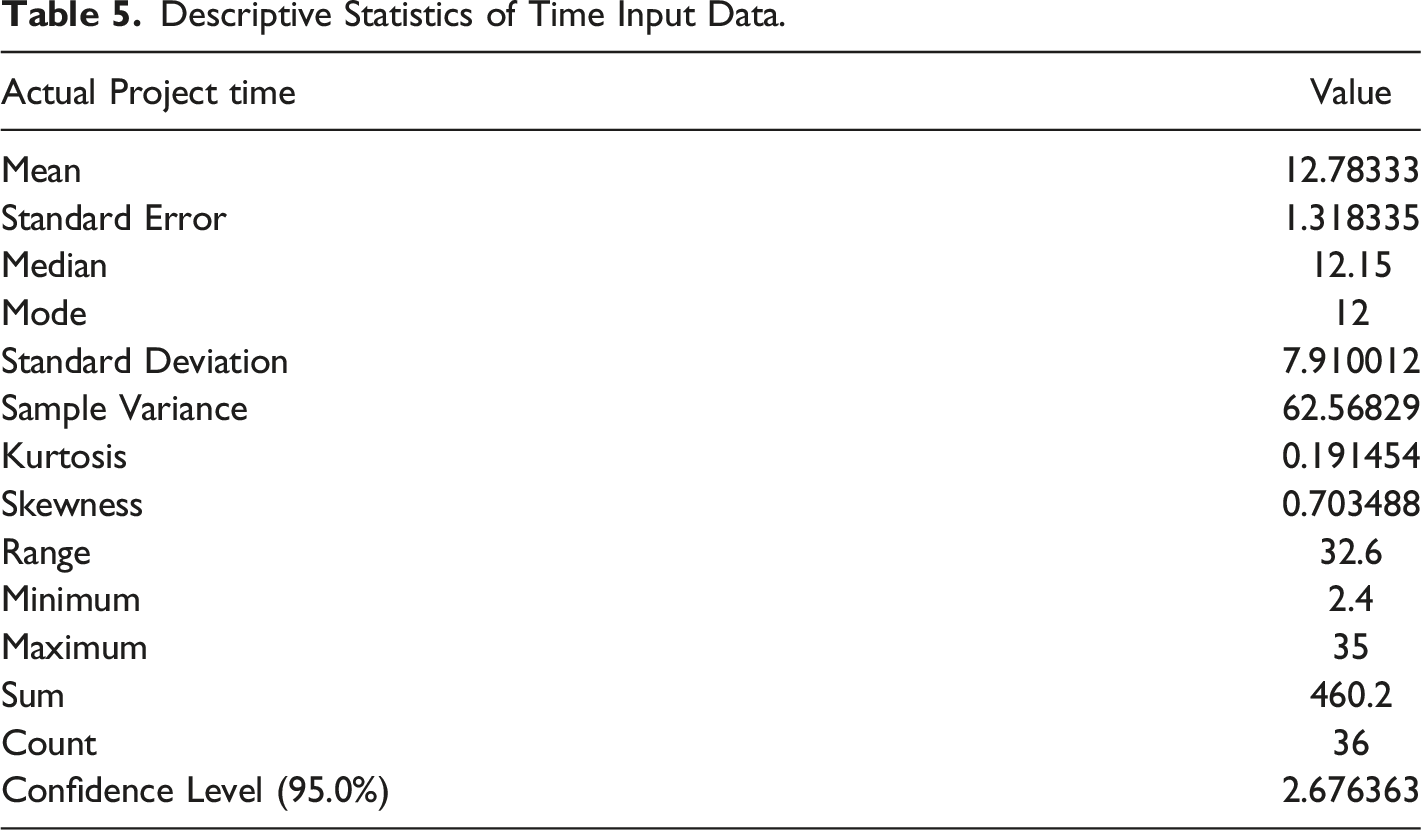
Descriptive Statistics of Time Input Data.
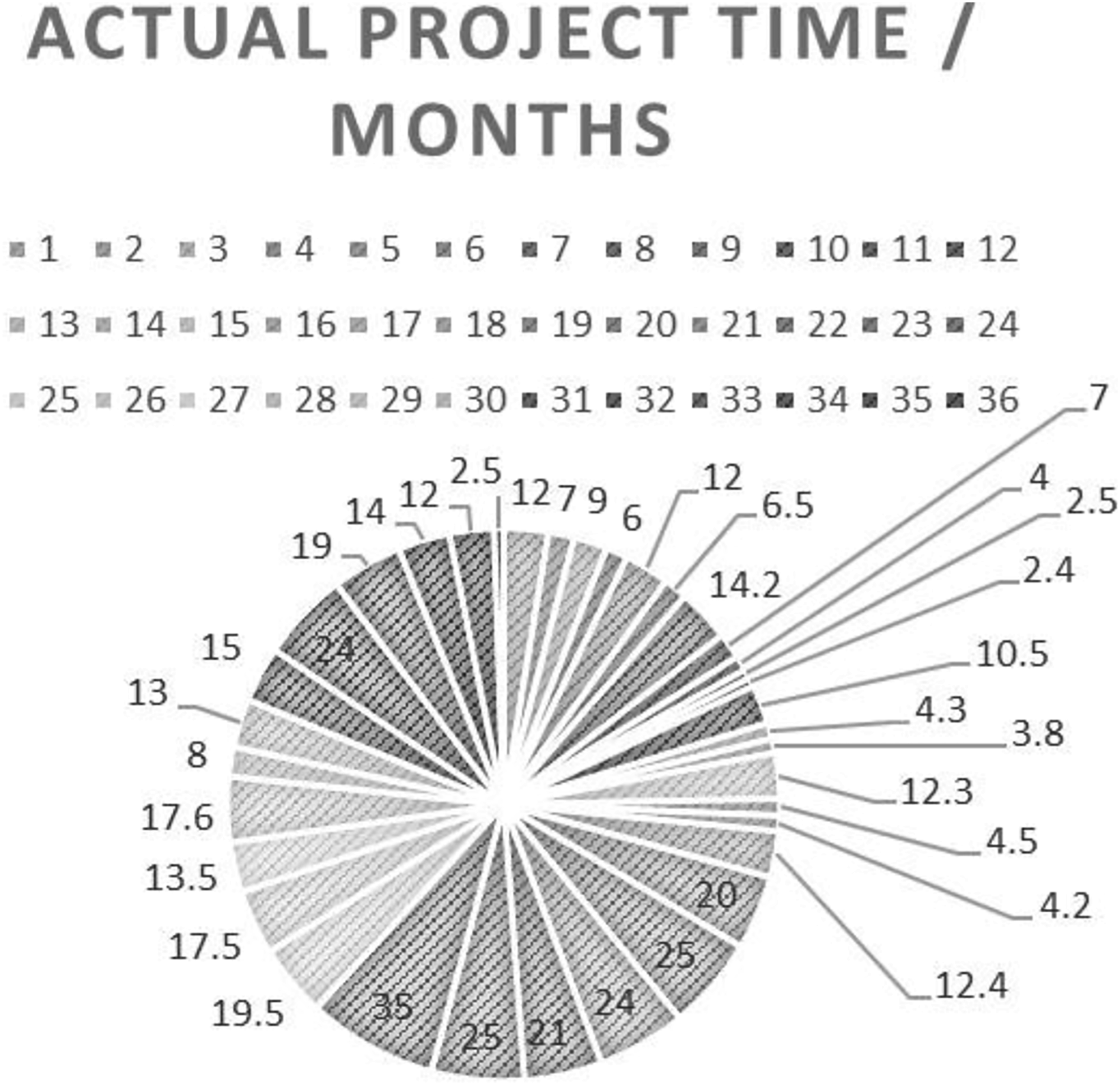
Actual project time.
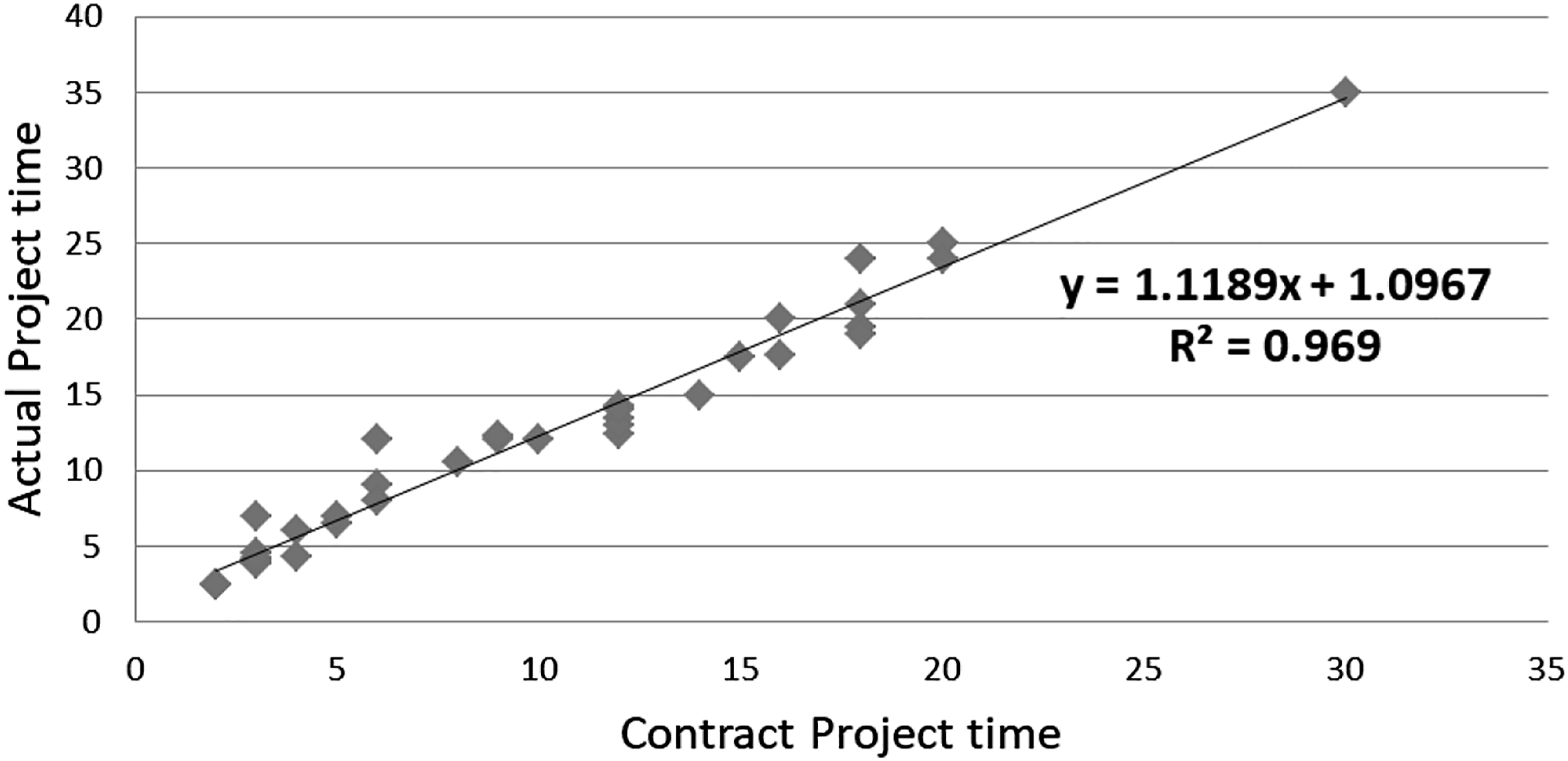
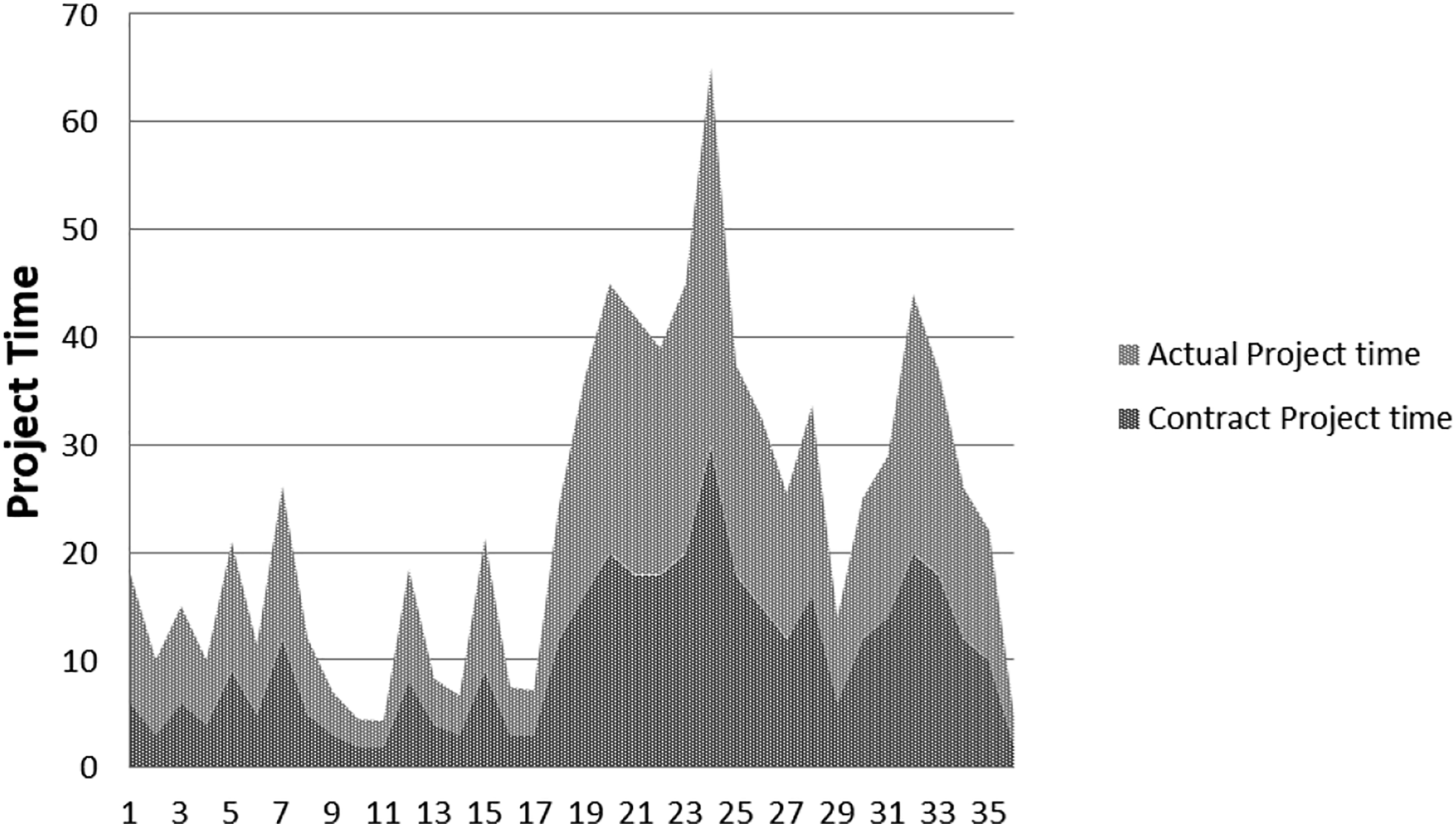
Figure 2 shows the relationship between contract and actual time needed to get the project implemented. There was a very high significant relationship (R2 = 0.969, p < 0.01) between the contract and actual time. The experimental built model of predicting the actual time in months from the contract one was described in equation (1, 2 and 3) as: Contract and actual project time. Difference between contract and actual time of implementation.
Project cost could also be followed up easily through Figure 4. The pie chart shows the percentages of each project cost as compared to the others. Actual project cost/dollars.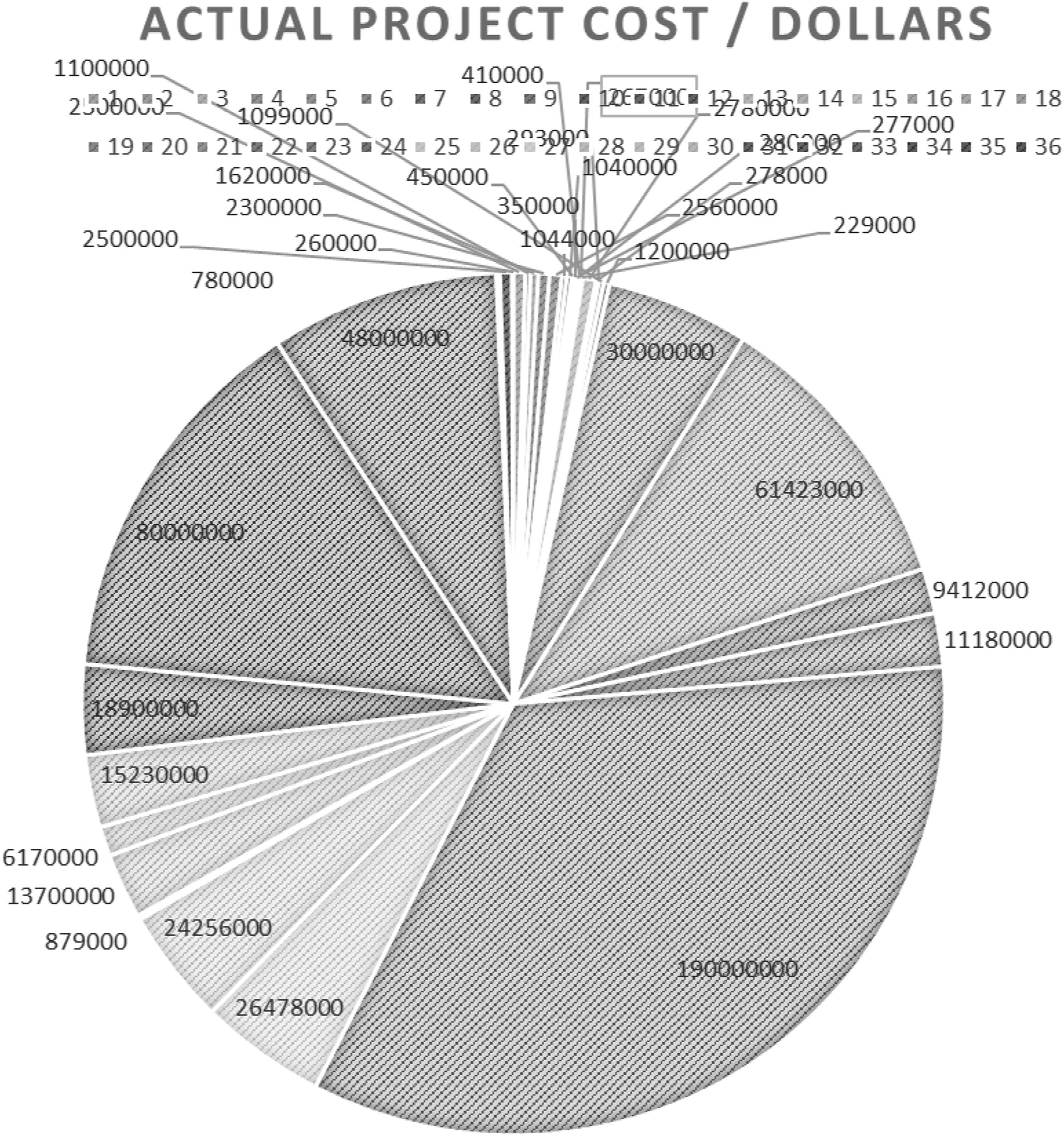
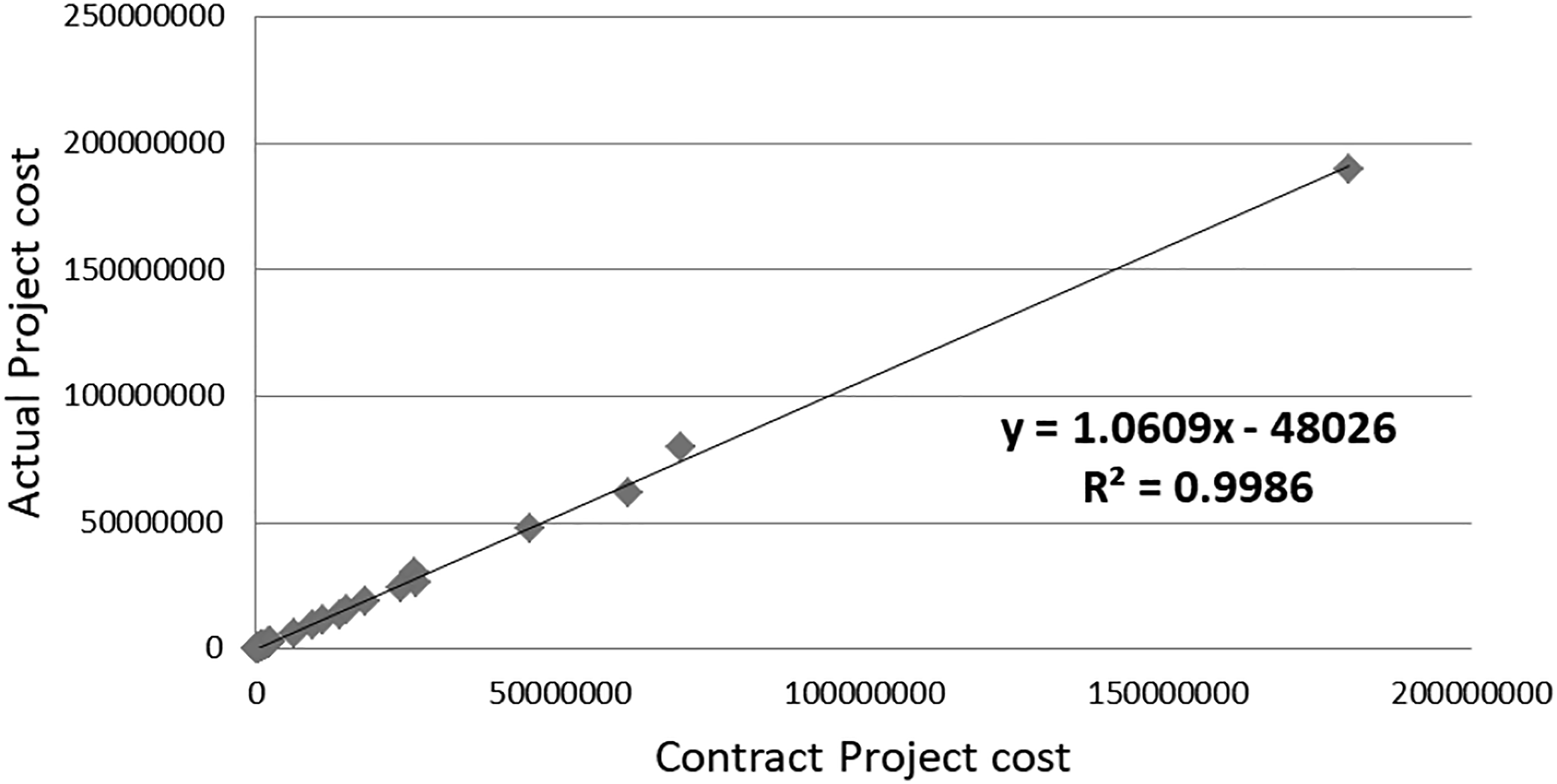
The relationship between the contract and actual cost of projects was also studied (Figure 5). The relationship between contract time and actual cost was highly positively significant (R2 = 0.9986, p < 0.01). The experimental built model to predict the actual cost in dollars of any project under the period of covid-19 pandemic was described in equations (2) as: Actual and contract project cost. Difference between contract and actual cost of implementation.
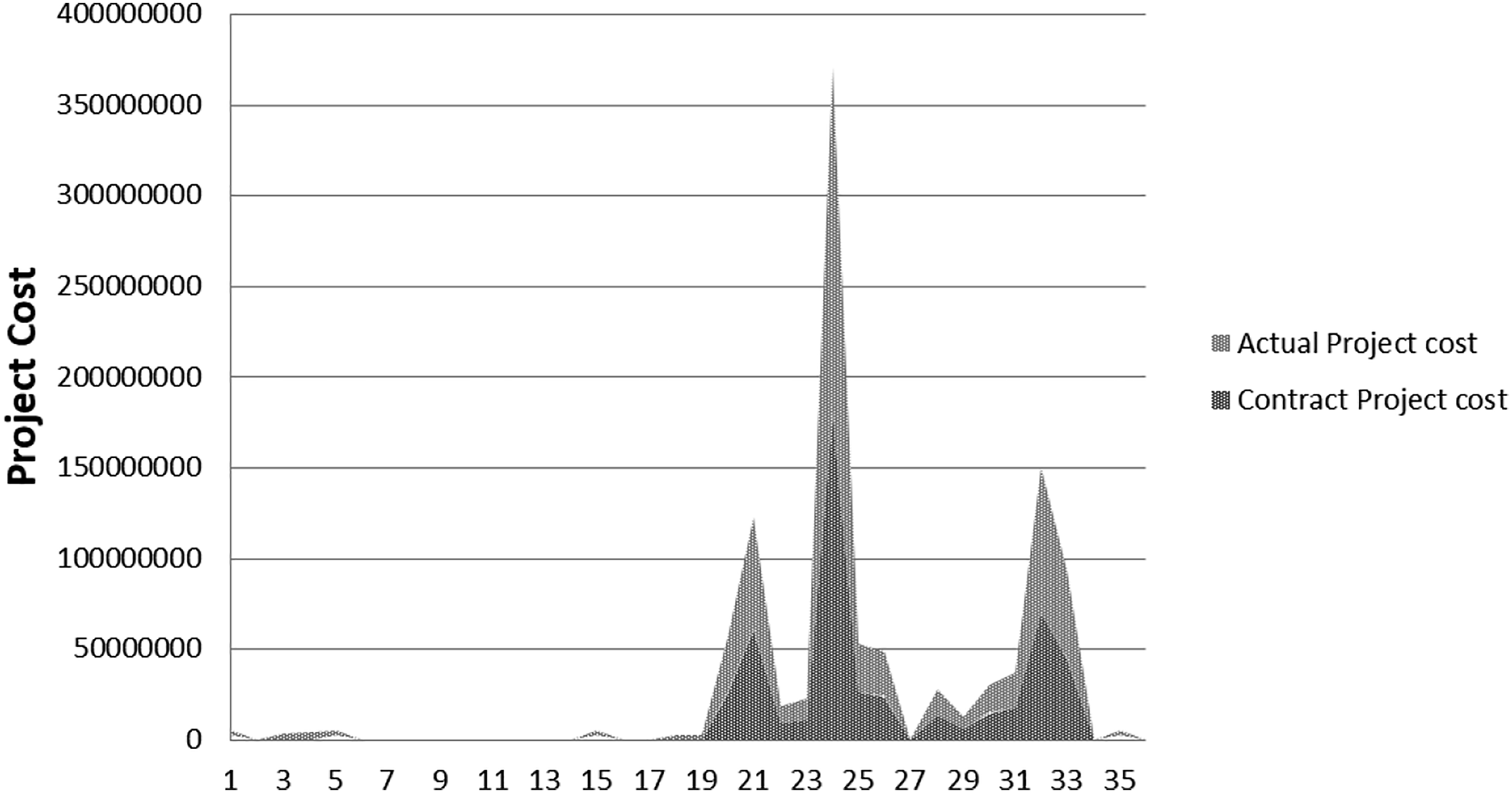
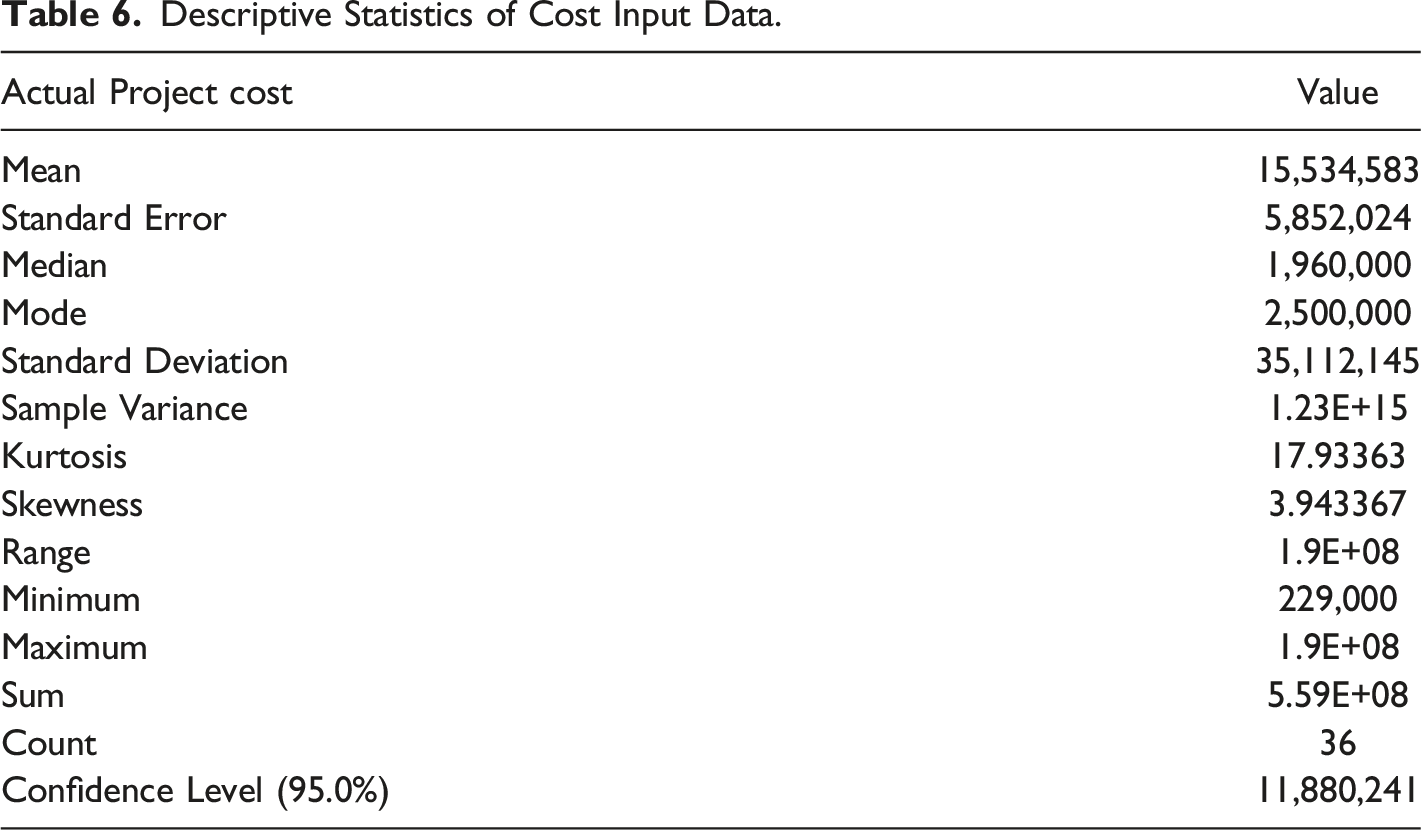
Descriptive Statistics of Cost Input Data.
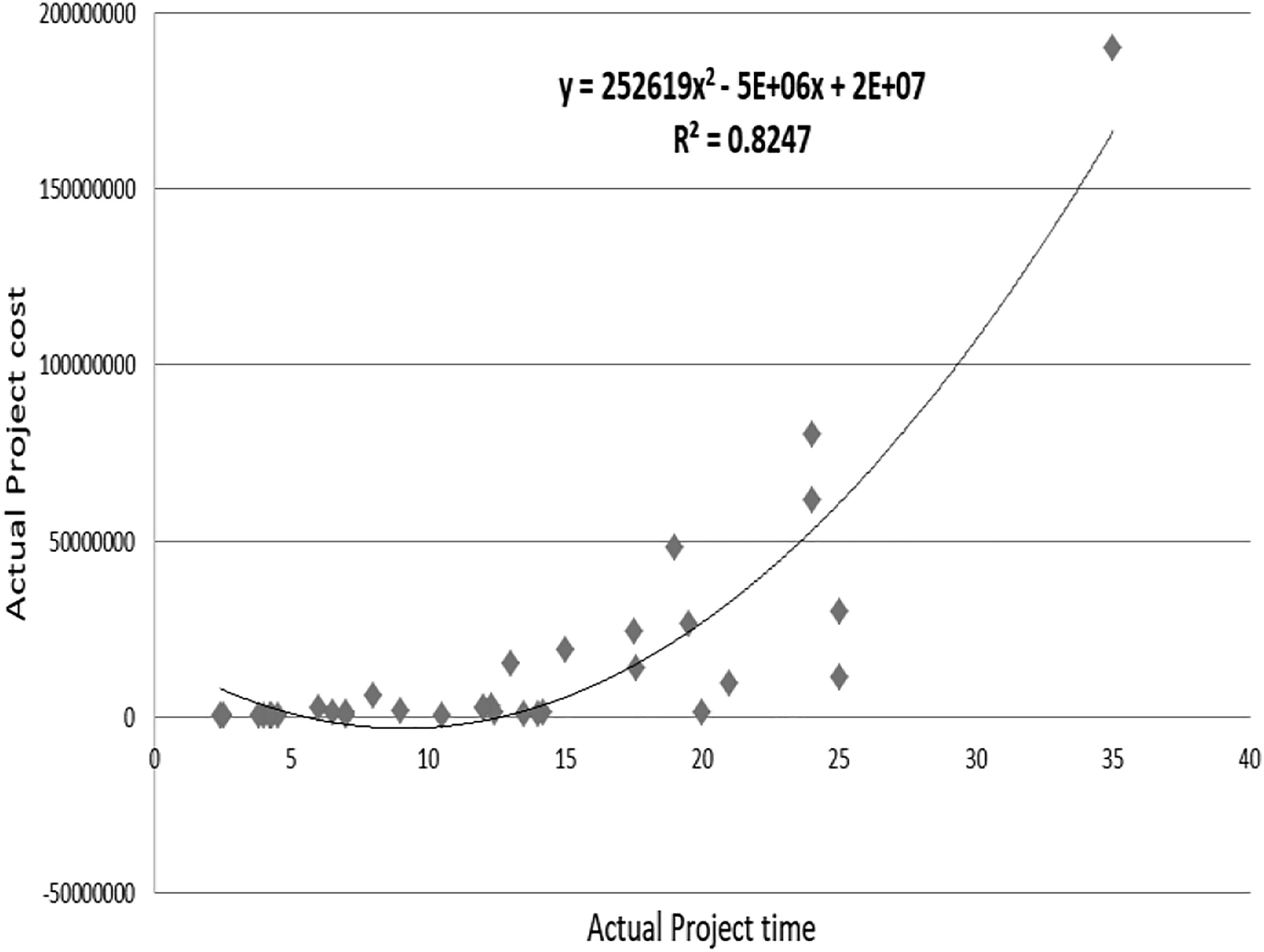
Actual time and cost relationships were also tested (Figure 7). It showed a significant positive exponential relationship (R2 = 0.8247, p < 0.05) where the increase in the time of implementing the work will lead to an increase in cost of that project. This relationship was described as: Actual project time and actual project cost. Main and Sub Problems Caused by COVID-19 in Construction Industry.
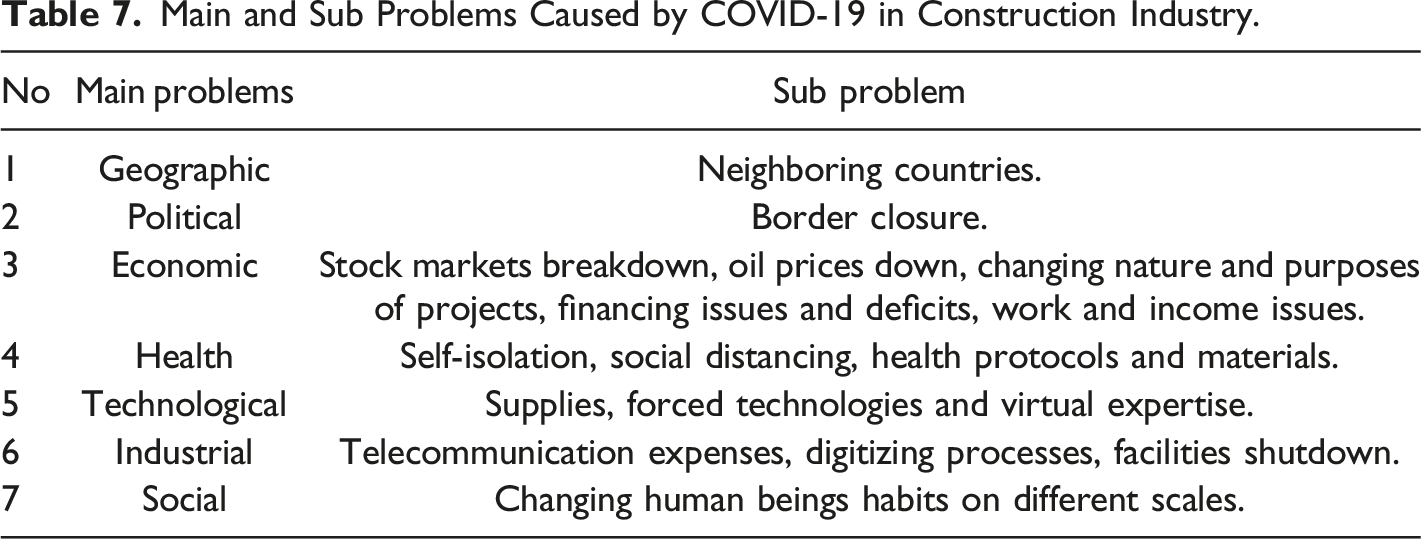
Covid-19 caused extremely negative effects different sectors, Oil and gas industry, construction and real estates, tourism and airlines, industrial and food production, accounting, banking, and retail industry, etc...
Common Causes of COVID-19 Risks in Construction Projects Samples and There Suggestions Solutions.
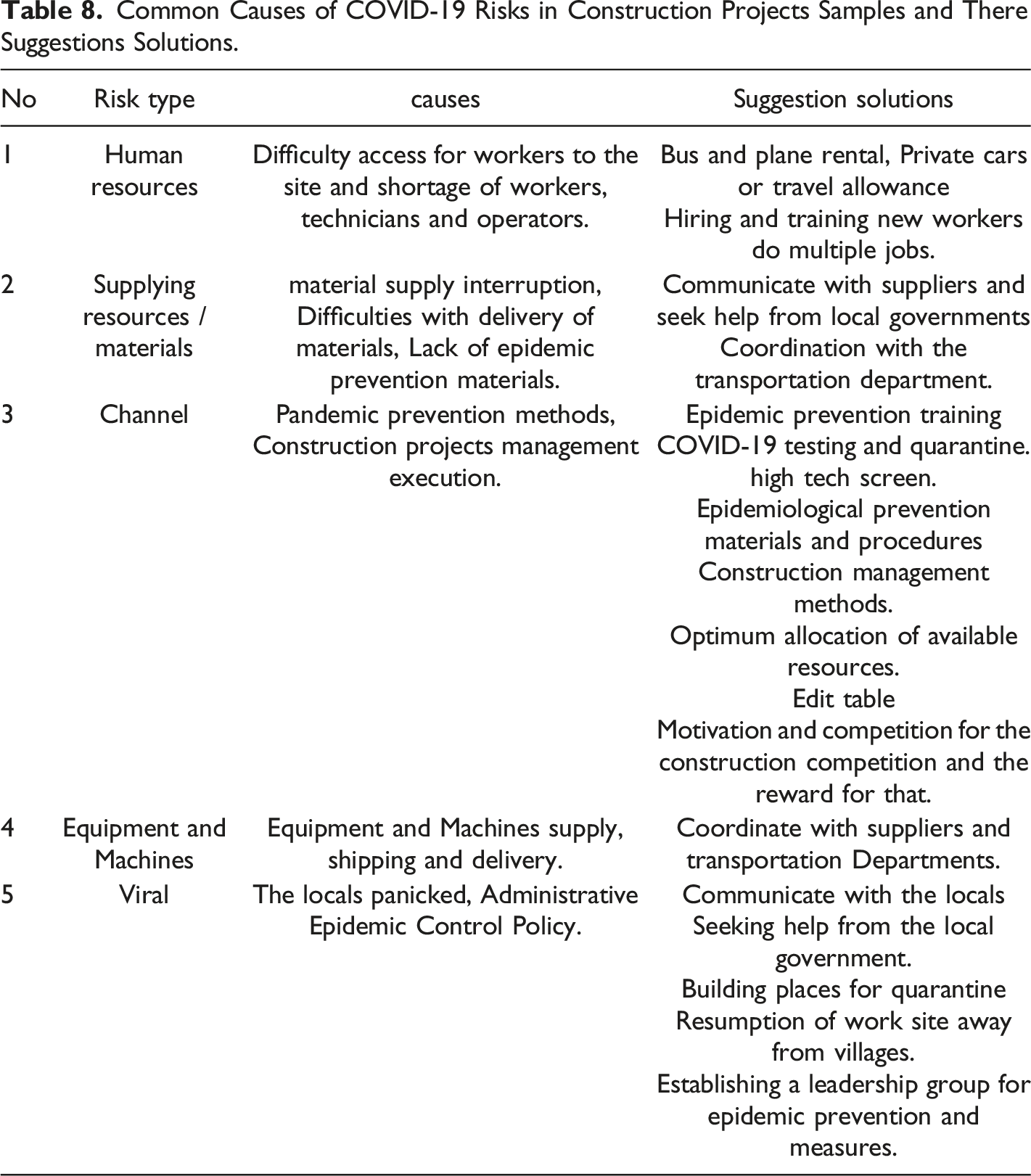
Impact of COVID-19 on Project Management
Turning into contacts inside and outside projects. This project management area should have been modified immediately. Applies to both internal and external communications. For companies with little experience in remote work, almost has become almost revolution. World players with current virtual difference barely felt any change. Positive signals are that remote communications can work and we learn quickly. The negative aspects are linked to losing some informal communication parts on the context of the project and exact differences gained in regular coffee talks. We simply miss the face to face. We may also be more difficult because online communication requires more effort and focus. Moreover, it takes longer to obtain consensus on some project problems and get everyone on the same page. The necessity of managing change and the emerging wave of projects. The emergence of a wave of crisis-oriented projects and inter-company programs; It was carried out under time pressure by a staff closely managed by the Council. Projects geared towards pivoting in the current business model: virtual office, online channel, adjustments to market shifts.
Teams will be under double pressure. Interlocutors reported double burdens associated with sharing work and family responsibilities, long working hours, as well as feelings of social isolation. On the other hand, working in virtual teams allows you to gain insight into the family life of other team members. This reduces the hierarchical distance between people and creates more flat team structures, High risk in managing vendors. This problem may be particularly important for the construction industry. Supply chain damage due to Covid-19 could be expected. Potential supplier bankruptcies or mergers could threaten existing contracts and hurt project budgets. Managing issues requires creativity and solutions. A combination of project issues resulted from the occurrence of Covid-19 as an unexpected event. The short-term project teams focused mostly on critical operations and infrastructure. This situation sparked creativity in problem solving and the search for alternative solutions. As Project delays status. We found some projects have been postponed due to Covid-19 or even some have been suspended. Projects in the construction industry may slow temporarily, as foreign workers return home to quarantine. Project manager has also been affected by the covid-19 issues, especially in the competencies to keep the job titles under this pandemic. Communication skills in a virtual environment and fluency with technologies Personal agility - adaptability and rapid response to a changing environment, Flexibility and stress management. Dealing with complexity and being able to choose the most valuable information, knowing how to motivate people using empathy, emotional intelligence, and being a “psychologist” Leadership based on human values, sustainability, trust, a resilience to the new health conditions.
Conclusions & Recommendations
Waheeb (2018) found solutions to avoid deficiency in cost and time of implementation in construction projects under emergency conditions and what could be more emergency than what human being is facing that challenge of defeating the pandemic. Moreover, as a next step forward this paper focused on the delay in cost and time that caused as a results of the COVID-19 pandemic. This study was featured through revealing some facts: It gave a brief for projects risks management stages and reflects an impression of what implementation processes might go through. The model that was built according to the research field study touches the reality of construction projects, finds practical solutions and exposes causes of delay and suspensions under pandemic.
The model could extrapolate the actual cost and time from the planned ones under the condition of COVID-19 as one of these procedures followed in disaster management. Hereby, a recommendation could be formed during the COVID-19 pandemic the amount of activity to be coordinated and mobilized can feel overwhelming. The need to properly plan is key, but can be challenging to do quickly and with the right rigor. You might have limited capacity with your team refocusing to meet increases in demand or your resources may be stretched over multiple projects whilst reacting to rapid changes in your business. There are often multiple meetings with different agendas, stakeholders and priorities. If not coordinated properly, a lack of communication and clarity on decisions can cause duplication, inefficiency, frustration and potentially the wrong decisions being made.