




Abstract
This study examines the causes of time delays and cost overruns in a selection of thirty post-disaster reconstruction projects in Iraq. Although delay factors have been studied in many countries and contexts, little data exists from countries under the conditions characterizing Iraq during the last 10-15 years. A case study approach was used, with thirty construction projects of different types and sizes selected from the Baghdad region. Project data was gathered from a survey which was used to build statistical relationships between time and cost delay ratios and delay factors in post disaster projects. The most important delay factors identified were contractor failure, redesigning of designs/plans and change orders, security issues, selection of low-price bids, weather factors, and owner failures. Some of these are in line with findings from similar studies in other countries and regions, but some are unique to the Iraqi project sample, such as security issues and low-price bid selection. While many studies have examined factors causing delays and cost overruns, this study offers unique insights into factors that need to be considered when implementing projects for post disaster emergency reconstruction in areas impacted by wars and terrorism.
Keywords
Introduction
Delays in construction projects have been extensively researched over the years, no doubt motivated by the fact that they are a ubiquitous problem area of the construction sector worldwide. With the large extant body of research already undertaken, one could be tempted to think that there is no further need for more work in this area. However, the causes of delays are not static, they change as project methods evolve. As a result, new studies keep adding to the body of knowledge and thus providing practitioners with additional insights into causes and remedies against delays. Delay causes is also an example of an area of research where specific factors come into play depending on geographic location and context of the projects being studied. As a result, this area has a rich body of literature reporting findings from specific countries or regions, and while some of these findings have limited value outside of that specific geographic area, more often they do offer new insights that can be transferred to other regions. This is a key reason why new studies are undertaken and reported to the international research community.
Construction delay is defined by Trauner (2009) as: “to make something happen later than expected; to cause something to be performed later than planned; or to not act timely. It is what is being delayed that determines if a project or some other deadline, such as a milestone, will be completed late”. There are many factors contributing to delays in construction projects. Delays occur in most construction projects and the degree of the delay varies considerably from one project to another. It is essential to define the actual factors causing delays in order to minimize, mitigate, and avoid them in any construction project (Asnaashari et al., 2009). The risk of delays can be minimized only when the causes are recognized and required actions to prevent delays are implemented (Pourrostam & Ismail, 2011; Yang et al., 2013). To improve project performance, it is important to study the delay factors that affect the success of projects (Salunkhe & Patil, 2014).
This paper makes one contribution to this body of work, by reporting from a study into a selection of 30 case projects from the Baghdad area in Iraq, before the 2003 war. Following war and terror attacks, the conditions for undertaking construction projects in this area have been challenging. Some of the challenges faced could be unique to Baghdad and Iraq, more likely they are shared areas that have been plagued by war and terror. Other issues are probably shared across a wider range of conditions and contexts and can thus offer new learning opportunities to the project management area at large. This study aimed to identify the factors in construction projects in Iraq that affect time, quality, and cost performance, and identify solutions to address them. Thirty projects were selected in different areas of construction based on their different levels of vulnerability to delays. The study was designed using a mixed approach, with different methods applied. Mathematical and statistical data analysis was used to construct models to predict delay in time and overrun of cost of projects before they started. The artificial neural networks analysis was selected as a mathematical approach, while multiple regression was chosen to build statistical relationships between time delay and cost overrun ratios and delay factors. These models can help decision makers in construction projects to find solutions to delays before they cause serious problems in the projects being implemented.
Review of Existing Literature
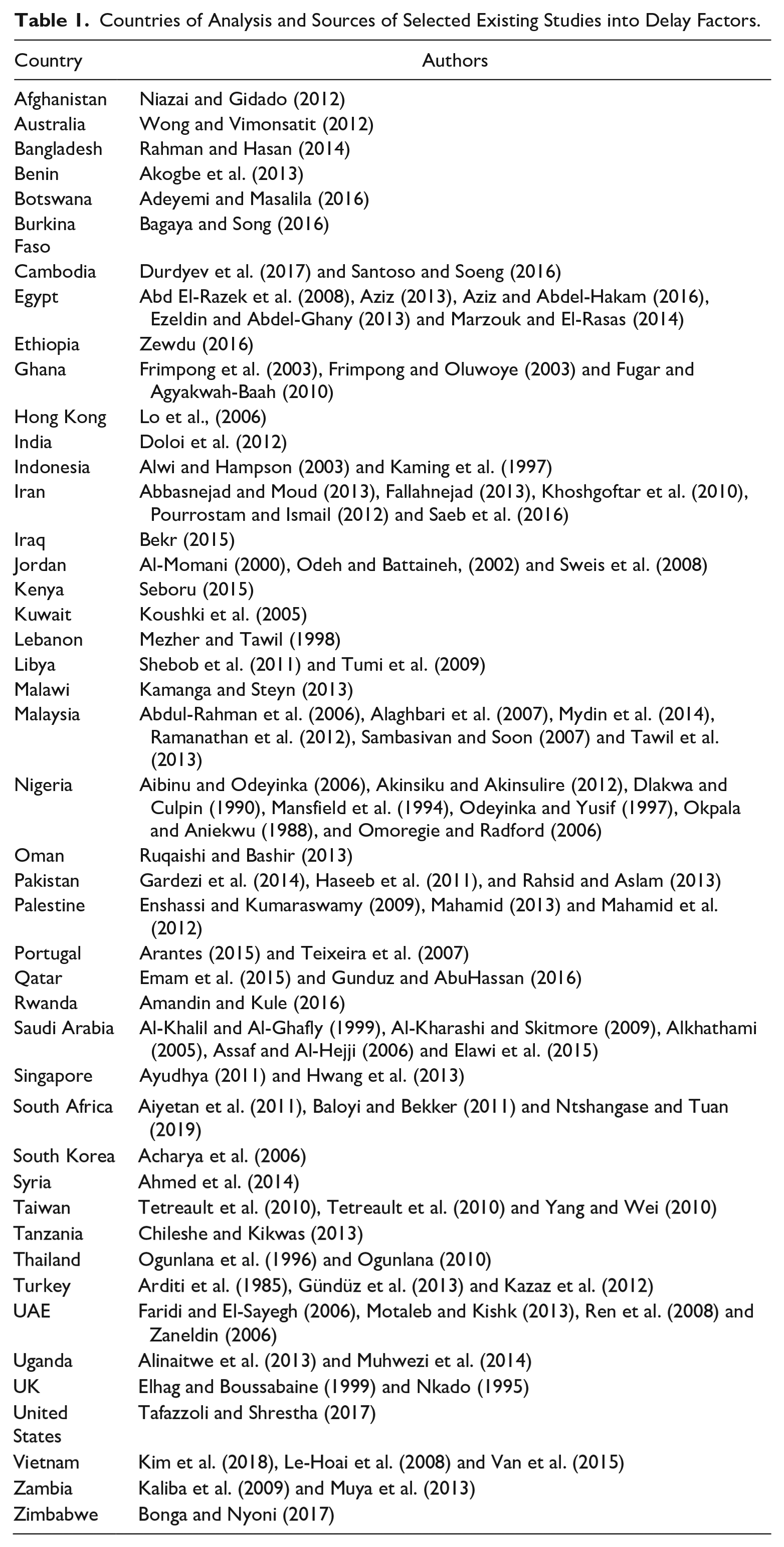
As part of a study into delay factors in a Norwegian context, Zidane and Andersen (2018) undertook a broad review of existing literature reporting from studies centered around causes of delays in large-scale engineering projects and construction projects particularly. Table 1 lists a selection of the most relevant studies done worldwide, sorted by country of analysis. This provides clear evidence of the global interest in this topic, as mentioned in the introduction, and shows that delay factors have been studied extensively. It is worth noticing that a previous study (Bekr, 2015), had been undertaken in Iraq several years earlier than the study reported in this paper. As will be shown later, this study was designed using input from clients, contractors, and consultants with experience from construction projects in Iraq, but without studying specific case projects.
Countries of Analysis and Sources of Selected Existing Studies into Delay Factors.
Looking at details from some of these studies, Gould et al. (2012) carried out a study into contractor responsibility for delay, Keane and Caletka (2015) did a similar study. Enshassi et al. (2010) studied the causes of variation orders in construction projects in the Gaza Strip, which they considered one of the major delay factors. Other delays were caused by border/road closures which led to materials shortage, unavailability of resources, low level of project leadership skills, escalation of material prices, unavailability of highly experienced and qualified personnel, and poor quality of available equipment and raw materials, those were the major factors affecting delays.
Another study by Enshassi et al. (2009) in the Gaza Strip identified more than 52 causes of delay, where the top twelve were: (1) the political situation; (2) segmentation of the West Bank and limited movement between; (3) awarding projects to the lowest bid price; (4) progress payments delay by owner; (5) shortage of equipment; (6) delays in decision making by owner; (7) low productivity of labourers; (8) delay in approving sample materials; (9) poor communication by owner with other construction parties; (10) conflict between contractor and other parties; (11) lack of equipment efficiency; and (12) difficulties in financing project by contractor. Sepasgozar et al. (2015) investigated the major delay causes in Iranian construction projects and listed the top nine factors: (1) contractor organization attributes; (2) labour shortage; (3) external factors; (4) material deficiency; (5) design issues; (6) owner attributes; (7) technology restriction; (8) consultant attributes; and (9) project attributes. Compared to the many other studies, some of their factors are broader in description—for example, contractor organization attributes, this may mean poor planning, site management, etc. and in many other studies these factors are not grouped under contractor attributes as a single set; the same is the case for owner attributes.
Akogbe et al. (2013) explain that avoidance of construction delay in developing countries may include the development and maintenance of planning, coordinating, controlling, organizing, motivating program resources, and supervising the component projects. Assaf and Al-Hejji (2006) found 73 delay causes when they studied delays in large construction projects in Saudi Arabia, where the most common cause of delay was change orders. Also, they found that 70% of projects experienced time overrun and 45 out of 76 projects were considered delayed. Alkhathami (2005) examined the correlation of critical success and delay factors in construction management in Saudi Arabia. He found that the sound organization planning efforts and a competent and experienced project manager helped to avoid many critical delay factors, while adherence to safety precautions and procedures, a project team’s motivation, and goal orientation were the least influential among the seven success factors. Al Hammadi and Nawab (2016) found that unexpected problems encountered during the conception, designing and construction phases often lead to an unwanted delay in project completion and that in Saudi Arabia, slowness and lack of constraint; incompetence; design; market and estimate; financial capability; government; and workers were the most important factors that cause delay.
A similar study by Alaghbari et al. (2007) in Malaysia employed a deductive approach with predefined delay factors and produced a list of 31 delay factors. The major delay factors from that study were financial difficulties and economic problems, contractor financial problems, late supervision and slowness in making decisions, material shortages, poor site management, construction mistakes and defective work, delay in delivery of materials to site, and lack of consultant’s experience.
In their study of Libyan construction projects, Tumi et al. (2009) mentioned that the main causes of delay in construction projects were improper planning, then lack of effective communication, material shortage, design errors, and financial problems. Sweis et al. (2008) identified the major causes of delay in Jordan as financial difficulties faced by contractors and too many change orders by the owner. In a study ranking the importance of delay factors in construction projects after the Egyptian revolution in 2011, Aziz (2013) found 99 factors that caused different kinds of delays that progress payments (funding problems) was the major factor attributed to the owner of the project.
Syed et al. (2003) identify the major causes of delay in the building construction industry based on their study in Florida. The results show that design-related issues (owner and consultant) were very important in causing delays. In a survey in Malaysia in which 150 respondents participated, Sambasivan and Soon (2007) identified the ten most important causes of delay. Based on research on construction delays in 130 public projects in Jordan, Al-Momani (2000) found that weather, site conditions, late deliveries, economic conditions, and increase in quantity are the critical factors.
In Ghana, Fugar and Agyakwah-Baah (2010) studied delays in building construction projects in a field survey including 130 respondents who generally agreed that financial factors ranked the highest. Also, Afram et al. (2015) studied delay causes in middle and high self-build housing projects in Ghana and their results revealed that obtaining permits from local authorities was the first delay factor followed by poor site management and supervision while the delay factors ranked the least were inadequate cost estimation and related details from consultants. Frimpong et al. (2003) found that monthly payment difficulties from agencies, poor contractor management, material procurement, poor technical performances, and escalation of material prices were the major delay factors and causes of cost overruns in construction of groundwater projects in Ghana.
Al Tawil et al. (2012) used a relative importance index to rank sources of delay and found that the critical source to delay construction projects in Malaysia were the project contractor not having enough working capital, late advance payments, delays in the client or consultant endorsing the study, issues involving contractor management, the scarcity of construction materials, and new instructions for additional construction work.
The one study looking at delays in Iraq, (Bekr, 2015) found that delays were considerable, even to the extent where projects get temporarily or permanently abandoned. Looking across delay factors presented by three groups of stakeholders (clients, consultants, and contractors), the most important delay causes were found to be security measures, government changes of regulations and bureaucracy, holidays (all three of these are factors external to the projects), followed by low bidder problems, design changes, payment delays, local community problems, and lack of owner experience. These latter are distributed across the three stakeholders in terms of being the source of the problems, and in terms of overall contribution to delays, clients are a more dominant source of delays than consultants and contractors.
Figure 1 represents the most cited major delay factors in the studies listed in Table 1. However, it is important to mention that all the studies list many delay factors, the number of which varies from as few as 10—for example, Amandin and Kule (2016) in Rwanda—to more than 80—for example, Acharya et al. (2006) in South Korea and Gidado and Niazai (2012) in Afghanistan. The frequencies shown in Figure 1 are based on the first ten delay factors listed in the original studies. Going beyond that, the frequency changes: for example, “design changes during construction/change orders” was mentioned in all the studies, meaning the frequency would be more than 77.
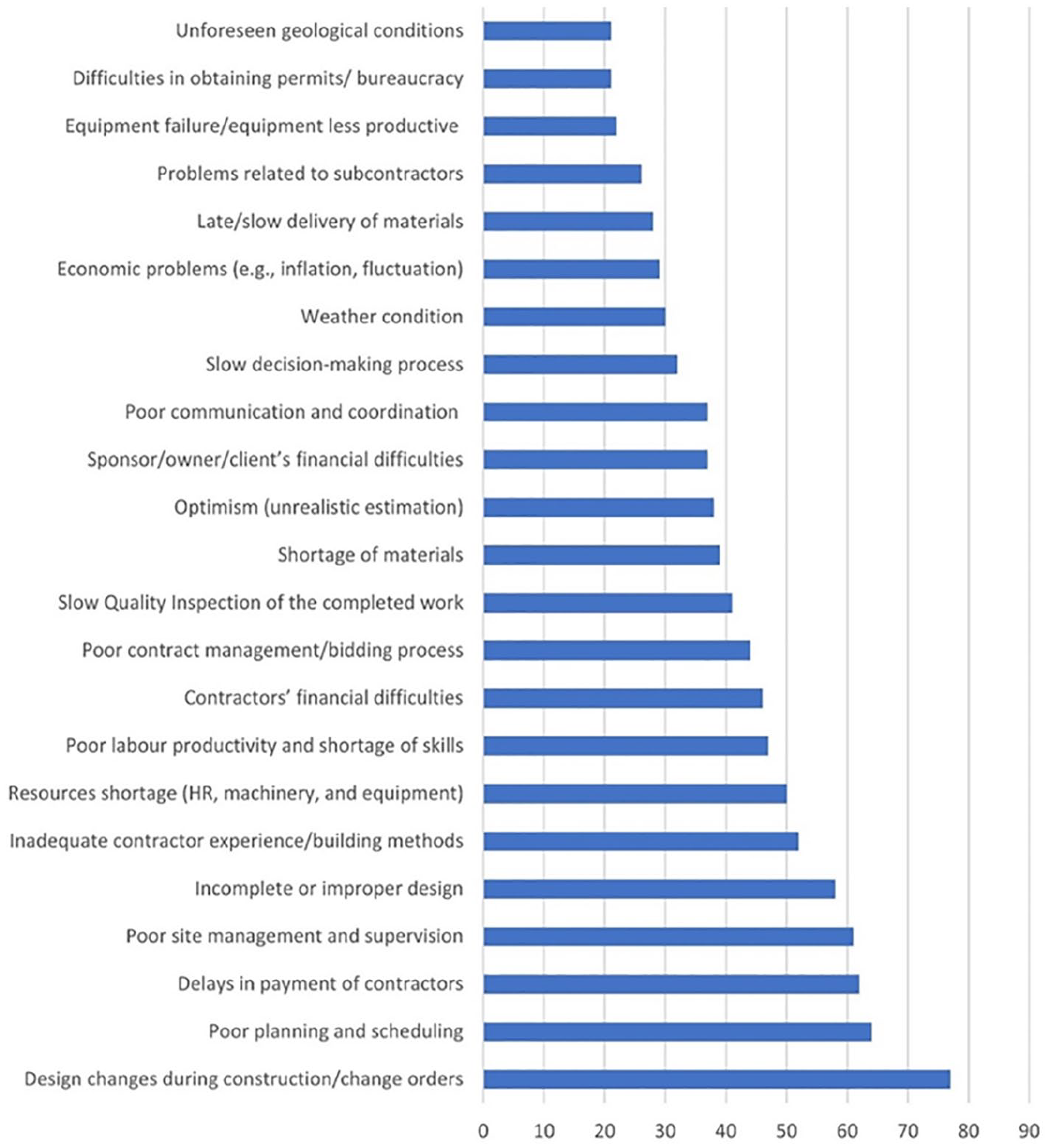
Most cited major delay factors.
After having presented the data from our study, we will revert to the findings in Figure 1 when discussing the delay factors identified from our case project sample.
Research Methodology and Data Collection
The main objective of this study was to identify, as well as to investigate solutions, for different kinds of delays in emergency reconstruction projects in post-disaster Iraq. Research of this type, like the studies reported in the previous chapter, must rely on empirical data from the field. The data can be of different types, typically:
In the form of more objective, quantitative project data from case projects
Or more subjective data collected from respondents, either quantitative of qualitative
Observational data from case projects, typically more qualitative in nature
Such data can be collected in various ways
Taken from case project data registers, gathered either by the researchers themselves or the data is given to the researchers by the project organizations, often using a questionnaire or data collection sheet
Through a survey, administered digitally, on paper or verbally
Through interviews of some type, individually or with groups
Case project observations, often through some kind of trailing or action research
Each of these approaches has advantages and disadvantages and the choice is often dictated by the access researchers have to different types of data. In this study, a design that combined two types of data collected through a survey was used. Project data was collected from thirty case projects using a data collection form/questionnaire. The form requested background data about the case project, quantitative register data about planned and actual progress and cost, and information about quality problems during the project, and predominantly qualitative data about delay causes. The delay causes were not collected as free text, but by asking the case project representatives to select from a pre-defined set of delay causes identified partly from the literature review and partly from field studies of Iraqi construction projects. We asked the respondents to rank the delay causes in terms of their importance in causing delays in the case projects.
Since different participants in a project often have different views about these data points, the data was collected from more than one source in each case project. A total of 300 data collection forms was distributed in the Baghdad area. Of these, 250 completed forms were received and included in the data set; the remaining fifty were either not returned or returned incomplete and therefore rejected from the sample. The sample was designed to be comprehensive and to represent a varied mix of projects in terms of what was being built, location throughout the city of Baghdad, and which agency was the project owner (such as ministries of Industry, Education, Higher Education and Scientific Research, Science and Technology, Health, Housing and Rebuilding, Endowments, Displacement and Migration, Foreign Affairs, Interior, and Baghdad governorate). The cost of these projects ranged between 95 million and 120 billion Iraqi dinars, roughly USD 75,000–100,000,000. As will be explained shortly, this data was used to conduct statistical analyses of the occurrence and severity of cost overruns, time delays, and quality problems.
All selected case projects were in the process of implementation and/or completion, and delays in cost and time were measured by comparison with plans agreed when assigning the contract to the chosen bidder. Care was taken to obtain data from projects of similar levels of maturity because cost and duration estimates evolve throughout the project life cycle, having much more uncertainty in the front-end phase of projects, becoming more precise during the engineering phase, and achieving further accuracy when construction begins, but still with plenty of room for deviation all the way until completion. To make the analysis of delays and cost overruns as accurate as possible data from projects in the construction phase was used to minimize deviations resulting from more immature projects.
Data Analysis
The second aspect of the research approach pertains to the analysis of the selected case project data. First, different types of statistical analyses were performed to understand the extent and causes of cost, quality, and time overruns/problems. To design the statistical analysis approach, work done by other researchers in studies with similar purposes was reviewed for its applicability to the present study.
Regression estimation models are widely used in cost estimation. They are effective due to a well-defined mathematical approach, as well as being able to explain the significance of each variable and the relationships between independent variables. Aiyetan et al. (2012) used this method to find the relationship between initial estimated and final achieved construction time in South Africa. In addition, Blyth and Kaka (2006) used this approach to forecast the cash flow in construction projects and found it an accurate method to predict cost of projects. Sonmez (2004) developed conceptual cost models for continuing care retirement community projects using regression analysis and neural networks, where the results obtained from the models were compared for closeness of fit and prediction performance. It was shown that by using regression analysis and neural network techniques simultaneously, a satisfactory conceptual cost model (which fits the data adequately and has a reasonable prediction performance) could be achieved. Abu Hammad et al. (2010) developed a model to predict project cost and duration based on historic data of similar projects, allowing project managers to use the model in the planning phase to validate the schedule critical path time and project budget. In the United Kingdom, Lo et al. (2006) developed linear regression models to predict the construction cost of buildings, based on 286 sets of data collected. They identified 41 potential independent variables, and, through the regression process, showed five significant influencing variables such as gross internal floor area (GIFA), function, duration, mechanical installations, and piling.
It must be remembered that an estimated project cost is not a fixed number, but an opinion of probable cost. The accuracy and reliability of an estimate is totally dependent upon how well the project scope is defined and the time and effort expended in preparation of the estimate. Hegazy and Ayed (1998) developed a parametric cost-estimating model for highway projects by using a neural network approach to analyse construction cost data. They introduced two alternative techniques to train the network’s weight factors: simplex optimization (Excel’s inherent solver function) and GAs (genetic algorithms).
In our case, we built a model using a statistical approach where liner regression was tested for the collected data in two models; the first one to reveal the relationship between the actual and the planned time and the second for the actual and planned cost. These two models represented a liner regression of the form:
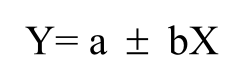
Where: Y is the estimated time or cost (dependent variable)
X is delay factors (explanatory variable)
A is the intercept (value of Y where X = 0)
B is the slope of the line
Correlation coefficients were also calculated to determine the strength of association of the observed data for X and Y.
Data Quality
Social research methods are required in most construction research where they play a key role in representing data and showing how results are related Abowitz and Toole (2009) and Schensul (1999) also stated that surveys, questionnaires, experiments, ethnographic observation, and unobtrusive techniques are all valuable research tools for construction research. If these tools are to answer questions of the research from the collected data, the data must be valid and reliable (Frankfort et al., 2007; Golafshani, 2003). Therefore, data was collected using a survey and questionnaire approach to construct a valid sample of case project data. The geographical region was delimited to the Baghdad area, a large and varied sample of thirty case projects was selected, and project data was collected from several persons from each case project. The collected data was tested, and outliers and abnormal questionnaire results were excluded.
Results and Analysis
In this section, we will present the data set resulting from the data collection process and the analysis of the data. We will start by reviewing the delay causes identified from the case projects, followed by more detailed statistical analyses of the case project data.
Delay Factors in the Case Projects
As explained in the previous chapter, the representatives of the thirty case projects had provided information about which delay factors were presented in the case projects and they had also ranked those presented in terms of importance of causing problems. These delay causes were analysed based on their frequency of occurrence in the case projects and their cumulated importance across the whole sample of case projects. In the end, a set of twelve most important factors were identified, as shown in Figure 2. Each factor has been assigned an acronym (used later to save space) and the factors should be read from “noon” (security status the most important factor) and clockwise for decreasing importance.
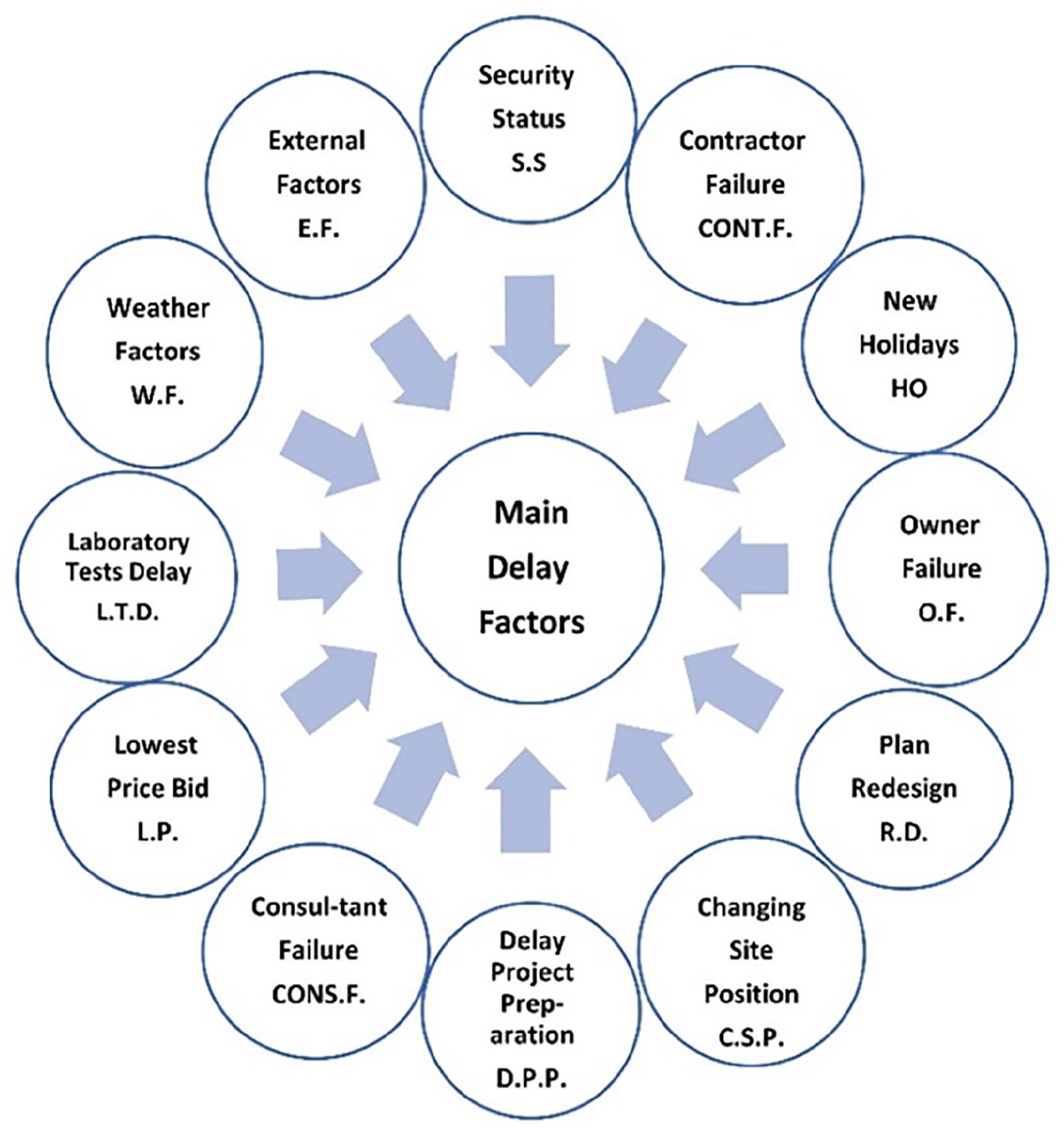
Most dominant causes of delays in thirty case projects in the Baghdad area.
The factors are explained in more details as follows:
In the next section, we will discuss how these factors compare with findings from previous studies, as reported in the literature review chapter. In the next sections, we will present the statistical analyses of the cost overruns and time delays exhibited by the case projects.
Analysis of Cost Overruns and Time Delays
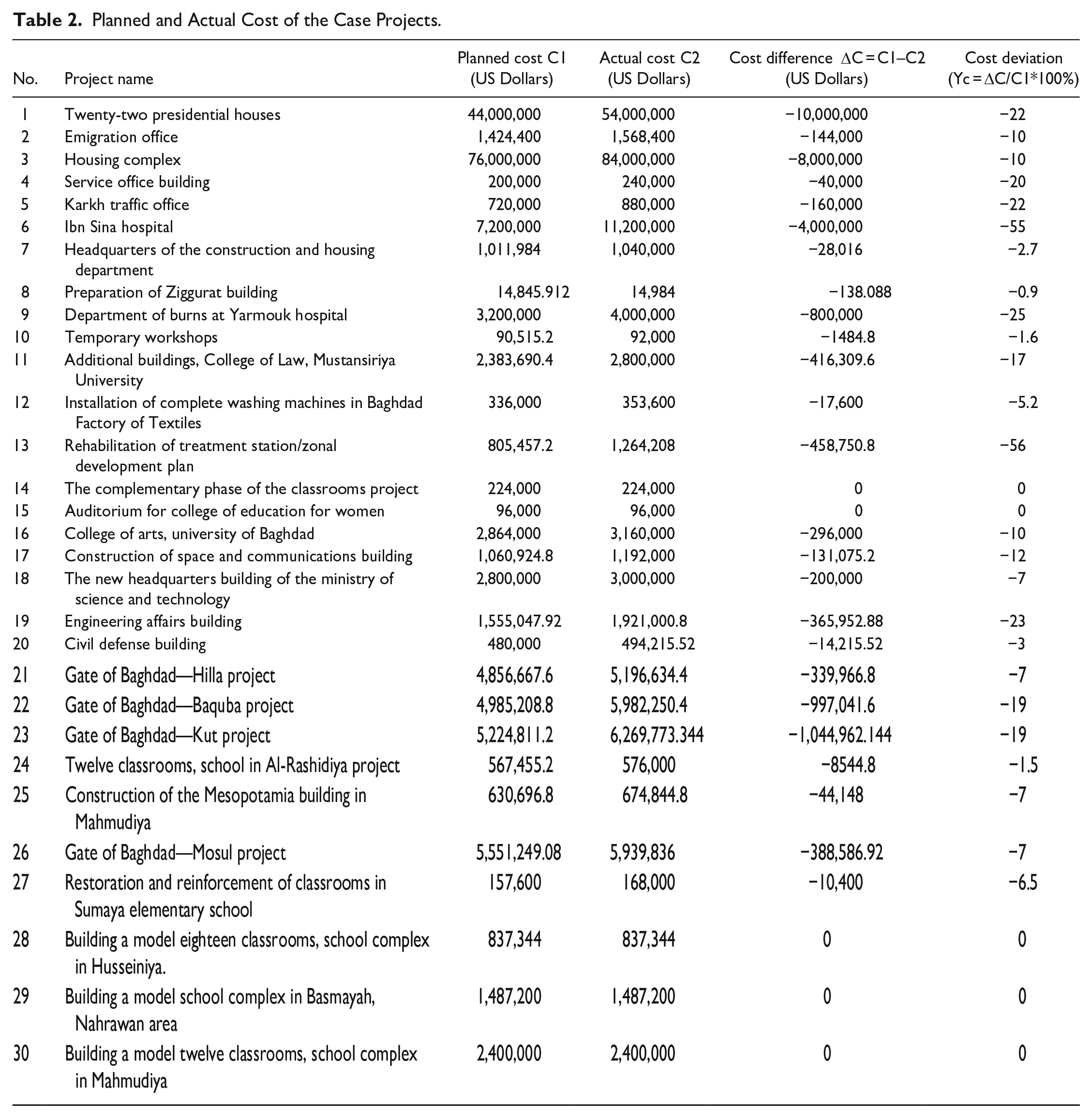
For the thirty case projects, the collected data about planned and actual cost (C1 and C2, respectively) along with some background data, is presented in Table 2. In addition, the cost deviation, C1–C2, as well as the deviation in cost as a percentage (%) have been calculated. After presenting similar data for time delays, these data are used for further analysis.
Planned and Actual Cost of the Case Projects.
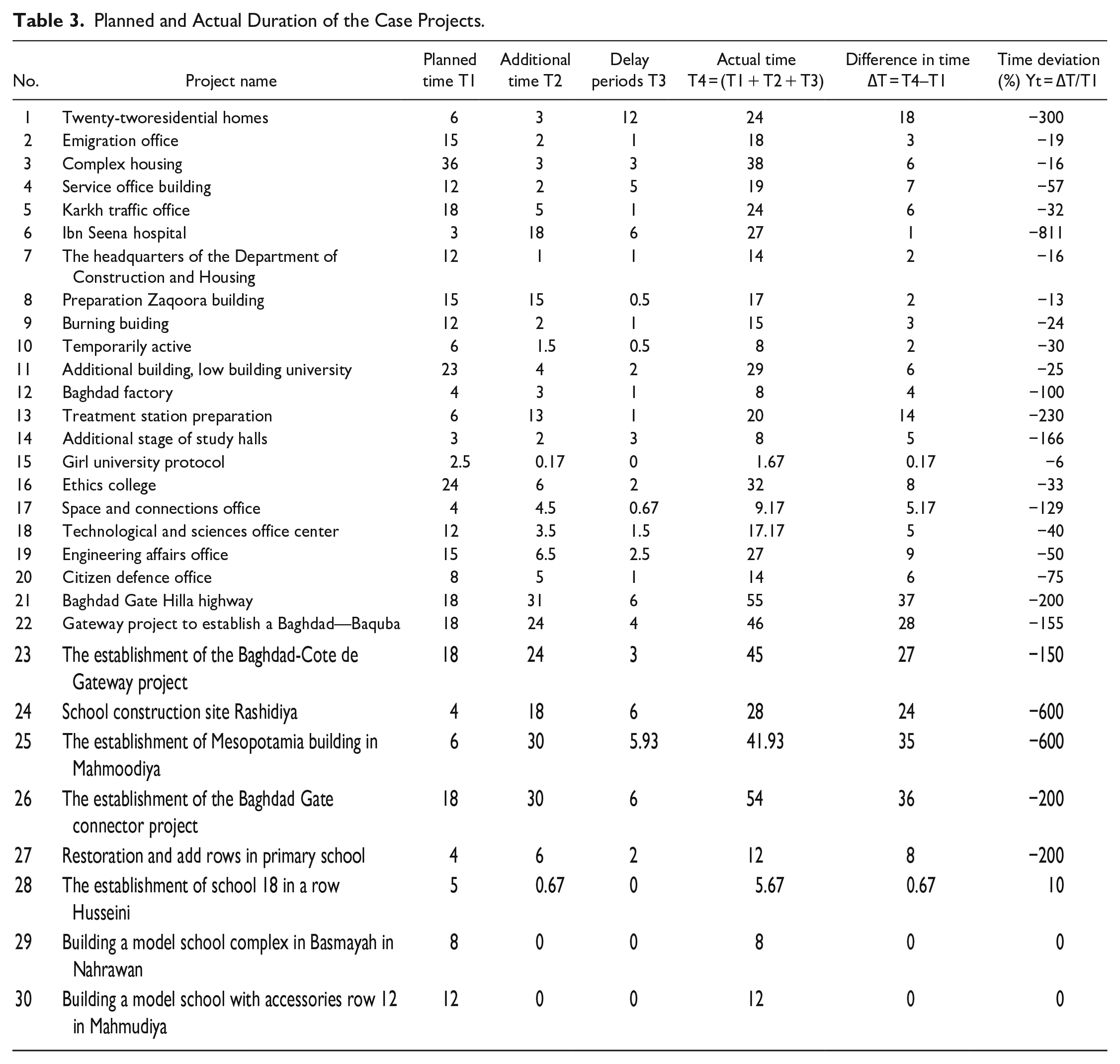
In Table 3, similar data are shown for time; planned time (T1), additional time granted to the contractor due to administrative issues or change orders (T2), and delay time (T3). Furthermore, the deviations in duration have been calculated, as has the difference between the original planned duration and the actual duration, T4, which is the sum of T1, T2, and T3. As for cost overruns, percentage schedule overrun has also been compiled. The data show that the majority of projects experienced a delay in planned duration.
Planned and Actual Duration of the Case Projects.
Combining the cost and time data, Table 4 is a composite of the two previous tables and with information about the delay causes found in each project, with assigned weight factors based on how important the delays causes are considered to be in each case project. For example, project 1 was a compound of twenty-two presidential houses, where the delay resulted from four different factors, namely contractor failure (weighted 0.7), newly added holidays caused 0.3 of the delay, low price bidder was assigned 0.2, and finally the security situation was weighted at 0.1. These delay factors caused 22% cost overrun and a 300% time delay. A quick scan of the table shows that the most common delay causes in this sample of projects were redesigns of the project, contractor-related problems, and the security situation.
Cost and Time Deviations Assigned to Delay Causes with Weight Factors.

The next step of the analysis was to normalize the importance of each delay factor. Table 5 shows how they affect the project outcomes respectively for time delays and cost overruns as well as jointly for both parameters.
Normalized Importance of the Delay Factors’ Influence on Cost and Time Deviations.
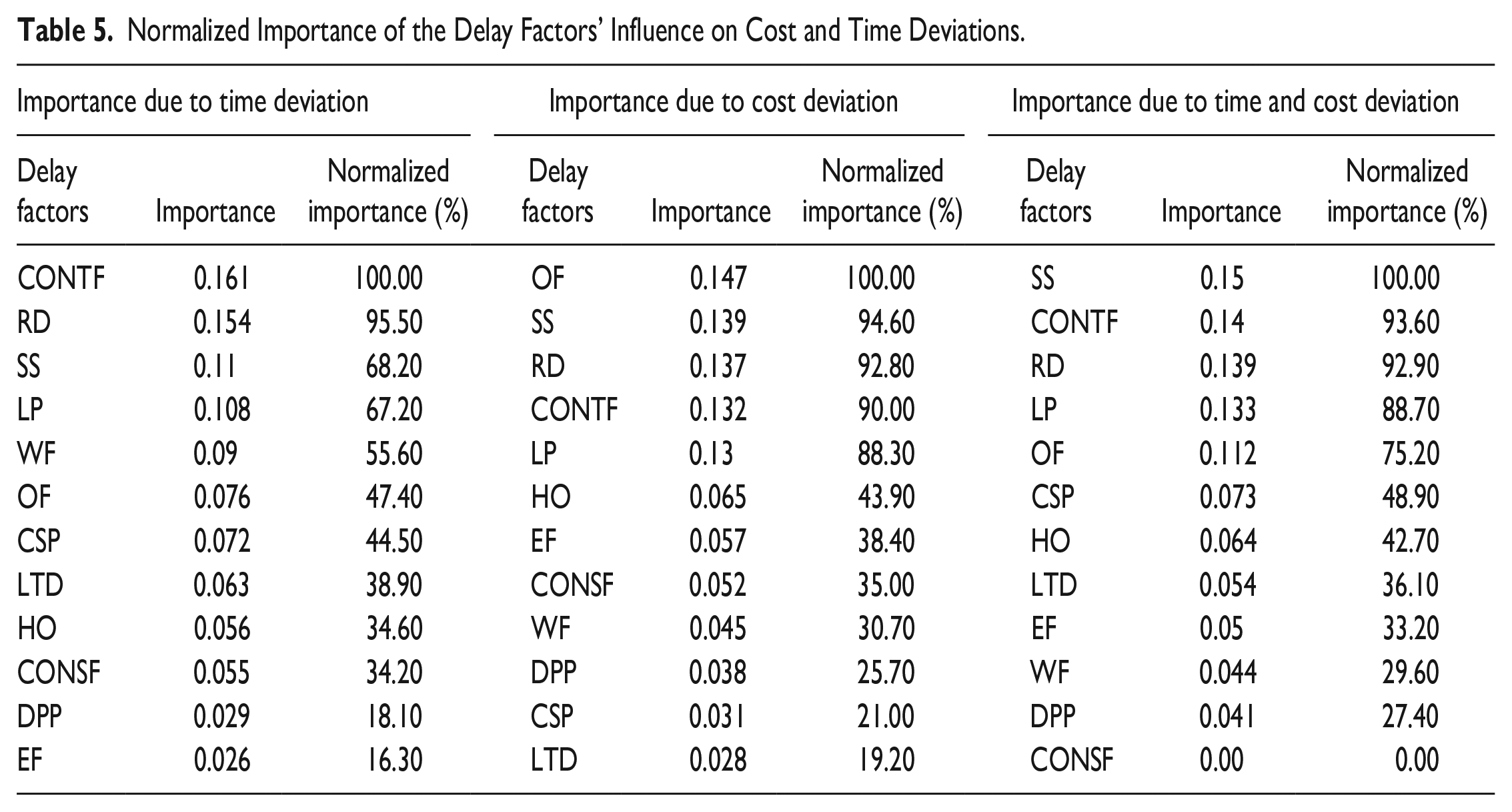
Sorted in order of decreasing importance, Figure 3 shows the delay factors and their percentage of importance in causing time delays. As we saw from the example of case project No. 1, the overall most important delay factor was contractor failure, followed by plan redesigns, security status, low price bids, weather factors, owner-related failures, changes in site location, laboratory tests delay, newly added holidays, engineering consultant failures, disputes over land, and external factors.
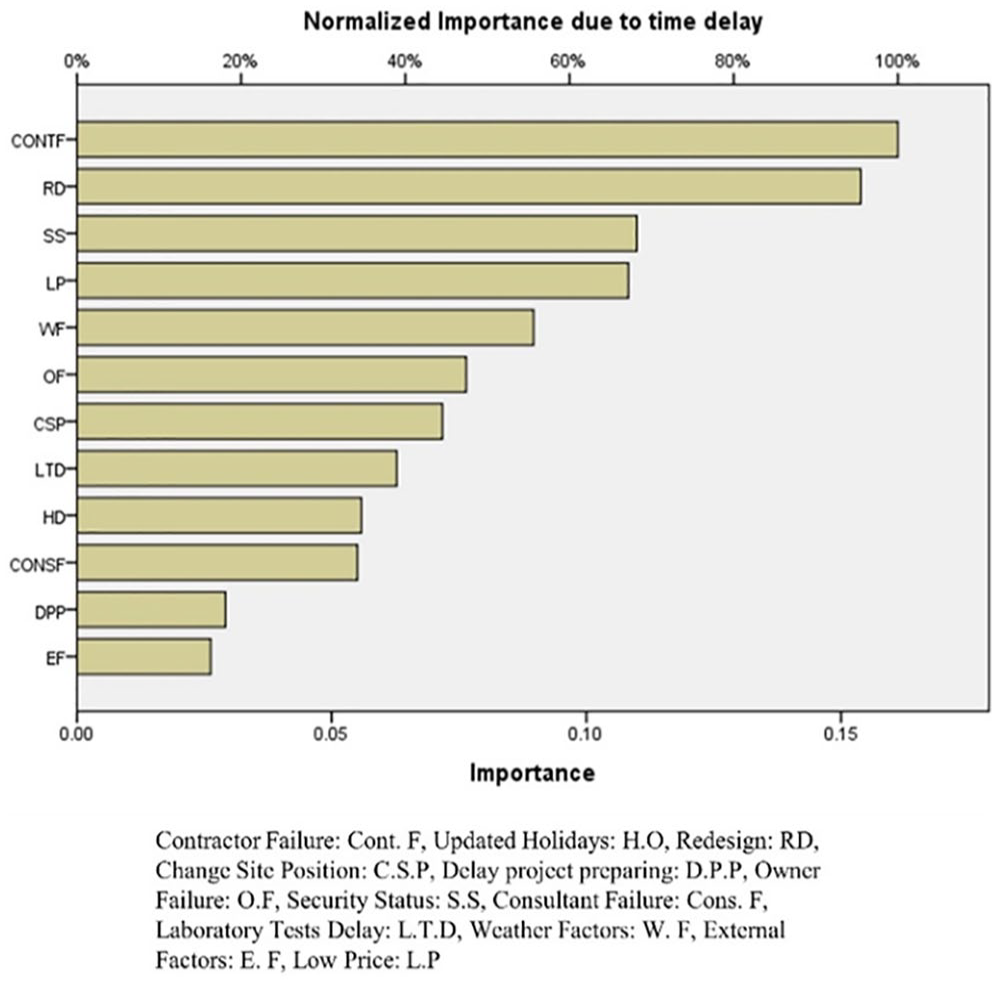
Normalized importance of causes of time delays.
Contractor-related issues might result from many sub-factors that ultimately will delay the project. Much of the existing literature confirms that contractor is a major reason for delays in construction projects, for example, Assaf et al. (1995), Assaf and Al-Hejji (2006), Enshassi et al. (2006), Odeh and Battaineh (2002) and Sambasivan and Soon (2007). In second place of importance, redesigns and change represented 95.5% of the importance in affecting delays. This is in line with the findings of many sources reviewed, which point to impact especially in terms of time delays Assaf and Al-Hejji (2006), Koushki et al. (2005) and Sweis et al. (2008). This is possibly a unique attribute of projects being implemented in areas of war or terror, because the security situation is often so severe that work must be stopped to avoid jeopardizing the lives of workers on site. For the sample of Iraqi projects, the security situation came in third place, and Enshassi et al. (2009) found this to be one of the main four reasons of time delays in the Gaza strip, an area not unlike Baghdad. Low price bidding is playing a major role in delay, representing 67.2% importance. The basic problem of low bids is that it often puts the contractor in a situation of low margins or even loss from the project. This either leads for cutting corners, poor quality or downright bankruptcy. Frimpong et al. (2003) confirmed that some of the lowest bidders may lack the necessary management skills and less attention is paid to contractor’s payment difficulties, material procurement, poor technical performances, escalation of material prices according to markets, etc.
Figure 4 shows the normalized importance of the factors causing cost overruns with owner failure ranking highest. Alaghbari et al. (2007) also found that owner failure was one of the main factors that caused financial problems. Not surprisingly, security issues factor heavily here also, as do redesigns and change orders. The last factor of very high importance was contractor failure.
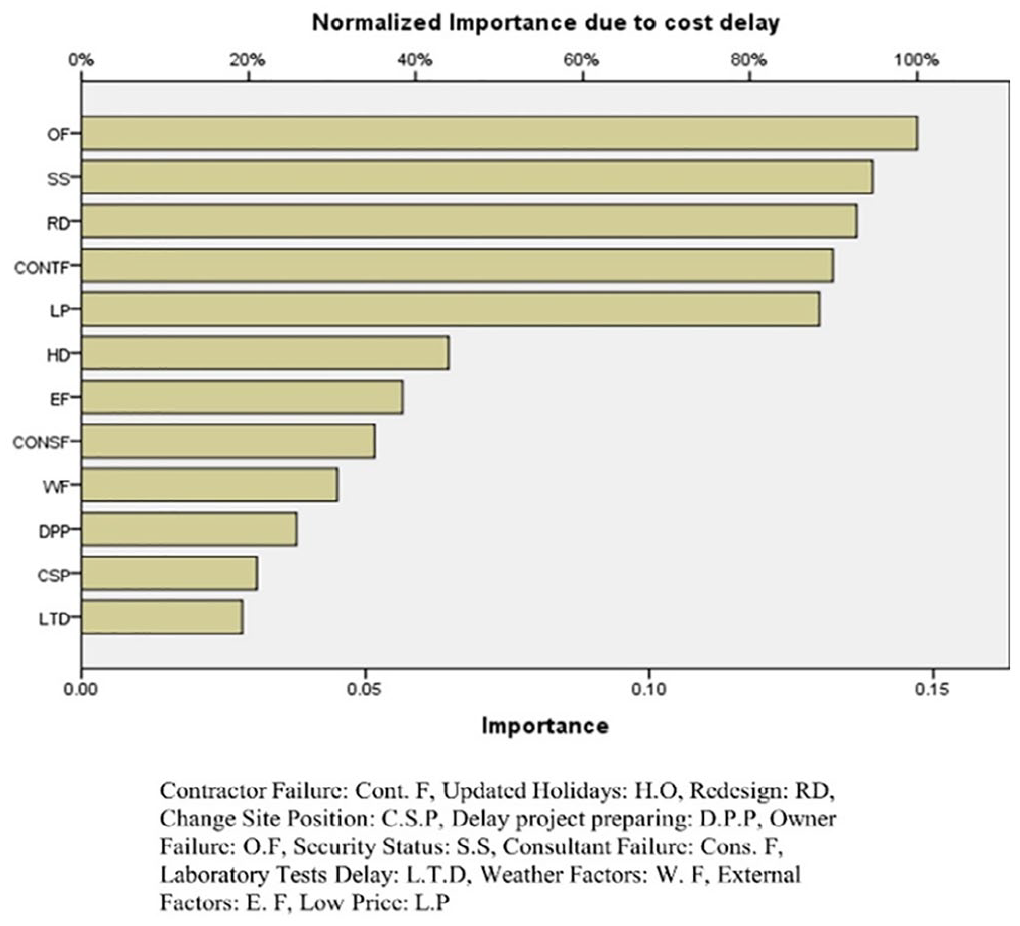
Normalized importance of causes of cost overruns.
Finally, Figure 5 shows the ranking of the delay factors in terms of combined influence on overruns of both cost and schedule. As mentioned previously, the security situation in Iraq was the single most important factor causing problems in these projects. Most previous studies have not considered the security situation as a major delay factor because many of the countries studied were not and are not facing acts of violence or terrorism as a common occurrence. Iraq is different and has gone through much security turbulence from wars, economic sanctions, violence, sectarianism, terror, and the war against terrorism. However, an unstable security situation is certainly not unique to Iraq and it is an important finding that in countries facing such problems, security issues may trump all other factors. Next in importance are contractor failures, redesigns and change orders, and low-price bids, all showing above 50% of normalized importance. The other factors all show less than 50% of normalized importance.
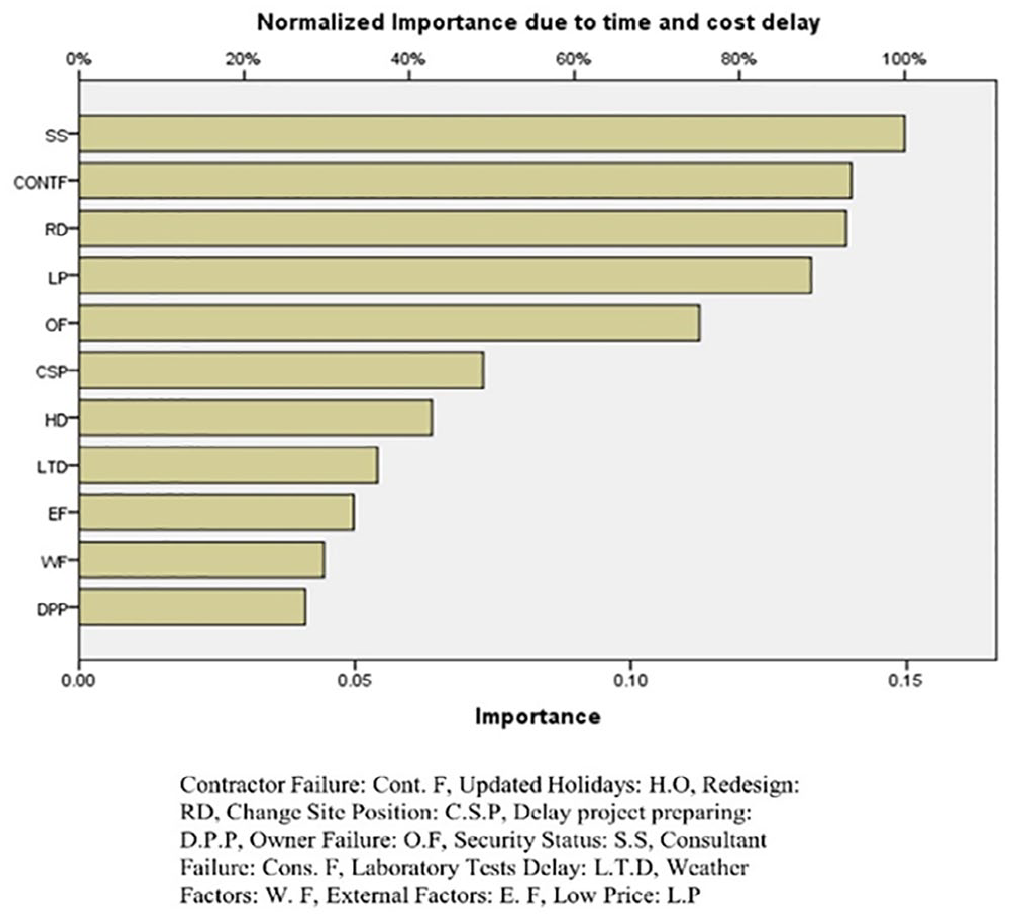
Combined normalized importance of the delay causes for cost overruns and time delays.
It should be noted that the identified factors are a blend of issues completely resulting from emergencies, that is, war and terror, such as the security status, new holidays, site location and ownership issues, and lab test delays, as well as issues that are only to some extent caused by emergencies (such as contractor failure, owner failure, consultant failures, and external factors) and even issues that are not specifically a consequence of such, but rather inherent in Iraq. The latter, which, include for example, low-price bids and weather factors, are still issues that are exacerbated by post-emergency conditions.
In the next section, the findings from the Iraqi case project sample in comparison with findings from other studies of delay causes are discussed.
Discussion and Conclusion
This section briefly reviews the twelve dominant delay causes found in this study and discusses how they align with the findings from other similar studies.
The highest-ranking cause of time delays found in this study was contractor-related problems. This is a broad category of issues, where the following sub-issues were the dominant ones at a more detailed level:
Lack of leadership capabilities and skills.
Lack of standards for human resources management.
Lack of education in what drives performance.
Lack of skills in dealing with time limitations.
Lack to building of harmonic work teams.
Lack of vision of how to deal with the owner, external parties, and the work teams.
Lack of strategic planning of the work performed by subcontracting companies.
These results are in line with what Assaf and Al-Hejji (2006) found, where they saw that delays have a strong relationship with failures and ineffective performance of contractors. In addition, Sambasivan and Soon (2007) attributed delays in the Malaysian construction industry to contractors’ improper planning.
Redesigns of plans was another major factor leading to delays. Changing plans typically means postponing the start of tasks, which often has a cascading effect on later tasks. Assaf and Al-Hejji (2006) found that change orders and redesigns of plans were the most common cause of delay in construction project in Saudi Arabia. Also, Al-Momani (2000) found that changes in plans introduced by designers and users were the most important factor that causing delays in the construction of public projects in Jordan, while Abd El-Razek et al. (2008) found that change orders was the third most important factor causing delays in in Egypt.
Combined for time and cost overruns, security issues were the most important factor studied in the project sample. As mentioned, Iraq is not unique in this regard, COAA (2009) and Enshassi et al. (2009) also found that security problem and conflicts lead to delays in construction projects.
Although there is a clear link between contractor-related issues in general, and problems stemming specifically from choosing contractors based on the lowest bid price, when considering the low bid price delay factor, this study focused on issues that likely could have been prevented by choosing a more qualified (and likely more expensive) bidder. The problems stemming from low price bids are usually the result of the contractor lacking skills and paying less attention to planning and quality (Enshassi et al., 2009; Frimpong et al., 2003) also found that low bids could result in poor management, eventually leading to delays. This is often due to pricing tactics (Nagle & Hogan, 2006) where a contractor deliberately bids low to get the contract and in hope of making money from change orders, not from successfully completing the project in the best interests of the owner.
Quite a few of the case projects experienced delays due to weather factors, such as heavy rainfall in the winter season and high temperatures in the summer season. Several other studies have found weather to be a cause of delays; Koushki et al. (2005) found that weather caused 15% of the total delays in construction projects in Kuwait due to the high temperature. In Jordan, severe weather conditions caused some delays in the winter season (Al-Momani et al., 2005). Kaming et al. (1997) identified unpredictable weather conditions as one of the delay factors in their study of factors influencing construction time and cost overruns in high-rise projects in Indonesia.
Often, the project owner themself causes delays. Odeh and Battaineh (2002) and Sambasivan and Soon (2007) found that owner-related issues are one of the factors that affect project progress, typically in the form of owner interference or slow decision making.
A possibly unique factor in the Iraqi projects studied was the introduction of new holidays which caused unexpected work interruptions and delays. Enshassi et al. (2007) also found that holidays were a problem, holding up construction progress and impacting the supply of materials. Marzouk and El-Rasas (2014) found that official holidays caused much delay in Egyptian construction projects, and Lim and Alum (1995) found the same to be the case in Singapore, although not the major delay factor in their study.
The issue of land/site disputes have been found in other studies; Burr (2016) discussed how possession of the site, or the right of access to the site, was one of the causes of delay and Ruqaishi and Bashir (2013) found that ownership issues caused delay in construction projects which could be significant.
External factors of delay found in the case project sample included power shortage, problems with the sewage system, and ground water levels. Assaf and Al-Hejji (2006) found that power shortages and water supplies to cause delays. Difficulties in obtaining work permits was another external factor, identified by Al-Khalil and Al-Ghafly (1999).
A few of the delay factors found in the case study portfolio studied have not been found to strongly influence delays in other studies, at least not individually. delay factors; These include the need to relocate the project site, delays in laboratory tests holding up work, and problems related to the engineering consultants.
Comparing the findings of this study with those of Bekr (2015), who also studied delay factors in Iraq, albeit based on general survey data and not from case projects, finds the two studies quite similar. Bekr found the main factors to be security issues, governmental changes, holidays, and lowest price bid selection.
An obvious issue to discuss is how the delay factors identified in the thirty Iraqi projects compared with findings from the extensive review of the global body of extant literature into delay factors undertaken by Zidane and Andersen (2018). That review looked specifically into factors causing time delays which corresponds to the set of factors displayed in Figure 3.
The most important factor found in the Iraqi case projects was contractor failures of different types. This is supported by Zidane and Andersen (2018) who found that “inadequate contractor experience/building methods” and “contractors’ financial difficulties” were major causes of delay but not to the extent observed in Iraq. The factor of second-most importance in this study, redesigns, change orders and plan changes, however, matches very well with what Zidane and Andersen (2018) found to be the leading cause globally; “design changes during construction,” and “poor planning and scheduling.”
The third most important factor causing project delays in the Iraq case project sample, security issues, is not mentioned at all as a factor in the large number of global studies reviewed for this study. This clearly indicates that special measures must be taken to address the unique challenges faced in regions of violence and rebuilding after wars. Work is now needed to understand how security issues can be mitigated, especially since emergency reconstruction typically is time critical and delays have even greater negative consequences than in projects in safer parts of the world.
Low-price bids, the next most important factor, can be seen as a root cause of other problems. On the global list, factors such as inadequate contractor experience, contractors’ financial difficulties, and problems related to subcontractors, and even the owner-oriented factor of poor contract management/bidding process could all be related to lowest-price bid selection. But these problems could also be completely unrelated to the specific issue of choosing the lowest bidder, so it is difficult to tell whether this is a unique finding in our project sample. It should also be pointed out that selecting the bidder with the lowest price is not necessarily a problem; sometimes it is clearly warranted to do so and in other cases selecting a bidder with a higher price can also represent a problem, for example, be related to corruption. What this study clearly shows is that many cases of cost and time overruns are caused by problems related to the consultants and contractors chosen to perform the project. This points to the process of supplier selection being a root cause of many problems, such as formulation and announcement of bids to attract suitable bidders, selection criteria, procedures to quality check the information provided by bidders, and ways to ensure a minimum competence on the part of the bidders.
In the end, this study represents one more contribution to the body of empirical data investigating the extent of the problem of time delays and cost overruns and their causes. Based on data from Iraq, a country of some unique and some commonly found conditions, it has partly confirmed previous studies into delay factors and partly supplemented these by identifying some unique causes of delays in Iraqi construction projects. Most notably, that security issues were the most dominant factor causing time delays. It is worth noting that the data collected for this study was used to build an artificial neural network model that can be used to predict cost and time overruns based on the characteristics of the project being studied.
Other researchers should be encouraged to continue studying the phenomenon of delays and overruns and their causes in settings and types of projects where little data exists, to allow further differentiation of what causes such problems in different contexts. Existing studies clearly show that different regions, countries, and contexts pose different challenges, and it would be short-sighted to assume that findings from one specific setting can be transferred directly to other settings.
Post war reconstruction in underdeveloped countries and some developed ones are facing problems of corruption, nepotism, and other conflicts of interest (Adwan, 2004). Most of these problems arise from “mismanaged” primary sectors that undermine a transition to peace conditions (Devine, 2005; Le Billon, 2014). The same is happening in Iraq, where corruption, serving self-interests of the governing parties, and the absence of systems of checks and balance are prevalent. Sadly, it seems obvious that many of the findings from Iraq could be generalized to other countries in emergency reconstruction phases, because emergencies such as terror, war, even natural disasters, affect less developed countries more severely. As such, the authors believe it is justified to assume that a large portion of the identified delay factors would materialize in other countries where post-emergency reconstruction must be undertaken, especially if the need for reconstruction arises from military or terror-based conflict.
In terms of implications for practice, some recommendations for the Iraqi authorities that would help alleviate the problems of delays and overruns include:
Putting in place a more systematic governance structure of public construction projects to avoid owner-related problems. This should also include a review of rules, laws, and legislation that deal with project implementation to prevent the engagement of unqualified companies.
Working with the private sector to stimulate the development of a body of competitive and qualified contractors and engineering consultants, including facilitating workshops and lectures to educate them in the field of bidding and implementing better contracts.
Supporting and improving construction test laboratories on a national level and opening more branches in different areas and provinces. Also, encouraging the private sector to operate their own laboratories, as well as promoting the use of on-site laboratories that are overseen by governmental institutes and directorates to avoid bias and fraud of sampling that might occur while transporting samples to different places for tests. Another way to remedy this issue is to use standardized and certified products, which would eliminate the need for laboratory testing and thus avoiding the problem of testing delays.
Reviewing the models and evaluation criteria used by bidding committees in the selection of contractors, to avoid the extensive use of lowest price bid selection and extending the set of factors used to evaluate bids.
And while this sounds easier on paper than in real life; improving both the security situation and external factors such as power, water, and sewage would also aid in the more successful implementation of projects.
Footnotes
Declaration of Conflicting Interests
The author(s) declared no potential conflicts of interest with respect to the research, authorship, and/or publication of this article.
Funding
The author(s) received no financial support for the research, authorship, and/or publication of this article.