




Abstract
In urban regeneration projects, balancing environmental, social, and economic aspects is crucial but challenging, often leading to mission drift when team focus deviates from the original goals. Through a case study of regeneration projects at a large U.K. housing association, we explore decision makers’ attention to sustainability, health, and well-being as core elements of social mission. We combined qualitative analysis with an examination of structural complexities and system behaviors, adopting a systems thinking perspective. Analysis of attention patterns in regeneration meetings reveals that attention to the social missions was not sustained, with evident attention shifts toward financial costs and risks. Also, sustainability is prioritized less than health and well-being topics. We use a causal loop diagram to describe the underlying mechanisms that drive attention dynamics, highlighting how the structural complexities can undermine sustainable development in regeneration. Finally, we propose strategies to sustain attention toward sustainability, health, and well-being in regeneration.
Keywords
Introduction
Urban regeneration is a multifaceted process that entails the revitalization or rejuvenation of urban areas by enhancing the physical environment, socioeconomic conditions, and environmental quality (Couch & Dennemann, 2000; Egan et al., 2015; Lawless et al., 2010). Urban regeneration can contribute to long-term resilience and growth by integrating environmental sustainability into developments (Couch & Dennemann, 2000; Evans, 2012). Several decision-making tools have been developed to foster sustainable development in regeneration (Huang et al., 2020; Marta et al., 2017; Peng et al., 2015); despite these tools, there have been mixed results regarding regeneration projects’ impact on health and well-being (Thomson & Thomas, 2015) and sustainability (Hemphill et al., 2004). In particular, regeneration efforts in deprived areas, with a significant presence of social housing, can potentially be disruptive for tenants (Kearns & Mason, 2013) or yield variable outcomes on residents’ quality of life (Curl et al., 2015; Curl & Kearns, 2015).
In environmental management, there is a growing consensus on a systems approach in urban environment decision-making (Kearns et al., 2021; Macmillan et al., 2016; Sharpe et al., 2018; Zimmerman et al., 2018). The systems approach suggests that decision-makers should consider interlinkages and co-benefits across sustainability and health domains (Hiscock et al., 2014; Jonathon et al., 2018; Wilkinson et al., 2007), such as how energy-efficient measures can mitigate climate change while reducing health risks associated with cold conditions (Conlon et al., 2011). Also, the complex causal mechanisms of how regeneration initiatives improve health outcomes have been highlighted (Thomson & Thomas, 2015; Walthery et al., 2015). Compared with a systems approach, regeneration decision-making often focuses narrowly on one area, leading to risks of unintended consequences (Davies & Oreszczyn, 2012; Shrubsole et al., 2014). The systems approach suggests that a successful regeneration scheme necessitates decision-makers’ sustained focus on health and sustainability. However, organizational attention, a fundamental yet frequently neglected resource in decision-making, is limited (Simon, 1957). According to the attention-based view, a sustained focus on the problems and answers can both decide the organizational strategy and direct decision-making (Ocasio, 1997).
Beyond the inherent complexities of regeneration, the revitalization of places is also influenced by the tensions and complexities faced by decision-makers within their organizations (Slawinski et al., 2021; Zhou et al., 2022). Institutional logic, including the norms, values, and beliefs, can significantly shape decision-making (Nigam & Ocasio, 2010; Thornton et al., 2012), particularly aspects of institutional complexity when there are multiple, often conflicting institutional logics (Thornton, 2002). When decision-makers strive to accommodate these complexities, they may experience a “mission drift,” where they fail to effectively focus on the original social missions (Ebrahim et al., 2014; Ometto et al., 2019). This is often evident in regeneration, where the economic performance goals can clash with social and environmental ones, especially in schemes that strongly rely on market-based approaches (Russell & Redmond, 2009; Victory & Malpass, 2011).
This article investigates how decision-makers allocate their attentional resources within regeneration projects involving both urban and institutional complexities. In this paper, we focus on Housing Associations (HAs) in the United Kingdom as an example of organizations dealing with such institutional complexity in the context of urban regeneration. HAs are responsible for more than 2.5 million households in the social rented sector in England (Department for Levelling Up, Housing & Communities, 2023). As hybrid organizations integrating dual logics of social mission and market, HAs need to generate financial income to subsidize their social mission (Morrison, 2016; Sacranie, 2012). They are charitable non-profit organizations that provide housing at below-market rents (Blessing, 2012; Morrison, 2016; Sacranie, 2012), and they play a crucial role in regenerating social housing estates (Arthurson et al., 2015; Egan et al., 2015; Lees, 2008; Mehdipanah et al., 2018).
In this article, we ask the following questions: How do HA decision-makers allocate their attention throughout regeneration projects, and how does the institutional complexity within HAs influence decision-makers’ attention to sustainability and health goals? We conducted a case study of an English HA’s regeneration projects to address these questions. We drew on institutional complexity (Greenwood et al., 2011) and attention-based perspectives in organizations (Ocasio, 1997). We used the Causal Loop Diagram (CLD) from systems thinking (Meadows, 2008; Sterman, 2000) to explore the systems structures that contribute to the tensions in decision-making (Morecroft, 1985). We aimed to understand (a) decision-makers’ attention patterns in regeneration projects, focusing on how they manage complex and often competing institutional logics, and (b) the underlying causal links and feedback mechanisms that contribute to the dynamics of attention patterns.
This article is organized as follows: We first summarize the complexities of systems approaches in regeneration, linking with the theoretical lens of institutional complexity and attention allocation. Next, we describe the data collection and analysis methods applied. We then present the attention allocation patterns observed in regeneration meetings and the CLD that conceptualizes the underlying causal structures of attention allocation. Finally, we discuss the article’s main contributions and strategies to sustain attention to social missions.
Attention Allocation in Urban Regeneration
Regeneration can be achieved by various means, including area-based initiatives that aim to improve the economic, social, or environmental outcomes within a specific area (e.g., Kearns et al., 2021; Kramer et al., 2014; Stafford et al., 2014) or housing-led approaches that involve housing demolition, and construction of new homes independent of wider neighborhood environmental improvements or education and training opportunities (e.g., Thomson et al., 2007). Regeneration targeting social housing properties can involve both housing-led approaches and area-based initiatives (see Arthurson et al., 2015; Egan et al., 2015; Lees, 2008; Mehdipanah et al., 2018).
In this section, we underscore the complexity of systems approaches in the urban environment and the role of institutional dynamics within organizations in attention allocation.
Systems Approaches and Attention Allocation
In light of emerging regeneration paradigms, there is a shift toward a systems-oriented approach in sustainability management, emphasizing a dynamic and nonlinear approach across conventional economic, social, and ecological boundaries (Hahn & Tampe, 2021; Holling, 2001). Aligning organizational decision-making to the complexities of regenerating the environment is particularly important, as it helps build ecological resilience and the well-being of local communities (Muñoz & Branzei, 2021). Several themes have emerged regarding the challenges of attention allocation to effectively implement systems approaches.
First, a sustained focus on sustainability requires accessing pertinent information, but perceptions and comprehension of such information can vary. For example, a deficiency in sustainability knowledge and how to communicate it can lead to a lack of clarity for objectives and inadequate emphasis on the issues (Winston, 2010). An analysis in the European Union context revealed that within the social housing sector, the perceived costs of environmental management are high, and strategy guidance concerning operation and management is not persuasive (Sunikka & Boon, 2003).
Second, balancing the focus across the multiple facets of regeneration underpins the systems approach but practical priorities can vary. This is illustrated by a study of the U.K. social housing sector, which found that the environmental, economic, and societal aspects of sustainability were not given equal weighting in decision-making (Carter & Fortune, 2007). In addition, a survey of over 100 built environment professionals working in the U.K. housing sector revealed that sustainability toolkits and models were rarely used in regeneration, and instead, finance-based toolkits continued to dominate decision-making (Higham et al., 2016).
Third, a narrow or insufficiently sustained focus on the social mission aspects can lead to long-term negative impacts or unintended consequences. For example, while energy-efficient approaches aim to reduce energy use, they can also inadvertently increase overheating and mortality risks (Jonathon et al., 2018). Within social housing regeneration, there are high risks of displacement and negative consequences from gentrification when residents are moved, even on a temporary basis (Mehdipanah et al., 2018). A study on regeneration programs revealed mixed outcomes of resident relocation: While some residents reported better housing quality, others faced racial prejudice or experienced decreased multiculturalism in their new neighborhoods (Egan et al., 2015). In addition, critics argue that the benefits of new-build homes, especially when the development focuses on benefits for the middle class, do not “trickle down” to the lower classes in the housing market, and this can lead to displacement, segregation, social polarization, and gentrification (Lees, 2008). The disparate consequences further underscore the pressing necessity of sustained and balanced attention to social missions during various phases of the regeneration processes.
Institutional Complexity and Attention Allocation
Institutional complexity is characterized by (a) the number of institutional logics and the dynamics between logics, and (b) the degree to which logics are incompatible, or in other words, “contested,” “conflicting,” or “competing” (Greenwood et al., 2011). From an attention-based view, decision-makers attention is selective due to the limited information processing capacity for specific stimuli (Ocasio, 2011), and decision-makers operate within a constrained attention capacity, which is the amount of information they can process at a given time (Hoffman & Ocasio, 2001).
Competing demands can bring new opportunities for product innovation (Dalpiaz et al., 2016) but may trigger organizational complexities that are not immediately evident (Thornton et al., 2012). For example, the presence of competing and distracting stimuli arising from institutional logic can create incompatible demands that compete for attention, compelling organizations to prioritize (Holt & Littlewood, 2015). Persistent tensions stemming from competing demands or shifts in focus can lead to a range of consequences such as organizational destabilization (Cappellaro et al., 2020), decision-makers’ divergent interpretations of organizational strategies (Martin et al., 2017), and changes in prevailing strategic logics (Thornton, 2002). Also, strategy formulation can be fragmented and contested with multiple or incompatible “foci of attention” (Ocasio & Joseph, 2005).
Within the social housing sector, the competition between social and commercial goals, often referred to as “hybridity,” has led HAs to pursue varied approaches to financing, housing products, and strategies (Blessing, 2012; Jacobs & Manzi, 2020; Morrison, 2016; Mullins, 2012; Sacranie, 2012). Despite HAs’ dedication to fulfilling social missions (Manzi & Morrison, 2018; Tang et al., 2017), studies indicate that the coexistence of social and commercial goals can create conflicts in decision-making (Morrison, 2013). The prevalence of market logic may lead to inadequate responses to household needs, particularly those most vulnerable to the housing crisis (Manzi & Morrison, 2018), and a tendency to favor short-term rather than long-term objectives in decision-making when there are frequent policy changes (Zhou et al., 2022).
Insights from management studies provide some understanding of which issues receive organizational attention. Environmental cues such as performance gaps can prompt individuals to frame and construct the gap as an immediate problem requiring attention (Bertels & Lawrence, 2016). Managers’ focus toward specific opportunities (critical for achieving organizational strategies) can be shaped by their prior knowledge and beliefs (Shepherd et al., 2017). However, senior-level management decisions can be complex when there are multiple goals embedded in various institutional spheres (Pache et al., 2024). While there is a growing acknowledgment of the consequences resulting from conflicting institutional demands (Pache & Santos, 2010, 2021) and the connections between institutions and attention (Micelotta et al., 2017; Ocasio et al., 2015), there is limited evidence concerning the dynamics of attention over time when multiple demands compete for one’s attention.
In summary, a systems approach to regeneration encompasses a range of multifaceted challenges that require attention to multiple domains. Institutional complexity within organizations adds to these challenges, further complicating how attention is allocated. This study aims to uncover how decision-makers manage their attentional resources amid these complexities to achieve integrated decision-making for sustainability and health within regeneration. Through insights from attention-based views and an understanding of institutional complexity, we aim to illuminate the mechanisms that enable organizations to navigate conflicting demands in urban regeneration projects.
Method
This section describes our case study, data collection, and analysis.
Case Study
The selected HA is one of the largest HAs in the United Kingdom. It owns more than 100,000 properties, housing more than 300,000 people, and is active in multiple local authorities throughout England. The HA regeneration team manages several large-scale regeneration projects at one time. The regeneration team includes central regeneration managers responsible for overseeing activities and facilitating communication across departments (such as charity, strategy, and research teams) for various regeneration projects. Specific staff members across regeneration sites focus on managing community engagement. The team collaborates with external architectural designers and consultants who provide specialized design and project management services.
For the HA, the regeneration process typically commences with feasibility and planning stages, working with architects, local site managers, and development managers. The initial process also involves establishing a viable case for development and then beginning local community consultation events. Furthermore, the charity division within the HA typically delivers social value activities, including employment and skills training. The HA is a leading organization exploring social value measurement for housing and community projects and aims to invest more than GBP 100 million in the communities where they have homes over the next decade. A critical investment strategy is to increase the proportion of affordable homes (social/affordable rent and low-cost home ownership) within an increasing number of large-scale developments. The HA also has strategies to achieve decarbonization of existing homes and Net Zero for new construction. Examples of their sustainability goals in regeneration include improving energy efficiency, reducing fuel poverty, and expanding the availability of charging infrastructure for hybrid and electric vehicles at their sites.
Data Collection
The empirical data included individual interviews, meeting observations, and relevant documents and files. The data collection started in 2019 and was resumed after the COVID-19 pandemic from September 2020 to November 2021. In total, 27 meetings were observed, including 22 regeneration team meetings (12 planning stage, 10 delivery stage) and five non-site-specific meetings. The number of decision-makers involved in regeneration team meetings varied depending on the scale of each regeneration site, ranging from 3 to 10 participants. These meetings comprised central regeneration managers, site managers, social value specialists, external architects, and consultants. In addition, non-site-specific meetings were typically led by the strategy and research department or external consultants. These meetings focused on discussions related to social value, planning policy, and sustainability strategy.
In addition to meetings, 13 individual interviews were conducted with representatives from the aforementioned groups. In the interviews, we asked about the individual’s role in regeneration projects, including the process, barriers, and challenges and their decision-making regarding social missions. Interview questions and interviewee information are included in the Supplementary Materials.
A total of 30 documents and files were collected, consisting of operations files (meeting minutes, presentations, and internal actions), public communication files, and additional files about strategies. Table 1 summarizes the meetings, documents, and file categories.
Data Collection: Meetings, Documents and Files.
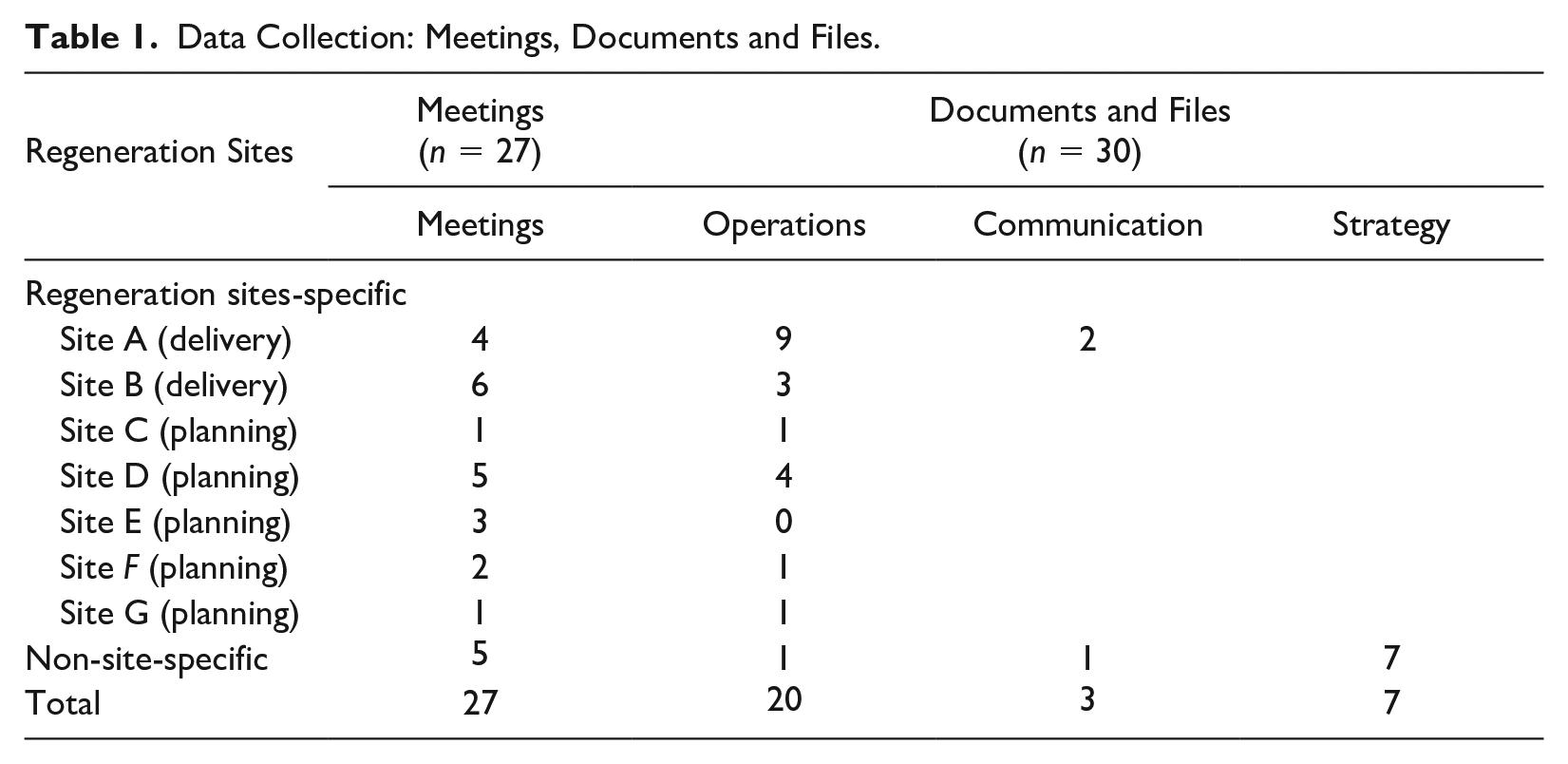
The regeneration team’s work on seven regeneration sites was observed, providing data for comparisons between meetings held on projects at different regeneration stages. In this paper, the planning stage meetings refer to meetings that take place before the planning application is submitted to the Local Authority. The delivery stage includes the post-planning, construction, and handover periods. Sites A and B were in the delivery stage, where existing buildings had been demolished, and rebuilding/construction had begun. Sites C to G were in the planning stage, in which the regeneration team was discussing the design plans for planning approval.
The schemes illustrate varied scales of regeneration; Site A aimed to deliver approximately 3,000 homes, twice the existing number of homes. The other sites aimed to accommodate between 100 and 400 homes. Four sites were in London, United Kingdom, two sites were in the southwest of England, and one site was in east England. As the regeneration team has national responsibility for sites across the country, there were similar decisions to be made despite the varied locations. Hence, the inclusion of multiple sites in the analysis allowed us to identify overall attention allocation patterns.
Data Analysis
For data analysis, we used Causal Loop Diagrams (CLDs), which is a tool for systems thinking (Sterman, 2006) to analyze and represent the complex mechanisms of attention allocation in regeneration. The systems perspective allows for generating systems insights by focusing on generic causal mechanisms that drive the system behaviors (Wolstenholme, 2003). It also allows for exploring the broader system implications of decision-making in the urban environment (Meadows, 2005). Our analysis from a systems perspective includes eliciting the attention patterns and the structural dynamics (see Figure 1). The data analysis steps are outlined below.
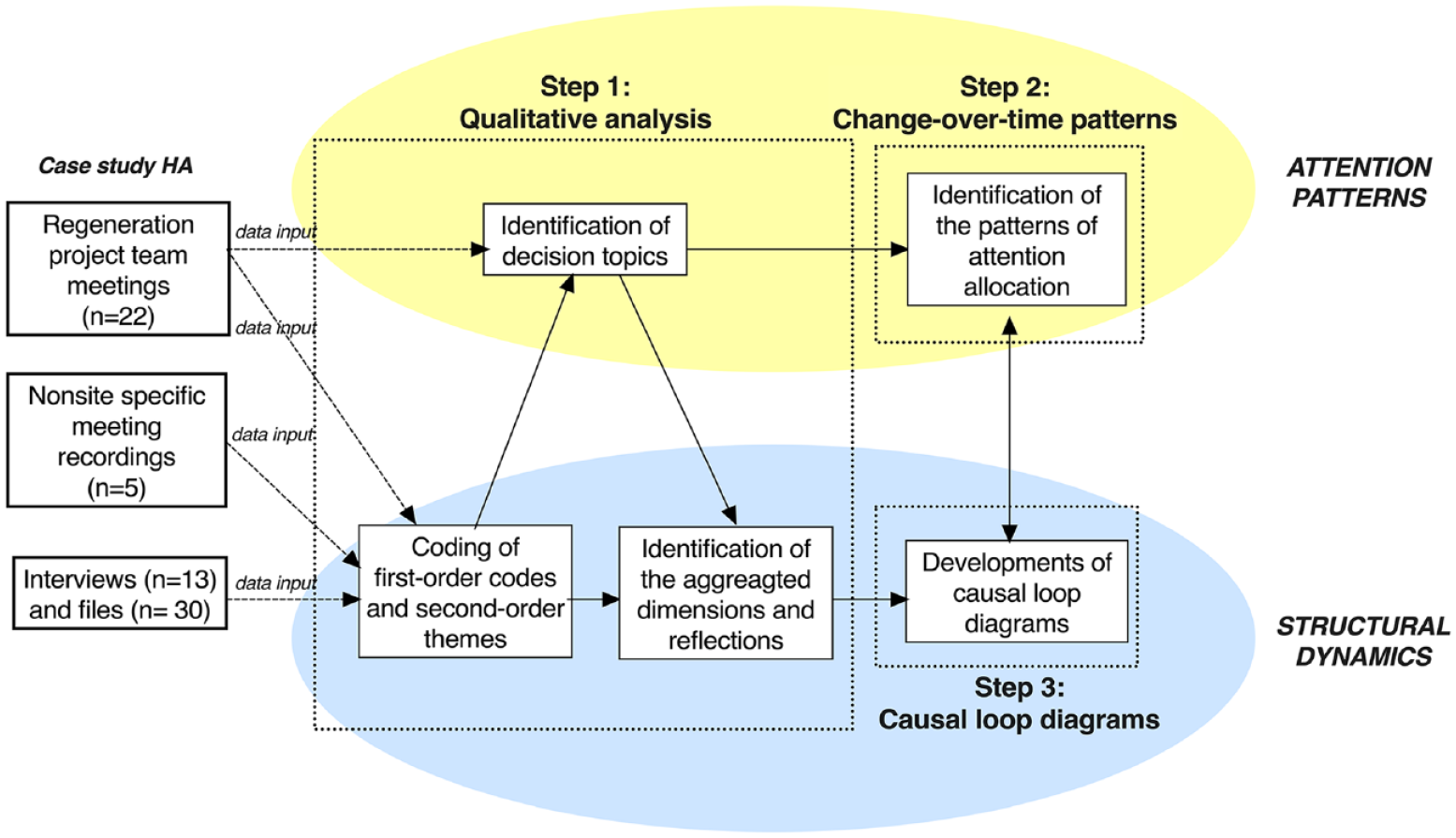
Data Analysis.
Step 1. Qualitatively Code the Main Concepts
Coding captures the meaning of different segments of data. Qualitative analysis was performed using the ATLAS.ti (23.0.0) (2023) to code concepts in interviews, documents, and meetings following coding practices in grounded theory (Gioia et al., 2013; Strauss & Corbin, 1994). The initial coding was based on multiple rounds of open coding. The coding was reviewed iteratively. The left side of Figure 2 shows the first-order codes. Following open coding, we identified second-order themes, including (a) seven broad topics requiring decisions (health and well-being, environmental sustainability, community engagement, housing design, policy compliance, operational management, financial viability, and efficiency) and (b) three elements in decision-making processes (goals management, powerful stimuli, and organizational learning). The definitions of the seven decision topics were formulated through an iterative process of assembling and refining codes and terms that emerged within each topic (Gioia et al., 2013). Finally, we referred to the theory of organizational attention and institutional complexity and developed four aggregated dimensions: attention to social mission logic, attention to project management, attention to market logic, and decision-making processes. The analytical step generated two outputs: (a) identification of decision topics, which allowed for the development of change-over-time patterns of attention (see Step 2), and (b) qualitative reflections and insights of the main concepts, which facilitated the development of the CLD (see Step 3).
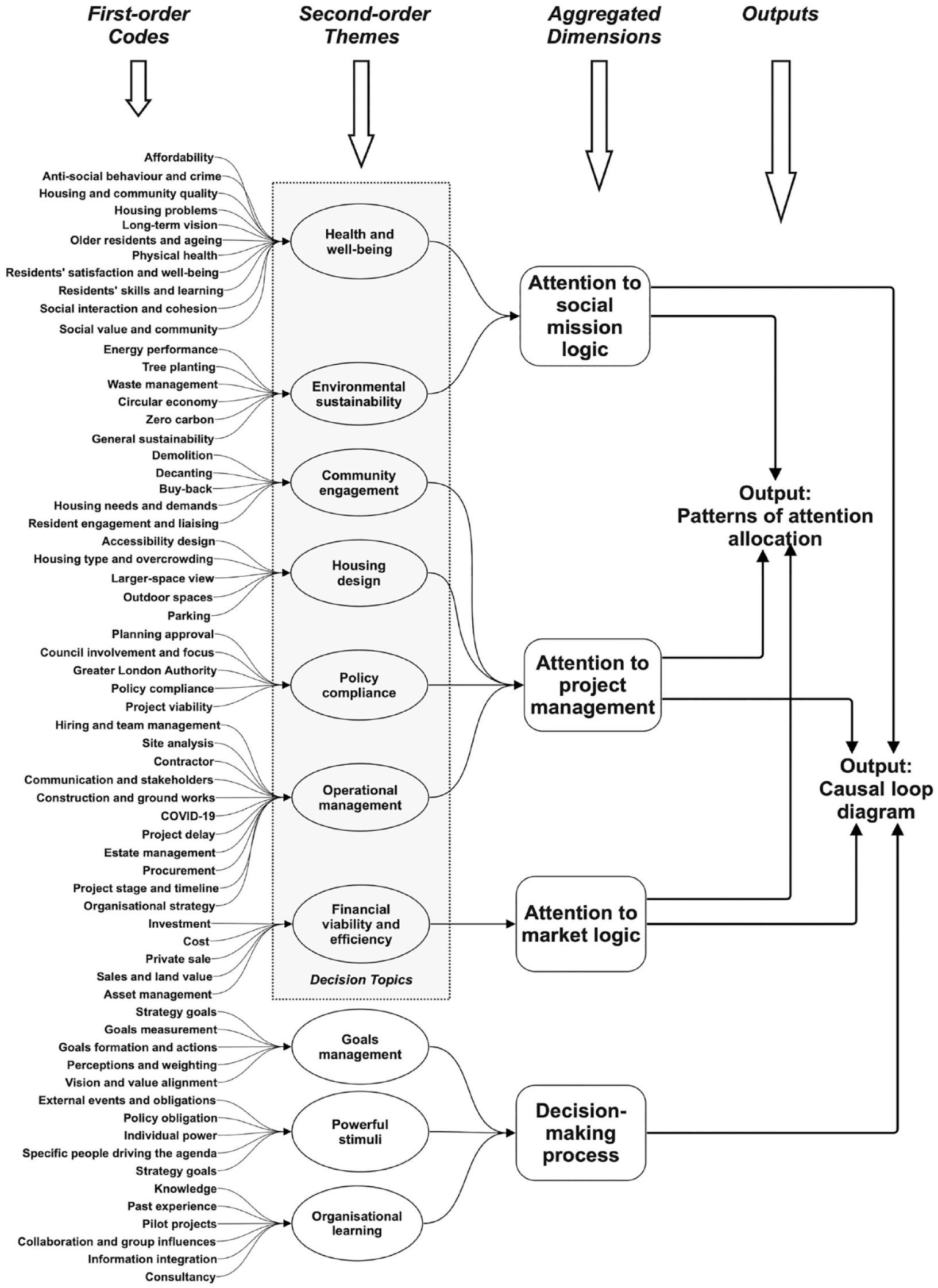
Main Codes and Concepts.
Step 2. Identify the Change-Over-Time Patterns of Attention Allocation in Meetings
We focused on the 22 regeneration project meetings for attention patterns as they mainly captured regeneration decisions. We analyzed the attention allocation in meetings by tracking the changes in decision topic codes over meeting time. Each meeting was coded into segments of 30 s. We counted the number of the decision topic codes within time segments of 10 min, generating a code co-occurrence table of topics and time. Then, we used the table to calculate the attention fraction for each decision topic. This fraction is calculated as the number of codes assigned to the decision topic divided by the total number of decision topic codes within each 10-min segment. Changes in these attention fractions represent each topic’s attention patterns over time. Analyzing the relative code fractions helped minimize the distortion in patterns due to varying code frequencies across different time segments. For example, the total number of codes in the initial few time segments was sometimes higher, as people might start the meeting with conversations irrelevant to the regeneration topics. Using relative fractions within each time segment ensured a more accurate representation of the general attention patterns across the planning and delivery regeneration stages and sites. Examples of meeting coding with time segments and the code co-occurrence table are included in the Supplementary Materials.
Step 3. Develop the CLDs
From a systems perspective, complexity consists of three dimensions: the number of relevant elements, the number of connections between elements, and the functional intricacy of the connections between elements (Größler, 2004). In alignment with grounded theory, the development of the CLD followed a highly iterative and evolving process (Gioia et al., 2013). Each iteration synthesized the information garnered from grounded-theory coding and tracking of attention patterns (Homer, 1996). Following the established approach of developing CLDs from textual data, codes elicited from Step 1 were reviewed to generate the basis for the elements in CLD (Eker & Zimmermann, 2016; Yearworth & White, 2013). The direction of change between variables (increase/decrease) was identified by reviewing the quotes relevant to the causal structures. Furthermore, the attention patterns derived from Step 2 were reviewed and used to facilitate the formulation of dynamic relationships. Reinforcing loops (circular mechanisms that amplify the direction of change) and balancing loops (circular mechanisms that stabilize the change imposed on the system, regardless of the direction of change) were identified.
The process of translating codes into the CLD involved combining similar codes into single variables. For example, first-order codes such as “tree planting,” “zero carbon,” and “circular economy” were consolidated into the “sustainability pilot projects” variable in the CLD. The process also necessitated renaming codes or constructing auxiliary variables to ascertain the positive or negative links between variables. For example, the code “policy compliance” was represented as “targets from policies and regulations” in the iterative CLD. The code “housing and community quality” was adapted to “gaps in housing conditions.” The variable “remaining attention available” was incorporated into the CLD to comprehensively understand attention patterns. In the iterative process, we also included the decision-making process codes in the causal links that exhibited a strong impact (see the pre-simplified CLD in Supplementary Materials).
In our finalized CLD, we labeled 15 core loops. The loop labeling was deeply informed by the grounded qualitative analysis, enabling us to understand the rationale for understanding the dynamics of the HA’s attention allocation within regeneration projects. The core loops were distinguished based on their succinct role in structuring the overarching conceptual understanding of the model. A “core loop” in this context refers to a loop that provides essential insights into the overall system behavior and its concise representation of key interactions. In contrast, “macro loops” involve a more complex array of variables and capture broader cross-sectional linkages within the system. We have provided a comprehensive table of macro loops related to sustainability in the Supplementary Materials. While our core loops afford critical insights into the primary dynamics, the macro loops uncover the intricacies of broader system interactions and unintended consequences. Collectively, these loops facilitate a comprehensive understanding of the system’s complexities.
Changes in Attention Patterns in Regeneration Meetings
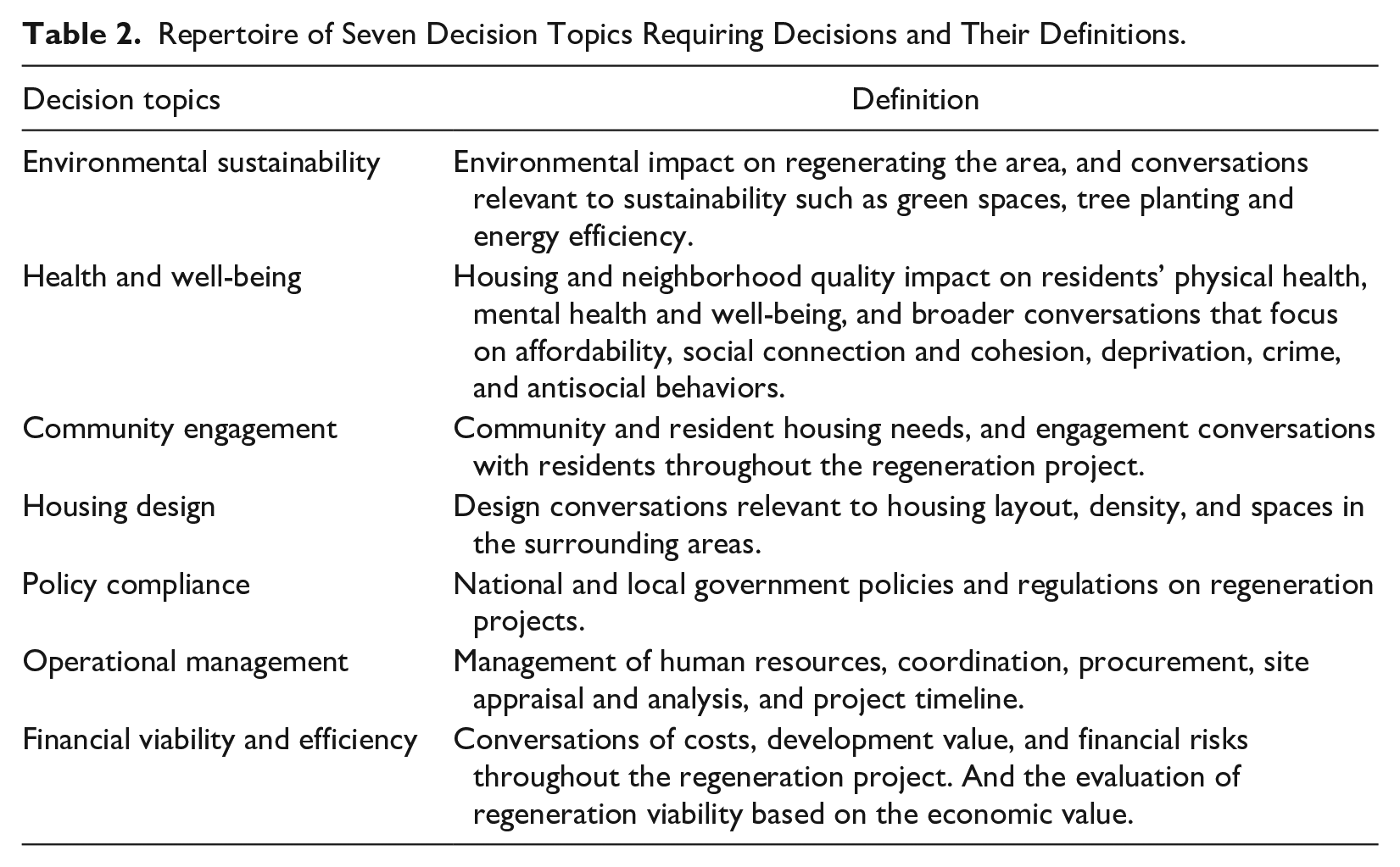
Seven decision topics emerged in regeneration meetings (see Table 2 for the definitions). Environmental sustainability, health, and well-being directly reflect the HA’s social mission logic. Financial viability and efficiency represent the decision-maker’s considerations of the financial benefits and value of regeneration projects, which reflect the market logic. Community engagement, housing design, policy compliance, and operational management describe broader considerations related to the delivery aspects of the regeneration project.
Repertoire of Seven Decision Topics Requiring Decisions and Their Definitions.
Drawing from the literature on attention, sustained attention is the focus of time, energy, and effort on a specific topic over time (Ocasio, 2011). We employ the attention fraction as a proxy concept, representing the allocation of cognitive resources in meetings across planning and delivery stages in regeneration projects. We define “sustained attention” as the consistent upkeep of a relatively high attention fraction throughout the planning and delivery stages. Figure 3 illustrates the evolution of attention patterns within regeneration meetings across different regeneration phases.
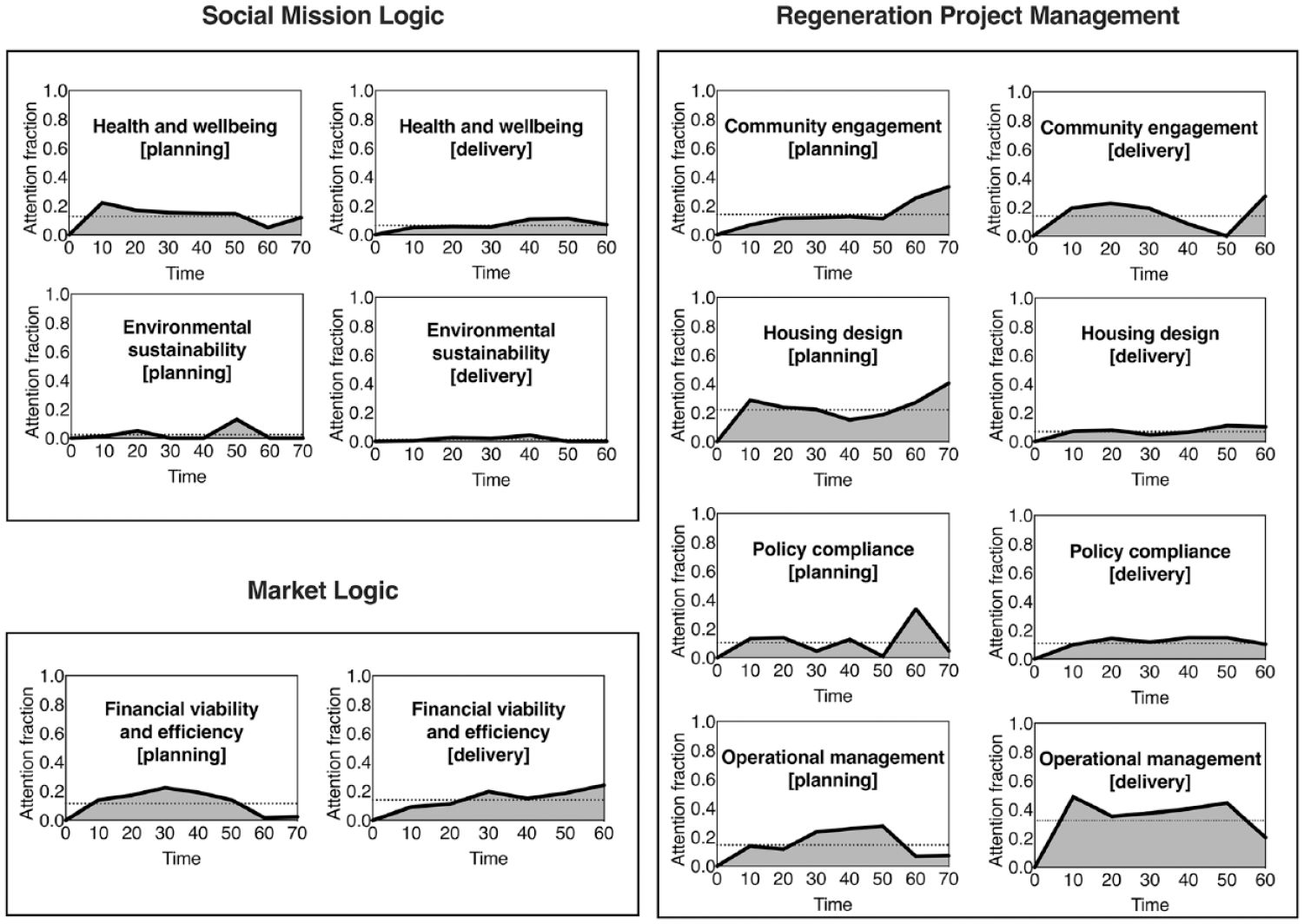
Change-Over-Time Patterns of Topics in the Planning (n = 10) Versus Delivery Stage (n = 12) of Regeneration Team Meetings.
For the social mission logic (see upper left of Figure 3), the attention to health and well-being topics declined in the delivery stage compared with the higher focus these topics received in the planning stage meetings. Attention dedicated to environmental sustainability was comparatively limited throughout the meetings. In contrast, attention toward the market logic remained relatively high and was sustained throughout the planning and delivery stages (see bottom left of Figure 3).
For regeneration project management activities, as depicted on the right side of Figure 3, the average attention devoted to community engagement and policy compliance remained stable across both stages. During the planning stage, the attention pattern of community engagement was similar to that of housing design. As the project progressed to the delivery stage, attention given to housing design noticeably decreased, while attention focused on operational management increased substantially, representing the shift in focus from design to operational aspects of project management.
In summary, the attention to social mission and market logic was relatively equal during the planning stage of regeneration meetings. However, despite intermittent peaks, attention to social missions was not maintained consistently into the delivery stage. Meetings in the delivery stage exhibited a problem-solving mode, where most attentional resources flowed into project delivery activities, with the attention to financial aspects remaining consistent.
Causal Structures of Decision-Making in Regeneration Projects
The Causal Loop Diagram (CLD) describes the underlying structures contributing to the change-over-time attention patterns. It includes four main sectors: attention allocation and competition, the imbalanced focus on sustainability and health, community engagement and impact on housing conditions, and financial efficiency and performance. This section describes the CLD by unfolding the sectors.
Attention Allocation and Competition
The first sector in CLD relates to attention given to environmental sustainability and health and well-being (HW) and the shifts to financial costs and risks. The attention variables are highlighted with boxes in Figure 4. Attention to HW increases the organisational routines for HW, further increasing team members’ attention to HW, forming the first reinforcing loop
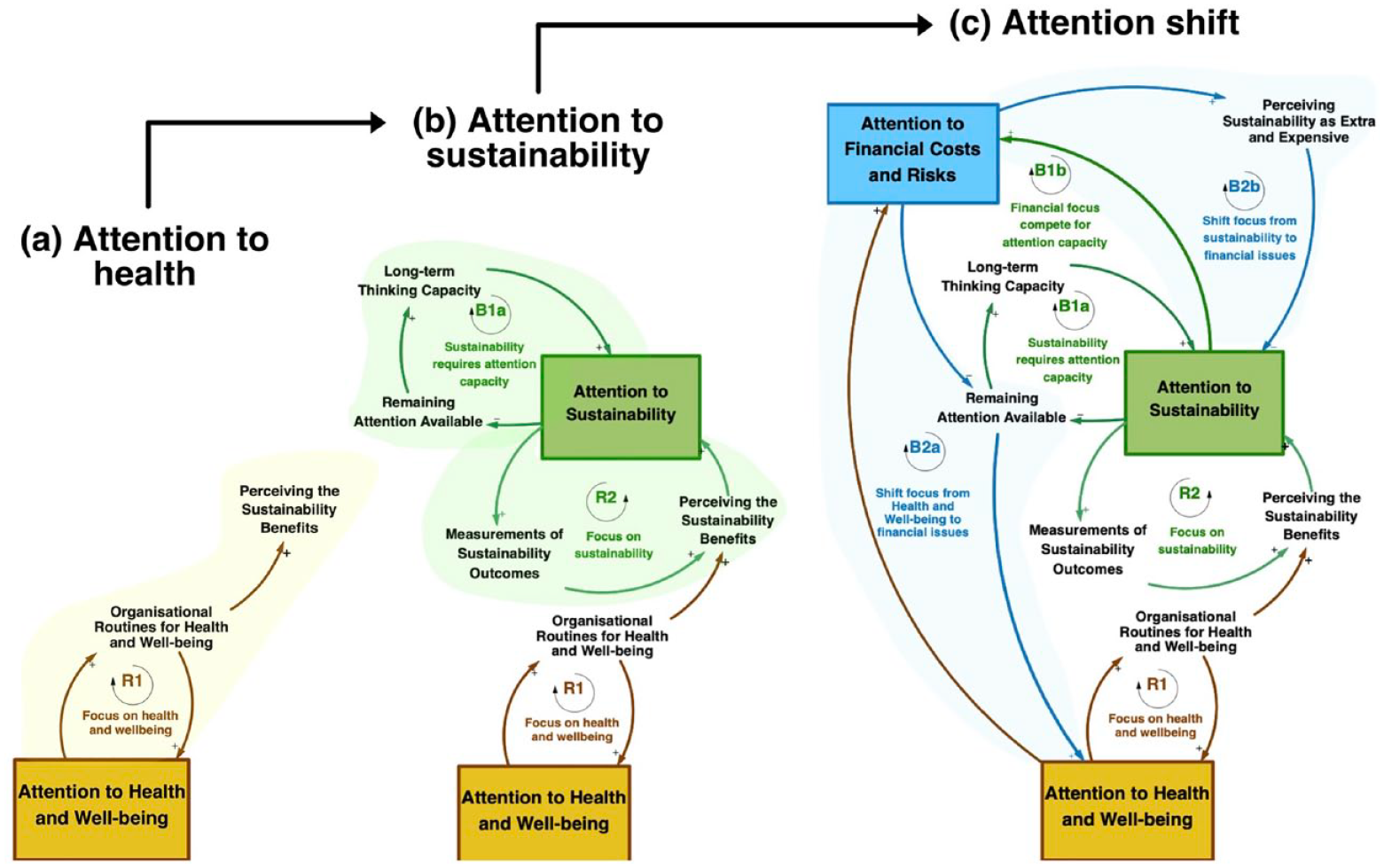
Causal Structures in Attention to Health, Well-Being, and Sustainability.
The second loop
Despite the similarities between R1 and R2, the activation of the two loops depends on different decision rules. While the organizational identity of a social landlord increases attention to HW, top-level ownership of sustainability was described as having a great impact on sustainable strategies. As a result of frequent changes in the top leadership team after a merger event, top-level support for environmental sustainability topics was recognized as insufficient. Details of the mapping for these links are provided in the pre-simplified CLD available in the Supplementary Materials.
The last component is the attention shift, as shown in Figure 4(c). Unlike private housing developers, HAs create financial surpluses to reinvest in additional social missions. This reinforces that regeneration decisions need to ensure that financial costs and risks are monitored and can be reimbursed by the development value. In meetings, there was a tendency to shift from attention to HW to attention to financial costs and risks, reducing the remaining attention available, and forming a balancing loop
The first quote from the sustainability manager in Table 3 describes how attention to social mission supports the development of organizational routines (R1) while emphasizing that attention to sustainability can shift focus toward financial costs (B2b). The second quote from the senior regeneration manager highlights the challenge of focusing on environmental sustainability tasks; they are perceived as additional and expensive endeavors (B2b). The quote also underscores the significance of developing long-term thinking capacity (B1a and B1b).
Example of Causal Links Identified in Quotes.
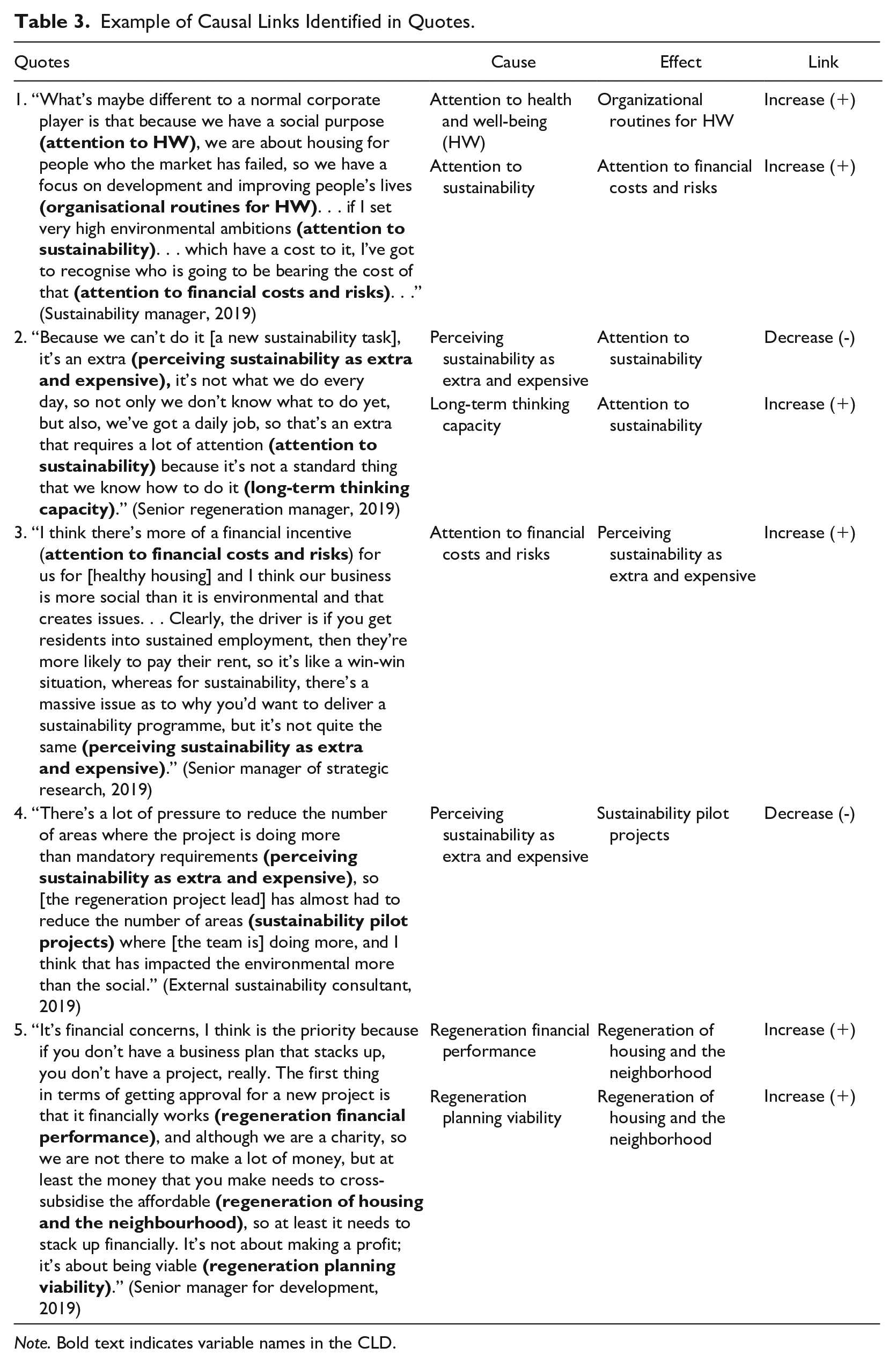
Note. Bold text indicates variable names in the CLD.
Imbalanced Environmental Sustainability and Health Focus
The second sector in CLD relates to the co-benefits between sustainability and health, and the imbalanced focus favoring HW initiatives. As shown in Figure 5, within the system, the R1 loop can initiate a positive cycle activating R2, R3, and B3 loops and thereby encouraging a greater focus on sustainability. However, the focus on HW initiatives emphasis becomes deeply entrenched, consuming a significant portion of decision-makers’ limited attention resources. As a result, even with the acknowledged co-benefits, focus on sustainability-driven objectives can be limited. This situation embodies the imbalanced focus between the two topics: while focusing on HW can yield benefits for sustainability, it also results in an imbalanced allocation of attention and resources, leading to a skewed distribution of focus and resources toward health over sustainability.
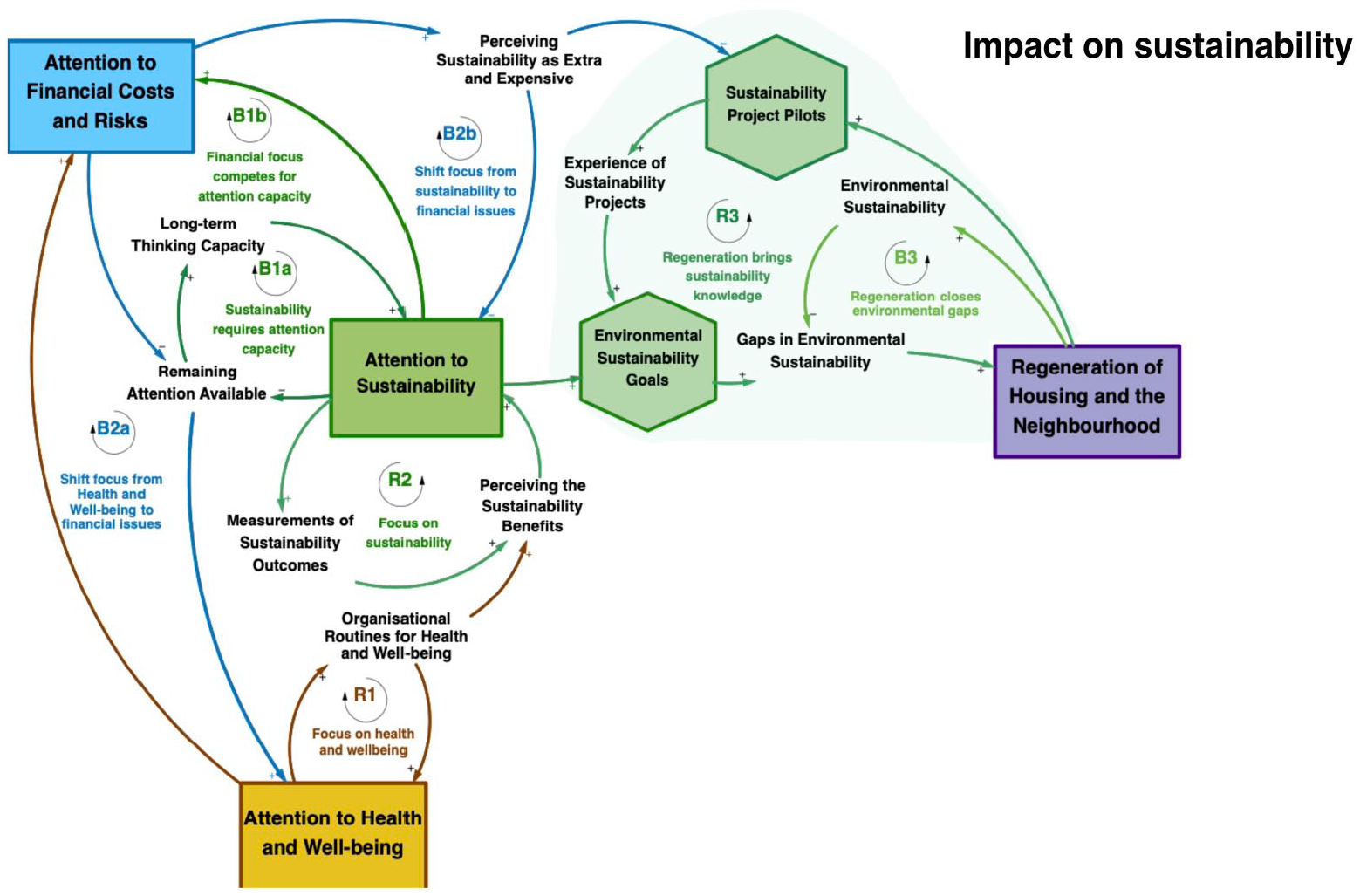
Attention to Sustainability and Impacts on Sustainability.
The regeneration team described environmental sustainability goals as “sustainable places, rather than just housing” and “buildable and more efficient and better residential schemes,” which shows that the framing of sustainability is not just environmental but also includes the interconnection between people and nature. The increase in attention to sustainability produces more opportunities to discuss environmental sustainability goals. As shown in the middle section of Figure 5, via the loop of
In the meetings, pilot projects trialing circular economy innovations or tree planting by school children were discussed to generate knowledge to share with other regeneration projects across the industry. In the CLD, the sustainability project pilots increase the experience of sustainability projects, which increases the environmental sustainability goals, helping decision-makers recognize the gaps in environmental sustainability, which forms a reinforcing loop
While attention to HW enhances sustainability efforts, the attention dedicated to social missions is reportedly skewed toward HW. The imbalanced focus favoring HW is evidenced by interviewees’ descriptions of the organization’s identity, structures, and routines in regeneration. The HA has a traditional identity rooted in offering affordable housing for vulnerable populations, which enhances R1. Creating healthy places for residents was viewed as a core mission by interviewees, whereas the benefits of sustainability work were not widely recognized. As expressed by the social value coordinator from the charity arm, “the term ‘social value’ can stretch; it can include sustainability, circular economy, things like that as well, but yes, us being a social housing provider primarily, our focus is more social.” In addition, the well-established routines within the formal structure also support the notion that healthy housing is more central to the business in contrast to environmental sustainability (R1 compared to R2). Some interviewees remarked that environmental sustainability topics were perceived as more peripheral to the HA’s mandate than health and well-being topics. Therefore, despite an inherent desire to achieve environmental sustainability, it was seen as less pertinent and “won’t always be the priority,” as articulated by a regeneration site manager. Also, in the delivery of regeneration projects, the social value coordinator from the HA’s charity arm shared routine structures of how they established contractual obligations of social value (employment, training, community support activities) that the external contractors need to comply with in regeneration. In contrast, the sustainability consultant was engaged on an external basis, and the sustainability manager mentioned that a crucial strategy to promote sustainability is to frame the mutual benefits of sustainability within health and well-being topics. Also, decision-makers within the HA tended to relegate environmental sustainability as a secondary priority compared with HW topics, as evidenced by the third quote in Table 3.
The imbalanced attention was particularly activated when decision-makers faced external pressures. According to the architects, complying with the minimum policy standards in regeneration projects is challenging despite the sustainability efforts to improve building performance through material changes and the use of PVs on roofs. The architects reported that the regeneration team faced pressure to scale back social mission initiatives beyond mandatory requirements, which disproportionately affected sustainability compared with HW initiatives. This perspective was supported by the external sustainability consultant, as seen in the fourth quote in Table 3. The quote shows that when environmental sustainability is deemed as a non-essential task (B2b), sustainability pilot projects and environmental impact can be directly compromised (R3 and B3). These mechanisms show the interconnection and competition between sustainability and HW, creating an imbalanced situation in the allocation of attention resources.
Engaging Community for Health and Well-Being
The third sector in the CLD addresses community engagement. The regeneration of housing and neighborhood is linked with gaps in housing conditions, as shown by the loop
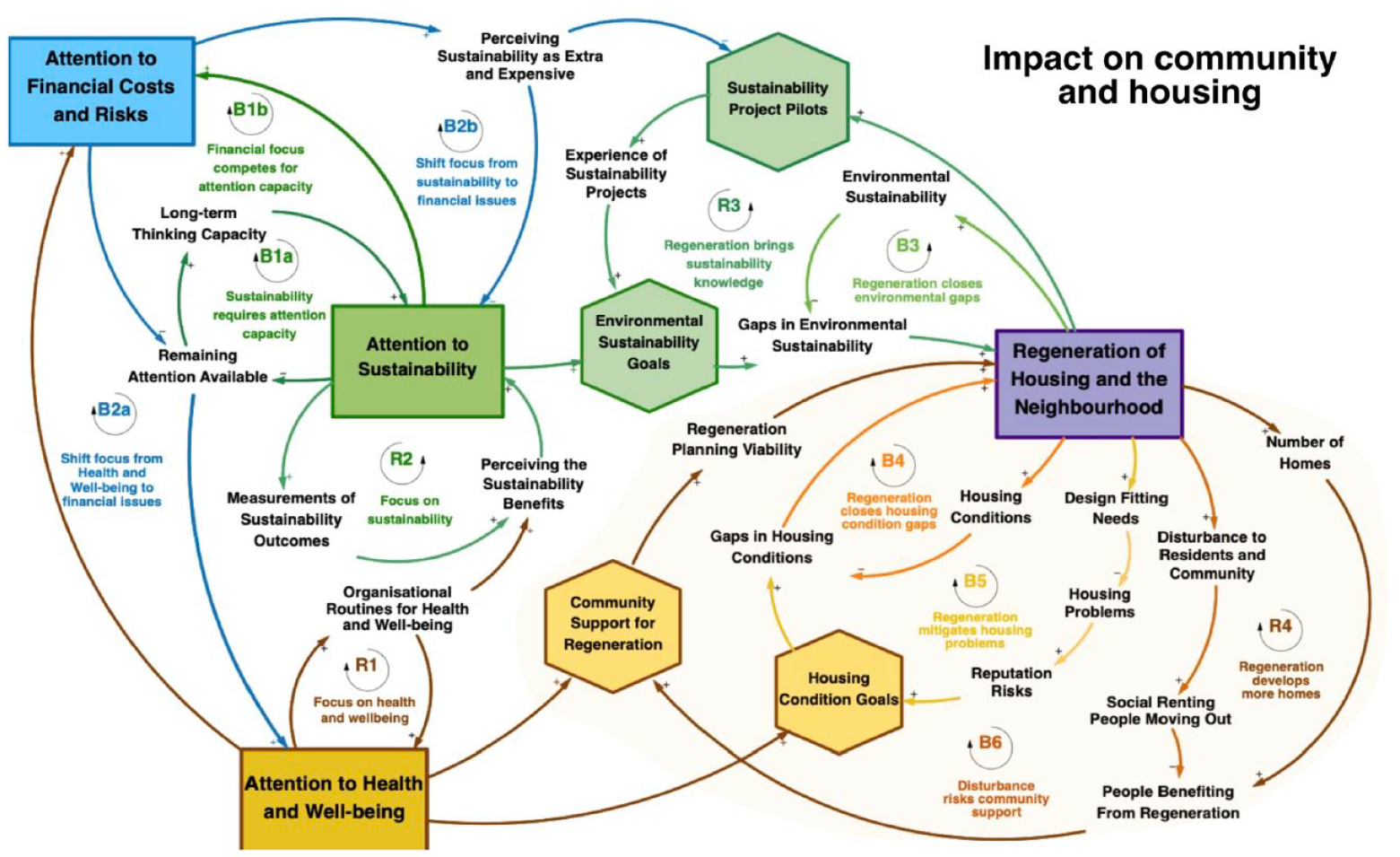
Impact on Community and Housing Conditions.
Architects stated that the regeneration of housing and neighborhood was viewed as a chance to design fitting people’s needs, decreasing housing problems and reputation risks, as shown in
Community support for regeneration is uniquely important, as it directly decides the regeneration planning viability. On engagement topics, “community buy-in,” “residents’ support,” and “residents’ agreement” were described as essential elements for project approval and were frequently mentioned in meetings. At an early stage of regeneration, the engagement activities focused on exploring housing tenures and demands, and opportunities for the HA to buy back properties to increase landlord responsibility over the estate. Regeneration increases the number of homes, which increases the number of people benefitting from regeneration, which is part of regeneration viability, providing that regeneration creates more homes (
However, regeneration also creates disturbance for residents and the community, which can result in social renting people moving out, decreasing the number of people benefitting from affordable housing (
Financial Efficiency and Performance
The last sector in the CLD focuses on financial efficiency and performance in regeneration. Interviewees said that the continuous decrease in government funding was pressuring the organization to consider financial efficiency. As shown in the upper-right of Figure 7, regeneration financial performance is critical, as the HA relies on developing and selling housing at market value to subsidize the regeneration. Long-term costs across the planning, demolition, and construction stages were used as a critical criterion to assess the overall financial performance. The cost variables mentioned explicitly in meetings include rent income loss during regeneration over the subsequent years of construction, and the demanded repair costs for poor-condition homes without regeneration. The higher the long-term repair costs or the lower rent loss, the more favorable the regeneration option. The number of homes in different housing tenures (social ownership, social/affordable rent, and private sale) significantly influences the projected financial returns. As described by a consultant in one of the planning meetings, private sales can “offset some of the lower (housing) values, especially in the shared ownership units.”
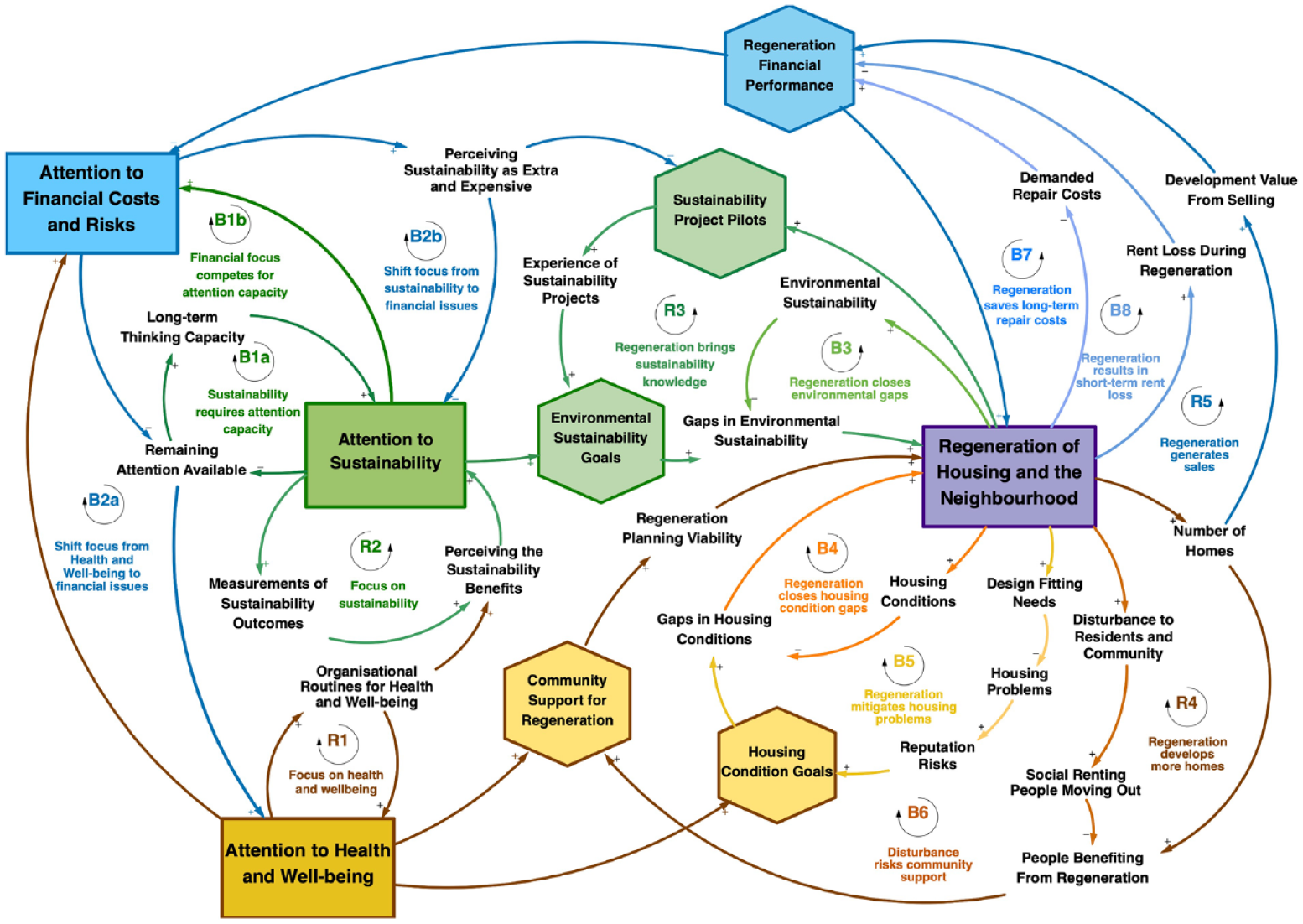
Causal Mechanisms Interconnecting Attention and Urban Regeneration.
In the CLD, B7, B8, and R5 describe how financial aspects are considered in regeneration. We use the variable regeneration financial performance to describe the excess expenditure in regeneration activities over the sales income and funding. Regeneration is viable when the demanded repair costs decrease (
The HA was described as a “very operational, reactive, responsive organisation,” and the role that the frequent regulation changes played in decision-making was stressed. The architects said that the external planning guidelines were changing too quickly, “almost on a yearly basis,” which often drives attention towards monitoring or forecasting planning standards and considering the implications on project viability. This results in increased attention to financial costs and risks, contributing to the up-and-down tendency regarding attention to policy, especially in the planning stages.
Macro Loops and Unintended Consequences
In the CLD, we show that attention to HW (R1) and environmental sustainability (R2, B1a) compete with attention to financial efficiency and costs (B1b, B2a, and B2b). The attention competition influences, and is influenced by, the social, economic, and environmental aspects of regeneration. Specifically, the sustainability outcomes (R3 and B3) are directly linked with the attention to sustainability. And engagement in the community (B4, B5, R4, and B6) is closely linked with the attention to HW. Attention to financial aspects (R5, B7, and B8) can further trigger the attention shift mechanisms by activating or guiding the attention towards financial resources (B2a and B2b). These core loops underpin additional macro loops of decision-making in regeneration. Documentation of these macro loops and the unintended consequences can be found in the Supplementary Materials. Here we summarize the unintended consequences arising from systems complexity.
First, a decline in the financial performance of regeneration initiatives—whether through pathways B7, B8, or R5—elevates the focus on financial costs and risks. Such emphasis escalates the view of sustainability as excessive and costly, subsequently reducing attention toward sustainability and pilot projects associated with regeneration (B3 and R3). Second, an intensive focus on either financial costs and risks or sustainability can weaken the attention to HW (B1a and B1b), which reduce the attention given to housing conditions and community support within the regeneration paradigm (B4, B5, and R6), impacting regeneration viability (B6) and perceptions of sustainability benefits (R1 and R2). Furthermore, when attention to sustainability decreases, the regeneration focus pivots to community support and housing conditions (B4, B5, B6, and R4). Although this continues to drive the regeneration of housing and neighborhood, it can reinforce attention focusing on HW over sustainability, contributing to the drifts of sustainability missions. These macro loops further reveal the intertwined nature of the attention allocation process. They showcase how a shift in one domain can set off a cascade of unintended effects throughout the system in complex ways.
Discussion
While multiple studies have suggested a holistic or systems approach to decision-making in regeneration (Hemphill et al., 2004; Huang et al., 2020; Maccagnan et al., 2019; Zhou et al., 2022), these studies do not explore how decision-makers can navigate their attention decisions with competing demands, particularly those faced by actors such as HAs who significantly influence social housing regeneration. We analyzed decision-making in regeneration by exploring the patterns of decision-makers’ attention (Ocasio, 2011; Shepherd et al., 2017) in regeneration meetings, and identified feedback mechanisms interconnecting the attention and social, economic, and environmental aspects in urban regeneration.
Risks of Mission Drift in Regeneration
Long-standing challenges in regeneration include mixed health and sustainability outcomes (Crawford et al., 2014; Power, 2008; Thomson et al., 2009), local tensions (Slawinski et al., 2021), and risks of gentrification and displacement (Arthurson et al., 2015; McCartney et al., 2017). These challenges exemplify risks of mission drift, where organizations with complex institutions shift away from their original social missions (Ebrahim et al., 2014; Ometto et al., 2019). For hybrid organizations such as HAs, decision-makers face competing but interconnected demands (Pache et al., 2024). As shown in the CLD, these competing demands cascade into various aspects of regeneration projects.
By using HAs as an example, we found that attention to health and wellbeing (HW) and sustainability is not sustained throughout the projects. We contribute to the conversation of mission drift by highlighting two layers of mission drift in regeneration. First, the structural interplay of competing logics, instead of the single events (Hoffman & Ocasio, 2001; Nigam & Ocasio, 2010), drives the dynamics of attention allocation, particularly for organizations such as HAs that are striving to balance social mission with financial objectives. When decision-makers discuss social mission topics, attention often shifts toward financial costs and risks, decreasing the pool of available attentional resources for sufficiently engaging with social mission topics. These attention-shift mechanisms (B2a and B2b in Figure 4) can be triggered when financial performance decreases (Figure 7). This mechanism shows that the attention towards social missions needs to be viewed as a dynamic process where the increase of stimuli towards one aspect might quickly shift toward other aspects.
Second, there is an imbalanced focus between sustainability and HW within social missions. Despite being closely linked, HW is often prioritized over sustainability, which aligns with previous studies on the secondary priority of sustainability (Sunikka & Boon, 2003; Winston, 2010). Especially under external pressures of resource competition, there is a risk that attention to HW will not adequately extend to sustainability, resulting in sustainability topics being overlooked or not insufficiently supported. When communication routines are entrenched around HW, the perceptions of environmental sustainability as an expensive and nonessential mission can further leave sustainability topics to drift away from conversations.
Sustaining Attention to Sustainability and Health
Given the different layers of mission drift in regeneration; we argue that to integrate systems approaches in regeneration, it is essential to consider how the structural complexity of competing demand can lead to certain aspects of social missions receiving narrow, insufficient, or balanced attention. Previous decision-making support frameworks in regeneration (Huang et al., 2020; Wang et al., 2021) rarely considered the underlying decision-making mechanisms that we have explored. Our CLD directs a few strategic areas that facilitate sustaining attention toward sustainability and health.
We show that knowledge-building can be critical in sustained attention to sustainability. While there are mixed views on the role of knowledge, with some building professionals suggesting that financial barriers overshadow knowledge gaps (Pineo & Moore, 2022), we found that experience in previous or pilot projects was valuable in creating attention inflows to sustainability, which emphasizes the importance of building incremental knowledge (Hughes et al., 2020). However, attention to topics does not necessarily translate into experience and knowledge (Ocasio et al., 2020). Thus, we contend it is critical to ensure that continuous attention inflows for knowledge-building process in meetings, which is particularly important for sustainability initiatives when they are not integrated into formal organizational communication structures (Ocasio et al., 2015, 2018).
While we agree top-level leadership and policy are powerful stimuli (Shepherd et al., 2017) in directing attention to social missions, we further discovered that attention to social missions strongly relies on how decision-makers navigate through structural tensions stemming from competing demands and priorities. From a systems thinking perspective, exogenous changes in funding and planning policies alone, may not impact these feedback mechanisms fundamentally but rather reinforce the attention shifts (Zhou et al., 2022). In alignment with recent findings in attentional drifts and shifts (Pache et al., 2024), we found that attention-shifting is a fundamental mechanism when decision-making needs to embrace competing demands. For decision-makers dealing with institutional co-exsistance and contradictions, such as HAs, in addition to maintaining a consistent inflow of attention to diverse aspects of social missions, they also need to remain vigilant of the complex mechanisms of attention shifting. To sustain attention to sustainability and HW, recognizing the interconnectedness of various elements in regeneration activities is crucial. From a systems thinking perspective, equally important is the establishment of organizational structures capable of redirecting attention back towards social missions in case of attention shifts.
Systems Approaches in Qualitative Analysis
This study used systems thinking tools to theorize attention management against competing demands. Building on qualitative analysis in grounded theory (as exemplified by Burchill & Fine, 1997; Eker & Zimmermann, 2016; Van Oorschot et al., 2013), our approach enhances existing methods by combining qualitative analysis with an examination of structural complexities and behaviors. This includes creating change-over-time graphs based on the qualitative analysis of meeting topics to capture the temporal aspects of attention, and identifying causal structures to better understand the system behaviors.
The process of developing the CLD from qualitative coding involved using codes from multiple levels (first-order, second-order, and aggregated dimensions). The analysis was deeply grounded in qualitative coding, but only key codes and relevant concepts were used, resulting in some codes not being used or adapted in the CLD. For example, codes such as “covid-19,” “construction and groundworks,” and “procurement” were not included in the final CLD. Though this process may omit certain details in causal relationships, it demonstrates the value of employing change-over-time patterns of codes as structural data. Through these innovative linkages of grounded theory and systems thinking methods, we offer a novel process for investigating temporal and complex dimensions in qualitative data.
Limitations and Future Research
The fundamental premise of our analysis was that attention is a valuable organizational resource. We adopt the idea that sustained allocation of attentional resources can significantly indicate the development, implementation, and elaboration of ideas into a distinctive strategic agenda (Ocasio & Joseph, 2018). Nevertheless, it is important to recognize that the high attentional fraction does not always imply positive changes in outcomes. For example, a decrease in attention could result from the topic being sufficiently addressed in a previous meeting, or it could be enough to activate actions. While our study proposes that comparing attention patterns at various stages of regeneration, combined with a system analysis approach, can provide valuable insights into decision-making, future research should explore the intricate relationship between attention allocation and outcomes directly. In addition, it would be beneficial to investigate under what conditions a relatively small allocation of attention can trigger strategic actions.
Although we generated in-depth theoretical insights into decision-making dynamics in urban regeneration projects led by an English HA, the findings and CLD are based on a single case study. The HA in this case study is a large HA managing multiple sites across the country, which means that decision-making from the central regeneration team has widespread implications across all sites. In addition, the HA has a specialized charity division solely dedicated to delivering health and well-being initiatives. These contextual characteristics might limit the generalizability of the findings to other HAs with different structures and focus. Future research should investigate the dynamics of attention allocation within broader contexts. Such studies could shed light on how these contextual variations influence the manifestation of mechanisms and dynamics.
Furthermore, the qualitative insights and the CLD represent the stakeholders’ perspectives and may not encompass all possible relationships or factors influencing regeneration activities. For example, we mapped that regeneration activities increase environmental sustainability as suggested by interviewees, but the outcomes of environmental sustainability in regeneration are debatable (e.g., Power, 2010). Future studies could benefit from employing different methodologies to scrutinize, validate, or challenge the causal links represented in the CLDs.
The selection of core loops, outlined in the methods section, is the result of a synergistic approach informed both by the analysis of systems behaviors observed during regeneration meetings and an in-depth qualitative analysis grounded in empirical data. While our strategy centered on identifying feedback loops as crucial in conceptualizing system behaviors, it is important to note that the model presents several additional macro loops. We outlined the example analysis of macro loops in the Supplementary Material, but given the absence of a simulation model, quantifying the centrality of these loops is inherently challenging. While we contend that the core loops play a substantial role in generating the documented behaviors, we recommend future research to delve deeper into the dominance of core and macro loops on the dynamics under study.
In addition, emerging built environment research demonstrates that participatory group model-building workshops can facilitate decision-makers’ understanding of complex interactions and support a systems perspective (Macmillan et al., 2016; Sharpe et al., 2018). Future research can, thus, take up these ideas and investigate how direct engagement with organizations, for example, via workshops, can create awareness of attention allocation and decision-making.
Conclusion
Grounded in a case study involving an English HA and its regeneration projects across different stages, we found that attention to sustainability, health, and well-being was not sustained as the regeneration project proceeded. We identified causal structures that explained the attention shift and competition in regeneration project meetings. Given the risks of social mission drift, we argue integrating systems approaches into regeneration requires a thorough examination of the structural complexity of competing demands. For methods, by combining qualitative analysis with an examination of structural complexities and behaviors, we offer a novel approach to theorizing and analyzing the decision-making dynamics with a systems perspective.
Supplemental Material
sj-docx-1-oae-10.1177_10860266241236972 – Supplemental material for Sustaining Attention to Sustainability, Health, and Well-Being in Urban Regeneration
Supplemental material, sj-docx-1-oae-10.1177_10860266241236972 for Sustaining Attention to Sustainability, Health, and Well-Being in Urban Regeneration by Ke Zhou, Elanor Warwick, Marcella Ucci, Mike Davies and Nici Zimmermann in Organization & Environment
Footnotes
Acknowledgements
The authors thank feedback received from the 2021 European Group for Organizational Studies and the 2022 International System Dynamics conference on the initial drafts and ideas. They thank the participants from the case study Housing Association for their enormous support throughout the case study process.
Author Contributions
Conceptualization, K.Z.; methodology, K.Z and N.Z.; data analysis and writing, K.Z.; reviewing and editing, K.Z., E.W., M.U., M.D., and N.Z. All authors have read and agreed to the published version of the manuscript.
Declaration of Conflicting Interests
The author(s) declared no potential conflicts of interest with respect to the research, authorship, and/or publication of this article.
Funding
The author(s) disclosed receipt of the following financial support for the research, authorship, and/or publication of this article: This study is funded by the National Institute for Health and Care Research (NIHR) School for Public Health Research (SPHR), Grant Reference Number PD-SPH-2015. The views expressed are those of the authors and not necessarily those of the NIHR or the Department of Health and Social Care.

Supplemental Material
Supplemental material for this article is available online.
Author Biographies
References
Supplementary Material
Please find the following supplemental material available below.
For Open Access articles published under a Creative Commons License, all supplemental material carries the same license as the article it is associated with.
For non-Open Access articles published, all supplemental material carries a non-exclusive license, and permission requests for re-use of supplemental material or any part of supplemental material shall be sent directly to the copyright owner as specified in the copyright notice associated with the article.
