



Abstract
As many local places globally suffer from ecological and social decline, sustainability research increasingly recognizes the critical importance of studying organizational efforts toward regenerating local communities and ecosystems. This emerging research, however, overlooks the role of ecological knowledge, that is, place-based understanding of the processes and functions of the ecosystems in which organizations operate. As such, we ask “How do organizations harness ecological knowledge to advance the regeneration of local places?” Through an inductive study of nine certified organic farming organizations on Vancouver Island, Canada, we find that organizations engage in three cyclical and closely interlinked practices of identifying, acquiring, and applying ecological knowledge which together enhance their organizational performance while contributing to regenerating the local social-ecological systems. Our empirically grounded model of leveraging ecological knowledge contributes to research on sustainability and place, and to studies of regeneration, by uncovering the specific practices that enable firms to develop place-based regenerative solutions.
Keywords
Degenerative modes of organizing have increasingly degraded, devitalized, and damaged local places, including communities and the ecosystems they rely on (Shrivastava, 1994; Shrivastava & Kennelly, 2013). For example, conventional forms of agriculture (Drinkwater, 2009) diminish biodiversity, deplete the soil, and pollute air and water by relying on monocropping, chemical fertilizers, and tilling while increasing health risks to people and adjacent communities exposed to pollutants (Horrigan et al., 2002). In contrast, farms practicing organic agriculture focus on building a holistic understanding of complex social-ecological interactions in the places where they operate (Drinkwater, 2009) to improve crop productivity, ecosystem balance, and community resilience (Sandhu et al., 2010). These place-embedded regenerative organizations are not only dependent on their local social-ecological systems (SESs) but also actively seek to restore them (Guthey et al., 2014).
With a growing recognition of the need to revitalize depleted communities and their ecosystems, organizational sustainability scholars are calling for research on how organizations contribute to regenerating local places (Hahn & Tampe, 2021; Muñoz & Branzei, 2021). Although research has begun to unpack how place-based organizing (Guthey et al., 2014; Shrivastava & Kennelly, 2013) and regenerative organizations (Slawinski et al., 2021) contribute to restoring the communities and ecosystems in which they are embedded (Muñoz & Branzei, 2021), missing from this work is a detailed understanding of the role of ecological knowledge in such processes. This omission is surprising given that ecological knowledge is the local place-based knowledge about ecosystem processes and functions held by groups in immediate contact with their natural environment, such as farmers (Folke et al., 2002). As such, it represents a distinct and essential source of knowledge for organizations seeking to create and strengthen the capacity of nature, communities, and their organizations so that each can support the other in mutually beneficial ways. To date, organizational research on ecological knowledge has examined mainly how such knowledge enables organizations to improve their performance (Smith et al., 2020) and how it may lead to greater economic, environmental, and social benefits for organizations and their surrounding communities (Pogutz & Winn, 2016), however, it has not connected explicitly with research on regeneration of place. Our paper, therefore, asks: How do organizations harness ecological knowledge to advance the regeneration of local places?
We address this question through an inductive study of nine certified organic farming organizations on Vancouver Island, Canada, that were working to continuously improve their farming practices. Our findings revealed that these organizations engaged in cyclical and closely interlinked practices of seeking, acquiring, and applying ecological knowledge that together enabled them to contribute to restoring the natural ecosystems and enhancing the communities in their geographical locations. Our model offers an empirically grounded account of how firms gather and deploy important local ecological knowledge to not only advance their organizational goals but to strengthen their local places. In so doing, we make three contributions to research on sustainability and place, and more specifically to studies of regeneration. First, we advance research by uncovering the specific practices that enable firms to develop place-based solutions that contribute to regeneration. Second, the model highlights the interplay between social elements (i.e., the focal farm and local community) and ecological elements in the regeneration of place. In doing so, we offer a more nuanced conceptualization of place as encompassing SESs. Third, our model sheds light on how ecological knowledge, distinct from traditional organizational knowledge, serves as a vital resource for forward-thinking firms seeking to cultivate mutually beneficial relationships between nature, communities, and their organizations.
Regenerating Local Places
Local places around the world have suffered from mounting sustainability crises brought on by extractive ways of doing business (Shrivastava, 1994). Researchers have examined how these places’ SESs—that is, the nested multilevel systems that encompass both humans and nature (Folke et al., 2003)—have been devastated by forces such as globalization (Johnstone & Lionais, 2004; Shrivastava & Kennelly, 2013) and economic decline linked to degraded natural systems and environmental catastrophes (e.g., Kangogo et al., 2021).
To address these challenges, regeneration has emerged as a promising area in the popular press, which has explored topics such as regenerative enterprise (Roland & Landua, 2015), regenerative leadership (Hutchins & Storm, 2019), regenerative economics (Elkington, 2020), and regeneration to address the climate crisis (Hawken, 2021). A number of academic disciplines have also begun to explore regeneration. Originating from the urban planning and design domain (Cole, 2012; Garud et al., 2021), the concept of regeneration of place has more recently appeared in organization studies, where it is defined as a process through which organizations “purposefully restore and regenerate degraded living ecosystems and deliberately build resilience in and improve the well-being of the communities relying on such ecosystems” (Muñoz & Branzei, 2021, p. 510). As such, organizations are at the center of regenerative organizing, and they address both environmental sustainability crises such as habitat loss, large-scale deforestation, growing pollution, and organic matter decline (Muñoz & Branzei, 2021) and social sustainability crises such as communities’ economic decline and cultural devitalization (M. Murphy et al., 2020; Slawinski et al., 2021). Organizations that pursue regeneration aim to promote positive and enduring benefits to human and ecological systems, which requires enhancing the capacity of SESs to maintain their life-enhancing conditions (Du Plessis & Brandon, 2015; Rahman et al., 2020; Robinson & Cole, 2015).
In parallel, research on place and sustainability in management research has similarly begun to examine how place-embedded organizations (i.e., organizations that are rooted in place) are more likely to engage in sustainability behaviors, and can even “serve as buffers against the hypermobility of capital and the negative fallout from globalization” (Shrivastava & Kennelly, 2013, p. 93). For example, such research has examined the connections that organizations have with place and how these attachments contribute to sustainable development (Guthey & Whiteman, 2009; Guthey et al., 2014; Mazutis et al., 2021). Drawing on research in geography (T. Cresswell, 2004; Relph, 1976; Tuan, 1977), sociology (Gieryn, 2000), and management studies (Guthey & Whiteman, 2009; Thomas & Cross, 2007), organizational sustainability scholars have begun to unpack the multidimensional characteristics of place, which encompasses its geographical location, physical landscape, and cultural meaning (Thomas & Cross, 2007). Geographical location refers to spatial coordinates, landscape encompasses the natural environment (Gieryn, 2000), and meaning relates to cultural and social dimensions, encompassing individuals’ and communities’ attachments and interactions in the place (Shrivastava & Kennelly, 2013). Across various disciplines, researchers studying place have pointed to its natural, social, and cultural aspects, including how humans experience and make sense of their place (Thomas & Cross, 2007; Tuan, 1977). In other words, it is in local places that social systems, including people, organizations, and communities come together with the natural environment (Guthey et al., 2014) and that humans engage directly with ecosystems (Relph, 1976; Whiteman & Cooper, 2000). However, this research stream has paid little attention to how organizations rooted in specific locations leverage their deep understanding of their surroundings to promote solutions for regeneration within their local SESs.
Research on SESs has evolved separately from research on place, and yet the two literature streams are closely related. SESs encompass both social systems—encompassing diverse relationships and interactions among humans, communities, institutions, and organizations—and ecosystems (i.e., the natural environment), and exist at different scales, including at the local scale (Berkes et al., 2000; Williams et al., 2017). The SES research explores organizations’ dependence on ecosystem resources for their survival and growth, and how their activities can have either negative or positive impacts on ecosystem dynamics (Chapin et al., 2009). Combining this previous research on place and SESs, we define place as a geographic location that consists of a local social system, including the experiences of individual community members, such as customers, organizations, and institutions within the locale and their connection to it, as well as the local ecological system, including the soil, plant and animal species, waterways, and geological formations found therein. This definition captures the interactions and bidirectional relationships between humans and nature that occur in a place.
Meanwhile, agricultural research has examined regeneration, studying farming practices that seek “to improve the health of soil or to restore highly degraded soil, which symbiotically enhances the quality of water, vegetation and land-productivity” (Rhodes, 2017, p. 80). These practices may include, but not be limited to, the activities of diversifying crop rotations (see Francis et al., 1986; Rhodes, 2012) (see Breier et al., 2023; Lockeretz, 1988; Rhodes, 2017) and tillage (e.g., Francis et al., 1986; LaCanne & Lundgren, 2018), and employing mixed farming systems (Diop, 1999; LaCanne & Lundgren, 2018) while maximizing the use of manure and compost (e.g., Breier et al., 2023; Rhodes, 2017). This research stream mainly focuses on the environmental dimension of regeneration, specifically improving soil health, which serves as the foundation of ecological systems, to ensure sustainable food security systems. In this context, regeneration in agriculture is seen as a potentially powerful solution to address place-based issues related to ecosystem degradation including deterioration of soil health and water quality. However, this research stream has mostly overlooked the social dimension of regeneration (see Gosnell et al., 2020; Müller, 2020; Schreefel et al., 2020 for some exceptions), including the role of organizations in its discussions.
Based on the insights outlined above, we conceptualize regeneration of place as the process by which individuals or organizations aim to revitalize, preserve, or enhance the well-being of local ecological systems, as well as the well-being of the local social systems within a specific geographic location in which they are embedded. While this prior research has advanced our understanding of the role of place in sustainability more broadly and in regeneration more specifically, we lack an understanding of how place-embedded organizations rely on their understanding of place to advance solutions to local sustainability problems, including the local social-ecological context (Guthey et al., 2014; Whiteman et al., 2013). In the following section, we examine research on ecological knowledge as a means for an organization to regenerate place by strengthening its relationship with nature and communities.
Research on ecological knowledge offers a promising area in which to advance our understanding of place-based approaches to regeneration. Ecological knowledge refers to the knowledge about the processes and functions of the ecosystems in which organizations operate (Folke et al., 2005; Whiteman, 2004). Organizations can develop this knowledge by building a deeper understanding of and learning about species or practices by people closely linked to their natural environment (Pogutz & Winn, 2016; Rist et al., 2010). Ecological knowledge is typically tied to specific locations, geographically focused, and deeply rooted in social contexts (Whiteman & Cooper, 2000) and is commonly shared among different groups through observations, narratives, field experimentation, and accumulated practical experience gained over the years (Pilgrim et al., 2008; Uprety et al., 2012). Building knowledge about ecosystem processes and functions, thus, necessitates collaborations, partnerships, and interactions among diverse actors at different levels, including communities, non-profit organizations, and other groups that possess varying degrees of knowledge about local ecosystems (Berkes, 2017).
Research in organization studies to date has focused mainly on how firms reach beyond their existing organizational boundaries to gather new ecological knowledge about their interdependencies with nature and how they incorporate this knowledge into their organization (see Smith et al., 2020). More specifically, research has examined how organizations accumulate ecological knowledge (Whiteman & Cooper, 2011), and incorporate it into their core strategies (Baudoin & Arenas, 2022; Lertzman & Vredenburg, 2005; Pogutz & Winn, 2016; Winn & Pogutz, 2013). However, much of this research has focused on the impact of ecological knowledge on firms’ environmental and financial performance (Illge & Preuss, 2012; Pogutz, 2014; Rai, 2012). In addition to enhancing organizational performance, ecological knowledge has the potential to contribute to the regeneration of local places as it enables an organization to learn about its embeddedness in the local ecosystems (Smith et al., 2020) and to access place-based knowledge that is essential for regenerating degraded places or depleted communities (Muñoz & Branzei, 2021; Shrivastava, 1994). However, management studies have so far paid relatively little attention to the role of ecological knowledge in advancing the regeneration of communities and ecosystems, focusing instead on organizational performance (Howard-Grenville et al., 2007; Whiteman et al., 2013). As such, our understanding of how it can enable firms to enhance communities and ecosystems in local areas remains limited.
Method
To examine how organizations harness ecological knowledge to advance the regeneration of the places in which they are embedded, we employed an inductive grounded theory approach (J. W. Cresswell, 2003; Gioia et al., 2013; Strauss & Corbin, 1990). This approach allowed us to explore the focal phenomenon and build theory on critical processes that are currently not well understood (C. Murphy et al., 2017). We collected data from nine farming organizations based on Vancouver Island in British Columbia (BC), Canada. These farms were selected because they had undergone organic certification, had a long history of and experience in managing environmental issues in their local places, and had direct or indirect involvement in ecosystem and biodiversity preservation projects. Organic farming optimizes “the productivity and fitness of diverse communities within the agroecosystem, including soil organisms, plants, livestock, and people” (Canadian General Standards Board, 2021, p. iii). While conventional farming relies on heavy uses of synthetic chemicals, fertilizers, and pesticides for maximizing yield, organic production focuses on conserving soil health and regenerating nature without the use of any harmful chemicals (Rodale Institute, 2022). Researching farms, their key decision-makers, and other stakeholders involved in organic farming provided an ideal context in which to study the regeneration of place, given that conventional farming degenerates places, and that practicing organic farming requires a system-level understanding of the challenges of sustainability, including ways to promote and enhance agroecosystem health, biodiversity, and local communities (Gomiero et al., 2011).
Research Context
Vancouver Island, located on the West Coast of Canada in BC, has a rich agricultural heritage due to its favorable soil conditions, temperate marine climate, and microclimates. This region offers an ideal environment for cultivating a diverse range of crops including vegetables, berries, apples, and horticulture crops that are produced mainly for the local market. Since the 1980s, the agricultural sector in the region has experienced a transition toward organic farming as a response to the limitations and negative impacts associated with large-scale, conventional farming practices. Conventional farming primarily relies on synthetic pesticides, insecticides, and fertilizers and promotes monocropping, with the repeated cultivation of the same commodity crops. It involves the use of genetically modified, hybrid seeds and heavy machinery, enabling larger farming scales and higher yields. Monocropping-based intensive conventional farming practices are major contributors to soil erosion, freshwater depletion, biodiversity loss, and climate change (Weituschat et al., 2022). These practices exacerbate these environmental issues, leading to negative impacts on ecosystems and natural resources (Gomiero et al., 2011). Recognizing these negative impacts associated with conventional farming and the growing market for local organic produce, many farms on Vancouver Island began seeking organic and regenerative farming certification through the Islands Organic Producers Association and the BC Association for Regenerative Agriculture.
Certified organic farming involves business operations that are sustainable and in harmony with nature (Canadian General Standards Board, 2021). In BC, farms are awarded Certified Organic Status annually, following a rigorous evaluation process. This status indicates strict adherence to soil fertility, nutrient management, and other criteria, emphasizing the need for farming organizations to establish strong, lasting ecological relationships with their place. To maintain their certified organic status, these farming organizations consistently work to develop and sustain their production methods, providing wholesome and nutritious food for humans while also contributing to the health and balance of local ecosystems. Today, organic farming has become an important form of alternative agriculture to regenerate the depleted ecological systems in the region. Organic farming practices such as composting, crop rotation, and diversity protect wildlife, watersheds, and promote local food security while avoiding the use of harmful chemicals. It also includes practices such as soil nourishment and crop adaptation to local conditions to support natural growth and environmental protection.
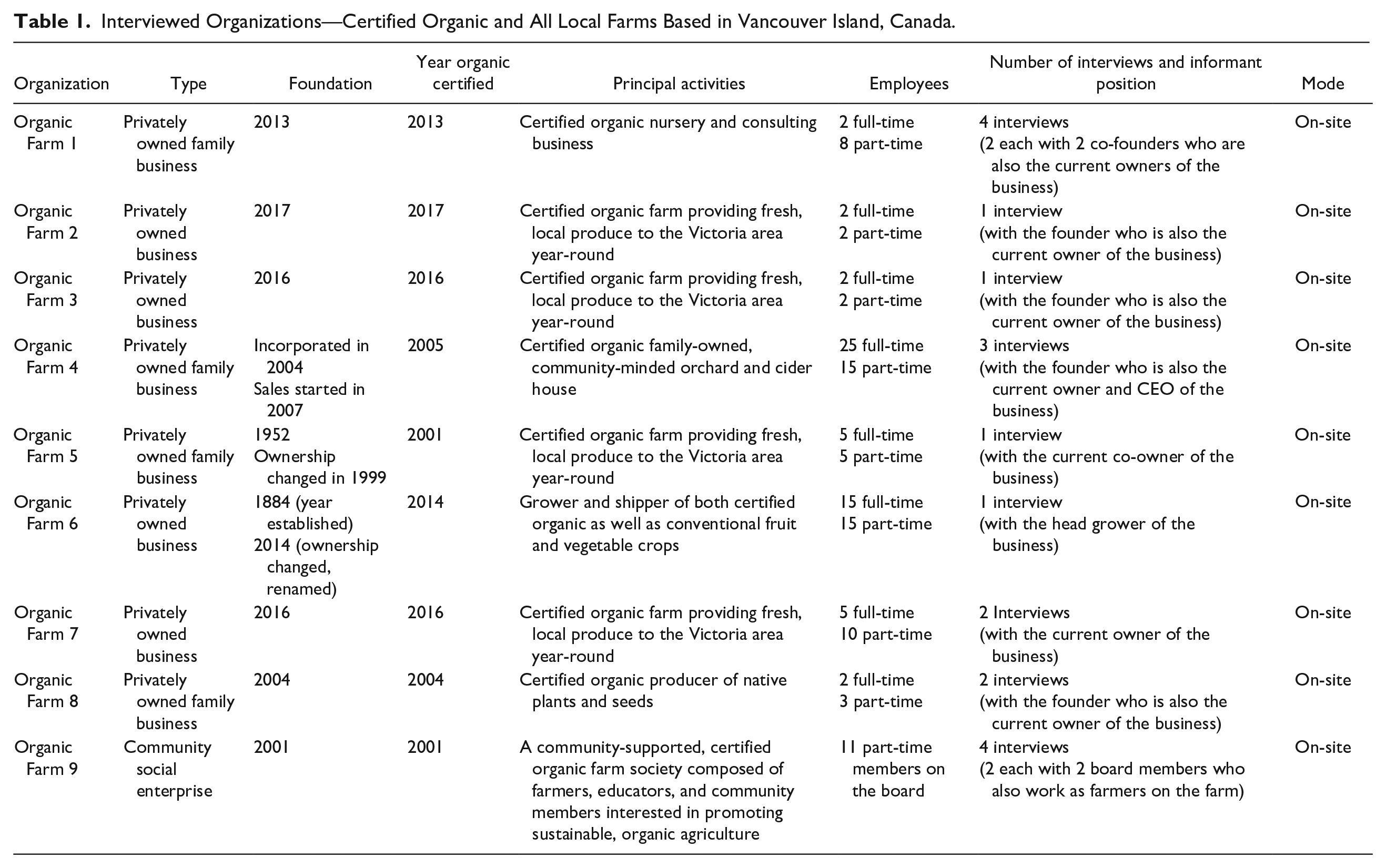
To achieve certification, organic farmers must embody the goals of economic, ecological, and social vitality, thus adopting the fundamental principles of sustainability. Transitioning from conventional to organic farming is a slow, gradual process; it can take up to 5 years to complete and it requires time, patience, and a willingness to learn and unlearn. Indeed, the conversion to organic production requires a complex system change and the principles of organic production fundamentally challenge aspects of conventional agricultural practices and their values. Maintaining organic certification requires businesses to continually implement and enhance growing programs that contribute to regenerating soil, conserving water, and ensuring the overall well-being of the farm ecosystem. The nine certified organic farms in our study ranged from 5 to 21 years in operation, had between 2 and 25 full-time employees, and grew a variety of organic crops. Table 1 outlines each of the farms’ key characteristics.
Interviewed Organizations—Certified Organic and All Local Farms Based in Vancouver Island, Canada.
Data Collection
We drew on a variety of sources of data to generate a comprehensive, multi-faceted, and reliable understanding of the focal phenomenon from different perspectives (Eisenhardt & Graebner, 2007; Yin, 2013). Consistent with the Gioia approach (see Corley & Gioia, 2004), we relied on in-depth, semi-structured, one-on-one interviews as the primary source of data, with public documents and observation providing important supplementary sources for gaining a deeper understanding of the research context and the phenomenon under study.
Interviews
Between April 2018 to April 2019, the first author conducted 12 initial interviews and 7 follow-up interviews (i.e., a total of 19 in-depth interviews) with 11 informants across the 9 certified organic farms. To ensure confidentiality, we assigned the farms pseudonyms, listing them numerically from Farm 1 to Farm 9. Interviews lasted from 45 to 90 min; all initial interviews lasted at least 60 min. During the data collection and analysis process, we conducted follow-up interviews with the selected previous participants to seek clarification and to explore the emerging themes that had been identified. All interviews were recorded using a digital voice recorder with permission from the respondents. In addition, the first author took detailed field notes during all interviews to provide a more holistic account of each interaction, including non-verbal cues and subjective impressions.
Public Documents
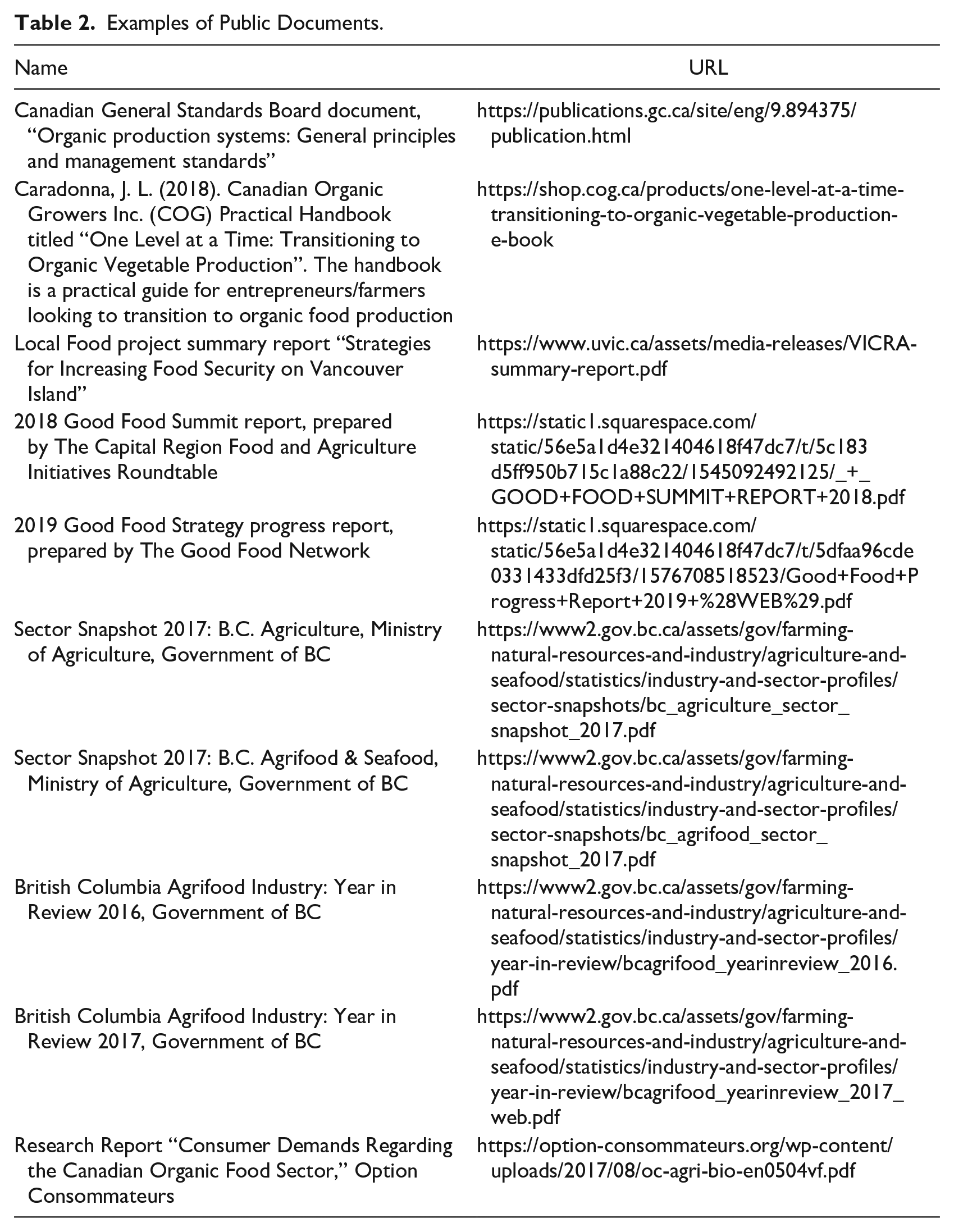
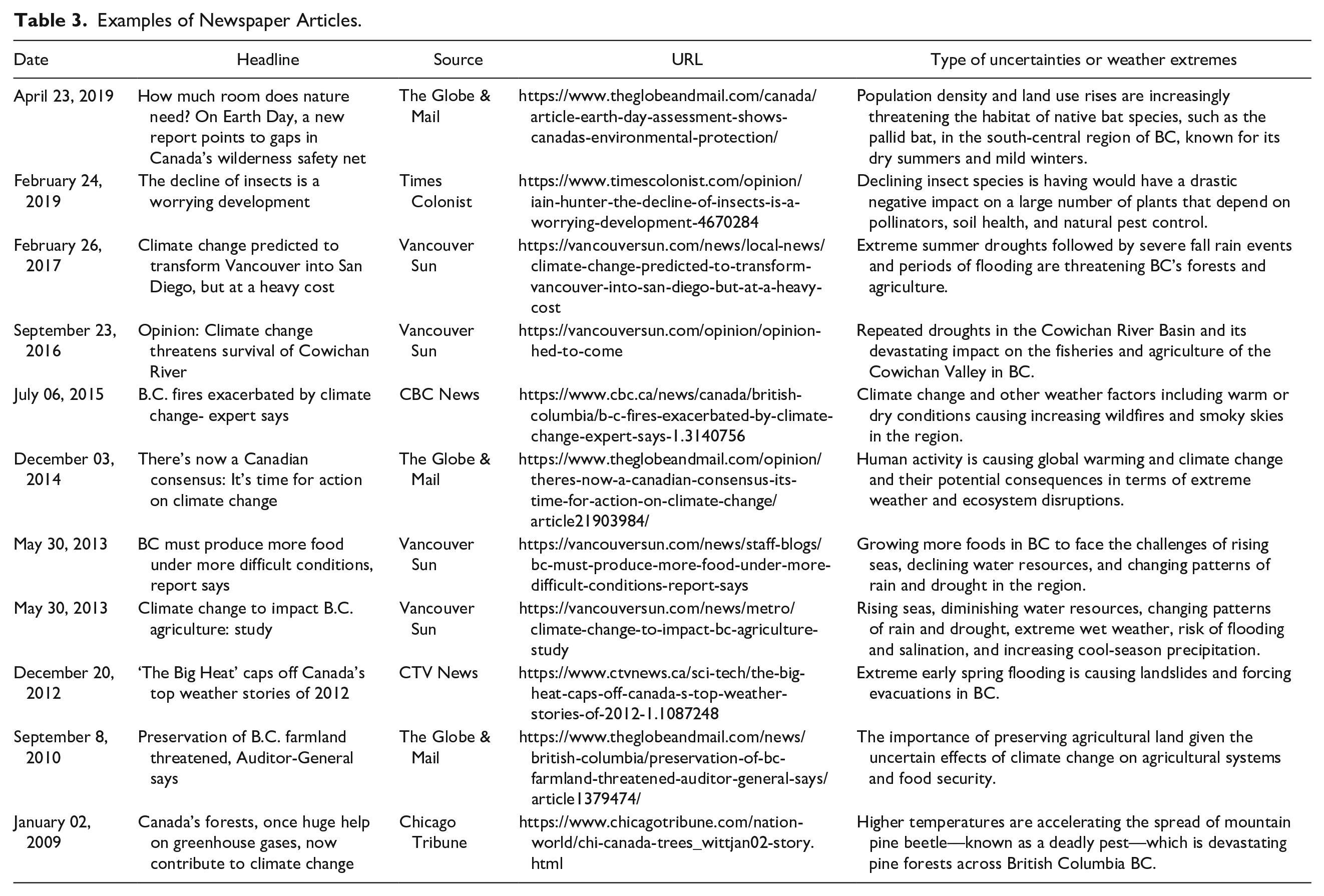
To gain a comprehensive understanding of the research context and ensure the triangulation of evidence (De Massis & Kotlar, 2014), we collected and analyzed various publicly available and published documents including newsletters, brochures, industry reports, company websites, books, and business reports (see Table 2). We also examined newspaper articles from 2009 to 2019, featured in regional and national newspapers, such as The Times Colonist, The Globe & Mail, and Vancouver Sun (see Table 3). These publicly available sources together provided more than 50 pages of contextual data on the broader organizational challenges associated with sustainability and ecosystem degradation in the agri-food industry.
Examples of Public Documents.
Examples of Newspaper Articles.
Importantly, these data sources were integrated through a process of triangulation with data collected from in-depth interviews and direct observations (Yin, 2013). Collecting data from various sources and subsequently comparing them ensured that we examined the study’s topic from diverse perspectives, thereby enhancing its construct validity (De Massis & Kotlar, 2014).
Direct Observations
In addition to the interviews, the first author spent more than 6 months in the field watching and being a part of team interactions in five farming organizations. He took detailed notes about all observed activities, unique experiences, interactions, and other matters of possible interest while in the field or shortly after some period of observation (Jorgensen, 1989). Examples of direct observations of organizational actions and social interactions, such as team meetings and workshops, include field notes from the first author’s work as a volunteer at Farm 9, notes from observation of a formal knowledge-sharing meeting between the owners of Farm 1 and Farm 4, and notes from the weekly strategy meeting of the management team in Farm 4. A total of eight direct observations of this type allowed us to gain a deeper understanding of how farmers leverage their strong connection to their surroundings and communities, thereby enhancing our sense of the place.
Data Analysis
Consistent with the principles of the grounded research process, we followed a phased approach for the interviews. Phase one involved interviews with two farms, followed by interviews with four farms in phase two, and finally three additional farms. The data collected in the initial phase served as an informing agent, where existing research, preliminary data collection, and analysis influenced the subsequent data collection strategy (Bruce, 2007). After each phase, we analyzed the data and captured the emerging insights until we reached a point of theoretical saturation, meaning that the properties of each category and theme were sufficiently comprehensive and no new dimensions needed to be added to the conceptual model (C. Murphy et al., 2017). Essentially, at this stage, our theoretical framework identified the interrelationships between constructs to explain the phenomenon of interest (Glaser & Strauss, 1967).
We began the data analysis immediately upon our initial data collection. We employed a “constant comparison” technique (Glaser & Strauss, 1967) involving a synergistic process of repeated examination and comparison of emergent findings and ideas discussed by the participants with existing data and relevant scholarly literature (Zietsma, 2002). This iterative process of continuous refinement of relationships among codes or themes continued throughout the coding process. The resultant data structure consisting of core categories, themes, and aggregate theoretical dimensions clarifies relationships among the categories (see Figure 1). Additional data supporting each second-order theme can be found in Table 4.
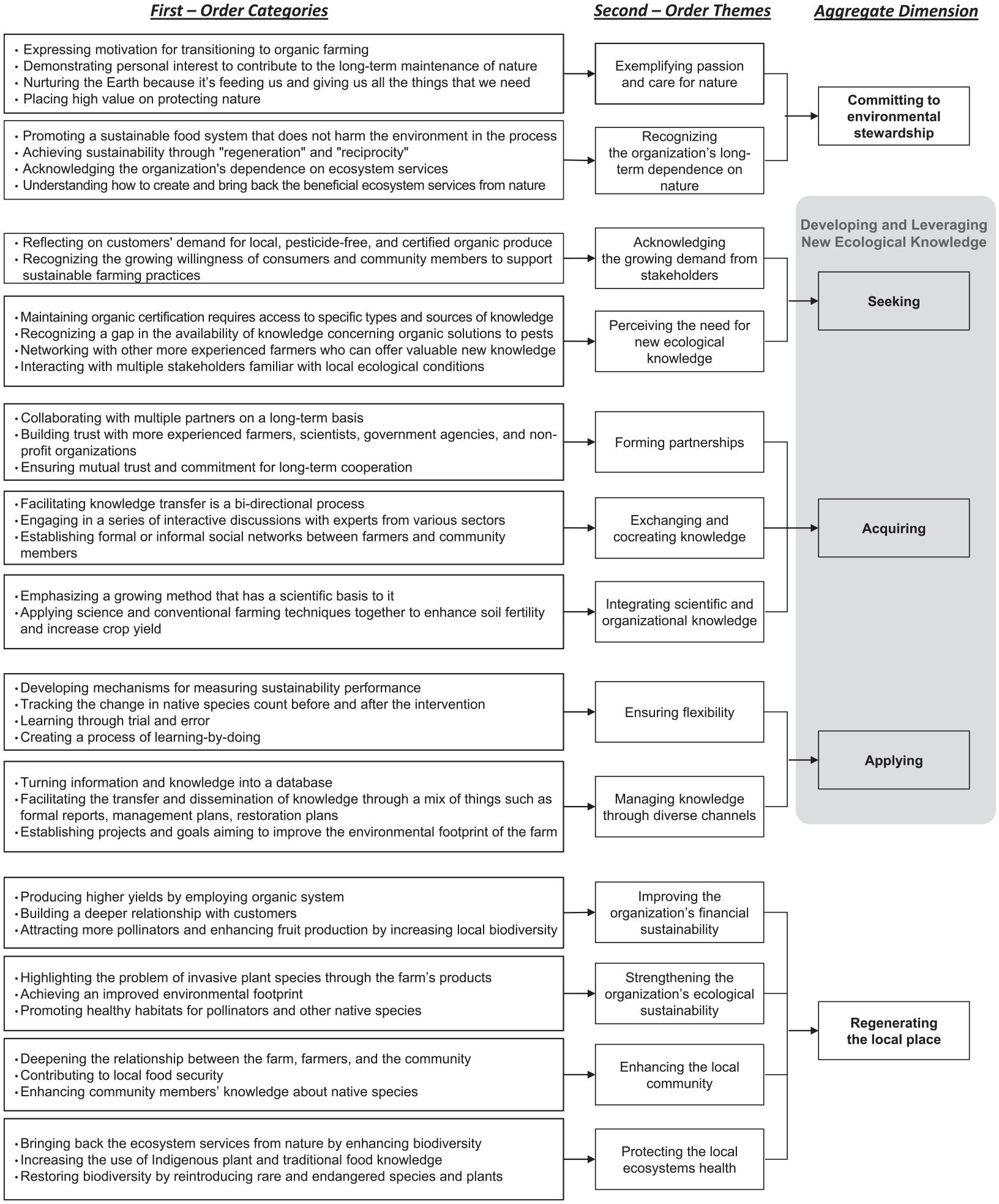
Data Structure
Additional Supporting Data for All Second-Order Themes.
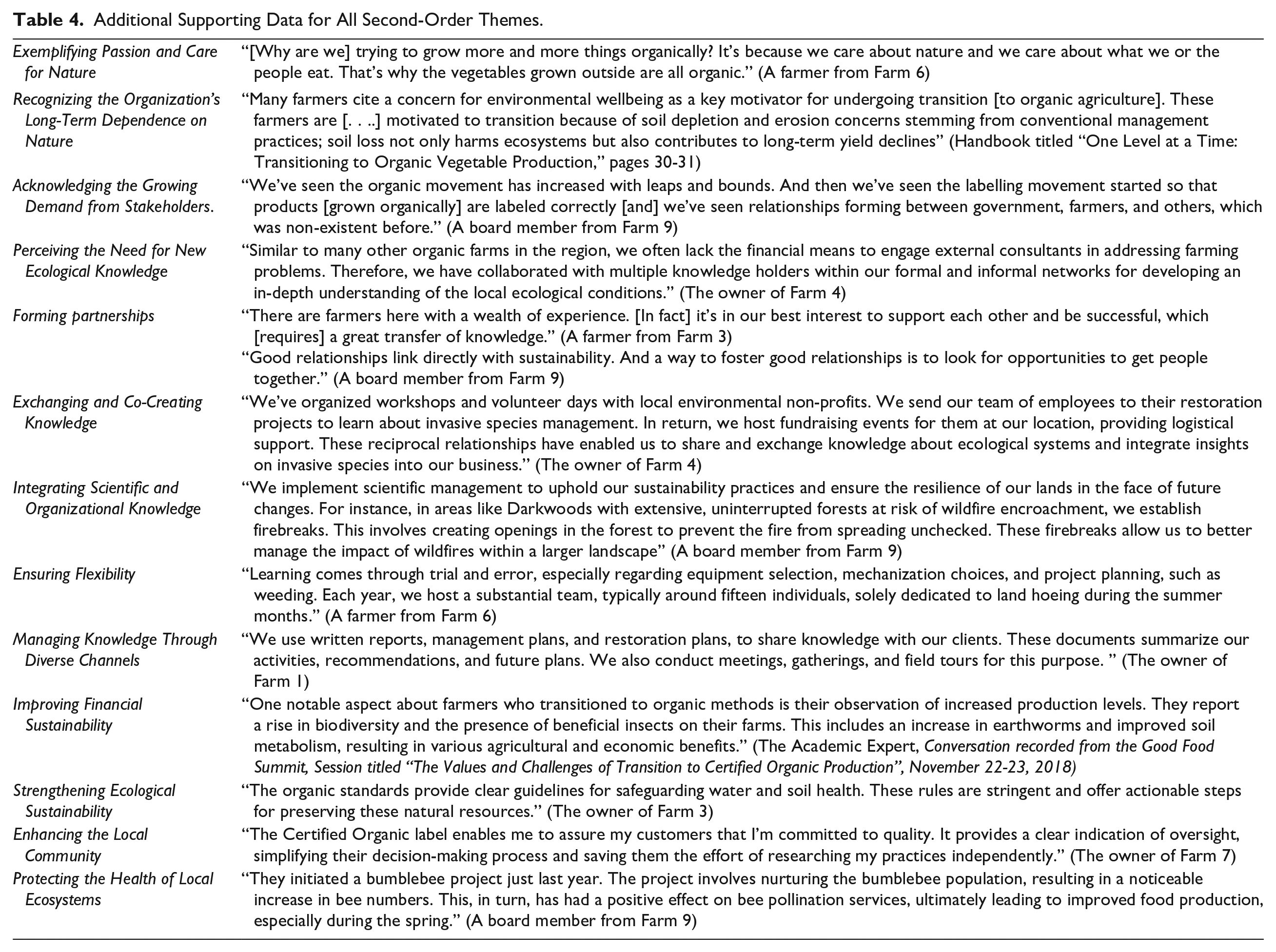
We employed NVivo-12 qualitative research software to help with our analysis. For the first-order categories, we remained close to the original descriptions of the participants (Dacin et al., 2010). We constantly compared coded documents and highlighted possible conceptual patterns. We then read each interview, coding for more in-vivo words. In this early phase, we kept all our ideas, feelings, thoughts, and impressions about the initial themes emerging and their possible relationships in field notebooks. Then, once we had a better understanding of the salience of these themes emerging within our primary data sources, we triangulated the categories that emerged from interview data with the categories generated from coding other sources of data (e.g., participant observations, and field notes). NVivo facilitated the organization of all the codes that emerged from the data. In total, we had more than 300 coded passages at the end of this process. In the next step, we looked for codes across interviews that could be collapsed into higher-level nodes.
We sought triangulation of sources including interviews, direct observations, and public documents to produce a set of first-order categories (Dacin et al., 2010). Next, we applied axial coding (Strauss & Corbin, 1998) wherein we searched for relationships between and among these first-order categories mainly to group them into theoretically distinct clusters or second-order, theory-centric themes. Importantly, at this stage, we moved iteratively between first-order categories and the emerging patterns in our data until we had a clear sense of the developing relationships among categories and their related themes and until additional data and analysis failed to reveal any new relationships (Gioia et al., 2010). Next, we organized the second-order themes into five aggregate theoretical dimensions that captured the iterative cycle through which organizations contribute to regenerating their places: committing to environmental stewardship, seeking new ecological knowledge, acquiring new ecological knowledge, applying new ecological knowledge, and regenerating the local place. In what follows, we elucidate our central findings.
Findings
Our analysis revealed three key findings. First, the commitment to environmental stewardship exhibited by the key decision-makers at the organic farms drove them to continuously seek to improve their sustainability performance while regenerating the local SESs. Second, they achieved this by seeking, acquiring, and applying new ecological knowledge, which played a crucial role in driving continuous improvement within the organization. Third, the data revealed how this ecological knowledge allowed these farms to enhance their financial performance, improve the well-being of their local communities, and contribute to restoring degraded ecosystems, all three of which were deeply interrelated. Below, we present our findings illustrating how the key decision-makers, including the founders, owners, board members, and/or managers, of the farming organizations in our study demonstrated their dedication to environmental stewardship. Regardless of their specific position, some of these key decision-makers self-identified as farmers. Therefore, we refer to them interchangeably as farmers or by their respective positions. Furthermore, we explore how they developed and leveraged new ecological knowledge to actively contribute to the regeneration of their farms, communities, and ecosystems.
Committing to Environmental Stewardship
The key decision-makers of the farming organizations showed a strong commitment to environmental stewardship, leading them to choose organic farming and continuously improve their practices. Seven out of the nine farming organizations started with organic farming, while two transitioned from conventional to organic methods. In all cases, their decision to pursue organic certification was driven primarily by two motivations. First, they recognized the potential harm caused by conventional farming practices, such as extensive tillage, monocropping, and the use of chemical inputs, to the local SESs. Instead of degrading the land, they aimed to restore it by adopting organic practices. Second, the growing demand for organic products in local and regional markets also influenced their decision to pursue organic certification. These farms stood out by prioritizing the long-term sustainability of interconnected SESs over short-term financial benefits.
We also found that two factors were fundamental to the key decision-makers’ commitment to environmental stewardship. First, these decision-makers exhibited a deep passion and care for nature, which instilled in them a strong sense of responsibility to safeguard it from harm. Second, they possessed a keen awareness and recognition of their organization’s long-term dependence on nature and its ecosystem services for long-term sustainability.
Exemplifying Passion and Care for Nature
The decision to adopt organic farming practices was a natural progression driven by the personal and family values and experiences of the decision-makers. Embracing organic farming principles closely aligned with their deeply held beliefs and values. For example, the owner of Farm 4 highlighted the importance of developing sustainable communities and promoting healthy ecosystems, which influenced her business’s long-term goals of regenerating local ecosystems. As she noted, “In the long term if you don’t have a really solid, values-based business, then you’re going to disappear anyway. [We] put our values behind our environmental footprint and [our efforts to make] this community a better place.”
The co-owner of Farm 5, one of the oldest organic farms on Vancouver Island, shared insights into how her personal interests and family values regarding nature and ecology had profoundly influenced her lifelong dedication to farming practices that prioritize the well-being of local ecosystems. Although she was not Indigenous herself, she recognized the influence of Indigenous values on her personal approach: Plants, especially native ecology, are my beginning passion. In First Nations’ [ways of knowing], plants are important and meaningful. I started with plants and that led to land practices, which led to relationships [with local ecosystems], which then led to a greater understanding [of the natural environment].
The farmers expressed profound concern regarding the continuous destruction of nature, specifically the degradation of ecosystems. They placed a high value on nature and set sustainability goals to positively impact local ecosystem health due to reasons such as the growing disappearance of native seed varieties or the fast degradation of critically important local biodiversity hotspots.
Recognizing the Organization’s Long-Term Dependence on Nature
The farmers’ understanding of the connection between their farms and nature, along with their responsibility to manage species and habitats for the well-being of ecosystems, influenced their commitment to environmental stewardship. The farming practices of these farms were based on building a mutually beneficial relationship between their business, nature, and community of people. These farms employed regenerative farming principles, which focused on efficient water usage, on-site composting, natural pest control, and creating a healthy habitat for pollinators and birds of prey. One of the board members of Farm 5 emphasized the farm’s reliance on surrounding ecosystems: These ecosystem services are free. By enhancing biodiversity, we can bring back beneficial ecosystems that directly benefit our farmers. We recognized the importance of pollinators and took steps to increase biodiversity by reintroducing native bees. This, in turn, led to enhanced pollination and increased fruit production.
The key decision-makers we interviewed prioritized “regeneration” or “reciprocal relationships” between business, nature, and the community as core principles of sustainability. They emphasized the development of effective farming systems and the adoption of sustainable practices that enhance the interconnected social and ecological systems.
Seeking New Ecological Knowledge
Our data reveals that the key decision-makers’ dedication to environmental stewardship drove them to seek out new ecological knowledge. They did so in two ways; first, they acknowledged the growing demand from stakeholders and second, they perceived the need for ecological knowledge. These decision-makers emphasized the importance of acquiring knowledge about the local ecology, including invasive and native plants, native insect pollinators, and other wildlife. They realized how new ecological knowledge could play a critical role in fostering the creation of healthy and diverse ecosystems.
Acknowledging the Growing Demand From Stakeholders
Our findings highlight that the growing demand for local, pesticide-free, and certified organic produce from customers and local restaurants played a crucial role in shaping sustainable local food systems in the region. In response to this rising demand, farming organizations recognized the importance of acquiring new ecological knowledge to continuously meet the need for safe, healthy, and nutritious products. Consequently, they made deliberate decisions regarding the most suitable sources of ecological knowledge, considering the evolving demands and expectations of their stakeholders. As noted by a board member of Farm 9, numerous restaurants in their operating area had embraced the farm-to-table movement, as they were “under pressure from the customers for providing local, pesticide-free, certified organic products. The customers, who are now more educated, are asking for locally grown organic foods.” Consequently, farmers responded by adjusting their practices to align with these changing consumer preferences.
Recognizing the increasing consumer and community support for sustainable farming practices, Farm 4 took an innovative approach by initiating an experimental project called “crowd sourcing of apples.” In this project, they purchased apples from local communities to produce cider. The concept involved creating a pool of apples sourced from the community, and the final cider products were shared with the contributing members. The project proved to be highly successful, generating significant goodwill for the company and strengthening its partnerships and connections within the local community. The project not only fostered positive relationships but also showcased the company’s commitment to collaboration and sustainability. As Farm 4’s founder explained, “I’m interested in building all of those partnerships and connections [with our communities], which helps us to learn, improve our practices and then increase [our] bottom line.”
Perceiving the Need for New Ecological Knowledge
Many key decision-makers emphasized the growing importance of knowledge to tackle challenges in organic farming, such as organic pest control techniques and enhancing soil health. They also highlighted the limited availability of resources and scientific knowledge to support organic farming practices. In contrast, non-organic conventional farmers often received greater financial and technical assistance from the government, including support from the Ministry of Agriculture, as part of their mandate to ensure food security, as noted by the owner of Farm 7: Specifically for organic solutions to pests, there’s very little knowledge available. There’s a huge gap there. The Ministry of Agriculture, both federally and provincially, primarily have a lot of knowledge [about pest control in conventional farming].
Such knowledge gaps led these organic farms to seek mutually beneficial partnerships with other more experienced farmers or specialized knowledge holders, such as beekeepers and native plant specialists, to bring different expertise together and generate new knowledge. Our data revealed other reasons that motivated these farms to dedicate effort, time, and resources to identifying new types and sources of relevant ecological knowledge. First, these decision-makers noted that success with organic farming depends on the knowledge about creating a healthy ecosystem abundant with native organisms. This knowledge is crucial for achieving a healthy ecological balance. Second, they pointed out that a deeper understanding of ecosystem functioning can promote foods grown locally and contribute to building local food security, as noted by the owner of Farm 8 who pointed to how they were “enhancing the ecological diversity and productivity of not only my farm but also other farms in the area.”
Acquiring New Ecological Knowledge
Once the organic farms saw a need for new ecological knowledge, they proceeded to find ways to acquire it. They did so through forming partnerships, exchanging and co-creating knowledge, and integrating scientific and organizational knowledge. New ecological knowledge stemmed from multiple external sources including academic or scientific experts, environmental organizations, other more experienced farmers, farmers’ co-operatives, and grassroots initiatives made up of farmers, organic certifying organizations, and suppliers of native plants, seeds, and machinery and equipment. These collaborative efforts were instrumental in driving their achievements.
Forming Partnerships
In order to acquire new knowledge, key decision-makers established long-term collaborations with partners who shared similar values and goals, building relationships based on trust and commitment. They recognized the importance of understanding the local context and identifying effective mechanisms for knowledge transfer. These partnerships took various forms, including collaborations between businesses and farmers, businesses and non-profit organizations, businesses and government entities, and multiple non-profit organizations. Many farmers highlighted the formation of partnerships with non-profit organizations as a valuable opportunity to exchange ideas, share resources, and collectively develop new knowledge. A board member of Farm 9 emphasized the significance of partnerships in the process of acquiring knowledge: “These partnerships are so powerful. We partner with many environmental non-profit organizations as well as educational institutions, [whose researchers] do research projects here.”
Our findings highlighted several key factors that are essential for the effectiveness of partnerships like these. First, it was crucial that each partner was willing to allocate the necessary resources for the collaboration. Second, the sharing and exchange of relevant knowledge and information among the partners played a vital role. In addition, setting common goals and actively addressing shared issues of interest went a long way in fostering successful collaborations. We found that to be more effective in the long term, partnerships between farms and others must be genuinely mutually beneficial for all parties involved. Shared values or purpose were important in the initial stages of building such partnerships. Importantly, “trust” emerged as the most critical element that shaped how these types of partnerships developed and sustained in the long-term, as noted by the owner of Farm 4: [The suppliers] stayed in my home and had dinner with my family, they read bedtime stories with my kids. And we’ve done the same. This was foundational and essential to the business. And that trust of sharing expertise freely, free of charge is the real key.
Our findings revealed how every farm was different and how context varied from farm –to farm due to diverse socio-economic and ecological challenges that impact focal places in which these farms operated. Place-based factors, such as local climate and soil conditions, pest problems, plant characteristics, and plant nutrients, often had a significant influence on how these farms evaluated and acquired new types of ecological knowledge.
To address these local contextual differences, farms formed partnerships with experts to gain deeper insights into their specific contexts. Farmers often mentioned that the process of acquiring knowledge could be complex, particularly when it involved enhancing or restoring ecosystems and biodiversity. It required a significant commitment of time, resources, efforts, and dedication, but it paid off, as the founder of Farm 4 noted: “Through this reciprocal relationship, we have gained valuable knowledge, thus fostering mutual learning and growth for both of us.”
Exchanging and Co-Creating Knowledge
In addition to forming partnerships, the farms established effective mechanisms for sharing and transferring knowledge between different contexts and partners. This bi-directional exchange of knowledge proved beneficial for all parties involved, as highlighted by the owner of Farm 1 who noted that “We have always aimed to share knowledge about ecosystem restoration and enhancement through various events such as presentations and workshops.” These farms utilized a combination of multiple mechanisms to facilitate the transfer of new knowledge from outside sources to within the organization. A board member for Farm 9 explained how they utilized formal education and training for transferring knowledge, by starting “an eco-farm school where we share growing knowledge” and through strategic partnerships with a local university to “offer eco-farm school courses” at their farm. In another example, the owner of Farm 1 expressed, “For [building or transferring] knowledge, you must know a given place very, very well. That’s how you gain that knowledge and that’s where that transfer of knowledge occurs.”
The studied farms used various mechanisms to facilitate the transfer, exchange, and co-creation of new knowledge. These included apprenticeship, mentorship, and hands-on experiences, which involved conversation, observation, feedback, and reflection. For instance, the owners of Farm 2, Farm 3, and Farm 7 gained valuable knowledge through years of experience working in other organic farms and learning from more experienced farmers. This combined with local and contextual knowledge enabled these farms to successfully acquire new types of relevant ecological knowledge. The owner of Farm 2 emphasized the significance of previous knowledge acquired through direct work with experienced farmers and observation at the local level, noting “I attribute my current level of farming knowledge to the many years of experiences I gained growing crops on other farms.”
Integrating Scientific and Organizational Knowledge
Many farming organizations emphasized the importance of combining scientific knowledge with traditional farming techniques to create healthy ecosystems. They recognized that scientific knowledge could play an important role in how organizations develop solutions to a place-specific climate variability and change. For example, the owner of Farm 7 emphasized their focus on farming methods that are grounded in scientific research and evidence.
We ensure that the farming processes we use undergo scientific evaluation to determine their effectiveness and viability. On my farm, I don’t want to do anything that doesn’t have a scientific basis to it. When facing questions like why is this disease showing up so frequently in this situation, I look at the basic science of what conditions, what humidity causes this spore to sporulate? What temperatures cause this to happen?
Applying New Ecological Knowledge
Our analysis revealed that organic farms recognized the need for flexibility and adaptability when applying new knowledge, which they achieved through a hands-on, learning-by-doing approach. They further enhanced this process by creating and managing knowledge through diverse channels to formalize and integrate the new knowledge into their organizational practices. This allowed them to make the knowledge more practical, applicable, and measurable in their day-to-day operations.
Ensuring Flexibility
In order to integrate new types of ecological knowledge, organic farms adopted a flexible, learning-by-doing approach that emphasized a systematic process of learning through trial and error. This approach allowed the farms to actively engage in experimentation while gaining valuable insights into the ecosystem and its dynamics. As an illustration, the owner of Farm 1 provided insights into how her farm primarily centered on experimentation and the process of trial and error as a means to build knowledge about native plants: It’s a mix of things with the seeds [. . ..] First, a lot of it was trial and error. Like, we try to do stuff in our backyard, and we filled up our backyard and then we wrote on the board of the farm and asked can we use the front lawn?
The trial-and-error learning process also emphasized flexibility and the willingness to make necessary adjustments as farms decide the best process to utilize newly acquired ecological knowledge. As an example, the owner of Farm 4 noted how her farm took a flexible approach to building a deeper understanding of organic orchard management by “. . .basing our plans and actions on the best available information we could gather” and acknowledged that “we knew we weren’t going to get it right all the time.”
Managing Knowledge Through Diverse Channels
The organic farms used a variety of routines and artifacts including written documents, company reports, databases, diagrams, procedures, structured meetings, and gathering as channels to convert the acquired knowledge into a more formal, explicit type of knowledge. On the question of how the newly acquired knowledge flowed into the business, the owner of Farm 4 explained that “We’ve actually developed a database [with] information about what grows on site and [other critical] ecological information.” Our analysis revealed that organic farms developed new—or refined existing—routines, techniques, and practices in order to integrate and apply new types of ecological knowledge. The owner of Farm 4 reflected on how her team integrated a new type of ecological knowledge into the business’s strategy through key performance meetings to “evaluate whether we’ve succeeded.”
Regenerating the Local Place
By leveraging the newly acquired ecological knowledge, the farming organizations had effectively regenerated their integrated SESs through a three-fold strategy: enhancing their core farming operations, fostering community engagement and collaboration, and restoring and/or protecting the overall well-being of the local ecosystems. The newly acquired ecological knowledge was instrumental in empowering organic farms to improve their financial sustainability practices, strengthen their ecological sustainability, enhance the local community, and actively contribute to protecting the health of local ecosystems.
Improving Financial Sustainability
The newly acquired ecological knowledge led to significant financial benefits for the farms, including increased crop yield and improved product quality. These advancements allowed the farms to establish themselves as providers of high-quality products, enabling them to command premium prices in the market. As the owner of Farm 7 explained, “The Certified Organic label allows us to recoup any extra costs by selling our produce at a higher premium price.”
These farms also succeed in sequestering more carbon in the soil, conserving soil resources, and promoting long-term soil fertility. These efforts further enable the farms to meet the organic quality standards necessary for maintaining their organic certification status. These farms also developed deeper relationships with customers, as noted by the owner of Farm 8: “My customers know me. And they trust me because of who I am. And because of the quality of the product that I have.”
Strengthening Ecological Sustainability
Our data revealed a strong desire among the farmers to contribute to the long-term preservation of nature. Many spoke of the importance of taking a regenerative approach to farming, including the co-owner of Farm 5, who explained her motivation for pursuing organic farming as follows: I believe in regeneration. The idea of sustainability is that we can keep taking at the rate that we’ve always been taking. This idea is now over. The new economy now should be about regeneration. You should operate your farm as close to a natural ecosystem as possible. Let the birds and all the ecological processes, water filtration, habitat for pollinators, all come together to create a foundation of success for your farming activity.
These farming organizations actively engaged in regular evaluations and made necessary adjustments to their newly developed capabilities, contributing to their ecological sustainability. They also engaged in joint projects that benefited not only themselves but other community members. As the owner of Farm 3 noted, the urban biodiversity enhancement project, jointly implemented by four other local organic farms, generated ecological benefits for all these farms by providing a steady provision of ecosystem services, calling it an “incredible resource for us, the local organic farms” and noting that “it supports our farms all year-round and provides us with a lot of ecosystem services.”
Enhancing the Local Community
Partnering with multiple community stakeholders and applying ecological knowledge played an important role in enhancing the local community. Through collaborative efforts between farms, a deeper understanding of ecological practices has been achieved, leading to valuable contributions to the local community. The owner of Farm 1 acknowledged the positive impact on the community of the biodiversity project initiated by Farm 9, which effectively improved the functioning and services provided by the local urban ecosystems, thereby contributing to the ecological sustainability of both farms. This project fostered a sense of shared responsibility and a deeper environmental appreciation among the community members, by “demonstrating a model within a small-scale organic agriculture to show people [in the community] how you can have a highly productive organic farm.”
Some of these farms successfully created products and processes to raise awareness about protecting local ecosystems, especially native plants, among the community and customers. For example, the owner of Farm 4 discussed how they created a product that now highlights the problem of invasive plant species, thanks to their ecological knowledge: “With our [name of series] ciders, we are building awareness among our customers, many of whom are local community members. We use our products to highlight the problem of invasive plant species [within our community].” In another example, the co-owner of Farm 5 highlighted the reason why empowering the local community was important for restoring local ecosystems: We have been able to [contribute to building a regenerative economy] through our business with the community by enhancing the ecosystems and identifying what needs to be restored. We do that working together with our community [. . .] so that we can work together to enhance ecological restoration.
Protecting the Health of Local Ecosystems
The director of Farm 9 highlighted the successful application of various types of ecological knowledge accumulated over the past decade: “We are bringing back the ecosystem services from nature. . . to enhance both urban biodiversity and help to grow more food [for the community].” This knowledge was instrumental in restoring and enhancing the local urban agroecological systems, benefiting not only the farm itself but also other farmers and community members.
Similarly, the owner of Farm 1 expressed how new ecological knowledge enabled them to promote healthy habitats for pollinators and other native species that benefited the local farmers: “Our focus has been to demonstrate a model of highly productive organic farming on a small scale, both in terms of biomass and financial returns. We aim to show that growing organic food can be a profitable venture while also creating biodiverse habitats within the farm.” Overall, our findings highlight the continuous process of aiming for the regeneration of the local place, which involves multiple interconnected steps and activities.
A Model of Regenerating Place Through Ecological Knowledge
Our findings, summarized in the data structure (Figure 1), highlight how organizations harness ecological knowledge as they work toward regenerating their farms, along with the community and ecosystem upon which their farms rely. In this section, we explore the concepts and relationships emanating from our data analysis to present a model (see Figure 2) that demonstrates how organizations engage in continuous, cyclical, and interconnected practices of seeking, acquiring, and applying ecological knowledge to enhance their organizational performance and regenerate their local places. Notably, the model emphasizes that regenerating a local place is a continuous and dynamic process, encompassing multiple interconnected steps. It highlights that the development and application of ecological knowledge is an ongoing and iterative process involving multiple practices and activities. While the knowledge practices discussed below are presented in sequential order, it is important to note that, as in the case of organic farming organizations, they may occur in a highly dynamic and non-linear manner.
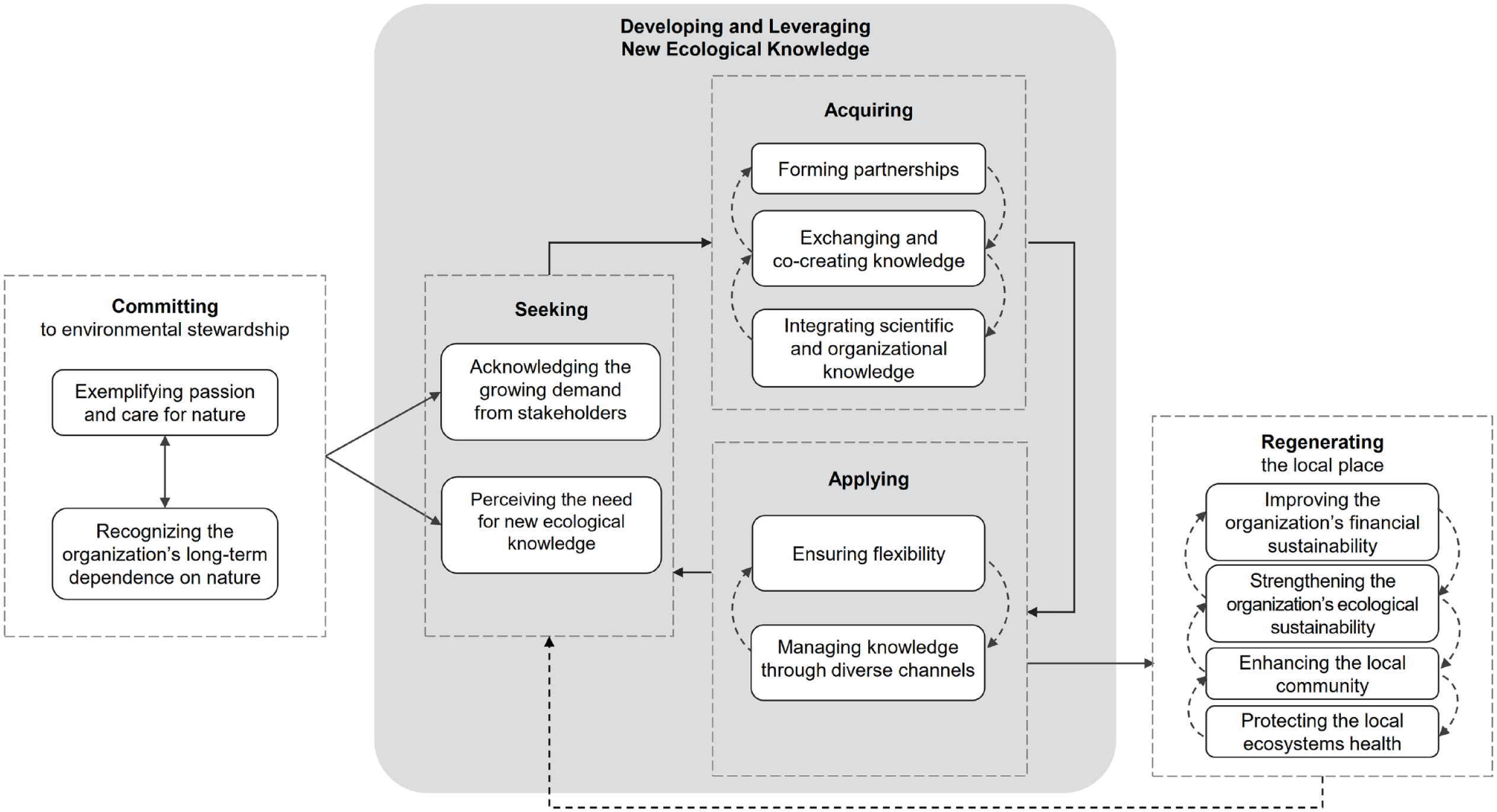
A Model of Regenerating Place Through Ecological Knowledge
Our model is driven by key decision-makers who are committed to environmental stewardship for their organizations over the long term. In our case, the key decision-makers, including the founders, owners, board members, or master growers of the farming organizations, demonstrated a profound passion and care for nature, recognizing the crucial dependence of their farms on it. These environmentally conscious leaders viewed their farms as integral components of complex systems that encompass diverse interactions and interdependencies among animals, plants, soil organisms, communities, and other elements of social systems. Decision-makers with a strong commitment to environmental stewardship may be more likely to recognize the importance of acquiring knowledge about their local ecosystem, including geographical conditions and biodiversity, to improve their agricultural practices. This is because they understand that ecological knowledge can assist their organizations in addressing sustainability challenges, mitigating risks, and optimizing organizational processes. They emphasize the significance of continuous learning to enhance their understanding of their organization’s embeddedness within local ecosystems and surrounding biodiversity. Acquiring new ecological knowledge requires a long-term, strategic approach to building partnerships. In our findings, farmers’ passion for nature enabled them to not only recognize the value of new ecological knowledge as an important means of improving product quality, enhancing ecosystem health, and benefiting local communities, but also to invest the effort necessary in developing this new knowledge. Decision-makers who recognize their organization’s long-term reliance on nature actively strive to develop and leverage new ecological knowledge in their organization’s strategy and practices. They do so through three integrated, cyclical knowledge practices of seeking, acquiring, and applying this location-specific ecological knowledge.
First, decision-makers engage in seeking new ecological knowledge that can strengthen their organization’s performance, along with its capacity to implement practices promoting long-term social and ecological well-being. They acknowledge the growing demand from stakeholders who are interested in supporting local businesses that contribute to the well-being of the local community and ecosystem. In our study, the farming organizations initiated knowledge-seeking practices in response to the rising demands from their customers and community stakeholders for locally sourced, pesticide-free, and certified organic products. To meet these evolving demands, organizations must acknowledge the need for diverse types and sources of new ecological knowledge. Decision-makers understand the value of accessing external knowledge sources and may actively pursue collaborations with multiple partners within their social network. These networks have the potential to enable their organizations to tap into relevant expertise and experiences related to specific types of ecological knowledge, however, they also demand significant effort to develop.
Second, organizations work to acquire ecological knowledge, often by forming partnerships with multiple stakeholders. Through these partnerships, they engage in the practices of knowledge exchange and co-creation, integrating scientific knowledge with existing farming methods to enhance their practices. To acquire new ecological knowledge, first, they must form partnerships that allow them to access knowledge held by multiple other stakeholders. While such collaborative partnerships can be an efficient way to access and transfer new types of tacit knowledge that may be challenging to express or extract through writing or verbal communication, they demand a substantial commitment to develop. These partnerships are formed through regular interactions, built on trust, and characterized by long-term commitment. Such commitment requires joint work among partners to identify mutual goals and values toward building on and co-creating further ecological knowledge.
Acquiring ecological knowledge requires organizations to also promote knowledge exchange and co-creation. The goal is to facilitate the effective sharing and integration of ecological knowledge into their operations. In addition, ecological knowledge acquisition often requires integrating science with existing organizational practices and approaches by collaborating with outside stakeholders, such as scientists and academics in our case, to co-produce knowledge. In our study, farmers integrated scientific knowledge with their farming methods, resulting in improved crop yield and quality. Meanwhile, others integrated modern science and technology with traditional fire management knowledge to effectively restore ecosystems and address the challenges posed by climate change.
The third practice is to apply the new ecological knowledge once it is acquired. Decision-makers do so by converting the newly acquired ecological knowledge into explicit and organized formats, such as manuals, reports, and operating procedures. These codified resources enable convenient storage and reuse of knowledge across various contexts. Despite being codified, the guidelines retain the flexibility to accommodate future adjustments and revisions. Applying new knowledge involves ensuring flexibility and adopting a learning-by-doing approach, which emphasizes using the knowledge to redefine current practices. This approach is particularly important in the context of natural disasters or climate change, which can greatly change ecosystems and result in the loss of local species, increased diseases, and even extinction. To address such negative impacts, it becomes crucial to adapt and innovate by discarding outdated or ineffective knowledge and practices.
Once fully integrated, the new ecological knowledge may enable organizations to engage in the effort of regenerating various dimensions of the local place. This includes efforts to improve the organization’s financial and ecological sustainability. When organizations are embedded in, and committed to improving, the local community and ecosystem, their impacts often extend beyond their organization to directly enhance the local community and protect the health of local ecosystems. In other words, the fortunes of place-based organizations are highly tied to those of their place, such that stronger organizational performance is often directly related to stronger communities and ecosystems (Shrivastava & Kennelly, 2013). In our study, what set these organic farms apart from conventional farms was the leadership’s commitment to environmental stewardship, including a passion for nature and the understanding that the farm is dependent on the long-term health of its environment. This long-term view led to an understanding that the success of the farm was mutually dependent on the well-being of the community and local ecosystem. Unlike conventional farms that use pesticides and monocropping to increase their short-term profits, with adverse effects on human and ecological health, the organic farms in our study strove for positive health and ecological benefits, in addition to being financially sustainable. In other words, being dependent on a place, as in the case of conventional agriculture, does not guarantee care for the local place. Enterprises and their leaders must also be committed to caring for the place and one way they can do so is by developing and leveraging new ecological knowledge.
The cyclical and interconnected relationship between the practices of seeking, acquiring, and applying ecological knowledge and the regeneration of the local place is both reciprocal and reinforcing, as the arrows in the model illustrate (see Figure 2). As organizations engage in regeneration efforts, they enhance their capacity to acquire and apply additional forms of ecological knowledge as needed, leading to further improvements in the regeneration process. This iterative relationship emphasizes the importance of ongoing learning, adaptation, and integration of ecological knowledge for sustainable and successful regeneration of the local place. As organizations engage in the effort toward regeneration, they create an enabling environment that facilitates the acquisition of additional ecological knowledge in the future. The cycle of regeneration and knowledge acquisition reinforces itself, with each iteration building upon the previous one, as depicted by the arrow connecting the process of regeneration back to the cyclical and integrated practices of developing and leveraging ecological knowledge. The acquired knowledge serves as a foundation for future regeneration efforts, empowering organizations to make informed decisions, adapt their strategies, and drive positive change. Ultimately, this iterative cycle contributes to the long-term resilience, vitality, and sustainability of both the organizations involved and their local places.
Discussion
In this paper, we advance an empirically grounded model of developing and leveraging ecological knowledge to regenerate local places. A key insight is that ecological knowledge is central to enabling organizations to regenerate two key and interrelated elements of a local place: their ecological systems and their social systems including the organization and community. As they engage in the practices of seeking, acquiring, and applying geographically focused knowledge rooted in social contexts, organizational decision-makers develop a greater understanding of the interconnections and mutual dependence between their organization, the local community, and ecosystems. With these insights, we contribute to research on organizational sustainability and place, and to studies of regeneration.
First, our model of developing and leveraging ecological knowledge to regenerate local places offers an empirically grounded account of the practices that enable firms to leverage local ecological knowledge to not only advance their own progress but also for the betterment of their communities and the restoration of local ecosystems. In so doing, we contribute to a stream of research that has shown the importance of embedding organizations and their founders, owners, and managers in place so they can better understand sustainability problems, many of which are place-specific (Chapin & Knapp, 2015; Guthey et al., 2014; Whiteman et al., 2013), by advancing our understanding of how organizations can find place-appropriate solutions through ecological knowledge practices (Smith et al., 2020). As such, we show the critical role that ecological knowledge plays in regenerating local places. In addition, our empirical account of nine certified organic farms offers more nuance on how place-based organizations contribute to enhancing the sustainability of local places (Shrivastava & Kennelly, 2013). Prior research on place in organizational sustainability research has focused mainly on conceptual explorations at the intersection of place and sustainability (e.g., Guthey et al., 2014; Mazutis et al., 2021), with only limited empirical incursions into this important area of research (Garud et al., 2021; Slawinski et al., 2021; Vlasov, 2021). Through our study, we uncovered the practices that enable organizations to not only develop place-based ecological knowledge but to apply this knowledge to increase their long-term viability while also contributing to restoring local ecosystems and revitalizing local communities.
In addition, our findings show how taking the time to develop ecological knowledge in partnership with a variety of stakeholders is critical for engaging deeply with place, and that this engagement allows for regenerating the very systems that support organizations. In this way, our model also contributes to a stream of research in organizational sustainability that has long advocated for moving away from our extractive technocentric paradigm, which predominantly values Western technological knowledge and views nature as existing to serve humanity (Gladwin et al., 1995) and toward a worldview that values local place-based knowledge, including Indigenous ways of knowing (Harris & Wasilewski, 2004; Kimmerer, 2013; Ruiz-Mallén & Corbera, 2013), as a way to restore the balance between nature, society, and organizations (Shrivastava & Kennelly, 2013).
Second, our model demonstrates the interconnectedness of social, economic, and ecological elements in the regeneration of local places. It highlights the interactions between social factors, such as how the focal farm contributes to food security within the local community, economic aspects, such as the financial performance of the firm, and ecological elements, such as the promotion of local biodiversity. To date, research on sustainability and place has provided only limited insights into the significance of local social and ecological systems, their interactions, and their impact on place-based organizing (Hahn & Tampe, 2021). Understanding place as encompassing both social systems (including cultural) and ecological (including geographical) systems and their interdependencies is critical because it allows researchers and practitioners to better comprehend the effects of feedback loops and cascading effects in impacting organizations that are depending on the local SESs. Such insights on the interplay between local ecosystems and social systems advance existing research on regeneration by offering a more nuanced conceptualization of place as encompassing SESs.
In addition, nascent research on regenerative organizing has provided an important first step toward understanding how organizations contribute to regenerating local ecosystems (Quarshie et al., 2021; Sunny, 2021; Vlasov, 2021) and social systems (Garud et al., 2021; Slawinski et al., 2021), yet such research has mostly examined impacts on each system separately. Examining both systems is important because social and ecological systems are interdependent (Williams et al., 2017), and as such, organizations that address both are likely to be better able to regenerate places. If organizations are to help restore the places, including the SESs that sustain them and all life, then we need a deeper and more integrated understanding of the processes by which firms regenerate local places. By examining the regeneration of place as a process by which organizations engage with the whole SESs (Du Plessis & Brandon, 2015; Robinson & Cole, 2015), we advance a more holistic view of regeneration.
Finally, our model shows how organizations can effectively use ecological knowledge to address place-based sustainability challenges. Specifically, we shed light on the ways forward-thinking firms can leverage ecological knowledge to cultivate mutually beneficial relationships between their organizations, surrounding communities, and embedded ecosystems (see Pogutz & Winn, 2016). Our study further deepens the understanding of the currently high-level and abstract concept of ecological knowledge by offering concrete examples of the specific characteristics and types of such knowledge that organizations can seek, acquire, and apply—not only to reduce their negative impacts on nature and people but also to work with the SESs to regenerate these systems. In doing so, we add to our current understanding of the role of ecological knowledge in creating more impactful and innovative practices in all core areas of sustainability (i.e., ecological, social, and economic) (Rahman et al., 2022; van Hille et al., 2021).
Limitations and Future Research
Farms that seek organic certification represent an ideal setting in which to theorize how organizations contribute to regenerating local places. The organizations we studied on Vancouver Island were deeply embedded in their communities and ecosystems and, as such, they represent an extreme case (Siggelkow, 2007) of how being connected to and reliant on place impacts regeneration. We therefore acknowledge some limitations to the generalizability of our theory building and identify the following boundary conditions that may limit the applicability of our model. First, our model may hold better for organizations that are deeply connected to place (Mazutis et al., 2021). We encourage future research to examine whether and how place regeneration occurs in other sectors besides farming and in other organizations that do not rely so heavily on their SESs for their survival. Second, our model is more likely to apply to smaller-scale organizations, whose founders and their values shape the organization’s strategy. Larger-scale organizations, including corporations with shareholders, are less likely to be embedded in place and/or to be guided by place-based values (Shrivastava & Kennelly, 2013).
Despite these limitations, several future research directions emerge from our study. First, given that the connection to land and place is central to Indigenous wisdom (e.g., Kimmerer, 2013), future research could examine regeneration in the context of Indigenous organizing. Second, given that regeneration relies on stakeholder engagement, we encourage future scholarship to examine the role of collaboration in contributing to the revitalization of place. We also believe that a significant opportunity exists for sustainability scholars to contribute to developing a deeper understanding of how organizations contribute to SESs by leveraging interdisciplinary research from fields such as ecology and sustainability science. Third, future research could examine other organizational processes, beyond leveraging ecological knowledge, which can contribute to building more resilient SESs (Hahn et al., 2006; Milestad & Hadatsch, 2003). This way, we can better understand how an organization contributes to building the capacity of the interconnected SESs to continue to regenerate itself, “thereby creating the conditions for a thriving future not only for the human species but for all life” (Du Plessis & Brandon, 2015, p. 59). Finally, future scholarly work could examine how organizations operating in other sectors (like mining, timber or tourism, construction, and packaging) can engage with ecological knowledge and adopt principles of regenerative sustainability.
Conclusion
If organizational scholars are to address growing global sustainability challenges such as climate change and poverty, then paradoxically, we will need a deeper understanding of how organizations address these challenges locally for it is in local places that actors experience these challenges and can respond to them using place-embedded knowledge. In this paper, we offer a model of how ecological knowledge contributes to regenerating places and hope future research will continue to explore how organizations can revitalize the ecological and social systems that support them and all life.
Footnotes
Acknowledgements
The authors extend their sincere appreciation for the invaluable feedback provided by Arno Kourula, the special issue guest editor, and the three anonymous reviewers. Special thanks to Monika Winn and Stefano Pogutz, whose prior work served as inspiration for this research. The open access publication has been made possible through a publishing agreement with the University of the Fraser Valley, Canada.
Declaration of Conflicting Interests
The author(s) declared no potential conflicts of interest with respect to the research, authorship, and/or publication of this article.
Funding
The author(s) disclosed receipt of the following financial support for the research, authorship, and/or publication of this article: This research was generously supported by funding from the Social Sciences and Humanities Research Council of Canada (SSHRC) Doctoral Fellowships.
