




Abstract
Sustainable business models refocus value creation beyond customers only toward value creation for various other stakeholders and the natural environment as well. Extant literature acknowledges the importance of translating this stakeholder value into consumer value. However, the frames that could support this translation through different interpretations of stakeholder value are yet to be investigated. This article examines the frames that communicate the value created for other stakeholders as functional, emotional, social, and cost-related value to consumers. Based on the analysis of 17 cases, seven coexisting frames are synthesized based on the ways through which value is translated. These frames highlight the importance of emotional and social value in sustainable business models, contributing a richer understanding of value and how stakeholder value can be translated for consumers. In this regard, the article contributes a distinction between self-related and self-transcendent translations of stakeholder value into consumer value.
Keywords
A business model explains how organizations offer, create, deliver, and capture value (Teece, 2010), or more broadly, how they achieve their strategic goals (Massa et al., 2017). Pressing societal and ecological issues led to the emergence of sustainable business models (SBMs) with the explicit goal of value creation for a broader range of stakeholders and the natural environment (e.g., Evans et al., 2017). There is acknowledgment that it can be beneficial to integrate this stakeholder value into the value proposition offered to consumers (Chernev & Blair, 2015; Viciunaite, 2022). The creation of superior consumer value through sustainable offers is driving purchase intentions (Gonçalves et al., 2016) and, thus, consumers’ support of the business model. Capturing more consumer value then helps covering the external social and ecological costs of other stakeholders, which should be internalized in SBMs (Stubbs & Cocklin, 2008).
However, companies face a key challenge that obstructs this integration: Since value is co-determined by the recipient (Gummerus, 2013), the dimensions of value are idiosyncratic to each recipient. In other words, consumers perceive different value than other stakeholders (e.g., Upward & Jones, 2016). This suggests the value propositions offered to other, nonconsumer stakeholders and the natural environment need to be translated to the one offered to consumers (Viciunaite, 2022). Because these perceptions of value are neither predefined nor static (Sweeney & Soutar, 2001), such a connection can and should be actively shaped by companies. The importance of communication throughout the whole purchasing process in conveying a value proposition (Ballantyne et al., 2011) indicates its potential as foundation for this link (Abdelkafi et al., 2013). However, the composite dimensions of functional, emotional, social, and cost-related consumer value (Sweeney & Soutar, 2001) suggest that there are different avenues for translating stakeholder value (Närvänen et al., 2022).
For example, two communities are attracted to the open modularity of the Fairphone, respectively, supporting sustainability and open technology (e.g., Akemu et al., 2016). This implies that one product attribute can be framed as different kinds of value (Närvänen et al., 2022). Framing describes the process of highlighting certain aspects of an issue to make a specific interpretation—a frame—more salient (Entman, 1993; Goffman, 1974). In this regard, value communication can reframe the benefits created for other stakeholders, such as improved working conditions for disadvantaged workers, to evoke an emotional “warm glow” value for consumers based on the feeling of “doing something good” (Andreoni, 1990; Zufall et al., 2020).
However, value communication in SBMs (Abdelkafi et al., 2013) remains underexplored. While recent work highlighted the translation challenge of communicating stakeholder value to consumers from a translation theory perspective (Viciunaite, 2022), the SBM literature still faces two important gaps. First, it can be expected that consumers and other stakeholders evaluate value in heterogeneous dimensions rather than the aggregated macrolevel dimensions of social, ecological, and economic value (e.g., Freudenreich et al., 2020; Sweeney & Soutar, 2001). Analyzing the recipient-level translation of value propositions for consumers and other stakeholders thus requires a richer “stakeholder-responsive interpretation of value”, which is currently lacking (Lüdeke-Freund et al., 2020, p. 75). Second, identifying frames conveying different meanings (Närvänen et al., 2022) of stakeholder value for the dimensions of consumer value (e.g., emotional or social value) could advance the lacking knowledge on the translation of these different value propositions. Based on these gaps, this article follows the research question: How can framing communicate stakeholder value to consumers?
Extending a communication perspective on SBMs and value propositions (Abdelkafi et al., 2013; Viciunaite, 2022), this article analyses the frames used by 17 exemplary cases. Through its consideration of the dimensions of consumer value (Sweeney & Soutar, 2001), it introduces a richer conceptual understanding of the dimensions of sustainable consumer value propositions to the SBM literature. The article focuses on consumers because of the differences between value propositions for business customers and for consumers (e.g., Ballantyne et al., 2011), particularly the higher importance of emotional and social value (Närvänen et al., 2022). The article suggests that communicating value created for other stakeholders and ecosystems to consumers by SBMs relies on translations into the dimensions of the latter. The seven identified frames uncover the different self-related and self-transcendent connection points between the value propositions for consumers and other stakeholders. These frames can also guide practitioners in the design of meaningful value communication.
To achieve these contributions, the remainder of the article is structured as follows: The Literature Review section presents the conceptual foundations of SBMs, consumer value, and frames. The Methodology section explains the methodology and is followed by the empirical analysis of the frames in the Findings section. The article then discusses these findings in the Discussion section and closes with implications and future research suggestions in the Conclusion section.
Literature Review
Sustainable Business Models
A business model explains how an organization creates, delivers, and captures value (Teece, 2010). In this role, the business model concept combines strategic aspects of several business functions (Wirtz et al., 2016), particularly marketing (value proposition), operations and supply chain management (value creation), and finance (value capture). The central concept of the value proposition explains how a firm’s offers create value by addressing its recipient’s needs (Rintamäki et al., 2007). Sustainable Business Models, or SBMs, create value with and for various stakeholders in a network of reciprocal value exchanges, rather than with customers only (Boons & Lüdeke-Freund, 2013; Norris et al., 2021). Schaltegger et al. (2016, p. 6) summarize the concept as follows: A business model for sustainability helps describing, analyzing, managing, and communicating (1) a company’s sustainable value proposition to its customers, and all other stakeholders, (2) how it creates and delivers this value, (3) and how it captures economic value while maintaining or regenerating natural, social, and economic capital beyond its organizational boundaries.
The consideration of a wider set of stakeholders effectively leads to several coexisting, yet idiosyncratic value propositions (Freudenreich et al., 2020; Upward & Jones, 2016). However, SBM research has not yet resolved how these idiosyncratic value propositions can be combined, particularly with regard to the integration of stakeholder value into consumer value propositions (Viciunaite, 2022; Zufall et al., 2020). This research gap can be traced back to the generic understanding of aggregated economic, social, and ecological value (e.g., Bocken et al., 2014; Evans et al., 2017; Schaltegger et al., 2016) that is persistent in SBM research (Dembek et al., 2022; Lüdeke-Freund et al., 2020). Because a firm creates multiple forms of value for various stakeholders (Freudenreich et al., 2020; Plewnia & Guenther, 2021), aggregating value obscures both the types and drivers of value for each recipient (Gummerus, 2013). Therefore, any analysis of consumer value in business models must be founded on this recipient level (e.g., Sweeney & Soutar, 2001). In addition, SBM research does not consider that consumers perceive and thereby co-construct value (Sánchez-Fernández & Iniesta-Bonillo, 2007), which implies that value perceptions are dynamic and changeable rather than static and predefined.
Shaping the required link between value propositions for consumers and for other stakeholders thus requires communication and translation (Närvänen et al., 2022; Viciunaite, 2022). Previous research stresses the communicative aspect in business-to-business value propositions due to their nature as a promise to customers (Ballantyne et al., 2011; Boons & Lüdeke-Freund, 2013; Magretta, 2002). At the same time, less attention has been devoted in the SBM literature to the communication of the value created for stakeholders and the environment to consumers (e.g., Viciunaite, 2022). Value communication (Abdelkafi et al., 2013) needs to inform consumers about the sustainability benefits created by the business model (Meise et al., 2014). Viciunaite (2022, p. 244) argues based on translation theory that “information has to be framed in terms that are meaningful and useful for the target audience.” Through its faint reference to narratives and stories (Abdelkafi et al., 2013; Viciunaite, 2022), extant literature hints to the relevance of frames without explicitly exploring them (Närvänen et al., 2022). The alternative frames through which this translation into the dimensions of consumer value can happen are yet to be analyzed. For this purpose, it is necessary to introduce the dimensions of consumer value propositions as well as the concepts of frames and framing.
Dimensions of Consumer Value Propositions
Companies have to model value propositions after the relevant value dimensions perceived by consumers (Rintamäki & Kirves, 2017), who consider emotional and social aspects more than business customers (Närvänen et al., 2022; Patala et al., 2016). While many different conceptualizations of value exist in the marketing literature (Gummerus, 2013), the model of Sweeney and Soutar (2001) has seen empirical validation and is widely adopted. Their multidimensional model is more reflective of differentiated human needs and enables analysis of alternative framings (e.g., emotional or social) of stakeholder value compared with unidimensional “utility” (Sánchez-Fernández & Iniesta-Bonillo, 2007). These additional dimensions are more likely to act as differentiators for consumers than functional utility (Gonçalves et al., 2016; Rintamäki et al., 2007), particularly in cases when there is a trade-off between the consumer and other stakeholders (White et al., 2019).
According to Sweeney and Soutar (2001), the construct of perceived consumer value consists of four interrelated factors: Functional value, emotional value, social value, and the value–cost ratio. Functional value is derived from the performance regarding the objective function of the offer (Rintamäki et al., 2007; Sweeney & Soutar, 2001). Consumers face functional “jobs-to-be-done” (Christensen et al., 2016) ranging from mundane to more complex tasks, such as energy availability or information, respectively (Bocken et al., 2014; Plewnia & Guenther, 2021; Vernay et al., 2020). Next, emotional value is “derived from the feelings or affective states that a product generates” (Sweeney & Soutar, 2001, p. 211), for instance a “warm glow” feeling of doing good for others (Andreoni, 1990). Such an emotional value could be based on the intrinsic value in protecting vulnerable stakeholders or the natural environment (Bocken et al., 2014; Desmet, 2012; Gonçalves et al., 2016). Social value is based on a “product’s ability to enhance [the] social self-concept” (Sweeney & Soutar, 2001, p. 211), which is the perception that the offer is in line with social expectations or will improve standing with a social reference group (Rintamäki et al., 2007). For instance, an offer allowing consumers to align themselves with social norms shifting toward sustainable consumption (Randles & Laasch, 2016) could be a source of social value (Gonçalves et al., 2016). This specific understanding of social value differs from the vague conception predominant in SBM research, and unless stated otherwise, will be the point of reference for this study. Last, the value–cost ratio is driven by consumers’ perceptions of the relationship between the first three value dimensions and the associated cost (Sweeney & Soutar, 2001). Consumers relate the price and effort associated with the offer to the value they expect to derive from it.
Previous research has demonstrated that the functional, emotional, and social value in sustainable offers drives purchase intentions of consumers (e.g., Gonçalves et al., 2016). However, the different possible expressions of these dimensions in sustainable consumer value propositions remain underexplored. For example, the attraction of sustainability-oriented consumers and open source proponents to Fairphone’s open modularity (Akemu et al., 2016) suggests that value propositions can deliver diverging kinds of value from the same product attribute: Whereas the former group may be addressed with a positive feeling based on the reduced environmental impact of modular products, the latter may be addressed with the Consumer Empowerment it brings. These feelings are different expressions of emotional value. The notion that value is perceived and co-constructed by consumers in the framework of Sweeney and Soutar (2001) illustrates that this perception is not static and potentially open to communicative framing. Particularly, the more subjective dimensions of emotional and social value could be strongly affected by the framing applied (Lundqvist et al., 2013). Consumers can evaluate the value of an offer throughout the whole purchasing process (e.g., prepurchase, Sweeney & Soutar, 2001), making the concept suitable to analysis of communication in general. To lay the groundwork for value communication that addresses the value-translation challenge of SBMs, it is necessary to introduce the concepts of frames and framing.
Frames and Framing
After initial interest in the 1990s (e.g., Davis, 1995), frames and framing have gained more attention in sustainability marketing in recent years (e.g., Amatulli et al., 2019; Chang et al., 2015; Ekebas-Turedi et al., 2021). Frames aid individuals and groups in communicating and interpreting information and in assigning meaning to any given situation or message (Goffman, 1974). A frame is a “knowledge structure that directs and guides information processing” in a certain way (Cornelissen & Werner, 2014, p. 184). Framing describes the communicative process of selecting and presenting information in a certain light to evoke a particular pre-existing frame or construct a new frame (Cornelissen & Werner, 2014). This is captured by the widely used definition of Entman (1993, p. 52, emphasis added): “To frame is to select some aspects of a perceived reality and make them more salient in a communicating text, in such a way as to promote a particular problem definition, causal interpretation, moral evaluation, and/or treatment recommendation.” Because they represent specific interpretations of an issue (de Boer & Aiking, 2017) and value is determined by the subsequent perception of consumers (Sánchez-Fernández & Iniesta-Bonillo, 2007), frames are useful to understand different translations in value communication.
Existing sustainability marketing and communication research on frames has primarily focused on the effects of goal or outcome message framing on purchase or adoption intention (Amatulli et al., 2019; Ekebas-Turedi et al., 2021) or pro-environmental behavior (Davis, 1995; de Dominicis et al., 2017). Goal framing can vary with regard to positive or negative valence framing (Amatulli et al., 2019; Davis, 1995), or self-benefit or other-benefit target framing (de Dominicis et al., 2017; Ekebas-Turedi et al., 2021). However, the emphasis on such basic dichotomies prevents the identification of different expressions of the value propositions dimensions (Närvänen et al., 2022), such as different drivers of emotional value. Message framing studies find that individual characteristics usually moderate the effectiveness of framing (Amatulli et al., 2019; de Dominicis et al., 2017; Ekebas-Turedi et al., 2021), which indicates the need for a more complex perspective. A different strand has thus emphasized more complex frames used to convey different meanings of sustainability to customers (de Boer & Aiking, 2017; Närvänen et al., 2022; Schoonover et al., 2022). Recent studies have identified frames around the themes of ethical responsibility, economic efficiency, social distinction and conformity, industrial de-intensification, or health (de Boer & Aiking, 2017; Närvänen et al., 2022). However, these studies lack a distinction between business customer and consumer contexts or remain on a conceptual level. While this conceptualization of frames extends Viciunaite’s (2022) analysis based on translation theory, “meaning frames” as specific translations have not been linked to consumer value proposition dimensions so far.
Based on this conceptualization, a frame is understood here as a communicated interpretation of the functional, social, emotional, and cost-related consumer value based on the stakeholder value and ecological issues addressed by the SBM. Even though framing is primarily associated with cognitive responses, these cognitive appraisals can also elicit emotional responses (Amatulli et al., 2019; Gross & D'Ambrosio, 2004). This is in line with the interrelations between the value dimensions (Sweeney & Soutar, 2001), which suggest that framing could communicate multiple value dimensions.
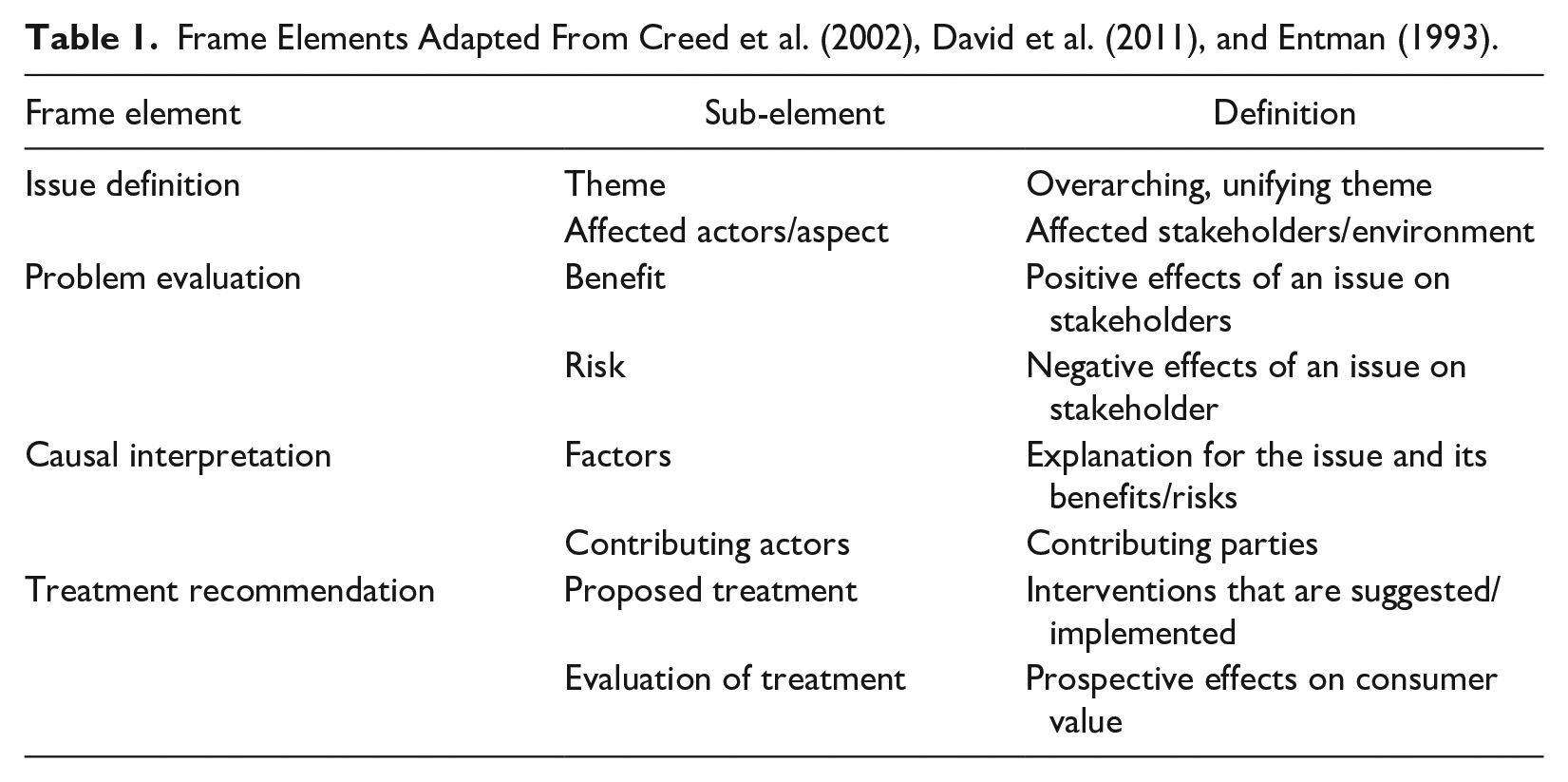
Within the frame elements of Entman (1993), various subelements can be differentiated (Table 1). The issue definition contains an overarching theme and the affected actors or aspects, in this context in relationship to sustainability issues. The problem evaluation includes the explanation of possible or actual negative effects of a sustainability issue on these actors, and benefits that can be gained from addressing it (e.g., David et al., 2011). Because most issues’ effects can be framed as risk or opportunity (de Boer & Aiking, 2017), this element also reflects valence message framing (Davis, 1995). The factors that affect these outcomes, as well as the actors behind them, which help contextualizing the sustainability problem (Närvänen et al., 2022), are elaborated in the causal interpretation element (Entman, 1993). Finally, a frame should propose a treatment and evaluate its effects (Entman, 1993), in this case on the value that consumers can expect from the sustainability interventions.
Frame Elements Adapted From Creed et al. (2002), David et al. (2011), and Entman (1993).
To summarize, frames, while important for communicating value creation, have not been used to explain how value propositions idiosyncratic to their recipients could be linked in an SBM. The following section thus elaborates the methodological choices for the investigation of the frames that translate stakeholder value into functional, social and emotional, and cost-related value for consumers.
Methodology
Research Design and Case Selection
A qualitative, explanatory case study approach (Eisenhardt, 1989; Yin, 2014) was chosen to understand how companies use frames to communicate different translations of value in a real-life context. This approach extends previous exploratory case-based research on value translation (Viciunaite, 2022) by uncovering different frames from real-life communication of revelatory cases. To foster theoretical saturation and increase the findings’ validity across industries (Eisenhardt, 1989), a multiple case study design was employed. The selection of companies from different industries supports variation, while also enabling the comparison and level of abstraction required for more transferable frames (Eisenhardt, 1989; Eisenhardt & Graebner, 2007; Gibbert et al., 2008).
Cases were selected based on theoretical sampling (Eisenhardt, 1989) using four criteria: First, following the definition of SBMs (Schaltegger et al., 2016), the companies need to commit to increased value creation for stakeholders and the natural environment (Freudenreich et al., 2020). This was indicated by certifications such as fair trade and innovative value creation activities and value propositions such as circularity. Second, the cases need to communicate extensively about this value creation toward consumers (Viciunaite, 2022), that is, explain their sustainability engagement comprehensively yet in comprehensible terms. Third, the companies have to aim at market segments beyond a sustainability niche, indicated by marketing positioning against mainstream offers, for example, mainstream distribution channels, modern brand and product positioning, and comparably competitive pricing. Emphasis was placed on commonplace products for a broader population (food, energy, clothing, home/personal care, electronics) rather than specialty products (e.g., jewelry). This criterion is important because the need for framing value for consumers can be assumed to be higher in mainstream markets than in sustainability niches, where consumer awareness and involvement are higher (Meise et al., 2014). Fourth, only single-brand companies that had a sustainability emphasis since their foundation were considered to maintain intra-case consistency (Yin, 2014) and avoid conflicts between company, brand, and product communications. New cases were analyzed until the discovery of new findings declined. Three cases were added in a second wave of cases to gain more saturation on emerging themes. Seven more cases were added in August 2022 to further triangulate the results across a wider set of cases. All cases except one are based in Germany; Fairphone, while located in the Netherlands, identifies Germany as most important market and specifically targets it with media campaigns (Fairphone, 2022). Table 2 provides an overview of the 17 cases in the sample.
Overview of Cases and their selection rationale.
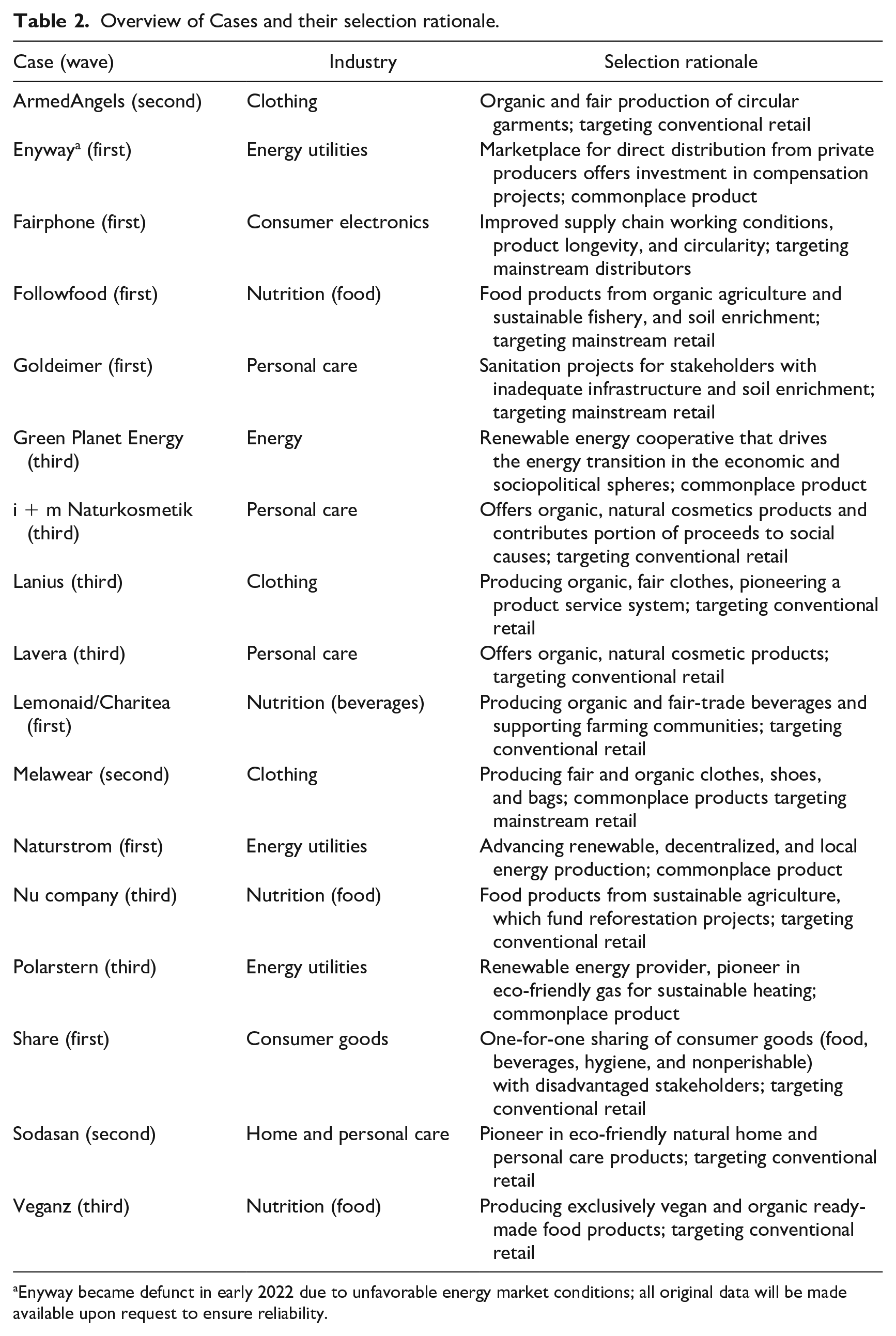
Enyway became defunct in early 2022 due to unfavorable energy market conditions; all original data will be made available upon request to ensure reliability.
Data Collection
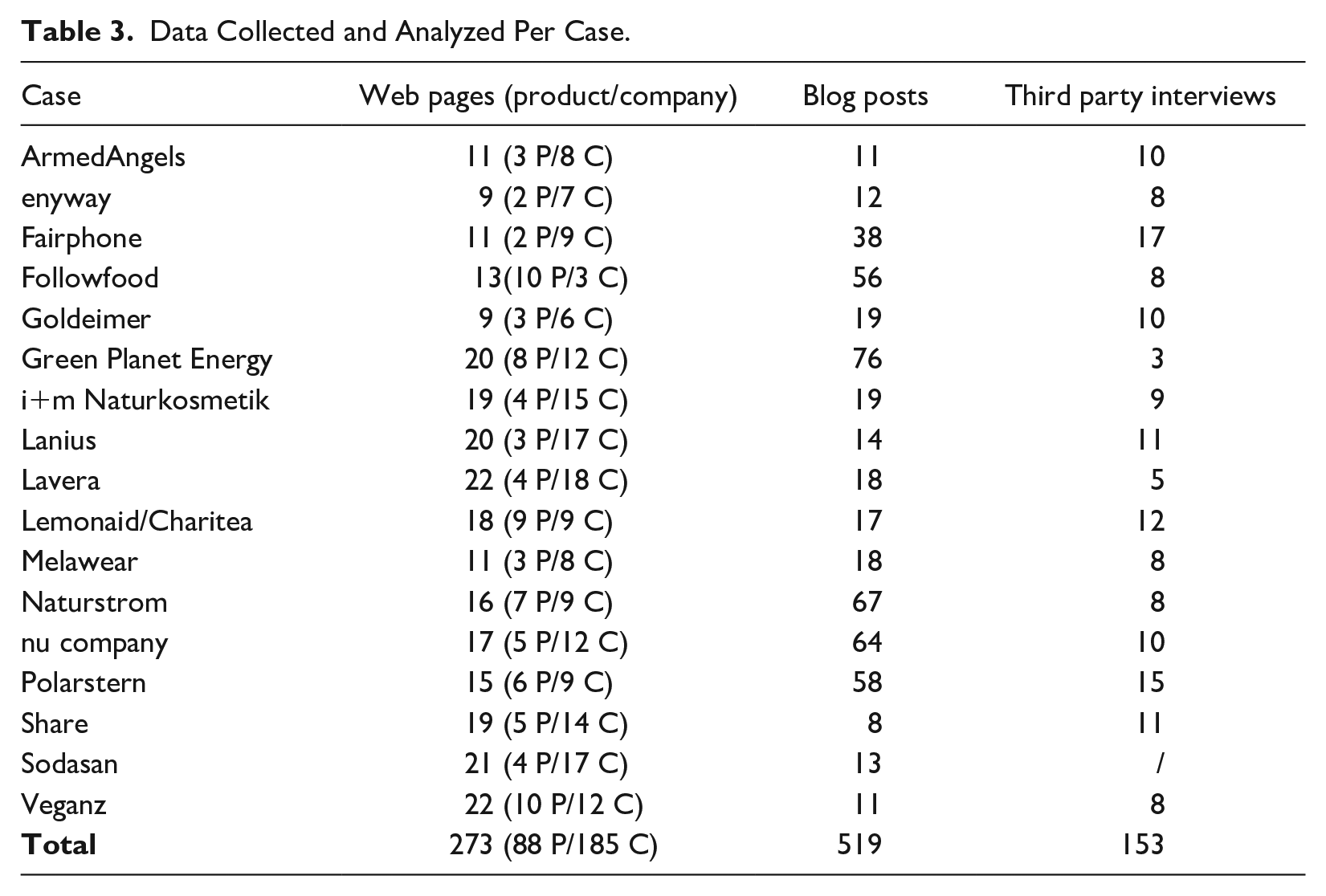
To understand the frames used in the analyzed cases, their websites were scraped, including company-level and product-level pages in January 2021 (second wave of cases in autumn 2021, third wave in summer 2022). As communication artifacts, these data directly reflect how stakeholder value is framed toward consumers (e.g., de Boer & Aiking, 2017; Närvänen et al., 2022), increasing the findings’ validity (Gibbert et al., 2008) more than data describing communication indirectly (e.g., interviews). Product- and company-level communication was considered as company-level sustainability associations can affect product-level evaluations of consumer value (Chernev & Blair, 2015). Communication was determined as directed toward consumers when it presented information relevant for consumer attitudes in appropriate language and format (not requiring knowledge of sustainability concepts and jargon e.g., sustainability reports). When a company offered multiple product types, one exemplary product page was examined for each type. Table 3 provides an overview over the data collected for each case, where each subpage is counted individually. For validity-enhancing data triangulation purposes (Gibbert et al., 2008), other communication channels (company blogs and third party interviews) were also collected for the time frame of January 2021 until August 2022. The analyzed documents contain approximately 409,000 words.
Data Collected and Analyzed Per Case.
Coding and Data Analysis
Referring back to a frame’s elements, frame analysis identifies the frames’ problem definition, causal interpretation, evaluation, and treatment recommendation (Entman, 1993). As the focus here is on a cross-section of frames rather than the evolution of public discourse, a qualitative interpretative approach is taken to identify the frames (David et al., 2011). In this approach, a frame is interpreted through the linking and synthesis of frame elements to a unifying theme by the researcher (Creed et al., 2002).
The web page content was coded by the author of the article with the support of MAXQDA 2020 and 2022, making use of hybrid coding (Fereday & Muir-Cochrane, 2006). Codes are derived from both pre-existing concepts (deductive coding categories) to improve validity (Gibbert et al., 2008) and from emerging aspects in the data (inductive category contents) (Fereday & Muir-Cochrane, 2006). In the final code structure (Figure 1), the frame element and subelement represent deductive categories, while the first order codes and second order categories emerged inductively. The frame elements (Table 1) guided the categorization of text passages in the scraped data. Aspects relating to value creation for stakeholders and its effect on consumer value were coded and analyzed in inductive subcodes of the frame elements. The key message of a text passage was interpreted and coded as the Theme, followed by the remainder of the frame elements. For instance, when a text segment argued for rewarding employees for producing a product, it was coded with the theme of “Fairness/Reciprocity.” A review of all codes and coded segments to consolidate the coding improved the reliability of the coding. This first round of coding was then followed by a second coding round to identify second order categories, which are groupings of similar first order codes. The frames were analyzed by identifying frequent overlaps of the seven themes with the other inductive frame elements. The frame analysis then interpreted the relationship of these co-occurring elements to these themes and the other elements co-occurring within the theme. This linking of frame elements is crucial to identify internally consistent interpretations (de Boer & Aiking, 2017) of stakeholder value provided to consumers rather than unrelated categories of frame contents. To understand the relationship between stakeholder value and proposed consumer value, particular emphasis was then placed on analyzing statements that suggested consumer-related outcomes. The frames were continuously scrutinized in discussions with expert peers to improve their validity and objectivity (Gibbert et al., 2008).
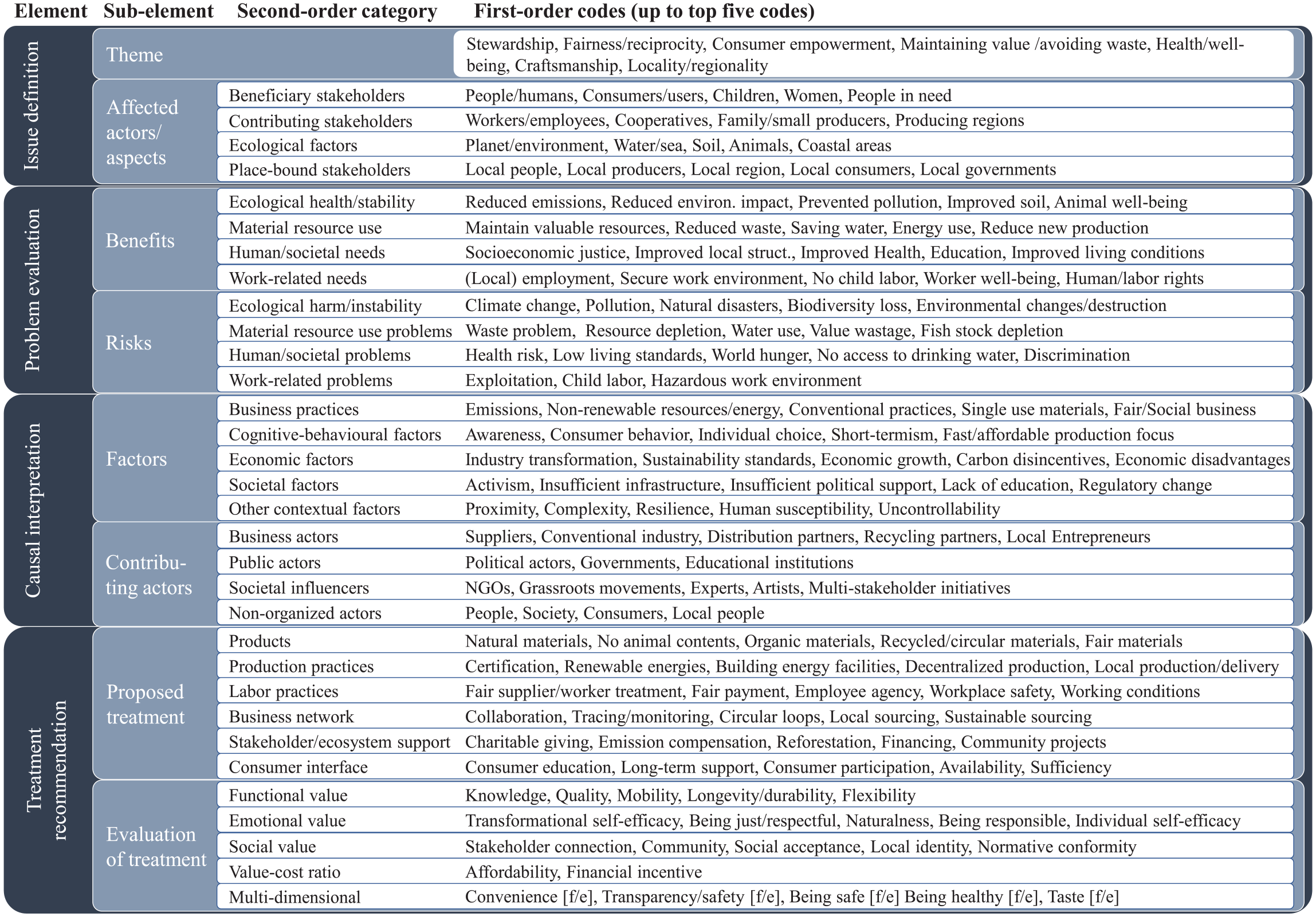
Code Structure.
Findings
This section synthesizes seven frames from the communication of the 17 cases in the sample around the coded themes Stewardship, Regionality/Locality, Fairness, Consumer Empowerment, Maintaining Value, Craftsmanship, and Health/Well-being (Figure 1). Each frame relates the underlying stakeholder value creation to consumers in a unique way as explored in the following subsections. The accompanying figures for each frame highlight how the different cases create the link between the stakeholder value (i.e., problem evaluation element) to the different value proposition dimensions (i.e., treatment evaluation subelement) in their value communication. There, the positive and negative expressions of stakeholder value (from the coded Problem Evaluation) have been combined for parsimony.
Stewardship Frame
“We are fed up with the indifference and disrespect with which the environment is treated.” (ArmedAngels, from “Questions & Answers” page)
The foundation of this frame is a business model that acts as a steward toward certain recipient ecosystems or stakeholder groups without expecting a reciprocal response. In this frame, the stakeholders or ecosystems addressed by the firm are not displayed as contributors to the business model’s value creation, but are in a disadvantaged situation compared to the consumer. The case of Share exemplifies this through their business model of one-for-one-giving, where each consumer product bought leads to a donation of a similar good to a person in need. The creation of conventional offers—and thereby, their use by consumers—is presented as neglectful if not outright harmful for these stakeholders and ecosystems: “We are the final generation that can prevent the climate crisis” (ArmedAngels). This frame rests on instilling a feeling of moral responsibility in consumers to take care of other stakeholders and the natural environment (Figure 2). Consumers can engage in responsible and benevolent behavior through the use of the firm’s offers. For example, Share (on their landing page) highlights the convenience in this value proposition by stating that “great deeds now fit into your shopping trolley.” Because the addressed stakeholders are not explicitly portrayed as influential in creating the product or service offer, this frame does not emphasize additional extrinsic functional value based on improved product/service functionality. Instead, the frame evokes an intrinsic emotional value of doing good for other stakeholders based on compassion or having acted responsibly, or an appreciation of nature. Veganz, for instance, communicates this as: “This way you can immediately see what the vegan chocolate cream does for people, animals and the environment and can spread a spoonful more on your toast with a clear conscience.”
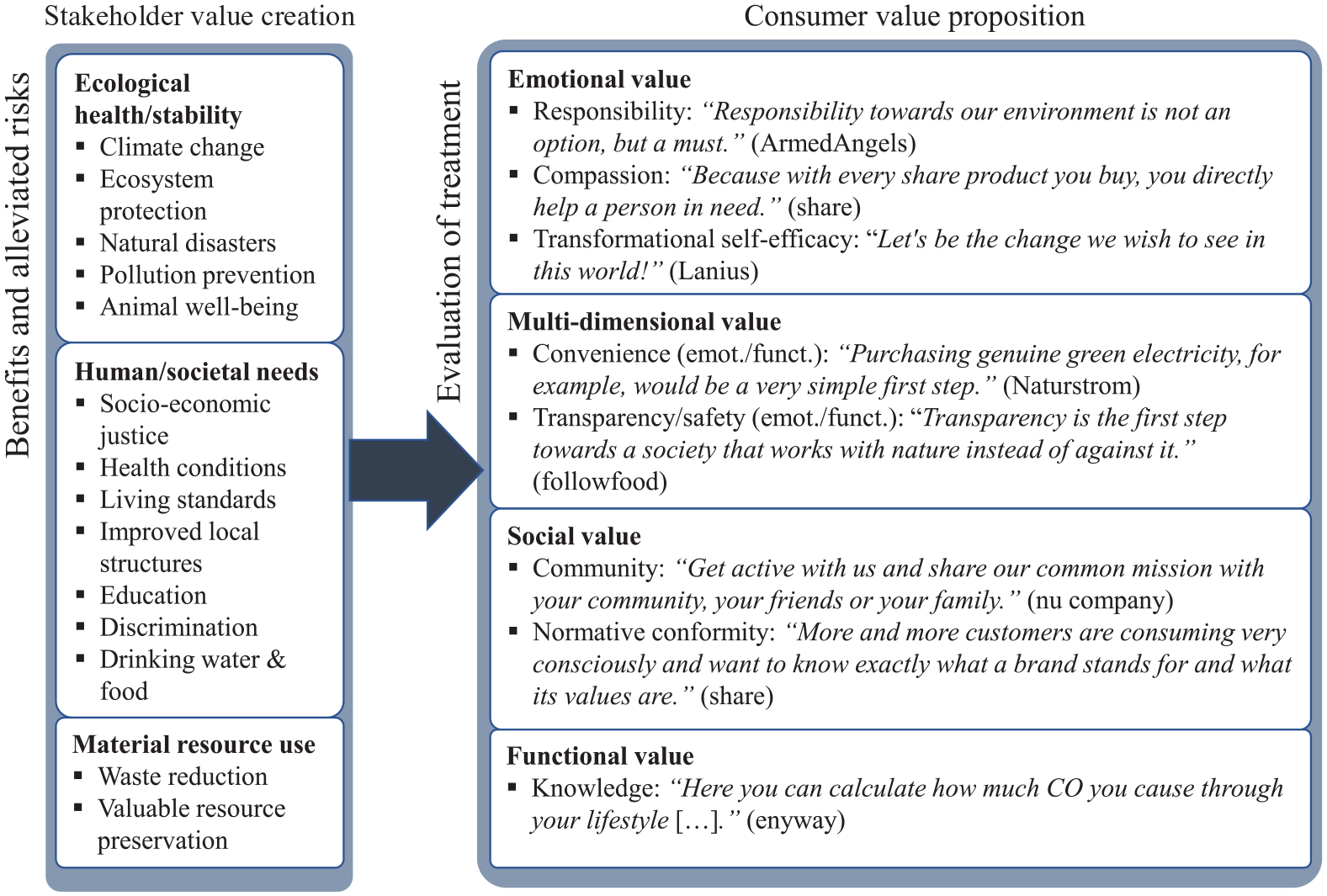
Stewardship Frame Links Between Stakeholder Value and Consumer Value Proposition.
Regionality and Locality Frame
“You thereby support value creation in your region and make a contribution to the energy transition locally.” (Naturstrom, from local electricity product page)
Business models using this frame create and deliver their value proposition in collaboration with stakeholders in relative proximity to the consumer, such as local food or energy production. Long and complex supply chains are presented as a barrier to regional development toward sustainability. This frame appeals to the social identity of consumers, particularly place-based connections that emerge over long time periods such as regional or local identity (Figure 3). Stakeholders or local ecosystem are presented as an important part of that shared place to justify both value creation for and with them. This creates or strengthens a valuable social bond between the consumer and other local stakeholders based on their shared connection to said place. Creating value for these local stakeholders is thus presented as social value in form of a strengthened social identity. In this regard, the frame can aim at evoking a feeling of collective agency. Ideally, the individual stakeholders that are part of the business model are identifiable for the consumer to enable a social connection. For example, the firm enyway displays relatable personal profiles of the private energy producers on its platform so that consumers can establish a personal connection with their energy producers: “In the immediate vicinity of the Steinhuder Meer, Otto and Fritz have been operating two renewable energy plants for many years: a 65-meter-high wind turbine and a large solar panel on the roof of a barn.” This approach is more specific than in other cases (e.g., Naturstrom), where only broader localities (like cities or regions) are identified. Naturally, this frame is only applicable to value propositions that can be created in close proximity to consumers.
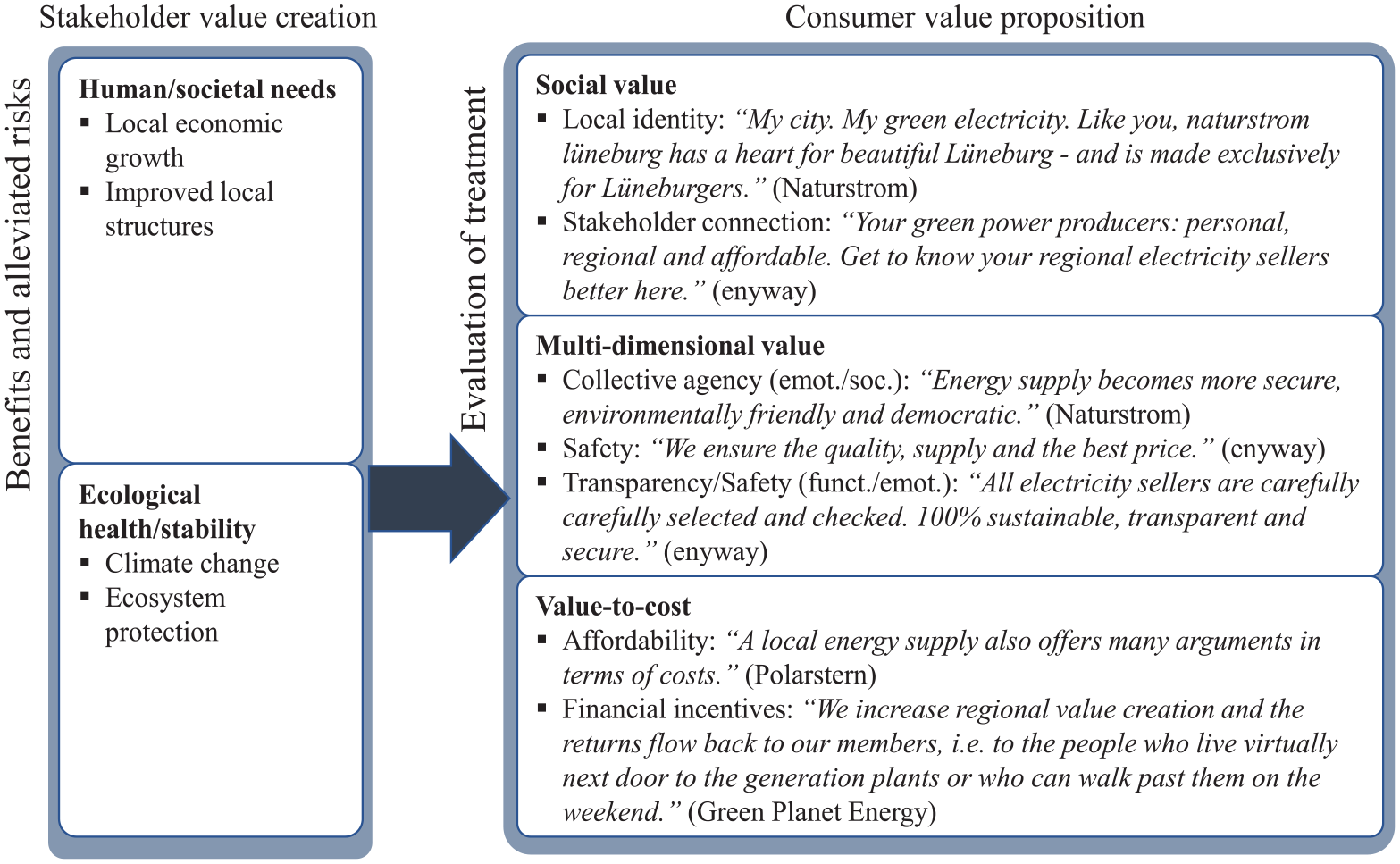
Regionality/Locality Frame Links Between Stakeholder Value and Consumer Value Proposition.
Fairness and Reciprocity Frame
“We believe that the people working in the electronics industry should have a decent life with sufficient income, a voice in their own workplace and that their safety should be protected.” (Fairphone, from page on “Our Impact”/“Good working conditions”)
To use this frame, a business model needs to remedy issues related to value-contributing stakeholders or ecosystem resources, such as unfair labor conditions. This frame builds on the notion that stakeholder or ecosystem resource contributions to value creation should be rewarded or maintained. The nature of the underlying injustices is illustrated drastically by ArmedAngels: “Have we overlooked a clause that excludes textile workers from their human rights?” In this regard, there are two options for translating value (Figure 4). First, the frame can elicit the intrinsic emotional value of being just and responsible toward those stakeholders involved in the creation of the offer. Fairphone, for instance, integrates fairer working conditions throughout its supply chain into the value proposition using the following slogan (from Fairphone 3 product page): “The phone that cares for people and planet.” Second, the improvement of stakeholder relations or ecosystem services for value creation can be linked to conventional extrinsic benefits for the consumer. For instance, enyway frames its emissions compensation projects as a mutually beneficial investment opportunity for both climate and consumers, thereby creating a strong link between ecological benefits and consumer value. The frame may also highlight how stakeholder value creation ensures the long-term functional availability of the offer by demonstrating the dependence on stakeholders or ecosystems. To remedy the apparent lack of immediacy for consumers, this framing can even invoke an emotional anxiety about the current or future state (e.g., vulnerability to climate change), thereby devaluing competing offers that offer no additional environmental or stakeholder benefits. Followfood in particular highlights how conventional farming and fishing will lead to an irrecoverable destruction of arable land and fish stocks within a few generations: “If we continue to consume as we do now, our soils will only yield about 60 crops.”
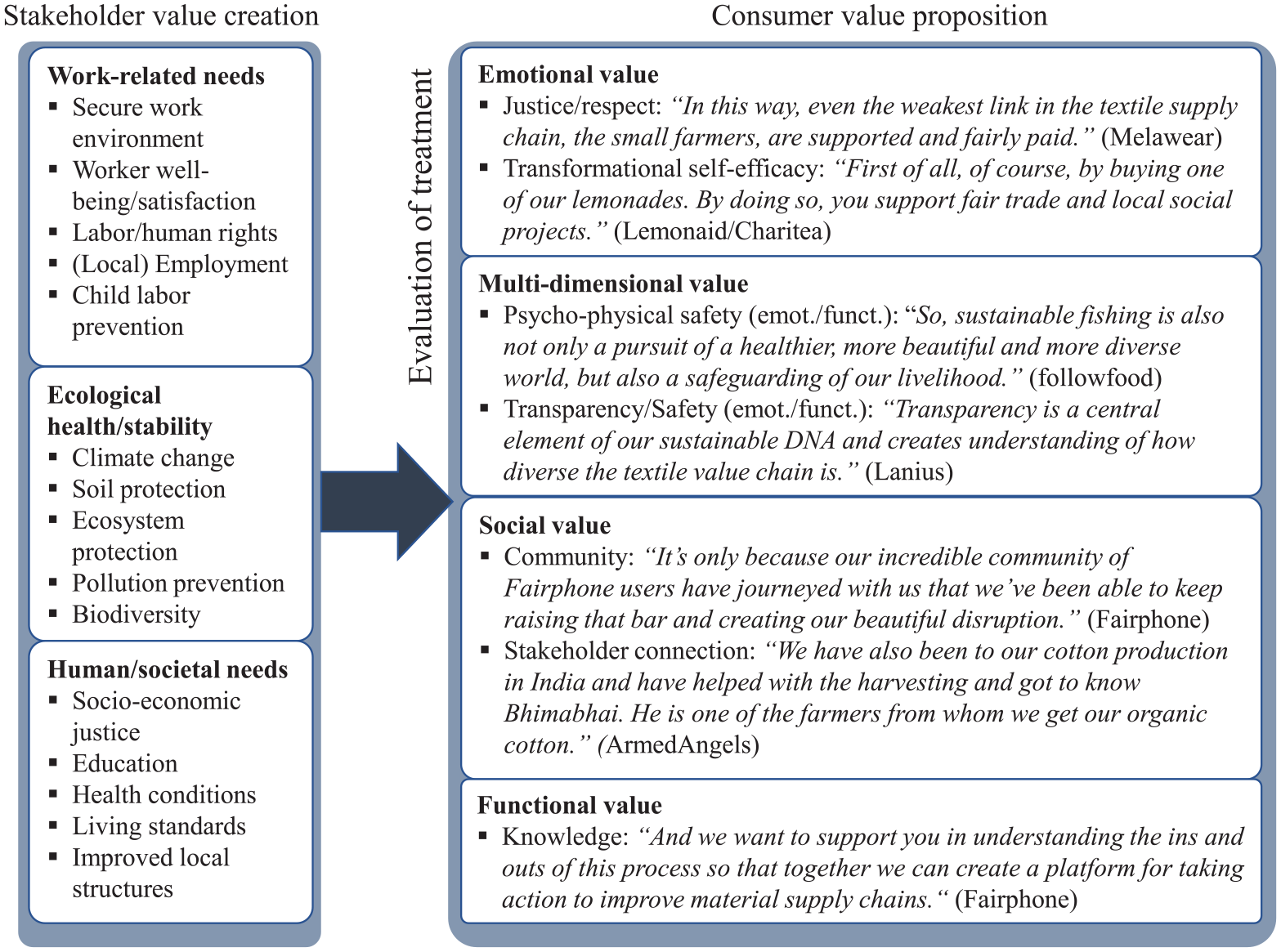
Fairness/Reciprocity Frame Links Between Stakeholder Value and Consumer Value Proposition.
Consumer Empowerment Frame
“This way, we want to inspire rather than patronize. And motivate rather than surrender. We want to offer a vision rather than spreading pessimism. Act rather than talk.” (Enyway, from “About Us” page)
The underlying business model for this frame provides consumers with new consumption options that empower them to act in their best interest. In this frame, stakeholder value creation is interpreted as an issue of individual consumer choice: “We are convinced that every individual can achieve great things even with small changes” (Polarstern). The frame intends to give consumers more power in the light of a growing consolidation of market power due to a shrinking number of market actors (Figure 5). Existing mainstream practices are framed as opaque, which could allow entrenched companies to act against consumer and other stakeholder interests in obscurity. In the business model, consumers are educated about the product or service and the way it is created to allow them to make more informed choices. In this regard, the importance of transparency is stressed and presented as ensuring the emotional safety of consumers. Sustainable consumption choices are presented as giving the consumer the possibility to become more independent (an emotional value) from powerful market actors. Providing reassurance about the impact consumers is having on their own and other stakeholders’ lives can communicate a feeling of individual agency: “You take your energy future and climate protection into your own hands” (Polarstern). This is also exemplified by Fairphone, who advocate for a consumer right to repair their electronic devices as an issue of true product ownership for consumers, while conventional manufacturers often restrict access to repair: “Many voices in the electronics industry would have us believe that some of the products we buy can’t be easily fixed.” This framing requires a balanced provision of information to avoid overtaxing consumers while providing enough information to empower them.
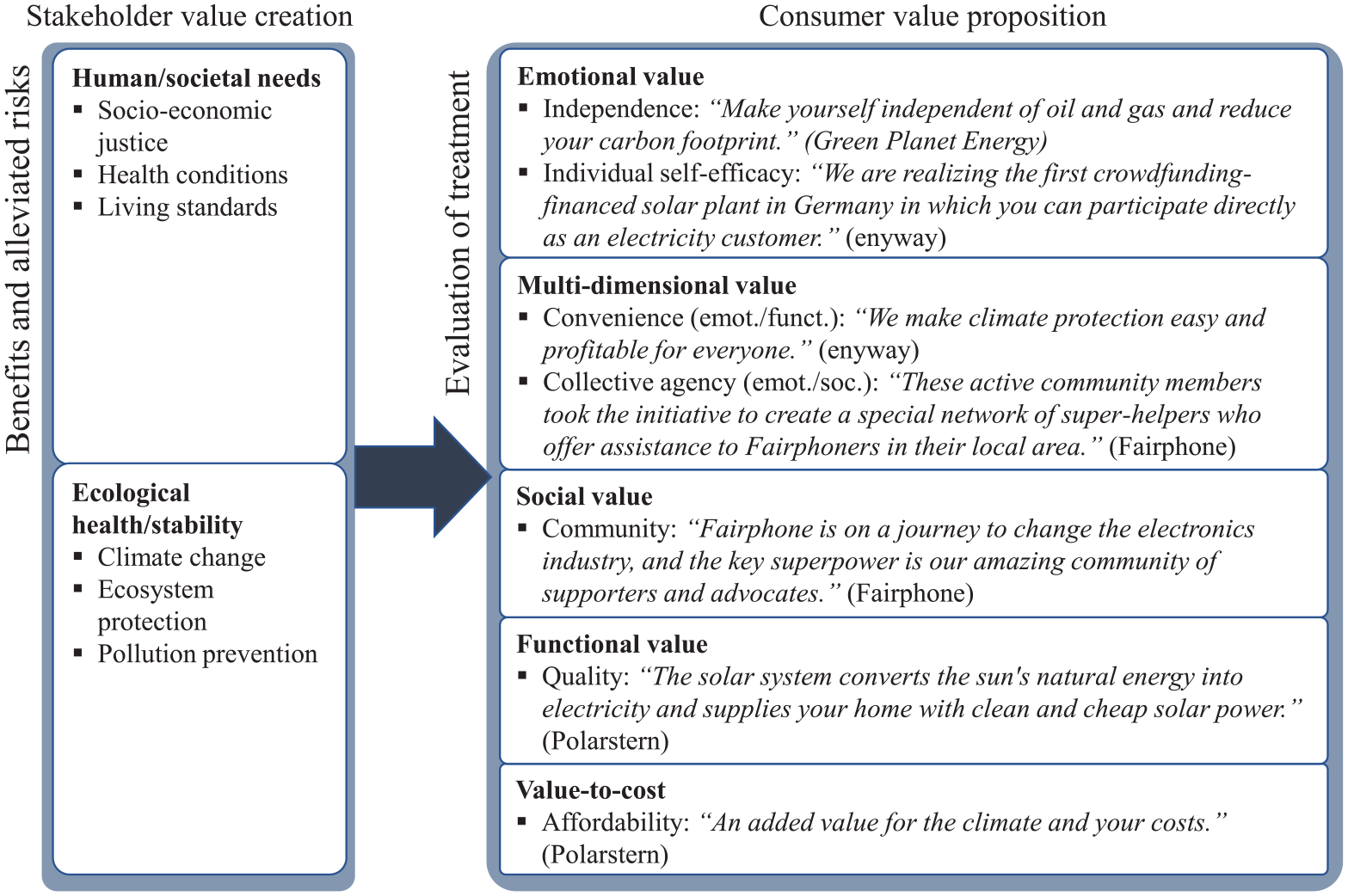
Consumer Empowerment Frame Links Between Stakeholder Value and Consumer Value Proposition.
Maintaining Value and Avoiding Waste Frame
“We care about designing longer-lasting products that are easier to repair. We care about reducing waste and making the most of what we already have.” (Fairphone, from “Our Mission” page)
The role of the business model here is to establish circular products and services that reduce the consumption of new (nonrenewable) materials by keeping products and materials in use. This frame is then correspondingly built on the moderation of an otherwise excessive consumption of valuable resources. Highlighting conflict between inconsiderate consumerism and linear supply chains and sustainability, this frame differs from other frames emphasizing positive effects of buying a sustainable offer (e.g., Stewardship or Fairness): “Many people mistakenly believe that we can achieve a circular economy simply by improving how we recycle the things we buy” (Fairphone). Because natural resources, to which various stakeholders are entitled, are presented as scarce, more consumption means more pressure on stakeholder value. The maintenance of a functional value of the offer for a longer period, for example, through reparability or durability, is linked to reduce ecological damages and stakeholder harm (Figure 6): “Every LANIUS part is precious. Therefore, we would like to support you in extending its life. Because only in this way can we counteract the masses of clothing waste that are created every year and are constantly growing, and the environment slowly gets more time to breathe again.” (Lanius)
This approach can also be associated with cost benefits associated with saving resources. Product features, such as modularity or reparable design, in combination with user support can be portrayed as conducive to consumer convenience. Alternatively, since prolonging a product’s life cycle requires close user interaction, the repair experience may be framed as a fun experience, for example as illustrated in the repair guides of ArmedAngels.
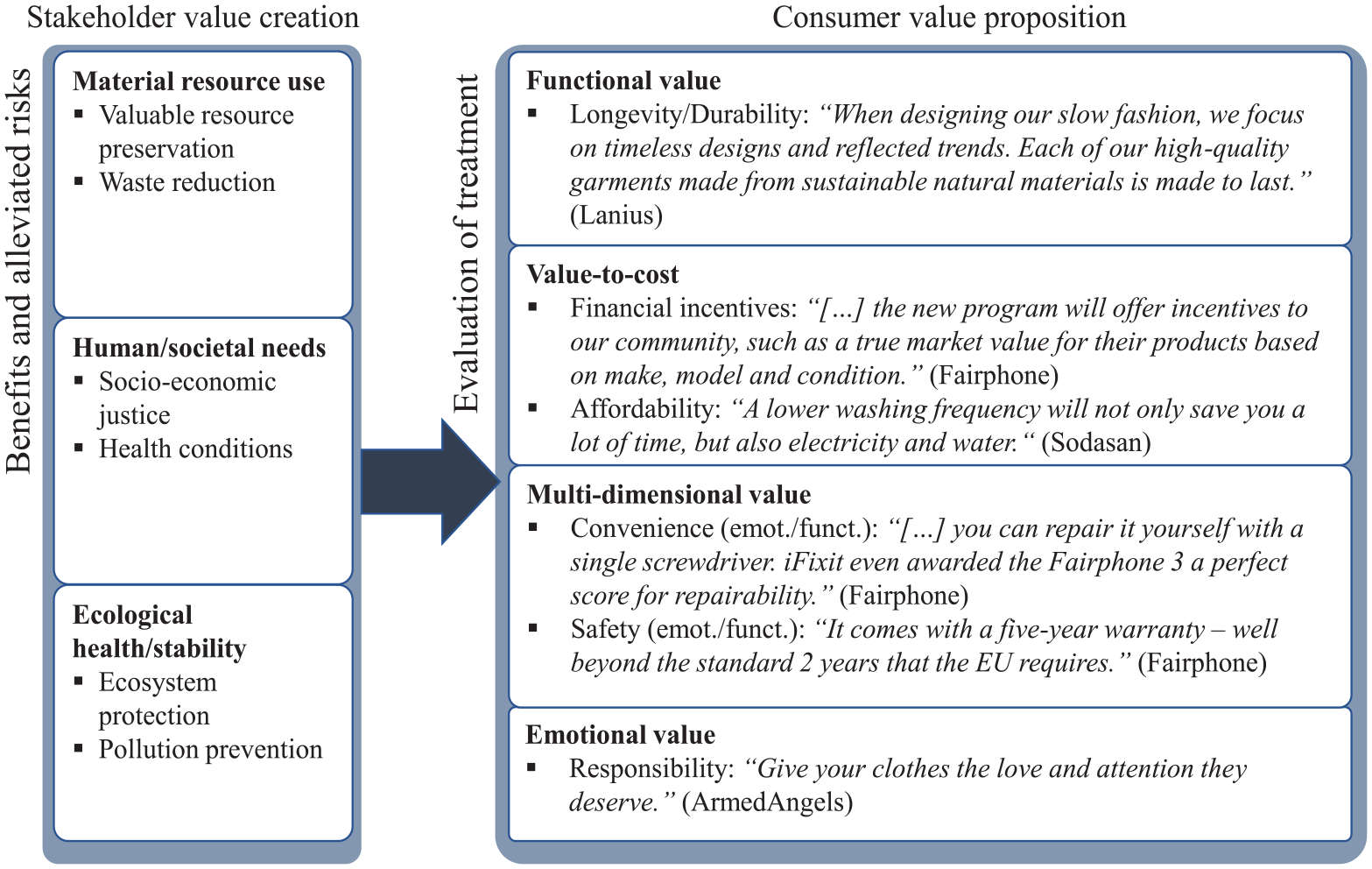
Maintaining Value Frame Links Between Stakeholder Value and Consumer Value Proposition.
Craftsmanship Frame
“Many tasks are still carried out to this day through traditional methods and by hand—this creates employment in a region of lower economic development and ensures the excellent product quality.” (Charitea/Lemonaid, from “Lemonades” page)
To enable this frame, the business model is built on value creation provided by small-scale, traditionally producing, or family-run companies. This frame assumes a small-is-beautiful perspective that associates negative stakeholder and ecological impacts with large-scale industrialization that is out of touch with the origin of its products or services. The frame emphasizes the importance of sourcing from small-scale suppliers with production practices resembling these traditional origins, which also benefits them as stakeholders of the firm. This frame seeks to evoke feelings of sympathy with the smaller producers and emphasizes positive effects on functional value dimensions such as taste (Figure 7). This is explained by the experience and Craftsmanship displayed by the producers as well as the attention that they devote to making the product: “The family business, which has been in operation since 1990, is amfori Business Social Compliance Initiative (BSCI) certified, works with great attention to detail and has won us over with its expertise in ready-to-wear and its particularly detailed articles” (Lanius). In addition, products that are reduced to the essential ingredients and features can be framed as embodying a desirable simplicity. It can even evoke nostalgia through comparison with the past enjoyment of long-gone, “simpler” products, just as the firm Lemonaid is invoking comparisons to classic home-made lemonades: “They say, something is perfect not when there is nothing left to be added, but when you can no longer leave anything out.”
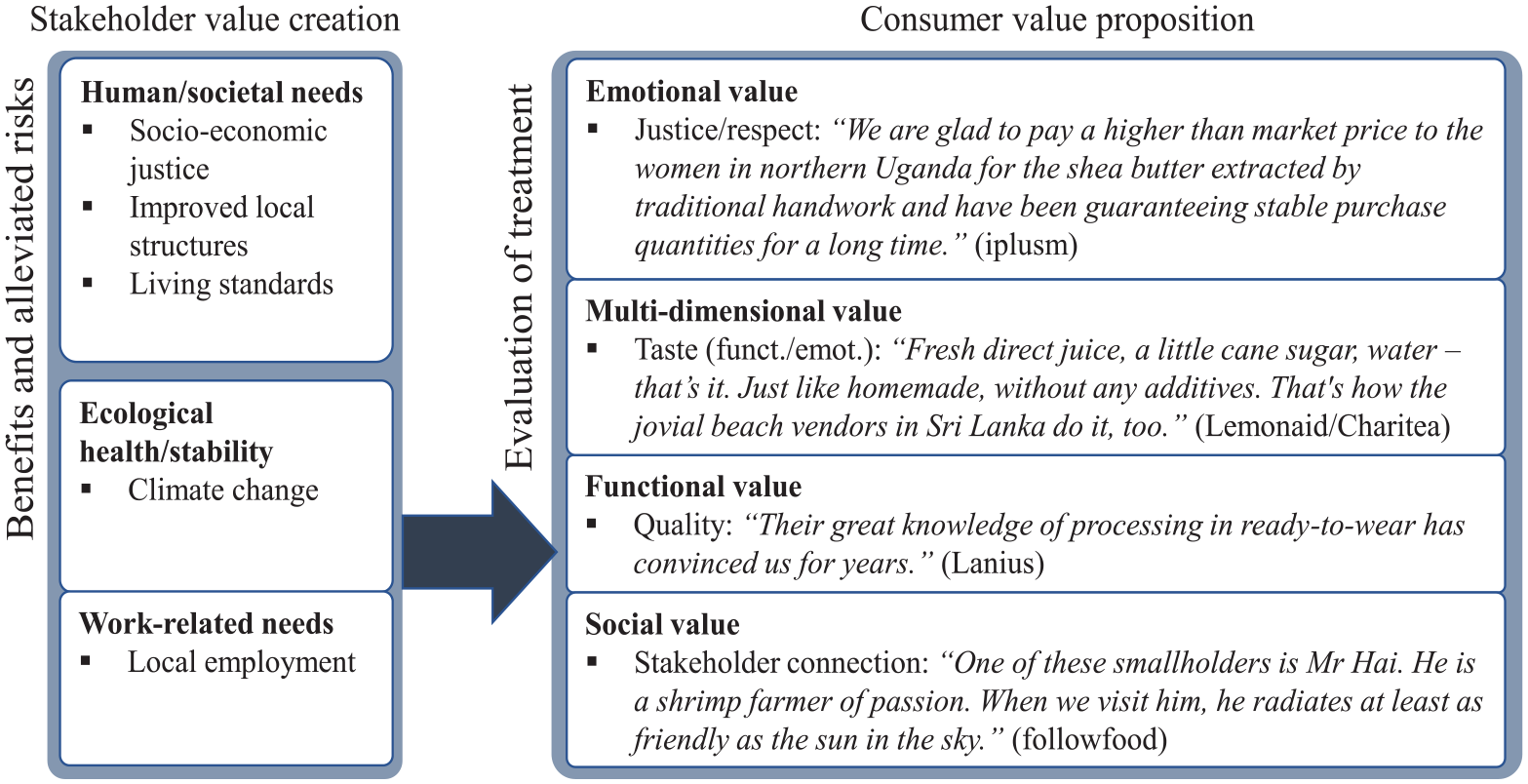
Craftsmanship Frame Links Between Stakeholder Value and Consumer Value Proposition.
Health and Well-Being Frame
“Plastics have even been discovered in the snow of the Arctic [. . .]. These ugly finds end up on our plates via edible fish, too. [. . .] No doubt that we are not using micro-plastics or water-soluble plastics in any of our products.” (Sodasan, from “No Micro-Plastics” page)
To use this frame, a business model needs to substitute artificial ingredients, materials, or processes, which could be detrimental to the consumer, other people, or the environment, with more natural alternatives. Conventional practices are presented in this frame as a pollution and health risk for people in that conventional practices rely on unhealthy ingredients, materials, or processes that harm both people and the environment. Hence, the frame illustrates human susceptibility to ecological impacts, either directly through the products they use or indirectly through pollution of natural systems and cycles. For instance, Sodasan cautions against microplastics entering the human food chain as illustrated by the opening quote, while ArmedAngels criticizes harmful chemical residue in products from textile production that may irritate human skin: “If you start sweating in such jeans, these chlorine residues can cause skin irritation and even allergies” (ArmedAngels). This differs from the Stewardship frame, as the circle of actors affected by issues such as toxicity or pollution is extended to consumers instead of other stakeholders only. Natural, nonharmful contents of the business model’s offering are explained to increase product safety and well-being by virtue of being gentler to the consumer as well (Figure 8). Through substituting artificial ingredients with natural ones, which are presented to be of higher quality, conventional value drivers such as taste or feel are also addressed. This aspect of naturalness can enable the emotional value of a stronger feeling of being in harmony with nature as well: “We know that nature has everything in stock that we need for well-cared for skin and beautiful hair” (Lavera).
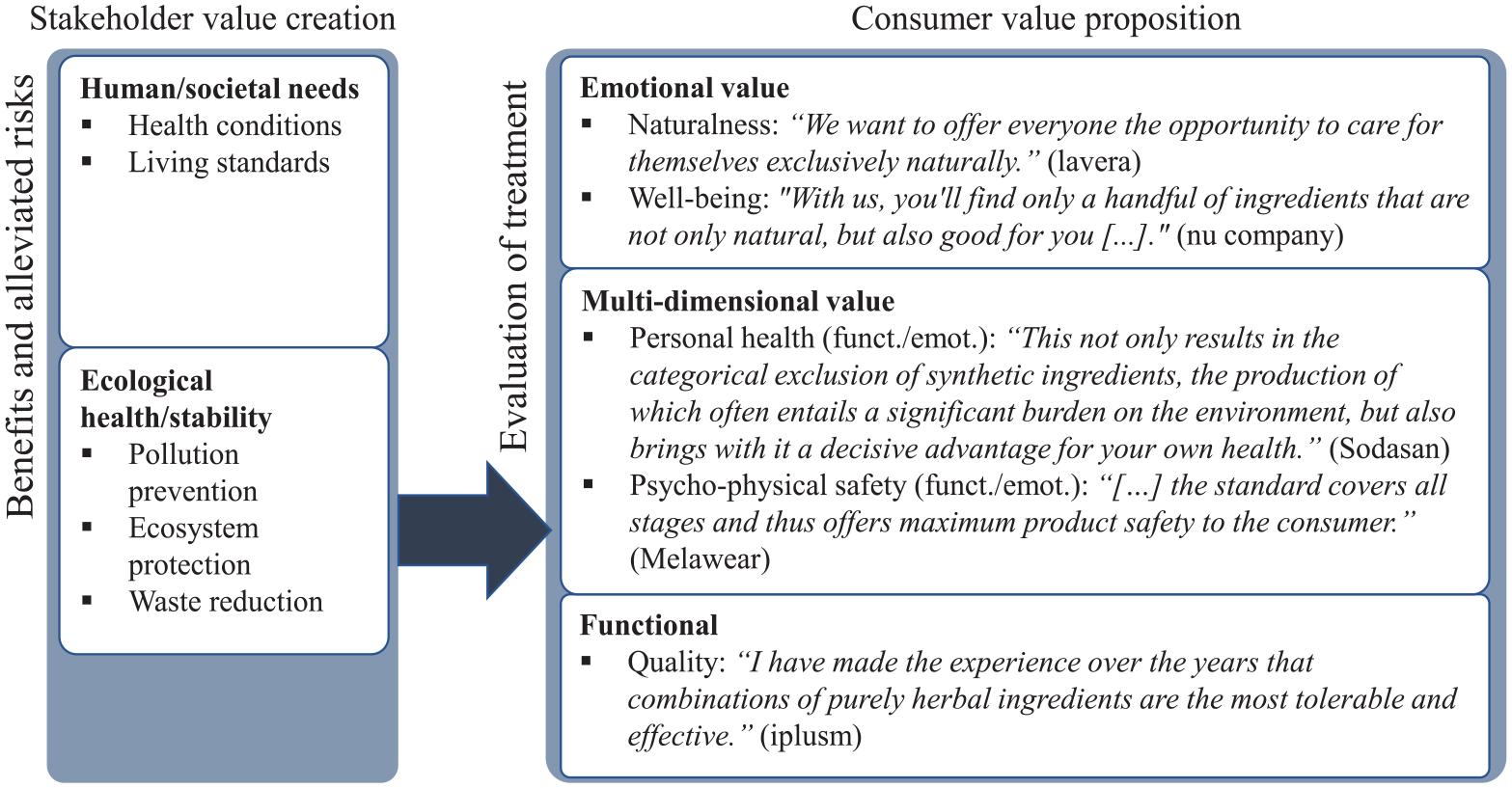
Health/Well-being Frame Links Between Stakeholder Value and Consumer Value Proposition.
Preliminary Conclusion of Findings
To finalize the analysis, two important patterns emerge from a comparison of the frames’ use across cases: First, the cases do not limit themselves to the use of a single frame but highlighted different aspects of their business model through different frames. The cases placed most emphasis on explaining their interventions in the form of product/service features or activities. However, the investigated cases did often, but not consistently relate the created stakeholder value and ecological impacts to functional, emotional, social, or financial outcomes for consumers. This could indicate the challenge of relating stakeholder value creation to positive consumer outcomes and a necessity to extend the communication of the links identified here. Second, the Stewardship frame appears to be the most widely used frame. The broad scope of the frame highlights its compatibility with many SBMs engaging in some form of environmental or stakeholder protection. This is supported by the fact that the Stewardship frame could be identified in all the consumer industries in the sample. In contrast to this broad applicability, the Health/Well-being frame may be suitable only for offers that affect or interact directly with the body and mind of consumers (e.g., food or clothing).
Discussion
The analysis identified seven frames that translate stakeholder value and ecological impacts into functional, emotional, and social value for consumers. These findings provide insights into the conceptualization of value and the specific role of framing in value communication to consumers in SBMs.
Conceptualization of Value in SBMs
To understand the translation between value propositions for different stakeholders (Viciunaite, 2022), the respective value dimensions and their drivers should be clearly established (Upward & Jones, 2016). In the SBM literature, value dimensions are predominantly constructed by adding the term “value” to the three sustainability dimensions of the economy, ecology, and society (e.g., Bocken et al., 2014; Evans et al., 2017; Schaltegger et al., 2016). This article extends this generic conception of value by embracing its subjective, multidimensional, and dynamic nature (Dembek et al., 2022; Gummerus, 2013). On a conceptual level, the perceived consumer value concept (Sweeney & Soutar, 2001; Sánchez-Fernández & Iniesta-Bonillo, 2007) shifts the understanding of value from an ad hoc description of sustainability outcomes to an explanation of their intended usefulness to consumers (e.g., Dembek et al., 2022).
Value proposition dimensions besides functional aspects have been insufficiently explored in SBM research so far (e.g., Plewnia & Guenther, 2021; Upward & Jones, 2016; Vernay et al., 2020). However, the identified frames confirm the importance of evoking emotional value (cf. Gonçalves et al., 2016; Rintamäki et al., 2007; Sweeney & Soutar, 2001) through compassion and responsibility (Stewardship), social belonging (Regionality), justice (Fairness), safety, agency, or independence (Consumer Empowerment). An emotional dimension of value captures the intrinsic value of supporting ecosystems or stakeholders within the SBM concept. The extension of value propositions with subjective emotional and social components thus adds to the known options of adding secondary functional or cost-related benefits (Närvänen et al., 2022; Vernay et al., 2020). Emotional and social value may be important for standardized products where sustainability does not allow such differentiation in function (e.g., Plewnia & Guenther, 2021; Vernay et al., 2020). The energy industry cases illustrated this best, as their functionally identical product could only be differentiated from conventional offers by emotionalizing associated issues such as climate change. The same applies when sustainability is not tangible in the product, for instance in cases focused on supply chain sustainability such as Fairphone or Lemonaid (e.g., Norris et al., 2021). At the same time, conventional value drivers (e.g., aesthetics) may still outweigh stakeholder-value-based ones when there is a trade-off (Meise et al., 2014). This explains why some of the cases (e.g., Charitea/Lemonaid) emphasize that there was no quality compromise associated with value creation for other stakeholders. When no functional differentiation is possible, value communication has to be balanced between the primary function of an offer and secondary (sustainability-related) value drivers.
This granular and subjective perspective also contributes to the understanding of value for other stakeholders, which is less researched than for consumers: Sustainability impacts like emission reductions only have value when a recipient perceives them to be meeting their subjective needs (Dembek et al., 2022; Sweeney & Soutar, 2001; Upward & Jones, 2016), such as an emotional need for taking responsibility for ecosystems (Plewnia & Guenther, 2021). This subjectivity means that any analysis of value in business models without a subject (a stakeholder) or the value dimensions of this subject reflects the nature of value inadequately. The subjective needs (i.e., stakes) are at least partially idiosyncratic to particular stakeholders as they do not overlap between stakeholders entirely.
Framing to Translate Stakeholder Value into Consumer Value
This subjectivity and idiosyncrasy of value across stakeholders provide an SBM-specific rationale for value translation beyond the generic lack of familiarity, meaning, or utility of sustainability (Viciunaite, 2022). While the need to communicate sustainability as valuable for consumers has been highlighted in the SBM literature (e.g., Norris et al., 2021; Viciunaite, 2022), no frames are provided that could convey alternative expressions of the consumer value proposition dimensions. The findings suggest that there is not just one, but a variety of ways to translate stakeholder value into consumer value based on these heterogeneous expressions (Viciunaite, 2022) that resonate to some extent with frames identified in other recent marketing studies (de Boer & Aiking, 2017; Närvänen et al., 2022; Schoonover et al., 2022). The literature on target message framing (de Dominicis et al., 2017; Ekebas-Turedi et al., 2021) implies frames can be distinguished with regard to the source of value, that is, whether the underlying consumer value is self-related or self-transcendent (Table 4).
Comparison of Self-Related and Self-Transcendent Value Drivers in the Seven Frames.
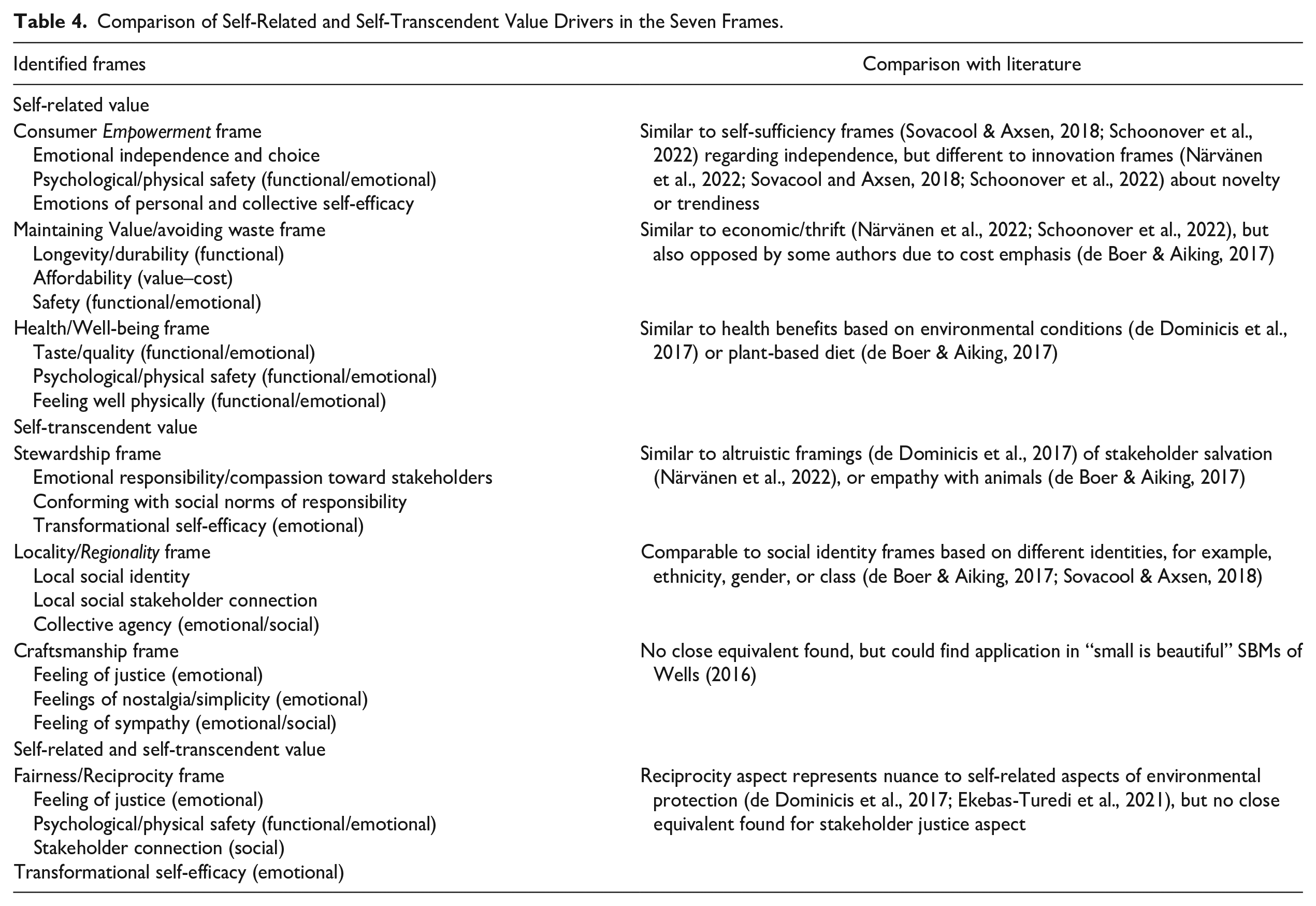
The Consumer Empowerment, Maintaining Value, and Health/Well-being frames contain self-related extrinsic and intrinsic consumer value that co-occurs with stakeholder value creation. In these frames, self-related consumer value emerges from positive effects on functional performance, or personal emotional and social consumer ends. The Maintaining value frame is based on a similar rationality to thrift (Närvänen et al., 2022) or economic framings (Schoonover et al., 2022), which portray food waste or furniture rental, respectively, as an opportunity to save financial resources and effort. However, such a framing has also been associated with crowding-out preferences for sustainability-related quality and altruism (de Boer & Aiking, 2017; de Dominicis et al., 2017). Similarly, independence and autonomy elements (Consumer Empowerment) resonate with self-sufficiency (Sovacool & Axsen, 2018) or unburdening frames (Schoonover et al., 2022), but differ from other innovation frames centering on social trendiness of novelty (Närvänen et al., 2022; Sovacool & Axsen, 2018). While de Boer and Aiking (2017) conceptualize a health-based framing for ecological food consumption, this framing was far more evident here in the home/personal care and textile sectors.
The self-transcendent translations of the Stewardship, Locality, and Craftsmanship frames create and address an intrinsic appreciation of the addressed stakeholder or ecosystem (warm glow, Andreoni, 1990). In contrast to self-related framings, consumer value emerges from empathy and sympathy toward them rather than direct functional benefits, similar to the empathy toward animals identified by de Boer and Aiking (2017). Such framings show particular overlap with the commonly studied altruistic elements studied in goal target framing (de Dominicis et al., 2017; Ekebas-Turedi et al., 2021). Because of this connectivity to others, these frames illustrate how to resolve the self-other trade-off (White et al., 2019) that often prevents consumers from seeing value in sustainability. Previous studies have found differing results, with some authors highlighting primarily extrinsic elements (Schoonover et al., 2022), and others identifying comparable self-transcendent elements as well (de Boer and Aiking, 2017; Närvänen et al., 2022; Sovacool & Axsen, 2018). The Stewardship frame in particular resonates with previously identified morality-based frames (de Boer and Aiking, 2017; Närvänen et al., 2022), which emphasize the responsibility of consumers for sustainable (food) consumption behavior. The Craftsmanship and Locality/Regionality frames are based on a similar sympathy with stakeholders, but differ in the origin of this sympathy: Whereas Craftsmanship is built on the appreciation of the traditional and de-intensified ways stakeholders create value, Locality establishes sympathy based on a shared local social identity. This adds to previous studies identified frames that resonate with different social identities than place-based ones (e.g., gender, de Boer & Aiking, 2017; Sovacool & Axsen, 2018). In turn, the Craftsmanship frame could conversely support communication of the principles of a “small is beautiful” SBM articulated by Wells (2016). The Fairness frame combines an intrinsic need for justice and the extrinsic benefits that healthy stakeholder relations and ecosystems bring. This extrinsic aspect of environmental stability resembles the self-benefit often analyzed as part of goal-framing studies (de Dominicis et al., 2017), but differs from commonly chosen economic framings (e.g., savings). Interestingly, aspects of convenience or normative conformity embedded in several frames identified here have also been characterized as a central element of entirely separate frames in other studies (Närvänen et al., 2022; Schoonover et al., 2022).
The analysis found that the business model intervention was most often elaborated, yet not always accompanied by a judgment of the value this creates both for stakeholders and consumers. While frames need not always contain all frame elements (Entman, 1993), this nonetheless leaves the construal of meaning to consumers alone. The communication of features without outcomes may be easily interpretable for engaged consumers (Chang et al., 2015), but less-informed consumers may struggle to translate stakeholder value creation into their personal value perceptions (Viciunaite, 2022). The causality between a particular sustainability impact (e.g., reduced CO2 emissions) and functional outcomes for consumers (e.g., food security and availability) is not always easily nor immediately discernible. In these cases, an extrinsic self-related framing may be harder to establish. At the same time, this could be an issue for self-transcendent frames without direct functional consumer benefit from creating value for other stakeholders, such as improved working conditions framed as Fairness. While an emphasis on objective effects alone may allow for an objective appraisal, “stories” surrounding these stakeholders and ecosystems could support emotional reactions and the perception of social value (Desmet, 2012; Lundqvist et al., 2013).
Whereas drivers of functional value are very diverse due to the many different functions that products can fulfill (Christensen et al., 2016), these kinds of social and emotional value are of a more universal nature (e.g., Desmet, 2012). At the same time, triggering these emotional reactions may be more complex than rational evaluations, for example, by implying a certain meaning through complex stories (Desmet, 2012; Lundqvist et al., 2013). For example, Melawear supports the feeling of being just and connected to a stakeholder by letting their supplier explain the impact of their activities. The use of testimonials or displays of exemplary stakeholders by some of the cases may evoke social value based on an impression of social acceptability, or a connection to these stakeholders, respectively. However, social value statements were found less frequently in the analyzed data compared with the more frequent emotional ones. Websites may not be as authentic in evoking social value compared to, for instance, endorsement through influencer channels or customer communities (such as the ones Fairphone has established).
The specific elements of a frame tighten the conditions a business model has to match to use the frame. This means that not all frames are available to each type of sustainability issue or SBM (e.g., Bocken et al., 2014). Whereas the Stewardship frame with its broader appeal to responsibility was used by all analyzed companies, fewer companies used the narrower Craftsmanship or Regionality frames. The applicability of a frame appears to depend on the compatibility of a sustainability issue with the frame’s problem evaluation and causal interpretation. At the same time, the combination of business model types could enable the complementary use of frames.
Conclusion
This article set out to understand the frames that translate stakeholder value and positive ecosystem impacts into consumer value. The extended conceptual background and the analyzed frames contribute the following implications for SBM research and practice.
Conceptual Implications
First, the SBM literature exhibits a surprising disconnect to existing value research (e.g., Gummerus, 2013). Based on the caveat presented here that the predominant conceptualization of value is too generic, SBM research should shift away from the trinity of social, ecological, and economic value toward stakeholder-specific conceptualizations (e.g., Lüdeke-Freund et al., 2020). While this article contributes with a marketing-based value concept (Sweeney & Soutar, 2001), SBM research needs to identify the specific value dimensions for other stakeholders in other research domains (e.g., Human Resource Management or Supply Chain Management). For example, it is likely that other stakeholders such as employees also react emotionally to the firm’s offers, for example, with joy derived from meaningful work. This implies that emotions may have utility in understanding stakeholder value propositions in general.
Second, the seven frames advance the communication and translation perspective on SBMs (Viciunaite, 2022) by explaining how the different kinds of value for different stakeholders can be translated. Acknowledging the self-related and self-transcendent sources (Ekebas-Turedi et al., 2021) of consumer value opens new options for translating sustainability into consumer value besides rational evaluation of functional benefits (Närvänen et al., 2022; Upward & Jones, 2016; Vernay et al., 2020). The identified frames are abstracted to a degree that allows application to other industries as well, such as mobility. For instance, carsharing business models could be framed as empowering consumers to gain more independence and flexibility. The resonance of the frames with other studies (particularly Närvänen et al., 2022), which supports their external validity (Gibbert et al., 2008), also strengthens this implication. The frames show that business model research that focused so far on the mental models of managers or business stakeholders (Massa et al., 2017) is also relevant for a consumer perspective.
Practical Implications
The case companies did not always link their communicated measures that create stakeholder value to specific outcomes for consumers. However, the analysis shows the importance of understanding how sustainability activities can be framed meaningfully for consumers. The identified frames thus represent guiding themes for consumer communications in practice. Companies should support consumers in understanding the personal relevance of sustainability rather than leaving them to interpret abstract impacts by themselves. This could be particularly important for conventional mass market consumers (e.g., Schaltegger et al., 2016) that have no or even negative pre-existing frames of sustainability. For instance, instead of merely emphasizing attributes (e.g., transparent certifications), companies should highlight the safety or empowerment value of this transparency. When articulating their value creation to consumers, companies should address the following four issues under consideration of possible self-related and self-transcendent value drivers (see also Table 4): Who are the beneficiaries or affected stakeholders? What drives the actual or potential, negative or positive impacts of a sustainability issue? Through what specific actions are these value creation opportunities realized, or risks for stakeholders or the environment mitigated? How does the value created for stakeholders or nature relate to consumer value dimensions?
Limitations and Future Research
The exploratory nature of the research opens various avenues for future research. Future research can expand this set of frames (e.g., in other cultural settings) or validate them through topic modeling in larger datasets. The analysis was limited to Germany to maintain consistency regarding the cases’ context that could harm comparability of the frames due to cross-cultural differences. The cases commonly used multiple frames, and it should be explored how they can complement each other. Consumer-based analyses may provide more evidence on the efficacy of frames and their complementary across different products and consumer groups considering attitudes, values, or social identity. While this study focused on prepurchase value perceptions, future studies may assess other consumer interactions (Desmet, 2012) or stages in the buying process, for example, the effect of social events or forums on social value. In addition, the scope could be broadened to multistakeholder dialogues that lead to the co-construction of collective action frames (Cornelissen & Werner, 2014). The dynamic reframing of sustainability issues by sustainable entrepreneurs could explain discursive changes (Benford & Snow, 2000) in the value perceptions of consumers. To this end, frames that translate value between other stakeholders besides consumers could be explored. Communicating the Reciprocity of value creation with and for various stakeholders in a meaningful way to all stakeholders might foster alignment and institutionalization of a shared norm of sustainability (e.g., Randles & Laasch, 2016). This alignment could build the joint purpose underlying collaborative stakeholder relationships, which ultimately sustain a business model (Freudenreich et al., 2020; Stubbs & Cocklin, 2008). These directions require a specific understanding of the various kinds of value that different stakeholders perceive, and how these may be bridged. The contributions of this article thus serve as a stepping stone into these future directions for SBM research.
Footnotes
Acknowledgements
The author would like to express his gratitude to the associate editor and the reviewers for their helpful comments, and to the peers at the CSM for the constructive discussions of this study. Open access publication has been facilitated via a publishing agreement of Leuphana University.
Declaration of Conflicting Interests
The author(s) declared no potential conflicts of interest with respect to the research, authorship, and/or publication of this article.
Funding
The author(s) received no financial support for the research, authorship, and/or publication of this article.
